Blog

  • Walt Disney India sets up DisneyUTV Digital

    By A Correspondent


    The Walt Disney Company India has decided to strengthen its digital business. On August 02, the company announced a restructuring of its digital assets with an aim to increase its growth in games, video and audio services for mobile, online and interactive TV.  The new division, DisneyUTV Digital will combine the businesses and talent from Disney, UTV and Indiagames. All content and brands from Disney, Marvel, UTV, Bindass, as well as original content and games will now be developed and managed by DisneyUTV Digital.


    DisneyUTV Digital will be headed by Vishal Gondal, who will be its Managing Director. Samir Bangara, also Managing Director, will be working in collaboration to drive DisneyUTV’s future growth. While Mr Gondal was the founder and CEO of Indiagames, Mr Bangara was the COO, Indiagames. Together they are said to have built Indiagames into India’s premier gaming company, earning close to 50 per cent market share in the country.


    The DisneyUTV Digital team will manage all mobile, video, audio, broadband, ITV, games and virtual world’s initiatives, with a combined audience reach of over 300 million in India. Some of the previous works from the Disney and UTV teams in India include products like “Audio Cinema” (a movie-on-your-phone service), “Divya Kathayein” (devotional content on mobile in 7 languages), “Digital Studio” (series of original content developed for the web and mobile), “Sponsored Tweets” ( the Twitter advertising platform ), mobile games such as “Aladdin” (India’s leading paid mobile game with over 8.2 million downloads), “DLF IPL Cricket” (the official mobile game for the DLF IPL Franchise), “Cricket Fever” with over 20 million downloads, “Ra.One Genesis” (which saw over 1 million downloads within a week of its launch) and others.


    DisneyUTV’s Digital team aims to innovate and deliver unique cross platform and cross media digital experiences focused on entertaining the Indian digital audiences across age groups.


    Disney UTV’s digital division will be structured as follows:

    Cyril Ferry – Executive Director -Mobile; Sameer Pitalwalla – Director – Video and Celebrity; Lavina Tauro – Director – Audio and Music; Deepak Ail – Director -Mobile;

    Hrishi Oberoi – Director – Games Publishing; Saishree Ashwin – Manager – Virtual Worlds; Tejraj Parab – Business Head – Games on Demand; Dushyant Saraswat – Director – Broadband & 4G initiatives; Sachin Janghel – Director – ITV; Aji Joseph – Director – Ad Sales


    The digital media in India is evolving rapidly with mobile leading the way. The country has the world’s third largest mobile Internet user base with over 121 million users (of whom 59 per cent are monthly active users) as of December 2011 in addition to the 85 million PCs and growing number of tablets. With the launch of 3G and onset of 4G services, digital consumption of entertainment is at an all time high and is exhibiting strong growth with new monetization models emerging around Freemium and Ad-funded content.


  • It’s incorrect to blame us on BARC delay, say ISA & AAAI


    By A Correspondent


    With news network NDTV suing television measurement body TAM Media Research and its principals, it’s become critical that stakeholders of the proposed Broadcast Audience Research Council (BARC) get their act together to provide an adequate framework for research and ratings.


    For, if industry bodies do not act speedily, the government could well step in. It was hence interesting to read IBF president Uday Shankar’s assertion that the apex bodies of advertisers (ISA) and ad agencies (AAAI) have been speedbreakers in the setting up of BARC.


    Nagesh Alai

    This statement of not showing enough urgency has not gone down too well with the Advertising Association of India and Indian Society of Advertisers. Said Nagesh Alai, former AAAI president and current ex-officio member: “It is unfortunate that such a comment has been passed. At the end of the day, who are the constituents of the industry? The advertisers, broadcasters and advertising agencies and each of them have a role to play. When all of these are stakeholders, how is it possible that ISA and AAAI will be uninterested in moving BARC forward? The fact remains that we have been engaging with them regularly and have come to an agreement on what the constitution of the shareholding would be; what should be the constitution of the board of governance and what should be the operating principles. All these have been captured in the draft of Memorandum and Articles of BARC, which is with the IBF.”


    He added: “We’ve met and agreed in principle on the key issues and have put down those things in the document as it is very necessary to start off. It is lying with them now. As I see it, it is work in progress. There is no question of us not being interested or not wanting to take this forward – how can it be? It is just not a rational statement. Just to recall, three years ago, AAAI was one of the prime movers on BARC – it was our idea.”


    On the current status of the draft, Mr Alai said: “As of now, the Memorandum and Article document that needs to be signed by all stakeholders is with IBF. All the recommendations in the draft have been taken jointly by the three member bodies. It is just the question of whatever is there in the draft is seen and accepted by them and we sign and move on from there. As I see it, it would take another one or two months for the signing process to take place; it all depends on how soon IBF responds now. But let me tell you that we will continue to work in partnership so that we are able to come up with a system that is robust and liked by all.”


    Meanwhile, when asked for its standpoint on the issue, the ISA reverted with the following statement: “The Indian Society of Advertisers, who initiated the formation of BARC based on the World Federation of Advertisers’ best practice of forming a Joint Industry Body (JIB) for television audience measurement, would like BARC to start tomorrow. We would not like to join the blamegame, as a joint industry body BARC is necessary for robust and transparent TRPs. As for NDTV versus TAM issue, we cannot comment on it as the case is still sub judice.”


    Bharat Patel

    When contacted, Bharat Patel, past chairman of Procter & Gamble and chairman of ISA admitted to BARC facing some tough times but said that it will be back on track soon. “There have been ups and downs but you must understand that this is a new baby and it is bound to take a long time. Also, there are huge investments involved. But then it should happen soon,” he said.


    On the IBF president’s statement holding the ISA and AAAI responsible for the slow progression, Mr Patel said: “It is incorrect. It’s got nothing to do with the AAAI or the ISA. As I said, these things take some time. We have reached a stage where we are finalising the articles and once that is done it should move fast.”


    “One must also realise that people have their own job/business to cater to,” Mr Patel added. “One has to have enough time on hand as people who are involved in BARC have their own jobs to look at too. For me, the real issue is that people are not finding the time to get together. I cannot give a timeframe at this stage as I cannot speak on behalf of other people but then it will happen soon. In fact, ISA wants to get started with it from tomorrow itself as we were the ones who initiated the global best practice JIB by the name of WFA. But you will see it happening soon.”


    While the statements from AAAI and ISA reiterate the commitment to the cause of setting up a credible measurement metric, it’s critical for the trio of IBF, ISA and AAAI to put aside differences and work amicably to safeguard the future of the industry. The ball for now is in the industry’s court. If it doesn’t act fast enough, the government could also be an active participant.


  • HUL asked to erase ‘Ice Cream’ from Kwality Walls ads

    By Ratna Bhushan


    India’s advertising regulator has told consumer goods major Hindustan Unilever to stop mentioning its Kwality Walls brand as ‘ice cream’ in certain advertisements following a complaint by top ice-cream brand Amul.


    Kwality Walls is frozen dessert, which looks and tastes like ice cream but is made with vegetable fat and not milk fat. Hence, under Indian laws, it does not qualify as ice cream.


    “The consumer complaints council has concluded that the mention of Kwality Walls as an ice cream is misleading,” said Alan Collaco, secretary general of Advertising Standards Council of India, the self-regulatory body of advertising industry.


    The advertisements in question are in the form of advertorials, or advertisements designed in the style of editorial matter. HUL published three print advertorials, each featuring a celebrity talking about Kwality Walls brand, complete with heading, extensive text and photograph. They feature singer Shaan, chef Sanjeev Kapoor and TV actress Smita Bansal along with their families.


    An HUL spokesman said the company will replace the word ‘ice cream’ with ‘frozen dessert’ in the ads. “We have agreed with ASCI that wherever the word ice-cream appears in the said advertorial, it should be considered as an expression of opinion of the celebrity featured in the advertisement. However, with a view to close the issue amicably, we agreed with ASCI to include the words ‘Kwality Walls frozen dessert,’” he said in an email response to ET’s query.


    Gujarat Cooperative Milk Marketing Federation, which markets Amul, had complained to ASCI that the mention of Kwality Walls as ice cream was a deliberate attempt to mislead people.


    “The advertorial makes a clear mention to Kwality Walls Strawberry Cheesecake being an ice cream when in reality it is a frozen dessert,” wrote Nitin Karkare, COO of ad agency DraftFCB Ulka that represents Amul, in a letter to the regulator soon after HUL released the first ad featuring Shaan.


    “This is a case of a deliberate attempt at misleading the consumer, considering that the term has been strategically highlighted and hence cannot be a case of oversight,” he added.


    The ice cream-plus-frozen desserts market in India is estimated at about Rs1,700 crore, with market leader Amul holding about 40 per cent share. Other big players include Kwality Walls, Ahmedabad-based Vadilal, NDDB’s Mother Dairy and Ravi Jaipuria group’s Cream Bell.


    Source: The Economic Times

    Copyright © 2012, Bennett, Coleman & Co. Ltd. All Rights Reserved


  • Vogue India awards best in beauty

    By A Correspondent


    Vogue India celebrated the best in beauty at the third edition of the Vogue Beauty Awards. The glittering awards ceremony honoured the best beauty products, services and professionals across categories ranging from skin care, anti-ageing, make-up, fragrances, hair care and hair styling.


    Attendees included celebrities, socialites and heads of eminent beauty brands in the country. Hosted by Vogue India editor Priya Tanna and Vogue India Beauty Editor Parizaad Khan, the event began with personalities from the beauty and glamour industry walking the red carpet followed by cocktails and the awards ceremony.  There are a total of 55 awards this year, including 42 awards related to products and services and 13 honouring the best beauty related talent.


    Speaking on the occasion, Priya Tanna, Editor Vogue India said: “Vogue Beauty Awards demonstrates our growing commitment towards beauty, which is integral to the magazine’s DNA as is fashion. Vogue Beauty Awards has grown from strength to strength in the past few years and has achieved distinction of becoming one of the most prestigious Beauty Awards in the industry. The overwhelming response we received last year from our readers, industry professionals and experts has encouraged us to widen the scope and reach of the awards, making it bigger and better than before.”


    Cover star of the Vogue August issue, Kajol received the ‘Timeless Beauty’ award, whilst ‘Most Beautiful Man’ was awarded to Farhan Akhtar and ‘Beauty of the Year’ was bagged by Deepika Padukone. Other winners included Ileana D’Cruz for ‘Fresh face’ and Diana Penty for ‘Debutant’.


    On being presented Timeless Beauty Kajol said: “Beauty is truly in the eye of the beholder and is eternal. You are beautiful because you believe you are. I would like to thank Vogue for giving me the Timeless Beauty Award. I also want to thank all those people who made me feel beautiful from inside, my family, friends and all those amazing fans.”


    Deepika Padukone on being presented ‘Beauty of the Year’ said, “My idea of beauty is embracing my strengths as well as my flaws, being confident and hardworking. It’s a great feeling to receive such a prestigious award from Vogue India.”


    Anil Chinnappa won Best Make-up Artist, Suresh Natarajan won Best Photographer and Angela Jonsson won Best Model. Whilst Best Hair Stylist was awarded to Savio Jon Pereira, Best Hair Colourist went to Rod Anker. The Best Skin Expert award was won by Harshna Bijlani, Best Fitness Expert by Zareen Watson and Best Nutritionist by Pooja Makhija.


    Over 1100 products were rigorously scrutinized and personally tested by an expert panel of judges comprising industry experts such as Mickey Contractor, Dr. Malavika Kohli, Kanta Motwani, beauty mavens Nargis Fakhri, Sonali Bendre, Simar Duggal, Namrata Barua Shroff, Nisha Jhaveri and Vogue editors Priya Tanna and Parizaad Khan.


    Entries were invited from all beauty brands retailing in India which were judged by the panelists through a thorough and detailed process held between March-April at the TajLand’s End.


  • Times TV appoints Rohit Kishore Chopra as legal head

    By A Correspondent


    Times Television Network (TTN) has announced the appointment of Rohit Kishore Chopra as Head Legal, Times Television Network and Prime Connect. Based out of Mumbai, he will be responsible for all Legal and Regulatory affairs of TTN and Prime Connect, as well as support the team on Box TV.


    Speaking on the announcement, Avinash Kaul, Chief Executive Officer, ET Now, Times Now and Zoom, said: “We are delighted to have Rohit on board. Given his significant experience in the broadcast space, Rohit will play a pivotal role in directing the legal and regulatory aspects of TTN’s business.”


    Mr Chopra joins TTN from Viacom 18 Media Pvt Ltd where he was heading Corporate Legal Affairs. He has previously worked at Balaji Telefilms Limited, Reliance Big Broadcasting and ESPN Star Sports. The existing legal teams at TTN and Prime Connect will report into Mr Chopra, who in turn will report into Avinash Kaul.


    Commenting on his new role, Mr Chopra said: “I am really excited and honoured to be a part of such a diversified media conglomerate. I look forward to working with this dynamic team and adding value to the system.”


  • The Anchor: 5 things to keep in mind while running a production house

    By Hemal Thakkar


    1) Focus on future is the most important as “change” is the only constant thing in the industry.


    2) Talent needs to be nurtured; nurturing means patience and patience means money.


    3) Teamwork is the most essential underestimated product; it’s the most crucial for functioning of any production house.


    4) “Idea” is the constant factor which keeps production house smiling, with churning of new ideas comes more work and this keeps everyone smiling.


    5) Patience is the biggest investment, so yoga is a must!


    Hemal Thakkar is the Producer/Partner of Playtime Creations


  • Tourism Australia launches Facebook app

    By A Correspondent


    The ‘Discover Australia Through Your Friends’ app – the first of its kind – merges the best of Google Maps and Facebook technology to create a unique travel planning tool to not only help choose where to go in Australia, but also provide advice from friends who may already have been there.


    The app provides users with a location-specific snapshot of where all of their Facebook friends have previously ‘checked in’, photos they may have ‘tagged’ and also any comments they may have posted about their travel experiences whilst there.


    Currently, Tourism Australia has 3.3 million fans. Tourism Australia Managing Director Andrew McEvoy believes that the new app will be welcomed both by travellers and the Australian tourism industry.


    “We know from research that more and more travellers are turning to their social media networks for inspiration to help them plan and get the best out of their holidays. Tourism Australia has been a global leader in the digital space for over a decade and this innovative social media tool will make word of mouth from your trusted network of Facebook friends even more powerful,” Mr McEvoy said.


    The launch of the new app follows new research findings, released by Tourism Australia earlier this month, demonstrating the growing impact of social media on the way Australians travel around their own country.


    “Facebook remains a key plank in Tourism Australia’s social media strategy to promote the country’s tourism credentials at home and abroad through the power of advocacy,” he added.


    Tourism Australia Executive General Manager Consumer Marketing, Nick Baker, who has led the national tourism agency’s innovative digital and social media approach, said Tourism Australia’s Facebook page now enjoyed over three million advocates.


    “The new Discover Australia Through Your Friends app is also a great tool for the industry – allowing us to simultaneously showcase these postings as fantastic examples of things for visitors to do nearby, whilst spending time exploring our great country,” Mr Baker said.


  • Anil Thakraney: TV research needs BARC. And bite

    By Anil Thakraney


    I am aware the debate on television ratings studies must be pouring through your eyes and ears. More thoughts have been expressed on this issue than there are metered households in India, hehe. Anyway, I just want to make a couple of quick points. So bear with me.


    There are two things that need to happen, now that most constituents accept that the current measurement system has failed. (And not just failed, the process is ridden with ugly controversies.) What the industry needs to do is to go back to square one and start the process all over again. If BARC (Broadcast Audience Research Council) is going to be looking into this, so be it. But they need to hire personnel who are respected for their integrity and intellect, and they need to make the process totally transparent. The NDTV court case should be used as an opportunity to show the whole world how TV viewing data can be collected honestly and effectively. There are enough brains in the Indian media to make this possible.


    The other issue concerns funding. When I met Lodestar’s Shashi Sinha earlier this year, we discussed the problems associated with TV research. This is what he said, and I quote: “Someone has to put money on the table, it’s as simple as that. The solutions are all known, I know very bright and talented people in research, what needs to be fixed is known. The problem is: No one is wiling to invest. Today, if television measurement costs Rs20 crores, what if Rs100 crores was spent on it? So it’s nothing but lack of funds.”


    Sinha is a veteran in the world of media buying, so we have to listen to him. And he makes sense. If the industry wants lakhs of households to be metered (as against the current figure of a few laughable thousands) so that the viewing pattern of a nation of billion plus is adequately recorded, the industry needs to get ready to loosen its purse strings. Clients, agencies, media houses… everyone needs to contribute generously. Carping from the sidelines is going to be of no use.


    Because without adequate funding, there will be BARC but no bite.


    * * *


    PS: A compelling ad by PETA. If this doesn’t motivate you to switch to a veggie diet, nothing will. Bring out the mooli, the lauki, the baingan and the sprouts, I say!


  • Broadcasters set to mix ideas & business @ITF

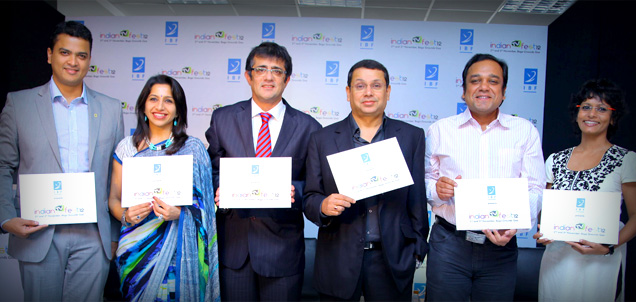
    Announcing the Indian Televsion Fest (from left to right): Keertan Adyanthaya, Monica Tata, Sunil Lulla, Uday Shankar, Punit Goenka and Lydia Buthello


    By Johnson Napier


    The god-like status that the medium of television commands in India today is indicative from the endless attention that gets showered on it from all and sundry. Whether for the advertisers who are willing to bend rules and swing  to their tunes or for the viewers who can take a liking to anything that’s thrown across at them (well, almost), the Indian broadcast industry is calling the shots in a manner that is pivotal to its growth.


    In fact, the popularity that it commands can be gauged from the growth that the medium has been throwing up in the past five years, which has been in the range of 12 per cent. This of course is backed by its ability to occupy a lion’s share of the ad pie and still remain a favourite medium for the advertisers.


    But while there are some obvious highs that ensue from the medium, the medium has been at the receiving end as well. Like the constant criticism it attracts for not being able to display a show of unity to voice common issues rather letting personal goals take precedence. Then there are also those who question the absence of a platform for the industry to come together and air and share views of common interest. But the last peeve may well be a thing of the past with the announcement of the Indian Television Fest 2012.


    The Indian Broadcasting Federation (IBF), led by president Uday Shankar of Star India and core festival committee members comprising Sunil Lulla of Times Television Network, Punit Goenka of ZEEL, Keertan Adyanthaya of NGC Networks, Monica Tata of Turner International India and Lydia Buthello of Star India announced the first-of-its-kind event for the industry. The two-day festival will be held at the Baga Grounds,Goa on November 2 and 3, 2012.


    The two-day fest would be a unique platform for the Indian and global broadcasting industry to network and exchange ideas through engaging panel discussions and master classes. Renowned names from India and across the globe are expected to participate in the mega event. And since it’s Goa, with the inviting beaches for company and some fun.


    Throwing open the idea to the gathering, Mr Shankar began by thanking his core team members, without whom the fest wouldn’t have been a reality. Explaining the thought process behind the exercise, Mr Shankar said: “The idea has been in the pipeline for almost a year now. We felt it was the right time to launch Indian Television Fest as the industry has grown big enough to manage an event of this scale. It basically stemmed from the need to create a platform where the entire broadcast industry could come together under a single roof – irrespective of the organisational and competitive background – so that there could be co-sharing and exchange of ideas and conversations on how the industry can take a big leap into the future.”


    According to him, what would make the event special would be its ability to get together honchos and industry persons from different verticals under television to come and be a part of the give-and-take. He affirmed: “Apart from some familiar and popular names the event will see the best in broadcasting brain trust from India and the world descend at the venue. The ultimate aim of ITF would be to service the larger Indian broadcasting community. It will also be driven with the dual need of being business-minded in its approach while at the same time having a social connect, as we believe the two are interlinked and cannot work in isolation from each other. All in all, we plan to make this event truly iconic in nature.”


    Giving a lowdown on the two-day event, Monica Tata of Turner India began by bringing to light some of the high points of the Indian broadcast industry. Providing a bird’s eye view of the current media scenario, she said: “India is the third largest market for media behind US and China. It has reported a growth of 12 per cent in the last five years which will continue to keep swelling. Further, the country boasts a reach figure of 500 million and is estimated to be worth Rs33,000 crore. This number is expected to triple to almost Rs100,000 crore by 2017. Needless to say there are tremendous opportunities that will enable the industry reach this figure in the coming few years.”


    Highlighting the tremendous opportunities that the Indian market presented for the future, Ms Tata said: “India has a penetration level of just 60 per cent leaving a lot to be achieved going forward. Further the C&S households are expected to grow to 88 per cent from the current 81 per cent. Also, the average time spent on television viewing is still low at 150 minutes compared to other countries that are almost double the number. And finally, with digitisation, DTH, HD taking off in a big way coupled with the unhindered growth of regional channels should see the industry enjoy prime status in the near future.”


    According to Ms Tata, some of the key themes scheduled at ITF include: best practices and masterclass that’ll be weaved around core areas of content, distribution, revenues, technology, etc; presence of visionary speakers like James Murdoch of International News Corporation, Andy Bird of Walt Disney, Hugh Johnson of Channel 4, Michael Lynton of Sony Corporation of America, Subhash Chandra of Zee & Essel Group, etc; debates and conversations; interaction with regulators and policy-makers; and finally encouraging cross-genre ideation.


    Presenting his viewpoint, Sunil Lulla of Times Television Network said: “There was no platform as yet in India where the issues and concerns of the Indian television industry were being raised and addressed. ITF will be a platform where one can learn, interact and demonstrate the road for the future. Three factors that’ll drive this event include the need for conversations, need for confidence to hold an event of this stature and need for commitment from the industry to take this industry from Rs33,000 crore to Rs100,000 crore by 2017.”


    On the key highlights to be expected at the event, Punit Goenka of ZEEL said: “We all know how New Media is going to be the platform of the future and we also know how regionalisation is going to take the industry further…and since regional has a lower base it is growing faster than the other genres. However, there are avenues that we need to discuss. Nobody has an answer as to how we will reach the Rs 100,000-crore mark but one has to start the process of thinking about it.” When asked if it would be a practically possible to reach the Rs100,000 crore mark in a short span of four years he said: “We have to talk about it and see how we get there. Nobody has an answer as to how we would get there. But unless you talk about it and bring it up in discussions how do we even make a beginning to reach there? I think the end goal is not important; it’s the journey which is going to be important.”


    When asked on the initial response that the event has managed to generate, Mr Lulla said: “Members from the broadcast industry have shown tremendous enthusiasm to the initiative, which can be seen from the initial buzz that is being created where registrations are concerned. As you know, we are a little late industry as we like to start things a little later. We hope the television industry supports us in a fashion by sending more members to attend the event. We have fantastic line-up of speakers from India and abroad; and of course, we would like the industry to stretch themselves a bit and sponsor many other themes and elements that we have lined up out there.”


    Mr Lulla added: “As you know, we are always a last-minute booking.com industry, so it’ll be a challenge to get a lot of people to attend the event. Also, there will be the challenge of generating advertising revenues so that we can stage the event successfully. But we are confident of putting up a successful event.”


    On the benefits that will accrue to IBF from the event, he said: “What IBF will particularly benefit from is take the ideas that come out and find out what will be the cornerstones for the industry going forward and what will become items of agenda. What people who come there to attend the event to take off is personal learning – so there will be ideas, new friends will be made…in all, it will be a mind-opening event, so to speak.”

     

  • BARC next announcement in 2-3 weeks: Punit Goenka

    By A Correspondent


    Even industry captains privately told MxMIndia that NDTV lawsuit against TAM and its principals would not have happened had all stakeholders shown urgency to get Broadcast Audience Research Council (BARC) off the ground, BARC chairman Punit Goenka told MxMIndia on the sidelines of the Indian Television Fest press conference that one can expect some announcements in next two or three weeks.


    A group of ’eminent experts’ has been spoken with to constitute the apex advisory committee and with each one’s concurrence in, an announcement will be made.


  • Debrief: Reliance Comm: Girlfriend from hell

    By Anil Thakraney


    Reliance Communications has been running a campaign to hawk their various mobile products/services. All the ads feature their brand ambassador, movie actress Ms Anushka Sharma. And she does what she does best in every single commercial for all the brands she endorses: to play the feisty, high attitude chick. No issues with that, it’s a persona the actress has created for herself, so it makes sense for brands to exploit it. But in the Reliance campaign, they have gone totally over the top.


    What Ms Sharma does, in order to establish Reliance’s superiority over their competitors, is to insult her boyfriend (who uses rival brands). She does this in every single ad in the campaign, but the one for the 3G Tab has pushed things too far. She projects her boyfriend as a total loser; she humiliates him, and then to screw him even more, broadcasts her feelings to all her friends and family members. Any self-respecting chap would want to bury himself in the closet hole.


    Let’s get one thing out of the way: I am all for feminism, and girl going one-up over her man is fun stuff, so no issues with that. But I have reservations on militant feminism, where the woman abuses her man, treats him like shit and walks all over him. That’s repulsive, not cute. I am sure there are some wicked women like that out there, but must a mass advertiser feature such a sadistic creature? Does this generate brand goodwill? I seriously doubt it. In fact, I have read quite a few tweets (from women!) that express rage over these ads.


    [youtube width=”400″ height=”225″]http://www.youtube.com/watch?v=EURnQGeiwxU[/youtube]

    Reliance needs to ask Anushka Sharma to tone things down. Sooner the better. Let her be spunky, not offensive.


    Rating: (On a scale of 1 to 5): 1. Nasty, off-putting campaign.


  • Ranjona Banerji: Any more skilling and I’m killing myself!

    Ranjona Banerji

    By Ranjona Banerji


    The Oxford English Dictionary, the last word on lexicography to many, has included many new “Indian” words in it. These are words that are peculiarly Indian like “prepone” or “airdash”, plus “crore” and “lakh”. So bring out the tricolour and let’s have a round of “Jana Gana Mana” to celebrate.


    Journalists across the country, please take a bow. Airdash is definitely a journo word and every Indian newspaper uses lakh and crore. Except, of course, the pink papers who want to be international and so prefer million. As we all know the international community of bankers and investors are falling over themselves to read Indian pink papers. I lie. I sometimes doubt whether bankers and investors can read at all, whatever their national origins. I would also give a journalistic nod to “chargesheet” and “undertrial” since newspapers use both all the time, though presumably, so do the police and the legal fraternity.


    Prepone and airdash are not so bad if you think about it: Both make sense. Though to be honest it’s not often that meetings in India start before the appointed time. And more curiously, airdash was coined when the only Indian airline was Indian Airlines and no would describe the experience of flying with them “dashing”. And, fact is, the words have become a little cliched and jaded and we’ve laughed at them for years.


    Years ago senior subs would tell their young ones to avoid used airdash since it had become a joke. And grammar purists of yore (now called grammar nazis by the Twitter generation who can neither spell nor understand syntax construction) would shudder at prepone.


    But tolerance can only go so far. I now await with horror the day that the Indian use of “lesser” becomes acceptable. For some reason, we don’t like to use the simple “less” when it comes to quantitative measures. Some things just cost less money. No need to make it lesser money. Lesser money would imply that the money itself was devalued. Like what’s happened to the rupee against the dollar. You could at a stretch say that because you used the rupee instead of the dollar to pay your bills, you used lesser money (all right, off with my head). Lesser is a qualitative description.


    But that’s my permanent language bugbear. You might have your own.


    Right now though, I’m worried about the management jargon that enters the mainstream by the “backside” (okay, a cheap joke, but backside usually refers to the human posterior end in common usage rather than the back of some inanimate object which is how it is all too often used). I read a headline in the Economic Times the other day – written by some management type – which asked for more “skilling”. Now this is not an Olympic sport. It is part of an ongoing management trend – led, it seems, by Americans – to make nouns into verbs. So if you want to increase or hone skills, then that presumably is skilling. The great management skill it seems is to kill language.


    Incidentally, Microsoft Word does not seem to like airdash or prepone but that could be because mine is an old version. But what the IT community has done to language is a whole other grouse. The only good news is that Word doesn’t accept skilling either. Yet.