
Blog

  • Bata calls for a creative partner

    By Shubhangi Mehta


    After a silent phase of a couple of years, Bata has invited agencies to handle its creative mandates. The account size for the same is estimated to be Rs8-10 crores. Industry sources close to the development have confirmed the news to MxMIndia.


    The last that was heard from the brand was in 2009 when it associated with Promodome Communications as its creative and media planning and buying partner. Before that the mandates were handled by Saatchi & Saatchi. Both the agencies are not participating in the pitch this time.


    Prior to Saatchi, FCB Ulka (now Draftfcb Ulka) used to handle the account. JWT and Euro RSCG have also been associated with the brand in the past.


    Set up in 1931, Bata India is a major manufacturer and marketer of footwear in India and is one of the largest players in the Indian shoe market. Though Bata India has seen lean times in recent years, it has managed to generate high recall for the Bata brand. It boasts of a retail network bigger than any other in the country.


  • Paritosh Joshi: Not another piece about the Ratings Battle

    By Paritosh Joshi


    You’ve already read enough of those so I’m not about to inflict one more upon you.

     

    However, if this week’s piece sounds like a lesson in elementary Economics, so be it. You were warned.


    Prices are not divinely ordained. As Adam Smith taught us, people enter a market when they wish to sell or buy goods or services. A process of negotiation follows. This depends at least as much on perception as it does on objective reality (whatever that is). An Alphonso orchard owner in Devrukh Taluka of Ratnagiri District believes that the output is plentiful, demand is scanty and he will be fortunate to sell his output at whatever price the Arhati (broker) offers him. You, in Delhi or Mumbai believe that unseasonal rains destroyed the crop, all good produce was immediately exported to grace the plates of Sheikh Al bin Mighty in wealthy Saudi and you must feel grateful for a dozen prized fruit at Rs1,000. So much for objective truth. The story can have a very different outcome if you add just one ingredient: inquiry. The orchard owner (who now owns a cell phone) calls up his office boy cousin in BKC who shares the street price in Mumbai… Yup, you can infer the rest.


    When people sell goods, they have the ability to warehouse their produce. I can sell my mangoes today or I can choose to hold on to them ’til tomorrow in the hope of a better price. When people sell a service, this is not possible. As a daily wage worker, I cannot carry forward my 10 hours of work from today and then do 20 hours for a higher realisation tomorrow. In general, therefore, services are far more perishable than goods. Their instant or near-instant perishability frequently translates to service providers being extremely vulnerable to extortionate price negotiations with buyers. This is where things begin to get really interesting. When the ‘perceived’ nature of a service becomes exceptionally rare, the price it commands becomes truly astronomical. A brilliant lawyer who wins suits for megacorporations and global telcos bills over a Million Dollars a week. We all pitch in, indirectly and sometimes directly, to pay a few exceptional, and exceptionally fortunate, cricketers eye-popping sums to bowl or bat. MJ, Elvis, Frank and Janis continue to weave musical (and commercial) magic from beyond the grave, their services having been warehoused to meet the needs of our hungry ears for years and years. Heck, even weight loss advisors called AM or VL pull down zillions to help you lose what you should never have gained. Most times, these incalculably precious eminences share a common secret sauce. Their raw material, which was admittedly of rare quality, has been honed and polished to a rich lustre by various players in the Media & Communications industry. They have in fact crafted the ‘perception’ of exceptional rarity that translates into astronomical price. They are the impresarios, the image-makers, artisans of myth, masters of smoke and mirrors. In a word, they are someone like you.


    If you were an extraterrestrial, say Ford Prefect, the galactic hitchhiker from Douglas Adams’s eponymously named trilogy in five parts, who happened to stumble upon the Indian M&C industry, what might you see? A bunch of talented creative minds building wonderful brand successes for their clients? Or a bunch of neurotic, insecure sales people unable to defend fair profit margins and constantly prostrating themselves before the extortionate buyer up the value chain from them?


    More likely the latter than the former, I have to say with the deepest regret.


    The very people who create images for their clients, thereby making them immune to the vagaries of elastic demand and endowing them with that ineffable je ne sais quoi, are the same people who have reduced their own business to a commodity-esque fish market.


    How did this come to pass? A friend worked for HTA Bangalore. Ivan Arthur, then NCD and already a legend of the industry, was visiting the office and decided to drop in on a Saturday morning. Said friend was toiling away getting press advert artwork pasted up in studio to hit material deadline for a Sunday Deccan Herald insertion. Ivan asked friend what she was doing in the office on the weekend. Friend meekly acknowledged demands of tyrant client who expected agency to be at his beck and call… around the clock. Ivan offered these three comments:

    Weekends are meant to regain the intellectual and emotional energy expended during the week, so that the professional can come back fresh and rarin’ to go on Monday.

    If you don’t respect yourself, why should anyone else?

    Abject surrender before the client is not only unjust to the agency; ultimately it is unjust to the client too.


    Read this metaphorically rather than literally and then address these questions to yourself. When the first agency offered to drop its commissions from 15 per cent of gross, (17.65 per cent of net billing) to some smaller number, the agency took a huge step back for the industry. When those commissions kept heading south for many years to come, a whole generation’s future in the industry was blighted by the long shadow of the small League of Damned Arbitrary gentlemen. I hasten to add that this kind of extortionate bullying of service providers was not just about agencies; the broadcasters succumbed to it too.


    No wonder then that as an industry, we have brought ourselves to this parlous place.


    We have cheapened ourselves.


    Paritosh Joshi was until recently CEO, Star CJ. He has been a marketer, a mediaperson and a key officebearer on industry bodies. He is Strategic Advisor, Ormax Media. He can reached via his Twitter handle @paritoshZero


  • New series/Relative Values | We are professionals first: Divya and Yogesh Radhakrishnan

    Starting today, and every Thursday, MxM will take you beyond our regular news and look at the people in the business of media and marketing. So on the first Thursday of every month, we will have a section titled ‘RELATIVE VALUES’ featuring siblings, parents-children, cousins etc who may be working in the same or allied sectors of media, advertising and marketing.


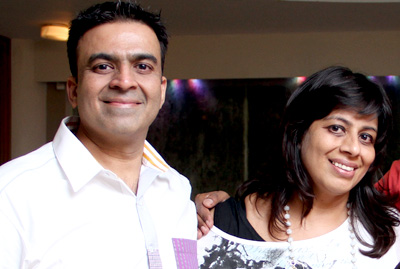
    It’s Raksha Bandhan today, and a good day to to start the series. So, meet brother Yogesh and sister Divya Radhakrishnan, both of who have done remarkably well in their respective careers and without work getting in the way…


    Yogesh Radhakrishnan and Divya

    By Meghna Sharma

    Everyone is talking about Kareena and Ranbir Kapoor finally working together on film as brother and sister. One can talk about the number of brother-sister duo working in the same field.


    According to some it’s no big deal, whereas others feel personal equations do change when they work together. MxMIndia spoke to one such duo on the occasion of Raksha Bandhan to find out their take on it.


    Divya Radhakrishnan and Yogesh Radhakrishan are forces to be reckoned with in their respective fields. Yogesh is CEO of Prime Connect which engages in the business of distributing satellite television and other allied services through traditional and emerging media across homes and commercial establishments in India; while Divya is MD, Helios Media – an integrated ancillary service company for television broadcasters.


    So when asked if it has ever led to rivalry between them, both were quick to refute it.  “I’m a media planner while he’s into broadcasting. So we have always been on the two opposite ends of the table. Hence, there is no question of competition,” said Divya. “Both of us are very professional and for many years people didn’t even know we were related!”


    “We know where to draw the line. Even while interacting for work…,” added Yogesh who is interrupted by Divya: “Actually, I’m a tougher buyer to him than to anyone else,” she laughed.


    Taking work back home is nothing new, so it isn’t surprising if the siblings end up having talking about work, even if they meet after office hours. According to Divya, both of them are in a field where work is bound to go back home with them and they do end-up discussing about the industry, at large and other healthy discussions related to it.


    “Rakhi has always been special day for us; although, we don’t believe in any rituals,” replied Divya, when asked if there were any special plans for the day and Yogesh, who is down with fever, agreed.


    So, be it any field, one can work without relationships getting in the way, by being mature professionals. Maybe blood is always not thicker than water!


  • Industry remembers V Ramani’s path-breaking work

    By A Correspondent


    V Ramani

    August 1, 2012 will be remembered as a sad day for  digital media as V Ramani, the man who championed the sector way before most others, , passed away. A prayer meeting will be held in his memory at 6pm on August 3 at the Bombay Tamil Sangham Hall in Sion in Mumbai.


    Mr Ramani worked as a media professional for nearly three decades, with years of experience in advertising with stints at Lintas, Draftfcb Ulka, McCann Ericsson, Contract and Euro RSCG.


    Mr Ramani helped establish Internet and Mobile Association of India (IAMAI) and was also the first Indian Cyber Jury Member at the Cannes. He is the Co-founder, Ignitee, and also the man behind the first ever branded programmes (Surf Mashoor, Philips Top 10).


    In 2011 he launched Pariental Innovative Solutions, a full service cross media consultancy and planning company, along with Harminder K Datta as co-founder and principal consultant.


    Remembering Mr Ramani, Ravi Deshpande, Chairman and Chief Creative Officer, Contract Advertising said: “From what I recollect during my brief interaction with V. Ramani at Contract, he was truly a passionate person and a professional who would always be committed to the task at hand. Sadly, today media industry has lost an important contributor.”


    Ishan Raina, MD and CEO, OOH Media remembers Mr Ramani as an outstanding mediaperson and a loyal friend: “He was an outstanding media person with a high degree of intelligence, and a loyal and an emotional friend. He would be remembered for a lot of path breaking initiatives, right from Philips Top 10 which is the first sponsored programme on television 25 years ago to various internet initiatives. But he would also be remembered as a good friend.”


    Said Atul Hegde, CEO, Ignitee Digital Services: “V Ramani was a true trailblazer, always pushing the boundaries to see new ideas come to light. He gave us gems like Philips Top 10; was the first jury member at Cannes for the digital category and always had an eye for great talent. He mentored many a career in the media industry and will always be remembered for making the media function in an ad agency ‘Creative’.”


    Even Twitter was abuzz after media professionals heard about Mr Ramani passing away, Former CMO, Tata Teleservices, Lloyd Mathias tweeted: “RIP V Ramani. A man who embraced digital long before it became fashionable.”


    Karthik Nagarajan, National Director, Social and Insights, Group M tweeted: “Just heard about V Ramani. Feel genuinely down. Rarely happens with someone you knew only professionally.”


    Lakshmipathy Bhat, Advertising Professional, New Media Enthusiast, Vice President, Draftfcb+Ulka - Bangalore tweeted: “Ad Industry veteran V Ramani passes away – he was one of the earliest in the digital space inIndia. Sad.”


    Dhunji S Wadia, President, Everest Brand Solutions, tweeted: “Sad to hear the news of V Ramani. RIP.”


    Faisal Farooqui, Founder – CEO, Mouthshut.com tweeted: “RIP. Ramani was one of the first who loved Mouthshut. Will miss him.”


  • Gagan Narang’s Bronze may well win him endorsements

    By Namrata Singh & Dipti Jain


    Gagan Narang (File pic: Fotocorp)

    Indian shooter Gagan Narang may have won a bronze at the London Olympics, but back home it has assured him of a golden opportunity with respect to brand endorsements. With this win, Narang, who was so far not in the spotlight for endorsements, joins the growing list of noncricket sports personalities whose value of endorsements have got a boost each time they clinched an Olympics medal.


    After Abhinav Bindra brought home a gold medal in the 2008 Beijing Olympics, endorsement deals worth Rs1 crore are understood to have come his way almost immediately after the win. Given this precedent, Narang, who opened India’s account at the London Olympics on Monday, may well rake anywhere between Rs25 lakh and Rs50 lakh per endorsement , media industry experts told TOI. The endorsement fee of athletes in sports other than cricket is said to be in the Rs10-20 lakh range. So for a nation where cricket is a craze, endorsement values of Rs25-50 lakh for a sport like shooting is certainly laudable.


    “After the medal win, Narang’s popularity in the brand world will shoot up 100 times. As of now, Narang has hardly been present in the brand world. This win will give him a push into the endorsement market,” said Navin Khemka, managing partner, Zenith Optimedia, a media agency.


    India’s growing list of noncricket stars used in brand endorsements include boxer Vijender Singh, who won a bronze medal for India in 2008, and Rajyavardhan Singh Rathore, who won a silver medal in 2004 Athens Olympics.


    “There is a lot more awareness , especially among youngsters and this will help sports like shooting with more endorsements,” said Melroy D’Souza , COO, Professional Management Group, a sports management company that handles Bindra’s brand endorsements.


    Supratik Roy, director, Affinity Cinemedia, said: “Considering that shooting as a sport does not have as much mass appeal as cricket, the popularity of sportsmen like Narang will remain concentrated on premium and niche categories like luxury, lifestyle, banking services, computers and such others. If the number of wins from India is not too big, Narang has a shot at earning more brand value.”


    Narang’s newfound glory has already attracted Milagrow HumanTech which, in consultation with Narang, will launch a special edition of TabTop PCs and robots in his honour. While this is not strictly a brand endorsement, 5 per cent of the sales proceeds of the products will go to Narang as part of the special promotion, said Rajeev Karwal, founder & CEO, Milagrow Business & Knowledge Solutions.


    Samsung, which is a global sponsor for the Olympics 2012, said the win will boost Narang’s image. “Narang is among our Samsung Olympic ‘Ratnas’ and we are sure a lot of brands will want to sign him up after the win,” a Samsung spokesperson said.


    Source: The Economic Times

    Copyright © 2012, Bennett, Coleman & Co. Ltd. All Rights Reserved


  • Government mulls probe against TAM after complaints

    By A Correspondent


    The government is planning to launch a probe into the alleged fudging of television viewership data by TAM Media Research after several complaints from broadcasters.


    A top official in the Union information and broadcasting ministry, who did not want to be identified, said the government has received a lot of complaints about TAM in the past. “A lot of people have been raising concerns because of which we are looking at TAM very carefully. We will soon take some action,” he added.


    Broadcaster New Delhi Television Ltd (NDTV) sued The Nielsen Co, a global research and information firm, and Kantar Media Research, equal partners in

    TAM Media, for tampering with TV viewership data to favour broadcasters who allegedly bribed executives in their Indian JV.


    NDTV, which owns the news channels NDTV 24X7 and NDTV India, filed the suit in the New York State Supreme Court seeking damages of around $1.4 billion for negligence and fraud, and hundreds of millions more for interference and breach of fiduciary duty.


    Advertisers and media agencies in India depend on TAM data – the only available measurement for TV viewership – to negotiate ad rates. Any discrepancy in the data would have resulted in losses for several broadcasters, advertisers and ad agencies.


    News of NDTV’s lawsuit has created ripples in the media industry, with several broadcasting firms and advertising agencies saying this has only established what has been an “open secret” in the industry for a while, but this could be an opportunity to set things right.


    “I have always been saying that the TAM data is all wrong, fudged. And I have not changed my views on this,” said Subhash Chandra, chairman of Essel Group, which runs several TV channels under the Zee banner.


    “The allegations, which NDTV has made against TAM, are very serious in nature. It is a matter of concern for the broadcast industry. The industry in the past has raised issues like small sample size used by TAM. Even as a company, we have several times taken up issues with them.


    For example, we questioned them on this year’s IPL ratings. Given the large crowd in the stadiums we had imagined the ratings to be much more than what were released by TAM,” said Manjit Singh, CEO of MSM India, which runs the Sony and Max channels.


    Mr Singh added that MSM has taken up the issue with TAM. “They do come back with explanations but they may not always be satisfactory,” he said.


    In its 194-page lawsuit, NDTV claims that it had confronted Nielsen with evidence of data manipulation, including taped meetings with TAM India employees, which showed that they were willing to tamper data for bribes. Nielsen, according to NDTV, admitted in meetings and through emails that its data was being manipulated and that it was willing to address the issue by July 1, 2012.


    NDTV says that Nielsen continued to publish these ratings despite repeated demands to stop distribution of TAM TV ratings until the sample size was increased and a proper security mechanism was put in place.


    Another broadcaster told ET that it has taken up with TAM the issue of aberrations appearing in the time spent per viewer (TSV) numbers derived from TAM data several times.


    “We have raised concerns about skewed TSV patterns in select markets. It could be because of discrepancy at the ground level. But there has been no action from TAM,” a top executive at the broadcaster said.


    “We are totally disappointed at the lack of responsibility shown by TAM in dealing with this issue,” another broadcaster said, adding he has lodged a complaint with the I&B ministry about the fudged data.


    Most of the discrepancy is due to the small sample size, say experts and industry insiders. The current system is highly susceptible to manipulation. It is easy to manipulate the findings to distort the eventual numbers published by TAM, said one person.


    “I cannot say for sure if bribes are involved. But numbers are distorted without any logic and go unexplained. And it is easy to distort the numbers to favour someone,” he added.


    A media planner who did not wish to be identified said this is a chance to revive the Broadcast Audience Research Council (BARC) that was proposed by the Indian Broadcasting Foundation a few years ago. The government should also implement the Amit Mitra committee recommendations that talked about irregularities in the current measurement system.


    Source: The Economic Times

    Copyright © 2012, Bennett, Coleman & Co. Ltd. All Rights Reserved


  • The Anchor: Viren Popli on 5 things mobile advertising in India should adopt

    By Viren Popli


    It is not internet advertising:

    Don’t treat it like internet advertising – banners, spam, CTR, CPI. It didn’t work, doesn’t work and will not work.


    More co-operation needed:

    Handset manufacturer, content owner and telecom companies need to work together and maybe share 30-30-30 and give the tech/reseller 10.


    Don’t interrupt conversation:

    Use waiting times when we are staring at a blank screen, or listening to a dumb audio sound for advertising. Keep it out of my real conversation.


    Consumer is the king:

    Allow consumers to select brands he wants to hear from, and ads he wants people to see when they reach out to him. After all, many of us use brands to define our personality – give him a piece of the action.


    More engineers in creative agencies:

    Have creative agencies hire more engineers and put them on par with the “creative types” – create internal stress. You can’t separate the technology from the message. So no matter how interesting the idea… If the technology doesn’t deliver, neither will the message.


    Viren Popli is Senior Vice President – Strategy and Market Development at Mahindra & Mahindra


  • GullakMaster to launch in August

    By Tuhina Anand


    The enforcement of DND (Do Not Disturb) in many ways has spelt doom for SMS marketing in India. However, the same played a key role in the genesis of GullakMaster – a customer engagement platform for merchants. Still being piloted in Mumbai, GullakMaster is due to be launched in the last week of August in Mumbai followed by Bangalore and Pune and then in a span of six months time in Delhi and Ahmedabad.


    The venture is being spearheaded by Abhishek Dadoo who explained it as ‘intelligence on SMS’. Explaining the mobile advertising network, he said: “There is still a big market for SMS advertising which remains untapped because of the restriction. So what we are offering is on demand advertising. We ask permission and then sms promotions tailor made to the person’s requirement. We have TRAI approval and we do not fall into the DND list as we are not sending unsolicited messages.”


    So how does GullakMaster work? To start with when one visits a mall, if GullakMaster has an association there, then one could see information as one enters the mall. If interested, one could sms on the number given and get information on the deals available in the mall. Mr Dadoo explained that the concept can be taken beyond the malls; in fact anywhere that is close to the merchant’s location.


    For starters, the company will be advertising heavily in malls and outdoor locations like auto rickshaws to spread awareness of their offering. The same will be taken to the radio medium if their funding plan comes through.


    Mr Dadoo dubs his offering as providing a dashboard to the merchants to communicate to potential customers in an effective way. The company is a subsidiary of Dadoo Pvt Ltd, which is a Singapore-based company. The company is also eyeing the markets in Indonesia and Philippines.


  • InMobi acquires Metaflow Solutions

    By A Correspondent


    Bangalore-based mobile advertising network InMobi announced the acquisition of Metaflow Solutions, leaders in mobile app management and distribution solutions.


    Metaflow technology simplifies the global deployment and content management process for developers through its intelligent submission tools optimised through six years of operations, servicing the biggest publishers in the market.


    Metaflow’s management and distribution of content to consumer portals has consistently provided the fastest, lowest cost way to publish apps to hundreds of independent, OEM & operator app stores across the globe. “As a global leader in the mobile advertising space, InMobi is committed to growing the mobile ecosystem. Our acquisition of Metaflow Solutions will help us to continue to rapidly expand the distribution and monetisation of content for our developers and publisher partners,” said Naveen Tewari, Founder and CEO at InMobi.


    The Metaflow team will become an integral part of InMobi’s developer oriented efforts, led by Piyush Shah, VP and GM of Developer Platforms and Performance Advertising at InMobi. Mr Shah said: “With the recent acquisition of MMTG Labs, along with today’s acquisition of Metaflow, we will augment our value proposition by offering highly compelling distribution, monetisation, and engagement solutions to app developers globally.”


    “At Metaflow, our mission has been to simplify and unify the complex process surrounding content management and deployment of apps to a distributed and highly fragmented marketplace. The global reach and technology backbone provided by InMobi is hugely exciting for us. InMobi provides app developers with even greater opportunities to acquire millions of users and monetise their exciting apps,” said Charles McLeod, CEO at Metaflow Solutions.


    The Metaflow Solutions team will relocate to the new InMobi London office.


  • Timmy Kandhari quits PwC India, Smita Jha to take over

    By A Correspondent


    After a 15-year long stint with PwCIndia, executive director and leader, Hospitality and Leisure, Timmy S Kandhari has decided to move on. Mr Kandhari confirmed the same to MxMIndia.


    Furthermore, he told MxMIndia: “Ms Smita Jha will be taking over. She is currently a Director at PwC and she would be taking over as Head of Entertainment and Media.”


    Ms Jha currently holds the position of Director, PwCIndia. Like her predecessor, she is also a qualified Chartered Accountant.


    Citing personal evolution as one of the main reasons to move on, Mr Kandhari said: “One continually wants to evolve oneself as a professional and this move is largely to get closer to the next step.”


    Mr Kandhari did not disclose the next position he will be taking up but he said he might be able to announce the same in the next few months.


    Mr Kandhari is a qualified Chartered Accountant with over 20 years of experience. His past experience encompasses a range of industries including Healthcare, Consumer & Retail, Liquor, Auto and Entertainment & Media. He has been a frequent speaker on E&M platforms like FICCI, CII, CASBAA and so on. He’s also a member of the CII Entertainment and Media Committee.


  • Arvind eyes Debenhams, Next’s businesses; to take over brand rights, stores from Planet Retail

    By Boby Kurian & Reeba Zachariah


    Arvind’s Sanjay Lalbhai may acquire the operating stores and rights of British fashion retailers Next and Debenhams from Planet Retail, triggering another retail industry consolidation , said two sources directly familiar with the developments.


    Arvind’s wholly owned subsidiary Arvind Lifestyle Brands is holding advanced talks to buy a large portfolio of retail assets, including Nautica stores, from Planet Retail. “Arvind is doing due diligence to takeover operations of Next, Debenhams and Nautica, and a deal could be clinched shortly,” said one of the sources mentioned earlier.


    Mr Lalbhai’s move follows Aditya Birla’s decision to buy department store chain Pantaloons and Reliance Retail’s continuing strategy of striking partnerships with a slew of international fashion brands. Arvind would gain control over high-street brands providing fresh impetus to its fashion and retailing business, which brought in more than Rs1,200-crore revenue in FY12.


    Arvind Lifestyle Brands owns value retail chain Megamart and a slew of international and local brands, such as Gant, Arrow , US Polo, Elle and Flying Machine. It also holds a 50 per cent stake in Tommy Hilfiger’s India unit.


    Arvind declined to comment on speculation, while Planet Retail chairman Ramesh Tainwala could not be reached for immediate comments.


    Mr Tainwala, who controls Samsonite’s Asia-Pacific and West Asia business, and NRI entrepreneur V P Sharma equally own 97 per cent in Planet Retail. Kishore Biyani’s Future Group holds the remaining 3 per cent. Planet Retail controlled several international retail brands through licensing deals, but the potential sale to Arvind would leave it with fewer brands like The Body Shop and Accessorize. The Mumbai-based lifestyle retailer had earlier sold the operations of another UK retailer Marks & Spencer to Reliance Retail.


    While Debenhams plays in the department store segment , Next, which retails home products and accessories globally, have been a pure-play clothing retailer in India. Both brands have underperformed with very few stores, even after five-six years in the country. Sources said Arvind would acquire stores with revenue topping Rs130 crore once the takeover of the three brands was finalized.


    The transaction will be multi-pronged with Arvind acquiring existing operations – stores and some staff – from Planet Retail. Arvind would simultaneously enter into fresh agreements with Next, Debenhams and Nautica (owned by US-based VF Corp) to strike a fresh licensing agreement and business development plan for India.


    Business valuations in fashion retailing are 1-1 .6 times topline revenue, according to industry experts.


    Wholly owned subsidiary Arvind Lifestyle Brands are already in talks to acquire some staff and retail assets, including Nautica stores, Arvind will also ink fresh deals with Debenhams, Next & Nautica for India business.


    Source: The Economic Times

    Copyright © 2012, Bennett, Coleman & Co. Ltd. All Rights Reserved


  • Time for BARC to take off, else…


    By A Correspondent


    As many parts of the country experienced successive power failures yesterday, India’s booming broadcast sector plunged into its darkest hour as the news trickled in of NDTV suing measurement agency TAM and its principals. One wouldn’t want to get into the merits and demerits of the case or the arguments in the 194 pages filed by the news network’s lawyers… that’s for the Courts in New York to decide, or perhaps settled outside of it. The matter is sub-judice.


    But surely matters wouldn’t have reached this level had our broadcasters and trade bodies shown some urgency on the measurement issue in the last five years.


    Yes, TAM was mandated by the industry to measure data, but the stakeholders using it also realised soon enough that there is need to have an industry initiative to administer the measurement process. The decision was to have a body, acronymed BARC (for Broadcast Audience Research Council).  Founded in 2008, BARC has been resting in the works thanks to differences on who should be its stakeholders. Initially it was to be only the broadcasters and the advertisers, but earlier this year – at FICCI Frames 2012 – it was announced that as the key intermediary between advertisers and broadcasters, the Advertising Agencies Association of India (AAAI) would also be ‘part-owner’.  So, the IBF was to have 60 per cent stake in BARC, while the ISA (Indian Society of Advertisers) and the AAAI were to each be 20% stakeholders.


    A professional CEO was to be appointed and RFPs (Requests for Proposal) for the agencies conducting the field measurement and the analysis was to be published.


    When last heard, not much had visibly moved on the BARC front. From the learnings of the Media Research Users Council (MRUC) and the Readership Studies Council of India which are mandated to champion the proposed merged NRS and IRS studies, it could take around nine months for the entire process from issuing an RFP to selecting an agency.


    And what happens to TAM and the loads of investments it has made? When MxMIndia asked Paritosh Joshi (formerly CEO, Star CJ and IBF Board Member) about the fate of TAM soon after he made the announcement in March this year, he was quite categorical that the situation will not change overnight.  Clearly the objective of BARC is to herald the arrival of the next generation of TV Audience Measurement and not to boot out TAM, but to ensure that whoever undertakes the research has a clear cut brief and the Industry gets a transparent system.


    INDUSTRY SHOCKED, CAUTIOUS

    While most broadcasters are tightlipped on the issue and do not officially wish to comment on the NDTV lawsuit, privately their response is: “I told you so”.  However, it must be pointed out that often channels with low ratings have complained of inefficiencies in the measurement process. These allegations would hence be scoffed at. On its part, TAM has taken pains to cleanse the process after inefficiencies were exposed in the early 2000s.


    MxMIndia correspondents reached out to the spokespersons of nearly all key broadcasters and while they were understandably hesitant to comment on the litigation, views on the TAM process were also not forthcoming. A spokesperson for the Reliance Broadcast Network Ltd though did give us this statement: “The need of the hour for broadcasters in India and the world over is a robust, reliable research system and analytical tool. TAM needs to offer a system which will help decision-making by offering insights that are not only legitimate and pioneering but also add value to the business and in turn the end consumer.”


    The CEO of a channel who claimed he has benefitted and lost much from TAM’s ratings put things in perspective: “India has its own peculiarities and even though a channel may be high profile, its viewership numbers may not be very high. In the light of this, reporting channels with small viewership numbers can be hazardous given error-rates. And in case there is corruption in the system – which is tough to check – the results can be damaging.”


    A few former and present broadcasters also indicated that they were concerned about the impact of taking on TAM given its ownership. Although TAM is autonomous, one is aware that it is owned jointly by Nielsen and Kantar. The latter is owned by WPP, the network that runs media agency network GroupM. “There is no way I can afford to take on Group M,” the CEO quoted earlier told MxMIndia.


    NDTV’s move is therefore being dubbed as “bold” by the few broadcasters and media buyers we spoke with who also said TAM is certain to change course soon.


    Reasoned a senior planner from a non-Group M agency, “There is no denying that TAM has done some pioneering work in the business.  However, it would have been prudent for it to have improved the system and rid itself of the anomalies.”


    THE GOVERNMENT COULD BARK…

    The industry bodies have effectively fought back every move of the government to police the measurement process even as the I&B ministry has received several representations over the years stressing the need for the ratings process to be monitored more efficiently.


    A few broadcasters this correspondent spoke were anxious that the government might grab this opportunity to take over or ‘nationalise’ the measurement process given the stakes on hand.


    If the industry doesn’t get its act together in a week or two, it shouldn’t be surprised if the ministry of information and broadcasting jumps into the act.


    NDTV and its founders have been the most respected names in Indian broadcasting. That may have eroded a bit after the 2G scam in 2010, but surely there is enough ammunition for the ministry to load its arsenal against the industry’s inactivity.


    NEXT STEPS

    The IBF, ISA and AAAI must convene near-instantly to take stock of the situation and get BARC activated. The RFP must be issued by early September and the selection of the new agencies early next year.


    Until then, the trio should get TAM to take corrective measures. Although it is privately owned and hence needn’t heed industry advice, given the opportunities in the business, TAM is bound to play ball.


    It would be disastrous for all if the government chooses to ask TAM to cease publication of its ratings or take an extreme step of taking it over (or nationalising it). However, it must be underscored that even though there are many broadcasters who oppose TAM ratings, a large number of advertisers and media agencies – even outside of the WPP network – appear fine with the measurement process and, one may assume, have profited from advertisements appearing at slots measured by TAM Peoplemeters.


    Watch this space for more.