Author: Ashoke Agarrwal

  • The Social Consciousness of Advertising Agencies

    The Social Consciousness of Advertising Agencies

    Ashoke AgarrwalMany think of advertising people as hustlers. A few voice their opinions with wit; for example, the comedian Steven Wright said, “I saw a subliminal advertising executive, but only for a second. ”

    Those of us in advertising know that the average advertising man is only as unscrupulous as the average human being.

    There are many reasons for the societal image of advertising people. Though advertising, by and large, plays a valuable role in society as a source of helpful information and entertainment, most people, at one time or another, have been seared by it at the personal level, consciously through the post-purchase dissonance that they blame at advertising’s door. And subconsciously because the lifestyle much of the advertising portrays makes them dissatisfied with their circumstances.

    Another reason was the glamour associated with advertising a few decades ago. Advertising no longer has that problem as it has shifted from brand custodians peopled by stars to quotidian vendors largely peopled by drones.

    Beyond the general populace’s extant image of advertising people, the pertinent issue is the advertising profession’s societal responsibility. At its core, advertising is a profession with highly specialised skills as much as the practice of medicine and the law are professions. I would even include politics as a profession. The issue is that the professions of medicine, law, accounting, architecture and engineering are codified and guided by a stated or unstated set of rules; soft professions like politics, advertising and management are not. The harm done to societies worldwide by having the profession of politics open to all and governed only by the mandate of “anything goes in politics” is evident.

    Management and advertising, on the other hand, are answerable to stakeholders and the rigours of the market, and even without codification, a relatively tight set of rules and guidelines has evolved.

    What, then, are advertising’s societal responsibilities? Mark Twain once said in jest (I hope) that advertising is legalised lying. Anyone who has been in advertising knows that consumers and markets are brutal masters and will weed out those who think advertising works because it fools people. Advertising works because it is based on the consumer’s deeply held conscious and subconscious attitudes and beliefs and seeks to effect behaviour aligning with these beliefs.

    The advertising profession’s speciality is in unearthing beliefs and attitudes and crafting arresting messages that align with these beliefs and attitudes in suggesting or reinforcing an action.

    Commercial advertising does not attempt to change underlying beliefs and attitudes because doing so would require budgets far beyond the commercially viable range. Instead, it addresses an existing set of beliefs and attitudes most conducive to its commercial objectives.

    Advertising, in its commercial sense, is value-agnostic. If a deeply held belief in a vital section of the audience that driving a fast car is a symbol of sexual potency, then advertising will run with it. If being woke about gender equality or secular values is a strong belief in another section, advertising will run it no matter whether it is for a detergent or jewellery brand.

    Advertising plays a societal role in enabling a consumerist society, a central pillar of modern economies. It also subsidises media – mass, digital and social – and thus enables the cultural and communication milieu of societies.

    However, the advertising profession can go beyond its commercial role and use its unique skills to do good to society more directly.

    Advertising can do in the societal space what it is wrongly accused of doing in the commercial space. It can zero in on beliefs and attitudes that harm individuals and societies and change them with the right messaging and level of persistent exposure.

    Such advertising, blandly known as Public Service Advertising (PSA), is currently reduced to a hoax category at advertising award functions. Advertising that juiced up creatives let rip on issues and causes they barely understand.

    Decades ago, when advertising agencies sat at the business and marketing high tables and had a different image of themselves, the Advertising Agencies Association of India (AAA of I) devoted some of their resources to creating effective PSA campaigns and persuaded the media to give them meaningful exposure. One worthy recently told me that they could not think of such activities nowadays as the agencies fight for their existence in the age of Google, Facebook, ad tech, and now, God forbid AI.

    Au contraire, wouldn’t creating powerful PSA campaigns that improve societies’ dynamics be the best way to revive recognition of the high art of advertising and, thus, the prestige and influence of advertising agencies? Wouldn’t traditional and digital media wholeheartedly support such an effort because they, too, are under existential pressure?

    Time was when Doordarshan was the only TV channel in the country, Kailash Surendranath and Suresh Mallik got together to create the inimitable “Mile Sur Mera Tumhara” campaign – the ultimate PSA for its time.

    The world is much more complex today, so PSAs must dig deeper. My decades of campaign planning experience have taught me that the more complicated the problem and the deeper you dig, you come up with a startlingly simple solution. For example, one of the critical problems facing societies today is increasing tribalism, the deep division of societies into “Us and Them” factions based on politics, religion, ethnicity, age and class. At the surface level, the reasons are complex, and tackling each cause of division individually is intractable. But dig deeper; the core cause is losing the ability to listen universally and without a filter. To do so would not just create a lowering of barriers between individuals but would make life richer and more meaningful for each individual. The advertising planners and creatives will dive deep and unearth those beliefs and attitudes that prevent listening and those latent ones that can support listening and create messaging that negates one set and reinforces the other.

    The above is just one illustrative example of how deep a PSA can go.

    To reassert, advertising agencies can find the high table again if they deploy their unique skills to address society’s urgent psychographic needs. Let’s think of this as a core business development strategy.

  • The Morphing of Social Media & the Putative Rise of Conversation Marketing

    The Morphing of Social Media & the Putative Rise of Conversation Marketing

    Ashoke AgarrwalAt the dawn of the internet era and, a bit later, of the social media era, many sociologists believed they would lead to a more informed and enlightened world. The events at Tahrir Square, the subsequent Arab Spring, and later the Maidan revolt in Kyiv seemed, for a period, to support this contention. Marketing gurus posited the dawning of the age of interactive and one-to-one marketing, much like the bazaar of yore but on a global, post-modern scale.

    But then the medium took over the message.

    Marshall McLuhan, in his 1964 book, ‘Understanding Media: The Extensions of Man’, coined the phrase, “The medium is the message”, which went on to become a pop phrase that was widely quoted, right or wrongly, in a wide variety of contexts.

    Marshall’s theory posits that the form of the medium embeds itself in the message, creating a symbiotic relationship by which the medium influences how the message is perceived. A corollary of Marshall’s theory was that a dominant medium would influence societal norms, politics and personal identities.

    By 1964, TV was the dominant medium in the US and most of the developed world. In its days, TV as a medium was supposed to build a sense of collective experience and this community. Instead, it promoted a culture of consumerism and passive consumption. Advertising, of course, gorged on this medium that was so much in synergy with its objectives.

    Sidney Lumet’s 1976 movie ‘Network’ is a trenchant yet entertaining critique of the Age of TV and its social impact.

    When the age of social media dawned with Facebook and Twitter, the initial hope was that the medium would redefine interaction and create a participatory culture. Instead, it became another gatekeeper medium controlled by shadowy algorithms that created echo chambers promoting tribalism across many dimensions while delivering audiences to advertisers. The fact that it could provide a more narrowly targeted audience to advertisers than could TV resulted not in a more informed consumer but in an increased ability of brands to insinuate into the social and consumption profile of the consumer. Also, more brands could get into the act as social media lowered the threshold level at which advertising budgets were effective.

    Going by the ultimate societal effect of the TV and social media eras, another corollary to McLuhan’s theory can be posited: that the societal impact of a dominant medium settles into the lowest common denominator in human nature!

    With the rise of TikTok, social media is morphing, creating and strengthening a new medium.

    Initially, social media sites like Facebook showed chronological updates from users’ friends and contacts. As the volume of posts grew, the networks employed algorithms to prioritise posts that had proved popular among the user’s friends.

    TikTok changed that. As a recent article in The Economist notes, “TikTok decided that, rather than guessing what people liked based on their “social graph” – that is, what their family and friends liked – it would use their “interest graph”, which it inferred from the videos they and people like them lingered on. And rather than show content created by people they followed, it would serve up anything it thought they might like.”

    TikTok’s growing popularity forced every other big platform to follow suit – Reels on Facebook and Instagram, Watch on Pinterest, Spotlight on Snapchat, and Shorts on YouTube.

    The result is that social media is morphing away from an interactive medium into a video-first, highly curated engagement platform. In that sense, social media is on its way to becoming a TV-like medium. Thus, marketers and advertisers are beginning to adopt a grammar akin to their TV campaigns for their social media campaigns.

    While social media platforms become places for passive consumption, users move their conversations and arguments off the open networks and into closed private groups like WhatsApp and Telegram, with implications for the business of political campaigns and the news media. Political parties like the BJP have made WhatsApp groups a key pillar of their campaign strategy. As social media platforms have moved away from highlighting news stories in their feeds, news media are increasingly trying to create channels on instant messaging platforms like WhatsApp and Telegram.

    Currently, in India, the tendency is to use it as a mass promotional channel, sending messages to an undifferentiated mass of “mobile” numbers.

    Marketers need to recognise that the platform offers two unique opportunities:
    1) it allows for a convenient one-on-one interactive platform and
    2) it allows a brand to create, communicate and enthuse a “fan group”.

    WhatsApp marketing can become the communication edge of a whole-of-marketing Big Data and data analytics-driven approach. I call this Conversation Marketing. Data collected from retail outlets, e-commerce platforms, loyalty cards, and first-party data can enrich conversations with consumers and groups. Conversation Marketing allows marketers to open a genuinely interactive, one-to-one channel with consumers. Whether this turns out to be a chimaera as from the early days of social media depends on how both the owners of the messaging platforms as they move to monetise them as well as the campaign strategies of brands.

  • Ashoke Agarrwal: Mirror! Mirror! On the Wall! Which Ad is the Best of All!?

    Ashoke AgarrwalAt the peak of the mass media advertising era, a fundamental rule of creative strategy was to look at stimulus and desired response as two separate entities.

    The way the principle was explained to newbies in the planning and creative department was that if you wanted a consumer to consider going out shopping for a new refrigerator (response), the messaging needed to evoke, say, the inconvenience of sputtering old refrigerator (negative stimulus) or the joy of opening a spanking new, modern refrigerator and tasting the freshness of an apple bought two weeks ago (positive stimulus).

    However, the stimulus-response principle goes way beyond the one-dimensional Pavlovian relationship.

    An insight I have garnered over decades of strategic planning experience and working with the best creative people is the ‘Mirror Principle’.

    Most advertising works through repetition within limits. The rare ad campaign strikes home the first time a viewer comes across it. Others need repetition to overcome inertia and lead to attitudinal or behavioural change.

    However, a consumer pays attention to an ad only if it evokes interest in the first place. Suppose an ad doesn’t provoke the initial attention. In that case, no amount of repetition will make the consumer pay attention; thus, the entire campaign will be like a ship passing in the dark.

    So before the stimulus-response paradigm can work, an ad must overcome media clutter and human inertia and evoke interest.

    Some creatives take that as the cue to resort to the ‘painted pony syndrome” – a stableboy was madly in love with the master’s daughter and sad that she would not even look at him when he delivered her pony to her every morning. The stable master consoled him and said he must get the girl to address him first. So, when the boy offered the pony the following day, the girl screamed, “Who painted my pony yellow!?”. The boy replied, “I did. Can we meet in the woods this evening!”

    The “painted pony syndrome” drives much of the bizarre, supposedly clutter-busting, attention-grabbing advertising. Advertising that is not just ineffective but counterproductive.

    The “Mirror Principle” is that an ad campaign grabs an individual’s attention when it mirrors her self-image, aspirations, or beliefs.

    For example, most women do not crave to look as beautiful as a film star. On the other hand, most know that looking younger than one’s age is a sign of a well-lived and disciplined life. While few women believe that soap can be the chief instrument in their looking young, the fact that Santoor’s advertising reflects their aspirations has led to Santoor becoming India’s number-one soap brand over the years.

    Apple’s 1984 ad mirrored the American angst of the 80s and thus worked even among those who had never heard of Orwell.

    The “Hamara Bajaj” campaign worked because it mirrored the need of the first generation of Indians born after 1947, the first post-colonial generation, to discover a modern Indian identity.

    When Syska pioneered LED Lights in India, it used the persona of Irfan Khan to mirror the urge to go off the beaten path that is an overt or latent part of every individual.

    The other factor that enhances response is when an ad is layered – when a TV or a press ad reveals new facets to the viewer/ reader every time she sees it. All the four ads I have mentioned above are layered. Mirroring and layering are skills that top-rung advertising creatives have in common with their counterparts in films, television, books, and art.

    One note of caution about repeat viewing: even the best-layered ads have a limit regarding repeat viewing. Many big brands with mega budgets tend to deliver campaigns to a reader/viewer so often that they become counterproductive.

    When the digital and social media advertising era dawned, I expected advertising to reach new heights in mirroring and layering. The expectation was based on the narrowcasting that digital and social media enable that would allow for greater depth of insight. Instead, digital and social media advertising is, by and large, plumbing the depths of the Pavlovian stimulus-response paradigm, focused on the all-important click and like or share buttons.

    However, there are signs that Gen Z is tiring of click-bait advertising, and perhaps the coming decades will see a shift back to mirroring and layered advertising.

  • Psychographic Segmentation Framework – The R&D Effort Indian Marketing Needs

    Psychographic Segmentation Framework – The R&D Effort Indian Marketing Needs

    Ashoke AgarrwalIn my over four decades in the business, I have found that the critical psychographics that drive advertising are that of the client and the creative team. For example, if both the client and the creative honchos are introverts or extroverts, it leads to a happy meeting of minds, and if there is a mismatch, there is trouble ahead.

    Seriously though, over the decades, I have been part of teams that have devised marketing communication strategies for a wide range of brands – market leaders and challengers from multinationals and desi companies in FMCG, durables, fashion, and services – and yet to come across a case where psychographic segmentation was a crucial part of the strategy.

    Even the demographic segmentation that drove strategy was, by and large, of the broadest stroke – the young or mature adult, affluent or middle class, EMT (English Medium. Type) of VMT (Vernacular Medium Type) and, of course, male or female.

    Over the decades, I have seen the “young” morph from Gen X to Millennials and now Gen Z, but the picture of the young that most brand managers and advertising people cater to has remained more or less the same, except for external attributes that Gen Z are digital natives while the Millennials were partially there and so on.

    The reason for the benign neglect of psychographics among marketers and advertising people is not laziness or ineptitude but the realities of the Indian marketplace.

    For most of the past decades, the Indian people have been striving to meet basic needs, with some at the top of the income ladder doing it relatively easily and the rest. in a daily struggle for “roti, kapada and makaan”. Therefore, India’s consumer and media markets cater to basic needs with a thin patina of demographic segmentation.

    India and Indians are now climbing the income ladder.

    Household income projections by PRICE, a think tank, show that in 2016, 37 million Indians lived in households with annual income levels greater than INR 30 lakhs a month (at constant 20-21 prices). By 2021, this had gone up to 56 million, and the projections are that by 2031, there will be 169 million, and by 2047, there will be 437 million. Given the Purchasing Price Parity (PPP) conversion, as determined by the World Bank, is roughly INR 25 to 1 USD, the INR 30 lakhs plus income bracket translates to USD 1,25,000 plus income bracket in the US. Based on these numbers, Martin Wolf, the Chief Economic Commentator of FT, London, has predicted that the purchasing power of India will be 30% higher than that of the US by 2050.

    As India becomes increasingly affluent, social, cultural, political, and consumer choices will be nuanced and driven by personality, lifestyle, and attitudinal factors, in addition to basic needs.

    Therefore, it may be time for India’s marketing, media, and advertising communities to develop and invest in a common psychographic framework.

    Through the Market Research Society of India (MRSI), the community has created a solid framework for demographic segmentation through the SEC (Socio-Economic) system of classifying Indian households. It has taken a couple of decades for this system to mature and become universally applied across all marketing and media data sets. The latest tweak, released in February 2024, fine-tunes the system. While the SEC system is reflected in most data sets related to traditional media (for example, BARC and IRS), syndicated studies like TGI and Kantar World Panel and ad-hoc research studies, the community should push the social media giants like Meta and Alphabet as also the likes of Comnscore to adapt the system to the extent possible in their reporting and their targeting algos,

    Psychographic segmentation will become increasingly relevant in an increasingly affluent India. It is time for a body like the MRSI to start discussing, with all relevant constituencies, the first step to creating a psychographic segmentation framework for India. The objective should be to develop a segmentation framework that is most predictive of primarily consumers and media choices and secondarily of lifestyle, attitudinal, cultural, and political choices. Whether lifestyle and attitudinal choices will be dependent or independent variables will depend on the classification framework. To choose the framework with the highest discrimination power, we need a benchmarking study before settling on a final framework.

    We will need to evaluate a wide range of global frameworks:

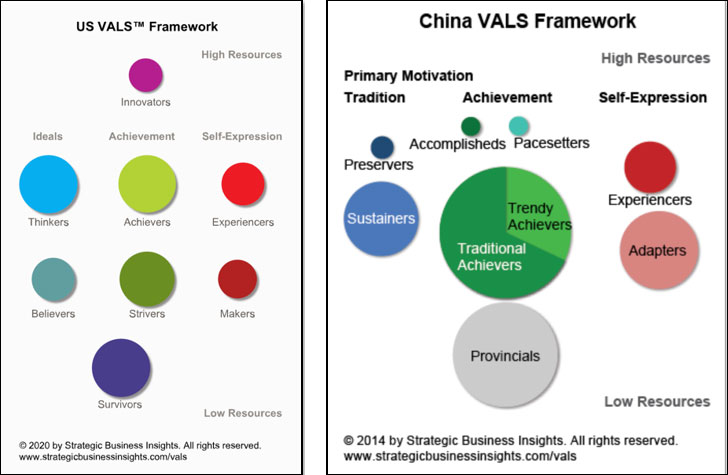
    • VALS (Values, Attitudes and Lifestyles)
      • Developed by SRI International, VALS divides consumers based on their primary motivations and resources.
      • It develops unique VALS systems for each country.
      • For example, the VLAS systems for the US and China differ widely.

    • PRIZM (Potential Rating Index by Zip Market)
      • PRIZM segments consumers into lifestyle types based on demographics, behaviours and geographic location
    • OCEAN utilises personality traits to predict consumer behaviour: openness, conscientiousness, extraversion, agreeableness and neuroticism

    The Myers-Briggs Type Indicator (MBTI), once very popular, is a psychographic framework that has recently been controversial.

    Kantar’s TGI is an audience profiling study that captures various data points—from product use to leisure activities to attitudes and media engagement. Since TGI has been present in India for decades, it offers a rich trove of data that can help develop an effective psychographic segmentation framework for India.

    Academic studies exist in the broad area of psychographic profiling of Indians, some of which can provide useful data sets or insights.

    It will take a decade or more to drive consensus and establish credibility for a Consumer Psychographic Segmentation Framework (CPSF) to become widely accepted and part of every essential marketing and media data set. If we start today, the marketing and advertising community will be in time to function optimally in an affluent and increasingly complex market called India.

    The use of CPSF will begin as early in the marketing process as product or service design and, of course, be central to marketing communication planning. A CPSF would also usefully inform social interventions and political campaigns.

    Developing a widely accepted psychographic segmentation framework is a vital R&D effort that ranks along with the attempt to create India-contextualised AI-driven martech and adtech. Let’s get on with it.

  • Market Research in the Age of AI

    Market Research in the Age of AI

    Ashoke AgarrwalWhen one plots the future of Artificial Intelligence (AI) in marketing, one arrives at a singularity where all of marketing is the AI avatar of a brand in direct conversation and interaction with the AI avatar of the consumer. I have called the AI avatar of consumer – Concierge Intelligence in many of my columns here, including my first MxMIndia column back in Jan 2022 -“The Coming Post-Digital Age”.

    However, plotting and thinking about the intermediate points would be helpful.

    I have been part of a team working since 2020 on using Natural Language Processing (NLP) to generate secondary research semi-autonomously. The launch of GPT-3 and subsequent versions reframed the project for us. Like scores, perhaps hundreds worldwide, we are now trying to find a market niche, proprietary prompt engineering, and the correct interface to support a viable business. Say, a freemium WhatsApp interface for Indian SMEs offering online business consultancy services based on open-source predictive and generative AI models working on public and paid data sets.

    What about the emerging role of AI in primary consumer research? The big two—Alphabet and Meta—have been using predictive AI for decades to segment consumers, keep them engaged with their social media feeds and search results, and harvest clicks so their advertisers can pay them big bucks.

    Over the past decade, big corporates from both the B2C and B2B worlds have been using Big Data and Predictive Analytics to fine-tune their business and marketing plans. However, it is unclear whether they are at the cutting edge of predictive AI, just as Alphabet and Meta are. While a lot is currently being made of Generative AI and the likes of GPT, Llama, Gemini, etc., I bet that we shall discover that the disruptive power of AI will come not from generating sentences, pictures, videos or music but from underpinning key business, economic, social and personal decisions based on a dynamic array of multi-dimensional data sets. While predictive AI underpins generative AI, a different kind of predictive AI will also underpin the AI age. It will be predictive AI that works on an integrated, dynamic view of the natural world to deliver strategic action plans and monitor and fine-tune them. To use this level of AI, corporations and governments will need to go beyond internal data sets and subscribe to a whole range of third-party data sets.

    One category of these third-party data sets will be garnered through an IoT network of sensors synthesised with publicly available identification data sets—for example, vehicle movement with ownership details or scans of browsing shoppers, personal IDs and billing details. The ownership and personal ID can be scrubbed of all details except for basic demographics to meet privacy rules. Alternatively, the individual could opt to belong to an ID Bank that holds his details in escrow and can release them, using blockchain technology on payment of a fee – thus making the individual the valid owner of his ID and personal data.

    The ID Bank idea will fuel the second category of third-party data sets. These data sets will contain in-depth profiles of individuals, including contact information, demographics, psychographics, societal and cultural attitudes, media usage, product and brand usage, and purchase behaviour and intentions. The ID Bank will have a watertight agreement with the individual on securely holding the data and releasing any of it to a third party only upon approval and release of a specified fee.

    Corporations can then request the release of specified data from a selected consumer profile. For example, a car company may ask for a data set consisting of individuals who own one of a set of car models and have indicated a purchase intention for a new car in the next six months with permission to contact with offers. The ID Bank, in discussion with the consumer, will quote a certain fee on payment, for which the data will be released in a blockchain format that allows for usage tracking. The fee will be released to the consumer’s account, and the ID Bank will get a management fee.

    Creating, managing and marketing the two categories of data sets envisaged above will define the future of the market research industry over the next few decades.

    The corporation’s predictive AI systems will define the need for data from third-party data sets, consider the cost-benefit of buying them, and incorporate them into predictive analysis to build business and market plans.

    Over the decades, as AI and consumers become more sophisticated, intermediaries like ID Banks will be cut out, and a brand’s AI will be in direct touch with a consumer’s Concierge Intelligence (CI) with market research evolving into a version of anthropology focused on studying the behaviour of AI systems. “AInthropology” anyone!?

  • In the Age of AI will Media & Advertising Divorce?

    In the Age of AI will Media & Advertising Divorce?

    Image rendered by ChatGPT given the column theme


    Ashoke AgarrwalA few decades ago, I was helping an advertising honcho craft an acceptance speech for a Lifetime Achievement Award. High on the list of reasons why advertising is a social good is that it enables citizens to access information and entertainment by providing media at a reasonable or no cost. Fast forward a few years, and the media veteran Pradeep Guha shocked the world by overtly positioning the primary role of the Times of India (TOI), once India’s newspaper of record, as an amasser of audiences for advertising to address. Pradeep’s honest assertion presaged the fall from grace of TOI and most other newspapers from a necessary read to a toilet accessory, if that.

    In the realm of broadcast and cable television, the relentless pursuit of audiences for advertisers has led to a steady diet of mind-numbing soap operas and shallow news coverage. The once vibrant and diverse landscape of television has been reduced to a monotonous cycle of content, all in the name of catering to advertisers’ demands.

    In the early years, social media was hailed as a tool of enlightenment and revolution, and the Arab Spring and Ukraine’s Maidan Revolution were credited to it. Today, it is seen not just as banal but as an insidious cause of rising depression among the young and tribalism at large. What gave? Once again, it was social media’s marriage with advertising. As Google (Alphabet) and Facebook (Meta) anchored their business model to advertising, they invented and nurtured algorithms that invented hordes of individuals hooked on content that amplified their worst impulses.

    The rise of OTT (Over The Top) television based on a Netflix-like subscription model led to a creative renaissance that restored television content as an art form similar to the movies (the fact that film and music had survived, in the main, as art forms have to do with the fact that advertising played little or no role in their business model). To my mind, OTT’s recent experiment with advertising as a source of revenue is dangerous and could lead to an inevitable creative slide into inaneness.

    The world is now seeing two revolutions.

    There is now a backlash to the increasing irrelevance of traditional mass media and an increasing wariness with social media as a news and information source. As a result, social media like Instagram and, where available, TikTok (or its imitators) have become platforms for content creators across various genres. While traditional social media platforms are becoming forums for content creators aiming at the mass market, niche platforms like Substack, Medium, Reddit and YouTube are becoming platforms for niche content creators in journalism, opinion, reviews and think pieces.

    In the coming years, if traditional media continues its decline, individuals or small, independent teams may take over a more significant share of the content market. While niche content on platforms like Substack and Medium is subscription or micro-payment-supported, content creators of mass platforms like Instagram and TikTok depend upon an insidious form of advertising called Influencer Marketing.

    While the dispersed content-creation model gathers momentum, another revolution is afoot as AI matures and uniquely empowers individuals and businesses. In a decade or two, communication between brands and individuals will be AI mediated with an AI avatar of the brand in communication with an AI avatar of the individual. I have posited this in my MxMIndia column of Jan 2022 titled ‘The Coming Post-Digital Age’.

    This will then result in a divorce between the media and advertising, leading to:

    • A re-emergence of mass media, albeit with a different business model
    • a repositioning of social media as a valued platform for content creators
    • And more effective and efficient brand-building by marketers through direct communication and social diffusion

    What do I mean by social diffusion? Globally, brands like Tesla and Apple have been built chiefly on social diffusion, which involves shared social narratives and the prosaic term unpaid media. Brands like Mercedes and BMW may have had advertising support in developed countries but have been mainly built on social diffusion in India. The guru brands – Sri Sri and Satguru – have been built through social diffusion. If Patanjali had continued to rely on social diffusion instead of relying on advertising to meet vaulting ambition, it would not be in the trouble it is today.

    In conclusion, the marketing communication discipline will shift paradigm over the next decade. One dimension of the change will be technology, with the emergence of AI as the vital medium of consumer interaction. The other dimension will be social, with the slow and steady accretion of social diffusion through narratives and word-of-mouth.

    Ashoke Agarrwal is a veteran advertising professional with around four decades in advertising and marketing services. Agarrwal, a chemical engineer from IIT Mumbai and a postgraduate from IIM Bangalore, is a pro-entrepreneur with past and current ventures in market research, advertising, CGI, e-learning and brand consultancy. He writes on MxMIndia every Thursday. His views here are personal.

  • Is Marketing coming Full Circle?

    AI-generated image


    Ashoke AgarrwalTime was when marketing was confined to the bazaar. Goods and services were sold in one-to-one transactions between a buyer and a seller. More often than not, the buyer and the seller had a relationship, if not of trust, then at least of familiarity.

    Then, the eras of mass manufacturing and mass media dawned. After World War II, the industrial age shifted into high gear, leading to a proliferation of products and services. The prosperous 1950s and 60s, driven by the economic boom in the USA, marked the birth of the consumer era.

    Marketing underwent a significant transformation, shifting from the traditional model of building one-to-one relationships to a new era of mediated one-to-many brand-building. Modern media made this shift possible, revolutionizing how mass audiences could be reached.

    Marketing and media forged a symbiotic relationship, each playing a crucial role in the other’s success. With its ability to attract and retain audiences, media provided the platform for marketing to communicate its messages. In turn, through advertising, marketing financed the accumulation of these audiences, ensuring the continued viability of media.

    In the initial days of mass media marketing, brands were the pegs through which information about the product or service was conveyed. In the early days of the consumer age, many products and services had differentiated features, and advertising was then the art of conveying unique selling propositions (USPs) memorably.

    A few decades into the consumer age, as categories matured, competition heated up, investment flowed into consumer businesses, contract manufacturing emerged, and brands in many categories didn’t have differentiating features to hang their stories.

    Brands morphed away from information providers to signalers of personas and lifestyles. For example, the Nike user was a never-say-die enthusiast, while the Adidas guy strived for perfection.

    Brands’ dependence on mass media increased. Signaling a persona or a lifestyle on mass media allowed the entire market–loyal users of your brand, potential users of your brand, and, as importantly, loyal users of your competition–to know what your brand stands for. Brand equity was built on what the brand stood for and what it did not. The acceptance among loyal users complimented the rejection by the faithful users of the other brand. Pepsi’s equity depended not just on its persona but as much of the persona of Coke.

    While mass media might have been primarily financed by marketing, its importance went well beyond its role as a vehicle for advertising.

    In its heyday, mass media offered society a shared cultural arena that builds societal cohesion. Most religiously read the same one or two newspapers in the morning covering the same news, watched the same prime-time TV programs and went to the same movies.

    The arrival of Facebook and the subsequent social media juggernaut fractured this cohesion. Today, the average person gets his information, views, entertainment, and cultural content from various social media and OTT sources that may have little in common with those in his family, his colleagues, or his neighbors. The cohort that shares his principal information, entertainment, and cultural sources is not a community in the traditional sense – they might not reside in the same city or even country, they might not share the same profession or educational level, and they may not be even in the same age group. The only thing they have in common is the echo chamber of partisan views and attitudes they share. They are the modern tribe – divorced from the shared everyday space and civic responsibility that defined traditional communities.

    This fracturing of societal cohesion has also fractured the rationale that drives modern brand-building.

    The core function of a brand as a widely accepted signal of a persona or a lifestyle is fast losing its potency, mainly because, in post-modern society, there is little that is widely accepted. In an era when even facts have alternate facts, what chance does a brand have as a widely accepted symbol?

    In light of failing mass media, brands have shifted their marketing resources to new media. However, the paradigm that drives their brand-building effort remains the same as in the modern era. By and large, they are yet to find a new paradigm that better suits the changed reality.

    Lately, I have heard murmurs from the marketing fraternity that perhaps digital and social media are better suited to “performance marketing” (another name for baiting someone to click on a link) than brand-building. And they must reweigh their mass media spending to strengthen their brands.

    Instead, the new reality calls for re-examining the very purpose of brands. Instead of brands being broad-based signalers of lifestyle or persona to a market, brands in the emerging new marketing era become builders of permission-driven one-to-one relationships with their consumers. Like the shopkeepers and the shoppers of the bazaar of the old days, a brand and its consumers must develop an interactive relationship of trust and constantly deepening understanding of each other.

    With the maturing of Big Data, a digital-immersed consumer, e-commerce, and the economies of scale of cloud computing, marketing can today shift to a paradigm where a brand can build and nurture a one-to-one relationship with consumers at scale.

    Given my current obsession with AI, as marketing reverts to building one-to-one relationships, the day is close when the one-to-one relationship will be between the brand’s AI avatar and the consumer’s AI avatar, as I have written in many of my MxM columns, starting with the first one.

    Marketers at the cutting edge, including many D2C start-ups, have started working on this new paradigm.

    Post-modern marketing could address another shift. The younger generation of consumers – Gen Z and, over the next decade, the Alphas (those born after 2010) – are opposed to marketing messages touting lifestyles and personas and, simultaneously, intensely devoted to a chosen cause. Can tomorrow’s brands be built based on a cause it espouses, not just in communication terms but through on-the-ground action? An exciting area to ponder in a MxMIndia column to come?

  • Net-Zero and The Diffusion of Technology

    Net-Zero and The Diffusion of Technology

    Ashoke AgarrwalClimate change, the most pressing issue of our time, is manifesting unprecedentedly. The erratic weather patterns, marked by prolonged droughts, devastating floods, and uncontrolled forest fires, underscore the need to achieve net zero emissions swiftly and subsequently reduce greenhouse gases in the atmosphere.

    There are four broad routes to reaching net zero (and then continue on the path of reduction):

    • Reducing the average carbon footprint of each human through lifestyle changes – mainly through consuming less electricity and fuel and changing to more eco-friendly diets
    • Technology that a) enables humans to consume less electricity and fuel beyond lifestyle changes and b) lowers the carbon footprint of economic and industrial activities like agriculture, manufacturing and computing.
    • Increase the natural green cover that absorbs greenhouse gases from the atmosphere and
    • Create, build and run technology systems that absorb and sequester greenhouse gases from the atmosphere.

    Decades of grappling with the problem of climate change have made it clear that getting humans to change lifestyles to reduce their average footprint is challenging, if not impossible. The reason is that fundamental human nature prevents humans from sacrificing individual comfort to attain community goals.

    Preserving and increasing the green cover runs into a geopolitical logjam engendered by the uneven development of countries worldwide.

    The above reasons make the development and diffusion of new technology critical to meeting the world’s net zero and beyond goals.

    These technologies range from low—to zero-carbon footprint power (wind, solar, nuclear fission, and someday perhaps nuclear fusion) to greener mobility (biofuels, hybrids, hydrogen and electric) and industrial processes (grey or green Hydrogen).

    Each of these new technologies faces multiple challenges in meeting its full potential.

    Take electric cars, for instance. The market opened at the high end, and pricey Teslas became symbols of a woke lifestyle. In the process, Tesla solved tricky technical problems, including batteries with enough juice to support viable range and life and reliable and fast charging systems.

    The Theory of Product Form Strategy (PFS) postulates every innovator of new technology faces a product-form decision at an early stage of building a business out of his innovation. The innovator company has three choices: Market the Know-How, Market a Component, or Market A System.

    In a pre-print manuscript submitted to the Journal of Marketing titled “A Theory of Product-Form Strategy: When to Market Know-How, Component or Systems.”, Frias, Ghosh, Janakiraman and Duhan, have an interesting illustration of the PFS Theory. For example, consider an innovator who has developed a technology that tracks the mechanics and dynamics of a baseball bat as it meets the ball, allowing coaches to refine a batter’s ability. As a result, the innovator can decide to sell the technology to a party that determines how to market it. Alternatively, the innovator can develop the technology into a component that fits on a bat and market it to bat manufacturers.

    The third alternative is for the company to get into bat manufacturing and build a bat brand based on its advanced technology.

    Tesla, the pioneer in the EV market, decided to go the “Market A System” route.

    This decision has impacted the very structure of the EV market globally. Today, the EV market is a positioning and pricing battle between traditional auto brands and newcomers.

    In an alternative scenario, if technology pioneers had developed and marketed know-how and components in the battery technology, charging, power electronics and drive train areas (including hybrid), the structure of the green mobility market would be very different. It would be akin to how the PC industry developed with Windows and the smartphone category with Android.

    Over the past year or so, the EV category has experienced a slowdown, with many people wondering whether hybrids will be the future of green mobility. As a result, the green mobility market might evolve with standard batteries, charging systems, power electronics and drive train components, releasing economies of scale in capital costs and end pricing. In such a scenario, a brand like Tesla could be the premium walled-garden brand, much like Apple is in smartphones.

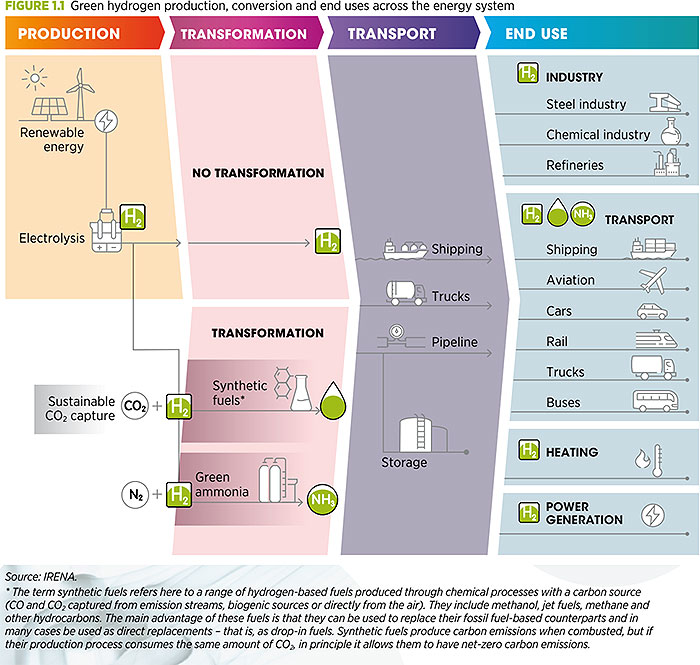
    Green Hydrogen has a more extensive remit than EVs or Hybrids, as it can impact broadly and deeply, as illustrated below.

    The Product Form Strategy that pioneers the Green Hydrogen revolution will have a seminal impact on the global economic and industrial framework over the next few decades.

    Green Hydrogen is at an early stage of evolution; given its distributional nature, it is likely to mature into a Big Oil-type category–“Big Hydrogen,” so to speak.

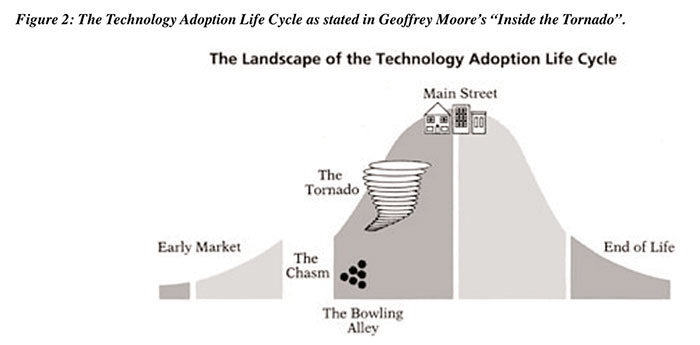
    The penetration of Green Hydrogen will follow the Technology Adoption Life Cycle as stated in Geoffrey Moore’s “Inside the Tornado”.

    “Big Hydrogen” must adopt “The Bowling Alley” strategy to release The Tornado to build tomorrow’s hydrogen economy.

    I explained “The Bowling Alley” strategy in some detail in my MxMIndia column of February 16th, 2023, titled “The Diffusion of AI: What do the marketing models predict?”.

    AI, Green Mobility, Green Hydrogen, and their offshoots will be important marketing and communication categories for tomorrow, and marketing and advertising people should invest in closely following their development and diffusion.


  • Ashoke Agarrwal: Thank you, CNBC-TV18!

    Ashoke AgarrwalI’m an avid consumer of political and economic news.

    My consumption habits are, however, skewed.

    I focus on the US media simply because the US is the best and most entertaining but enlightening reality show on Earth. Many years ago, I had an advertising executive from New York in stitches when, during an argument, I quipped, “Hollywood is not an American institution. America is a Hollywood institution.” Plus, the world’s most prosperous country delivers bonzo production values in everything it does. However, I do assiduously ignore the US media’s take on India and generally the rest of the world because of its “Ugly American” bias.

    I rely on magazines like The Economist and a series of well-chosen podcasts (YouTube videocasts) for serious geo-political, technology and economic takes.

    I tend to mostly ignore the Indian news media, not because I’m not interested in Indian news but because its professional standards and production values are so horrendously low. I still dip into India Today magazine because its coverage continues to be grounded and unbiased. Though page after page of “sponsored” content is an irritating distraction, everyone, including a storied magazine, must make ends meet in these dog days for mass media.

    Over the last couple of months, caught up in the implications of the impending election, I made an exception. I started watching the Indian news channels and reading the Indian newspapers. The reasoning was that the reach of news media, especially the vernacular TV news channels and newspapers, continued to be good. Watching and reading them was one way to get in touch with what was happening on the ground.

    The upshot of this experiment was that in a matter of weeks, I was depressed!

    As a form of self-analysis, I asked myself, what gives?

    A recent article in The Economist,”Are American Progressives Making Themselves Sad?”, offered an interesting perspective. Gallup’s annual global poll on happiness found that progressives are, of late, much less happy than conservatives. The cause for this was a flip in the attitude to change. In an earlier era, progressives anticipated change and were very happy about it. Now, after decades of progressive change, the conservatives are looking for radical change. And since change is inevitable, the happiness pendulum has swung.

    But does the progressive-conservative dichotomy, fascinating though it is, explain my depression? Not really. I’m a centrist, and I have no dog in the political fight that is currently raging in India. While one party is a better manager of India’s fiscal and economic policy, India’s financial strength and growth will endure whoever is at the political helm.

    Shouting matches about secularism, appeasement, dynasty, authoritarianism, national image, security, threats to the constitution and democracy etc., etc., are just shadow-fighting. Such shouting matches about ephemeral issues are de rigueur in heated political campaigns.

    So, the ingredient in my daily diet of Indian mass media coverage of the Indian elections that upset my mental equilibrium was not the content but the tone delivered by Indian politicians from both sides and the tone of the onward transmission by media coverage.

    The bile, from both sides, is poisonous. The rhetoric is devoid of all reason. Instead of providing a patina of deliberation and studied comments, the media seeks to amplify the bile and the unreason.

    As I drowned in this murky media sea, I perceived a country and a society riven by strife where misery ruled, and the only alternative was another form of misery.

    And then I remembered that the most potent pillar of modern society globally, including in India, is business, not politics. The Edelman Trust Barometer 2023 confirms this. The finding is that people’s trust in business is consistently higher than that of government, the media, and NGOs. Given this, perhaps the state of Indian business better reflected the mood and state of India and its people than its politics. I, therefore, added India’s business news channels and newspapers to my daily diet of Indian mass media. Soon, I found relief. The tone is measured. The analysis is grounded in numbers. And the mood is cautiously optimistic. India is in good hands, I realised. Its economy and businesses are in good hands. Hands that will find equilibrium and growth whatever the political dispensation. Isn’t it evident when State Governments play a crucial economic role, and businesses continue to boom under State Governments of varied hues?

    My analysis is probably too facile, but it helped me beat the downward loop. For this reason, I must thank CNBCTV18. You guys are steadfastly devoted to the numbers, financial reports, and the stock market with a smile, steadily ignoring the political storm outside your studios. Thank you once again. Bill me for therapy if you must, though I pay the requisite subscription charge.

    PS: My fellow MxMIndia columnist, Ranjona Banerji, regularly reviews the news media scene in India. To do so, she must digest a daily diet of Indian news media over the years. After my experiment, my admiration for her has increased manifold. What perseverance! What an iron stomach! Hats off!

  • Ashoke Agarrwal: The Near Future May Bring Some Personal Goodies

    Ashoke AgarrwalThe world is passing through an uncertain phase. The crumbling global order, war depredations, and the accelerating threat of climate change only exacerbate the acrimony of increasing tribalism across societies. Nearer home, the era of coalition politics is back, and its effect is uncertain. Will it reduce the bickering across political, regional and class lines, or will it only amplify it? Will it help solve inequality and employment issues, or will it only dampen overall economic growth without helping anyone?

    Amidst the uncertainty of the present, it’s comforting to envision a future that holds promise. Not a distant future, but one that is within our grasp, the near future.

    The sociopolitical and economic arenas are too fraught to think about a near future that will benefit the world. What about technology? Enough is happening there to change lives globally. However, the overall sour mood also permeates the view on technology forecasting.

    Take Artificial Intelligence (AI). Future historians will see 2023 as the year the Age of AI dawned. However, current prognostications on what AI will do for humanity are primarily dominated by doubt and dread.

    After a day spent reflecting on the Indian election results and uneasy contemplation of India’s social and economic future, I have decided, as an exercise in therapy, to generate a listicle in today’s column on the transformative potential of AI. These are not just ‘goodies’ but solutions that can revolutionse our lives in the next decade. AI systems and devices that are personal and make an individual’s life better.

    Here it is:

      • An AI audio avatar. A personal wear device that not only translates speech from one language to another but also puts it out in real-time as a lip-synced dub, mimicking the speaker’s voice. The potential of such a device is immense, and the result could be greater cohesion within and across societies, especially in multi-lingual polities like India and Europe. There could also be negative aspects – for example, a rabble-rouser will rabble in real-time in multiple languages. But then, no technology or means has ever been invented that does not have a negative aspect. All the technologies that the above kind of device will need already exist and are ready to be adapted and integrated. This doability aspect applies to all other items on this list, too.
      • An AI Chef. Cooking is a science. An AI Chef operating in a fully equipped AI kitchen with all ingredients on hand and robotic arms could rustle up any dish on demand. It could do so from a recipe, of course, but it could even analyze and recreate a cooked dish. It could act on human feedback and tailor a dish to specific requirements. Give it a dietary requirement, and it creates a week-long menu that fits it and serves the meal every day. While an AI Chef is a possibility within the next decade, within the next few decades, it could reach Start Trek levels – rustling up dishes from manipulating a few basic chemicals that taste the same as those made from natural ingredients and also have the same if not better nutritional values. Imagine agriculture and animal husbandry being replaced by the chemical industry!
      • An AI Concierge. An AI system that resides on all your devices and is witness to all that you do (based on the level of access you give it) and, if you choose so, all that you think (by inputting your thoughts into the system, a cyborg-like interface that knows what you think is probably a century away). Your AI Concierge, if you so choose, handles all your routine correspondence (personal and business), shopping and even financial transactions. Your AI concierge will do all it does based on a deep understanding of your needs, an all-around knowledge, and a speed of action unmatched by an individual or even a human team of specialists.
      • An AI Personal Physician. Today, VVIPs, like heads of state, have personal physicians. Tomorrow, the miracle of AI will lead to many of us having one – a constantly up-to-date AI expert system that will access all of the individual’s health data – from all the wearables, lab tests and medical scans (the amount and quality of health data that wearables will collect are constantly improving. A wearable lab-on-the-arm that continually tests and provides periodic detailed blood work reports is possible. Home scanners that can provide essential X-ray scans are likely to become familiar. Over the next few decades, an AI bathroom could scan a user’s body and waste output daily). The AI Personal Physician would then make health recommendations to the individual and consult specialists, who could also be AI systems when needed. It would coordinate with the AI Concierge to fix appointments for tests and consultations.

    Today, AI is a hollow add-on claim touted by many consumer device and service sellers. However, AI will produce a range of genuinely pathbreaking consumer devices and services tomorrow, creating a new consumer and economic boom. Initially, the boom might cater to the affluents, but economies-of-scale and increasing economic productivity will ensure the boom spreads across all sections of society.

  • Can Indian Brands Go Global?

    Can Indian Brands Go Global?

    Ashoke AgarrwalCan India become an economic superpower without some of its homegrown brands going global, whether in the B2C or B2B space?

    Probably not.

    The Germans reconstructed a shattered war economy and became an economic giant, building global B2B and B2C brands like Siemens, BASF, Mercedes and BMW. The Japanese did with mid-market, high-volume brands like Sony and Toyota and the Koreans with value brands like Samsung and Hyundai.

    A brand is a multi-dimensional complex entity.

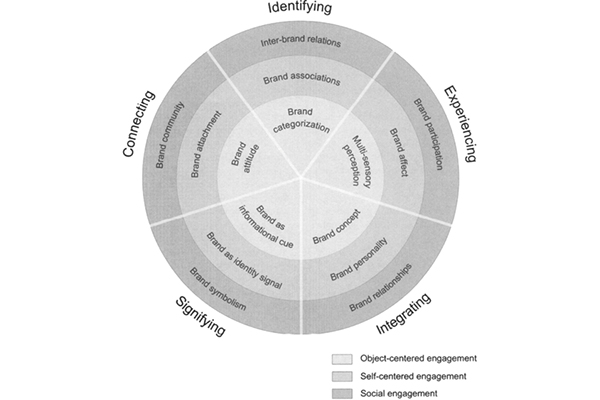
    Bernd Schmitt of Columbia Business School posited a model delineating a brand into fifteen dimensions.

    Figure 1: Consumer Psychology Model of Brands

    For a brand to succeed in India and establish itself globally, it must build on all 15 dimensions of its markets.

    However, one dimension is critical for a brand to become global.

    It is ‘Brand symbolism’ under the ‘Signifying’ triad.

    Schmitt writes, “Brands must be used to signify not only individual selves; they may also represent a group, a society, or a culture. As cultural symbols, they can stand for nations (McDonald’s), generations (the Gap), and cultural values (Marlboro, Harley-Davidson). As exemplary symbols worthy of admiration and respect, they can assume the role of cultural icons and assume mythic qualities.”

    In writing about Brand Symbolism, Schmitt refers to D.B. Holt’s 2004 book, “How brands become icons: The principles of cultural branding”.

    In his book, Holt explains how brands become icons by creating “identity myths” that connect with culture and help people make sense of their lives. He argues that iconic brands cannot be built using conventional branding strategies focusing on benefits, brand personalities, and emotional relationships.

    Iconic brands do not target specific consumer segments or psychographic types. They do not mimic pop culture but instead lead it. They speak with a rebel’s voice. They don’t try to mirror their customer’s thoughts and emotions. They speak into a cultural conversation in a relevant way and take on meaning beyond their categories.

    The global brands of the US, Germany, Japan, and Korea became global icons because they took a slice of their country’s cultural identity and gave it global resonance.

    Indian brands that aspire to global success must do the same. They must capture India’s soul and make it relevant to people’s lives worldwide.

    India has done it before with Yoga. Yoga is an iconic practice across the world that captures Indian asceticism and gives it relevance to the day-to-day lives of people.

    I have worked, in their foundational years, on two Indian brands that have lately begun to enter global markets – Amul and Tanishq.

    Both brands have the DNA to become global successes.

    Amul, a food brand focused on dairy products, can build on the Indian cultural concept of Satvik. Satvik is a powerful cultural concept that elevates dispassion and purity as the keystones to blissful happiness. This will find global resonance in the world looking to embrace “less is more” to combat environmental degradation and an epidemic of greed. Specifically in the area of food, there is growing disgust with cruelty to livestock to overstuffed, overdosed, and over-mechanised meat farms, leading to a counter-culture movement towards vegetarianism.

    Tanishq, as a jewelry brand, can build itself on the Indian cultural concept of ‘Shringar’. Shringar is one of the Navarasa – nine emotions, moods, or feelings that govern life. Shringara, in Sanskrit, means love, romance, decoration, beauty, attractiveness, and an aesthetic sense. Shringar can give rise to all kinds of love, be it romantic love, love between siblings, parental love, holy love, or even love towards a pet.

    Tanishq can build itself as the Shringar that creates, and nurtures love in an increasingly stressed and alienated world.

    I know that both brands–Amul and Tanishq–are currently in a conventional brand-building stage, focused on the 14 other dimensions of the Schmitt model. However, it might be helpful for them to chart their course to becoming global icons starting today. In that journey, they must identify a cultural strand that underlines their Indian identity while resonating with universal concerns and values.

    Other categories offer India the opportunity to build brands with the potential to become global icons. I’m fortunate to be working with one such brand. It operates in the fabric space–a natural fabric unique to India and resonant with the very Indian value of non-violence–Ahimsa–while being equally strong on Shringar. Someday, over the next few years, I hope to share the global success story with this very Indian brand.

  • Can India be an MaI and AdI Powerhouse?

    Can India be an MaI and AdI Powerhouse?

    Ashoke AgarrwalThe world awaits the paradigm-shifting potential of Machine Intelligence (MI) and Advertising Intelligence (AI).

    MI and AI are foundational technologies like electricity that need to be deployed for specific purposes to generate economic and social value.

    The competition is fierce, with established corporations and countless start-ups worldwide vying for a piece of the MI and AI pie. With its unique strengths, India can make a significant mark in this arena.

    This column briefly explores India’s opportunity and potential to be a leader in applying MI and AI to marketing and advertising—a field I term as MaI and AdI.

    The first requirement for MaI and AdI is the accumulation of relevant data, including public-facing data like syndicated market, media, and consumer data compilations and research and, to the extent possible, private data on sales, consumer profiles, and research with brand owners from across the world.

    Developed on this data, MaI and AdI engines can offer a brand owner the following based on deep and evolving consumer insight:

    • Fine-tuned and dynamic marketing mix plans that maximize ROI
    • Messaging templates that turbo-charge the marketing mix
    • Product enhancement and development ideas

    Can India become a global leader in this game?

    Yes, if we move fast and move-wise.

    The first step would be to test and perfect new modes of collecting consumer data.

    The internet, the smartphone, MI, and AI promise a new age of syndicated consumer research. Currently, syndicated consumer research sits in silos. Sales numbers are compiled through retail audits. With retail worldwide increasingly dominated by e-commerce and big-box retail, retail audits largely fail as market share indicators simply because e-commerce and big-box retailers treat sales data as a valuable resource and loathe sharing it with third parties.

    Conventional media research needs to be improved. The increasingly dominant digital powerhouses like Alphabet and Meta think of audience data as the engine central to their business, and they have it at a level of granularity that no conventional research technique can match.

    As OTT platforms like Netflix and e-commerce giants like Amazon muscle into advertising, they will keep their audience data close and be equally impenetrable to conventional research.

    Media research focused on traditional mass media has a utility and funding problem. As a hangover from the halcyon days of advertising agencies when they fed at the 15% trough, brands wanted the agencies to fund media research and who, in turn, twisted the arms of media houses to share the costs. Audience research for traditional media thus came to be split into silos – press, TV and even radio, OOH and cinema – had research funded and controlled by narrowly focused bodies.

    As the percentage of marketing communication budgets allocated to traditional media continues to shrink brand, mass media owners and media agencies are finding it hard to continue funding research and the brand managers who are increasingly used to the clarity of performance marketing and pay-per-click contracts, wonder whether bland broad-brush data of who watched what is adds any edge to their marketing data.

    The third data dimension is brand lift. Marketing is going down the AIDA funnel – from awareness to consideration set to intention to purchase, with the final sale, satisfaction, brand loyalty and advocacy culminating in the process. Currently, very little syndicated consumer research is available in this area. The big brands invest in privately funded research to track this dimension, with others adopting a set-of-the-pants approach to this crucial aspect.

    The answer to the challenges above is developing a technology-led process in which the consumer is the direct and single source for all three data dimensions—brand lift, 360-degree media exposure, and purchase. The two critical issues to be resolved are compliance, incentives, and data privacy regulations. The answer lies in innovation in technology, including LLMs and contractual relationships. In the spirit of full disclosure, my partners and I are experimenting with one such system in collaboration with a UK-based company.

    A critical element differentiating successful brands is a nuanced understanding of what works and what does not in advertising and other marketing communication for a particular product category, geography and consumer segment. Ogilvy, in its heydays, used to generate multimedia Magic Lanterns for product categories of interest that laid out, with examples, the dos and donts when creating advertising for a particular category. These Magic Lanterns were assiduously produced by a cell of PhDs running factor analysis on advertising from across the world and some measure of the efficacy of each ad.

    The single source data envisaged above will produce multidimensional efficacy data for campaigns across categories, markets and segments. A state-of-the-art AdI engine could be developed that uses Deep Learning to pinpoint what works and what doesn’t.

    While MaI and AdI will be the first generation of AI in marketing, the third generation will likely result in AI avatars of brands.

    Parallelly as the Siris and the Alexas of the world will, over decades, morph into Concierge Intelligences (CI) that will become AI avatars of individuals. I have written about the idea of CIs in an earlier MxMIndia column. In the age of AI, marketing and marketing communication will evolve to primarily be an interaction between the AI avatars of brands and the AI avatars of consumers.

    In the near future, the single source would meld with the client’s private data, providing a never-before-used base for effective marketing planning.

    There is scope for more than one Indian player to make India the single-source powerhouse of the world for the following reasons:

    • India has the technology nous in the high quality, low-cost quadrant.
    • India is an evolved B2C and B2B market that can support the development of single-source-research-based MaI and AdI systems.

    Since the single-source system will be digital, India can market its fully developed MaI and AdI systems worldwide.

    Single-source data coupled with MaI and AdI are the future of marketing and advertising, and India, on its way to Viksit Bharat, can own it.