Category: Ashoke Agarrwal

  • Ashoke Agarrwal: The Three Immutable Laws of Brand-Building

    Ashoke Agarrwal
    Ashoke Agarrwal

    By Ashoke Agarrwal


    Much has changed over my four decades of practising the art and science of marketing communication and brand strategy.


    I went from the era of Doordarshan to the age of cable and the mighty GEC and sports channels. Then the internet age began, and this year it is being reported that digital is poised to overtake TV in advertising revenues. The coming two decades may bring another tectonic shift in marketing communication with the emergence of AI-mediated platforms and perhaps even a metaverse.


    Besides media, much has changed in product development and distribution. The emergence of contract manufacturing, modern trade and e-commerce has led to an explosion of competition and a weakening of entry barriers. Today, many D2C brands are bringing in the fresh air of innovation in many a moribund category, exploring market niches and creating new product and service categories.


    However, it is my experience that through all this turmoil, there are a few fundamentals of marketing communication and brand-building that haven’t changed. Here are three:


    1. While the saying that goes “you can fool some people all the time, all people some of the time but not all people all the time” may hold in politics, it is anathema even to try to fool one person for a day in brand-building. A brand might try and think it has succeeded for a while, but finally, the result is always disastrous. Therefore, while some level of puffery is unavoidable in advertising, it is paramount that every marketing message hews close to the truth, ASCI or no ASCI.

    2. A brand is built on both cognitive and affective dimensions. On the cognitive dimension, while a brand may not always have a USP, it must convey a rational reason to buy. An acceptable cost-benefit ratio is the cognitive offering for most brands in this hypercompetitive age. The affective dimensions differentiate brands who otherwise are at par with each other on functionality. Most marketing communication focuses on building a differentiated emotional positioning for the brand based on brand personality and targeting an individual’s yearnings in the status, sexual, tribal and suchlike arenas. Michelle Obama in the Democratic Convention of 2016 made news with her comment (and I paraphrase), “while they choose to go low, we take the high road.” Well, we know the high road led to disaster in 2016. But that again is politics. In brand-building, which is a long-term activity, it is best to take the high road. Taking the high road is a challenging mandate to follow. Individual base emotions are often the most robust and most common across many markets. And the temptation to appeal to them is irresistible to advertising professionals, as is evident across advertising across categories and markets. However, if we look hard enough, we will find, in most contexts, a higher-order emotion that can form the core of our brand’s affective appeal. A factor analysis of the marketing mix of brands across categories and markets will back up this basic tenet of brand-building.

    3. “Half of all advertising is a waste, and no one knows which half” is a marketing cliche that has endured from the era of mass media to today’s age of programmatic advertising and performance marketing. But, like all cliches, there is a kernel of truth in it. However, suppose advertising follows the basic tenets of good marketing communication. In that case, I believe no advertising is a waste (the corollary to this thesis is that lousy advertising is not just low ROI but actively hurts brands and sales). In measuring the returns on advertising, another fundamental truth of advertising exists. All good advertising, instead of being a half-waste, has a half-life. It engages in an act called brand-lift – lifting the brand within the consciousness of the potential consumer from non-awareness to positive awareness to active consideration on the way to actual purchase. The length of this half-life differs across categories from short in FMCG to considerable in purchases like cars and houses. If ROI measures consider the fundamental half-life aspect of advertising, no good advertising is ever a waste, half or otherwise.


    Ashoke Agarrwal is a veteran advertising professional with around four decades in advertising and marketing services. Agarrwal, a chemical engineer from IIT Mumbai and a postgraduate from IIM Bangalore, is a pro-entrepreneur with past and current ventures in market research, advertising, CGI, e-learning and brand consultancy. He will write on MxMIndia every other Thursday. His views here are personal.




  • The Coming Post-Digital Age


    Starting a new fortnightly column by advertising and marketing services veteran Ashoke Agarrwal


    By Ashoke Agarrwal


    Ashoke AgarrwalThe inexorable rise of digital and social media has rocked the world of mass media, marketing, and marketing communication.
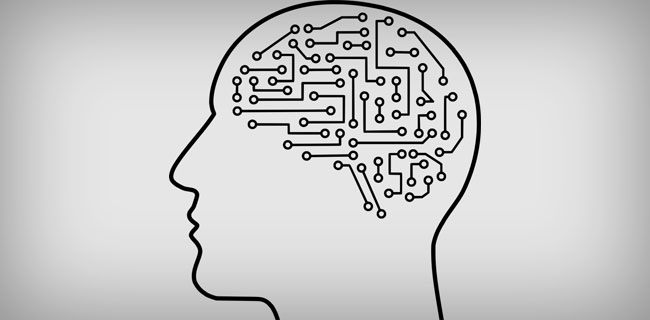


    However, I believe the current disruption is only the tip of the iceberg.

    Media, marketing, and marketing communication professionals should prepare for a more profound disruption driven by the rapid and widespread development and adoption of Artificial Intelligence (AI) leading to a Post-Digital Age.

    Studying the possible contours of AI in marketing and marketing communication, I have developed a concept called “Concierge Intelligence” (CI), as outlined later in this article (I had published a blog post on CI back in Feb 2021).

    Over the past few months, scandals have rocked the world of social media and digital advertising, threatening the lynchpin of social media and programmatic advertising – cookie-based tracking and cookie pools – with stringent and widespread regulations.

    The other critical development is a shift in the outlook of start-up capital – there is a clear trend towards favoring start-ups in deep tech areas.

    Both these trends bode well for the accelerated arrival of the Post-Digital Age.

    There is a growing realisation that Facebook, Google, and its kin are critical fuelers of fissiparous tendencies in societies worldwide.

    Social media’s power to divide is a result of algorithms (algos in techspeak) that drive engagement, in the process reinforcing tribal tendencies and conspiracy theories.

    The digital and social media giants are reluctant to change these algos, as they are the engines that drive their primary source of revenue and profits -advertising.

    Change in the outlook of social media, digital media, and e-commerce giants will come when they face emergent competition from the likes of Concierge Intelligence that will usher in a Post-Digital Age.

    The increasing disquiet among marketers and advertisers with social media and digital advertising effectiveness will be at the core of this emergence.

    Many in the marketing community started as enthusiastic advocates of digital marketing. It seemed to hold the promise of better ROIs over the short term and more robust, interactive brand-consumer relationships over the more extended period.

    However, the reality of digital marketing has belied most of these high hopes. Today, digital marketing does not represent interactive access to a more clearly defined target consumer. Instead, it obfuscates behind attribution in terms of “views” and “click-throughs”, numbers that cloud as much as they reveal.

    If most marketers are dissatisfied with digital marketing, the question arises as to why the share of digital in most brands’ marketing budgets grows year on year? The reason for this inexorable growth is, I believe, two-fold.

    First, the rise of digital media is weakening mass media. OTT platforms steal audiences away from linear TV, cinema, and radio. Social media and news aggregation are decimating print newspapers and magazines. It forces big brands to allocate an increasing part of their marketing budgets to digital marketing to reach their audience.

    Secondly, digital marketing is growing at a pace is because of the modularity it affords. Smaller brands with smaller budgets can reach out to smaller target markets, a positive development fostering increased consumer choice. But unfortunately, it also encourages hucksterism and fraud on the flip side of the coin.

    After the Arab Spring of a decade ago, social media was much ballyhooed as the force that would bring about and strengthen egalitarianism and democracy in societies across the world. Instead, in nations after nations, social media today is seen as one of the forces feeding tribalism, extremism, encouraging authoritarianism and threatening anarchy. The rallying cry of the likes of Zuckerberg and Pichai seems to be, “Surrender your data, and I will feed you, for free, the opium of tribal comfort while putting your psyche to power my advertising revenues, a la The Matrix”.

    However, I believe that the page will likely turn again, and social media will get back to being a force for good over the coming decade or two. This transformation will come about under the gathering onslaught of regulators, brands, and public opinion. Under this emergent paradigm, individuals will own the data gathered through their digital footprint.

    I envisage a time when a public utility like service will gather all such data and store it in a digital locker solely owned by the individual, managed by a Data Utility provider. The individual would be free to upload more information into her digital locker, including brand and shopping preferences, recent purchases and intentions, demographic details, and attitudinal batteries. Brands could approach the Data Utility and, based on anonymised information, choose to seek more information about a particular type of individuals – say, individuals who currently own a six-year-old mid-size sedan or those who have expressed an intention to purchase a luxury SUV. The Data Utility would inform the individual of the interest and the fee the brand is willing to pay for their access. The brand will be allowed a permitted level of access with explicit permission from the consumer. Blockchain technology will ensure that a significant part of this payment would go to the consumer (the actual owner of the data) and the rest to the Data Utility provider.

    Central to the above ecosystem will be an AI product I call “Concierge Intelligence” that will mediate for the individual between brands and the Data Utility provider. The individual will own the Concierge Intelligence platform, much like owning a house, a car, or an electronic device.

    The era of Concierge Intelligence will avoid the concerns raised by the age of marketing to bots like Alexa or Siri, posited by some technology forecasters. Instead, Concierge Intelligence will emerge as a tool for individual empowerment instead of yet another money-making and control-enhancing platform for data aggregators, data miners, marketers, or the government. As a result, Concierge Intelligence could be the next big consumer product category of the coming decades, just as the smartphone has been for the past couple of decades.

    The individual will buy his Concierge Intelligence (CI) — a software application -from the market and load it onto all the devices she uses. Then, CI will get to work to learn the consumer’s interests and preferences. The individual will set the scope and depth of this learning.

    CI will be mediate between the world and the individual. First, it will map the individual’s learning patterns and maximize the speed and efficacy of the individual’s learning. It will continuously keep a tab on the individual’s inherent talents and emergent capabilities and connect her with opportunities to put these talents and abilities to use, in the process not just maximizing her earnings but also increasing her sense of self-worth. Finally, it will perceive the individual’s relationship and leisure needs and help her meet them. One of the duties of CI will be as the gatekeeper to the Data Utility service and brands that seek to message and sell to the individual.

    While the CI will have powerful capabilities, it will be under the total command of the individual. She can change its functionalities whenever she wants and even switch it off if she desires, much like today’s smartphones.

    To my mind, CI will, over the next decade, become the most widely prevalent form of AI. I like to think of a CI as AI with soul. A form of augmented intelligence fusing an individual’s psyche, with all its complexity and humanity intact, with AI’s power, speed, and reach.


    Ashoke Agarrwal is a veteran advertising professional with around four decades in advertising and marketing services. Agarrwal, a chemical engineer from IIT Mumbai and a postgraduate from IIM Bangalore, is a pro-entrepreneur with past and current ventures in market research, advertising, CGI, e-learning and brand consultancy.


  • From Machine Learning to Machine Creativity


    By Ashoke Agarrwal


    Ashoke Agarrwal
    Ashoke Agarrwal

    Understanding and encouraging creativity has been a significant part of my professional endeavours as an advertising strategist.


    I have understood the difference between strategic planning and creative development as a “P versus NP” type issue.


    A P-type problem is a problem that yields a solution in a finite amount of time.


    Simply put, a P-type problem is humanly soluble provided one puts the right type and amount of effort!.


    The NP-type problem is a problem whose solution is checkable for correctness in a finite amount of time. For example, Sudoku is an NP-type problem. Whatever the size of the Sudoku grid, one can check the correctness of a given solution in a finite amount of time.


    A significant issue at the frontier of maths and computer science is whether an NP-type problem is also a P-type problem.


    As a practising advertising professional, I have my own take on the P-type and N_-type problems dichotomy.


    As I think of it, creating a marketing and advertising strategy addresses a P-type problem where a given strategy meets a given objective through a series of rationale and finite steps.


    On the other hand, creative solutions are the result of addressing an NP-type problem.


    Most seasoned professionals can judge the effectiveness of a given creative solution. However, the debate has always been whether creative solutions can be arrived at through a series of logical steps. The consensus, as of now, is that in this case, NP-type is not equal to P-type. In all walks of life, creative output results from a creative leap well beyond the restrictions of logical and rational steps.


    However, there is now a clear challenge to the above notion coming from the cutting edge of Machine Intelligence (MI). Over the past few years, the second generation of MI has emerged through a set of neural network techniques based on Deep Learning (DL) principles. DL took a giant leap forward when Jürgen Schmidhuber of Lugano University and his student Sepp Hochreitter proposed a Recurrent Neural Network (RNN) architecture called the Long Short-Term Memory (LSTM).


    With this, DL evolved and gained a specific ability of human intelligence – learning how to learn.


    The result of this new generation of DL has been magical.


    For example, in the late nineties, before DL has evolved, Deep Blue – the IBM AI engine that beat at Chess, the reigning world champion – Gar Kasparov – using a recursive analysis of millions of chess games that the machine had on record before every time it had to make a move. The essence of Deep Blue lay in the super-fast speed that enabled it to analyse millions of alternatives before every move.


    Cut to 2016. Using LSTM type RNN techniques, DeepMind, a Deep Learning engine, sets out to learn Go (a strategy game considerably more complex than Chess) and Chess. DeepMind was fed the game’s rules, and the program began to learn by playing against itself.


    The results have been astonishing. AlphaGo, the DeepMind engine for Go, has consistently beat world champions. AlphaZero. DeepMind’s chess engine obliterated Stockfish, the highest-rated “old-world AI” chess engine.


    Every passing month DeepMind is taking DL deeper, crossing new frontiers holding out the prospect of AI finally leaping to General Intelligence (GI).


    However, to my mind, for computer science to finally prove that NP-type problems are also P-type problems, one more revolutionary step is required.


    The next generation of DL will have to move from supervised learning to active learning. The first step to active learning would be to give the AI engine agency. Then, to let the AI decide in an autonomous way on what to observe and study – an attribute called curiosity. In other words, an AI system capable of generating and acting upon Machine Curiosity.


    The curiosity will be directed by a higher-order goal setting than the tight purposive framing the current generation of MI operates on. The next step would be for the MI system to act on this curiosity. Schmidhuber, a founder of Deep Mind, believes that a critical capability for a MI system to act on its curiosity is not just to observe and act on available data but also to create data by poking, prodding and experimenting with the real world. This next generation of curiosity-driven, experiment-making MI systems will unleash creativity of an order higher than the world has yet to see. According to the experts, we can see this next generation of MI within the next decade or two.


    That will be a big step towards computer science, finally proving that most NP-type problems can be P-type problems.


    And for me to add further ballast to my assertion that I work at the creative end of strategy and the strategic end of creativity.


    Further, in an earlier post on MxMIndia, I had written about Concierge Intelligence. The creation and deployment of Concierge Intelligence will be possible only by Machine Learning empowered by Machine Curiosity leading to Machine Creativity in the service and control of the individual instead of business or government entities.


    You can read more about the P-NP type problems in my post on Medium titled “Advertising and the P-NP Problem”, dated July 4, 2019.


    A post on Medium titled “Machine Intelligence to Machine Curiosity – The Road to Machine Creativity”, dated June 26, 2019, delves a little deeper into Machine Creativity.


    Ashoke Agarrwal is a veteran advertising professional with around four decades in advertising and marketing services. Agarrwal, a chemical engineer from IIT Mumbai and a postgraduate from IIM Bangalore, is a pro-entrepreneur with past and current ventures in market research, advertising, CGI, e-learning and brand consultancy. He will write on MxMIndia every other Thursday. His views here are personal.


  • Ashoke Agarrwal: Big Brands, The Digital World and The Promise of Brand Platforms

    Ashoke Agarrwal
    Ashoke Agarrwal

    By Ashoke Agarrwal

    Time was when all a brand manager had to do was decide on the season’s marketing mix (summer and winter), get the agency to produce a new mass media campaign (or refurbish the existing one), and kickback.

    It all changed with the emergence of digital marketing. Managing brands is now a daily grind. Digital campaigns have shelf lives measured in days and, many times, hours. Pricing and price promotions are a flux controlled by rising e-commerce. Competition now stretches beyond the cosy, almost collegiate set of yesteryears to, driven by the phenomenon of contract manufacturing, e-commerce and D2C, into a kaleidoscope of threats.

    How have the older big brands in traditional FMCG (personal care, home and garment care, packaged foods etc.), durables (white and brown appliances, electronics, auto etc) and services (banks, credit cards, insurance, hotels, restaurants, travel, movies, broadcast/ cable TV etc) met the challenges of the digital age? To my thinking, their performance, by and large, has been poor and, at the core, indolent.

    Old habits die hard. The old brands are still stuck trying to run an AIDA (Awareness, Interest, Desire, Action) based on what is essentially mass marketing.

    At the cognitive level, everyone in the marketing team of old brands will enthusiastically endorse the notion that the digital world allows for one-on-one interactive communication with the individual. However, dig into their marketing communication plans, and one will discern the same laziness of yore when message targeting was left to the vagaries of communication channels. The difference is that now they have added Google, Facebook and Instagram to the mix. And of course, the lexicon of performance marketing – likes, shares and clickthroughs – to the mass media metrics of reach, OTS and GRPs.

    How many brands today are anchored in the essential promise of the digital marketing age? This fundamental promise is the ability to carry out cost-effectively and efficiently one-on-conversations with not just thousands but millions of individuals. And in the process generating not just sales but loyalty, increased lifetime value of each consumer and even passionate brand advocates.

    This is a model of marketing I call EIDA – Engagement, Interaction, Delivery, Advocacy.

    If there are brands keyed into this essential promise of digital marketing, they are most likely the disrupters who are upending existing categories. Even among them, going by my personal experience in India, these disrupters, spoiled by VC burn money, soon fall into the big-spending lazy AIDA framework of broad-spectrum targeting, consigning the EIDA framework to discarded business plans.

    Let’s get back to where we started this article – the big, successful brands in traditional FMCG, durables and services. It is, to my mind, a shame that nearly all of them have botched the promise of the digital age. With the resources, ecosystem and talent at their disposal, they could have been at the forefront of a new marketing era. Instead, primarily due to their failure, we have a marketing paradigm that is ever more dysfunctional than the pre-digital one, with marketing dollars now funding tribalism, conspiracy and hate-mongering through increasingly influential social media platforms. Unfortunately, the Arab Spring was not the only promise of social media that has been so severely belied.

    When I ponder the many ways successful brands could better use the digital world – the one idea that strikes me as robust and viable is positioning the brand not just as a product or service but as a platform for something larger than itself. Only a successful, well-resourced brand with high credibility could create a good platform with broader social acceptability. To my mind, this is a unique, as yet non-utilised, competitive advantage that big brands have in the digital age.

    Can a big brand in any category have the opportunity to build a platform larger than itself or its category that has wide social acceptability?

    To my mind, yes. In some categories, the platform idea might stare one in the face. In others, it might require brainstorming and creative thinking.

    As an example, let’s take Ariel in the fabric care category. I admired the Ariel campaign that promoted the idea of more equitable burden-sharing between genders. Can Ariel go beyond and promote a platform that a) enables the community to share ideas and experiences in this area b) enables individuals and others to offer workshops, tracking tools and other enabling services and products. Incidentally, when it comes to equitable burden-sharing, the flow is multilateral – woman-to-man and man-to-woman. In fact, it can go beyond gender to age – young-to-old, old-to-young, work – organisation-to-worker, worker-to-organisation. In other words, the platform could be about two-way responsibility sharing. Creative ideation and careful build-up could evolve the platform into a brand asset and a societal asset.

    How can such a platform be used as a brand asset? In myriad ways. I am sure the many marketing minds reading this already are brimming with ideas on ways to kickstart the EIDA cycle. I will be glad to take a conversation in this regard offline.

    So if Ariel built the responsibility-sharing platform, what is Surf – an equally large fabric care brand – to do? Well, the ladder up from fabric care can go in many directions. For example, fabrics and garments are how an individual signals her mood, character, class and ethnicity. So Surf could build a platform where people discuss clothes are and can be used as social signals. The platform can then expand to all forms of social signalling other than clothes.

    It must be kept in mind that the theoretical possibility of brand platform existed in the pre-digital era. However, it is only the cost-efficient reach of digital media, the burgeoning fields of data mining and analytics, and AI that makes it possible for brands to build platforms with viable levels of ROI. Furthermore, the likely emergence of the metaverse over the coming decade will add further dimensions and depth.

    I have deliberately chosen the rather mundane category of fabric care to illustrate the potential of brand platforms. Making the point that almost any product category offers exciting brand platform possibilities provided that the brand is thriving and has the resources and credibility. And that more than one such brand in the same product category can build effective platforms.

  • From e-commerce to g-commerce in the Metaverse

    The Metaverse Gallery in Second Life. Picture by Dean Terry (Creative Commons Licence)


    By Ashoke Agarrwal


    Ashoke Agarrwal

    Technology forecasting has always fascinated me. I am an avid follower of the modern gurus of technology forecasting – Ray Kurzweil and Amy Webb, who focus on the near future. In addition, I lapped up Isaac Asimov, Arthur C Clarke and Frank Herbert’s nuanced takes on the distant future.


    Lately, AI’s impact on the world at large and, in particular, in the areas of marketing and communication has fascinated me.


    My blog (hardraincafe. wordpress.com) stands testimony, with more than half of the posts dedicated to the subject over the past three years.


    I was delighted when literary giants like Kazuo Ishiguro with “Klara and The Sun” and Ian Mcewan with “Machines Like Us” wove brilliant, though somewhat disquieting, narratives around the emergence of sentient AI in day-to-day life.


    A couple of months ago, another technology area caught my attention – the Metaverse. Metaverse is a word coined by Neal Stephenson in his 1992 novel “Snow Crash”. Metaverses are rich virtual worlds driven by VR, AR and AI, in which a person as an avatar can spend hours doing all that she does in the real world – working, playing, socializing, travelling and shopping.


    “Second Life”, an online multimedia platform where one enters as an avatar, is a first-generation Multiverse. However, many purists dismiss it as a later generation multiplayer, multimedia game.


    Facebook’s entry into the area portends the possible emergence of Metaverse as a technology platform whose impact on the future can be immense.


    As a result, Metaverse has become a part of my musing on the future of commerce, marketing, and communication.


    Technology forecasting is the disciple of looking for nodes where socio-cultural, economic and technological trends converge.


    The Metaverse phenomenon is likely to take a decade or more to mature. Metaverses can come in many flavours. For example, some Metaverses can give their inhabitants the power to fly! Or even suspend the laws of physics as we know them! Others could locate themselves on a Mars-like planet or the universe as imagined by Star Trek! And many others could be replicas of the natural world with a twist or two mixed in.


    The upshot is that as Metaverse technology matures, there will be a slew of Metaverses competing for market share.


    And like any other brand, they will compete based on consumer insight.


    In the first phase, the bulk of consumers of Metaverses will come from today’s tweens and teens.


    Research across the world among today’s teens and tweens has indicated that a critical psychological trait of this segment is an inclination to experiment and explore a variety of identities. This need drives them to be open to the world, curious and positive of various modes and mores of sexual orientation, race and ethnicity.


    The Generation Z need to explore various identities is likely to be great news for the gaming industry.


    In his book, “Games. Agency As Art” C, Thi Nguyen, a professor of philosophy, offers a deep insight into the role of games in human life. He posits that playing games are a motivational inversion of life. In ordinary practical life, we usually take the means for the sake of the ends. But in games, we take up an end for the sake of the means.


    According to Nguyen, the characteristics of a game are:

    :: It tells us to take up a particular goal

    :: It designates abilities with which we can strive for achieving this goal

    :: It finally packages all that up with a set of obstacles crafted to fit these goals and abilities.


    In sum, we play games to sculpt an alternate form of “agency” – that is, identity! Thus games answer a critical need of today’s tweens and teens, provided they are inventive and varied enough to offer an array of widely different identities in the natural world and in the Metaverses to come.


    Further, the need for experimentation with identity also manifests itself in the consumption habits of Generation Z. They range widely in what they consume and actively seek new experiences while they shop. Consequently, they despise the sameness of the big-box shopping experience, whether offline or online.


    Metaverses, whatever their form, will all need to drive the consumption of goods and services for them to become viable businesses. Some of these goods and services will be unique to a given Metaverse. Beyond this, they will need to allow, within the Metaverse, the buying of brands of products and services from the real world.


    I forecast that every Metaverse will compete to provide a shopping experience that is unique to it and caters uniquely to the needs of its consumers. A happy synergy of the shopping and gaming experience will drive this uniqueness. In the Metaverse, world shopping will become a game that allows the consumer to take on a set of abilities and thus a new identity to purchase a particular brand of product or service. This identity (or agency) will be a layer atop the avatar’s identity the consumer has adapted within the Metaverse. The obstacles built into the game’s design will adhere to the overall environment of the Metaverse.


    I like to think of this version as g-commerce as in gamed-commerce. It will be a generational leap from the era of e-commerce and will be a crucial feature of Metaverses.


    The game’s sponsor could be a product or service category whereby the player decides among a set of participating brands. It could also be exclusive to a brand where the end is to achieve the best possible price.


    The creative possibilities are immense, and to guess them now would be akin to guessing the forms advertising has taken in the 21st century based on what it was, say, in the age of radio.


    Just think of the possibilities, say with the product category of sports shoes. Could it be a game in a low-gravity Mars-like Metaverse where our avatar can split into three and race a 10 km race wearing three competing brands? Or could it be a brand-sponsored event where our avatar races with other avatars and gets a discount commensurate with his achievement?


    In the age of g-commerce, Amazon will need to ramp up its inventiveness manifold if it wants to continue with its growing dominance of consumer commerce. So perhaps it should look to leverage its market value today to buy up gaming companies and drop its current austere Bania avatar for a freewheeling creative culture.


  • Like SaaS, is BaaS the future?


    By Ashoke Agarrwal


    Ashoke Agarrwal
    Ashoke Agarrwal

    Decades ago, Xerox made a crucial shift in their route-to-market strategy.

    It started offering its high-end copiers on a pay-by-use basis. Xerox installed the machine at the user’s location (mostly corporates), maintained it and supplied all the consumables like ink. The machine kept track of the number of copies made, and the user paid, month to month, based on usage.

    Since then, the pay-by-use has become a widely used route-to-market strategy in B2B markets, from CNC machine tools to jet engines. This trend will only increase with 5G-driven IoT as a widespread technology.

    The pay-by-use model offers both the buyer and the seller a financial advantage. The buyer substitutes capital cost with a variable expense while the seller smoothens revenues with a steady cash flow while carrying increased assets on the balance sheet.

    I like to think of this model as BaaS – Brand-as-a-Service – and believe it can engender a revolution in consumer marketing of the same magnitude as SaaS – Software-as-a-Service – is doing in the software industry.

    BaaS’s advantage in the consumer marketing arena goes beyond the financial into the intangible but significant area of brand equity. Consumer brands build equity through a deepening relationship with their consumers.

    Consider a car brand that goes BaaS. It would be in far greater touch with a buyer of its car. The usage tracking will also track consumer and product behaviour enabling the brand to deliver better products and more effective marketing. Its interface with the customer will be higher. Further, a consumer in a BaaS contract will be much more amenable to shifts to a new model or even for an upsell given the spread-out nature of the financial implications.

    The advantages of BaaS hold for in categories like consumer electronics, auto and household appliances. The technologies of 5G and IoT will, shortly, create a network of smart products in these categories connected to and constantly communicating with the brand owner and each other.

    In developed markets like the US, Apple is on its way to becoming a BaaS brand. Its offers monthly fee contracts that enable customers to trade in their old models for the latest iPhones, iPad and Macs as soon as they are launched.

    Combined with Machine Learning, this smart network will enable brands to design products that better meet consumer needs while accomplishing societal goals like lowering carbon footprints. While master brands with an entire ecosystem of products will have an inherent advantage, a smart network of durable consumer devices will also incentivize cooperation among brands.

    Does BaaS make sense in FMCG categories like packaged food, personal care, and home care?

    I think it does.

    While the buy-side and sell-side financial advantages of BaaS in the area of consumer durables do not hold in the FMCG arena, the brand-building benefit of greater consumer connect and insight does.

    Let us consider an uber personal care brand that offers oral care, hair care, and skincare products. The brand, through BaaS, can more strongly incentivise its consumers to opt for the entire ecosystem of the brand’s products.

    With the arrival of flexible manufacturing technologies like 3D printing, BaaS can finally enable consumer brands to explore customisation.

    Based on the deeper relationship that a brand will have with its BaaS customers, the brand can leverage its insight into consumer needs and behaviour to offer a more customised product.

    For example, an AC manufacturer can offer a product that filters out a specific set of allergens. Or say a car manufacturer provides a driver’s seat configured for an extra tall customer.

    Even in FMCG categories, BaaS enabled customization can be a game-changer. Think of food products with customised spice levels or catering to special nutrition or dietary needs. In personal care and home care, it could be personalised perfumes. Or even special formulations to meet unique requirements.

    In the services sector like BFSI, the BaaS model can offer a viable route to market. For example, in the health insurance sector, BaaS could provide health insurance policies with renewal at monthly intervals combined with monthly health check-ups. Such policies would increase the interface between the insurance provider and the customer while also offering financial advantages to both.

    The next generation of martech will drive the widespread adaptation of BaaS in consumer marketing. This new generation will consist of a technology stack of 5-G-enabled IoT, privacy-respecting data warehousing, analysis and machine learning and flexible manufacturing by technologies like 3D printing.

    Beyond technology, BaaS will have a profound impact on the financial and marketing dynamics of consumer brands. Its progress will be parallel to developments and spread of IoT, 5G, AI and Flexible Manufacturing. Exciting times ahead!


    Ashoke Agarrwal is a veteran advertising professional with around four decades in advertising and marketing services. Agarrwal, a chemical engineer from IIT Mumbai and a postgraduate from IIM Bangalore, is a pro-entrepreneur with past and current ventures in market research, advertising, CGI, e-learning and brand consultancy. He will write on MxMIndia every other Thursday. His views here are personal.


  • Do today’s e-learning platforms deserve the edtech label?


    By Ashoke Agarrwal


    Ashoke Agarrwal

    When Bell invented the telephone, nobody called it the coming of talk-tech.

    The telephone was just an enabler of a core social and commercial function without changing the fundamental paradigm.

    If anything, the technology that changed the conversational paradigm are the likes of Facebook and Twitter, with the ability to shift conversational flow from one-to-one to many-to-many. The world chose not to call it talk-tech, and the rest is an era in history – the age of social media.

    The fashion of labelling second-order innovations with the appellation of “tech” is a capital markets phenomenon. Prominent examples in the current scenario are fintech and edtech, attracting oodles of angel and VC money.

    Fintech, as it goes, has a level of technical depth going for it. At one end is the technology of blockchain, which Satoshi Nakomoto invented in creating Bitcoin, making blockchain an integral part of the Di-Fi (Decentralized Finance) ecosystem, which seeks to disrupt the mighty banking industry.

    Many aspects of fintech – securities trading, loan evaluations – have Machine Learning at their core.

    What does e-learning have in terms of first-order innovation?

    Today’s e-learning systems are, at their core, clever users of the Internet’s plumbing. But unfortunately, they deliver only convenience and that too at the cost of the central tenet of education – the quality and depth of learning.

    Canned videos of good teachers with clever graphics do not make for better learning outcomes. Nor does a far-away underpaid tutor (or even two!).

    To my mind, the real e-learning revolution is yet to come.

    The revolution will come when edtech goes deeper into the nut-and-bolts of the cognitive and psychological aspects of learning.

    In the 90s and early aughts, I was involved with an e-learning start-up focused on JEE test prep. The premise of the MindAxis system was that STEM (Science, Technology, Engineering, Maths) learning is a function of grasping a set of fundamentals and using them correctly to solve problems. The MindAxis system, at frequent intervals, tested its student with problems that each involved the correct use of a set of fundamentals. The MindAxis algorithm identified based on the response to the test an individual’s deficiencies in understanding specific fundamentals. Subsequently, the MindAxis system sought to deliver curated teaching material to individual students to correct this deficiency. Unfortunately, MindAxis was ahead of its time, and the lack of Internet bandwidth, the cost of computing power, the collapse of the dot-com boom and the capital markets panic of 9/11 sank it.

    Today Internet bandwidth and capital are plentiful. In addition, computing power is increasingly affordable and available on tap. And AI has gone mainstream. Yet, despite this, most of today’s test prep e-learning platforms are only mimicking the pedagogy of the brick-and-mortar test-prep coaching classes.

    The MindAxis probe-and-correct pedagogy can go beyond STEM into the social sciences and arts. While it is relatively easy to map fundamentals in STEM, it will require deeper thinking in the social sciences and arts.

    Further, with the increasing prevalence of e-learning and digitization of even the traditional learning streams, Big Data has begun to emerge as a source of insight into mapping fundamentals, problem-solving and learning outcomes. Combining this data stream with AI can yield insights beyond probe-and-correct pedagogy to incorporate subliminal cues in learning content, leading to better results.

    It is a fact that a significant contributor to learning outcomes at traditional educational institutes is osmosis during informal and even sub-conscious interactions with teachers and co-learners. With the coming of the Metaverse, e-learning can promote this osmosis in a Metaverse campus.

    E-learning can adapt custom MindAxis-type probe-and-correct algorithms today as the AI technology and the broadband and cloud ecosystem is available. They will, of course, need to invest in modelling the subjects they teach in terms of a set of fundamentals and create probes that test a combination of these fundamentals.

    The harnessing of Big Data to empower learning content with effective subliminal cues will need the institution of collecting and analyzing data streams. These data streams can begin flowing today, and with every passing month, e-learning platforms can become more subliminally powerful.

    Metaverses are here, and with a dollop of creativity and investment, e-learning platforms can adapt them soon, adding the dimension of learning by osmosis to their outcomes.

    Besides the belated second-generation innovations that await e-learning, a third-generation shift is waiting to happen in the next decade.

    This third generation of e-learning awaits the arrival of a form of AI which will become the personal accessory of an individual – a form of AI I have called Concierge Intelligence (CI). I have written about CI in my MxMIndia column of 6th Jan 2020 titled “The Coming Post-Digital Age“.

    CI will become a learning enabler that is custom-tailored to an individual. Third-generation e-learning platforms will need to work with an individual’s CI to participate in the individual’s learning journey.

    After years of frenzied VC investments, e-learning brands in India and the world are beginning to falter. Many like Lido Learning have folded ignominiously in India, and others like Unacademy have had to curtail plans. Moreover, the Covid bump that e-learning got is beginning to fade away.

    The more innovative e-learning brands will invest in making the delayed leap into the second generation. These will be the brands that will harness the exciting opportunity in India of the newly instituted CET exams that will become the standard admission criteria even for degree colleges in science, arts, and commerce.

    And these will be the brands that will be well poised to keep their lead in the next decade as the time comes to transit to the third generation of e-learning.


    Ashoke Agarrwal is a veteran advertising professional with around four decades in advertising and marketing services. Agarrwal, a chemical engineer from IIT Mumbai and a postgraduate from IIM Bangalore, is a pro-entrepreneur with past and current ventures in market research, advertising, CGI, e-learning and brand consultancy. He writes on MxMIndia every other Thursday. His views here are personal.


  • 3 Big & Coming Shifts in Market Research


    By Ashoke Agarrwal


    Ashoke Agarrwal

    I have been a purveyor and user of market research for a little more than four decades now. At 26, I co-founded Francis Kanoi (Kanoi is my family name). I worked with my partner, the legendary Francis Xavier, in designing and executing what was then the most extensive market research study in the country. An all-India, 70,000 sample size study using the Bass Epidemiological Model to forecast the demand for household durables like refrigerators and TVs. The study found 33 subscribers in the first year, and four decades down the line is still going strong.


    In the 90s, I directed research and planning at Ulka, with perhaps the strongest strategy team in the advertising world. Anil Kapoor, the MD and his handpicked team, genuinely believed in accessing and acting upon consumer research and insights. That was one of the reasons why Ulka, those days, sat at the high table in strategy sessions with clients’ marketing teams that went beyond advertising and creative strategy.


    In the new millennium, I run, in partnership with other veterans of the marketing and marketing services industry, a marketing advisory service with market research as a core input.


    Over the decades, market research has been slow to change. However, I have noticed an incipient change in this otherwise conservative industry over the past few years that will snowball into a paradigm shift over the coming decade.


    Shifts in socio-economic and technological forces are driving this change.


    The following key trends are powering the shift:

    Hyper-individualisation: Sampling lies at the heart of traditional market research. At its most fundamental, sampling methodology is based on an assumption. Sampling assumes that a market divides into a finite number of segments usually defined by simple demographic parameters like age, gender, education, income and pop strata. Further, consumers in each segment behave homogeneously concerning their usage and attitudes towards the focus product or service category. On the strength of this assumption, traditional market research makes do with samples in the hundred and the thousands to assess and forecast markets with tens and hundreds of millions of entities. In essence, this ability is at the heart of the business model and viability of the market research industry. Unfortunately, this assumption has started failing, and doubts have started creeping into traditional market research methods.


    The spectacular failings of one aspect of market research that gets frenzied media attention – election forecast polling – have further fuelled these doubts. The core assumption of homogenous demographic segments no longer holds because of the hyper-individualisation of opinions, attitudes, behaviour and lifestyles that the emergence of the digital world has wrought. In the old world, socio-economic forces, including mass media, lead to conformity among people of the same age, gender and social class groups. Today, with a proliferation of career and lifestyle choices, ever-increasing choices in products and services, and the ability to create a curated stream of media-based, every individual is a segment of one.


    Big Data & Machine Learning: If market research is to survive, it will need to replace the traditional demographic segments-based sampling (this applies to both quantitative and qualitative market research). To my mind, the answer lies in the realm of Big Data coupled with machine learning. All commercial organisations will need to invest in the collection, warehousing, and analysis of Big Data covering all aspects of their business, including consumers. Big Data and its informed use are becoming critical to any organisation’s competitive strength.


    In the age of hyper-individualisation, factors other than demographics drive attitudes, behaviour and lifestyles. For example, a twenty-five-year-old today might have more commonalities in attitudes and lifestyles with a forty-year-old than with any of the individual’s age cohorts. When applied to Big Data on consumers, machine learning can unearth such patterns and build a market segmentation map beyond demographics to actual behaviour. This shift gives back market research its predictive power. For example, in micro-lending, a growing fintech area, such analysis has led to factors like the day of the week an individual applies for a loan being an indicator of his creditworthiness.


    There are many sources of Big Data. Governments and social organisations put out public sources. In addition, companies and organizations collect private first-party data from their operations. In fact, for an organization like Facebook and Google, this data is the lifeblood of their business. Finally, a fast-emerging source of Big Data is voluntary disclosures by individuals. In industry parlance, such Big Data collected through voluntary disclosures by individuals is called Zero-Party Data. Heightened privacy concerns and more stringent regulations will herald a new age of Zero-Party Data. I believe this will become the backbone of a new paradigm in market research.


    Zero-Party Data, Data Vaults and Active Research: The market research agency of tomorrow will be a collector, storer and analyser of Zero-Party Big Data. The agency will partner with every individual whose data it collects and stores. The collection will be permission-based. The usage will be transparent, and, using blockchain technology, the individual will get a share of all revenues generated from using their data.


    The agency will invest in machine learning to unearth patterns and, based on these patterns and directed probes will run market research projects and forecasts for its clients. In addition, the agency will anonymise all data used in such research projects.


    Beyond market research, Zero-Party Data and Data Vaults opens up a whole new arena to marketing. I call this arena Active Research. With the individual’s permission, the agency opens up a one-on-one conversation between the individual and brands to unearth needs and desires, customize and test products and services and make relevant offers. The agency mediates and adds value by using state-of-the-art probes and is informed by the ongoing learnings across the database. Since the agency’s Zero-Party Big data covers a substantial part of the market, Active Research becomes a real-world test marketing option and even a viable Route-to-Market (RTM).


    Beyond Zero-Party Big Data, Data Vaults and Active Research, other tech-driven significant shifts are likely to drive change in market research over the coming decades. The two technologies that drive this change will be

    :: The emergence of NLP-driven custom-framework-based fourth-generation search engines to generate curated reports will transform secondary research.

    :: Research in the metaverse will take ethnographic research to the next level.


    I hope to discuss the above two horizons in market research in later columns.


    Ashoke Agarrwal is a veteran advertising professional with around four decades in advertising and marketing services. Agarrwal, a chemical engineer from IIT Mumbai and a postgraduate from IIM Bangalore, is a pro-entrepreneur with past and current ventures in market research, advertising, CGI, e-learning and brand consultancy. He writes on MxMIndia every other Thursday. His views here are personal.


  • Ashoke Agarrwal: Societal Distancing and Brand Strategy

    By Ashoke Agarrwal


    Ashoke AgarrwalOver the past two years, social distancing has become a part of the lexicon. As the pandemic fades into an endemic, the term will, I believe, continue to do so, even if only as a part of the stand-up routines and “three guys walked into a bar” kind of jokes.


    However, another kind of distancing has been a part of human society for over three decades now and continues to gather force. I call it Societal Distancing (SD).


    SD is the force that, in the modern world, is increasing the separation between families and individuals. With the coming of affordable air travel, telecom and the internet, The Economist magazine, in the early years of the millennium, proclaimed the death of distance. Yet, paradoxically, even while geographical distances have shrunk and communication channels ever open, the socio-cultural and socio-economic forces that created communities of purpose have weakened.


    At the core of this weakening, I believe, is the media’s changing role.


    In the last three decades of the 20th century, mass media in every society grew in influence and occupied a central role in socio-cultural and even socio-economic life. In India, for example, a handful of newspapers, magazines, and news channels reached vast swathes of people and established a common datum of socio-economic and socio-political truth. An understanding of the gestalt that everyone, more or less, agreed upon formed the basis of social interactions. At the socio-cultural level again, a handful of popular films and entertainment channels had everyone humming the same film music tunes, gossiping about the same superstars and debating the same plot twists in the latest potboilers.


    Then, in the dying years of the 20th-century, shifts in technology and economics led to an explosion of mass media. As this happened, news media took on partisan positions. Whether this was primarily due to the economic necessity of differentiating oneself in an increasingly crowded market or by society itself fragmenting on more partisan lines is up for debate. In a way, a classic chicken and egg problem. It probably was both factors interacting and reinforcing each other.


    Even in culture and entertainment, proliferation leads to more refined segmentation in terms of language and demographics.


    The upshot was that society lost a common understanding of the world and the issues confronting it. This understanding previously formed the platform for interaction, agreement and sometimes civilly agreeing to disagree.


    With this fraying began the era of Societal Distancing (SD).


    When social media gathered force in the early years of the Millennium, many thought it would take the place of mass media of yore and provide the platform for everyday discourse and community building.


    The Arab Spring of the early 2010s, with public uprisings against authoritarian regimes in Tunisia, Libya, Egypt, Syria, Yemen and Bahrain, seemed to prove to many the positive power of social media. But, unfortunately, the optimism soon faded, as did the uprisings.


    Today, social media is seen as the primary incubator of fissiparous tendencies in society and a haven of conspiracy theories and bigots.


    In this age of SD, the individual is either an alienated loner or belongs to an amorphous tribe with social, political and cultural paradigms that put one tribe in a constant state of conflict with other tribes.


    The core premise of the art and science of marketing and brand-building is to give the consumer what he wants.


    In the pre-SD age, basic demographics – age, gender, social class, education level, occupation, income and location – would reasonably predict their lifestyle, attitudes, consumption behaviour and aspirations.


    This principle does not hold in the SD age.


    Nevertheless, most marketing and brand managers seem to ignore this fact. As a result, marketing, product, and brand strategies are still primarily based on demographics-based segmentation. With the rise of digital advertising, marketing communication budgets were beginning to shift towards behaviour-based targeting. However, with increasing privacy-enforcing regulations like GDPR and the move by Apple to enforce a no-tracking default rule on its devices, the power of digital advertising to target behaviour is weakening. Therefore, it seems that brands and marketers will, in the post-cookie world, get back to marketing communication budgets mainly focused on demographic segmentation.


    The efficacy of demographic segmentation is likely to fall further as Generation Z becomes a key target. The two characteristics of Gen Z that should be of primary interest to marketers are:


    :: They are a generation more aware of marketing than any previous generation. As a result, Gen Z constantly decodes all marketing messages’ intent and consciously discards all so-called “hidden persuaders”.


    :: Their primary goal in life is to gather unique experiences and experiment with varied self-identities. In a way, Gen Z aspires to hyper-individualization of a fluid self.


    So how is marketing and brand strategy respond to the increasing inefficacy of traditional approaches to segmentation and messaging?


    The answer lies in adapting one-to-one, fully customized targeting as the principal marketing communication mode. Mass targeting should, in this scenario, be used only as a brand awareness and recognition tool.


    The digital age’s actual yet unexploited marketing promise allows for a cost-effective platform to nurture and build informed one-to-one interactive communication with individuals at scale.


    With the maturing of AI, the potential efficiency and effectiveness of dynamic one-to-one communication will further improve. In an earlier column in MxMIndia, I have written about Concierge Intelligence (CI).


    The coming of CI will make the individual an equal partner in communication with brands enabling her to become an initiator of one-to-one contact with brands and facilitate context-rich conversations.


    I have outlined the above strategies that can enable marketing to deal will the SD age. However, the world should make a more significant effort to move past the SD age in the broader societal context.


    In his seminal book – “The Third Pillar: The Revival of Community in a Polarised World” – Raghuram Rajan outlines some prescriptions toward that end.


    However, the age of SD is upon us and is likely to last for decades. And brands that adapt their strategies to the SD era are likely to be the outright winners.


    Ashoke Agarrwal is a veteran advertising professional with around four decades in advertising and marketing services. Agarrwal, a chemical engineer from IIT Mumbai and a postgraduate from IIM Bangalore, is a pro-entrepreneur with past and current ventures in market research, advertising, CGI, e-learning and brand consultancy. He writes on MxMIndia every other Thursday. His views here are personal.


  • D2C Marketing’s Amazon Dilemma


    By Ashoke Agarrwal


    Ashoke AgarrwalOver the past two pandemic-infected years, e-commerce in India and worldwide has flourished.

    Parallelly, the market is in an increasing set of categories – packaged foods, personal care, fashion, electronics etc. – flooded with Direct-To-Consumer (D2C) brands.

    Contract manufacturing and an increasingly mature last-mile logistics ecosystem are the two pillars that enable the D2C revolution.

    A third dimension keeps most D2C entrepreneurs awake at night in the form of a Hamletian question -“To Amazon or Not To Amazon?”

    For an established brand with widespread awareness, a loyal consumer base and a solid traditional distribution, Amazon is just one more channel.

    However, when it comes to a new brand in a competitive market, whether or not to place their product with a big-box e-tailer like Amazon is a critical and fraught question.

    Given the increasing relevance of e-commerce in most categories, digital marketing and e-commerce offer the lowest cost go-to-market route for a new or small business.

    The question that most new or small consumer businesses and brands would therefore face is whether to focus exclusively on building and promoting their exclusive e-commerce platform. Alternatively, have their product available both on their exclusive e-commerce platform and with the relevant big-box e-tailer – the generalists like Amazon and the category specialists.

    The pros of being on a big box platform are immediate reach and visibility.

    The cons are data asymmetry and low brand engagement.

    The big-box e-tailer has all the data on consumer interest and purchases in the category, and the brand has none.

    Such a situation gives the big-box e-tailer an advantage if and when the e-tailer decides to launch its private label brand. AmazonBasics is a prime example of a data-driven private label strategy.

    However, in cases when most of the competition is already selling on the platform, the data issue is moot.

    As for brand engagement, on Amazon, the dominant brand is Amazon. Especially when to consumer searches for a category and is faced with row after row of choices. In such a case, the product brand becomes almost a commodity.

    Brand engagement is less of an issue when a consumer specifies a brand in her search.

    That, however, is likely to happen only when the brand is already an established brand.

    So how does a newcomer brand decide on the “To Amazon Or Not To Amazon” question?

    To my mind, the answer hinges, as it does with most questions in life, on a complex set of interacting factors.

    Some of the factors at play would be the stage in the product lifecycle that the category is, the price and consumer segments the brand is addressing, the competitive set and strategy, the overall distribution scenario and channel shares.

    Even after taking all relevant factors into account, the answer to the question might be different from different points-of-view

    A recent HBR case study titled “Should a Direct-to-Consumer Company Start Selling on Amazon” provides a lucid example.

    It is about PedalSpark a successful direct-to-consumer seller on the company’s e-commerce platform of $4000 luxury e-bikes.

    PedalSpark planned to launch a cheaper, entry-level model at around the $900 mark.

    The marketing and sales team had differing opinions on whether PedalSpark should put this cheaper model up for sale on the Amazon platform besides their exclusive platform.

    The case study outlines the different arguments.

    And as in all HBR case studies, two experts offer their opinion. And viola, the two offer diametrically different but equally convincing answers!

    Expert One advocates that not only should PedalSpark put the cheaper $900 model on Amazon, but it should also consider putting the $4000 model on Amazon. The extra reach that Amazon offers, according to this expert, overrides any negatives.

    On the other hand, Expert Two suggests that PedalSpark should focus on building the brand. And consider launching the brand on Amazon once the brand strength reaches a level where it can be sure that a substantial number of potential buyers on Amazon would search for “PedalSpark e-bikes” instead of just “e-bikes”.

    The HBR case study is available at around $10.

    While “To Amazon Or Not To Amazon” is a sticky question, the question of whether or not to invest in reading the entire case study is not.

    Just do it!


    PS: I published a version of this article under the title “To Amazon Or Not To Amazon” on my blog on March 11th 2019.


  • Will Audio become the New Video?


    By Ashoke Agarrwal


    Ashoke AgarrwalTime was when radio was the go-to mass media for entertainment and news.


    And then video sank the audio ship.


    Broadcast TV ruled the roost for close to five decades. But, over the past couple of decades, the internet, social media and streaming have begun to eat broadcast TVs’ lunch.


    However, though the delivery platforms might be changing, the content format remains the same – video and more video. From short-form videos to Netflix binge sessions, video probably accounts for more than 80% of media consumption among today’s young. So much so, that it is becoming a thumb rule in advertising that if you don’t say it in video, you have lost your young audience.


    But then, every coin has its other side.


    Screen fatigue is setting in with the young. Studies by The Mckinsey Global Institute and media research by IPA Touchpoints discern a significant shift in Gen Z, the generation born after 1995.


    Gen Z seeks new experiences and likes to experiment with new identities.


    In other words, they seek a greater agency for themselves – to be more in control of every experienced moment.


    The passivity involved in watching a video lessens the agency of the individual. To watch a video is to surrender your senses to the video.


    The consequence is that there are incipient signs of the young moving away from passive video watching.


    Some media mavens believe that the maturing of VR leading to more immersive gaming and the metaverse will solve the passivity problem.


    Perhaps so, but to my mind, the jury is still out on that assertion. Gen Z is also much more tech and marketing savvy than previous generations. As a result, they may see VR and the metaverse as marketing machinations that further reduce and not enhance their agency.


    While the genuinely immersive and convenient VR and the metaverse are still years away, there is a medium that may replace video as the principal media consumption format among Gen Z.


    There are already signs that streaming audio – music, podcasts and – audiobooks – are increasing their share of Gen Z’s media consumption. The IPA Touchpoints study offers an insight into why this is so. Many in Gen Z see streaming audio listened to on headrests as a pleasing, relaxing soundtrack to their lives. They dip in and dip out of it as they go about their lives – walking, trekking, shopping etc… An essential aspect of headset streamed audio is that it is intensely private, allowing one the choice to be secretly elsewhere when stuck in an unpleasant social situation. A recent ad campaign for Spotify India powerfully illustrated this. They depict teenagers’ content with their Spotify stream as they sit through otherwise awkward situations. Say, uncle types heatedly arguing about the obnoxious anchor as the TV news played in the background or auntie types harassing a talkative saree salesperson in a stuffy showroom.


    A friend in the publishing world tells me that literature is making a comeback with the young with the emergence of richly-produced audiobooks.


    The IPA Touchpoint study also reveals that Gen Z trusts information that they receive through podcasts more than through other media. This increased trust could be because they see podcasts as individuals’ products rather than faceless organisations. They also take them more seriously than social media posts as they recognise social media posts governed by a mad scramble for likes and followers.


    Audio could take over Augmented Reality (AR) as AR becomes a part of day-to-day life. Instead of outputting visually-distracting text or video on your AR glasses, users might prefer audio outputs streamed through smart earpods.


    Every science fiction film worth the label shows futuristic computers responding mainly to audio inputs. Siri and Alexa are leading the way. I believe that in the near term, an increasing number of smartphone functions will shift to intelligent earpods while the smartphone shrinks to become a wristphone a la Dick Tracy. Très chic!


  • Technology: Nature’s Catalyst for Human Evolution


    By Ashoke Agarrwal


    Ashoke AgarrwalPre-script: My remit is to write a column on the interface of technology and marketing. This fortnight I take a step back and take a look at the interface of technology and modern civilisation of which marketing is small subset.


    The doom and the gloom hang heavy over the world these days— the reality of climate change, the increasing social and cultural divide within and across nations, a naggingly persistent pandemic and the spectre of war and economic hardship.


    An antidote to the doom and gloom is to take the long view.

    Take technology, for instance.


    Many cite technology as a critical factor driving the crises facing humankind. The agriculture and industrial revolution fuelled a consumerist, rapacious society overburdening the earth. The resultant destruction of animal habitats and air travel makes zoonotic pandemics inevitable. And, of course, the Internet and social media divide society into mindless tribalism and parochialism. And new, advanced weapons promise to make the wars of the 21st-century ultra-destructive. And so on. The charge sheet against technology is long.


    So much so, the trope among run-of-the-mill science fiction writers is to imagine a dystopian future for humanity: a dog-it-dog, bleak Mad Max world.


    Peel away these layers of techno-pessimism, and you will find a view that puts technology, at the core, outside the order of nature. A belief that sees technology as an aberration fuelled by human ambition, greed and hubris.


    Allow me to present an alternative view.

    What if we view technology as an integral part of human evolution?

    In his pathbreaking bestseller, A Brief History of Humankind, Yuval Noah Harari presented a compelling insight into two revolutions that shaped early human history.


    The first he called the ‘Cognitive Revolution’ – was propelled about 70,000 years ago by changes in the brains of homo sapiens that enabled the emergence of a language that allowed for conversations that ranged beyond the signalling of approaching danger and of the availability of food. According to Harari, this significant development initially led to the emergence of gossip as a human occupation and, in time, fiction creation. An anthropologist could classify both activities as unproductive and harmful in the initial phase. Much as a sociologist is liable to label the effects of social media today.


    However, in Harai’s telling, taking a longer and deeper view, the emergence of gossip allowed bonds of trust to form and for communities to emerge. And the ability to create and propagate fiction is at the heart of the uniquely human ability to create myths and intangible entities – the creation and propagation of religion, nations, education and business entities.


    About 30,000 years ago, the Agriculture Revolution happened. With the widespread cultivation of wheat, rice and potatoes, humankind starts transitioning from being foraging and thus nomadic bands to settling down into communities around farmlands. Contrary to popular belief, the Agriculture Revolution’s early effects were to reduce the quality of life drastically. Foraging offered excitement, a much more varied and nutritious diet, and a better shot at survival than the boredom and near-slavery of farming, the restricted diet, and the ever-present threat of famine. Yet, many thousands of years later, it is acknowledged that the Agriculture Revolution was much more than that. Without it, humankind would not have become the dominant species. And human civilisations, with large swathes of their population freed from foraging for food, could rise through the pursuit of commerce, the arts, and the sciences.


    The Scientific Revolution is not more than 500 years old. The internet is just 50 years old, and AI and biotech are still in relative infancy. So, could it be that the immediate effects of this revolution are just the preliminary and passing results of the latest step-up in human evolution?


    It took between twenty to thirty thousand years for the long-term evolutionary effects of the Cognitive Revolution to be fully realised.


    The Agriculture Revolution took less than ten thousand years. Evolution is speeding up. Will the ongoing Scientific Revolution fully realise the next stage of human evolution in the next two to three hundred years?


    Given the ills of today, many would assert that modern technology has only exacerbated inequalities and inequities and brought the planet to the brink of disaster.


    That, I think, is an ultimately self-defeating way to look at it.

    Going by the past epochs of humanity’s history, we must believe that the Scientific Revolution heralds humankind’s leap into a new orbit.

    Perhaps technology is a dance – two steps forward, one step back, three steps ahead.


    Perhaps the threat of climate change will ultimately result in the acquisition of geoengineering – the ability to effect change at a planetary scale, not over centuries but in decades. Perhaps the next economy of sustainable consumption will be driven by sustainable, on-demand, accretive manufacturing that will destroy inequalities based on means of production and consumption. Perhaps genetic engineering and symbiosis of man and machine will give every individual the means to discover and fulfil their potential. Perhaps space exploration will reach a stage where national boundaries here on earth will seem meaningless. Perhaps physics will solve the mystery of consciousness, and humankind will dissolve divisive religious myths.


    Perhaps as Yuval Noah Harari posits in his book, humankind, on the back of the Scientific Revolution, will graduate in a hundred or two hundred years from being Homo Sapiens to Homo Deus – a godlike species with seemingly magical powers and flirting with immortality.


    All that could be in humankind’s grasp, but only if we let the dreamers among us dream and strive. And not given to the doubts and the gloom as they will arise every now and then. And allow technology to perform its role as nature’s catalyst for human evolution.