
Tag: Alok Kejriwal

  • Making ‘Indian Sign Language’ a national language will empower the deaf…

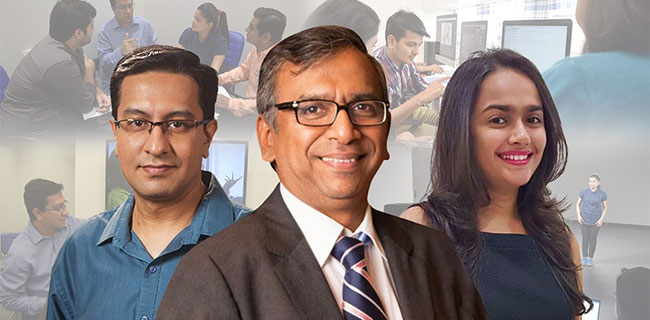
    India Signing Hands co-founders Alok Kejriwal, Aqil Chinoy and Mansi Shah
    India Signing Hands founder Alok Kejriwal (centre) with co-founders Aqil Chinoy (to his right) and Mansi Shah (to his left)


    By Shruti Pushkarna


    Shruti PushkarnaPicture a living room setting in any average household in the country today. You will see various members of the family engaged on their respective handheld devices while the din from a smart television fills the room. Now imagine a deaf child or an individual in this setup. Is (s)he able to participate or communicate with the family? Is (s)he able to consume and enjoy the after-discussions on the same content capsules? The answer is probably not.


    India is home to nearly two crore deaf individuals, of which 90 per cent lose out on basic knowledge and information imparted through mainstream communication channels, including television. They remain disengaged from their family and friends because they are clueless about daily happenings and events.


    In November 2018, three enterprising individuals, Alok Kejriwal, Aqil Chinoy and Mansi Shah came up with a potential solution for the deaf community, so they could equally access their daily dose of information and entertainment online (The ISH News website: https://www.ishnews.tv/ and the YouTube channel: https://www.youtube.com/channel/UC99w_Bzj8ikOz8Gpv0prbNg)


    Meet Aqil Chinoy, Head of Information Technology, India Signing Hands (ISH), one of the forces behind ISH News.


    Question: Tell us a bit about yourself, where did you grow up, study and about your work?

    Answer: I was born and brought up in a deaf family in Mumbai. Indian Sign Language (ISL) was my first language as my parents, my younger brother, my uncle and aunt are deaf. Only my grandparents were hearing. After passing ICSE, I went abroad to study at Gallaudet University in Washington DC, USA. It is the only university with high standards of accessibility for the deaf in the US. There, my world changed when I realised the huge range of accessibility and opportunities that were lacking in India and how technology plays a major role in improving accessibility. I got myself involved in various organisations, took part-time jobs and learned how to lead an independent life.


    Upon graduation in computer science and information systems along with several awards such as ‘Phi Alpha Pi Honor’, ‘Magna Cum Laude’, ‘President’s Scholars’ from Gallaudet University and after a one-year internship at a reputed company in US, I returned to my motherland to settle. Since then, I have been dedicating my time, skills and experiences in empowerment of the deaf people.


    Q: What kind of work did you take up upon your return to India?

    A: I enrolled in A S Moloobhoy Pvt. Ltd. and built the determination to push myself beyond the boundaries of disability. I became the Head of Information Technology and worked there for 15 years. At the same time, I was also involved with the deaf community, trying to improve the standards of accessibility with the help of technology. I played different roles in several NGOs. With the steady growth of India Signing Hands, I resigned from my job in 2021, and joined ISH full-time.


    Q: ISH has been in the news lately, for all good reasons, but we will come back to that in a bit. First, tell us how did India Signing Hands come into being?

    A: My parents and I were deprived of the knowledge and information from TV channels as they only communicate in the spoken language. Due to this lack of accessibility, many deaf individuals face difficulty in their lives especially pertaining to education and employment. For this very reason, I concluded that the first step is for them to have quality education and access to information to build up their knowledge. Currently, due to the inadequate method of education, lack of communication with hearing members of the family and inaccessible format of TV Channels, the deaf people have fallen behind. Determined to promote the best solution, I collaborated with Alok Kejriwal, a deaf businessman, and Mansi Shah, and we launched India Signing Hands (ISH).


    Q: Access to information is a basic human right and yet we see so many people from diverse communities left out of mainstream communication. The deaf because of the lack of sign language usage and interpretation, blind and visually impaired lose out on heavily visual channels of communication, the illiterate and less educated due to other reasons and so on. What’s your view on this current state of exclusion or marginalization of communities? 

    A: Deafness is often an invisible disability, where the impact is not immediately apparent. The challenges faced by deaf individuals encompass a spectrum of issues, including formidable communication barriers, restricted entry to educational and employment avenues, and the pervasive social stigma. In times past, awareness surrounding sign language was very limited, with the predominant teaching method in Indian deaf schools being oralism, emphasizing on lip-reading. Unfortunately, this approach perpetuated a widespread misunderstanding that sign language might compromise cognitive skills and logical thinking. Despite ample research refuting such notions, these misconceptions persist.


    The communication gap, experienced at home, in workplaces, and public spaces, creates barriers that obstruct their overall prosperity. Presently, a staggering 90 per cent of the deaf population in India grapples with these challenges and they are unable to contribute to the Indian economy. Deaf associations tirelessly advocate for concessions in various facets of life, from railways to tolls, seeking alternative solutions to alleviate the financial burdens. The struggle for inclusivity and recognition persists as the deaf endeavour to carve out spaces that accommodate their unique needs and amplify their voices in the broader societal discourse.


    Q: Would you agree that there are enough laws and guidelines in place to ensure inclusion in terms of ICT, and yet no accountability in terms of last mile implementation? Like, despite the guideline issued by Ministry of Information and Broadcasting on keeping broadcasts inclusive for the deaf, reality is far from it. What do you think?

    A: Recognising and addressing the challenges faced by the deaf community is a pivotal step toward fostering a truly inclusive society. Achieving this inclusivity necessitates the implementation of policies that extend equal opportunities. The anticipation surrounding the enactment of the Rights of Persons with Disabilities Act in 2016 initially infused hope within the community. Unfortunately, the realisation fell short of expectations. While there have been some positive efforts, such as the provision of ISL interpretation during DD News broadcasts and selected events organized by the Department of Empowerment of Persons with Disabilities, these steps are commendable yet insufficient to catalyse a broader impact.


    Proposing Indian Sign Language (ISL) as the 23rd national language holds substantial promise for empowering the deaf community. The recognition of a language as an official one not only symbolises inclusivity but also catalyses socio-economic growth. Businesses thrive when their language is acknowledged, granting the community a sense of authority and presence. Conversely, there are organisations attempting to develop accessibility solutions, viewing this as an opportunity to contribute positively. However, some fall short in understanding a fundamental concept – the Deaf community does not seek to be “fixed.” Their desire is not for a cure but rather for an environment that provides accessibility, allowing them to bridge the communication gap.


    Q: How and why did you think of launching ISH News? Tell us a bit about this venture and the team behind it.

    A: ISH was launched in November 2018 as India’s foremost daily news and entertainment online broadcasting channel catering specifically to the deaf community. The channel delivers content in a format that combines Indian Sign Language (ISL), voiceover, and subtitles, ensuring an inclusive and enriching experience for its viewers.


    The synergistic use of subtitles and ISL contributes significantly to the enhancement of vocabulary skills among the deaf audience. Additionally, the videos, presented in ISL with voiceover, serve a dual purpose by providing a unique learning opportunity for hearing parents, enabling them to acquire Sign Language skills. This, in turn, fosters enhanced communication and establishes deeper connections and trust within families.


    My involvement spans diverse responsibilities, from crafting project proposals and defining workflows to detailing technical requirements and coordinating the design of the office and studio floor layouts. Additionally, I have taken an active role in the recruitment and training of team members, ensuring a seamless integration of their diverse skills and experiences.


    Within ISH, we take pride in nurturing a diverse team of professionals, encompassing deaf individuals, Children of Deaf Adults (CODA), and hearing team members. This team, consisting of News Signers (anchors), editors, graphic artists, video editors, cameramen, coordinators, interpreters, and more, brings together years of collective experience, particularly within the realm of People with Disabilities (PwDs).


    Q: Many individuals and companies believe that adding subtitles and auto-generated captions fixes the gap for the deaf. We know that’s not true, because the deaf population itself in diverse in many ways. Would you like to educate our readers on this?

    A: While many companies assume that simply adding subtitles to movies or videos resolves accessibility challenges for all deaf individuals in TV channels or films, this oversimplification overlooks a critical factor – the quality of accessible education provided to the Deaf during their formative years. Within the diverse deaf population, the Hard-Of-Hearing (HOH) subgroup benefits from the ability to read, thanks to partial hearing and access to educational support. They can communicate effectively at home, aided by hearing devices. This represents only a fraction of the deaf population. The majority of deaf individuals encounter difficulties with subtitles. In this context, the Indian Sign Language (ISL) interpretation video-in-film overlay emerges as the most dependable tool for ensuring accessibility. Unlike subtitles, ISL interpretation transcends language barriers, providing a comprehensive and nuanced communication channel. Moreover, ISL interpreters, adhering to the grammatical nuances of ISL, convey not only the literal meaning but also the emotions and tones embedded in the dialogues.


    Q: What’s the viewership of ISH News? Any response or feedback you would like to share with us?

    A: Since its inception, ISH News channel has garnered an impressive cumulative total of 30.44 crore views and amassed a dedicated following of 5.88 lakhs subscribers/followers across various social media platforms. Averaging an impressive 45 lakhs views per month, our news videos span a comprehensive range, covering daily breaking news, sports, business, health awareness, Deaf Buzz (news related to the Deaf), festivals, disabilities-related news, and entertainment. The outpouring of appreciation and gratitude from thousands of Deaf individuals is a testament to our tremendous efforts in making news and films accessible to the Deaf. Today, they not only comprehend but also relish news and films through ISL interpretation video-in-video.


    Q: Coming from television news, I know that it’s a fast-paced environment and not very open to empathetic inclusion, because of the way the industry and professionals are wired thus far. How do you think we as inclusion advocates, can push for a shift in this mindset and culture?

    A: By combining a legal framework, success stories and testimonials from deaf individuals who have benefited from ISH News’ initiatives, educational awareness, financial collaboration, government support, and live demonstrations, we can build a compelling case for the inclusion of video-in-film ISL interpretation in TV channels and films, encouraging producers to take accessibility initiatives more seriously. We can begin by stressing on the importance of compliance with national standards and policies, emphasizing that this not only aligns with legal requirements but also reflects a commitment to social responsibility. We can emphasize that inclusive content not only caters to the Deaf community but also appeals to a wider audience, thus contributing to a positive public image for the industry.
     

  • Is Your Name on the Voters’ List?


    By Your Editor


    So the general elections have been announced.


    We all have our cribs about our politicians. Narendra Modi, Amit Shah. Rahul Gandhi, Sonia Gandhi. Mamata. Mayawati. Kejriwal. Shiv Sena. About the inefficiencies in the country: potholes, corruption, traffic, trains, buses, educational system, no jobs. We are fed up of our systems, and many of us believe that things will never improve in our lifetime.


    Perhaps this belief is correct. But we can try and make a difference. For starters, elect a candidate and political formation to represent us. And pray the elected reps do something. Make them accountable.


    The question is: how many of us will beat the summer heat, the lethargy and the attraction of sleeping those few minutes extra because it’s a holiday? For those in Mumbai, the voting day is April 29, a Monday. Perhap enough reason to get out of the city for a long weekend.


    It’s however important for each of us to vote. If there’s no candidate who you think is worthwhile, press the NOTA button. It’s critical to express ourselves and get the right person elected as Member of Parliament.


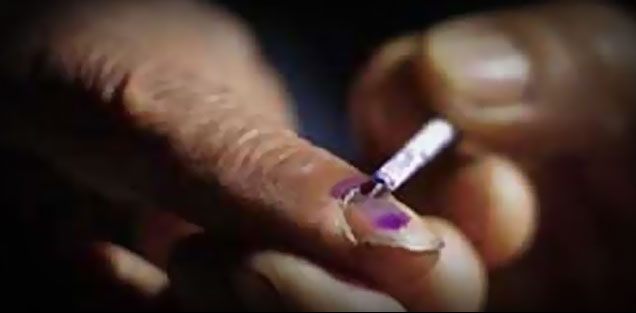
    Please check if you are on the voter’s list.


    Visit: https://www.nvsp.in


    If you get an error, just click on reload. It will come on.


    Then enter your name and search. If  you don’t remember your Assembly constituency, don’t bother. The search facility is pretty powerful.


    Also, please check with all those eligible to do the same, if they haven’t already done that. If they haven’t registered, they must. And if they have registered, they should keep checking at the website.


    The submissions (for proof) are simple: photograph (passport- or ID card-sized), birth certificate, passport, driving licence. If you don’t want to link your Aadhar Card with this, you can manage without it. The only painful thing is that if the first-time voter is over 21 years of age, then there’s a self-declaration to be filled in, signed and uploaded (click here). Please ensure that the scans of all of the above are jpegs/jpgs, not pdfs.


    We’ve done it ourselves for a recently turned potential voter and are hence convinced that it’s simple. You’ll get an sms near-instantly giving you a reference number.


    Please do visit the website. Check if your name is on it. As also your family. And then get your friends, colleagues etc to do something.


    Also, if you are an employer or a biggie at an organisation, dream up something to incentivise voters. An extra day’s salary may be a bit much, but how about a meal at a good restaurant? Or tie up with a Big Bazaar or Book My Show and get some discounts. Even tie up with the Nykaas of the world asking them to cosmetics at a 50% rate.


    We need some of upscale stores to step in too. Foodhall, Nature’s Basket, the five/seven star hotels, an extra discount to Zomato Gold members who have voted.


    How about some brands sponsoring hot and healthy/unhealthy breakfast outside the voting booths? Meal boxes.


    Can our TV channels position their popular stars at selfie points for people who have voted. Take a selfie with Shankar Mahadevan?


    If brands can do major activations at the Kumbh Mela, this is a Maha-Maha-Maha-opportunity for a public connect.


    Dream on, folks. Let’s make the 2019 Lok Sabha elections an unforgettable one. And elect a government we want out there.


  • Ranjona Banerji: Did Sunanda Pushkar story merit top billing?

    By Ranjona Banerji


    The last few days saw the news cycle consumed by Sunanda Pushkar, Shashi Tharoor and Mehr Taraar with allegations of affairs and unhappiness. There was a tragic culmination to the story with the suspected suicide of Pushkar. But how important was this story, that newspapers and news channels gave it top billing?


    Sunanda Pushkar was the wife of junior minister Shashi Tharoor. The world (other than the cocktail circuit of Dubai and perhaps New Delhi) knew of her because of the controversy of the Kochi IPL team, where both she and Tharoor had some involvement. It was IPL commissioner Lalit Modi who revealed details of the Kochi team through his Twitter account. Tharoor had to resign as minister, Pushkar removed herself from the Kochi team and the rest of us became familiar with the term “sweat equity”. Tharoor married Pushkar and then both became the darlings of the Delhi cocktail party crowd.


    So far, there is no indication of how important either Tharoor or Pushkar are to the national narrative. When Pushkar started tweeting last week from her husband’s phenomenally popular Twitter account, it was all about how some Pakistani female journalist was stalking her husband. The journalist in question, Taraar, denied allegations, Tharoor said his account had been hacked, Pushkar said it wasn’t hacked and that she had been tweeting. She made elliptical allusions to an affair and then to how she had been made the scapegoat in the IPL controversy. All this was played out on social media and to a salacious mainstream media.


    Still, nothing of national interest is visible here except a gossipy prying into other people’s lives. It is true that Pushkar made it all public but that has no bearing on the importance of the material. Then Pushkar is found dead by her husband in a Delhi hotel room and that ends all other news. Apparently, top news anchors even stopped the nightly debates when they got the news on the cellphones.


    When Princess Diana died in a car crash in Paris in 1997, The New York Times famously decided not to make it the top story of the day. By any reckoning, Diana was more famous than Pushkar. As obituaries of the poor woman appeared in newspapers across India, most people had nothing more to say than Pushkar was warm, vivacious, a good cook and lit up parties when she entered them. Others mentioned that she was a bit of a social climber and old school friends popped up to tell us that she was a shy, withdrawn girl who wanted to shrug off her small town origins.


    The significance of the front-page leads and top billing on news channels is still unclear. The Delhi government with India’s new hope Arvind Kejriwal is involved in all kinds of bizarre tactics. Rahul Gandhi and the Congress are making valiant efforts to get back into the conversation. Narendra Modi is smarting from Kejriwal’s popularity while trying to save the country. And enough other sundry horrors happening all over the country and world to keep journalists occupied. So why did this story get so much importance?


    Here’s a theory: Delhi’s journalists knew Pushkar and Tharoor socially and therefore felt a personal loss with her death. They also felt some guilt at the way the affair allegations were played out in the media. The decision to make Pushkar top news was therefore a personal one, where the reader or viewer was forgotten. There is no justification at all for making this story more important than any other, even with the understanding that every such decision is a judgment call that can be contested.


    Even with Shashi Tharoor being a minister, this story was overplayed. The only takeaway is that everybody in India who takes part in the English media knows more about Sunanda Pushkar in her death than before. C’est la vie?


  • Games2win USA appoints Chris Beech

    By A Correspondent


    Games2win USA has announced the appointment of Chris Beech as a Games Developer for its US business operations. Mr Beech, 40, is a veteran of casual games and has many international hits to his credit.

     

    Justin Molyneaux, Head of Games, USA said: “I have worked with Chris for over 5 years during my tenure at AddictingGames. I first discovered Chris when he won the first annual Most AddictingGames Developer Award. He is a very prolific developer who has built nearly thirty games out of which most of them were productions that we created together. He is both a skilled artist and a great programmer.”


    Mr Beech will actively work with Mr Molyneaux and help build new global titles for both the online and mobile mediums for Games2win.


    Alok Kejriwal – CEO and Co-founder of Games2win said: “We are really excited to have Chris on board. Chris is really talented and can swiftly turn around ideas and concepts into working game prototypes and finished products. He greatly compliments Justin’s game designer skills and I believe that as a team they are set to rock the gaming world!”


    Games2win is a global casual games business and entertains over 15 million unique users a month as per comScore. Games2win owns over 600 original games that are published on its portals Games2Win.com and GangofGamers.com and on the iOS and Android market places. Games2win’s latest game ‘Parking Frenzy’ recently reached no 1 position on the global iTunes Stores after scoring top ranks in the Android market place.


  • Can JWT create digital Hungama with stake buy?


    MxMIndia spoke to a cross-section of media professionals to elicit their views on the JWT Singapore acquisition of a majority stake in Hungama Digital Services


    Hungama’s telecom business is intact


    By A Correspondent


    Make no mistake. Hungama hasn’t sold out. Of the 1000+ employees, only 120 will be off to the new company which will only be 51 percent owned by JWT Singapore. And the key telecom business is intact, as are various others.


    When on Wednesday, leading advertising agency JWT confirmed its acquisition of a majority stake in Hungama Digital Services, the digital and promotions marketing division of Hungama Digital Media Entertainment. The size of the deal is not known, though the digital services division is said to have aggregated a turnover of Rs50 crore last fiscal. WPP reportedly earns revenues of over Rs 2500 crore from India and Hungama earned around Rs 450 crore last fiscal.


    The new entity which will be called Hungama Digital Services Pvt. Ltd.will be a full-service digital agency specializing in digital marketing and social media solutions. As part of the acquisition, Hungama’s activations arm, Hungama Promo Marketing will become a part of Hungama Digital Services Pvt. Ltd. and provide an engagement platform linked to online and offline deliveries.


    However, it is not known who from the existing team at Hungama Digital Media would move to the jv. “We haven’t received the new org structure,” a Hungama spokesperson told MxMIndia.


    Said Neeraj Roy, MD and CEO, Hungama Digital Media Entertainment, “With JWT, we are now part of the largest advertising network in the world. Hungama Digital Services is the coming together of two exceptional teams in a globally relevant market.” “With this partnership with JWT we hope to offer integrated digital and experiential services to our clients and prepare brands to connect, interact and now transact with their customers.”


    Hungama Digital Services has been a dominant player in the digital space for 13 years and is spread across six cities in India. In fact the creative services devision is what Hungama started out with over a decade back. The 120-strong team will continue to drive the agency, including servicing old and new clients and offer creative and promo marketing services, viral marketing campaigns, social media marketing and mobile marketing, applications, managing websites and video services.


    For JWT, it’s a good acquisition, an insider told MxMIndia. Said Colvyn Harris, JWT India CEO: “Digital is our next new frontier.The idea of the partnership is to build a digital offering for our clients so we can live up to being a ‘single source’ partner across all their ‘marketing solutions’ needs. What will be most effective in the future is a new set of talented, digital high end specialists who will add new skills and capabilities to what JWT already offers to its clients. We want all our clients to be leaders in their respective categories.”


    “We have greatly expanded our digital capability across the region, and we are not standing still. JWT will continue to hire new digital experts and explore possible acquisitions across the region this year,” said Michael Maedel, President, JWT Asia Pacific.


    See earlier report: JWT acquires 51% stake in Hungama Digital

    Raghav Anand, Segment Leader-Digital, Ernst & Young (The observer and often advisor)

    Raghav Anand

    I think Digital is an extension that every creative arm should have, but the real efficiency comes from how well it is syndicated with the overall collusion. Most of the agencies which have bought digital companies have not been able to integrate them into the overall setup, and hence not been able to leverage the synergy. So, how well you integrate and leverage the synergies will really decide whether it’s a fantastic acquisition or not. Apart from that, the other important things is that companies like Hungama are not just agencies, they are more of digital workflow companies which do a lot more than advertising and creative. They integrate into mobile and few other things. So it’s important for an agency to fully leverage them.


    Arvind Sharma, Chairman of the Indian Subcontinent, Leo Burnett (He recently acquired Indigo, a digital agency)

    Arvind Sharma

    Setting up an outfit from scratch has its own merit as you don’t have to pay a hefty acquisition price. However, I think this is a chicken and egg situation as the challenge is that when starting from scratch, you lack the scale and expertise in the beginning which is a handicap when attracting talent or meeting the needs of a client. You get stuck in sub-optimal size and scale. Particularly in Digital, one needs technical expertise and should be armed with a suite of capabilities to meet the clients’ demand. Therefore, it makes sense to acquire an agency of 150-plus people who are specialists, especially in the digital category which is witnessing a lot of interest from clients too. It immediately gives you scale and expertise. Also today clients want gamut of services under digital. They are not looking for few pieces of digital work; hence having an in-house digital agency helps in delivering.


    Mahendra Swarup, Former CEO, Indiatimes, Chairman, Smile Interactive (He’s worked with Pepsico, Indiatimes, Smile Interactive whose Quasar was acquired by WPP, and is now a well-known VC)

    Mahendra Swarup

    I think Digital is not an easy space to get into for traditional agencies. And at this point of time, digital agencies’ valuations are pretty realistic, so it’s always good for the traditional agencies to take over an existing team which understands digital. Also, the digital space is going to start growing at a fast pace, although at this point of time, it has a very low share of the total spends. But it will probably end up growing almost by 75 to 80 per cent year on year. So, it’s a big growth area. Also, I think organic development of a digital agency within an existing traditional agency is just not possible, the existing teams will not understand this space at all. So it’s more an acquisition of knowledge and competence, rather than of revenues. It’s only a question how do they (traditional agencies) get into a space which they will then grow faster.


    Alok Kejriwal, CEO & Co-founder of Games2win (He’s a contemporary of Mr Neeraj Roy…)

    Alok Kejriwal

    Whatever be the nature of the investment, I think it is brilliant that Hungama Digital has managed to get a partner like JWT. It shows that people who have been around and helped build the digital landscape over the last 10-12 years have finally begun to see the fruit of their labour as it has been one long arduous battle. Neeraj Roy has fought many battles to get media owners and brand planners to get convinced about the digital platform for India.


    Creative people are not like cement bags where you can go to the market and buy them. They are like yogis in the mountains. So when you get hold of a yogi, you’d do anything to keep him. It’s not one size fits all. JWT has a large client portfolio while Hungama has the digital capability. There are some cutting-edge creative digital agencies in the world that are the ones trying to set shop inIndia. For them to buy it makes a lot of sense, but then there are existing creative agencies inIndiathen why buy an outside agency when they are cutting-edge themselves? If you look at Quasar, which is a WPP company, they too are doing a good job. So it varies according to the needs of the marketplace.


    Mahesh Murthy, Founder, Pinstorm (He embraced digital early and is known for his forthright views on everything!)

    Mahesh Murthy

    India is one geography in the world where MNC agencies are absent among the large digital agency houses. The basic reason is perhaps their unwillingness to give up on their bread-and-butter – that is media kickbacks and TV film production over-billing. Both of these tend to disappear when you move online and digital-first agencies like Pinstorm have built large practices by focusing more on new technologies and processes, having avoided the kickback-led business that still drives mainstream advertising. Given India’s importance on their global client rosters, the MNCs here have finally figured out that if they can’t build a digital business themselves, they’ll try to buy one. I personally don’t think these random purchases will make much of a difference.


    Vikas Tandon, Founder & Managing Director, Indigo Consulting (Indigo was acquired recently by Leo Burnett)

    Vikas Tandon

    It is no surprise at all. The pace of change in the world today is stupendous, and digital media is causing consumer behaviour to change very rapidly. There is no time to build the expertise from scratch, and scale is also critical to success. Another compelling reason is there is not enough digital talent out there – a lot of the experience and expertise resides in entrepreneurial outfits. Hence acquisitions make eminent sense.


    Karl Gomes, Co-founder – AgencyDigi (He co-started the agency after a great run as a digital CD)

    Karl Gomes

    When it comes to digital, any news is good news. In fact if you look around in the media marketplace, there have been similar news developments that have happened in the recent past. The focus for agencies should be about coming up with the right idea and focus on the consumers and brands. In today’s world you have to collaborate. My only worry with these acquisitions is I hope they don’t treat them as another division but they work together and in a synergistic fashion. They need to be sitting together on the table when a brief comes across to them rather than just approach it passively. So, an acquisition like this should be good for both the people buying them and for people selling them. We have been approached by agencies but we are completely funded by clients and their business. So we will continue to run independently.


    Compiled by Shruti Pushkarna, Johnson Napier and Tuhina Anand


  • Rohit Nair is COO of C2W

    By A Correspondent


    Contests2win.com India Pvt. Ltd announced the appointment of Rohit Nair as the COO of the company. Previously, Rohit was the co-founder of ‘QuizWorks’ – one of India’s premier quizzing Companies.


    Alok Kejriwal, Founder of Contests2win said: “c2w has changed rapidly over the past 12 years. From being a Company set up to replace the Indian ‘contest postcard’, to becoming the first Internet Company from India to set up shop in China, we have come a long way. In this age and time, we see a brand new, global opportunity beckoning us. We own a great brand; have over 2 million registered users; possess over 10,000 pieces of original content, and enjoy blue chip, global brand relationships.”


    “Rohit and I have known each other for some time and we both share a common, unique vision for c2w – that will unveil itself in the months to come. I am thrilled to have Rohit on board and believe him to be truly capable of leading c2w into its new chapter of future wins,” he added.


    Rohit Nair said: “As an entrepreneur who has built one of India’s leading quiz companies, I am now ready for my next big career challenge. Contests2win provides the ideal platform to demonstrate how consumers and engrossing content can create an unparalleled dimension in engagement. As COO, I assume responsibility of the complete business and will strive to make c2w an outstanding example of how delightful global brands can be built out of India!”


    Contests2win.com is one of the oldest and most recognized Internet Brands of India. Best remembered as a Company that created a media industry around contests and prizes, c2w (as the brand is better known) also famously survived the gruesome 1999-2001 Internet meltdown and emerged as a winner. c2w is responsible for introducing almost all the Fortune 500 brands to the Internet in India and making millions of Indian Internet users win prizes ranging from Movie tickets to cars.