Category: Uncategorized

  • Mindshare elevates Ashutosh Srivastava, G’Man and Greet, unveils new ‘global to local’ structure

    From the MxM Infodesk


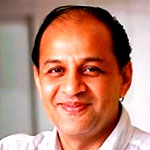
    Ashutosh Srivastava

    Mindshare Asia Pacific has revealed a new global to local structure with a new leadership team. Ashutosh Srivastava, currently CEO Asia Pacific, Mindshare, has been appointed Chairman and CEO for global emerging markets, and is also Mindshare’s new global leader for products/services and talent development.


    Mr Srivastava will continue to be based in Singapore, and will focus on emerging markets such as Russia, in addition to APAC. He will also work closely with global and regional leaders in London and Asia to drive new products and services – and with the agency’s talent development community, work to strengthen the agency’s talent pool and leadership globally. Mr Srivastava will continue to oversee the Greater China offices directly.


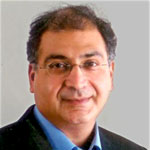
    R Gowthaman

    Commenting on Mr Srivastava’s appointment, Nick Emery, CEO, Mindshare Worldwide said: “I’m delighted that Ashutosh is taking on the global role to drive Mindshare’s development.  Ashu is the epitome of a new world leader and our product, people and growth markets are in safe hands.”


    Mr Srivastava’s promotion is accompanied by a change in the structure of Mindshare in the region, re-organising it around three clusters.


    Mr R Gowthaman, currently Chief Client Officer, will take on the role of CEO for South and South East Asia, based in Singapore. Mr Gowthaman, popularly known as G’Man in the industry, has been with the agency since it started in India in 2002.


    James Greet, currently CEO, Australia, will add Japan, Korea and New Zealand to his responsibilities, and also be the APAC regional leader for talent. Prior to joining Mindshare in 2010 he founded and ran talent recruitment firm The Ladder. Mr Greet will continue to be based at Sydney in his new role.


    James Greet

    Commenting on the new structure Mr Emery said: “In Ashu, James and G’man there is no better leadership trio and I am privileged to work with them.”


    Mr Srivastava said: “James has in a very short time turned our Australia office into a powerhouse of great work and talent. G’Man has crafted our success in India, which is a world class office – and in the past few months built up our product for regional clients. Along with China, they have been the driving force behind the momentum we have across Asia Pacific. They are both outstanding leaders, and I look forward to working with them in their new roles.”


    The new structure of Mindshare in Asia Pacific brings it into line with Mindshare’s operations in Europe, which is also organised around a cluster approach, and provides a global to local approach for the agency around the four core areas of trading, emerging markets, new products/services and talent development.


  • Rupert Murdoch’s News Corp to buy ESPN’s 50% stake in ESPN STAR Sports

    By A Correspondent


    Rupert Murdoch’s News Corp has agreed to acquire the 50 per cent it does not own in its Asian sports TV joint venture, ESPN STAR Sports, bringing to an end a 16-year-old relationship which, among other things, dominates cricket broadcast in the sub-continent.


    A unit of News Corporation will buy ESPN’s 50 per cent equity interest, a statement from the two partners said.  The transaction, which is subject to customary regulatory approvals, will allow News Corporation unit to own and operate all ESS businesses, including STAR Sports, ESPN and STAR Cricket.


    ESPN STAR Sports, which generates about Rs2,500 crore in revenues, also owns television broadcast rights for the ICC World Cup Cricket and T20 Champions League.


    No financial terms were disclosed but people close to the transaction said that it could have cash and non-cash components.


    While the cash component would not be very substantial, the non-cash portion could involve handing over the non-India distribution rights of possibly the T20 Championship League rights to ESPN.


    “News Corporation’s acquisition of the interest of ESS that we did not already own continues the programme of simplifying our operating model, consolidating our affiliate ownership structures, and furthers our commitment to delivering incredible sports programming to consumers across the globe, and particularly enhancing our position in sports programming in emerging markets,” said James Murdoch, deputy chief operating officer and chairman & CEO International, News Corporation.


    Wednesday’s announcement comes just weeks after STAR broke up with long-time Indian partner, the Kolkata-based ABP Group and sold its stake in Hindi news and regional language channels.


    “After 16 years jointly managing ESS, we have decided to independently pursue future opportunities in Asia,” said John Skipper, president of ESPN and co-chairman, Disney Media Networks.


    The partners also announced that Manu Sawhney, managing director of ESS, who has led ESS in the past 16 years, will hand over charge to Peter Hutton, SVP of sports for Fox International Channels (FIC).

    Mr Hutton will report to the ESS Board. Mr Sawhney will be staying with the company until August 31 to work with Hutton on a smooth transition.


    STAR’s ambitions in the sports broadcasting space were evident when it acquired the rights to Indian cricket from the Board of Control for Cricket in India, beating rival Sony and paying Rs4,000 crore.


    Speakingfrom the US, STAR India CEO Uday Shankar said: “Till the regulatory framework is done, it will be business as usual. As for the money we spent on acquiring the Indian cricket rights, it is money which will be paid over several years, (six) and I am confident of a broadcast transformation and a bigger market. A lot of distortion in this space will also have sorted out.”


    Mr Shankar also clarified that all the ESPN employees would continue not only as of now, but post the regulatory framework. “It’s not as if STAR has a ready-made sports setup all ready,” he added. As for competition and raising prices for acquisitions, he said, there are four active players and all will compete very vigorously.


    Source: The Economic Times
    Copyright © 2012, Bennett, Coleman & Co. Ltd. All Rights Reserved

  • The Anchor: 7 reasons why we should have a 24-hour classical music channel

    By Jaahnavi Paal


    Being a TV buff I have watched everything from soaps, news, sports, wild life, marine life, reality shows, travel, food, music on TV …but my thirst for classical music still remains unquenched. Though there are so many music channels there is no single classical music channel (CMC). Doordarshan occasionally airs classical music concerts but there are no other channels that do even that. Considering that the country has so many classical music lovers it’s about time we had a dedicated classical music channel on Indian television.


    1. In the late ’80s and early ’90s, there was huge audience base for music channels and one saw so many music channels spring up on TV. But nobody thought that there was a need for a channel dedicated to classical music. TV ‘businessmen’ felt that it was not a viable proposition. Since the audiences would be small in number compared to those interested in other forms of music they believed it would be difficult to make it a commercial success. But I beg to differ. Having seen various classical music festivals packed to full houses and the number of audiences that throng music concerts growing by the day it is difficult to believe that a classical music channel (CMC) will not do well. And mind you most of them do buy tickets to watch these concerts.


    2. Classical music is part of India’s rich tradition and culture. Unfortunately not much is done to promote this on a mass platform like TV. Time and again music maestros have lamented this fact and appealed publicly for the need of a CMC. In 2010, Ustad Amjad Ali Khan pleaded that he would like to see a 24-hour classical music television channel that would play classical music as well as documentary films on creative people. Unfortunately, things remain unchanged.


    3. Indian classical music should become part of daily life because it is proved to be a great therapy besides meditation and relaxation. If we can channelize this through a popular medium like a TV channel, more people will understand and enjoy classical music and reap its benefits as well.


    4. In today’s times where commercialization is the only answer I see no wrong if classical music too was turned into a business venture and marketed on television. If a music reality show on a GEC attracts lakhs of talented people I have no doubt in my mind that a similar show on a CMC would also get the required numbers. Reality shows have been promoting classical music and musicians. Audiences are understanding sur and taal and ragas too. If this is not a positive sign of initiating our young audiences to our rich heritage and culture then so much more can be achieved on a channel that would be dedicated to classical music alone.


    5. When Grammy award winner Pt Vishwamohan Bhatt moaned the fact that there were over 500 TV channels across the country and dozens of music channels but not one channel dedicated to classical music his pain was evident. There have been various other musicians who too have felt the same. In fact Pr Rajan and Sajan Mishra have gone a step further in voicing their agony. They have said that there are channels on animals but not one on classical music!


    6. If the government does not have the will nor the capital to do this on their own I am sure there are many corporate giants and industrialists who can make a business out of this venture. Indian Classical music has crossed Indian shores and is recognized and appreciated across the globe. Sadly in our own country we do not have a platform to initiate it to our youth. A dedicated music channel for this rich form of music would not just help musicians and artistes but also offer unseen opportunities to many looking at making a career of it. When one sees lakhs throng venues of reality shows in order to participate in them how many of them even know that the base for all music is classical music?


    7. Young people are increasingly drawn to sports because it is competitive. The government has to bring that spirit into classical music. We build grand stadiums, but we do not have a concert hall of the calibre of London’s Royal Albert Hall or Sydney’s Opera House. And it is the same with a CMC. A channel like this would encourage youngsters to take up classical music and even attract them to it. And for those cynics who often say that classical music is dying I beg to differ. Classical music is far from being a dying art. It was never meant to be entertainment for the masses anyway. I end with a note of optimism in my heart….hope someone soon invites us for a launch of such a channel.


    Jaahnavi Paal is a columnist and TV analyst


  • IRS 2012Q1: Downward is the way for Language publications

    By A Correspondent


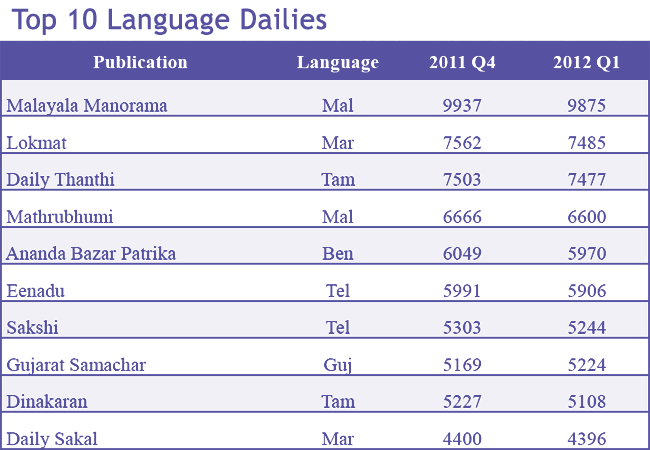
    Maybe it’s the shortage of ideas or lack of opportunities but language readership is certainly not seeing the best of times inIndia. Of the top 10 Language dailies to have made it to the list, just one newspaper – Gujarat Samachar – has seen growth; nine others have seen a decline in 2012Q2 readership over 2011Q1. Gujarat Samachar with an AIR of 5,224 is marginally better than its AIR number of 2011Q4 at 5,169.


    Leading the charts at the top is Malayala Manorama which has recorded an AIR of 9,875 as against an AIR of 9,937. Marathi daily Lokmat follows next with an AIR figure of 7,485 as against 7,562 it reported last quarter. Tamil daily Daily Thanthi is next with an AIR of 7,477 as against 7,503 recorded in 2011Q4. Mathrubhumi follows next with an AIR of 6,600, Ananda Bazar Patrika with 5,970, Eenadu with an AIR of 5,906, Sakshi with an AIR of 5,244, Gujarat Samachar with 5,224, Dinakaran with an AIR of 5,108 and Daily Sakal with an AIR of 4,396.


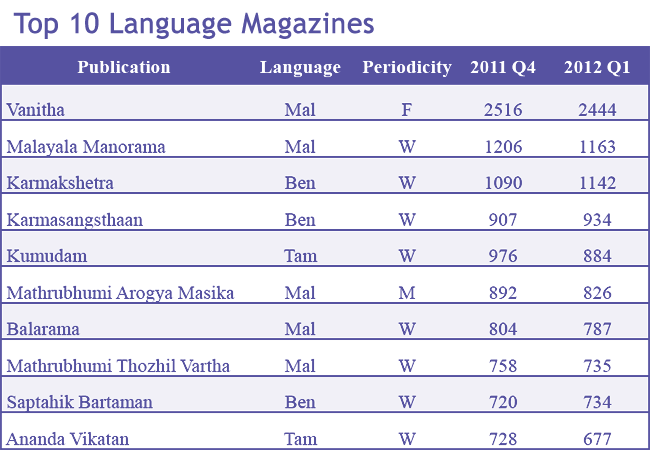
    Where magazines are concerned, three out of ten have shown marginal growth while seven have seen a decline. Vanitha leads at the top with an AIR of 2,444 followed by Malayala Manorama with an AIR of 1,163. Karmakshetra is third with an AIR of 1,142 while Karmasangsthaan is fourth with 934. Kumudam is fifth with an AIR of 884 while Mathrubhumi Arogya Masika is sixth with 826. Balarama follows with an AIR of 787 while Mathrubhumi Thozhil Vartha is next with an AIR of 735. Saptahik Bartaman is ninth with an AIR of 734 while Ananda Vikatan wraps up the list with an AIR of 677.


    Explaining the trend, Dinesh Rathore, Vice President, MediaVest Worldwide said: “As for language dailies and magazines seeing a decline, I think they have reached a saturation point; there is only so much that they can grow by. The percentage of people who speak Tamil or Malayalam in states other than their hometown is not that much, so there is not much enthusiasm by these players to launch editions in other states.”


    (AIR numbers; all figures in ‘000)


    (AIR numbers; all figures in ‘000)


  • Madison gleams with Crompton Greaves

    By A Correspondent


    Madison Media Sigma has just announced the win of Crompton Greaves Ltd. The agency will handle its entire range of products including fans, lights, lighting fixtures, pumps and electric appliances.


    Said Sam Balsara, Chairman & Managing Director, Madison World, “We are delighted to add a reputed global engineering conglomerate like Crompton Greaves in our roster of clients and are confident of helping Crompton Greaves get its rightful share and more in India’s growing market.”


    Vanita Keswani, COO Madison Media Sigma added: “I look forward to working on a new and diverse set of categories and creating powerful media strategies for the entire portfolio.”


    Madison Media, whose gross billing is in the region of Rs 3000 crore, was recently in the news for winning Dixcy Textile’s Media AOR.


  • Welcome,the new adland superpower:Dentsu


    By A Correspondent


    It’s no longer watercooler chatter or just a whisper in the corridors. By gobbling up Aegis, Dentsu has made its intentions very clear. Sir Martin Sorrell and Maurice Levy, the Japanese are a-comin!


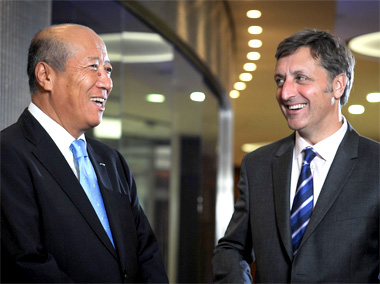
    Announcing the mega-deal: Tadashi Ishii, President and CEO, Dentsu Inc and Jerry Buhlmann, CEO, Aegis

    Dentsu’s $4.9 billion acquisition is being counted as the biggest in the advertising business. It’s the second buy of a British ad entity within a month. But, of course, Aegis is a large network while BBH (which sold out to Publicis) is just a creative boutique.


    There was nothing forthcoming from the Dentsu and Aegis offices in India, however, it’s set to be business as usual for the now. The nitty gritty will only be completed by the end of the current year, and the impact, if at all, will be more on shared services, sources tell us.


    There is a marked difference between our respective styles of functioning, an insider at Dentsu told MxMIndia on conditions of anonymity. “But that too is a global issue”.


    Another industry voice told MxMIndia that the scale which Dentsu attains will help it considerably. It’s not just the preserve of networks like WPP, Omnicom, Publicis and IPG any more. The rub-off will be very positive on both entities and pitches henceforth will see them as significant players.


    First some background:

    In July 2009, Dentsu announced its medium-term management plan titled “Dentsu Innovation 2013”, focusing on global business expansion and intensifying digital offerings, together with further strengthening its mass media business, to drive its business strategy as one unified group and to achieve strong growth. Looking to its clients’ and media agencies’ business landscape, Dentsu’s business exposure has been expanding globally, especially with strong focus on emerging markets including Asia.


    On the other hand, Aegis, a global focused media and digital communications group with highly competitive digital service offerings, enjoys a strong presence across Europe and increasingly in the US (clearly the world’s largest advertising market), and is rapidly growing its footprint across Asia and the Pacific. The combination of Dentsu and Aegis will be highly complementary, bringing together a global media platform with capabilities to provide integrated solutions, and offer enhanced quality services to clients.


    Both companies place “client centricity” at the core of their values and Dentsu’s corporate vision for “Good Innovation.” and Aegis’ to “Reinvent the Way Brands are Built” demonstrate the respective commitment to continuous improvement.


    The Rationale:

    Dentsu believes that a business combination between Dentsu and Aegis will deliver the following strategic and financial benefits:


    1. Expansion of global presence

    The geographical fit between Dentsu and Aegis is highly complementary. Dentsu has a leading market position in Japan’s advertising and marketing sector, an established presence across Asia, and an increasingly expanding business in the US, with mcgarrybowen as its core US subsidiary.


    Additionally, Aegis enjoys a leading position showing strong presence across Europe and increasingly in the US. Moreover, Aegis is rapidly growing its footprint across emerging markets, and has established robust positioning in Asia excluding Japan.


    Together, the enlarged group will be a stronger global competitor with the scope and scale to compete for and win international mandates across Japan, Europe, Asia Pacific and the Americas. The combined network with a full range of advertising, media and marketing services will enable Dentsu and Aegis to provide highly integrated services for local, regional and global clients across multiple international locations.


    2. Enhanced service and integrated solution offerings

    Dentsu and Aegis each rely, in order to be competitive, on distinct service offerings and expertise, together with their creativity and integrity, to exploit best solutions with a variety of service offerings.


    Following the transaction, the combined group will have a strengthened ability to offer a wider spectrum of niche services and expertise as a full service agency. With both Dentsu and Aegis’s extensive experience and knowledge, the combined group will enhance its ability to offer integrated solutions to clients.


    3. Intensified digital capabilities

    The adoption of ‘scaled’ technologies by consumers has driven the proliferation of connected devices and advancements in communication technology, significantly affecting clients’ advertising and marketing activities. Dentsu faces strong client expectations to strengthen digital solutions.


    With the rise of digital consumption and client demand for digital services, Dentsu has successfully enhanced its digital solutions over the years. By integrating Aegis, with Isobar and iProspect’s digital strengths in creative origination and performance marketing, the combined business will provide a powerful global platform for media, content and digital technology, and will increasingly support client activities.


    The combination of Dentsu and Aegis, with its robust client portfolio, will count at least 71 out of the top 100 marketers as clients on a combined basis, and will provide global and local clients with a new, differentiated proposition to achieve their objectives, and also accelerate the drive to continuously create new innovations as one unified group.


    CEO-speak:

    Here are comments from the respective CEOs:

    1. Dentsu: Tadashi Ishii, President and CEO:

    I am pleased to announce this exciting and transformational combination between Dentsu and Aegis. Together, we will be able to deliver fully integrated and best-in-class services to our clients through a new global communication network born in the digital age offering a broadened service portfolio. Dentsu and Aegis will be the market leader in the Asia-Pacific region, enjoying a strong presence across Europe and the fastest growing agency network in the US.


    In recent years, under the leadership of Jerry Buhlmann and his team, Aegis has been recognised as the most successful independent media and digital communications agency with strong performance momentum and talented, client-focused employees. We look forward to working with our new colleagues with whom we already share a common “client-centric” philosophy. Jerry and I have huge ambitions for a truly client-focused global communication network built in the digital age, and are looking forward to further innovating our business and continuing to contribute to our clients’ success.


    2. Aegis: Jerry Buhlmann, CEO:

    This is a compelling combination of two great businesses that will create one of the world’s most dynamic marketing services groups – and the first to be born in the digital age.


    We at Aegis are delighted at the prospect of being able to play a full part in helping Dentsu create a platform for global growth and continued digital innovation. By forming the first communications group with true global reach, the growth strategies of both businesses will be enhanced as we provide more scale, geography, capability and investment to support clients.


    “For the people of both these great businesses, the combination offers continuity and the promise of working for one of the most exciting, high-growth companies in our industry. We have complementary geographic fits and aligned visions and strategies. Together, we have strengthened investment capabilities as we work to help more clients than ever before navigate the complex and converging media ecosystem.”


    The India angle:

    Market observers in India credit the team led by Sandeep Goyal for the initial salience of Dentsu amongst advertisers. The Japanese ad network is no longer an alien name, even though it’s not as big as WPP, Publicis, Ommnicom or IPG.


    In India, Dentsu has the following arms: Dentsu Marcom, Dentsu Communications, Dentsu Creative Impact, Dentsu Media and Dentsu Digital. And Aegis has: Carat, Vizeum, Isobar, iProspect, Posterscope, Brandscope, Hyperspace, Carat Fresh Integrated, PSI and Doosra.


    But the presence of Mr Goyal earlier and now Rohit Ohri has ensured that business keeps coming in to Dentsu, a senior media agency executive told MxMIndia. As for Aegis, the leadership of Ashish Bhasin means that the group has stability at the helm.


    For Mr Ohri: Ken Terasawa (Exec Vice Chairman), Soumitra Karnik (NCD) Narayan Devanathan (Dentsu Marcom), Titus Upputuru (NCD, Dentsu Marcom), Arijit Ray (Dentsu Communications), Glen Ireland (Dentsu Digital), Yutaka Kamoshita (Dentsu Digital) and Divya Gupta (Dentsu Media) and for Mr Bhasin: Kartik Iyer (Carat), Anand Bhadkamkar (CFO), S Yesudas (Vizeum), Haresh Nayak (Posterscope), Shamsuddin Jasani (Isobar), Zaheer Mirza (Doosra).


    While Mr Ohri is travelling and not available for contact, the information that MxMIndia received the morning after the announcement that the overall global structure will be unveiled only by the year-end, and following that regional and India-specific restructuring may happen. However, in the same breath, a source in a Dentsu international office told us that given the slowdown managements will be sensitive to overspending, so don’t be surprised if the process towards rationalization happens quicker.


    Suggested reading:

    Ad Age report: Not the ‘Big Four’ Holding Firms in Adland Anymore — Now It’s the Big Five

    http://adage.com/article/agency-news/big-holding-firms-adland-anymore-big/236001/


  • ODigMa to expand to Australia and SE Asia

    By Tuhina Anand


    ODigMa, the online marketing agency, is looking at expanding its footprint beyond the Indian shores. The immediate plan is to have its presence in Australia and South East Asia and the agency has already made headway in its bid to have a presence in Australia. In India, it has offices in Bengaluru, Delhi, Mumbai and Ahmedabad.


    Talking about the edge that ODigMa has, Advit Sahdev, CEO and Founder, ODigMa said: “Our expertise lies in data analysis and that’s our differentiator. We do a complete analysis on the data available and advise our customers how this data can be used to optimal use. Precise targeting helps our clients in getting desired returns.”


    OdigMa uses Big Data analysis, which as per a report by McKinsey in 2011 about using Big Data in social media analytics companies, can increase innovation, competition, and productivity. The report suggests that Big Data allows organizations to create highly specific segmentations and tailor products and services precisely to meet those needs. Using Big Data for social media analytics will help companies to create new products and services, enhance existing ones, and invent entirely new business models.


    The agency has come out recently with a Facebook analytical tool which it claims is the one of its kind available. The tool which is already available to ODigMa clients helps in going beyond the interactivity that is currently available on this page.


    Started two years back, the online marketing firm services over 100 clients including brands like MTS, Marks & Spencer, MakeMyTrip, HiDesign and DoCoMo among others. It builds innovative social media tools using analytics and BigData.


    The agency, whose first client was Wildcraft, takes pride in the fact that it promises to do work that can be measured. Mr Sahdev said: “We have done work that has helped our clients grow and the best part is that all of this can be measured. We also do a lot of work in website optimization.” He points how he advised one client to follow the offline model of having happy hours for an e-commerce site to drive traffic during the day when usually it would see lesser visitors. Also for an automobile launch in Ahmedabad, ODigMa got the live streaming on FB and a FB campaign that got the company a good number (140 in total) of qualified lead in a week. The service helps in a more personalized solution and helping in better conversion especially works for e-commerce sites.


    On the reaction of clients on social media marketing, Mr Sahdev said: “My experience says that everyone is willing to try it for a short period, say for 4-5 months and gauge the response. It’s only if they have met with success in these months that they want to commit long-term.”


    In terms of trends in the social media marketing, Mr Sahdev pointed that the big thing is to have videos. He also stated that their company is focusing in a big way in the creation of video and also promotion of those videos. In fact, the videos, he feels, should not be more than 30-40 seconds long but should be different from a TVC as the requirement on social media is different but the message has to be put in an interesting manner with an eye that on social media. The key is sharing, hence the content should be such that encourages sharing instantly.


  • ITV to see NewsX get scale with substance


    By Shruti Pushkarna


    It’s been in existence for just a little over four years, but has been making news even before it was launched. Indeed the X factor in NewsX has been the exits – if not those of key staffers running the the channel, then the promoters owning it. In the case of promoters, not once, but twice over.


    The latest is that INX News Pvt Ltd which owns and operates the English news channel NewsX has been acquired by Kartikeya Sharma-led ITV Group. The takeover was officially announced in a press communique which issued late last night and announced to the staff in the afternoon.


    Speaking on the occasion, Mr Sharma said, “This is a logical market expansion for us and enables us to enter the English news domain while strengthening our presence in the broadcast and digital media space.  NewsX has emerged as a quality news provider with great growth potential and making it part of our group’s network of seven regional news channels will bolster news gathering abilities and create multiple synergies all around.”


    ‘Competition, not clutter, in English news TV’


    Kartikeya Sharma took time out from meetings with NewsX staff to speak to MxMIndia’s Shruti Pushkarna on his plans for the channel and the changes he intends to initiate.


    Excerpts from the interview:


    What are your plans for NewsX?

    We intend on getting NewsX back on track. We want to distribute the channel properly everywhere. And we think that the content of the channel is pretty good, it’s just that for whatever reason it’s not been visible everywhere and it’s not been distributed everywhere, so we are going to fix that.


    Will there be any kind of content and resource sharing between the channels, NewsX and India News?

    Yes, there will be because we already run seven regional channels at the moment and we are expanding that portfolio also to 14 in another six to eight months. So there’s a lot of synergy that comes out of it. There’s a lot of infrastructure asset that can be shared, lot of content which will be shared. It even becomes a more attractive offer for planners and other people to pick up a product which addresses different TGs and different age categories and different genres. So it completes our bouquet. We were expanding our regional footprint till now and this will add as a national product that w did not have.


    But there’s already so much clutter in the television news space, how do you intend to make a mark with NewsX now?

    The clutter in the English news market is far less than the Hindi news market. We have five news channels in the English space, whereas you have more than 25 in Hindi. It is a competitive environment but I won’t call it clutter because clutter would be perhaps the right word for the Hindi news market. Yes, it’s competitive, but I still feel there’s a need for a good English news channel which is distinctively different. NewsX has always done things differently and that’s one of the major reasons for us to acquire it, and we’d like to continue that kind of editorial approach which is not about creating too much noise or sensationalism, it’s about reporting things how they are and letting people form their own opinions.


    What changes are we going to see in the leadership…any changes at the editorial level?

    At the moment everything is the way it is, we’ve just taken over and it’s too early to make any comments. But yes, right now everything stays the way it is.


    NewsX has seen a couple of management changes in the past as well but unfortunately the channel never picked up in that sense…what changes can we hope for this time?

    At the moment we are not looking at any changes, it’s too soon for us. The channel has always been very good, I have always watched it and liked the content, it has a differentiating factor to it. The only problem is that it’s not been visible everywhere. No matter how good your content is, if it’s not visible everywhere then you will really miss out. Let’s say you’ve got an exclusive story and you can’t take a lead on it because others will hijack it immediately and take the credit for the story even though they didn’t break it. So this acts as a real dampener for the team which has worked hard to get the story on air. We’ve got a good team over here, they do a good job in terms of content and we would like to accentuate it rather than make any changes. We will tweak it in the right places, we will give it what we think is missing but the backbone of the organization, the product and the content will remain the way it is.


    Is there going to be a name change…NewsX had announced a change of name to IMN News in 2010…

    We are still undecided on it. We will have a couple of consultants talk about it. At the moment there are no plans of changing the name. If there are, we will definitely put it out.


    You and your family have been involved in the case and controversy around Jessica Lal’s murder and there is a lot of speculation in the media on how this might affect or change the channel’s stand on this issue…what would you say to that?

    Well I don’t know what you are talking about. I have been doing my media business for the past five years and it’s completely unrelated to this and I think it is even uncalled for to bring it up and discuss it at this platform. I am a 31-year-old individual who has been working for almost six years in this industry, I run a successful media company and this is my new acquisition, so I don’t understand how is this related in any way.


    ITV Media (Information TV) is the parent electronic media company which broadcasts 24/7 Hindi news channel, India News. ITV Media is part of the Piccadilly Group also owns runs a print division GMI (Good Morning Media India) that publishes daily Hindi Newspaper, Aaj Samaj as well as a weekly Hindi magazine, India News. ITV Media also operates six regional news channels in northern and central India.


    Vinay Chhajlani

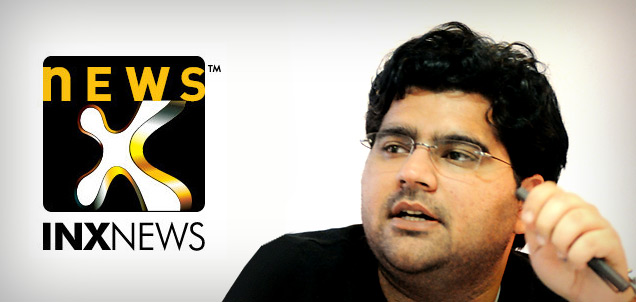
    NewsX, which was earlier owned by INX News, was launched with much fanfare in March 2008. Later in January 2009, it was bought over by Indi Media Network, a partnership between then Nai Dunia pr0moter and CEO Vinay Chhajlani and Businessworld Editor Jehangir S Pocha.


    In a joint statement Messrs Chhajlani and Pocha said, “We are happy to hand over the channel to the ITV Group and acknowledge the contribution of the team that has earned NewsX much recognition.  Being part of the ITV Group will help NewsX transcend the limitations of being a standalone channel and give new thrust to the channel’s editorial and commercial development.”


    Jehangir S Pocha

    While Mr Chhajlani’s association with the channel ends with this acquisition, Mr Pocha is likely to continue in his editorial position. Speaking to MxMIndia, Mr Kartikeya Sharma said that there will be no changes in editorial roles at this point of time. He said, “At the moment everything is the way it is… we are not looking at any changes at the moment. We’ve got a good team over here, they do a good job in terms of content and we would like to accentuate it rather than make any changes.”


    Mr Pocha met with the staff in his office yesterday to announce the takeover by ITV Group. He met with the employees and addressed their concerns with the management changes that will come about with the acquisition. Mr Pocha assured the worried staff that there won’t be any lay-offs following the management change. Soon after, the new owners, Mr Sharma accompanied with Mr Satish Jacob (Former BBC journalist) met with the staff and assured them of a smooth transition. Addressing the NewsX team, Mr Sharma said that he liked the content and style of the channel and there will be no changes in that.


    Speaking to MxMIndia, Mr Sharma said that this acquisition completes their bouquet of products. He said, “We were expanding our regional footprint till now and this will add as a national product that we did not have.”


    Commenting on the acquisition, Ms Anita Nayyar, Director (Customer Strategy), BCCL said, “With too much clutter in any genre today, the outcome is going to be consolidation. Television channels – especially in the news space — need deep pockets to run as there is recurring costs involved. Therefore, I think the development is going to work as an advantage for both as they’ll be able to combine and share their resources.”


    Mr Sundeep Nagpal, Founder Director, Stratagem Media added: “The ITV Media which runs two regional news satellite channels, India News Haryana and India News Bihar and a print venture in Aaj Samaj have a very regional presence. They are only popular in Chandigarh and surrounding areas and are doing fairly well there. Buying out NewsX means getting an English news channel into the kitty and for them this means a national footprint. As for NewsX, it’s known that the channel wasn’t performing well in the genre. So, maybe this move will work for both of them.”


    NewsX has been reportedly in the market for a while now and although it has received positive reviews for its content, the channel hasn’t done well in terms of ratings and revenues. While the latest acquisition brings hope for the channel, there is a lot of speculation in the media on the new owners of the channel.


    So, who’s Kartikeya Sharma?

    An Oxford Graduate with BSc Honours in Business Management, Mr Sharma went on to complete his MBA from King’s College, London. In 2004 he took over as Managing Director of Piccadilly Group. He is credited with the launch of the media verticals, Good Morning India and ITV. Under his leadership, a new satellite channel Indianews Haryana was launched in September 2009 and within four months it became the No 1 new channel in the state of Haryana.


    Mr Sharma is the son of leading Haryana Congress leader Venod Sharma and the brother of Manu Sharma, a convict in the Jessical Lal murder case. Soon after the acquisition was announced, there were discussions within the media on how the new ownership will impact the channel’s stand on the controversy around the murder case.


    MxMIndia posed the same question to Mr Sharma and he replied, “I have been doing my media business for the past five years and it’s completely unrelated to this and I think it is even uncalled for to bring it up and discuss it at this platform. I am a 31-year-old individual who has been working for almost six years in this industry, I run a successful media company and this is my new acquisition, so I don’t understand how is this related in any way.”


    MxMIndia spoke to a few journalists who have worked with ITV’s media properties in the past and currently, and they too endorsed the editorial independence that Mr Sharma facilitates. “There was no taboo on covering anything and there is little interference,” a former editor told MxMIndia.  The challenge for companies like ITV, a senior staffer currently working with one of the channels,  said was in managing the company professionally.


    That we guess is a prerequisite for all media companies, and not just for NewsX.


    With inputs from Meghna Sharma and Bureau


    The eXit Timelines


    Peter Mukerjea
    Vir Sanghvi
    Arup Ghosh
    Vinay Chhajlani

    March 2007: Former Star India CEO Peter Mukerjea sets up INX Media which owned INX News. Former Editorial Director at Hindustan Times, Vir Sanghvi was the then CEO of the channel.


    January 2008: Vir Sanghvi quits as CEO of NewsX even before the channel went on air.


    February 2008: Arup Ghosh takes over as the Newsroom Head. Arup Ghosh held senior positions at channels like NDTV, Sahara Samay and Channel 7 in the past.


    March 2008: NewsX is launched, the channel goes on air under Arup Ghosh’s leadership.


    January 2009: Indi Media Company Pvt Ltd, a newly formed company by Vinay Chhajlani, the then promoter and CEO of Naidunia and Jehangir Pocha, Former Editor of Businessworld, buy 100 percent stake in INX Media.


    April 2009: Arup Ghosh exits NewsX as Newsroom Head. A set of lay-offs follow.


    September 2010: NewsX announces its intention to re-brand and re-launch the channel as IMN News


    February 2012: Zee and NewsX talks fail to acquire channel


    July 2012: INX News is bought over by ITV Media.


  • Why CEOs find social media a double-edged sword

    By Nikhil Menon


    Recently, the CEO of Southwest Airlines in theUShit on a novel idea to get customer feedback directly from the source. He put up a question on LinkedIn asking: ‘How can an airline make you, the flier, more productive?’ He got 137 answers from people; many of them detailed essays on what his airline could do to improve its customer experience.


    “That kind of real, authentic feedback is very hard to get when you’re the CEO,” said Hari Krishnan, CEO of LinkedInIndia, as he recounts this story. And there, in a nutshell, you have perhaps the single most important thing about social networks – they are a great leveller. They also blur the line between what was considered one’s professional and personal space.


    From Donald Trump’s tirades against Barack Obama to Michael Dell’s constant praise for Dell’s employees worldwide and Vijay Mallya’s defensive tweets hitting back at critics of his ailing airline, CEOs are stepping up to make themselves heard. And while these are early days inIndia, promoter-CEOs and heads of business families like Anand Mahindra, Mallya and Naveen Jindal are early movers. The list of appointed CEOs on social media like HCL boss Vineet Nayar and RBS India head Meera Sanyal, however, is still rather small.


    Prakash Iyer, CEO of Kimberly-Clark Lever, admits that Indian executives are one step behind foreign CEOs in cashing in on the social media phenomenon: “Whenever something new comes along, we tend to see the negatives more than the good things. But CEOs, no matter what generation or industry they’re from, have to realise that social media is here to stay. And if they’re not using it, they are missing something.”


    If that’s true for heads of private companies, it’s truer for senior bureaucrats inIndia, who are known more for shunning the spotlight than soliciting it. Considering that, Amitabh Kant is a maverick. The 55-year old CEO of the DMIC (Delhi Mumbai Infrastructure Corridor) has an active Facebook account with 1,500-odd friends, a Twitter account he occasionally updates and even a personal blog, amitabhkant.in. Mr Kant reads and writes extensively on his pet interests – travel, urbanisation, photography, technology and cuisine – and also likes connecting with people who share those interests: “Social media has been a powerful and enlightening influence on my work. I read and discuss articles on infrastructure and urbanisation around the world.”


    What’s more, he thinks that others of his ilk should follow suit. “What’s the point of resisting social media? It’s a highly transparent world,” he said, relaxing at hisDelhihome after his mandatory Sunday morning golf session. “And civil servants need to understand that, especially in the RTI (right to information) age. In fact, I feel that the government should ask every bureaucrat above the rank of joint secretary to compulsorily be on social mediums to become more accessible to the people.”


    As long as we’re in the realm of wishful thinking, Jessie Paul has a gem of her own. As the battle to decideIndia’s next president rages on, the managing director of Paul Writer jokingly urges people to consider her for the position. When asked about her ambition to occupy Rashtrapati Bhavan, she chuckled: “I am a woman, so I am in a political minority. Besides, I am a Tamilian, married to a Bengali, so I should be acceptable to both Jayalalithaa and Mamta di. Why not?”


    Her irrefutable logic is met with much hilarity and even endorsement by the people who follow her. But looking beyond her easy candour, what’s interesting is how the managing director of Paul Writer effortlessly wields social media across half-a-dozen platforms.


    For Ms Paul, who is a regular on content sharing and networking sites like Slideshare, Youtube, Facebook and Flickr, online networking sites are food and drink.


    The author of a book on frugal marketing and former Chief Marketing Officer (CMO) of Wipro was one of LinkedIn’s first users inIndiain the early 2000s. In fact, Mr Krishnan of LinkedInIndiasaid that Jessie Paul is a case study, in the way she created a network of CMOs in her earlier avatar to trade best practices. Ms Paul eventually quit Wipro and started Paul Writer, through which she gives companies the benefit of her experience on tackling the social media beast. “Social media is more than about making friends or killing time; there’s some serious knowledge sharing going on, and more importantly, there are huge business opportunities waiting to be explored there,” she said.


    Some may argue that given her marketing background, it should be no surprise that Paul is so comfortable with social media. And it’s also worth mentioning that Amitabh Kant hasn’t been a ‘typical’ insular bureaucrat either. It’s been easier for Paul and Kant to brand themselves because social media has always been core to their interests and professions.


    Mr Kant, a 1980 Kerala cadre IAS officer, was earlier Joint Tourism Secretary with the Ministry of Tourism. He was also part of the teams that came up with the ‘Incredible India’ and ‘God’s Own Country’ (Kerala) branding campaigns in his former avatar. Mr Kant has written a book, Branding India, and is now co-launching an online initiative to promote ‘ancient Indian cuisine’. “It’s important to have interests outside of work. And using social media doesn’t take really much time – not when you’ve got the whole world on your smartphone,” he said.


    Using social media for casual networking may be a stretch, given that many CEOs don’t even use it for work. Tanvi Bhatt, founder of Panache Studios, advises many senior managers on personal brand management, of which online reputation management is a part. She said that less than 5 per cent of the senior executives she meets have a social media account.


    “They’re not even on LinkedIn, which I find amazing. These days, clients and partners Google senior executives before meeting them face to face. And if they don’t find them online, they start having doubts about the person’s or organisation’s credibility,” she said.


    The reasons for not having an account vary. Some CEOs are conservative by nature. Others don’t understand social media – and prefer to be safe rather than sorry. And then there are those who feel ‘I don’t need to do this, I’m the CEO’. Ms Bhatt said: “A lot of them think in terms of ‘what’s in it for me?’, whereas they should be thinking ‘what can I share from my knowledge and experience with the world?”


    Rajiv Dingra’s company WATConsult was one of the early movers in the social media consulting space back in 2007. And while he’s done a lot of work with companies, getting CEOs to apply themselves to the socialscape has been frustrating. “Frankly, Anand Mahindra is the only top CEO doing a good job – he connects with interesting people on a personal level, addresses complaints and leverages customer testimonials. The rest are rather boring,” he says. But there are those, like 30-year old venture capitalist Kris Nair, who are the very opposite of boring.


    Mr Nair, who heads Opdrage Ventures and has invested $20 million in about 33 companies so far, is unapologetically himself. He speaks his mind on everything from entrepreneurship to poetry to physics, rails at ‘idiots’ with the odd four- or five-letter word thrown in for emphasis. Sitting at a posh coffee shop in Bandra, Mumbai, he pushes his iPhone across the table so I can get a look at all the social apps on it. After the first dozen or so, I lose count.


    “A lot of my deal sourcing happens through social media. So I have to speak to my target audience of entrepreneurs and members of startup communities in a language they understand. I can never be a ‘suit’ and keep saying the right things,” he said, adding the last line with obvious contempt. It hasn’t always been smooth sailing, however. Once Mr Nair wrote against the Anna Hazare-led agitation and that got him in trouble, with threats pouring in online and offline. Then there was the time one of the investors in his fund asked him to curb his freewheeling style on social media.


    “They were afraid I might leak confidential information. That didn’t make me stop, of course, but I have mellowed down for sure,” Mr Dingra conceded that at some level, he understands the concerns senior executives have. “Being on social network is like being in a press conference 24/7. People can be particularly myopic and unforgiving on the Internet. The media can take your words and twist them around. You need to have a thick skin and take the bad with the good.”


    Ms Paul added: “Unlike western consumers, some buyers inIndiaare still immature. People will target you online if the washing machine made by your company doesn’t work. You have to be pretty confident of your service, especially if you’re in a B2C model.”


    While the possibility of being targeted always looms large, Meera Sanyal, chairperson and country executive of Royal Bank of Scotland Group feels social media provides a quick and very interactive channel for customer feedback.


    “While some of this may not be complimentary- if one uses the opportunity to remedy problems swiftly, then the organisation can build really good relationships with clients,” she said, “Therefore, I do act swiftly upon complaints directed to me in my official capacity, but in general on social media, I interact as an individual, sharing personal thoughts and views.”


    Ms Sanyal stood as an independent candidate for elections fromSouth Mumbaiin

    2009. She may not have made it to Parliament as the people’s representative, but is tremendously popular among tweeple, or people on Twitter. She says she began using Twitter ‘on an experimental basis’ some years ago. While she was a little hesitant at first, with some coaching by youngsters at home and work, she’s now a total convert.


    “The 140-character ceiling forces crispness of thought and posts from across the world keep me updated on the latest news and candid views of some very interesting people,” she says. How To Draw The Line – The first and perhaps most important thing to know before creating an account is which medium works best for you. Do you want to make friends, build business contacts, be a thought leader, recruit people or just read the latest news from your industry?


    Jessie Paul offers an easy-to-remember guide. “Facebook and LinkedIn are about who you know, while Twitter, Pinterest, Slideshare and Google Plus are about what you know,” she said. If getting on to social media is the first step, the second and perhaps more important thing is to avoid making a fool of oneself. Mallikarjunadas CR, CEO of Starcom MediaVest Group, said he doesn’t know what to think when he sees his peers playing games or watching dodgy videos in the middle of the day.


    “You have to be aware that people will form opinions based on all this,” he said, quoting the example of a person from his network, a senior TV channel executive, who bad-mouths brands left and right. “As a professional, one has to be careful when criticising people, organisations or brands. You may need their business tomorrow.”


    Mr Kant doesn’t write on anything that may get him into trouble; preferring to remain with topics like his travels, macro-economic issues and the occasional book or malt that captures his imagination. And like any proud parent, he cannot resist the occasional FB pic of his daughter’s graduation fromOxford. But apart from his busy Facebook page, he is quite selective about the people he chooses to add to his networks. Mr Iyer of Kimberly Clark Lever says that it’s important to come out of the shadow of the company you represent and present your human voice.


    “Anand Mahindra isn’t out there to sell one more car. It’s about listening to others and learning from them.” Being offensive or shallow is a lesser crime compared to being boring, feels Ms Paul, who advises people to stay away from social media unless they have a content pipeline. While you may have a lot to share, it all depends on how you weave it in your conversations. The good news is top executives seem to be getting it. As social media catches on, few can resist its lure. As Paul said: “Every time I log in, it’s a party out there.”


    Source: The Economic Times

    Copyright © 2012, Bennett, Coleman & Co. Ltd. All Rights Reserved

     

  • PRomise Foundation set up to evangelize PR

    By A Correspondent


    This may well be the beginning of a new chapter for the world of public relations in India. Although there exist a few PR trade associations, unlike its more glamorous cousin advertising and of course the far bigger media sectors, the Indian public relations industry has lacked unity and direction.


    Enter the PRomise Foundation for Public Relations, set up by group of young professionals across PR firms and corporate communications/PR departments of industry segments. Akshar Yadav (CEO, Centronics Support, New Delhi) and Amith Prabhu (Account Supervisor, Edelman, USA) are founder trustees of the PRomise Foundation.


    The founding Board of Advisors are: Indrajit Gupta, Editor, Forbes India, Anant Rangaswami, Senior Editor, Firstpost.com & Founder-Editor at Campaign India, Roma Balwani – Head, Corporate Communications, Mahindra group, Senjam Rajsekhar, Director, Group Corporate Communications, Vedanta, Ophira Samuel-Bhatia, Director – Corporate Affairs (South Asia & Indochina) at Cadbury Kraft Foods and Lloyd Mathias, Founder & Director at GreenBean Ventures.


    The first initiative is a scholarship for full-time PG students of PR for up to Rs 50,000. There are three other initiatives planned in the first phase of the roll-out of the Foundation. The flagship event will be a conference in November. More information on the PRomise Foundation can be accessed at www.promisefoundation.com.


  • Mindshare continues to be India’s #1 media agency, Madison is at #2: RECMA billings report

    By A Correspndent


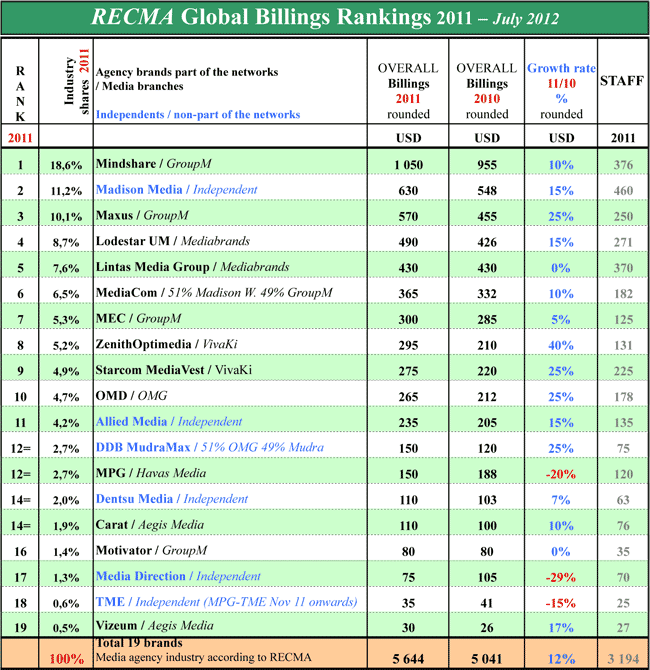
    The much-regarded billings report for India has been released by RECMA. The Indian media agency business grew 12 percent in 2011 with a total billings of US$ 5644 million.


    Group M’s Mindshare media agency tops RECMA’s India billings report for 2011 with US$ 1055million, growing 10 percent over its 2010 billings. Madison Media is second 630mn, growing 15 percent. Maxus, Loderstar UM and Lintas Media Group are rank third, fourth and fifth respectively.


    ZenithOptimedia saw the highest growth with 40 percent over the previous year, as per the RECMA report. At least three agencies saw a degrowth. Media Direction went down 29 percent, MPG down 20 percent and TME dropped 15 percent.


    The combined billings of Dentsu and Aegis agencies Carat and Vizeum would put the new entity at #11 with US$ 250 million.


    Last week, MxMIndia had reported RECMA’s global billings data and rankings (see Link: http://www.mxmindia.com/2012/07/starcom-tops-recmas-global-billings-rankings-omd-is-2/).


  • Sahara picks Lucknow franchisee of Hockey India League

    By A Correspondent


    Sahara India Pariwar, a major business conglomerate, has announced that it has picked up one of the Lucknow franchise of the Hockey India League (HIL), which is to be started by Hockey India. The Hockey India League (HIL) will initially comprise of six teams which will play amongst each other (both home and away matches).


    Moreover, by taking up this franchisee, Sahara India Pariwar intends to encourage young talents, thereby giving them a platform to nurture their skills under the supervision of talented sportsmen.


    Speaking on the occasion, ‘Saharasri’ Subrata Roy Sahara, Managing Worker & Chairman, Sahara India Pariwar, said: “We are proud to associate with this great game, which has created legends in the past. By taking up this franchise, we are sure that fresh talent will be identified at city and regional level, who in turn will bring laurels to our beloved nation. We are also hopeful, that following our efforts to encourage hockey, other corporate entities will also come forward to support this league which will eventually benefit the game and its exponents.”


    Mr. Narendra Batra, Secretary General, Hockey India, said: “I am grateful to Sahara India Pariwar, for again coming forward in support of Hockey. The Group has always supported the sport of hockey.”


    Apart from being sponsor to the Indian Hockey Team, Sahara India Pariwar had also joined hands with Federation Internationale De Hockey (FIH) in 2004, the World’s apex Body for Hockey, and became the 4th Global Partner of the Federation for 3 years.