Category: Uncategorized

  • Our battle is to out-think TOI: Meenal Baghel


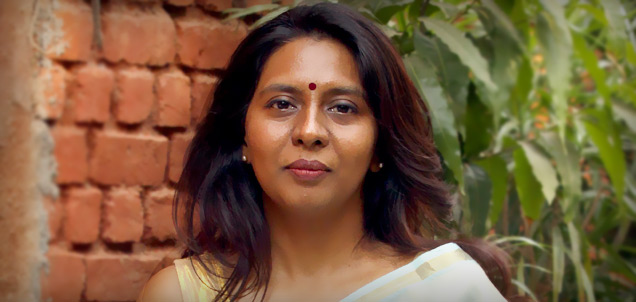
    Meenal Baghel is the founder and Editor-in-Chief of Mirror, the nation’s most sprightly newspaper. Mumbai Mirror was launched seven years ago, and today the paper has editions in Pune, Bangalore and Ahmedabad. A part of the Times group, Mumbai Mirror boasts of a fantastic circulation of nearly 600,000 copies, and it’s become the city’s favourite compact paper.


    Meenal relives the journey with us, and speaks candidly about the many challenges she’s faced along the way. We also discuss her first book, ‘Death in Mumbai’, which received wide critical acclaim.


    I did a stint with Mumbai Mirror some years ago, and this gave me a chance to watch her in action. Meenal can be a demanding editor, she can be impatient, she can be tough. While these qualities don’t endear her to some, they have played a huge part in her success. I have to say she’s the most passionate editor I have worked with.


    By Anil Thakraney


    It’s been seven years editing Mirror. How’s the journey been? Tell me the highs and the lows.

    The high obviously has been to see the paper become an important part of Bombay. We have been successful in forging an emotional connect with the readers, which is very important. We get an enormous number of people calling in with stories. And we’ve routinely broken a lot of stories, so those are the big highs. The low is that the paper is still a bit inconsistent. You know, when we started the paper, it used to be called Mumbai Error. I wish we had a cleaner start in terms of the paper being more finished. But it’s been a sort of work in progress. We have learnt a number of journalistic lessons along the way because the market has changed, the reader has changed. For instance, when we were at Mid-Day, you could get away with a lot of things. But in this day and age, you can’t.


    Give me an example

    Like sometimes when, just to break the monotony, you put an entertainment story on the front page, there is a backlash. People now expect a more serious newspaper, it’s something different from what I had envisaged. But that’s also because there’s so much of entertainment everywhere that people don’t want more of it.


    One story you regret

    We ran the FIR of the TISS girl who was raped. That was a mistake. Because the details in the FIR were very graphic on what had transpired. And you realize that you may have ended up titillating. I regret that story, we got terrible feedback for it and we apologized for it.

     

    “I don’t think journalism offers enough challenges to the really bright people any longer.”

    I still see a number of typos in Mirror. Is this an un-lickable problem?

    I think there is a very real problem with journalism today, and it’s not only limited to Mirror. The problem is that the deskies is a disappearing breed. And it’s going to be a big challenge over the next few years. Also, there are very real problems we are facing, and these are going to change the profession drastically. It’s so rare to find people who want to come into journalism because they want to be journalists. For example, when you ask people, ‘Who edited this copy?’. Invariably the response will be: ‘I looked at it/I glanced at it/I skimmed through it.’ Another thing is I don’t think journalism offers enough challenges to the really bright people any longer. There is an attrition problem across aboard. People want to try out various things. When you and I were growing up, it was about sticking to a profession, a career path, and that no longer holds true. People now have the advantage of taking breaks, taking gap years, studying, etc. The journalism hours don’t allow too much of a personal life. And I think HR, owners, publishers, editors need to take all these things into account.


    Is the passion for journalism diminishing in young India?

    I think the important thing now is personal growth and personal life. That has taken precedence over wanting to change the country.


    What was Vineet Jain’s brief to you when you signed up for Mirror?

    His brief was very clear. He said it should be a smart paper and that it should be different from the Times of India. And because it’s a compact size, there are elements of a tabloid that you can incorporate. In fact, when we started the paper, there were a lot of conflicting opinions, so I was a little tentative in the beginning. And then one day he called me and asked why was I so tentative. He said, “I have given you this brief, just stick to it. And don’t be apologetic about it.” So that was wonderful.


    You think this country is ready for a Brit style tabloid?

    No. Though it’s very interesting because everybody is trying to incorporate the tabloid elements, but you can’t be openly unabashed about it. We are not ready for it. For instance, look at the responses Dr Vatsa’s column gets.


    Guess it’s a tightrope walk. You want to be tabloidy, and still have to be aware the nation isn’t ready

    Yes. Sometimes in the newsroom we think we can do a story, but when we see the backlash the next day, we start being more careful by censoring ourselves.


    And the problem is if you play safe and cut down on controversy, you get dangerously close to the TOI

    Yes. So what we try and do is this: I always say our competition is the Times of India. Because we go with the TOI. Now the TOI has massive width, they do like sixty stories at an average. So our battle is to out-think the TOI, in the sense that ‘this is what they will do, so let’s do something different’. We can get away with some naughty things that they can’t.


    Lots of court cases?

    Actually they’ve come down, ever since we’ve become safer. (Smiles.) But there’s also a lot of frivolous litigation, which is easily dealt with.


    More editions in the offing?

    At the moment, no.


    And for Mumbai Mirror, are you still as hands-on as ever?

    See, I am out for lunch with you! (Laughs) But yes, I like being hands-on. There are times when I can breathe down people’s necks. But I am trying to back off a little now that we have a very competent senior team. I also realize that people should be given more space, but it’s difficult. (Laughs.)

     

    “The TOI has lots of products that come with it, but everyone doesn’t necessarily read all of them, right?”

    Meenal, the perception is that Mirror benefits a lot from being the TOI’s free paper. Without that advantage, your circulation would be nowhere close.

    I am lucky and I won’t question my luck. We have a great readership, thanks to the TOI. But then you have to capitalize on that luck, you still have to deliver a good product. The TOI has lots of products that come with it, but everyone doesn’t necessarily read all of them, right?


    If you were a standalone paper, how much circulation do you think you’d lose?

    I guess we’d retain 60%. Because Mirror has become a genuine commuter’s paper. You have to travel in the train to see how many people carry it. It started off as a guilty pleasure, which people didn’t want to acknowledge they were reading, but they were all reading. But over time it has also become a lively paper. And that can’t be said about too many other papers in town. And people like that.


    Would you say Mid-Day was your training ground?

    Absolutely. I had always worked with broadsheets before that – Pioneer, Asian Age and The Indian Express. So when I joined Mid-Day, for a while it was like, where the hell have I landed? This is not how journalism is done. For the first six months I had no idea what I was doing. But I was in a senior job and I was getting paid an X amount, and I must tell you I HATE giving up. And then one day I went for a walk and said to myself the paper won’t change because of me, there was a reason why this paper was so beloved in Bombay. And that was the Eureka moment for me. I decided to try and understand it rather than look down upon it. And that changed things. I must say I learnt a lot from Aakar Patel (the then editor of Mid-Day). I learnt a lot from what the paper did on Page 1 and on headlining.


    One Indian print editor you most admire.

    I owe everything I learnt in journalism to MJ Akbar. About writing, about making pages, about what not to do, etc.


    It’s been seven years at Mirror. Don’t you feel the itch? Isn’t it tiring to do the same thing day in and day out?

    I keep wondering why nobody else offers me a job! I am joking, of course. Which is why doing the book was wonderful for me. It gave me a chance to step back and follow a story that had been fascinating me. And it was extended journalism. I have always felt when the number of days you feel bad about what you do exceeds the number of days you feel good, you should quit. I haven’t reached there. And there’s always something exciting happening.


    Being a hard-edged journalist, how do you reconcile with something like Medianet?

    That’s easy, because we don’t have Medianet in Mirror.


    But it’s there in your group.

    It doesn’t affect my life, so I don’t care about it.


    You aren’t asked to carry plugs?

    No. And it’s one of the things that has pleasantly surprised me. They have maintained the Chinese wall from the start.


    They have left you alone?

    Yes. And there’s another reason. Mirror is a small paper in the group, so it’s not necessarily the focus. We are a small cog in comparison.


    Have you ever been asked to drop a story?

    (Pauses) Not drop a story. I think what one learns over a period of time is that you have to pick your battles. I’ll give you an example: If there’s an entertainment story which is coming right ahead of the Filmfare awards, where somebody is going to be performing, and I have a damaging story on that person, would I delay it by a few days? Yes, I would.


    There used to be intense rivalry between the Independent and the TOI. Is it the same with you?

    Not rivalry, but there is great competition. When the TOI does something, and we’ve missed it, I give my reporters hell. And I am sure JoJo (Jaideep Bose) does the same when we get something.


    “Mid-Day killed itself. And I feel really bad. I feel bad that what was such a robust paper is no longer that.”

    You’ve pretty much killed Mid-Day. Feels good?

    The paper killed itself. And I feel really bad. I feel bad that what was such a robust paper is no longer that. We all worked very hard out there. We worked our asses off at Mid-Day and we used to take great pride in the paper being so robust, that it was second only to the TOI.


    What would you do if you were editing Mid-Day today?

    I’ll bring in more energy. What’s going for Mirror despite the inconsistency is that it’s never dull. And dullness in journalism is a cardinal error. Especially if you are a tabloid.


    Let’s shift to your book, ‘Death in Mumbai’. Does Meenal think Maria Susairaj got away lightly?

    I must tell you I ended up liking her quite a bit. I feel that she is a manipulative woman and that she may be a tease. But that’s not a crime, there are a lot of women like that out there. Did she kill or abet the killing? I don’t think so. She was in love with Emile Jerome, she really wanted to marry him. But he wasn’t committing to her. When he killed this guy, it was, in her mind, like his commitment to her.


    When you started writing, was there something you had decided you won’t do in the book?

    The only thing I told myself is to not be judgmental. Because someone else’s idea of morality could be different from mine. Like, I started out with a certain view of Maria but it became something else.


    In fact, that was the only criticism I read about the book. As a journalist, readers expected you give us your own view. Perhaps as the epilogue.

    There were genuine difficulties. Something happened in a room where there were only three people. One guy is dead and two are in jail. There is only so much information I had. And I genuinely did not want to play judge.


    You have always kept a very low profile. Marketing the book must have been tough.

    (Laughs.) It was! It was terrible. The only time you would see me on television was on things that were related to the book. Otherwise I wouldn’t be caught dead going on TV.


    Any more books coming up?

    I would like to write more books, but I love this job too much. Ideally I’d like to do both. But I haven’t thought of another subject so far. Might be interesting to write fiction.


    Would you like to edit the TOI?

    No. I think it would be fun to edit a broadsheet, but I don’t think I am ready to edit the Times. It’s the biggest paper in the country, it requires a greater understanding of business, politics… and I don’t think I am ready for it. Also, it requires certain people skills which I perhaps don’t have.


    Don’t rate yourself high on people skills?

    I think I am very good. But I need to be more patient. I can be impatient and that’s a serious shortcoming.


    You are 43. Don’t want to marry?

    It’s too late now (Laughs).


    Is it important to be single to edit a high pressure daily? Is it a price one pays?

    Sure. It’s a price a lot of women, more than men, have to pay for any high pressure job. It’s unfortunate, but it’s a fact. I may have been married, but it would have been very difficult with children.


    Photographs: Fotocorp


  • Two announcements on Week #2: Get MxM news via BBM/WhatsApp + MxM Mondays

    It’s the second edition of our Friday announcements, and we have not one, but two announcements for you. So does it mean that we’ll have three next Friday, and four the following week, and five thereafter? Well, you know that the last thing you should expect at MxM is predictability. So as you await the unexpected next Friday, here’s more on what our headlines say for this week:

     

    1. Starting August 1, MxMIndia news will also be ‘broadcast’ via the Blackberry Messenger and popular WhatsApp. This is just the beginning… in the months to come, we’ll add more devices (Samsung ChatOn etc). Advertiser messages will be transmitted too, albeit in a stripped down way. Await our mailers starting Monday with the PIN and Mobile number that you should enter to start getting these missives via BBM or WhatsApp.

    2. Remember MxMIndia is a lot, lot more than just account and people movements. We’re about views and analyses and often these may seem uncomfortable for a section of our readers and advertisers. But, wtf, we’re like this only. So, starting Monday, July 30, we bring you MxM Mondays. Every Monday, our team will curate a discussion on critical issues that impact Indian media and marketing. Virtual seminars across every vertical. What’s more, we’ll also invite one or more of our ‘permanent’ columnists/bloggers to comment along side. We will announce the following week’s theme the previous Monday to invite responses from readers.


    So, await the first of our MxM Mondays on Monday, July 30. And the theme is:  Ownership of the news media. Should there be a restriction on who should be allowed to own news media?


  • MxMIndia alerts via BBM (23050B5D) and WhatsApp (+919920650363), privacy assured

    As mentioned in the second of our Friday announcements, MxMIndia announced the coordinates to enable access of its news updates and alerts via the Blackberry Messenger (BBM) and WhatsApp.


    For BBM: the Pin No is 23050B5D. You can also scan the barcode and add the MxMIndia contact. For WhatsApp: the Data Cellphone Number is: +91 99206 50363 and the email id is editor@mxmindia.com.

     

    MxMIndia recognises that the BBM and WhatsApp ids of most subscribers are private and promises that these will NOT be shared with anyone – advertisers included. However, news alerts and updates may include very short sponsor/advertiser messages in text and links.

  • Atul Phadnis: Industry must not duck core issues on measurement

    By Atul Phadnis


    Atul Phadnis

    All of us have read the astonishing news of a lawsuit in recent days in a New York court making allegations on the efficacy, integrity of TV Ratings in India. A lot of us in the TV Broadcast industry have perhaps turned to our nearest industry colleague the moment we heard this news and blurted – “See! I told you that something like this was going to happen one day!!”


    Unfortunately, for the entire TV industry this is bad timing when already nerves are frayed with the Cable Digitalization issue! I would consider this development as a time to reflect on how we, the TV sector, have got into this position and how all of us collectively have been responsible for the mess with TV measurement.


    Lets look at the key questions that need answers urgently before more damage is done that could potentially destabilize ad revenue structures within the industry.


    The Burgeoning Issues with TV Ratings

    There is no doubt that there have been problems associated with the way TV Ratings have been measured in recent years. Some of the methodology related issues have also played their part in getting things down to this latest litigation :-


    1. For instance, take the issue on the validity of some of the parameters used to select sample homes. More than a decade ago, a panel quota system called Primary Control Variables was introduced with 5 main factors to select panel homes. Some of the parameters have remained unchanged in spite of their doubtful use in recent times.

    2. One such question that needs to be asked in this regard – do we still have Colour versus Black & White TV sets – as one of the factors? If yes, is this factor relevant at all today? And by sampling on irrelevant factors what sort of panel would be constructed? If this is not a factor any more then what’s replaced this? Has industry approved (or is aware of) a new sampling methodology?

    3. Do we still sample homes on the basis of Terrestrial versus Satellite? Should the Satellite sampling not be modified to sampling within these homes by Cable/ DTH players-wise market-shares? Not having this correction means dreadful, crazy results for certain channel genres. Again ignorance is bliss for the industry at large with this question not being asked.

    4. Why should the 600th or the 650th channel be reported for minute-by-minute ratings by market and by target group? Are we not playing with fire with samples for that 600th channel down to 1 or 2 or 5 people within the panel! In fact, this sort of low samples thresholds could also make any research system extremely fragile and vulnerable for interference by external forces.

    5. A continuation to the earlier point is that why should India not follow the practice from other mature markets wherein channels falling below a sample threshold are not reported for certain analysis types. So you may get weekly Channel Reach but not minute-by-minute viewership sliced by markets and target audiences.


    So the question that begs answers is – how can we continue the panel home selection and reporting on criteria, parameters and rules that are a decade old? These need to be contemporized with todays realities. And with industry support and consensus.


    INDUSTRY APATHY

    Incidentally, at this stage I must ask you, the reader, to mourn for a minute, the sad, silent demise of the Joint-Industry-Body. The JIB that had taken birth in the early nineties to guide TV measurement initiatives in our industry passed away a couple of years ago. His daughter – the Industry Technical Committee, who oversaw critical issues such as panel home selection methodology, technology selection decisions also had an untimely death. They both died waiting for its members to come to their rescue.


    BARC – The Puzzling Enigma

    A lot of folks will recall enthusiastic announcements several moons ago about the creation of BARC – a joint initiative by three industry associations. The promise was to create a new TV Ratings system with the circulation of RFPs, finally leading to a Tendering and Commissioning process. The puzzling part that was unaddressed or unclear in the BARC strategy was what happens to the here-&-now even as the new system comes about. Read on…


    1. For instance, why could industry not take control of the way TV Ratings are being done today? One Option would be for the top 5 Media Agencies and TV networks to pool their current TV Ratings deals to pursue a unified conversation with the data supplier.

    2. Why should industry as a first step not address the ‘here-&-now’ issues and ask for weekly panel KPIs from the incumbent measurement company? Panel health indicators, number of suspect samples and observations, past complaints and their explanations – could easily be taken up in a structured manner. Why should everything rest on the ‘utopian’, ideal system that might take another 1 or 2 or 3 years to come by?

    3. What will it take for some of the allegations and accusations being made routinely in private quarters to be audited by an independent, neutral organization? Why cannot BARC be the redressal body to sort issues relating to TV measurement? After all it has the support (and mandate) from IBF, ISA and AAAI. If an effective redressal system existed would any player have gone to court in the first place?


    Agency Media Buyers : faith beyond belief!

    That the average media buyer considers TV Ratings outputs as the gospel truth is well known. Imagine this guy (or gal) who is perhaps sitting in the agency at 10pm churning data for the 633rd ranked channel. The analysis is minute-by-minute viewership for Jharkhand, SEC AB, 15-24 years and is being done since the Buying Head has a meeting with that Channel’s team the next morning.


    At that precise moment what should have happened is Helicopter Gunships should have descended on the rooftops of that agency, Black-Cat commandos should have whooshed in through the AC ducts and screamed at that buyer “STOP! You cannot look at min-by-min trends for a microscopic market-audience for the 633rd ranked channel!”. But none of these stunts will happen. The Buying Head will receive the analysis in time for the meeting and will happily use that data to negotiate ad rates, oblivious to ludicrously low sample sizes! Sad, but true.


    Conclusion

    My last word on this is that – as an industry if we continue ducking the main, fundamental issues in this space we will keep having disturbances that hit at the revenue stability and predictability that measurement brings in. It’s finally our choice – yours and mine!


    Atul Phadnis is CEO, Whats-On-India. He has been associated with all aspects of the measurement process – as a media planner, employee of TAM, a broadcaster and now a technocrat


  • The Anchor: 5 ways mobile videos can become an ideal tool for marketers

    By Salman Hussain


    There’s no arguing that mobile video is hot, happening right now and is going to continue to grow in popularity in the near future. A recent Cisco report predicts that mobile video will generate 66 percent of global mobile data traffic by 2015. The question is how can marketers best harness the power of this amazing medium? Here are five tips:


    1. Tap into the rise of the social sharing phenomena. We’re seeing that in mobile video, social sharing is the new search. What better way to find content that is interesting to you than by recommendation from your trusted social network? What this means for marketers is that clever, compelling mobile video creative has just as much of an opportunity to go viral as the latest Bollywood trailer and this translates into amazing brand reach very quickly. It’s not unusual for mobile video views to be driven by social sharing on Facebook, Twitter and BBM by up to 65%!


    2. Create a direct line to a highly engaged audience eager to consume brand messaging that is in context and relevant to them. Video is a highly engaging medium. For example a recent survey of nearly 13,000 women in India found that 50% of women spend more than 30 minutes throughout the day snacking on mobile video content. This is significant because by way of comparison 53% of women said they spent a comparable amount time on television, radio and print media combined. And it’s not all just about entertainment. For example, news is another hot genre for mobile video as well. Marketers should use mobile video to deliver brand engagement that is in the context of the video experience consumers are already having, while communicating the brand’s values in a new and refreshing way.


    3. Seek inspiration from brands already achieving success with mobile video. Pepsi, Pizza Hut, Sonata are just a few brands that are already seeing success with mobile video. For example, in an effort to create awareness of Pepsi’s India “Change the Game” Campaign, a two-day roadblock featuring a new commercial starring Ranbir Kapoor was created. The roadblock yielded more than 16mn impressions and 160,000 video views. You can find additional ideas here from a number of case studies highlighting mobile video marketing wins from a broad range of companies.


    4. Efficiently ensure consistent user experience across all device types. Prior limitations are no longer in existence. Previously, brands needed to take the time to develop multiple versions of creatives, specifically for a variety of popular devices and screen sizes. Or users would have to suffer a less than optimized experience for their particular device, often visiting a landing page first. Now with innovative new ad units, you can automate a consistent user experience on 5,500 different device types with no manual adjustment required. Cadbury Silk is just one brand that’s already saved costs and time using this approach.


    5. Don’t be afraid to experiment. Mobile video marketing is an area ripe for innovation with opportunities for new trends being driven by the proliferation of low end but sophisticated feature phones. These innovations might take the form of new types of ad units or connections to social media sharing or innovations we haven’t even dreamed of yet!


    Salman Hussain is Vice President- BD & MD (India & Middle East), Vuclip


  • Anil Thakraney: Goofy newspaper desk

    By Anil Thakraney


    Mirror’s chief editor. Meenal Baghel, said something very interesting as part of the interview with her for MxMIndia. And it has set me thinking. She said deskies is a disappearing breed in the print media, and this is the reason our newspapers arrive with grammar goof-ups. And I have been searching for answers on why we no longer have high quality personnel manning the desk.


    One explanation could be that people consider the desk job as a stop-gap arrangement, their ambitions lie elsewhere. And therefore attention to detail is missing. This could be because of the boom in the Indian media, which means a whole lot of opportunities/jobs have opened up. Therefore, the concept of commitment has taken a beating. Perhaps this is so. But then, there are many opportunities available for the deskies in the western world too, but newspapers from there seldom carry mistakes. So maybe there’s some other explanation.


    Another theory suggests that the arrival of the SMS and the virtual media may have played a role in this. Just like everyone else, desk personnel are also busy murdering angrezi, and it’s possible this dirty habit has spilled into their work. But once again, the new media doesn’t seem to have damaged the skills of newspaper folks elsewhere in the world, so perhaps the answer lies elsewhere.


    Here’s my own view: I think we are looking for scientific and logical explanations to justify what is actually plain and simple carelessness that has crept into the system. With too many distractions these days, I suspect youngsters at the desk aren’t paying adequate attention to subbing and proof-reading. Perhaps a little penalty is called for against each grammar mistake? Ten rupees per goof cut from the salary? Sounds too harsh? It is, but this may be the only way to get the deskies off Chatting/ FB/ Twitter/ Flirting/ Whatever, and back onto the goddamned page.


    (Note to the editor: Please ensure there are NO typos in this article. Else, we’ll get lynched by the industry deskies!)


     [youtube width=”400″ height=”225″]http://www.youtube.com/watch?v=YRB0i9-AUQs[/youtube]

    P S: “She embodied every desirable quality I had ever wanted. In my mind, I was a peasant before a queen. And so, Susan Glenn and I were never a thing. If I could do it again, I’d do it differently.” Not only is this AXE commercial fantastic, the script has been written by a brilliant copywriter. Looks like fine writing has moved from press ads to television. No complaints, we need more of this.


    Anil Thakraney is a senior journalist and commentator. He is also Editor-at-Large, MxMIndia. The views expressed here are his own.


  • It’s official! Omnicom to pick up majority stake in Mudra

    Omnicom Group Inc announced that it has entered into an agreement to acquire a majority stake in the Mudra Group. As part of the agreement, Omnicom will extend its partnership with the Reliance ADA Group.

    Mudra will significantly expand Omnicom’s service capabilities and presence in India. The Mudra Group comprises: branding and communications agency Mudra India; marketing and advertising agency DDB Mudra; integrated engagement and experiential agency Mudra Max; and Ignite Mudra, an agency that caters to entrepreneurs. Mudra has 26 offices across the country and an extensive field activation network.

    In conjunction with the strategic partnership, Reliance Group Chairman Mr Anil Ambani will join the Omnicom International Advisory Committee. “This acquisition is an important step in achieving Omnicom’s strategy to extend and deepen our presence in rapidly growing markets,” said John Wren, President and CEO of Omnicom Group in a communique. “Our vision is to be a source of innovation in every market we serve. Mudra is widely acknowledged as an outstanding company with impressive creative product and expertise in a broad range of disciplines. Mudra’s innovation and depth of talent will strengthen our business capabilities not only in India but around the world.”

    “DDB has been an excellent partner over the years. We have benefited immensely from the collaboration and transfer of knowledge from around the globe. We are proud to belong to such a storied network,” Mudra Group CEO Madhukar Kamath said. “Omnicom and DDB have clearly been the inspiration for Mudra Group’s transformative growth over the last five years. My colleagues and I look forward to the next decade of explosive growth in the Indian market.”

    DDB Worldwide President and CEO Chuck Brymer noted, “This acquisition will further unite two companies that have long held the same values, creative goals and ambitions. Under Madhukar’s leadership, Mudra is the original challenger brand of the Indian communications industry, and it shares DDB’s culture of creative excellence. Together, we will create even greater growth for our clients in this rapidly changing, technologically driven region.”

    DDB and Mudra Group’s shared history is rooted in a relationship that began in 1988 and has grown tremendously since the formation of DDB Mudra in 2007, which established DDB India, Tribal DDB, Rapp and DDB Health & Lifestyle in the Indian market.

    John Zeigler, CEO, DDB Asia Pacific, added, “Mudra has an impressive history as both creative leaders and strong believers in integrated solutions making them one of the most innovative companies in India.”

    Omnicom Group EVP and CFO Randall Weisenburger also noted, “In addition to significantly expanding our service capabilities in the region, this partnership will bring with it an exceptional Shared Services and Operations Center in Ahmedabad that will help Omnicom more efficiently expand its other operations in India. Additionally, Mudra recently moved into a new headquarters facility in Mumbai called Mudra House, a sustainable building and one of the few in India to be awarded LEED (Leadership in Energy and Environmental Design) Gold certification. Mudra House is widely acclaimed for its conservation features and state of the art technology.”


  • MY FIRST Sale: I’m not a conventional salesman. I am a storyteller: Bhaskar Das

    [youtube width=”400″ height=”225″]http://www.youtube.com/watch?v=OiplNQeXtgw[/youtube]
    If you are having trouble in viewing this video, see link

    As part of our Thursday series of getting personal with industry folk, we look at getting the big guns in the fraternity to reminisce their first sale, copy, creative, news report, article, news show etc etc. We thought it appropriate to quiz the master salesman Dr Bhaskar Das. He’s been at it for 33 years with The Times of India group. MY FIRST… will appear on the second Thursday of every month…


    You are essentially a salesperson, do you remember your first sale?

    I first sold to Bennett, Coleman… they recruited me. You are first a product or brand yourself and you get selected. I think that was the first selling I did. I had a two-year management training course but they stopped training after nine months saying you don’t require training. And then I was given the charge of developing classifieds in The Times of India Ahmedabad edition in 1981. TOI Ahmedabad was launched in the 1970s and they were not doing very well. And classified development is very important, so I was given the charge.


    My first sale, I still remember, I went to Vatva Industrial Estate and got a 30 rupees ad. At that time Rs 30 were valuable. But fundamentally when I say I am a salesman, I love selling but I am not a conventional salesman. I am a storyteller. I don’t just offer solution, I create insights for the client and create a story around access points and not selling of space. I think that’s why my sales track record in the company for 32 years continuously has been flawless.


    And did you have to spin any yarns to sell stories?

    No, I think for selling stories you have to do your homework and empathy is very important. That why should my advertiser buy? I have never focused on only supplies side, I’ve focused on demand side as well. I used to also research on reader reaction, on the demand side, and I used to marry both of them in storytelling. Obviously over the years, storytelling ability improved.


    Any sale you are particularly proud of?

    There are a lot of them. When I became Western Director, when I was responsible for Ahmedabad and Kolkata, I always used to go to clients who would say no. I had a fetish that when they say no, I would turn it into a yes. Apart from leading by example, I always believe my knowledge should start where my colleague’s ignorance begins. And then it gives a different kind of kick of my storytelling ability.


    Is ad sales a thankless job…

    I never believed so. For me no job is a dirty job, I think it depends on the person. I feel sales job is the best because it has great learning about human psychology, sociology, about economics of operation. I have worked in one company but I have learnt from so many industries when I go, inquire, understand and empathize with the client. My learning in the industry is amazing, it creates tremendous sense of resilience. Every time someone says no, it strengthened my intention to succeed.


  • Buzzer # 4 | Quiz on News Channels

    We are back with the fourth edition of MxMIndia’s media quiz that happens every Friday. Our quizmaster is Sorbojeet Chatterjee, Vice President – Marketing at Neo Sports. To enter this quiz, simply email the answers with your personal details (Name, email id and telephone number) and a five-word descriptor for Cannes Lions at editor@mxmindia.com with Buzzer#4 in the subject. Standard contest rules apply (see box below).

    There will be 3 prizes for Buzzer #4. First Prize: Rs 1001, and 2 Second Prizes of Rs 250.

    If there’s a tie, the best descriptor for Cannes Lions will get the prize (note: tie-breaker question will change every week).
    Last date for sending entries: Thursday, August 16.

     Suhel Seth, Kumar Mangalam Birla, Vir Sanghvi and Jeetendra were shareholders in this news channel for a brief period. Which channel?
     On which news channel would you find the popular weekend programmes – Total Recall and The Foodie?
     A chartered accountant by profession, he is also the brother-in-law of CPI (M) leader Brinda Karat. Identify the icon?

     This gentleman is a former Director General of Doordarshan. Identify his famous daughter?
     BAG films is owned by Anurradha Prasad and Rajiv Shukla and they operate the news channel News 24. What does the acronym BAG stand for?
     Which news channel was launched with the tagline ‘Sharp News for Sharp People’?
     The launch episode of Satyamev Jayate on female foeticide featured 2 journalists narrating their experience of doing a sting operation on doctors in Jaipur. Which news channel had done this sting operation?
     With which newspaper did NDTV tie up to launch an English language local news channel?
     Chelsea Clinton, daughter of Bill and Hillary Clinton, recently joined a news network as a correspondent. Which network?

     Identify the news reporter interviewing General Cariappa on Doordarshan? Today she is interviewed on a daily basis on English news channels?


    Winner of Buzzer # 3 is Ms Ritika Misra  (Tel No xxxxx 57×63) who works with DDB Mudra Max. Ms Misra wins a Prize of Rs 1001 (yes, for the second consective week!). The second prize winner is Ms Natasha Dhingra of Aidem (xxxxx 96×29) who wins the Second Prize of Rs 501. Congratulations, Ms Misra and Ms Dhingra. Please await our mail, send us your coordinates and we will wire/ courier/ deposit the prize… asap!


    Answers to Buzzer # 3

    1. Facebook, 2. Orkut, 3. The Accidental Billionaires, 4. CNN, 5. Zynga (Named after Mark Pincus’ pet bulldog Zinga), 6. Tumblr, 7. First video uploaded on YouTube, 8. Facebook Revolution, 9. Shorty Awards, 10. Twitter


    1. The families and employees of MxMIndia Private Limited and its associates are not eligible to win prizes.
    2. You can send as many entries as you would like. There is no entry fee.
    3. In case of more than one all-correct entry, the Tie-Breaker will be the decider.
    4. The decision of the Quizmaster and/or the MxMIndia editor will be final.
    5. If the winner is not reachable by phone/email, the next best entry will be awarded the prize.
    6. By sending your entry, it is assumed that you are in agreement with the rules.
    7. Last Date for sending entries for Buzzer # 4 is August 16, 2012.
  • Happy Independence Day. No edition of MxMIndia today

    It’s India’s 66th Independence Day today and we wish you a very Happy Independence Day. MxMIndia’s editorial and business offices will be closed today.


    If there’s a communique, please mail it to us at editor@mxmindia.com and whoever you are in touch with from the Team.


  • India Shining with Vikram Sakhuja


    By Johnson Napier


    Proctor on Sakhuja


    Exclusive to MxMIndia: Dominic Proctor, President of GroupM Global on Vikram Sakhuja’s appointment to the position of Global CEO of Maxus and the relocation of Maxus’ Global Heaquarters to India


    Vikram has been selected as he is the best candidate for the job, not because he lives in India. The fact that he does live in India is an additional bonus because it spreads the management of Maxus around the world, consistent with the new world order. It also reflects the fact that much of our global senior talent resides in Asia and I fully expect that more of that talent will move into global positions in the years to come. Not just in GroupM agencies but business in general.


    The world has become a smaller place and boundaries are no longer barriers. Maxus does not have a single HQ so there is no plan to move more people into the market. Indeed the agency will continue to grow and develop as a very global business.


    Vikram will join the global management team of GroupM and I am really excited by the opportunity to work with him more closely. He will bring a different and interesting perspective to our business as we continue to grow. The fact that he is coming from a fast growing market will also be a benefit as we plan to grow quickly everywhere!


    I can’t think of anybody as qualified as Vikram to build on the great work that Kelly Clark and his team have done in establishing Maxus as the world’s fastest growing agency.

    As India celebrated her 66th Independence Day, the headquarters of the world’s fastest growing media agency is to be shifted to the country. And Vikram Sakhuja, currently Group M’s CEO for South Asia, has been appointed Global CEO of the media advertising network’s Maxus agency.


    Proctor Dominic

    Mr Sakhuja’s appointment was part of a series of senior-level changes announced on Wednesday by Dominic Proctor, President of GroupM Global. “The world has become a smaller place and boundaries are no longer barriers,” Mr Proctor told MxMIndia. “Maxus does not have a single HQ so there is no plan to move more people into the market. Indeed the agency will continue to grow and develop as a very global business.” Said Mr Sakhuja, “It’s very exciting and humbling at the same time… It’s still sinking in.”


    In the first move, GroupM North American CEO Rob Norman becomes Chief Digital Officer for GroupM Global, a new position at the company.


    Rob Norman

    “Our activity in digital will define our future success and we are truly fortunate that Rob will step into this crucial role full time,” Mr Proctor said in a communiqué issued earlier, announcing the movements.  “There is nobody better suited or more experienced than Rob to lead our teams into the future.”


    Mr Norman has extensive experience in the digital arena having served as CEO of GroupM Interaction since 2006.  Mr Proctor said his responsibilities will be significantly expanded in his new role.


    Kelly Clark

    At the same time, Mr Proctor said Kelly Clark, currently Global CEO of the GroupM agency Maxus, will succeed Mr Norman as CEO of GroupM North America.


    “Kelly has had wonderful success with our companies in Asia, the UK, and Europe and most recently at Maxus globally,” Mr Proctor said.  “His broad experience and track record will bring a great boost to our business in North America.”  Prior to taking over Maxus in 2008, Mr Clark served as CEO of GroupM Europe, Middle East and Africa.


    Talent and leadership is sitting everywhere: Vikram Sakhuja


    The new Global CEO of Maxus spoke to MxMIndia hours after the news of his appointment was announced


    Congratulations… has the news sunk in yet?

    It’s very exciting and humbling at the same time. It’s a very vibrant and exciting agency to be with. All I can say right now is that I am thrilled with the news. It’s still sinking in.


    In a sense you’ve piped some favourites to the job…

    I really have no idea on how the contender things work. It obviously involves the system and you’ll have to ask that to the bosses at Group M.


    We’ve seen the stellar work that you have done for Group M but personally, what would you attribute your ascent to the top to?

    I can’t really say what is it that has worked in my favour. One needs to introspect such things, I guess. Something great has obviously worked for me. But one has to work things up and have a gameplan and get people together to move things in a particular direction. The ability to have a vision and the ability to drive it are the things that I have tried to do as the Group CEO for Group M South Asia. And if that has worked, then it’s great.


    How big a challenge is it to fit in the shoes of Kelly Clark, who’s been promoted to CEO of Group M North America?

    Kelly’s shoes will be very large to fill. I remember that I joined the system when he was the APAC head at Mindshare and was transitioning between UK and Europe handling several roles for the agency before he moved to Maxus. Hats off to Kelly for the sheer intrusiveness and energy with which he has driven the agency. I am a big fan of his.


    What are the immediate changes that will be seen on ground?

    Not sure on when the new change will come into effect and will be clear only when a successor has been decided. These things take time and it is still work in progress.


    In a sense you become the first global CEO of a media agency to be based out of India. And Dominic Proctor too has highlighted the emergence of an APAC market as being the driving engine for the future. What do you have to say about this?

    It so happens that you got talent and leadership sitting everywhere. I have been fortunate enough to be picked out of here but at the end of the day, we are living in a pretty global world and the new reality is that communication barriers are slowly fading away. In our earlier system, people used to be running the system out of Australia, Singapore, Hong Kong but suddenly where you sit is not central to what is called the ‘headquarter concept’. In my case too, it just so happens that I am going to be based in Mumbai. But I won’t read anything too much into saying that Asia Pacific has emerged as a hot favourite – it’s great to hear that but at the end of the day we have been part of the global network for years and it feels that way. I don’t see it as APAC being suddenly recognised. If you see Ashutosh Srivastava, the Mindshare APAC head also has taken up a global responsibility…so there are Indians all over the place. It just shows the ability of the system to look at APAC as the global hub rather than elsewhere.


    Will it be a challenging task to lead global operations out of India?

    It’s just that I am going to be based in Mumbai and I will be travelling as the other global CEOs do. A global CEO’s job doesn’t automatically mean that everything is decided by a bunch of team sitting at some headquarter and running the entire set-up, it doesn’t work like that. You’ve got to work through a network, you’ve got to create a team and drive a certain agenda. It doesn’t require physically handling a bunch of people in one place.


    One of the challenges will be to see that Maxus continues to achieve the 20 per cent growth trajectory in the coming future as well…

    I have no idea how I’ll continue to keep it at that. But it will be an interesting challenge. I look forward to my role at Maxus.


    Vikram Sakhuja interviews on mxmindia.com


    Interview with Anil Thakraney

    http://www.mxmindia.com/2012/06/ creative-agencies-have-allowed-themselves-to-be-dumbed-down-vikram-sakhuja/


    Text and MxMIndiaTV interview at FICCI-Frames 2012

    http://www.mxmindia.com/2012/03/ff12-integrated-media-is-the-best-way-forward- vikram-sakhuja/


    MxMIndiaTV interview at World Magazine Congress 2011

    http://www.youtube.com/watch?v=GSS2j9PQMkU& feature=player_embedded

    Maxus was named the 2011 “Media Agency of the Year” by Adweek and last month the agency was named the fastest-growing global media services agency in the world for the third consecutive year by RECMA, the independent organization that measures media agency sector operations.


    Taking Mr Clark’s role at Maxus will be Mr Vikram Sakhuja, currently CEO of GroupM India and South Asia. “Vikram is the perfect candidate to take on the Maxus role from Kelly,” Mr Proctor said.  “Maxus has a great management team and a lot of momentum.  I have no doubt that Vikram will continue to build a great agency.”  He added that Mr Sakhuja will remain in his current role until his successor is announced (See ‘Proctor on Sakhuja’ in box alongside).


    All three will report to Mr Proctor and the new roles begin later this year.


    Mr Sakhuja’s appointment is the second global level appointment made by Maxus in recent times. Earlier this year, Madhvi Pahwa moved from a Group M responsibility to that of Global Talent Director. Ms Pahwa was to be based in India.  But now, Maxus has become the first global media agency to have its headquarters in not just India, but also Asia. Said Mr Proctor on the relocation of the HQ: “It also reflects the fact that much of our global senior talent resides in Asia and I fully expect that more of that talent will move into global positions in the years to come. Not just in GroupM agencies but business in general.”


    Lynn de Souza, chairman and CEO of Lintas Media Group, believes that it’s a welcome recognition for Mr Sakhuja and India. “It shows that Indian talent is appreciated and not that it needs to be exported out of India to do good work. That is the essential story that comes out of this,” she said. Added Mona Jain, CEO, Vivaki Exchange:India has been consistently delivering healthy growth numbers for several agencies and is also one of the fastest growing markets in the continent. So it is only fitting for them to consider India as the hub for managing global operations.”


    For Mr Sakhuja, it’s a significant move as he moves to Group M global management team directly and not via the Asia-Pacific route. However, he doesn’t think there’s an all-new focus on APAC. “It just so happens that I am going to be based in Mumbai. But I won’t read anything too much into saying that Asia Pacific has emerged as a hot favourite – it’s great to hear that but at the end of the day we have been part of the global network for years and it feels that way,” he said.


    The successor to his current position as CEO, Group M South Asia hasn’t been announced yet. Once that’s done and the transition happens, Mr Sakhuja will take on the global role at Maxus in right earnest.


    INDUSTRYSPEAK


    Lynn de Souza, Chairman & CEO, Lintas Media Group

    I think it is a fantastic development both for Vikram himself who has really done a very good job ever since I have known him and it’s an appreciation for all the good that he has done and the potential that he has. So I am very happy for him. Also, for the industry itself, it shows that Indian talent is appreciated and not that it needs to be exported out of India to do good work. That is the essential story that comes out of this.


    Certainly, Maxus is a great agency; I have always said that. It’s excellent news; the recognition for Vikram as well as for India is really very good.


    Divya Gupta, Chief Executive Officer, Dentsu Media India

    This epitomizes India as a key, growth engine for most brands and marketers across the globe.

    It also augurs the emergence of India as a strategic global and regional hub for management and control of network businesses.
    I wish Vikram success.


    Mona Jain, CEO, Vivaki Exchange

    The agency has always been rated highly. It’s great news that the CEO should be from India which shows that the country is becoming very critical in the entire global scheme of things for agency networks. Also, India has been consistently delivering healthy growth numbers for several agencies and is also one of the fastest growing markets in the continent. So it is only fitting for them to consider India as the hub for managing global operations.




    Maxus Global Factsheet

    > Launched in late 2008, is part of GroupM, the world’s largest media investment management group that serves as the parent company for all of WPP’s media agencies, and which buys over one third of the world’s media every day.

    > Rated world’s fastest growing global media agency network

    > Talent base 1,400 people across 67 locations worldwide

    > Global clients include Barclays, SC Johnson, NBC Universal, Fiat Group, Nokia, Vodafone, Church & Dwight, Nestle and L’Oreal

    >Services include Communications strategy, Media planning and buying, Digital marketing, SEM and SEO, Direct response media, Data analytics and Marketing ROI evaluation

    (Information source: Factsheet, www.maxusglobal.com)


    Rise and Rise…


    Vikram Sakhuja

    Twitter @VikramSakhuja


    Education:

    IIM Calcutta (1988)

    IIT Delhi (1984)

    Modern School, Delhi (1979)


    Work:

    Group M

    CEO South Asia (earlier MD, Mindshare Fulcrum and later Mindshare South Asia) (2002-present)

    Star TV

    Exec VP Marketing (Jan-Dec 2001)

    Coca-Cola India

    Marketing Manager-Brands (1996-2000)

    P&G India

    Associate Manager-Media & MR (1988-96)

    DCM

    Management Trainee (1984-86)


  • MxM Buzzer # 5 | Quiz on Patriotism

    Here’s the fifth edition of MxMIndia’s media quiz – MxM Buzzer, that happens every Friday. Our quizmaster is Sorbojeet Chatterjee, Vice President – Marketing at Neo Sports. To enter this quiz, simply email the answers with your personal details (Name, email id and telephone number) and a five-word descriptor for MxM Buzzer at editor@mxmindia.com with Buzzer#5 in the subject. Standard contest rules apply (see box below). Note: entries without the descriptor will not be considered for prizes.

    There will be two prizes for Buzzer #5. One First Prize of Rs 1001 and One Second Prize of Rs 101.

    If there’s a tie, the best descriptor for MxM Buzzer will get the prize (note: tie-breaker question will change every week).
    Last date for sending entries: Thursday, August 23. Entries must reach us by 6pm IST.

     Which country celebrates Independence Day on the same day as India?
     Which agency created the award-winning Silent National Anthem for Big Cinemas?
     This television programme derives its name from a famous slogan coined by former Indian Prime Minister Lal Bahadur Shastri and features celebrities visiting army camps and interacting with them. Identify the TV show?
     The Greatest Indian is based on a format owned by BBC and was a joint initiative by 2 television channels in India. Identify both the channels?
     Dhyan Chand (1936), Pargat Singh (1996), Leander Paes (2000), Anju Bobby George (2004), X (2012). Identify X?

     Which Bollywood star is related to the freedom fighter (shown in the image) and has even named his son after the highly respected leader?
     The Indian National Anthem by Rabindranath Tagore was translated in English as the The Morning Song of India. Which celebrated poet penned the English version?
     Which news channel has launched an initiative called ‘Lets Fly The Flag’ leading up to Independence Day?
     Who has been the editor of the following publications – Indian Opinion, Young India, Harijan and Navjivan?
     ‘A Capella’ is a form of music with only words and no musical aid or accompaniments. Which Indian music channel has created special Independence Day programming with this form of music?

    Winner of Buzzer # 4 is Meghna Mehta (Tel No xxxxx 04×86). Ms Mehta (who works with Star India) wins a Prize of Rs 1001. There are 2 Second Prizes of Rs 250 each. Mr Himanshu Agarwal (xxxxx 94×24, from Infosys) and Ms Natasha Dhingra (xxxxx 96×29, from Aidem)are the second prize winners. Congratulations, Ms Mehta, Mr Agarwal and Ms Dhingra. Please await our mail, send us your coordinates and we will wire/ courier/ deposit you the prize… within a couple of weeks.


    Answers to Buzzer # 4

    1. Star News, 2. Times Now, 3. Prannoy Roy, 4. Sagarika Ghose (daughter of Bhaskar Ghose), 5. Bhagwan Allah God, 6. Headlines Today, 7. Sahara Samay, 8. Hindu, 9. NBC News, 10. Jayanthi Natarajan


    1. The families and employees of MxMIndia Private Limited and its associates are not eligible to win prizes.
    2. You can send as many entries as you would like. There is no entry fee.
    3. In case of more than one all-correct entry, the Tie-Breaker will be the decider. Entries without the Descriptor for the Tie-Breaker will not be considered complete.
    4. The decision of the Quizmaster and/or the MxMIndia editor will be final.
    5. If the winner is not reachable by phone/email, the next best entry will be awarded the prize.
    6. By sending your entry, it is assumed that you are in agreement with the rules.
    7.  Entries for Buzzer #5 must reach us latest by 6pm IST on Aug 23.