Category: Uncategorized

  • Why is it that ‘phoren’ creative whizkids don’t last in adland

    By Delshad Irani & Amit Bapna


    Indian advertising may well be a hostile Martian landscape if one considers the fate that eventually awaits creative talent which has landed here from foreign shores. Interestingly, the expatriate as well as the foreign-returned native creative (who has spent a decade or more abroad), both have had a reasonably tough time coping. And more often than not, expatriates have had an unremarkable run in the Indian advertising industry.


    In January, Rediffusion YR hired Dubai-based creative Sam Ahmed, a familiar name within the YR system, as vice-chairman and chief creative officer. Although he is Indian, Mr Ahmed has spent most of his professional life abroad. Nine months later, Redifussion YR has lost its VC, who is scheduled to leave in December to pursue his passion – film direction. Mr Ahmed, of course, is not the only one whose Indian ad stint was more a 30-second commercial than a multi-part TV series.


    Indian agencies hire from outside for many reasons: to provide new strategic direction, to boost creative reputation, to win awards, to grab headlines, because the network boss says so or it’s simply a crack in the dark at plugging the hole in the hull.


    One of the most talked about foreign hires and exits in recent history was that of Adrian Miller, the chief creative officer for JWT’s Delhi operations. He left amid speculations of unhappy clients and unhappier colleagues who couldn’t quite rationalise the inflated pay packets handed out to international talent.


    So far, these grouses have been a common factor in many cases involving international hires at top management levels. Yet another import at JWT was Bruce Matchett, who joined the agency in 2005 from Singleton Ogilvy & Mather, Australia, and left before his three years were up for personal reasons.


    Not long before him was the short stint of Simon Hayward, executive creative director at FCB Ulka. At Ogilvy, John Goodman served as CEO, India & South Asia, for two years before he left the agency in 2006.


    And now, Saatchi India’s chief Matt Seddon is believed to be on his way out. According to one creative chief, the industry can be unforgiving and its disorganised nature frustrating. “Also, no one has been able to stick around long enough to make adifference. And that’s partly because of the unrealistic expectations thrust upon them. You can’t expect miracles,” he says.


    Even famous Indian advertising exports have had a fairly tumultuous time after their return. Some even have been subjected to “reverse racism” as Publicis Worldwide’s chief creative officer for South Asia Bobby Pawar puts it: “They say ‘he’s been away so long perhaps he’s become gora in his soul if not his skin’.”


    Mr Pawar, who spent over a decade in the US, came home in 2007 as Mudra Group’s chief creative officer. In 2011, he joined JWT as national creative director. However, after the controversial Ford Figo ads episode, he resigned and two months later joined Publicis.


    His contemporary and celebrated Indian ad export Sonal Dabral returned to home country full-time in 2011 with a mandate to turn Bates’ fortunes around. He quit the struggling WPP agency and joined DDB Mudra as its creative boss in 2012.


    Raj Kamble spent a fair bit of time in no-man’s land during his second innings, which began with BBH India and ended up at StrawberryFrog’s first Indian office.


    However, those who have been born and bred within the Indian ad universe and have never left its shores for Madison Avenue or any other greener pasture feel that agencies and clients are better off without foreign talent of any kind.


    For, clients feel that unless you have been here long enough to understand the market and experience the changes firsthand, one cannot deliver.


    Or perhaps, as Mr Miller put it in an interview not so long ago, it’s not a white, an Indian or an expat thing. He saw it as an ideas thing. “Perhaps with these other individuals, the mandate wasn’t right, the backing wasn’t right or they were not good enough.”


    Source:The Economic Times

    Copyright © 2013, Bennett, Coleman & Co. Ltd. All Rights Reserved

    Licensed to republish


  • Innovate, for the kill…


    By Fatema Rajkotwala


    What does one of India’s largest consumer product companies do to delight customers and increase market share? Innovate!


    “Innovation is very important for us and by innovation we mean something new that adds value to both the company and for consumers,” says Nisaba Godrej, Executive Director, Godrej Consumer Products Ltd. “India presents interesting market opportunities because as per capita income rises, people are interested in buying newer, higher order products. At the same time, there is also immense opportunity to make other products accessible for people – when done right and at the right time.”


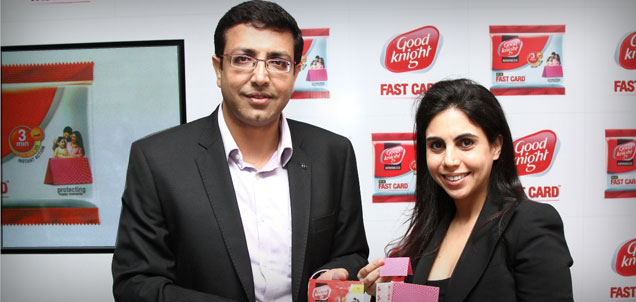
    Godrej Consumer Products has launched what promises to be a gamechanger in the household insecticide category with its new product, the Goodknight Fast Card. In an estimated Rs 3,600 crore market, where the company has introduced and pioneered innovative product formats such as the coil, mats, the liquid vapourisor, aerosol etc, GCPL now brings in a low-cost, fast burning, low-smoke solution for the masses.


    MxMIndia spoke to Ms Godrej and Sunil Kataria, Chief Operating Officer, Sales, Marketing and SAARC, Godrej Consumer Products Ltd. on GCPL’s attitude towards innovation, the idea behind the new product and the company’s business plan for the launch.


    The company has roughly spent two years in market research, product development, and license and board certification for the Fast Card. Market insights highlighted that about 50 per cent of Indian homes do not use any mosquito repellent. “We live in a tropical country where malaria and dengue incidences are high. Not only is a good night’s sleep important but there is also a very real disease factor involved. Being differentiated by bringing in a product like this is also very important to us. By launching an existing product by changing the packaging is not necessarily good for the consumers or the company,” she stated.


    Innovation is key because… but not without value addition

    Ms Godrej spoke on how launching a new product under the Goodknight umbrella adds to the brand image. “In terms of business strategy, a large amount of money in our business is spent on advertising and distribution. It is also very healthy for the company’s bottom line. A lot of our products are launched under the same brand so while we advertise this, it is has a positive rub off on our other products. We will continue to innovate and put our investments behind our innovations.” The company heads informed us that Goodknight is an estimated Rs 1,000 crore brand and being an old name in the business, Godrej boasts of a distribution network spread over 40 lakh retail shops and a direct reach in 50 thousand villages.


    A market learning is that while many households have a cockroach infestation problem, a small percent of them are buying a product to rid of the problem. Citing HIT Anti Roach Gel as an example, Ms Godrej said, “While this product costs Rs 125 and sounds expensive, it lasts for two months and we are positioning it against someone having to spend Rs 1,000 to deploy pest control. Even if we introduce a one rupee product, we are focused on it bringing value for money.”


    Seeing that malaria and dengue is on the rise and rampant within the country, coupled with GCPL’s aim to provide accessibility and an effective solution for the masses, one may think this is a CSR initiative. Ms Godrej clarifies, “We have a Good & Green strategy where we want about 25 percent of our product portfolio to be a part of. There is an angle of social responsibility but at the end of the day we wouldn’t launch a product that does not make sense for us as a company.  We are also happy to charge customers for a good product if can afford to pay for it.”


    The Goodknight Fast Card has been introduced in the Indian market only ten days ago and the company marketing heads informed that it should be available all over within five weeks. The product had been launched in Indonesia about a year and a half ago, by a Godrej-acquired company, under the umbrella of the HIT brand.


    Reaching the non-user

    Advertising being a big component of a FMCG product’s media spend, the company is ready with a TVC, creative done again by Goodknight’s agency, JWT, along with print and radio. Given the company’s aim is category creation; there will be a special focus on mobile advertising too. Mr Kataria said: “Our media spend will be divided in a way that we will be spending heavily on TV; on print, as we need to educate consumers so we will use vernacular medium for regional areas; a skew towards radio such as All India Radio and DD in smaller towns but a large part will be on C&S. We are also working towards innovative solutions on mobile as an untapped medium for rural areas.”


    Giving us further clarity on the specific target audience marked for this product, Mr Kataria said, “The primary TG here is non-users of any branded insecticide solution. The problem we are addressing is that of up to 56 per cent of Indian households that fall in this category, while in rural India the figure rises up to 70 per cent of non-users. We have also observed that within the insecticide market, there is a dual usage of products that happen. Most households use a combination of two formats – liquid vapouriser and coil, aerosol and coil etc. to increase the efficacy of the solutions. We also see this product going into current branded solution households as a second product. In that sense we are looking at two different target groups. The decision maker in our TG is the female but the user is the family.” In this way, the company does not look at the product as one that would eat into other product shares but rather supplements them as a combined solution.


    In the grander scheme of things, GCPL is hoping to revolutionise and expand the category with this product innovation. “Our main objective is to expand the insecticide market in India. As market share leaders and pioneers of every format of product in this country, we see it as our task to expand the market and increase penetration.”


    Talking about the product’s strengths and the possible criticism of instigating a price war, Mr Kataria elaborated, “It is easy to use, almost smokeless, is safe and it doesn’t use electricity. We expect a growth in the SEC B and C category. We are very clear about adding valuation for consumers and the company. We are not looking at simply price cutting, which may lead to a scenario where tomorrow somebody else may come in and cut you further. Then it is no longer a sustainable advantage to the organization. Also, if you look at our innovation pipeline of launched products, we are straddling different price points depending on the value we are creating.”


    Ms Godrej further added, “Given the price point and the access aspiration, we expect it to be a large-volume, large money model. It is a profitable product so we are looking at good margins. If you a looking at competitive dynamics where you come in and sell below your cost; it is anti-competitive. While it may benefit consumers in the short term, in the long term, it is not healthy for industry dynamics. There is nothing like this in the market currently, which is why there is a large chunk of non-users. It is not as though people don’t want to protect themselves but for a variety of reasons, no one has offered a product at the right value price point. In any case, as the market leader, we’d only be cutting ourselves.”


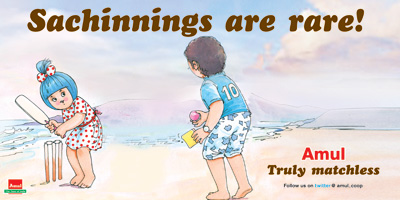
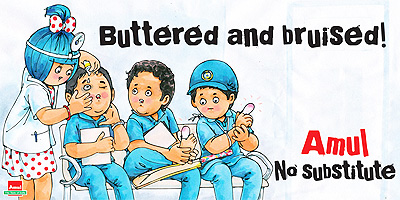
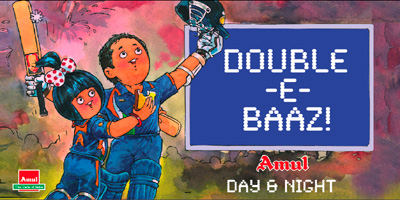
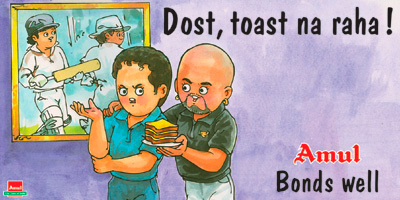
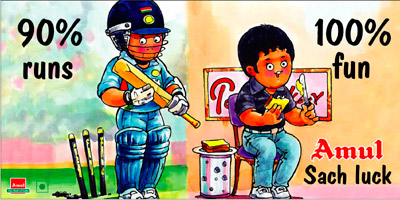
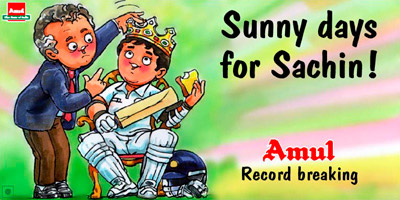
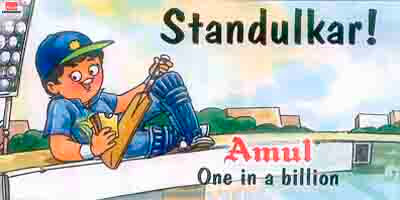
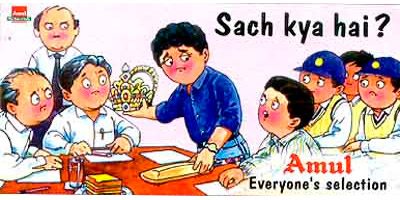
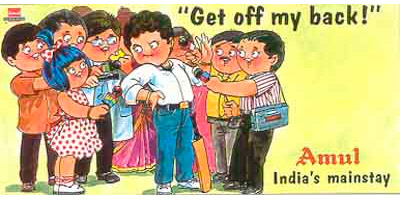
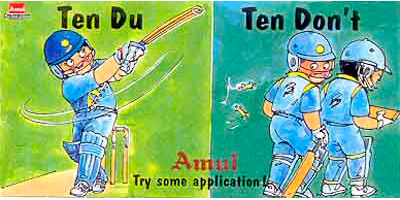
  • Recall: Utterly Butterly Tondulkarlicious – 2 : 40 Amul ads charting the Sachin story

    We had published this on April 24, 2013 on the occasion of Sachin Tendulkar’s 40th birthday. Amul hasn’t issued an ad on his retirement at the time of our edition going to bed, but the 40 ads you see here do capture major moments from the master blaster’s 24-year-old journey-Editor


    By A Correspondent


    As we’ve written before while the news media reports and reflects on current affairs and trends, Amul Butter billboards are an excellent mirror of what’s top-of-mind in urban India. These are crafted by Rahul da Cunha and his team at da Cunha Communications for the Gujarat Cooperative Milk Marketing Federation Ltd, makers of the butter brand.


    Last year, we carried 25 ads that Amul’s agency daCunha created with news around Sachin Tendulkar as the theme. On his 40th birthday, we dug a little deeper to bring you 40 ads from the Amul site and one that’s got the same visual but with a different headline.


    Enjoy going through these just as we had fun bringing them for you.


    The latest Amul ad on turning 40 (source: epaper.timesofindia.com)


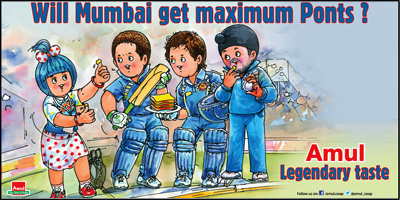
    Sachin, Harbhajan & Ponting will share Mumbai Indians dressing room in IPL- April'13


    Tendulkar retires from One Day International – Dec'12


    Good wishes for Sachin Tendulkar to return to form – Nov'12


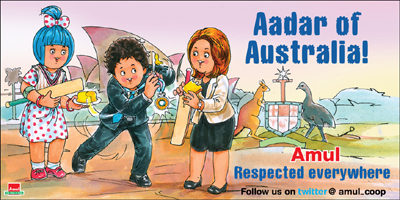
    Legend Sachin Tendulkar to be conferred with the membership of The Order of Australia – Oct'12


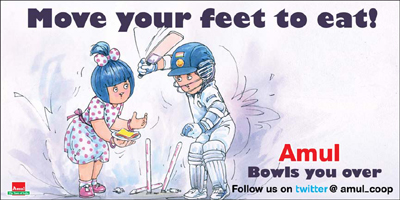
    Dismal performance by Sachin Tendulkar in the ongoing Test Series.- Sept'12


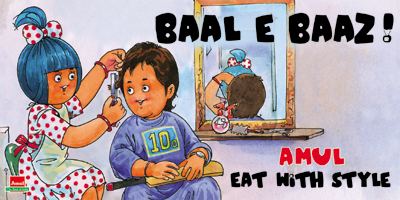
    New hairstyle being donned by ciricketer Sachin Tendulkar – May'12


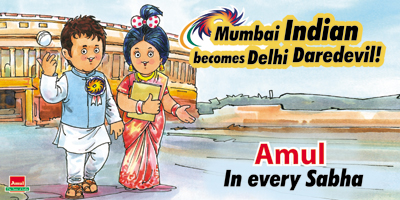
    Veteran cricketer Sachin Tendulkar nominated to Rajya Sabha – April '12


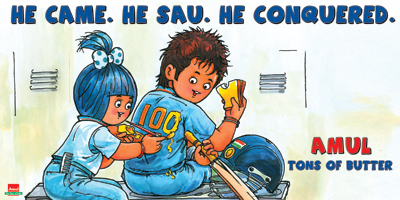
    Sachin Tendulkar achieving a record hundredth Century – March 2012


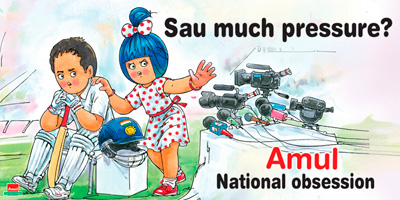
    India's obsession with Sachin Tendulkar's 100th hundred (January 2012)


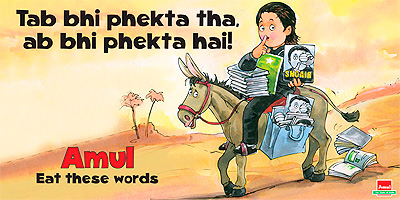
    Former Pakistani fast bowler Shoaib Akhtar's ouburst against Sachin Tendulkar in his autobiography (September 2011)


    Indian cricketers injured in the ongoing ODIs (Sachin had injured his big toe) – September '11


    Sachin Tendulkar, the first batsman to score 50 test centuries (December 2010)


    Special edition autobiography of iconic Indian cricketer, to have his blood on the signature page-July'10


    Sachin Tendulkar scores a double century against South Africa in the second one-dayer (February 2010)


    Controversy surrounding the friendship of Sachin Tendulkar and Vinod Kambli (July 2009)


    Controversy surrounding Adam Gilchrist accusing Sachin Tendulkar of not having a sporting attitude & being a liar, in his about to be released autobiography (October 2008)


    Indian master blaster Sachin Tendulkar missing century in cricket one-dayers.(November 2007)


    Indian batting maestro Sachin Tendulkar – the Master Blaster to appear as superhero in a new range of comic books, animation and games (March 2007)


    On master blaster Sachin Tendulkar's 35th Test Hundred making him the highest century maker in the history of Test Cricket (December 2005)


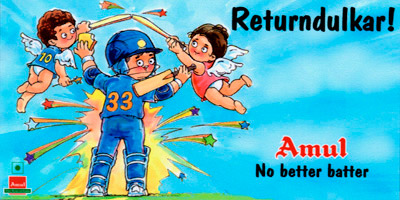
    Sachin Tendulkar marks his return to international cricket with a sparkling knock (October 2005)


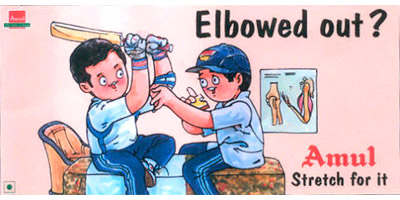
    On Indian star batsman Sachin Tendulkar's tennis elbow aliment which has kept him out of cricket (October 2004)


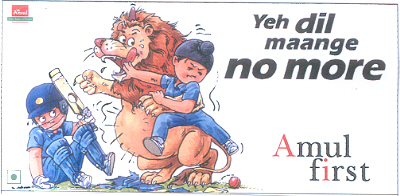
    Disappointing performance by Indian Cricket Team in Holland Tri-Series, NatWest Trophy and ICC Championship Trophy. They seem to be concentrating on testimonial advertising rather than Cricket – September'04


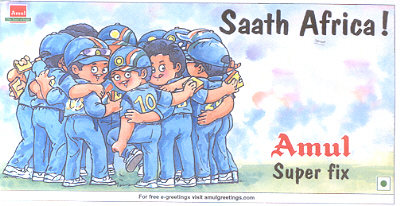
    About new found team spirit in South Africa – March 2003


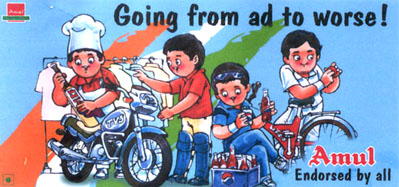
    On Indian cricketers extremely high levels of endorsements on T.V. – February 2003


    On the launch of the restaurant `Tendulkars' in Mumbai – October 2002


    On the waiver of import duty on the Ferrari gifted to Sachin Tendulkar (September 2002)


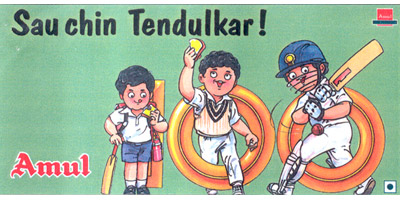
    On Sachin Tendulkar playing his 100th Test Match (September 2002)


    Sachin Tendulkar accused of ball tampering (November 2001)


    Mike Denness finds Sachin Tendulkar guilty of ball tampering (November 2001)


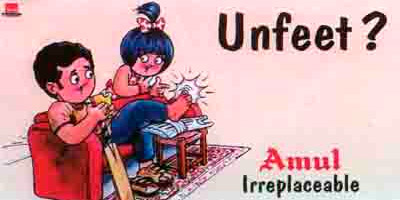
    On Sachin Tendulkar's foot injury (July 2001)


    On a stand in a cricket stadium being named after Tendulkar and signing a billion rupee contract – May 2001


    Questions being raised on the resignation of Sachin Tendulkar from the captaincy of the Indian Cricket Team." (Feb 2000)


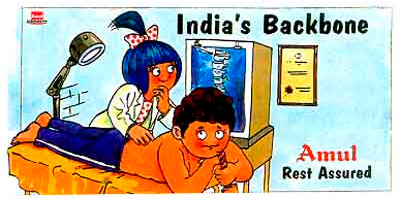
    Media speculations on Sachin Tendulkar's back trouble affecting his future career (September 1999)


    On the lone success of Sachin Tendulkar, while his team-mates keep failing (1999)


    Sachin Tendulkar's back injury (1999)


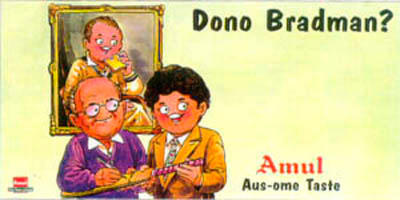
    About the similarities between Don Bradman and Sachin Tendulkar (1998)


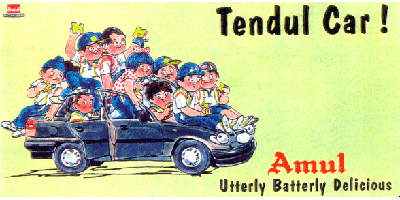
    On Sachin Tendulkar winning a car for the cricket finals between India & Australia (1998)


    Ajit Wadekar wants Wonderkid Sachin Tendulkar to be given a flat in Sportsfield – a highrise specially built by the Government for sportsmen – as a gesture of appreciation (1998)


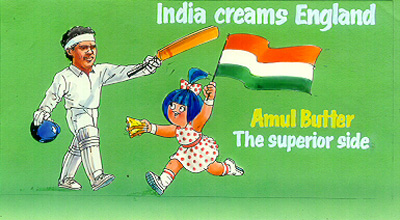
    Indian cricket team's victory over England (1992)


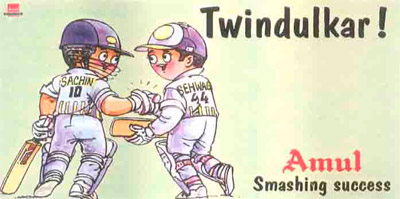
    On the smashingly successful partnership between Tendulkar & Sehwag in Kanpur. – January 2002


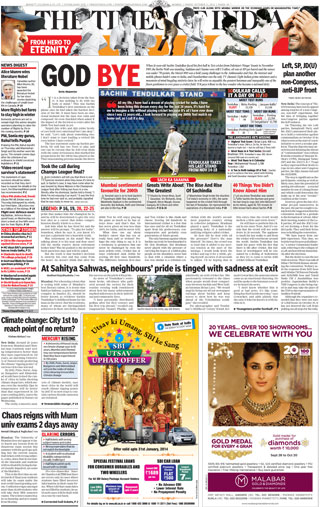
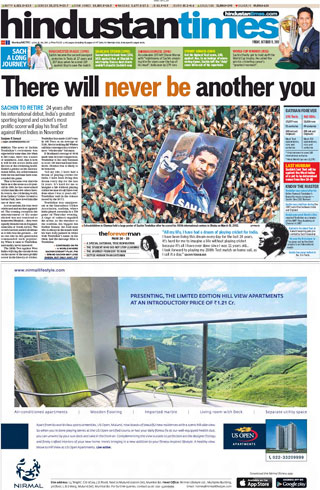
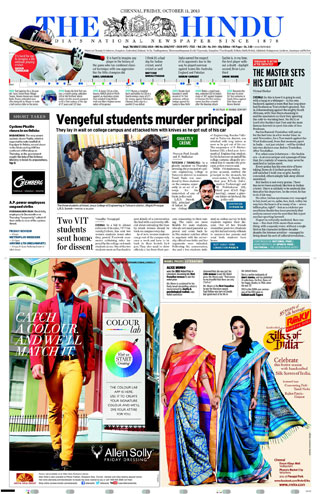
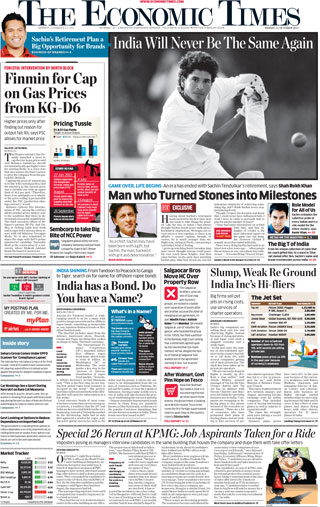
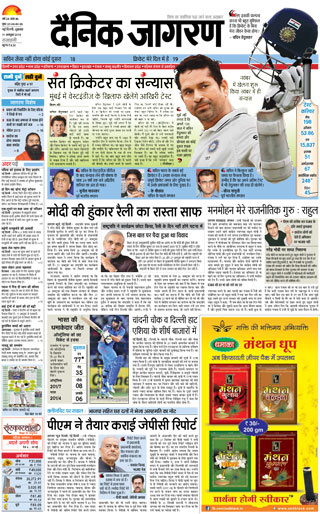
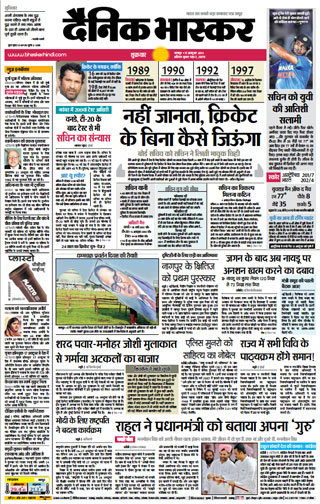
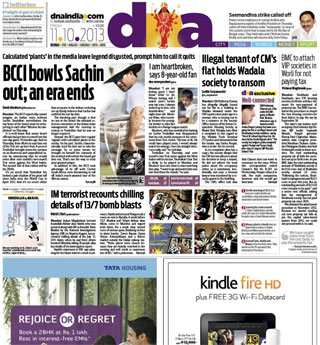
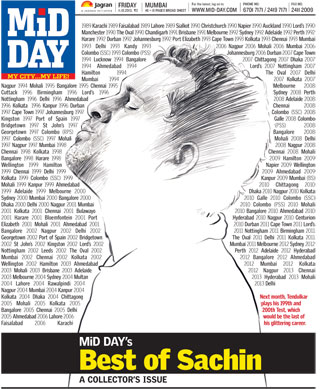
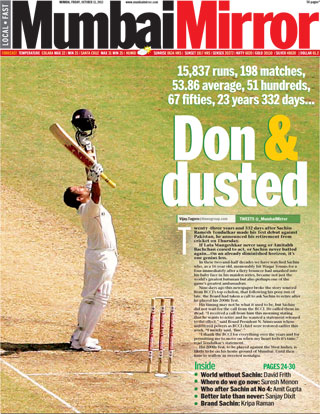
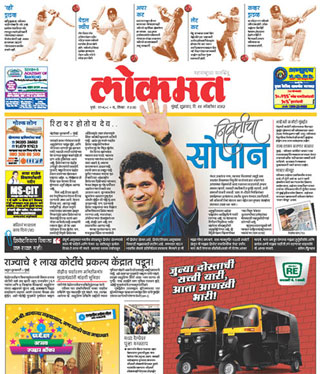
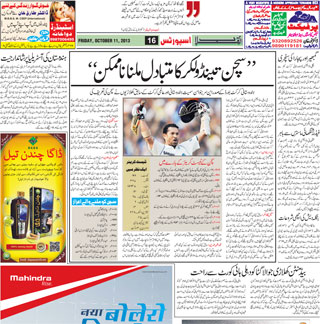
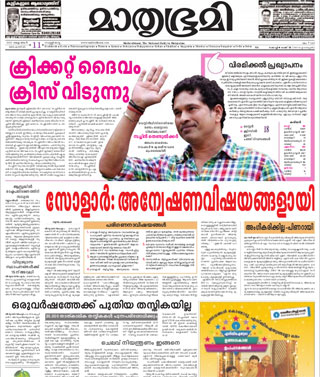
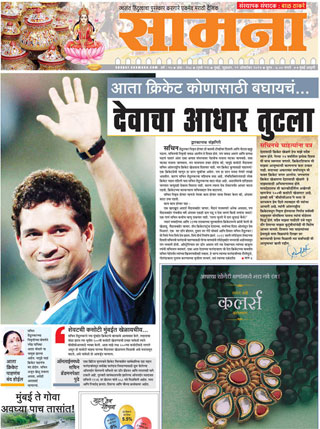
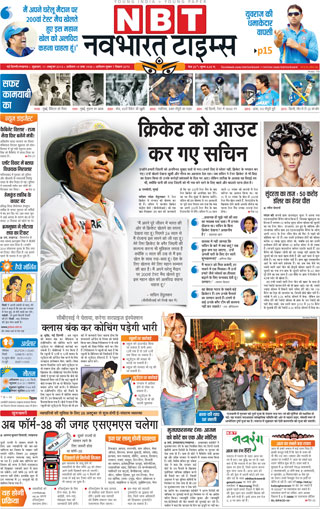
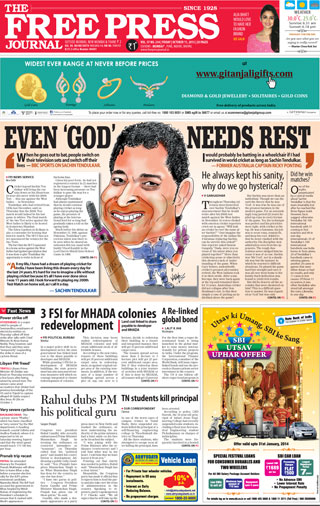
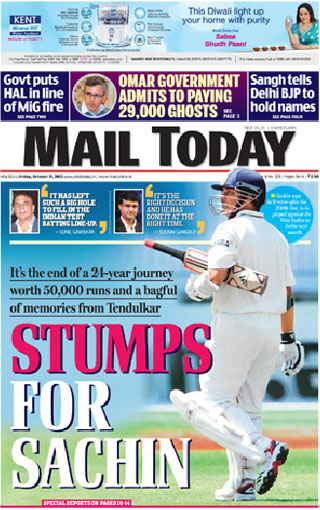
  • And this is how the front pages of some leading dailies tracked the Sachin story…

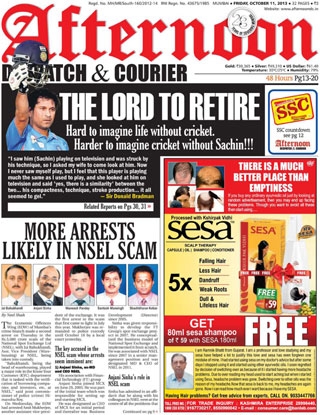
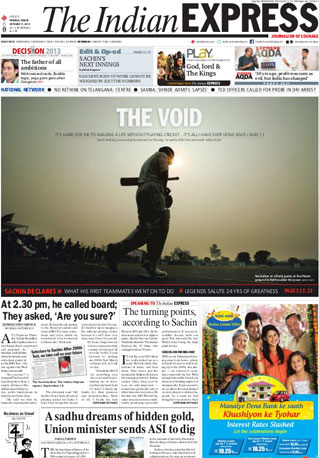
    You know it, don’t you. MxMIndia enjoys doing this on all the Big Occasions… tracking the front pages of the major dailies for their coverage of the Big, Big Story. And this is how they did it for Sachin today. The question is: if this is how they covered it today, how will they do it on November 19, the day after the fifth day of the 200th Test match that he is scheduled to play? Keep thinking, and we’ll bring you a scan yet again then… – Editor


    The Times Of India
    Hindustan Times

    The Hindu
    The Economic Times
    Dainik Jagran
    Dainik Bhaskar
    DNA
    Mid-Day
    Mumbai Mirror
    Lokmat
    Inquilab
    Mathrubhumi
    Saamana
    Navbharat Times
    The Free Press
    Mail Today
    Afternoon
    The Indian Express


  • Colors takes ’24’ action to a 3D game

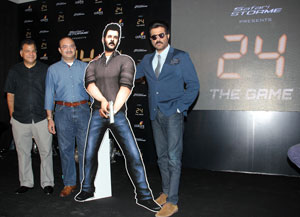
    Mr Raj Nayak CEO COLORS, Mr Ankush Arora SVP Passenger Vehicles Business Unit (Commercial) Tata Motors and Anil Kapoor at the launch of 24 The Game at a Mall in Mumbai

    By Fatema Rajkotwala


    Following the mega launch of the Indian version of the espionage drama ’24’ earlier this month, general entertainment channel Colors announced the launch of an interactive mobile game, ‘Safari Storme 24 – The Game’ for an experience of the show on a 3D game format. ’24 – The Game’ was launched last weekend in the presence of a live audience at Mumbai’s Phoenix Market City Mall.


    Developed by Gameshastra Solutions, the game aims at offering viewers to experience the real-time action of the show offline. It has been made available for free download in India on iOS and Android platforms and will allow players to live the life of ATU Chief Jai Singh Rathod, portrayed on-screen by Anil Kapoor. The game follows the show’s Season 1 plot where the male protagonist races against time to combat terror and protect the Prime Ministerial candidate from assassination.


    Anil Kapoor, actor and co-producer of the show, enthusiastically connected with the crowd at the launch. Speaking about his digital counterpart he said, “As audiences take on my role as ATU Chief Jai Singh Rathod on their mobile phones, players will have to race against time to protect the city against terror attacks. The fast-paced game shares multiple characteristics with the show which will only add to viewers’ overall experience.”


    Talking about the USP of the game, Raj Nayak, CEO, Colors said, “This is India’s first-ever 3D game based on a television show. The game is also unique because the various levels and themes of the game will progress as the show progresses. It is an innovation that brings us closer to our audiences.”


    The game is fast-paced and score-based where the player is a third-person, cover-based shooter whose goal is to single-handedly foil terrorist operations organized within Mumbai. ’24 – The Game’ allows to audiences to step into the shoes of ATU Chief Jai Singh Rathod and explore his various characteristics over a course of 30 levels. Players will be privy to an arsenal of weapons along with support powers like health packs, additional guns, Harrier Strike and Missile Barrages that can be purchased through redemption of points earned during the game. All players will also be able to compare their standing as they race against time with each other through the Local Leaderboard which will share their score details with other gamers. The quickly accessible and intuitive control schemes allow players to experiment with 4 types of A.I. that come with a variety of actions and behaviours.


    Gamification is a great innovative medium and the latest buzz word in the ad world. It breaks through the clutter as it gives brands a unique platform to present to its customers key attributes of the product.


    Tata Motors’ SUV brand Safari has partnered with the show for in-film placements. How much of these efforts translate into sales? Speaking to MxMIndia, .Ankush Arora, Senior Vice President, Passenger Vehicles Business Unit (Commercial), Tata Motors said, “The association has been great for our brand Safari, as the first Indian SUV and 24, as the first thriller-drama-action show is a great fit. We feel that the character that the lead protagonist plays perfectly suits the brand too. ”


    Talking about future associations and customer initiatives for Safari, he added, “We have a very strong loyal customer base and we are looking at extending that to a digital platform by starting a Safari Owner’s Club. We will be announcing it very soon. Our association with the show will continue and be taken all around the brand.”


  • MEC India expands media agency mandate within Reliance ADAG

    By A Correspondent


    Leading media agency MEC India has announced expansion of its media mandate within Reliance Group.


    The agency has bagged the mandate for Reliance Capital (including Reliance General Insurance, Reliance Life Insurance, Reliance Mutual Fund and Reliance Commercial Finance), Reliance Infrastructure, Reliance Power and Reliance Energy.


    MEC India has already been managing the media mandate for Reliance Communications, Reliance Net Connect & Reliance Digital TV and is now enthusiastic about managing the media agency responsibility for more group companies.


    On this development, T. Gangadhar, Managing Director, MEC India said “The team at MEC India is eagerly looking forward to provide excellence in crafting and executing customized integrated solutions across its suite of services. MEC India has shared a long standing relationship with various companies in the Reliance Group and our objective will be to provide superior assistance with media, analytics, content, activation and digital media services, as we have been doing with the award winning RCOM mandate in the past.”


  • Meet the new CEOs of Lodestar UM & Initiative


    By Ritu Midha


    Media agency major IPG Mediabrands has dressed up its top deck with three elevations. Nandini Dias, till now COO, Lodestar UM, will now lead the agency as its CEO and will be based in Mumbai. New Delhi-based Anamika Mehta, the second COO of Lodestar UM, is the new CEO of Initiative. Amar Deep Singh has been elevated to the post of CEO, MAP (short for Mediabrands Audience Platform), comprising Reprise and Interactive Avenues. He was, till now, CEO of Interactive Avenues. With this announcement, the four entities of IPG Mediabrands in India have independent chief executives. The fourth arm – Business Programming Network or BPN has Suresh Balakrishna as CEO.


    Said a visibly elated Shashi Sinha, “When I became CEO of IPG Mediabrands, it was decided that for the first six months I would double act, as the CEO of IPG as well as Lodestar. In Initiative while we had senior level resources there was no CEO. Though we have made announcement of our CEOs now, they have been running the organisations for quite some time now.”


    IPG Mediabrands formally entered India in March 2012. Media agencies Lodestar UM, Initiative, BPN, Reprise, Interactive Avenues, Magna Intelligence and the outdoor business are part of the global media agency conglomerate. Sinha took the responsibility of the CEO of the holding company in October last year.


    Nandini Dias: volume and intensity of external demands will increase manifold

    On how it feels to be elevated to the role of CEO:

    It’s a proud moment for me.  It is not very often that a person remains steady in one organisation and moves up the rank right to the top. I joined the organization 18 years back and never imagined one day I would head it. Since I have always felt tremendous loyalty for the firm and share great camaraderie with my colleagues, it looks like an exciting prospect.


    On the new responsibilities:

    As a COO, I was focused on the internal operations and the day-to-day business needs. With the CEO role, I am aware that the volume and intensity of external demands will increase manifold. Whether it is international, industry groups, or as a brand ambassador of the agency, the interaction with the outside community will contribute to a large part of my responsibilities. I will have to be able to manage the dual roles of being both inside- and outside-focused.


    On equation with clients - will they change?:

    Clients like Mahindra, Amul, Nerolac, Wipro, Zodiac and Tata have been with me all of the 18 years and my relationship with these clients run really deep. In fact in all these organizations, the heads are also people who have risen alongside me and are now in a pivotal role. So I will do all I can to not let the equation change. On the back of my clients, I have found my victories so it is important for me to keep their confidence. There are also clients, I have met socially or in client agency parties but I have not worked alongside. I need to earn their confidence. The heartening fact is that the top 15 leaders who are custodian to these businesses have been with Lodestar UM over 7-8 years. Therefore, there would be a sense of continuity with them.  Having said that, I am also aware that there will be time and knowledge limitations and I need to build in far more efficiency in everything I do.


    On the challenge of leading a large multi-city team:

    That is a big challenge. All CEOs are quasi HR heads. Thankfully, I have watched Mr Anil Kapoor and Shashi managing large teams with great elan. The group has the most steady teams among advertising and media agencies.


    I am alive to the fact that the external pressures tugging one away from day-to-day operations and the limitation of time may take away my awareness and the pulse off the youngsters. And it will feel strange not to know what subordinates are up to.


    However, I believe that, over a period of time, the culture that we have built makes us contiguous and brings us on the same wavelength. So it doesn’t matter which city or where one operates from – the response and behaviour is based on the same principles.


    Immediate action points on agenda:

    I think the first thing to do is internalize that going forward I can no longer be involved in all decisions as Lodestar UM is a large organization. To run the organization efficiently, I will need to articulate and communicate a clearly understood strategy, give definite guidelines on the processes and structures  and take forward the defined values and attitudes.


    Anamika Mehta: Doing and scaling things quickly is critical

    On how it feels to be elevated to the role of CEO:

    Exhilarating but also overwhelming!


    On the new responsibilities:

    Responsibilities and more! A critical task early on is to establish priorities and leverage the opportunity to reset Initiative’s rhythm to the requirements of future.


    It will be as much about driving a shared vision and agenda with teams and client partners. Eventually isn’t it all about driving teams, driving clients’ business and driving the P&L?


    On equation with clients - will they change?:

    All of us at IPG Mediabrands have been ingrained over years with the importance of building and strengthening client relationships at the back of product quality and throughput. We have an enviable track record of the most long-term client relationships in the industry - right from Maruti, Sony, MRF at Initiative or Amul, Tata Group, Microsoft, Wipro, Mahindra in Lodestar UM.


    So it will be a dual theme of ‘give clients what they want’ and ‘business like thinking’! And like in any business today, it will be as much about a hands-on approach with clients and rolling up my sleeves. Doing and scaling things quickly is critical.


    On the challenge of leading a large multi-city team:

    As I mentioned, it is all about prioritizing, driving a shared goal and managing across cities, across clients, across teams in a strategic fashion. I am quite confident our strong second rung of established leaders across cities and our value laden theme will make the journey exciting. And most importantly an open and inclusive culture will help navigate challenges if any.


    Immediate action points on agenda:

    A Barefoot Run in a FBDS way - Fast, Brave, Decisive, Simple. In today’s challenged business environment we will have to be bold, fast-moving with greater and purposeful speed, tough-minded and responsible businesspeople to stay ahead of the game.


    IPG Mediabrands believes strongly in the power of brands to build a better world. Brands matter most when they are aligned with a larger purpose and we are going to be committed to that vision in the long run.


    And last leveraging the strength, scale and clout of IPG Mediabrands India to Initiative’s advantage.


  • No gaon for our desi ad boys?


    By Ravi Balakrishnan & Amit Bapna


    A decade ago, rural India was going to be the next big frontier for the ad business. Specialist divisions were announced with great fanfare, case studies and PowerPoint decks bandied about. They said a lot more separates urban and rural India than just geography – there were different spending patterns, media habits and mindsets.


    Today, rural India still remains the next big frontier. Except this time around, many agencies are missing out on the action. In some cases like SMG’s Xpanse, the unit has ceased to exist. In others like Linterland and Anugrah Madison, there’s a dilution in focus.


    It’s a shocking lapse at a time when the market has never seemed so promising. A good monsoon in 2013, the NREGA and an increase in white collar jobs has doubled or even tripled the spending capacity of the rural consumer. According to Rakesh Srivastava, senior vice president sales and marketing at Hyundai, “Rural sales helped us increase our market share to the highest point in the last 15 years even when the industry is declining.” He reckons rural markets will account for 20% of sales by 2014.


    But Hyundai and many other marketers will try hitting these targets aided by a different set of partners (see Box: No Agency? No Problem). Barring infrequent salvos like GroupM’s Dialogue Factory, agencies regard the rural markets with a guarded wariness, or maybe weariness of an entirely different sort.


    For one, they are tired of investing. In the heady days of the early and mid-2000s, it was easy to get funding from parent agencies or holding companies. Today, they expect returns. A tough call given the size and scale a good rural operation requires. For instance, Geometry Global (a combination of Ogilvy Action and G2) works out of 13 offices with 100 employees, 300 supervisors and 5,000 field operatives. Its president Rahul Saigal says, “You need to reach tens of thousands of villages. You need satellite offices in small towns, technology for monitoring, vendor connections and the ability to manage thousands of feet-on-street. An agency that cannot offer this has nothing to offer!” The investment has to be upfront and one cannot ride on a single client. And then there’s the cost to the marketer.


    A rural marketing veteran says, “A two-plus reach (connecting with the consumer twice a year) would cost me nothing less than `18 crores to Rs 20 crores.” Ashish Bhasin, chairman and CEO, Aegis Media believes an equally serious problem is agencies not knowing how to run rural. He contends, “You have to recognise it as an ecosystem playing by separate rules and dynamics.” The ones who managed to make a success of it, according to RV Rajan, founder of Anugrah (later Anugrah Madison) are: “A few vendors who evolved into specialists with backward integration. They have their own fleet of vans, godowns and a dedicated staff.”


    Also in short supply: insights and planning. And firsthand insight mining doesn’t come cheap. The lack of planning nous further alienates marketers. Anisha Motwani, CMO, Max Life insurance, observes, “Rural marketing has become synonymous with activation. It needs to focus on connecting the brand and the target consumer.” Agencies on the other hand claim they get paid not for the idea but only implementation. In their eagerness to merge with activation divisions, many have almost willingly relinquished ideation, even as they hire local vendors for their assignments. It’s not too great a leap for a marketer to reach out to these suppliers directly.


    Some traditional agency folk argue that with increasing urbanization, rural marketing is getting less relevant. Even a firm believer in the rural markets like Sunil Kataria, COO sales and marketing Godrej consumer products contends, “There’s a top end progressive rural segment which contributes to a large part of consumption. It behaves a lot more like small town India.”


    Finally, a large number of rural agencies have failed to come up with a model that can deliver a positive return on investment. Sandip Bansal, chief client and field officer at Dialogue Factory, says ruefully, “When you talk of rich experience, a marketing manager will flirt with it, but when the CFO says ‘no more money’ it collapses.” Dialogue Factory claims to be working on a new approach, one that its head – experiential marketing for Apac, Dalbir Singh describes as “physical, digital and social.” An assignment for one of its clients involves physically connecting with people, relying on digital technology to make them aware of a problem and finally engaging with an influencer to permeate the message into society.


    WPP’s country head Ranjan Kapur believes, “Reaching people effectively will be less of a challenge with digital and mobile. You will see a spurt all over again.” Even Aegis is apparently readying to launch a rural practice. As Mr Bhasin puts it, “The approximate industry size is Rs 25,000 crore. I believe there’s Rs 15,000 crore spend that is incremental to this, accounted for by promotion and on ground which agencies don’t have even a .01% share of.” That’s the sort of money that should get the thinking caps on in a hurry.


    No agency? no problem The dont’s of rural
     

    Agencies may not like it but marketers from Ford to Karbonn are relying on their distributors and channel partners for rural marketing. These distributors work with local agencies and spread the brand message. Says Vinay Piparsania, executive director, marketing, sales and service, Ford India: “We do not rely on any agency and leverage Ford dealerships to grow closer to rural customers. Using the hub and spoke approach, more than 40% of our sales and service outlets help us target these markets.” Karbonn Mobiles built distribution from the district level up as opposed to MNCs who start with metros and Tier I towns and then go further down. Says Shashin Devsare, executive director, Karbonn “The 90% plus district coverage that we boast of today is a result of this strategy. Our key partners are over 1000 plus micro distributors who have extended the reach to even a taluka level today.”


    The ideation on often comes from within an inhouse rural sales and marketing department. This is the true of, among others, Hyundai and LG (which admits to its rural sales outpacing those from the urban segment). These departments with a sharp focus on rural marketing and sales generate ideas that are implemented either by agencies or distributors.


    Faced with the challenge of keeping the brand top of mind long after the activation is over, Hyundai is relying on positive word of mouth via Village Champions. These are typically influential people in the village who engage with potential customers beyond the inflection points of harvests, festivals and weddings.


    Direct selling from home to home is in vogue again, according to Pratap Bose, COO, DDB Mudra group. While not the easiest option, given the demands it places on stock and cash flow management, some marketers believe it does better when compared to a rural promotion since it involves a direct one-on-one outreach.


    Regional media have been quick to capitalise on the rural opportunity, with radio channels and newspapers offering marketers a package deal of media exposure and even starting activation agencies of their own.


    Don’t Patronise

    The tonality of communication needs to be right for rural audiences. Hyundai’s Mr Srivastava recommends it be simple direct and more social than aspirational: “They don’t prefer communication that says ‘you are the best’ and respond better to something that talks about spending time together.” This insight powers programmes like Hyundai Ne Bana Di Jodi a special wedding themed offer for the marriage season.


    Don’t Make Assumptions

    Several years ago, Kodak’s KP 100 slim camera was underperforming in Maharashtra. Mr Bose (who was then with Ogilvy) recalls, “When we visited we found they didn’t know how to take the film in or out! We spent two months educating them and sales went through the roof. A lot of rural is about touch and feel and seeing is believing.” Even (or maybe especially) in this day and age of high tech and apparently intuitive products, a demo could still go a long way.


    Don’t Be Impatient

    Godrej’s Mr Kataria cautions against expecting an immediate sales impact from a rural activation. He believes the seeding takes time since it is happening on ground and not on TV with a readymade reach and frequency plan. He recommends a medium term point of view of six months or so before one can gauge the impact. He says, “You shouldn’t get into rural if you want to do it for 30 or 50 days. You are just wasting your money.”


    Don’t Flirt. Find A Larger Cause

    Shankar Nath, head – marketing & direct, ICICI Lombard General Insurance recommends that brands integrate themselves in the rural ecosystem rather than merely adapting. Ms Motwani from Max Life adds, “To build long term sustainable models, brands need to find ways of adding value to communities. A rural initiative around a social platform helps significantly. Some such initiatives that come to mind are HUL’s Lifebuoy programme that focussed on prevention of infection and diarrhoea.”


  • Leadership In A VUCA World


    Over 300 members of the media, advertising and marketing fraternity are to be in attendance at the global CEO conference being organized by The Indian Society of Advertisers (ISA), the apex body of advertisers in the country, tomorrow (that’s October 30, 2013) at the Leela in Mumbai. The theme is ‘Navigating a VUCA World’ and a galaxy of speakers including Unilever’s global CEO Paul Polman are scheduled to speak.


    Other speakers at the event will include R Gopalakrishnan, Director, Tata Sons; Manu Anand, President – India & South Asia, Cadbury India; Marten Pieters, CEO, Vodafone India; and Ravi Kant, Vice Chairman and Former Managing Director, Tata Motors, Pawan Munjal, MD & CEO, Hero Motocorp, Shantanu Khosla, MD, Procter & Gamble India and Prabha Parameswaran, MD, Colgate-Palmolive, Ashok Venkatramani, CEO, MCCS amongst many others. One of the goals of the conference is to find out how organizational processes and practices need to be recast to deliver to this new VUCA (Volatile, Uncertain, Complex and Ambiguous) world.


    Hemant Bakshi, Executive Director, Home & Personal Care, Hindustan Unilever who is Chairman, Indian Society of Advertisers and Paulomi Dhawan who is Chairperson, Events Committee and Treasurer, ISA are putting finishing touches to the event as you read this.


    Interestingly, Leadership in a VUCA World was the subject of the speech delivered by Haresh Manwani, Chairman, Hindustan Unilever Limited, at the company’s Annual General Meeting held on July 26, 2013. 


    We reproduce here the entire speech by Mr Manwani as it offers an excellent backgrounder to the ISA event on October 30.


    Section One: Introduction

    We are living in a world where volatility and uncertainty have become the New Normal. The Arab Spring saw a change of government in countries like Tunisia, Egypt, Libya and Yemen. Once powerful countries in Europe are now fighting bankruptcy. We have taken growth in the developing part of the world for granted, but economic growth in China and India – growth engines for the world economy – has begun to slow.


    Companies  that  were  synonymous  with  their  product categories just a few years ago are now no longer in existence. Kodak, the inventor of the digital camera had to wind up its operations. HMV, the British entertainment retailing company and Borders, once the second largest US bookstore, have shut down due to their inability to evolve their business models with the changing times.


    Section Two: A VUCA World

    What does this all mean for business and for a company like Unilever?


    The dynamic and fast-changing nature of our world today is best described by VUCA, a term coined by the US Army War College. VUCA stands for Volatility, Uncertainty, Complexity and Ambiguity.


    A few years ago the Lebanese American scholar Nicholas Taleb introduced the concept of black swans – events that are difficult to predict because they are low probability outliers so the past provides no reliable precedent. And yet these black swan events have a huge and profound impact. Think of the September 11 terrorist attacks or the rise of the Internet.


    We live now in a VUCA world surrounded by black swans. This is the New Normal. But even within this unpredictably changing world, there are a few important underlying megatrends that will shape our future.


    Section Three: Megatrends

    Digitisation

    The first of these megatrends is digitisation.


    It is worthwhile to step back and look at the recent history of human invention. The first telegraph machine was invented in 1838. Forty years later Alexander Graham Bell invented the telephone. It took over another forty years for us to invent the television and yet another forty to invent the silicon integrated circuit chip in the 1960s.


    But it has taken less than forty years since the silicon chip to put all of those things – a telegraph, a telephone, a television, a computer chip, and much, much more – into one device that fits into the palm of our hand, the smart phone.


    As a high school student in 1969, I remember listening on the radio (Yes, radio!) as Neil Armstrong took the first step on the moon. One small step for a man, a giant leap for mankind. I remember thinking to myself then, how amazing it was to be able to put a man on the moon! The height of human technological accomplishment.


    But today, NASA’s own website says, “Your cell phone has more computing power than the computers used during the Apollo era.”


    Today, there are almost as many mobile phones in the world as there are people. More than one-third of the world is online – a fivefold increase over the last decade. Facebook now has more than 1 billion active users; YouTube gets more than 100 hours of video content added every minute; and over 175 million tweets are added to Twitter timelines every single day. Interestingly enough, Facebook, YouTube and Twitter did not exist a decade ago!


    We are increasingly living in an interconnected world and this has changed how we interact with each other, and with governments and companies. Supported by social media, our Dove Sketches campaign in 2013 became the most viewed video advertising of all time with more than 200 million views on YouTube in just one month. At a societal level, this connectivity has also brought dramatic changes. Wael Ghonim, the Egyptian Internet activist & Google ex-employee described the Egyptian Revolution in 2011, saying: “We used Facebook to schedule the protests, Twitter to coordinate them and YouTube to show the world”.


    Digitisation is now advancing even more rapidly and fundamentally changing the way business and society works. It presents both opportunities and challenges and the companies that adapt to this reality will succeed in the future.


    Rise of the developing world

    At the same time, there is another megatrend happening. The world order is changing as economic power shifts from West to East. According to a 2012 McKinsey study, it took Britain more than 100 years to double its economic output per person during its industrial revolution and the US later took more than 50 years to do the same. More than a century later, China and India have doubled their GDP per capita in 12 and 16 years respectively. Significantly, China and India accomplished this while having about 100 times the population base as the US and Britain did during their industrial revolutions. The report goes on to state that “the two leading emerging economies are experiencing roughly ten times the economic acceleration of the Industrial Revolution, on 100 times the scale – resulting in an economic force that is over 1,000 times as big.” And we are just at the beginning of this massive transformation.


    For the last century, the developing world produced for the developed world to consume. But by 2020, emerging Asia will become the world’s largest consuming block, overtaking North America. This changing balance of power is redefining the world of business. China is poised to be the world’s largest market for luxury cars and luxury goods. At the same time, Asian multinational companies, including several from India, are expanding outside of their traditional markets and bringing innovations for bottom-of-the-pyramid consumers from the developing world to consumers in the developed world.


    Narayana Hrudayalaya Hospital right here in India is a great example of these trends. It is the largest heart surgery hospital in the world, doing 6,000 operations a year. Its efficiency and innovations allow it to perform world-class heart surgeries for $2,000 – a fraction of what it would cost in the US, yet at the same levels of safety. Now it is looking to export its expertise and business model to serve American patients by opening a hospital in the Cayman Islands – a one hour flight from Miami.


    This megatrend also presents both opportunities and risks to business. Companies reorganizing their resources and leadership development towards the new economic centre of gravity will benefit. Others will fall behind.


    Sustainability

    The third megatrend is the changing relationship between humanity and the planet we inhabit. Scientific evidence has proven beyond any doubt that today we are living beyond our means. Living beyond our means not just in a financial sense (which has already led to the 2008 financial crisis), but also in an environmental sense. You can see the impact already in the loss of bio-diversity, unpredictable weather patterns and natural disasters.


    Today, according to the World Wildlife Fund, we are consuming the resources of 1.5 planets. The human population took more than 250,000 years to reach the 1 billion mark in the 1800s. It took a century more to reach 2 billion in 1927. It then took us only 32 years to reach 3 billion around 1960 and only 50 years since then to add another 4 billion to reach 7 billion in 2011. By 2050, there will be another 2.3 billion more people on earth sharing the same space we have today. Almost all of them will be in the developing world.


    If the developing world consumed in the future at the rate the developed world consumes today, we would need somewhere between 3-5 planets. Obviously, that is not sustainable.


    Section Four: Role of Business in Society

    Fundamentally, the confluence of these megatrends raises the bigger question of the rightful role of business in society. Even as over two billion more people become more connected and economically active consuming the scarce resources of our planet, we still have one billion people going to bed hungry every night, 2.8 billion people short of water and 2.3 billion people living without access to basic sanitation.


    These are huge challenges that can only be addressed by rewriting the social contract between business and society so that we align business growth with socio-economic progress in a sustainable way. The path forward is a new paradigm for growth called responsible growth.


    Businesses have traditionally focused on shareholder value and delivering the 3Gs of growth: consistent, competitive and profitable growth. By adding this fourth G of responsible growth, the new business model looks beyond shareholder value towards creating shared value.


    Michael Porter talks about creating shared value as different from sharing created value. Creating shared value is “creating economic value in a way that also creates value for society by addressing its needs and challenges”.


    For Unilever and Hindustan Unilever Limited (HUL), this is the key differentiating factor.


    To be clear, business still needs to deliver the 3Gs of growth – consistent, competitive and profitable growth. The 3Gs are important because without these, a business cannot create any value. But in this New Normal, these alone are not sufficient. The fourth G recognizes that it is the role of business to not just create economic value but also social value, and to do this in a sustainable way.


    Section Five: Winning in a VUCA World

    Putting the four dimensions of growth together is the key to unlocking not just how business can win in a VUCA world, but also to rediscovering its true role in society. To do this, businesses need to first put in place the right hardware.


    Foresight and agility

    Winning in a VUCA world requires the ability to simultaneously manage both the short-term and the long-term goals of a business. In turbulent and fast-changing times, businesses need to be anchored in a long-term destination while also dynamically managing the short-term.


    The role of leadership is to have a clear point of view about the future and build an organisation that can navigate towards that destination through good times, and importantly, also in bad times.


    Consumer centricity

    As the world changes, consumers are also changing. There is an emerging poor in the developed world and an emerging affluent in the developing world. The way people shop and consume is also changing. More than ever, businesses must have an insight into the changing needs and aspirations of their consumers to be successful.


    Unilever has long embedded a culture of putting consumers at the heart of our business. Employees across the business are encouraged to constantly engage with consumers and customers to understand their needs and preferences. This consumer centricity has allowed us to build new markets and categories. The success of HUL in serving low-income consumers and leading market development has come from a simple consumer insight of making our brands accessible through low unit-priced formats and a business model of reverse engineering our costs to support the price that consumers are willing to pay. This helped us pioneer the shift from laundry bars to powders in the Detergents category and from soaps to shampoos in the Hair-care category through single dose low-priced sachets.


    A similar approach of consumer centricity is allowing us to lead the development of categories of tomorrow like hair conditioners, deodorants and packaged foods.


    Think local and act global

    To consistently succeed in the VUCA world, one also needs to be globally leveraged and locally relevant. A very common phrase used by multinationals is ‘Think Global, Act Local’. At Unilever, we believe the reality is the reverse because there is no such thing as a global consumer. Our mantra is to think local but act global. At Unilever, we begin by understanding what local consumers and customers need or want. Then we leverage our global understanding, technology and knowledge to provide the best solutions to meet these local needs. Our strength is our ability to combine global scale with locally tailored solutions. The success of our global brands like Dove, TRESemmé and Knorr are just a few examples of this approach. Organisations of tomorrow need to be neither hopelessly local nor mindlessly global.


    Attracting great talent

    The ability to attract, develop and retain the best talent is what makes businesses successful in the long-term. Increasingly, young men and women want to work for a company that reflects their own values. If they believe in a common vision and the larger corporate purpose, they are motivated to deliver great performance. It is no longer enough to be working for a business that is doing well if it is not also doing good.


    Many talented young people join us for this reason. In Unilever, we have always believed that we do not just sell soap and soup. Instead, we are committed to helping our consumers enhance their standard of living through our brands and improving the livelihoods of millions of people engaged across our value chain.


    An example is Lifebuoy. Lifebuoy is more than a bar of soap. It has a profound impact on raising the hygiene standards of millions of people and helps save lives. Similarly, our food brands provide nutrition and fortification to millions across the world. That is how we make a difference in the lives of more than 2 billion people every day across more than 190 countries. Equally, our value chain provides a huge opportunity for uplifting lives by bringing indirect benefits, including to hundreds of thousands of smallholder farmers, suppliers and small retailers. For example, an independent NGO study in Indonesia showed that beyond the 5,000 people directly employed in the business, our value chain indirectly provides the equivalent of full-time employment to 300,000 others.


    This is the reason why we attract some of the finest talent from around the world. Unilever is among the Top 3 Employer Brands in 37 countries. We are now the No.1 Employer in 21 countries, and this figure continues to increase. For us, building an Employer Brand is as important a driver of business as any of the financial measures. Successful global leaders of tomorrow must build commitment from their employees rather than just demand blind loyalty. This is only possible if businesses take a long-term and holistic view of our role in society.


    Section Six: Leadership in a VUCA World

    However, winning in a VUCA world is not just about the hardware. It is also about having new software – a new kind of leadership that is values-led and purpose-driven and leaders who can redefine the role of business in society.


    To be values-led is more than simply putting your values down on a piece of paper. It is about living and breathing those values every day.


    As a business leader, it is about having a true north – an internal compass with non-negotiables. It is also about being clear what those non-negotiables are, and most importantly, it is about sticking to them in good times and in adversity.


    More than 100 years ago, William Hesketh Lever captured the essence of what it means to be values-led and it continues to define how we at Unilever do business today. He said: “I believe that nothing can be greater than a business, however small it may be, that is governed by conscience; and that nothing can be meaner or more petty than a business, however large, governed without honesty and without brotherhood.”


    Today at Unilever, we are anchored in this VUCA world by much the same values that he espoused – values of integrity, responsibility, respect and a pioneering spirit. These are non-negotiables in Unilever.


    Being values-led is about the foundation that underpins the Company. Being purpose-driven is about the common objective we work towards that is larger than the Company itself.


    At Unilever, we are unified by a shared belief in the purpose of our business. Our purpose is very simple – “To make sustainable living commonplace. We work to create a better future every day, with brands and services that help people to feel good, look good and get more out of life.”


    This common purpose has remained largely the same since the 1890s and it unites all our employees across the Company so that no matter which part of the world we work in, we are working towards a common goal. From the worker on the assembly line making Lifebuoy soap or Pureit water purifiers, to our marketers and brand managers, from our newest recruits to our most experienced business leaders, this is the invisible glue that holds the Company together.


    We continue to invest in leadership development and building a pipeline of values-led and purpose-driven leaders to help us navigate through the VUCA world. In June 2013, we opened Four Acres in Singapore, our first-ever global leadership development centre outside the UK. This investment represents Unilever’s commitment to leadership development and building the next generation of leaders from the developing and emerging markets. It will double our capacity to train our pipeline of talent and bring our global curriculum to this part of the world. We are similarly investing here in India where we built a new state-of-the-art Learning Centre at the HUL campus in Andheri last year.


    Section Seven: Unilever Sustainable Living Plan

    The two ideas I’ve touched on – to be values-led and to be purpose-driven, are vital ingredients for leadership in this new world. They are the anchor that grounds us and the compass that helps us navigate the VUCA world.


    In late 2010, we launched the Unilever Sustainable Living Plan which embodies our values and purpose and underscores our commitment to grow our business responsibly. We have committed to doubling the size of our business while reducing our environmental footprint and increasing our positive social impact. Specifically, by 2020, we have committed to halving the environmental impact of our products across the value chain, to sourcing 100% of our agricultural raw materials sustainably and to helping more than 1 billion people take action to improve their health and well-being. We are proud that two years in, we have made significant progress towards achieving our targets.


    Let me give just a few concrete examples.


    Our progress in sustainable sourcing has been strong. We are concentrating first on our top ten agricultural raw material groups, which account for two-thirds of our volumes, and we are on track on these. By the end of 2012, 36% of agricultural raw materials across Unilever were sustainably sourced while HUL sourced more than 69% of agricultural raw materials sustainably. In palm oil for instance, 100% of our palm oil across Unilever is now from sustainable sources, which is three years ahead of schedule.


    We have also tied up with partners across our value chain, including smallholder farmers, entrepreneurs and governments to ensure sustainable production and responsible growth. By the end of 2012, through our supply partnerships, we have helped train 450,000 tea farmers in sustainable practices globally. In India, we have also expanded our network of Shakti ammas to 48,000 entrepreneurs covering 3.3 million households in over 135,000 Indian villages. This is the embodiment of our philosophy of doing well by doing good.


    Ultimately, our brands have to be agents at the forefront of social change. Diarrhoea alone claims the lives of 3,000 children below the age of five every day. Clinical trials show this is preventable. If we can persuade people to wash their hands with soap at key moments, we can make a big difference to reducing diarrhoeal disease and thus save lives. That is exactly what Lifebuoy soap aims to do. The Lifebuoy hand-washing education programme has already reached more than 119 million people in India and other developing countries. In addition, we have provided safe drinking water for 45 million people in India and globally through Pureit. India accounted for the largest part of the additional 10 million people that we provided safe drinking water to in 2012. Together, we aim to help more than a billion people to improve their hygiene habits and bring safe drinking water to 500 million people by 2020.


    Section Eight: Conclusion

    We are clearly living in a new reality characterised by Volatility, Uncertainty, Complexity and Ambiguity, and this new world is here to stay. For businesses to succeed in the future, leaders need to redefine the rightful role of business in society by pursuing responsible growth.


    At Unilever and at Hindustan Unilever Limited, we have a clear point of view about where we need to go and how to get there. We are building leaders who combine strategic foresight with agility; leaders who put consumers at the heart of the business; leaders with the ability to think local and act global; leaders who invest in building commitment in the organisation and developing others. Most important of all, we are building leaders who are guided by a shared set of values and sense of purpose. With these leaders in place, I am confident that we can overcome the challenges and seize the opportunities to win in this VUCA world. Together, we can fulfill our responsibility in society and in the words of Mahatma Gandhi, “be the change you wish to see in the world”.
     

    Unilever Sustainable Living Plan

    The two ideas I’ve touched on – to be values-led and to be purpose-driven, are vital ingredients for leadership in this new world. They are the anchor that grounds us and the compass that helps us navigate the VUCA world.


    In late 2010, we launched the Unilever Sustainable Living Plan which embodies our values and purpose and underscores our commitment to grow our business responsibly. We have committed to doubling the size of our business while reducing our environmental footprint and increasing our positive social impact. Specifically, by 2020, we have committed to halving the environmental impact of our products across the value chain, to sourcing 100% of our agricultural raw materials sustainably and to helping more than 1 billion people take action to improve their health and well-being. We are proud that two years in, we have made significant progress towards achieving our targets.


    Let me give just a few concrete examples.


    Our progress in sustainable sourcing has been strong. We are concentrating first on our top ten agricultural raw material groups, which account for two-thirds of our volumes, and we are on track on these. By the end of 2012, 36% of agricultural raw materials across Unilever were sustainably sourced while HUL sourced more than 69% of agricultural raw materials sustainably. In palm oil for instance, 100% of our palm oil across Unilever is now from sustainable sources, which is three years ahead of schedule.


    We have also tied up with partners across our value chain, including smallholder farmers, entrepreneurs and governments to ensure sustainable production and responsible growth. By the end of 2012, through our supply partnerships, we have helped train 450,000 tea farmers in sustainable practices globally. In India, we have also expanded our network of Shakti ammas to 48,000 entrepreneurs covering 3.3 million households in over 135,000 Indian villages. This is the embodiment of our philosophy of doing well by doing good.


    Ultimately, our brands have to be agents at the forefront of social change. Diarrhoea alone claims the lives of 3,000 children below the age of five every day. Clinical trials show this is preventable. If we can persuade people to wash their hands with soap at key moments, we can make a big difference to reducing diarrhoeal disease and thus save lives. That is exactly what Lifebuoy soap aims to do. The Lifebuoy hand-washing education programme has already reached more than 119 million people in India and other developing countries. In addition, we have provided safe drinking water for 45 million people in India and globally through Pureit. India accounted for the largest part of the additional 10 million people that we provided safe drinking water to in 2012. Together, we aim to help more than a billion people to improve their hygiene habits and bring safe drinking water to 500 million people by 2020.


    Section Eight: Conclusion

    We are clearly living in a new reality characterised by Volatility, Uncertainty, Complexity and Ambiguity, and this new world is here to stay. For businesses to succeed in the future, leaders need to redefine the rightful role of business in society by pursuing responsible growth.


    At Unilever and at Hindustan Unilever Limited, we have a clear point of view about where we need to go and how to get there. We are building leaders who combine strategic foresight with agility; leaders who put consumers at the heart of the business; leaders with the ability to think local and act global; leaders who invest in building commitment in the organisation and developing others. Most important of all, we are building leaders who are guided by a shared set of values and sense of purpose. With these leaders in place, I am confident that we can overcome the challenges and seize the opportunities to win in this VUCA world. Together, we can fulfill our responsibility in society and in the words of Mahatma Gandhi, “be the change you wish to see in the world”.
     

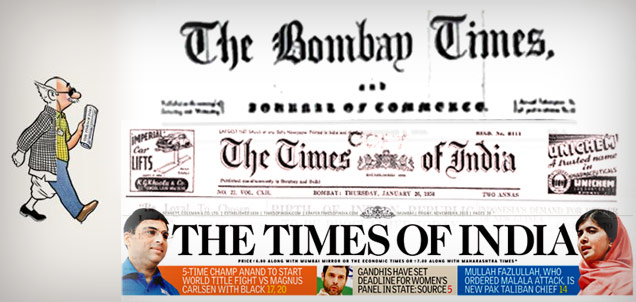
  • Happy 175th, The Times of India


    By Pradyuman Maheshwari


    I am often accused of being obsessed about The Times of India. That the previous, blog-only avatars of Mediaah!  (2001-03, 2004-05) would only dwell on the affairs of Bennett, Coleman & Company.


    Times @ 175


    CVL Srinivas | What makes TOI a formidable brand


    Sangita P Menon Malhan | Rediscovering… The Times of India


    Sidharth Bhatia | Times have changed, so has the Times


    Ranjona Banerji | Times@175: The Good, The Bad & The Ugly


    Shailesh Kapoor | BCCL 2.0: The Integrated Media Organization


    That’s not right. The Times of India only threatened to take me to court, yet another (leading, if I may add) daily actually did that. The matter was settled later via respective lawyers, and hence I wouldn’t like to name the media group.


    There were many other news media entities I’ve written not-so-nice things about. And continue to do so. And even if I don’t write them myself, some of our columnists do that on MxMIndia. There is no malice whatsoever. We may nail Channel X one day and gush about it on another.


    There are people who ask me why I single out BCCL for paid content, when scores of others  do the same. Yes, I agree, and I don’t do that any longer since TOI isn’t the only national daily doing charging for content in the open. In fact it pains me to see Hindustan Times and Mid-Day, two newspapers which wrote a fair bit about BCCL’s regressive act and I admire much, also succumbing to the lures of paid content. Both papers carry disclaimers as do Times of India’s supplements, but that’s not good enough.


    It’s got to have the conviction of this other newspaper’s publisher who has issued a diktat to his editors to not mask names of  hotels , restaurants and brands… not over his dead body!


    However, even though I hate the group for Medianet, I admire The Times of India a great deal. Since 2005, the year when Hindustan Times and DNA entered Mumbai, TOI has leapfrogged in editorial quality. No other news organisation spends as much energy, effort and dosh on its media products.


    My big peeve with BCCL is that it has squandered the opportunity with the web avatar of the newspaper. Sadly most newspaper managements don’t have their web act together.


    So is The Times of India our country’s #1 Newspaper? Yes, it is better than the others. It’s a better-produced, better-marketed, better-distributed and better-sold paper. However, in many ways, it stands for many of the ills that afflict our news media. Paid content, diminishing value to human capital and a desire to achieve revenues at any cost.


    I understand many top executives of The Times of India agree that Medianet should be dispensed with even though it earns the company revenues of Rs 100-150 crore. But they are too scared to tell the bosses that.


    Heck, this is celebration time. The MxMIndia special package is not to damn the Times, but to celebrate the birthday of the country’s biggest media brand.


    Here’s to The Times of India at 175. Happy 175th.  (Hey guys, just axe Medianet, will you? 🙂 )


  • What’s made Arnab the Face of News TV


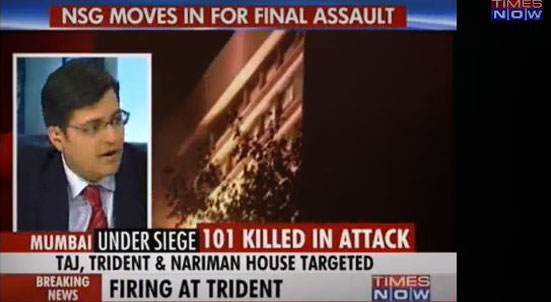
    It’s been five long years since that evening of November 26, 2008 when Mumbai was taken hostage by 10 terrorists in various parts of South Mumbai. We’ve seen the television coverage of the Kargil clash and some of the disturbances within the country like in Gujarat, post-Godhra, but clearly the Mumbai terror siege was the biggest news happening after 24×7 news television arrived. Social media hadn’t taken off in right earnest then, else the coverage could’ve taken an all-new complexion.


    We spoke with Arnab Goswami, Editor-in-Chief of Times Now, who could be called the Face of the 26/11 Coverage and whose channel hasn’t looked back ever since. In fact, in time, he has become arguably the Face of News Television in the country. In this freewheeling chat, Mr Goswami talks to MxMIndia on what he thinks helped his channel score with the coverage, why he chose to stay in the studio and not go out on the field and the government’s criticism of the television media’s live coverage of the terror attack.


    Excerpts from the interview:


    So where were you on the night of November 26?

    I was in our newsroom. We were doing Newshour and there were phone calls from people who said there was some firing at CST. I think we were the first to go on air with the report that something was going on and we were also among the first to break away from standard programming. So I started at about 10 o’clock and went on for three-and-a-half days. I remember going home only once and must’ve slept for an hour in that entire period.


    Was it a conscious decision for you to stay in the newsroom. You were the seniormost journalist of the channel, based in Mumbai and you stayed back in the newsroom rather than be on the field?

    Yes, It was a very critical decision for me. As you know, in my stint at NDTV I was a reporter through and through. I was probably the only news channel editor based in Mumbai at that time so the natural temptation was of getting into a car with camera units and going on the spot. But I had done that, what would have my reporters done and I would have not been able to focus on what we were putting on air minute-to-minute. At that point, what was very important was the graphics, visual and text we were putting out. Key decisions needed to be taken – on what we carried live and what we didn’t, which reporter went to different locations, what versions to take from the security agencies, from the government and how much of the information we had needed to be disseminated. Since all these decisions are taken better in my view if you are in newsroom rather than from the spot, I decided to stay back.


    So you never went to the spot, not even for a wee bit?

    Yes, I didn’t go to any of the spots for the entire duration when this event happened.


    There has been a lot of criticism of the media in general for the coverage especially this charge that the media was giving away vital information on the movement of our armed forces and police. Do you think it’s fair criticism?

    Well I can speak for ourselves, we did not do that. I don’t want to use the fact that we didn’t do that to be critical of other channels but speaking for Times Now, we didn’t give away a lot of the information related to individuals and specifics and at that point of time we had a lot of information which we felt if we put out in the public domain may compromise the security of the people involved. Like the floors/restaurants in individuals were present. I remember we shared the fact that we were holding some information with our viewers and I think our discerning viewers would have appreciated that.


    As you look back, do you think the government and the authorities should have restricted the movement of journalists?

    The government too was reacting to a situation and they had no idea what was happening. Clearly, if the media needed to be held back from reporting from certain locations, the security agencies needed to do that. For instance, there were camera teams right up to the lane which led to Chabad House and that was dangerous for the reporters as well. In retrospect you can always argue that perhaps the reporter shouldn’t have gone that far, but at that time they were doing their job.


    Were your reporters worried about their safety and lives?

    No, I don’t think that was even a consideration at that point of time. We had some reporters wearing bullet proof jackets. I think the place which was from my perspective worrying in terms of safety was Chabad House. We were careful not to compromise any of our reporters, they would go in and out and they would send footage and we would carry it.


    There were many discussions with the government after the siege and there was a possibility of a severe clampdown on the functioning of news channels. What was your advice to the I&B ministry then?

    I have never been in the business of advising the government


    You were part of the NBA and from what I remember instrumental in formulating a code or some such?

    Yes, I did play a role initially in drafting this code and I have been actively associated with the NBA. At that point of time, we did officially put in a word to then information and broadcasting minister because channels had got blacked out in Mumbai and there was outcry from viewers who wanted to watch what was happening and I must say the government responded quite quickly. The channels were back on air in less than an hour. I think there are lessons from all of this and if you ask me one of the reason why people watched Times Now much more than any news channel in that period was the fact that we never compromised the credibility of our coverage. We weren’t hyping the event nor making ourselves the story.


    We were simply and only focusing on getting the maximum amount of information first and fast and to that extent the events of 2008 and we never looked back since as a channel and the events of 2008 told us that at the end of the day, accurate and objective, fast and passionate news coverage determine leadership and that for me was important. Those hundred hours were a big learning for our reporters and in the growth of the Times Now as a channel as well. We have also not forgotten this event as every year we have done something though we don’t try and do it in a commemorative fashion but as a news channel that focuses on internal security issues much more than any other. We bring back renewed focus on 26/11 almost every year whether in terms of how far the case has progressed with Pakistan or the local security situation.


    As you look back, would you possible redo your coverage? Should something have been done in a different way?

    Honestly, we did not do the things that people have criticized 26/11 coverage for. We did not reveal sensitive stills. I would still not do that. There were times when we chose to put out delayed footage. I would still do that and we dropped all breaks in that period and covered it for a stretch in a committed manner and stayed with the story. I would still do that, so I think a lot of the things we did right. I wouldn’t say what we did was perfect, people can say the quality of broadcast could have been better. We did the best we could. We had a very young and passionate team which we still do which did the job. So, looking back after five years, we did as decent job as we could.


    There were some who also said that one of the reasons why other channels were showing more sensitive stuff is because they were getting it… given that there were senior people out there on the field.

    You know I am not the best journalist around but I think that everybody had more or less the same information. It is in these occasions the newsdesk plays a crucial role and the role of the editor is better when he or she is on the desk because you are putting out information which is very quick and you need to put it out in the breaking news situation. The editor has to take decisions on a minute-to-minute basis. I felt that was a big challenge for me in those four days and that’s one of the reason, I stayed with the story nonstop.


    But you were on air all the time, so how could you take those split-second decisions?

    See, most of our anchors on our channels are also people who have had strong experience on the newsdesk and I believe that you can only be a good anchor when you have done that. So I had back0up anchors and I would keep going in and out and we would have a conference roughly every two hours where the producers, the executive producers, the senior producers desk sat down and discussed very briefly what we were doing and we would then go back to the broadcast.


    For Times Now specifically there has no looking back since then. While you may have been on the rise even before, would it be right to say that November 26 was the turning point.

    I won’t try to be politically correct with you. Yes, the evolution of news channels tells you that critical moments in a nation’s history determine the growth of news channel so whether it’s an election or a Gulf War in United States whether it’s 26/11 here or whether it’s going to be an election in the future, how a news channel covers a particular major event is seen to be a test of the channel’s competence. I think that with 26/11, I am not the one to overstate what we did but I think we did a decent job and I think we won the trust of lot of people but we have also worked very very hard to retain that trust because in the news business you often would be remembered for the mistakes you made. We have worked very consciously on retaining the trust and not just on this 26/11 but all the scams we reported. The manner in which the viewers responded to us – with love, affection, respect and regard after 26/11 was quite overwhelming for me and my team because we were a group of journalists who all at least a decade younger and a decade less experience than any of the other channels but the passion and the fact that we were working as a team, we are very closely knit as an editorial team it made up for our lack of experience and the fact that the viewers responded well to us was a big confidence booster for my team at that point of time.


    I don’t really remember how it began and how it ended and I don’t remember what happened in between…  all I remember is that we were at it and most importantly the same team that started the broadcast ended it, in that period not one of my people or reporter went home, there were no shifts so while it will be argued whether that was the way to do it ,but you know putting hundred hours equal focus on a live broadcast where enormous number of people are watching is a huge amount of team work. I personally I think 26/11 is one of those events which teach you that television is all about team work. Some of our people have gone on to do so well inside the organization, some outside the organization and I feel very proud about it. The experience of covering 26/11 has added a lot to our collective experience and our maturity.


  • Arup Ghosh & Co’s news syndicate gets set for elections

    By A Correspondent


    (clockwise from top left) Network1 Media co-founders Kamal Dixit, Sundeep Misra, Shireen Sethi and Arup Ghosh

    Network1 News and Information Syndicate (NNIS) has announced that its news and feature service subscribers will now have access to live coverage from its network across metros locations. Simultaneously, NNIS has enhanced its focus to news breaking from Congress and BJP headquarters in Delhi to capture real-time developments during the ongoing assembly elections as also the general elections next year.


    Led by Arup Ghosh, N1Media has its co-founders Shireen Sethi, Kamal Dixit and Sundeep Misra. “While NNIS has succeeded in getting great recognition for the quality of its content plus the choice it makes in selection and production, our clients can now get top quality live coverage during the elections and beyond,” said Arup Ghosh, CEO, NNIS, whose experience spans Bennett Coleman group, NDTV and start-up operations he led at Sahara, Channel7 and NewsX.


    In addition to television, NNIS has also built a strong presence among Online Portals and Mobile Value Added Service providers since it was set up in April 2010.


    “In the past, our association with media houses helped them create great branding. Now, it is our turn to create our own brand in NNIS which shall make maximum impact in times to come,” said Shireen Sethi who brings extensive on-air experience coupled with programming skills. “Acquiring the best that there is in technology-from news capturing, processing to transmission-allowed us to leap frog a complete generation. The new generation equipment offers twin advantages to media houses as they get quality, speed and reliability,” says Kamal Dixit, who as Chief Technology Officer and co-founder leads NNIS’ technology operations and brings in wide-ranging broadcast systems expertise.


    As NNIS does not work on legacy systems, it is in a position to offer news and feature content at prices that can help channels to reduce their operational expenses thus becoming profitable, a communiqué adds.


    In September 2013, NNIS raised growth equity from Rajasthan Venture Capital Fund (RVCF). Earlier, prominent angels– Saurabh Srivastava (Rajasthan Projects Private Limited), Raj Bhatt (Shell Investments Limited) and Navjot Sobti (Almondz Global Securities Limited)– invested in the venture.