By Writankar Mukherjee
So what if West Bengal Chief Minister Mamata Banerjee fights tooth and nail against foreign investment in retail, Kolkata has emerged a true city of joy for big retailers and fast-food chains since she came to power.
Kolkata has become one of the highest revenue-grossing markets nationally for Future Group, Spencer’s, KFC and Pantaloons among others over the past 12-8 months, much to the surprise of several marketers.
Check this out. Spencer’s Retail, Pantaloons and Future Group’s Home Town have their top-selling outlets in Kolkata, and it’s the top-performing market for American chicken fries-and-burger chain KFC despite Delhi and Mumbai having double the number of outlets.
“Kolkata has been one of the best kept secrets in modern retailing,” says Kishore Biyani, CEO, Future Group. “Consumption in Kolkata is much more stable than in other metros where it goes through ups and downs. And there is high level of festival-linked purchases throughout the year,” he says. The retail baron is so impressed that he has decided to debut all new retail formats in Kolkata.
Tarun Lal, general manager at KFC India, says Kolkata has also taken a liking to its Zinger burgers and chicken fries, and the chain plans to expand its presence in the region significantly.
Analysts attribute the Kolkata retail phenomenon to the growth in employment in sectors like BPO, IT and services sector, and the consumer’s rising aspirations.
Recent employment surveys have shown comparatively robust employment growth in Kolkata. A recent Manpower employment survey, for example, highlighted maximum employment growth in the East, while it declined in the North and South.
Devangshu Dutta, CEO of retail consultancy Third Eyesight, says the perception that consumers in Kolkata are more price conscious than others has changed completely. “Consumers have evolved with high aspiration level,” he says.
“Another factor which is creating such high sales per outlet is the lower penetration level for some of the retailers in Kolkata as compared to other cities,” he adds.
Retailers say adoption of modern trade in Kolkata is rising at the fastest pace across India. Spencer’s Retail Executive Director (Marketing) Sanjay Gupta quotes Nielsen data to say modern trade adoption in Kolkata has grown by 21% over last year. The share of modern trade in FMCG sales is 12.5% in Kolkata against national average of 9.2%, he adds.
Chains such as Home Town and Mainland China say the average billing size or purchase value in the city is 6-10% higher than other places.
Anjan Chatterjee, managing director at Speciality Restaurants, which operates Mainland China, says consumers in Kolkata tend to order higher value cuisine like whole Bhekti and tiger prawns, which pushes up the average billing. “Eating out has become a ritual with the younger consumers in the city,” he says.
Vikram Bakshi, McDonald’s joint venture partner for North and East, rues Kolkata has only five McDonald’s outlets. “A lot of our growth plan got delayed due to slower mall development. Hence, we are now looking at high streets locations with plans to grow our presence 4-5 times in next couple of years,” he says.
Source:The Economic Times
Copyright © 2012, Bennett, Coleman & Co. Ltd. All Rights Reserved



 By A Correspondent
 Apollo Tyres, keeping in mind customer expectations and the company’s growth journey, has repositioned Brand Apollo. The new Brand Promise of Safety and Go the distance, is being communicated through a mass corporate advertising campaign – You First, which to begin with has been launched inIndia, parts of theMiddle EastandEurope. While the logo of four circles representing the brand ethos of motivating people to move, embodying the dynamism and growth that the organisation brings to each customer was unveiled in 2009; the new brand communication was announced only recently.
 By Vidya Heble
 Â Vodafone made quite a stir when they created a roadblock on a television network to announce the identity change from Hutch to Vodafone? Which network?
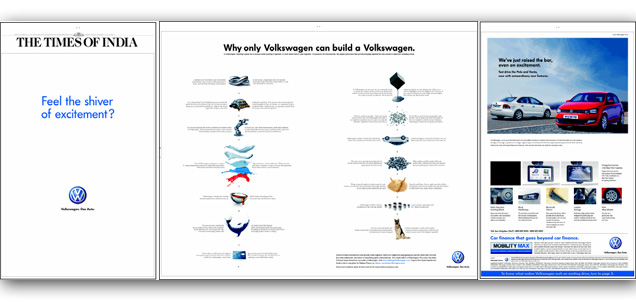
 Vodafone made quite a stir when they created a roadblock on a television network to announce the identity change from Hutch to Vodafone? Which network?  Recently a brand tried to create “buzz†with a newspaper innovation that claimed to make you shiver. Identify the brand?
  The ad film for which brand (created by Taproot) won a Gold lion in Cannes this year?
  A few months back, Mountain Dew introduced a new flavour called ‘Dark Berry’ in certain international markets. This was done to promote which movie
  Another one on Roadblocks, which was the first brand to create a roadblock on Indian television?
  As part of a movie promotion stunt, UTV depicted the broad theme of the film by putting up a bag with over 3 lakhs cash on a hoarding. Which movie?
  What was the name of the popular music based television program for which Bacardi won a Bronze lion at Cannes for Best Branded Content and Entertainment?
 Which financial services brand partnered Linkedin and sent branded congratulatory messages to senior management professionals when they got promoted or changed jobs?
 Â As part of an innovative campaign for a TV show on Colors, a tabloid was turned into a broadsheet to depict the scale of the program. Identify the show?
 As part of an innovative campaign for a TV show on Colors, a tabloid was turned into a broadsheet to depict the scale of the program. Identify the show?  As part of a re-launch campaign for a popular Indian brand, ad agency Everest created a high decibel teaser campaign centered on a character called Digen Verma? Unfortunately the campaign delivered little for the brand. Identify the brand?
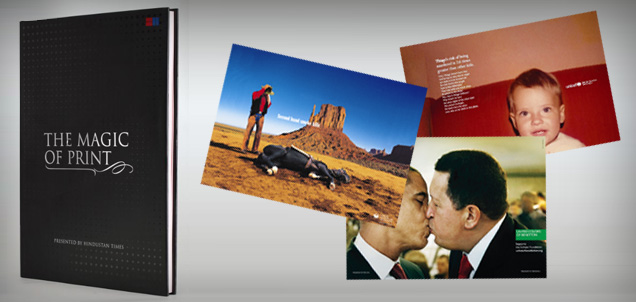



 Advertising today is much deeper and more sophisticated than it was even a few years ago. Viral marketing, 360-degree presence, product placement and interactive campaigns are only a few of the new tools in the arsenal of equipment available to marketers. In the face of this new technology and media, the printed ad may seem almost quaint and outdated; a candle in the age of the electric bulb. One may wonder if it is time to close the chapter on this era and become nostalgic about the printed ads which punctuated our youths. How the Amul girl made the simple meal of bread and butter ‘Utterly Butterly Delicious!’ and Raymond gave us the feeling of being ‘The complete man’.