Category: THE ANCHOR

  • 5 indicators of when it’s time you should start looking for a new job

    By Jaisurya Das


    1. Your boss smiles through the day… he probably found a new job!

    Tough to ask him (or her) actually but in all probability the smile is an indicator of things to come. Either the company has just decided to make him the big boss or he decided to call it a day and found his dream job. Or may be it’s that Hawaii vacation at someone else’s expense.


    2. Everyone is spending a lot of time chatting on their machines… the place just got too complacent!
    It’s nice isn’t it when even the field force can actually enjoy the luxury of a nice office and the computers. Wonder how long the company will survive. May be a good idea to check if the leaders are playing too. It’s career time dude. Don’t play, work. If not here then elsewhere before your career disk needs a hard reboot.


    3. Your customers give you a cup of tea and discuss the political climate… they don’t want to do business with you!
    Good customers and relationships that you believe can bail you out on performance and suddenly you notice lengthy meetings have essentially covered everything from the telecom scam to the Anna Hazare campaign and even the diving stockmarket. Hey, weren’t you there to discuss work? Take the hint: business with you is a no-no now for them!


    4. You believe you have learnt everything there is to the business… it’s about time you start meeting people sharper than you!
    Increasingly popular knowledge syndrome as I call it and interestingly causing even the larger companies getting hit. Often this belief spreads like a virus too. Let me tell you from experience. Three decades living on media probably taught me just about the basics . One learns by the hour now, be it audience, brand or just competition!
    Start talking to people around you.. You might just get a realistic view of what it takes to succeed….


    5. You have the ‘just got my dream job’ smile even after a year of work… You just stopped working!

    Ah ! Life is made isn’t it and your living on cloud nine thinking of your next holiday, the latest Tab and the evening cocktail and the swanky new lounge down the road. Have you realised that it’s also about time that you delivered on your targets and KRAs. Wonder if you still remember them or is it the delicately flavoured jamaican dark rum that just too prominence ?


    And, yes, if you decide to move on, sit back and think of all your successes and failures in the last job. It may just become your best operations manual for a great career ahead. Best wishes.


    Jaisurya Das is a veteran mediaperson and chief mentor and founder, Xanadu Consulting Group. A popular mentor and counsellor, he is Contributing Editor, MxMIndia, and guides readers at Dear MxM every week (see: http://www.mxmindia.com/dear-mxm)

  • The Anchor: 5 ways to maintain a healthy client-agency relationship

    By Akshar Peerbhoy


    #1 No is a simple two-letter word. Learn it, memorize it and say it!

    “No” really is the hardest thing to tell a client, right up there with “goodbye” and “sorry”. However, if you don’t get yourself to say it, the consequences could be much harder to deal with! If you can confidently say, “No” and live by it, your client will actually respect you and the agency, far more than a desperate-to-please yes-man!


    #2 Set clear expectations.

    Like marriage, you should always know what you’re getting into when you sign a client on. If you don’t, then set your cards on the table right at the beginning. He might ask you for the moon, but be frank and tell him just how far you are ready to reach out for him.


    #3 Under-promise and over-deliver.

    When you sit in the client’s boardroom with the suited lot, don’t be over-eager to display your grey matter and spill all your beans at once. And, don’t promise the afternoon’s deadline. No matter how passionate and eager you may be, it’s always the best strategy to promise him the lamp post and then deliver the stars.


    #4 Be his best friend.

    If you can share a drink with your client and talk about anything under the sun, except your work, you are probably going to find your rightful place in his good books as much as at his corner office. Ask him about his pending promotion or tell him where to eat on his next vacation in Hong Kong. He’ll remember to forget your few mishaps and missed deadlines, in time!


    #5 Remember the three Vs – Value, Value and Value.

    The ultimate test of any client-agency relationship is always reserved for the end of a contract term. This is the time when the agency folk succumb to excessive nailbiting and nervous breakdowns. The strongest survive, not only because of points 1-4, but also because they have delivered value to the client, time and again. Value beyond savings, free media space and extra ideas. Value as defined by the client. Even if it means being at the meeting 20 minutes earlier each time. Or finding his vendor for him. Do it, it will save you a lot of trouble on D-day!


    Akshar Peerbhoy is Director at Maa Communications.

  • The Anchor: 5 publications you (nearly) forgot but are (often) unputdownable!

    By A N Chorrea


    #1 Caravan
    Published by Delhi Press, would be wrong to call it India’s answer to New Yorker, but a good read nevertheless. Was resurrected by the younger generation of the Naths and with a gora editor in tow.


    #2 Reader’s Digest
    Oh, yes, it’s still around. The format may not have changed much, but it’s the Digest content and attention to detail and fact-checking makes it a great buy.


    #3 Economic & Political Weekly
    You may not get it at all the railway stalls, but get hold of a copy and we’re sure you’ll enjoy it for the quality of content.


    #4 Current
    Resurrected by the late owner-editor Ayub Syed’s son Asif, Current is a super read with some incisive political analyses, often by heavyweights in the biz. Check content on the website, currentnews.in.


    #5 Screen
    Critics may say it exists more for the awards than to serve as the voice of the Indian film trade as it once did, but the bold new tabloid avatar is interesting and easy-to-navigate.One does miss those big broadsheet ads, but this is the age where smallness rules.

  • The Anchor: 5 reasons radio will flourish, forever

    By Sunil Kumar


    #1 It is Local:

    People are more curious about or interested in the happenings in their city or town. Interest in local culture is developing and radio caters to that local culture which other media just cannot. Radio is absolutely local.


    #2 It is Participative and Interactive:

    Radio is the only medium where people can air their voice… leave a request… and it provides numerous other ways for active listener participation. Increased density of mobile phones is encouraging this interactivity further. Even social media has its own set of limitations…


    #3 It has an Abundance of Content:

    Today different kind of music is played on radio. It is not limited to Bollywood. Since it is a local medium, the music played too is in local language and in accordance to local taste. Today large number of music is produced in India, especially local music. ‘Kolaveri Di’ is one example. Bhajans, Sufi music, or hymns are some other music one can hear in different parts of the Country. In addition to these, the availability of sports commentary and multiple frequencies will offer listeners with more even more differentiation of content.


    #4 Car Listenership is Rising:

    Nearly all cars today have FM stereo attached, and as the number of cars continues to increase, it will further increase car listenership. More cars on the road also means frequent traffic jams. There are also those who travel long distances, and as a result time spent in listening to radio is also likely to increase.


    #5 It’s Free:

    Unlike any other, radio happens to be the only medium which is actually free.


    Sunil Kumar is MD, Big River Radio and a veteran mediaperson

  • The Anchor: Lara Balsara’s 5 reasons media agencies should attract talent from outside

    By Lara Balsara


    #1 Thinking beyond numbers and objectivity. A typical media planner tends to think very objectively and tends to opt for plans and media that are supported by numbers and makes only data-based decisions. Whilst this is a basic necessity, you have to use your imagination based on quality of content, its appeal to different target audiences, etc for your plan to be a holistic media plan that is based on rigour and discipline but does not lose out on the soft factors. If you look only at hard numbers, most media plans would look exactly the same and that would not serve the brand’s purpose.


    #2 To come up with innovative and comprehensive solutions. Media in India has now been a specialist discipline for over 15 years and therefore there is a certain sameness in thinking that has come about among professionals. To counter this, you need people who are better with lateral thinking capabilities as they would balance a plan supported only with numbers. When you have a diverse talent pool working together, each individual brings in their own unique perspective and their area of expertise; as a result you come up with a brilliant strategy, idea and execution. At Madison Media, we have experts in analytics, account planning, creative and content integrated in the core media plan and we have seen this diversity work magically for our clients.


    #3 Scope of media is very broad. Today anything and everything is a communication medium, and the biggest challenge for media agencies is to come up with new and interesting ways to reach out and engage with audiences. Increasingly with so much noise in the marketplace, there is a need not just to expose your target audience to the message, but to affect them in a deep and engaging manner. If you look at media awards, which are a barometer of good media thinking, you will see some outstanding examples.


    #4 There isn’t enough talent available. It’s a simple issue of demand versus supply. Media professionals are in huge demand and there is a huge shortage of good talent available. Media agencies have no option but to look outside.


    #5 Media professionals rock. Having said all the above, you can’t underestimate the skill sets of media professionals; they are the most equipped to handle almost any job in communications, but the same can’t always be said of other communications professionals’ ability to handle a core media planning job.


    Lara Balsara is Director, Madison World.

  • The Anchor: 5 reasons you know your OOH campaign is working

    By Ishan Raina


    #1 Flexicreation:

    The medium offers an advantage of Flexicreation i.e. creating customized ads and content according to the medium. This can be done by customizing the existing ad for the medium or digitizing an existing ad / leaflet and making it an audio visual ad. Flexicreation for the same medium is impossible in any other audio visual medium. The future will be and has to be the contextualization of the content and advertising messages. For Colgate, we customized the ad for the medium by highlighting the important messages to make it more impactful.


    Example – Colgate Pro-Sensitive Relief:

    Ad Recall: Of the people who had seen the ad 39 % have linked it correctly to Colgate Sensitive Pro – Relief.

    Reach Builder: 32% of the respondents (in the exposed set) were exposed to the ad for the first time through OOH MEDIA screens.


    #2 Flexicasting:

    OOH Media has been the most flexible medium today and gives a chance to slice and dice the message of the campaign as per the kind of audience an advertiser would like to reach. The client can select the locations, cities, frequency and language as per their requirements. Flexicasting provides an advantage of getting as local as possible just like an outdoor but with the power and capability of Audio-Visual. Other mediums are struggling with it and it comes naturally to Digital OOH. For Maruti, we used Flexicasting to advertise different brands in different locations to reach the correct audience.


    Example – Maruti

    Screen Recall: More than 90% of the respondents recall seeing OOH Media screens

    Ad Recall: 65% unaided recall of the ads on OOH Media.

    Reach Builder: 45% of the respondents were exposed to the ad for the first time on OOH Media


    #3 Content Integration:

    Content Integration helps in creating a contextual connect for the brands. The role of content is thus becoming very important in this medium and OOH Media continuously experiments with content to make it more relevant for the audiences and thus attracting more eyeballs. We have always been creating many on-screen properties which are topical, social or based on current happenings. Content Integration is another important area with a huge scope of dynamism and properties like travelogue, home-sweet-home, calorimeter, Green horns etc creating L-Band, Aston Band with the brands which helps them build a perception rather than direct selling. OOH Media customizes in-house content as per the client’s requirement and offering to make it contextual. For GSK- Horlicks Foodles we had created an L-Band on the Content Property called Caloriemeter which was the calorie consumed in the food and Foodles was talking about healthy and tasty eating habits on the LBand.


    Example: GSK Horlicks Foodles:

    Screen Recall: More than 100% recall for OOH Media screens

    Ad Recall: 69% of the respondents recall seeing the Horlicks Foodles ad at a Spontaneous Level

    Reach Builder: More than 24% of the respondents at work and play were exposed to the ad for the first time on OOH Media


    #4 Static Fabrication:

    Static Fabrication is one of the important aspects developed lately. Any brand offering is fabricated around the screens in the static format to create a better impact and creates the visibility for the brand 24 X 7. While the campaign runs on the screens, the static fabrication around the screens adds to the visibility. For Samsung, had advertised for Galaxy Tab in selected screens to reach the target audience and had done static fabrication on these screens to create hype for the brand.


    Example: Samsung Galaxy Tab Campaign:

    Screen Recall: More than 100% recall for OOH Media screens

    Ad Recall: 43% of the respondents recall seeing the Samsung Galaxy Tab ad at an unaided level.

    Reach Builder: More than 26% of the respondents at work and play were exposed to the ad for the first time on OOH Media


    #5 Vicinity Marketing:

    Vicinity Marketing is something that can be used very well by clients in this medium and is ideal for retail. This helps in creating awareness about the brand or the offer in the vicinity to drive footfalls. We have a lot of case studies where the use of vicinity marketing has resulted in the increase of footfalls. Citibank, did Vicinity Marketing for high net worth individuals by selecting limited screens with a very high exposure in Mumbai, Delhi NCR.


    Example – Citibank Reward Points:

    Screen recall: 100% of the respondents recall seeing the OOH Media screens

    Ad recall: 80% recall amongst 157 people who were interviewed of which 52% recall it at a TOM level and 93% recall it at an unaided level


    Reach Builder: OOH MEDIA Reaches Out To MEDIA LIGHT/MEDIA DARK/HIGHLY MEDIA FRAGMENTED AUDIENCES : 35% Respondents Were Exposed To The Ad For The First Time On OOH Media


    Ishan Raina is MD and CEO, OOH Media (I) Pvt. Ltd.

  • The Anchor: 7 reasons why taking risks in ideas works

    By Rahul Mathew


    #1 You already took a risk by being in this business of ideas. You could have been working fewer hours for a lot more money in some other job. So why stop now?


    #2 It’s not an idea to begin with if it’s not brave. And how can you be brave if you don’t have a penchant for risks?


    #3 Considering the only other risk you will be taking on a regular basis is eating the canteen food, you might as well get a little adventurous with your ideas.


    #4 If a risk pays off, you’re a radical thinker. If it doesn’t, you’re a reckless one. Both of which are often used to describe rock stars. Safe and dependable sounds good for a condom.


    #5 There’s nothing like that incredulous/stupid/shocked expression on the face of a tight-assed client/account management/boss when you present such an idea. It’s worth the effort.


    #6 A more practical reason: There are fewer risk takers in the industry today. And many who don’t take any. So, who do you think will be able to negotiate better?


    #7 Most importantly, the biggest risk you would be taking in this business would be not taking any. It’s the one thing that keeps you and your ideas from becoming wallpaper in today’s media space.


    Rahul Mathew is the Executive Creative Director, McCann Erickson Mumbai.

  • The Anchor: Karthi Marshan’s 5 rules for engaging financial services consumers on social media

    By Karthi Marshan


    Social media engagement for brands have many uses, and just like dating, socializing and evangelizing, there are things we must keep in mind. Here are a few of mine.


    #1 Listen first

    Obvious, isn’t it? Yet, we’d be amazed at the number of brands that ignore all the digital chatter their brands already enjoy / suffer, and dive blithely into a ‘campaign’ that plugs a product or extends their offline messaging. Just like you would at a party you have entered late, identify a group where some interesting conversation is happening, hang around and listen long enough to understand the mood, and then maybe, yes maybe consider interjecting with your two bits.


    #2 Speak human

    While it is contingent upon brand ambassadors to ensure propriety and appropriate representation of the brand’s stature, it would be prudent to eschew any language guidelines that the stuffed shirts throw at you and talk like you would at home or in a restaurant. It’s amazing how the people who run brands seem to check their human selves at the door when they communicate on behalf of brands, and start spouting what can only be described as ‘brandese’. Big words don’t impress, sincere ones do. So chill, be real, stay cool.


    #3 Chat, don’t plug

    Don’t be misled by it being called social ‘media’. Do not just blindly run your ads here. Just like you wouldn’t turn up at a friend’s cocktail party and start singing your brand’s jingle, apropos of nothing. Talk about what they are talking about. Be interested first, and then hopefully interesting. For heaven’s sake, don’t plug your messaging. Social media users are very sensitive to blatant plugging, and will flame the brand so badly, Hades (the place, not the person) will seem like Manali.


    #4 ‘Fess up

    When you join discussion groups or respond to comments about your brand and category, be clear about your identity. Don’t pretend to be just another regular guy who just ‘happens to really love the brand’. It smells a mile away. It’s perfectly fine to be a representative of the brand and defend it where relevant. So ‘fess up straight off the bat, don’t be cute.


    #5 Tell the truth

    While this sounds like a twin of ‘fess up’ there is a nuance I am trying to convey. Lots of brands are happy to troll the web and selectively display only the compliments they receive for good service. Stinks. If you want to share the bouquets, have the body parts to show off the brickbats also. So long as your intent to address the brickbats sincerely is evident, ‘they’ will understand. And just like in your marriage, saying sorry sincerely is usually more than enough. You will be forgiven and allowed to stop sleeping on the couch.


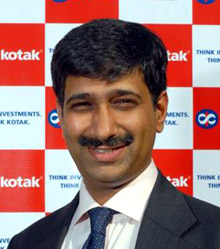
    Karthi Marshan heads marketing for the Kotak Mahindra Group.


  • The Anchor: 5 reasons mobile advertising hasn’t gained momentum

    By Damandeep Soni


    #1 Digital is seen as an afterthought in the overall media plan. Ditto in the case of Mobile. While everyone talks about it, thinks about it and wants to do Digital, traditional media momentum starves marketers of time to think about utilizing the mobile medium. Many agencies often fail to recognize the importance of Mobile and miss out on opportunities to engage their audience.


    #2 You need a different mindset to think about engagement models using Mobile. It’s much more personal than other media consumption devices. A video, for example, created for a mobile ad should be very different from a TVC as there can be a huge amount of engagement hooks built for Mobile. While Mobile offers advertisers new opportunities for interacting with consumers, many agencies just use their web creatives for mobile ads. A lot more needs to be thought out on in-app experiences, mobile-optimized sites or landing pages rather than just repurposing creatives.


    #3 Apps have only started to take off in India very recently. In-app inventory is yet to be fully utilised. Smartphones have started making significant inroads into the country, which means apps (specifically Android apps) are set to proliferate. With a sizeable population of smartphones, an in-app ad revolution is around the corner.


    #4 Brands that are using Mobile are still thinking about the engagement model with the user – the push v/s pull debate. Do you show the user a location-specific advertisement when he is in a locality (and will that become an annoyance to the user and will he start ignoring the ad?) or do you want the user to pull the ad after checking in, using a service like Foursquare, and will there be enough users who would want to do this?


    #5 Lack of mobile sites is another issue. Most brands do not offer a tablet/mobile optimized experience to the user. Hence, even if they embark on a mobile campaign it does not give them the expected results.


    But it’s not all doom and gloom. Mobile advertising will pick up in the next two to five years. In India we are still in the early adopter stage of mobile advertising. However, once brands get to know of the engagement stats and get innovative with campaigns, there is no turning back. After all, even today, a person is six times more likely to click on mobile banners.

     
    Damandeep Soni is Vice President, Global Sales and GTM, Percept Knorigin. 
  • Anchor: 5 reasons why Digital is the next big thing in OOH

    By Anirban Ghosh


    #1 Reach (The Last Mile Syndrome):

    There is no doubt that digital media is growing fast in India and also getting accepted among the clients. According to me, the only challenge right now is to position it aptly in the minds of the consumer through proper placement of the media. The last mile positioning of these media at the point of sale would be one of the key factors to get response and hence would be easy to measure also. This would definitely excite the clients to experiment with this medium to get a quick response within a short span of time.


    #2 Interactivity:

    This is probably one of the media which can interact with the consumer directly and effectively, and one of the major influential factors in buying any particular product. There are various ways to interact with the consumer, which can be controlled and impactful at different touch points to create the brand recall, perception and even to clear doubts at the points of sale.


    #3 Customization:

    Another uniqueness of this medium is that it can be used either in static or dynamic mode. It’s got the flexibility to customize the content exactly as per the need of the target group of any particular product, which would make the medium more interesting, exciting and engage the consumer to get better results.


    #4 Experimental:

    Out of the box innovative ideas experimented through this medium can be a lifetime experience for any consumer and the brand will be remembered for a long time. Touch screen technology can be used very effectively, so that consumers can converse with the brand and hence make the consumer compulsive about using this medium every time.


    #5 Measurability:

    If this medium is used effectively with strategy and at specific locations, then of course it can be measurable. I am sure it makes all the difference as to how do we perceive and position and compel the consumption of this medium at various situations. Although there is no industry currency in place, surely it can be done through some bold steps taken in future for the betterment of Digital OOH, which according to me will be one of the strongest media to reach out to consumers.


    Anirban Ghosh is the Senior Vice President, Adz Edge.

  • The Anchor: 6 things to remember when hiring mid-levels in an agency

    By Anil Nair


    I believe that these qualities are required at any level in our profession. While at senior level one would look at few more qualities and at junior there would be some less expectation, but largely these qualities are what I look for in an advertising professional.


    #1 Imagination: There has to be an ability to look beyond the obvious. Imagination is not just required for creatives but it’s a requirement for the industry. Our job poses challenges every day and if one is content to follow the prescribed method then there can be no growth. One has to have a rich and interesting imagination to build compelling communication.


    #2 Hunger: It is not just hunger to scale to the next level in the hierarchy. There has to be hunger for knowledge, insight and for better work. When a person believes that his appetite is satiated, that’s practically the end of his career. There has to be hunger to take things to the next level in all aspects of life.


    #3 Perspective: This is a rare quality among many people today. There is a tendency to follow things as they are given. Being perceptive helps in thinking beyond the obvious which is a requirement for everyone, be it creative, servicing or planning. This will be an important tool to help in growing the business.


    #4 Clarity: Whatever the point of view, if one has coherence in thought it will take a mid-level person to greater strengths. They are involved in building a communication platform for the client and there is a need to have logic and clarity in thinking to help the clients do better.


    #5 Emotional stability: By this I mean there has to be strength of character and ability to handle situation under duress. There is pressure from the person you report to, people whom you look up to and people who report in to you. I have seen many people crack under pressure and many times good talent become an emotional wreck. Again this is a rare quality and difficult to find in today’s times.


    #6 Anticipation skill: In this profession, if you do things now it will only lead to crushing you. You need to keep an eye on the ‘next’ and this can be developed by way of knowledge and interactivity with the industry. This is a complex world with cut-throat competition and the need is for the ability to anticipate and be prepared to face it.


    Anil Nair is the Chief Executive Officer and Managing Partner of Law & Kenneth.

  • The Anchor: 5 skills you need to be a successful entrepreneur

    By Raj Gopal Iyer


    #1 Plan, stay organized and focused:

    It’s important to be absolutely planned with regard to the various aspects of the business. The more you plan, the better. Creating an effective organization with systems and processes are the key to success. The entrepreneur should be focused on the objective.


    #2 Be customer-centric:

    The customer is king. Happy customers will make an entrepreneur successful, for sure.


    #3 Have nerves of steel:

    This is an absolute necessity for being a successful entrepreneur. An entrepreneur is faced with many challenges, he/she needs to have strong will power to face them and succeed.


    #4 Hire the right people:

    People are extremely key to the success of an organization. A successful entrepreneur is someone who has the right people to manage the business.


    #5 Enjoy what you do:

    Finally, a successful entrepreneur is someone who enjoys what he/she’s doing. He/she should have the passion for it. Success will naturally follow!


    Raj Gopal Iyer is the CEO, Blue Ocean Media & Consulting.