Category: THE ANCHOR

  • The anchor: Harish Bijoor on 6 lessons today’s marketers can learn from Salman Khan

    # 1 Hold your sense of humour and your panache even when the chips are down. It’s the reverse of what we have all grown up with: What goes down has to come up some day or the other! Oops!

    One needs to learn from every downside the star has gone through. The Chinkara, Aishwarya Rai, Vivek Oberoi, Amercian Express Cleaners not withstanding. Listen to the way he cheekily (pun unintended) describes his latest health downside as a flaming affair between his nerves and his veins, giving him an electric shock in his brain.


    #2 Think young, as the market is young

    Never mind that you are on the wrong side of 40. Think 25. That’s the median age of the country 56 percent of the population of India is below the age of 25. You might be an old marketer, but think the age of the nation. Don’t try to get the young nation of consumers think your age. Get contemporary in your marketing.


    #3 Stay fit

    The market is young. Youngsters themselves may not be fit, but everyone loves to live vicariously fit lives through the lives of their brands and stars. Keep your brand looking contemporary, young, with-it and trendy. Invest in those small little changes forever. Keep your brand looking different all the time. Don’t get cast into a stereotype. Gone are the days when a brand needed t look just the same. Today, visually, brands need to evolve. Evolve as fast as the consumer is evolving. The marketing problem today is that marketers are changing far too slowy as compared to consumers.


    #4 Poke the other brand in the eye and make him blink

    Brands that maintain the status quo with the competition are boring. Poke the competition in the eye. Wake it up. Make it react and make it make all those mistakes as well. Be seen as the market-mover. Be seen as the one who is the gold standard on everything around. Be the hero brand. The hero is forever on the prowl.


    # 5 Stay naughty

    Every consumer has a child in him and her. Most are pushed to suppress this side altogether. Life and the rat-race at large makes one suppress it all. Wake up this naughty side of your consumer through your own naughty brand stances. Do it all the while. Make your consumer live his life vicariously through the brand he uses. Stay naughty in your brand stances and push the gauntlet one step at a time.


    #6 Be Human. Be faulty

    This is not a pun on Salman’s Being Human! It is all about he fact that Salman is the first to accept all his faults. No point in hiding the fact that you love your drink. Be real. Be open. Be transparent. Be human. Consumers love the fact that the brands they franchise are alive as well. Good to think that everyone is faulty at large. Brands with foibles will be the new trend. Brands that falter just as you the consumer falters, will be the new trend of the future. Marketers can learn much from this. Brands that are level with the consumer and speak form the same level as the consumer will be loved. Gone are the days when brands spoke top-down language with the brand on top and consumer below. Today is the day and age of level peer-to-peer communication. Brand Peer to Consumer Peer communication, if you will!

    Harish Bijoor is a brand expert and CEO of Harish Bijoor Consults Inc. You can follow him on Twitter @harishbijoor

  • The Anchor: Pradeep Chopra on 8 mistakes marketers make about social media

     #1 Marketers treat social media like a short-term advertising campaign.

    Social media is all about building a lifetime relationship with your audience. However, marketers are still to understand and acknowledge that. It requires more of unlearning vs new learning.


    #2 Marketers measure ROI of social media like other digital marketing avenues.

    Unlike SEO, PPC or even email marketing, social media is not just about driving traffic to a website and measure the contribution in a typical funnel approach as used in SEO or PPC advertising. Leveraging FB ads for lead generation will be an exception.


    #3 Marketers underestimate the value of content and quality of conversations.

    Unfortunately, even today a significant percentage of marketers are focusing on metrics such as number of fans on Facebook. While the number of fans is necessary, it’s not sufficient.


    #4 Marketers don’t put required effort into defining objectives.

    While social media requires constant experimentation, laying down the objectives lays down the framework to think, execute and measure appropriately.


    #5 Marketers believe social media is about technology.

    A large number of marketers still consider social media more of a technology and less of a marketing activity. Thus, they don’t put the right resources in at the right place.


    #6 Marketers think that listening to their customers is optional.

    In the fear of confronting negative conversations about their brand, marketers don’t realise that they don’t control what others are saying about them. Hence, listening to their customers on social media is not a choice.


    #7 Marketers believe that they’ll jump in when it gets settled.

    It’s been over seven years and the only thing which is constant about Facebook is change. By the time social media reaches a stage of stability, the opportunity will be proportionally low of newer players.


    #8 Marketers still feel that social media is timepass.

    Unfortunately, a large number of marketers still feel that platforms such as Facebook are only for socialising or passing the time. While Facebook started as a social network, today it has taken the shape of a hybrid (social + professional) network and there are global case studies of B2B companies, such as Intel, Dell and GE, which have been leveraging Facebook to fulfil various business objectives.


    Pradeep Chopra is co-founder and CEO of Digital Vidya, and co-founder of dvBytes

  • The Anchor: Sanjay Reddy on 7 reasons why regional GECs should be treated differently

    #1 Ethnicity and Culture: India is a multi-cultural society, where every state has its own culture and language. Shows that do well in Hindi Speaking Markets (HSM) might not do so well in Tamil Nadu or even Andhra Pradesh. The GECs of the market need to show content that is in tandem with the culture of the masses.


    #2 Identification & Familiarity: Viewers like to feel associated with content that they can identify with and which feels familiar. Any major shift from this safe zone can sometimes (not always) lead to the viewer leaving the show. Most of these regional markets have their own movie Industries, showcasing their need for differentiation and attraction to what seems familiar.


    #3 Targeted Advertising: Most retailers look for the most cost-effective way to reach their target audience. If the TG is based only in Maharashtra, it does not make sense to advertise on a Hindi channel as the spillover would be tremendous. Thanks to the presence of Marathi channels in the region, the ROI is high and the spillover is limited. Having a strong GEC with content targeted at the regional market makes it a more appealing and value-for-money proposition for the advertiser.


    #4 Continued Experiments with Programming: Regional GECs speak to a smaller audience compared to the Hindi GECs. Hindi GEC need to provide content that caters across HSM giving it the chance to experiment with content and create shows that might not appeal to masses in small towns but might end up doing well in metros and big cities. In case of Regional TV GECs, yes sure here also people can experiment but anything too over the top might not go well will the audience and as most brands look at regional TV for targeted advertising, there are only a few mistakes that a channel can make, a typical chicken and egg situation.


    #5 Relationships in South and North GECs: When it comes to relationships, North and South India have a few differences. In AP a man can get married to his sister’s daughter – something that is totally unheard of in the north, similarly a marriage between a man and his bhabhi is an accepted fact, something that won’t be taken well in AP. This was just a small example but surely both GECs need to have different treatment in story structure and relationships.


    #6 Production Costs: Given the kind of advertising spends a regional channel sees, compared to a national Hindi GEC, it would be unfair to compare the two. Sets from the top Hindi shows are too high-maintenance for regional channels. There are regional channels that have spent a lot on their sets and shows but there can be only one show in the channel that can get such lavish budgets.


    #7 Influence of Western Culture: HSMs are more prone to western cultural influences, something that can be seen with successful shows like Indian Idol, India’s Got Talent, KBC, Big Boss, Masterchef India etc, which are remakes of popular international shows. Shows with a contemporary packaging haven’t done too well in regional markets.


    Sanjay Reddy is EVP – South Cluster, Zee Entertainment Enterprises Limited

  • The Anchor: Satbir Singh on 7 reasons advtg is a serious business that allows much fun

    #1 Planning communication strategy requires serious thinking. Being entrusted with planning a communication strategy for a brand is no easy task and requires meticulous planning and perfect execution.

    #2 Creating campaigns requires seriously long hours and weekends in the office. Zeroing on the right idea and taking it to its final step takes time.

    #3 Executing ideas and shooting films amongst others requires travel sans any sightseeing. It might seem glamorous that one gets to travel to various exotic locations while shooting an ad, but the truth is that it’s all work and hardly any play.

    #4 On the other hand, working on different brands and different briefs on the same brands means no monotony.

    #5 It is a profession of very young people. The atmosphere is always exciting and never dull. The industry is full of youngsters who are brimming with fresh ideas and it’s always a learning experience to work with young people who often open up a new line of thinking.

    #6 For those who find it a draw, you could be working with top cricketers and Bollywood celebrities. Now that could be a perk of working with an advertising industry.

    #7 Seeing work that you’ve created on TV and around you is a massive pleasure. It is a deeply satisfying experience to see the idea that one has been working on finally taking shape and then reaching fruition.


    Satbir Singh is Managing Partner and Chief Creative Officer, EuroRSCG India

  • The anchor: Manish Bhatt on 8 things an agency does to keep the client in its pocket


    #1 Convince the client that an agency is not just an intellectual advisory but a partner in the company’s growth


    The agency must be seen as a partner in achieving the company’s ROIs which may not necessarily be only in figures. Our role should not be restricted to that of being an advisory but should be seen as a stakeholder whose interest is in the growth of its client’s company.

    #2 Size does not matter; it’s the solution offered that matters

    An agency should not be seen as an ATL or BTL or any such term that is the stereotypical description. What matters is understanding the need of the client and offering the best solution to address his needs.

    #3 Show results on his brand

    It’s all talk unless you show results on the brand that you are working on for the client. One can start a relation like getting a business on the basis of your credentials but in the long term it’s the result that matters.

    #4 Make the client part of the process of the campaign

    While there is no denying that the client wants the aha moment or the magic factor from its agency but it’s also a fact that for greater success one needs to make client a part of the entire logical process of its communication. If the client is part of the process it will ensure that one is not still discussing briefs while making a presentation. Also this will ensure that the client is well aware of the building of the campaign and there is a common ground of discussion. Also reduces the chances of your ideas being rejected at the final stage when the client has been in the dark during the entire process and ultimately dislikes the communication presented.

    #5 Take him to Cannes!

    Make him part of a creative workshop that will help him in understanding the creative process and appreciate the nuances of what goes behind making an ad.

    #6 Show him that you eat, sleep and breathe his brand

    Any news on his brand or his category – just scan it and send it to him so that he appreciates your dedication to his brand.

    #7 Discounts are no deal

    This is a very common practice to make inroads into a client and his other brands. Give him a discount; reduce the retainer fee so that the business stays with your agency. This actually is a disservice to the industry as it reduces us to being mere traders and loses respect in the eyes of a client.

    #8 Jee Hazoori

    Agreeing to whatever the client says without applying any intellect. This clearly shows that you are more interested in keeping the business in your kitty and not in the growth of the brand.


    Manish Bhatt is Founder Director, Scarecrow Communications Ltd

  • The anchor: Shailendra Katyal on 5 ways to never get your media plan wrong

    #1 Adherence and application of past learning in developing an effective plan

    To get your future campaigns right, one has to learn from past campaigns. Your past experience to a large extent encapsulates elements that worked, helped the company achieve growth and let the brand establish its prominence over the competition. So, think about the future but don’t forget the past, because there may be valuable insights you can draw from previous successes and failures.


    #2 Consumer-centric rather than media-centric planning

    There is a tendency to ride with the popular and that is true in life too. Word of caution here, the flavour of the season just might not be meant for you. Even while drawing up the media plan, one has to understand the target group and the objective of the campaign. A media vehicle could be popular but may not address the need of your company, and brand and you will just end up wasting your money. Hence, target right with the specific tool.


    #3 Differentiate between short-term vs long-term campaign objectives

    There has to be a clear vision on the short-term and long-term objectives from a campaign. The short-term objective could vary from driving a festive promotion, to increasing footfalls at the shopfront. Long-term objectives could be to build brand awareness, connect with the TG, create customer loyalty and have a competitive edge. The long-term objectives cannot be clubbed with the short-term ones, which leads to losing focus and frustration at not achieving goals in a short span of time which was not possible at all in the first place.


    #4 Frequent monitoring of the plan and course correction

    The strategy should never be to chart a plan and then just adhere to it. This discounts the dynamic nature of the market. Constant tracking ensures that you can accommodate market changes, for example competition activity, media events affecting mid-level deliveries, etc. Periodic tweaking ensures that you are on track and gives serious thought to the brand map that one has created.

    #5 Make digital an integral part of the marketing plan. Only if digital is an integral part of your marketing plan, will it feature in your media plan

    The irony is that digital media is an after-thought and not a part of the media plan for many companies. Unless serious thought is given to digital, this medium, even though seen as a potent vehicle to reach its target group, will just be all talk and not yield anything tangible. To see results, adopt digital in its entirety and make it part of the media plan as one does for any other vehicle be it television, print or the other so-called conventional mediums.


    Shailendra Katyal is Director-Marketing, Lenovo India

  • The anchor: Anita Nayyar on 8 reasons women are better bosses than men

    #1 Dedication: Women are found to be far more dedicated and hard-working in their professions, and tend to take work far more seriously. This gives them an edge since dedication is key for any professional to succeed.

     

    #2 Organised : Given their responsibilities viz professional, social and family, women are more organised and hence able to multi-task in their professional and social lives.


    #3 Task Management : The need to multi-task and play dual roles makes women better task managers which once again is extremely key for better deliveries and efficiencies in a professional world.


    #4 Passion : It is said that in similar situations and working cultures, it is the passion for what you do which differentiates you from others. Women work with a lot of passion. They are far more emotional about their work and this differentiates them. Being genetically emotional automatically makes them more caring, and they deal with situations and people with far more care and sensitivity.


    #5 Understanding: The ability to understand various situations works in favour of women. Having to deal with different day-to-day situations help the cause of better understanding and hence better approach to work.


    #6 Patience: Women are naturally more patient, and this fantastic ability helps them in all walks of life. A patient boss is preferred any day.


    #7 Mature: Dual roles, multi-tasking, passion, etc make women more mature. This helps them in a better understanding and approach at the workplace.


    #8 Different : Last but not the least, they are MADE differently!


    Anita Nayyar is CEO, India and South Asia, Havas Media


  • The Anchor: Abraham Alapatt on 7 reasons a marketer prefers television to other media

    #1 Reach

    IRS media figures show a 17.9 percent compound annual growth rate (CAGR) in the spread of cable and satellite TV across India. The figures, for the first quarter of 2011, show that the total reach of cable and satellite TV is now 416.51 million, up from 403.51 million registered in the fourth quarter of 2010, and just under 383.61 million homes a year ago. Television – including terrestrial transmission – is now available in 522.44 million Indian homes, up 5 percent on the 516.41 million figure at the end of 2010, and the 509.86 million recorded in the first quarter of 2010.

    In fact, the only sections of the survey which registered a dip in the IRS figures were radio and cinema penetration. Cinema’s reach fell by minus 5.4 percent CAGR, from 81.66 million at the end of 2010 to 79.71 million in Q1 2011. The total reach of radio fell from 163.91 million to 161.48 million in the same period: a drop of 8.3 percent negative CAGR.

    #2 Family consumption

    In markets like the US or the UK – small families, working parents and typically “more than one TV homes” is the norm. In India on the other hand, TV viewing is a social “family” gathering where Indian families (often larger/joint families) gather around the single television in the living room of the home. This means that, with approximately four people viewing per TV set in India (during prime time) the reach is not just significantly larger than the numbers suggest, but also more involved and animated as a family unit. This aids marketers across segments and target groups. This group consumption of TV as opposed to radio, print or internet (which are usually consumed alone) makes it very powerful and unique.


    #3 Nature of media

    The versatility of the media – combining audio and visual elements and allowing stories, humour, glamour and imagery to be combined, makes it a potent tool for marketers to project their message/brand in the most attractive manner possible.


    #4 Segmentation based on viewer profile

    Based on time of day, nature of programme etc, marketers are able to target the right segment better than other traditional media such as print and radio.


    #5 Planned consumption

    TV viewing, in extension to being a social/family event, is consumed to a specific time pattern/lifestyle and is therefore fairly dependable from a marketers’ point to view to reach prospects.


    #6 Consumption by habit

    An extension of the social and planned aspects is “force of habit” – viewers of a particular program/channel tend to consume it almost by habit, unless the content fails to deliver or something more attractive comes up on another channel during the same time band. Women viewers of soap operas, teens watching MTV or lifestyle channels, men watching cricket/sports/news are cases in point.


    #7 Ads themselves as content

    With ads getting more creative, slick and entertaining, TV ads have themselves become subjects of discussion and aid brand consumption – Vodafone’s ZooZoos, Airtel’s new jingle “Har ek friend…” etc are just some very popular recent examples. This is, for obvious reasons, a marketer’s dream come true.


    Abraham Alapatt is Head – Brand & Corporate Communication, Future Generali India Life Insurance Company Limited.

  • The Anchor: Sneha Iype recalls 8 memorable characters on Indian television


    #1 “Hein hein hein … hein hein hein…” Remember the head-bobbing rabbit from the Lijjat Papad commercial of yesteryear? That had to be the most memorable of the lot for me.
    The jingle got under one’s skin and in those days on television there was no escaping the ingratiating opening laugh of the rabbit with the papad.

    The rabbit and the jingle obviously catapulted sales and recall hugely for this amazing Shri Mahila Griha Udyog Lijjat Papad cooperative movement in its initial years, today a big marketing movement story by itself.


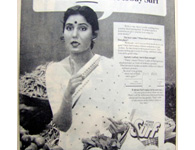
    #2 “Surf ki kharidaari mein hi samajhdaari hai…” Lalitaji is probably the most iconic symbol of Indian advertising. She stood for the discerning middle-class woman who made smart decisions for her home and boldly presented her case. Unforgettable.

     

    #3 “Doodh ki safedi Nirma se aaye…” The girl in white swaying to the ultimate melodious jingle was such a success that even after all these years the client can’t seem to let go of the tune in any of their communication. It’s obviously their trademark. Nirma was synonymous with the happy, hummable jingle.

     

    #4 “I love you Rasna…” Rasna came up with an idea of showing the mother-child relationship through their product. This gave birth to the very famous commercial featuring the Rasna Girl (Ankita Zaveri). The ad was revolutionary in more than one sense. Not only did it position Rasna as a family product, but also introduced the tagline “I Love You Rasna”, which became immensely popular among the masses. Rasna kept this tagline for many years to come.

     

    #5 “La la la la, la la la la la…” Sing it aloud. It’s truly refreshing.

    Yes, that’s what Liril did in 1985. It broke out of the sari and put model Karen Lunel in a swimsuit under a waterfall, creating history for the brand and for Indian advertising. Another case where the brand was synonymous with freshness and lime because of its pathbreaking visual and music.


    #6 “Jab main chhota ladka tha, badi sharaarat karta tha, meri chori pakdi jaati…” Roshni ki duniya ka sartaj Bajaj. A most endearing film and a truly enjoyable one too. I can still watch it and enjoy it.

     

    #7 A boy and his dog. They were an icon for the “wherever you go our network follows” line. Vodafone , in those days “Hutch”, launched with this amazingly simple campaign and showed no phone in a commercial that communicated network. A big hit.

     

    #8 The Zoozoos were the IPL season 1 superstars. They stood for innovation and a great media tool with the release of one ad a day through the IPL series. They blew the minds of millions, giving Vodafone a huge edge in the advertising of their value added services. Very fresh and very cool too.


     

    Sneha Iype is Executive Producer, Nirvana Films

  • The Anchor: Vidya Heble picks 10 videos to watch when bored at work (or not)


    #1 12 Days of Christmas, Indian style: What, you haven’t seen Boymongoose yet? Watch, and listen. And don’t let your attention wander because there are quirky little details in the video that you’ll miss otherwise.


    #2 If You Come Today: Kannada superstar Dr Rajkumar had an unlikely resurgence of fame with this clip from one of his films, now a viral hit popularized with some fine commentary by Time Out and impaled on yonder web to delight us.


    #3 MTV Chaiboy: An old spirit-lifting favourite. The boy’s moves are infectious and the soundtrack only helps in spades.


    #4 Sony Handycam: At first view this may be bugging because of the mess the kids create, but the nonsense ditty is indubitably catchy.


    #5 Iron Eagle Nominee: “Let’s say you’re a defense-company marketing executive. And you want to make a splash at the Indian defense ministry’s annual air show. Do you: (a) buy expensive gifts for New Delhi’s generals; (b) treat the press to Kingfishers and samosas; (c) produce a Bollywood-esque video featuring bare-midriff girls, flower-draped missiles, and the catchphrase ‘dinga dinga dee’? Unfortunately for us, Israeli arms-maker Rafael chose C.” Nuff said. PS: It’s horrible.

    http://www.wired.com/dangerroom/2009/03/iron-eagle-isra/


    #6 ‘The Force’ Volkswagen Commercial: Admit it, Darth Vader is there only to win over the grownups (who pay for the car). But the small boy’s acting – while entirely inside the eerie black costume, hence no cutesy facial expressions – is magnificent.


    #7 Achmed the Dead Terrorist: Leave your sensibilities at the door. Jeff Dunham uses the skeletal suicide bomber to poke fun at everyone (including himself), and you will laugh.


    #8 ‘Tera Husn Bahut Mujhe Bhaata Hai’Peugeot: Just for the end, which will have you rocking along with the triumphant guys who remodel an old beat-up jalopy into a Peugeot 206 lookalike.

    http://www.k10k.net/dropbox/storage/peugeut206-sculpteur.mpeg


    #9 The Last Knit: Did someone say “obsessive compulsive”? Perversely fascinating, animated, and sans dialogue so you can share it with your international colleagues.


    #10 In Which Annie Gives It Those Ones: Yes, you heard right. And yes, you’ll need more than a post-lunch slump to take this one in. For those who came in late – it’s Shahrukh Khan’s gangly-teenager phase, and please take a number for your initiation rite.

    Vidya Heble is Deputy Editor at MXMIndia.com. Mostly.

  • The anchor: Naresh Gupta on 7 things research will never tell a marketer

    No self-respecting marketing executive can live without market research. Market research offers purposeful information to make plans, policies, programmes and procedures for any marketing activity. The market research industry is as old as the communications industry and, many would argue, more important than the mainstream communications industry. Yet there are pitfalls, and things that can’t be foretold. Here are seven things MR can rarely tell.


    #1 Reflect reality

    Market research is a post facto measurement of what had happened. The common belief is that research data reflects the current reality and hence can be used as a basis for predicting future. If that was the case then well researched brands would have never failed

    #2 Predict the future

    Research means placing human beings together in one place ask them their opinions and forming that as the basis for predicting the future. This is like saying that if you watch a lion in zoo, you will learn all about lions. The human zoo is no different from an animal zoo, and is rarely the right basis for prediction.

    #3 Is never free of bias

    Any form of research suffers from investigator bias and statistical errors. Research too is a classic case of stimulus response. The answers depend on what you ask, and that define the findings. Can research ever be free of bias?

    #4 Right answers depend on the right questions

    The new Coke is the stuff that is now a case study. While the new formulation tested well, scored on blind tastes and passed every test the research industry threw at it, it failed when launched. The consumer was not asked the most obvious question; will the formulation change the brand they love? Do they want the brand to change? The result was a massacre in the market.

    #5 No guarantee of success

    Testing a new commercial for predicting its success in market is a common practice. It is easy to score a commercial on emotional appeal, on message comprehension, on ability to create perception. Yet more commercials fail then succeed. We all know that, yet we are slaves to practice.

    #6 Does not replace experience and gut

    We need to remember that research is a tool, and not the decision. A marketer’s gut, experience, market reality are far more important than any amount of research data. Yet the tendency is to live more by research data and less by collective experience.

    #7 Quality matters

    We all know this.

    Right?

    Yet an average marketer rarely spends time on figuring out who will administer the stimulus for research. Will an average field executive be up to scratch? Will the average investigator strike the right balance of objectivity and expertise? Most researches are spoilt by simple overlooking of this crucial aspect. Next time, pay attention to field investigators.


    As a simple test try this, ban MR for a while, live by what you know as a marketer, trust your experience, trust your market feel, trust the hours you have spent in the field. Take the decisions that need to be taken, and use research almost as the last step to check gross negative. You just might speed up the process, learn a great deal more from mistakes, and possibly be more successful.

    Experience always triumphs over data.


    Naresh Gupta is Head – Brand Strategy, iYogi Technical Services