
Category: THE ANCHOR

  • The Anchor: 7 points to learn from being in business

    By Chhaya Balachandran Aiyer


    #1 That you are on your own; and you get your pay package based on how well not only you but your entire team works.

    #2 That how much you earn is dependent not only on how hard and how well you work but can fluctuate drastically with how the market, the competition and the client operate. You have no one to complain to, or another job to switch to.

    #3 That while it is not as easy or as fun as ‘being the boss’ appeared  when I was an employee, it has an unbeatable thrill, the sort you  get when you are playing a game and want to achieve higher scores.

    #4 That the challenges are only more exciting and tougher as you move ahead because the goal post just keeps moving forward.

    #5 That the success of any business is completely dependent on the business owner’s vision, drive and focus and this then helps to drive the quality of team members they can retain and attract, and the level of ownership that team members have towards their jobs.

    #6 That every department is critical for the success of an organization, be it admin, HR, production, strategy, etc… every link is critical.

    #7 Nothing can change the fortunes of a company than the ultimate truth   for any business, the acid test, which is customer experience through the product and service it offers. This means know the customer, know the market, continuously improve your offering, delivery and service.

    You simply have to be the best, the most preferred.


    Chhaya Balachandran Aiyer is the Founder-MD of BC Web Wise.

  • The Anchor: 7 reasons to never ignore research analytics. Ever

    By V Balasubramanium


    The word “dynamism” has left a strong impression in the mind as we, like other consumers, have also embraced “dynamism”.  We experience the pace of this accelerating dynamism on a continuous basis. Dynamism in consumer behaviour as a result of a plethora of factors leads to the dynamism in the market. Given this increased pace, any brand – whether small or big, weak or healthy – needs to monitor its performance not only on a day-to-day basis but practically minute by minute. This monitoring and thus implementing quick course correction as required by changing consumer tastes is the biggest catalyst for any brand’s sustenance and growth. Research analytics come into play at this juncture. Without a proper and systematic research analytics strategy, brands, irrespective of size, will find the going tough. Thus the reasons for not ignoring research analytics are mainly connected with the word “dynamism”.

    #1 Consumer needs are evolving. Thanks to the increased exposure of the consumer to the globe through media, or through increased affluence, the attitudinal shift is the main driver to this ever-changing need. The resultant effect is tuning the mind for more brand messages, increased trial, and reduced loyalty.

    #2 The market is getting filled with more and more brands with varied offerings along with evolving needs. This crowding will lead to a greater effort by brands to gain increased consumer connect. Too many brands thus try to get consumer mindspace through various mechanisms.

    #3 Increasing knowledge of brands for the consumer. Consumers in this dynamic society try to get more knowledge of brands and switch decisions without any lag. This leads to expansion of the consideration set basket and reduction of loyalty.

    #4 Media is proliferating. Increased choice of connect points leads to more information being provided to the consumer, thus expanding the consumer’s knowledge base and aspiration levels. This results in increased brand trials.

    #5 Innovative distribution strategies of brands lead to more consumer brand interactions that influence changing brand choices.

    #6 Given all these complexities in markets and consumer behaviour patterns, marketers are increasingly looking for not only marketing RoI estimation but management of effective marketing RoI, the resultant benefit thus in monitoring the bang for the buck behind brands.

    #7 Static is an old word now. All brands are passing through this dynamic phase. To constantly gear to new challenges and create a proactive strategy for the win, brands need to look into present and past trends. Without proper ongoing marketing research analytics, brands of any size will find it difficult to face a new challenge.


    V Balasubramanium is the Director at RainMan Consulting.

  • The Anchor: 5 ways a marketer can use SMS to his/her advantage

    By Ravi Sundararajan


    #1 Acquisition of customers. SMS is a great tool to connect with new customers, and a marketer can leverage this medium to use it to target and acquire new customers.

    #2 Engaging customers. According to their area of interest, SMS can be used effectively to engage customers.

    #3 Retaining customers. It can also be a potent tool to retain customers by keeping them informed about promotions or information that might interest them.

    #4 Service Transaction. SMS also works well when one needs to give customers service-related information such as regarding bill payments or cash transactions.

    #5 Building infrastructure. There are many who don’t have infrastructure to set up communities or a mobile infrastructure service company. That’s where a company like ours can help marketers create such companies for others in the industry.

    Ravi Sundararajan is the Vice President Marketing at SMS GupShup.

  • The Anchor: 7 pieces of jargon creative types love

    By Amod Dani


    #1 Film opens on…

    Three famous words which satisfy every copywriter’s dream of visiting Rio, Ibiza, Vegas… uh no? Ok let’s get real…Bangkok.


    #2 360

    The number that comes first to mind when the entire team is brainstorming to create ACTS, Road shows, Innovative hoardings and Radio Programming concepts to sell… yes, you read right, “Sabun ke saath chammach FREE, FREE, FREE!!!!”


    #3 Clutter Breaking

    Vishwaas hai, ismein kuch khaass… Oooh Yeah! That was clutter breaking wasn’t it. Come on, half the line and you instantly remember the ad.  Wah! Now if that’s not clutter breaking I don’t know what is. Yeh toh bada toing hai!!!!  😉


    #4  D&AD

    Sigh! Ok here’s an acronym that every creative person would know. And if you don’t, head straight to your workstation and type in Google and then “Advertising Creative Awards for dummies”. The Design & Art Direction Award’s pencil has often eluded Indian hands and is the one piece yet to fall into the tricolour kitty. Time to visit the temple, I say.


    #5 JSR

    Here’s a document that encapsulates all the inefficiencies of the agency. Made and remade frequently, only to be forgotten and ignored. It shows its ugly head again following stinkers and finger pointing, before threats with “We are calling for a pitch!”


    #6 G*** M***

    A phrase often hurled at colleagues expressing a sense of disagreement.

    For example:

    CS:                   There’s a new brief.

    Creative:         Ok…

    CS:                   Deadline’s in two hours.

    Creative:         G*** M***!!!!! (Flatly)


    #7 Night hai!

    When the pitch for a new client is the next day and your kickass idea has just been torn to pieces. The layout’s bombed and the script’s changed. There’s nothing like a campaign in sight. Result: call your boss an old F@#^&*, call your girl and tell her you are screwed, call Dominos, call for a quarter of… wait, make that a bottle of Old Monk and get set. Dark circles, here we come.


    Amod Dani is ECD, Leo Burnett.

  • The Anchor: 5 changes the publication industry is seeing

    By Adarsh Mishra


    #1 Nowadays circulation operates on an FMCG model. As most of the companies are subscription driven, they are able to track readers and their profiles. The conventional method of circulation has undergone revolutionary changes due to subscription module and publication aspirations to achieve higher numbers in terms of ABC and IRS.


    #2 Circulation, which is considered a cost centre in every organization, is playing a very important role in the present media scenario as media planners are giving more importance to numbers in comparison with class.


    #3 In the present scenario most publications are resorting to invitation pricing which helps them to get a larger base in a shorter time. The classic example can be Delhi where publications slashed their prices in order to get higher numbers.


    #4 In coming days it will be vernacular publications which make more money as against English publications. The reason being people’s inclination towards their own languages and lower operating costs.


    #5 The government should increase the scope of FDI as it will help the publication  industry in India to grow at a faster rate and also it will help small or regional players to compete in the national arena.


    Adarsh Mishra is Vice President, DNA.

  • The Anchor: 5 reasons why broadband internet will grow in India

    1. Better devices
    2. Ease of use
    3. Better connectivity
    4. The pricing at which the broadband in now available – the government of India, BSNL has been doing a lot to get pricing and affordability in play.
    5. People coming onto the web is the effective reason. The fact that more and more services are available on broadband will also result in better broadband services.


    The broadband penetration is bound to grow, there is no two ways about it. Take for instance China, five years back China was around 100 million internet users, four years down, now it is at 450 million internet users. It has an extremely high penetration of mobility but its broadband continued to grow because infrastructure rollout has happened, ease of use is there from a connectivity perspective. Therefore I am opportunistic about the fact that broadband will continue to grow in India.


    Siddhartha Roy is the COO, Consumer Business & Allied Services, Hungama Digital Media Entertainment.

  • The Anchor: Pops on why advertising is still sexy

    By KV Sridhar (Pops)

    #1 Richer life experience.

    If you are passionate about life and want to live life the fullest, this profession allows you to do that. (I am writing this sitting in a plane to Colombo for a working weekend.)


    #2 Get paid for doing what you like.

    If you are curious about life, mine some insights to tell some stories, you’ll get paid handsomely.


    #3 Want to be an expert in 100 categories?

    Advertising helps you to learn about 100 categories in 10 years, no marketing job can offer that.


    #4 Around the world in no time.

    South of France as a trainee boy? Sounds great? Get your jumbo passport and get on board.


    #5 Do nothing.

    If you are a dreamer or want to relive your memories every day? Just gaze out of your window and narrate few experiences (that’s work for you) and you’ll be the next guru.


    #6 Be a celebrity.

    Imagine, if marketing is the glamorous part of business than advertising is the glamorous part of marketing. Got the logic? You’ll be seen in the papers more than Ratan Tata.


    KV Sridhar (Pops) is the National Creative Director at Leo Burnett.

  • The Anchor: 5 indications that India is e-commerce-ready

    #1 Internet penetration

    The sheer number of internet users has grown drastically in the past decade. In 2001, the number of internet users in India stood at 7 million. In 2010 this figure had grown to 100 million (source: Internetworldstats). As a result, the size of the market that needs to be addressed by e-commerce players today is very different and has much more potential.

    This growth in internet users is also largely due to the fact that the key enablers for e-commerce are currently coming together in the Indian market. Aspects like broadband and credit card penetration, wireless connectivity, and penetration of hand-held and computing devices have found widespread acceptance today, unlike their limited penetration in 2001. Moreover with mobiles, especially smartphones, becoming more accessible to the average consumer, internet access through mobile platforms is also on the rise.


    #2 Multiple players investing to increase awareness and adoption rates

    The players currently operating in the e-commerce space are also of an extremely different mindset. Players are more organized, and understand and appreciate the value proposition offered by the industry far better. E-commerce companies are today making investments in technology and innovation that will serve to strengthen and grow their business in the long run. They are not looking at short-term business solutions but are interested in scaling up their operations over a period of time. They are also taking the trouble to understand the points of concern that consumers may have with respect to online shopping and taking the trouble to address that. At Flipkart, for example, we have started our own logistics company to smoothen last-mile deliveries. We also offer services and features like cash/card on delivery, EMIs and 30 Day Replacement Policies to deal with concerns like revealing credit card details or not being able to check the quality of products online.


    #3 Change in consumer mindset

    Additionally, an increasing number of Indians are now trusting online players as a reliable channel for shopping. Post the success of travel sites, more and more customers are beginning to appreciate the convenience of online shopping. They are beginning to realize that the choice, convenience and cost benefits of online shopping outweigh those of physical retail stores, and are turning to e-commerce for more and more of their shopping requirements.

    The industry is expected to grow by 47 percent in 2011 to reach Rs.46, 520 crore by the year-end, according to a report by the Internet and Mobile Association of India. Online retail (excluding travel ticket booking, etc.) will account for 6 percent, or about Rs.2, 700 crore, of the total market. By 2015, this space is expected to grow to about $10 billion. E-commerce users today stand at 10 million (including travel) and this number is constantly growing.


    #4 Popularity of online travel sites

    Certain sectors related to e-commerce have already proven themselves in terms of their growth and popularity. Online travel sites began to do well even when there were hardly any players in the online retail sector. This has given e-commerce companies the confidence that the Indian consumer is open to the idea of shopping online and the success story of online travel has consequently begun to rub off on other verticals as well.


    #5 Growing investment in an e-commerce eco-system

    Market trends are not going unnoticed and more and more professionals/industry bodies are giving serious consideration to e-commerce as a viable investment option. There have been extensive investments made in the e-commerce ecosystem by both government and private players. The realization that the industry players are in this for the long term and are building up their business, keeping in mind benefits to the consumer and the economy, have fuelled an interest that can only speak well for the Indian e-commerce market.

    We have been a big believer in the e-commerce story of India. With the country poised to become one of the largest e-commerce led economies in the world, we will continue to aggressively invest in this space and contribute to this growth story in every way we can.


    Sachin Bansal is the CEO and Co-founder of Flipkart.com.


  • The Anchor: 8 key aspects of Phase III that radio companies need to address

    By Ashish Pherwani


    #1 Which licenses to bid for:

    The answer is quite complex, as it needs to consider the ability to sell the new stations both singly and as a bouquet, how well the new stations complement the existing bouquet of stations in terms of tactical sales, the future revenue potential from these stations both from the point of view of generating local revenues and adding on to the revenue generating ability of other stations, etc.


    #2 Bid values: 

    The bid value should logically be based on the revenue generating ability of the station over its license period, and expected costs.  But when you factor in that the revenue generating ability depends on the listenership position the station achieves, the rest of radio company’s station network, the efficiency of the sales team, expected competition in the market, etc, and the cost depends on variables like the license period (10 or 15 years), the rate of music royalties, the ability to share infrastructure and content, etc, it’s a complex decision to make!


    #3 Alliances:

    Some radio companies need to consider which stations to bid for on the assumption that they will form alliances with other networks that together will provide advertisers with national, regional or state-wide reach.  In addition, radio companies with existing ad sales alliances may need to reconsider these in the light of the licenses they propose to bid for.


    #4 Trade licenses that add value to other networks:  

    Radio networks are entering the phase where they will be able to begin trading their licenses.  Some radio companies may want to exit, and valuations aside, may find buyers in those wishing to enter the segment, as well as those which need to increase their presence through a more assured mechanism.  Particularly if multiple frequencies are permitted.


    #5 Using FDI effectively:

    Given the increase in foreign investment that is expected to be permitted, radio companies are already looking to identify partners / investors.  The long term strategic fit and the degree of control that is required to be diluted are key areas that need to be considered.  Particularly since there will also be a Phase 4 one day.


    #6 Go for multiple frequencies:

    If they do come into being, the key questions will pertain to the programming mix – what genre should the new station be? – and ad sales – how not to discount the existing station’s rates when selling space to advertisers.


    #7 Build better MIS and control mechanisms to prevent operational chaos:

    Given the growth in the number of stations, the need to refine processes, automate, and ensure an adequate level of controls in the new, and existing, stations, will be key.  As the span of controls increases, controls always get less effective.  Processes which were performed manually across 20 or 30 stations won’t continue to operate across a 100 stations.  Key persons from existing stations will be used across new station launches, and that could cause the controls environment in existing stations to get lax.  Integrating station infrastructure and content, centralising capex and support function, implementing standard operating procedures and accounting checklists could benefit radio companies.


    #8 Focus on people:

    When 300 stations become 900, the number of people is expected to grow by 175 percent as well.  Recruitment, training, and then monitoring the new set of radio operations will be a challenge by itself.  Not to mention managing the inevitable poaching!


    Ashish Pherwani is Associate Director, Advisory Services, Ernst & Young Private Limited.

  • The Anchor: Devraj Sanyal on the 10 songs you’re sure to hear on FM radio

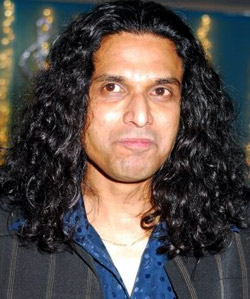
    #1Satyameva Jayate: From the most awaited album SuperHeav’… It’s the track which brings the nation together… has that anthemic feel.
    #2 Lady Gaga, The Edge of Glory: A must-have artist in your playlist, the biggest pop icon the world is gaga over.

    #3 Enrique Iglesias, Dirty Dancer: The most loved artiste in India, one of the highest selling in the country.

    #4 JLO, On the Floor: The biggest club hit in recent times… gets JLo back on the music scene.

    #5 Raab Rakha, Love Breakups Zindagi: Very young and vibrant song, a direct connect to today’s youth.

    #6 Jessie J, Price Tag: Purely for its lyrics… It’s not about money money money.

    #7 Watch The Throne, I love you so: A must-have for hiphop fans – two hiphop idols in one album!

    #8 Pal Pal Dil Ke Paas, Blackmail: Played on all the radio stations on their classic shows… Kishore Kumar is definitely hamaare dil ke paas.

    #9 Yeh Dosti, Sholay: An evergreen friendship track.

    #10 Senorita, Zindagi Na Milegi Dobara: Very cool, very young, from a new-age young film.


    Devraj Sanyal is the Managing Director of Universal Music India

  • The Anchor: 6 reasons a listener can never fall out of love with radio

    By Ashit Kukian

    #1 Radio gives listeners different genres of music and a fresh playlist all through the day. And that is further packaged with warm and friendly RJs, topical banter, guest appearances and lots of surprise elements to keep listeners wowed every minute of every day.

    #2 Radio is credited with being the ‘Theatre of the Mind’ since it engages one’s imagination more actively than a visual medium does.

    #3 The level of engagement and interaction that Radio enjoys with its listeners is incomparable to any other medium.  From conversing with listeners on a daily basis, to celebrating their joyous occasions of life, Radio touches the lives of all its listeners.

    #4 Radio provides listeners with Infotainment – relevant and topical information presented in as entertaining a way as possible. Radio then serves as a mood-enhancer by catalyzing one’s mood and uplifting the spirit of the listener who tunes in.

    #5 Listeners can relate to the medium in a very personal and intimate way. It can be a loyal friend to some and a confidant to others. So much so that you’ll often find listeners confiding in RJs about their deepest fears and problems.

    #6 Being a local medium, Radio fits seamlessly into the fabric and framework of the city. It serves as a lens through which listeners can get a glimpse of the pulse of the city.


    Ashit Kukian is COO, Radio City 91.1 FM.

  • The Anchor: 9 variants of ‘Why This Kolaveri’ that have had YouTube afire!

    If you think you’ve haven’t had enough with the original, here are 9 variants of ‘Why This Kolaveri’ that are still a rage on You Tube and elsewhere.


    #1 First, the original in HD:


    [youtube width=”400″ height=”250″]http://www.youtube.com/watch?v=YR12Z8f1Dh8&feature=aso[/youtube]

    #2 Sharad Pawar slap version


    While we strongly condemn the attack on senior minister Sharad Pawar, what we have here is a variant that could well give the original a run for its money.

    [youtube width=”400″ height=”250″]http://www.youtube.com/watch?v=uIhQm6gcUCw&feature=youtu.be[/youtube]

    #3 Gujarati Kolaveri

    [youtube width=”400″ height=”250″]http://www.youtube.com/watch?v=LEQ6N-rJmUA[/youtube]

    The Gujaratis on the social networks were particularly pleased that  their homegrown DJs and RJs came up with this static image verson:


    #4 Funny Kid


    We thought it wasn’t really funny, but judging by the ‘views’, this version too has had its followers

    [youtube width=”400″ height=”250″]http://www.youtube.com/watch?v=yoZivBhTNZ0&feature=youtu.be[/youtube]

    #5 Female version


    Again, no great shakes, but yet again the song’s popularity is such that even a mediocre cover could get a reasonable following

    [youtube width=”400″ height=”250″]http://www.youtube.com/watch?v=ZW6gSMXXtPY[/youtube]

    #6 Japanese dance


    You’ve got to see it to believe in what we said: anything with Kolaveri will get huge hits!

    [youtube width=”400″ height=”250″]http://www.youtube.com/watch?v=NfprwzgHDtE&feature=youtu.be[/youtube]

    #7 Violin version


    Interesting version, but no great shakes.

    [youtube width=”400″ height=”250″]http://www.youtube.com/watch?v=RBdvjLDiT7o&feature=youtu.be[/youtube]

    #8 Marathi Kolhapuri version


    The only reason why this makes it to this list is the bizarre heights people have been to in doing their Kolaveri versions

    [youtube width=”400″ height=”250″]http://www.youtube.com/watch?v=4_FjmF2K0cQ&feature=youtu.be[/youtube]

    #9 Chipmunk Version


    Chipmunk versions are in, not just of Sheila Ki Jawani, but also Why This Kolaveri!

    [youtube width=”400″ height=”250″]http://www.youtube.com/watch?v=yvHMq1B_3Cc&feature=youtu.be[/youtube]

    #10 Side step Mani


    Well, actually, you could be better off not viewing this.

    [youtube width=”400″ height=”250″]http://www.youtube.com/watch?v=L8uNjyxGgR4[/youtube]

    Nine-u variants-sa. Sa-sa-sa-saa. Not enough-u? Sorry, folks, after having watched so many of them, we couldn’t stop-u talking-u this way-u. Sob, sob!