Category: Opinion – Archives

  • Indrani Sen: Is Indian Media Audience Research Going Backward?

    Indrani SenBy Indrani Sen


    Media Audience Research in India for the traditional media has definitely not moved forward over since the onset of Covid-19. The Indian National Readership Survey was last published for Q4 2019, MRUC’s contract with Nielsen ended along with it. In November 2019, a request for proposal (RFP) for conducting IRS was made by MRUC from various market research agencies for continuing with the study, but it appears now that no progress has been made in that direction over the last two years.


    In July 2020, MRUC had officially suspended IRS 2020 and had decided to return the money paid by the shareholders for that purpose. There has already been a two-year gap in the print audience research, which is likely to be extended further as MRUC has not yet selected a research agency for conducting IRS, let alone finding a solution for conducting the fieldwork in the new normal. I came across a news item on October 31, 2021 which indicated that MRUC is starting from scratch by inviting fresh proposals (https://www.allaboutnewspapers.com/mruc-inviting-research-partners-to-conduct-indian-readership-survey-irs/).


    BARC, which has been continuing during the pandemic with its regular TV measurement research through peoplemeters, also took a few backward steps with criticisms about its methodology and the silent death of its Digital Media Measurement Programme, Ekam, before it had a chance to be tested before implementation. In 2016, BARC announced with a lot of fanfare its intention of measuring digital media viewership and after a few months in 2017 tied up with Nielsen for two years in order to develop a neutral and independent cross-platform measurement solution.


    The contract with Nielsen ended in early 2019 with BARC officials unofficially commenting that it would develop its own digital measurement solution. After Nilsen’s exit, various advertisers started expressing doubts about BARC’s intention and capability for doing the cross-media research with TV and digital media. In October, 2019 Partha Dasgupta, then CEO of BARC resigned from BARC and the plan for Ekam, which was largely his brainchild, also got buried.


    After a year, in October 2020, Mumbai Police began investigating a possible tampering of TRP data by certain news channels. The entire episode made a severe dent in the reputation of BARC as a fair audience research agency. The case is yet to be resolved. Following this incident, in November 2020, Ministry of I&B set up an expert committee to review the guidelines for TV Rating agencies. The committee submitted its report to the MIB in January, 2021, however, the ministry is yet to make any announcement about the findings or any proposed new guidelines for TV Rating agencies.


    In October 2020, BARC Board announced the suspension of audience estimates and ratings for a period of three months after requesting its technical committee to review and augment the standards and methodology of measuring, estimating and reporting the TV Ratings data. The suspension has got extended beyond three months showing hardly any effect on the advertising revenue of the news channels. In September 2021, NBF (News Broadcasters Federation) again appealed to BARC for resuming the release of News Channels’ ratings, which however were not released before the festive season of 2021 (https://www.livemint.com/opinion/columns/the-curious-case-of-missing-tv-news-channel-ratings-11631127883629.html).


    Meantime, comScore continues to conduct independent audience research for digital media in India and Google and Meta (earlier Facebook) continue to provide the industry with their own analytics about digital audience. Nielsen and Kantar, two of the large international market research agency networks operating in India have announced their capabilities in conducting cross-media research. Earlier in 2021 https://www.printpower.eu/insight/cross-media/ wrote “The World Federation of Advertisers (WFA) is spearheading a global ‘North Star’ initiative to standardise cross-media measurement through a panel and census framework that will help the industry get a greater understanding of reach and frequency. Such valuable multi-channel insights could prevent billions of dollars being wasted and improve customer experience through avoiding excessive ad frequency.”


    The same article also reported about the contract for the first world-wide total cross-media solutions project across TV, digital, radio and published media being awarded jointly to Kantar and Ipsos working in partnership with National Media Onderzoek (NMO) in the Netherlands. The article commented “This ground-breaking cross-measurement solution will deliver the building blocks for cross-media planning, allowing advertisers to better understand their consumers, improve the targeting of brand messages, determine how media triggers consumer purchase decisions and maximise ROI.”


    It is a pity that in India, where initiatives about media audience research were taken as early as in late 1960s with the first National Readership Survey (NRS) by ORG published in 1970 followed by second NRS in 1978 jointly by ORG and IMRB, the third NRS in 1983-84 by IMRB and the fourth NRS in 1990 jointly by IMRB and MARG before Indian Readership Survey (IRS) by MRUC began its journey, has failed to go forward in this field. It is high time that the advertisers and the agencies take a stock of the situation and take corrective measures for ensuring the way forward for conducting cross-media audience research.


    Indrani Sen is a veteran advertising professional and a media specialist. She is now an academic, and writes on MxMIndia every Monday. Her views here are personal
     

  • Indrani Sen: Does the growth of messaging apps & social media apps open up new opportunities for Indian marketers?

    Indrani SenBy Indrani Sen


    In 2020. during the early months of the setting in of the pandemic, the entire world saw an accelerated adoption of mobile messaging apps as people wanted to stay connected with family and friends and the number of users across the world grew by 14 per cent. Indian consumers also joined in the race. In 2021, according to an article published in www.emarketers.com last week, there will be a deceleration in growth with the rate of growth falling down to 6.1% from 14%. However, introduction of interactive features, new applications of video callings for payments, etc. will continue to attract people to the messaging platforms.


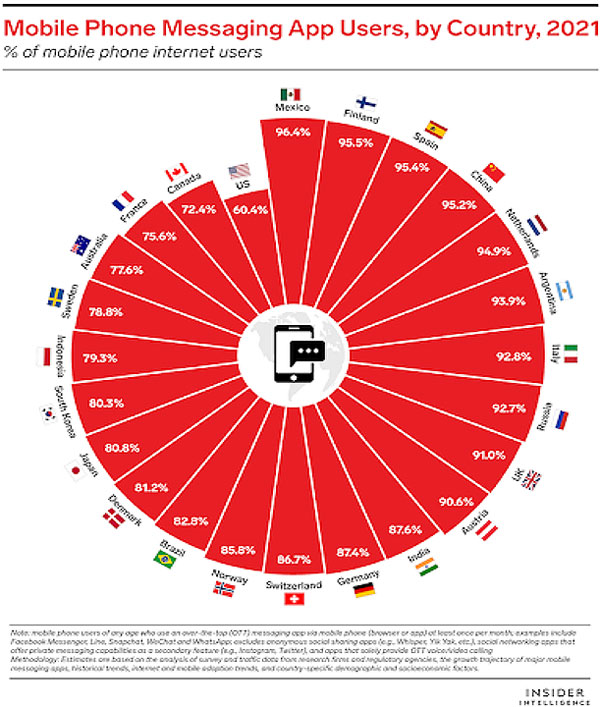
    The same report (https://www.emarketer.com/content/sizing-mobile-messaging-app-opportunity-marketers?ecid=NL1009 ) had an interesting chart showing the comparison of various countries across the world in terms of usage of mobile phone messaging apps, which I am sharing here.


    As shown in the above chart, India has 87.4% mobile phone messaging apps users presenting a good opportunity to the marketers in our country. It is not among the top ten countries which have 90% + mobile phone messaging apps users, but leads the next group of countries having 75% + mobile phone apps users. The report warns that due to the controversial privacy policy of WhatsApp, the growth of the same has been declining in most of the countries including India. Similarly, Facebook’s Messenger is also expected to decline in 2021 in many countries including India, which posted the strongest growth for Messenger in 2020. Still the overall estimates for users of messaging apps across countries are now at a far higher level than what was estimated before Covid-19 struck the world.


    We saw another report last week from App Annie which reported that India is the top market globally in terms of downloading of social apps across iOS and Google Play in the first half (H1) of 2021. As per their report, Asia is the largest region for downloads of social apps in Hi2021 having a 60% share of the global market. However, in terms of consumer spends through social apps, India is in the 17th position in a list of top 20 countries.


    So, the marketing companies in India may still not be able to utilise fruitfully the growing numbers of users of messaging apps as well as social media apps. It seems that while brand awareness can be promoted through the apps, but Indian consumers are still not ready to spend money through the apps in spite of the assurance given through the interactive apps. Still, it is undeniable that the pandemic has given a big push to the usage of both messaging and social media apps in India and has opened windows of new opportunities for digital marketing.


  • Indrani Sen: A Review of Vivo IPL 2021 Phase II

    Indrani SenBy Indrani Sen


    Star and Disney India has really played their hands very well and have managed to retain most of the sponsors and advertisers who onboarded the event initially for Phase II of the tournament currently being played in the UAE.  When the tournament got indefinitely suspended in May 2021 due to onslaught of the pandemic among the players and supporting members, the broadcaster reacted very quickly in a customer-friendly manner.


    Star and Disney India, who had sold almost the entire inventory in advance, assured all advertisers that the first right to continue with the sponsorship or advertising  deals at the negotiated rate would be given to all committed customers as and when the second phase of the tournament takes place. The broadcaster also indicated that no penalty would be charged to the advertisers who might want to withdraw from their earlier commitments due to their marketing requirements not matching with the revised schedule of the tournament.


    When BCCI declared that the second phase of IPL 2021 would be played in the UAE from mid- September, a majority of the original advertisers chose to honour their earlier commitments. Star and Disney India announced in the first week of September that 95% of the advertising inventory of Phase II were already sold with most of the original sponsors, i.e. Dream 11, Phone Pe, Coca Cola, Byju’s, AMFI, Amazon, Asian Paints, Cred, ITC Foods, Kamala Pasand, Mondelez and Upstox staying with the tournament.


    A few sponsors like Vodafone-Idea, Frooti, Garnier etc. have withdrawn from their sponsorship contracts. Against that scenario, new sponsorship deals have been struck with Jio, L’Oréal and Ajio, etc. for the remaining matches. It appears that the broadcaster will close the season with a record revenue collection exceeding their earlier expectation of Rs. 3,200 crore. With the qualifier and the final matches enjoying higher spot advertising rates, the second phase of IPL is expected to earn higher revenue than that of the first phase.


    As per the available BARC data, the Star India Network is cruising comfortably to breach the 400 million viewers’ mark on TV for successive fourth year. Till Match #35, the cumulative reach of the tournament has generated 380 million viewers. The trend is better than the past three years and the aggregated number of cumulative viewers at this stage are higher than what it was in the last three IPL series. The fan following of the tournament has been growing year on year which is reflected in the viewership data for the first 26 matches of 2021 showing that higher cumulative reach of the tournament than that of last year. As per BARC data, the reach of the first 26 matches in IPL 2021 was 352 million, against 349 million for IPL 2020.

    The strategy of regionalisation, whereby the tournament gets telecast in eight different languages for reaching out to viewers across different states has really helped the broadcaster to grow the viewership of the tournament. Introduction of additional customised match-feeds have started catering to specific consumer segments. The customer segmentation strategy has been further enforced with a light-hearted take of the matches presented by stand-up comedians and guest commentators on Disney + Hotstar.  Side by side introduction of other programmes like Byju’s Cricket Live, Cricket Countdown and Game Plan have ensured a total coverage of the tournament.


    To sum up, it can be said that Star and Disney India have broken new grounds in television programming while promoting the property of IPL across our multi-lingual country which will be taught as an unique media marketing case history in academic textbooks for next few years.


  • Indrani Sen: Writings on the TV Wall

    By Indrani Sen


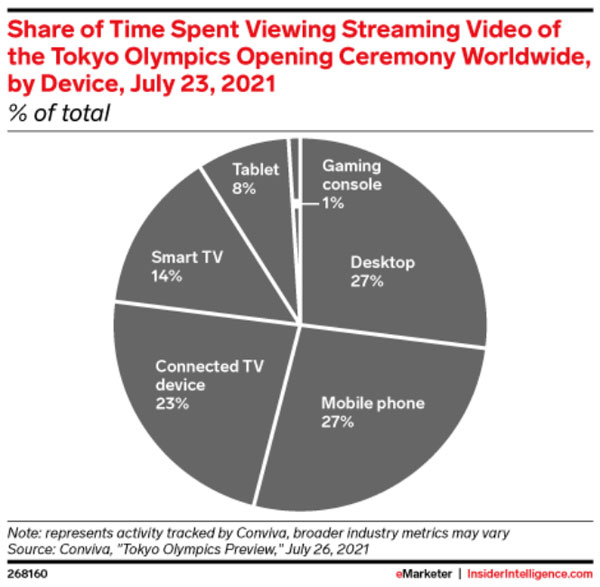
    Indrani SenSara Lebow wrote in an article published on August 16, 2021 in www.emarketer.com that around the world over 60% of the Tokyo Olympic opening ceremony streaming time occurred on non-TV devices (https://www.emarketer.com/content/olympic-opening-ceremony-streaming-time-non-tv-devices?ecid=NL1001) In fact, desktop computers and mobile phones between them captured a combined share of 54% of viewing time.


    In developed countries today, TV is largely viewed as a declining medium. It is estimated that time spent on TV will continue to decline while time spent on digital video will increase over this decade.


    www.emarketers.com has recently reported that in US, the measurement agency Nielsen has been having issues with the Media Rating Council (MRC) and may soon lose its accreditation. An MRC review found that Nielsen underestimated viewers in the crucial 18-49 age group by 2 to 6% in February 2021. During the pandemic, Nielsen took a decision to not send their technicians to Nielsen family homes which apparently has caused further damage to its reporting standard.


    There is a lot of speculations in US market that if Nielsen loses the prestigious contract of TV ratings measurement, then it may be a blessing in disguise for the TV industry. The move of ousting Nielsen may usher in alternative TV measurement methods with potential for upending the existing business models and advertising structures of network television in the US. Such a move may be able to arrest the downward trend in TV viewing and bring back lost advertisers to the medium.


    In India, our TV industry is still in a comfortable situation where it will take long time before we start viewing it as a declining medium. However, it would be good to keep a close watch over the developments in the US market and learn about the changing business structure and introduce the same marketing practices in India without waiting for the declining trends.


  • Indrani Sen: Effects of Suspension of IPL 2021

    Indrani SenBy Indrani Sen


    The last one week advertising and marketing industry has been buzzing with speculations on the consequences of suspension of IPL 2021. Star Disney has been very prompt in offering possible solutions to sponsors and advertisers. As per the contracts, all IPL ad deals are non-cancellable, but as a special case if the sponsors and advertisers do not want to continue with the existing deals, the broadcaster has offered to cancel the deals from their end and allow their clients to negotiate fresh deals for the remaining IPL tournament as and when it gets rescheduled. Alternatively, the clients can keep the existing deals in abeyance and utilise the balance as and when BCCI finds a new window for scheduling the rest of the matches and a new venue for holding the same. The sponsors and advertisers will pay on pro rata basis for 29 matches which have taken place of the scheduled 60 matches.


    It is too early to get a feedback on the decisions of the sponsors and the advertisers. My guess is that most sponsors will stay with the existing deals as investment in IPL 2021 is a part of their long-term marketing and advertising strategy. Some of the advertisers who have peak seasons during summer months or have some immediate growth targets, may consider the other option. However, one thing is certain that cancelling the existing deals and renegotiating later will cost the advertisers more for purchase of similar time over the TV and OTT platforms. Strategically by offering an option of cancellation, Star Disney has probably ensured that most of the existing IPL deals continue with them.


    It is being estimated that BCCI and the franchise teams will collectively suffer a loss of INR 2500 to 3000 crore if IPL is cancelled totally. If it is rescheduled later, the loss will be considerably less, but the additional cost of the logistics of arranging the matches outside India will reduce the profit margin and will shrink BCCI’s central revenue pull available for sharing with the eight teams.


    The biggest losers would be the ancillary industries who were directly or indirectly associated with the IPL tournament, e.g., ground management, hotels providing bio-bubbles, travel, production, agencies providing on ground display, etc. Even if the tournament is rescheduled abroad, there would not be any scope of recovering their financial loss, which admittedly is on a much lesser scale than the tournament revenue, but is a very high percentage of their annual income.


    The situation is also complicated with the advertising and media agencies. Most of them will suffer a loss of projected revenue during the first half of 2021 due to suspension of the tournament. Their clients will insist on renegotiating the deals with them and will try to reduce the commission or fees. It will be difficult to find suitable programme/ content for rescheduling the advertising campaigns and to achieve the target reach required for achieving the sales objectives during the first half of 2021. However, all the leaders of the industry have agreed unanimously that postponing the tournament was the right decision under the current COVID situation in the country.


    What about the consumers, the viewers who make IPL the big blockbuster event? The day after BCCI announced their decision of postponing the 14th edition of IPL and rescheduling it at a later time outside India, The Indian Institute of Human Brands (IIHB) and the Rediffusion Consumer Lab (or Red Lab) announced findings of a survey indicating that the cancellation of the tournament may be a blessing in disguise for the advertisers during the rapidly spreading second wave of the pandemic in India.


    IIHB and Red Lab conducted a small survey among 482 consumers (271 males & 211 females) over three weeks (April 17 & 18, April 24 & 25 and May 1 & 2) to judge change in their attitude, if any, towards IPL as the second wave of the pandemic continued to increase across the country. The questions mainly concentrated on three broad areas (1) the appropriateness of holding IPL in India this year (Should the IPL have been played at all this year? Given the pandemic, should the IPL have been played overseas again?); (2) the respondents intensity of watching IPL (Are you watching more/less/same of the IPL as last year? Do you think watching IPL every evening provides an escape from all the pain, grief and death all around? IPL were to be cancelled; would you miss the game?) and (3) the respondents recall of ads and celebrities and effects on brands (Do you remember ads and celebrities from the IPL telecast? Given the current mood, do the ads on IPL attract you? Would you buy the brands being sold?).


    Over the three weeks, the number of respondents not available or not contactable decreased steadily. The positive sentiment towards conducting IPL in 2021 also decreased from 81% to 58% over three weeks and the number of people agreeing that IPL should have been played outside India went up. There was a 33% drop over the three weeks in the positive answer to the question “Do you think watching IPL every evening provides an escape from all the pain, grief and death all around?” Percentage of people watching less of IPL 14 compared to IPL 13 also went up over the three weeks. The recall of advertisements as well as celebrities were very good across the three weeks, but the intention of buying the brands dropped from 84% to 52% over the three weeks.


    IIHB and Red Lab concluded that the sensibilities of the consumer were getting hurt with the cricket extravaganza continuing during the pandemic and there was a growing discontent with IPL 2021.  It appears that continuing with the tournament in India might have got the sponsors and advertisers the desired exposures but would not have translated the same to desired consumer spends on the brands. The partial or total lockdown imposed by many state authorities will also contribute to the dip in sales.


    It is very difficult to take any guess at this stage about the condition of the pandemic in our country in September when a window is available for rescheduling the IPL. We do not know when the current second wave will end and what will be the final death tolls, if there will be a third wave of the pandemic in September as predicted by many medical practitioners and health experts. Only one thing is certain, we will overcome this coronavirus one day.


  • Indrani Sen: End of the Dark Days: 2021 Midyear Adspends Forecast by GroupM

    Indrani SenBy Indrani Sen


    A week back, GroupM released their Midyear Report on This Year Next Year (TYNY) for 2021, predicting that in 2021 Indian Advertising Industry will not only overcome the degrowth of last year, but also will record almost 2% additional growth.  The Midyear TYNY predicts that India Inc’s investment on advertising will grow by 23.2% during 2021 calendar year and will touch 89,123 crores at the end of the year. The growth in advertising expenditure will come from FMCG, e-Commerce, Auto, Retail, Telecom and Durables categories.


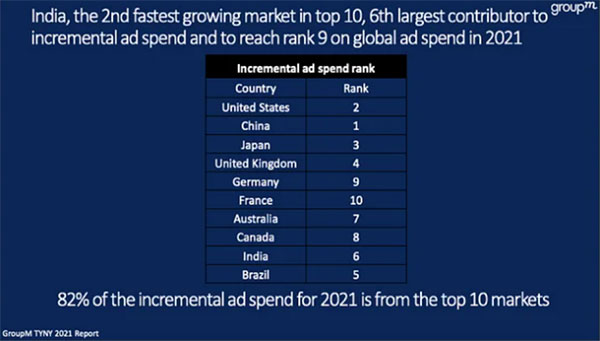
    India’s rank in the Top 10 fastest growing advertising markets globally had gone down one notch in 2020 to number 10 from number 9 in 2019. It is expected that as the 2nd fastest growing market among the top 10 countries, India will regain the 9th rank in 2021. GroupM predicts 82% of the global advertising spends will come from top 10 markets in 2021 and India will be the 6th largest contributor to incremental ad spends among the top ten markets as shown in the chart below:


    Source: GroupM TYNY 2021 Midyear Report


    In 2021, Indian advertising expenditure is estimated to grow at a rate (23.2%) which is more than double of the expected growth rate (10%) of global advertising expenditure. India will be in the same bracket with UK, China and Brazil where advertising expenditures are also expected to grow by 20% plus. The Midyear forecast for global advertising expenditure is 19% higher than their forecast made by GroupM for 2021 in December, 2020. As per the Midyear Report globally, digital advertising expenditure is expected to grow by 26% as against 15% and TV is expected to grow by 9.3% as against 7.8% predicted in TYNY last December. GroupM has cited the following factors as the catalysts of the higher growth rates: (1) faster than expected expansions of app ecosystems; (2) rapid small business formation activities and (3) the growing role of cross-border media marketplaces.


    Focussing back to India, of the estimated total advertising expenditure of 15,000 crores of incremental spends in 2021, 40% will be contributed by digital and the share of digital in the total advertising expenditure will be 35%. TV will account for around 45% share and the non- TV and Digital media will have a share of 20%.


    The website www.businessworld.in has shared an article on June 21, 2021 which says “With states easing lockdown curbs due to declining number of COVID-19 cases, there are immediate indications of improvement in economic activity as companies are hopeful of better performance in the next 6 to 12 months, according to a survey.” The TYNY Midyear report for 2021 is highly encouraging with an assurance of better days for the Indian Advertising Industry. It seems though the pandemic may not disappear from our lives in 2021, the dark shadow of the pandemic will be lifted from our advertising Industry.


  • Indrani Sen: TV penetration in urban India: Is there any room to grow?

    Indrani SenBy Indrani Sen

    On April 15, 2021, Broadcast Audience Research Council released the “TV Universe Estimate 2020” indicating that “TV UE 2020 has been developed by computing the Linear growth of TV Households and TV Individuals from Broadcast India (BI) Studies conducted in 2016 and 2018 at geographic and demographic levels. The distribution of the TV population by NCCS was taken from the most recent Indian Readership Survey (IRS).” The field work could not be conducted in 2020 due to the pandemic and BARC had a plan to conduct a large-scale establishment survey as a part of Broadcast India (BI) 2021. However, the current second wave of the pandemic raging all over the country will cause a delay in the implementation of that plan.

    As per TV UE 2020, out of an estimated 300 million households in India, 210 million are TV owning households, of which 91 million (43%) are in urban areas and 119 million (57%) are in rural area. From 2018 to 2020, the number of total households owning TV has grown from 197 million to 210 million (by 6.6%); urban households owning TV has grown from 87.8 million to 91 million (by 4%) where as the number of rural households owning TV has grown from 108.9 million to 119.2 million (by 9%). Over the last 10 days TV industry has been celebrating the increase in TV penetration during the COVID infected period which accelerated the growth of digital media in India.

    Against the national average of 6.6% growth, the growth in the number of TV owning households in the HSM area has been 8%. As far the distribution platforms are concerned, share of DD Free Dish has grown from 13% (2018) to 19% (2020) which has largely driven the higher growth of TV households in the HSM area. South India, with higher TV penetration than rest of the country, has shown 5% growth which is less than the national average.

    While it is quite acceptable that the total number of households has increased from 248 million in 2011 to 300 million in 2020, the question arises how much scope is there for TV penetration to grow in urban area? As per the 2011 Census, there was 248 million households in India with an urban: rural share of 31%: 69%. 91 million, the number of TV owning households in urban area in 2020 accounts for 30.3 % of 300 million, the total estimated households in India and 98% of urban households (31% of 300 million= 93 million) leaving very little scope for further growth of TV penetration.

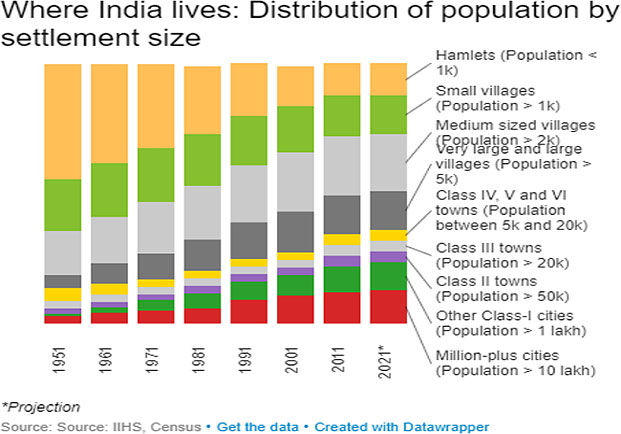
    Here, we need to ask, going by the three-tier definition of urban as used by Census, what will be the urban-rural split of households in 2021 Census? Should we reconsider the definition of urban introduced in 1951? In reality, what percentage of our population lives now in villages and what percentage lives in towns?

    An article by Ajay Sreevatsan in the www.livemint.com which was updated on September 16, 2017, analysed the possible reasons why actual share of urban areas should be higher than the official Census statistics. The chart given below has been taken from that article, which after arguing strongly in favour of higher rate of urbanisation, concluded with “…how much of India is urban, and how much of it is rural is as much a question of politics as it is of economics.” (https://www.livemint.com/Politics/4UjtdRPRikhpo8vAE0V4hK/How-much-of-India-is-actually-urban.html).


    Source: www.livemint.com

    Recent government policy documents have argued that the share of urban households could be 37%-38% depending on the infrastructure developments and other parameters. Even if we make a moderate estimate that the urban: rural split will be 35%: 65% in the 2021 Census, we will still have 105 million urban households out of estimated 300 million total households, leaving a 14 million headroom for growth in TV penetration. However, TV industry needs to recognise that TV penetration in urban India is close to saturation point in the higher NCCS categories and need to make their future plans accordingly.


  • Indrani Sen: Booming Digital Advertising

    By Indrani Sen


    Zenith, the RoI Agency of Publicis Media, released its Business Intelligence – Video Entertainment report across ten key global markets in last week. The report has predicted that India will see higher growth in adspends on OTT than on TV during the next two years of this decade. In FY21, adspends on TV will grow by 4% while on adspends, OTT will grow by 24% and in FY22 ad spends will see 9% increase on TV against 34% increase on OTT.


    While the Zenith report talks about future, the Advertising Report on Digital – Part 1 – July-Sept ’20 also published last week by TAM India analyses the immediate past. Based on AdEx data, the TAM India report confirms the accelerated growth of digital advertising during the lockdown and the post-lockdown period. There was a small negative growth in May, but during the unlocking period, the growth regained its momentum from June and went on increasing steadily.


    Source: TAM India


    The highlights of the report covering Jul-Sept’20 show that ad insertions per day increased by 32% during Jul-Sept’20. Among the top 10 categories, e-com and gaming had the highest growth. Five of the Top 10 categories with positive growth came from services sector. Amazon India was the leading advertiser and its brand www.amazon.in topped the brands list. Top 10 advertisers and brands had respectively 21% and 19% share in the total digital ad insertions.

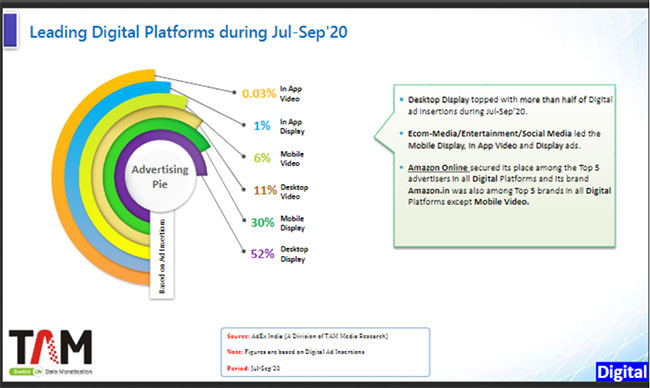
    In spite of the rise in smartphone users, among digital platforms, Desktop Display topped with more than 50% share of the total digital ad insertions. YouTube topped the list of publishers with 15% share of digital advertising, while all other publishers has 85% share. advertising on digital platforms.


    The next chart shows the share of the digital advertising pie by different platforms. Mobile Display and Mobile Video had respectively 30% and 6% share while Desktop Display and Desktop Video had respectively 52% and 11% share. Here Desktop includes Laptops also.


    Source: TAM India


    The findings on most utilised methods of transactions show that Ad Network was the most preferred mode of transactions (45%), followed by Direct (20%), Programmatic (17%) and others (19%). Though only 17% of the transactions were done through Programmatic, among other methods, the share of Programmatic/Ad Network (13%) and Programmatic-Direct (5%) indicate that programmatic buying has been making a steady progress in the transactions of digital advertising.


    Source: TAM India


    An analysis of creative types used for digital advertising during Jul-Sept’20 shows that Banners had a share of 45%, followed by HTML5 (40%) and Video (17%). Among the top 5 categories comprising of E-Com/ Entertainment/ Social Media, E-Com Online Shopping, E-Com Gaming, Corporate IT and Life Insurance. E-Com Gaming had the highest rate of growth during Jul-Sept’20. A total of 316 advertisers across 40 categories advertising 510 brands accounted for 80% of the total as insertions. The balance 20% was spread across many advertisers and brands who all wanted to board the band wagon of digital advertising. The total count showed 20,500+ advertisers across 480+ categories with 24,100+ brands participating in digital advertising during the period Jul-Sept’20!


    This report has given us a comprehensive understanding of the rapidly growing digital advertising. We will be eagerly looking forward to the next editions of Digital Advertising Report by TAM India in order to follow the progress of the digital media during the pandemic hit 2020 and beyond.


  • Indrani Sen: Online Gaming: The New Claimant for Share of Advertising Rupee

    Indrani SenBy Indrani Sen


    Last week, the advertising and marketing industry got an overwhelming exposure to online gaming through the “e4m Game On: Gaming Summit” over two days and the report “Everyone’s Gaming Among Us – Mobile Gaming through the Pandemic and Beyond” released by InMobi simultaneously. The highlights of the report show (i) 45% of Indian mobile users got introduced to gaming during the pandemic, (ii) women constitute 43% of the gamers in India, (iii) 60% of gamers is in below 25 years age group, while 12 % is in the age group of 25-44 and 28% is in the age group of over 45 years and (iv) Indian gamers interact 2.6x times more with the video ads shown in gaming apps than in other apps.

    The FICCI EY Report on Media & Entertainment (M&E) Sector “The era of consumer A.R.T.:  Acquisition | Retention | Transaction” was released in March 2020 before the pandemic hit our economy in a big way. We saw in that report that online gaming continued as the fastest growing segment with 39.8% growth in 2019 over 2018, riding on the back of transaction-based games, mainly fantasy sports, and a 31% growth in online gamers. The InMobi report findings indicate that the online gaming growth during pandemic has sky rocketed during the pandemic and it would not only continue to be the fastest growing segment, but also reflect a huge growth in the number of online gamers in the next FICCI EY report on the M&E sector.

    In the e4m ‘Game On: Gaming Summit’, various speakers dwelled on the benefits of advertising through online gaming apps over the two days. On the first day, in the first panel discussion on “Gaming: The New Media for Marketers”, panellists spoke about how the use of gamification can enhance consumer engagement for a brand apart from traditional advertising.  In the second panel discussion on ‘Decoding the Online Gaming Market in India’, one of the panellists, Naman Jhawar, Senior Vice President, Strategy and Operations, MPL said “This industry is going to create a lot more opportunities on the brand monetization side as well. That is something that is already happening whether it is live sports or on the online gaming platforms and this branding is going to scale up.” Another panellist Dinesh Sharma, Business Head, Commercial PC, and Smartphone, System Business Group, ASUS India, said “One of the key trends that we are seeing is that when the pandemic occurred people wanted to connect emotionally and gaming became a perfect platform to get together virtually. E-sports is trending in a manner and will become as big as cricket.”

    On the second day of the Ssummit, GroupM Business Head, Entertainment, Sports & Live Events Vinit Karnik shared some revealing statistics that in last ten years the number of Indian gamers has grown by 14 times and currently they spend on an average 22 hours per week watching e-sports content and playing online games. He emphasized “Brands need to ride the e-sports bandwagon very early to reap the benefits. Today is the time for brands to evaluate various opportunities and how can one relate to this target audience and look at building brand affinity with them over time.”

    Rajesh Pantina, Director of Marketing, Asia Pacific, InMobi, also spoke at the e4m Game On: Gaming Summit and shared the findings of the InMobi report highlighting the facts that online gaming is not just a young man’s game, gamers are well distributed across India (South 29%, North 27%, West 22%, East 22%) and ad recall is high amongst Indian online gamers. He explained that programmatic sampling was used for running the survey and generating responses from 1000 plus Indian consumers using smartphones across 30 cities from tier I, II, and III. The sample was targeted and weighed to represent of India’s smartphone population and the survey was conducted between February 9 and 16, 2021. The most interesting insight shared by Pantina was on the consumption of various forms of digital entertainment “People are treating gaming as a part of their entertainment bucket, which comprises also of OTT video and music but then gaming started to own that entire entertainment and relaxation genre, and it’s probably the newest face of entertainment.”

    We are definitely going to see more participation by various brands in online gaming which can be either through gamification of their communication or through sponsorships and placement of advertisements in online gaming platforms and apps. In the new entertainment bucket of consumers, online gaming has an edge as it is an interactive platform while OTT and music are both passive platforms. Online gaming, therefore has the potential for claiming a higher share of consumer engagement, particularly from India’s growing youth segment. In conclusion, I feel we are going to see online gaming not only competing with OTT video and music, but also with social media in future. A day may come when family and friends will make appointments to meet digitally for watching or playing games instead of having a chat on social media.


  • Indrani Sen: Exploring remedies for two burning topics stalking our industry

    By Indrani Sen


    The last 12 days have been very eventful for our industry on one hand about Mumbai Police reporting a TRP scam involving TV channels and on the other hand about social media vandalism related to the Tanishq commercial based on the story of an interfaith marriage. The first issue is still under investigation, but based on initial available evidence, BARC decided to suspend reporting the TRPs for news channels for three months.


    The second issue has seen more decisive and quick actions and let us look at that first: The uproar by a section of netizens over their different social media handles protesting against the interfaith marriage story shown in the Tanishq commercial, things took an ugly turn with some of the Tanishq executives getting threatened on their Linkedin accounts, call for boycott of all Tata products, etc. The share of Titan, the holding company of Tanishq fell by 2.18%, the Tanishq shops all across the country with crores of jewellery stocks became venerable to attacks by social miscreants and Tanishq withdrew the commercial and issued a statement on a sad note “… This film has stimulated divergent and severe reactions, contrary to its very objectives. We are deeply saddened with the inadvertent stirring of emotions and withdraw this film keeping in mind the hurt sentiments and wellbeing of our employees, partners and store staff.” Contrary to what some people believe, the company did not tender an apology for producing the commercial.


    Our social media users were divided in two camps on Facebook and other social media handles right from the beginning and after the commercial was withdrawn, a counter campaign has started protesting against the withdrawal. However, what has been most gratifying is the spontaneous sharing of personal stories by many couples with interfaith marriages. It has also been extremely reassuring that the industry at large has come together and IAA, AAAI, ISA, TCA etc. have issued statements condemning the social vandalism and supporting Tanishq. But the incident has raised a few very serious questions about rules and regulations required for user generated content in Facebook and other social media platforms.


    Do we really need to control user driven content on social media?  Today with the help of artificial intelligence it should be possible to hit a warning button before individual users’ posts multiply into a hate movement and leads to online vandalism. However, such a move may also boomerang if it stops all social movements for good causes generated through user generated posts. As we have seen in case of the Tanishq commercial, there is always two sides of a coin with each side believing it is on the right side! However, we need to know if posts are getting generated by genuine users or by fake users. We understand social media marketers have adopted the concept of buzz marketing and instead of appointing real time online buzz marketers, they take the easy way out by creating fake social media accounts. Our Advertising and Marketing Industry should take initiative to interact with the owners of social media platforms for stopping this practice and ensure that anyone posting on social media is a genuine user. Users should be stopped from owning multiple accounts on social media platforms even at the cost of the platforms losing number of users.


    The second incident about the TRP scam has kept our TV news channels, media agencies, advertisers and BARC (Broadcast Audience Research Council) and the investigative agencies busy ever since the news was published on October 8, 2020. The process began with Mumbai Police Commissioner announcing in a press conference on October 8 about a FIR against few TV channels and has been going on since then with claims and counter claims and legal suits being filed in Delhi and Mumbai.  The story has got a lot of coverage in mainstream newspapers where it hit front pages news and was covered through multiple stories on each day. Couple of newspapers also took the trouble of educating their readers on definition of  TRP, the methodology of the audience research, how BARC collects and processes TV viewing data, etc. Industry websites have been carrying multiple stories and interviews with industry stalwarts for last few days. We have also carried number of stories including two write-ups by MxMIndia’s Pradyuman Maheshwari.


    I shall not repeat the narratives of the second incident which have already been posted in www.mxmindia.com. This is not the first time that we are facing complaints on TRP related issues and this will not be the last time unless the industry introduces severe measures for the offenders.    The various industry bodies need to review the problem and take very stern measure for stopping such malpractices in future.  My suggestion is if a representative of any TV channel is found guilty of tampering with generation or collection of TRP data, then that channel should be barred from the BARC roaster of TV channels for a period of three to five years, long enough to be able to make a negative impact on their advertising business.


    If the owner or any other top executive of the TV channel is proved to be a party in any such devious practice, then he or she or the channel would have to pay heavy fines to TRAI/ BARC for the misconduct. Failure to pay the fines may result in the TV Channel losing its rights for uploading and downloading for a specific period. The TV channels would have to create legally bound strong employment contracts ensuring that they are able to partially recover the loss of business from the errant employees who may be instigated by a competitive channel tor indulging in illegal activity. To sum up, unless the industry bodies as well as TRAI review and redesign the rules for punishing malpractices related to TV ratings, we would never be able to have a robust audience measurement system in spite of all the technological advancements.


     Indrani Sen is a veteran mediaperson and now an academic. She writes on MxMIndia on most Mondays. Her views here are personal


  • Indrani Sen: Reincarnation of Media Sales

    By Indrani Sen


    The pandemic has affected media revenues adversely, but at the same time approach to media sales have undergone a sea change. Most of the media houses who used to have separate sales team for selling traditional media and digital media have integrated them to a seamless force. Digital media marketing has become much more data driven and focussed on interpretation of data. In fact, approach to media selling has started encroaching into the territory of media planning.

    Last week, on August 13, 2020, I received two interesting mailers “Your Cheat Sheet for Streaming Trends” from Jio Saavan and “Introducing HT AdWorks – Personalised Media Consultation and Discounted Ad Prices across Mediums” from HT Media Ltd. The Jio Saavan mailer showed a very creative way of pushing their brand for digital media campaigns based on their research findings and HT Media cleverly introduced packages for their media brands across different verticals under the guise of media consultancy.

    The first mailer from Jio Saavan was based on the findings of their Digital Audio Playbook for a New Reality”. Interesting charts showed highlights from the research along with cues for digital audio panning, eg. 520% growth in throwback hits with a suggested cue for spreading good vibes through narratives that provide an escape from life. The mailer also included an invite for a free downloading for the Playbook. For some time various digital media platforms have started offering content solutions to the advertisers along with media buying deals, the Jio Saavan offer goes beyond creative solutions to the domain of providing interpretation of research and strategic solutions. Using research as a strategic tool for planning was the forte of media agencies, now that is being challenged by digital media marketing.

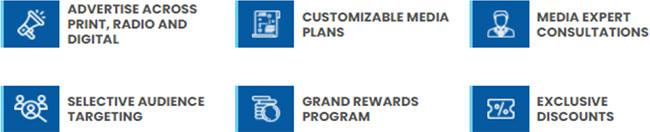
    HT Media’s mailer on ‘HT Adworks’ with a tagline of ‘Grow your business’ invited registration for a free digital event for better understanding of their membership based program for cost effective and personalised media plans. The link provided in the mailer opens up https://www.htadworks.com/ with registration facility for two digital events in Delhi and Bangaluru, a write up about the programme and a facility to download an e-brochure on HT Adworks. As shown below, the benefits of the programme, advertised on the website, cover all the aspects of media planning and buying across Print, Radio and Digital verticals where HT Media brands are present.


    The digital events by HT AdWorks focus on Delhi and Bengaluru which indicates that the programme has been designed for small and medium scale advertisers. However, some of the large advertisers may also be interested in participating in HT Adworks. The question which comes up automatically is if the budget allotted to HT media brands through this channel will remain a part of the overall media budget routed through media agencies or will be routed through HT Adworks directly for getting the ‘exclusive discounts’?

    Long back, in the days of fixed 15% agency commission, media sales used to dictate their terms to the agencies. In the digital age, we are seeing a reincarnation of media sales with media houses bypassing the role of media agencies by offering the advertisers all the functions of the media agencies along with exclusive discounts. We have been witnessing vertical as well as diagonal expansion by all traditional media houses over the last three decades along with consolidations and mergers in the media business. Most of the large media houses now have multiple brands in their stable under traditional as well as digital verticals. A spread of media sales practice like HT AdWorks can play havoc with the business of media agencies.


  • Indrani Sen on D K Bose: Caring, Passionate, Awesome

    By Indrani Sen


    Ad industry veteran Dwipal Kumar Bose, known as DK expired suddenly due to a huge heart attack on early morning of October 9. Bose was 76 years’ old and had over 50 years of experience in the industry across Media Planning, Social & Rural Marketing and Advocacy Research.


    After graduating from Elphinstone College in Mumbai, he started his career with S.H. Benson, the parent company of Ogilvy. He rose in ranks while working in Mumbai and Kolkata offices of Ogilvy (O&M) during the 70s and early 80s and joined HTA (JWT) Delhi as Media Director in 1984. He shifted from media to social and rural marketing first as head of Thompson Social, India’s first Social Communication Agency and subsequently worked with RK Swamy BBDO and Ogilvy Outreach. In this time, Bose trained many Media Planners and Social and Rural Marketing Executives, who later attained important posts in the industry. After his retirement from the industry, Bose has been working as an advisor and strategist in the area of Behavioural Change Communication in the area of health and primary education. His LinkedIn profile described him as “Margdarshak and advisor on Rural and Social Marketing”. He was a Founder Trustee for Centre of Advocacy Research for 20 tears and was awarded with the Lifetime achievement award from Rural Marketing Association of India.

    Bose taught at IIMC as visiting faculty for many years and currently was associated with IIM Lucknow and Kozhikode and Jamia Milia University as visiting faculty. Early this year, he published his autobiography “Life Unstoppable: Making Challenges Work for you” as an e-book on amazon. Bose loved travelling to interior India and to the small towns and villages of Himalayas and he breathed his last during his sleep at McLeod Ganj surrounded by the hills he loved. Bose will be remembered among his friends and associates for his caring nature, his passion for learning and teaching and his awesome energy.