Category: Top Stories

  • Sachin Kalbag is back at Mid-Day, as Editor-in-Chief


    Sachin Kalbag
    Sachin Kalbag

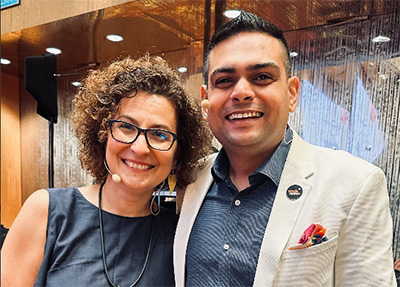
    Senior journalist Sachin Kalbag has been appointed Editor-in-Chief (Print and Digital). He has joined the Dainik Jagran group-owned Mumbai daily today. He will also oversee the group’s weekly paper, Sunday Mid-Day and the website, mid-day.com.

    This is Kalbag’s third stint with the paper, having joined it as a trainee in 1994. He has also worked across various publications over the last three decades, and other than being Editor of Mid-Day from 2011 to 2015, he was also Resident Editor of The Hindu’s Mumbai edition (2015-18) and Executive Editor of Hindustan Times (2018-22). Since 2022, he has been working with The Takshashila Institution as Senior Fellow. For a bit, he was also Washington DC correspondent with the now-suspended DNA newspaper.

    Kalbag takes charge from Tinaz Nooshian who has moved on.


  • Halder Group redesigns Odaana oil packaging

    Halder Group, manufacturers in the rice and edible oil industry, from West Bengal announced a rebranding initiative for its edible oil brand Odaana on the occasion of its centenary year.

    Said Keshab Kumar Halder, MD & CEO of Halder Group: “As a part of our centenary year, we successfully launched the Odaana branded soyabean oil and sunflower oil in the Indian market. This marks a crucial step in our journey to diversify our product portfolio and cater to the evolving needs of health-conscious consumers. Our refinery facility in Siuri, Birbhum, West Bengal ensures we deliver the highest standards of quality and perfection, envisioning a Better India through the collective betterment of its people. We are dedicated to fostering a spirit of unity and prosperity, building a Better India for generations to come.”

  • Lay’s & Huemn collaborate

    Lay’s potato chips has teamed up with the fashion label Huemn to launch a limited-edition merchandise collection.

    Said Rajdeepak Das, CCO Publicis Groupe South Asia and Chairman Leo Burnett South Asia: “Lay’s is a brand that is part of culture and now with the Huemn partnership we will be a part of pop-culture. This is a great example of how we believe partnerships can create magic.”

    Added Saumya Rathor, Category Lead – Potato Chips, PepsiCo India, expressing her delight on this association: “At Lay’s, we’re always looking for innovative ways to bring joy to our consumers, and our collaboration with HUEMN is a perfect example of that. By drawing inspiration from Lay’s vibrant colors, we’ve created a unique merchandise collection that speaks directly to our Lay’s fandom. For the launch, we’ve introduced an element of surprise, transforming the simple act of snacking into an exciting treasure hunt. Partnering with HUEMN, we are delivering an experience that goes beyond traditional snacking. We can’t wait for our fans to discover these limited-edition pieces and make them a part of their everyday style.”

    Speaking on this Pranav Misra, Co-Founder, Huemn said: “As a brand, HUEMN has always championed wearable art that speaks to individualism and creativity. Inspired by the massive fandom surrounding Lay’s, this partnership is a celebration of the love and connection people have with their favourite potato chips. It’s about bringing the world of Lay’s and Huemn together, offering the community a chance to wear something that represents both comfort and the joy of snacking. Creating this together with an iconic brand like Lay’s has been an incredible experience for all of us. We’re excited to see our communities embracing this unique association.”

  • People Matters elevates Pushkaraj Bidwai to CEO

    Ester Martinez & Pushkaraj Bidwai photograph
    Ester Martinez & Pushkaraj Bidwai

    People Matters, the media platform and community for HR and Talent leaders in India and APAC,  has announced a leadership transition following its complete acquisition by Mynavi Corporation, one of Japan’s largest HR companies. Pushkaraj Bidwai, one of the founding members and previously Chief Business Officer at People Matters, has been appointed the new Chief Executive Officer (CEO) and Board of Directors. He succeeds Ester Martinez, the Founder & CEO, who has decided to step down after 15 successful years to explore personal interests.

    Said Kazumasa Yoshida, a Director for Global Business of Mynavi Corporation: “We have long admired the work and impact of People Matters in the People and Work community, and we extend our gratitude to Ester for her remarkable leadership and dedication over the past 15 years, which have elevated the company to the strong position it holds today. With Pushkar succeeding, we have full confidence in his leadership and vision to spearhead this next phase of growth, drawing on his deep understanding of the market and commitment to excellence. With this full acquisition, we are committed to providing the resources and enablement needed for People Matters to scale to new heights and expand its footprint across APAC while continuing to operate as an independent media and community business.”

    Added Martinez: “I am incredibly proud of what we have built at People Matters over the last 15 years. I believe the company is in excellent hands with Pushkar, who has been an integral part of our team and intimately understands the needs of our community. His deep industry knowledge combined with his extensive experience in running and scaling a media business will drive the company’s continued success.”

  • What they don’t teach you about retail at an MBA course

    What they don’t teach you about retail at an MBA course

    With apologies to none at all

    Vikas MehtaWhen I passed out from business school more than 35 years ago, India had not even entered the world of malls. Retail meant mostly mom-and-pop neighbourhood stores and every FMCG company worth its salt was into the depth of distribution. The role of wholesalers, in the Indian context, could never be overstated. While western marketing authors always used the words distributor and wholesaler interchangeably, In India depth of distribution meant huge dependence on wholesalers. Even for the HULs and the ITCs.

    But B-schools hardly explained the Indian wholesale phenomena. At best wholesale was referred to as buying in bulk, cheaply and then distributing it to retailers and earning good margins. In reality, it was almost the opposite. Sorry, not was. IS. Even today, wholesale is referred to as cheap. In fact there is a neighbourhood modern store in my area which is called Wholesale Store just because it claims to be at least 5% cheaper on almost everything.

    For the uninitiated, wholesalers in India buy across product categories, unlike most distributors. And it’s not just 5-6 categories but maybe 30-40 categories. The idea is to service kirana and groceries in small towns and villages with everything that they need. These shops may buy 20 soaps and five 1 kg detergent powder packs a month. A distributor cannot afford to service them as the margin on those small quantities does not cover even his/her transportation costs. A wholesaler, by servicing the whole gamut of products in a small kirana store, makes margins across product categories that allows it to make profits. And this allows sales at thin margins, in effect sometimes enabling a kirana store to sell below MRP. And that’s why the myth of wholesaler buying in bulk, selling cheap. S/he buys in bulk but across many product categories. S/he sells cheap because his depth of product categories allows him to do so.

    Since the last 35 years, trade has evolved rapidly. Modern trade, which is local supermarkets, emerged. They made shopping a pleasant and an involved experience. From dinghy, badly lit kirana stores, one could touch, feel and see the variety at offer.

    But it was the malls that shaped this modern trade into supermarket chains. The now-defunct Big Bazaar was the pioneer. There was Spencer too. And malls and big supermarkets were made for each other. Malls had big brands. In apparel, footwear. Electronics, fashion, etc. But the problem was that after the novelty wore off, the consumer would not visit regularly. One does not buy branded clothes or footwear or electronics every month. It’s maybe twice or thrice a year. Malls wanted footfalls every day.

    That’s when the concept of anchor stores came in. Consumers need groceries every week. So, if a mall could get a good supermarket, consumers would come in every week. And these would be located either on the top floor of the mall or at the end of a vast one level mall. The idea was that the consumer will get to see other stores and would be tempted to walk in, browse around and get attracted by offers. In fact, within a supermarket too, this concept works. Vegetables or daily products like milk, eggs bread are always at the end of the supermarket. So that you walk through the entire display and are tempted to buy more.

    Now, if consumers come in once a week, can we get them more than once? ‘Super Wednesday’ with the concept of mid-week replenishment came in. Or the concept of cheapest first seven days of the month. Traditionally, the local kirana would give credit which would be paid off in the first week of next month, once payday happened. This was one step ahead. Buy in advance for the month when your pay day happens. Stock up for the month.

    The concept of anchor stores got extended into multiplexes, food courts. All again on the top floor or at the end of the mall. Malls without anchor stores struggle. Even today.

    Retail had definitely evolved

    E-commerce of course changed retail forever. People call it retail at a click, I call it retail on wheels. It brought everything, even apparel to your doorstep. It made you lazy but it opened a new concept call gig workers. The delivery boys and girls. I would love to see some hard facts but I think that Dehradun, where I stay at least 20-30% of two wheelers on road are into delivery. And these have become brands in their own right. Ekart, Delhivery.

    But I digress. We think ecommerce changed the way we shop because they gave discounts. That’s a fact which cannot be disputed. But discounts were the sop. Today, we are used to paying delivery charges. One feels good that a saving of Rs 30 has happened on a Rs 250 order, but we also pay Rs 30 as delivery charges. Delivery charges have become so commonplace that free delivery today, is an effective promotion. That is the price we pay for the wheels. That’s why I call it retail on wheels.

    And today we are in the age of Q commerce. Quick commerce. Retail on steroids as I call it.

    I don’t think it’s about the 10-minute or 15-minute, quick delivery. I think it has touched the psychological sweet spot of completing the full shopping experience in a few minutes. Let me explain.

    Twenty or 30 years ago, shopping meant having a shopping list and going to the market to shop. One would spend maybe an hour or so, but in that one hour choosing, deciding, haggling, weighing and paying would happen. And one would be back home with the full shopping. Done and dusted.

    E-commerce actually stretched the shopping experience into days. Sure, one has a list. One clicks and checks out. But then one has to wait for delivery. It could be 24-72 hours. It causes anxiety. Will someone be at home when the order is delivered? Will all the stuff come? Will there be some mistake in the quantity? Will the quality be satisfactory? To assuage these came delivery on fixed time slots, return policy etc. But it was ironical that the shopping experience took longer to complete.

    Q commerce actually is a panacea to that. It came at a time when consumers were used to discounts. Q commerce offered it. Consumers were used to delivery charges, Q commerce extracted it. In fact, during certain hours Q commerce charges rush surcharge. And yesterday on Blinkit I saw a rain surcharge and it said that it’s raining heavily in the vicinity of the store so…. You get the point.

    But, more importantly, by delivering in 15-20 minutes, Q commerce rounds up the full shopping experience and frees one from all the worries. That’s why it’s been such a big success. It’s like going to your neighbourhood store and buying three-four things and coming back in 10-15 minutes. Except, this neighbourhood store also sells iPhones and pooja thalis.

    And like anchor store,s Q commerce is trying to make you visit more often. Just one example to explain this

    Big Basket every day morning sends me notification of some deals. All offers for Rs 29. Sometimes for Rs 10. Or BOGO. Buy one get one free. Or flat 15% off on bakery. Now it’s a good trick to get one to browse. Rs 10 could be a small Lays packet or a small scrubber or even 100 gms ladyfinger. But with that the bigger packs or larger quantities are also available. So, when I click the option, I may not want 100 gms ladyfinger but definitely 500 gms, so I buy that. In lure of Rs 10 I have entered the store and done shopping which I was not planning to.

    I started this column with the grouse that one never learnt wholesale distribution during MBA, I suspect it doesn’t happen even today. Do MBA courses keep pace with the evolutionary trends? Is Q commerce in the curriculum. Is the difference between Omnichannel retailing and multi-channel retailing being taught? Has the faculty participated along with the industry to understand the evolution? Or are the colleges and Universities just paying lip service by taking a guest lecture or two on the topic. Or holding a webinar?

    This column is not to criticise but to reflect upon how much has changed in the retail sector and are our MBA courses reflecting those changes?


  • Only 23% of Media, Entertainment & Advertising employees happy: survey

    Media, Entertainment and Advertising is the second-last category among 18 sectors in an employee happiness study conducted by Happiest Places to Work, in Association with the Happiness Research Academy. Fintech leads with 40% of employees being happy while real estate and construction is at the bottom where employees happiness is at 20%


    The Happiest Places to Work, in association with Happiness Research Academy, has released its latest report titled ‘Happiness at Work – How Happy is India’s Workforce ?- 2024’.  This report is the result of an all-India research exercise that examining patterns of happiness across various genders, age groups, geographies, and industry sectors within India’s urban workforce.


    The “Happiness at Work” report spoke with 2,000 respondents across 18 industry sectors.
    Said Namrata Tata, Director, Happiest Places to Work: “This report offers crucial insights into the current state of workplace happiness in India. The stark disparities in happiness levels across different demographics and sectors are a call to action for organizations to prioritize employee well-being.”


    Key Findings:

    • 70% of the Indian workforce reports being unhappy at work: A significant majority of employees across the nation are grappling with dissatisfaction in their professional lives.
    • Wide disparities in happiness levels within the same age cohorts: People of the same age are experiencing vastly different levels of happiness, indicating that factors other than age play a crucial role in workplace satisfaction.
    • Gender and geographical gaps in happiness: The report highlights notable differences in happiness levels between men and women across different regions and industry sectors. In the East and Central zones, women report higher levels of happiness, whereas in the North zone, men are significantly happier than women.
    • Sectoral happiness rankings: The Fintech sector has emerged as the happiest industry, while the Real Estate sector is reported as the least happy.
    • 54% of employees are considering leaving their organizations: This alarming statistic points to a potential wave of resignations, particularly among employees who feel unsupported or unfulfilled at work.
    • Conducive environments reduce turnover: Employees who have the opportunity to pursue personal interests within a supportive environment are 60% less likely to leave their jobs.
    • Millennials at risk of departure: The intention to leave is highest among Millennials, with 59% of them contemplating a job change.
    • Collaboration and expression challenges: 63% of employees experience inertia in collaboration due to conflicts, while 62% struggle to express their views openly.


    The Happiness Research Academy plans to make this report an annual publication, nots a communique. With each successive report, the Academy aims to uncover trends that will become indispensable to evidence-based management practices in India.

    To access the report, https://happiestplacestowork.in/report/#latest-report


  • Deepika Padukone partners with Krafton as Brand Ambassador

    Krafton, makers of Battlegrounds Mobile India (BGMI), are partnering with actor-producer Deepika Padukone to the world of BGMI. This exclusive one-year collaboration will see the actor as the brand ambassador of BGMI.

    Said Sean Hyunil Sohn, CEO, Krafton India: “We are excited to partner with Deepika Padukone, a Global Ambassador & Icon to create unforgettable moments for our players. This collaboration is an endeavor to push boundaries and deliver fresh experiences for BGMI fans. By bringing together the worlds of gaming and entertainment with the biggest star Deepika Padukone at its forefront, we aim to create a truly immersive and engaging world within BGMI.”

  •  To the New, Irdeto join forces

    To the New, the global digital technology services company, and Irdeto, the digital cybersecurity platform, have expandied their partnership to address the needs of Pay TV and streaming operators which aim to support content super aggregation for end users.

    Said Narinder Kumar, Co- Founder & CEO, To the New: “Our partnership with Irdeto focuses on revolutionizing OTT experience with a rich, flexible, and extendable solution, which enables content providers to delight their audiences across platforms, while also opening up new avenues for monetization.”

  • Vadodara’s Shaily Patel is Young Guns 22 finalist

    Vadodara -based typeface designer Shaily Patel is among the talented young finalists from 18 countries in The One Club for Creativity’s prestigious Young Guns 22 competition, celebrating global creative professionals age 30 or younger.

    Notes a communique: “Young Guns is the industry’s only global, cross-disciplinary, portfolio-based awards competition that identifies and celebrates today’s vanguard of young creatives.  This year’s entries were judged by a diverse jury of 101 creatives — many of whom are past YG winners — from 45 countries.”

    This year’s winners will be announced on October 30, 2024, and celebrated at a special in-person party on November 13, 2024 at Sony Hall in New York.

  • Zomato collaborates again with Entourage Films

    Entourage Films has announce another collaboration with Zomato for the launch of the Zomato Dining Carnival.

    Said Sharat Katariya who directed the film: “The film beautifully reflects the joy and spontaneity that the Zomato Dining Carnival is all about, bringing the essence of the campaign to life. Ahsaas and Adarsh were the perfect fit to bring that quirk to life, their individual performances brought an extra layer of charm to the campaign. They fully embraced the playful nature we intended to capture and delivered it with exceptional flair.”

    Added Harshil Dhawan – Creative Head of Zomato, who has conceived the campaign:  “When dining deals are so irresistible, every moment feels like a cue to make a plan! With the Zomato Dining Carnival in full swing, featuring over 8,000 restaurants and up to 50% off, we’ve turned spontaneous cravings into spontaneous plans. Our films hilariously capture how an epic dining deal can make you drop everything and head out for a feast, no matter where you are or what you are doing.”

    https://www.youtube.com/watch?v=IYwg9l_WhNg

  • Warner Bros. Discovery revamps DTamil Channel

    Warner Bros. Discovery has announced a revamp of its DTamil Channel.

    In its new avatar, DTamil will feature Hollywood blockbusters from the Warner Bros. catalogue, top global superhero shows, classics, and its signature non-fiction programming. The channel will also feature local original productions from Discovery+ and Discovery Channel.

    Said Sai Abishek, Head of Factual & Lifestyle Cluster at Warner Bros. Discovery, South Asia: “By bringing captivating Hollywood stories and offering hit global movies and TV shows to the Tamil cinema-loving audience, we are proud to deliver a robust blockbuster slate with Warner Bros.  catalogue gems, now with a brand-new flavor in language of their choice. By presenting engaging content tailored to diverse audience preferences, the revamped DTamil channel is poised to deliver premier global entertainment. We are committed to enhancing the daily viewing experience for our Tamil- audience, offering a rich mix of cinema and valuable viewing options.”

  • Dentsu Creative launches ‘Future Mandala’

    Dentsu Creative has launches ‘Future Mandala’, a tool designed to equip brands with the insights and foresight necessary to innovate and build entirely new business ecosystems. Developed by Dentsu Tokyo in 2011, the tool has already been deployed in markets across the globe, and now, it’s poised to offer to Indian brands into a future of sustainable growth and market leadership.

    Said Amit Wadhwa, Chief Executive Officer, South Asia, Dentsu Creative: “Understanding the future is the first step in shaping it. Future Mandala equips brands with the insights needed to move beyond short-term trends and embrace long-term innovation. This tool is a manifestation of dentsu’s commitment to ‘Innovating to Impact’, ensuring that our clients are not simply keeping pace with the market but leading it with foresight and strategic clarity.”

    Added Sumeer Mathur, Chief Strategy Officer, India, Dentsu Creative: “Marketers are constantly grappling with how today’s trends will shape tomorrow. Future Mandala enables them to shape entire business ecosystems–from the way they develop products to how they communicate with consumers and drive long-term growth. It draws on a wealth of data–from government reports, industry insights, and trends–giving brands a clear and actionable roadmap for the next five years. It’s a powerful tool for driving innovation in a rapidly shifting economy.”