Category: NEWS

  • Yes, the French do have designs on India!

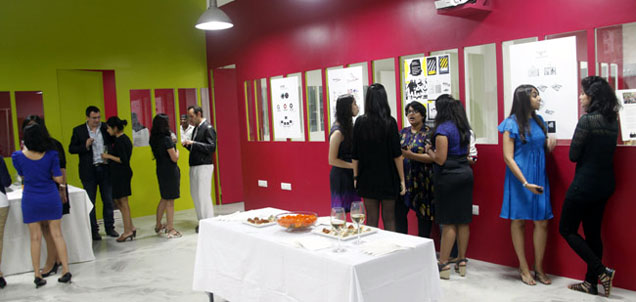
    Students and guests at the formal unveiling of ecole intuit.lab last week


    By Shubhangi Mehta

    École intuit.lab is a design and visual communication French school cofounded in 2001 by Patrick Félices along with Clément Derock and Frederic Lalande.

    The aim of the school has been to produce high quality professionals whose profiles meet the specific needs of the graphic design and visual communication sectors in India, France and across the world. With the newly begun school in India, the syllabus has been especially skewed to meet the professional demands of the visual communications industry in India and to tap the potential that design holds in the country.

    The average fee across various courses is 3.5 lakh annually. The institute will provide the students with high class faculty,French graphic designers which will provide the students an edge over others.

    Mr Ravi Deshpande, co-founder, école intuit lab, India,said, “Over the last few years we have seen a massive talent dearth. I thought of being a part of the solution rather than being a part of the problem. The school has been established to cater to and encourage talented students.”

    École intuit.lab through its students have built solid relationships with over 800 companies in France and other countries.

    The setting up of top French design school, école intuit.lab in Mumbai is a step in the direction of the marked improvement that is required in the field of education related to graphic design, art and advertising.

    Mr Rajesh Kejriwal, founder, CEO, KYOORIUS, said, “India really needs such design institutes; the China government is planning to open 500 design institutions across the country, Indian government should also  try and do something similar as the existing and upcoming institutes are expensive and not everyone can afford them. Hence a lot of talent will still be left behind without opportunities.”

    Ms Preeti Vyas, Chairwoman, VGC, mentioned, “These institutes are extremely important. If we put 20 more such institutes in our country, it will still be a lesser number. The courses are expensive but the kind of inputs, technology and faculty that goes into such institutes, it is impossible to have a low cost institute for such courses until and unless it’s a government funded institute.”

    École intuit.lab has achieved success by incorporating professional exposure in the academic curriculum – a much needed position that has been so far vacant, in the design and art education milieu in India.

    École intuit.lab through its students have built solid relationships with over 800 companies in France and other countries. école intuit.lab’s excellent success rate in finding work placements for its students makes it a real standard setter in vocational training for the visual communications sector.

  • No crisis for magazines in India: Chris Llewellyn

    Chris Llewellyn, President and CEO, FIPP, UK spoke to Akash Raha and Shruti Pushkarna of MxM India at the recently held World Magazine Congress. Mr Llewellyn spoke about the future of magazine, future events of FIPP and about the recently held World Magazine Congress in New Delhi, India.  Federation of the Periodical Press (FIPP) is a worldwide magazine media association, which represents companies and individuals involved in the creation, publishing, or distribution of quality content, in whatever form, by whatever channel, and in the most appropriate frequency, to defined audiences of interest.


    Q: FIPP has been taking up the interest of magazine publishers around the globe. What are the upcoming events that we can expect?

    FIPP exists to help its members construct better strategies and to build better media businesses. And the way they do that, is by finding what is happening around the world. So we come together at various meetings and events, share experiences and share knowledge, and go back better informed. I am really pleased to be able to confirm that next year September 19 to 21, Seoul Korea will be holding the third Asia Pacific Digital Magazine Media conference. And that will be specifically geared towards the Asian market and the hot topics of the time then; and we are talking digitally, so a year from now god knows what they’ll be, but they’ll be on the top of publishers mind. We will bring in some international speakers and we will engage with the Korean market which itself is incredibly digital. So that is an exciting new event next year. On top of that, we will be doing in early November, an American conference, out of Central America. In fact, I can even confirm that it is going to be in Costa Rica, which is a very attractive venue. And again that will be talking about the hot issues of the day, appropriate for the publishers of that territory.


    Q: How do you think the Indian magazine marketing is shaping up?

    The issue at the moment is that we have these two huge forces at play. One is this structural change that the digital revolution is forcing on our thinking and the second one is just the cycle of poor economy. You know, India, which is still booming, still ‘incredible India’, and yet people in India think there is a crisis. But it is not a crisis in India, believe me. This is just the cycle and this will turn around. How long, well, if I knew how long I will be a very rich man. But the truth is, it will change. At the same time, I think the publishers are responding magnificently to the digital changes and realizing that the strong magazine brands that have an emotional engagement with the audiences can be taken to different platforms and it just deepen the engagement. Don’t confuse content with how you deliver content. Content is an art and that content can be on magazines and it can be on any other format that we want it on. But it will still be the magazine publisher’s knowledge of his audience, which is the key, and that’s not going away.


    Q: How do you think digital will affect print?

    Hollywood films have never being bigger – huge blockbusters. Hollywood is making so much more money but not at the box office … their business model has changed. Today, Hollywood is built on the sales of popcorn, the sales of the food and drinks when you visit the cinema. It’s the full cinema experience, not the box office that entails profits. Similarly, in the magazine industry too, we will see a change in the business model, that’s certain. But the medium will still be there because of the strength of the medium. The emotional engagement of turning the pages, fresh magazines, just the way that we represent images is fantastic.  The women’s fashion sector needs glossy magazine too. So magazines are not going away, but the business models will change.


    Q: One can say that the World Magazine Congress has been immensely successful. What are the important points that have emerged from the conference?

    There is still a huge print industry and print is not at all dead. Innovation in print, as we have seen in several publications, is there, creativity is there and it will get more creative. And we have a bigger train set to play with now with all these new mediums and that’s exciting. So print is fine and we have a world of opportunity that is opening up. That is the big take away from the conference I feel.


    Q: What has been the feedback from the World Magazine Congress?

    You know, when we planned this conference two years ago, coming to India and quite a few people were saying ‘that could be interesting’. They clearly meant it in both ways… It could be interesting because it’s exciting and it could be interesting because it is quite a logistical challenge. I can’t tell you how difficult it is to get a visa to come to this country. My word, I am British and we left you bureaucracy which you have taken to another level (he jokes). However, the feedback I have got is really good. The opening reception just got the energy into everyone; The Bollywood dancing, the charisma of Shahrukh Khan. A lot of international people had never heard of him, they do now. I was told that the programmes were fantastic and there was lots of value to it. Many international visitors are extending their stay in India and are going to see a little more of this country. I am going to have the pleasure of seeing the Taj Mahal too. All in all, the congress in India has been absolutely wonderful.


    Watch Chris Llewellyn:

    On the magazine market
    [youtube width=”350″ height=”250″]http://www.youtube.com/watch?v=5rgYpWMJhjU[/youtube]


    Magazine business model might change, but the medium isn’t going anywhere
    [youtube width=”350″ height=”250″]http://www.youtube.com/watch?v=rCMEvZtioqc[/youtube]


    Takeaways from WMC 2011
    [youtube width=”350″ height=”250″]http://www.youtube.com/watch?v=Gtgers8eSAw[/youtube]
  • Outlook to merge Profit, Business titles

    By Akash Raha

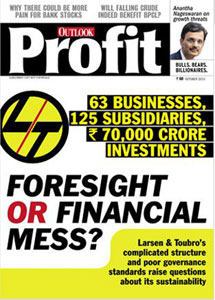
    Outlook Profit is soon to merge with Outlook Business and become one magazine. The merger is planned for January 2012, and has been confirmed by Indranil Roy, President, Outlook Group.


    Mr Roy told MXM India, “We realized that it is difficult to sustain a standalone equity magazine in such volatile stock markets. At the same time we saw a great opportunity to add more of finance, markets and investing in a business magazine. Therefore after a lot of deliberation we decided to merge Outlook Profit with Outlook Business.”


    He further said that the group would aim to put the readers’ choice first in the building of the magazine. When asked what this merger will mean to Outlook Business, he said, “Outlook Business will become a more holistic business magazine. We are currently working on adding other new elements into the magazine.”

  • NDTV’s Indian of the Year awarded, in style

    By Rahul Kishore

    It’s always nice to be a part of the annual NDTV Indian of the Year event and this year was no different.

    Prannoy Roy and team ably led by Barkha Dutt were in their element and handled proceedings with aplomb. That they managed to get all the awardwinners barring Narayan Murthy was proof of their leadership position in the news domain.

    Dr Roy started by a small speech which essentially targetted his own fraternity, the media.He said that the media should not be above the law and stricter rules needed to be framed to handle defamation. These laws should be framed by the judiciary and not the government.It did not find favour with his friends in media but he would still back it.

    Now onto the awards. Dev Anand at 88 and Rahul Dravid at 35 were honoured with lifetime achievement. This was followed by the World Cup winning squad, save Harbhajan and Sachin. Dhoni spoke quite well. When Gavaskar was asked what was the essential difference between the team in 1983 and this one, he said his was better looking! Brought the house down.

    The following award was presented to Pranab Mukherjee and this was followed by one to Nandan Nilenkani.The main award was ‘Indian of the Year’ and it predictably went to Anna Hazare.  Alok Kejriwal received it on his behalf as Anna was on a maun vrat. He answered questions by scribbling on a pad. The afternoon was not without its theatrics with Kejriwal doing a ‘Bharat mata ki jai’ as well as an ‘Inquilab Zindabad’.Quite dramatic!

    What the crowd waits for is Bollywood and they were not disappointed.Shankar Ehsan Loy got an award as well as the team of Zindagi na milegi dobara. Shankar managed to sing as well.Farhan in fact was quite a sport and managed to shake a leg with Barkha Dutt.

    I enjoyed it thoroughly. What were the shortcomings? Well no mention of a jury or selection process and somewhat not as glamorous as last year, but it was a classy event as only NDTV can do.On to next year…

    Rahul Kishore is Senior Vice-President, Vivaki Exchange


    Additional reporting by MxM India correspondent:

    NDTV announced the much awaited ‘Indian of the Year Award 2011’ in a star studded ceremony held in Delhi. Anna Hazare and Arvind Kejriwal were declared as NDTV Indian of The Year 2011 for their exceptional contribution towards the society in the past year.

    Evergreen actor Dev Anand and Cricketer Rahul Dravid were honoured with Lifetime Achievement Awards. M.S. Dhoni received the Indian Heroes Award with several of his team mates.


    Dr Prannoy Roy, Chaiman, NDTV in his opening address spoke about the eventful year gone by being a transformational year for the country. “The Indian media today is the most fearless around the world. As part of the media, we are proud to be country’s fourth pillar. I feel it’s imperative now to have strong and effective defamation laws in the country.” He also added “Media cannot be above the law.”

    Arvind Kejriwal on being felicitated as the Indian of the Year 2011 said, “I would like to dedicate this award to Anna Hazare and people of this country since I believe that every Indian is truly an Indian of the Year.”

    Anna Hazare also extended his gratitude by thanking NDTV on being awarded with the title of the Indian of the Year by writing a message on a paper. He wrote, “If the Government fails to pass the bill then I will be forced to launch the agitation movement again.”(Since Anna Hazare is currently on the ‘Maun Vrat’ in his village – the channel connected with him live through a videoconferencing).

    Also, receiving the Lifetime Achievement award, Rahul Dravid said ‘I am grateful to NDTV for this honour. I would like to thank all my fans for their love and support.’

  • All the World Magazine Congress videos

    David Hill, President & CEO, International Publishing Services, IDG, USA and the new FIPP Chairman


    On becoming the new FIPP Chairman [youtube width=”400″ height=”250″]http://www.youtube.com/watch?v=DLtfwVV8jYQ[/youtube]
    On the outgoing FIPP Chairman, Aroon Purie [youtube width=”400″ height=”250″]http://www.youtube.com/watch?v=eD7YFZdY89M[/youtube]
    On the future of magazines [youtube width=”400″ height=”250″]http://www.youtube.com/watch?v=W3iQuijzoY8[/youtube]
    On the future agenda of FIPP as he takes on as Chairman [youtube width=”400″ height=”250″]http://www.youtube.com/watch?v=jQiqMJPPW_Q[/youtube]


    Tarun Rai, CEO, Wordwide Media, India and new President, Association of Indian Magazines


    On his AIM Presidency and things on top of his agenda [youtube width=”400″ height=”250″]http://www.youtube.com/watch?v=mhPNt1g3SXU[/youtube]
    On the attempt to change the mindset of advertisers and media buyers [youtube width=”400″ height=”250″]http://www.youtube.com/watch?v=ZfANp6vxVQ0[/youtube]
    On launching Good Food [youtube width=”400″ height=”250″]http://www.youtube.com/watch?v=KKPL01uKuDA[/youtube]
    On the prospects of Indian mags becoming international brands [youtube width=”400″ height=”250″]http://www.youtube.com/watch?v=-gdT17SBAtk[/youtube]
    On take aways from WMC [youtube width=”400″ height=”250″]http://www.youtube.com/watch?v=VrNFqocrqNU[/youtube]
    On the potential for mags in India [youtube width=”400″ height=”250″]http://www.youtube.com/watch?v=TLEfoXF1fjk[/youtube]


    Chris Llewellyn, President & CEO, FIPP, UK


    On the upcoming FIPP events [youtube width=”400″ height=”250″]http://www.youtube.com/watch?v=aAWNhbrXZ5o[/youtube]
    On the magazine market, Indian market [youtube width=”400″ height=”250″]http://www.youtube.com/watch?v=5rgYpWMJhjU[/youtube]
    Magazine business model might change, but the medium isn’t going anywhere [youtube width=”400″ height=”250″]http://www.youtube.com/watch?v=rCMEvZtioqc[/youtube]
    On take aways from WMC [youtube width=”400″ height=”250″]http://www.youtube.com/watch?v=Gtgers8eSAw[/youtube]
    On the feedback from delegates on the congress and the Indian experience [youtube width=”400″ height=”250″]http://www.youtube.com/watch?v=PCEmmKmPrdI[/youtube]


    Pradeep Gupta, Chairman & MD, Cybermedia and the outgoing AIM President


    On his journey as AIM President [youtube width=”400″ height=”250″]http://www.youtube.com/watch?v=4xAaeDwh0Pk[/youtube]
    Suggestions on focus points for AIM in the future [youtube width=”400″ height=”250″]http://www.youtube.com/watch?v=CTiINmiMEhQ[/youtube]
    On the PRB recommendations [youtube width=”400″ height=”250″]http://www.youtube.com/watch?v=Q0PjQmZjBqg[/youtube]
    On take aways from WMC [youtube width=”400″ height=”250″]http://www.youtube.com/watch?v=1RxZq6ShZso[/youtube]
    On the need to look at a brand approach and multiple media [youtube width=”400″ height=”250″]http://www.youtube.com/watch?v=ucck–hZd5c[/youtube]


    Vikram Sakhuja, CEO, Group M, South Asia


    On the falling share of AdEx [youtube width=”400″ height=”250″]http://www.youtube.com/watch?v=GSS2j9PQMkU[/youtube]
    On the engagement study [youtube width=”400″ height=”250″]http://www.youtube.com/watch?v=RhdD-vPnStY[/youtube]
    On the future of magazines [youtube width=”400″ height=”250″]http://www.youtube.com/watch?v=eXx1uUtjPz8[/youtube]
    Philip Thomas, CEO, Cannes Lions, UK


    On what advertisers want from magazine media [youtube width=”400″ height=”250″]http://www.youtube.com/watch?v=1i_qUImjYB8[/youtube]
    On the future of magazines [youtube width=”400″ height=”250″]http://www.youtube.com/watch?v=OoX1M6kN9SE[/youtube]


    Tomas Ernberg, Managing Director, Volvo Auto India


    On what advertisers want from magazines [youtube width=”400″ height=”250″]http://www.youtube.com/watch?v=XyYQZEWhdGM[/youtube]


     Juan Senor, UK Director, Innovation Media Consulting
    On the theme of the congress- 360 degree [youtube width=”400″ height=”250″]http://www.youtube.com/watch?v=t_s-VFGfO5E[/youtube]
    On the future of print- no medium ever dies [youtube width=”400″ height=”250″]http://www.youtube.com/watch?v=oepk4aS1uZA[/youtube]
    On the Indian magazine market and future prospects for print [youtube width=”400″ height=”250″]http://www.youtube.com/watch?v=oSYNEZB57KA[/youtube]
    On the need to focus on the content [youtube width=”400″ height=”250″]http://www.youtube.com/watch?v=qdkYu4ZAOdY[/youtube] 


    Kalli Purie, Chief Operating Officer, India Today Group Digital
    On having WMC in India [youtube width=”400″ height=”250″]http://www.youtube.com/watch?v=TOsMAe4x5i0[/youtube]
    On the theme of the congress- 360 degree [youtube width=”400″ height=”250″]http://www.youtube.com/watch?v=BpPeL1grthY[/youtube]


    James Tye, CEO, Dennis Publishing, UK
    On choosing the right app for your publication [youtube width=”400″ height=”250″]http://www.youtube.com/watch?v=wYyVQBfbk0o[/youtube]


    Voxpop@ World Magazine Congress Day 1
    On expectations from WMC and experience in India [youtube width=”400″ height=”250″]http://www.youtube.com/watch?v=KuT6DwoMFMg[/youtube]


    SRK dancing to Chhamak Chhallo [youtube width=”400″ height=”250″]http://www.youtube.com/watch?v=mTxOmOwhVjw[/youtube]


    Pre-event: Mitrajit Bhattacharya, CEO, Chitralekha
    On the upcoming WMC [youtube width=”400″ height=”250″]http://www.youtube.com/watch?v=w4wq2LulVWc[/youtube]
    On the prospects of business transactions on the sidelines of the 38th FIPP World Magazine Congress [youtube width=”400″ height=”250″]http://www.youtube.com/watch?v=VMgjob9NwfU[/youtube]


    Pre-event: Ashish Bagga, CEO, India Today Group
    On hosting World Magazine Congress & AdAsia, two broad format events in the same month [youtube width=”400″ height=”250″]http://www.youtube.com/watch?v=T7zC5_yLkbs[/youtube]
  • First on MxMIndia: Pioneer bags BEST tender

    By Nibha

    Pioneer Publicity has won the BEST (Brihanmumbai Electric Supply and Transport Undertaking) tender for advertising rights on single and double-decker buses. Established in 1873, BEST operates one of India’s largest fleet of buses.


    The company has won the rights for three years – 2011-14 – for about 4050 old buses in all.


    Confirming the same, Mr Sunil Vasudeva, said on the win, “We worked for BEST from 2002-2008,after that the business went to Bright Outdoors. Now, we have the business again with an account size of 85 crore.”


    Prior to this development, Bright Outdoor had owned the ad rights to the buses, but, as reported by MxMIndia, due to heavy losses it had withdrawn from the tender.

  • First on MxMIndia: Slowdown forces Bright Outdoor to give up BEST bus biz

    Story: By Nibha


    Bright Outdoor Advertising, Mumbai’s premier OOH Media owner has withdrawn itself from advertising on Mumbai’s BEST (Brihanmumbai Electric Supply and Transport Undertaking) buses and thus a fresh tender will soon be up for bidding in the next month.


    Bright Outdoor CEO Mr Yogesh Lakhani confirmed the development to MxMIndia, saying, “Due to huge losses, we’ve given it up.” Industry sources tell MxMIndia that since the amount bid to win the tender in 2010 was very high, Bright found going the tough given the slowdown in adspends in the outdoor domain.


    It may be noted that in November 2010, Bright Outdoor had won a 3 year tender from Pioneer Publicity for an upwards of Rs 120 crore for all the non-airconditioned BEST buses in Mumbai

  • First on MxMIndia: NDTV elevates Barkha Dutt and Sonia Singh

    By A Correspondent


    News television major NDTV has announced the elevation of group editor (English) Ms Barkha Dutt and senior managing editor Ms Sonia Verma Singh.

    Ms Dutt will now will be Group Editor across NDTV and President of the Editorial Board.  Ms Singh will be NDTV’s Editorial Director and President of NDTV’s Ethics Committee.

    Meanwhile, NDTV has also instituted an Editorial Board with Ms Radhika Roy as Chairperson. The Board will be responsible for all standards and matters editorial across NDTV. It will meet once a month to take stock of all editorial issues, including of course ratings. The details of the Board, its remit and its exact constitution, which will include the managing editors of all channels and the head of Convergence will be annouced shortly. On the other hand, the Ethics Commitee: will develop consistent standards and oversee all ethical issues across the organization.

  • Can elite F1 supplant cricket?


    By Tuhina Anand

    with inputs from Rishi Vora and Shubhangi Mehta


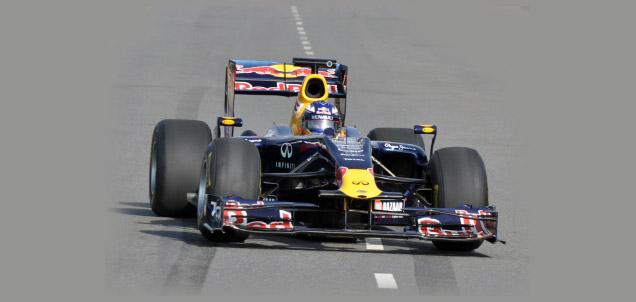
    With so much hype surrounding the Formula One Grand Prix at Buddh International Circuit slated to take place at the end of this month in New Delhi, it makes one wonder whether F1 is the sport that can be an alternative to the cricket-crazy nation of India.  So while we have been talking to a cross section of the industry to understand how bullish are they on the F1 and one thing that has emerged clearly is that cricket will always be “the” sport that will rule Indians and other sports, be it hockey, tennis or F1, will remain the poor cousin. Thus cricket will be the game that will be raking in moolah for both advertisers as well as broadcasters, and not to forget the players themselves with multi-million endorsement deals.


    Mr Harish Bijoor, CEO, Harish Bijoor Consults, is clear that there is no sport that can kill cricket, as it is a very democratic game that anyone with a bat and ball can play. But sports like F1 are restricted to a few. Also, he is of the opinion that F1 is an upper end/niche brand, hence the advertisers like Mercedes Benz would benefit from being part of the event but not Uncle Chipps!


    Niche is a word that well defines F1 and is what has emerged from MXM India’s interaction with various industry leaders. Mr Arvind Sharma, Chairman of India Sub-Continent, Leo Burnett too echoes the same sentiment. He said, “Cricket is a mass sport in our country. I do not think that F1 can take over cricket in any which way. The brand that are associating themselves with F1 are a niche brand which cater to a specific audience, which can also be called the upscale society.”


    There are others too like Mr Sambit Bal, Editor, Cricinfo who vehemently says that F1 caters to an absolutely niche market and for F1 to replace cricket in popularity, even after 20 years, is far far-fetched. Mr Ayaz Memon, veteran journalist, reasons: “F1 is an urban sport watched by an elite audience. The popularity of the sport is growing, no doubt. But, I don’t think it’ll kill cricket. India is a cricket-crazy nation, so very unlikely.”


    In fact a broadcaster, who refused to be identified, puts its bluntly, “No, that’s very unlikely to happen. India is a one-sport country. F1 does have some avid followers, but are outnumbered by people in India who think the game of cricket is a religion and not just a sport.”


    As earlier mentioned by Mr Bijoor, the appeal  of cricket lies in it being democratic in nature. One can see young and old wielding the willow in every gully and mohalla hence truly being the sport of the nation. That explains why sportsperson from any other game are still struggling to gain prominence in India barring few that could be counted on fingers but that doesn’t apply for cricket where the entire team and the lead stars find their way to mint money be it through endorsements or even taking up commentary post their innings. Plus the fan following for someone like Tendulkar or MSD is something no other sportperson can even dream of. Rajeev Raja , NCD, DDB Mudra Group  goes to the extent of calling impossible that a sport can replace cricket in India. He said, “The mass appeal that cricket has cannot be compared to any other sport in India. It appeals to almost 900 million people whereas F1 may not even appeal to 100 million people, its only a niche segment that this sport will appeal to and hence we will find similar advertisers advertising with the sport.”


    While it is agreed that cricket will always reign supreme in India and F1 is seen as the sport for the elite niche, one thing can’t be denied – that the hype around the Grand Prix is unprecedented. In fact it is this hype that is making one think that probably if not an alternative but an able competition to cricket is here. Internationally, F1 rakes in the moolah and is very popular. Mr Dhunji Wadia, President, Everest Brand Solutions said, “It has been widely believed that we are slow starters, but once we gather momentum, we race to the finish line quickly. A lot of young people in India want to have an alternative to cricket and perhaps Formula One is the right sport.  The statistics on sponsors and advertising revenue are sounding promising for the first event.  But there is still some way to go and it would at best be an urban phenomenon.  Having said that, no other sport has generated as much enthusiasm over here besides cricket.”


    So at least for starters the prospects for F1 are promising. Mr Darshan M, CEO – I1 Super Series at Machdar Motorsports Private Limited, a company that is looking to bring the IPL format in motorsports to India, explains cricket and F1: “The comparison is like sunrise and sunset here – both are beautiful in their own way. Motorsports is globally very popular and F1 definitely is an opportunity among youth for whom speed is thrill. In fact, the craze can be gauged from the massive turnout in Bengaluru recently to see Lewis Hamilton show his moves. I think there is enough space for another sport other than cricket to make a name in India.”


    Picture: Fotocorp

  • Don’t be scared of the Dolly Bindras in media: Shishir Joshi

    By Shishir Joshi


    This is not in defence of the media. As you read along, you may realize it. In fact, it is quite to the contrary.

    Foremost, let me lay down some of the allegations against the media and some of the prevailing perceptions;

    That the media is a king-maker. That it is corrupt. That it is far away from the realities impacting the society. And that it thrives on sensationalism.

    Partly, it is the media, itself, which is to blame. For the corruption. (Bhrasht-aachar; read, corrupt behaviour.) And for the perception.

    Let’s start with the most recent one. Media as the king-maker. Allegations which have shattered the holier than thou image. And as eminent journalist Arun Shourie put it in a TV show, “Time and again instances have come up where journalists themselves have been responsible for the betrayal.”

    Many, largely unrelated to media, strongly believe media is corrupt. Unfortunately, what they mean by ‘Media’, could really be a handful, but, those who get branded, are just any and everyone who is associated with ‘media’.

    So, to begin with, here’s a dekko to clarify some prevailing misconceptions.

    Very few people really know and understand how a news organization operates. In the fifty-odd people who work, in what is seen by the outside world as the ‘powerful’ editorial of any news organization, a little less than half, say twenty or so, are what everyone knows as Reporters (working Journalists in the real sense).

    They are the ones who have a contact with the ‘outside’ world. Or, that, the outside world really knows about. (The other non-reporter face known to the high and mighty could be the editor, but, increasingly, it is the CEO or the Marketing /sales head who is a far more ‘popular’ face.

    Within those twenty reporters, barely four or five such Journalists deal/interact with those in High places; by this, I mean, with Political heavyweights (by Reporters covering the political beat) film stars (mind you, not any film start, but only the big five of Hindi cinema) and Sports, again, here not just any sport or any sports heavyweight, but Cricket an d the mighty Sachin, no less.

    So now, of an approximate 50 odd, we have come down to the top five in any Editorial, who have the opportunity to rub shoulders with the Rajas (not to be mistaken with Spectrum Raja. And within that, on a rare occasion will one odd Journalist really mis-use his seat or position.

    All this also depends on the reach and impact that the Media house commands, in circulation or readership. (NDTV among policy makers and Hindustan Times in Delhi do count for being heavy weights…umm… what a coincidence). Needless to say, a fancy designation helps.

    So if a Managing Editor of one among many many many media organizations is found to step into grey area or is caught on tape, mediating or promising solutions, this could be just ONE he or she caught in the act isn’t it? Is it then fair to brand all of media as corrupt?

    It may be unfair. But the guilty, is the media itself. And some of these journos in power. And the perception that they have created.

    How often have we seen PRESS stickers adorning two wheelers and cars of media persons. Any self respecting journalist who holds a valid identity card from his organization will tell you that these stickers are not required. Not required unless you are using them to ensure the traffic cop does not stop you.

    Maybe those using these stickers do not know this, but the ‘public’ and the traffic police surely believe this is the reason.

    To say press stickers are by themselves to blame, would be highly unfair.

    We also have a mushrooming number of ‘king-maker’ journalists. Who throw names, host parties and ensure that the bigwigs attend their private dos.

    Rarely does the ‘King’ , either a big-ticket politician or a film star, not oblige. Graciously, he ensures that the journalist is addressed by his first name, and a few back slaps later, the powerful man is back in his den.

    Only a handful would cringe at the thought of a powerful and popular name walk into your living room and back-slap you, chat up your family and share a chai with you. What the action leaves behind is you, the journo beaming from ear to ear, like a fat cat having stolen a bowlful of cream, with the rest of your family, friends and neighbours in a daze.

    Mind you, there is nothing wrong in the high and mighty visiting you.

    But, where the hacks go wrong, is when they start believing that powerful are in love with you the person and not you the Journalist. I promise you, it can’t be further away from the truth, in most cases.

    And as you bathe in the halo of the big one calling you by your first name and your family and some friends gazing at you with renewed affection and respect, you fail to see the rest of the neighborhood, who see you as an ass-licker. That is perception, as it gets created.

    You, in fact are an ass with a big bloated ego, refusing to see the writing on the wall. “You are so dear to me,” says the politician and you glean with pride. What you don’t read between that line is he muttering under his breath that “I accept you only with your designation and organization.”

    The power of a journalist, in today’s age (unless his good deeds speak volumes) is like the hair on the head, the tooth in your gums and the nail on your fingers. It is valued only when it is in its place. Worthless when chopped.

    There was a time when Journalists wielded the power of the pen. The power, by what they wrote. Based on facts and fair play. That was power. Real power laced with absolute respect.

    Today, the power has corrupted. Absolute power (based on a belief that he is the king maker) has corrupted absolutely.

    The far and few, but absolutely corrupt journalist is powerful not by what he is capable of writing, but his ability to WITHHOLD information. The power to conceal a story, often at the cost of a favour, or as seems in the case of the Radia tapes, through an alleged TRADE-OFF makes the corrupt journalist in the lot nothing less than a white-collared extortionist.

    But you hate them, you call them names and yet, you do not speak out against them. What is it that scares people when it comes to speaking up? Or speaking out? Unless it is in hushed tones? Politicians have been hurling abuses at each other, taking names, in the spectrum scam. But no one has dared name the journalist(s) or media houses at all. Only after social media (and later a few magazines) began talking about it, have names begun cropping up. The role of the journalists is beginning to get scrutinized.

    While social media has been active in this case, mainstream media has been largely mute. Be kind to thy comrades for they may one day come and lord over us. Is that the reason why?

    But what stops the rest of the world from talking about these names in public? Two reasonings come to my mind.

    One, Industry captains do not wish to rub India’s much watched English channel(s) and powerful newspapers the wrong way. “I am seen on it, quoted by them and would continue wanting to be seen there” is what they believe. Any rubbishing of the network, or its key stake holders would mean, being blacked out.

    The second, and more real fear is of an unwarranted backlash. I call it the Dolly Bindra effect. Nobody wants to rub Media big-wigs the wrong way. However wrong they may be. They may be paper tigers, but tigers no doubt. Their byte is more poisonous than the (non existent) bite. They have a habit of bouncing back and, like the boxing cushion, slamming right into your nose.

    So, however much you dislike them, hate their guts, have evidence of their alleged wrongs or have taped conversations of political coziness, you would rather shut up and lead your life.

    After all, we all know what happened to Shweta Tiwari and Samir Soni on BiGG Boss season four when they took on Dolly Bindra, right? Shweta was stung in the face, Samir was ousted. And the one who got maximum press, was Dolly, who returned to the BiGG BOSS house with a bang.

    PS: Remaining quiet has never been a solution. Mute spectators to a crime too, are as much guilty as those perpetrating the crime.

    It is time you speak up against those, whom you believe are corrupt under the garb of being honest. It is important too. For others, Citizen Journalism, or social media, is a solution.

    For, isn’t it a commoner like you and me who exposed the Adarsh scam or the CWG or the initial lid of the various scams in recent times?


    Shishir Joshi is the co-founder of Journalism Mentor, and till recently was the Group Editorial Director of the Mid-Day group of publications.
  • Conde Nast Traveller hits many highs

    By Akash Raha


    Conde Nast Traveller completed its first anniversary in the Indian market. The magazine was launched in India in October 2010. The anniversary issue of the magazine is on stands at a price point of Rs 100. Conde Nast Traveller is the third magazine from the group in India, after Vogue and GQ. Whereas Conde Nast Traveller is concerned, it is the sixth international edition of the brand.  Even though Traveller’s stay in India has been only for one year, it has been there for a long time in UK and US. MxM India got in touch with Divia Thani Daswani, Editor, Conde Nast Traveller to know more about the magazine’s year-long journey.


    Q: Conde Nast Traveller has completed one full year in the Indian market. How has the journey been so far?

    For my part, I can say this has been an incredible first year for Conde Nast Traveller! When we were launching it, we believed this would be a very niche magazine with a print run of about 15,000 copies. Our print run for the anniversary issue is 40,000 copies, just one year in.  It’s a wonderful reflection of the enormous passion for travel that we have in this country—and also the sophistication of the Indian traveller. But numbers aren’t the only thing that matter: the feedback has been tremendous.


    Q: How do you think Conde Nast Traveller has fared vis-à-vis its competitors in India?

    Readers follow us with an acute eye; they read us closely; they love the visuals; they take our recommendations seriously. More so than any other publication I know, Conde Nast Traveller is a magazine people save for years—it doesn’t become irrelevant or less interesting when the month ends. Finally, I’m very proud of the fact that some of the greatest writers and photographers in the world—from Suketu Mehta, Pico Iyer, Amitav Ghosh and William Dalrymple to Julien Capmeil and Prabuddha Dasgupta—have worked with us so enthusiastically. It’s the power of travel, really. It brings out the best.


    Q: What are the content and product innovations you have done for the anniversary issue?

    The anniversary issue is especially close to my heart because it’s our first India Special. This is an idea we’ve been working on for many months; in fact, ever since we started doing our research back in January 2010. We discovered that there’s a collective desire among discerning travellers to discover more of our own homeland. It seems the further away we go, the more we jet-set around the world, the greater the longing to explore India. So this anniversary issue is a tribute to our ‘incredible India’. It’s full of secrets and surprises from each corner of the country, from New Delhi to Tamil Nadu to Bihar to Mumbai. Even the international destinations we’ve covered have been captured by Indian voices. The lineup in this issue is superb; it’s been the collaboration of the great talent and hard work of dozens of people across the world, from Amitav Ghosh in China, Hari Kunzru in Los Angeles and Rashmi Uday Singh in Paris to Michel Figuet in Delhi, Julien Capmeil in Bihar and Ruskin Bond in Mussoorie. And of course, there’s a healthy dash of glamour, with Frieda Pinto, Tina Ambani and Rahul Khanna! Another favourite of mine is the photo essay featuring some of our favourite unseen images from the first year of Conde Nast Traveller—images so glorious we couldn’t help holding on to them. There are other innovations, of course, from a printing and production perspective, but to me, this issue is special because of the dozens of gems inside.


    Q: What are the other campaign initiatives you have undertaken around your product to highlight your brand among others in the space?

    I think the focus has been to create a magazine that appeals and talks to the affluent well travelled  Indian audience which is really been the biggest success story for us. Apart from this we have focussed on a targeted marketing plan via outdoor in key locations, targeted subscriptions program and of course working on the signature event which is the Conde Nast Traveller Reader Travel Awards. We also have a program to reach out to the key influencers in the industry by hosting small events.


    Q: What do you think about the travel magazine space? Do you see it growing in the years to come?

    As far as the travel industry is concerned, the future is India and China. Outbound travel from India is set to grow to 50 million people by 2020. Already we are among the top spenders in the world when it comes to hotels, shopping, food and nightlife—and of course, destination weddings!


    Q: What has been the response to your anniversary issue?

    The anniversary issue is already out and has received an extremely positive response on the newsstand. The cover price continues to be INR 100.

  • Zippo lighting up India. Sales could double in 5 years: David Warfel

    By Shubhangi Mehta


    Mr David Warfel, Global Marketing Director – Zippo Manufacturing Company, is a marketing professional with over 25 years of experience. Mr Warfel oversees the development and management of the Zippo brand worldwide. Responsibilities include the direction of all advertising and marketing communications, product management, trade and consumer relations, and product and retail development.


    The Zippo Manufacturing Company’s products are sold in over 160 countries worldwide and Zippo is one of the most highly recognized and respected global brands. The famous Zippo Windproof Lighter has been manufactured in Bradford, Pennsylvania since 1932. Since that time almost 500,000,000 lighters have been produced and sold.


    In addition to Windproof pocket lighters and fuel, Zippo markets a wide range of consumer products, including candle and utility lighters, writing instruments, watches, fragrance, and outdoor speciality products.


    MxM India caught up with Mr Warfel for a discussion on Zippo and its growth trajectory and plans in India.


    Q: How has growth been for Zippo when it comes to Indian market in the past 2.5-3 years?

    Last year, Zippo witnessed a 69 percent increase in sales volume in India – one of the fastest growing markets for the brand.

    We currently operate in shop-in-shop formats across the country and also plan to open up a Zippo branded store. This shall happen once the entire range of accessories and brand extensions are launched.


    Q: What kind of market do you see India as?

    The brand has been present in the country since 2008 and has seen a strong increase in popularity over the last few years. India is a key market for Zippo. The country views Zippo as a brand, not a product.


    In the last two years, India has become a significant market with great potential and we expect it to be one of the key players in the international market. The growth in India is predicted to be more than double in the next five years.


    Q: Which markets do you consider the best in terms of scope and development when it comes to growth?

    There is a 90 percent brand awareness globally of the Zippo brand. Forty percent of our business comes from North America. Currently, China is our major international market followed by Japan. If the success in the Indian market continues we expect sales to reach similar levels to China in the not-too-distant future.


    Q: What do you think are the attributes that help a brand like yours click and connect in the market especially India?

    Zippo is an iconic American brand. It is aspirational. The lighter is ingrained in the fabric of both American and global culture. With strong India and US connections, constant global traveling, inflow / outflow of Indian students from the US has transferred the qualities / aspirations of an American brand to India. Attributes like these truly connects Zippo with India market making the brand relevant to our target audience.


    Q: How is the consumer behaviour different in Indian markets when compared to global consumer?

    Indian consumer confidence has been consistent during post recession period. The overall optimism pervading the country finds Indians open to spending a little more than they did in the past two quarters. There is also a high level of acceptance, openness to new ideas and cultures, therefore, more confidence towards testing new products.


    Q: What is your growth strategy henceforth?

    In the last few years Zippo has begun to expand its product range into the lifestyle space focusing on men’s accessories and outdoor products. India is the single most important focus right now. We have increased our marketing spends ten folds worldwide in the last 10 years.


    As we are diversifying the product category to lifestyle products and accessories, you will soon witness a lot of the below mentioned products in India. Our windproof lighters have been performing phenomenally well in the India market and are really helping to establish the brand amongst our target audience.


    Zippo’s product line up is divided under four heads:

    Lighters & accessories – Windproof lighters, Zippo BLU, Pouches, chains, ashtrays, lighter fluid, butane gas, flints and wicks

    Home, Hearth & Patio – Candle lighter

    Outdoor line – Hand Warmer, flex neck, emergency fire starter, campfire starter, Windproof lighters

    Men’s lifestyle – Writing instruments, leather goods, watches and fragrance


    Q: Please tell us about your foray into the digital medium and experiments with social media.

    In 2011 Zippo launched a global Facebook page and also Twitter accounts in key markets in order to interact with our core consumers. The Zippo Facebook page now has around 200,000 fans, a number which is growing daily.


    Q: How do you plan to capture your target audience?

    The product range from Zippo has been well categorized for both men and women. We are selling through shop-in-shop formats and regularly engage customers through interesting marketing initiatives. Also, with growing music trends worldwide, the brand Zippo has also built up a strong association with rock music. The brand has been able to play a prominent role in key live rock music festivals across Europe, US and also in India.


    We recently sponsored the Harley Rock Riders concerts in India and were thrilled to see avid Zippo fans waving their lighters in the air in time with the music – a classic Zippo moment!


    We also have Zippo owned music platforms, the Zippo Hot List Tour, in China and Korea as part of our Zippo Encore music programme. This programmme is aligned with supporting emerging rock talent within the local market.


    Q: What are the key challenges before Zippo?

    As legislation gets stronger, it is likely to affect the business and that is why Zippo as a brand has diversified itself into various lifestyle product categories, transferring the Zippo brand’s key characteristics across all new products.


    Also, another major challenge is that of counterfeit products. We are ever vigilant in protecting our intellectual property and have a legal team dedicated to tackle counterfeit issues.


    Zippo enthusiasts know that authentic Zippo lighters carry the Zippo bottom stamp and the Zippo trademark stamped on the lighter insert. The famous Zippo Lifetime Guarantee also accompanies every genuine Zippo lighter.


    The counterfeit goods are both locally and internationally sourced. It is a vicious market for any premium brand and the best way to deal with them is to stick to company guidelines while making any purchase.