Category: NEWS

  • NBT goes hyper-local at Greater Noida

    By Akash Raha


    Navbharat Times (NBT) of The Times Group is going to launch a special eight-page local newspaper in Greater Noida today. The eight-pager will be distributed in Greater Noida along with the main NBT newspaper. There will be no change in the price point and the newspaper will be available with the added pages at the Rs 2.50. It is noteworthy that NBT has such hyper-localized content for other satellite-cities to Delhi, namely Ghaziabad, Gurgaon, Noida and Faridabad.

    Speaking about the idea behind NBT’s strategy towards creating hyper local content for consumers, Aman Nayar, Brand Head, NBT said “While the main product Navbharat Times (NBT) has the pulse of overall Delhi-NCR (or as we see ‘Greater Delhi’) there is a need to cater to the needs of each of the 4 NCR cities, as each of these cities are rival state capitals in their consumption or economic activity. Hence, we built on the concept of a dedicated local newspaper with local hard news but the focus being on development and growth in these cities. In sheer quantity we would be more local than the competition in fact, but rather than being sensationalist in playing up petty crime or local politics, our focus is the growth opportunities and where there are gaps, to drive change in these boom towns. A lot of our campaigns in these cities have been ground-level connect and have yielded more than encouraging response.”

    After the success of the group’s English newspaper, The Times of India across India, NBT had scaled down its newspapers to two editions – Delhi and Mumbai. However, about four years back, with localized newspapers it began building strategic presence in Delhi and NCR. The move helped them to penetrate in tier two and tier three cities. According to Mr Nayar, it has gained good traction with the advertisers too. Moreover, with ‘NBT Greater Noida’, the company will certainly garner robust local advertising.

    “Greater Noida is a step towards creating meaningful and relevant content for Greater Noida. There has been a marked jump in economic activity centering around the Formula One race. At the same time, as the recent Noida Extension episode showed – The Greater Noida readership’s concerns and thinking may have variation from that in Noida. And so now we have launched Greater Noida’s own local newspaper ‘NBT Greater Noida’. In fact in Ghaziabad, we observed that it was a case of two cities co-existing – the trans-Hindon Area (closer in thinking to Delhi than UP) versus Old Ghaziabad. Therefore, we created two splits of NBT Ghaziabad, one for each city,” added Mr Nayar.

  • Engagement Study may solve magazines’ measurement blues

    By Akash Raha


    Advertisers and media agencies will have more options to choose from in the print industry, as the much-awaited Engagement Study is set to be released at the World Magazine Congress 2011 in New Delhi next month. Mr Pradeep Gupta, President, Association of Indian Magazines (AIM), confirmed this development with MxM India.

    The apex association of magazine publishers is delivering on its promise of the Engagement Study on time. Mr Mitrajit Bhattacharya, General Secretary, AIM informed MxM India that the research for the Engagement Study was conducted by Quantum and IMRB, whereas Quantemplate coordinated the project on behalf of AIM. The research methodology of the study was based on desk research by Quantemplate, qualitative survey (20 one-on-one interviews of 2.5 hours each) by Quantum preceded the large scale quantitative survey (Sample Size: 3600 +, across 10 centers) by IMRB.

    Commenting on the study’s efficacy for the industry, Mr Bhattacharya said, The magazine industry has never been represented well by the large readership surveys like IRS, which are largely designed to cater to the needs of the dailies. The data for magazines has been less robust and highly fluctuating. More so, these surveys do not attempt to cover qualitative dimensions like reader involvement, lower clutter levels leading to higher attention, recall or even the image building capability which are the strengths of the medium. The Engagement Study will be a highly credible tool for the advertising fraternity to understand the engagement of consumers with various media and to evaluate the level of engagement of magazines vis-vis other media. These insights will help the advertisers immensely in choosing a medium like magazines in absence of sound readership data.

    He further added, But let me clarify at this stage that this survey is not attempting to capture any data at an individual title level. It is a very robust survey with a huge sample size, both qualitative and quantitative, trying to address the issues of the magazine industry as a whole, well represented by all major genres and languages.


    The AIM had announced during IMC 2010 its plan to conduct the Engagement Study for magazines, which could act as an alternate source of data for advertisers, after advertisers and media agencies expressed their concerns over the measurement issue that has plagued the magazine industry for long. The study is expected to solve the problem of qualitative measurement that the print industry faces, especially in the magazine domain.

    We have great work available on this subject in countries like the US, UK etc. However, the complex nature of the magazine market like India, with so many titles in so many different languages, makes this survey a unique and challenging one, concluded Mr Bhattacharya.

    Studies have shown that magazines have a completely different level of engagement. Magazine reading is very immersive and concentrated, much more than other mediums. Hence, the study is expected to be a boost for the advertising industry, giving them more options and choices to advertise effectively and efficiently.


  • Luxury mkt grows 20% despite slowdown signs

    By A Correspondent


    The Indian luxury market grew at a healthy 20% during last year, reaching a size of $5.8 billion, despite signs of the reemergence of a global slowdown, says a CII-AT Kearney report on Indian Luxury.


    In 2009, the luxury market in India stood at $4.76 billion and is expected to grow to $14.7 billion by 2015, notwithstanding the infrastructure and regulatory constraints, says the study, which will be unveiled at the CII-ET Luxury summit in Delhi on Tuesday.


    Some segments of the market, of course, have seen runaway growth, compared to others. The jewellery segment, for example, has seen a growth of 30% in the last one year due to increasing prices of gold and diamond.


    The luxury electronics and car segments have seen a growth of above 35%, while fine dining has seen a whopping 40% growth in this period. All of these segments have seen higher growth than expected in the last one year. Apparel and accessories, watches and personal care have also seen robust growth, between 24-30%.


    The only two segments that lagged last year are realty and yachts . The rapid growth in luxury sales can be attributed to the fast growing affluence in the country.


    According to a global affluence study by research firm TNS, India has 3 million affluent households, defined as those with more than $100,000 (around Rs 50 lakh) of investable surplus. In a report released last month, Swiss wealth manager Julius Baer forecast that the wealth of HNIs in India, with assets of $1 million or more, would more than double to 4,03,000 by 2015.


    “Skepticism is being replaced by an increasing sense of buoyancy and promise in the future potential of the market. Consumers are accepting and adopting global trends much faster than anticipated,” says the report.


    Luxury players report that they are making money at the store level, which means that the model is proven and now it is a question of adding growth capital to gain scale.


    Source:The Economic Times

    Copyright © 2011, Bennett, Coleman & Co. Ltd. All Rights Reserved

  • FMCG biggies go America to co-brand wares

    By Sarah Jacob & Meenakshi Verma Ambwani


    As Tintin, the boyish hero with a slick mohawk and do-good spirit, breaks out of the comic strip into a 3D animation film in November, brands in India too have begun to partake in the Hollywood adventure.


    Consumer goods companies in India and American film studios have found value in each other’s consumer base, leading to movie mania on the retail shelf. Chocolate Junction, which made chocolates printed with New Delhi monuments for the Commonwealth Games, is creating chocolates wrapped in Tintin characters.


    Holding the licence for Paramount Pictures’ The Adventures of Tintin: The secret of the Unicorn, it plans to retail at multiplexes and supermarkets just as Sweet Dreams will make leisure wear for children and Funskool India will develop puzzles around Tintin characters.


    Or take perfume firm York Transnational, which adapted Archie comics to eu de toilette (EDTs) and eu de perfumes in India recently. It is in talks with Sony Pictures’ India agents Bradford License to launch EDTs for Men In Black-3 across malls and its Perfume Station retail chain next year.


    In such agreements, the licensee pays a royalty based on the sales it projects for the extension of the movie into a particular product category. These partnerships typically extend for 10-12 months, leading up to the film’s release and after.


    While Bangalore-based Chocolate Junction is betting on the eyeballs to grow its profile and distribution into a national chocolatier by creating products, others are cobranding existing products with films to generate higher sales by breaking through the competition clutter.


    Studios, in turn, gain by engaging with viewers and potential ones off screen. “It gives us an edge over other brands and give consumers another reason to buy,” said Sushil Sushant, Godrej Tyson Foods’ associate vicepresidenty -India. The frozen foods company entered into a strategic partnership with Walt Disney for brand Yummiez.


    It not only co-branded the party packs of its dinosaur-shaped nuggets with Toy Story-3 last year but has also tied up with Cars-2 this year. The sales of the packs have grown 70% over the past year.


    “Since Hollywood movies are being well received at the box office, brands are beginning to view it as an effective marketing medium,” said Pritie Jadhav, COO of film marketing arm of Percept, P9 Integrated. Hollywood movies contributed about 5% to the total box office revenues in India in 2010 from less than 1% a few years ago, trade analysts said.


    Hindustan Unilever too tied up with Disney’s Tangled as Rapunzel’s story tied in with Clinic Plus shampoo’s benefit of long and strong hair. “Hair clips (bundled with the bottles) had immense badge value for young girls,” said Piyush Jain, category director (hair care), HUL, adding that it influenced purchases by parents and was evident in both the sales and market share for the period.


    In fact, much of this increase in licensing and merchandising opportunities is because of the fast growth of the retail industry in India, said Divya Pathak, Sony Picture Entertainment’s marketing director.


    Horlicks-maker GlaxoSmithKline (GSK) too bet on the magical world of Narnia by featuring the film’s characters on its biscuit packs. And when the rotund Kung Fu Panda landed his menacing kicks for the sequel, GSK found synergies between the Panda’s noodles restaurant business and its brand Foodles.


    It bundled a Kung Fu Panda fork, spoon and bowl with Foodles packs. “Our core consumers are children and such films help us talk to them in a language they understand,” said Puneet Das, GM, Horlicks. He said superhero movies tie in very well with their promise of making children taller, stronger and sharper.


    In fact, marketing spends of Hollywood movies are growing at faster pace than Bollywood movies, said Navin Shah, joint MD of film branding company EMC Worldwide. It has grown from a few lakh rupees in the past 2-3 years to close to Rs 1 crore today.


    This is also because Hollywood films are now being launched in a larger number of prints. “As studios focus on dubbed languages, we are spending higher to reach out to audiences across the country and that has meant more cobranded promotions,” Vivek Krishnani head-marketing distribution and syndication Fox Star Studios, said.


    Source:The Economic Times

    Copyright © 2011, Bennett, Coleman & Co. Ltd. All Rights Reserved

  • SRK does a ‘chhammak chhallo’ as World Mag Conf gets underway in style (Text & Video)


    By Akash Raha (text) and Shruti Pushkarna (Video)


    The 38th FIPP World Magazine Congress began on October 10 in New Delhi with huge fanfare. The first ever India edition of the World Magazine Congress is being attended by over 600 delegates from 50 countries (including India). The biggest names of the media fraternity, from India and internationally, were present on the inaugural day of the WMC which is scheduled to last till October 12.


    The welcome address was given by Mr Aroon Purie, Chairman of FIPP and Chaiman and Editor in Chief, India Today, India along with Mr Chris Lewellyn, President and CEO, UK. Mr Purie said, “It is indeed a matter of pride that India was showcasing the FIPP WMC 2011. The conference is possible because of the hard work of FIPP and AIM members. We welcome you all to, what the advertisement slogans rightly call ‘Incredible India.”


    In his short note Mr Lewellyn said, “There are three reasons why it is going to be a great congress. Firstly, the Indian magazine association has worked very hard to put it together. Secondly, it is for all our sponsors, especially UPM. Lastly, it is for you (the delegates) for whom the congress is going to be successful.” He concluded by saying that “FIPP World Magazine Congress is a place where some of the biggest deals are forged”. He termed the interactions at the WMC the “speed dates” of the business world.


    [youtube]http://www.youtube.com/watch?v=mTxOmOwhVjw[/youtube]

    Thereafter, Bollywood actor Shahrukh Khan said that being on the cover of over 8000 issues of magazine was a privilege, but his tryst with magazines had come much earlier when he was not as famous. “As a child, magazines were the window of my world,” he said, “long before I was on them.” In an enjoyable and witty talk, Mr Khan said it began since the time he saw Samantha Fox on the cover of People magazine when he was still very young. He asserted that even though life is becoming faster with the digital age, “this form of writing is not going away; not in our lifetime.”  He emphasised his faith for magazines and whished magazine publishers from around the world luck, as it was a vital medium. Mr Khan thereafter entertained and enthralled the crowd with this dance performance on ‘Chamak Challo’, the song from his upcoming movie Ra-One.


    Apart from dancing to contemporary Bollywood numbers, dance troupes presented classical Indian dance forms and Bhangra. This was followed by a networking session over dinner.

  • Media tigers roar back at Minister Soni


    By Ritu Midha


    Rewind to Anna Hazare’s Anti-corruption Movement. A senior Congress minister had then reportedly stressed on the need to curtail exaggeration in media reports.  News editors had expressed anger and dismay when MXMIndia spoke to them.

    Read Will Anna Wave Link to Media Curbs? Link to: http://www.mxmindia.com/2011/09/will-anna-wave-lead-to-media-curbs-2/

    However, the Government did not really take any such measures – and all was well until Friday, Ocober 7, 2011. (see MxMIndia disclosure below)

    A proposal for amendment In Policy Guidelines for Uplinking/Downlinking of TV channels has been approved – and among other things this approved proposal  states,

    ‘Renewal of the permissions of TV channels will be considered for a period of 10 years at a time subject to the condition that the channel should not have been found guilty of violating the terms and conditions of permission including violations of the Programme and Advertisement Code on 5 occasions or more.’

    Read the approved proposal here.( http://pib.nic.in/newsite/erelease.aspx?relid=76506)

    Broadcasters are up in arms. Mr Sunil Lulla, CEO & MD, Times Global Broadcasting, told MxMIndia on Sunday: “The new guidelines have come as a shock.  More so, because the self-regulatory guidelines of the News Broadcasters Association (NBA) have been shared with I&B Ministry. One had never thought such guidelines could be brought in.”


    The NBA members too have collectively taken a strong objection to the guidelines.  A statement issued by Ms Annie Joseph, secretary general of the apex association, says: “Firstly there is no such requirement under the existing Uplinking and Downlinking Guidelines for renewal. Secondly, there  certainly cannot be any power vested in the MIB to cancel or “refuse to renew” a broadcaster’s license on their subjective view that a television channel has violated the terms of the Uplinking and Downlinking guidelines or the provisions of the Cable TV Act.”


    It further says, “The NBA urges the Government to urgently review the regressive decision which would be anathema to the constitutional framework of our country. NBA is seeking an urgent appointment with Ms Ambika Soni, Hon’ble Minister for I&B, to explain and clarify the concerns of NBA.”


    And here comes the twist in the tale. An unnamed person from the I&B department expressed surprise at the protest, saying that the government had in fact increased the number of violations from the present three to five.

    However, news broadcasters do not believe that the government has the right to decide on what makes for public interest and what does not. Says  Mr NK Singh, General Secretary, Broadcast Editors’ Association, “How will the government decide what is in public interest. Section 19 of the Indian Panel code, that speaks of Freedom of Expression, does not give the right to the government the right to decide Public Interest. The Government has no right to punish – for that we have the judiciary in the country.  No bureaucrat can decide content code. “


    When asked should the BEA not be happy considering that actions would now be taken after five violations instead of three earlier, Mr Singh states, “Well, did the government say that media has been doing a good job – and so the limit has been extended?  What the government is doing is against the constitution.”


    The guidelines are a reason for concern for existing players:  what about the channels, which already have five or more violations against their names. Is it a cause of concern for them, or would the slate be wiped clean now – and the violations counted effective today. Read the complete list here: http://mib.nic.in/writereaddata/html_en_files/content_reg/OrdersWarningsAdvisories.pdf)


    While news channels are leading offenders, GECs are not far behind. There are also cases of all news channels being pulled for the coverage of the Mumbai terror attack. In the case of GECs, the objections have been both on programming and advertisements.


    Does this mean that news channels will always be subjected to the whims of the government? The Broadcast Editor’s Association is definitely seeing red. Mr Singh states, “Content is jeopardised by the government. Does it mean that self-regulation by broadcasters has no value? ”


    Mr Singh adds: “There would always be a threat – and more so after the fourth notice. It is not practical and none of the broadcast bodies have been consulted.  It is all the more unfortunate because it has come at a time when Indian media is doing its best. BEA strongly criticises the new guideline regarding content – it is against civilian law. The government must desist from such measures.”


    Both the Indian Broadcasting Federation (IBF) and News Broadcasters Asscoation (NBA) have regulatory structures and complaint cells. Channels also carry announcements at frequent intervals inviting viewers to lodge complaints, if any. And then we have the Advertising Standards Council of India (ASCI), the watchdog for advertisements, which has been a reasonably active player for over 25 years. The new guidelines make all of these bodies in a way answerable to the cabinet committee (or Electronic Media Monitoring Centre).


    The NBA statement sums up the concerns of the fraternity:

    “Most importantly, the proposed modification of the Uplinking and Downlinking guidelines is a direct assault on the self regulatory regime put in place by broadcasters, which has been encouraged and recognized by the MIB. Such proposed step is wholly retrograde and places broadcasters at the arbitrary mercy of the MIB; and is therefore a violation of the constitutional right to freedom of speech and expression and will not be countenanced by the NBA.”

    Clearly the government and I&B minister Ms Ambika Soni specifically must address the concerns of broadcasters. The request from the NBA to meet Ms Soni is a move in the right direction.

    Update @ 10am According to reliable sources in the Ministry of Information and Boradcasting, representatives of leading television industry bodies are likely to meet Minister Ms Ambika Soni on today (Tuesday) afternoon.


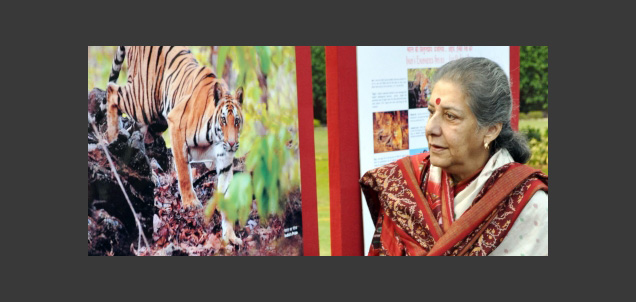
    Photograph: Fotocorp (File photograph of Ms Ambika Soni releasing a DAVP calendar for the year 2011)


    Disclosure: MxMIndia is a firm believer in the freedom of the press and the self-regulatory route to check on content. We will take every effort in guarding this and ensuring that governments do not step in to police the media. However, we also believe that broadcasters must need to re-examine the content they air and help make the self-regulatory process a success.


    Also, read print media reports on the issue:


    The Indian Express: http://www.indianexpress.com/news/cabinet-nod-to-tightening-eligibility-criteria-for-running-tv-channels/857167/

    Mint: http://www.livemint.com/2011/10/10010542/Media-criticism-of-uplinkdown.html?h=B

    Dainik Bhaskar: http://daily.bhaskar.com/article/NAT-TOP-govt-trying-to-control-independent-media-with-new-rules-tv-channels-2489322.html

    The Hindu: http://www.thehindu.com/arts/radio-and-tv/article2521281.ece

    The Times of India 1: http://articles.timesofindia.indiatimes.com/2011-10-08/india/30257931_1_downlinking-tv-channels-current-affairs-channels

    The Times of India 2: http://timesofindia.indiatimes.com/india/Govt-bid-to-gag-TV-outrages-broadcasters-libertarians/articleshow/10283957.cms

  • WMC2011: Soni sees bright future for mags

    By Shruti Pushkarna

    After the smashing opening of the 38th FIPP World Magazine Congress with King Khan dancing to “Chammak challo”, Day 2 opened with optimistic assurances from the Minister for Information and Broadcasting, Ms Ambika Soni. Chairman of FIPP and Chairman & Editor-in-Chief, India Today, Mr Aroon Purie invited the I&B minister to grace the opening of the second day with her address.

    A self-confessed “avid magazine reader”, Ms Soni was extremely optimistic in her views on the future of magazines and print media. Addressing the Congress, the Minister stated, “…With 77,000 registered publications, including magazines in different languages, we are one of the major magazine hubs of the world. India represents one of the developing markets for magazines globally, and (are together) expected to contribute about 31 percent of the global advertising expenditure this year, and 67 percent of the growth of this crucial segment of the media.”

    The minister also emphasized the diversified nature of the India market. “We also probably have the greatest possible diversity represented in our magazines in terms of genre and content, not only language. From the glossiest and most sophisticated luxury magazines to those making effective use of the latest digital trends, to the more simply and cheaply produced publications… all co-exist in a highly diversified, highly segmented, highly stratified market.”

    Ms Soni showed that she is not oblivious to the threat that the digital revolution poses to the magazine segment. But she assured the audience that the danger was not as grave as it seemed in, perhaps, the last Congress. She summarized the solution to the problem in three words – innovation, expansion and adaptation. “There will always be room for innovative ideas, in terms of content and format. Adaptation of course to internet age, to tablets, to phones, to developing new revenue models… But there are also significant gains to be made by expansion; this is especially true in developing markets like India.”

    The minister also shared some interesting figures, reiterating the prospects of growth in the magazine segment. “While the print market in India is dominated by newspapers which accounted for 94 percent of all print revenues in 2010, the important point to note is that the overall pie is growing and the magazine segment is estimated to grow at a CAGR of 4.8 percent in the period from 2010 to 2015.”

    And donning the role of a ‘government representative’, she shared with foreign delegates how liberalized government policies are aiding the growth of the print medium: “For the benefit of all the delegates who’ve come from outside, I would like to emphasize that we’ve come a long way, a long way since the basic premise of our print media policy of 1955 which did not allow any kind of foreign publications, either newspapers or periodicals. The policy which was subsequently reviewed in 2002 and then again in 2005 has paved the way for a spurt in the magazine sector. The liberalization of our print media policy has not only attracted foreign direct investment, it has given a growth perspective to the magazine industry in India as well.”

    The minister also assured the AIM members that their “longish wishlist” is being carefully examined and all issues will be addressed soon.

    On a lighter note, she also promised the foreign delegates to “again look at the government’s policy on visas on arrival”.

    Ms Soni left the audience with an interesting question to ponder. She said, “With over 90 million copies in circulation daily, the print industry is among the largest in the world. But the vast untapped potential in this industry is even greater. More than 300 million literate individuals don’t read any publications. These 300 million individuals have rising levels of income and aspirations. Will all these be diverted straight to the internet?” With internet access in India still quite low and broadband access even lower, the minister added, “…Today there is a large window of opportunity for the print media that Indian publishers should therefore capitalize upon.”

  • First on MxMIndia: Tarun Rai is new AIM President, Mitrajit Bhattacharya is VP

    By Akash Raha

    Mr Tarun Rai, CEO of World Wide Media, The Times of India group’s magazine publishing company, has been appointed President of the Association of Indian Magazines. This was announced at the annual general meeting of the apex association of magazines held soon after the proceedings of Day 1 of the World Magazine Congress concluded. Other officebearers are Mr Mitrajit Bhattacharya as Vice-President, Mr Rajmohan as General Secretary and Mr Paresh Nath as Treasurer. Mr Rai and his team will lead the Association of Indian Magazines until 2013.

    Mr Rai takes charge from Mr Pradeep Gupta, Cybermedia group chairman and managing director, who has been holding the position since November 2009. The  officebearers in Mr Gupta’s tenure of 2009-11 were: Mr Rai as Vice-President, Mr Mitrajit Bhattacharya as General Secretary and Mr Nath as Treasurer.

  • Just Bates, now

    By Shubhangi Mehta

    WPP agency Bates 141 has dropped the ‘141’ from its name in its third rebranding employ. The agency is planning to adopt new attitude and corporate identity to underline its new agency model. With a new name and agency model, Bates now also has a new logo.

    The new logo features the Bates typeface in contemporary Helvetica and three speech balloons (in original Bates pumpkin, red and blue), replacing the former eye mnemonic.

    Bates has embarked on a new journey to become the changengage* people. Changengage* is the philosophy for the new Bates agency model.

    Changengage underscores a sea of change in the way the agency is structured to deliver better solutions to clients. It is a complete mindset and behavioural change.

    Dheeraj Sinha, Regional Planning Director, Bates, said, “All the previous rebrandings of Bates have happened due to acquisitions and mergers, Bates 141 was also a result of that. This time the rebranding is solely for the new prospective of a new world, the world is changing and so are we. Bates has not just been an advertising agency but we provide digital, rural marketing solutions as well, we will take this a step forward a continue our focus on new engagement-led strategy for the client where digital will definitely play a major role.”


    It may be recalled that the agency logo was refreshed in 2008 and represented Bates and 141 fully integrated as one company with one vision and an integration of their offering.


    The visual identity comprised repeating ‘eyes’ with one set facing the other direction, expressing Bates 141’s Change vision of ‘Change happens when you look at things differently.


    The name 141’s origins lie in the address of the division’s original London HQ, 141 Westbourne Terrace.


    Sonal Dabral, Regional Executive Creative Director and India Chairman, Bates, remarked, “In the new Bates we don’t think ATL and BTL, we think integrated and we believe all our ideas should lead to engagement for brands. We decided to drop 141 from the name Bates as 141 symbolizes our activation arm and therefore doesn’t find a place in our new agency model.The new logo has been designed by the Bates design team internally, mostly by the Kolkata and Mumbai teams. The added colours depict Bates as more vibrant, novel and youthful. The cluster of speech blurbs above the name is symbolic of vibrant conversations and debates we will aim to provoke through our work. The overlapping blurbs are also a subliminal reminder of tag clouds, the language of now and the future.”

    In terms of solutions, a large part of the agency’s revenue currently comes from engagement (eg, OOH, online, interactive, shopper marketing, activation, etc). Bates will continue to strengthen these pockets of expertise by enriching its talent mix with technologists, shopper marketing planners and designers to deliver more sparkling engagement solutions.
    It will also continue to bolster its cluster operating model (Greater China, India and Southeast Asia) which provide the means to leverage pockets of category and discipline expertise across markets/offices.
    Bates is a marketing communications network under the WPP Group.Located in 11 countries in Asia. They work with global and local brands including Accor, Café de Coral, Cheung Kong, Diageo, Disney, Fiat, Finnair, General Mills, HSBC, IDEA, Shanghai General Motors, Singapore Polytechnic, Unilever and Virgin Mobile.

  • All’s well as I&B promises to route content complaints via self-regulators

    By Ritu Midha

    Putting broadcasters’ concerns at rest, the Information and Broadcasting Ministry has said that cases related to the violation of content code would be sent to the News Broadcasting Standards Authority (NBSA).

    Members  of NBA, IBF and BEA met  the Information & Broadcasting Minister Ms Ambika Soni and a few ministry officials in the late afternoon on October 11. According to sources, the meeting ended on a very positive note, with the ministry clarifying that there was no doubt about the broadcast bodies’ self-regulatory capabilities.

    The minister, as per the sources, appreciated the work done by the broadcasters in the area of self regulation, and also stressed on the need of strengthening it further.

    It is now understood that objections, if any, pertaining to the content on any of the private television channels, would be routed to the NBSA, headed by Justice Verma. Action, if any, would be taken post deliberations by NBSA.

    As is known, NBA was not too happy with the proposal for amendment in policy guidelines for uplinking/downlinking of TV channels approved by the Cabinet last Friday. The proposal among other things stated, “Renewal of the permissions of TV channels will be considered for a period of 10 years at a time subject to the condition that the channel should not have been found guilty of violating the terms and conditions of permission including violations of the Programme and Advertisement Code on 5 occasions or more.”

  • Devesh Rai quits Mail Today, turns entrepreneur

    By Akash Raha

    Mr Devesh Rai G is moving on from Mail Today as its head – distribution and marketing. Mr Rai plans to pursue his own entrepreneural interests.

    Mr Rai graduated from Delhi University and went on to do his MBA from IIM Calcutta.

    He has held various positions in marketing, brand and product management in corporate and consulting as well as for five years in advertising agencies. Prior to Mail Today, he was Head, Product Marketing at consulting firm Headstrong. He has also worked with HCL Technologies, Hindustan Times, Rediffusion D&&R and Lowe.

  • David Hill is new FIPP chairman (Video story)

    By A Correspondent

    Videos: Shruti Pushkarna

    David Hill on becoming the new FIPP Chairman
     David Hill on key points to look at on assuming the role of FIPP Chairman


    Mr David Hill, President and CEO, IDG International Publishing Services was named the new Chairman of FIPP. Mr Aroon Purie handed over the reins of his Chairmanship and announced it at FIPP World Magazine Congress 2011, New Delhi.


    Mr Purie had been the Chairman of FIPP for the last two years. This was his second term as a Chairman of FIPP. Before announcing the name of the new FIPP Chairman, Mr Purie congratulated everyone for a successful magazine congress.


    Mr Hill thanked Mr Purie for his dedicated service to FIPP. Mr Purie took over as the Chairman of FIPP two years ago, while the industry was threatened by recession.


    The next magazine congress is set to take place in Rome, Italy, announced Mr Maurizio Costa, Deputy Chairman and CEO, Arnoldo Mondadori, Italy.