Category: NEWS

  • Star Plus launches iPhone & iPad app

    By A Correspondent

    Star Plus has announced the launch of its app for the iPhone and iPad, becoming India’s first GEC to make an entry into the iPad/ iPhone app store in India and over 120 countries around the world. This initiative will make entertainment content available on the go.

    With iPhone sales topping 100 million and over 25 million iPads already sold, the Star Plus App is an enriching addition to viewers, who can download the app on to their devices from the iTunes App store.

    Mr Sanjay Gupta, COO of Star India, said, “We have always provided our growing viewers with discerning content using cutting-edge technologies. Our entry into the iPad, iPhone App store will enable our upwardly mobile viewers to watch their best loved programmes on the iPhone and iPad wherever they are and whenever they want to.”

    Mr Lalit Bhagia, VP Digital of Star India, added, “The iPhone and iPad devices have changed the way people consume content globally. With the Star Plus app discerning viewers will now have access to the best entertainment content available on their personal iPhones and iPads.”

    The app offers features like, live TV, catch-up of missed episodes of the last two days, and updates/news from Star Plus current and upcoming shows. A unique, built-in interactive feature also allows users to connect with their favourite Star Plus characters through audio blogs and pictures.

    The application has been launched in India and in over 120 countries around the world. The app also offers unique interface which enable users to browse content either by the show or by the characters.

    The launch of the application comes soon after Star India announced global same-day telecast of its flagship GEC brand in India, Star Plus, with English subtitles. Star has been leading the industry in bringing to viewers new and innovative products including Asli HD that is shot, recorded and edited in HD and mixed for 5.1 Dolby surround sound.

  • Creative call by SBI Mutual Fund

    By Shubhangi Mehta

    SBI Mutual Fund has invited advertising agencies to handle its creative mandate through a tender.

    The selected advertising agency will be responsible for complete planning, strategizing and execution of communication / branding requirements of SBIFMPL according to the brief sent by them, the agency will have to keep a track of all campaigns / activities of competition and provide an analysis of the same periodically for strategic inputs, the agency will be also being responsible to provide innovative ideas / concepts which can be executed.

    The agency will be appointed for a period of a year which may be extended further based on its performance.

    SBI Mutual Fund is one of the largest mutual funds in the country with an investor base of over 5.4 million. With over 20 years of rich experience in fund management, SBI MF is the most preferred Asset Management Company for all classes of Investors.

  • Hansa bags MRSI award for innovative method for household income

    By A Correspondent


    Hansa Research has been awarded the first prize at a Market Research Society of India seminar. The paper showcased an innovative method to know real household income


    Collecting income data in India is fraught with roadblocks. While surveys are considered accurate at capturing product usage and ownership, the same cannot be said of income because of the sensitivities involved. Income tends to be over-estimated in lower classes and under-estimated in upper ones. Measuring real income requires specialized elaborate income studies, which is beyond normal research studies.

    Hansa conducted a special income study to accurately measure income. The study also measured product ownership/consumption. Based on this information, Hansa developed a model to predict real income based on product consumption, separately by population class. This model was validated with the help of ‘National Account Statistics’, traditional MHI and New SEC. To arrive at real income in any customized study, all one needs to do is to capture details of 18 products and use the model.

    Mr Suresh Nimbalkar, Senior Vice President, Hansa Research said: “Income is intuitive, easy to understand and use. It is one of the most differentiating variables. As a result, there was a constant need expressed by the industry to provide real income. The Hansa IRS team took up the challenge of providing the real income to its users.”

  • Gelusil mandates for ideas@work

    By Shubhangi Mehta

    Ideas@work will be working as the creative agency for Pfizer’s Gelusil Xtra Cool, the agency has confirmed the news to MxM India.

    The incumbent on the business was Bates. The media mandates for them are handled by Mediacom.

    The new campaign will break in this quarter. The focus will be on television and highly targeted btl activities. The account size could not be ascertained at the time of filing the report.

    Ideas@work is a Mumbai-based boutique agency. The agency is the brainchild of co-founders and creative directors Zarvan Patel and Prashant Godbole. They handle brands like Reid & Taylor, Red Bull, Big Rock etc.

    Around the world, the Gelusil brand has become renowned for relief from an anxious stomach. Introduced in the late 1930s as a liquid and initially sold in a blue-glass wide-mouthed bottle, through its 70 years it has not only become a staple of medicine cabinets, but it has become a word associated with relief.

    Gelusil was created by the pharmaceutical company first known as William R Warner & Co. (later Warner-Chilcott, then Warner-Lambert) and was formally filed as a trademark in 1939. Warner was a pioneering pharmaceutical company known for the innovation of coating pills with sugar. Gelusil’s early slogan was “the different antacid” because it was both an antacid and anti-gas.

  • Happy 8th birthday, Spatial Access

    By A Correspondent

    Spatial Access turned eight yesterday. From a team of four eight years back, it is now 30 members  strong, and has more than 120 clients – most of them in India, but some in South Asia as well. Meenakshi Madhvani, Founder & Chairperson of Spatial Access, is ecstatic and philosophical at the same time, “It is not yet time to retire.  I still have many more years to go, but it is now time to do things slightly differently. It is the eighth birthday of Spatial Access, and time for reinvention.”

    The company is not only reinventing the services it offers but also the identity of the company. Says Ms Madhvani, “The new logo reflects who we are and what we stand for. Spatial Access is in business of audit, advisory and analytics. Our logo is fluid and mobile – growing as we grow .The small red part in the logo indicates seed – which is now growing. In spite of the growth our DNA of accountability remains intact.”

    Ms Madhvani believes that optimum value from media and marketing spends can be obtained by ‘nurturing the concept of accountability and transparency by all key constituents.’

    Talking of Spatial Access’s presence in overseas markets, Ms Madhvani states, “We are creating the first Indian translational in communication and audit space. We already have operations in Thailand, Indonesia and Singapore. We are doing sophisticated and highly complicated work, and have knowledge and proprietary technology. We can benefit global advertisers in the similar fashion as we are benefitting Indian advertisers. For the multinationals we can provide a seamless product experience.”  She adds, “Over the last three years, our Singapore Spatial Access has worked with the objective of finding out if there is any wastage in media and marketing spends– and if there is, can it be reduced and how?”

    Operations at Spatial Access have been divided in three SBUs –

    SA1 – Media and analytics business headed by  Nikhil Rangnekar

    SA 2 – Marketing Services headed by Geetanjali Bhattacharji

    SA 3 – Media & International (the media audit @ Spatial Access) headed by Harsha Joshi

    Talking about SA 1,Media and Analytics, Mr Rangnekar said, “It is important to understand how much of media money is being wasted and what can I do to minimise that wastage.”

    As per him wastage in media can be due to multiple reasons. Among them:

    1. Faulty objective setting – Am I buying more GRPs, secondage than needed to achieve my reach/frequency objectives?
    2. Lack of rigour in the plan: is the agency optimising my plans to give me the desired reach and frequency in the lowest possible GRPs/investments?
    3. Suboptimal channel mix based on favouritism – identify redundant media vehicles and make recommendations.

    Mr Rangnekar also stresses that 360-degree media should be used based on need, and not because of the feel-good factor. He believes that media mix should never be predecided or based on favouritism.

    Audit is needed not only in strategy and planning, but also in the implementations: one needs to understand whether implementation is it in line with strategy? Are there any gaps? He says, “We go back to the client with advise on how to improve implementation. Agencies need to look at us as their partners and not enemies.”

    He believes that things are changing, and marketers are keener to experiment now than they were earlier. Marketers need to question ‘How should I change my mix to improve my RoI.’ Things are definitely changing with econometric modelling.”

    Reflecting on the increasing need for Marketing services audits  (SA2) Ms Bhattacharji says, “In an advertising lacking in metrics for ‘nonmedia’ investments, marketing services audits bring measurability to the effectiveness of print and film production, PR, events and activation…The production of television commercials, marketing collateral and retail signage occupy a large share if marketing investments. However, in absence of industry-metrics, accountability is often compromised.”

    As per her BTL is now 35 to 40% of investment – and hence the need for measurement is increasingly being felt.

    She stresses that need is not to just create accountability but also appropriate measurement matrix. She expresses, “Spatial Access with its domain expertise can be the bridge to ensure that marketers get what they ask for. As validation process for quality is not in place with quite a few marketing companies – marketing audit becomes all the more important.”

    She stresses that measurement should not be based only on cost, but also resource requirement.

    Making a special mention of PR, Ms Bhattacharji states, “PR can deliver, and be controlled in the similar fashion as advertising.  Size of the release and space value does no matter. Spatial access with its revolutionary tools Prowls and PRIZARD can measure effectiveness of PR.” She adds that brand imagery needs to come across via brand vocabulary.

    Ms Harsha joshi concludes by expressing the need for media audit to measure efficiency and accountability (SA3). She states, “Media spends are growing at about 14% annually. Efficiency and accountability are key for CMOs, CFOs and CPOs across categories.”

    She points a number of reasons for media audit among them:

    1. The standalone price comparison: An advertiser should avoid being the most expensive advertiser in its category by getting its media buying performance audited
    2. Cost benchmarking through comparison to a pool of comparable data, comparison to year on year efficiencies or comparison to actual market data

    Performance of a media plan, as per her, should be based on Spends filter, Deal construct filter and Target audience filter

    Says Ms Joshi, “Though the need for media audit is being felt by 40% of marketers in India as of 2010, global average is 80 percent, and more Indian marketers need to realise the value of media audit.”

    Spatial Access is ready with a new identity, energy and reengineering – objective, as Ms Madhvani states is, “to cover new areas and address old concerns”.

  • Government plans to retire analog Cable TV

    Ninety million homes in the country receiving television programmes via analog cable networks will need to switch to digital set-top boxes beginning March 2012, with the government approving complete digitisation of TV transmission over a two-year period.


    The Cable TV Networks (Regulation) Act will be amended through an ordinance, Information and Broadcasting Minister Ms Ambika Soni said after a meeting of the cabinet committee on economic affairs on Thursday. Consumers in the four main metros – Delhi, Mumbai, Kolkata and Chennai – will be the first to switch to the new system.


    The first phase will require 12-15 million set-top boxes and cost multi-system operators (MSO) about Rs 3,000 crore. The digital technology will offer improved quality of transmission and greater choice of content, albeit at a higher cost to consumers. “This will bring a paradigm shift in television viewing experience,” said Mr Avnindra Mohan president (legal) at Essel Group, which owns Wire and Wireless India Ltd (WWIL), an MSO.


    “Consumers can avail of digital cable, broadband and telephony services, all bundled in a single connection.” The announcement boosted stock prices of publicly-listed MSOs, the conduit between broadcasters and the neighbourhood cable operators. WWIL shares surged 19.92%, while Hathway Cable & Datacom rose 10.3% and DEN Networks gained 0.80% on BSE. DEN and Hathway have raised money and got listed on the stock exchanges over the past two years in anticipation of the new law.


    There are an estimated 130-140 million households in the country with TV connections. Of these, 90 million are cable and satellite homes while about 35 million have direct-to-home (DTH) connections. The remaining, in remote corners of the country, use old analog antennae-receivers.


    According to industry estimates, MSOs will need to invest Rs 25,000 crore to carry out the digitisation. “This will benefit the entire broadcasting industry, both economically, and from the point of view of content,” said Mr Uday Shankar, president of the Indian Broadcasting Foundation and chief executive of Star India.


    He said the government should ensure that the deadline is honoured. The broadcasting industry has been suffering from poor bandwidth of analogue cable, which will be resolved with digitisation, he said, adding this will also plug leakages in the revenue system by solving the problem of under declaration of subscribers in the analogue cable system.


    “India has been the world’s cheapest cable and satellite market with an ARPU (average revenue per user) of $4 (Rs 200) for a bunch of channels, a majority of which are unsolicited,” said Mr Yogesh Radhakrishnan, MD and CEO of Prime Connect, the distribution company of Times Group.


    “This move will change it drastically and people will end up paying only for what they wish to see.” A change in hardware may inflate the consumer’s cable bill. “They will pay an initial conversion fee to digital cable operators to buy set top boxes, but it will be more value for consumers,” said Mr MG Azhar, president (strategy & business development) at DEN Networks. This could lead to higher ARPU for both the DTH and digital cable industry. Currently, ARPU for the cable operators ranges betweenRs 100 and Rs 200, depending on the city or town.


    For DTH, it is betweenRs 170 and Rs 180. “The ministry and Trai will now have to come out with interconnect as well as tarriff orders as the ordinance is notified,” said Mr Ashok Mansukhani, president of MSO Alliance. “But the current level of extreme competition between DTH and cable will continue and, at best, customer will have to pay marginally more, specially for niche and sports channels.” DTH operators are hoping they will get a piece of the pie.


    “We can connect consumers with television even in the farthest and remotest of areas,” said Mr Salil Kapoor, COO of Dish TV. A senior executive with a DTH service provider said with the increase in demand, prices of DTH could go up in the first phase by 10%-15%.


    Source:The Economic Times

    Copyright © 2011, Bennett, Coleman & Co. Ltd. All Rights Reserved

  • Grand Prix countdown begins


    By Ritu Midha


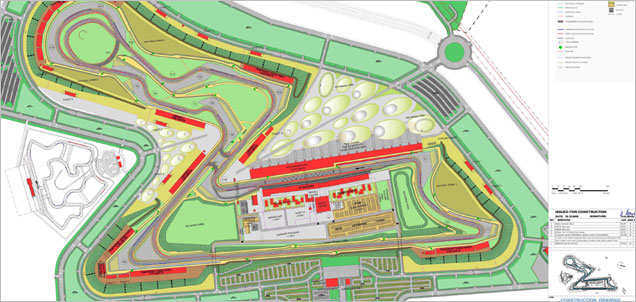
    Countdown to the Indian Grand Prix has begun – the Buddh International Circuit will attract 1.1 lakhracing enthusiasts from India and overseas From October 28 to October 30. The seating capacity, depending on the ticket sales, can be pushed up to 2 lakh.

    The response the race is getting can be gauged by the fact that flight tickets from Mumbai for that duration are almost double the usual price on ticketing websites, and most upmarket hotel rooms in Delhi and Noida are booked – in some cases at a 100 percent premium. Gurgaon hotels too are gainers here.

    Ticket prices for the event itself are between Rs 2,500 to Rs 35,000.

     

    The target group

    It is a young – largely male – premium audiences expected at the race. Defining the target group for Formula1, states Premjeet Sodhi, President, The Collaborative , Lintas Media Group, “Non-Cricket sports in India are quite Niche in India and the current followers of F1 are very small in number. However, in demographic terms, currently, the primary target group for the sport would be Males, SEC A, 15-34 years in the top 6 metros.“This target group is considered to be the most elusive – and hence the brands are interested in catching them on the tracks.


    Brands riding on F1

    Airtel as known, is ‘Title Sponsor’ for this sporting event, and the official logo of the India Race reads, ‘2011 Formula 1 Airtel Grand Prix of India’. Interestingly, Airtel gave up its title sponsorship of Champions League T20 sometime back, without completing its three-year tenure.

    Indian brands, are seeing an opportunity in associating with individual teams as well. The latest to be a part of Formula 1 is Sahara Group – it has bought 42.5 percent stake, at the approximate cost of Rs 500 crore, in the Vijay Mallya-owned Force India F1 team – and now the team has been renamed Sahara Force India. Interestingly, both these brands too are connected with the pace version of Cricket – owning Pune Warriors and Royal Challengers Bangalore in IPL respectively.

    Hero Motors, meanwhile, has signed a sponsorship deal with Narain Karthikeyan, India’s first Formula 1​ driver – as of now the deal is only for India Grand Prix.

    Interestingly Amul too is in the fray. The brand has tied-up with the Sauber Team (Ranked 17th). The brand logo will be seen on the front face of the rear wing, and also on the drivers’ helmets. On Amul’s part, it is an obvious attempt to establish itself as a youthful and ‘happening’ brand.

    And then there are brands with a long-standing relationship with Formula 1: like Red Bull and Mercedes Benz. Red Bull showcased its RB3 F1 racing car in Delhi throughout September, and has largely tried to attract the student community in the capital. Mercedes-Benz is looking at a long-term strategy, and plans to launch India’s first motor racing academy next year.

    Cafe Coffee Day has associated itself with the event by selling tickets at select outlets at Delhi, Bangalore, Mumbai and Gurgaon. The coffee shop, a favourite hangout of youngsters, must definitely have seen synergies between itself and F1. Or, perhaps, it was the other way round.

    The tickets would be available at Mercedes Benz showrooms as well.

    As for which brands would derive value by associating with Formula One, Anamika Mehta,COO, Lodestar Universal, states, “F1 is in its infancy in India and will grow from strength to strength with its first ever India Grand Prix. More than VFM its an opportunity to engage brands with the thrill and experience . Over a sustained period of time, it will definitely reap dividends for brands which create an engagement platform. India in that sense is poised right ‑ economic growth, young country that loves technology, thrill and speed.”
    It is not only youth brands, but also the Government that plans to reach out to the F1 fans flocking the capital. Tourism Ministry plans to promote tourist destinations close to the circuit, and at other places of interest. Plan, reportedly, is to promote 50 lesser known destinations including beaches, monuments, mountains, sand dunes, festivals and cuisines.


    The broadcasters

    The broadcast rights, as is known lie with ESPN. DTH service provider Reliance Digital TV (RDTV) has added ESPN HD and Star Cricket HD to its kitty of channels – objective obviously is to enable its subscribers experience the highly charged atmosphere as close to reality as possible.

    ESPN states that the spots have been sold out, and also that it is not selling Formula 1 Buddh International Circuit as a separate property. On ground activity too is meant for sponsors alone unlike Cricket. nil Sathiraju, Associate VP & Head-South, Mudra Max, said, “At this point in time, it’s apparently for the sponsors only. Also many of the deals are getting done outside of India because of the fact that it is F1.”

    Coming back to Broadcast media, Winners from India has Got Talent and Entertainment Ke Liye Kuchh Bhi Karega will perform live at the race. Bir Khalsa Group, Rohan & Group, Prince Dance Troupe, Reincarnation of Indian Acrobatics, Speed Painter Rabin Bar and several others will perform throughout the day on all three days. Of course, it is in addition to Lady GAGA (who would perform on the final day) and other well known DJs and bands from India and overseas.


    The online rush

    As a large proportion of racing aficionados are web friendly, there is a lot of activity in the virtual gaming world – where car races, anyway, continue to be all time favourites. Gaming organisations like Ibibo, Zapak and 7Seas Technologies are working towards providing users the excitement of being on the original track – virtually. While, Zapak has launched the official Formula One Game – ‘Vodafone Formula GP Racing, 7Seas Technologies too has a similar game ‘Xtreame’. The game on ibibo.com offers an opportunity to own a ‘high speed racing car’ in the virtual world.


    Ambush marketing: the Vodafone way

    If all this we not enough, enter ambush marketing. Even as Bharti Airtel is the title sponsor for the event, Vodafone is trying to steal the thunder from under its nose by holding road shows across the big cities. These road shows showcase an exact replica of the McLaren Mercedes racing car to be driven by Lewis Hamilton . And as mentioned earlier – the battle is being fought by Vodafone in the virtual space also – with Vodafone Formula GP Racing.
    F1 vs IPL

    In this backdrop, can one assume that it would be as attractive or the advertiser as a mini Three-day IPL? Our experts unanimously turn down the supposition. States Sodhi, “The IPL monetized the already existing mass fan following of cricket. It managed to over-night make Cricket a very premium sport despite it being a very mass followed sport. F1 on the other hand is a very different task of actually creating active fans in India. Today, it has the premiumness but lacks the mass appeal. Hence, from the advertising opportunity perspective F1 and the IPL are in a very different class. While F1 is for a very definitive age group and appeals primarily to the affluent and the higher SECs, Cricket is very broad based. Hence, the brands that would patronize F1 would be a subset of the IPL advertisers and then some more.” He adds, “In time, surely F1 will find its core set of advertisers but I doubt if its advertising valuations will come anything close to the IPL in the near future.”

    Top of the pyramid is growing in India – the number of rich is growing, and so is the number of young adults. Formula 1 being a race extensively patronized by the young rich surely has the makings of a future success story. A lot would, however, depend on the performance of Sahara Force India, and of Narayan Karthikeyan. Thrill and excitement of Formula 1, just might capture our fancy in a big way – car racing after all is a familiar territory with the kids growing up on a staple diet of virtual races.

  • First on MxM! : Its final. A K Bhattacharya to be Business Standard editor

    It was rumoured that he would take charge as editor and it’s now confirmed. In a mail sent by chairman and editorial director Mr T N Ninan earlier today, group managing editor Mr A K Bhattacharya has been appointed editor. He will take charge on November 1, 2011.

    AKB, as Mr Bhattacharya is known as, joined the paper in January 1996 as national editor. He later launched the paper’s Mumbai edition as resident editor.


    Mr Bhattacharya’s appointment follows Sanjaya Baru’s resignation as the editor, following his decision to join an international thinktank. I wish to place on record my thanks to Dr Baru for his editorial leadership of the last two years, and to wish him well in his future career, Mr Ninan’s mail said putting an end to all rumours.

  • Gufic’s good medicine for MPG

    By A Correspondent

    MPG India, the flagship brand of Havas Media, has been awarded the media account of Gufic Biosciences Ltd (GBSL), a Mumbai-based biosciences company with a focus on pharma and personal hygiene products.

    GBSL operates across many categories in India including pharmaceutical and personal hygiene. The company’s key consumer brands are Roll-on, Shapers and Stretchnil. MPG’s appointment will extend through all its key brands including soon-to-be launched brand Relieve and Relax.

    Commenting on the win, Mr Anil Kamath, Vice President, Marketing and Sales at GBSL, said, The team at MPG showed a thorough understanding of the categories that we operate across. Given the nature of the brands and the high clutter in the space, it is not always easy to come up with innovative solutions, but MPG team did just that.

    Ms Anita Nayyar, CEO of Havas Media, India said, The personal hygiene industry is on an upswing given the consumer is getting more and more concerned and conscious both about health and hygiene. We are confident our product offering will add value to the business and our knowledge in the category will get enriched by working with Gufic.

    Mr Kunal Jamuar, Executive Director West, MPG India, added, GBSL not only have a portfolio of well-known brands but also have a great vision on how to take them forward. We are hoping to do some interesting work and set new trends with disruptive thinking.


  • New, newer, news: Mid-Day’s changing

    On September 6, 2011, Mid-Day came out in a new avatar with a new design and structure. The move seeks to offer the reader news in a convenient way, with several changes across editions bound to build up interest around the newspaper.

    On expectations from the change, Mr Sachin Kalbag, Executive Editor, Mid-Day, said, The USP of the newspaper will remain its city coverage, no matter which city we operate in. While our flagship edition will still remain Mumbai (and the structural changes have been brought about only in Mumbai, while design change is universal), we will continue to do hard-hitting stories across editions. My expectations from the newspaper are the same as they were on the day I joined: to do the kind of journalism we always dreamed about. To do stories that create impact.

    Increase in pages at same price point

    Even as other newspapers are decreasing the number of pages they offer, Mid-Day increased the number of pages from 48 to 64, out of which 15 pages will be dedicated to city news.

    Mr Manajit Ghoshal, MD and CEO, Mid-Day Infomedia said We were getting a lot of feedback from our readers that there were more advertisements and less content. Hence, to cater to the needs of our readers, we decided to increase the content. The number of city and sports pages has been increased substantially. When asked if there will be a hike in cover-price owing to these changes, Mr Ghoshal said There will be no price hike right now. The readers of Mid-Day will get 30% more content in Mid-Day at the same price point.

    Reintroduction of editorial pages

    It is noteworthy, that several newspapers have earlier got rid of their opinion and editorial pages, citing the reason that the pages can’t garner advertising revenue and that it has low readership. However, Mid-Day has gone ahead and re-introduced the opinion pages. When asked about this move, Mr Ghoshal said While it is true that editorial pages can’t reap revenues, the industry of journalism is not only about making profits. We feel it is essential for a media company to inform and also give opinion and take stands.

    With this reinstatement of their platform, columnists will write across all sectors  politics, civic issues, national affairs, internal security, foreign policy, sports, fashion and humour.

    New design and structure

    The newspaper is divided into two clear sections now, which can be easily distinguished. Section one comprises news, opinion and sports. Section two will cover all about entertainment, city, films, television, a comprehensive city events and food guide. There will also be lifestyle features on health, travel, sex, relationships, and fashion etcetera. The entire section two will be called HitList.

    Also, our readers observed, that the section two of our newspaper was not clearly identifiable. Hence, now we have a colourful and bold logo which clearly demarcates it now. Logos for sports and classified pages have changed too, said Mr Ghoshal.

    Advertisers, too, will find that their ads are easy to find, and are not lost in the clutter. Classified and Film advertising will now have their own dedicated pages towards the end of Section two, to clearly demarcate them from the rest.

    Commenting on how these changes will impact Mid-Day’s popularity and readership Mr Kalbag said To be honest, design will not get us more readers; content will. We have already changed the newspaper’s reporting paradigm in the last few months. We will continue to do hard-hitting, relevant stories that shake up the authorities.

    What the new design and new structure will do, is make reading and navigating the newspaper much more simple. One of the prime complaints that our readers had was that the newspaper is cluttered. It is a perception that we want to change with the new design. Mid-Day will be easy on the eye, and more important, news and information will be easy to find, added Mr Kalbag.

    Interestingly, apart from the main cover page, Sports and HitList will also have individual cover pages to pique the interest of the readers, and to differentiate from the crowd.

    How increase in pages impact bottomline

    During recession, most newspapers across boards had cut down on the number pages, and Mid-Day was no stranger to such a situation. However, when asked how the increase in pages will now impact the bottomline, Mr Ghoshal said It is true that such considerations did come to our mind but we had no choice but to cater wholeheartedly to our readers with content. We have been increasing circulation through constant expansion. To cater to the length and breadth of our audience we had to come with newer and more interesting stories  hence the increase in the number of pages.

    The changes made by Mid-Day in their product will definitely churn some interest and add value to the product. The new design and the new structure seek to perform an essential aim  to make news and information that is relevant to the audiences in the simplest, most accessible manner.


  • Huge expectations from ‘Good Food’: Tarun Rai

    Tarun Rai has been the CEO since 2008 of the Worldwide Media group which, during his tenure, has seen several new launches and titles. The most recent in the long list of magazines is BBC Good Food which is to be launched on October 21. In a conversation with MxM India’s Akash Raha and Shruti Pushkarna, Mr Rai, who took over as AIM President from Mr Pradeep Gupta, Chairman and Managing Director, Cybermedia, talks about the Engagement Study, Good Food, Zinio platform and the future of magazines in India.


    [youtube width=”350″ height=”250″]http://www.youtube.com/watch?v=KKPL01uKuDA[/youtube]

    Q: You are launching BBC Good Food in India. What are your expectations from the magazine?

    I just got to hear that the magazine is ready; it’s bound, ready for dispatch. We are launching BBC Good Food on Good Food Day, October 21, which we are celebrating and we are encouraging people to try something new on the day. We have huge expectations from Good Food. India is changing, food habits are changing. People are experimenting with food both in their kitchen as well as when it comes to eating out in restaurants. We believe that the time is right for such a magazine. There are no precedents; there are no international food magazines in the country. We are going into uncharted territory and we are beating a new path. There are dangers but as I said, somebody has to do it and we believe that the potential is huge. And the response we’ve got from advertisers for the magazine is excellent and you’ll see it in the number of ad pages we’ve got in the first issue.


    Tarun Rai on Indian magazines becoming successful international brands
    [youtube width=”350″ height=”250″]http://www.youtube.com/watch?v=-gdT17SBAtk[/youtube]

    Q: Several international brands are licensed to India. When do you see an Indian title becoming a successful international brand?

    As you know Femina and Filmfare are heritage brands for us and they are doing fantastically well. Femina already is present in Sri Lanka. Filmfare we’ve licensed last year to UAE and we’re hoping that we will take it to many countries; there is already interest because Bollywood today is international. The Indian diaspora still wants to connect with Bollywood and I think very soon you’ll see Filmfare in many other countries. The other advantage is, thanks to what people say the ‘digital issue’ but I see it always as an opportunity, we are already on the Zinio platform with Filmfare for the past month; and the response has been fantastic. Almost 60 percent of our total sales of all the magazines that we’ve put on Zinio have been for Filmfare because this is the demand which is coming from the international markets and now suddenly it has become very easy to subscribe to Filmfare just at the click of a button. So I think there are going to be huge opportunities on some of the brands like Filmfare and Femina.

    Q: What do you feel at being appointed the President of the Association of Indian Magazines? What does this responsibility mean to you?

    It’s an honour… I have been a part of AIM for four years now, pretty much as soon as I joined the industry. For me it has been a fantastic experience. I come from advertising and I had no idea about the magazine business. Thanks to my membership of AIM, very quickly I was co-opted to the magazine industry. I have learnt a lot from my peers in AIM and I owe a lot to them. Mr Pradeep Gupta, the outgoing President, has had a terrific run in the last two years and as I take over from him I hope to continue the good job that AIM has done over the last two years. We are a small organization but I think we have learnt a lot to collaborate and make sure that we do things that are beneficial to the entire industry. Right now we are too small. We are just 3 percent of the total ad spends. We deserve more, but just by saying that we deserve more we are not going to get it. So we have to do things to convince the advertisers about the strength of our media. That is the reason we instituted the engagement survey and we are going to take it to its right conclusion by having a proper campaign around it and material which will convince the advertisers. That’s just one of the things. Generally speaking, the magazine industry can do with a higher profile.  So my attempt will be to raise the profile of the magazine industry by doing activities. One of the things it will do is to bring more talent to our business. The way our industry is growing we need a lot of people very fast. We need different kinds of people; with this digital opportunity that has come up we need different and varied kinds of young people to come to our business. By raising the profile of the industry we will also attract new talent to the business. That is going to be one of my important priorities.”


    Q: Do you think the Engagement Study that AIM has come out with will solve the measurement woes of the industry? Moreover, do you think that the advertisers will accept it as a robust currency?

    You never know until you try, and this is our attempt. Now it’s up to us to convince them. One piece of research is not going to do it. The good news is that the media buyers and the advertisers themselves are trying to understand media better. Ambika Srivastava spoke about the touch point study, the brand experience points, about how magazines score very highly when it comes to influence. So the conversation has already started. We want to push that conversation along where the judgment on one media is not only dependent on the numbers but also dependent on the quality of numbers, on the quality of engagement. And therefore the engagement survey is just the first step; it is not going to persuade people overnight but we don’t know whether we’ll be able to persuade people till we make our first step. So this is our first initiative to do that.

    Q: What are the take-aways from the India edition of the World Magazine Congress, moreover, on the 360-degree opportunity theme?

    It is called the 360-degree opportunity, not challenge, because I am of the firm opinion (and the board of FIPP was of the firm opinion) that we should look at it as an opportunity rather than as a threat. I just think it’s a fabulous place to trade ideas, to get to know what people in the developed market are doing, what people are doing in the South East Asian market which is still coming up. It’s new territory for us. Organization structures are being experimented with; we had this whole thing about how do you manage content along with so many platforms, do you have a core editorial team…? Business models are being experimented with. So to me it’s still a time of flux. Everyone agrees it’s an opportunity which we cannot ignore; do we have the right answers yet, maybe we don’t but this is a forum where you can learn, you can share, you can discuss and hopefully going forward we will arrive at some solutions which will work for different magazines.


    Q: What according to you is the future of magazines in India?

    I think the potential for magazines in India is huge. I always say that magazines, specially the lifestyle and special interest magazines, in India are a sunrise sector. So if it’s a sunrise sector, we are only 3 percent, the only way is up. We are too small to go any lower than that, the only way for us is up and I am very bullish about magazines in India.

  • First on MxMIndia: Uday Varma is new I&B Secretary

    By A Correspondent


    Mr Uday Kumar Varma is the new Secretary, Ministry of Information and Broadcasting.

    Mr Varma is presently Secretary, Ministry of of Micro, Small and Medium Enterprises. Mr Varma, an Indian Administrative Service (MP Cadre, 1976) officer, replaces Mr Raghu Menon who retired last month. He is familiar with the working of the ministry having been Special Secretary before he moved to the MSME ministry.

    The announcement was made by the Appointments Committee of the Cabinet, Government of India.