Category: NEWS

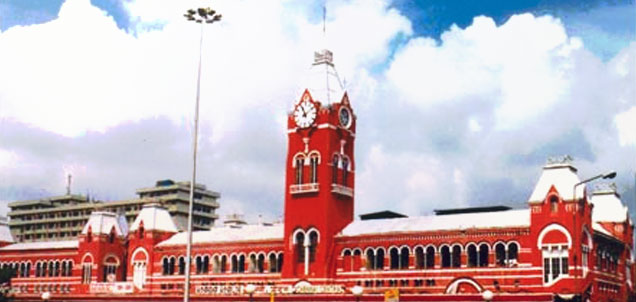
  • Chennai@175: Madras to Chennai – Evolution of media in the last 150 years

    R V Rajan

    By R V Rajan


    The mass media as we understand today took roots with the establishment of print media in the  West during the 17th century., which offered opportunities to reach a large and dispersed audience simultaneously. It was the East India Company of the British Empire that brought this media to India and to Chennai.


    Evolution of Print Media

    Newspaper publishing started in Chennai with the launch of a weekly, The Madras Courier, in 1785. It was followed by the weeklies The Madras Gazzette and The Government Gazzette in 1795. The Spectator, founded in 1836, was the first English newspaper in Chennai to be owned by an Indian and became the city’s first daily newspaper in 1853.


    Early advertisements in Madras Courier were in the form of classifieds.


    In 1851 the Madras Almanac & Compendium of Intelligence carried public auctions, theft, theatre, birth and death announcements.


    In 1860 came the ‘Fort St. George Gazette and the Madras Times.  And it was in 1870 that the Madras Mail which occupied a pride of place on Mount Road was started.


    In the decades that followed several Tamil publications were launched: 1881 – Swadesamitran (Tamil weekly), 1888 – Jana Vridhi, 1894 – Gnana Banu (religious weekly), 1897- Pariyan (A Dalit weekly) – all of which carried relevant classified announcements. But the history of journalism  and advertising in Madras, is very much linked to the growth of the Maha Vishnu of Mount Road – The Hindu.


    Started in 1878 by G Subramania Aiyar as a weekly tabloid with M Veeraraghava Chariar as partner Hindu became a daily newspaper in 1889 which was bought over by Kasturi Iyengar in 1905.


    It is interesting to note that in the initial years, the first page of the paper was entirely devoted to advertising – mostly classifieds covering a range of topics from ballroom dancing to widow remarriage!


    Several other publications followed , significant among them being Ananda Bodhini (1920), Ananda Vikatan (1926) and Indian Express (1932) all of which were successful in getting advertising  support for their publications.


    Today, Chennai has six major print media groups that publish about eight major newspapers and magazines. The major English dailies are The Times of India, The Hindu, The New Indian Express and The Deccan Chronicle; evening dailies: The Trinity Mirror and The News Today. As of today, The Hindu is the city’s most read English newspaper, with a daily circulation of over 5.5 lakh copies. The major business dailies published from the city are The Economic Times, The Hindu Business Line, Business Standard, and The Financial Express. The major Tamil dailies include the Dina Thanthi, Dinakaran, Dina Mani, Dina Malar, Tamizh Ossai, Tamil Murasu,[theekkathir] Makkal Kural and Malai Malar.


    Hundreds of magazines are today published from Chennai. The popular ones areAnanda Vikatan, Kumudam, Kalki, Nakkheeran,  Kungumam, Swathi (Telugu magazine), Frontline and Sportstar Chennai was also a pioneer in starting free community newspapers. South Madras News by Speciality Publications owned by R.Desikan was the first community newspaper of India started  in 1974. Today, apart from the popular neighbourhood newspapers such as The Annanagar Times and The Adyar Times there are a whole host of neighborhood  papers catering  to particular localities all carrying local news and  advertisements targeted at specific target audiences.


    Newspaper representatives to advertising agents

    Contribution of the legendary S S Vasan (Gemini Film fame) and T Sadasivam in the growth of the advertising business during the 1930s is significant.  Vasan was into mail order and publishing business.  He started Vasan Advertising Centre canvassing advertisements for various newspapers and getting commission from them – one of the early  representatives of advertising agency business. He bought out Ananda Vikatan and also started  Merry Magazine in English.  Ananda Vikatan which was being edited by another legendary Tamil writer- Kalki Krishnamurthy had T Sadasivam as the advertisement representative charged with the responsibility of getting new advertisement business.  Sadasivam had a flair for writing very persuasive direct mailers appealing for advertisements.  It is said, thanks to Sadasivam’s efforts advertising income of Ananda Vikatan went up from Rs.6,000/- to Rs.72,000/- in six months.


    Sadasivam left Ananda Vikatan  and started  Kalki with Krishnamurthy as the Editor. The magazine became a big success thanks to the popular historical novels penned by `Kalki`and serialized in the magazine week after week.


    Paper advertisements in those days covered products like Keshavardhini Hair Oil, Asoka Beetlenut powder, Amrutanjan, Narasus Coffee, Binny & Co, Westend Watch Co., Himalaya snow, Horlicks Malted Milk, cars like Rover, Morris, Murphy radio, Macleans toothpaste,Andrews Liver etc. salt apart from advertisements for announcing new film releases.


    One of the earliest full fledged advertising agency was started by P S Mani Aiyer in 1939.  Mr Aiyar began  his advertising career by canvassing advertisements for Swadesamitran and the Hindu.  It is said that he got 25% commission from these  newspapers for the ads he got for them.  Simpson and Spencer & Co were two of his well-known clients.  He had innovative ideas.  He hired artists to create advertisements with interesting visuals. He is supposed to have persuaded Simpson & Co,  dealers of cars, to offer cars on hire purchase. A car costing Rs 3,500 was available on a monthly instalment of Rs.100.


    It was in the early 1930s that advertisements which were essentially classified ads started getting a  new look with the introduction of visuals to support the catchy copy matter. Line  drawings and half tone prints of human figures were used to make the advertisements more attractive.


    Radio

    Radio broadcasting in Madras  started from the radio station at the Rippon Buildings complex, founded in 1930 and was then shifted to All India Radio in 1938. The city has two AM and fifteen FM radio stations, operated by Anna University, All India Radio and many private broadcasters.


    Radio as an advertising medium is bound to grow as evident from the growing popularity of many of the FM channels in Chennai.


    Film / TV Advertising

    Other than Jayendra Panchpakesan, an ex-copywriter and film writer and P C Sriram the well-known cinematographer and director, another Madras-based advertising film producer who caught  the imagination of the Bombay advertising world was Rajiv Menon who is also well known as a cinematographer and director.  He produced some memorable ad films for Asian Paints and Titan watches.


    The Madras ad world can be proud that it nurtured some of today’s celebrities during their days of struggle. Today’s icon A R Rehman was popular as Dilip in his earlier avatar. He used to compose advertising jingles for many products in his spare time.  Balakrishnan (Balki) of Lowe Lintas is another contribution  from Chennai to the national advertising scene. Senthil from JWT Madras who was responsible for creating the  Cannes Award winning Naka Mooka commercial for Times of India is another Madras boy who is doing well on the national advertising scene.


    M G (Ambi) Parameshwaran and Ramanujam Sridhar are the other Madras boys  known for their intellectual contribution to the advertising field in the form of books on Branding and  Advertising based on their long association with the advertising business.


    Outdoor:

    Madras was well known for the huge, larger than life, hoardings on Mount Road promoting new and old feature films. The idea was first conceived by the legendary film director S.S. Vasan for the block buster movie Chandralekha in the early 50s.  The idea caught on and over the years not only films but also products and services of all types started featuring their messages  on hoardings occupying every vantage point on the roads of Madras, leading to mindless  growth of the media.  Many accidents later the State Government passed a law in 2008 barring hoardings in public places.


    For over four decades thousands of talented artists made a living out of manually painting the big hoardings using miniature drawings as reference.The banning of the medium completely in Chennai  has left many people dependent on this medium literally on the streets.


    Satellite and Cable TV

    It was in the mid-90s that the advertising through cable TV started penetrating homes in Madras.  The government`s decision to allow private channels to enter the TV space dominated till then by government owned DD,  has led to proliferation of TV channels. From just one TV channel in the early 80s, today nationally there are nearly 700 channels. covering almost every language of the country.


    In Tamil alone we have eight channels offering a wide variety of programmes catering to different tastes of audiences. Almost every political party has its own TV channel Like Jaya (AIADMK), Kalaignar (DMK), Makkal  (PMK) and Captain (DMDK) to mention a few, Leading them all  is Sun TV, one of the most successful and profitable channels operating  out of Chennai that has today become a big multimedia conglomerate. The Sun Network, a Rs. 5000 crore public firm, is the country’s second-largest broadcasting company, in terms of viewership share. Some of its TV shows have generated the highest television rating points in the country. In addition to owning 19 TV channels in all major South Indian languages, the group owns FM radio stations in over eleven cities and some Tamil magazines and newspapers. SCV is a major cable TV service provider of the group.


    Direct-to-home (DTH) is available in Chennai via DD Direct Plus, Dish TV, Tata Sky, Sun Direct DTH, BIG TV, Airtel Digital TV and Videocon d2h. Chennai is the first city in India to have implemented the Conditional Access System for cable television.


    Current Advertising Scene in Chennai

    The last decade has seen a steady decline of traditional advertising spend in Chennai  by FMCG companies (like Cavincare) and consumer durable companies (like Hyundai and Ford)  many of whom have moved their marketing departments to Mumbai or Delhi leading to a major setback for the Chennai  branches of the established multinational agencies. Though  there has been a tremendous growth in the advertising business from the Retail, Realty and Educational sectors, it has not helped professional agencies because many of the new generation advertisers representing these groups are not professional in their approach and go for media agencies who are able to offer them lowest rates. However for an adman who is willing to adapt to the changing scene in Chennai the profession still provides enough opportunities. As evident from the success of many local agencies.


    Once considered an overgrown village that went to sleep by 9 pm, Madras during the past decade has acquired a 24 x 7 reputation. The city has drawn people from all parts of India. Result: This metropolis can offer anything that anyone wants! Be it the choice of food, products, services or even entertainment!


    Old, tradition-rich conservative Madras is today a vibrant cosmopolitan Chennai. The young are willing to try out anything new! What better challenge than that for the advertising professional? I am sure that the Chennai advertising world will soon bounce back to its glorious past!


    RV Rajan is a veteran advertising person living in Chennai and widely regarded as the Father of Rural Advertising. He can be reached at rvrajan42@gmail.com
     

  • Business Standard celebrates 40 years

    By A Correspondent


    On the eve of completion of 40 years of existence in India, Business Standard has started ‘Thought Leadership’ – a series of initiatives that have been planned around the landmark year. Editorially, a series of articles have been commissioned, that chronicle the changes that the paper has witnessed, and has contributed to in the world of business and the economy at large.


    Born as a single-edition newspaper in Calcutta in the year 1975, Business Standard has had an invigorating journey since then. Currently published from 12 centers all over India, Business Standard has become the first choice of serious business news followers in these past 40 years. The Business Standard stable consisting of the English newspaper, the website business-standard.com and Business Standard Hindi (which was launched in 2008 and is published from eight centres), has not only seen an extended reader base in India alone, but also has global footprint with a large number of readers in financial centres like New York and London, Dubai and Singapore.


    Business Standard has also released a new brand campaign. Through a series of simple, yet effective TV commercials, it portrays the role played by Business Standard in helping readers achieve their aspirations. These ads will be telecast in a focussed manner to reach a relevant audience. The TVCs will also be up on Youtube. The campaign spans digital and print as well.


    Business Standard, by bringing together a galaxy of experts and commentators from around the world, has always been acclaimed for its opinions and incisive analysis. With some of the most well-known commentators who contribute to the pages of Business Standard going on to take up influential roles in Government -Ashok Lahiri and now possibly Arvind Subramanian as Chief Economic Advisor and Subir Gokarn and Urjit Patel as Deputy Governor, RBI, for instance – thought leadership is not an empty rhetoric. Shankar Acharya and Nitin Desai, two former Chief Economic Advisors to the Government continue to write in the paper reinforcing our thought leadership.


  • Chennai@375: How the metrop can Rise and Shine in advertising


    Srinivasan Swamy: Chennai deserves a loyal set of advertisers!


    Srinivasan Swamy

    By Srinivasan Swamy


    “Chennai is not a market for ‘creatives’. The action has moved to Bangalore, Mumbai and Delhi”

    “All big brands have moved out of Chennai”

    “Chennai is still an outgrown village”

    “Chennaiites are traditionalists”


    The dumbing down of the Chennai advertising market is discussed perhaps in all forums – in workshops, in seminars and in the media and internet. But is Chennai really a doggone market? Perhaps Chennai does not offer many opportunities for high adrenaline creative activity these days. But is it the advertiser’s fault or that of the agencies? I will blame it on the advertisers really!


    Let’s go back 60 years of the 375 years of the city. There was very little of the advertising industry that was present when J Walter Thompson set its shop in 1955. This was its first venture in the South. JWT then helped build competency by developing art directors, illustrators, scraperboardartists, block-makers as well as printers- the ecosystem that was essential to run the advertising agency business. TI Cycles, Amrutanjan, Madras Motor Insurance and Parry’s Confectionery were perhaps the only notable business then. And capital goods businesses like Ashok Leyland, Massey Ferguson, MRF and Simpson. Even the TVS-promoted manufacturing units came up only in the early 1960s, thanks to TT Krishnamachari, the then Union Minster who encouraged industrial development in the Madras State (which included Tamil Nadu, Coastal Andhra, Rayalseema, the Malabar region, South Canara and Udipi Districts etc.). Some PSUs like the Integral Coach Factory and Neyveli Lignite were in existence then, and many factories like BHEL, Madras Fertilizers and Madras Refineries came up in the ’60s.


    Chennai@375: The East and West Shall Meet in the South


    Chennai@175: Madras to Chennai – Evolution of media in the last 150 years


    With the spate of liberalization, from mid-1990s, Chennai evolved as the Automotive Capital of India with Hyundai, Ford, Renault, Nissan, BMW and Daimler setting up shops one after the other. Consumer products companies like Ponds India was set up in the 60s while Cavinkare came about in the early 1980s, followed by Henkel and Kaleesuwari (Gold winner) from the mid-1990s.


    Chennai is on the top of the charts as far as the retail industry and its advertising is concerned.  The groundwork of the concept of the mall and organized retail was laid down in Chennai in the eighties much before it became what it is today. Spencer Plaza and Alsa Mall were the first malls to arrive in the country. Today, any national marketer cannot ignore the business territory of T Nagar. Textile retail brands Nalli, Kumaran, Chennai Silks, Pothy’s, RMKV as do jewelers like GRT, Khazana, Vummidis, Prince et al have been in the vanguard of very clever and innovative marketing to tell the rest of the country how they have captured the imagination of the Chennai and its consumers. Saravana Stores is the first of its kind very successful discount retailer in the world.


    Simultaneous to this development, the film industry in Chennai produced more films than even Bollywood. And produced more hits that got re-shot as Hindi films. Many TV commercial producers like Jayendra, Rajiv Menon and Bharat Bala were not just making a mark in Chennai but across India for their high quality productions.


    Chennai was also the first regional market to storm the satellite channels. In fact Sun TV was the first private satellite channel to establish uplinking facilities from India, which even Zee and Sony had not done.


    Yes, so much was going in favour of Chennai. Advertising was also booming till about two decades ago and from thereon one major advertiser after the other started shifting its base for a variety of reasons. Initially it was not for lack of talent, but for being closer to the larger markets like in automobiles. But over time, Chennai lost its sheen to Bangalore in South and of course to Mumbai, which always was considered the mecca of Indian advertising. Not that Bangalore is doing any better today, but it does have perhaps a few companies like Titan, ITC and UB Group who spend handsomely compared to Chennai-based advertisers. Today many advertisers from Chennai have moved out – Ponds India merged with HUL, Hyundai and Ford went to Delhi/Gurgaon, Henkel got bought and moved to Bangalore and Cavincare shifted out to Mumbai.


    It is really the story of the ‘chicken or the egg first’ story. Talent follows work. When work moves out, can talent stay behind? Advertisers deserted Chennai for unsubstantiated reasons. Doesn’t Chennai deserve better!


    Srinivasan Swamy is Chairman, R K Swamy Hansa Group


  • Absolut receives positive response for design contest

    By A Correspondent


    ABSOLUT has received a positive response to its call for entries to design the first ABSOLUT India Limited Edition Bottle. The company has received over 2,000 design entries from various artists and creative minds across the country.


    The design entries will be judged by prominent creative personalities such as Piyush Pandey, Executive Chairman and Creative Director, South Asia – Ogilvy & Mather;  Sujata Keshavan Chairman, Brand Union; Bharat Sikka, Filmmaker and Photographer and Arjun Bhasin, Celebrity Stylist.


    ABSOLUT is going all out by involving their ardent consumers to vote for their favourite design that they would like to see as the ABSOLUT India Limited Edition bottle. The voting commenced on Tuesday, 19th August, 2014 and will end on Tuesday, 26th August, 2014.


  • Flipkart to weave magic for Modi govt

    Online retailer Flipkart is all set to provide an online marketing platform to handloom weavers in the country. The Ministry of Textiles on Monday signed an MoU with Flipkart to provide online marketing platform to handloom weavers – an endeavour to boost the handloom sector, empower weavers and boost manufacturing in the country.


    Through this exclusive agreement, Flipkart will provide weavers in India online marketing platform, infrastructural support in data analytics and customer acquisition to help them get remunerative prices for their products and scale up their business, the press release said.


    Flipkart will provide online marketplace for sale of the products of the weavers/master craftsmen/national awardees/state level awardees and the others as advised by Development Commissioner for Handlooms.


    “This kind of a coordinated effort has been planned and executed for the first time with Flipkart for handloom weavers which will bridge the missing linkages of market intelligence, market access and logistics and help the Indian weavers in getting remunerative prices for their products,” the release added.


    According to the statement, “Flipkart aims to help weavers make optimal use of the available data to guide entrepreneurs and artisans on areas such as deciding on the right selling price, payment automation, proper packaging, transportation, brand building etc.”


    Commenting on the same, Minister of State (Independent Charge) Textiles Santosh Kumar Gangwar said, “The focus of this association should be to help weavers and weaver entrepreneurs to produce products in tune with the buyer requirements and grow significantly so that they may become manufacturers not only at a local but also at a national level.”


    Earlier this month, Flipkart signed an MoU with the Ministry of Labour and Employment’s Directorate General of Employment & Training ( DGET), aiming to train at least 5,000 students by December. Flipkart joined hands with the government to train people from semiurban and rural areas and possibly employ them at the company or its business partners.


    Source:The Economic Times

    Copyright © 2014, Bennett, Coleman & Co. Ltd. All Rights Reserved

    Licensed to republish


  • Tech glitch sees MxMIndia down for a few hours

    Okay, let’s not make any excuses about it. The boss was tinkering with the DNS records of our website as were migrating to another mail server. Rather than depend on the pros to do the job, he chose to do it himself.

     

    He tinkered a bit. Deleted a key record and added one at a place it shouldn’t have been done. The result: the website was down for some eight hours. Frantic calls to our hosting provider and our developers got the site up.


    Last heard some champagne bottles were uncorked in various parts of the country. And those who had uncorked the bottles earlier when they found us down were now drinking soya milk (#just).


    Sorry about this. This is the first time in the near-three years of our existence that such a downtime has happened. In the past, there have been controlled outages.


    And just for your information, we’ve now got a very robust hosting server. And two mail servers.


    Enjoy the experience… the MxMIndia experience. That last bit in Kabir Bedi’s voice.


  • MICA to host 3-day programme on MARKSTRAT Simulation

    By A Correspondent


    MICA is organising a three-day residential Management Development Programme on “Managing Brand Contribution: MARKSTRAT Simulation”, from September 16 to 19, 2014, at its campus in Ahmedabad. Led by Dr. Anita Basalingappa, Associate Professor, Marketing at MICA, the MDP is targeted towards middle to senior level managers working in the area of communication, sales, marketing, product management, brand management, marketing research, client servicing and strategic account planning.


    The programme will enable participants to learn valuable skills such as tracking evolving customer needs and interpreting them for decision-making; using marketing research reports such as brand awareness, purchase intention, shopping habits, brand positioning and competitive marketing spend for decision-making; forecasting sales for the brand/s; targeting segments and positioning brands; balancing decision-making between short term profits and investments for long term; managing a marketing organisation as a profit centre; optimising brand performance and return on marketing investment; and the merits and demerits of using factual data and intuitive decision-making, amongst many others.


    Elaborating on what the MDP offers, Dr. Basalingappa shared, “The MARKSTRAT simulation provides a platform to experiment and learn how to increase net brand performance through effective decision-making across product, price, communication and sales-force decisions, in any organisation that has a marketing spend.”


    Dr. Anita Basalingappa has conducted ‘MARKSTRAT Simulation’ for more than 35 batches, including participants with work experience of more than 10 years. She holds a B.Sc. (Honours) degree in Mathematics, an MBA in Marketing and a Ph.D. in Customer Relationship Marketing, from the Karnatak University, Dharwad, India. She has over 20 years of experience in teaching and research in Management Studies.


  • LinTeractive announces national leadership team

    By A Correspondent


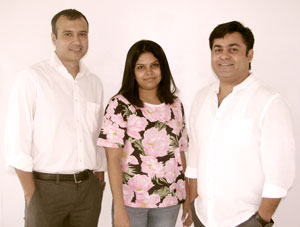
    LinTeractive Leadership team- L-R- Sumanta Ganguly, Gauri Joshi and Paul Dueman

    LinTeractive, the fast-growing digital division of Lowe Lintas + Partners has taken another major step as it named its leadership team in India.The three-member leadership team comprising of a business, strategy and creative head each, will drive the digital business for the group and will be supported by the IPG agency Interactive Avenues as its fulfillment partner. The trio includes Paul Dueman, who’s been with the agency for some time now, and features two new additions – Gauri Joshi and Sumanta Ganguly. The leadership team will report to Vikas Mehta – CMO, Lowe Lintas + Partners and Country Head, LinTeractive.


    Announcing the leadership team, Mehta said, “Just a few months ago, LinTeractive was merely a plan on paper. We set out to build a digital agency that was different on two counts. First, we see ourselves as not just a digital agency, but an ‘agency for the digitized world’. And second, our belief that ideas are at their best, when they work seamlessly ‘on and offline’. Paul has been an excellent partner in driving this approach and we’ve seen great traction among clients. Both Sumanta and Gauri are exciting additions to the team bringing in serious depth on domain expertise. I am confident that this leadership-trio will step up the gas and further fuel the momentum we’re seeing with LinTeractive.”


    Paul Dueman has been named Head of strategic and engagement planning. His careerspans over 18 years with 14 of them, spent in digital marketing and technology development. He has been a part of Lowe Lintas + Partners for nearly 5 years in two stints. Sharing his thoughts on the leadership role, Dueman said: “It continues to be a rewarding experience for me at LinTeractive. The go to market support of Interactive Avenues gives us a bigger canvas to shape our ideas and deliver far more value. Additionally, the synergized working with teams across the board internally – from PR, to Healthcare, Activation and Advertising makes me feel like a kid in a candy store. It’s a digital glut-fest at Lowe Lintas + Partners and I’m definitely not on a diet.”


    The two new appointments include Sumanta Ganguly, who joins LinTeractive as Senior Vice President and will be taking on the role of business head. Ganguly’sresponsibility would include partnering clients to craft out ‘digital first’ communication strategies and creating a digital roadmap for some of the top brands in the country.


    Sharing his views on joining the agency, Ganguly said, “I am excited to join an agency that has a ‘seat at the table’ with some of the largest brands in the country. Coupled with creative, planning & content capabilities it is a potent mix to build great partnerships with brands who want to lead in today’s social and digital service offering.”


    Joining Dueman and Ganguly in the trio would be Gauri Joshi who joins LinTeractive after being a Hungama old-timer. As Unit Creative Director, Joshi will be heading LinTeractive’s creative function providing digitally driven creative solutions.


    Adding her views, Gauri Joshi said, “I am delighted to be a part of the team at LinTeractive. As a group, Lowe Lintas + Partners has etched out a truly robust and integrated vision for LinTeractive, which I believe is the best way forward for brands as well as digital on the whole.”


  • Anuja Chauhan of ‘Yeh dil maange more’ fame back at JWT to pep up Pepsi campaigns

    By Pritha Mitra Dasgupta


    Anuja Chauhan, who built a solid reputation in advertising (‘Yeh dil maange more’) before veering off into chick lit (‘The Zoya Factor’), is returning to J Walter Thompson India as creative consultant. She will be part of the Power of One (Po1) team that the ad agency is putting together to work on the PepsiCo contract, the first time that JWT will have a group of people solely dedicated to the promotion of one brand. Chauhan is returning to advertising at the behest of PepsiCo, having worked on several campaigns for the company, including ‘Mera number kab aayega’ and ‘Nothing official about it’, apart from the one cited above.


    The agency set up the team about two months ago to work on the 15 PepsiCo brands that it handles. JWT has had the account for the last 25 years and it’s the agency largest.


    Colvyn Harris

    Colvyn Harris, CEO, JWT South Asia, said the agency has similar structure in other geographies which are formed “on the specific requests of clients, and depends on their scale and ambition.”


    The Po1 team is headed by Babita Baruah, senior vice president and executive business director, JWT Delhi. Baruah, who recently took over the account from executive business director Saurabh Saxena, will be assisted by senior VP Mythili Chandrasekhar on the planning side. On the creative side, the account has been divided into three–cola, foods and juices–and placed under various executive creative directors.


    Martin Sorrell

    Commenting on this new initiative, Martin Sorrell, CEO of WPP Group, of which JWT is a part, said: “In creating “Power of One”, JWT has brought together skills and capabilities from across our Group, for both foods and beverages, under one single unit to provide integrated solutions to PepsiCo’s brands and businesses.” Chauhan said she was “excited to be part of the team”, which she describes as nimble and flexible.


    PepsiCo is upbeat about Ms Chauhan’s return. “It’s great to have Anuja make a strong comeback on the PepsiCo portfolio,” said Deepika Warrier, vice president of marketing at PepsiCo India. “She conceptualised the #BackToSchool video that we recently released digitally. It became a big hit overnight!”


    Santosh Desai

    Santosh Desai, managing director and CEO of Futurebrands, said: PepsiCo needs to take risks and lead the youth rather than following them. Anuja Chauhan is associated with some of greatest ads and therefore the answer is clear. The company needs to go out on a limb and create some great advertising for others to follow.”


    Source:The Economic Times

    Copyright © 2014, Bennett, Coleman & Co. Ltd. All Rights Reserved

    Licensed to republish


  • Panel discussion deliberates role of media in promoting culture of giving

    By A Correspondent


    The Mumbai Press Club recently organized a panel discussion that deliberated the role of media in promoting a culture of giving. The panel discussion touched upon important topics like Is news today turning morbid? Is the focus solely on crime and scams? Is there space in the media for sunshine stories? More importantly, can the media foster a culture of giving in society? The discussion was held in the run up to Daan Utsav (formerly the Joy of Giving Week) celebrated from October 2-10.


    The panelists included Ajay Piramal, Chairman, Piramal Group, Mid-Day editor Sachin Kalbag, Raheel Khursheed, head, politics, government, news at Twitter India, Ingrid Srinath, CEO, HIVOS India (former CEO, CRY) and actor Gul Panag. The panel was moderated by senior journalist Indrajit Gupta.


    Venkat Krishnan N, founder, Daan Utsav, pointed the vast spectrum of people who had participated in the joy of giving festival, from CEOs to farmers in Gujarat who gave 4000 litres of milk to parts of the country that needed it.


    India has always had a culture of giving since the days of the Ramayan and Mahabharat, shared Ajay Piramal who has hitherto been shy of talking of the philanthropy he has been involved with. He chose to discuss it openly in order to promote a culture of giving.


    Charity is not about spending a lot of money. It is about giving whatever you can at any given point of time, said Gul Panag, who spearheaded Social Outreach Accreditation Program to bring the common man, NGOs and corporates together. “Many NGOs fall short when it comes to instituting programs for weekend volunteers,” said Panag.


    Raheel Khursheed spoke of the role that social media plays in expanding conversations and connecting people who want to give. While getting blood for trauma victims was once a nightmare, Khursheed said that it’s now a matter of tweets and re-tweets, with blood being procured at tremendous speed. He even spoke of a teacher from a remote school in Kashmir who got laptops from a stranger in Mumbai thanks to social media.


    Ingrid Srinath shared that the advent of social media has seen journalists reach out to her for stories rather than her having to pitch them to journalists. She spoke of CRY’s unique initiatives to network with the media, from cricket matches with CEOs and journalists to stories on profit and marketing initiatives that many NGOs shy away from.


    Sachin Kalbag spoke of Mid-day’s role in focusing on local initiatives and on good news rather than solely on the bad. He spoke of his paper’s role in spreading awareness about malnutrition in Melghat that resulted in the Bombay High Court taking suo moto cognizance of the tragedy of 3,000 children and thereafter directed the state government address the situation.


    The panelists were unanimous that media fared poorly when it came to spreading a culture of giving. Panag said she never read newspapers first thing in the morning as the flood of bad news ruined her day. When asked to wear the editor’s hat, Panag said that she would want two sorts of stories to make it to the paper every day. Stories of giving by the very rich and the very poor, from CEOs to chaiwalas. This, she feels, would help foster a culture of giving among most people who fall in between the two extremes.


    Senior journalist Ayaz Memon said research showed that it was not simply editors but readers who crave bad news. Memon, who gave the vote of thanks, pointed to the need for changing the narrative.


  • Greetings on Ganesh Chaturthi. We’re closed tomorrow

    It’s Ganesh Chaturthi tomorrow, Friday, August 29. So there will be no scheduled updates on the site and no edition of our newsletter and viewsletter. We’ll be back on Monday, September 1.


    However, if there’s anything major that happens tomorrow or over the weekend, we’ll hop right back.


    Enjoy. And Greetings on Ganesh Chaturthi.


  • It’s a deal! Ratan Tata invests in Snapdeal

    By A Correspondent


    Ratan Tata, chairman emeritus at Tata Sons, has invested in Delhi-based online marketplace Snapdeal. The company did not disclose the amount invested. The announcement comes a day after Snapdeal entered into a partnership with Tata Value Homes to sell apartment units of projects spread across five cities, namely, Bangalore, Chennai, Pune, Mumbai and Ahmedabad.


    Snapdeal’s cofounder and chief executive Kunal Bahl termed Tata’s investment a validation of the company’s growth. “An investment by a legendary and respected figure like Mr. Tata is an excellent validation of our focused strategy on building a long term enterprise and marks the start of a very important phase for the company,” said Bahl.


    This investment also underlines the growing interest shown by India’s traditional industries in the fast-growing ecommerce sector. Recently traditional retail majors like Reliance and Arvind have made forays online.


    The sector has also attracted large investments in the past few months. Snapdeal raised over $233 million this year in two rounds from investors like eBay Inc, Singapore-based Temasek and Wipro chairman Azim Premji’s family office Premji Invest. Market leader Flipkart too raised two rounds of funding this year. In July it raised $1 billion from existing investors and Singapore sovereign wealth fund GIC. Global major Amazon also announced a $2 billion investment for its India operations in July.


    Snapdeal, which is estimated to have crossed $1 billion in sales this year, is rapidly adding new categories of products. Apart from apartments, it has launched a catering supplies segment recently. In the next few months the four-year-old platform is planning to add 10 more categories.  Bahl has stated in the past that the company will focus on adding new merchants, new categories and focus on mobile commerce to ensure growth.


    Source:The Economic Times

    Copyright © 2014, Bennett, Coleman & Co. Ltd. All Rights Reserved

    Licensed to republish