Category: NEWS

  • BARC eyes 50K panel in 1.5 years

    By A Correspondent


    Broadcast audience measurement research body BARC (short for Broadcast Audience Research Council) is eyeing an initial panel (households with set-top box installation) of 20,000 and 50,000 within a year-and-a-half thereafter.


    According to reliable sources, BARC is said to have zeroed in what is perceived as cutting edge technology in television audience measurement. The technology is said to be pilfer-proof, future-ready and economical.


    While the Establishment Study is expected to be complete by next month, the decision on the vendor will now be taken on the basis of the technology selected. BARC is said to have firmed up on three – international as well as Indian – players and the tests are due to begin soon.


    BARC is expected to award the contract by the end of this quarter or by January 2014. According to a source, the technology solution adopted is expected to be much cheaper and advanced than what is currently available. “What’s important is that BARC should have enough time to undertake tests,” said one CEO who did not wish to named.


    When asked whether the cross-holding rule will impact the selection of the incumbent TAM or its jv partner Kantar Media which is owned by ad conglomerate WPP, a BARC member who MxMIndia spoke with, said the TRAI recommendations have not been notified by the government yet so Kantar solely or as TAM can participate. However, it is believed that the government will toe the TRAI line and insist on no crossholding.


    On the size of the panel, the TRAI guideline says that while a minimum panel size of 20,000 must be implemented within six months of the guidelines coming into force, the panel size needs to be increased by 10,000 every year thereafter until it reaches the figure of 50,000. Also, the panel of homes has to remain representative of all television households in the country.


    BARC is a joint industry body comprising broadcasters, advertising and advertising agencies. The deliberations and final decisions on the selection of vendors is to be taken by the Technical Commiitee head Shashi Sinha. Puneet Goenka is chairman of the body and Partho Dasgupta is its CEO.


    See also:

    Earlier report: BARC close to final decision on measurement vendor


    TRAI recommendations on guidelines for TV rating agencies


  • Golfing legend Gary Player to lead jury for India Golf Awards

    By A Correspondent


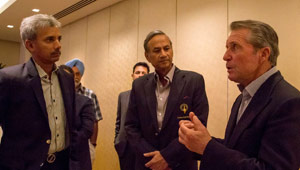
    Legendary golfer Gary Player will lead the jury for India’s first golf awards called the Take Solutions India Golf Awards powered by www.golfingindian.com. The awards will reward and recognize excellence in golf and is supported by the country’s top golf patrons.


    “It’s important in any industry to recognize leaders, and the India Golf Awards will do just that,” said Mr Player.”The recipients of these awards will have shown that they see the huge potential of golf in India, but their efforts need promotion and a media platform to inspire others.  This annual event will help golf gain important momentum to establish itself as a prominent sport in India.”


    The India Golf Awards 2013 is backed by Take Solutions, a technology company and a supporter of the game. Vice Chairman HR Srinivasan, who is a prolific golfer himself said, “The Take Solutions India Golf Awards will set new benchmarks and create pathways to bring about positive change to promote golf in a rapidly changing business, leisure and recreational environment.”


    Golfingindian.com has been set up by award winning business journalist and golf enthusiast Shaili Chopra. Said Ms Chopra: “It’s a real honour for the India Golf Awards to have such an eminent personality launch this event, which promises to be a benchmark in the sport. Gary’s presence makes it world class.”


    The awards will be held on November 5, 2013 in Gurgaon also have other eminent jury members such as Kavita Singh, Director on Ladies European Tour Board and Abhi Parmar, Director General of Indian Golf Union along with former India #1 Vikramjit Singh and former Callaway India boss, Vivek Mehta. The research and jury was conducted by global consultants Technopak.


  • Future bright for Emerging Agencies


    By Fatema Rajkotwala


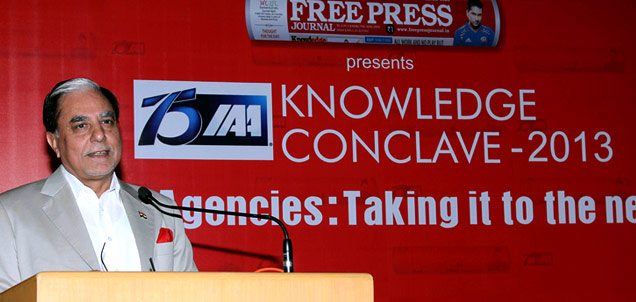
    Downturns and failures are opportunities to be successful in the future,” said Subhash Chandra, Chairman, Essel Group and Zee Network in his address on entrepreneurship at the Knowledge Conclave of International Association of Advertising India Chapter.  The Conclave on Saturday (October 26) in Mumbai was held with the objective of helping emerging agencies understand how to take their businesses to the next level.


    Mr Chandra, who was Chief Guest of the event, shared his mantras for entrepreneurs. “Honour your commitments.  Don’t let fear set in. Listen to your customer. When I hear debates on whether it is better to be independent or enter partnerships, I say you become a multinational. But yes, partnerships help in growth.”


    Srinivasan Swamy

    Led by President Srinivasan K Swamy (CMD, RK Swamy BBDO), the IAA India chapter in association with the Free Press Journal invited senior industrypersons to share their knowledge and experience with the fraternity of small and mid-sized agencies. Acknowledging the growth in number of small agencies and the theme chosen for the Conclave, Swamy pointed out that the growth in membership of the various trade bodies from amongst the small and medium-sized agencies indicates that the business is robust for them.


    CVL Srinivas

    CVL Srinivas, CEO, Group M South Asia spoke on “How to flourish as a mid-sized media agency”.  Putting things in perspective for emerging agencies, he pointed out that in many ways, small and mid-sized agencies have a natural competitive advantage over big corporate and network-owned agencies. “It is easier for emerging companies to go digital. It is no longer a game of the top 4-5 agencies. Fragmentation and specialization is a huge opportunity for emerging agencies. Large agencies are not equipped to deal with local entrepreneurs whereas small agencies can cast the net wider. There is a shift from contextual and demographic targeting to audience planning.”


    Mr Srinivas spoke of how agency life tends to get a little superficial at times, leaving you disconnected from consumers. He said, “There is no better time than now to be a part of the media agency business. Today, all of us (big networks, multinationals and small agencies) are in the same boat. Massive disruptive models are coming in and this indicates that our advertising model needs reinvention.”


    B S Nagesh, Vice Chairman, Shopper’s Stop engaged the audience with his talk on “Preparing to win in a hyper competitive market” where he urged all entrepreneurs in SMEs to bring in out-of-the-box modes of growing their businesses. Summing up his nuggets of advice, he said,”Creativity has to be coupled with financial training. Many processes within SMEs happen in an informal way. To lessen the gap between Desire and Deserve, organisations need to look at building capability along with building capacity. Trust, transparency and empowerment within the company is important. Create an organization that is more responsive, accountable and measures performance. Create opportunities by creating clients in emerging markets. Celebrate trials, failures and successes.”


    Later, Ali Merchant, Director Triton Communications, Harindra Singh, Vice-Chairman & MD, Percept Ltd, that holds specialists agencies in various sectors and Vinod Nair, Managing Director, Network Advertising formed a panel on the topic “Path ahead for an Emerging Agency” that was chaired by Sandip Tarkas, President Strategy, Future Group. The panel debated the pros and cons of commoditizing the advertising product with specialized agencies, the benefits and limitations of being an independent agency versus entering partnerships to grow businesses and the need to position and package in order to be paid for specialized services.


    As the Founder and CEO of classifieds portal, Quikr.com, Pranay Chulet spoke on a session titled, “Future of Interactive Media”. Sharing his insights on digital marketing and the growing digital industry, he said, “In this complex world, the client needs not just an ad but conversations that are generated. We have to think multiple channels. The digital medium has also made Call to action easier. It allows Test, Analyze and Scale Fast or Fail Fast model, which is not possible with other media.”


    Abhishek Karnani

    According to Abhishek Karnani, Chairman of the IAA Knowledge Conclave, the primary objective of the sessions was to get the top advertising and media minds to come together to reflect on ideas and strategies for emerging agency owners to take their companies to the next level. This, he said, was served in ample from the practical advices served at the Conclave.


  • India not Shining! So why does FutureBrands ‘Country Brand Index’ not have India in the Top 25?

    By Malini Goyal


    FutureBrands, a global brand consultancy, puts out an annual ‘Country Brand Index’ in which it measures the strength of a country brand on various parameters, from awareness to familiarity. The firm also looks at what differentiates a country brand on five key dimensions: value system, quality of life, good for business, heritage and culture, and tourism.


    The 2012 index – Future Brand’s eighth – had Switzerland, Canada, Japan, Sweden and New Zealand as the top 5. India didn’t figure in the list of 25. That may not surprise as most of the countries on that list are developed markets (countries like the UAE and Costa Rica that come in at the tail end are the few exceptions).


    The five key FutureBrands benchmarks may explain why India doesn’t figure in the top 25. For instance, quality of life in most metros still has plenty of room for improvement; and doing business isn’t exactly easy.


    The main reason, though, why India as a brand doesn’t score well is that it means too many diverse things to too many people – from Bollywood to Gandhi, from the Taj Mahal to cricket. Or to put it another way: Indians just can’t seem to pin down one defining attribute – or a set of common attributes – for Brand India.


    That’s what a recently-released domestic study amongst young corporate executives throws up. “India is a country of contradictions – a land of opportunities and also a land of hardships,” says Tara Singh Vachani, 26, daughter of entrepreneur Analjit Singh and CEO of Antara Senior Living. In a similar vein, internet entrepreneur Alok Kejriwal, 44, dubs India as “divine chaos.


    It’s a car that’s being driven in water. Or, to put it spiritually, India is the soul whose body has gone missing.” And Mittu Chandilya, 33, head, AirAsia India reckons India is a socially diverse country that is trying to construct its future by carefully balancing its past and present.


    Clearly, for most of these high-flying young Indians, brand India is a complex entity with surprises and contradictions built in. The breadth of answers from those surveyed – the sample comprised those in the 26-35 year age band – was, well, breathtaking.


    For instance, to the question ‘What defines Brand India’, the most popular answer (64.3% of those surveyed) was Bollywood; the second most common answer hit the other end of the spectrum – Mahatma Gandhi (57%). The next two most popular answers too were as diverse as they come – the Taj Mahal and cricket.


    And what is it that makes Indians proud in the global context: while 84% reckoned the opening up of the economy made their hearts swell with pride, almost half of the sample felt that Bollywood’s high-jinks on the international stage made them feel good about themselves.


    In the similar vein of contradictions, some Indians prefer to see the glass half full – around 60% feel ‘incredible’ is the apt adjective to describe India – although more than half thought ‘corrupt’ was a far better prefix.


    And all of 83% feel India’s economic growth story has taken a beating. The culprits aren’t unpredictable: corruption, political leadership, policy paralysis and red-tapism.


    A Reflected Idea of India

    What do these results reveal about young Indians’ view of the country? “It is a very shallow view of India. My sense is if you did this survey among foreigners anywhere in the world, the response would not have been very different,” says Santosh Desai, CEO of FutureBrands.


    It is one thing for the world to see Bollywood as defining India. It is another that even Indians living in India, who experience all its highs and lows every day, too see it that way.


    “Their idea of brand India is an imagined one. It is not based on their experienced realities of India,” adds Mr Desai. Mr Kejriwal agrees.


    He feels if true this is a deceptive view that Indians have. Half of the respondents are from the North. And yet they aren’t talking about real issues like respect for women and how to drive changes.


    “Around 60% of them are saying an emphasis on inclusive growth will help drive change. What do people in that age group know and what do they care about inclusive growth,” asks Mr Kejriwal.


    In contrast, the real issues that Indians face on a daily basis are conspicuous by their absence in the survey. What about education and everything around it? Shouldn’t a young country like India with such a messy education system be worried about it and aspire to fix it, asks Mr Kejriwal.


    “There is an inflated sense of self that you get all through the results. I think these respondents are just ticking the right boxes – things that make them feel nice.”

     

    Partha Sinha

    Partha Sinha, director, South Asia, Publicis, an advertising agency, is also critical: “Theirs is a view divorced from Indian realities. They are simply playing back popular imageries – from Incredible India to corruption.”


    There are reasons why young corporate executives see India that way. One, many of them tend to live in their own urban bubbles. And the only way they experience the other India is through Bollywood and cricket.


    Two, many Indians are still struggling with the idea of India. While the civilizational and historical view of India for them is rich and deep, they are still grappling with what benchmarks to use to construct the idea of 21st century contemporary India.


    “Indians are still settling down with relatively new ideas of democracy, liberalization, market-dictated policies. Power structures have changed. Old rules are no longer relevant. We still do not know how to judge things in the new context,” says Mr Desai. As a result, Indians form an escapist view that is at once glossy, seductive and often are imageries that the world is putting out – be it corruption or Bollywood or cricket or Gandhi.


    Source:The Economic Times

    Copyright © 2013, Bennett, Coleman & Co. Ltd. All Rights Reserved

    Licensed to republish
     

  • Tanishq’s new ad: Brave or Pseudo?

    Diwali is when Indian advertising celebrates its traditions. Deep fried jalebis, firecrackers and diyas, happy joint families with shimmering clothes and set relationships. Tanishq, however, has something else in store beyond an elaborate polki neckpiece – a dusky bride who already has a daughter.


    The Lowe Lintas advertisement, directed by Gauri Shinde, breaks two stereotypes in one go – and it’s triggered off a debate, generating critiques as well as tribute. Charmy Harikrishnan rounded up reactions from inside the industry and outside. Gauri Shinde, director says, “For me this is normal, this is what happens. But when you see remarriage in an advertisement, for the people it is a reassurance of what happens in real life.”


    Anuja Chauhan, writer and former executive creative director of JWT says, “It’s showing a very real, happening-all-around-us situation. It’s missing some of Tanishq sparkle though – feels a little stilted, almost Raymond-ish. Their ads are usually livelier. But the thought is nice, and definitely overdue in the category.”


    Nandita Das, actor and poster girl of ‘Dark is Beautiful campaign’ says, “I am pleasantly surprised. I am glad that Tanishq has made this brave ad and going by the response our campaign has got, I am sure they will see an amazingly encouraging response. And that might motivate others to follow suit.”


    Prathap Suthan

    Prathap Suthan, managing partner, Bang in the Middle says, “I like the casting, and the dusky bride, and the overall stepping out of tradition. I am also glad that Lowe for all the battering it gets for Fair & Lovely, sort of blunts that attack with this one commercial. Instead of the tried and tired route of focusing on a regular marriage scenario, this steps into taboo-land, the never-explored and deliberately ignored area of second marriages.”


    Urvashi Butalia, publisher and writer says, “The ad is certainly unusual and perhaps there’s hope yet. It also goes to show that it takes so little to do something different, and I wonder why advertisers are so scared of going beyond the given easy options.”


    Manish Bhatt

    Manish Bhatt, Founder Director at Scarecrow Communications says, “I saw it trending big time on all the social network sites but the kind of people commenting have nothing to do either with the brand or with the cause. The purpose of every piece of advertising is to close the loop with the product or the brand message. I see that missing in this spot – it appears to be a pseudo support for such a sensitive subject.”


    Piyush Pandey

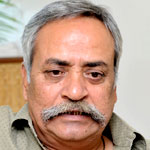
    Piyush Pandey, Executive Chairman & National Creative Director Ogilvy & Mather India says, “I think it’s a brave ad and a great concept. Any leader must take such little chances of taking the society forward. I don’t think we should be at all critical about this ad. Then we will stay in the past.


    Source:The Economic Times

    Copyright © 2013, Bennett, Coleman & Co. Ltd. All Rights Reserved

    Licensed to republish


  • Starcom MediaVest redefines brand experience consulting with Zero Dot

    By A Correspondent


    Starcom MediaVest Group (SMG) has launched a new unit at the company, Zero Dot, a new generation of brand consulting, experience design, strategy and original creation of content. While the unit launched officially now, Zero Dot has already been driving new ideas, innovation and returns for numerous clients, including Procter & Gamble brand Cheer, which recently named Zero Dot as one of its creative partners.


    “Consumers are at the centre of everything we do,” said Laura Desmond, SMG CEO. “Keeping ahead of their pace of change and connecting with them in real-time is a part of our DNA. Today’s converged media world has created a need for more agile, multidisciplinary solutions, which is where Zero Dot comes in-serving as a consultancy that can create a new breed of experiences and catalyze speed to market so brands can engage today’s consumers in the moment..”


    Zero Dot will collaborate with all SMG agencies and Centres of Excellence (COE) and joins the group of emerging media and content units at the company, said a communiqué, It will expand globally throughout 2014.


  • Over a quarter of working adults globally now banking via mobile phones

    By A Correspondent


    According to global report from leading mobile advertising network, BuzzCity, mobile banking is on the verge of cashing in, BuzzCity surveyed 17,000 consumers across 22 countries on their attitudes to mobile banking and payments.


    Amongst working adults over a quarter (26%) are using their phones for some form of financial or banking transaction, with nearly a fifth (16%) intending to try mobile banking. But it is those without bank accounts, ironically, that are fuelling the growth of mobile payments – a higher percentage than those with bank accounts.


    Of those who are already mobile banking, balance enquiries (30%), bank transfers (26%) and cash withdrawals (28%),are the top three most-used banking features. When it comes to non-banking activities, 13% now use their phones to receive their salaries, and 12% pay for goods via their phones.


    The research has brought to the fore the emerging demographic group of the UnderBanked – those who do not have traditional bank accounts -  who  make up 30% of working adults using mobile. The UnderBanked are connected with exposure to mobile financial services and this is fuelling the growth of mobile payments: a higher percentage (19%) is using mobile payments for paying bills then those with traditional bank accounts (13%). Mobile is bridging the gap for those with no access to traditional banking services – some 12% use mobile money transfer services.


    The UnderBanked are not necessarily a high credit risk group. While many (43%) believe they don’t have enough money to open an account, only 8% have a bad credit history. At least a fifth (21%) feel they do not need a bank account probably because banks do not offer services that are important to them, such as fast cheque cashing services (31%) and small cash loans (50%).


    Said Dr KF Lai, CEO of BuzzCity on the findings: “Our research is showing a seismic shift in global consumer confidence when it comes to mobile banking, as well as how and what people are using mobile payments for. Mobiles are intrinsically wedded to our daily lives and our research highlights that this now extends to how we bank, whether we are with or without a traditional bank account – and what we are happy to pay for with via our mobiles. For the UnderBanked the mobile phone has become, in addition to a communication and surfing device, a necessary banking and payment channel and is filling a gap that the banks cannot meet.”


  • Why (and how) GSK is ready with Plan B for Horlicks ?

    By Amit Bapna & Ravi Balakrishnan


    It’s a tough job keeping a brand alive for 140 years. It’s tougher yet trying to make it stand for something different after it has spent the bulk of its existence, defining a very specific category: in the case of Horlicks, a malted milk drink. But that’s just what Horlicks has been trying to do, especially in India.


    Arriving on Indian shores in colonial times, the brand acquired enormous equity post independence, especially in the East and South. It accounts for 46.4% of the approximately Rs 5,000 crore health food drink category. The Indian subcontinent is currently the brand’s largest market, accounting for 70%- 80% of global volumes. And also the best site for experiments in seeing just how far the brand can go.


    Horlicks is currently in a frenetic expansion mode. It’s revitalised its focus on biscuits launched in 1993 and is making forays into areas like noodles and more recently oats. This is hardly unique: many legacy brands are in a similar rush to stand for a lot more – Lifebuoy and Pears for instance, which have expanded into hand sanitisers and face wash.


    In the case of Horlicks though, previous attempts to stretch the brand have been problematic. NutriBar, an energy bar launched in 2009 has been withdrawn as also flavoured milk which hit the market around the same time. According to marketing consultant Harish Bijoor, the taste profile of these products militated against expectations from the brand.


    It tried to get into the confectionery space with cream biscuits only to back out. Horlicks is now focusing on the high function space with nutritional biscuits. Says Seema Gupta, assistant professor – marketing, Indian Institute of Management, Bangalore, “Biscuits is driven by taste or habit, and fortified calcium and nutrients is not the prime mover of the category.” It can be an added benefit if the variety and taste is as good as that of the entrenched brands, she adds.


    The foray into food, currently contributes to around 10% of Horlicks’ share. Of these, biscuits still lead, with recent launches like noodles performing below expectations. At the moment, Horlicks is back to the drawing board, launching oats, diversifying its biscuit portfolio and tweaking noodles. Says Jayant Singh, executive vice president – marketing, GSK Consumer Healthcare, “We found that 40% of households are using noodles for breakfast. When we launched we were operating in all segments but then moved in the higher end, healthy multigrain area.” Adds Zubair Ahmed, managing director, GSK Consumer Healthcare, “Currently we are relooking at our entire positioning and are revisiting the category.”


    It’s betting big instead on nutritional and digestive biscuits, as a healthy snacking option and oats to get a larger share of the breakfast table. At 40% annually, oats is the fastest growing segment in the breakfast cereal market valued at over Rs 600 crore. Horlicks is a late entrant in a market packed with Quaker, Saffola, Britannia and Kellogg’s. Starting with white oats in 2011, this year has seen the launch of flavours. On this front the brand is facing a bit of friction and as per industry sources there is a divided house internally.


    There is a school of thought that feels the masala association can lead to equity dilution. Says marketing consultant Sunil Alagh, “In many ways, their hands are tied by the UK headquarters who decide what can and can’t be done. They are obsessed with serious health attributes – which is right for their core malt drink. But in snacking the consumer in India is not ready yet. Maybe they could go in for a sub brand since the mother brand is so strongly associated with health.”


    It’s a classic chicken and egg conundrum: variants and extensions are on a low base and for them to achieve scale they need push on all sides, which often does not happen due to an over-crowded market, points out the CEO of a brand consulting firm, on condition of anonymity. In Horlicks’ case since the core brand is consumed mostly by children (over 80%), most resources are spent on increasing off take or salience. Even within the milk food drink space, it becomes very difficult for variants, for example, for women or diabetics to create the kind of impact that is required for behaviour change, he points out.


    Horlicks is not relying solely on its new portfolio. Its flagship is becoming more accessible to rural markets with SKUs ranging from Rs 5 sachets to a 2 kg pack costing approximately Rs 300. “We have seen our volumes grow 300%-400%. As a part of our access agenda, we look at having close to a billion serves next year,” shares Singh.


    By all reckoning, the brand faces an uphill slog. As Dr M G Parameswaran, executive director & CEO, Draftfcb+Ulka, puts it, monolithic brands can get into closely related categories, but cracking segments with different product codes is difficult. Marketing consultant Sunil Alagh who claims to have taken Horlicks biscuits from a Rs 40 crore to a Rs 100 crore business in 18 months in a stint as advisor, points to a more severe problem: “The first rule of thumb is to ensure that you have the best team and never use the existing sales force.


    This is because initially the sales tend to be low since it’s a new product. The apparent rewards seem less and it requires more work. No matter what you tell them, the sales team will spend 90% of time on the existing products and only 10% on the new. Brand extensions require the primary task of getting your team out of their comfort zone.” In 2010, when he advised Horlicks, he recalls the biggest challenge was from within. He was able to grow the biscuit category only after insisting on a separate sales force.


    The other problem is more intrinsic to what Horlicks stands for. Health was always its stock in trade; an outlandish ad from the 1930s claimed a cup before bedtime prevented “night starvation.” However, health has become an almost generic proposition flogged by everyone from air conditioners to chewing gum. Noodle category leader Maggi has a line that says “taste bhi, health bhi”; by focusing on health, Horlicks is trying to sell fun categories in a serious manner. As Mr Alagh puts it, “the biggest problem and opportunity for the brand is that in the East and South it’s viewed as something that’s a preventive and in the other half of the country its associated with ‘cure’.” So, can the 140 year old learn a few new tricks?


    Source:The Economic Times

    Copyright © 2013, Bennett, Coleman & Co. Ltd. All Rights Reserved

    Licensed to republish


  • Bombay Mgmnt Assoc logo to celebrate collaboration

    By A Correspondent


    The Bombay Management Association (BMA) has adopted an all-new identity reflecting the changes that are sweeping management thinking. The new logo is an expression of contemporary management thought and has been conceptualized to support the new brand experience that the association aims to provide.


    The new logo attempts to celebrate a more collaborative culture that is today’s mantra. The letter ‘m’ in the logo also graphically captures this collaboration and the coming together of two management professionals. Different colours cue the different areas of learning, knowledge-sharing and enhancing managerial competencies that bmapromotes.


    The new logo has been designed by Interface Communications. Commenting on the design Robby Mathew, National Creative Director, Interface Communications said that every element in the logo has a story to tell. For example “The lower case used in the logo brings alive a more open culture that typifies today’s management thinking and one that welcomes participation from the younger generation”.


    Commenting on the new logo, Yogi Sriram, President BMA and Senior Vice President (Corporate Human Resources) L&T said “Lord Tennyson wrote “the old order changeth yielding place to the new…”. Bombay or Mumbai has seen dramatic changes in its corporate landscape. The pulse beat of business in modern India can be felt most significantly in Mumbai. The pulse is epitomized by youth, color,vibrancy and energy and is ensconced in the new logo of BMA that represents this story of change and robust enthusiasm”


    Niteen Bhagwat, Vice President, BMA andExecutive Director & CEO, Asterii Analytics said”This design is a bold step and is a dramatic departure from the past in design and expression, without losing out on the core values of BMA which remain unchanged”.


  • Sakal Media Group partners Malaysian PM’s nation/state transformation plan

    By A Correspondent


    The Pune-headquartered Sakal Media Group (SMG) has partnered with Pemandu ( Performance Management and Delivery Unit) of the Malaysian Prime Minister’s Office (PMO) to enable a transformation process which can help change a state or a nation in any and every sector within a short-time frame.


    This methodology has got global recognition from the likes of Harvard, Princeton, AT Kearney, World Bank and 14 countries who participated in the Big Fast Results (BFR) programme of the Malaysian government.


    Abhijit Pawar

    This is perhaps for the first time, that a private sector company like ours is actually partnering with a government entity in this particular field,” said Abhijit Pawar, Managing Director of the media group.


    Sakal Media Group’s ‘Delivering Change Programme’ has been endorsed by none other than the Planning Commission of India’s ‘India Backbone Implementation Network’ (IbIn), notes a communiqué. “IbIn has made special mention of Sakal Media Group’s successful, Pune Bus Day on its website, http://ibinmovement.in/   with endorsement for the ‘Delivering Change Programme’ also coming from India@75 (http://www.indiaat75.in/),” it adds.


    “The past one year, has seen the Sakal Media Group undertake several, socially oriented campaigns in Pune and Maharashatra starting with the Pune Bus Day, Tanishka Women’s Dignity Forum, Freedom from Drought, Tandurust Bandobast and culminating with the Delivering Change Programme,” added Mr Pawar.


    To coincide with this, a 12-pager is being distributed in today’s edition (Oct 30) with Sakal group newspapers across Maharahstra. “Over the last 45 days, the Sakal Media Group has through its initiative ‘Maharashtra’s Expectations’ tried to understand the expectations of the people of Maharashtra about development in different sectors. The discussions not only brought out the issues in various sectors, but also gave the hope that these can be addressed. It is the first attempt in the State and also the first attempt by the media to understand what the people want. While this brainstorming was on, many people wanted to know, ‘what next?’ At a time when everyone only talks about problems rather than solutions, this question is obvious. We will not stop here. Our focus is on finding solutions. We therefore bring you this special issue which talks about solutions and their implementation. It is our ‘Delivering Change Programme’ which will bring about this change. From brainstorming and public awareness, the Sakal Media Group is now moving towards action,” the communiqué signed by Mr Pawar explained.


  • GroupM hires Manu Prasad as Social Media Head for South

    By A Correspondent


    GroupM has strengthened its digital practice as Manu Prasad joins it as South Head for the social media practice in Bengaluru. Mr Prasad was heading the social media practice at Myntra.com.


    In his new role, Mr Prasad will report to Karthik Nagarajan, National Head for Social Media.


    Speaking on his appointment, he said, “Group M has an exciting roster of clients, and I am thrilled at this opportunity to work with a diverse set of brands – across product categories, and at different stages of their lifecycle and social evolution. The goal would be to make each of them the gold standard in social, in their respective domains.”


    Commenting on the appointment, Mr Nagarajan said, “Manu brings in a wealth of marketing leadership experience, across media platforms. His experience of having built a social media program ground up, in a category as dynamic as e-commerce, will be a huge asset. Our clients, especially the ones in the southern markets will benefit substantially from his contribution.”


    Group M India manages the social media journeys of over 70 different brands with its key clients including Nestle, Arvind Mills, P&G, Frito Lay’s, PepsiCo India, Titan Industries and Star TV.


  • Parle-G to get juniors curious in RBNL’s kiddie talent hunt

    By A Correspondent


    Parle-G has come on board as presenting sponsor for Big Junior Star, a property that showcases the best young talent across the core Hindi markets of Uttar Pradesh, Bihar and Jharkhand. To be aired as a show on Big Magic and amplified across Big Magic Bihar and Jharkhand as well as radio network 92.7 Big FM, the talent encouragement platform is targeted at children between the age of 8-15 years. The show will be created into a 40-episode special that will air on Fridays, Saturdays and Sundays starting October 2013 to March 2014.


    Said Pravin Kulkarnii, GM-Marketing, Parle Products said, “With Big Magic now being aired across all major cities in India and becoming popular amongst its target audience, we are certain that our association with their upcoming show, Big Junior Star will help us take forward the brand ideology of Parle G.” Added Mayank Shah, Group Product Manager, Parle Products, “This platform will help us focus in bringing out natural curiosity in kids, encourage their desire to try new things, experiment and learn from their mistakes. We want them to realize that they can learn everywhere and from everything and that school is beyond just books and classrooms.”


    Said Sunil Kumaran, Business Head, Big Magic: “With an interactive format and a diverse platform of categories, we are confident that Big Junior Star will garner mass appeal, engaging excellently with our target audience – kids.”