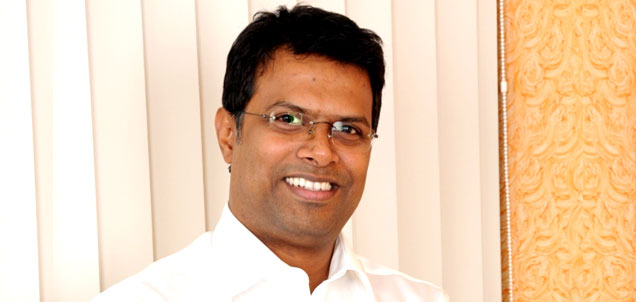
Though it has been the works for much longer, the Disney and UTV merger has happened in right earnest for just around a year. Since then, the Ronnie Screwvala-led conglomerate called Disney-UTV has been stitched together without causing any publicly visible signs of anguish that are part-and-parcel of any merger or division. M K Anand, managing director, Media Networks, Disney UTV, tells MxMIndia about life after integration, his focus on content, and whether the network is looking at going in for a GEC, as was rumoured last year.
It’s been over a year now with Disney UTV. How the story been so far? Is it well integrated?
Well, for the first 15 months now we have focused on getting the whole team together as one piece, that was first and foremost. Ultimately, the wellspring of all output is coming out of these people here. We started as two different companies from two different suburbs and brought them all together and make a one-team situation. We are in the last phase, we have not completely done that. I think basically I brought two boats together very close and then tied them and slowly was confident to take some planks together so that the water is not seeping, and it’s become one boat.
The processes of Disney and UTV were dramatically different…
Well, intense processes is what defines Disney… so very very deep, very very thought out and very very correctly done is Disney. And UTV’s most important benefit has been very high speed. In the market, whether it was films or whatever we have done in the TV space, there was a lot of premium on agility, the challenge that I faced was to ensure that I do not lose both, so we needed speed to diligence and we needed to bring diligence to speed. I don’t think it is an either or situation, you don’t need to sacrifice one for the other, you can achieve both, that’s something we are quite happy to note.
So in specific terms, which part of the transition happened most easily, and what took some time?
First of all, we are still in the middle of it all, the integration is not fully complete. Next year at this time you would say the thing is done because we have taken a building of three-and-a-half floors and that’s going to be the first integrated company office where everybody is going to sit at the same place and the whole environment is the same. Till that happens, I think you will still have, a bit of this and a bit of that. Second, the technology backbone is getting integrated as we speak. There are a lot of processes which are determined by technology. For the unified new system to be developed and proper testing done, the deadline is September 30 this year. That’s when we want to completely migrate into one backend one media centre, one uplink centre, satellites, everything.
How have your three buckets of the broadcast business panned out – the kids, movies and youth channels?
The buckets is more on internal division. At an external level, we would like to, as we move forward, become one Disney UTV network as against this system or that system. Yes, we are sort of focused on the niches so there are specialists who look after the kids’ business, kids’ GRP , viewership, there are specialists who look after movies GRP, specialists look after Bindass and UTV Stars, so those are product levels and I would really not want to call them buckets. The bucketization of the business i had done to ensure that these two boats that actually got together, so to allow the each boat to have an identity while the merging was happening. Two months back, we have totally removed it, I mean totally horizontalised. The entire sales is one team, there is a sales head, the entire programming is one team, the entire content is one team, the entire marketing is one team, so earlier we were these 3 buckets but now we are 5 departments and we are integrated at the top which is run by 3 – 4 of us who have visibility over everything. Vijay heads the programming, Nikhil heads the sales, Indro heads the content, Bikram heads marketing, Charles heads the tech backend. All these people have total oversight on all the channels. The entire company, 20, 30, 40 people from each of these departments are reporting into these guys, they are department heads. So now we are not divided business-wise.
This is the second or third time in one-and-a-half years that you have had a change.
Actually the first time. Yes, the first one was the integration itself but that was a financial or ownership change or an acquisition-based reality, but after that we basically brought both ships together. There was no change in the organization structure at all — Vijay was already business head of kids channels, Nikhil was already the business head of youth channel, Sameer was head of movie channels. That structure has been there right upto March 2013. What we have done is practical re -organization, people have been re-allocated. For the first time we are now putting teams which have different corporate origins. I thought it was better to do it now than earlier because we wanted to people to really understand, recognize each other. If i would do that restructuring at that time, there would have been lot more reservations. The buy-in is easier except that the fact I see that the new office has taken a little more than what we would have loved it to be.
With the new org structure in place, how and what is the road ahead for each of the channels?
The first thing we did was to ensure that now that we have 9 products including international etc what are those products we can launch quickly, what are the products we expand quickly and in what area. One of the first  was Disney Junior which got launched quickly. We were interested in expansion in the south with Disney channel but unfortunately because of distribution blockages we were not able to do that. The second thing we wanted to see is what is deficient in content and distribution; ultimately these two make a broadcast product. When we did that we realised that distribution was the thing we could have done faster. Distribution was about setting an agenda, budgeting it and giving ourselves a deadline. Then we realised that only UTV Action to a large extent and Disney channel were the two channels that were optimally distributed. All the other channels needed a little more and it was not done due to whatever reason – objective not set, finance not adequate.
By May last year, we were done with the basic policy of equating the team all together, it gave us a target of December 31, by which time we wanted to completely revamp and overhaul the placement of the channels. Research and ground work started around June, we took a lot of consultancy help from people in the business like TAM and Chrome and What’s On India. In August, we started changing the placement, the neighbourhood on all the channels, so we started getting results from end of September and early October. Then the 10-week blockage or the blackout happened, so when the December 24 data came in, our change in GRPs and reach was not purely because of DAS, although people think it is DAS which helped us. We had already started correcting our distribution so UTV Movies for instance was a sub-30 channel, it is now poised to be an above-50 channel in terms of reach. Similarly with Bindass, Hungama, with Disney channel, so there was very clear correction of reach that we required and that required us to penetrate with the benchmark of the market leader and not the benchmark of what is possible for us to do. Pre-data, most of our channels were 70 to 75 percent penetrated and we said lets go to 90 percent so we have tried to benchmark 90 – 95 percent penetration for all our channels and I am quite happy. What that did for us is from about combined 4.5 percent Hindi speaking markets we moved to about 6 percent. To understand the impact from 170 GRPs in some weeks we have gone to 215, 218, on an average we have gone to 200 GRPs so about 12 to 15 percent improvement on overall gross impact of the network.
Are you happy with the progress on distribution…
I had looked at 2012 as the year of distribution so the last part got done by 2012. I wouldn’t say that everything got done but we more or less finished everything in the first quarter of this calendar year. The other thing we realised that when you get into DAS, you need more muscle to get the deals in the manner you want – whether it was placements or subscriber revenues. Anuj (Gandhi) had joined IndiaCast and we had a prior relationship with him, so it was a short time before we were able to seal that JV. We were quite happy to be part of IndiaCast.
How is that doing for you?
Very well.
In terms of revenues coming from distribution, given LC1 and Phase 2 and soon the entire country get digitized. How ready are you for Phase 3 Absolutely. LC1 knowledge was there last year so we had benchmarked that by September 30 we would have started getting results. We would have loved to see how we were climbing, but that 10-week data was not there. But by September 30 we had ensured we were in all places in the country without having prejudice to whether it is metered or not metered, so all the channels are now fully LC1 distributed, and DAS has improved things for us.
Did the team rationalization etc cause any upheaval?
We nipped that upheaval in the bud by doing some very detailed talent mapping across. Any rationalization means when you will bring people of two organizations together and some of them may have worked with each other in the past and the situation in the new entity is different.
Before we brought the whole thing together, what we did was what cartographers do to unknown territories. You don’t go all over the place to make the map; you take the terrain and do the altitude of say 20 different places and then you know here is the hill and here is the pond. So what we did was, Disney is the host so from that point of view we thought of bringing everybody to the Disney scale of structure of salaries, designation or managements cadres etc. Fundamentally what we did was we picked up 10 percent of UTV people as representative of the total, we mapped those people and we took their current designation and salary out from the knowledge point of view. We just took their functions and experience, and started mapping them with other people in the Disney system, so that was an on-paper exercise that HR did with me. Then we matched those 30 people with 30 mirror people on the other side, and we put the actual operating managers together and we discussed how two people on either side are similar for so-and-so reasons.
This exercise was the most important. The moment we did that, there was a clear buy-in that this person may be called an assistant vice president but that person’s current role and job in that company is equal to director or senior manager. So once the designations of the 10 percent were established, then we did the full mapping of all the people, went back to salaries and said this level should get this salary; then we realised that because of designation this person is becoming senior manager but the senior manager is currently getting 8 lakh and the requirement of senior manager is 12 lakh – so should we make that person a manager or a senior manager? There was a lot of activity which we repeated, which I myself did with HR, and it went very well, very smoothly, because we had done such diligence and there was such great democratic consensus from the groups. No one complained.
Are you happy with the way it has happened?
Completely. Usually an integration of this level would have taken 20 percent people out. Look at it; have you heard of any resignations? People going out from here? We were able to tighten the whole thing without sacking a single person. My diktat, you could say, was that integration would not be used or quoted, now or even five years later, that I lost my job because Disney and UTV integrated. Last year and this year I would say people have gone out by natural attrition, there are people taken on for performance, but that’s a natural thing.
Moving to the present, are you happy with way your channels are doing post the transition?
I am happy with the development of reach, but once you get a team in place and get your technology, your distribution in place, now what do you do? Use the same channel to produce higher value products, better products and more products, so there is a natural extension into increasing Bindass, increasing Disney channel, increasing Hindi movies channel in terms of content capability. In our business it is easily measured by something called TSP. Now we will start improving TSP through higher investment into content. Last year was the year of distribution, I think the next two years will probably be the era of content and then we will have the year of new launches.
From December onwards we have started earmarking the Top 10 people in all departments, and I have mandated that everybody should spend time with consumers, whatever focus groups that research does, once in a quarter people should go along with the research team and sit alongside to listen to what consumers are saying. It is our move to becoming larger. My point is when we were separate we were 110 GRP-80 GRP company. Then we came together and now we are 200 GRPs.The biggest guy is getting 600 GRPs and we are now one-third of that. The payback over 5 years to 10 years is, if you get higher GRPs, more viewers are using you, spending time with you, so fundamentally, the next step, can we go to 300 GRPs? From there can we go to 450 GRPs, 750 GRPs, can we become No. 1? These are all theoretical, conceptual questions; as of now, this 200 GRP system, can we push it to 250 GRPs by putting better, more, higher quality content on the existing platforms? We have already started that on the movie channels, you can see that on UTV Action and UTV Movies it has gone from 40-50 GRPs to 80 GRPs.
So we are very naturally poised to go into a content-led assault on the market and really gain traction in terms of time spend and a little more reach. We are doing quite well because this whole traction that we caught in the last quarter of the calendar poised us to ask for those rates and we are happy that advertisers have rewarded us with the right ad rates.
But you now have the 12-minutes ad restriction…
The 12-minute restriction coming up in October is good for us as fortunately about two years ago we had already started getting strict about it. When I was running Bloomberg, I was running 22 -23 minutes. On movie channels we have run 20 minutes. In around October 2011, we put a curtain that even if we have problems in the numbers, we will not go beyond a certain number and that number is in the range of 14 to 17 minutes, 16 minutes is the highest on certain channels. Because of this our cutback is going to be only two minutes on the kids’ channels, for example.
It goes up at peak hour?
Yes, that is the difference. What’s happening in music-based channels is, they run break-free in the morning and try to push it into various places at other times. That is one good thing now, that all of us are on par. If you want to run break-free you are going to lose money. So I think we are not going to be that affected. I’m not saying it is not going to impact but it would affect us to the tune of around 3 percent at the end of the first year but by the end of the second year it would have given us so much more hygiene-led improvement in break TVRs that we believe it will be better for all of us.
Will in-house promotions suffer?
No, we will have to morph it into show programme products like promotions or contextual placements. I think it will go from 2 minutes to 1 minute across the universe.
Do you think TRAI will also govern in-house, in-show placements?
No, they saying that when you are putting something on your EPG, we want you to not put more than 12 minutes every hour of content other than what you have promised, so you have to show 48 minutes of content. If you are promising Telebrands there then you put Telebrands, but when you are saying I am putting a show there then you have to give 48 minutes content. In those 12 minutes if you do 6 minutes ads and 6 minutes promo we won’t get up to protest. Our first step is to ensure quality of service and that quality of service is 12 minutes maximum of non-content time.
What about acquisition of movies; competition has been fairly aggressive on acquisition, and a player like Zee which was not really aggressive has now become very aggressive…
An HMC has to have a GEC if it has to be able to look for new movies. A movie channel is a library, a good content library, of content like Tarzan the Wonder Car, Lakshya, Amar Akbar Anthony; that is the fundamental promise, that whenever you switch on the channel it’s going to have some entertaining content. I don’t promise you to give a new movie. So unless you have your own GEC it’s difficult to bid for new movies. Our business model will always be library-based but the library has to be replenished because something has to keep coming in, and to some extent new movies need to come.
There were rumours last year that you were looking at going in for a GEC. True?
No, we are not contemplating a GEC. Last year, we were not contemplating a GEC, we were out in the market looking for how to broadbase our existing offering. GEC as a model is hyper-competitive as well as giving way to other models, and when DAS fully gets rolled out, we don’t know… It’s like saying, do you want to invest in a PC company at time when we are seeing that the tablets are on the rise. It’s better we get into the tablet business or the handheld business at the time that the PC is going out of the fashion. I am not saying that the GEC is going out of fashion yet, but I would be quite hesitant about fully moving into that and saying that is the bet.
But it’s a good driver.
Yes, but as a model I’m already able to drive 200 GRPs with 4-plus. If you look at other players, No 4 is driving about 280 to 300 GRPs including a GEC. No 3 and 2 are driving 400 to 450 GRPs and N1 1 is driving 600 GRPs. In that situation, 200 GRPs is not bad, without a GEC. That too our distribution is optimized only over the last four quarters and we are seeing results, which means there was ceiling for growth and we don’t believe that currently we are fully optimized as far as these channels are concerned with reference to content. Over the next year, you will see what we are going to do with Bindass. The whole orientation shift of Bindass has gone from 25 GRPs to about 50 on average, I guess it’s 47 today. Purely by tweaking the format, and probably investing a little more into original production on these channels, we believe we can drive this network itself to 250 GRPs. Then what are we talking about? Ultimately what is the television business? How many people you are impacting, how many people you are influencing, how many people you are entertaining. That is measured by the numbers we are getting. And if those numbers are good with or without a GEC, then it raises the question, are there other ways?
So you surely won’t be looking at a GEC?
It depends on the horizon; I am talking about the strategic horizon. One and a half years or two years is the correct horizon to look at for any media company and management. But if you are talking about a Colors, Star Plus kind-of GEC, then no.
Is there any new channel that you are looking at launching?
No, to be specific, if you will ask me, GEC or non-GEC, I am not launching any new channel as I see it for another one-and-a-half years. Other than some language versions if that’s possible.
On the regional front?
No
In terms of the future, the strategies you mentioned, what are the kinds of GRPs you are looking at, say a year from now, combined?
Combined I would look at an average of about 230 GRPs from our current level of 200 GRPs, another 10 percent without launching any new product.
10 percent in a year, is that fair?
It’s a large network, everybody is stable. Unless one launches a new channel, to capture without launching channels by sheer competitive improvement of our content, if we are able to push that number, we are doing a good job, basically my movie network should be a 100 plus network by next year this time.
UTV has always been game-changing in terms of new programming, breakthrough ideas etc. Post the merger has there been any flagging in this respect?
Post merger, in fact, from both sides whether it was confidence and local management ability and backing, or it was financing or lack of it, the post-integration era for me, as an individual, I feel more empowered and more enabled to do what I want to with reference to a growth agenda than I would have been earlier. I am not saying we were not growing, we were absolutely aggressive, but for instance right now, nothing stops us from having a 10-year horizon to become No 1, ahead of the existing player. I am not saying it’s an objective, but you could if you want to, because you have the ability and pedigree to do that. UTV was a guerrilla; it was about how to make the maximum out of the best combination of, say, mass speciality channels. So that was a niche strategy. Right now we can be niche, we can be mass, if you want we can do a GEC. Nothing stops Disney, for instance, it has all the capability to roll out a GEC, if strategically it is required. So capability-wise I think we are a little better off combining the two, whether it was management ability from the local management side or the sheer scale of Disney being Disney. With reference to proof of that, we just silently launched a channel called Disney Junior just like we launched UTV Stars the year before that. We were able to do a JV with IndiaCast without much noise.
The integration, plus the IndiaCast-UTV JV, plus growth of about 25 to 30 GRPs to come to 6 percent of the market, plus DAS 1, 2 and LC1 and the whole tax changes etc – it’s been a solid year. In this kind of situation we have only improved. All channel ERs are up, revenues are up, quite on target.
Ok are there any breakthrough programmes you are looking at, such as we heard of Amitabh doing a fiction show for Sony, are there any such big things that are going to come up?
I think yes, we have given ourselves some targets from the point of view of the top 10 indian franchises. I’m not talking just about GRPs but in terms of recall, in terms of sharing pack, in terms of buzz value, right now for instance we can probably look at Emotional Atyachar as one of the top shows in the last three years in the Indian industry. So we are giving ourselves the target that in the next 18 months we can come up with one more top show. It could be a Disney, Hungama, Bindass or a UTV stars show, that’s the task we have given ourselves. What have we contributed to the Indian consumer, not as channels but as programmes? Doraemon as a franchise, we have gifted to Indian children. We found it, we bought it, we packaged it and we put it out there. As a broadcaster we have done that kind of a service to the viewer. I think it is a breakthrough concept, and we want one more such by 2014 end.
We are living in a DVR era, and you have people accessing television on the internet etc; does it impact your revenues, how are you getting set for that era?
As of right now, it has not. Will it? Yes, it will, but when distribution becomes ubiquitous and that can happen any time because if 4G comes and devices are really good and cheap, it could be situation where YouTube can become suddenly larger than Tata Sky in India in terms of reach. How will we insulate ourselves? Only one blanket for that – better and better content. Fortunately we are a content company, and we are sure we will do better than average, 100 percent and nearing excellent most of the time.
In terms of the bottomline how are you, pre-merger and now?
I can’t really give numbers but we are, I would say, we are on a consistent cost base. I’m talking about the integrated operation of the two companies, without much of increase over last two years. We are able to find efficiency due to better integration, we have been able to squeeze manpower in this one whole year by reducing recruiting etc. Overall on a stable cost base, our revenue has been increasing at the rate of 25 – 30 percent over the last two years and we look forward to a similar number, about 30 – 32 percent increase is what we are expecting.
 By Amith Prabhu
 With 3 Golds, 3 Silvers and 8 Bronze Lions the Indian tally at Cannes Lions last year ended at a disappointing 14 metals. This was a sharp decline compared to the 24 metals that India had bagged in 2011. But the dismay of last year seems to be forgotten as the Indian camp gets ready to put up a better, if not the best, show this year.
 Prasoon Joshi, President – South Asia, McCann India
 Abhijit Avasthi, National Creative Director, O&M India
 Sridhar Kondiparthi, Chief Creative Officer – India Sub Continent, Leo Burnett
 Mahesh Parab, Executive Creative Director, DDB Mudra Delhi
 Leading broadcaster Multi Screen Media Private Limited has ventured into film production under the banner of MSM Motion Pictures.