Category: NEWS

  • Get ready for 92.7 Big FM Marathi and Telugu awards

    By A Correspondent


    The second edition of the Big Marathi Entertainment Awards have been announced by 92.7 Big FM. The awards will provide recognition to outstanding talent in the Marathi entertainment industry across 16 unique categories including films, television, theatre, and music among others.


    Ashwin Padmanabhan

    Ashwin Padmanabhan, Business Head – 92.7 Big FM said “The Big Marathi Entertainment Awards is a premier platform in the region which recognizes outstanding talent from the entertainment industry. After the phenomenal success of the event’s first edition, we are really excited to be back while bringing on-board an incredible panel of jury members and great lineup of partners. This year’s awards ceremony promises to provide excellent integration options to our marketers and advertisers thereby enabling them to reach out to their target audiences in the region.”


    These awards will be presented to the best-of-the-best from within the industry through combined votes received from the jury members and 92.7 Big FM listeners. They will be partnered by Majhi Saheli, a magazine, and OOH partner Bright Outdoor to accelerate the visibility and reach of the show thereby facilitating an overwhelming opportunity and platform for brand marketers to tap into a wider audience and consumer base.


    Renowned film and theatre personality Bharat Dabholkar and actor Vinay Apte have been roped in as jury members for the second edition of the awards which will also witness a high level of listener engagement via on-air voting polls.


    Similarly, 92.7 Big FM Andhra Pradesh, today announced the jury for the upcoming Big Telugu Entertainment Awards. Movie Artists Association President and director-producer Tammareddy Bharadwaja, Television Artists Association President and actor Vinod Bala and veteran actress Raasi will collectively judge the entertainers in categories from across fields which include movie, television and sports.


    Telecast partner for the Big Telugu Entertainment Awards, ETV will further expand the reach of the awards ceremony enabling audiences from across the region to watch their favourite entertainers receive the top honours.


    Mr Padmanabhan said, “Furthering our promise to award the best talent from the Telugu entertainment industry, we are proud to rope in Tammareddy Bharadwaja, Vinod Bala and Raasi as our esteemed jury members for the Big Telugu Entertainment Awards. We are sure that their inputs along with the volley of votes we have been receiving from our listeners for the popular choice awards will make the grand awards night an unforgettable affair. The 21 categories encompass the most outstanding talent from within the industry enabling us to provide multiple opportunities to our marketers and advertisers to reach out to their target audiences.”


  • DNA’s KU Rao joins HT as consultant

    By A Correspondent


    KU Rao has joined Hindustan Times as a consultant. Mr Rao had joined DNA in October 2006 as CEO. In November 2012, he stepped down as CEO and was assigned a corporate role in the Zee Group as incharge of the Siti Cable business after former Times of India group President Dr Bhaskar Das took charge of the Zee’s news business late last year.


    Mr Rao, who joined DNA from Shell, helped the transition from the paper’s management by the Dainik Bhaskar group to Zee in 2008. An MBA alumni from Andhra University, Mr Rao commands a varied experience of 30 years in media and management.


    Mr Rao joins HT at a time when it has also engaged Sujoy Ghosh, former Director at Bennett Coleman & Co Ltd as a Consultant.


    Although MxMIndia couldn’t reach HT for a comment, it is learnt that while Mr Rao will work full-time with the HT Media, Mr Ghosh’s engagement is restricted to that of an external consultant for sales.


  • IPG Mediabrands acquires Interactive Avenues

    By A Correspondent


    IPG Mediabrands, the media holding company within Interpublic Group, today announced the acquisition of Interactive Avenues, India’s largest independent full service digital agency. With close to 200 employees across offices in Mumbai, Delhi and Bangalore focusing exclusively on digital marketing and technology, the acquisition of Interactive Avenues’ renowned media, creative and digital production units cements IPG Mediabrands’ position as a leading digital buying unit in the rapidly expanding Indian market, as well as the second largest media holding company.


    After the launch of Reprise Media in India in 2011, this new move continues IPG Mediabrands’ strong commitment to implementing industry leading digital services across all of its agencies and will allow it to accelerate its timetable for the launch of its new Cadreon offering, notes a communique.


    Interactive Avenues will become an important strategic part of IPG Mediabrands’ Mediabrands Audience Platform (MAP), the group of data driven digital services and technologies that focus on search, display, mobile, social, video, applications and e-commerce.


    Interactive Avenues was founded in 2006 and has one of the top three clients in almost every category including consumer electronics, FMCG, technology, telecom, banking, insurance, travel, ebusiness and education.


    The move further strengthens the network’s digital capabilities in India and makes for an even stronger digital foundation for IPG Mediabrands and its clients in the Indian market.


    “India is a key market for IPG Mediabrands and for IPG as a whole. This acquisitions affirms our commitment to making investments in high growth disciplines and geographies.  We believe India is one of the fastest growing and most important global markets. IA has a fantastic track record in India and great future as a part of IPG Mediabrands,” commented Matt Seiler, Global CEO, IPG Mediabrands.


    “We have a clear vision for MAP in India. Interactive Avenues fits perfectly into this”, said Brendan Moorcroft, Global CEO of MAP. “Because we already have an established partnership with Interactive Avenues, we know their strengths and understand and share their core values..”


    Interactive Avenues will sit alongside established IPG Mediabrands agency Reprise Media in the new MAP structure. The acquisition and integration into MAP India will have no impact on the day-to-day running of the agency which will remain as it is now. Interactive Avenues will continue to operate as an independent brand within the MAP structure. The company’s co-founder Amar Deep Singh will be MAP India CEO.


    “After a dream run of seven years, we are ready for our next phase of growth,” Mr Singh said. “In IPG Mediabrands we have the right partner. They give us access to three fundamental growth catalysts; access to global tools technologies and best practice; access to markets beyond India; and access to global clients in India and beyond. It is a true meeting of minds and cultures, andI am thrilled to be working with such strong local and global leadership. There are exciting times ahead with our plans to develop and launch MAP’s specialist offerings Cadreon, Spring Creek Group and Ansible in India.”


    This marks a successful exit for Interactive Avenues’ current investors, WestBridge Ventures II Investment Holdings formerly Sequoia Capital Investment Holdings II and Anupam Mittal.


  • Mindshare India flag flies high at FOMA


    By A Correspondent


    Ever since he took charge in late 2011, Mindshare India boss Ravi Rao has been living out of his suitcase and smartphones. The back-to-back meeting with clients and pitches leaves him little time for much else. While we don’t think these cruel hours at work are healthy, the hard work is paying off. Mr Rao is delighted by the “good, all-round show – right from the effectiveness award for Slice, Pepsico to HUL winning on the back of strong entries”.


    The competition was indeed tough, including that coming from within the Group M stable. At the Festival of Media Asia, the premier destination for media agencies and professionals, Mindshare was the Network of the Year.


    Other than Mindshare, the top honours went to Million Reasons to Believe in Thailand (Campaign of the Year) submitted by Initiative Thailand for Coca-Cola, OMD Hong Kong (Agency of the Year). The winners in these categories were determined by a points system based on entries appearing in the shortlist and the list of highly commended and winning entries.


    Winners were selected from a shortlist of 117 campaigns, presented to an expert panel of 27 industry judges, led by Leonardo O’Grady, ASEAN Integrated Marketing and Communications Director, Coca-Cola. The gruelling two-day judging process saw much deliberation and debate, resulting in the final list of winners.


    The 2013 Festival of Media Asia Awards were presented at a gala event at the Sentosa Cove in Singapore last night (March 5). Awards were presented to winners vying across 15 open categories, with an additional three grand prix awards. There were over 400 submissions from over 10 markets across the region.


    “We held every entry to the highest standard,” said Leonardo O’Grady, ASEAN Integrated Marketing and Communications Director, Coca-Cola. “We had to make some difficult decisions. Many of the entries were of such a high quality that we struggled to find a clear winner, and one of the things that emerged was that the lines between content and communication have become blurred.”


    Mr O’Grady continued, “The Best Communications and Mobile categories were hotly contested and we have also seen some great wins from Thailand, Australia and India.”


    “Each and every one of these winners deserves the recognition they have received from the jury.” said Charlie Crowe, Founder of the Festival and CEO of C-Squared, the organizers of the event. “We have seen some exemplary campaigns that have been able to change minds and move people. They represent the best work coming out of Asia, and demonstrate the sheer creative energy and calibre of the industry in this region.”


    The Awards ceremony was the grand finale for the three-day Festival of Media Asia 2013, held in Singapore for the second time. This year’s event brought together over 600 influential delegates and over 40 speakers from across Asia and the globe.


    The Festival included case studies, panel discussions, and presentations focused around the theme of Mobility. The Festival’s day programme ended with M.A.P, a speed round of presentations from innovative companies looking to be named Hot Company of the Year (according to audience votes) which saw Future Ad Labs emerging on top, as well as the Rising Star Award for promising young talent which went to Stella Su (Yen-Wen Su) from Starcom Taiwan.


    Ravi Rao

    As for Ravi Rao, he’s sitting back, delighted. At the shortlists revealed for the Media Abby at Goafest, his agency leads with 20 shortlists. Back to the FOMA wins, he told MxMIndia: “I am extremely proud of the teams including those that made it and got shortlisted.” And what’s next: “Another year and now Goafest beckons.” Well said.


    The full list of Festival of Media Asia Award winners is available online at www.festivalofmedia.com/asia/awards.


  • NDTV plans to appeal on jurisdiction

    By A Correspondent


    The lower court in New York has been hearing procedural arguments on jurisdiction, particularly whether the US or India is the appropriate forum for the case that NDTV has filed against Nielsen and Kantar.


    The lower court in NY felt that India would be a more convenient forum than the US. NDTV disagrees and will appeal against this decision. NDTV believes that this lower court’s decision is based on several misconceptions, legal and factual errors, and this will be outlined in the appeal.


    A release from NDTV said that the New York lower court did not go into the merits of the case on corruption in the Nielsen Process as used by Nielsen and Kantar through TAM, (Nielsen and Kantar are the owners of TAM). The court merely looked at where the location of the case should be heard. NDTV believes it must be heard in New York, and will pursue this on appeal in New York.


  • JWT to drive fourth edition of Portfolio Night in India

    By A Correspondent


    The annual event where aspiring young advertising copywriters, art directors and designers meet with several renowned advertising creative directors in a fast-paced evening of advice, networking and recruitment is ready for its fourth innings in Mumbai.


     

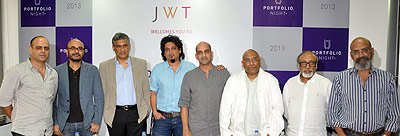
    To be held on May 22 in Mumbai, the task of organizing the fourth edition of Portfolio Night 11 in India has been rested with JWT India. The event is a platform to nurture young talent in the industry by giving them an opportunity to showcase their ideas to the most creative minds of the country. Scheduled to take place simultaneously in over 20 cities on this date across the world, including Athens, Austin, Beijing, Boston, Costa Rica, Johannesburg, Los Angeles, Montreal, New York, Paris, Sao Paulo, Stockholm, Tokyo and Toronto amongst others, Portfolio Night is an annual property of ‘IHAVEANIDEA’, the creative founders and the world’s first and largest community of the international advertising industry.


    Colvyn Harris

    Colvyn Harris, CEO, JWT South Asia said, “Portfolio Night is an ideal platform that identifies and recognizes fresh creative talent and offers them a unique opportunity of getting mentored and nurtured by the best in the advertising fraternity. This is also the perfect opportunity for industry experts to give back to the industry, by guiding aspiring young creatives and helping them carve a niche for themselves.”


    Representing the industry at the press briefing were creative heads such as Ashish Khazanchi of Publicis Ambience, Ravi Deshpande of Contract Advertising, Colvyn Harris of JWT, Russell Barrett of BBH, Sagar Mahabaleshwarkar of Bates Chi & Partners, Bobby Pawar of JWT, KV Sridhar of Leo Burnett & KS Chakravarthy of FCB Draft Ulka.


    On the global platform, the event is keenly sought after by young creatives who want to make it big in the advertising world and seasoned creative directors who scout for great talent. Portfolio Night 10 took place in 18 cities around the world and over the past ten years the platform has seen a bee-line of young copywriters, art directors and designers eager to participate and meet the Ad gurus they revere and hold in high esteem.


    The JWT India Portfolio Night 11 is expecting over 20 senior creative directors to attend and review the budding freshers. It is a fantastic opportunity for creative directors to spot the ‘next big thing’ in the advertising world and to hire and mentor fresh talent. It is also a chance for industry leaders to give back to the industry by guiding the young talent.


    Portfolio Night 11 is open to young creative professionals from advertising, digital and design agencies and also senior students of art colleges. JWT India will viral the promotional campaign through broadcast and digital medium. Participants will need to register on their respective city’s page on the Portfolio Night website http://portfolionight.com/11/ and click on the “Buy Tickets” button for a registration. This will take them to that city’s online ticket purchasing system. Tickets are scheduled to go on sale on April 15, 2013. An e-ticket will be issued to the participant as a permit to enter the event in Mumbai on May 22, 2013.


  • Press Club Mumbai announces journalism awards

    By A Correspondent


    The Press Club Mumbai has announced its journalism awards for 2013.


    With the awards, the Club seeks to promote good journalism – quality writing, bringing news speedily and truthfully to consumers, and the upholding of high ethical standards. In the pursuit of these goals, the Press Club had instituted ‘Awards for Excellence in Journalism’ in 2011.


    Last year, Press Club received over 600 entries from all over the country for the seven categories of awards. In view of the good response and the need to broaden the spectrum, the number of award categories has been increased to 10. Besides adding ‘Science and Technology’ as a category, the Awards have widened the scope of journalists who can enter by adding awards for: ‘The Television Story of the Year’ and the ‘Photo Story of the Year’.


    The categories for 2013 Awards are:

    1. Sports: The K N Prabhu Award for Excellence in Sports Writing instituted by the Press Club and Podar Enterprise.


    2. Crime: The Pradeep Shinde Award for Excellence in Crime Reporting for the Best Crime story or investigation in 2012.


    3. Politics: Award for the Best Political Story of the Year for the most outstanding news report/commentary/investigation related to political events or leaders in the country.


    4. Business: Award for the Best Business Story of the Year for the most outstanding news report/commentary/ analysis in respect of corporate bodies or finance and banking or economic policy-making.


    5. Entertainment & Media: Entertainment Writer of the Year Award for the best news Story/report/analysis of events related to entertainment and celebrities featuring filmed entertainment, television or other mediums.


    6. Health & Environment: Award for the Best Story on Health / Environment for the most outstanding contributions to bringing the spotlight on a burning or relevant issue concerning health or the environment.


    7. Science & Innovation: The Story of the Year in the Field of Science and Innovation for the best article or analytic piece published on scientific discovery or pioneering innovation in India that promises to impact people’s lives and society.


    8. Television Story of the Year: The search is on for the first time to spot and award the best TV news story of 2012 for investigation and impact. Stories will be judged on the visual elements, the text and presentation, as well as overall impact.


    9. The Big Picture: A special award for photo-journalists will be given to the best photo/image that tells a story published in an Indian newspaper/magazine and which left its readers spellbound and thinking.


    10. Lifetime Achievement: An award to an editor or senior journalist for his/ her outstanding contribution to journalism, development of ethical writing; and for the defense and expansion of the boundaries of Freedom of the Press.


    Each of the categories of awards will carry a cash prize of Rs.1 lakh. The winning article/video story/image will be awarded prize money of Rs.75,000 and a citation, while the runners-up will be awarded prize money of Rs.25,000 and a citation. Indian journalists residing anywhere in the country are eligible to apply for the awards. The Lifetime Achievement Award will be selected by a special jury from among a shortlist drawn up by the Managing Committee of the Press Club. Editors or editorial heads can also nominate stories/articles of journalists working in their charge. The Awards Ceremony will be held in Mumbai sometime in May 2013. A distinguished panel of judges in all categories appointed by the Press Club will decide on the winning entries. For details, visit: www.pressclubmumbai.com


  • Firstpost.com launches interactive, video views platform

    By A Correspondent


    Leading news and views portal Firstpost.com has launched a new interactive, video views platform, YouSpeak. The platform allows users to express their views/ opinions via a 30-second comment on any topic on Firstpost.com and also allows them to start a conversation of their choice. A user has to login with their Twitter or Facebook credentials because this experience unlike text commenting cannot remain anonymous.


    The product experience involves 3 parts:

    1) The Firstpost video comment – where Firstpost editors/writers spend a minute or two explaining their stance on a topic.


    2) Viewers can Reply to every one of these voices by simply hitting the reply button below the video. Firstpost detects if one has a webcam and records a 30-sec view, allowing users to preview and re-record as many times as they want to. Viewers can then submit their view with a headline and description. Post review it is published on the site and users are alerted through email.


    3) Participants can also start any discussion that they wish by turning on the recorder and simply hitting record. These views are also published upon preview.


    Said Durga Raghunath, VP-Products and Executive News Producer, “Firstpost, was conceptualized as a platform of relentless views, on all the issues that were of interest to a growing digital and social audience. Over close to two years now, we’ve fulfilled this promise through text, images, and as much interaction as a digital newsroom could put out. We’ve always felt that the digital editorial must find a video form and be treated as an important a pillar of Firstpost and hence the launch of YouSpeak. We are enormously excited because we see it as a democratic platform through which anyone can broadcast a view.”


  • Sony Music launches Music Jive

    By A Correspondent


    Sony Music has partnered with the new range of Sony Xperia Smartphones to launch ‘Sony Music Jive’ – music service that allows consumers to download and stream music from the Sony Music Catalog of two million songs, for free. Sony Music will look at innovations like premiering content exclusively for Sony Xperia customers for streaming and download.


    To meet the increasing demand for easy and legitimate access to music, Sony Music India has launched its Sony Music Jive service. Differentiating itself from Nokia Music Unlimited store (offers only download), Saavn (streaming only) and iTunes (consumer paid download), Sony Music Jive allows Xperia consumers to download and stream music for free.


    Shridhar Subramaniam, President Sony India and Middle East, said, “Sony Music Jive is our foray into directly engaging with consumer by offering them a compelling digital music service. We have been doing a number of digital innovations and the launch of this new hybrid application is another such. I am confident that with Sony Music Jive, the Xperia handsets would be a preferred choice for the customers as it gives them and unmatched offering of songs and an easy and legal access to the global catalogue of Sony Music.”


    Kenichiro Hibi, Managing Director, Sony India, added, “We are excited to partner with Sony Music for the all new Sony Music Jive. Indian consumers are very passionate about music and we feel this compelling service will be huge reason for customers to choose our new range of exciting Xperia Smartphones. We have always been associated with making quality phones and this partnership allows us to leverage our strengths with our group company. This app fits in very well with our brand image of offering a great musical experience to our customers.”


  • Amit Chopra new sales head at STAR, Kevin Vaz is now GM Eng and Bangla channels

    Kevin Vaz

    By Meghna Sharma


    Kevin Vaz, responsible for revenue generation for the entire bouquet of Hindi, English and niche genres under the STAR umbrella will now be incharge of Star Jalsha, Jalsha Movies and the English cluster of the network. He is the new GM of the channels.


    Meanwhile, Amit Chopra who joined Star from Hindustan Media Ventures Limited (HMVL) to handle sports telecast business will be heading the to revenue function.


    Mr Chopra began his career in 1993 with Hindustan Unilever.


    While MxMIndia has confirmed the news, the official Star spokesperson was tightlipped on the development.


    With close to 20 years of experience, Kevin Vaz has spent almost 16 years with Star India. He started his career at the Times of India as assistant manager, where he handled advertising and marketing functions. He joined Star in 1996.


  • By Invitation | Apurva Purohit: Seeta and Geeta

    By Apurva Purohit


    Yesterday I saw a commercial for a car which bothered me a bit. It was not a great piece of communication, either in strategic intent or in execution. But that was not the reason for my dismay. It was the stereotyping that goes on in Indian advertising even to this day that alarmed me.


    The story line, if it indeed can be called that, went something like this – A cool dude is shown driving the car in question. He sees a girl waiting by the kerb for a lift and veers to offer her one. She comes forward when suddenly he swerves away, and takes a violent u-turn. Why? Because he has just spotted a girl on the other side whom, we presume, he is more attracted to, and turns to offer her a lift instead.


    To showcase that the second girl is more attractive than the first, she is shown wearing a short dress versus the salwar suit the first girl is dressed in, and has smartly bobbed hair versus long hair and so on.


    This typifying continues to be prevalent in ad commercials, ad nauseam. So if you wear a sari you are an aunty or a mummy, if you wear a salwar suit, you are a behenji, and if you wear a dress, you are hot and happening and thus attractive to men.


    It reminds me of one of our management trainees who came back from doing a survey in a small town, and was very shocked at seeing women in saris driving two-wheelers there! To this day I haven’t been able to figure out what shocked him more; that women were driving two-wheelers or that women wearing saris were driving two-wheelers. And in case it was the later, what then should be the ideal dress code for women if they do want to drive?


    Thankfully, unlike advertising commercials, real life is neither linear nor typical. It has interesting people like Usha Uthup. If she had been living in the imaginations of our advertising buddies, she would have been wearing short black dresses, to go with the western songs she sings, you see. But look at her – Kanjeevarams, gajras and Adidas keds redecorated to match her saris. Wow!


    Although in the confines of our creative friends’ minds, I am sure she only materializes to sing classical bhajans!


    Apurva Purohit is CEO, Radio City. This was first published in her blog, Women at Work (http://www.womenatwork.co.in). Ms Purohit views and essays on women striking the balance between work and home is being published in a still-untitled book in the next quarter by Rupa Publications.


  • Digitization Phase II: Deadline round the corner

    L to R: Christopher Slaughter, Supriya Sahu, Sameer Manchanda, Man Jit Singh, Chad Dunavant, Ravi Mansukhani, Anuj Gandhi


    By Ananya Saha


    With the deadline for Phase II of digitization approaching on March 31, the stakeholders are implementing the learning of Phase I for smoother and seamless adoption of technology. Supriya Sahu, Secretary, MIB announced at the CASBAA forum recently that the government would soon bring change in the digitization policy that would make it mandatory to switch off the channels in phased manner. “We did not make it mandatory in Phase I but it will be regulated in Phase II so the consumer understands that they need to switch to digital platform,” she elaborated.


    Ms Sahu seemed positive about the progress of Phase II. She said, “According to the data we have, which has been collated from industry feedback. We were not as comfortable so close to deadline in Phase I, as we are in Phase II now. There was a huge uptake of set-top-boxes (STBs), close to 2-3 lakhs, in 10 days before deadline and 15 days post deadline. We expect the same situation this time as well. We collect data every week and the taskforce meets every 15 days, and according to the data we are confident of meeting the deadline.” She also said that all stakeholders need to sit and sign an agreement so that it does not derail the deadline, as it happened in Phase I. “Our biggest challenge is how to convince different stakeholders to understand that their profit margins will decrease but only for a short while. It was difficult to get the different aggregators to sign the agreement last time, and it is happening this time as well. This was one of the reasons that deadline was extended.” She also pointed out that availability of STBs and the price points of STBs is also posing a challenge in the 38 cities where Phase II of digitization is nearing deadline.


    Ms Sahu also asserted that customer acquisition form has been made mandatory, and notices are being issued to operators who yet to comply with this policy.


    Man Jit Singh, President of the Indian Broadcasting Federation (IBF) and CEO, Multi Screen Media, echoed Ms Sahu’s views and said, “As broadcasters, we are aware that there will be a short-term reduction in our profitability. But there will be two streams of revenue going forward, and hopefully digitization will enable us to get 50:50 revenues from advertising and subscription.” Anuj Gandhi, Group CEO, IndiaCast pointed out the challenge of reaching the last-mile consumer. “Of course, each phase will be a bigger challenge because geographies differ,” he said.


    Ravi Mansukhani, MD, IMCL talked about the challenges that the recent budget has brought. “We do not understand why the cost of STBs had to be hiked. If you want to promote the local manufacturing, which is definitely a good move, the government should have given incentives to the local manufacturers. This has acted a dampener. We might have wanted to enter new geographies, but since we have to spend much more on existing geographies for STBs, we are not looking at new markets,” he said.


    Mr Mansukhani also emphasized that going forward, prepaid would gain more acceptance in Phase II. He also said that as digitization becomes a habit, ARPUs would go up drastically.


    Ms Sahu insisted that government is pushing digitization for the consumer, and not to get taxes. “It is not the entertainment revenue or central tax that we are pushing for digitization, which is not huge any way. The entertainment tax that Delhi govt gets is only Rs 78 lakh per month. With digitization, it will go up to Rs 5 crore. But even that is not a very huge amount. The profit margin of govt is very low,” she elaborated and asked the industry to keep the focus on consumer.


    Talking to MxM India about digitization in India, John Medeiros, CASBAA’s Chief Policy Officer said, “The stakeholders seem quite eager to implement digitization. There is of course a competitive dynamic between DTH and cable operators but given the stance of stakeholders now, and what it was three years ago, we see a more positive dynamic at work.”


    Easing India’s Capacity Crunch

    CASBAA’s report on assessment of demand and supply for television satellite transponders, developed with knowledge support from PwC India was released at the CASBAA India Forum 2013. Excerpts:


    TV channels need to be transmitted over satellites to distribution intermediaries (e.g. Multi-System Operators, DTH operator head-ends) and end-consumers (through the DTH platform). This needs adequate satellite capacities (in terms of spectrum / transponders).


    However, there has been a perception of shortages in satellite spectrum/transponders made available to Indian TV industry players. This is attributable to an overall shortage of spectrum that is available to India/ISRO. Although ISRO has been working hard to get additional spectrum, the process is long-drawn and the needs of TV industry players have grown manifold, raising the possibility of even the additional spectrum not meeting the needs.


    India had 821 licensed TV channels in 2012, double the number in 2008. By 2017, India is expected to have about 1,600 licensed channels of which ~1,300 channels are expected to be operational. Furthermore, the number of high-definition (HD) channels is also expected to increase in line with international trends and is expected to increase to ~130 by 2017. The high growth in the number of HD channels is expected to be fuelled by growth in digital platforms such as direct-to-home (DTH) and digital cable. The rising sales of high-end TV sets that support HD viewing experiences are also likely to contribute to the growth. A key indicator of the latent demand is the large number of pending requests for new TV channel licenses which stood at 348 in January 2012 as per the Ministry of Information & Broadcasting. In the C-band, only ~160 channels out of the estimated 660 operational channels were carried by transponders on Indian satellites8. This represents only ~25% of total operational channels. The rest of the channels (~500) are being transmitted through foreign satellites.


    In the Ku-band, out of the total ~73 transponders used by Indian DTH operators, only 18 transponders (~25% of total) belong to Indian satellites. The remaining ~55 transponders (~75% of total) are on foreign satellites.


    Future increased demand for satellite transponder capacities is unlikely to be met by Indian satellites (supplied by ISRO). For DTH operators, it is critical to have adequate backup or redundant satellite capacity such that in case of a failure in their primary satellite(s), transmission can be switched to another satellite to avoid black-out.


    In India, since there is already a shortage of Kuband transponders for regular transmission of TV channels on DTH, currently none of the DTH operators are able to make provision for such redundancy needs.


    Supply of satellite services is also threatened by proposals to utilize frequencies currently devoted to satellite services for terrestrial wireless systems. There are also challenges that place practical restrictions on leasing transponder capacities from foreign satellite operators by Indian players.


    Short contract durations between Antrix and foreign satellite operators bring in uncertainty for Indian players and raise the possibility of increased prices.


    Need of DTH operators to procure incremental capacity at specific orbital slots further emphasizes the need for long-term contracts with satellite operators.


    Shortage of satellite capacity can hamper growth of the Indian television ecosystem


    Shortage of satellite capacity can lead to many adverse effects such as the curtailment of consumer choice, slowdown in industry revenues, losses to the government exchequer and under-achievement on India’s stated aim to be a teleport hub. It is also likely to lead to a distortion of the competitive balance for DTH operators and broadcasters. These effects can be detrimental to the development of India as a knowledge society.


    Satellite capacity constraints can impede not just the growth momentum of the Indian TV sector but also have wider impact on the ecosystem of the industry.


    Shortage of transponder capacity in Ku-band can also lead to distortion of competitive balances:


    :: DTH players would be unable to match the channel counts of digital cable operators.

    :: Delays in satellite launches favour a few DTH operators who benefit from allocation of transponders while disadvantaging others that are behind in the capacity request queue.

    :: With DTH capacity constrained, many channels would not be carried by DTH operators, weakening their business cases.

    :: The demand-supply gap also acts against new broadcasters as existing large broadcasters may have greater bargaining power to push their channels on various bouquets.


    Suggestions for improvement

    To overcome the challenges stated above, the following suggestions are being made for improving the current demand-supply gap:


    :: Long-term contracts spanning 10-15 years should be encouraged instead of 3-year short-term contracts. This will provide price protection over longer terms for Indian DTH operators as well as broadcasters and eliminate uncertainty on price escalations at the time of contract expiry or renewal. In the case of DTH services, this will also help avoid disruptions of television services for Indian consumers and their associated costs since there will be no need to re-point satellite receiver dishes periodically, due to the longer term contracts.

    :: The process to allow DTH operators to enter into contracts with international satellite operators should be simplified.

    :: Industry players, including DTH operators, should be allowed to procure capacity on international satellites already coordinated and approved with the INSAT system without any additional approval from ISRO.

    :: Similarly, DTH operators should be allowed to add transponders on satellites where they are already present (and hence approved by ISRO) without seeking additional approvals.

    :: ISRO should be encouraged to share its plans for launching transponders meant for private broadcasters and DTH operators over the medium-to-longer term so that the industry players can make necessary business decisions.

    :: The Indian government should formulate and drive policies as well as processes to spur growth in satellite services which will thereby help in the growth of the Indian television sector. For instance, specific three-to-five year targets for launching satellites designed for use by private broadcasters and DTH operators can be set, with allocation of the necessary funding, apart from facilitating private satellite operators to provide necessary transponders to Indian broadcasters and DTH operators. Future decisions on spectrum allocation should take into full account the importance of satellite communications – especially in the C- and Ku-Bands – to a country as large as India. Spectrum currently available for satellite services should not be reduced or deteriorated by allowing interference from terrestrial wireless systems of any kind.

    :: Access to additional Ku-band frequencies currently allocated to satellite services should be allowed, such as the Fixed Satellite Service (FSS) and Broadcasting Satellite Service (BSS) Planned Band frequencies. Given the congestion in the conventional “unplanned” Ku-band, opening up access to the mostly unutilised Planned Band spectrum would further address the shortage of capacity, leveraging on existing in-orbit and planned future satellites carrying such spectrum.


    These initiatives will help the Indian TV sector to continue its forward momentum and achieve the scale for which it has the potential. This will also help take India to the next level in its drive towards becoming an information-based economy.