Category: NEWS

  • Vijayavani makes an impressive debut

    By A Correspondent


    Anand Sankeshwar

    In the six-month period from July to December 2012, the Audit Bureau of Circulations figures show that Kannada daily Vijayavani has reached a circulation of more than 2.21 lakh, within the first nine months of its launch.


    Since its inception on April 1, 2012, Vijayavani launched nine editions in just 90 days. Most recently, a new printing centre has been established at Belgaum.


    Vijayavani’s operations are planned and executed by the hands-on managing director of VRL Media Ltd, Anand Sankeshwar.


  • Sonal Dabral to speak at Dubai Lynx

    By A Correspondent


    Sonal Dabral
    Sonal Dabral

    Sonal Dabral, Chairman & CCO, DDB Mudra Group, has been invited to speak at the Dubai Lynx 2013 – International Festival of Creativity. Mr Dabral will be taking the audience through the rich artistic heritage of India and how it has the power to influence brands and communications, not just in India, but also on the international stage.


    Terry Savage, Chairman, Cannes Lions International Festival of Creativity, said, “At the heart of Lions Festivals, is creativity and Dubai Lynx as one of our events has the same ethos. We have speaking at the event each year great creative leaders who show the way forward in terms of thought leadership and providing inspiration to our delegates. Sonal Dabral fits that role perfectly and we are delighted to have him speaking at Dubai Lynx 2013.”


    The Dubai Lynx International Festival of Creativity is the Middle East and North Africa region’s (MENA) annual must-attend event for the advertising and communications industry to learn, be inspired, network and celebrate. The Dubai Lynx Awards honour the region’s best work in advertising. The 2013 Festival takes place from 10 to 13 March at the Madinat Jumeirah, Dubai.


    The Dubai Lynx is part of the Lions Festivals stable, which includes Cannes Lions, Spikes Asia, Eurobest and the Asia Effectiveness Awards. The Festival and Awards are produced in partnership with Motivate Publishing, with the support of Dubai Media City (DMC) and in association with the UAE Chapter of the International Advertising Association (IAA).


  • Google Business Photos debuts in India

    By A Correspondent


    The Google Business Photos program is now officially open to businesses in India. It is a paid premium product offered by Google through its network of Google Trusted Photographers and is currently live in the US, Australia, New Zealand, France, Ireland, Netherlands, Canada and Spain. India will be the first emerging market country for Google Business Photos.


    The initiative aims to break down the barriers that stop small businesses from getting online by offering a quick and easy tool, to help them in their line of work. Through Google Business Photos, consumers can see the interior imagery of popular businesses in their cities, starting with the main eight cities and eventually expanding to more businesses across 20 cities in India. It is envisaged that small businesses which are a household name across retail, hotel, leisure and entertainment will be at the forefront in taking advantage of Google’s new initiative in India.


    Shailesh Nalawadi, Product Manager, Google Maps said, “I am very excited about bringing the power of the internet to each and every business in India. Consumers will  be able to visit a business right from their laptop, mobile phone or tablet. The potential for Google Business Photos in small and medium businesses is limitless.”


  • Ad:tech 2013 focuses on integrated digital marketing

    By A Correspondent


    The third India edition of digital marketing event, ad:tech New Delhi 2013 saw panellists deliberate on topics such as integrated mobile marketing, video integration, location-based relevancy, social media ROI, search and content. Alyssa Altman, Vice President, SapientNitro, in her keynote on the second day of Ad:tech New Delhi 2013 shared findings of their survey in which 88 percent of respondents said that today’s global marketing world has become challenging than ever before. She cited a Gartner study which predicts that by 2017, CMOs will purchase more technology than CIOs.


    While the first day of the conference focused on marketers’ perspectives on the digital consumer; the second day hailed ‘gamification’ as the latest trend for this year and speakers predicted that it will become a major global experience by 2016. Globally, there are more than 500 million people playing games at least for one hour every day. Avinash Jhangiani, Vice President – Digital, Omnicom Media Group, explained about their game changing live collaboration platform for global media planning, ‘Source’, which can even create powerpoint decks automatically. He also shared examples of brands like Visa, Mahindra and Movie Munchies that have successfully gamified their campaigns.


    Citing the example of Mario Bros, Rahul Avasthy, Director Strategy for Zapak Digital Entertainment, said that the same game mechanics can be applied to non-game real-life experiences to help solve the challenges of bounce rate and converting latent leads (CPL). He noted that successful campaigns require not just good content but also intent, citing the example of Arby’s Burger which leveraged gamification generated over 41,000 organic entrants and 3,00,000 actions.


    Mohd. Imthiaz of Hoppr said that there are only 20 million smart phone users in India which is why marketers need to plan campaigns that can run on every type of phone. He said that location-based services can help make the typical lean hours into peak hours. He mentioned that for a consumer, the real benefit a marketer can provide is the joy of watching and sharing content.


    Praveen Sharma, Head of Media Sales, Google India, insisted that with proliferation of multi-screens, apart from the opportunity, it also poses challenge for content creators since viewers filter out the mediocrity on screens other than the TV. T Gangadhar, MD, MEC India said, “As a media agency, we are moving away from media planning to audience planning. We consider YouTube as channel. Plans are increasingly becoming video plans.”


    Prashant Singh, MD – Media, Nielsen India said, “It is important for a digital campaign to be based on three parameters: reach, resonance and reaction. Getting these three basics right would help measure the ROI.” Pratik Mazumder, Head Marketing and Strategic Relations, Yatra.com highlighted the fact that while brands are insistent on ROI from digital media, many brands do not move beyond ‘Likes’ on social media to engage with the consumer.


    The event concluded with power-packed presentations from Sunita Rajan, Senior Vice President, BBC Advertising who spoke on ‘Revenue at the speed of User Adoption’ and Bettina Sherick, SVP Digital Strategic marketing, 20th century Fox International on ‘Marketing the cinema experience in a digital world’. She cited the example of global marketing initiatives for Life of Pi and how Fox leveraged the proliferation of digital platforms for marketing purposes, and also created innovations for consumers to disconnect and experience films on the big screen.


  • Fast company: Mahindra acts on digital feedback

    By A Correspondent


    Social media is quick on the draw, and companies have to be on the ball to respond equally fast. A good case in point is that of the Mahindra SUV TVC.


    Mahindra & Mahindra (M&M) recently launched its new television commercial for its premium SUV model, the XUV500. The television commercial reinforces its brand positioning of ‘May your life be full of stories’. Based on the experiences of three young friends who embark on a journey, together, the ad is set in South Africa. A two-minute uncut version of the television commercial was first premiered on the digital platform for fans & digital communities. When it first premiered on the digital platform, the XUV500 was shown with an Indian number plate against a South African backdrop. Among conversations in social media, this was seen as an anomaly. Mahindra made a conscious effort to listen & act on the feedback swiftly by changing the license plates to a South African number through a very specialized process. The change and acceptance of customer feedback was appreciated by the digital community and fans.


    It struck the right chord with Facebook fans and the YouTube community, already crossing more than 2.6 million views on YouTube.


    Vivek Nayer, Chief Marketing Officer, Automotive Division, Mahindra & Mahindra Ltd said, “This new communication is based on the consumer insight that, new experiences are the new wealth in today’s world. Being rich is not about money alone, with ‘ memorable experiences ‘ becoming the new currency. The idea was to create an aspiration among consumers to go on exciting road trips where the XUV500 can play an enabling role in the fulfillment of its brand promise of “May your life be full of stories”. The new television commercial of the XUV500 has been successful in creating a connect and aspiration for the next generation of car & SUV buyers who are seeking new experiences in their lives.”


    Mr Nayer told MxMIndia, “We give our social media communities special privilege for the exclusive preview of the new TV advertisements. Also on TV a two-minute version becomes very costly to air, so we use the digital platform to promote the longer version of the TV ad. In keep with same principle a two-minute uncut version of the television commercial was first premiered on the digital platform for the exclusive viewing of fans & digital communities.”


    However, they did not have to reshoot the complete advertisement. The license plates were changed in the advertisement to a South African number plate using a specialized process called rotoscopy. “The task was very challenging as it involved changing of the number plate frame by frame in every shot of the video, synchronizing it with the surroundings and adjusting the colour, ,” said Mr Nayer. The cost of doing this, he said, was less than what a re-shootw would have amounted to.


    Credits

    Ad Agency – Interface Communications

    Production House – Chrome Films


  • TV industry to debate digital dividends at CASBAA India Forum 2013

    By A Correspondent


    As India hurtles towards inevitable digitization, the intricacies of broadcasting are becoming ever more apparent. The CASBAA India Forum 2013, on March 7 in New Delhi, brings into focus the disparate voices of various television industry stakeholders, who each have an interest in a thriving India.


    “India is undeniably a vast and complex market, but one that continues to provide unparalleled opportunities and potential to investors,” said Christopher Slaughter, CEO, CASBAA. “However, success depends on the ability to navigate the hurdles of the country’s broadcasting industry and CASBAA’s annual India Forum provides an ideal platform to hear from leaders and experts from across borders and market segments.”


    From the ongoing satellite capacity crunch and the challenges of navigating a complex regulatory environment to identifying the future trends in the country’s multichannel TV market, industry leaders will bring their unique perspectives on the current state of Indian broadcasting and what to expect moving ahead.


    Headlining the roster of speakers at the event will be Uday Kumar Varma, Secretary, Ministry of Information & Broadcasting, who will deliver the opening keynote address. Also scheduled to speak are TRAI Chairman Dr Rahul Khullar; TRAI Principal Advisor Parameswaran N; and Sudhir Gupta and Supriya Sahu, both Joint Secretary (Broadcasting & Policies), MIB.


    The list of speakers and panelists also includes Thomas Choi (CEO, Asia Broadcast Satellite), Smita Jha (Leader, Entertainment & Media Practice, PwC India), LV Krishnan (CEO, TAM Media Research), Sameer Manchanda (Chairman & MD, DEN), Ravi Mansukhani (MD, IMCL), Deepak Mathur (SVP, Commercial, Asia-Pacific and the Middle East, SES), Harit Nagpal (MD & CEO, Tata Sky), Bharat Kumar Ranga (Chief Content & Creative Officer, Zee Entertainment), Man Jit Singh (CEO, MSM; President, IBF), Shashi Sinha (Chairman of Technical Committee, BARC; CEO, IPG Mediabrands India), Bill Wade (President & CEO, AsiaSat), Robert Zitter (EVP & CTO, HBO), Deepak Jacob (President, Legal & General Counsel, STAR TV India) among others.


    Partners for the CASBAA India Forum 2013 include Supporting Sponsor SES and Sponsors AsiaSat, Brightcove, CSG International, Eutelsat, IBM and STAR India.


  • Ford launches EcoSport Urban Discoveries campaign

    By A Correspondent


    Ford India has announced the roll-out of its integrated marketing and communications product experiential campaign, EcoSport Urban Discoveries. The 360-degree campaign is the foundation for the launch of Ford’s upcoming urban SUV, EcoSport. Hosted on an online platform, www.ecosportdiscoveries.co.in, the campaign aims to reach out to a target customer base spread across the country.


    The scale of this campaign will be achieved by a high output, simultaneous amplification strategy that will be leveraged through multiple paid, owned and earned media channels. Ford will additionally carry out in-programme placement that will help take the EcoSport directly to home television screens in India through general entertainment channels.


    Announcing the roll-out, Vinay Piparsania, executive director of Marketing, Sales and Service for Ford India, said, “We at Ford believe that real people and their real experiences truly bring out the best in our products. This has inspired us to empower the people of India to set the stage for EcoSport’s launch in the country. EcoSport Urban Discoveries will give over a hundred customers, the opportunity to drive and experience our exciting Ford EcoSport ahead of its market launch. This campaign will help us go further in engaging with our customers and educating them about our upcoming big product.”


    EcoSport Urban Discoveries will be executed in two phases divided by consumer activation roadshows across 12 key cities – New Delhi (including NCR), Mumbai (including Navi Mumbai), Bengaluru, Chandigarh, Kochi, Ludhiana, Chennai, Jaipur, Hyderabad, Ahmedabad, Pune and Kolkata to cover North, South, East and West regions. These roadshows will feature modular interactive zones that will be set up in high-footfall malls in each city to offer potential customers a touch and feel experience of the product and its features.


    “With EcoSport Urban Discoveries we would like to help customers make the right purchase decision for them to enjoy an unforgettable ownership experience and, en route, take away fascinating stories which they can share back home with their family and friends,” said Mr Piparsania.


  • 55% digitization target achieved in Phase II cities: MIB

    By A Correspondent


    As per the data received from the DTH operators and the MSOs, as on 22.02.2013, a total of 87.7 lakh Set Top Boxes (STBs) have already been installed in Phase II cities against the target of 1.60 crore, registering an achievement of 55 percent digitization. Out of a total of 87.7 lakh, DTH connections accounted for 40.7 lakh, whereas cable STBs accounted for 47.0 lakh.


    A release from the ministry said that it has been constantly monitoring preparedness for the implementation of digital addressable cable TV system in 38 cities of Phase II, where cable TV will undergo digital transition by 31.03.2013.


    The Ministry has set up a Task Force exclusively for Phase II cities to oversee and monitor the digitization process in Phase II. A public awareness Committee has also been constituted in the Ministry for spearheading awareness campaign in Phase II. As part of the awareness initiative, all television channels have started to run a scroll, informing consumers about the deadline for cable TV digitization. All India Radio has also started broadcasting of the radio jingles on its National and regional networks for creating public awareness. Several other initiatives like SMS campaign, video spots and print advertisements etc. are on the anvil. The State Governments/UTs have already nominated nodal officers in 38 cities of Phase II. Ministry had recently conducted a workshop for them. It has been planned to organize a second workshop shortly to take stock of preparedness in Phase II cities. A regional workshop was also held recently at Bangalore to sensitize local MSOs, Cable operators and other stake holders.


    The Ministry had set up a Control Room during Phase I, which has continued to function to address the queries of consumers, cable operators and others. The Control Room, which also has a toll-free number, has been receiving a number of calls from consumers of Phase II cities.


    In order to facilitate cable TV digitization in 38 cities of Phase II, the Ministry has already issued provisional registration to 30 Independent MSOs to operate in Phase II cities. This would enable these MSOs to operate in their respective cities to provide digital cable TV services.


  • Star India deal with Ajay Devgn for Rs 400 crore for movie rights till 2017

    By Nandini Raghavendra


    Bollywood actor Ajay Devgn has signed a deal worth about Rs 400 crore with Star India for exclusive satellite rights to all his upcoming releases until 2017, the second such contract that the network has sealed after it inked a pact with superstar Salman Khan last month.


    Mr Devgn, the only other Bollywood actor apart from Khan to have four films in the Rs 100 crore-club, said he could ensure a better value for his films than his producers.


    “Business is becoming increasingly open and clear, so it’s easier to deal directly,” said Mr Devgn, talking from Bhopal, where he was shooting for Prakash Jha’s Satyagraha.


    “I am securing the producer a higher value, so he benefits eventually,” said Mr Devgn, explaining the impact of the deal with Star India which is for a period of five years and is said to include at least ten films. Producers, depend on satellite rights to bankroll at least 35% of the cost of production.


    “But I am also ensuring a certain amount for myself. For the rest, like actors fees etc, all depends on the relationship between an actor and producer,” he added. Besides the yet-to-be-released films, the network has 18 of his earlier films, including Singham, Golmaal, Zameen and Gangajal.


    Among the films to be released, is Sajid Khan’s Himmatwala, which studio Disney UTV releases at the end of the month. The next is Prakash Jha’s Satyagraha, followed by an action film with Prabhudeva and a sequel to Singham with Reliance Entertainment. “This should keep me busy for the next year-and-a-half at least,” said Mr Devgn.


    The deal has strategic value for the network, said Sanjay Gupta, chief operating officer of Star India.


    The small screen is the new cinema hall where a premier of a big film can attract 20-30 crore viewers, ten times that in theatres, Mr Gupta said. Research shows that television viewers spend 20-30% of their time watching movies on the small screen, impacting the television rating points keenly followed by advertisers.


    “We have been growing this space aggressively as also buying more films. Our spend on buying films has increased 20% year-on-year,” said Mr Gupta, who the network”s fiction and non-fiction programmes, helmed by Bollywood talent. For Mr Gupta, adding movies also contribute at least 25-30% Gross Rating Points or GRPs for his network. Star India has two movie channels apart from the main general entertainment channel.


    A film is considered a success on TV if it can manage to garner an average 2.5 television rating points or TRPs through the year, apart from the high number it garners on premieres.


    The last three premieres on Star Gold starring Mr Devgn averaged 6.2 TRPs.


    Source:The Economic Times

    Copyright © 2013, Bennett, Coleman & Co. Ltd. All Rights Reserved


    Photograph: Fotocorp


  • What M&E wants from this year’s Budget


    By Ananya Saha and Meghna Sharma


    Girish Agarwal, Promoter Director, DB Corp Ltd

    Fundamental need of the hour is to boost the economy, which is essential for growth of M&E. The following steps are expected for sustained economic growth:

    • The budget should send a clear message of “Stability, credibility and long-term vision for reforms”.
    • Government revenues should increase without hurting growth while strict control on expenditure (especially non-plan) is expected from the budget.
    • Clear roadmap for reforms/key bills viz.: Companies Bill, Mining, GST, DTC, Insurance, land acquisition etc. is expected.
    • With rise in inflation and reduced earnings, savings have substantially gone down over the past 2-3 years. Appropriate tax breaks would boost savings.


    The above basic steps should result in fresh and long term investments from domestic as well as international markets. Old policies for governing M&E sector must be revisited and reworked considering current business scenario. Policies should be framed in such a fashion that decisions at Govt. level are smooth and fast.


    For Radio industry, we expect Govt. to roll out old pending 3rd phase of auction, immediately with clear transparent bidding process. We expect the 3rd phase license with larger period validity and also extension of time period to 15 years, for players related to 2nd phase of bidding. Prior to the same, we expect Govt. to address music royalty issue along with long pending demand of radio players of relay of news bulletins in FM radio. Further, renewal of 2nd phase of license, after expiry of its period, needs to be worked out in an acceptable and reasonable valuation, in order to ensure adequate return on investment for all radio players.


    T Gangadhar, Managing Director, India, MEC

    It is important for the government to create policies that stimulate taxes and widen the tax base, not necessarily by lowering the taxes. It is important that in current economic situation, to raise consumer sentiment. We have been hearing of uniform GST, which has not been undertaken yet. Also, it is important to lower interest rates.


    Rakesh Jariwala, Partner, Tax and Regulatory Advisory Services, Ernst & Young

    In the Direct tax category:

    • Reintroduce erstwhile benefit available under Section 80-IB of the Income-tax Act, 1961 – profit linked deduction for multiplexes to boost their growth for tier 2 and tier 3 cities
    • Introduce alternate mechanism or a monetary threshold for obtaining income-tax clearance for foreign performers, entertainers, etc before departing from India as the procedure is time consuming and onerous
    • Introduce incentives for content creation and infrastructure to encourage the Indian film industry
    • Currently, there is uncertainty with respect to income attributable to India in case of Foreign Telecasting Companies (‘FTCs’). Guidance should be provided by way of specific provisions for determining taxable income of FTCs.


    Indirect tax:

    • Provide exemption from service tax on costs of film making in line with the exemption provided on temporary transfer of copyright in cinematograph films
    • Reinstate the exemption on service tax on services provided by digital cinema service distributors in a digitized encrypted format transmitted directly to a cinema theatre for exhibition – this exemption was withdrawn with the introduction of the negative list based service tax legislation
    • Clarify that service tax is not attracted in case of post production services provided in respect of content temporarily imported into India for the purpose of re-export
    • Exempt from service tax, services rendered by players and coaches to private sports leagues / bodies in line with the exemption provided for services to recognised sports leagues / bodies
    • Subsume entertainment tax in the proposed Goods and Services Tax legislation without creating a window for its levy at the local or state level to ensure simplicity in the tax structure


    M&E industry is expected to outgrow the Indian economy with an expected cumulative annual growth rate of around 15% over the next four years. To keep up the momentum, the industry deserves tax incentives in the upcoming Finance Bill, 2013 thereby providing an impetus to the industry and bolstering growth.


    Budget 2012 was a bag of mixed beans and a budget wherein the M&E industry was not given its share of adequate encouragement. Key highlights are cited below:

    Incentives:

    Indirect tax

    • Exemption of service tax on temporary transfer of copyrights in cinematograph films
    • Inclusion of admission to entertainment events and amusement parks in negative list of taxable services
    • In addition to the print sector, advertisements in media (except radio and television) including the internet or in outdoor media shall not be liable to service tax
    • Services provided in capacity of referee, umpire, coach or manager to recognised sports body for participating in tournaments shall not be liable to service tax


    Dampeners for M&E industry:

    Direct tax

    • Retrospective amendment to the definition of royalty thereby characterising payments for use of computer software, transponder, information databases, uplinking facilities, leased lines, etc as royalty under domestic tax laws. Hence, impacting the use of digital media
    • Tax rate of non-resident sports persons and sports associations increased from 10% to 20%


    Indirect tax

    • Levy of service tax on costs on film-making
    • Withdrawal of exemption of service tax on digital distribution of films tantamounting to the levy of service tax on such services
    • Levy of service tax on services provided by players and coaches to private sports leagues / bodies


    Tarun Katial, CEO, Reliance Broadcast Network

    For the broadcasting industries of radio and television we look forward to clarity, uniformity and relief from taxes. Advertisement in free to air mediums like radio should be treated differently and lower or nil service tax should apply for the same, aligning with the print and out of home industries. Also, FDI in non-news radio operations needs to be brought at par with television broadcasting. Customs duty on radio and television broadcast equipment should also be relaxed.


    The TV Broadcast and Distribution industry is already reaping benefits from the success of the digitization initiated by the Government. We look forward to necessary fiscal incentives in the form removal/ reduction of multiple taxes and levies and regulations which ensure transparency and power of choice to the end customer.


    Sandeep Ladda, Executive Director/Partner and National Leader – Entertainment & Media – Tax and Regulatory, PwC

    On the direct tax front, we could look at the following key areas:

    • Clarification on the applicability of withholding tax provisions on discount offered by DTH operators for selling recharge coupons through subscribers to third parties and on payments made by TV channel companies to uplinking companies
    • Providing a clarification stating that benefits of carry forward and set off of unabsorbed losses in amalgamation or demerger etc. also available to service sector companies
    • Proposal to sign more Co-production treaties, to get the tax credits and subsidy benefits
    • To provide a 10-year tax holiday to exports in the gaming, animation and the VFX (visual effects) industry for Indian content development, as they are emerging sectors (whether or not these are set up in an SEZ)


    Key expectations on the indirect tax front include:

    • To promote the domestic gaming industry, excise duty on local manufacture of gaming content could be brought down to 0%
    • Service tax applicability to the DTH industry could be eased for a limited period till the phased implementation of digitization is complete
    • Copyright services could be excluded from service tax net to avoid dual levy of service tax and VAT
    • Multiplex operators could be exempted from levy of service tax on property rentals and to distributors for exploitation of cinematographic rights, till GST is introduced to result in a seamless pass through of these indirect taxes


    The industry has been growing at a pace of around 17 percent YoY and is expected to maintain the momentum. The recent liberalization of foreign investment norms for a majority of broadcasting carriage segments and the radio phase III roll out will surely provide a fillip to the entertainment and media sector. Similar liberalization measures could be extended to the remaining broadcasting carriage segments like local cable operators. Also, the Phase III rollout could be implemented early for the industry to reap in the allied benefits flowing from the same.


    There were a few positive steps seen in the 2012 budget such as eligibility of investment linked deduction to hotel owners even if operations are carried out by third parties and service tax exemption on temporary transfer of copyright in cinematographic films. However, on the whole, budget of 2012 left a lot to be desired:

    • Retrospective amendments to widen the scope of royalty by including payments for transmission by satellite cable, optic fibre etc. as royalty were not expected. The relative standing of some of these retrospective amendments vis a vis India’s tax treaties has also been questioned by recent tax tribunal decisions. This has only added to existing confusion surrounding such royalty payments.
    • The budget also introduced provisions casting obligations on a non resident having no presence in India to withhold tax on any payments being made to a non resident of income accruing in India. This measure has impacted some of the India content broadcasting transactions happening between non resident parties.
    • Tax rates in case of non-resident, non-citizen sportspersons, non resident sports associations were increased from 10 percent to 20 percent on gross basis. Similarly, non resident entertainers were also brought under the tax net @ 20 percent on gross basis. Both these measures were burdensome.


    Sunil Lulla, Managing Director and CEO, Times Television Network

    The burden on the growing service sector needs to be reduced, so it may accelerate India’s growth. In prior years, in recent times, we have not seen anything progressive as such via the budget. Investment norms in some parts of the sector have already changed, for encouraging investment. The industry has been asking for lower duties on STBs so that digitization can progress and benefit millions of consumers. This is vital. As for the last year, the economy has been slow, sluggish and behind expectations – 2012 has been a disaster!


    Responses are in alphabetical order by surname.


  • Post-Budget 2013, M&E’s growth conundrum continues…


    By Johnson Napier


    With business as a whole still awaiting an uptrend in the economy, the talk in the media and entertainment sector has centred around how avenues and investment options for growth are drying up and the need for a fillip to resurrect the once-vibrant sector. Trade analysts have been long anticipating the bounce-back in the economy, with projected time-frames going from post-September 2012, to first-half 2013, and now to the second half of 2013.


    Finance Minister P Chidambaram was expected to wield a magic wand, but while the Union Budget was announced yesterday, there was nothing really significant that could revive the hopes of thousands of employees in the media and entertainment space who waited with bated breath for SOPs and benefits to be doled out. This was after the media went gaga about how the budget would be a more pragmatic than populist in its approach if the UPA government fancied a third term into power at the Centre.


    Of the few measures announced by the Union Finance Minister for the M&E sector, the most important one was directed towards the radio sector. The Minister announced that it would expand private FM services to 294 more cities and that about 839 new FM radio channels would be auctioned in 2013-14 and, after the auction, all cities having a population of more than 100,000 would be covered by private FM radio services. The other important announcement was not a good one where the Minister proposed increasing customs duty on set-top boxes from 5 to 10 per cent.


    Hope for a few, dejection for others

    Rakesh Jariwala

    Analyzing the overall scenario, including measures announced for the film industry as well, Rakesh Jariwala, Tax Partner, Ernst & Young said, “The budget has given partial relief for the film sector as the non-theatrical revenues of a movie are now brought back in the tax net. Producers and distributors will be able to recover a portion of their input credits with this change, thus mitigating a portion of the adverse impact created by the complete exemption granted last year. For non-film business, impact of removal of exemption to copyright transactions will have to be measured in terms of eligibility of the service receiver to take credits. However, the question of double taxation of transactions in intangible rights (between service tax and Value added tax) remains unanswered.”


    Adding further he said, “The budget will increase the income tax cost on account increase in corporate income tax surcharge from 5 percent to 10 percent. Any outbound remittance towards IP royalties (except film exhibition royalties) and/ or fees for technical services will be subject to increased 25 percent tax rate, subject to a better tax treaty rate. Investment in specific plant and machinery towards manufacture of article or thing by media companies in excess of 100 crores will qualify for additional tax allowance at 15 percent. Also, Increase in import duty for set top boxes from 5 percent to 10 percent may increase the cost for DTH/ Cable operators. Applying service tax on exploitation of copyright in cinematograph film with the exception of exhibition rights should result in improved credit situation for the industry.”

     

    Smita Jha

    So while the good news is mostly limited to the sector of radio, the repercussions of the hike in duty of STBs is not being taken well by the other factions of the industry. Smita Jha, Leader, E&M Practice India, PwC said, “In principle, this move is to encourage local manufacturing of STBs. In that sense, it is a step in the right direction for the prospect of local manufacturers. But having said that and keeping the DAS deadlines in mind, I am not sure if it will really benefit the industry. With customs duty being raised, the cost will be passed onto either the consumer or be borne by the STB importers. Given that the prices of STBs are also very competitive, it is not good news for MSOs and LCOs since they might have to bear the costs.”


    Roop Sharma

    Jha’s assessment found resonance with Roop Sharma, President, Cable Operators Federation of India who said, “The increased customs duty on STBs will be passed onto the consumer. Though it is a very good step to promote indigenous STB manufacturers, if it will maintain BIS standards. The imported STBs are Chinese-quality and not very good. From LCO’s point of view, it will be beneficial for consumers for they will get good-quality indigenous STBs.”



    Uday Shankar

    The most worrisome response perhaps came from FICCI M&E committee. Uday Shankar, Chairman, FICCI M&E committee said, “FICCI expresses its shock at the proposed doubling of customs duty on the import of set-top boxes to 10 per cent from the existing rate of 5 per cent, announced by the Finance Minister in the Union Budget 2013-14. We strongly believe that an increase in import duties on STBs will be detrimental to the government’s digitization programme that was flagged off last year. This move at this stage will hamper the progress of digitization since it will significantly increase the outlays of the cable and DTH community. It will also adversely impact the government’s tax collections from additional revenues linked to faster digitization.”


    According to Mr Shankar, the availability of lower-priced set-top boxes is pivotal for smooth implementation of digitization. “The domestic industry lacks the scale and size required to meet the increased demand for set-top boxes and the industry is heavily dependent on import of these devices to implement the next phase of digitization. This sharp increase in import duty will escalate the costs for consumers and can potentially derail the digitization process,” he said.


    Adding further he said, “FICCI has been consistently recommending the lowering of customs duty on set-top boxes. The government could have instead considered lowering excise duty on local manufacturing of set-top boxes, thereby ensuring timely supply of such devices at lower costs and urges the I&B Minister and the Finance Minister to review and reconsider this proposal and provide much-needed relief to the media and entertainment sector.”

     

    Ajay Chacko

    Presenting a more diverse view on the budget, Ajay Chacko, President, A+E Networks|TV 18 said that apart from the rise in customs duty on STBs and a forward-looking incentive for radio players, there are other things that one should look at that can impact the way the industry functions. He said, “Media business is primarily driven by consumer products and consumer products means consumption. So if there is an increase in the disposable income it kind of motivates people to spend more. So there have been some attempts to increase consumption and disposable income if not growth of the industry as such.”


    According to Chacko, the waiver that has been given to the housing sector and boosters being given to a couple of other industries as well will see the advertising environment picking up in terms of spends. “This will be a good thing to happen as the advertiser spending has been slow in the past two years. So there has been an attempt to revive consumer spending which will at least lead to halt in the downward spiral of advertising spends.”

     

    Tarun Katial

    While a few hopes were indeed crushed, there were others who were satisfied with the outcome of the Budget. Like Tarun Katial, CEO, Reliance Broadcast Network Ltd, who said, “The Budget brings good news for the radio industry, with Phase 3 poised to create optimal reach for the medium. Other benefits like news, networking, current affairs and sports, multiple frequencies etc will add the necessary fillip to further fuel listenership growth through reach and content diversification and will also drive profitability and revenue through cost optimization.”



    Prashant Panday

    Expressing his joy, Prashant Panday, Executive Director & CEO, ENIL said, “We are happy that the Finance Minister announced the imminent launch of Phase 3 of radio expansion. With this, we hope all hurdles to the launch of Phase 3 are now removed. We hope quick action now follows this announcement.”



    Apurva Purohi

    Echoing a similar sentiment, Apurva Purohit, CEO of Radio City, said, “We welcome the announcement of Finance Minister on the government’s resolve to expedite Phase 3. This impetus would help FM radio expand and offer the choice of consuming private FM radio to millions living in smaller towns. We are looking forward to the same.”


    Not much effect on other domains

    As for the impact on other mediums, there was a mixed bag of feelings that emerged. Pradeep Gupta, CMD, Cybermedia said, “As I see it there is not much that has come out from the budget for the M&E industry as such. But then the print industry had also made a request to the government to not increase the rates of any duty structure for the benefit of the industry. And the government hasn’t raised any rate on the duty as such. So I suppose it will be business as usual for the print industry.”
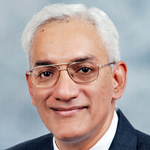
     

    Srinivasan K Swamy

    IAA President Srinivasan Swamy said, “The budget unfortunately does not do anything to spur growth to the industry which will lead to handsome growth to Media and Advertising industry. This is reflected in the sentiments of the stock market. 2013-14 is only likely to see a single digit growth in the industry and this means the growth is likely to be in line with inflation. Not a happy state to be in.”



    Sunder Hemrajani

    Sunder Hemrajani, Managing Director, Times OOH said, “As can be inferred, there is nothing as such for the Outdoor industry in the budget. However, there is a positive correlation between business confidence, investment, GDP growth and growth in advertising spends. Some of the budget proposals are expected to provide the impetus for growth in the economy. This should spur growth of the OOH industry which has had a difficult year. But high food inflation and fiscal deficit continue to be a challenge.”


    The overall sentiment could probably be summed by what Amar Ambani, Head of Research, India Infoline Ltd (IIFL), had to say on the Union Budget 2013-14: “The FM presented a rather non-eventful budget given that fiscal deficit targets were vocally communicated earlier. The market was disappointed with the evident populism in the budget through higher social scheme allocations despite limited headroom. The math for achieving 4.8 percent fiscal deficit in FY14 looks vulnerable to slippage. Further, it was also not a budget which can revive the sagging economy. Absence of key reform measures such as GST implementation was also dejecting.”


    For now, M&E will have to look to other key industries which have benefited from the Budget, and who advertise heavily, to pump up their growth story so that positive effects rub off onto the M&E sector as well.


     

  • MxM Mondays: How useful are conferences?


    By Johnson Napier


    It’s that time of the year when honchos and executives across industry domains squeeze out time from their schedules to catch up on trends and events. It’s the season for conferences and all-day seminars, especially for folk from Media. After the Indian Magazine Congress 2013 that was held a fortnight ago, delegates will fill the halls at Hotel Renaissance, Powai for FICCI Frames 2013.


    But while conclaves and industry gatherings do serve a purpose, there have been questions about the quality of discussions and relevance of topics, and whether they have brought about any impact or change. The lack of new ideas at these dos also bothers those who attend the events with the hope of getting something more.


    MxMIndia asked industrywallahs what they think of conferences and whether more needs to be done in terms of relevance and generation of new ideas.


    Anwesh Bose, Senior VP, DDB Mudra Max

    “Well, the ideas are there but the discussions are not well thought of. What happens at most conferences is that things get left at the discussion stage and it doesn’t go any further. There is no effort seen where it comes to implementing solutions. Also, most of the events are sponsor-driven and are not taken seriously. Even something like Goafest is more of a celebration thing than something that is followed at Cannes. So when organisers send out invites they should be serious about whom they are calling and what they intend to achieve by hosting such seminars.”


    Sanjeev Gupta, MD, Global Advertisers

    “The Indian media industry is at a nascent stage in comparison to western countries. We need to continuously improve our methods, approach and strategy. And for that, we need to have common platforms to discuss our challenges and difficulties with industry experts more often. Trade shows, exhibitions of new technology, conferences, workshops all have various topics to discuss including new trends and growth pattern of the industry. We would like to suggest that these conferences should be more interactive, touch new subjects and discuss data from an Indian perspective.


    “The numbers of media conferences in India are still very less, we need to organize more such events in future for the betterment of the industry. We would also like to suggest that we need to organize these shows in Tier II & Tier III cities to understand the needs of rural India.”


    Nisha Narayanan, Senior VP – Projects and Programming, 93.5 Red FM

    “Conferences are good platforms for germination of ideas and are good conversation builders. When industry leaders from media sit at a forum together, conversations that get built give fresher and newer perspective to issues being discussed. However it has a fair chance of being repetitive if the topics are the same and the policy has not changed.


    “For instance since 2006 of phase 2 of FM radio, the radio players have the same issues and regardless of the event, the same issues become rather boring to the audience. Now with phase 3, we hope to engage people with fresh concerns and celebrations.”


    Krishna Prasad, Editor-in-chief, Outlook

    “Trade conferences provide a legitimate forum for networking and schmoozing. But individuals and institutions which organize and take part in them need to jump out of the box of cliches if they have to fulfil their core mandate, which is presumably to inspire and throw new light. In other words, there needs to be more ‘disruption’, rather than everybody nodding their heads sagely between checking their phones and yawning. And there needs to be more intense questioning of the holy cows, rather than blind acceptance of their received and perceived wisdom.”


    Prema Sagar, Principal and Founder, Genesis Burson-Marsteller

    “Conferences in India, trade or otherwise, were deeply boring in the years gone by. In recent times, the subjects are more global in scope with local focus. Every expert, speaker and academician is happy to be part of conferences in India…. there are now better speakers with good content and articulation, there is more learning on new subjects, and networking is always a great takeaway. What needs to improve is better planning and execution of events, follow-up papers on subjects that provide further value to those attendees who value the ongoing engagement.”


    Srinivasan K Swamy, CMD, RK Swamy BBDO

    “Good conferences with a timely and focused theme and a set of good speakers are always relevant. Unfortunately we have too many of these undifferentiated ones. They all have the same topics discussed, the same speakers and more often the same audience! Also in many conferences there is too much selling by the speaker about his company, and that is a put-off for audiences.


    “Some introspection is needed before embarking on the next conference on three dimensions: Is the theme addressing the current and the immediate needs of the intended audience? Can we divide this theme into topics that can be looked at closely, multi-dimensionally? Can we get engaging speakers to address the chosen subjects – not something they can repackage from their earlier presentations?”