Category: NEWS

  • DLF brings Scarecrow Delhi to its roster

    By A Correspondent


    DLF has appointed Scarecrow Communications as its creative agency for some of its residential products across India. The agency was selected after a rigorous pitch process. The spends would be sizeable and could fall in the vicinity of Rs 15 crore Though exact figure could not be estimated, but knowing the way residential projects are advertised these days it will be significant.


    Commenting on the development, Mr Raghu Bhat, Founder Director, Scarecrow Communications, said, “This is a very important win for our Delhi office. DLF is the largest real estate brand in the country. They are looking for fresh thinking and this is a great opportunity for Anindya and the Delhi team to do some great work.’


    On the win, Mr Anindya Banerjee, ECD at Scarecrow Delhi, said, “It’s a privilege to be working on a brand like DLF. It is also a challenge to be working on a category that shows immediate results.”


    Mr Manish Bhatt, Founder Director, says Scarecrow Delhi has “big plans”. “This win gives us a lot of encouragement. DLF is an iconic brand and this gives excellent visibility especially in the print medium.”


    For the record, DLF is India’s largest real estate company. Founded in 1946 by Raghuvendra Singh, it has currently over 3000 acres of planned development in place. It is best known for having developed Gurgaon into a major international sub city. DLF is a well-diversified group and their interests span residential, commercial and retail segments.

  • Stark stats: 40 mn traders may gain, 122 mn consumers could lose if retail FDI is trashed

    By Smriti Seth


    The consumer is not king, apparently. The hullabaloo over easing foreign investment norms in multi-brand retail is centered on the notional loss to a fraction of traders in the country and the consumer has been passed over.

    A comparison of potential gainers and losers in the government’s move to open up the country’s $450 billion (over Rs 20 lakh crore) retail segment to foreign direct investment (FDI) reveals that while a section of 40 million traders are likely to be affected by competition from organised modern retail, about 122 million consumers stand to benefit from it.

    Some experts say FDI debate underplays the importance of consumers in an economy.

    “We must not forget that consumers are the most important part of our economy today. They will also be the biggest gainers from FDI in retail, thereby benefiting the entire country,” said Mr Akash Gupt, executive director at PWC.

    The government on Thursday allowed 51% FDI in multi-brand retail, but restricted it to cities with population in excess of one million. It also raised FDI in single brand to 100%. As per the 2011 census, consumers in the 53 most populated cities of the country add up to over 122 million. In contrast, the numbers of people connected with retailing in the country is about 40 million, according to several estimates.

    In big cities, the number of people working in the retail sector is likely to be lot less.

    Buyers are expected to benefit the most from the increased competition in the retail industry in terms of prices and quality. “Competition will push prices down and improve quality of products,” Mr Gupt said.

    Despite the apparent benefit to consumers, some political parties and state chief ministers have come out strongly against the government move. Eleven states have said they will not allow supermarket chains to set up shop. On Monday, the parliament was adjourned because of the uproar.

    The opposition could restrict access for foreign retailers such as Walmart and Tesco to only about 25 big cities.

    Experts debunk the entire notion of FDI-funded modern retail causing a widespread loss of jobs in the unorganised sector, or the ‘kirana’ segment.

    “Since foreign retailers are only being allowed in large cities, it should not have an impact on employment, most of which comes from smaller cities,” said Mr Mathew Joseph, co-author of the report ‘Impact of Organized Retailing on the Unorganized Sector’ published by ICRIER, a think tank.

    “It might have some effect on profitability of small retailers in the beginning, but they will have enough time to brace themselves for entry of foreign players and will recoup quickly”, the report says.

    There are other stakeholders as well who stand to benefit.

    As per the FDI policy approved by the cabinet, the foreign retail outlets have to necessarily source 30% of their raw materials from Indian micro and small enterprises.

    The policy mandates a minimum of $100 million worth of investments, of which at least 50% has to be in back-end infrastructure, most of which will be in rural areas that will fuel employment growth there.

    “Employment opportunities will be created from the need for front-end retail staff; improved supply chains will generate more jobs and sourcing goods from small industries will help in job creation as well,” said Mr Paresh Parekh, partner, retail and consumer product sector, Ernst and Young.


    Source:The Economic Times

    Copyright © 2011, Bennett, Coleman & Co. Ltd. All Rights Reserved

  • Anugrah Madison offers Rural Academy for management students

    By A Correspondent


    Anugrah Madison Advertising, the rural division of Madison Communications Group, has launched a rural marketing education service called Anugrah Madison Rural Academy (AMRA) to teach the basics of rural marketing to management students.


    With more and more marketers turning their focus to rural India, AMRA aims at catering to that gap by arming students on the basics of rural marketing. Initially AMRA will offer certificate courses of one / two / three credits. If the management institutes are interested in giving an idea of the basics of rural marketing to all their students, it can also conduct a one-day / two-day seminar on rural marketing at the Management Institute’s premises.


    Announcing the development at the Silver Jubilee celebrations of the company, R V Rajan, Chairman of Anugrah Madison Advertising P Ltd, said, “With the growing importance of rural markets there is a growing demand for skilled / trained human resources willing to work in the rural areas. Many management institutes across the country have started offering rural marketing as an elective course. But there is a dearth of good faculty who have hands-on experience to provide practical knowledge for teaching the subject. AMRA hopes to fill this gap.”


    The faculty from AMRA will be the top management of Anugrah Madison and a few others with several decades of experience in dealing with rural marketing initiatives. Besides, AMRA will conduct the classes at the premises of the Management Institutes over weekends or according to the convenience of the Institute.


    Differentiating itself from other institutes that offer rural management courses like IRMA in Anand or other institutes that offer rural marketing as an elective, AMRA looks at customizing the course. It is not a full-time course but is aimed at building a foundation in rural marketing. AMRA will be responsible for course content, faculty and evaluation of students based on assignments.


    According to R Seshadri, Managing Director, “Mr. R V Rajan, a highly respected Rural Marketing Professional and one of the Founders & Past President of RMAI will be the Course Director. Initially the course will be offered to only Management Institutes located in South India.”

  • We’ve bn inconsistent in r work: Sonal Dabral


    By Anil Thakraney


    Sonal Dabral’s career has been nothing short of fantastic. In the nineties he partnered Piyush Pandey and together they turned around the fortunes of O&M. He later flew to Malaysia and then Singapore, and did ditto with O&M’s offices there. A few years ago he took on another challenge: To recreate the magic at Bates, where he is Regional Creative Director, Asia Pacific & Chairman for their Indian operations. While he has been over-seeing India, Sonal physically moved here only a few months ago. And though a few cartons still remain to be unpacked, the man is very clear about the way forward for his agency.


    In a rare, frank and a very insightful interview, the 49-year-old reveals his ideologies, his plans for India and his opinions on the ad industry. We also take a trip down his memorable career journey.


    What struck me most is how clued in Sonal is about the key challenges that face brands in contemporary times. I don’t always find that in Indian ad agency leaders.


    Q: There’s a buzz about you joining Mudra.
    No truth in it at all. But I can understand why the rumours must have started. Balki is the face of Lowe, Prasoon is the face of McCann and Piyush, of course, is the face of O&M. So for somebody of stature to walk into a big agency like Mudra… that just leaves me.


    Q: But if they approached you, you would talk to them?
    I won’t be interested. Lots of things to be done out here at Bates.


    Q: What motivated you to shift to India after all these years?
    When I joined Bates about three years ago, the agenda as the regional creative head was to improve the creative health of the agency through the right kind of hiring, inspiration and hands-on involvement. Bates, historically, has had some big clients and pockets of excellence with sporadic good stuff coming out. But overall the network’s creative health has not been good. My additional role is that of Chairman, Bates India, and it was the duality of the role that attracted me to this job. Which is to get back in touch with India and yet have a bigger role than what I was doing at O&M Singapore. So my first job was to ensure that we had the right kind of creative leadership in every place. Once that got done in the last three years, we started looking at India as a very important market for us. And India is a place where I can make a visible difference because of my equity out here, because of all the years I have spent here. And that’s why I decided to locate here.


    Q: Cut to the past. Why did you leave India in the first place? You were Piyush’s blue-eyed boy at O&M. Doing phenomenally well in the agency.
    In the latter part of the nineties, Neil French had taken over as the regional creative director for Asia. On his first trip to India he saw some print work I had done for Cadbury Perk and he was pretty impressed. He cancelled a lunch meet with Ranjan Kapur and Piyush Pandey and took me out for lunch instead! (Smiles.) And he asked that I move to O&M Malaysia. The agency was going down, and they desperately needed a creative head to come and build the place.


    Q: Am sure Piyush must have been upset with your decision to move.
    Neil spoke to Piyush and Ranjan about this. And they called me for a morning cup of tea on a Sunday. They said Neil sees this as a good opportunity for me. They said they wouldn’t like me to go, but wouldn’t stand in the way either. I thought about it for a long time because I was heading O&M Bombay which was 50 percent of the agency’s business, we were riding high. Anyway, I did a recce trip to Malaysia, and the O&M office turned out to be a small one, though they gave me a red carpet welcome. I came back and thought I would never join such a small place. Then they started writing to me, saying they wanted me out there. You know Anil, I believe in destiny, I believe things happen for a reason. Also, the charm of the unknown has always enticed and fascinated me. The discomfort of going to a new place, that too to a place that has nothing to offer, appealed to me. The same thing happened when I left Lintas to join Ogilvy in 1991. Ogilvy was nothing at that time and the only remarkable thing they had done was the ‘Mile Sur’ film.


    Q: But then you eventually left Ogilvy and joined Bates.
    Again, for the same reasons. Helping a place to shape up has always excited me. Maybe it’s to do with a big creative ego, though otherwise I don’t have an ego at all.


    Q: The key difference between working in an international market and working in India…
    In India we work a lot on the individual, friendship level. It’s like if I know Thakraney really well, and he is the agency and I am Unilever, then Thakraney and Dabral will work together and create a campaign. Things happen on a very personal level here. In the international markets… and you can call it professionalism or stuck-up-ness… there are still a lot of procedures and processes that get followed. I prefer a combination of the two methods. We are a very chaotic, free-for-all nation and at times that free-for-all-ness helps creativity. But it also brings with it a sense of indiscipline. And this affects the execution of work, that’s where we fall flat. Obviously, in the last 12 years, I have learnt something that’s different from India. And I am trying to get some systems in place in the way we work out here at Bates.


    Q: When you first came to Bates India, the good and the bad things you noticed…
    (Thinks carefully.) Creatively we have not been consistent. There is potential but the realisation is not happening. We need to correct that so that our number of hits increases.


    Q: The significant changes you’ve made in the last few months.
    I want to make this an agency of people who are not just creative but are intelligent, aware and knowledgeable creative people. True creativity needs you to be curious. The curiosity bit I want to feed as much as possible. Last weekend I invited a film chief from the National Institute of Design to conduct a film appreciation workshop. And it had nothing to do with advertising. Sometime later we’ll have another kind of workshop. Basically, I want to tell people that advertising is the only profession where you don’t learn things from the inside, it will all come from the outside.


    Q: What do you look for when you hire creative people?
    Besides obviously the work, I look for a certain amount of authenticity. It might be difficult to get that in a meeting, but you do get a sense of it. It’s very important for any creative person to let his or her guard down.


    Q: As a client, why should I choose Bates?
    We are the ‘change’ agency. It’s about making strategies that are based on the shifts that are happening within the product category or within the target audiences. And based on the cultural shifts that are happening within the society. We call that positioning ‘Change Engage’. It means a changed thinking which leads to work that has a two-way communication with the consumers. For example, you saw what happened during the Anna Hazare movement. It was about the power of people coming together really fast and having an opinion about something. Or for example what happened with the Kolaveri video. It’s the power of tech that consumers now have. This means advertising has to change in the way we approach things. We need to make an impact on a consumer for him to start conversing or debating about our brands. The other thing is we are an Asia-only network, so we are still small when compared to a JWT or an Ogilvy. So there’s a certain amount of nimbleness and spontaneity that we have. Also, on a personal front, the wealth of experience I bring with my Indian and global experience.


    Q: Why hasn’t Bates really taken off in India?
    It’s to do with the fast changes that have taken place. It’s been only about four years since it has emerged as Bates. Before that all the mergers were taking place. First it was Enterprise, then came David. Also there have been personnel changes. Subhash Kamath left for BBH, I have come now, Sandeep Pathak has taken over as CEO. It’s been going through a churn. It’s only now that we have begun to feel settled.


    Q: What’s all this about Smashing Pumpkins and Cabbage Curry?
    Smashing Pumpkins is something I coined for our annual creative conference. We would smash pumpkins at the event. Bates’s earlier colour was pumpkin yellow. And I said we need to be doing smashing work, so that’s how it got coined. Cabbage Curry Fridays I had started in Malaysia and Singapore. Every Friday we would have a chat session or a presentation which had to do with the culture of curiosity I was talking about earlier. I want to tell people that if you don’t have a passion beyond advertising, then your mind will become like a cabbage. (Laughs.)


    Q: What’s happening on your movie script?
    There are a couple of ideas in my head. I have started working on it but it’s been going very slowly. I have a story in mind that’s solid and substantial. It will not be a time-pass flick.


    Q: I last met you in the late nineties when you were a young, happy creative director. I have a feeling you have become a tough guy since.
    I have changed over the years to an extent which is required to run a place. But otherwise I am not as tough as I should be. Laughter to me is the biggest asset an ad agency can have.


    Q: I think in India you’ll have to kick ass at times.
    I totally agree with you.


    Q: Would it be right to call Piyush Pandey your mentor?
    He is one of the people. There would be others too like Neil French.


    Q: Do you at times feel you should never have left India? Bates is a small player, and had you stuck on, you could have been the captain of a very large ship.
    Not at all. I am extremely happy and I feel very lucky. That I did go and work in Malaysia and Singapore. The exposure that gave me towards communications, advertising, work, etc, couldn’t have happened in India. Also when I was abroad there were offers to head a large organisation here, and those offers won’t run away anywhere. I totally believe in destiny, I wasn’t meant to be here for those 12 years.


    Q: One creative chief of a large Indian agency you most admire.
    (Thinks for a long time.) I like the way Aggie (Agnello Dias) and Padhi (Santosh Padhi) have gone about their work. The way they have approached business, the kind of work they are doing. Their small size has not held them back. In terms of the large agency Chairmen, is there anyone I envy or admire? Well, no, not really.

  • Just below the surface: Filmmaker Umesh Aggarwal

    By Johnson Napier


    Dignitaries and members of the fourth estate may have found it a pill too bitter to swallow at Mumbai’s Madame Cama Hall, Kala Ghoda on Saturday when they were given the lowdown on the murky deals that transpire in the worlds of print and broadcast journalism. The affair was a documentary screening by Umesh Aggarwal, director of News & Entertainment Television on ‘Brokering News-the inside story of paid news.’


    Umesh Aggarwal talked to MXM India on the motivation and challenges encountered behind the making of the film, and what stance th industry needs to take to curb the menace. Excerpts:


    Q: What was the motivating factor for attempting to unveil hideous information prevailing in the news broadcast and print sector?

    For the last few years the manner in which news reports were presented in Newspapers and on News channels had become a topic of joke. It was not merely restricted to my group of friends but many people had started taking news reports with a pinch of salt.


    A copy that was sensational, almost making most news items “entertaining” had become a norm of the day. There were various examples where a serious follower of news could catch contradicting reports in the same newspaper/channel. The question was whether news organisations owed any answer to their readers/viewers.


    During 2009 elections, News media blatantly partnered with politicians and political parties. The entire journalist community was aware of what was going on but no one raised a voice. Perhaps, the Press Council & others had no teeth or intentions to rock the boat.


    As far as I can remember The Hindu was the only paper that allowed space for a debate on Paid News. Articles written by Late Shri Prabhash Joshi, &  P Sainath raised valid questions. Yet “market leaders” refused to touch the story. In early 2010, Outlook published a cover story “Paid News of India”. While reading that story I could visualise a film.


    I started following the story carefully. Just by scratching the surface a dark side of media was right in front of me.

    Every aspect of news be it political, business, sports or entertainment had a price tag.

    Even panel discussions on an important national issue were ‘fixed”. Guests were invited to give the discussion a particular slant. Selection of guests wasn’t dictated by the editorial policy of the group but there were other considerations.

    I thought that it was only English press that indulged in paid news. I was wrong. The problem was and is worse at the vernacular media. I was aghast to know that one of the most respected newspapers in north India actually auctioned its bureau. The highest bidder was made to pay to the group, he was also expected to run the bureau and pay salaries. In lieu of all this… all his stories straight went to the press.

    I had the notion that business journos were corrupt. It turned out that all industrialists cultivate political journos as well because they are the ones close to the powerful politicians – and they are the ones who broker deals.

    During the last 5 years most of the vernacular news channels were launched while elections were round the corner. It wasn’t merely to catch eyeballs but it was discussed openly during editorial meets that how political parties could be tapped (or trapped) for resources. These horror stories are not a products of my imagination, they came from the horse’s mouth. Many journalists shared their experiences, yet they couldn’t come on record.

    Political parties, corporate houses & event managers have devised newer ways to “buy” positive reports. At press conferences journalists are expected to drop their visiting cards. According to their position/ status a gift will be delivered to them. Not only that this gift can be exchanged for hard cash at designated outlets. Can you imagine journalists indulging in such practices?

    The final straw was when the two-member subcommittee of PCI submitted its report on Paid News, and it was scuttled. I somehow managed a get hold of the original report. I knew I had to make a film. Why should media be allowed to remain absolutely unaccountable for its actions?


    Q: What were the imminent challenges you faced in producing the documentary?

    The first challenge was to decide “who is this film for?” Journalists already knew what was happening… others though cared for news but “would they be interested / do they bother how ownership patterns, management dictating editorial staff/ business deals etc. impact news?”

    The next challenge was how to make it a visual narrative. Interviewing 5–6 people & converting it into a roundtable discussion was a format that didn’t appeal to me. And visuals narrative required great amount of research, & sourcing of news clippings.

    And there were people who agreed to come on camera but when we reached there to shoot they developed cold feet & we returned.

    And of course there always was this inner conflict of being a whistleblower to your own community…my connections with television news runs deep. Lots of my dear friends work with newspapers & channels but, finally, the urge to make this film went beyond all such personal conflicts.


    Q: Were you, at any point in time, influenced by people who were being spoken of in the documentary?

    No. No one ever tried to influence us. In fact most of the journalists were forthcoming in sharing their experiences but only OFF CAMERA.


    Q: Did you make any attempt to contact or gather information from those individuals or organisations who were being named/accused in the documentary?

    We contacted them. Either they were “travelling” or refused politely while wishing us Good Luck.


    Q: Cannot this documentary act as solid proof and be submitted to the concerned authorities to solicit action on the wrongdoers?

    That’s not for me to decide. The film is in public domain. Besides, this is not a film about individual wrongdoers – this is more about an evolving system of corruption that needs to be countered urgently if news media has to retain its credibility. Personally, I would be happier if the documentary has a preventive impact rather than a corrective one.


    Q: While a good start has been made, according to you what does the industry need to do to stem such a malpractice?

    I feel, there are enough reasons for us to be proud of Indian media. Yet its credibility is being questioned and there are valid reasons for that. Today it is run like any other business, yet it is not accountable to any one like other businesses are. A mere question about its conduct is treated as a threat to free press or freedom of expression. Those who advocate self regulation must ask themselves whether self regulation is working! If it is not what steps are to be taken? Media has to allow itself to be questioned.


    Q: What is your message to the youth who want to pursue a career in the field of broadcast and journalism?

    Choose your icons carefully. Primarily it should be journalism that should attract them… money and glamour should be the accessory and not the uniform, it should be a part of the package & not the package itself.


    Q: A word on the next project that you seek to undertake?

    India becoming a hub of clinical trials… legally & illegally…

  • Power-packed sessions at HT Leadership Summit

    By A Correspondent


    Leaders from around the world will congregate in the country’s capital, as the ninth edition of the Hindustan Times Leadership Summit takes place on December 2-3, 2011 in New Delhi. The theme of the summit this year is ‘Keeping Pace with a Changing World’.


    On the occasion, Sanjoy Narayan, Editor in Chief, Hindustan Times, said, “In modern India, change is constant. In the last two decades, it is said, India has changed a lot. So has the world around us… The changes that India faces are, thus, on several fronts – some domestic, others global. And all of these changes throw up for India the challenge of keeping pace with them. It is with this in mind that the 9th edition of the annual Hindustan Times’ Leadership Summit this year offers a platform for debating these issues, to which there are, of course, no easy answers.”


    The annual summit has become a powerful forum bringing together leaders from all walks of life and encouraging interaction and debate on the burning issues of the moment. The inaugural session at the summit will be that of Pranab Mukherjee who will share his thoughts on the opportunities and challenges facing India.


    It will be followed by an innovative session on education trends from around the world – ‘The Education Prism: Global Perspectives’. Montek Singh Ahluwalia, Deputy Chairman, Planning Commission of India, Dr John A Quelche CBE, Distinguished Professor of International Management, Vice President and Dean, CEIBS and Gregory W Cappelli, Co-CEO, Apollo Group and Chairman, Apollo Global, will be speaking at this session. The Keynote Address of the day will be given by Tun Dr Mahathir Bin Mohamad, former Prime Minister of Malaysia, and he will be speaking about ‘The Challenges of Change in the 21st Century’.


    The other speakers on day one will be Kaushik Basu and Norman Pearlstine, Chief Content Officer, Bloomberg LP, who will be discussing the global economic crisis; husband-wife team Carol and Ken Adelman, who make up Movers & Shakespeares, will be sharing management lessons from Shakespeare’s plays in a repeat of their hugely successful session from the World Economic Forum at Davos earlier this year.


    The highly anticipated penultimate session of the day will see economics maverick Dr Steven Levitt, author of the popular Freakonomics books and professor at the University of Chicago, share his unique perspective in a session entitled ‘Unconventional Thinking for an Unpredictable World’.


    The closing session on the first day will look at the hot-button topic of the Arab Summer and will see Dr Paul Salem, Director, Carnegie Middle East Center and Emile Hokayem, Senior Fellow for Regional Security, The Internal Institute for Strategic Studies, discussing its causes and consequences.


    The second day of the summit will start with the keynote address by LK Advani, who will share his views on ‘India’s Yatra into the Future’. Mr Advani’s session will be followed by a special session led by the former Prime Ministers of Australia and Spain – John Howard and Jose Maria Aznar – on the recent social and economic upheavals around the globe.


    Actor-director Farhan Akthar and actor Vidya Balan will chat with Vir Sanghvi in the popular Hindi Film Industry session.


    Other speakers on day two are Mehbooba Mufti, President, Jammu and Kashmir Prople’s Democratic Party, Asfandyar Wali Khan, President, Awami National Party, Pakistan and Dr Farooq Abdullah, Minister of New and Renewable Energy, in a session titled ‘Settling Disputes for a Common Cause’.


    Julian Assange, Founder and Editor-in-Chief, Wikileaks, will be addressing the delegates via video on the second day.


    The final session of the summit will be addressed by Chief Ministers Sheila Dixit (Delhi), Prithviraj Chavan (Maharashtra) and Dr Raman Singh (Chattisgarh), who will speak about the connection between Personality Power and Good Governance.


    The sessions will be chaired by eminent leaders of the media world such as Rajdeep Sardesai, Sagarika Ghose, Suhasini Haidar, Karan Thapar, Vir Sanghvi and Sanjoy Narayan.


    The Hindustan Times Leadership Summit 2011 is guaranteed to bring a fresh new perspective on the critical issues and problems we find ourselves facing today. By leveraging the power of debate and discussion, this ninth edition of the Summit will tackle the challenges of change with insight and clarity.

  • Karthik Lakshminarayan to leverage his TV experience @ Crest

    By A Correspondent


    Madison Media has roped in Karthik Lakshminarayan as COO of Crest to head the AOR of its ITC business. Mr Lakshminarayan has earlier worked with Madison and its homecoming for him. He has essentially been a media agency person, having spent close to 13 years on the agency side with Initiative Media, Starcom, besides Madison. He then crossed over to television where he spent close to four years with Colors and Food Food.


    Talking about the edge he will have because of his television experience, he said, “Having worked closely with the leading channels and even on the production side, I think it has given me first-hand experience of working on the other side of the business. Media planners tend to look at the past data of the channel to predict future and I think having worked in channel has given me an insight to work this premise in a better and meaningful way. It will help in bringing that amount of difference and identify benefit for our clients.


    “Also having worked on the production side has given me fair knowledge of how content can be integrated in a better way to bring a better value to the client,” added Mr Lakshminarayan.


    For Crest, he will be alternating between the Bangalore and Kolkata operations of ITC. In his career, he has worked on a large and diverse portfolio of brands including Godrej, Cadbury, Marico, Asian Paints, Bharti Axa, Infosys, Britannia, Titan, Heinz, Pillsbury and Hallmark amongst many others.


    On his role at Crest, Mr Lakshminarayan added, “Crest has been doing great work for ITC in the last one year and I am looking at further raising the bar of the work being done.”


    Punitha Arumugam, Group CEO, Madison Media, commented, “I am delighted to have Karthik back with Madison Media. The best testament for Madison Media as an organization is when ex Madisonites as talented as Karthik are willing to accept and explore career opportunities with us once again. “

  • Sai Kumar to replace Haresh Chawla as Network 18’s Group CEO

    By A Correspondent


    The transition is in place. After the surprise exit of Group CEO Haresh Chawla, trusted aide and Group COO B Sai Kumar, 37, has been appointed successor at Network 18.


    This was conveyed to the Network 18 team in an internal circular by outgoing CEO Haresh Chawla. While Mr Sai Kumar will be Group CEO of Network 18, he will also be on the boards of Homeshop 18 and Viacom 18. The respective CEOs of both companies will report to the Board, the memo said, adding that given his (Mr Chawla’s) sharing of time with Viacom 18 in recent times, Mr Saikumar has had rich experience running the Network 18 businesses.


    In his assignment as Group COO, Mr Sai Kumar, led management teams across group companies and works closely with business heads to optimize business value and revenue generation.


    He has been a core member of the group’s business strategy team and through his decade-long stint has been responsible for providing operational leadership and enabling stellar organic growth across the group’s market leading brands. Mr Sai Kumar has also played an integral role in the various inorganic forays of the group across business verticals.


    Prior to joining the Network18 Group, he was with The Times of India Group, where he worked with Times Music, Times Retail and Times FM. He holds an MBA in Marketing and an undergraduate degree in Statistics.


    Adds a communique from Network 18:

    In his new role, Sai kumar will be responsible for the strategic and operational management of the Network18 Group. He would have direct responsibility of the Group’s News, Web, Publishing, Factual Entertainment and allied businesses which would include the IBN General News Network, CNBC TV18/ Awaaz Business News Network, Web18, Yellow Pages, Forbes India, AETN18 and the niche magazine stable among others.


    Sai kumar will also shortly be joining the Boards of Viacom18 and HomeShop18. The current CEOs and Management Teams of Viacom18 and HomeShop18 will continue to report to their respective Boards. Raghav Bahl, Founder and Editor of Network18 is expected to step up engagement with the Management Teams of Viacom18 and HomeShop18 and Sai kumar will be working closely with him on both of these businesses.


    Earlier, as Group COO, Sai kumar was responsible for leading management teams across Group companies apart from being a core member of Network18’s Business Strategy Team. Through his decade long stint, he has been responsible for providing operational leadership and enabling stellar organic growth across the Group’s market leading brands. He has also played an integral role in the various inorganic forays of the Group across businesses.


    On this announcement, current Group CEO, Haresh Chawla, said -“I am absolutely delighted to handover the mantle to Sai, who has worked very closely with me for over a decade, as we built the Network18 franchise. He has seen the Network grow from its very early days across various businesses, which has given him a width of experience that is tough to find in the media business. He is an accomplished leader and a true people’s person and I have no doubt that he’ll take the legacy forward to even greater heights. I will always be available to him as a friend and mentor and wish him success. ”


    Sai kumar added “It’s an honour to lead this world-beating team at Network18. The next phase of growth promises to be exciting and I look forward to it. Building upon the inspiring legacy left behind by Haresh, we have some very ambitious dreams for the future and we intend to see each one of them fulfilled.”


    Sai kumar will be reporting into Founder and Editor, Raghav Bahl in this new capacity.

  • Social Media is here to stay: Jonathan Kopp

    Mr Jonathan Kopp, Partner & Global Director, Ketchum Digital was in India recently to launch its India division with Sampark. The company is betting big on Social Media. On the onset, Ketchum Sampark Digital (Sampark is the Indian affiliate of global communications network Ketchum Inc) will service its existing clients in India, offering digital media services of which social will be a big part.


    MxM India’s Rishi Vora spoke to Mr Kopp on the Social Media scene in India. Excerpts:


    Q: What was the thought process behind launching a digital agency in India now? Have you entered the Indian marketplace a little late?

    I think the timing is perfect. Right now we’re in the era of the social web. There used to be a distinction between digital media and social networks, and now we are in a period where everything on the web is social. So if you have a web plan, or a digital plan, you’ve got to have a social plan as well. Pure play digital agencies are good in creating destinations, but that is not very relevant any more today. What matters the most is how you drive the conversations, what sort of content you require to drive conversations. These are areas which we specialize in. As for the timing of the launch, I think it’s just the right time to be here. Companies and brands are more than willing to go social.


    Q: Do you think Social Media has enough money to sustain itself as a profitable, longterm business?

    I think the growth of Social in India is going to be upward for a considerable period of time. If you think about the penetration of Digital – the numbers are good but percentages are small. So the opportunity is very much there. Whether you succeed as a brand in the social media space is a matter of how you present yourself in that space. Mobile is a potent medium in India. Combining that with video and social, it becomes so much more exciting for users; yet another reason why content should be taken so very seriously – how can you be more creative, more compelling and interesting enough to engage many users online, on to the social networks.


    Q: Is it a big challenge to sell social media to clients?

    There is not a single company in any industry that can afford not to be on the social web right now. So I’m a big believer in the power of social media. If you’re not on it, then you’re losing out a fantastic opportunity to speak with your customers. As a brand, it’s mighty important to be in the social environment because the consumers are out there.


    Q: But they’re not necessarily there to speak to brands.

    Yes, people are not interested in becoming friends or having a relationship with a brand. What they really want is to connect with the people behind the brand and so the personalisation of the brand, bringing forward the humanity – the faces, the voice, the personality – this is critical in the brand’s success in the social space. Authentic and transparent voices. Immediate response to consumers’ queries – things like these can only happen in social media.


    Q: What are the learnings from other markets that you bring to the table for Ketchum Sampark Digital?

    It’s an important question. We have invested an awful amount of lot of time and resources to build the Ketchum Global Digital Network of about 180 digital and social media experts around the world; expertise and case studies working together to really create a global perspective. One of the first things we need to do with our clients is help them understand the power of social media. So social media training is important for us to start, our clients need to understand it. It requires a lot of change – mindset change and structural change. Digital is blurring the lines across traditional communications disciplines. Digital and social media is also creating a potential clash of messages from the organisation to the public. So marketing, advertising and public relations, sales, customer service – are all entering the social space at the same time without coordinating with each other. So it’s a mess in a way. As a company, you may want to hire expertise on HR, Operations etc. Similarly, the time has come for companies to look for social media experts. I don’t think there is enough expertise on things like managing work flows in social media, guidelines, the right approach etc. These are things we have learnt by being in the business for several years internationally, and in India, it is time that we bring our expertise in the marketplace.


    Q: How do you, as a social media professional, handle negative publicity on brands?

    It’s a very good question. One of the ways to try and prevent damage in social space is be there first. You first need to be in the social media space, because when you’re in crisis, it’s not the time to be going around and looking for friends. So we have a base of constituents, a base of supporters going into the crisis and you already have an established network to tell your story. So it is important to be there first. Second, things happen. They happen in traditional media, they happen in the interactive space, they happen offline, events; so you need to respond to them. Where companies go wrong is when they are not direct and as transparent. And if the consumer figures that out quickly, the problem gets worse. So if you make a mistake, apologise and explain the situation, and do it quickly.


    Q: Do you agree that a social media campaign will have minimal impact on a brand’s profitability?

    No, I don’t agree with that. I think social media can be proven to drive revenues. Very tactical small example: Dell has sold laptops through Twitter. When there were discounts being offered, Dell tweeted about them and sold huge numbers of laptops. Social transaction as a trend is only going to grow in the coming years.


    Q: Most of what we’re seeing in social media in India is Facebook marketing. Do you see that changing?

    Facebook is an amazing company and a great platform. Over 800 million users worldwide. Those who use the mobile phone to access Facebook – there are as active as their desktop counterparts are. Facebook is a force to reckon with and it’s admirable and enviable in every regard. At the same time I also believe that it’s never been about the channel. It has always been about the conversation and the content. So yes, today it’s Facebook but it wasn’t that long ago that it was MySpace, and before that, it want too long that it was AOL.


    Q: Social media picked up when Facebook picked up.

    Absolutely. But the first mover is not always the last. So will Facebook continue to dominate? Maybe. But, my concern more as a social media professional is not to be too invested in any one channel; rather it should be driven by where the consumer is. Right now, conversation is being held on Facebook, so it would be absurd to ignore Facebook. We’re going to use Facebook, but there are many other channels that we need to watch and learn from. For example, if you’re looking at corporate communications and executive positioning, Facebook might be important but I would want to look at Slideshare because that’s a perfect platform for you to share thought leadership. Similarly, if your concern is employee recruitment or professional networking, LinkedIn is the place to be on. So it really depends on what the purpose is.


    Q: What do you think about Google Plus?

    Google Plus is a new entrant. It is directly connected to YouTube. If you’ve got video and video is the way you’re telling your stories, then you need to consider Google Plus and YouTube. Just like the numbers tell us India is an important market to be in, the numbers tell you that Facebook is an important platform to be on. But, our job is to look at all of the platforms and all of the technologies that’ll help our clients tell their stories on the social web.


    Q: Do you see Google Plus catching up with Facebook?

    Google takes a very different philosophical approach to social web than Facebook does. It’s just got launched and Facebook has been around for some time now. But I don’t think Google Plus is as important as a standalone social network as it is for its ability to connect content and people across the entire social web. Facebook is about the Facebook platform and selling advertisements on that platform and creating social commerce on Facebook. So I don’t see them competing with each other – they both have a different role to play in the social web.


    Q: Can Social Media be a primary medium of communication for brands?

    I think the way we are going to be moving forward is really about integrating communications. It’s not about social over others. It’s about a consistent message and consistent requirement of content across all the channels where we need to reach the audiences. Broadcasting, print – newspapers and magazines are doing social media but some campaigns are starting in the social space and moving out to traditional. Some are moving from traditional to social. We really need to be everywhere.


    Q: There is a feeling that the medium is not taken seriously. Marketers and advertising professionals are talking about it, but in a way, they are the ones who are not really putting in the time, money and effort vis-à-vis traditional modes of advertising. Is there anything that social media experts need to look into?

    Metrics and evaluation is going to play a big role. The way we evaluate social media today – there is no single measure. TV, there’s GRPs; in traditional PR, it’s impressions. What we are trying to measure in the social space is engagement, and it’s a fuzzy concept right now. Facebook, with its analytics has gone much closer to measuring engagement in a very important way… The analytics behind a Facebook page drives you to not just the number of fans or friends but really the active user and the talked-about and how content is moving and who are the people that are moving it. As that science continues to move forward, I think people are going to be able to put a specific value on social media. You can certainly measure direct ROI if you’re seeing sales through social commerce.

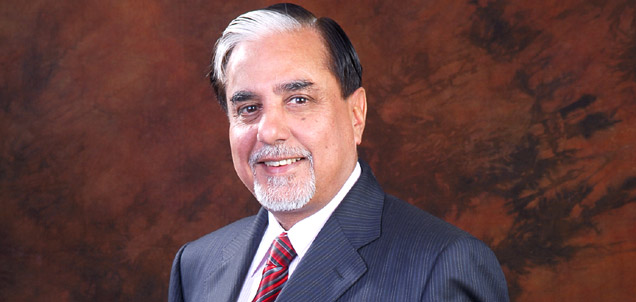
  • Happy Birthday, Mr Subhash Chandra!


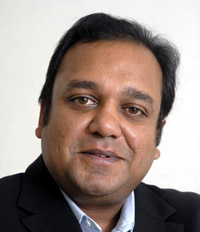
    By Punit Goenka


    Although I was too young in 1992 when Zee TV started, our family was confident of him achieving success in the media and entertainment space.


    * I have been fortunate to work with him. His perseverance, never-give-up attitude, and complete commitment to his work have helped him achieve the status that he has today. It was his visionary abilities that enabled him to foresee opportunities much before others and launch pioneering ventures like India’s first Hindi satellite channel – Zee TV, India’s first Hindi News Channel – Zee News, India’s first direct-to-home company – Dish TV and many more.


    * Zee, under his leadership, has always remained grounded through its journey spanning two decades. Our ability to implement cost-control initiatives has helped us overcome the economic slowdown and achieve further operational efficiencies, which is why Zee has been able to deliver a shareholder value CAGR of over 30 percent since inception. Apart from this, the connect with our viewers and ability to innovate and create successful indigenous home grown formats have helped us sustain our leadership.


    * He has done a lot for all of us. We want to consolidate on the strong foundation he has created for Zee. We are working towards making Zee Entertainment Enterprises Limited one of the leading Media and Entertainment Company from the emerging markets.


    * By becoming the first Indian to be conferred with the prestigious Emmy Directorate Award 2011 recently, he has done the entire Indian M&E Industry proud.


    * His vision when he started was to take entertainment to the home of every Indian. In fact he was able to envision and understand the value chain of the entire TV broadcast business from content creation to content delivery – right upto the last mile. Now he wants to take Indian entertainment to the global audiences.


    Punit Goenka is Managing Director and CEO, Zee Entertainment Enterprises Limited


    As told to Johnson Napier

  • UB bets big on ‘unchilled’ Kingfisher Red

    By Tuhina Anand


    Kingfisher Red, marketed as India’s first ‘all season’s beer’, is looking at expanding its footprint in the next 12-18 months and to have a nationwide presence. Currently, Kingfisher Red is available in nine states including Punjab, Chandigarh, Bihar, UP, Rajasthan, Himachal Pradesh, Arunachal Pradesh, Meghalaya and Assam.


    Talking about the roadmap for the product, Samar Singh Sheikhawat, Senior Vice-President Marketing, United Breweries, said, “There was a need to bring in a beer that can be consumed round the year as we have seen that the market swings a low of as much as 40 percent during cold weather as beer is largely seen as a drink for summer months. But I must add that since its launch one and a half year ago, Kingfisher Red comprises 5 percent of our total market share in the strong beer market and so far we are satisfied with the progress of the brand.”


    Kingfisher Red is marketed using the premise ‘Tastes great when chilled and even better when not chilled’. The product is designed to meet the unmet market during cold weather conditions when traditionally there is a drop in beer sales. Hence the communication is built around the season summer, monsoon and winter and how when it’s cold get Red, when it’s hot get Red and when it rains get Red hence a beer that is suitable for consumption irrespective of the season. The collaterals and merchandising is also built around seasons, like its jackets for winters and T-shirts for summer.


    On plans ahead, Mr Sheikhawat said, “We will be looking at being present in 15-20 markets in the next 12-18 months. Also currently the beer is brewed in Ludhiana and Rajasthan and we intend to pinpoint 5-6 more locations where it will be brewed.”


    He also said that the overall strong beer category from UB is growing at a CAGR (Compound Annual Growth Rate) of 15 percent in the last five years which means it is doubling growth yoy. In the case of Kingfisher Red it has been growing at more than 100 percent. In fact, he is bullish on the product and says that by end of March 2015 Kingfisher Red will comprise 10 percent of the total market share in the strong beer category.


    Kingfisher Red is a Premium Gravity beer and is specially brewed to give a distinctive taste with an oaky woody flavour and artistically crafted beer inspired by the traditional brewing practices of medieval European monks. It is so developed following a unique process whereby the beer is golden light oaky brown and can be consumed even at 14 to 17 degree Celsius, without any change in the taste of the beer.

  • Would ‘Kolaveri Di’ have been a rage if it was only aired on FM?

    By Robin Thomas


    Already a huge hit online, with more than 94 lakh views on YouTube, and more than 46,000 ‘Likes’ on Facebook, ‘Why this Kolaveri Di’, a Tamil-English song promoting the Tamil film ‘3’, has become a national rage. The song became so popular online that it was instantly picked up by FM stations across the country irrespective of their language. The Chennai station of Big FM and Radio Mirchi however claim to have aired the song first on radio and that the song was heavily promoted on radio even before it became a craze online.


    According to a Big FM spokesperson, “The song is a rage – both nationally and internationally. Big FM premiered the song at our Chennai station with the musicians, following which it went on YouTube. It was the power of the product – lyrics and music that made it a hit! Radio today, has a key role to play in marketing and creating viral music, and in this case too, it worked! We played the song, across our stations in its Tamil-English version.”


    So, would the song would have created a similar sensation had it been aired only on FM radio? While there are those in the industry who believe that radio has the power and the reach to create a huge sensation, there is a section in the FM radio sector that are of the view that a ‘Kolaveri Di’ kind of national rage was only possible through Facebook and YouTube, as radio is more city/ town or even state-oriented.


    Vehrnon Ibrahim, National Programming Head, Oye! FM

    Vehrnon Ibrahim, National Programming Head, Oye! FM said, “I doubt the song would have been a huge sensation on air (radio) as compared to the craze online. We started playing this song only after it became a huge sensation on the social networking sites. It’s quite an entertaining song, a very filmy story, and we cover all that is filmy or entertaining. We are therefore following the story and not the song.”


    Kartik Kalla, National Programming Director, Radio City said, “Yes of course radio would have created such a rage. After all it’s the same person who tunes in to FM and online so whether radio airs it first or after two days is immaterial.”


    “We have a very robust policy where songs are tested with the listeners before being put on air. But honestly with Koleveri Di that was not required because it has broken all kinds of records online and you certainly can’t ignore that!” he added.


    Ravindran Nair, Director Programmes, Radio Mango

    Ravindran Nair, Director Programmes, Radio Mango, also believes that the song would have been a huge sensation had it been aired first on radio. “Definitely it would have been a hit. Radio has done similar things very successfully. In our case, a song from an album “Coffee on MG road” called “Palavattam” by actor/director/singer Vineeth Srinivasan became huge with radio airplay. Social media has become a part of marketing mix for most products and films and music will be no exception” he explained.


    On a different note, Shaan Menon, Manager Content CLUB FM stated, “I don’t think the song would have been such a rage had it been aired on radio first, it is all because of YouTube or Facebook. Just like Kolaveri, any radio link or radio creative such as a promo or an interview bite can also become viral. It’s unpredictable, but will happen for sure. These days, the internet is the first testing platform for any creative product. So, a product getting well sold on the internet is undoubtedly the choice of the masses! Social Network helps us to extend the reach of our product to more number of people.”


    He further said, “Radio is confined to a city or a state or to a nation, the possibilities for a Channel to fly high taking the flight of a social networking site is a huge positive sign. Radio is a medium which plays the right taste of the people. It’s just like his favourite restaurant where the listener gets his favourite food.”


    Some of the FM stations playing the ‘Kolaveri Di’ song are Radio Mirchi, Red FM, Big FM, Radio City, Oye! FM; Club FM, Radio Mango, Radio Hello and Radio Choklate.


    Of course the frequency of the song is pretty high among the south-based FM stations, particularly those in Chennai. The frequency of the song played on the Big FM Chennai station is also said to be very high as compared to its stations in other parts of the country. According to Radio Hello’s website, ‘Kolaveri Di’ has already become the top most popular song in its ‘Top 10 songs for this week’ list. Club FM, a Mathrubhumi initiative, used to play this song for 16 hours a day with a special promo along with it; Radio Mango, another FM station in Kerala, a Malayala Manorama initiative, used to play this song twice per hour, with heavy rotation. Radio City plays this song three to four times a day across their 20 stations whereas Oye! FM plays it for 172 hours.


    Interestingly, ‘Kolaveri Di’ is not the first song to have crossed language barriers among FM stations. Even earlier songs like, ‘Aika Dajiba’, a popular Marathi song; Tamil Song, ‘Apdi pode’ were played in various FM stations in the country irrespective of their language.