Category: NEWS

  • Vogue India awards best in beauty

    By A Correspondent


    Vogue India celebrated the best in beauty at the third edition of the Vogue Beauty Awards. The glittering awards ceremony honoured the best beauty products, services and professionals across categories ranging from skin care, anti-ageing, make-up, fragrances, hair care and hair styling.


    Attendees included celebrities, socialites and heads of eminent beauty brands in the country. Hosted by Vogue India editor Priya Tanna and Vogue India Beauty Editor Parizaad Khan, the event began with personalities from the beauty and glamour industry walking the red carpet followed by cocktails and the awards ceremony.  There are a total of 55 awards this year, including 42 awards related to products and services and 13 honouring the best beauty related talent.


    Speaking on the occasion, Priya Tanna, Editor Vogue India said: “Vogue Beauty Awards demonstrates our growing commitment towards beauty, which is integral to the magazine’s DNA as is fashion. Vogue Beauty Awards has grown from strength to strength in the past few years and has achieved distinction of becoming one of the most prestigious Beauty Awards in the industry. The overwhelming response we received last year from our readers, industry professionals and experts has encouraged us to widen the scope and reach of the awards, making it bigger and better than before.”


    Cover star of the Vogue August issue, Kajol received the ‘Timeless Beauty’ award, whilst ‘Most Beautiful Man’ was awarded to Farhan Akhtar and ‘Beauty of the Year’ was bagged by Deepika Padukone. Other winners included Ileana D’Cruz for ‘Fresh face’ and Diana Penty for ‘Debutant’.


    On being presented Timeless Beauty Kajol said: “Beauty is truly in the eye of the beholder and is eternal. You are beautiful because you believe you are. I would like to thank Vogue for giving me the Timeless Beauty Award. I also want to thank all those people who made me feel beautiful from inside, my family, friends and all those amazing fans.”


    Deepika Padukone on being presented ‘Beauty of the Year’ said, “My idea of beauty is embracing my strengths as well as my flaws, being confident and hardworking. It’s a great feeling to receive such a prestigious award from Vogue India.”


    Anil Chinnappa won Best Make-up Artist, Suresh Natarajan won Best Photographer and Angela Jonsson won Best Model. Whilst Best Hair Stylist was awarded to Savio Jon Pereira, Best Hair Colourist went to Rod Anker. The Best Skin Expert award was won by Harshna Bijlani, Best Fitness Expert by Zareen Watson and Best Nutritionist by Pooja Makhija.


    Over 1100 products were rigorously scrutinized and personally tested by an expert panel of judges comprising industry experts such as Mickey Contractor, Dr. Malavika Kohli, Kanta Motwani, beauty mavens Nargis Fakhri, Sonali Bendre, Simar Duggal, Namrata Barua Shroff, Nisha Jhaveri and Vogue editors Priya Tanna and Parizaad Khan.


    Entries were invited from all beauty brands retailing in India which were judged by the panelists through a thorough and detailed process held between March-April at the TajLand’s End.


  • MTunes HD launches ‘MTunes Trending20’

    By A Correspondent


    MTunes HD – the HD Bollywood music channel has announced the launch of a countdown show called ‘MTunes Trending20’, presented by Bharti Airtel. This is in keeping with the channel’s premise of delivering “music like never seen before”.


    Historically, countdown charts have been based on record sales. However, given the fact that music consumption is spread across multiple platforms these days, MTunes Trending20 brings to its viewers a comprehensive analysis of audience preferences across 5 platforms. The final chart will be compiled by leading media research firm Ormax Media.


    The five platforms will be Radio popularity compiled by Radio City, Digital downloads provided by Hungama, YouTube views & Heartbeats (weekly music research) by Ormax Media and audience preferences as recorded by MTunes HD. A normalized measurement formula based on TV Ratings Data, Radio Aircheck, SMS requests, downloads/usage tracking across mobile service providers and views count on popular internet video sites will be collated to generate the weekly chart.


    Presented by Bharti Airtel, the weekly show – scheduled to launch from August 04 every Saturday – will play the top 20 songs of the week. Through the week the top songs on MTunes Trending20 will also be highlighted on the daily play list.


    Speaking on the occasion, Saravanan P, CEO of MTunes HD said: “MTunes Trending20 is a reaffirmation of our promise to deliver ‘Music Like Never Seen Before’ and strengthens a long line-up of path-breaking formats like Kal Ka Superhits, Handmade and MBox already on the channel. We have pioneered the industry by launching the World’s first HD Bollywood Music Channel and are committed to consistently drive growth for our stakeholders. This show will deliver the gold standard of Bollywood music rankings to the industry and is among several initiatives in the pipeline that will make the MTunes HD viewers feel the music!” The channel is reportedly pricing the property at a premium and is confident of changing the game for the genre with its unique concept and distinct proposition.


    Shailesh Kapoor, CEO-Ormax Media added: “Today, music is consumed across media – television, radio, internet, mobile phones and other digital devices. MTunes Trending20 is a unique property that captures the combined effect of all these media.”


  • Triton understands the soul of India: Renton D’Sousa

    Renton D’Sousa, National Director – Creative & Strategy will now bear the additional responsibility of Chief Executive Officer for Triton Communications, one of the largest privately held Indian communications agency. Prior to joining Triton over 10 years ago, Mr D’Sousa was the creative head of a few units at Lintas Mumbai. Looking at the graph of some of the ad agencies which had a creative as the Chairman/CEO, looks like Triton and its clients are in for exciting times ahead. In a candid chat with MxMIndia’s Shubhangi Mehta, Mr D’Sousa discusses his future goals and additional responsibilities.


    With additional responsibilities now coming your way, what are the new responsibilities you forsee for yourself at Triton?

    Besides being the architect of ideas, the additional overarching responsibility now is to ensure the profitability of the business. The agency has to be financially stronger to plough back money into enhancing resources in the knowledge domain to enable the best end product. Above all, I now find myself asking about the “value of an idea”.


    Does the new role come with more expectations and pressure? How well do expectations work for you?

    The new role definitely comes in with a lot more expectations and pressures. My colleagues and clients can now look forward to more exciting times ahead. Expectations work for me as it poses a new challenge of living up to them. Cliched as it may sound, “there’s no smoke without fire”.


    Triton is very quiet when it comes to media exposure. Would you like to change that or does it remain as it is?

    We have always let our work do the talking for us. We have done path-breaking work on a continuous basis, but never gone to town talking about it. In the current scenario, it has become a norm to get written about, irrespective of the quality of the end product. We will not be as quiet as before. Having said that, we will talk about our work only if it adds value to our clients’ products.


    What are your focus areas for the coming year?

    I firmly believe that we are in the business of being creative. This belief has to percolate down to all levels and across all functions. This will be my single area of focus. For eg: Media can get more creative in finding innovative solutions in their area of operations and so can other functions. The franchise on creativity is not exclusive of the creative alone.


    Any further structural changes that we can expect from the agency?

    The new structure will be that of an agency without boundaries. We will operate as a single cohesive unit. My colleagues will be encouraged to assist across units and offices. This will encourage greater inter-office interaction, besides throwing up new opportunities and enhancing individual skill sets.


    How would you rate Triton’s journey over the years?

    It has been an interesting, arduous and successful. It has grown to become the largest privately held Indian communications agency. Over the two decades, Triton has enjoyed a successful run in partnering their clients in launching, building and nurturing some of the leading brands in the country across diverse categories.


    As a part of Triton, would you like to share certain specific highs and lows?

    The highs have been many. We have created many category leaders amidst well ensconced competition;  taken risks that have paid off and benefitted our clients immensely. The lows have been when we had to bid adieu to our long standing relationships either due to management takeovers or global alignments.


    What according to you does Triton offers to clients that differentiates it from other agencies?

    Triton prides itself on being an Indian agency that understands the soul of India. We believe that do business in India, you need to understand the business of India.


  • Family and wellwishers bid farewell to V Ramani

    V Ramani

    By A Correspondent


    Family and friends of late Mr V. Ramani held a prayer meeting on Friday evening at Bombay Tamil Sangham Hall to pay their final tribute to the man who championed the cause of digital media even before it became a sensation. Apart from family members, friends and other wellwishers from the industry were present at the prayer meeting.


    Mr Ishan Raina, MD and CEO, OOH Media, Mr Atul Hegde, CEO Ignitee Digital Services, Ms Harminder K Datta, Co-founder and Principal Correspondent, Pariental Innovative Solutions, Mr Sandip Tarkas, CEO Future Media and other well known dignitaries attended the prayer meeting.


    Family and friends remembered him as the man who was a perfectionist – passionate about sports, particularly cricket and a man who was fun loving, hardworking who always wanted to win. The prayer meeting started with a traditional Sanskrit prayer followed by family, friends and colleagues paying their final tribute to Mr Ramani.


    Mr Hegde remembered Mr Ramani as a man who got joy from the smallest things; who loved cricket and bonded well with those who loved that sport. He also defined Mr Ramani as a man known for his passion for work and sports. He also observed that it did not matter who his clients were – big or small, the passion remained the same.


    Ms Datta said that one of the things she learnt from Mr Ramani was that an idea could come from anyone. She remembered Mr Ramani as a man who was dominating but, at the same time was a childat heart, and very honest. She also said that the journey at Pariental Innovative will not end because Mr Ramani has given them a dream through which he will always be with them.


    One of Mr Ramani’s ex-colleague from Contract Advertising, Ms Devika Sharma, now Executive Director, Lowe Lintas remembered Mr Ramani as a man who always enjoyed a good fight; a man who always worked with passion and dedication, always wanting to climb new heights.


  • Mumbai completes 50% digitization target

    By A Correspondent


    A review by the Ministry of Information & Broadcasting has revealed that in Mumbai, 50 per cent of cable TV homes have already been installed with STBs. Mumbai has an estimated requirement of 34.85 lakh STBs, and so far 17.07 lakh STBs have been installed. The MSO-wise installation of STBs in Mumbai is:


    National level MSOs: Hathway – 6.16 lakh, Den – 1.40 lakh, Digicable – 2.57 lakh, IMCL – 4.77 lakh, WWIL – 50,000 Independent MSOs - 1.69 lakh.


    Mr Ashok Mansukhani, President, MSO Alliance and director with Hinduja-owned IndusInd Media & Communications (IMCL) said: “We are committed to complete the installation by the deadline. However, since there is no agreement with the broadcasters, it is acting as a hindrance.”


    In the absence of the agreement, the price of channels cannot be decided, and the same cannot be passed on to the local cable operators (LCOs). The LCOs then have a problem giving a clear price list to the customers.


    The Cable Television Networks (Regulation) Amendment Act, 2011 has made it mandatory for switchover from the existing analogue Cable TV networks to Digital Addressable System (DAS) by December 2014, in the entire country in four phases. In the first phase, four metro cities of Delhi, Mumbai, Kolkata and Chennai are to be covered by October 31.


    The Ministry has been coordinating with the stakeholders regarding the preparedness of the industry for digital switch-over. Installation of Set Top Boxes in cable TV homes is the most crucial precondition for digital switch over of cable television.


    The Ministry is holding fortnightly Task Force meetings with all the stakeholders to take constant stock of the progress and to chalk out the measures to address emerging concerns. So far 14 meetings have taken place. The meetings are held with National level and independent Multi-Systems Operators every 15 days to assess their preparedness in terms of head-end capacities to carry minimum 500 channels from January 1, 2012 and the progress of installation of Set Top Boxes in cable TV homes. They have also been advised to prepare micro plans for completion of the requisite task within the deadline and complete all the infrastructural preparations within time.


    Meanwhile, in order to enable the MSOs to up-load the data on the website of the Ministry, the Ministry has put in place a software and the website has been enabled for the purpose of real-time collection of data. The software will automatically generate analytical information based on the data uploaded, resulting in a clear view of the progress made. This will not only be useful for MSOs and other stakeholders but also for the Ministry, as it will infuse transparency in the system, and enable timely corrective action.


  • Harshad Hardikar returns to OgilvyOne

    Harshad Hardikar

    By A Correspondent


    Harshad Hardikar has returned to Ogilvy after working for one year at rediff.com. At rediff.com, he was responsible for Rediffshopping. Prior to that Mr Hardikar was with OgilvyOne for 4 years as its Mumbai Head.


    A postgraduate from MET IMS, Mumbai, Harshad has over fifteen years experience in CRM/Loyalty, working with Select Direct, iContract, ICICI Bank and OgilvyOne. He launched India’s first coalition loyalty programme called iMint (now Payback).

    Harshad Hardikar, Senior Vice President, Ecommerce & CRM Practice, OgilvyOne India said: “I am glad to be back at OgilvyOne. We are witnessing unprecedented growth for e-commerce and ECRM in India. Our clients are actively looking for solutions to sell online as a cost efficient revenue stream.  My mandate at OgilvyOne is to lead this practice nationally and manage our clients Ecommerce/CRM needs end to end.”


    Kunal Jeswani, President, OgilvyOne India said: “The best service we can do for our clients is to bring in talent that can make a difference to their business. Harshad represents just that, the best available talent in CRM and e-commerce. Someone who understands the intricacies of digital relationship marketing and can use it to demonstrate a real impact on our clients businesses.”


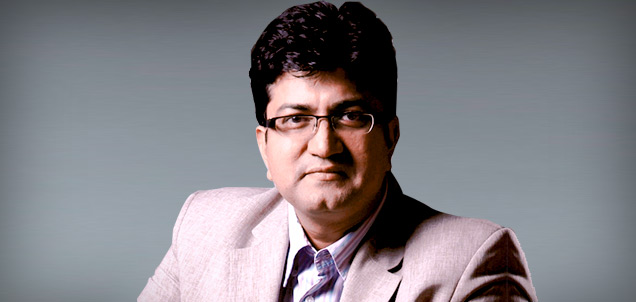
  • If we are divided as an industry, we will sink: Prasoon Joshi


    Forty-one-year-old Prasoon Joshi’s has been a remarkable story. A young lad from the mountainous region of Tehri Garhwal (Uttaranchal), who once struggled to get a book of poems published, is not only heading a top ad agency today, he is much sought after in Bollywood for his superlative song writing skill.


    The Chairman and Creative Chief of McCann opens up on his multi-faceted existence, the challenges the ad world faces today, his approach to creativity and the things about the industry that disappoint him. Joshi also admits that ‘Bose DK’ made him frown. Despite his close friendship with Aamir Khan.


    By Anil Thakraney


    Excited about Milkha Singh?

    Yes, I have written the story, screenplay, songs and dialogue. It’s been two years since I started working on this project.


    Must have been a time-consuming project.

    Only in phases. One had to spend time with Milkha Singh, since this is a biopic. You have to know the person and his life very well. But there was enough time, and I only do projects which give me that kind of time. Because my first job is to run the ad agency.


    Don’t your big daddies at McCann get hassled with your moonlighting?

    No. In fact, I would say any intelligent boss would understand how it helps them in return. I do these things in my free time. Now, if this takes a toll on your free time, then that’s a choice you have to make. Today is a Sunday and I am sitting with you. After meeting you, I am meeting a musician who wants to collaborate. My wife understands this, my family understands this. This keeps me happy, and when you are a happy, satisfied person, everyone likes you. Your organization likes you, your wife likes you. I whistle at home and at work. People from my organization will tell you, no matter how difficult the problem is, I have a very positive attitude about life. And positivity happens when you are not frustrated. My organizational leadership has understood that this man has many needs. He is a musician, he is a poet.


    Which means you say no to many film producers.

    Yes. 90 per cent of them.


    You are the global creative director?

    Till now, I am the chairman of the global creative council. Soon this mantle will shift from me to our creative director of New York and London office.


    How exactly does the creative council work?

    You are like the global creative director for that period. You go through the work, advise people, send them feedback. There is a chosen set of seven or eight of us who meet quarterly and review the work. This was the idea of our new CEO, Nick Brien. It was his vision to start a council where the best minds of the company can collaborate.


    Don’t you want to play a global role now?

    I have been doing it. Working out of India, I am the global creative director. I am the Asia Pacific creative director as well. I heard this couplet when I was in college: ‘Phool wahi sar chadha jo chaman se nikal gaya, izzat usi ko mili jo watan se nikal gaya.’ And I thought this was wrong. Why do Indians respect only those people who leave the country? I decided I will be here, and I will do global work. In fact, I have been instrumental in getting the Commonwealth hub to Mumbai. This is an unprecedented collaboration between two rival groups, IPG and Omnicom. There will be four Commonwealth hubs around the world. Detroit, Milan, Sao Paolo and Mumbai. This means the global work for General Motors’ brands will be generated out of Mumbai. And I will head that.


    Why was the need felt for Commonwealth?

    What happened is that in the US, General Motors was being handled by Goodby Silverstein & Partners. And some other agencies around the world, including McCann, were handling this account. A collaboration of minds happened between Jeff Goodby, myself and a few others. And it’s interesting because Goodby is owned by Omnicom and McCann by IPG. The client felt that these minds are rare to get together, so why not start another set-up, which will be dedicated to GM around the world. So my ambition is to get India onto the global map, and not just Indians.


    What about growth plans for McCann in India?

    McCann has grown in leaps and bounds in the last three years. Last year we grew by 50 per cent, this year’s projected growth figure is 45 per cent. We are No 2 in Delhi. It’s amongst the top four agencies in India. And let’s not forget that McCann doesn’t have a history, unlike JWT, Ogilvy or Lintas. We are the youngest multinational agency in this country. We are fifteen years old, unlike the hundred year legacy of the others. Also, we are expanding beyond advertising. Into things like branded content and events. For example, we have launched ‘Chevrolet Jam’. What happens is that a veteran artist comes and introduces a young musical band, and then they jam together. And this not restricted to the club culture, it extends to the rural culture. There will be a series of such musical events, and this will finally lead to making of albums.


    You come from the Northern heartland, and this has played an important part in your success. Do you prefer to hire people from the North?

    We do hire people from the heartland a lot. We have a great combination of IIM grads and people who come from extremely different background, from smaller towns. This is because we have a large base of local clients. Dabur, Marico, TVS, Videocon, Britannia, etc.

     

    “We need IPR (Intellectual Property Rights). Our ideas need to be valued much more”

    Do you feel pressure has increased in the ad world? You said this to me when we met last.

    There is pressure of growth and it percolates down from the top. If the pressure is on the CEO, he expects more from his marketing head. Who then expects more from his team. And advertising being a very important part of the marketing mix, the pressure percolates down to the ad agency. There are aggressive growth targets. Also, people come and go very fast. The new guy comes in with new aggression, and he starts evaluating everything, even the ad agency. Which is why we need IPR (Intellectual Property Rights). In the older days, clients and agencies had a long term relationship. Today it’s different, you might be there for just one year, and the client continues to use what you created for him, and you hardly got returns for that. Our ideas need to be valued much more.


    “I think there is too much animosity in the ad world. This is the reason I desist from going for certain ad functions”

    Prasoon, here’s the problem: You ad guys talk a lot about these things but no one takes the lead in trying to change things. Shouldn’t you people get together and find solutions?

    That’s a good observation. I think there is too much animosity amongst each other. This is the reason I desist from going for certain ad functions. I think it’s high time we understand that together we will succeed. And if we are divided as an industry, we will sink. And I take part of the blame for this. As the youngest of the big agency leaders, I expected the older people to take the lead.


    Another observation is that you old world chaps have a TV fixation. And no one’s even trying to understand the digital space.

    I am a geek, I was the first to launch a virtual office in Asia. But let me speak for everyone. Age has nothing to do with it, and it’s not a TV fixation. Also, I must tell you Indians are very adaptable people, history will tell you we are the least resistant race. We have been invaded, we have dealt with many cultures, and we have emerged victorious. So there’s no resistance to digital. The needs are very complex. There are certain products which do not have any need for digital. In some categories, it’s really needed. The market needs out here are very different from those in the West. If we are doing a lot of television, it’s because of the market. You know, my driver bought his first TV set only last year! But I must tell you, at McCann, we have moved away from the copy/art model. Now it’s copy/art/digital. So there are three people working together.


    “The younger talent is in too much of a hurry. Today the patience is not there, they don’t dive deep into problems”

    The biggest challenge facing the ad world today.

    Client relationships are becoming very short term. There used to be a time when you understood the brand, there used to be consistency of people. Too many changes are happening at the client’s side. As a result, new expectations keep coming up. So we are re-inventing the wheel far too often. Also, on the advertising side, the younger talent is in too much of a hurry. And I keep telling them to nurture a brand for some years, to understand it. Else you’ll have one-offs in your portfolio but not great campaigns. Today the patience is not there, they don’t dive deep into problems.


    We didn’t do well at Cannes this year. What happened?

    Well, our agency did win a Gold. We have to understand that a number of new media have emerged, such as interactive, digital, etc. We don’t have that much of work in these categories to begin with, so our number of entries in these categories is very less. What worries me however is that we should be doing much better work on television. We need to introspect on what went wrong.


    Never thought of moving full-time into Bollywood? Surely they pay you very big bucks now.

    I have a lot of respect for Bollywood, and they have given me a lot of respect. The masses have accepted my work and I have won awards. But I don’t want to do too much of work in Bollywood, not every film excites me. Tell me which film you have seen, for which you wished Prasoon had written the lyrics? You’ll probably come up with one or two names. Also, I love advertising, I like the adrenalin, it keeps me on my toes. I come to know about the global perspective, the changes, it’s a business which keeps you alive and kicking.


    Given your sensibility, a song like ‘Bose DK’ must have appalled you. Did you speak to your friend Aamir Khan about this?

    I honestly expressed my point of view to him. I told him I would never do this. Because there is something called sanctity of a language. I feel it’s easy to abuse it and difficult to maintain it. I am of the view that you have to entertain people, but tehzeeb ke daerey mein rahe ke. But Aamir’s an individual, he believed there’s nothing wrong with it, and that he was having fun.


    An honest review of Satyamev Jayate.

    I believe in people who do something, I am against arm-chair criticism. Aamir went ahead and did something he believed in. And hats off to him.


    You really think the programme will make a difference on the ground?

    Will things change overnight? No. A taxi driver in Delhi asked me to thank Aamir on his behalf. He said, on the issue of child sex abuse, he (Aamir) told his children things which he was not able to do himself. So at the grassroots’ level, it does make an impact on the psyche of people. How far will this get manifested, is very difficult to measure.


    What is the ad sensibility you bring to Bollywood?

    Simplicity and single-mindedness. Every song of mine communicates something, and it’s crafted in a way that the message doesn’t get garbled.


    One Indian creative director you admire.

    Piyush Pandey. He leads by example, he is such a hard working man. He sweats it out. And that’s exactly what I am today.


    Why did you leave him in that case?

    After a point, you have to find your own world. My upbringing was of a certain kind. Piyush had the language of the street in him. I wanted to bring in literature and music. I wanted to bring in my surrealism, my minimalism. Which is why I chose McCann, they offered me an open platform, a canvas to paint on.


    One thing that disappoints you about the Indian ad world.

    There’s unhealthy competition. The talk is less constructive and more destructive. One-up-manship is the name of the game. We forget that this is only advertising, and we aren’t at war. When I asked a few of my clients to come to Goa Fest, they said, “You people are too much into mud-slinging and we don’t want to be a part of that.”

     

  • Satyamev Jayate isn’t over yet, special show planned for Independence Day

    By A Correspondent


    Star Plus’ gritty up-close look at India’s malaises through the eyes of Aamir Khan in its Sunday mid-morning show Satyamev Jayate isn’t quite over yet. The last of the 13 episodes may have been aired on July 29, but the channel is reportedly planning a special episode to be telecast on August 15 to coincide with the Independence Day.


    MxMIndia learns that the extra episode is in the nature of a round-up examining the impact of Satyamev Jayate, how its themes have been received and how the various guests have fared since the airing of their stories.


    Some of the impact has already come across in ABP News’ ‘Asar’ programme which followed on the Friday after each episode, and the 14th episode is thus likely to be a “super-Asar”, a source told MxMIndia. However, this episode may not be shown on other language channels, it is learnt, but only on Star Plus in Hindi.


    A source in the network revealed that the Satyamev Jayate set has been dismantled, so the 14th episode will probably have a different look-and-feel from the show itself.


    The impact of Satyamev Jayate was also a shot in the arm financially for the NGOs that each episode supported, and this is also due to be talked about. The Reliance Foundation has matched all the proceeds that have come in for the charities, a fair bit of it even came in after each week’s ‘Asar’ was aired on ABP News.


  • The Crucial Social Media Question: Have fans? Now what?

    By Tuhina Anand


    Every marketer worth his salt wants his brand to have a presence on social media. However, the truth is that the marketers are still trying to figure how to navigate this medium.


    Having heard that it’s a ‘cost effective medium, can be tracked and is ‘the’ medium’ where the customers hang out, the marketer obviously wants to be there too. But the social media still has a long way to go before it is seen as the ‘vehicle of choice’ and not just as an afterthought.


    Yes, one agrees that marketers are warming up to the medium but they are still testing waters barring a handful who have taken the medium wholeheartedly.


    Once a marketer decides to go on social media, the next move is to create a presence on Facebook and maybe on Twitter. We have often heard the marketers talking about the large number of fans they have acquired on FB, so what do these number of fans mean to them and how are the marketers leveraging these fans to engage effectively with consumers?


    Chhaya Balachandran Aiyer, Founder and Managing Director, BC Webwise agrees that there is peer pressure to acquire more fans and clients often bow to that demand: “The number of fans and likes is a visible number, hence one can’t write it off completely even though many of the numbers could be dormant fans. These numbers are an opportunity to engage those fans in a meaningful way to create brand loyalty and brand recall.”


    She added: “Two years back, the common demand of a client was to be on Facebook, but we have seen a shift now where they have realized that it’s not the ultimate answer but social media too needs a 360 degree approach.” So it’s clear that there are different kinds of marketers and the early adopters are clearly asking the right kind of questions.


    Some of the brands that have effectively used the communities on FB are Fastrack, Café Coffee Day, Sunsilk while more are getting on the engagement bandwagon. Explaining the significance of the numbers, Rajiv Dingra, CEO, WATConsult, said: “While all readers of an ad do not become buyers of the product, similarly with FB, the marketers become a publisher of its page to reach out to the consumers. The aim is not always conversion to transaction for all people on its FB page, but with a large fan base the number of potential buyers definitely increases.”


    Mr Dingra is clear that there is no replacement for good content. He added that the numbers might reflect various objectives of a brand at different points, but if the content is good, the engagement with brands will become only much more involved and meaningful.


    Vineet Gupta

    Vineet Gupta of 22feet has been relentlessly engaging with brands to enable them to use their social media tools effectively. He explained: “We have brought out exclusive sale for Fastrack fans on FB and the brand has been doing a lot of stuff exclusive to the community. Scale has its own benefit and one can’t deny that. With people becoming familiar with social media, there are lots of activities happening which take people beyond the likes and the fans.”


    The agency has recently done activation for Lee titled ‘Shadows of City’, where people were encouraged to present their photographs of the city and the shadows they create which would then be put up in the stores.


    CCD is another brand that has been using FB to listen to its customers and also engage them via the medium. Ramakrishnan K, President- Marketing at CCD elaborated: “At CCD, we not only have numbers, but also a high level of engagement. Our fan base is 2.6 million and our monthly engagement level is 60 per cent, i.e. 60 per cent of our fans interact in some form with our page every month.”


    He added: “At CCD, we use social media base for regular tailor-made communication on happenings in CCD. We have a direct consumer feedback on cafes across the country which gives us instant information that keeps us on our toes. Most importantly, we use the fan base for co-creating many of our offerings – be it new menu, suggestions for improvement, live tasting of new introductions, choice of music among others. We engage fans to co-create their brand. As a result, we drive a very high level of consumer engagement, which in turn helps us drive sales.”


    One concern is that many fans on FB might be dormant, so then do the numbers really mean anything? Sanjay Mehta, Joint CEO at Social Wavelength explained: “I think that the key is to deliver message to interested people. If people receive the message but not respond, that is not a concern, but if they do not get the message in the first place, then it’s a bigger challenge. I think one should not be dismissive of the dormant numbers, but focus more on getting the right kind of messages that will get them to engage.”


  • Luxury brands, including Louis Vuitton, Armani and Burberry, eye ‘conservative’ markets like Surat, Chennai

    By Vijaya Rathore & Nandini Raghavendra


    Traditionally conservative markets like Surat, Chennai and Kolkata are warming up to luxury, opening a wealth of opportunity for brands such as Louis Vuitton, Armani and Burberry beyond Delhi and Mumbai.


    In the next six months, people in Surat – home to some of India’s richest entrepreneurs in the diamond and textiles trade – will see the entry of half a dozen international labels that include Armani, Burberry, Tumi and Crabtree & Evelyn.


    Some 1,500 km away down south, on the eastern cost, curious shoppers in Chennai are checking out the first Louis Vuitton store that opened a fortnight ago. “Chennai is a great market, full of possibilities and perspectives,” said Geoffroy van Raemdonck, Louis Vuitton’s south Europe president, from Milan.


    Two new luxury hotels in Chennai are offering space to luxury brands keen to go deeper into the country even as Louis Vuitton has identified its next stop – Kolkata, where businessman Sanjiv Goenka is readying a 7-lakh sq ft mall that has already leased out about 50,000 square feet of space to luxury brands such as Bottega Veneta, Bally, Burberry, Rolex, Porsche Design and Jimmy Choo.


    Surat, Chennai and Kolkata have traditionally been conservative markets, with only a few rich buyers spending on the luxury labels. But now these cities are among the emerging hot destinations for luxury as premium global brands seek to reach out to pockets of affluence beyond the big metros.


    “There is a nascent market waiting to explode. We think the time has come,” said Sanjay Kapoor, managing director of Genesis Luxury, which markets brands such as Armani, Burberry and Canali in India.


    Genesis has taken up space for half a dozen stores at a luxury mall in Surat being built by Virtuous Retail, a retail real estate asset platform sponsored by the Xander Group Inc. It is also looking for space in Chandigarh, Ludhiana and Jaipur because several people from these towns frequent its stores in Delhi and Mumbai.


    Clearly, the rich in small towns have more money and desire than ever to spend on high life, and they seem indifferent to the slowdown in economic growth and overall consumer spending.


    Three years ago, NCAER’s Rajesh Shukla and Future Capital’s Roopa Purushothaman had said a report titled Next Urban Frontier, that boomtowns like Surat, Jaipur, Lucknow, Nagpur, Bhopal, Coimbatore and Kanpur have seen the most striking shift in income distribution.


    “That trend is established now,” said Mr Shukla. “The number of high-income households in boomtowns is growing at around 20 per cent a year, against 13.7 per cent in the mega cities…(and) boomtown households on average spend 12.7 per cent more than mega cities on clothing.”


    Anupam Yog, marketing director of Virtuous Retail, said Surat is one of the top ten markets on the company’s radar and has massive consumption potential. He says 73 per cent of the five million population in Surat is below 35 years of age, and 32 per cent of the households there have an annual income of more than 3 lakh.


    Virtuous Retail has also tied up with Indian fashion designer Rohit Bal to open shops within ‘VR Surat’ mall.


    Chennai, meanwhile, is fast becoming a popular luxury destination. “Chennai is becoming big in terms of consumers’ spending on luxury and lifestyle,” said Rajmohan Krishnan, executive vice president (wealth management) for north and south, Kotak Mahindra Bank. “People have new money and also the new generation of business entrepreneurs, who want to splurge, has come up.”


    Mr Krishnan says increasing connect between north and south of India too is impacting spending habits of people in the south.


    A new luxury hotel in the city, The Leela Palace, has earmarked around 8,000 square feet of retail space for luxury brands. “We are looking at luxury retail brands, with a focus on jewellery and watches,” said Amruda Nair, head of asset management, The Leela Palaces, Hotels and Resorts.


    ITC Grand Chola too is offering space to luxury retailers in Chennai as the city does not yet have a super luxury mall.


    In Kolkata, Sanjiv Goenka’s mall that will be operational early next year. “The mall will not only get shoppers from within the city but from the entire eastern region. We also expect an influx from Bangladesh,” said Pankaj Renjhen, managing director, retail services, at property consultant Jones Lang LaSalle, which is marketing the property. Gucci, too, is exploring having presence in Kolkata.


    Then there are other places.


    Louis Vuitton’s chief representative in Asia, Tikka Shatrujit Singh, said that besides Kolkata, the French fashion giant is considering places like Hyderabad, Noida and Gurgaon to open shops. High-end crystal products maker Swarovski opened boutiques in Ahmedabad and Pune last year. “This year we are opening in Ludhiana and Chandigarh and also looking at Kochi and Jaipur,” said Sukanya Dutta Roy, managing director (consumer goods business) at Swarovski India.


    Luxury hotels too are reporting higher business from domestic travellers.


    Source: The Economic Times

    Copyright © 2012, Bennett, Coleman & Co. Ltd. All Rights Reserved


  • Times Internet to conduct e-auction for spectrum

    By A Correspondent


    The digital technology company Times Internet Limited (TIL) has been selected as the auctioneer to operate spectrum auction process by Department of Telecommunications (DoT). This will be for the e-auction of spectrum in 1800 MHz and 800 MHz bands.


    NCDEX Spot Exchange and Karnataka State Electronics Development Corporation were the two other firms in the race. These two firms could not qualify the technical bids.


    The e-auction will entail inviting applications, resolving queries of potential bidders, finalising eligible bidders, public information sessions and mock auction.


    Satyan Gajwani, CEO – TIL said: “Online auction is the most transparent method of holding large auctions. As a technology leader, we are excited to facilitate this process.”


  • Resultrix is now a Publicis Groupe company

    By A Correspondent


    Publicis Groupe has announced the acquisition of Resultrix, an award winning digital marketing agency with an international footprint in India, Singapore, the UAE and the US. This acquisition strengthens Publicis Groupe’s presence in India as well as its digital dominance.


    Resultrix was founded in 2008 and has grown to be the leading performance marketing agency in several strategic markets. Resultrix employs over 100 specialists across its global offices in New Delhi, Mumbai, Singapore, Seattle and Dubai. The award-winning agency provides a full suite of services including search engine optimization, search engine marketing, online media, web-design, analytics, media buying, social media strategy, and mobile marketing with a differentiated set of performance-based business models. Resultrix’s extensive clientele comprises both international and local brands including Corbis Corporation, Bupa, Standard Chartered Bank, Airtel, Cleartrip, DBS Bank and Emirates National Bank among others.


    Talking about the acquisition, Daina Middleton said: “Clients are demanding best-in-class specialized skills and seamless digital integration at scale. Resultrix has an impressive track record as a leading search and interactive services agency. Their highly sophisticated suite of digital solutions perfectly complements our offering and will solidify our leadership position around the world.”


    Resultrix will operate as a unit within Performics, under the name ‘Resultrix, a Performics Company’. Its founders, Vidur Luthra, CEO, and Gulrez Alam, COO, will continue to lead the agency and will report into Daina Middleton, Global CEO for Performics and Gareth Mulryan, Managing Director of Performics, Asia Pacific.


    Vidur Luthra, CEO for Resultrix said: “We were founded on the belief that digital advertising provides the opportunity to disrupt the traditional media business models and this is a great opportunity to join a network that is renowned for being at the forefront of the industry. It allows us to realise our ambitions and leverage our skills, strengths and experience across a larger group footprint which is of huge benefit to our clients and teams.”


    This acquisition confirms Publicis Groupe’s ambition to accelerate its presence in fast-growing markets and develop its capabilities in digital in order to better serve its clients.


    Srikant Sastri, VivaKi Country Chair for India added: “India promises huge growth potential and opportunities, especially in the area of digital. This investment demonstrates our commitment to developing our networks in fast-growing and important markets and sectors.”


    According to the current ZenithOptimedia Advertising Expenditure Forecast (June 2012),India, the world’s 16th largest advertising market, will see an increase in advertising expenditure of 6.8 per cent over the course of 2012. Along with Brazil, Russia and China, India is forecast to account for 35 per cent of total global growth.


    The acquisition of Resultrix, which is subject to regulatory approval, is a testament to Publicis Groupe’s strategic commitment to expanding its operations across India, where the Groupe aims to double its size by 2015.