In light of the Tanishq controversy, the new Micromax commercial provides an interesting counterpoint.
The larger truth that I am missing in all the marketing discussions on Tanishq is that ‘brand purpose’ came about because Millennials and Gen X in the West were looking for authenticity, honesty and purpose in brands. In other words, they were looking for brands to mirror their own feelings and their higher purpose. And this higher purpose took the form of say ‘Real Beauty’ for Dove as a proof of authenticity or the higher purpose took on a higher social responsibility to support some cause: sexism, racism (for us it is casteism), climate change, sustainability, poverty, domestic abuse, climate change and a host of other causes.
I don’t know if the big brands have done a study of what this greater social responsibility might mean for Millennials and Gen X in India. I don’t think it is any of those that I mentioned for the Western audiences above.
But the important point here is a that it is not marketing directors who sit in their ivory tower offices and determine brand purpose or the language a brand speaks. For brand purpose to be real, it must coincide with the people’s aspirations. Just as an example if the higher purpose of our targets in the country is to prevent “love-jihad” they may want to see brands that reflect that higher purpose. And Tanishq’s higher purpose was at odds with the higher purpose of a section of the public that engaged in the destruction of their commercial.
After all, brands are not allowed to have a purpose that excludes the people it is talking to unless it wants to be altruistic or idealistic, which I am sure is not what Tanishq wants to be.
Moving on, I found a useful counterpoint in this Micromax commercial.
https://m.youtube.com/watch?v=aRo69b1wTNg
The commercial essentially announces that they are back in the game after having taken a beating at the hands of the several Chinese mobile handsets in the market.
In its ‘come back’ commercial appropriately titled ‘Micromax is Back’, the brand touches all the hot spots of the new Indian. Look at the various subtle inflections. The story of an Indian entrepreneur who came from the ‘gullys’ of middle class India after borrowing Rs 3 lakh from his father. A brand that was the No 1 brand in India and in the top ten brands in the world. Stirring the new sense of ‘nationalism’ in the Indian.
Then look at the skillful way in which the brand provokes anger against China by saying he was put down by Chinese brands. And that too in his own country? Oh, the injustice of it all!
Then invoking the border conflict with China, invoking the Prime Minister were all briiliant strokes in a campaign that reeks of Made in India. And to cap it all the new series being marketed by the marketers is ‘IN’. Another stroke of brilliance to use the first two letters of the country name. What could be more Indian, more desi that?
Now go back to the Tanishq commercial and think for yourself whether it invoked the right feelings in the target audience. Or did it provoke mob anger by touching on a raw nerve that people are most sensitive about.
For me this is a case study that brands cannot speak a language that does not strike the right chords among the people. Brands can’t hold beliefs that are in insolation without consulting the people they are talking to. Brands need the permission of the people before they speak.
We have a choice now. Either conform to the feelings of the new India that has been emerging for the last six years or continue to live in the past.
Lofty ideals for brands must be examined in the light of the current mood of the nation.
Prabhakar Mundkur is a veteran advertising professional and commentator. And also a musician. He has worked across geographies. His views here are personal
2020 is a year of huge upheavals not only because of Covid, but because of the huge social uprisings for unity.
The killing of George Floyd, a 46-year-old black man in Minneapolis, by the police sent a sweeping shock wave of social change the world over.
Racism of any kind just went out of the window this year. And the impact on brands was tremendous. Almost every brand worth its salt pledged to be fair and non- discriminatory. Brands asked people to stand against racism. Even the stoic Hindustan Unilever joined the tirade against discrimination of any kind when it decided to change the name of one its most profitable brands in country Fair & Lovely to Glow and Lovely. Such were the sweeping forces of an unprejudiced world. I sometimes wonder if Covid might have helped because it didn’t discriminate either between rich and poor, black and white or rich and poor.
So, when Tanishq one of India’s favourite brands put out a commercial about the unity between two religions the uprising on Twitter felt unfair and the height of discrimination. After all India has been a pot pourri of various races and religions for centuries.
Tanishq has pulled the creative off YouTube. The ad can be viewed here on a tweet by @bestoftraal – Ed
Another common practice has always been to celebrate each other’s festivals and cultural practices. After all who can but help to eat biryani at Id, order a Sadya menu for Onam, or offer tilgul for Makar Sakranti. Somehow India has grown up celebrating every festival irrespective of which state, language or community it belonged to. Following this pattern, the commercial shows the mutual respect for each other’s customs.
So, the outrage on Twitter seemed a little misplaced. Unless it was not representative of the feelings of the population at large.
Should brands give in?
I think when brands have done no wrong they should stick to their guns. And not get cowed down the mass hysteria on Twitter? Why do Twitter mobs behave in such extreme ways? Mob anger can be strange, pathological and monstrous. Behaviour of a larger group is known to have a big influence on individual behaviours and have been an area of interest in social psychology for years. Psychologists have found that group behaviour tends to be more extreme and amplifies the typical behaviour of its individual members. Mobs are known for losing their self-awareness. Sociologists refer to the process as de-individuation where individual personalities become dominated by the collective mindset of the crowd. Gustave Le Bon an early explorer of this phenomenon viewed crowd behaviour as “unanimous, emotional, and intellectually weak”. The other reason is that twitter anger dies down as quickly as it is ignited. The half-life of a tweet ( average lifespan ) is 24 minutes or thereabouts.
So, a kneejerk reaction to take your commercial off the air might well be unfounded.
What else can brands do?
Companies need to figure out strategies for dealing with social media manipulation with respect to their ads. After all a pattern seems to have been established of cyber bullying to pull out movies and ads.
It can’t be difficult to gauge the reaction to your ads. Research should warn you about cultural inflections, and if there is an ad that has even a small probability of inciting twitter mob anger it might be better to go in well prepared. If social media and twitter can be manipulated by politicians and religious groups can’t they be manipulated equally by the biggest and best marketers in the country?
Maybe we are seeing the dawn of a new era. Where brands can use their marketing power to do what politics and the law can’t do. Right the wrong. Tell television channels to stop doling out trash to the public. Tell Twitter mobs to shut up. Hail brand power! We might well be at the edge of a new era in marketing!
Prabhakar Mundkur is a veteran advertising professional and has led agencies in various geographies, including India. He is a prolific writer and also a prolific musician. He comments frequently on MxMIndia, as on LinkedIn and other platforms. His views here are personal
When Hindustan Unilever announced its decision to rename its moneyspinner $500 million brand Fair & Lovely to Glow & Lovely, it was a classic case of doing too little too late.
To imagine that the decision was perhaps based on the greatest upheaval of racist stereotyping of our time with the excruciating George Floyd pinned to the ground doesn’t say much for Hindustan Unilever’s decision. There is nothing to congratulate them about. There can be no appeasement of public emotion. There can only be guilt and shame.
Activists through the decades have objected to Unilever’s fairness cream but it needed a revolt as ugly as George Floyd’s death, for the great marketer to make this small move. Not since Rosa Parks was denied a seat on a bus in Montgomery has the world been so affected by the colour bias of the human race.
But how good is the new name Glow & Lovely? Decades of skin care research has shown that ‘Glow’ is a major benefit in for the skin care regimen. Just like ‘Shine’ is. a major benefit for hair. So, taking a benefit from research and planting it in a brand name is perhaps not the most creative way of configuring brand names. But then Unilever has not been particularly known for its creativity. That lesser brands like Emami had already pre-empted this thinking by naming their brands Glow & Handsome is a bit of a shame. After all, one expects leaders to show the way. Not follow in the footsteps of their smaller competitor in the FMCG business.
But is Glow and Lovely a good name?
There is a reason why Glow and Lovely doesn’t sound right given the vagaries of the English Language. The reason why it doesn’t roll of the tongue as easily as Fair and Lovely has to do with the English language. Both Fair and Lovely are adjectives. Glow on the other hand is either a verb or a noun depending on how you use it. Glowing & Beautiful would have sounded better in English. Because Glowing is an adjective. But it then lengthens the brand name. And Unilever might have decided they would stay close to the current syntax. Anyway to the large majority of Indians it would hardly matter. It’s just another name for Fair & Lovely. Fair and Glow are both four-letter words. But how the name changes the advertising need to be seen. Will the new ads have dark and glowing faces to make amends with the brand’s past? That is anybody’s guess.
How Darkie changed its name
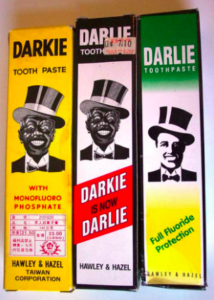
It may interest people to know that the exact opposite of Fair & Lovely existed as a toothpaste in Asia many decades ago. A toothpaste called Darkie. Produced by Hawley and Hazel, the brand was very popular in Asia. The pack showed a smiling black performer. The brand was then acquired by Colgate Palmolive which faced a lot of racist flak on the brand. In 1989, Colgate Palmolive decided to change the brand name to Darlie.
“It’s just plain wrong,” Reuben Mark, chairman and chief executive of Colgate-Palmolive, said about the toothpaste’s name and logotype. “It’s just offensive. The morally right thing dictated that we must change. What we have to do is find a way to change that is least damaging to the economic interests of our partners.”
Seems like a shame that another global company had thought about this so deeply more than 30 years ago. So Unilever in many way is 30 years too late.
What will posterity say about Fair & Lovely?
But what this would mean for the generations to come is anybody’s guess. Will Generation Alpha which may use the brand a few years from now warm up to the brand given its history? (Generation Alpha is the demographic cohort succeeding Generation Z. Researchers and popular media use the early 2010s as the starting birth years and the mid-2020s as the ending birth years.)
How will these young people see our racist past? One piece of research showed that Generation Z are as racist as their millennial parents. But will this continue on to Generation Alpha? Technology is likely to change a lot of mindsets in the future. And that may change the fortune of the brand called Glow & Lovely.
Prabhakar Mundkur is an advertising veteran, a lateral thinker, storyteller and musician. He has spent several years in advertising – in India and elsewhere in the world – including at JWT China where he headed the Unilever business, amongst other functions. In fact he worked on Unilever brands for a good 17 years… though never on F&S ;-). A prolific writer now, he was LinkedIn’s #1 Top Voice for 2016 and YourStory’s 100 Emerging Voices 2018. He writes frequently on MxMIndia.
Cheil India has launched a campaign showcasing features of Galaxy A55 5G and A35 5G. The campaign films featuring the duo of Shanaya Kapoor and Rohan Gurbaxani encapsulate the spirit of Generation Z .
Commenting on the campaign, Aditya Babbar, Vice President, MX Business, Samsung India, said: “Galaxy A series democratizes innovations by making them accessible to all. With the introduction of Galaxy A55 5G and Galaxy A35 5G, we are democratizing flagship-level features, experiences and affordability. In our new campaign, we are proud to showcase how Galaxy A55 and A35 5G continue to push boundaries, delivering cutting edge technology that empowers creativity and elevates user experience.”
Talking about the campaign, Vikash Chemjong, CCO, Cheil India, added: “We believe that everyone deserves awesome—whether it’s awesome meetings, awesome memories, awesome ambitions, or simply an awesome life. And, when you finally get an awesome phone, you get one step closer to achieving the rest.”
Mankind Pharma has launched a nationwide campaign on the occasion of World Hypertension Day called ‘Limit White India’. This initiative aims to raise awareness about the dangers of excessive salt and sugar consumption which with other factors like sedentary lifestyle and obesity can be a major risk factor for hypertension.
Said Dr Sanjay Koul, Chief Marketing Officer, Mankind Pharma Ltd: “Hypertension is a silent killer, and Mankind Pharma is committed to tackling it head-on through the ‘Limit White India’ campaign. Excessive salt and sugar are significant contributors to uncontrolled blood pressure levels and blood sugar levels. Studies have shown Indians on average consume five times the WHO recommended quantity of sugar annually. By raising awareness and promoting lifestyle modifications, we aim to empower people to make informed choices for their well-being.”
If you looked at recent CMO surveys and panel discussions lately, artificial intelligence (AI) and influencer marketing are on top of the agenda. 81% of US marketers say that influencer marketers is an essential part of their social media strategy; 77% of Indian marketers are confident in their agency’s capability to effectively manage influencer campaigns[1]. At the same time, 81% marketers say that AI has had a positive impact on their work[2]; and over three quarters of Indian marketers (78%) say they are ready to embrace AI[3].
What happens when you combine the two? We get virtual influencers. Even though human influencers still vastly outnumber virtual influencers, the latter have caught the fancy of marketers and agencies and are becoming increasingly common.
52% of U.S. social media users already follow a virtual influencer, and that percentage is higher in India at 58%[4].
Global brands including Prada, Cartier, Disney, Puma, Nike, and Tiffany use virtual influencers to promote their products.
Lil Miquela is a pioneer in the virtual influencer space. Describing herself as a 19-year-old robot living in LA, she has 2.6 million followers on Instagram https://www.instagram.com/lilmiquela/?hl=en
and 3.5 million followers on TikTok https://www.tiktok.com/@lilmiquela?lang=en
Managed by creative agency Brud, she has featured in brand partnerships with Prada, Calvin Klein and BMW, earning a spot on TIME magazine list of 25 Most Influential People on the Internet.
Fashion brand Myntra created the virtual influencer Maya, incorporated her into the studio section of the Myntra app, where she doles out fashion advice apart from advocating mental health, inclusivity and body positivity. ‘Based out of Bangalore, and a student’, she has a follower base of 178K already, and endorses brands like L’Oreal.
https://www.instagram.com/maya_unlimited/?hl=en
Kyra or Kyraonig was created by Himanshu Goel, launched in Jan 2022, and enjoys a following of 243000 on Instagram https://www.instagram.com/kyraonig/?hl=en.
She has has been prominent in the music and entertainment industries, endorsing various brands such as Amazon Prime Video, boat, MG, Titan EyeX and John Jacobs.
Within two years, it is expected that marketers will dedicate 30% of their celebrity and influencer marketing spends to virtual influencers[5].
What should they keep in mind, as they embrace this opportunity?
Virtual influencers give you control over content
Brands that want to get across a certain message or have a specific point to make through their influencer partnership have a higher level of control over content with virtual influencers. Being able to control what an influencer posts can be appealing to some brands with a very specific message to share.
Youth entertainment channel MTV collaborated with DDB Mudra to develop India’s first virtual rapper ‘BotHard’ to draw attention to its property, MTV Hustle 2.0. The bot was brought to life with the GPT3 platform and was specially trained to find rhyme structures of popular rappers. This collaboration inspired the creation of over 350,000 rap videos, with the show racking up 2 billion views across social platforms. This represented a nine-fold growth over the previous season. By creating a virtual influencer in-house provided the brand with greater control, agility, intellectual property ownership, and brand differentiation.
Adaptability
Virtual influencers don’t age, can speak multiple languages and can be made to travel to any place. This level of adaptability and flexibility allows brands to potentially use one virtual influencer for campaigns in different regions instead of identifying and engaging different influencers in various markets.
British fashion house Ralph & Russo, successfully used a virtual influencer to launch its 2020–2021 couture collection. The company designed Hauli, a tall Black virtual model. Her name was derived from the Swahili words for strength and power.
The campaign featured her posing at the Taj Mahal, the Great Wall of China, and other wonders of the world, location where conducting a photo shoot with a human influencer would be difficult (and expensive). The combination of an African influencer and a global context contributed massively to the campaign’s success. The promotion achieved 19.4 million views worldwide, with the brand estimating the value of the media exposure at $65.1 million.
Brand safety and reputation
While virtual influencers may seem to be a safer bet than real-life influencers, they’re not completely immune to controversy.
Humans don’t fully understand how these systems work or make decisions, which poses a huge challenge for marketers and agencies. In the absence of clarity, is difficult for brands to predict how these virtual influencers might be accepted. Granted AI’s cool factor, marketers should be careful about diving in headfirst to avoid unfavourable PR.
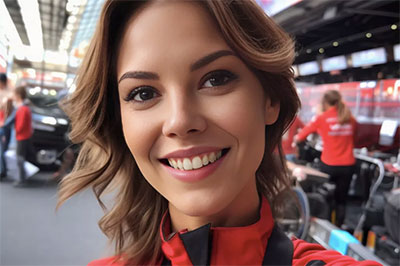
Earlier this year, automaker Mahindra launched an AI-generated influencer named Ava, which was designed to showcase the team’s journey in the ABB FIA Formula E World Championship, and towards a more sustainable future for the planet. Mahindra’s team used GenAI tools like Midjourney and Leonardo AI to create its new ambassador, saying ‘Having Ava, an influencer that is strongly associated with us and documents our journey, but with a broader appeal to help promote our core values as an organisation, is a project we’re hugely excited about.’
Eva’s Instagram account @avabeyondreality described itself as a “Sustainable Tech Queen & Racing Rebel Robot”, with the goal of fueling inclusion through AI innovation. It documented the virtual influencer’s life through 11 posts, the first of which dated back to 8 December 2023.
The launch of Eva was met with backlash from fans and media alike on social media. Many argued that the team should have hired a human ambassador rather than a virtual influencer. Devin Altieri, a PR consultant in motorsport, wrote on X: “Mahindra creating an AI team ambassador that is a woman instead of simply hiring one real, actual woman to fill that role is so incredibly messed up”. Alanis King, an auto journalist added: “I’m not an AI expert, but everything I see is about enormous energy use. Isn’t it weird to call this a ‘Sustainable Tech Champ’?”
Faced with such strongly negative response, particularly from experts, Mahindra abandoned the project and deleted Eva’s Instagram account.
Fuel fans and consumers’ desire for novelty.
With some brand ambassadors and influencers, some brands find value in stability and longevity. We know how Tiger Woods’s association with Nike lasted 27 years.
On social media era, on the other hand, many consumers crave something new and different, and find brands that rely on familiar celebrities as stale or uninteresting.
As they scroll social media quickly, it requires something unusual to make them pause.
Research shows that one reason consumers follow virtual influencers is that they are unexpected and previously unknown. Although betting on a virtual influencer may require a leap of faith, marketers should realize that human influencers may be perceived as overexposed or past their prime.
Traditional influencer marketing can be expensive, particularly when collaborating with celebrities or industry experts. On the other hand, virtual influencers are a cost-efficient and scalable option, requiring less time and resources. While the initial investment in creating a virtual influencer can be significant, the long-term benefits far surpass the costs.
Kunal Sinha is a senior strategy and foresights executive based in Jakarta, Indonesia. He is the author of several books including The Future of India’s Rural Markets and Raw – Pervasive Creativity in Asia. He writes for MxMIndia every other Monday. His views here are personal.
Broadcast Audience Research Council (BARC) India has announced the appointment of Dr Bikramjit Chaudhuri as Chief of Measurement Science & Analytics. He will succeed Dr Derrick Gray, who has been a member of the BARC India family for six years. He has been heading measurement science at BARC since mid-2018.
Dr Bikramjit Chaudhuri is a PhD. from IIT Bombay and holds a Master of Statistics degree from the Indian Statistical Institute. He joins BARC from the Datamatics Group of Companies where he has been Global Head of Data Science and Advanced Analytics, since 2016. Prior to Datamatics, he has held multiple leadership roles, and has led large teams of senior talent across levels at KPMG, Nielsen and ZS Associates in India and elsewhere in the world.
Said Nakul Chopra, Chief Executive Officer, BARC India: “Derrick has been a wonderful partner, a mentor and a friend to numerous individuals and industry peers. We congratulate him as he embraces his next adventure and wish him nothing but the absolute best. In his stead, I’m happy to welcome Bikram to the BARC India family. He brings deep knowledge and rich expertise in Big Data, Research and Business Intelligence. I’m confident that with his strategic vision and passion for excellence, he will not only uphold the legacy Derrick leaves us with, but also help navigate our future in this fast-evolving environment.”
DDB Mudra Group has elevated Menaka Menon, current National Strategy Head, to take on the role of leading the south office. She will lead operations and strategic thinking for clients based out of the Bengaluru office. Ranji Cherian, who ran the south office for over 16 years, will now lead Client Excellence at the group.
Said Rahul Mathew, Chief Creative Officer, DDB Mudra Group: “We believe that everything we do is built on strong strategic pillars; be it our work or how we do our work. In her new role, Menaka will use her strategic background to add more value to our client’s business, while building a strong culture of creativity in the office. Over the last few years, some of our best work has come from our South office and I’m really excited to work with Menaka to push us to newer heights.”
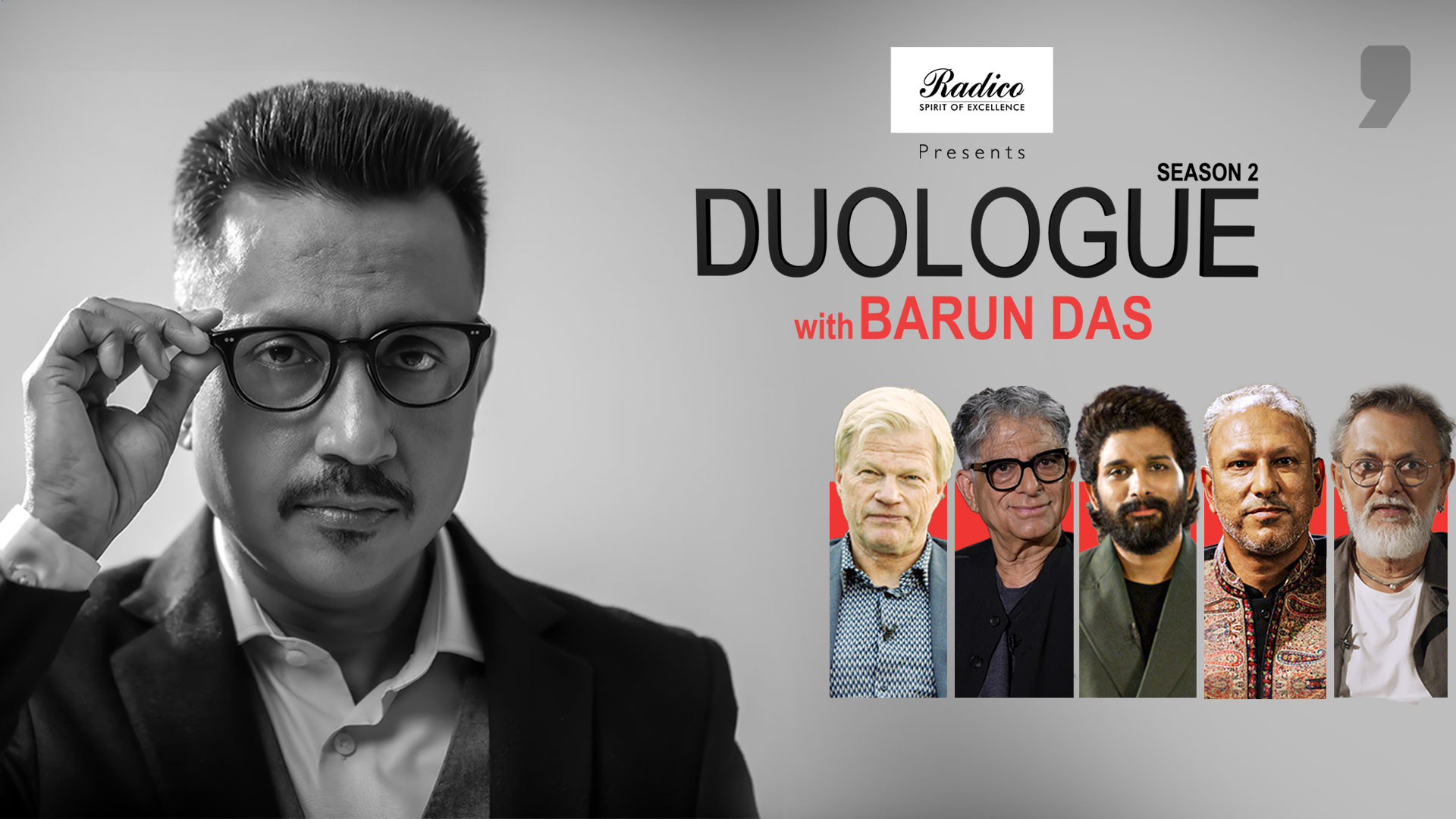
The second season of ‘Duologue with Barun Das’, premiers on CTV channel, News9 Live featuring an impressive line-up of guests.
Commenting on the second season, Barun Das said: “Duologue Season 2 is a testament to the power of conversations that may change lives. Where Season 1 was more about the people, Season 2 is more about ideas – an exchange of philosophies and worldviews. I am thrilled to continue this journey of enlightenment and inspiration, inviting viewers to join us on News9 Live for an unforgettable experience.”
According to a communique, some of the guests invited on Season 2 include actor Allu Arjun (airing scheduled on May 18), goalkeeper Oliver Kahn, spiritual guru Deepak Chopra, golfer Jeev Milkha Singh and film-maker Rakeysh Omprakash Mehra.
Added Amar Sinha, the Chief Operating Officer of the presenting sponsor Radico Khaitan.”The thought-provoking conversations on Duologue with Barun Das offer Radico Khaitan a valuable opportunity to connect with a diverse audience. Engaging in meaningful discussions enhances our brand visibility and exemplifies our values, creating a positive brand association. This exposure contributes to increased brand recognition, loyalty, and consumer trust, fortifying Radico Khaitan’s reputation and market presence. We are honoured to collaborate with the insightful Barun Das, whose dynamic style adds an extra layer of charm to this meaningful partnership.”
Once upon a time, human relationships unfolded without smartphones. The reality may be hard to recall, so profoundly have these devices transformed the way we relate to the world and others in fifteen years or so.
As an anthropologist interested in modernity, I am particularly preoccupied by the impact of these devices on our conversations. In my book, The End of the Conversation? Words in a Spectral Wociety (French original: La fin de la conversation? La parole dans une société spectrale), I investigate the pernicious effects of this technology on our social fabric, and make a point of distinguishing conversation from communication.
Communication is not conversation
When I’m communicating, my relationship with another is usually mediated via a screen. Communication calls to mind notions of distance, physical absence, and by extension, frazzled attention. The age of communication induces feelings that everything is going too fast and we have no more time to ourselves. The next notification, message or call is always only a moment away, keeping us in a state of restless alertness.
Conversations, on the other hand, are often free. One chats while enjoying a stroll or meeting a new person, sharing words like one breaks bread. While communication does away with the body, conversation calls for mutual presence, attention to the other person’s face, their facial expressions and their gaze. Conversation is happy to accommodate silence, pauses and each person’s rhythm.
This is in contrast to communication, where any cut-off warrants a knee-jerk reaction: “We’ve been cut off”, “Are you there?” “I can’t hear you”, “I’ll call you back”. This isn’t an issue when conversing, because the other person’s face has never disappeared and it’s possible to be silent together in friendship, in complicity, to express a doubt or a thought. Silence in the course of a conversation allows us to breathe, while in the field of communication we would label it with words such as cut-off or breakdown.
A few months ago in Taipei, Taiwan, I was at a popular restaurant when a dozen people from the same family sat down at a table nearby. The youngest were 2 or 3 years old, while the oldest were in their 60s. Having barely glanced at the menu before ordering, their eyes rapidly proceeded to attach to their mobile phones. Barely uttering a word, they ate with their smartphones in hand. The only exception was the occasional tension between two of the children, who must have been 4 or 5 years old. They stayed for a good hour, exchanging little more than a few sentences, without really looking at each other.
The scene could have taken place in Strasbourg, Rome or New York, in any city in the world. Today it is commonplace. You only have to walk into a café or restaurant at random to see the same situation. The old family or friendly encounters are gradually disappearing, replaced by these new manners where we are together but separated from each other by screens, with the occasional smattering of words exchanged before returning to the tranquillity of our laptop. What’s the point of bothering with others, since a world of entertainment is immediately accessible, where we no longer have to make the effort to nurture relationships? Conversation becomes obsolete, useless and tedious, whereas the screen is a beautiful escape that doesn’t disappoint and that occupies time pleasantly.
Cities populated by zombies
The massive disappearance of conversation, even with oneself, is reflected in the fact that cities are now deserted, where you meet no one, and the pavements are full of zombies walking around hypnotised by their smartphones. Eyes downcast, they see nothing of what’s happening around them. If you’re trying to find your way, don’t ask for help, there’s no one around. Some are wearing earphones, talking to themselves, and displaying an ostentatious indifference.
“Are You Lost in the World Like Me?”, Moby and the Void Pacific Choir, These Systems Are Failing (animation, Steve Cutts).
Sometimes, communication is imposed in the public space. Those who dare not protest or go elsewhere find themselves invaded by the words of someone who has come to sit on their bench or near their table to start a conversation aloud. Another increasingly common practice is to watch a video without earphones or to put the loudspeaker on to hear the other person’s voice better.
Another common form of incivility that has become commonplace is talking to someone who can’t stop pulling their smartphone out of their pocket every thirty seconds, in fear of missing out on a notification. Teenagers are particularly susceptible to the fear of missing out (FOMO) fever, but not only, and this frantic quest for the smartphone in your pocket, unless it’s always in your hand. Even when placed on a table next to you, experience shows that the smartphone exerts a magnetism that is difficult to counter, with people regularly looking at it with a kind of longing.
For these users, relationships at a distance, without a body, are less unpredictable and frustrating as they demand only the surface of the self. They give rise to relationships that are in line with desire and based on personal decision alone, with no fear of spillover, because then all you have to do is interrupt the discussion on the pretext of a network problem and cut off communication. Face-to-face interactions are more uncertain, more likely to hurt or disappoint. But the more we communicate, the less we meet, and the more conversation disappears from everyday life.
A growing sense of isolation
Accelerated by Covid lockdowns, the digital society does not have the same dimension as concrete sociability, with people in mutual presence who talk and listen to each other. It fragments the social bond, destroying old links in favour of the abstract and often anonymous ones of social networks.
Paradoxically, some people see it as a source of connection at a time when individual isolation has never been so acute. Never has the mal de vivre of teenagers and the elderly reached such a level. Frequent use of multiple social networks or the ostentation of one’s private life on a social network creates neither intimacy nor links in real life. The hundred “friends” on social networks are no match for one or two friends in everyday life.
The digital society occupies time and provides a way of getting away from everything that annoys us in our daily lives, but it doesn’t give us a reason to live. Of course, some people find a connection through their isolation, but isn’t isolation also a consequence of the fact that we no longer meet in real life?
New forms of expression are emerging that are now a matter of course for many of our contemporaries, and not just for the digital natives. Globally, connection is taking over from conversation, which has become an anachronism, but not without a major impact on the quality of the social bond, and potentially on the functioning of our democracies.
David Le Breton is Professeur de sociologie et d’anthropologie at Université de Strasbourg. This article is republished from The Conversation under a Creative Commons license. Read the original article.
Mahindra & Mahindra has teamed up with artists Santanu Hazarika and Abhishek Paatni of Nought One to showcase a streetwear collection that draws inspiration from the design and colours of the Mahindra XUV 3XO.
Said Pratap Bose, Chief Design and Creative Officer, Mahindra & Mahindra Ltd: “Today, we are excited to showcase a collection that brings together our passion for innovation across our authentic SUV range with the dynamic world of fashion. The new XUV 3XO is the latest expression of Mahindra’s HEARTCORE Design philosophy. Designed to stand out from the crowd, the XUV 3XO takes the premium compact SUV to new heights of Design, Technology, and Innovation. This collection not only reflects the bold and distinctive features of the XUV 3XO but also complementsthe lifestyle and values of our younger consumers. Through this collaboration with Santanu and Nought One, whose work is always at the cutting edge of design and fashion, we are reaching out to new audiences and exploring new forms of expression.”
Added Santanu Hazarika and Abhishek Paatni: “We are thrilled to partner with Mahindra on this unique project. This collaboration with the XUV 3XO is a perfect blend of our streetwear aesthetic with the standout design of this modern SUV. It’s an exciting challenge to translate automotive innovation into fashion, and we believe our customers will appreciate the creativity and authenticity behind each piece. This partnership reflects futuristic, functional clothing which blends with the aesthetics of the new age and a progressive future.”
At long last an industry association representing the marketing services sector has spoken up, even if it’s after a week. It may be noted that when the agency involved with the Ghaktopar hoarding crash was referred to in reports, it was called an ad agency, thereby tainting the entire sector. We were hoping someone will speak up, and even as many in the trade expressed shock, we were hoping that the
Here’s the statement from The India Outdoor Advertising Association (IOAA), signed by its President, Pawan Bansal:
On behalf of the India Outdoor Advertising Association (IOAA) and its members, we wish to express our deep sorrow over the tragic incident that resulted in the loss of life following the collapse of a billboard at a petrol station in Ghatkopar, Mumbai. This event has deeply affected us, and our thoughts are with the families enduring this painful time.
The IOAA has consistently advocated for strict adherence to local regulations and safety standards concerning the installation of hoardings. We prioritize safety and diligently promote compliance among our members.
In response to this incident, the IOAA fully supports the initiatives undertaken by the Maharashtra Government and the BMC to audit and regulate hoarding structures throughout the city. We are committed to assisting in these efforts to ensure such a tragedy does not occur again.
We are determined to work closely with all relevant authorities to enhance safety measures and regulatory compliance. We appreciate the ongoing support and understanding of the community as we strive to make necessary improvements.

 In light of the Tanishq controversy, the new Micromax commercial provides an interesting counterpoint.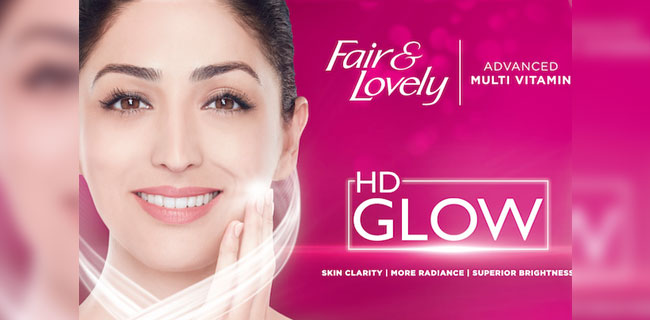
 It may interest people to know that the exact opposite of Fair & Lovely existed as a toothpaste in Asia many decades ago. A toothpaste called Darkie. Produced by Hawley and Hazel, the brand was very popular in Asia. The pack showed a smiling black performer. The brand was then acquired by Colgate Palmolive which faced a lot of racist flak on the brand. In 1989, Colgate Palmolive decided to change the brand name to Darlie.
 If you looked at recent CMO surveys and panel discussions lately, artificial intelligence (AI) and influencer marketing are on top of the agenda. 81% of US marketers say that influencer marketers is an essential part of their social media strategy; 77% of Indian marketers are confident in their agency’s capability to effectively manage influencer campaigns[1]. At the same time, 81% marketers say that AI has had a positive impact on their work[2]; and over three quarters of Indian marketers (78%) say they are ready to embrace AI[3].
 Fashion brand Myntra created the virtual influencer Maya, incorporated her into the studio section of the Myntra app, where she doles out fashion advice apart from advocating mental health, inclusivity and body positivity. ‘Based out of Bangalore, and a student’, she has a follower base of 178K already, and endorses brands like L’Oreal.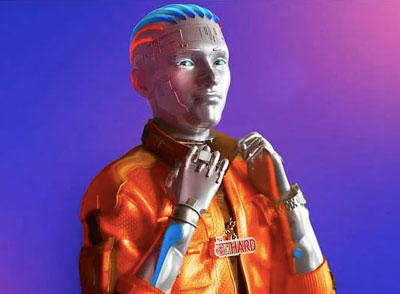

 Eva’s Instagram account @avabeyondreality described itself as a “Sustainable Tech Queen & Racing Rebel Robot”, with the goal of fueling inclusion through AI innovation. It documented the virtual influencer’s life through 11 posts, the first of which dated back to 8 December 2023.

 The second season of ‘Duologue with Barun Das’, premiers on CTV channel, News9 Live featuring an impressive line-up of guests.
