Cheil India has launched a new campaign for Samsung Galaxy Watch6 series.
Said Aditya Babbar, Vice President, MX Business, Samsung India: “Galaxy Watch6 series offers unparalleled convenience and connectivity like never before. Through the latest campaign, we decided to do something different and adopted a benefit-first approach. With LTE integration, users break free from the confines of their smartphones, embracing the liberty to manage essential features directly from their wrists.”
Added Vikash Chemjong, Chief Creative Officer at Cheil India: “The film elegantly demonstrates how technology can seamlessly become part of our everyday lives, enhancing convenience, productivity, and well-being. This blend of connectivity, health tracking, and entertainment makes it a perfect pick.”
Feminine-care brand Whisper, from the house of Procter & Gamble, is raising awareness about– the early onset of menstruation among young girls — as part of the fifth edition of its #KeepGirlsInSchool (KGIS) movement.
Said Rajdeepak Das, Chief Creative Officer, Publicis Groupe – South Asia and Chairman Leo Burnett – South Asia: “Our ongoing research about the changing conversations around menstruation identified a glaring anomaly – girls today are getting their periods much earlier than before. However, they are being educated about periods at a much later stage or oftentimes not at all. Whisper and Leo Burnett have been on a journey to keep girls in school for a long time and we wanted to bridge this gap. Our latest work talks to the 8-year-olds in a language they can understand, with a heartwarming song that teaches them that getting periods means they are healthy. The goal is to not just teach the little girls but also use the song as a tool to equip her ecosystem- parents and educators, enabling them to teach periods in an empowering manner.”
Added Girish Kalyanaraman, Vice President & Category Leader – India Feminine Care at Procter & Gamble: “There is a seismic shift happening in period biology. This heightens the need to educate girls early on and to prepare them to embrace this biological process. Through this initiative, we strive to educate them about how periods are healthy and how they can take care of themselves on their period days. Every year, Whisper goes to more than 60,000 schools to create period education programmes and we are now also going to younger standards. Consumers too can do their bit buying a Whisper Ultra pack which will help us educate and donate pads to one girl to keep her in school.”
As part of the newly launched campaign, Cat, the tyres company, has leveraged its decade-long association with Tata IPL Strategic Timeout to deliver its brand message. It has been transformed in line with the new positioning, notes a communique.
Said Arnab Banerjee, MD & CEO of Ceat Limited: “Ceat’s transformation underscores our dedication to staying in tune with the aspirations of our consumers. Our new brand communication emphasizes our support for the explorer mindset of discovering hidden gems which are accessible during their travels. This move represents our ongoing commitment to exceeding consumer expectations and delivering high-quality products that inspire confidence in every journey, whether on road or off road.”
Added Lakshmi Narayanan B, CMO of Ceat Limited: “Our new approach incorporates partnerships with prominent travel influencers to showcase the versatility and durability of our tyres in various unexplored yet accessible locales. This series of two-part campaigns is not just a visual treat, but also ignites intrigue and curiosity among our consumers through the novel interactive QR element embedded in the ads. Our high-performance products have been crafted for the curious enabling their passion for adventure and discovery.”
The Ghatkopar billboard incident that killed many and injured many more has raised many ethical questions about the advertising and media business.
For many unknown reasons, the outdoor media business has always been known to be of a low moral standard and has once again brought up important questions of ethics in the advertising and media business.
It is well known that the outdoor business is often part of the intricate web of questionable transactions. Which means if you are an owner of a hoarding in Mumbai, by definition you need to be turn a blind eye to the law.
If one goes to the Ego Media website what is shocking is to see all the best brands in the country – from Godrej, Tata, Audi, Honda, Britannia, Big Bazaar, Titan and many more.
Are we saying that some of the best brand names in the country don’t care where their advertising goes and would like to in any way be associated with a company who has shown to have a complete lack of morals and ethics in the business? I know many advertisers and equally their advertising agencies think that a hoarding is something remote in their outdoor plan. Beside the top-ranking client wanting his favourite airport hoarding or a hoarding in the centre of the city because s/he lives there, not much importance is perhaps being given to where the advertising finally goes.
But shouldn’t advertisers care about where their advertising is being placed? Let me give you an example. If your cinema ad was to be tomorrow viewed in a theatre that screens porn films would you want your ad there? Or if your ad was screened in a theatre known to conduct other illegal activities, would you still want your ad placed in that theare? If yes, why don’t you care about where your outdoor creative is being placed?
If so far you have thought that “Oh that is the job of the outdoor owner” you better think again. You are not really distanced from the tragedy that has struck us on the Ghatkopar hoarding. Now that the real operation of Ego Media has been exposed in the media, I wonder how many advertisers have pulled out all their advertising from Ego Media.
Or are they waiting thinking that they are actually at arm’s length from the outdoor business?
There are many parties that are complicit in this act where many people lost their lives.
The owner of the property, which is the Government Railway Police, Ego Media who actually constructed the hoarding, the BMC for having allowed it (or for giving a stability certificate ) and, yes, the advertiser and his advertising agency are equally complicit. After all, lives have been lost.
It is time that the advertisers and their media and creative agencies feel equally guilty about the Ghatkopar billboard accident?
As a nation that is constantly boasting about now crossing Japan’s GDP, we better stop condoning our collective conscience that this is the India we know and nothing can be done about it. Make a trip to Japan to see how strict their laws on construction of any kind are in their cities.
We proudly say the medium is the message, but do we really care about what the medium is, and how the message is being placed on it.
I don’t think so!
Prabhakar Mundkur is a veteran advertising person having led advertising agencies in India and internationally. He is also a prolific writer and commentator. His views here are personal
When I read the obituary of the Air-India Maharajah this morning, I couldn’t but shed a tear. After all, he was mortal like the rest of us. Ailing for the last 20 years, and in and out of hospital, many of his detractors were not able to overcome his strong will. And in spite of the many attempts on his life, he just kept coming back like the strong royal Maharajah he was. In fact he just laughed it off in his inimitable style.
While plenty has been written about him and his escapades through the decades through various lands, the end was solemn and brief. Just an unemotional announcement that his life had finally ended. There were no flowers. No prayers. No tears. No celebration of a life well-lived.
Which makes me wonder whether all mascots have a life of their own and like us mere mortals have to finally bid a goodbye.
Remember Gattu of Asian Paints? And the Murphy baby? Gattu, the mischievous Asian Paints mascot, was created by none other than the famous RK Laxman and enthralled us for a good 50 years. Murphy, another Indian favourite, was a brand born in Britain and founded in 1929 by Frank Murphy and EJ Power. The Murphy brand now belongs to the Shirodkar Group of companies but they don’t sell radios any more.
It is interesting to examine why the Maharajah was so successful. For one his commentary was on our day to day lives and the life of the nation. He became the social mirror of Indian society. He reflected our happy and unhappy moments with a touch of philosophy and wit.
Ivan Arthur, earlier National Creative Director of JWT, and now educator and author, when asked about the Air India advertising, said: “Conceived as a letterhead design, the Maharajah broke the fetters of the line drawing and became flesh with a personality and DNA of his own: the double helix of gracious exotica. That DNA did not permit him to stand in the street corners of conventional media and tout his destinations like a cheap ticket salesman. His famous romps on those hoardings were not advertising. They were non-advertising: parlour talk, one-liner points of view, camaraderie, provocation and good humour, all of which did not ask you to buy an Air India ticket. In fact, in many of the hoardings, he refused to have the Air India logo as sign-off. He was the sign-off. He was no commercial mascot. He became a national figure. Much loved and respected.
The Maharajah was always accompanied by another symbol that belonged to Air-India and that was the Centaur. Equally old, it has played an equally significant role in the branding of Air-India.
The Centaur had its own life as an alternative Air -India mascot. It flew around the world as the airline’s insignia, appeared on the inflight livery and even cutlery, was embroidered on some of its crew’s uniform, stood proudly on the top of the company’s impressive headquarters and became a brand name for its hospitality subsidiary!
Hopefully the Centaur carries on, unless the new adopted parents of Air-India have another strategy in mind.
In the meantime, let us mourn the loss of our favourite Maharajah once more. As the Byzantine Empress Theodora said “ For a King death is better than dethronement and exile”
Hand drawn toothy tiger. Designed By 千图网 from https://pngtree.com
By Prabhakar Mundkur
For some time now, the Advertising Standards Council of India (ASCI) has been the subject of criticism about its effectiveness. There is the annual rant in the media with various commentators taking potshots before or during an IPL which sees a major blip in advertising in India. ‘Watchdog’, which is often used to describe the ASCI, is perhaps not wholly descriptive of what it does. It can watch like a dog, but I am not sure it can bite. To bite you need legislation and now we have the Department of Consumer Affairs which has the teeth to bite. In the UK, for example, it is not the ASA that is considered the watchdog, but the Competition Markets Authority. The CMA has teeth. It is a non-ministerial government department to prevent anti-competitive activities. The Indian equivalent is the Competition Commission of India which was formed under the Competition Act 2002, which was formed when the erstwhile MRTP Act was repealed. But unlike the MRTP, which was very high profile, you don’t hear much about the CCI. That’s a pity!
Most critics of course miss the point that the ASCI is the advertising industry’s self- regulatory body. In many ways, it is the industry’s conscience that tells you what is misleading. And like we can always overcome our own conscience even when it is telling us not to do something, an advertiser can knowingly bend the rules. When you can overcome your conscience, you are being unscrupulous.
But coming back to the issue of misleading advertising, there are several bodies that are responsible for misleading advertising in the country. For example, the Cable Television Network Rules does not permit advertising for alcohol or tobacco products. Section 7 of the Rules on the Advertising Code has an exhaustive list of things that cannot be permitted.
(viii) promotes directly or indirectly production, sale or consumption of- (A) cigarettes, tobacco products, wine, alcohol, liquor or other intoxicants;
But rarely does anyone complain to the network channels that surrogate advertising for alcohol is being found objectionable by then. After all isn’t ASCI the favourite whipping boy for advertising that seems to cross the borders of acceptable advertising norms?
(1) The Central Authority may, after receiving any information or complaint or directions from the Central Government or of its own motion, conduct or cause to be conducted a preliminary inquiry as to whether there exists a prima facie case of violation of consumer rights or any unfair trade practice or any false or misleading advertisement, by any person, which is prejudicial to the public interest or to the interests of consumers
– The Consumer Protection Act, 2019
Equally, the Consumer Protection Act 2019 issued by the Ministry of Law and Justice protects the interests of consumers through legislation and it has a mechanism for accepting consumers complaints. It also has the authority to disburse fines for misleading products or advertising. Violation of their guidelines for endorsement can attract penalties from Rs 10 lakh to Rs 50 lakh.
So why is the ASCI the favourite pick of advertising-watchers when they find objectionable advertising in our media? If one actually looks at the number of regulatory bodies in the country there are quite a few.
1. Food Safety and Standards Authority (FSSAI)
2. Central Drugs Standard Central Organisation (CDSCO)
3. Insurance Regulatory Development Authority
4. Telecom Regulatory Authority of India
5. Securities and Exchange Board of India
6. Reserve Bank of India
7. Medical Council of India
8. Competition Council of India
9. Consumer Protection Act 2019
But perhaps what India lacks is an inter-disciplinary body or an inter-ministerial apex body that can look at the subject of misleading advertising.
For example, if we take the UK as a market, the Competition Markets Authority and the ASA form a powerful duo against misleading advertising. Also, misleading advertising can be controlled by the Consumer Protection from Unfair Trading Regulations 2008 and Business Protection from Misleading Marketing Regulations 2008. The Office of Communications (Ofcom) is the ASA’s co-regulatory partner and legal backstop for regulating TV and radio advertisements. The Financial Conduct Authority for example in UK blocks several financial services ads. In 2022, it removed 8582 consumer promotions and published over 1800 alerts to prevent consumers from losing their money to financial scams.
The House of Commons briefing paper considers the ASA ( Advertising Standards Authority ) and the regulation of advertising in the UK and therefore has the indirect consent of the government unlike the ASCI.
The ASA working hand in hand with the Competition Markets Authority gives the ASA very large teeth indeed. And the CMA will get some very extra large teeth from the Digital Markets, Competition and Consumer Bill to be introduced shortly. Also, the several legislations provide a whole bag of weapons for the ASA to conduct their business of tracking misleading advertising.
In closing, I would like to point out that in markets like the UK it is possible for the self-regulatory body the ASA in the UK to have very large teeth that can bite those that stray away from the advertising standards code. India pales in comparison.
So I leave you to decide whether the ASCI is a toothless tiger or is just being made a scapegoat for the lapses in the fight against misleading advertising in India.
Prabhakar Mundkur is a veteran advertising professional and commentator. If it’s not his views on A&M, he’s very busy with his music, and in the lockdown produced several music videos (some 100-odd). His views here are personal.
Perhaps in any other country, Truecaller would not exist. Because other countries respect the privacy of their citizens. I recently spent a month in the UK and my family did not get even one unsolicited call.
Unfortunately, in our country, all our details are an open book. We all no doubt get at least a few scam calls a day. If they are not scam, they are at least greedy marketers who are aggressively calling you to sell their wares. I have noticed a new trend now. Some of calls are mechanised and as soon as I pick up the odd unknown caller, a pre-recorded voice is trying to sell me something. These recorded calls in many ways are the most irritating because you can’t be rude and insult the mechanical voice as you can do with a real person at the other end.
It is not only our phone numbers that are available freely. Our car registration numbers are available not only on the official Government app Parivahan but on a score of other private apps. At least the government app tries to hide the complete details of your name, but the private apps don’t even bother to do that.
If that were not enough, our car insurance details are also an open book. I get a score of emails from various insurance companies every time my car insurance is nearing its expiry date. Recently, I read about a well-known person who got scammed on life insurance. The victim had an insurance policy that had lapsed in 2014. The scam caller called the victim and offered to not only reinstate his policy but offered to redeem the policy, trapping the victim who could naturally do with a little more money. It is only when he reached the end of the call and the scammer started asking for his bank details and offered him an OTP did the victim realise that it was a scam call. These activities are being done openly in our country in spite of the fact that both telephone calls and insurance have government entities supervising the industry – IRDA for Insurance and the TRAI on telecom. It is strange that these government bodies are doing nothing to protect the privacy of the Indian citizen.
But coming back to Truecaller. I was in the UK and I must have received at least 30 scam calls. Thank you Truecaller because I would immediately get the notification that they were scam calls and I could safely leave them alone.
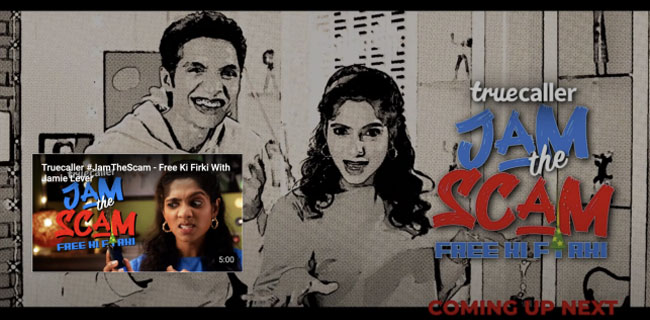
Though no one is writing much about it, I also like the Truecaller advertising. For one, it is entertaining. And they seem to have proved me wrong that Indian advertising has lost its humour. Truecaller uses humour to show how the app can frustrate the scammer. It also demonstrates the stages of the scam and makes fun of the account numbers and OTPs that scammers normally demand as the call progresses. Some of you may remember how Netflix exposed the entire process that scamsters employ in their movie on Jamtara – Sab Ka Number Ayega.
Truecaller has in some ways also exposed the process of the seamster but with a humorous twist. I particularly liked their Diwali ads. I believe scam calls are at their highest during the festival seasons because this is when most people are looking for deals and are therefore most vulnerable.
I also thought that their sign-off line is quite interesting Scam ka Jam is quite appropriate.
Well done, Truecaller. Here is wishing you the best in protecting Indian citizens from scams.
Advertising like the other arts of cinema, music, is the perfect mirror of an emerging society. Often the arts can lead society, and at other times, it may just be a mirror of where society is today. It’s important for a brand to constantly search for cues from our daily living. So, a brand can often be a mirror of where we are but equally a brand may lead society into their own future.
But advertising like cinema is good at constantly exploring emerging societal trends. Of picking up something that exists today but may not still be big. I think it is brave for any art to pick up an emerging trend that is not necessarily popular or fits societal norms. Titan is one brand that comes to my mind which is constantly leading from the front. Unfortunately, it has also meant that it has often come under fire for being experimentative. You will remember how it got trolled for the Tanishq ad last year which showed a real situation which revolved around an inter-faith couple and the husband’s family. One can’t deny that inter-faith marriages do exist in India and perhaps they are only growing. But that ad was from one of the Indias and trolled by the other India.
Another ad that got into trouble with one of the Indias, was the Manyawar ad featuring Alia Bhat. Because of a play of words that the ad engaged in where the ritual of Kanyadaan was interpreted as Kanyamaan.
And now comes another ad from Tanishq again in the area of marriage and relationships. And I can’t help feeling that it has done a good job of appealing to both Indias. Or has is?
The conversations between the couples in the ad are very real, honest and portray the trust and confidence that two partners can place with each other by sharing their innermost doubts, desires and thoughts with each other. But equally I think it portrays a certain equality between a man and a woman in a relationship.
For years, we have portrayed the Indian woman as subservient, something that is backed by the new GenderNext report (https://ascionline.in/gendernextreport/2/index.html) from the ASCI which says:
“Women being featured in care-taking roles, placing the good of the family and friends as their primary focus and concern
:: Women being targeted for beauty products featuring an unrealistic and unobtainable standard of beauty
:: Women being informed and educated by the voice of a male authority figure”
The Tanishq ad I thought breaks the traditional stereotype of how women have been portrayed in advertising. It is steering the portrayal of women in a very positive direction, while simultaneously exploring the deep relationship and trust that life partners can place with each other.
Is the real India like this one may ask? Yes and No. I think, that in urban centres we can see man-woman relationships like the ones in the ad, but I can’t help feeling that as we move down the population strata, it may still be quite unrealistic.
This ad may still be appealing to only one of the Indias and most probably this is the Tanishq target audience. What is different and perhaps a lesson for advertisers in the future is that it is possible to talk to only one of the Indias without upsetting the other!
Humour is a powerful communication device if used in the right way. Film,advertising and the other arts are often a mirror of society’s interests, attitudes and behaviour. As Ogden Nash once said: Life imitates art far more than art imitates life.
Oscar Wilde affirms that what is found in life and nature is not what is really there, but is that which artists have taught people to find there.
If a cool-headed Martian were to descend on to us to examine the state of humour in our art he could possibly find that we are probably losing our sense of humour. In fact no one is laughing these days, barring the laughter clubs that I encounter on my morning walks. And even those are forced laughs because there is actually nothing to laugh about.
In Indian cinema, comedy was a central part of the Bollywood industry of earlier years. Look at Bollywood’s Jaane Bhi Do Yaaro. Never before was there such a great team of talent together. Kundan Shah, Om Puri, Pankaj Kapur, Bhakti Barve, Ravi Baswani, Naseeruddin Shah and Satish Shah to name a few.
If Bollywood is no longer producing comedies, humour which always been a key way to communicate for advertising has nearly all but disappeared. The advertising figures of speech are very much like grammar isn’t it? There are just a few figures of speech that advertising plays around with.
First there is the Torture Test. Where a product is put through strenuous and extreme conditions to prove it’s a good product. Take any tyre advertising and this is easy to see while the ad will put the tyre through extreme conditions like potholes and rough terrain.
Then there is Hyperbole. Where you take a product attribute and exaggerate it just to make a point. You don’t expect consumers to literally believe it, but it helps to accentuate a particular point about a product.
Another ploy that advertising uses is the Parody. The Parody uses humour to make a point about a product. It entertains them. It helps to sell a unique attribute of the brand.
This is what I am missing now in Indian advertising. Commercials are becoming too serious and striving for a deep emotional response rather than entertaining people. And often portraying too much reality is getting advertisers into trouble as we have recently seen, with advertising getting trolled and ultimately having to withdraw their commercials.
Look at some of the parodies that were created in yesteryears. What stands out amongst them and is relatively more recent is Mentos. I am just wondering why the ad industry is not attempting any more advertising in this genre. Another common ploy is Juxtaposition. Where you take opposites to make a point. Big, Small – Black, White, etc.
Then there is Personification. This is very common in Indian advertising which is constantly using celebrities in the hope that some of the qualities of the celebrity might have a positive rub off on the product being advertised.
The last category of advertising uses A Moment of Captured Reality. Attempts that fail are called Slice of Life.
How Air India used humour in its ads
All of Air India’s advertising was really based on humour. It was the Maharajah having a laugh at current events both in India and overseas. Which is why an Air India hoarding would always bring a smile to your face. Even advertising without the Maharajah employed humour as a ploy to make a particular point about the airline.
Stand-up comedy is relatively new to our country. Maybe just a little over 10 years old. Although audiences are relatively small, we have proven that we are very close to the global standard of stand-up comedy. Unfortunately, our comedians seem to be getting into trouble with the law all the time. This is unlike other countries where comedians have a free rein to entertain people. Which leads me to the conclusion that perhaps we can no longer appreciate parody, and we have lost our ability to laugh both at ourselves and at others.
So, coming back to the question that I started with. Are we losing our sense of humour? I certainly hope not. If we are, then it’s time we did something about it.
Sir Martin Sorrell when asked what he thought of the Wunderman-JWT merger had once used a euphemism in his characteristic style when he said: “So in a way, and I will probably be chastised for saying that, but Wunderman would be like pinning the tail on the donkey here.” Of course his comment was on the Indian market, where JWT was a giant and Wunderman a little, fledging marketing services agency. Unfortunately, many other markets faced the same situation.
Thompsonites, which normally refers to JWT employees and alummi who are still very much in love with the agency, shed a few silent tears to mourn the merger three years ago. After all, JWT left a huge impression on the world – in fact often known as the University of Advertising.
First established in 1864, no doubt old Commodore J Walter Thompson must have done a few backward flips in pain in his grave. It was not just the merger but the ignominy of it. I have always wondered if the Thompson employees in the merger felt like losers?
Everyone knows that there are possibly only three alternatives to a post-merger branding situation.
:: Adopt the name of the stronger brand for the merger. When US Airways merged with America West, its executives decided to retire America West. Made sense since US Airways was the stronger brand. Or when DHL acquired Airborne Express. Incidentally, I think JWT was the stronger brand in this particular case.
:: Using the best of both brands. Wunderman Thompson falls in this category. But the first name of the double barrelled name, normally means that the first name is the horse they are backing. Considering the relative fame of JWT and Wunderman and their relative sizes it was a bit of a surprise to the Thompsonite. While using both the names is a good strategy, usually which names comes first also signifies that there is a winner and a loser. In the Wunderman Thompson case clearly JWT was the loser.
:: The merger creates a new brand name and identity for the merged companies. Bell Atlantic’s merger with Nynex 2000 created Verizon for example.
I think what irked most Thompsonites was the backbench given to their favourite agency.
The redeeming feature of course was that given the relative sizes of JWT and Wunderman in India, the man incharge of the combined entity was Tarun Rai, earlier CEO of JWT, a deviation actually from the global formula where the merger was largely headed by the Wunderman chief. Thompsonites in India took some solace from that. But this fate has affected all the other great brand names in the WPP group as well. Y&R, Grey unfortunately have also had the short end of the stick. As a global rule, Mark Reed of WPP seems to have made the digital head the CEO of the merger. Has this preference or bias to do with the fact that Mark Reed himself was a Wunderman chief? Maybe.
A number of marketers do claim that while digital is growing by leaps and bounds, it is having a detrimental impact on creativity. A study by Simzek in 2018 which surveyed more than 500 marketers around the world suggests that the industry is still struggling to nail the marriage of digital advertising and powerful creative work. I can’t help feeling that the Wunderman-JWT merger is likely to have impacted the overall creative quality of the new agency. In the larger quest for digital to deliver on measurability, the quality of creative has often been suspect.
I have often also wondered how clients have reacted to the change over the last few years. My favourite clients Unilever, Kelloggs, to name a few, have always put good strategy and creative quality in the front. As an industry outsider now, I wonder how they are adjusting to the change.
With Tarun Rai taking up another assignment within the network, the last vestiges of a Thompson company in India blur into the distance. I of course wish Wunderman Thompson and its new leader the very best for the future. But clearly all the remnants of my Thompson memory have been as brutally deleted as when you reformat a hard disk. And all the wonderful JWT memorabilia of yesteryears that I carried with me perhaps now has no real heir.
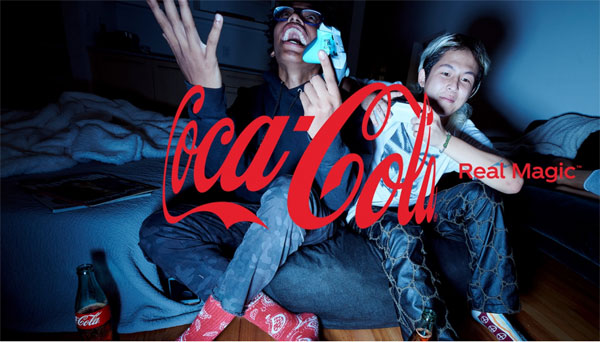
Coke and Pepsi have been at it for half a century, trying to outsmart each other both for marketing share and advertising that makes the brand relevant to the youth. Real Magic, the new commercial by Coke, I think has taken a giant leap and does manage to outsmart Pepsi.
Firstly, it is rooted in Gen Z passions by basing the idea on gaming. The gaming market is expected to reach USD 398,950 million by 2026 growing at an annual rate of 11%. Secondly, the Coke commercial is based on a philosophy that makes more sense than ever before.
Says Manolo Arroyo, marketing lead at Coca-Cola: “The ‘Real Magic’ philosophy is rooted in the belief that dichotomies can make the world a more interesting place-a world of extraordinary people, unexpected opportunities and wonderful moments.” The philosophy itself is not new – the hippie revolution believed in this more than anyone else right since the 60s. The world is growing more apart as we celebrate our differences rather than our similarities. The real idea behind the wave of globalisation was to embrace our dichotomies.
” ‘Real Magic’ is not simply a tagline or a one-off campaign,” says Arroyo. “It is a long-term brand philosophy and belief that will drive and guide marketing and communications across the Coca-Cola trademark.” Maybe it was about time for Coke to try something new given its sluggish sales in the recent past. Real Magic then succeeds ‘ Taste the feeling’ which was first introduced in 2016. BETC London, along with director Daniel Wolfe made the film.
The campaign also uses the Coca-Cola logo to wrap around the campaign images. I thought this was a pretty unique treatment of the logo given that the curvature of the Coke bottle or can always makes the logo seen this way.
Also the tagline ‘We are one Coke away from each other’ is reminiscent of the six degrees of separation theory first propounded in 1929 which said that we are on an average six or fewer social connections away from each other. With the expansion of the internet and social media to cover people around the world has often meant that we might very often be just one connection away from each other. Or one coke away from each other. Clever!
The commercial shows a World of Warcraft type of battle in progress until one of the contestants opens a can of Coke. After the contestants first sip, Orc in the game is overcome with feeling and throws away his battle axe, picks up his opponent and there is suddenly peace in the gaming universe. A metaphor for World Peace?
There is a lesson to be learnt here for the world. After all we if we all threw out our weapons nuclear or otherwise, one of the principles of nuclear disarmament, we might be all less threatening to each other.
Having grown up as a teenager in the 60s, all these little nuggets of philosophy make great sense to me, although it is supposed to appeal to Gen Z. And if Gen Z does think like this maybe we can hope for World Peace as eulogised by John Lennon in his immortal song Imagine!
“Tomorrow is nothing, today is too late, the good lived yesterday”.
Marcus Aurelius
Rediffusion has come a long way since WPP’s Martin Sorrell made a bid to up his 26.7% stake in the agency in the early millennium, which had a tripartite shareholding of WPP, Dentsu (13.3%) and 60% owned by Dewan Arun Nanda and Ajit Balakrishnan. The two international shareholders holding 40% were strange bedfellows making the once highly regarded agency a bit of an oddity. The agency touted some of the industry’s best people once upon a time including the late Dr Ashok Bjiapurkar and Kamlesh Pandey who later moved on to script writing in Bollywood. Not to mention many other well-known names like V Shantakumar. Why, even Mohammed Khan was one of the original founders before he went on to start Enterprise.
Like many agencies of its ilk, it kept attracting back some its best names in some consultative capacity or the other. Mr Nanda is known to have had good ties with most of the people who worked for him and that could be the reason.
According to the grapevine those days, Nanda might have paid dearly for refusing Sorrell’s offer to increase his stake in the early millennium. Sorrell was known to be very clear in the ownership patterns of his acquisitions. He always wanted a clear majority and typically the starting point would be at least 51% share before engulfing most of the remaining stake in the shortest period of time. People those days spoke in hushed whispers that Sorrell had threatened that if he couldn’t increase his stake in the agency, he would pull out its largest piece of business which at that time was Colgate, being a global Y&R account and terminate the Y&R partnership with Rediffusion. Moving global accounts to another agency is not a piece of cake, but Sorrell finally seems to have carried out his threat by moving Colgate to Bates 141, which created a special unit to handle the account, reporting directly to the Y&R global management. This gave credence to what thus far was attributed to agency gossip.
Team Colgate was a typical WPP style business unit that that had become Sorrell’s favourite model, a prime example being GTB for Ford. This ensured that Sorrell had direct control over some of the most important global accounts in the group. There is a bit of history there, since the agency heads of individual accounts can become quite powerful with time. A great example was Peter Schweitzer at JWT, who by heading the Ford account which once upon a time contributed to almost 25% of JWT’s global revenue, grew too powerful for Sorrell’s liking. When Schweitzer retired as CEO, Sorrell quickly moved Ford from JWT into WPP’s special unit called GTB thereby retaining direct control over this large piece of business.
When Colgate left Rediffusion, it was a telling blow. Losing large accounts didn’t faze Rediffusion. They had lost Airtel in the first decade of the millennium. And after Colgate they it lost the Tata Sons PR business which was placed in their partnership with Edelman to Adfactors.
In the M&A business, timing is critical. Both for the buyer and the seller. Rediffusion no doubt was well past its best valuation having waited too long for someone to come along. But the ego and the resilience of the founders kept it plodding along. What has Sandeep Goyal really bought into, one is not quite sure. The press release talks of its past glory rather than anything else clearly making it a ‘has been’.
So it would be interesting to speculate on what Goyal would do with the agency he has bought. He would necessarily have to fill the shell with some meat. If one goes by his earlier reputation, he is known to walk into agency pitches with a bag full of advertising campaigns, something that used to shock advertising professionals 20 years ago because it painted a picture of the ‘servile’ model for advertising. Servility in the advertising business has peaked since then and also contributed to its downfall.
The industry did little to continue the legacy of equal partnership and mutual respect with clients. It needs to be seen however whether the same tactic will work today. His long-term gameplan of course would be to dress up the bride. For this, he would need to build adequate value in Rediffusion to attract a global agency for an acquisition. Of course he can hardly be underestimated. His aggressive business stance is well-known. As is his passion for hard work, and particularly his extreme dismay at losing.
But it may take a while for the once famous agency of yore to re-acquire its earlier halo! For Rediffusion, Sandeep Goyal might well be its Angel Gabriel, the Arch Angel of Resurrection, the Voice of God and the Bringer of good news.
Prabhakar Mundkur is a veteran advertising person, a former agency CEO – in India and elsewhere in the world, a musician, a music producer, a talkshow host, a prolific commentator and a great conversationalist with an infectious laugh. His views here are personal.

 The Ghatkopar billboard incident that killed many and injured many more has raised many ethical questions about the advertising and media business.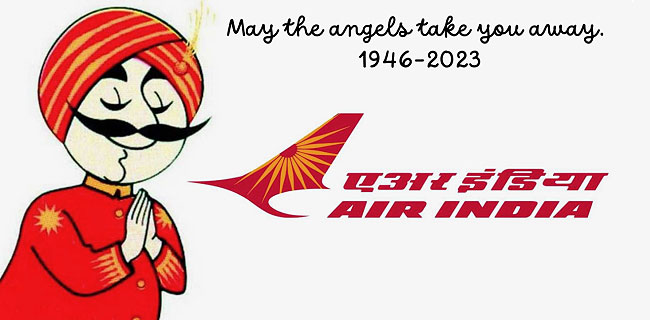




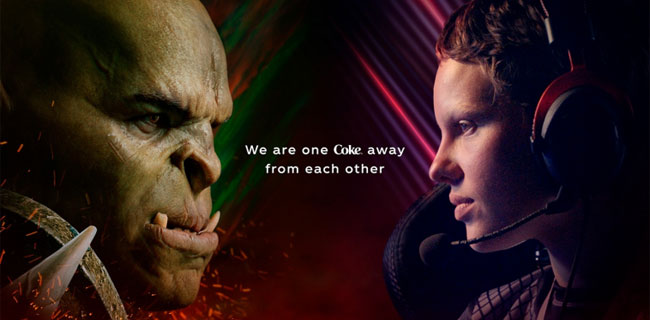
 Coke and Pepsi have been at it for half a century, trying to outsmart each other both for marketing share and advertising that makes the brand relevant to the youth. Real Magic, the new commercial by Coke, I think has taken a giant leap and does manage to outsmart Pepsi.