Category: MxM JOURNALISM REVIEW

  • Ranjona Banerji: No tough questions to Modi

    By Ranjona Banerji


    A few months ago Rahul Gandhi was interviewed by Arnab Goswami of Times Now. It was a tough interview and the editor-in-chief pulled no punches. Gandhi dimpled and fumbled and different people drew different conclusions from the exercise. Since then, we have had a glut of interviews of Narendra Modi, the prime ministerial hopeful of the Bharatiya Janata Party, in both print and on television.


    However, no one has asked Modi tough questions or watched him fumble and then ask some tougher questions. In fact, he dimpled away, deflected most questions to a diatribe against the Congress and continued with his acronym-filled and alliterative solutions to all India’s problems. On TV, his interviewers simpered and gazed with adoration – I include Madhu Kishwar, Rajat Sharma and the Aaj Tak people here – I balk at calling them “journalists”. Tuesday’s Times of India also carries a massive interview with Modi with nary a searching question or any follow up questions based on his answers… which leads one to several not so salutary assumptions.


    Meanwhile, Arnab Goswami, arguably the most influential person on English television, decided to interview Raj Thackeray once again, although most political watchers will tell you that Raj Thackeray’s role in this election is likely to be less important than it was the last time around.


    It would have been perfect for Goswami to interview Modi this election. We might have got the measure of Goswami’s skill as an interview and perhaps found a middle ground between the raging tiger who spoke to Gandhi and the kitty-cat who spoke to Thackeray. Alas. The nation did not get to know.


    That leaves Karan Thapar still holding the toughest interviewer award.


    **


    I had an interesting discussion on Twitter on how the English media in India thinks too much of itself and is contemptuous of the language media. I have no doubt that there are some English language journalists who are snobbish about either their chosen language or their vehicles. However such English language journalists whoever they are, are idiots if they did not respect their colleagues, regardless of which language they worked in.


    I have some observations on the subject, having worked with newspaper groups with publications in various languages – English, Hindi, Marathi, Gujarati, Urdu to name only some. The very reach of language media in India is what is keeping the newspaper industry alive and it is tremendous. No one can deny that. Those of us who have had some experience of being carried in both English and language publications have been overwhelmed by the reaction from readers of other languages compared to the trickle you get from English readers in India.


    There are many big names in language journalism across India. In Maharashtra, for instance, the most respected editors are those who headed language publications. Ironically, many of them are hated by Marathi journalists and lauded by English language journalists. Language publications have also stepped out of their domains and now own English language papers. Some groups always had publications in various languages as do many TV houses.


    Unfortunately, many owners of language publications did not respect their own journalists and not only paid them very badly – compared to English – but also did not upgrade their newspapers or magazines thereby also cheating the reader. Journalists were often used as marketing people and to do the owners’ dirty work. Many young, enthusiastic, idealistic journalists were appalled at the sort of work they were expected to do.


    Some of that has changed and journalists in language publications are paid better and the publications themselves now look and feel better. They have also changed their business models and professionalised their marketing and sales efforts. Often these changes were because of association with the English media. Sadly, however, the infection of “paid news”, where managements sell editorial space to political parties or corporates is now rampant in all media, regardless of language.


    It is also true that language journalists do have a chip on their shoulder because they feel looked down upon by some of those snobbish English language journalists. This now is a human feeling which it is very hard to fix. I can venture to suggest to both those categories that what they are both exhibiting are enormous inferiority complexes. The real world where the rest of us live is quite another place.


    **


    How does television subscription and supply work in India? It seems unfathomable. We have multiple options it seems as customers but we are still subject to the tyranny of channels and service providers. Many customers fail at the first hurdle – which is the call centre of course.


    The most recent problem that is coming up for tennis fans is transmission of the French Open. Tata Sky HD subscribers will find that they will not be able to watch the second Grand Slam of the year on television because they do not Neo Sports and Neo Prime.


    I have sent several tweets to both Tata Sky and Neo but have got no response.  Luckily for me, I am not a fancy Tata Sky customer but rely instead on my local cable operator who offers just about every channel there is!
     

  • Ranjona Banerji: Arnab Goswami: From roaring lion with RaGa to mouse with NaMo

    By Ranjona Banerji


    A roaring lion with Rahul Gandhi, a coy kitty-cat with Raj Thackeray and a mouse with Narendra Modi: the varying interview techniques of India’s most watched TV news anchor, Arnab Goswami. Modi, who was first a bit interview-shy these elections has lately been speaking to everybody. So by what logic Times Now billed this as an “exclusive” interview boggles the mind. This interview in fact went the way of most such interviews with Modi.


    Question 1: What are your views on populist measures for the poor?

    Answer 1: The moon is made of green cheese.

    Question 2: Okay. Who do you think is going to win the IPL?


    Or perhaps we are being unfair. Perhaps in this interview, both Modi and Goswami were playing the dignified statesmen of their own professions. However, it must be said that Modi’s deflections of all Goswami’s potentially difficult questions were brilliant. And Goswami was unable to pin him down on any of those although he did ask the initial questions. Not on divisive statements on caste and religion, not on Maya Kodnani, not on Gujarat’s development. Modi used Times Now as an election platform and all credit to him. If Times Now acted as a willing platform, well, if so it behaved no differently from all the other TV channels which have interviewed Modi this season.


    Interestingly, there was no full transcript of the interview in The Times of India’s Mumbai edition as there had been with Rahul Gandhi. Or perhaps it was a matter of time and printing deadlines. Although a few days ago, there was an interview of Modi in TOI by its own correspondents which was disjointed enough to sound like an email interview, where you cannot go back to the interviewee and follow up.


    **


    Having watched a bit of television through the day on Thursday and tracked social media at night, I genuinely thought the world had come to an end in Varanasi in conflicts between the Election Commission and the Bharatiya Janata Party, the BJP and the Aam Aadmi Party and so on. The morning’s newspapers were then a sore disappointment: they had a bit about this story but also about Other Things! How can Other Things be of remote importance? How can this great election drama be dismissed with some throwaway sentences like: “and then some BJP activists clashed with some AAP activists”? Talk about killing the excitement!


    **


    I did another India Hangout with Govind Ethiraj on how the discourse in these elections has gone from the sublime to the ridiculous, together with Ayaz Memon and Dilip Cherian. This is becoming a workable alternative to the panel fights on primetime news television.


    **


    Meanwhile, the future of primetime panel discussions on India might just become like this and perhaps the lesson to TV studios is… less plywood?

    https://www.youtube.com/watch?v=R2tzx9sd6vc&feature=youtu.be


    **


    What is evident is that this election has definitely gone on for too long and this is evident not just in the political discourse but in the petering out of media imagination. There are only so many ways in which you can cover elections and we are running out of them.


  • Ranjona Banerji: Media – new low or new dawn?

    By Ranjona Banerji


    The general elections of 2014 have been a measure of the media as much as our politicians, our polity and our social norms. For some, we have reached a new dawn where electioneering has been contemporised and globalised and the media and social media via the internet have played a massive role. For others, we have breached a new low where discourse has been shoddy and gimmickry has been substituted for solid political understanding.


    If you live in the isotherms of the internet then “traditional” or “mainstream” media in India is not the fourth estate of democracy but a fifth column which has twisted facts and misrepresented people to fulfil its nefarious anti-national paymasters. The problem of course is that everyone makes this accusation at some point from all sides of the political spectrum. This means that the mainstream media has effectively alienated all people at some time or the other. In other words, perhaps, it has done its job?


    This is not a defence of the media, however. It is true that various media organisations seem to have made political shifts depending on which way the wind seems to be blowing. Wild and unsubstantiated allegations on Twitter and Facebook aside (which seems to view the media as one massive conglomerate, not several competing organisations) within the media itself there is much talk of money being paid to ensure opinion poll results, massive corporate interference, people losing jobs if they do not toe the line and so on. Also, the predications are of changes at the top with prominent television faces being swapped about – all to happen on May 17, the day after the election results are announced.


    So how did the media behave this election? The one word answer: tired. The first voting day was April 7, the last voting day May 12 and the results will be declared on May 16. That’s five weeks. But campaigning started well before that. So we have had relentless election-related news from the end of last year. The country has run out of steam, forget the media.


    Television takes the brunt of the tedium if only because it is the first frontier. It fights for attention, it breaks news, it makes up breaking news and its breathless excitement is often just some reporter looking to make his or her mark on a transient medium. Newspapers have tried to give us blanket coverage but there have been some serious lapses. It took everyone a long time to focus on Mayawati and the Bahujan Samaj Party in Uttar Pradesh for instance. The dogged insistence on local coverage for various editions of national newspapers meant that readers remained ignorant of what was happening elsewhere in the country even though this was a national election.


    And then there are opinion polls. At the end of the day, important as they are, they are now looking like a journalistic cop out. Hand the job over to someone else and let them come out with the answers. The exit polls commissioned by news channels and reported in today’s newspapers may all give the BJP-led NDA a clear majority but their numbers are so far apart that the end result is confusion. Why this lack of confidence in the once well-respected journalistic “nose”?


    **


    I suppose at the end of it all, we need to discuss who to watch on May 16… A popular choice is NDTV’s Prannoy Roy since he first introduced India to the necromantic art of psephology. Then there’s Arnab Goswami and Times Now which has established itself as the control room of these elections. And there are the rest, struggling to catch up.


    Personally, I will stick to Rajya Sabha TV because it fits with my blood pressure requirements and perhaps some Hindi news channels which I find, despite their reputation in the snobbish English media, are more watchable. See you on the day.


  • Ranjona Banerji: The winner is Narendra Modi, but for election results coverage: Arnab Goswami

    By Ranjona Banerji


    And the winner is… yes, yes I know the winner is Narendra Modi but as far as election results coverage is concerned, it has to be Arnab Goswami! No really. There was drama, there was excitement, there was a studio audience which participated… like a well-rehearsed play they all gasped and groaned at the same time. Goswami had his pithy insights – the Congress is a “pocket borough” party, it is stuck in the “cocoon of delusion”. This was full-fledged watchability.


    Rajya Sabha TV, my usual fallback at times like this, was sober and rational. The guests were sober and rational. The only excitement came early in the day when the BJP’s Tarun Vijay took exception to journalist Jyoti Malhotra talking about how some media houses had supported Modi’s campaign. Vijay, a journalist of some sort himself, took exception to this and said it was unfair to say that sweet cuddly journalists could be bought by anybody. However, it soon turned out that Vijay’s love only went as far as pro-BJP journalists and did not extend to all of them. The rest were, er, “news traders”. Jyoti Malhotra and Vinod Sharma of Hindustan Times objected and we were almost in the Times Now studio…


    Of course not. Times Now is in another category.


    But first, we visit NDTV because Prannoy Roy is India’s first election analyst darling. Boring, I would say. Blah blah blah  they went, we were right, you were right, weren’t we right. No actually, only that Chanakya chap was right it seems.


    CNN-IBN had a formidable line up, including Ramachandra Guha and P Sainath. But it was not exciting.


    Rahul Kanwal and Rahul Shivshankar (yes, they are two different people) on Headlines Today and NewsX did their imitation Arnab Goswami acts but really, what’s the point.


    The nation wants to know what the nation wants to know: who’s next on the menu for Times Now?


  • Ranjona Banerji: Media must essay role of a watchdog

    By Ranjona Banerji


    There is an almost absurd breast-beating happening in one section of the media in India and an equally ridiculous whiny chest-thumping in the other ever since Narendra Modi was elected to become Prime Minister of India. At the end of the day, this was just an election. Yes, perhaps a very significant and joyous election from Modi and the BJP’s point of view and a devastatingly miserable election from the Congress’s point of view, but still, just an election.


    Contrary to how it might appear to some in the media, goddesses and gods did not descend from Indra’s palace to throw flowers on Modi on May 16 and neither did Beelzebub scratch his way up from the underworld to hand him a horns, hoofs and a tail. Awful as this may sound, Modi is one more prime minister in a long list of prime ministers.


    Indeed, it is from here on that the media has to get really serious about its role in a democracy. We are in a situation where the opposition has been cut to bits and no democracy can function without an opposition. The Congress has 44 seats. The other biggest parties are the AIADMK, the TMC and the BJD and there is no guarantee that any of them will play the Opposition’s role. The AAP, of whom many had much hope, is still learning the ropes as far as realpolitik is concerned.


    TV sadly is still behaving like a cheerleader. It is apparently the nature of the beast – it cannot escape its moment by moment hysteria and take a wider view. Like that TV camera which shows you 100 people and makes it sound like 100,000 so is TV journalists approach to news. Whether this will ever change or not, my crystal ball will not tell me, but right now it seems unlikely.


    However, as we saw with the India Against Corruption movement and then the Aam Aadmi Party, media did a full 180 turn from chief supporters to chief antagonists. Even now, Headlines Today and its editor Rahul Kanwal seem to have some kind of personal grudge against Arvind Kejriwal and his party. Even as Kanwal is now Chief Rah-Rah Boy for Narendra Modi – from his tweets to his broadcasts.


    Newspapers have yet to climb down from the election bandwagon and are full of little stories about how many dhoklas are going to be eaten in the new PMO. How over the top this is I cannot say but I do not recall stories about how much chhole bhatura was eaten in the last PMO or the amount of bisi bhele huli anna consumed during Deve Gowda’s term as PM. In between these charming bits of trivia we have an endless stream of advice for the new PM and his team. Do this first, do that first, make this one that minister, speak this way to that world leader… any small acquaintance with the way Narendra Modi functions however should tell them that the new PM is not great on taking advice from all and sundry.


    Between the advisory and the cheerleader mode (or the miserable martyr) roles, there has to be space for the main role as veteran journalist Pritish Nandy pointed out in a pertinent piece for Mumbai Mirror, which is that of a watchdog. This dispensation has swept into power on a magic carpet of promises to the Indian people. In between the “N and an A and an M” songs of the new media, we need to keep that eagle eye on what the government does and how it does it.


    It is however heartening to note that most of the media realises that this election is as much about a gigantic failure of the Congress and its allies as it is about a rousing victory for Modi and the BJP!


    **


    Meanwhile, it is still a wait and watch game as far as changes within the media are concerned as a fallout of this election. And also, whether all those in the media who supported Modi so assiduously will be rewarded…


  • Ranjona Banerji: Modi mania in media

    By Ranjona Banerji


    Yesterday’s news is tomorrow’s sev puri wrapping is an old newspaper adage in India. But one supposes it’s in the rightness of things to go back to the newspapers on May 17, the day after the Bharatiya Janata Party and Narendra Modi created a “historical moment in history” to quote India’s greatest TV news anchor Arnab Goswami.


    The Times of India’s Mumbai edition had a Samsung 5 ad on its front page, which is also in the rightness of things. Never let a “historical moment in history” overtake a “who’s going to pay the bills” consideration. Inside, the paper was sober with “India places its faith in Moditva”, with no dramatic font changes except to run the headline across the page which is only natural.


    The Hindustan Times went a little over the top with its “Hunkar Tally” headline and the orange glow on a gigantic face of Narendra Modi. Also a bit tabloidish with no stories, only blurbs.


    Mid-Day had a cartoon of Modi in a Mr Universe pose exaggerating his 56-inch chest and the headline: “India MODIfied.”


    Mumbai Mirror went the graphic-cartoon route with Modi perched on a lotus, in a splendid reference to a kitsch calendar with the headline, “God of all he surveys”.


    The Telegraph ran the letters M-O-D-I down the left of the page with each letter telling readers a little story about elections results.


    The Indian Express had a stern lecture to Modi with a front page edit.


    DNA went with “Lotus Position”.


    The Economic Times revisited DK Barooah’s quote about Indira Gandhi, with “India is Modi. Modi is India”.


    I did not manage to catch The Hindu and the process to sign in to their e-paper is too tedious.


    Interestingly, of these papers, only Mumbai Mirror, Indian Express and Economic Times carried front page ads.


    **


    After a massive media event like the announcing of election results, newspapers get a bit lost. There is little chance that those who were interested in the results read the papers at all on May 16, since TV anchors were blaring away from 7 am. It is intriguing that a best-selling author like Chetan Bhagat agreed to write an edit page piece for TOI that day or indeed that TOI asked him to.


    The next day, there is likely to be massive news fatigue, especially with such a dramatic result. Hindustan Times obviously tried to surf along the day’s hysteria with its front page. Most other newspapers used the “people come to us to interpret the news” formula.


    **


    The big test for the media of course comes now. Many journalists and media groups turned themselves into cheerleaders for Narendra Modi during the campaign – even though there are enough accusations that the “media” is all paid for by the Congress. From what these elections have shown, the Congress is in no position to pay anybody. And from all accounts, the party could not even pick the right advertising agency (Dentsu) to present its case to the voters of India, no matter how much money it has.


    Journalist, poet, filmmaker, Pritish Nandy had said on Twitter on May 16, “At some stage, the media will climb off the bandwagon to amplify the voice of a reasonable Opposition.” On May 17 he tweeted, “Right now there is not much difference between NaMo supporters and a supplicant media celebrating his victory”. On May 19, he said, “Some unsolicited advice: Media needn’t go overboard celebrating the Modi victory. Its job is still that of a watchdog. Go do it.”


    Nandy’s observations are spot on. The media has to get down to work. In fact, the new government practically has no political opposition. Only the fourth estate remains…


    This is from the Hindu’s Reader’s Editor, AS Paneerselvan on the road ahead for the media. Unmissable: http://www.thehindu.com/opinion/Readers-Editor/a-challenge-to-media/article6022916.ece


    **


    This is the apparently “open letter” season in the media. Everyone is writing open letters to politicians, telling them what they should or should not do. Of the lot, Gopalkrishna Gandhi’s letter to Narendra Modi, India’s prime minister to be, is the most moving: http://www.thehindu.com/opinion/lead/an-open-letter-to-narendra-modi/article6022900.ece


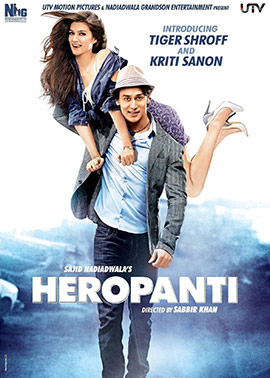
  • Reviewing the Reviews: Scathing 1 to 2.5 stars for Heropanti

    By Deepa Gahlot

    Heropanti

    Directed by: Sabbir Khan

    Starring: Tiger Shroff, Kriti Sanon, Sandeepa Dhar & others


    It was pretty obvious that Heropanti was made to launch Tiger Shroff and no effort was spared in marketing him well. The problem with having such high level promotion is that the same media can turn around and be brutal. Poor Tiger has been the target of some rather nasty online mauling. That apart the reviews were mostly scathing– 1 to 2.5 star ratings. The actor got away relatively lightly, but the film was shredded to bits.


    Aniruddha Guha of Time Out commented, “Heropanti gives him scope to show off his (action) talents in snatches, but clamps him down with a storyline which annoyingly unfolds in one house for a large part, before moving into DDLJ-territory. Director Sabbir Khan abandons the promise of a mindless action entertainer in favour of a more mindless emotional drama, which he naturally finds himself inept at. It’s hard to figure why anyone would entrust Khan with the launch of a major star-son, given he directed the atrocious Kambakkht Ishq before this film.”


    Shubhra Gupta of Indian Express sneered, “Bablu (Tiger) and Dimpy (Sanon) tread the tired paths Bollywood has ordained for young lovers for the past 25 years: he’s the dulha and has to make off with his dulhaniya, but not before the mandatory song-and-dance and rona-dhona. Tiger has a fine set of ripped muscles which he shows off in shirtless scenes. He does a good job of wiping blood off his chin, and holding off goons. He can do action, sure. But you are also required to say your lines and romance your girl: did no one think of those crucial things?”


    Anupama Chopra saw star quality in Shroff Jr. “Heropanti is designed to do exactly one thing – make us like Tiger Shroff, and that it does exceedingly well. The film is a showcase for Tiger’s talents; he is an incredible acrobat who does backflips in dance sequences and effortlessly leaps off walls in action scenes. He is a smooth dancer.  His body seems chiselled out of granite – director Sabbir Khan makes sure Tiger drops his shirt often, so that we have ample time to ponder his abs. In places, the dialogue delivery is off and his startling pink lips are a tad awkward. But he has a very solid screen presence. Can Tiger act? I don’t know. Is he a star? Absolutely. The rest of this film, however, is comically bad. A remake of 2008 Telugu film Parugu, Heropanti is purposefully loud masala. The screechy pitch is accentuated by ear-shattering background music. This love story set against a feudal Haryanvi backdrop has no room for subtlety, irony or even a quiet moment.”


    Mihir Fadnavis of Firstpost.in wrote, “The best thing that could be said about Heropanti is that it is not as terrible as Salman Khan and Akshay Kumar films. The second best thing about it is that Tiger Shroff may be effeminate, but he’s a likable guy who can do some truly amazing stunts. This is where the positive aspects of Heropanti end, because everything else in the movie is a raging river of stupidity.”


    Paloma Shroff of rediff.com was dismissive too. “Heropanti follows the Bollywood formula and includes 5873 random songs which, if devoid of visualisation, are a good, time-pass listen. Over all, Heropanti is an amusing yet bland modification of the classic Dilwale Dulhaniya Le Jayengey, featuring some of the most fake Haryanvi accents this North Indian has ever heard. The film could do with more action and less drama. The most masala-less masala movie I’ve watched in a while, it will have you echoing the second most (over)used dialogue in the film, “Kab jayegi teri heropanti?


    Nandini Ramnath blames the screenplay. “Building a sense of anticipation clearly isn’t director Sabbir Khan’s suit. The screenplay lurches from one scene to the next, piles on the risible dialogue, desultorily cuts to a song every now and then, and fails to notice that Bablu and Dimpy are so awkward together that it’s not surprising when Prakash Raj’s character asks Bablu why his daughter has chosen her lover over her father.”


    Sarita Tanwar was relatively mild, “The story takes you back to the early nineties. Except that the backdrop is now the north. Boy Babloo (Tiger Shroff) falls in love with the girl at first sight. She turns out to be daughter of a goon, who has captured him to get the address of the boy who has eloped with his older daughter. Soon, she too begins to have feelings for him. Father senses. Which way would the story go ahead now? It goes the same route as DDLJ or Maine Pyar Kiya.”


    Rajeev Masand was not impressed, “Directed by Kambakht Ishq’s Sabbir Khan, Heropanti is a remake of the Telugu hit Parugu, and is modeled as a throwback to those old-fashioned films of the 80s in which a tough-as-nails hero could vanquish a dozen enemies without breaking a sweat. There’s a damsel in distress, a selfish control-freak father, and a never-ending supply of menacing uncles who exist only to keep the hero and heroine apart. The film ticks all the usual boxes, but to be fair Khan occasionally puts an interesting spin on rusty formulas, delivering what is at best a frustratingly inconsistent film.”


    Suhani Singh analyses the film’s ‘hero,’ “There are many things that debutant Tiger Shroff can do with ease. Back flips, aerial kicks, hip hop dancing. But acting is not one of them. Shroff is 24. To gender reverse Britney Spears’s lyrics, he is not a boy not yet a man. It doesn’t help that when he smiles, viewers instantly forget his machismo. It’s a sweet smile which doesn’t make you blush, but confused if it’s coming in happiness or pain. And unfortunately Tiger smiles too often in Heropanti, often for no reason.”


  • Ranjona Banerji: Much hysteria about the swearing-in

    By Ranjona Banerji


    It is easy to understand why the swearing-in ceremony of the new BJP-led government at the Centre is a big media event. What is not so easy to understand is the breathless hysterical excitement of the television media where a whole day was practically dedicated to this event. As a ceremony went it was just that, but on a grand scale to allow India’s new prime minister Narendra Modi to make a statement.


    News channels then behaved like bookies as they started an endless circle of speculation about who was getting which ministry and on and on. All guests now know how the game is played so they also chip in with their oohs and aahs. These panel dramas have become so well staged that they are now definitely pointless.


    I did not watch the coronation all day so do not know if there was anyone interpreting people’s fashion choices like at a British royal wedding – was there? Like which of her seven lakh saris was Kirrrroooonn Kherrr (not sure how she spells her name) wearing.


    Meanwhile, NDTV Hindi provided some entertainment on social media on Monday morning by telling us that Narendra Modi went to Modi’s Samadhi at Rajghat thus breaking even known-Hindu laws of transmigration. And let us not even discuss the er, compliment paid to Mohandas Karamchand Gandhi otherwise known as Mahatama and Bapu and to Modi as Mohanlal Gandhi.


    Later, the channel ran an apology without telling viewers what they were apologising for. I direct them to that old newspaper joke. Man sues paper for writing that he “has the manners of a pig”. Man wins. Newspaper directed to carry apology. Next day’s paper says man “hasn’t the manners of a pig”. There are ways, boys and girls, think a little.


    After the grand coronation was over – which is what some TV channels were calling it – we then went on to discuss Cabinet berths. Karan Thapar on Headlines Today was effective as usual and for some reason the same people who yell elsewhere remember their manners with him. Rajdeep Sardesai on CNN-IBN had some criticism for the Cabinet formation and the lack of co-relation between earlier promises of “cluster” ministries and what was apparently handed out.


    General Bakshi on NewsX threw Rahul Shivshankar off balance by saying the most important thing to be discussed was how India was following the rightwing trend where nationalism was emphasised and “the other” was targetted. Shivshankar looked like he couldn’t believe that someone could mention words like rightwing right in the middle of this right coronation. It is possible that only the general’s formidable moustache stopped Shivshankar from having a tantrum.


    Arnab Goswami on Times Now looked like that cat that was licking its chops after the cream had been scoffed down and also a little coy. Don’t ask me why.


    In the morning, The Indian Express headline read, “He signs in” thus taking TV’s coronation and turning it into deification. Is the rumour true that Shekhar Gupta will soon join the India Today group?


    Still no clues on which of our illustrious peers who worked so hard to ensure this victory for Modi will be rewarded. If indeed they will.


    **


    Away from all this, would it be fair to ask some newspaper to explain to Tata Sky subscribers why they no longer get Neo Sports and Neo Prime even if they have paid for them? Neo Sports put out a tweet asking tennis fans who want to watch the French Open to demand their rights from Tata Sky. But from what I understand, Tata Sky is refusing. Anyone? Might be a good story even if it involves a little hard work…


  • Ranjona Banerji: Reliance takes over Network18/TV18. Now what?

    By Ranjona Banerji


    As the rumour mills had been suggesting for some time, changes were going to happen in the TV18 group. But who would have known that the changes would be so drastic? The general impression was that the power pair of Rajdeep Sardesai and Sagorika Ghose would leave, especially after apparent instructions that Narendra Modi has to be praised at all times. Instead Reliance Industries which had first invested in TV18 and apparently changed its political direction has just bought the whole group out. The first casualty was the Group CEO Sai Kumar but the biggest casualty is perhaps the group’s founder Raghav Bahl.


    When Caravan magazine did an investigation into TV18’s finances, they did not appear to be in the pink of health. When this website quoted the Caravan article, various representatives of TV18 were apparently upset. Now however, the holding guard at TV18 have all gone and the new dispensation has poured in Rs 4000 crore to buy out shareholders and run the organisation and its various properties.


    The turn that CNN-IBN made from the centre of politics to the right was visible to most. According to a story in Scroll.In, Sagorika Ghose was asked to turn down her anti-Narendra Modi rhetoric. Earlier, we had been told that star TV personality Karan Thapar refused to be eased out and waiting till his contract expired after which he took his show to Headlines Today. So also Ashutosh of IBN7, who however then joined the Aam Aadmi Party.


    Rajdeep Sardesai stopped being critical of Narendra Modi – who was still prime ministerial aspirant at the time. Bahl, according to Caravan, was very keen on Modi and at a conference organised by the group last year, lauded Modi who was its star invitee. Insiders quoted by Caravan said he wanted to start a foundation called “Think Right” and the conference would follow that name. However on objections from Ghose about “misinterpretation”, the name became “Think India”.


    But all that was window dressing as TV18 jumped off the centre fence and turned right. This was most evident in its website firstpost.com which has made a speciality out of interpreting or re-dressing every move made by Narendra Modi and the BJP. It is not clear whether firstpost will be affected by this massive sweep-through by Reliance. Bahl has not been spared despite his change to the right. It is important to note that there is a difference between making an editorial decision to turn right – which is entirely justifiable – and changing political direction because of corporate and management pressures or ultimatums.


    The grapevine says that Reliance will now run TV18 as it sees fit and this may not include whatever staff is left. Journalists like Gautam Chikarmane and BV Rao joined a Reliance digital wing recently and there are some murmurs – unconfirmed – that they will run the show at TV18. Given Reliance’s last foray into the media with The Observer – an unmitigated disaster where a newspaper became a PR vehicle for just one company and then died – the future looks bleak for TV18. However some feel that this Reliance is not that Reliance and so there is hope for TV18’s journalistic wings.


    Be that as it may, direct corporate interference will not work for journalism and journalists. Whether this is the end of TV18 I do not know but it is certainly the end of TV18 as we have known it, warts and all.


    This article from Scroll has all the details: http://www.scroll.in/article/665841/Rajdeep-and-Sagarika-to-resign-as-Reliance-takes-over-Network-18


    And this press release from Reliance has all the other details: http://www.bseindia.com/xml-data/corpfiling/AttachLive/Reliance_Industries_Ltd_290514.pdf


    **


    The Mumbai Press Club will hold its Red Ink Awards on June 7. This year, Mrinal Pande has been selected for the Lifetime Achievement Award. Pande is the first woman who became editor of the daily Hindustan and recently retired as chairperson of Prasar Bharati. She was also founding president of the Indian Women’s Press Corps. The award includes a trophy, a citation and Rs 100,000.


    Congratulations to Mrinal Pande and a great choice by the Mumbai Press Club!


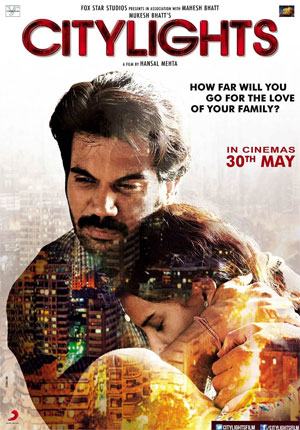
  • Reviewing the Reviews: Most 3 stars for Citylights

    By Deepa Gahlot


    Citylights

    Directed by: Hansal Mehta

    Starring: Rajkummar Rao, Patralekha, others


    Hansal Mehta’s Citylights, the official remake of Metro Manila, is one of those films that critics are obliged to praise, because it is sincere, tries to take a stand and tells a story that so many city dwellers would understand, because they also came from outside and struggled to make a home.


    Rajkummar Rao and Manav Kaul carry the film on their able shoulders, and fetch the film mostly 3 star ratings, even by critics who expressed some disappointment.


    Shubra Gupta of Indian Express wrote, “The result is a grim yarn which moves you intermittently, but whose patchiness is papered over by a fine performance from Rao. It could have been more impactful if the songs, and some amount of improbability, had been kept at bay. The lyrics keep intruding into the narrative, trying to wring sympathy. This takes away from the film, and injects drippiness in a film which needed none : the story, despite its occasional bumps, is enough to make us feel.”


    Sanjukta Sharma of Mint commented, “Mehta’s film festers in the story’s limited scope. That is obvious in almost every scene. Songs are tools for emphasis-literal translations of emotions supposed to define a scene, they belt right into the tears and the histrionics of the couple. Like a potboiler, repetition packs the narrative, and the camera seems a dab-the film does not have a distinct visual language, oddly oscillating between glossy B-grade Bollywood and low-light candidness.”


    Mihir  Fadnvis of Firstpost.in gave it one of the few scathing reviews. “Metro Manila is a neat little drama-thriller that brings a quietly artistic taste of poverty, sacrifice and desperation to a sub-genre that is disinterested in pandering to movie clichés. Hansal Mehta, the director of the terrific and understated Shahid and his star Rajkumar Rao were the perfect choices to remake Metro Manila. Oh boy, what a disappointment. Metro Manila vaulted between sensitivity, action, pacing, character development and social commentary, and thanks to solid direction it all just clicked perfectly. In CityLights all of those elements are placed haphazardly, and the film becomes a mediocre afternoon soap.”


    Rajeev Masand titled his review Bright Lights Big Pity and commented (on CNN-IBN): “‘Citylights’, an official remake of the British-Filipino hit ‘Metro Manila’, isn’t a bad film by any measure, but it does feel repetitive and long, even at a running time of less than two hours. Technically too, the film offers no surprises. In the original film, because the protagonist was a fish out of water, the audience discovered the city of Manila and its seedy side along with him and through his eyes. But Mehta shoots Mumbai through the same jaundiced lens as dozens of films in the past.”


    Anupama Chopra of Hindustan Times was mildly critical. “Citylights is the official remake of the award-winning Filipino-language film Metro Manila. The moving story about the horrors an immigrant family endures in the big city, translates perfectly to India and director Hansal Mehta stays faithful to the original. He bolsters the powerful narrative with fine performers – Manav Kaul as Vishnu, Deepak’s charming but slippery partner in a private security firm, and debutant Patralekhaa as his wife. But the disjointed and blaring background music doesn’t work. The lovemaking scenes are equally gratuitous. Also, the city of Mumbai remains generic and never becomes a character in itself. Still, Citylights is persuasive. And it will hit you harder if you haven’t seen the original.”


    Saibal Chatterjee of Ndtv.com raved, “An intense human drama delivered in the form of a riveting thriller, CityLights deals with the oft-repeated theme of rural migration.  Director Hansal Mehta imparts both weight and style to the film. He does so with impressive precision and lightness of touch. CityLights is the story of a couple whose rustic innocence is suffocated by the soul-crushing challenges of living and surviving in a big city. CityLights may not be exceptionally unusual in terms of its storyline, but Mehta’s modulated, deeply felt treatment of the grim narrative material informs the film with a sense of urgency and unfailing relevance.”


    Shubha Shetty Saha of mid-day wrote, “However, even though the direction and performances are impressive, the script seems manipulated and contrived at certain points, as if designed to pull the emotional trigger of the audience. Also, there are some glaring loopholes which could have been avoided. Having said that, do watch this film as it narrates the sensitive-yet-disturbing story of how human greed and selfishness can wreck lives. It also shows how unfortunately survival in a big city more often than not comes at the cost of moral values.”


  • Ranjona Banerji: Much idiocy at primetime (+ Shekhar Gupta exits Express)

    By Ranjona Banerji


    After 19 years, Shekhar Gupta who is editor-in-chief and has also been CEO of The Indian Express, resigns. His note to his colleagues is long (like his columns), moving and personal. It includes some tips on how to practice good journalism but is more like this: “I so love you all, friends, colleagues, much younger, brighter and with a great future. I am proud of you and cherish the time we spent together. I will be generally in my office until June 15.There is a fair bit of pending writing. So please be forewarned: you will still have to endure the corridor addas on my compulsive breaks from spells of writing, bare feet and all.”


    The note does not say where he is going but the buzz says it is to the India Today group in a very senior capacity.


    The media world is also waiting for news about where exactly Rajdeep Sardesai and Sagorika Ghose of CNN-IBN are going and whether there will be any other changes in the Network18 group. The gossip is between Naveen Jindal’s TV channel, Hindustan Times which wants to start a TV channel, the Hindu (for one) and a sabbatical to write a book (for one). Thanks to Twitter, we shall probably know as soon as anything happens.


    **


    When senior TV journalists start complaining that the media is covering the rape of two minor girls in Badaun, UP, like the satirical film Peepli Live, then you know that the media is in trouble. Journalists from all over have descended on this village and the scene has become like a circus apparently. But it is a bit of a Hobson’s choice for the media: if you don’t go you’re in trouble and if you go you can make it worse.


    The media has seen this double rape in a number of ways. For some, it is about the fact that the girls were Dalits so this was one more in a long and shameful list of dehumanising, discriminatory and oppressive tactics. To others it was the fact that the girls were walking to the fields because they had no toilets. Lack of toilets was seen as the reason for the rape. Law and order was another tack.


    However to my mind all these are justifications for extreme sexual assault and murder. The lack of toilets provides opportunity to a rapist perhaps but often so does sitting at home, going for a walk, standing at a bus stop and so on.


    **


    The death of Union minister and BJP leader Gopinath Munde in a car accident in Delhi is certainly shocking news. And certainly, news channels are at the forefront of bringing such news to the viewing public. However, how would it hurt if producers spent a few minutes off air with the reporters at the scene to find out how much they know instead of making viewers suffer through an inept interrogation process?


    Also, for the Times Now morning anchor, what is an “extremely fatal collision”? Fatal (causing death) by itself would perhaps suffice. Even if you suffer from extreme adjectivitis, you need perhaps to choose your victims more carefully.


    **


    After a gap, I decided to skim through primetime TV news on Monday night. Times Now had a big fight on the Badaun rape where panellists appeared to be yelling at each other. The others I can’t remember. But Headlines Today bucked the trend and was sitting in Hyderabad to discuss the formation of India’s newest state, Telengana. Excellent as an idea, until you watched the programme.


    For some reason, Rahul Kanwal, star anchor and editor of some sort on Headlines Today, decided that attendance at the swearing-in ceremony for Telengana’s new Chief Minister K Chandrashekhar Rao and his Cabinet was the most important point to be made. Seemandhra Chief Minister Chandrababu Naidu (whom he called “Babu” throughout) did not attend. This apparently was the greatest transgression ever. Kanwal went from political party rep to political party rep to harangue them for reasons. First they were polite, then as they were provoked they traded charges and the whole thing descended into childish nonsense. Am not sure how newsworthy this was for the rest of India except perhaps for thinking people to wonder why they vote at all…


    When Kanwal started comparing this swearing-in non-attendance to India and Pakistan, I switched off the television. There are limits to how much idiocy anyone can stomach in one night.


  • Ranjona Banerji: Media going from left to right?

    By Ranjona Banerji


    Given the intrusive nature of the media today, it is hardly surprising that UP chief minister Akhilesh Yadav is annoyed with it for focusing on the Badaun rape case. After all, why on earth should the media focus on the rape and murder of two minor girls if not to target his state? Especially some ordinary little case, where the victims are found hanging from the branches of a mango tree making for one of the most terrifying images in recent times?


    Rape as a conspiracy against me is a ridiculous argument perfected by Mamata Banerjee in Bengal and now picked up by Yadav. It made no sense then and makes no sense now. Add to this a bizarre feeling of being picked upon – only UP is targeted when rapes happen elsewhere. Yet the most talked about rape cases in recent times have been what is called the Park Street rape case in Calcutta, the December 2012 gangrape and murder in Delhi, the two Shakti Mills gangrape cases in Mumbai… Imagine instead a scenario where the media did not focus on such crimes.


    Shooting the messenger is an age-old ploy and is not likely to stop. But it does not make it any less idiotic.


    **


    The media itself however has decided that idiocy is its birthright and it shall have it, to paraphrase Lokmanya Tilak. Endless second by second reporting about the new prime minister on television means that other news – and this includes the Badaun rape and the murder of a young Muslim man in Pune allegedly by a Hindu rightwing group – gets short shrift. This only gives credence to allegations that the media is drifting from the centre to the right.


    **


    Have to give kudos to ET Panache, the features section of Economic Times for actually registering the fact that the DTH operator Tata Sky is not showing Neo Sports and Neo Prime to its subscribers who are therefore unable to watch the French Open, the second Grand Slam event of the year which ends this weekend. Interestingly, Tata Sky did not respond to ET’s questions, which is in keeping with its silence on the social media site Twitter as well. The legal wrangle between the two has cost tennis fans dearly.


    Interestingly, a section in Panache on lingerie for women made the assumption that men would drool over the offerings and buy stuff for their “lady love”. The glass ceiling for women is not limited to the actual corporate world itself then. It extends to the media as well.


    Looking at ET Panache led me to look at the glossy supplement Corporate Dossier. It was quite an eye-opener. If corporate types, junior or senior, still have to be told that they should come to work on time and other such homilies then you wonder whether your chewing gum and washing machine sellers have much clue about whatever it is they do.


    And here’s something interesting from fashion designer JJ Valaya, revealed in a questionnaire in a section called “Wanderlust”. Under the segment titled “Gourmet Gaffes”, this is what he had to say: “Can’t handle raw meats and have got into sticky situations, such as at Vienna’s Bristol Hotel when an important business associate offered up raw dear meet (one of the rare varieties) just before we had to sign an important agreement.”


    Dear meet, raw or otherwise, boggles the mind. Like just whose gourmet gaffe is this? I would bet on a sub-editor.