Category: MxM JOURNALISM REVIEW

  • Ranjona Banerji: When journalism pretends to not be tabloidy

    By Ranjona Banerji


    The Supreme Court’s scathing observations on the running of the Board of Control for Cricket in India, on the BCCI president N Srinivasan, on the Indian Premier League and on the general state of cricket have more or less ousted politics from headline news for at least one night and one day. Supreme Court advocate Harish Salve’s criticism of MS Dhoni’s deposition before Justice Mudgul meant that the India captain was also under scrutiny.


    NewsX had a debate on Thursday night with an extraordinary proposition: that Dhoni should be “barred” from Indian cricket. Not all the guests agreed with host Rahul Shivshankar which is hardly surprising. Once more, we see how journalists – I use the term loosely to include TV anchors – are unable to distinguish between allegations and proof and deliberately try to create sensations instead of reporting or commenting on the news. Nothing wrong with tabloid journalism: the problem is when you pretend not to be a tabloid or a TV equivalent of one.


    Dhoni of course has gone from being a media darling to the equivalent of a major demon after some losses by India in the field. Now he is being accused of corruption of the highest order though the actual suspicion is not of the highest order. This is how reputations are destroyed based on whispers and journalists need to understand this better.


    It is no one’s case that journalists should not go after someone because they are popular or successful. But even journalists have to work on some kind of proof. It would help if all the news channels which are on this demonisation course would do some investigations of their own. Of course, it is another matter that many journalists do not know the difference between a judicial probe and a court of law or between an allegation and evidence and between an observation and a verdict. And if I might add in a non-related political aside, that so many actually believe that “clean chit” is some legal provision in the Indian Penal Code.


    The other tragedy as far as the media is concerned is that few of these arguments being made against cricket, the BCCI and the IPL are new. So if there are to be debated again and again, it would help to get some new names on their panels so that we can hear some fresh points of view. Otherwise, we might as well be on perpetual rewind.


    **


    The rest of the media’s time is spent trying to figure out whether Narendra Modi will be India’s next prime minister or not. The fact that no one knows except the Indian voter is no deterrent. Instead, the media has decided to do the BJP’s work for it. Please note I am not ascribing any allegations here but only pointing out that some journalists have sort of forgotten if they ever knew what their job is.


    **


    Having said that, The Indian Express has a very readable story on how the Aam Aadmi Party’s journalist-candidates are using their media experience. http://indianexpress.com/article/cities/delhi/from-reporting-news-to-being-the-news/


    Have to also thank Indian Express for explaining to readers the back story of Aditya Verma, the Cricket Association of Bihar man who filed the PIL that started the whole process against the BCCI. http://indianexpress.com/article/sports/cricket/little-known-aditya-verma-and-his-powerful-backers/


    **


    Indeed, if you read the sports pages of all the newspapers you get an excellent idea about what’s happening in the BCCI. One alone will not do.
     

  • Ranjona Banerji: Were journalists of 30 years ago mere stenographers, as Rajdeep Sardesai said?

    By Ranjona Banerji


    According to an article written in Hoot by senior journalist Seetha, editor-in-chief of CNN-IBN Rajdeep Sardesai commented at a CII panel discussion that 30 years ago journalists were stenographers rehashing press releases while today’s journalists are more assertive and questioning. The credit for this, he felt, was due to television.


    Seetha’s excellent piece demolishes the stenographer accusation. I found the supposition a bit strange and thanks to the logistics of Twitter, had a small conversation with Sardesai – whom I do not know – on the issue. The upshot of which was that Seetha had not quoted his whole contention and used his comments out of context, that 30 years ago journalists were stenographers but there were also some good journalists then and it was unfair to attack TV journalism which was a soft target and finally, “Let’s not glorify the past and damn the present.” (That’s a direct quote from Twitter by the way.)


    I am not going to venture into Seetha’s territory, since she has done an excellent job defending the “stenographers” of the past. (http://thehoot.org/web/home/story.php?storyid=7398&pg=1&mod=1&sectionId=10&sectionname=Columns)


    But I am going to look at the further discussion. Past and present. TV and print. My understanding is that there were good and bad journalists then as there are now – which is hardly rocket science. In which case the “stenographer” remark is gratuitous. The additional argument that TV has made journalists more assertive and questioning is intriguing. I suppose in one way, Sardesai is correct. TV journalists are forever asking all kinds of questions: How do you feel, why didn’t you do this or that, should X do this or that, are you a tomato or have you at any time been a tomato. Not to mention asking questions on behalf of the nation. Then there’s assertiveness. Which you have to be if you are going to stick a microphone in someone’s face.


    So let’s assume that Sardesai is correct. TV has made journalists more assertive and questioning. The problem is the quality or the need of the questions. And that’s when we feel old, like Father William. Even at the risk of sounding like a fuddy-duddy stenographer of yore, TV journalism in India at least has failed at taking the profession further. Our primetime programmes have descended to chaos and melodrama. Decibel levels determine success. And if investigative and development journalism earn low dividends in print, you can rest assured they are meaningless on television.


    Obviously, there are good and bad TV journalists and good and bad print journalists. And there are better and worse as well. But on an average, the nature of TV journalism, in India at least, seems to have got stuck. The discourse has been lowered and like commercial cinema, the lowest common denominator always wins. Newspapers have also dipped in quality in some areas, but they have maintained them in others. That is the nature of the beast. Print will always find it easier to be all things to all people. It will also be able to fish in a larger pond of interests. And the time that print has to process and absorb “breaking news” gives it an edge.


    The biggest threat to both however comes from the internet. There will be good and bad websites (I am getting so tired of this meaningless chestnut) but on the whole, they will give both paper and TV a run for their money. News websites can be immediate, like television, but they can also be discerning like print. I am all for the future even if I am an old and grizzled stenographer. The present is what I find dubious. There was perhaps no golden age in journalism like there was no golden age in anything. But to damn the past is beyond my limited capabilities or understanding as also to demean my peers and forebears.


    Let’s put it this way then: one would only wish that today’s journalists, especially some of those on TV, would be a tad more intelligent and aware while they are being assertive and questioning? Is that a lot to ask? I am aware of today’s date, so am not holding my breath.


    And here’s from the genius BBC comedy series Broken News: https://www.youtube.com/watch?v=JRbihhHfTcQ


  • Ranjona Banerji: Is it right to watch the Tejpal tapes?

    By Ranjona Banerji


    How seriously should journalists take the Supreme Court rulings on keeping secret the identity of a woman who has filed a rape complaint? And do journalists have to respect court and investigative procedures if they get hold of evidence that is material to a case? Is the search for a story more important than everything else?


    Tarun Tejpal is still in jail on rape charges (or sexual assault amounting to rape). The case had many sensational elements in it, was highly publicised and both the accused and the accusers were journalists. Issue of work place harassment, India’s new rape laws, the functioning of Tehelka, how seriously journalists take themselves, the role of Tehelka managing editor Shoma Chaudhury were all discussed. Tejpal is still in jail, bail pleas having been rejected.


    And now as the case comes to trial, we see defence for Tejpal being built in the media. Articles on blogs and in magazines claim to have seen the CCTV footage of Tejpal and his accuser leaving the lift where the incidents are supposed to have taken place. Now this footage is part of the evidence. It lies only with the defence and the prosecution: or that is how it should be. Those who are part of the young victim’s (or accuser if you prefer) support team have not seen the CCTV footage nor it seems has the young woman herself seen it, according to lawyer Vrinda Grover.


    Journalist Manu Joseph in Outlook first suggested that he had seen the footage in his article ‘What the elevator saw’ but is later quoted as saying that it is not “relevant” whether he has seen the footage or not. Filmmaker Anurag Kashyap says he has seen the footage which proves that no rape took place. Senior Seema Mustapha also says she has seen the footage and it proves that the young woman was lying.


    So does a journalist who comes by such red-hot material abide by the law and refuse to view it or write about? Or does a journalist see this as a massive scoop where journalistic ethics trumps the law? The Supreme Court ruling about keeping a rape accuser’s identity secret is precisely to avoid the sort of vilification that is taking place by the Tejpal defence. How seriously should journalists and editors take that? Is a journalist one might ask supposed to take sides and work for the defence of either an accused or an accuser?


    After the Niira Radia tapes expose by Outlook and Open magazines, Joseph, then editor of Open, is supposed to have told Barkha Dutt, as I was reminded by a very senior journalist: “Sometimes the source is the story” or words to that effect. The implication was that Dutt had missed the fact that a telecom lobbyist was pushing for A Raja as telecom minister. So did Joseph ask himself why he had been given the tapes and whether he was being used as a stooge by Tejpal’s defence team?


    I am asking these questions because we are in a very grey area here. We all have our personal responses to the issues of rape and sexual harassment and mine is that the Supreme Court ruling as far as the identity of the accuser is concerned must be followed. Certainly, any journalist is free to argue for and against any person. But if he or she wants to take on the Supreme Court on the subject of keeping a rape accuser’s identity secret, then they should do it directly. By talking about the CCTV coverage, they have showed bad judgment and bias.


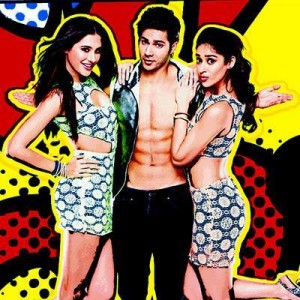
  • Reviewing the Reviews: 1.5 to 3 star ratings for Main Tera Hero

    Main Tera Hero


    Directed by: David Dhawan


    Starring: Varun Dhawan, Sonam Kapoor, Anupam Kher, Nargis Fakhri, Ileana


    By Deepa Gahlot


    David Dhawan had never been the critics’ favourite, and Govinda even less so. But come Main Tera Hero with Varun Dhawan doing a Govinda, and everyone started feeling nostalgic for vintage Dhawan.


    Main Tera Hero is as nonsensical as any Dhawan film, and how a viewer responds to it depends entirely on what is expected from the film. If expectations are kept low, then the film doesn’t disappoint too much. It got one 1.5 to 3 star ratings, but most hovered at 2.5.


    Shubha Shetty Saha of did-day paid a tribute to Govinda. “Dhawan tries to recreate the tried-and-tested formula with ‘Main Tera Hero’, although with one difference: Varun Dhawan replaces Govinda. But Dhawan plays it extra-safe by making Varun clone all of Govinda’s mannerisms, his special dialogue delivery and also his tight white trousers look. One doesn’t really mind the “inspired” performance, considering that Govinda deserves the tribute, but the whole exercise only makes you miss Govinda even more.”


    Nandini Ramnath of Mint expressed the same thing in different words: “In which David Dhawan makes his son Varun Dhawan, in only his second movie, work very, very hard-the young man fights, dances, sings, romances, kisses, schemes his way out of jams, dives into pools and trouble, dives onto beds and out of trouble, has two-way conversations with idols of various faiths, shows off his shaven and ribbed chest, delivers punch dialogue, pays tribute to Govinda and tries to do a Salman Khan.”


    Aniruddha Guha of Time Out commented: “Varun Dhawan is probably the reason this film got made in the first place and while he is no actor (yet), he seems to enjoy what he does and that translates well on screen. Breezy at best and hilarious in parts, Main Tera Hero is a trip down memory lane, where the original king of comedy – I mean David Dhawan here – regains some of his touch. Let’s go the whole hog next time, Mr Dhawan.”


    Shubhra Gupta of Indian Express wrote, “Main Tera Hero’ is not as ghastly as a few recent Dhawans have been, but only because it takes itself not at all seriously, and becomes as silly as it should be for some of the second half . The rest of it has its share of the usual unsightly and tasteless gags about women and protruding body parts and the mandatory fat guy in a wheelchair.”


    Saibal Chatterjee of NDTV.com was mild in his criticism, “It is with much trepidation that one approaches Bollywood comic romps these days. They tend to hinge more on heavy-handed buffoonery than on genuine hilarity. Main Tera Hero has both strains of comedy, the crass and the truly funny, but in the end it is the latter that dominates. The sheer absurdity of the screwball plot does not weigh unduly heavy on the film because the likeable oddballs that populate it quickly get on top of things. Of course, amid the frantic pace of Main Tera Hero, the one-film-old and understandably over-enthusiastic Varun Dhawan is frequently in danger of tripping over the line. Obviously keen to graduate from student to superstar, the lead actor dances, fights and romances his way through the film with great gusto. He manages to retain his balance. No mean feat that.”


    Paloma Sharma of rediff.com found it paisa vasool. “Main Tera Hero rests almost solely on the bases of strong performances extracted by a tough taskmaster, director David Dhawan — who makes a surprisingly clean film for the most part but doesn’t seem to have been able to resist the temptation to indulge in a few less-than-tasteful jokes post-interval.


    The second half is primarily where the problem lies. The script dwindles slightly. Too many characters with too many subplots emerge, messing things up for a bit. Nevertheless, Main Tera Hero keeps you on your feet and Milap Zaveri’s crisp dialogues never fail to extract a chuckle. Artfully edited and kept at just the right length of 128 minutes, it never gives you a chance to yawn.


    Rajeev Masand of CNN-IBN ranted: “David Dhawan’s comedies, the best of them, have been cheerfully low-IQ enterprises, constructed around predictable plot lines involving lookalike protagonists, mistaken identities, cheating husbands, and triangular love stories. When Dhawan was at the top of his game, one or any of these standard ideas would have been enough for him to bang out a film filled with non-stop laughs.But Main Tera Hero, starring the filmmaker’s son Varun, is a series of forced contrivances. The humor feels labored and manufactured, never arising spontaneously from the situations.”


    Surprisingly The Hollywood Reporter carried a review. Lisa Tresing wrote, “With a few choice hip thrusts, a wink and a knack for snappy repartee, the impish Dhawan is clearly being groomed as a comic hero in the Govinda mold – not a bad thing, though he’s missing that former superstar’s naughty spark. Dhawan’s got passable dance moves, too, though he’ll never capture Govinda’s unique blend of doughy vulnerability and sparkling charisma, or the older star’s gift for making dance moves look like he just dreamed them up.”


  • Ranjona Banerji: Rajya Sabha TV is the channel to watch

    By Ranjona Banerji


    Should news channels have broadcast the BJP’s election manifesto as it was revealed on Monday? Unless the Election Commission issues a written embargo to all news publications or had banned the BJP from releasing its manifesto once voting was underway, this whole exercise becomes a little pointless. The media has to share news as it gets it unless it is illegal to do so and even then there are some grey areas. As we have seen so dramatically played out in the Julian Assange, Bradley Manning and Edward Snowden cases. If the Election Commission wants its diktats to be heeded then it has to be stricter in the way it goes about it.


    **


    Meanwhile as the elections approach, it is time to start choosing which channel you are going to track the results on. Those looking for excitement and high drama must of course go to Times Now and watch Arnab Goswami run around like the Duracell bunny. Or if you want platitudes and placidity, you can watch CNN-IBN. If you are youth-obsessed, there’s Headlines Today. If you are confused, there’s NewsX. And if you are nostalgic by nature, there’s the Prannoy Roy-Dorab Sopariwalla double act on NDTV.


    As for me, through trial and error, I have found my haven in Rajya Sabha TV. It is to the point, the results are up-to-date and the anchors and panellists are not given to high drama, hi jinks or spouting meaningless hi-falutin hogwash.


    **


    While on the BJP manifesto, media reactions have been mixed. Some have applauded good economic sense and the focus on job-building and the “neo-middle class”, others have been struck by the manifesto’s mentions of the Ram Temple, Uniform Civil Code and Article 370 and there are those who are amused by the similarity to the Congress manifesto. The Times of India’s edit calls it “lacklustre” and perhaps that is closest to the truth.


    In fact, everything that has happened around the BJP manifesto brings up the question of whether a manifesto really matters to voters any more.


    **


    The big issue for the media remains the polarisation of society and opinion over Narendra Modi. The venerable Economist, the publication that looks like a magazine but calls itself a newspaper, decided against Modi in spite of the economic development he may bring to India as prime minister. Those who applauded the Economist for calling Manmohan Singh ineffectual were very upset with this leader: http://www.economist.com/news/leaders/21600106-he-will-probably-become-indias-next-prime-minister-does-not-mean-he-should-be-can-anyone


    Which only proves once more that you can never trust any media organisation, ever.


    And The Guardian has not helped with this comment about whether Narendra Modi’s anointment as prime minister will be good for gender issues: http://www.theguardian.com/commentisfree/2014/apr/04/narendra-modi-as-prime-minister-womens-rights-india


    **


    I was quite surprised to learn that Meenakshi Lekhi, now a BJP Lok Sabha candidate from Delhi and once a formidable BJP TV spokesperson, was allowed back on Times Now even after she accused star anchor Arnab Goswami of taking money during a discussion on LGBT rights. I really thought that she would never ever ever never ever never ever appear on Times Now again after that.


    **


    And if, like me, you find most Indian news channels very distressing, there is hope: Comedy Central India have brought back their anchors Ornob Musambi and Rajbeep Sardesai. You might never ever never ever ever want to watch anyone else again!


  • Ranjona Banerji: Curses UnLtd on Social Media

    By Ranjona Banerji


    If there is one argument that has got really boring, it is the squabble amongst journalists about who is fair and objective and who is not. Frankly, everyone has a political perspective or leaning. And every columnist has a point of view. I can understand the general social media-empowered public throwing curses at every columnist who does not agree with him or her. But journalists should know better.


    The social media has become a hilarious space for journalists to throw accusations others. None however see the irony in the fact that they display their own preferences while they accuse others of prejudice. Even worse, the jejune arguments used by party worshippers are now being used by journalists as well. Grow up, guys. And if all you want is a column with your mugshot next to it, then please hone your arguments. From what I read right now, Facebook posts are as far as most deserve!


    **


    The third phase of polling saw big voter turnouts and big play on TV all day. But by the evening, Samajwadi chief Mulayam Singh Yadav’s comments which appeared to justify on rape dominated the news space – hardly surprisingly. Some primetime discussions also centred around the issue and on Times Now, Arnab Goswami got a chance to bellow about a subject he seems genuinely concerned about. I also saw the former BJP TV spokesperson and now Lok Sabha candidate Meenakshi Lekhi back on Times Now myself – evidently, she has been forgiven for saying that he took money.


    Mid-Day has done a spine-chilling interview with Abu Asim Azmi, Mumbai’s Samajwadi chief  where he has made his own deplorable comments about women and rape. http://www.mid-day.com/articles/shocking-women-having-sex-should-be-hanged-says-abu-azmi/15222050


    **


    Prime ministerial hopeful Narendra Modi’s sudden disclosure that he has a wife also collected a chunk of news time and space. Everybody already knew that he had a wife but his admission on his nomination form is a first. Political opponents have made the most of it – especially since he did not admit to this wife in all previous elections. As The Indian Express points out, the disclosure came only after the Supreme Court insisted that candidates fill in their forms without omissions.


    Only The Times of India, as far as I could tell, mentioned an allegation from the Congress that Modi said he “did not know” his PAN card and any financial details. This I find more intriguing than his long-known-about wife. Surely, in these days of corruption chatter, we need to know more about the financial condition of this PM nominee?


    **


    In their news sections, just about every newspaper saw a spurt of support for the BJP or electoral calculations favouring them. This perhaps either means that all newspapers are now BJP agents or not or are just reflecting what they have seen on the ground? It somehow puts paid to the blanket argument one way or another.


    However, edit pages understandably give you analysis and comment and that can wander in any direction. Avijit Ghosh in The Times of India talks about how this much-touted “Modi wave” thins out as you move into the hinterland of Uttar Pradesh: http://blogs.timesofindia.indiatimes.com/Addictions/entry/whither_the_great_wave _the_modi_effect_fades_as_one_steers_off_highways_and_drives_deeper_into_up_s_hinterland


    Senior journalist Bharat Bhushan also did see a Modi wave in this opinion piece for Business Standard: http://www.business-standard.com/article/ opinion/bharat-bhushan-modi-is-unsure-if-the-surf-s-up-114040901248_1.html#.U0Z3_wpF1a8.twitter


    Anil Dharker in the Hindustan Times points to the UPA’s many deficiencies, communication being at the top of the list: http://www.hindustantimes.com/comment/analysis/ inability-to-communicate/article1-1206714.aspx


    **


    Then there’s the plane. The media is very hopeful of its being found.


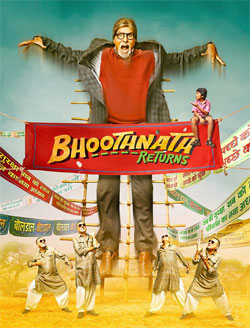
  • Reviewing the Reviews: Overall appreciation for Bhootnath Returns

    Bhootnath Returns

    Directed by: Nitesh Tiwari

    Starring: Parth Bhalerao, Amitabh Bachchan, Boman Irani, Anurag Kashyap, Usha Jadhav, Sanjay Mishra, Brijendra Kala & Usha Nadkarni


    By Deepa Gahlot


    The timing of Nitesh Tiwrai’s Bhootnath Returns is perfect. At election time, the film makes a case for voting, and that too for the right candidate.


    The idea of a ghost standing for elections against  Dharavi goon has delicious possibilities, which, most critics felt, degenerated into preachiness.  The ratings went from 2.5 to 3.5 which means overall appreciation.


    Shubhra Gupta of the Indian Express complained, “The whole is less than the sum of its parts. The pace slackens, the ghost-and-boy rap begins to drag, and there are far too many threads hanging – a Harry Potteresque compact between ‘bhootlings’ and earthlings, and a clean-the-system-of-all-ills-romp, overlaid with some weepiness and an item-song-in-the-slums full of blonde babes dancing alongside the Big B and the small boy.”


    Aniruddha Guha of Time Out is kinder. “A ghost contesting elections? Such a silly plot, you say. But when it’s Bachchan – the granddaddy of all things larger-than-life – you buy in with gleeful joy and little effort. If anything, it’s a smart idea, one that also reflects the current mood in the nation. However, Bhootnath Returns could have benefitted immensely from some judicious snipping. As on most occasions, though, watch this one for Bachchan and that indefatigable spirit.”


    Tushar Joshi of DNA wrote, “While the idea might be interesting, the execution is quite weak. Tiwari stretches out the plot way too much weighing it down with multiple subplots, characters and unnecessary long drawn monologues. The Sahib song with images depicting the dark side of society could have been a passing reference, instead it ruptures whatever momentum the film had built till that point. Similarly the second half is a mine field laden with over the top speeches about election and the importance of voting. Even though the sentiment is sincere the effort taken to convey it to the audience sounds dated and old. Also the scenes with the Ghost Headquarters in the climax and the predictable conclusion the film comes to, prevents Bhootnath Returns from rising above the ordinary.”


    Saibal Chatterjee agreed with the majority opinion. “The film’s good intentions and the generally competent and controlled execution are marred by a screenplay riddled with inconsistencies. For one, Bhoothnath Returns, directed and co-written by Nitesh Tiwari, is overlong and overstretched. It labours its point about the plight of the poor and the voiceless with the kind of unconcealed zeal that not only robs it of any possibility of achieving subtlety, but also smacks of the hollowness of an election time speech. The film’s unusual plot premise loses its zing rather quickly as it turns increasingly ludicrous and sanctimonious in its naïve tirade against a whole array of ills that plague the country. The final quarter of Bhoothnath Returns could well be passed off as an Election Commission of India video exhorting people to exercise their franchise and overthrow the corrupt.”


    Rajeev Masand of IBNLive appreciated the film’s heart. “The film’s good bits, however, often feel squashed under the weight of its melodrama and its bloated running time of 2 hours and 35 minutes. There is some lofty sermonizing by at least two different characters, and an over-manipulative song-montage of abject poverty that attempts to squeeze a lump out of your throat.


    I will also say that depicting violence against children to appeal to one’s emotions is wrong on so many levels. Still, “Bhoothnath Returns” is anchored by terrific performances from its central players: Boman Irani, Amitabh Bachchan, and the surprise packet that is Parth Bhalerao.”


    Suprateek Chatterjee writing in firstpost.com commented, “For the most part, barring perhaps the last half hour of the film, its most shamelessly manipulative moments are tempered with deliberate humour. What’s heartening about this film is that it seems to be fully aware that it is being presented as an ‘election product’, and it seems to take that in its stride and play it as its strength. Talk about shrewd politics.”


    Sudhish Kamath of The Hindu wrote, “While it’s a relevant film this season that also educates the masses on the importance of casting their vote, Bhoothnath Returns is far from perfect. It almost forgets Akhrot in the second half and turns the little hero into Bhoothnath’s sidekick. It is simplistic, idealistic, probably even naive to assume that the victory of one independent candidate could bring around change. It doesn’t want the political reality of India come in the way of a good Bollywood story, but interrupts the flow with a documentary montage of what India has become to illustrate the headlines.”


  • Ranjona Banerji: Media booms with Baru book

    By Ranjona Banerji


    Sanjaya Baru’s book, The Accidental Prime Minister, about life in prime minister Manmohan Singh’s office from 2004 to 2009, has captured media space ever since it was released. Baru, a journalist was media adviser to Singh for the United Progressive Alliance’s first term at the Centre. But what the book is about is another matter: all things to all people.


    To the media, not unnaturally, it is about controversy. Baru has attacked the PM and the UPA when they are at their weakest, he has given ammunition to the Opposition, he has confirmed what everyone always knew – that the PM was a puppet and Sonia Gandhi ran the government.


    The Government and the Congress have gone into high dudgeon, thus providing even more fodder for the media, what with attacks on Baru. The Opposition is rubbing its hands with glee and smiling like the shark in Finding Nemo.


    Baru himself has said he was written things as he saw them and said the publisher decided on the release date, Further, the PM read the book before it was released and said nothing. No comments on that!


    The Indian Express has a front page story on how furious Singh’s family is on Baru’s abuse of trust. This is a journalistic coup for the Express, since no one else has managed to get what Singh himself thinks of the matter.


    But commentators provide a variety of explanations. Manoj Joshi in Mid-Day thinks that the Congress did itself no favours in protesting about Baru’s book. It has been exposed in its efforts to protect Sonia Gandhi at all costs: http://www.mid-day.com/articles/the-pmo-files/15230074


    An edit in the Hindustan Times questions the timing of this book and that of former bureaucrat  PC Parakh on the coal allocations scam: http://www.hindustantimes.com/comment/timing-of-two-recent-books-showing-pmo-in-a-poor-light-is-suspect/article1-1208092.aspx


    Jaitirth Rao, founder and former CEO of Mphasis, says in The Economic Times, that Baru is clearly a Manmohan Singh fan who has however decided not to ignore the PM’s faults: http://economictimes.indiatimes.com/opinion/guest-writer/the-accidental-prime-minister-sanjay-baru-shows-manmohan-singh-in-good-light-with-some-blind-spots/articleshow/33755224.cms


    On Monday night, Karan Thapar on his new programme on Headlines Today, ‘To the point’, skilfully conducted a debate between Shashi Tharoor batting for the Congress party and Seshadri Chari for the BJP. Since Thapar does not allow decibel-challenging hysterics on his show, the discussion was interesting and even illuminating.


    But perhaps there is some truth in Joshi’s assertion that this matter will only die out when the Congress party shuts up about it. The more it screams ‘Et tu Brute’, the more the media and the Opposition will make merry.


    **


    Two surveys on the media in these elections need attention (warning: this is not about election results). CMS Media Lab looked through prime time coverage of five news channels (Hindi and English) between March 1 to 15 and found 429 minutes were devoted to Arvind Kejriwal, 365 to Narendra Modi and 72 to Rahul Gandhi. Not all of this was positive coverage however. The channels scrutinised were Aaj Tak, ABP News, Zee News, NDTV 24×7 and CNN-IBN.


    This means, effectively, that between 8 and 10 pm, we have Kejriwal dominating over the rest. Rahul Gandhi frankly is a very poor third while Modi has perhaps fallen a bit, coverage-wise at least. However, Kejriwal got more negative coverage than Modi. In all the allegations thrown around about “paid media” and “paid news” this survey makes for interesting reading.


    Of the topics discussed, the list is even more fascinating, keeping in mind the feeling that this election is all about “development”. Personality topped the list, followed by Hindutva, party, development, corruption, public policy and governance.


    The full story is here in The Times of India: http://timesofindia.indiatimes.com/home/lok-sabha-elections-2014/news/TV-time-429-minutes-to-Kejriwal-365-to-Modi-72-to-Rahul-Gandhi/articleshow/33755909.cms


    **


    As far as social media goes, a survey by the Pew Research Centre shows that most Indians use social networking sites to keep in touch with family and friends (90 per cent) and share matter/opinions on music and films (87 per cent). Even religion tops politics – although by one one per cent at relatively low percentages of 36 and 35 per cent respectively.


    Perhaps these elections are being fought on the ground and not on social media after all…


    **


    Congratulations to The Guardian and Washington Post for winning the Pulitzer for the Snowden leaks.


    More power to them.


  • Reviewing the Reviews: Utterly charming Alia in ‘2 States’

    By Deepa Gahlot


    2 States

    Directed by: Abhishek Varman

    Starring: Arjun Kapoor, Alia Bhatt, Ronit Roy, Amrita Singh, Revathy, others


    Chetan Bhagat’s successful novel about a North-South romance had some insights into urban India, even though the tone was flippant.


    The book caught the fancy of young audiences, but bored or exhausted most critics, who are not Bhagat fans to begin with. The ratings ranged from 2- 3, but the praise was grudging. Everyone agreed on one aspect of the film though – the utterly charming Alia Bhatt.


    Sudhish Kamath writing in The Hindu gave complete credit to the book. “The movie adaptation of 2 States reiterates why Chetan Bhagat is so successful. His books are like the first draft of screenplays – with a lot of stuff that can be edited out and rewritten – the reason why he is among the most criticised author of our times. But then, his books also tell us stories of a middle class India and its values – a country on the cusp of change and dealing with it in a way we can relate to – the reason why he is among the most popular storytellers of our times.”


    Shubhra Gupta of The Indian Express commented, “Pretty Tam Brahm ‘ponnu’ plus ‘hatta katta’ Punjabi munda equals to match made in heaven? If you go by ‘2 States’, yes, but getting to it is long and arduous. The film sets out to be a solid, emotionally satisfying romcom, and goes well for a bit but then turns into a too-stretched-out ‘jhagda’ between the two sets of North-South parents. And the romance gets short shrift.”


    Aniruddha Guha of Time Out wrote, “Director Abhishek Varman’s debut film is about parents making peace with the decisions their children make even when they may have something different planned for them.


    That’s an interesting premise – not entirely similar to the films we watched growing up, where lovers revolted against families, or spent weeks to sabotage a wedding, or simply eloped. What helps – as with many good films made in Mumbai lately – is the novel take on a conventional story. Hussain Dalal’s dialogues lend the film an air of everyday mundaneness, which is refreshing in a mainstream film.”


    Sanjukta Sharma of Mint ranted, “Campus romance, family strife, clash of austere South and profligate North, post-global India neutered to ugliness-Abhishek Varman’s 2 States, like the novel by bestselling author Chetan Bhagat on which it is based, has the ingredients of a profitable primetime TV commodity. Ego clashes of the saas-bahu kind abound in this story. Binod Pradhan’s cinematography makes the big screen adaptation somewhat justifiable, as does Alia Bhatt’s screen persona and performance-she fits perfectly in as the upper middle-class Tamil heroine from Chennai. But the 149-minutes of the film’s running time, swelling with stale North-South attributes, is overstretching the material. This is not the Eighties, and K Balachnader’s Ek Duuje Ke Liye (1981) can’t represent this great divide. 2 States is more like the Hum Aapke Hain Koun…! (1994) of the 21st century. But the girl speaks up, and speaks sense. The rest is a cosmetically modern middle-class India.”


    Saibal Chattejee of NDTV.com complained about the length and pace. “Debutant director Abhishek Varman’s adaptation of Bhagat’s characteristically facile but dispiritingly popular story is at best a pretty looking film with a likeable young lead pair that thrives on staying within their limitations. Talking of limitations, 2 States is hamstrung primarily by the vacuity of its pivotal situations. The film does have some moments of inspiration, like when the hero, armed with four rings, proposes collectively to the girl’s family over lunch. But these are too few and far between to add up to much in the final analysis.


    The trouble is that the impending wedding remains impending far too long to sustain interest. Halfway through the second half, one desperately wants the rigmarole to be over and done with.”


    Suhani Singh of India Today was disappointed. “2 States appeals, in brief stints, when it looks at the clash in customs and behaviours between the two communities. For instance, when Krish’s mother complains that Ananya’s parents didn’t get her anything while she spent Rs.2,000 to get Ananya’s mom a silk sari, it is amusing and also believable. Tubby-Parik’s background score is exaggerated and often superfluous, offering a mix of bad ringtones and operatic music which doesn’t sync with the events unfolding on screen. It makes it seem that Varman is not confident in the abilities of his leads to pull off the drama. Post the interval, the film almost runs like a maha episode of a melodramatic Indian soap.”


    Rajeev Masand of CNN-IBN summarized the problem with the film. “Madrasis are dark, Punjabis are cash-obsessed, and never the twain shall meet. Those familiar prejudices make for a legitimate movie pitch, but ‘2 States’, directed by first-timer Abhishek Varman, is a frustrating case of a promising premise that doesn’t fully fructify into a compelling film.”


  • Ranjona Banerji: Rumours UnLtd on news channel top jobs

    By Ranjona Banerji


    The rumour mills within the media are running as fast as those in the political sphere. Just about everyone is playing musical chairs or is on the merry-go-round. Changes at the top are forecast at CNN-IBN, Times Now, NDTV, Indian Express, India Today… Those of you who are feeling left out are free to start your own rumours. Remember however to add a dash of feared political reprisal because of your leanings, the dangers or joys of corporate interference and the ability to interact with sundry India experts in foreign universities in order to give your rumour some believability. The last only applies to print journalists and editors. TV has its own rules about where it finds experts. Usually, it is print journalists.


    I have to confess some severe dereliction of duty. The decibel levels surrounding this election have steered me far away from TV news. However, I watched Times Now the other night after ages. The panel included Rahul Narvekar, once of the Shiv Sena but now with the Nationalist Congress Party. Before the discussion on Ramdas Kadam’s remarks on how Muslims would be treated if Narendra Modi comes to power could begin, there was a little light-hearted studio banter. Arnab Goswami mentioned Narvekar’s shift to the NCP. The person from the National Conference said Narvekar could join the NC anytime. Goswami said to Narvekar, See you are getting job offers. Narvekar said, Why Arnab I believe you are also getting job offers. Goswami simpered. Yes, dear reader, I still watched this programme for another 15 minutes.


    **


    I also watched Nidhi Razdan’s Right, Left and Centre on the hullaballoo over the principal of St Xavier’s College, Mumbai, writing a mail to students telling them to “choose wisely” when they voted. The principal did not mention any names but since he stated that the Gujarat model was not all that it was touted to be, the inference was that he was asking his students not to vote for the BJP. Since he talked about the Food Security Bill, he was pushing students towards the Congress was the other inference. In today’s climate, even heavy breathing down an old-fashioned telephone line can start a forest fire. And so we had one.


    True confession: I was invited to be on the show but could not make it. But veteran journalist Anil Dharker and Nandini Sardesai, former head of department of Sociology at St Xavier’s put up a fine defence of the institution while Kiran Bedi and Gurcharan Das blustered through the various merits of the Gujarat model. Das interestingly seemed to think the St Xavier’s principal was against job development.


    On Twitter meanwhile, people were struggling with the difference between principal and principle.


    **


    For a few weeks now, former colleague Govind Ethiraj has been running a serious on Google hangouts called India Hangouts where he, Ayaz Memon and guests discuss election-related news as well as other issues of the day. I joined one yesterday as a guest, talking about Mumbai’s low voting percentages. Questions are taken on Twitter. It’s a half-hour show and there is little digression from the issue at hand. An interesting experience and an alternative to TV debates.


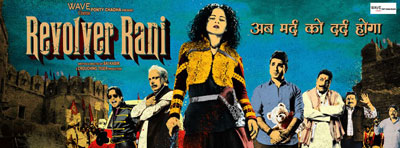
  • Reviewing the Reviews: 1.5 to 3.5 stars for Revolver Rani

    By Deepa Gahlot


    Revolver Rani

    Directed by: Sai Kabir Srivastav

    Starring: Kangna Ranaut, Piyush Mishra, Vir Das, Zakir Hussain, Zeishan Quadri, others


    The memory of Rani in the recent Queen was so fresh in everybody’s minds, that an encore was expected from Kangana Ranaut. She did not disappoint, but Revolver Rani, a Quentin Tarantino-inspired violent romp in the badlands of Madhya Pradesh did.


    Most critics-particularly the female ones-were let down the domesticization of the firebrand heroine.  The film got 1.5 to 3.5 star ratings, which must have confused readers.


    Shubhra Gupta of The Indian Express found the film tiresome. “The Rani in ‘Queen’ won our hearts because she was believable every inch of the way. This Rani, who hefts revolvers and shoots to kill, is neither wholly a cartoon figure, nor completely credible. This confusion makes us stop suspending disbelief, and ‘Revolver Rani’ becomes a tiresome Bollywoodesque trudge through the Chambal, and its men and one woman posturing with guns, and the standard corrupt ‘netas’ and complicit cops.”


    Harshada Rege of DNA complained of the running time. “This would have been a great party if only it wasn’t so long. But one has to applaud Kangana Ranaut, who could give all the dacoits in B-Town a run for their loot, for another great performance. She plays the Venice-loving, gun-trotting politician in Chambal with much aplomb. From a vulnerable Rani in Queen to the mighty Alka Singh in Revolver Rani, the actress sure knows how to make and then, equally easily, break the mould.”


    Saibal Chatterjee of NDTV.com was one of the few who raved, “When it’s a mad, mad, mad world, trust Kangana Ranaut to pull out the stops. As the trigger-happy ‘hero’ of Revolver Rani, the irrepressible lead actress dives head first into the deep end of the moral cesspool that writer-director Sai Kabir conjures up in his first released film. Alka Singh of Morena is no ordinary hinterland hell-raiser. She flashes metallic bustiers, sports her trademark frizzy hairdo, and takes on a perceptibly darkened skin tone. Kangana’s character is a fire-spewing marauder who nurses a secret desire to be a mother and a hausfrau. While she lets her gun do much of the talking on her behalf, she aspires for the simple joys of womanhood.  The film flits from the personal to the political, the emotional to the egregious, and the absurd to the deadly serious. For the most part, Revolver Rani hits the bull’s eye.”


    Paloma Sharma of Rediff.com found the film confused, “Revolver Rani is perfect on paper but if it really wanted to generate that spark, it should have probably taken the character-centric route. Somewhere along the way, the story disappears and so does the editor, or so it seems. A lot of Revolver Rani seems inspired from Quentin Tarantino films — the powerful female character with guns template, the title track and the aesthetically portrayed violence are strongly reminiscent of many of his previous films.Even the animated bits seem to be borrowed from Kill Bill Vol 1. This does end up spoiling the novelty factor. Revolver Rani could have been the film of the year. It is sad that it chose to be a confused story instead.”


    Tanushree Bhasin of Firstpost.in commented, “It takes all of fifteen minutes to realise that you are watching a desi version of Kill Bill in Revolver Rani. Its got Quentin Tarantino written all over each and every sequence, the director having broken the film down into just that – a series of well-orchestrated sequences. And in tune with director Sai Kabir’s aesthetic inspiration, Revolver Rani exudes Tarantino style pulpy kitsch, much to the amusement of an unsuspecting Indian audience.”


    Nandini Ramnath of Mint wrote, “A movie in which the gender roles are firmly reversed and Alka literally calls the shots, makes lawmakers and lawbreakers quake in their boots, and demands and gets sex at will, has a most curious take on Rohan’s plight. His emasculation runs parallel to Alka’s feminization, and it’s not clear whether debutant director and writer Sai Kabir has entirely reasoned out the consequences of his characterization.”


    Shubha Shetty-Saha of mid-day panned it too. “The film starts with much promise, with a kind of quirkiness and black humour that fits well with the subject in hand. The narration and the background music work in absolute tandem to bring us a satire that succeeds in making you chuckle more often than not. But unfortunately, some scenes are so long drawn out that the whole impact begins to fizzle out by the end of it. Sharper editing would have perhaps worked towards retaining the crispness of the characters.”


  • Ranjona Banerji: No discretions please, it’s poll time for politicians

    By Ranjona Banerji


    This election has definitely gone on for far too long. The tedium and desperation is evident in political campaigns and in the media. And the horror is that we are still not done. Results will be announced on May 16 so this farcical circus has over two weeks to make matters worse. As political parties are getting more strident and making melodramas over minutiae, they are also throwing good manners and caution to the winds. And as people like Azam Khan discovered, while earlier you could say awful things to your close followers and no one would get to know, very little is secret any more. But rather than exercising some discretion, politicians seem to have decided that all out attacks are their only recourse.


    For the media, this means that they have to play up every little thing that happens or anyone says if only to keep this election juggernaut rolling news-wise. Rajdeep Sardesai of CNN-IBN, Barkha Dutt of NDTV and Rahul Kanwal of Headlines Today and other TV worthies have hit the roads, picking up campaign heat and dust. Arnab Goswami of Times Now has stayed in the studio – the Newshour now extended to weekends – to badger his guests.


    Vikram Chandra of NDTV conducted his Big Fight last Sunday in a Punjab village, with everyone sitting on charpoys. Picturesque as this was, there was clearly no connection between the audience and the contestants – Gul Panag of AAP, Pinky Anand of the BJP and local candidates. The debate was in English, the audience spoke in Punjabi – as much as I could understand anyway. Whatever the purpose of this sylvan setting was, it only highlighted the tremendous communication gaps we still have in India.


    As for the Newshour, I caught one this weekend on the subject of some change in land laws perhaps to suit Robert Vadra and perhaps to suit land sharks and developers in general. The issue was so specific that the debate had no punch. Goswami seemed to be on the backfoot on details and when confronted with details, he took the moral high ground of “propriety”. Once it was amusing, all this “nation wants to know” posturing. Now it has become sad and funny.


    **


    The direction which the media is taking is also under discussion, especially television. NDTV for instance has long been slammed for being pro-Congress. Now it appears to turning pro-BJP according to some. This means it joins the list of all other English TV channels, according to gossip in the pro-Congress camps. However, the pro-BJP camps still find that TV channels are not as nice to them as they should be. So is this the pot calling the kettle black or needless conspiracy theorising or that we all see only what we want to see?


    I don’t really have the answers. But it does seem to me that media houses will now ensure that they stay on the right side of whoever they think is likely to come to power. There is the inherent anti-establishment aspect of the media and the which-side-the-bread-is-buttered aspect of the media and the conflict is evident.


    **


    Meanwhile, for a really superb critique of the media, American and Indian, you cannot spend a better eight minutes of your life than watching John Oliver’s take on media coverage of the Indian elections. Truly unmatchable!


    http://news.scroll.in/article/663108/US-comedy-show-host-John-Oliver-takes-a-dig-at-Arnab-%28and-berates-the-US-media-for-ignoring-the-Indian-polls%29