Category: MxM JOURNALISM REVIEW

  • Reviewing the Reviews: Humpty Sharma Ki Dulhania succeeds as teen date movie

    By Deepa Gahlot


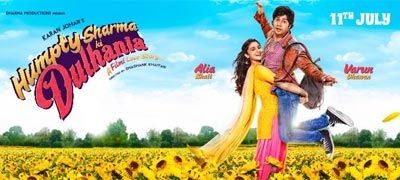
    Humpty Sharma Ki Dulhania

    Directed by: Shashank Khaitan

    Starring: Varun Dhawan, Alia Bhatt, Ashutosh Rana, Siddharth Shukla and others


    Shashank Khaitan’s Humpty Sharma Ki Dulhania is a tribute to Dilwale Dulhania Le Jayenge, which only goes to show that not much seems to changed in our country over the last two decades. Still, so eager is it to please, and so charming is the lead pair that critics must have given a little sigh before giving it three stars. It is meant as a teen date movie and it succeeds. Real life youngsters may be more mature that Humpty and Kavya, but this is Dharma Production and nobody ever grows up in this universe, all they need is love and a disco to shake a leg in.


    Varun Dhawan and Alia Bhatt, both still as fresh and enthusiastic as they were in their first film together (Student of the Year) and currently the darling of the college set. Together they crisped up a rather soggy plot.


    Raja Sen of rediff.com was uncharacteristically kind. “The strength of Khaitan’s film lies in how it’s not trying too hard, it’s not trying at reinventing the wheel, and instead being honest to two characters who, it becomes gradually apparent, aren’t who they said they were — or, more importantly, they aren’t who they thought they were.”


    Aniruddha Guha of Time Out was not so impressed. “Selling a film as a “tribute to Dilwale Dulhania Le Jayenge” seems like a pretty mediocre idea. Several films have tried to recreate the DDLJ magic since Raj and Simran’s love story wooed us nearly 20 years ago, and the clichés and the familiarity have gotten slightly annoying. Humpty Sharma Ki Dulhania projected itself as old wine in new bottle – a dated plot told with new actors and a fresh set-up – and that’s never really an inviting proposition. However, director Shashank Khaitan’s debut film, although lacking in originality, keeps afloat due to some smart lines and breezy humour, and the camaraderie between its two endearing leads, Varun Dhawan and Alia Bhatt.”


    Shubhra Gupta of Indian Express commented, “Main toh paida hi hot hui thi“, says Ambala’s resident ‘pataka’ Kavya Pratap Singh.  And slays ‘Dilli da munda’ Humpty Sharma. The banter between the two is easy, natural, fun. That they will fall for each other is inevitable, because that’s the way they have been set up, and the process makes the first half of ‘Humpty Sharma Ki Dulhania’ a breeze. I smiled all the way till the half way point. After the interval, it becomes another story. Or shall we say, the same old, same old story, in which the plot, which had been going swimmingly along despite its stretches, begins to meander, and lose its way.”


    Rajeev Masand of IBMLive raved over the stars, “The film rests on the appeal of its two leads who’re nothing short of terrific. Alia has a livewire presence, literally lighting up the screen when she’s in the frame. But it’s Varun who has the slight edge here, effortlessly pulling off both goofy and genuinely heartfelt. The film works – despite employing every predictable trope – because they’re on top of their game. Of the supporting players, Ashutosh Rana is well cast in the Amrish Puri role, nicely humanizing the character instead of leaving it out to dry as a lazy stereotype. ‘Humpty Sharma Ki Dulhania’ comes peppered with smart dialogue, and filled with genuine affection for a cinematic blockbuster that it repeatedly references…but with flair.”


    Saibal Chatterjee of NDTV.com wrote, “Beyond its surface gloss and spry spirit, it is way too pat and predictable to be regarded as a worthy doff of the hat to one of the most successful films ever in the history of popular Hindi cinema.  A film whose male protagonist is called Humpty Sharma should have been humming with earthy wit and humour. It isn’t. For the most part, it swings wildly from the facetious to the fatuous. The lead pair of Varun Dhawan and Alia Bhatt is actually pretty impressive, but the material placed at the disposal of the young actors reeks of staleness. Shashank Khaitan’s directorial debut has been produced by Karan Johar, who incidentally played SRK’s friend in DDLJ and clearly hasn’t rid himself of the hangover yet.”


    Nandini Ramnath of Mint nailed it : “Humpty Sharma Ki Dulhania is an extended, 134-minute review of Dilwale Dulhania Le Jayenge by a debutant writer and director who has watched the film closely enough to have his own spin on it. Shashank Khaitan’s film-making debut arrives 19 years after Aditya Chopra’s blockbuster became the gold standard of screen romance, and he has the necessary distance from the source material to unpack the conservatism that beats loudly at the heart of the original movie.”
     

  • Ranjona Banerji: Inhouse ‘censors’ may police TV newsrooms

    By Ranjona Banerji


    The media world is now rife with rumours and most of them are frightening. The Adani group has apparently invested Rs 500 crore in NDTV. The Adani group is of course close to Prime Minister Narendra Modi. Reliance, which has now been placed firmly in the Modi camp by media watchers, already owns Network18. Now there are whispers in the wind that Reliance also wants to buy the newspaper DNA, which currently belongs to the Zee group, although that may not change the paper’s political affiliation much since it tilted to the right after Zee took over from the Agarwals of Dainik Bhaskar.


    CNN-IBN has, it is said, introduced a novel new designation in its newsroom – the “escalation editor”. This person will look at how news is covered and decided whether a story needs to be pushed further (escalated) or killed (de-escalated, presumably). This new designation is probably because we do not already have enough jargon in journalism. Or, no one in TV or Reliance has heard of a news editor. The first “escalation editor” is Umesh Upadhyaya, whose brother is a member of the Bharatiya Janata Party. Who knows if that is significant or not? In the old days, this sort of “escalation editor” spying and swanning about the newsroom was known as the “malik ka aadmi” and most journalists tried to give them a wide berth. I know nothing about Umesh Upadhayaya. The “malik ka aadmi”s I have met however were usually lacking in even basic journalistic skills but were very good at sucking up to the owners and throwing their weight around based on their proximity to said owners.


    However, any daft move in journalism in India and you can look to Bennett Coleman. Anyone remember the “brand managers” in the 1990s who would spy on editorial staff and pull rank over editors in the Times of India because they had the ear of the VC? Some of those even went on to become journalists…


    The story is that all TV newsrooms will or already have these in house “censors” whose job will be to ensure that the new government and the new PM are not targeted. Of course, it must be said that these are still rumours and that boring but necessary wait-and-watch course of action will have to suffice for now. The hope was when Reliance took over Network18 that the mistakes with the Business and Political Observer would not be repeated. The appointment of this “escalation editor” though raises more suspicion than hope.


    **


    Is all this just scare-mongering? Can we expect journalists and media houses to get over its early flirtation with the new dispensation and get back to work as usual again? The media’s job is to question and in spite of the large number of columnists who appear to support Narendra Modi and the BJP, there are still those who do not and those who have not yet taken sides. Certainly, Arun Jaitley’s lacklustre budget was criticised by many, even those who appeared to be supporters.


    It is not just about individuals though. It is the general trend which is frightening and certainly conversations with senior Delhi journalists increase these apprehensions. Anyone who knows Modi knows that he does not like dissent and does not like to be questioned. He has a massive ego and a massive desire to be seen as a “statesman”. How far this ambition will enter into conflict with his personality is what journalists have to look out for. As for those English-speaking journalists who have appointed themselves as his PR agents in print, on TV and in the social media, one fears that their hopes and dreams may not be fully realised…


  • Ranjona Banerji: More scrutiny by the media

    By Ranjona Banerji


    Ever since the gangrape of a young woman in Delhi in December 2012, the Indian media has put the uncomfortable and often unpalatable topic of rape on primetime and on the frontpage. There is no sign that the incidence of rape has reduced in India. In fact, we hear more gruesome stories every day. But the relentless presence of the media – even in areas where the media used to scarce and it was easy to get away with murder and rape – has meant that we know more and more about the society we live in.


    The past few days have been full of horrific stories – a woman tortured and raped in UP, a six-year-old girl raped in a posh Bengaluru school by a teacher, a two-year-old girl raped by a 30-year-old man in Madhya Pradesh. In spite of all the other stories jostling for news space, none of these have been ignored.


    The media has to be commended on this. There is a lot of cynicism in newsrooms, an understandable by-product of the exigencies of the job. Horrors are a constant and decisions have to be made almost every five minutes about what to hold and what to play up. Rape, ignored perhaps for too long, is now top of the agenda. Is there any cynicism involved in focusing on rape? If there is, the end product is more worthwhile than the intentions. The constant media spotlight on rape has exposed the misogyny and the callousness of our police forces and our politicians.


    The media cannot find answers and cannot be expected to. But it can force society to take a closer look at itself and what it puts up with.


    **


    Markandey Katju, former justice of the Supreme Court and still (?) chairman of the Press Council of India, has been out of the news for a very long time. After a few initial grandstanding announcements about how he was going to sort out India’s media, we have been treated to silence and no action. Suddenly, however, he has captured media space by attacking the judiciary and the former UPA government with an account published in The Times of India of how an additional judge in Tamil Nadu kept his job thanks to political pressure in spite of a damning Intelligence Bureau report.


    Katju was questioned on his timing by several legal professionals and journalists and chose to pull out his ear piece and stalk off in high dudgeon when questioned by Nidhi Razdan of NDTV who is not aggressive or rude by any stretch of the imagination. So obviously a touchy point and touchy points make for good television.


    The lesson for the media here is perhaps more exacting scrutiny on our judicial system. Concepts of respect and worship do not belong in a newsroom. If systems are crumbling around us, then the media needs to be more not less alert.


    **


    Talking about crumbling, is that what is happening to the world around us? The international media is running hysterically between Ukraine-MH17, Israel-Gaza-Palestine and ISIS-Iraq. Biases are seen by all sides and all too often, the television that we see in India seems to be channels that subscribe to their government lines. War, conflict and foreign affairs seem to bring out the inner patriot in journalists all over the world.


    At times like this, it’s good to reference the British war poets of the First World War who were soldiers, slammed the war in some brilliant poetry and died fighting. We have brains, sometimes we should use them.


  • Ranjona Banerji: Right or not, Arnab Goswami?

    By Ranjona Banerji


    The jury was in when it came to Arnab Goswami’s political affiliations. And now it’s out again. For a good part of this week, Goswami and Times Now have taken great affront to the behaviour of the Shiv Sena MPs who forced a Muslim fasting for Ramzan to eat a chapati, then to BJP MP K Laxman’s comments on tennis star Sania Mirza being unfit to be brand ambassador for Telangana and finally Goa minister Deepak Dhavilkar of the BJP’s alliance partner Maharashtra Gomantak Party declaring that Narendra Modi will make India a Hindu state. Times Now and Goswami are tagging these comments “#RightWingFreeRun” and claiming that they go against the BJP/NDA promise of an inclusive India.


    Comments on social media are now asking whether Goswami was really as rightwing as he appeared to be when the BJP and Narendra Modi were sworn in to power. Perhaps he is behaving like a journalist again and attacking the establishment. Or perhaps he realised that hero worship can go so far and no further. Or perhaps he still tilts towards the BJP in his personal capacity but feels that this sectarian and divisive behaviour is unacceptable. Since nobody knows, perhaps Goswami as India’s best known TV journalist, needs to start writing a column so his fan club knows what he thinks?


    Alternatively, as I have long felt, he needs to give himself an hour-long programme where he and only he speaks. This could be a weekly affair like FDR’s fireside chats to the American nation. The prime minister doesn’t speak in spite of slamming the last prime minister for not speaking so it might as well be Goswami leading the nation. There is one more option: a nightly rant in front of a studio audience on the lines of Howard Beale in the brilliant 1976 classic media film, Network. We shall ignore for now the end of the movie.


    **


    The media has played the Shiv Sena MPs issue in two ways. Times Now has seen the Sena’s actions are being distinctly communal since the man who was fed the chapatti clearly says that he is a Muslim fasting for Ramzan, says the channel, and he also had a name tag reading “Arshad” on his uniform. Other channels like NDTV wondered whether we should not concentrate on the Sena’s hooligan-like behaviour: forcing anyone to eat as a protest shows not just disrespect to another human being but is also conduct unbecoming. Members of Parliament should deport themselves in a more dignified manner.


    It is possible however that both points of view are correct. MPs must behave properly and forcing a person fasting for religious reasons to eat is communal. If Arshad had been a Hindu fasting for some reason, forcefeeding him would also be communal.


    **


    Meanwhile, former Supreme Court justice Markandey Katju’s allegations against the UPA and three Supreme Court chief justices over the appointment of a judge accused of corruption by an IB report has gone off TV and towards edit page land. The issue will now be forgotten.


    Katju, who made great waves with his off the cuff remarks when he became chairman of the Press Council of India, has done absolutely nothing ever since and was therefore out of the news. He found a way to get back in but alas, events overtook him.


    What did happen though to all those changes he was going to bring to the Indian media?


    **


    The Hindu, from being India’s most venerable newspaper, has lately found itself in the news for all the wrong reasons. Family squabbles, high profile editorial sackings, strict vegetarian rules all over the premises and confusion over its political stance. The most recent fracas has been the removal of editors like P Sainath and Praveen Swamy. Working at The Hindu is like working for Pol Pot apparently said one resignation letter. The Hindu’s explanation: These two did not fit their roles. Indeed.


  • Reviewing the Reviews: Critics mustered up 2-2.5 stars for ‘unjheleble’ Kick

    By Deepa Gahlot


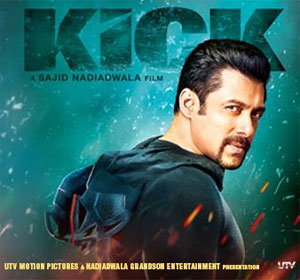
    Kick

    Directed by: Sajid Nadiadwala

    Starring: Salman Khan, Jacqueline Fernandez, Nawazuddin Siddiqui, others


    The Americans say, why fix something that ain’t broke. So, why should the producer/director of a Salman Khan film try to fix the formula when it still works. Brainless actioners imported from the South and presented with some Bollywood flourishes and Salman Khan, whose name delivers hits.


    Critics just had to lower their standards and acknowledge that Salman Khan is beyond analysis. They mustered up 2 or 2.5 stars and lumped it.


    Shubhra Gupta used a word coined in Kick to describe it, unjheleble. “What this lovely word means is ‘unbearable’, though it can’t come remotely close to the tedium that the original describes. Salman’s leading lady says it to him. About him. Yes, gasp, addressing the one and the only Sallu Bhai, who appears in his latest In and As avatar in ‘Kick’. We duly crack a smile. Look, look, Bhai is sending himself up. He’s letting his heroine crack a good one at his expense. Because he knows that he is anything but. And that he’s just waiting for her to finish the scene and leave, to get into his `Dabangg’ mode, for the hall will burst into hoots and claps and whistles.”


    Anupama Chopra of Hindustan Times called it outrageously silly. “Because a Salman Khan film isn’t about the plot. It’s about Salman, who once again plays his signature persona – a charming, playful, slightly crooked superman with a heart of gold. What’s fun is that Salman is in on the joke. He’s aware that he’s on the screen not to deliver a performance but to give us a good time. But even if you’re willing to ignore the logic-free story and buy heavily into the cult of Bhai, Kick is bumpy, and far too convoluted to deliver the joyride of a Dabangg.”


    Saibal Chatterjee of NDTV.com wrote, “To give the Devil his due, Kick isn’t half as bad as some of the Bollywood flicks that moviegoers have been subjected to in recent months. Kick is the Sajid Nadiadwala’s debut as a director. Sajid is a seasoned producer of money-spinning potboilers. It is no different from the films that his banner usually bankrolls. Kick revels in excess, which, for a film of its kind, is not necessarily a drawback. It dishes out everything in abundance. Eye-catching foreign locations, elaborately mounted action sequences, flashy pyrotechnics and stunts straight out of Hollywood superhero movies, song and dance routines bunged in randomly for occasional relief and loads of Dabangg-style dialoguebaazi are all par for the course here.”


    Sukanya Verma of Rediff.com commented, “Merely shooting a film in a fancy European locale or smashing a few cars and CGI choppers doesn’t amount to action, there has to be a certain amount of finesse, audacity, cunning and strategy to it all. As glimpses, it may stand out but as an action set piece, I found the execution absolutely flat. Nadiadwala may have the monies to sponsor the action but not the acumen to generate it. To think he employs four screenplay writers (Rajat Aroraa Chetan Bhagat, Keith Gomes) including him to concoct this senseless mess where scenes just cut off and begin randomly never bothering to explain what happened.”


    Aniruddha Guha of Time Out wrote, “Like all Eid releases featuring Khan, Kick too will probably notch-up record numbers due to its haphazard concoction of romance, comedy, action and drama, and the overwhelming domination of the 48-year-old actor, but the film is only marginally better than other awful Khan films in recent times –Jai Ho, Bodyguard, Dabangg 2. The setting seemed ripe for an entertaining no-brainer, but Kick will remain as forgettable as most money-spinners lately. What’s worst: The villain deserved a much better film.”


    Mihir Fadnavis of Firstpost ranted, “Nadiadwala may have parted ways with Sajid Khan. But in Kick, his debut film, he proves something historic: he is a much worse filmmaker than Khan. For years Khan has been well regarded as someone who doesn’t try very hard while acting in a film. With Kick, Nadiadwala shows what it really means to not make an effort. To say that he phones it in would mean he actually made the effort to make a call on sets. From the look of things, Nadiadwala couldn’t be bothered.”


    Rajeev Masand of CNN-IBN grumbled: “The actor, fully aware of his strengths and of what his fans expect from him, is in goofball mode. He dials up the charm, and delivers flashes of amazing spontaneity, making you wish someone wrote a better film for him. Kick will no doubt break box-office records and earn many many crores for its makers and for its leading man, but it’s a shame he must settle for just this.”


  • Ranjona Banerji: Neil Harman’s tale of ‘unattributed’ content

    By Ranjona Banerji


    The story of Neil Harman, much respected tennis writer for The London Times, is a cautionary tale for all journalists. Harman has been a journalist for over 40 years and since 2002, was the chief tennis correspondent for that newspaper. Earlier, he was chief football writer for the Daily Mail. To many, he was known as “Mr Tennis”.


    Since 2004, Harman was contracted to write the official annual for Wimbledon, tennis’s most revered tournament. But in 2013, the magazine Private Eye revealed that the annual was full of whole-scale copying from the works of other writers. The matter was taken to a head by journalist Ben Rothenberg writing for Slate magazine who went through several annuals to find over 50 instances of direct lifts from other writers. The publications most targeted were Sports Illustrated, particularly articles by Jon Wertheim, the Guardian and The New York Times. These are by any stretch very well-known and much-read publications. Rothenberg lays bare the extent of the copying: “Of these 52 examples, 28 of the passages were lifted from the Guardian. Six were from the New York Times, five from either the Times of London or the Sunday Times, four from Sports Illustrated, four from the Telegraph, four from the Independent, and one from the New York Daily News.”


    Wimbledon only removed the 2013 annual from its shelves after Wertheim complained. Many writers said they did not know about copying because they had not read the annual. Harman admitted to the plagiarism in an email to the International Tennis Writers’ Association which he had co-founded. The wording however is distinctly odd: “It has been brought to my attention that I have severely compromised my position as a member, having used unattributed material to form part of my writing of the Wimbledon Yearbook. There can be no excuse for such shoddy work, which I deeply regret. I did it without malice aforethought, but that I did it at all is simply inexcusable.”


    The words “it has been brought to my attention” are a curious way of admitting fault… Many of Harman’s supporters feel that Harman himself was not to blame but an intern may have done the copying.


    This is a ready copout answer made by most senior journalists and writers who have been found guilty of plagiarism. Incompetent interns however are not a new phenomenon and nor is this a problem which cannot be foreseen. It is also a very convenient horse to flog. To Harman’s credit, he has not used this excuse – although we can here go back to the line “it has been brought to my attention… It is also not inconceivable that Harman himself did not do the actual lifting of so many paragraphs. But the final responsibility is his and since it is he who took the glory, he also has to take the muck.


    The Times has suspended Harman pending enquiries – but this was only after Rothenberg’s articles caused a storm in the tennis world and on twitter. The Guardian has since alleged that The Times is not taking the charges seriously as Harman’s writing is still being carried in the paper.


    Many American journalists have said that if they had been caught with their hands in someone else’s words, they would have got the sack immediately. Harman seems to have survived as far as his employer is concerned – so far at least – but he has done his reputation incalculable damage. With all such cases, it seems incredible that Harman did not just credit those whose words he was using. It would have taken nothing away from the annuals, would have enhanced his reputation and made him more friends.


    Instead, he has laid himself open to this: http://deadspin.com/respected-tennis-writer-cops-to-plagiarism-theres-like-1609661132/1609820603/+Tom_Ley


    And who can say that he does not deserve it?


  • Ranjona Banerji: The Curious Tweets of Gaurav Sawant

    By Ranjona Banerji


    The curious case of Gaurav Sawant, strategic affairs editor at Headlines Today and his tweets about rioting Muslims continues to outrage two sections of the twitterati and leave the media itself indifferent.


    Sawant put out a series of tweets about the riots in Saharanpur claiming that “secular silence” had influenced the media not to mention that Muslims had attacked Sikhs and a Gurudwara in Saharanpur and some Muslims had indeed been arrested: “Secular silence as dangerous as communal violence! Covering up sins of one & highlighting crimes of other by ‘seculars’ is playing with fire 11:23 AM – 27 Jul 2014”


    He went on to say: “When an IT professional was killed in Pune we screamed about his religion. Why is religion of those killed in Saharanpur a state secret?”


    And then, “National crisis when a roze-dar is force fed a roti but no issue when Roze-dars gather outside a place of religious worship & riots start?”


    Plus: “That explains the secular silence on Saharanpur riots. Roze par roti becomes headlines but Roze par riots does not.”


    These tweets led to massive outrage from what is called the “secular” brigade on social media which felt that Sawant was demonstrating a Hindu rightwing bias and even went as far as to say he should be sacked. At the same time there was a counter swell of support from those who felt that Sawant had been brave enough to tell the truth and that he was being targeted as a result by said seculars who only care about the rights of Muslims. Many Hindutva rightwing blogs discussed Sawant’s situation with sympathy.


    Sawant later deleted some of these tweets. Gossip among the Hindutva blogs and among some media professionals said that Shekhar Gupta, who has just taken over as vice-chairman of the India Today group which includes Headlines Today, forced Sawant to delete his tweets. Sawant has also apparently not been seen on TV since. The “secular” side got together a petition asking that Sawant be shown the door.


    Whether Sawant has been on air or not (I do know this firsthand), he continues to tweet, some of which are promos for shows on Headlines Today.


    Rajdeep Sardesai, lately editor-in-chief of CNNIBN, was one prominent journalist who took issue with the tenor of Sawant’s tweets. Rupa Subramanya, a very popular tweeter (am unclear whether she is a journalist but she is a writer) found that Sawant was exactly the kind of journalist India needed.


    The Times of India did a story on the outrage over Sawant’s tweets (warning, I am quoted) http://epaperbeta.timesofindia.com/Article.aspx?eid=31804&articlexml=Outrage-over-TV-anchors-tweets-31072014009037


    and http://epaperbeta.timesofindia.com/Gallery.aspx?id=31_07_2014_009_037_007&type=P&artUrl=Outrage-over-TV-anchors-tweets-31072014009037&eid=3180


    While Newslaundry had this: http://www.newslaundry.com/2014/07/28/the-secular-compulsions-of-reporting-communal-clashes/


    There are number of different issues floating around here, all fighting for attention. The first is the most obvious. Sawant has every right to express his opinion, no matter whether other people find it offensive. The second is that right to object is also inarguable but petitioning to attack someone’s livelihood based on a series of tweets is unacceptable.


    Then we reach the murky area of “secularism”. The tragedy is that that the word in India is often interpreted to mean “pro Muslim” especially by the rightwing thus making a travesty of secularism.


    Left-leaning liberals are seen as the worst offenders by the Hindutva-led rightwing, as they apparently refuse to criticise anything that Muslims – and sometimes other minorities too – and only attack Hindus.


    Most of the anger with Sawant however was not that he slammed “secular silence” but that he connected two or three unrelated events and decided that there was a media conspiracy concocted by evil “seculars” to keep quiet about Saharanpur where Muslims were the perpetrators but play up the murder of a Muslim man in Pune (for being a Muslim) and the assault on a canteen manager (A Muslim fasting for Ramzan) by a politician (from a party known for its er, ambivalent attitude to Muslims).


    However, Sawant still has a right to his views and it is unfortunate that he deleted his tweets and even more unfortunate if it was done under pressure. No official word on that so far, not least from Sawant.


    It is odd though why the Strategic Affairs editor (sounds impressive) of a prominent English news channel could not get his newsroom to spin the news anyway he wanted? If Sawant felt that there was “secular silence” on the Saharanpur riots, Headlines Today could have been the beacon showing the way to the rest of the evil “pro Muslim” media.


    The newspapers that I read on the issue did mention that Muslims had started the problem in Saharanpur and that some had been arrested. Did Sawant miss those? Or did he want hysterical prime time discussions on TV? Were his tweets a sign of frustration that he failed to convince the other editors of Headlines Today to showcase the news his way?


    Once more therefore we find the Indian media in the midst of a “seculars” versus others fracas. And it is also true that for most of the Indian media, Sawant’s problems appear to be a non-issue. Perhaps we can wait for the book?


  • Ranjona Banerji: Twitter hysterics get twisted in political faultines

    By Ranjona Banerji


    Social media, especially Twitter and Facebook, engage and enrage people but I have no way of knowing how significant the impact is. The reach is small in terms of internet usage, education, economic status and so on. But it does appear that the impact is disproportionate. Is this because many journalists, commentators and politicians are on Twitter and Facebook and they feel that they have more power over people’s minds than they actually do? Or is it true – as in the Arab Spring – that social media is the most effective tool currently available for people to spread their thoughts and ideas and get a movement going?


    On Monday night, there was a lot of anger on Twitter and Facebook. But it was a very odd kind of anger. A story emerged on Monday about a young teacher of English and Hindi at a madarsa near the UP town of Meerut, who had been kidnapped, she said by madarsa officials, who assaulted and forcibly converted her to Islam and then she was gangraped by at least four men. UP has suffered several incidents of communal violence recently – Muslims and Jats, Muslims and Hindus and just last week, Muslims and Sikhs. This incident has put a dangerous situation on a cliff’s edge. The woman also claimed that others like her had been similarly abducted and confined. People gathered on the streets to protest. The UP government has been singularly lax with law and order.


    Now this incident is horrific enough: kidnap, assault, forcible religious conversion and the worst of all, gangrape.


    But this by itself is not what angered several worthies on social media. The rage started when leftist-feminist-activist Kavita Krishnan tweeted this: “Ugly communal sentiment by RSS visible on twitter over Meerut rape. If this is also true on the ground, another Muzaffarnagar awaits.”


    This angered all fans of the RSS so much that Krishnan was issued all kinds of insults and abuses, including this by Rati Parker, a prominent and popular proponent of rightwing politics on Twitter, “Will pray tht she à (krishnan’s twitter handle) gets raped by the Madarsa walas n is forced to don the hijab permanently. All of us will be “polite”.


    Some found Krishnan’s mention of the RSS and her attributing communal colour to them unconscionable. She did not it was pointed out say anything about Muslims being involved in the committed atrocities and instead appeared to blame the RSS. This crime in today’s world is unpardonable apparently. Also some demanded that Krishnan also be at the forefront of the protests in support of the girl as she had been in December 2012 after the Delhi gangrape.


    Krishnan followed her first tweet with this, “What communalists don’t get it (is?), that in any rape/crime collective punishment – ie punishing the community is wrong. Punish rapists.”


    I am unsure whether this made matters better or worse. Krishnan anyway was lynched all over Twitter and Facebook for her double standards. Apart from the suggestion that she be raped, she also had the worst insult heaped on her by “patriots” in these times: “Naxal”. Inevitably, all “secular liberals” were condemned for being, well, secular and liberal. These insults are just a bit less, er, terrible than “Naxal” apparently.


    Parker some pointed out was just a “troll” because that is the ultimate excuse for anything offensive anyone says. Although Parker is not a troll in the customary sense. She uses her own name and her own picture. Those who attacked Krishnan conceded that maybe Parker (when the troll defence did not work) has just gone a bit overboard. Because praying that women get raped is acceptable but saying that the RSS is communalising an issue is not.


    All that happened actually was that people thought along the usual faultlines. Those who find the RSS’s communalism intolerable defended Krishnan. Those who felt that the RSS was being unfairly attacked felt Krishnan herself should be raped.


    In all this, the victim of the gangrape, the implications of the crime and the social fallout was conveniently forgotten and ignored.


    Oh yes, did I forget to mention that the media was also blamed for the whole thing somewhere down the line? Of course. Who else?


  • Ranjona Banerji: Long way to go for ToI’s Doon edition

    By Ranjona Banerji


    Dehradun, the capital of Uttarakhand, where I now live, has been privileged to receive a Times of India edition all of its own – or so we were informed in a series of advertisements and announcements in the paper and in the local compact daily, Garwhal Post.


    But in the week or so since this has happened, what has The Times of India told us about the city in which we live? There is no edition office in Dehradun and the resident editor sits in Delhi. The edition carries no imprint line at all (or I should amend that to any more) so the reader – even one inspired to decipher 2 point print – does not know who owns, prints or edits the paper. The newspaper is not printed in Dehradun either. I understand from sources within the paper that the resident editor is Anand Soondas.


    Usually, at least one Page 1 story carries a Doon dateline. This provides the “local flavour”. Most of the rest is either the previous day’s news or of the day before, as befits a mofussil or dak edition.


    On Tuesday, August 12, 2014, TOI’s front page led with former judge Markandey Katju’s allegations about corruption in the judiciary, with Nitish and Lalu’s new friendship, TRS MP and Telangana CM’s daughter booked for a remark on Kashmir and Mohan Bhagwat’s remarks on all Indians being Hindus above the fold.


    Below the fold, a body has been found at Congress leader Kumari Selja’s residence in Delhi, former PM AB Vajpayee’s relatives excited about a Bharat Ratna and tweets by a teenager in Gaza.


    The Garhwal Post (edited by Satish Sharma) led with a picture of mountaineering twins posing with the Uttarakhand (the short form is UK, hopeful migrants please check before you hitch a ride on the wrong plane) governor.  Next, the TRS MP, scrapping the collegium system to appoint judges and the DMK warning of action against Katju.


    What about local news? TOI’s first city page’s lead story was about students protesting against merit-based admissions at DAV college. The other stories on the city pages were about a decision over whether revenue officials (patwaris) should also be allowed to continue as policemen, an ancient ritual of stone-pelting and government doctors refusing to take remote postings.


    On their first city page, Garhwal Post took their story on the mountaineering twins further with the government funding a trip to Antartica. Plus, a strike by collectorate employees and the agitation at DAV college. Garhwal Post however is peppered with local stories, based on their pagination system with features and sport both getting good coverage.


    I would give TOI’s effort a 5 on 10. The first rule for a local edition is local coverage and a look through most newspapers will tell you that municipal issues and crime top the list. After that, local politics, local trends and people follow. Garhwal Post answers some – though not all – of those questions. But the TOI seems hard-pressed to get a grip on any. Of course, the first rule of starting a publication is to do it as badly as possible so that the only way forward is upwards. Most publications which broke that rule – and started too well – only collapsed under the weight of expectation.


    TOI right now seems to have stretched itself too thin over the entire state – Garhwal, Kumaon and the plains. A little more focus to start with might make for meatier stories. Scandal and corruption are the other obvious choices. Glamour is the other but it is amply covered by both papers being compared.


    Interestingly, landslides in the Himalayas – affecting the Char Dham yatra – have got very little coverage – especially after the disasters of 2013. The only guess is that access is difficult and the Rambo-like PM is no longer interested in a magical rescue.


    As of now, the Garhwal Post stands on firm ground because it is better rooted in the community. For the TOI to make gains, it has a long way to go.


  • Ranjona Banerji: Why should the media bend when it can crawl?

    By Ranjona Banerji


    Arguably, the most historic and memorable speech made in India on Independence Day was by Jawaharlal Nehru in 1947. Can you imagine if 24 hour news television had been invented then? The breathless dissection of every “and” and “but”, the mad scramble to get to the true meaning of “tryst” and the inescapable feeling that our lives from now on would be ruled by a nightly meeting with the banal.


    I cannot remember any other speech by any prime minister being followed so closely as that of the new messiah. Frankly, Independence Day speeches have so far been treated as routine events, no matter who made them. But there’s a new sheriff in town and he demands constant genuflection from a media which is all too happy to comply.
    Or is it? The media seems to have divided itself into a few camps. The young guns on TV are all gungho and nationalistic and they are all for the new prime minister. Worship first, questions later seems to be the credo they live by. The older lot have decided that their earlier enthusiasm was a little misplaced and many of those in print have returned to a bit of scepticism.


    The overriding feeling however is still veering towards “Give the new government a chance”… This is a remarkable line for journalists to take. The very essence of our job is to be a pain in the nether regions, ask uncomfortable questions and make people’s lives a misery. The one group which does not adhere to this policy is the business journalist of course (should I qualify that damning indictment by adding an “any more” to it? I wish in all conscience I could… The fact that most business papers and pages and channels are PR vehicles or stock market trend-trackers is taken for granted. No one expects more). I know the glamour journalist usually gets slammed for being PR bunnies but almost all the glamour journalists I know are a treasure trove of salacious stories that their editors/publishers will not let them reveal.


    Newspaper editorials, columns and occasionally Karan Thapar on Headlines Today remain somewhat critical of the new government. The rest are struggling to find some topics to discuss night after night because without controversy and/or outrage there can be no debate. And if you are a self-appointed cheerleader of the government, then there is not enough matter to create excitement out of.


    The same journalists who had hissy fits because no one in the last government spoke when it was spoken to has decided to give a long leash to the new government where no one speaks either. And that is why an Independence Day speech full of tall promises and pedestrian platitudes has got India’s media in a tizzy. What else have the genuflectors got to go on?


    **


    India’s ignominious loss to England in cricket has caused much excoriating pain and demands for evisceration of the Indian cricket team, the captain and the cricket board. Sadly, no one can demand similar action against the brainless Indian cricket fan and the sadly sometimes equally grey-cells-deprived sports journalist…


  • Ranjona Banerji: Sensitivity in dealing with closure is not in their DNA

    By Ranjona Banerji


    It is very sad to hear about the closing of DNA’s Pune edition. From all accounts, this was done the way most media managements go about it: as insensitively as possible. That is, employees had no clue, got no notice period and were given either nothing or a very insufficient severance package.


    One more newspaper or journal or edition or TV channel or bureau gone and one more set of media professionals jobless. In the case of DNA Pune there must have been additional shock because the newspaper had apparently run an ad campaign the month before targeting both Sakal and The Times of India.


    DNA is apparently still distributed in Pune but with Mumbai-based stories.


    And yet, little that happens in DNA was not foreseen when it was launched in 2005. I worked with the newspaper from 2006 to 2010. It was still run by the Agarwals of Dainik Bhaskar then with Subhash Chandra of Zee as a partner. The rush to open new editions was almost frightening. Huge investments were made even before the Mumbai edition had time to establish itself. And yet it was the Mumbai edition’s initial success that created all that ambition.


    By the end of 2010 however, the flagship edition started slipping and soon lost out completely to Hindustan Times (launched just before DNA) which had until then been kept at number 3 behind TOI at 1 and DNA at 2. I am not including Mumbai Mirror in this, although it was also launched around then, since it is distributed free with the Times of India.


    DNA as an organisation under the Agarwals worked with some measure of professionalism. It was far from perfect but it was a darn sight better than what it became. However, even then it was evident that ambition far over-reached ability or even possibilities.


    With the management and ownership switch to Zee, multiple changes in senior editorial staff and in profile, DNA ceased to be a contender. It is always distressing to see an idea you once worked for suffer and DNA with all its shortcomings had plenty of potential.


    Even worse, once more you see a media organisation getting away with sacking staff at short notice with no severance package and no fight from senior staff. Perhaps it is time to initiate a discussion on trying to get some sort of security for journalists in such circumstances. I balk at the idea of a union but we need to have some solidarity. The tragedy seems to be that many editors simply do not care. As long as they are safe, the rest can go hang. As one editor mentioned to me in conversation, the same people who wept about the plight of Kingfisher employees are absolutely silent about people at DNA.


    Rumours going around suggest that DNA is planning to launch its Delhi edition, a dream which Chandra of Zee has talked about ever since he took over the paper. If true, the employees of DNA Pune will know that it was not financial instability but expediency which cost them their livelihood.


    **


    The gangrape of a young journalist at the Shakti Mills compound in Mumbai shook the city. This terrible account of what happened after the event, by a senior colleague, lays bare the horror of dealing with the media when you are on the other side.

    https://in.news.yahoo.com/that-hashtag-was-my-colleague-060844991.html


    **


    Fareed Zakaria has been accused of plagiarism again. But the examples given this time are less convincing. Looks like he has used figures and numbers which others have used. That is hardly a crime.

    http://talkingpointsmemo.com/livewire/fareed-zakaria-plagiarism-blippoblappo-crushingbort


    Ranjona Banerji is a senior editor and columnist based in Dehradun. She is Consulting Editor, MxMIndia. The views expressed here are her own


  • Ranjona Banerji: When Cyrus Broacha excelled at playing Arnab

    By Ranjona Banerji


    I had stopped watching The Week That Wasn’t on CNN-IBN some months ago because I felt they had got too one-sided in their satires and spoofs. The Congress deserved and deserves every joke directed at it but what made the BJP exempt was either intriguing or nefarious. A welcome contrast was So Sorry on Headlines Today/Aaj Tak which attacked everyone equally and to excellent effect. I had written about this in these columns when we were tracking how the media was turning rightwing as Narendra Modi’s election campaign became more strident.


    I have heard since then that some weak and weedy jokes had been made about the BJP and some even weaker jokes about Prime Minister Narendra Modi. However, since I stumbled  upon the programme while channel-surfing this week I was treated to a brilliant deconstruction of The News Hour by Arnab Goswami. Cyrus Broacha played Goswami with consummate ease, Kunal Vijaykar played a couple of Pakistanis and Gopal Dutt played a highly moustachioed Indian retired army general as well as a saffron politician.


    Broacha of course hogged the segment because, well, Goswami hogs his show. The “never ever never ever ever” line that Goswami used when Meenakshi Lekhi of the BJP accused him of taking money from LGBT groups was repeated several times as expected, as well as his constant assertions of his own popularity.


    And lo and behold, one teeny-tiny cough-and-you-would-have-missed-it joke was made about Modi. Broacha-as-Goswami said, ha ha ha, that they were frightened of Modi so could not ask him a question. Indeed. Self-awareness masquerading as humour? Since I’ve set myself up as the judge-jury-executioner on this one, I need to see a little more attacks on this prime minister like there were on the last one.


    **


    Meanwhile, the news channels somewhat straightened themselves from their big tilt to the right. The bypoll results were a bit, er, unsatisfactory for the BJP – the party and its allies gained nothing and lost much. TV debates whipped up hysteria but 18 bypoll results cannot unseat a majority government at the Centre sworn into power only three months ago.


    Newspapers provided the nitty-gritty which makes the difference. The Times of India tells us that in Bihar, the saffron alliance (which won four out of 10 seats) lost eight percentage points of the vote share. This is worrying for the ruling coalition and good news for the Opposition. The Congress of course was written off by many since the media only sees life in black and white (and no longer alas as the old joke went, read all over!).


    **


    While on the Times of India, BCCL has instituted an odd social media policy for its employees according to a story in quartz.com where personal Facebook and Twitter accounts can be used by the company. Passwords and logins have to be handed over so that posts can be monitored and matter can be posted in their names.


    Does this not seem worse than the Hindu turning its offices into vegetarian fortresses? It does to me. Here are the details: http://qz.com/253025/the-times-of-india-just-instituted-a-bizarre-twitter-and-facebook-policy/