Category: MxM JOURNALISM REVIEW

  • Ranjona Banerji: Debauchery UnLtd on News TV

    By Ranjona Banerji


    There are few things in the media as amusing as the manufactured outrage of TV anchors as they work themselves into a state over some burning issue of the day. In this case, the case was that of freezing but the anger was far from cold. Imagine this list of horrors: people freezing in riot-relief camps in Muzaffarnagar, UP. Children dying from the cold. And UP chief minister Akhilesh Yadav and his father Mulayam Singh Yadav got Bollywood stars to dance at a function at their village, Saifai. And 17 UP legislators including several ministers skipped off on a “study tour” of Egypt, Venice and the UK amongst other destinations in spite of strict proscriptions from news channels.


    The sheer disobedience of these politicians is not to be countenanced. It was not for nothing that Arnab Goswami informed a Samajwadi politician from Mumbai in stentorian tones: “It is time you politicians learnt to listen.” The “to me” was implied and not missed by anyone.


    Arnab Goswami, I have to say, was at his best. His lip curling, his constant use of the word “debauchery” to describe Bollywood dances, the utter contempt in his voice as he spat out the phrase, “nagin dance” to describe the “snake dances” so popular in Indian cinema: these were all gems that had the making of a classic News Hour debate. In fact, debauchery was the word du jour as it was repeated across channels to explain what was happening in Saifai, with images of Madhuri Dixit and random starlets (at least I think they were starlets) wiggling their hips and bosoms across our TV screens.


    It is true that the extravaganza at Saifai was inappropriate and deeply lacking in compassion in light of what was happening in Muzaffarnagar. But everything that happened in Muzaffarnagar was an abomination from the riots to the post-riot reactions. The song and dance at Saifai was just one more example of this.


    It was intriguing though that there was no Bollywood rep on the Times Hour debate to explain just why stars like Salman Khan and Madhuri Dixit had agreed to dance for Mulayam and son. And I have to say I have seen senior TV anchors (and this includes Goswami) just snivelling and grovelling in front of Bollywood’s most vacuous and vapid “stars”. If they were so angry with Bollywood for going to Saifai, there’s no point shouting at politicians. Get the whole of civil society involved in the discussion and ask Bollywood point blank why it is so brainless and lacking in compassion. Or even common sense. Don’t just expound on the issue. And try and remember a bit of this outrage the next time you make some movie star your guest editor for the day just in time for the release of his or her new movie.


    Watching News Hour and some of Rahul Kanwal’s Centre Stage on Headlines Today, you have to feel for these star TV anchors. What they really want is a platform where they can share their opinions with the world. Instead, they’re stuck in a format where they have to ask other people for their opinions. I would advise Indian television news once again to watch the film Network and craft programmes based on Howard Beale’s long rants (so brilliantly played by Peter Finch). That way, these TV stars will not have to be forced to listen to other people’s opinions when all they want to do is editorialise. I must say us print-wallahs have it much easier because we have platforms available where we can share our opinions.


    Of the shows in this format, Karan Thapar’s Last Word on CNN-IBN and Nidhi Razdan’s Left Right and Centre remain the least hysterical. The others? Well, they’re all mad as hell and don’t want to take it any more. So let them tell us freely and openly, no?
     

  • Reviewing the Reviews: Mostly raves for Dedh Ishqiya

    By Deepa Gahlot


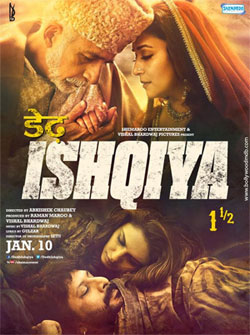
    Dedh Ishqiya

    Director: Abhishek Chaubey

    Starring: Naseeruddin Shah, Madhuri Dixit, Arshad Warsi, others


    The first major release of the year, Abhishek Chaubey’s Dedh Ishqiya, wins mostly raves and ratings that range from 2.5 to apt, probably leaving readers befuddled.


    The film got its media hook in the form of a comeback for Madhuri Dixit, and she seems to have got a mixed welcome. The language, milieu, style of the film belongs to a bygone era, though it is set in the present, and has an ending that would please the LGBT activists, especially when they need support.


    Aniruddha Guha of Time Out Mumbai commented, “Right from when the first trailer of the film released – the one about the seven stages of love - Dedh Ishqiya has been a movie to feverishly look forward to, and it more than meets expectations. After Rajkumar Hirani’s two Munnabhai films, each of which stood out for their individual brilliance, it’s the two Ishqiya films that achieve the feat (incidentally, Warsi has acted in all four). It’s dark, sardonic and funny. Don’t miss 2014’s first great Hindi film.”


    Shubhra Gupta of Indian Express was not all that impressed. “‘Ishqiya’ gave us a couple of lovable rogues with a lilting Bhopali brogue, and a tricky leading lady in the wickedest ‘cheent ka blouse’ and a startling line in ‘gaalis’. Director Abhishek Choubey’s debut film had an arresting swagger and a distinct voice, and characters—full-blooded, full-bodied- that stayed with you much after the film was over. The sequel has the same two losers, a little worn and weathered, trying their luck in another town, and two new ladies, holding out the promise of one-and-half-times the fun. Fun it is for some time, and then it starts to slide. This one should have been a humdinger, but it falls short.”


    Saibal Chatterjee of NDTV.com gave it a glowing review too, “In fact,Dedh Ishqiya is in many respects appreciably more enthralling than Ishqiya. Thematically, the follow-up casts its net far wider and comes up with striking insights into the flaws and foibles of people who haven’t lost their flair for the flashy despite their lives having hitting the skids. The screenplay is laced with acidic wit, the comic touches are subtly sly, and the on-screen performances are marvellously modulated. Dedh Ishqiya entertains, but does so in a manner that does not trifle with the intelligence of the audience. In other words, here is an exceptional film that does not have to negotiate the kind of facile crowd-pleasing narrative formulations that most Bollywood flicks must necessarily wade through in order to get to the Rs 200-crore mark. Dedh Ishqiya might not get there, but it is a triumph of measured craftsmanship and storytelling finesse.”


    Vinayak Chakravorthy of India Today wrote, “Ishqiya started off with an advantage this sequel will not get. Like all first films, it had concept novelty on its side. You had a couple of brazen rustic conmen with hearts that flutter at the tiniest tease, thrown into a mix of dark wit, crime and amoral amour. In a broad sense, Dedh Ishqiya is basically reloading that winning formula, if only at a royal scale its decadent Nawaabi backdrop allows. In a finer sense, the film is not blindly peddling what worked once. You spot a thought process that tries taking the existing formula to a new level. The effect is alluring.”


    Sanjukta Sharma of Mint heartily commended the film. “Writer and director Abhishek Chaubey follows up his rompy revenge caper Ishqiya (2010) with a sequel, Dedh Ishqiya, a terrific entertainer about friendships and the ways in which human beings form bonds for solace and dreams. When I am m by the crassly sexist ethos that governs Hindi films today, Ishqiya is one of the films I like to think of. Here too, like in the first, Chaubey keeps his light, humorous touch intact without failing to smuggle in the class and gender politics crucial to the story.”


    But the five-star rave comes from Rediff’s Raja Sen. “Rarely is a Hindi film as mischievously besotted with wordplay, but one look at Chaubey’s co-conspirators confirms that no syllable has been picked accidentally. In this sleight-of-hand tale where gangsters point with iambic-meter before pointing with guns, Chaubey has master wordsmiths Vishal Bhardwaj and Gulzar alongside him, making for a script that balances words as deftly — and, crucially, with as much nervous energy — as a knife-juggler with a case of the hiccups. It’s a marvel.”


  • Ranjona Banerji: No ‘fine and dry’ puhleez, dear BBC!

    By Ranjona Banerji


    I have spent the last three weeks reading back issues of Time magazine. And I am amazed that their rewriting style (from what I recall, you are not really allowed to have a writing style at Time) has not changed at all. The same inverted sentences. The same twist at the end. The same short phrases to try and be current, even though some go back at least 25 years. This is testament to Time’s covenant with its principles – stick to what you started with even if your readership is shrinking and everyone around you has changed. A tip of the hat to this nostalgia-inducing standard practice: I practically went back to my childhood which was… well, it was a long time ago. You don’t want to know!


    **


    I have to confess that I have not read too many newspapers (this is a gross exaggeration: I have read precisely two) in the past 10 days. I have kept up with the news through social media and through some television. And by watching English news channels, you may forget that India is such a massive country.


    Instead: there is Arvind Kejriwal, chief minister of Delhi. Now New Delhi may be India’s national capital and it may have a state government but it cannot compare to any other state government. The chief minister of Delhi is responsible for about a quarter of the things – I am being generous here – that other chief ministers contend with. Yet, we have national news channels behaving like local cable news channels. What Kejriwal had for breakfast, what he wears to bed, the progress of his cold, how Delhi government officials may well be crooked, how to get a water connection in Delhi and on and on and on. We get it. Kejriwal and his Aam Aadmi Party achieved something miraculous in the Delhi assembly elections. Now move on. Other things are happening in the rest of India.


    The rest of TV news however is as blinkered. We are stuck in an endless spiral of Congress versus BJP fistfights. One party says blue so the other says yellow and it never ends. News channels set themselves up as pasties here as shrewd politicians play them for fools so easily. We understand that newsgathering is expensive and laborious. We know that TV has to look for instant gratification. We are aware that fighting for attention is a mug’s game. But still, it would be interesting once in a while to watch television and just get a picture of what’s happening in the world instead of a tailored picture of what might possibly create the most sensation.


    **


    This is a request to the BBC World Service’s weather department. We understand that the English are obsessed with the rain and crave the sun. But the whole world is not England. India for instance gets most of its rain from the monsoon. It rains sporadically in a few parts of India outside the monsoon – and most of this rainfall follows a very specific meteorological pattern. We in India are taught this as school children. For instance, if it rains in Mumbai consistently after the monsoon is over then it is a possible indication that the world’s climate is undergoing some immediate catastrophic crisis. Similarly, some parts of South India get the retreating monsoon. The North will be affected by westerly disturbances and it will snow in the Himalayas in winter.


    So we need some pertinent weather forecasts from the BBC World Service. Like when people are dying of the cold in North India, we don’t need to be told that the weather is “fine and dry”. We need to be told about falling temperatures. We know that it is not likely to rain in Madhya Pradesh in December. So “fine and dry” are tautological. Conversely, when there is a heat wave in summer and people are dying, “fine and dry” sounds like a slap in face. Summer is when we crave for rain, really, we pray for the monsoon. We sing those Bollywood songs your pop culture experts are so fond of.


    Also, when you run weather forecasts for the British in Britain on the BBC, you can advise them where to holiday. But for the World Service, it might be nice to concentrate on us. And tell us the weather of the world as well – there could have been more on the polar vortex, on the heat wave in Australia, on flooding in Europe. Please don’t take this badly. It’s just we’re so tired of “fine and dry”.


    Ranjona Banerji is a senior journalist and commentator based in Mumbai. She is also Contributing Editor, MxMIndia. She can be reached via Twitter at @ranjona. The views here are her own


  • Ranjona Banerji: When newsmedia went nuts about Tharoor

    By Ranjona Banerji


    And so we reach our most ridiculous news headlines via Twitter – so far. A bizarre and somewhat corny marital spat between Union minister Shashi Tharoor, his wife Sunanda Pushkar and a Pakistani journalist, Mehr Tarar. Tharoor is not new to Twitter controversies. He has got into trouble for a jokey tweet about travelling “cattle class” to please the “holy cows” of his parties. His involvement in the shortlived Kochi IPL team and that of Pushkar was revealed by Lalit Modi on Twitter and cost him a ministry position.


    But this was something else. Tharoor, who has over 2 million followers on Twitter, was suddenly found to be tweeting odd messages from Tarar, claiming undying love on whatnot. Then he issued a tweet saying his account had been hacked. Then his wife popped up saying the account was not hacked and that she had put up those tweets, based on messages sent on the Blackberry messaging service to her husband. Then Pushkar gave a series of interviews claiming that Tarar was an ISI agent who was stalking her husband, then she denied some of them, then she didn’t. Tarar jumped in, defending herself and threatened to sue Pushkar.


    All in all, another fine mess for Tharoor and a hilarious day for the world of Twitter and the media. Getting into the personal lives of celebrities is normally the domain of film publications and even they pussyfoot around our precious film stars (for fear of being denied the next interview) or upsetting some PR person. But for the Economic Times to put this Twitter fight on the front page is certainly unusual. Thursday’s ET had this headline, above the fold: “Tharoor gets into a Border Love Row”.


    By Friday, every newspaper had the story. The Times of India dedicated a whole page to the matter – and this when there was one more horrific rape in the national capital, the AAP was involved some questionable form of vigilante justice and Rahul Gandhi was or was not going to be the Congress nominee for prime minister. Now we all know all about Pushkar, Tarar and Tharoor – or at least I know far more about them than I ever wanted to.


    What to make into news… Journalists use the term “judgment call”. So how much news was in a spat between a husband, a wife and another woman? Yes, the husband is famous, the wife is high profile and the other woman was a great admirer of the husband. But was this front-page worthy for anyone, apart from the salacious nature of the story and the fact that the wife made it public? It is difficult to make a value judgment here but it is easy to see that this will not be an exception. It is likely to become the rule.


    Once again, social media is changing the equation as far as the traditional media is concerned. I am holding back from using a cliché like “interesting times” but I do concede that this particular story is quite funny, proving that other cliche that the truth is much funnier than fiction.


    **


    The media spotlight on the Aam Aadmi Party and Arvind Kejriwal is turning out to be a curse as much as it was a boon in the movement’s formative days. The vigilante actions by two AAP ministers in Delhi and their run-in with the police, Kejriwal’s need to hold a press conference every two minutes, the revolt by a vocal member – all these have only increased the scrutiny and the more the scrutiny, the more the trouble up ahead.


    **


    The only person weeping right now (apart perhaps from Tharoor) is Gujarat chief minister Narendra Modi who will have to pull off something staggering to become the media’s foremost darling once again.


    Ranjona Banerji is a senior journalist and commentator based in Mumbai. She is also Contributing Editor, MxMIndia. She can be reached via Twitter at @ranjona. The views here are her own


  • Ranjona Banerji: Did Sunanda Pushkar story merit top billing?

    By Ranjona Banerji


    The last few days saw the news cycle consumed by Sunanda Pushkar, Shashi Tharoor and Mehr Taraar with allegations of affairs and unhappiness. There was a tragic culmination to the story with the suspected suicide of Pushkar. But how important was this story, that newspapers and news channels gave it top billing?


    Sunanda Pushkar was the wife of junior minister Shashi Tharoor. The world (other than the cocktail circuit of Dubai and perhaps New Delhi) knew of her because of the controversy of the Kochi IPL team, where both she and Tharoor had some involvement. It was IPL commissioner Lalit Modi who revealed details of the Kochi team through his Twitter account. Tharoor had to resign as minister, Pushkar removed herself from the Kochi team and the rest of us became familiar with the term “sweat equity”. Tharoor married Pushkar and then both became the darlings of the Delhi cocktail party crowd.


    So far, there is no indication of how important either Tharoor or Pushkar are to the national narrative. When Pushkar started tweeting last week from her husband’s phenomenally popular Twitter account, it was all about how some Pakistani female journalist was stalking her husband. The journalist in question, Taraar, denied allegations, Tharoor said his account had been hacked, Pushkar said it wasn’t hacked and that she had been tweeting. She made elliptical allusions to an affair and then to how she had been made the scapegoat in the IPL controversy. All this was played out on social media and to a salacious mainstream media.


    Still, nothing of national interest is visible here except a gossipy prying into other people’s lives. It is true that Pushkar made it all public but that has no bearing on the importance of the material. Then Pushkar is found dead by her husband in a Delhi hotel room and that ends all other news. Apparently, top news anchors even stopped the nightly debates when they got the news on the cellphones.


    When Princess Diana died in a car crash in Paris in 1997, The New York Times famously decided not to make it the top story of the day. By any reckoning, Diana was more famous than Pushkar. As obituaries of the poor woman appeared in newspapers across India, most people had nothing more to say than Pushkar was warm, vivacious, a good cook and lit up parties when she entered them. Others mentioned that she was a bit of a social climber and old school friends popped up to tell us that she was a shy, withdrawn girl who wanted to shrug off her small town origins.


    The significance of the front-page leads and top billing on news channels is still unclear. The Delhi government with India’s new hope Arvind Kejriwal is involved in all kinds of bizarre tactics. Rahul Gandhi and the Congress are making valiant efforts to get back into the conversation. Narendra Modi is smarting from Kejriwal’s popularity while trying to save the country. And enough other sundry horrors happening all over the country and world to keep journalists occupied. So why did this story get so much importance?


    Here’s a theory: Delhi’s journalists knew Pushkar and Tharoor socially and therefore felt a personal loss with her death. They also felt some guilt at the way the affair allegations were played out in the media. The decision to make Pushkar top news was therefore a personal one, where the reader or viewer was forgotten. There is no justification at all for making this story more important than any other, even with the understanding that every such decision is a judgment call that can be contested.


    Even with Shashi Tharoor being a minister, this story was overplayed. The only takeaway is that everybody in India who takes part in the English media knows more about Sunanda Pushkar in her death than before. C’est la vie?


  • Ranjona Banerji: So why did Times make a front-page statement?

    By Ranjona Banerji


    Truth is, we have no political masters, nor do we have any hidden agenda. The only side we take is that of our readers.”

    So what compels a newspaper to make this statement, especially one that declares it is “the world’s largest circulated English newspaper”?

    The Times of India’s edition of January 23, 2014 carried this on the front page. The rather thin (leading to some very ugly hyphenation) single column headlined “To Our Readers” was a declaration that although the newspaper had been accused of first supporting and then turning against the newly formed Aam Aadmi Party, in fact it is for no one and against no one and will support whoever does the “right thing”.

    The newspaper also pointed out its philosophy, such as it is, which includes belief in “the primacy of the individual over the state, and that democracy in its truest sense is the power of one. We believe in personal liberty and in freedom of choice.” There is more in the same vein.

    As to why TOI decided to make this announcement is unclear, except for the allegations that it had switched horses mid-stream regarding the Aam Aadmi Party. But so what? As it itself declares, it has been accused supporting one or the political party in the past and has not bothered to make any front page announcements. Is it because the AAP is the new party of the middle classes, which is TOI’s core readership? Or has someone inside Bennett Coleman suddenly developed a very thin skin?

    The worst that The Times of India has been accused of is not patronage of a political party. The worst has to do with money: the introduction of Medianet where news items are sold for a hefty price and for private treaties, where certain business houses and entities can ensure good coverage for themselves.

    Obviously, there were no mentions of either in this intriguing, and if one may point out, clumsily written and punctuated, front-page editorial declaration.

    **

    However, it is also true that the media seems to be getting polarised politically in a manner last seen during the BJP’s Ram Janmabhoomi movement of the late 1980s. Journals and journalists both declared themselves to be pro-BJP and Hindutva, with an emphasis on a preference for economic reform as well as religious majoritarism. Much of this media anger was also against Congress hegemony and also showed itself in massive support for VP Singh’s breakaway movement.

    Since then, the media has been seen as supporting one or the other political direction although very often the accusations are quite wild. Right now the Indian media is clearly heading towards the Right – except for the gauntlet thrown down by the Aam Aadmi Party and its particular brand of agitation politics. And perhaps that is where TOI’s confusion begins.

    **

    The biggest current problem for the Indian media and television in particular is that it cannot see beyond Delhi. If the Gujarat chief minister was the front page hero for almost six months, he has been ousted by Arvind Kejriwal. Much as the AAP and Kejriwal have changed the game, they are certainly not the only stories in India. Yet day after day we are subjected to a series of Delhi-centric stories.

    Part of the problem is that Delhi has become the epicentre of journalism in India. As a result, once strong regional media entities have been forced to pay extra attention to the national capital. Most TV channels are headquartered in Delhi – Times Now being the notable exception amongst the top English channels. And our star TV anchors cannot see beyond their neighbourhood. Who knows what has been happening in India and the world over the past couple of weeks. All we know is that Sunanda Pushkar thought her husband was having an affair and then may or may not have killed herself and that Arvind Kejriwal slept on the streets next to his car for a few night until he was sent some hot paranthas.


    Ranjona Banerji is a senior journalist and Contributing Editor, MxMIndia. The views expressed here are her own. Ranjona Banerji can be reached at @ranjona

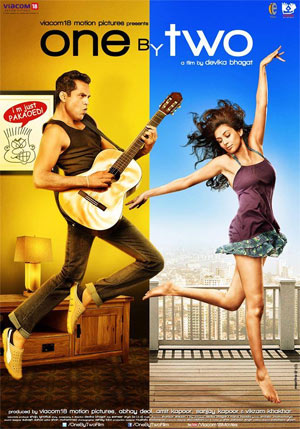
  • Reviewing the Reviews: Half to two stars for One by Two

    By Deepa Gahlot


    One by Two

    Director: Devika Bhagat

    Starring: Abhay Deol, Preeti Desai, Lillete Dubey, etc


    It has already made it to some critics’ list of one of the worst films of 2014, and it’s just January. Doubly disappointing because it has been produced by Abhay Deol, who is known to have picked interesting characters so far. Devika Bhagat’s debut film uses the offbeat (though used before in international cinema) device of having the two lead characters not meet till the end; their stories run parallel, and both they are crashingly boring.


    Most critics found the toilet humour repellent and gave it half to 2 stars.


    Raja Sen of Rediff.com rightly commented, “True to its name, this is half a film. It’s half-written, half-digested, half-witted. The reasoning — that ordering half a portion of soup gets you more bang for your buck — might be a sound one for the neighbourhood vinegar-lovin’ chowmein joint, but when both performers and characters are as insipid as the ones in One By Two, you’d be best advised to call for the check instead.  This is one dish best served unserved.”


    Shubhra Gupta of The Indian Express was critical but kind. “That a rom-com makes us wait for the meet-cute moment is unusual. ‘One By Two’ does this with almost geometric zeal, giving us man and his doings, and the woman and hers, in a parallel track. When will the twain meet? This Devika Bhagat-written and direct romantic comedy should have been much better than it is, given its attempt at adding a couple of its own tics to the territory. The trouble begins with it not being able to find the right rhythm.”


    Deepanjana Pal, writing on Firstpost.com commented, “Perhaps as a reference to Schrodinger’s cat, things happen even as nothing happens in One By Two. The film waffles along, showing various moments where Amit and Samara’s lives intersect but don’t give them a chance to actually meet. This would seem a shame if it wasn’t for the fact that the basis of their emotional connection eventually turns out to be tissue paper, farts and fecal metaphors. That’s not the beginning of a happy relationship. One By Two offers one of the least insightful and most shallow portraits of India’s urban youth. If the upcoming generation of Indian men is really like the ones in the film, I predict a sharp and dramatic rise in the country’s lesbian population in the next census survey.”


    Rajeev Masand of CNN-IBN found nothing refreshingly original about it. “One of the problems with this film is that it plays out like a sitcom. There’s enough chick-lit philosophizing to make you barf, and supposedly adult characters who behave like overgrown teens. So Amit is comfortable enough around his buddies to break wind when his tummy rumbles. But when the same gag is repeated thrice over, you know they’ve run out of ideas.”


    Like many others, Anupama Chopra of Hindustan Times was bored by the film. “”Mid-way through One by Two, an exasperated ex-girlfriend screams at her still-besotted boyfriend, whom she dumped recently, “You are so boring. Aur toh aur tumhara naam bhi boring hai.” I felt her pain. Boredom weighed me down too as I watched this film. One by Two is one of those determinedly contemporary romantic dramas that are entirely played out in the world of stylish offices, coffee shops, malls, multiplexes and nightclubs. Here the beautiful, affluent, lonely young folk of Mumbai work out their angst.”


    Shubha Shetty Saha of Mid-Day grumbled, “The film might have been less disappointing if Abhay Deol, who is admired for the kind of roles he has hitherto picked in his career, hadn’t chosen to act and produce it. There are some fleeting touching emotional moments which could have lingered longer if they were handled more deftly. The music is good, but then that is obviously not enough to pull this movie through. At one point in the film, one of the characters tells another, “Don’t let me lose the plot.” I wish real-life partners Abhay and Preeti, had done that for each other. We could have been saved from two hours of being torn between yawns and longingly looking at the exit door.”


    Nandini Ramnath of Mint, used the words that were on everybody’s mind –gross out. “The classic rom-com premise-the perfect couple from the same social bubble travels halfway around the world before eventually being united-is stretched beyond permissible limits in Devika Bhagat’s debut feature. Amit (Abhay Deol) refuses to get over his girlfriend, while Samara (Preeti Desai) is trying to forget a failed relationship and make it as a dancer. The two meet, finally, over an upset stomach-yes, you read right. Of all the genres that Bhagat dips into for the mish-mash that is One By Two, the gross-out American comedy was an ill-advised choice.”


  • Ranjona Banerji: Disappointing and limited political coverage by Eng media

    By Ranjona Banerji


    Remember these words: “You shouldn’t think the media can do everything. It has a limited role.” This is Bihar chief minister Nitish Kumar talking to The Economic Times in a straight-talking, candid interview, about the BJP and Narendra Modi’s chances at the general elections. This interview comes just as I was getting bored with The Economic Times! Some food for thought for the media here: it does have a limited role. And the way the English media at least is going, ignoring large swathes of India to focus on the nitty-gritty of the local Delhi government, it is limiting its own role.


    Kumar mentions in this interview that a senior Delhi journalist had told him in 2012 – after his party the Janata Dal (United) split from the NDA – that four rounds of opinion polls had been planned to promote Modi and BJP as the winners in 2014. The collusion between political parties and Delhi’s journalists is nothing new and we see it in our newspapers and on our TV screens every day.


    For instance, Mamata Banerjee held a massive rally in Kolkata which saw lakhs of people turn up on January 30. It did not dominate media space the way any of Modi’s tiny little conversations or Arvind Kejriwal’s coughing fits do. I could not find a photograph in any of the national newspapers which I receive at home (four) although they did carry stories. Banerjee also has prime ministerial ambitions and as of now, she has control of Bengal, which sends 42 parliamentarians to the Lok Sabha.


    Talking about interviews, I only caught the Omar Abdullah interview on the BBC’s Hard Talk series in India. Stephen Sackur asked tough questions but interacted with Abdullah, who stuck to his own and answered those questions. If there is no back and forth in a conversation, the viewer gets distracted or annoyed. This interview managed to grab your attention. But enough flogging the same dead horse because from what I can see, people are still talking about the “interview of the century”!


    **


    In a small segue to sports coverage, I am disappointed to see so little about the Davis Cup ties which are about to start today. The Times of India has sidestepped tennis completely, except for a small mention that Roger Federer will play for Switzerland. Mid-Day, surprisingly, has nothing. The Indian Express comes good – with a focus on how both Leander Paes, who has India’s best Davis Cup record, and Mahesh Bhupathi are not playing.


    But the winner has to be Hindustan Times. On January 30, it carried an excellent interview (here we go again!) with Leander Paes and why he’s not playing this Davis Cup tie, underlying the politics that is strangling tennis in India. In today’s paper, (January 31), the back page is dedicated to tennis.


    The Times is perhaps like Star Sports India for whom sport is equal to cricket.


    **


    In all this media bashing, one has to acknowledge that when it comes to gender issues and violence against women, the media is not letting up. Every day, more and more horror stories are highlighted about just how women are treated in this country. Distressing as all this is to read, wider publicity is one way to tackle the issue if just to highlight what is going wrong. The media’s role may be limited but this is one instance where it can be effective!


    Ranjona Banerji is a senior journalist and commentator based in Mumbai. She is also Contributing Editor, MxMIndia. She can be reached via Twitter at @ranjona. The views here are her own


  • Ranjona Banerji: The Rahul Gandhi interview was more about Arnab Goswami

    By Ranjona Banerji


    Am I a serious journalist? After last night’s interview of Rahul Gandhi conducted by Arnab “I am a serious journalist” Goswami, I have come to the conclusion that I am emphatically not. My understanding of being a journalist is less me and more you. An interview has to draw out the interviewee. It has to place them on the spot, yes, but it cannot be about the interviewer. And an interview has to move along – if it’s getting stuck, you have to step back and come back to that unanswered point later. The reader or the viewer has to be your first priority.


    In this case, the unanswered point was the 1984 riots in Delhi where thousands of Sikhs were massacred by Congress members and others after Indira Gandhi’s assassination by her Sikh bodyguards. The horror of the killings was exacerbated by Rajiv Gandhi’s comment at the time that the ground shakes when a big tree falls. The point is important. The problem was that Rahul Gandhi was not the person to answer it. He was a child when it happened. The party has apologised since then as has the current prime minister. Why badger Rahul Gandhi endlessly on this issue when you can take him up on so many others.


    Then there’s the issue of corruption. Instead of talking about the sea of allegations against the Congress Party and issues like the coal allocation scam, Goswami got stuck on allegations against Virbhadra Singh, chief minister of Himachal Pradesh, based on some investigation that Times Now had done. Much as the nation apparently wants to know what Goswami thinks every weeknight at 9 pm, there is an India beyond Times Now. Really.


    Moreover, the number of times Rahul Gandhi mentioned “RTI”, “youngsters”, “women” and “empowerment”, anyone else would have taken him up on those issues and questioned him on what he had done about it. There are a number of problems with RTI in the states, including Congress-ruled states. Why not bring those up? What about the brother-in-law Robert Vadra? Not a single question on that.


    Bringing up Subramaniam Swamy’s allegations about Rahul Gandhi’s education was ludicrous. The kindest thing one can say about Swamy is that he is a “maverick” and he is infamous for throwing allegations all around, hoping something somewhere will stick. He is hardly the gold standard for information.


    The endless questions on Narendra Modi and the Gujarat riots became tedious after a point. And just to inform journalists in general, Modi did not get a “clean chit” from anyone. The SIT report said “no prosecutable evidence” which is quite a different matter.


    The whole interview sounded too structured. There was no flow and there was no charm. As of now, Rahul Gandhi does not stand accused of anything except being seemingly reluctant to take on too much and vanishing after making declamatory statements.


    I for one learnt little new about Rahul Gandhi except that he has some good artwork on his walls.


    However, the funniest thing about this interview was the “discussion” later with Vinod Mehta, editor emeritus of Outlook magazine and Siddharth Vardarajan, former editor of The Hindu. This was a first for me: an interviewer holding a discussion on how his interview went. If this is how serious journalists behave, well, thank the lord there are so many of us non-serious ones around!


    I hear that tonight there’s going to be even more discussion, from 8 to 11 pm. Luckily I have found itvchoice on my HD set top box so I shall watch some British reality TV shows about dancing on ice, dancing in your house and dancing in general. As it is I missed Elementary on AXN because of this interview.


    Or there’s always the BBC’s Hard Talk series on India…


    **


    Twitter not unnaturally was abuzz with the Rahul Gandhi speech and suddenly, Modi and Arvind Kejriwal (have I got the order wrong?) were off the grid, except when mentioned with regard to Gandhi.


    Now that was funny. May not last too long though.


    Ranjona Banerji is a senior journalist and commentator based in Mumbai. She is also Contributing Editor, MxMIndia. She can be reached via Twitter at @ranjona. The views here are her own


  • Ranjona Banerji: News media and its political leanings

    By Ranjona Banerji


    If you go by the internet alone, the Indian media is involved in some gigantic Spy vs Spy battle where Congress and BJP aligned journalists are playing a cloak and dagger game as sinister and silly as the one in Mad magazine. The words “paid media” are used so often that they have stopped being tiresome and are now just funny.


    And yet and yet, there is something that is going on under the surface, a division in the journalistic world perhaps not seen on this scale since the BJP’s rath yatra and the split in the country between those who wanted to break down a mosque to build a temple and those who did not. At that time, many journalists were quite surprised to discover that their colleagues were actually not as “secular” as they seemed and many were quite turned on by the religious sectarianism propounded by LK Advani and his BJP. The default image of the journalist as a jhola-bag-carrying Commie was forever banished.


    But there is a subtle difference between what happened then and what is happening now. At that time, individual journalists expressed their choices. For instance, The Times of India was a middle of the road newspaper, rather dull in fact while its editor Girilal Jain was a Hindutva supporter. The ownership played little role. The Indian Express and Ramnath Goenka were openly anti-Congress but in those days, pre the Ram Janmabhoomi movement, there was a sort of innocence as far as religious loyalties were concerned.


    Now, it is managements who are setting the agenda and journalists who are falling in line – some, it must be said, with more enthusiasm than others. TV18 has been the most obvious and the most prominent to recently align itself with the political right and most notably with the BJP’s prime ministerial candidate Narendra Modi. Before this switch though Rajdeep Sardesai, editor-in-chief of CNN-IBN had been accused of being in favour of the Congress. Even now, Karan Thapar is scrupulously fair and Sagorika Ghose is seen as the last Congress outpost in a BJP bastion! And what about the others? NDTV has long been accused of being pro-Congress. But during the Kargil “war-like” situation, others called it out for its “embedded” journalism which benefitted the BJP electorally.


    I worked with The Times of India in Ahmedabad during the Gujarat riots of 2002. Despite enormous pressure on the newspaper ownership and management from the governments in Delhi and Gandhinagar to stop our edition from reporting on the riots freely and fairly, the management not only stood by us but supported us wholeheartedly.


    The Living Media group has been accused of being pro-Sangh Parivar for some years now. And there was a time when its flagship magazine India Today was clearly tilted towards the right. (I worked with the group for many years in the 1980s when no such tilt was visible or conveyed to us.) But in that case, what does one make of the So Sorry cartoon series on Headlines Today which lampoons all Indian politicians quite superbly? This is unlike the once excellent The Week That Wasn’t on CNN-IBN which has suffered since TV18 turned right. It’s a tough call here – maybe they change their minds from week to week.


    One of the reasons why The Hindu apparently removed Siddharth Vardarajan as editor was because he did not give enough coverage to Narendra Modi on the front pages of that venerable newspaper. But The Hindu has always been seen as a pro-Left newspaper (and therefore not pro-right). So what is one to make of that?


    The Indian Express often receives the most flak from the rightwing on social media so evidently it has not stuck to the Ramnath Goenka brief.


    The fact is that because the Indian media does not openly align with political parties or movements, confusion is easy and suspicions even easier. In the UK, for instance everyone knows where a Guardian reader stands politically vis-a-vis a Daily Telegraph reader. The best compliment a newspaper or media group can be paid in India one supposes is when all groups accuse it of being biased. That means that something is being done right.


    The new player in the pack is the Aam Aadmi Party which has learnt the game very quickly and throws around allegations of media conspiracy theories with impunity. The irony in the fact that several senior journalists have jumped on to the AAP bandwagon does not occur to them. That is not surprising because irony-deficiency is a well-known symptom in the congenitally self-righteous.


    In all this, the maximum confusion is over the expression “paid news”. When the media uses the phrase, it is a direct reference to money taken by newspaper or media house managements from a political party to get favourable news printed. This is also how the Election Commission uses the phrase. When social media uses the phrase, it means any journalist who does not agree with the political position of the accuser! Ah well, sticks and stones.


    Ranjona Banerji is a senior journalist and commentator based in Mumbai. She is also Contributing Editor, MxMIndia. She can be reached via Twitter at @ranjona. The views here are her own


  • Ranjona Banerji: Falling caliber of editors & the crisis in news media

    By Ranjona Banerji


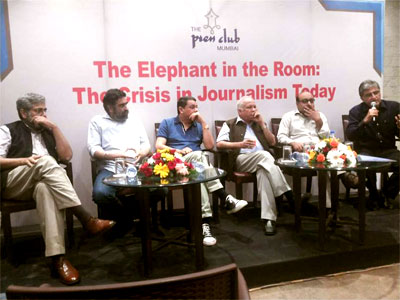
    The Press Club Mumbai held a discussion called, The Elephant in the Room: The Crisis in Journalism Today on Thursday evening. Participants were Kumar Ketkar, editor of Divya Marathi, Siddharth Varadarajan, former editor The Hindu, Hartosh Singh Bal, former political editor of Open magazine, Indrajit Gupta, former editor of Forbes magazine and Uday Shankar, CEO of the Star television network. The discussion was coordinated by Gurbir Singh, president of the Press Club.


    At the outset, the Mumbai Press Club has to be congratulated for confronting and seeking to address the problems faced by journalists and journalism today and flying down participants from Delhi for this discussion. If we do not discuss these things ourselves, it will become impossible to deal with the credibility and sustenance crisis we face. The bodies that have existed so far – like The Editors’ guild for instance – are quite frankly useless.


    The discussion started with Siddharth Varadarajan and Hartosh Singh Bal discussing the involvement of owners in the day to day running of publications and the pressures of advertising and management. Both Vardarajan and Bal lost their jobs because of owner interference. Kumar Ketkar questioned why owner, politicians and corporates imagine that journalists are really that powerful! Indrajit Gupta, who also left Forbes after a confrontation with management, pointed out how advertising pressure often does not allow journalists to function properly. Uday Shankar was scathing in the dereliction of duty by editors, pointing out that many had found it easier to go with the owner-flow rather than resist pressure, for their personal profit or advancement.


    Actually, almost everyone agrees with that. Editors, for the most part, are not what they were. But as veteran journalist Jyoti Punwani pointed out from the audience, the editorial versus management is age-old. The panellists could not agree on any solutions however. Bal for instance wanted a legal framework to protect journalists from owner pressure. Everyone wanted ownership patterns to be more transparent. And that was the crux of the discussion: dealing with management pressures whether it was to do with politics or business interests. How to make money and uphold the principles of journalism was a major issue discussed, including every journalist’s dream: to have a publication or broadcast house where the owners/managers did not interfere. The problems of credibility caused by the revelations of the Radia tapes and the questionable roles of Barkha Dutt and Vir Sanghvi also came up.
     

    All in all, it was a lively discussion. The event was web-streamed, which was an excellent way for the Mumbai Press Club to widen the debate’s audience and keep up with the 21st century. Net viewers sent in their questions via SMS.


    Although no conclusions were reached – the discussion went on for two hours – it is enough that the crisis was talked openly and candidly. Kudos to the Mumbai Press Club and all the participants.


    **


    Is it a sign of pride or insecurity that makes the Indian media go overboard whenever any person of Indian origin does anything at all? The ascension of Satya Nadella to the head of Microsoft was treated by some Indian newspapers in particular like Nadella had become President of the United States. Yes, Microsoft is a big and powerful company and yes, Nadella is of Indian origin. But above-the-fold on the front page is overdoing it, surely. In any case, the business pages had been predicting it for days.


    I suppose all it needs is for American newspapers to run front page stories headlined, “Microsoft founder Bill Gates is an American”. Yeah, I bet you would laugh then.


    **


    The battle over the Indian Readership Survey is getting more serious but remains funny. That Hindu Business Line should have more readers in Manipur than Chennai or that Nagpur’s Hitavada should have no readers at all speaks of completely mismanagement if not deliberate fudging of figures. Those with some memory may recall that the National Readership Survey was abandoned in favour of the IRS precisely because of such problems – but of course not quite so daft.


    **


    Somebody asked a question at the Mumbai Press Club last night to which I had no answer. Why, she said, is it okay for Swapan Dasgupta and MV Kamath to be openly pro-BJP and rightwing but it is not okay for anyone to be pro-Congress? Indeed. Why?


    Ranjona Banerji is a senior journalist and commentator based in Mumbai. She is also Contributing Editor, MxMIndia. She can be reached via Twitter at @ranjona. The views here are her own


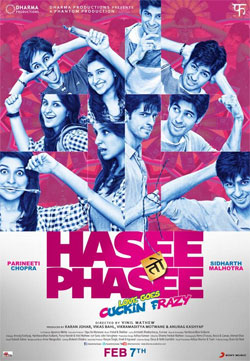
  • Reviewing the Reviews: Mostly 2.5-3 stars for ‘Hasee Toh Phasee’

    By Deepa Gahlot

    Hasee Toh Phasee

    Directed by: Vinil Matthew

    Starring: Sidharth Malhotra, Parineeti Chopra, Manoj Joshi, etc


    Adman Vinil Mathew’s debut feature Hasee Toh Phasee has enviable backing—Karan Johar and Anurag Kashyap.  The romantic dramedy got mixed reviews, mostly 2.5 and 3 star ratings, slight disappointment at not reaching its potential, unreserved raves for its lead actress Parineeti Chopra and just a little less appreciation for Sidharth Malhotra and Manoj Joshi.


    It’s not very often that the female lead in a film is an eccentric scientist, so the film scores some points there. The love triangle set amidst a wedding (oh no!) is otherwise standard issue, down to the armies of overdressed relatives and the airport pre-climax, but with some deviations.


    Shubhra Gupta of The Indian Express wrote, “Batty girl meets sweet fellow. Is it cute? Yes, that first ‘mulaqaat’ is. And then? Then ‘Hasee Toh Phasee’ wanders about figuring out whether it wants to be a contemporary rom com, or a Gujju soap, or a 60s melodrama, or all of the above. This confusion confounds the film, fronted by the most talented female lead working in Bollywood right now, and makes her much less fun than she can be. And that holds true for the film, too. It is most exasperating, because ‘Hasee Toh Phasee’ seems to have everything going for it. The smart, varying sensibilities of co-producers Karan Johar and Anurag Kashyap, a likeable leading man, and a crackerjack heroine. What it doesn’t have is a coherent story, and that’s why none of the refreshing bits add up.”


    Saibal Chatterjee of Ndtv.com was more impressed. “Mercifully, Hasee Toh Phasee, notwithstanding its rather unimaginative title and its muddled core, is a mildly diverting, if somewhat woolly-headed, entertainer held together by its unapologetically absurdist spirit.  The film works primarily because the lead pair is in fine fettle, flowing along with the unstoppable tide of fluffiness while adding their own angularities to the proceedings. The multiple cross-connections that occur as the film meanders to its predictable climax are bizarre. After a sluggish first half that is expended largely on setting the stage for the eventual scramble to unravel the tangle, the second half springs to some semblance of life, and in pleasantly surprising ways.”


    Sukanya Verma of Rediff.com liked it more than others. “Directed by Vinil Mathew and based on Harshavardhan Kulkarni’s story/screenplay, Hasee Toh Phasee takes a familiar premise — two people on the brink of tying the knot and introduces a third party to cause expected stir. Only it doesn’t happen like it used to. Instead how everything transpires is Hasee Toh Phasee in a nutshell. Even though there’s a brief backstory to brief us about the temperament of sensitive Nikhil (Siddharth Malhotra) and peculiar Meeta (Parineeti Chopra), Hasee Toh Phasee doesn’t move cut to cut, it progresses gradually without letting us feel how time flies by. Like it usually happens when you’re in fascinating company.”


    Rajeev Masand  of  CNN-IBN commented: “A young man finds himself drawn to his fiancee’s sister in the days leading up to his wedding. That ghisa pita formula gets a fresh coat of paint in ad-filmmaker Vinil Matthew’s feature debut, ‘Hasee Toh Phasee’, a not-always-convincing but seldom boring romantic comedy. For the most part, Matthew and writer Harshvardhan Kulkarni stay away from standard tropes of Bollywood love triangles, choosing quirky humor over sappy sentimentality to endear their protagonists to us.”


    Sanjukta Sharma of Mint found merit in it. “No genre of cinema is as prolific and palliative as the Hollywood romcom—an index of our appetite for the quickie fairy tale. When the milieu is urban and somewhat damaged, it’s more abiding on the multiplex screen. Hindi cinema has produced a few successful attempts at building on this template of urban romance set in quirky families, where emotional dysfunction is malleable enough to make happy endings believable. Director Vinil Mathew’s debut feature film, Hasee Toh Phasee, is a smart and winning feint of that formula. It is an extremely likable balance between light and shade, the sadness in his beautiful lead woman sitting happily alongside her smiles. The sugar is pleasingly granular.”


    Shubha Shetty-Saha raved, “A sparkling fresh love story, well-written script and dialogues, and competent performances make this film a fun watch. The film’s laugh-out-loud moments make it worth the ticket price. But here comes the irony: even when Vinil is dealing with characters and a storyline that has never been thought of before, he breaks the flow to include some done-to-death song sequences that are typical of big budget love stories, as if he is afraid to venture too far with his approach. Perhaps a more confident and braver approach would have bettered this already lovely film.”


    Mihir Fadnavis of Firstpost.com was also positive. “For a first time filmmaker, it must be a staggeringly difficult task to balance the commercial elements of Dharma Productions’ target audience and with one’s own inclination to topple them over. Everything about Hasee Toh Phasee’s script is formulaic, but Matthew manages to find a new way to tell his story, finding a uniquely humorous tone in the formula. As demos go, Hasee Toh Phasee is a superb one for Matthew, who can now join the tribe of directors who have made seamless shifts from advertising to Bollywood.”


    Sudhish Kamath of The Hindu was more guarded. “It’s all about chemistry. What happens when you take all-about-loving-your-parents from the Karan Johar brand of cinema and try to blend it with rebellion-against-the-system from the Kashyap school? What happens when you take a generous dose of sanskaar and Shaadi rituals and add drugs and dysfunction to it? What happens when you reverse the gender types? When you make the girl an explorer, a restless geek with a drug problem and make the boy rooted to family values and commitment? What happens when the boy needs to pay the bride money to marry and the girl comes to rescue him from his routine? What happens when you take a feisty Parineeti Chopra and pair her with Sidharth Malhotra?And like most chemistry exercises, Vinil Mathew’s Hasee Toh Phasee is an experiment but a fun one at that. There’s a lot that explodes but also a little that fizzles out. Love it or hate it, you have to give it points for trying.”