Category: MxM JOURNALISM REVIEW

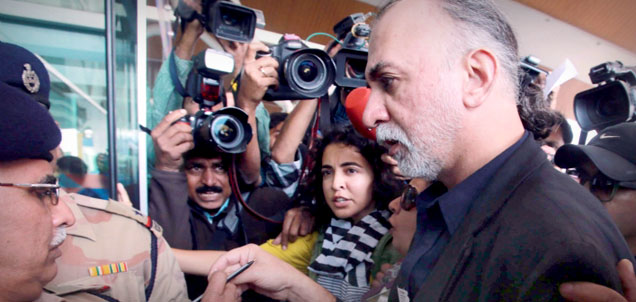
  • Ranjona Banerji: Is there a trial by media on Tehelka?

    By Ranjona Banerji


    Is there a trial by media in the Tehelka case? Has the media conducted a witch hunt against Tarun Tejpal and Shoma Chaudhury after allegations of sexual assault bordering on rape were made public? As many in the media know and have pointed out, there are innumerable instances of sexual harassment within the media and in most cases justice has not been done to the victim. The Vishakha guidelines which everyone now quotes so freely are followed in only a few media offices.


    Looking back, coverage of this case hinged on a few key points. The first was the verbose bombast of Tejpal’s various letters of apology. The second was the release of the victim’s email which detailed the very serious charges against Tejpal. The third was Chaudhury’s aggressive posturing in front of reporters, especially her comment, “Are you the aggrieved party”.


    The gauntlet had now been thrown down to the rest of the media. And yes, as has been said before, the media is the aggrieved party. Everyone is the aggrieved party. For a journalist to ask this of another, shows how easily we forget our professional compulsions when matters become personal.


    There is another less savoury aspect to the reaction of the media. For all the sterling work that Tehelka did, many journalists were uncomfortable with sting operation journalism as well as with Tehelka’s very self-righteous approach. If there is anyone who knows that being self-righteous in the media is a sham, it is a journalist. We have to live on cynical pragmatism while following an idealistic principle. Being judge and jury is not our calling. Being the mirror is. To be sure, it’s a tightrope walk. So it is possible that many of us found Tehelka’s sanctimonious front a bid galling and that made this case a bit more intriguing.


    However, at the bottom of it all, lies some unacceptable behaviour and that has nothing to do with the feelings of the viewer. The change of stance by Tejpal, the stonewalling by Shoma Chaudhury, the tenacity of the victim who did not let go and did not capitulate all increased the interest in the event.


    And then came Tejpal’s bail application. Even if it was drafted by his lawyers, it contained every bit of misogynistic patriarchy that Tehelka itself has been fighting against. It blamed the victim, it questioned her behaviour after the alleged assault and it claimed that Tejpal was forced to write letters of apology by Chaudhury.


    Given all this, it is hardly surprising that the media has been following this case so closely. Add to that the political sideshow with Tejpal somehow blaming the BJP for his predicament and you have a story that no media outlet would miss.


    One could also argue that the level of media interest in gender stories has also increased since the December 2012 gangrape in Delhi. Also, while many are questioning why senior journalists are going after Tejpal and not protecting their own it is worth remembering that the victim is also one of our own.


    **


    The Tehelka case forced me to watch prime time news TV slugfests after almost six months. Most channels and anchors managed a few stimulating discussions on the subject mainly because they avoided inviting politicians: Karan Thapar (CNN-IBN), Nidhi Razdan (NDTV), Sagorika Ghose (CNN-IBN), Arnab Goswami (Times Now), Rajdeep Sardesai (CNN-IBN), various anchors on Headlines Today and NewsX.


    Once the politicians entered the scene, it all went downhill of course. And once politicians start behaving badly, all the other guests apparently believe that open season for lack of etiquette has begun. Interrupting, shouting over each other, refusing to answer the question asked – all the fine elements of a “debate” on English news channels in India. And Arnab Goswami I see has only grown in stature and now his whole show is unashamedly about his own opinions. My advice: dump the guests and have a nightly chat with the nation about what needs to be done.


    **


    Wags on social media have been pointing out that Tarun Tejpal has achieved what the might of the Congress party could not: knocked Narendra Modi off national television. Having said that, Tehelka will peter out sooner rather than later and the Gujarat surveillance case will be back.


    **


    And Cobrapost and Gulail have now informed the rest of us how politicians – and anyone else – use trickery and cheating to manipulate the social media. Expect some more on that.


    Ranjona Banerji is a senior journalist and commentator based in Mumbai. She is also Contributing Editor, MxMIndia. She can be reached via Twitter at @ranjona. The views here are her own
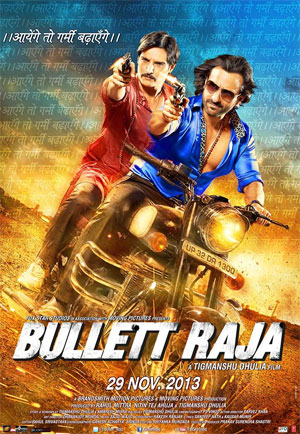
     

  • Reviewing the Reviews: Critics say Bullett Raja lacks the plot

    By Deepa Gahlot


    Bullett Raja

    Director: Tigmanshu Dhulia

    Starring: Saif Ali Khan, Sonakshi Sinha, Vidyut Jamwal etc


    If it was just some random filmmaker trying to put together a potboiler, Bullett Raja would not have been such a disappointment, but there were hopes from Tigmanshu Dhulia post Paan Singh Tomar.


    To begin with, Saif Ali Khan is miscast as a middle class UP goon. He looks even more out of place when every other actor seems comfortable in the rugged milieu.


    Most critics derided the lack of a plot and proper characterization, and gave it 2 or 2.5 stars… and one half-star from rediff.com.


    Aniruddh Guha of Time Out commented, “Bullett Raja, in spite of the “big budget” tag, is Dhulia’s shoddiest film since Shagird. The acting is inconsistent, the screenplay patchy, the background score jarring and the editing jumpy. Some things remain consistent – Dhulia’s regular collaborator Dhananjay Mondal gets the art direction spot-on again, while the dialogues, written by the director himself and which he seems to have better control over than most of his contemporaries, have verve. The intention is clear: to make a no-holds-barred action entertainer, with the director’s trademark humour and style intact. Yet, the result is a bit of a botched effort, the body of the film resembling the Saheb Biwi Aur Gangster films, but the soul screaming Dabangg. (Filmmakers need to realise that Dabangg was a fun throwback to the masala films of the ’70s, sorely missed at that time, while everything else that followed – including Dabangg 2 - seems like a poor Dabangg clone.)”


    Deepanjana Pal writing in Firstpost.com ranted, “It’s difficult to decide what is the most disappointing aspect of Bullett Raja. Is it that Dhulia, who won such acclaim for his small-budget films, has botched up so comprehensively with this wannabe blockbuster? Could it be the soundtrack that is a thumping, tuneless cacophony? Or is it the lazy writing that can’t be bothered with either building characters or a coherent storyline? With its emphasis on machismo and male bonding, Bullett Raja is clearly targeted at the manly men puffing up the country’s male population as Khan does his chest and biceps. What does it say about that audience that Bullett Raja is Dhulia at his silliest and most inept?”


    Paloma Sharma of Rediff.com was bored to death. “Bullett Raja is rife with predictable scenes, bad editing and a lack of control over the script, which spirals into an unending loop of absurdity. The pseudo-patriotism blends into personal enmity with the corrupt without much warning, leaving the viewers confused.


    While no two people can like the same kind of films or even agree on the definition of a good film, it is difficult to judge if even hardcore Saif Ali Khan fans should go for this one.”


    Sanjukta Sharma of Mint wrote, “His new film Bullett Raja strays far from the work he has built so far. It is a wishy-washy mix of two brazen hinterland heroes’ misadventures, a revenge drama, and a soap-opera style, hackneyed depiction of Uttar Pradesh politics. Dhulia’s dialogues (he has co-written the screenplay and written the dialogues) are insipid, and the humour, perhaps intended to be madcap, borders on the imbecile. The lead characters, Raja (Saif Ali Khan) and Rudra (Jimmy Shergill) are mere vehicles to keep a muddled narrative afloat. They have no signature quirk, as pulp heroes would demand.”


    Rajeev Masand of CNN-IBN wrote, “What’s disappointing then is that Bullett Raja isn’t consistently engaging. Aside from the rather choppy editing, there are also random scenes strewn about carelessly. Sonakshi Sinha plays an aspiring actress who comes in contact with Raja and Rudra.  We’re never sure why this sweet middle-class Bengali girl insists she wants to tag along with two gangsters for the ride. She falls all-too-easily in love with Raja, even though they appear as far removed as chalk and cheese. The flabby, unnecessary portions in this film include the hiatus these three take to Mumbai, a plot diversion that serves no purpose other than to fit in a silly nightclub number.”


    Anupama Chopra of Hindustan Times commented, “Tigmanshu, who also co-wrote the story, gives Saif a full-bodied character to inhabit but he fails to provide the character a compelling story to work with. Bullett Raja is a standard issue revenge story with the usual array of corrupt ministers, cops, criminals and their machinations as elections loom large. The screenplay is half-baked and strangely disjointed so, at one point, randomly we end up in Mumbai, where we get the item song Tamanche Pe Disco.”


    The surprise rave came from Vinayak Chakravorty of India Today. “Quite a gunfest of goons actually, the stock dialoguebaazi, love-shuv, a villain’s pack, even an item number thrown in. There is a standard Jai-Veeru type buddy bonding track in place, too. If Tigmanshu Dhulia wanted to go mainstream this time, he has literally piled the jingbang.  Be sure there is a context to all of it. Even masala madness acquires the subtext of socio-politics if Dhulia sets out imagining it. Bullett Raja turns the murky caste-infested politics of Uttar Pradesh into pop spectacle. The outcome is solid bang for your bucks.”


  • Ranjona Banerji: When journalists turn media barons

    By Ranjona Banerji


    Caravan magazine’s long and detailed story into the running of Network18 had remarkable similarities with the various stories doing the rounds of Tehelka. Raghav Bahl of Network18 and Tarun Tejpal of Tehelka have been portrayed as very ambitious journalists with grand ideas, some enormous success but both seem to carry the taint of questionable financial sources and dodgy financial practices when it came to their empires.


    There are differences too. Tehelka is much smaller than Network18 for one. And, as has been suggested by Caravan and in these columns earlier, Bahl has tilted to the political right while Tehelka and Tejpal are often accused by the BJP’s sympathisers as being Congress stooges.


    But this is not about politics. It is about what happens when journalists become media barons. Network18 has been in the news for cutting down on its staff with over 300 people losing their jobs. Media gossip says that these terminations were not done in a humane way – much of it was last-minute and many were not given enough of a safety net in terms of severance pay. An employee with another TV channel, which also cut back on staff but not to this extent, told me that his company made sure that people got at least a year’s pay in severance money, not just one month’s notice.


    Only a year before these terminations, Network18 was on a hiring spree and employees were told that the company was doing well. This turned out to be false and the company had to sell stake to Mukesh Ambani’s Reliance Industries to survive. After the terminations, senior management went off to Macau for meeting with each other or whatever they call that corporate rubbish which sounds like a junket. A bit reminiscent of the behaviour of US bankers after they caused the global financial crash of 2008 or is that an unfair comparison?


    Tehelka’s finances were also a mess. Allegations have surfaced that while the Tejpal family were enjoying a holiday in London which included a fund-raising art auction, salary cheques bounced back in India. Also, the share ownership pattern of Tehelka appears to have been a merry tangle. Yet those who know Tejpal also say that he was exceedingly generous to his staff and his friends, often from his own pocket. Long before this scandal broke, a close associate had told me that Tejpal lived big when he had money, sharing it with friends and staff.


    Many journalists tired of the corporate or “malik” (owner) strangleholds on their profession dream of starting something by themselves so that they can pursue the stories they want and uphold the ideals that brought them here. Is there a morality tale in these two examples? From personal experience, I can safely say that most journalists I know are absolutely useless with money. Present company not excepted.


    **


    Tarun Tejpal and Tehelka have received any amount of flak from fellow journalists and other commentators. Veteran journalist BG Verghese has written this finely nuanced piece in The Indian Express on where the media went too far and how introspection is needed: http://www.indianexpress.com/news/a-gotcha-trial-by-media/1202488/


    **


    Calls to control the media or for the media to control itself continue unabated, especially the Talwar murder case. Somewhere hidden in Tuesday’s newspapers is the story of the Supreme Court issuing a notice to all states about media restraint and how an investigating officer should brief the media.


    Sometimes popular opinion also echoes this point of view. However while there is no doubt that sometimes the media can go too far or some within the media go too far, government intervention is not and cannot ever be the answer. Self-regulation for the media is the only way forward in a democracy.


    As for the Talwar case, I am intrigued by articles in the media saying that the media skewed public opinion against the Talwars, now held guilty by a special CBI court in the murders of their daughter Aarushi and domestic help, Hemraj. I can myself only remember scores of articles and columns insisting that the Talwars are innocent. Thus, perhaps it all evens out in the end.


    The media, in case it needs reminding, is not one cohesive body. It is a disparate collection of competing journals, channels and now websites.


    Ranjona Banerji is a senior journalist and commentator based in Mumbai. She is also Contributing Editor, MxMIndia. She can be reached via Twitter at @ranjona. The views here are her own


  • Ranjona Banerji: How disagreement with Arnab is a crime

    By Ranjona Banerji


    The death of Nelson Mandela, the most recognised icon of freedom and equality in the second half of the 20th century, not unnaturally consumed news television on Friday morning. The anti-apartheid fighter-politician, who led South Africa to freedom from racist rule, was perhaps the most famous follower of Mahatma Gandhi in today’s world.


    Al Jazeera ran a very moving short film on Mandela’s life, CNN played US president Barack Obama’s reaction. The BBC showed live scenes in South Africa, where people celebrated “Madiba’s” life. Indeed most news channels concentrated on Mandela on Friday morning, with the best Mandela coverage from Headlines Today. The other Indian news channels (English) interspersed stories about Mandela’s death with other news of the day.


    **


    Every journalist and every newsroom yearns for a juicy story, something that you can really get your teeth into. But Indian news television often behaves like a pack of wild hunting dogs (or hyenas?) sensing their prey is getting away and going into frenzied attack mode. Watching the exit poll results being played out on TV seemed like that anyway. Not that the guests behaved any differently. There were charges and counter charges made at full volume – and not even from the much-blamed uncontrollable spokespersons for political parties. These were journalists, commentators, academics slugging it out.


    Times Now led the pack and as is now well-known amongst TV news watchers, no one can beat Arnab Goswami in full flow. He has effectively defeated all his rivals and is India’s prime anchor by a long shot. On Tuesday, he scampered and thundered all over his studio as the exit poll results were discussed, diagnosed and dissected down to the nth degree but of course as shallowly as possible, keeping the limits of TV in mind.


    Arnab-watching is now a separate spectator sport. Having returned to this arena after a six month hiatus (barring a few relapses here and there), it is evident that Goswami has only grown. Now, it is almost impossible for anyone on his guest list to have an opinion that is not the same as his. This is a crime almost punishable in the court of popular opinion if not under the Indian Penal Code.


    If this was the level of high-pitched excitement on the day of the exit polls, one can only imagine what is going to happen on Sunday, December 8 when the actual results are revealed. I think that it is time that jugglers, clowns and fireworks are made part of TV news discussions because they will add wonderfully to the carnival atmosphere. Indian news television has scaled new heights which even the most prescient and incisive 1975 film Network could not have foreseen.


    I cannot forecast whether the exit polls are right or wrong or somewhere in the middle or who’s winning and who’s losing but I can tell you that we’re in for a real tamasha treat on Sunday. Cancel those plans to hit the malls guys!


    For those who want some clarity into the exit polls before all is revealed on Sundays, these two opinion pieces may be of some help. Dileep Padgaonkar points to the “winds of change” blowing through the nation on The Times of India’e edit page http://blogs.timesofindia.indiatimes.com/talking- terms/entry/congress_battered_bjp_upbeat_but_regional_ parties_will_be_game_changers_in_the_general_elections.


    And Seema Chishti provides an analytical breakdown of the significance of these elections in The Indian Express: http://www.indianexpress.com/news/signs-and-wonders/1203806/.


    **


    Clarification: Since there has been a tiny bit of confusion here, I would like to make it clear that this is an opinion piece and has been an opinion piece since I started writing it for mxmindia.com more than two years ago. Just thought I’d put that down in case anyone doesn’t get it.


    Ranjona Banerji is a senior journalist and commentator based in Mumbai. She is also Contributing Editor, MxMIndia. She can be reached via Twitter at @ranjona. The views here are her own


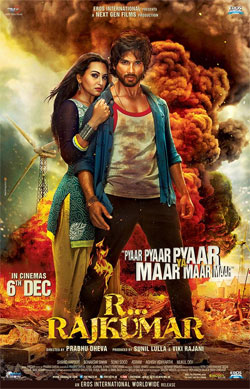
  • Reviewing the Reviews: Ratings ranged from 0 to 2 for R…Rajkumar

    By Deepa Gahlot


    R… Rajkumar

    Director: Prabhudheva

    Starring: Shahid Kapoor, Sonakshi Sinha, Sonu Sood


    It’s the kind of masala film that opens well (according to trade experts), sometimes does great business, but has critics curling up their noses in disgust.


    Shahid Kapoor tries very hard to follow in Salman Khan and Akshay Kumar’s ‘rowdy’ footsteps, but can’t match their insouciance when doing mindless action. Prabhu Deva could make Shahid dance, but the rest is lacking.


    Ratings ranged from 0 (yes!) to 2, except for the quotable critics who have to give 3 stars and above to every film to get their names in the ads. But everyone know what their credibility is like, so their raves hardly matter


    Shubhra Gupta of the Indian Express called it the worst film of the years. “It has not one redeeming feature. Nothing. Zero. Shahid Kapoor plays R…Rajkumar. The R.. was meant to be Rambo. The name was axed because of copyright issues. It is now Romeo. It makes no difference. This is a role that will, and should, haunt Shahid Kapoor: it is empty of all sense and sensibility. Shahid Kapoor presents a head full of carefully streaked hair, cultivated stubble, puckered lips, and swinging fists. He mouths crass dialogue. He thrusts his pelvis. His idea of romance is to stalk and harass and bludgeon his girl into submission, and his idea of vengeance is to batter bodies till blood spurts.”


    Mihir Fadnavis writing in Firstpost.com hated it too. “In one excruciatingly long scene of R…Rajkumar, Sonu Sood sits with a bunch of his goonda cronies and jovially sings, “I am your Bull. You are my sh*t. Together we are Bullsh*t.” Never before in the history of Hindi cinema has a film so astutely relayed its intentions from the makers of the film to the viewers. Which is why I need to take a leaf from a song in R…Rajkumar to elucidate the film’s overall quality: gandi film, Gandi gandi gandi gandi gandi film.”


    Vinayak Chakravorty of India Today wrote, “With R… Rajkumar, Prabhu Dheva commits his second blunder this year after Ramaiya Vastavaiya. He needn’t have made this film. The film does not leave you with a single memorable scene despite its loud effort to impress. Prabhu Dheva clearly loses track of his own film early on. The first half is a jumble and the second seems too long. R… Rajkumar will not break Shahid’s wretched run at the box-office, coming after Mausam, Teri Meri Kahaani and Phata Poster Nikhla Hero. He has chosen too hackneyed a project to get back in business.”


    Saibal Chatterjee of ndtv.com ranted, “Prabhu Deva tends to direct a film pretty much like he choreographs a song. He packs both, from end to end, with a frenzied flurry of brisk hand and feet movements and a surfeit of high-decibel musical clatter. The astoundingly lithe dance steps that he conjures up tend to flummox the eyes; the attendant sounds unleash a non-stop assault on the eardrums. The two together (and singly as well), have clearly outlived their utility. R… Rajkumar is incontrovertible proof that Prabhu Dheva has been hit by the law of diminishing returns.”


    Karan Anshuman of Mumbai Mirror wrote. “If you think about it, Rajkumar’s catchphrase ‘Pyaar pyaar pyaar ya maar maar maar maar’ is very much in theme with the film because that’s all there is. Certainly if you like the idea of your girl whipped by a belt and then the idea of the hero whipping the whipper in a comedy scene, then R… Rajkumar will be on your all time list of favorites. For minor humor, there is major offense to be taken here.


    And who doesn’t like a hero who can break every rule, maim every person, and match dance steps with Prabhu Dheva? The smiling, joking protagonist turns underdog and faces minor difficulties (multiple stabbings, buried alive) for only about ten minutes in movie that is just short of three hours. Too little, too late, utterly unconvincing. Why even bother.”


    The three stars Madhureeta Mukherjee of the Times of India accorded to the film are puzzling, because she wrote, “While ‘R…Rajkumar’ entertains at some levels, it suffers from utter plainness and predictability. The raw action is impressive (Ravi Varma), the songs (Pritam) and the choreography are routine attractions. The second half seems like a sari too long and the comedy is often forced. It has some ‘Must Haves’ of a pot-boiler, but misses the real thing – a SOLID STORY!”


  • Ranjona Banerji: Tweedledum, Tweedledee, Twitterdom

    By Ranjona Banerji


    Sunday was a busy day for the media and my heart goes out to all newspaper and web columnists whose profound writings are scheduled for that day. For just about anyone who was interested in the news was of course watching TV and tracking the results of four crucial Assembly elections.


    Also, some may have been there for the entertainment. Because news channels can sometimes top their counterparts in the general entertainment category when it comes to drama, melodrama, tension, denouements, overacting, hamming, emotion and any other over-the-top human reaction you can think of. Humour, outrage, sneering and jeering are to be found on social media, however.


    I started Sunday morning with NDTV, Prannoy Roy and Dorab Sopariwalla for old times’ sake and it was a soothing, enlightening, gentle humour-filled experience. This was marred somewhat by the presence of Meenakshi Lekhi of the BJP who may be many things but she is not a soothing experience. I switched between all the channels and watched the big guns at work. The most electrifying was of course Times Now which like is all the other channels combined plus a huge dose of amphetamines or maybe whatever Lance Armstrong was so fond of. Terrifying to watch actually.


    My vote then goes to Rajya Sabha TV. It has the latest figures. The studio was filled with journalists and analysts, not politicians and the discussions were robust but polite and interesting. I really admire Indian news addicts who crave the tamasha that is news television. I find it jarring and at the end of the day, extremely hollow. Several people I spoke to said they were happier tracking the elections results on Twitter, which is usually the first with information anyway. I myself was on Twitter while watching TV for most of Sunday.


    **


    By Sunday evening, discussions were about the demise of the Congress and the phenomenal success of the Aam Aadmi Party. The “Modi wave” was also discussed and on Sunday and Monday morning many commentators felt that the Gujarat chief minister and the BJP’s prime ministerial candidate Narendra Modi had made a difference to the BJP’s four victories. By Monday evening and Tuesday morning, the “wave” had become a “ripple” as vote share and constituency wise figures trickled in.


    The lobster quadrille being danced out between the BJP and AAP in Delhi – where no one has a majority – dominated the news however. The whiting, the snail and the porpoise were not sure where to tread. There was and still is a sort of Carrollian air to these elections. Cheshire cats everywhere, Tweedledum and Tweedledee in usual combat and with the calls for leaders like Indira Gandhi, some Red Queens shouting “Off with their heads” will soon pop up.


    Tuesday’s newspapers are full of advice for both the Congress and Arvind Kejriwal and his Aam Aadmi Party. The BJP won four states and will form a government in three but it is a bit eclipsed by the Congress’s remarkable losses and the AAP’s spectacular showing. Such is India that the results of the Mizoram assembly elections got a little lost.


    Anyway, the show, ladies and gentlemen, has just begun. Get a drink, settle down and enjoy the ride.


    **


    MS Dhoni has to thank Arvind Kejriwal because no one has noticed India’s dismal performance in South Africa except for diehard cricket fans. Columns however are undoubtedly being written to blame Sachin Tendulkar. Oh, wait, of course…


    **


    Tarun Tejpal too has been knocked off the headlines. Intriguing however is this massive defence of Shoma Chaudhury in The New York Times by well-known columnist Roger Cohen. Far be it from anyone to tell a columnist what to write about but a few more facts may have helped him to understand why Chaudhury faced as much flak as she did: http://www.nytimes.com/2013/12/10/opinion/the-beast-in-indias-midst.html?_r=0


    **

    And finally, this is a personal crusade and a little out of my territory. Sunsilk Shampoo has an ad on the front page of The Times of India’s Mumbai edition headlined: “Love your Straight Baal?” The copy goes on to read, “Every girl knows that there is one magic moment just after a shower when your hair is wet, aligned and perfectly straight.”


    This ad is a direct attack on people who do not have straight hair and especially people with curly hair. On behalf of all curly-haired people, I object. Nor do I know anything about this stupid supposedly “magic moment”. So there!


  • Ranjona Banerji: Cagey media and the curious case of the Aston Martin accident

    By Ranjona Banerji


    The curious case of the Aston Martin accident in Mumbai continues to interest social media even as newspapers and news channels are tiptoeing around it. The reason for this discretion in an otherwise hysterical media is simple: the car belongs to Reliance. Even more, er, terrifying, is the fact that there are allegations that it was being driven by Mukesh Ambani’s son.


    Here’s the story so far, according to the cagey media – barring very brave all out coverage by Mumbai Mirror: At 1.30 am on Sunday morning, December 8, a speeding Aston Martin hit two cars on Peddar Road. Both cars suffered damage, the first moving across the divider to hit a bus on the other side. What is curious is that the Aston Martin was apparently followed by two other cars which bundled the driver out and away. There were, according to newspaper reports, no casualties: minor injuries all around. The car, said the police, was registered to Reliance Ports and Infrastructure.


    On December 9, a driver presented himself to the police and claimed responsibility. The problem started when the witnesses and victims claimed that the driver they saw was a young man not a portly middle-aged man with a moustache. The company claimed that the car had not been used so was being taken on a customary spin. The “rescue” of the driver by two cars following the Aston Martin was downplayed.


    Soon after this, mention of Reliance vanished from the papers and the story vanished too. Television, which makes epics out of gossip, just about blanked the story out. But social media has another more sinister version: various blogs and Twitter accounts claim that two people were killed that night and the deaths are being covered up because the man driving the car was Mukesh Ambani’s son.


    There you have it: a classic cover-up, “mistaken” identity or just an ordinary hit and run?


    There is no proof so far that anyone was killed. But there is ample proof that the media has not played up the story and there is ample suspicion that the facts don’t match the stories. This is from a Mumbai Mirror story of December 10: “One of the most vital questions that the police are seeking an answer to is that why were two Honda CRVs, with a large security detail, tailing a car driven by a chauffeur and not carrying any Ambani family member. They also want to know why the security personnel whisked the chauffeur away in one of their cars and did not report the matter to cops immediately.


    Foram Ruparel, 25, who was driving the Audi that was first hit by the Aston Martin, said she had a good view of the man driving that car. “I could see in the rear-view mirror the car was moving at a high speed, weaving left and right. And then, in a flash, it hit my car. I had a decent look at driver’s face. He was a young man,” she said.


    Foram said the driver of the Aston Martin tried to flee, but the car stalled a little distance ahead. “In seconds, there was a swarm of security men around the car and they bundled the driver into one of the SUVs and sped off,” she said.”


    There are also allegations that some newspapers have taken critical stories off their websites. There are some who claim that the same Aston Martin Rapide, which apparently costs Rs 4 crore, was seen at the party held by the Ambanis for Sachin Tendulkar. The fact is, Reliance has not denied owning the car. The questions being raised have to do with the driver.


    So far, this much is certain: the deaths have not been corroborated even by the witnesses who have been quite belligerent. And the media has definitely not been as diligent as it needs to have been. Has pressure been put on the media here to downplay the story? The evidence points that way… The enormous influence of the Ambanis and Reliance notwithstanding, some independent thought and action here would be most welcome. And all kudos to Mumbai Mirror for sticking to its guns.


  • Ranjona Banerji: Ground keeps shifting on Devyani Khobragade case

    By Ranjona Banerji


    The affair Khobragade is getting stranger and stranger. The media seems to be divided between patriots and human rights activists. But this is still a case where the ground keeps shifting beneath your feet, so yesterday’s position can become today’s embarrassment.


    The first reaction upon hearing that Devyani Khobragade, part of the Indian consulate in the US, was arrested for not paying her maid fair wages according to US law was to bemoan this practice of ill-treating domestics which is rampant in India. Then the news said that Khobragade had been arrested and handcuffed in front of her children and strip searched and “cavity searched”. The pendulum promptly sprung to outrage against the US. Add to that dark conspiracy mutterings about how the maid in question, Sangita Richards and her family had been spirited away to the US to “save” them from harassment by India, how Richards’s in-laws worked as US embassy staff and you have a story fit for Lawrence Durrell’s Esprit d’Corps.


    There was much cheer that the Indian government – usually depicted as wimpish on news channels especially since we do not declare war on Pakistan and China every third day or on the whims of the anchor – had actually taken a tough stand. In between Arvind Kejriwal and Anna Hazare and the Lokpal Bill and Justice AK Ganguly, TV news carried footage of the barricades in front of the US embassy in New Delhi being demolished. Certainly a seminal freedom fighter movement for Indians born post-Independence.


    This was also a great time for foreign affairs experts to lend their weight and experience to the matter. The general consensus was that the US was high-handed, good that India stood tough and that domestics are routinely ill-treated in foreign lands. The Times of India in an edit said that had India been economically stronger, the US would never have done this to us. The Hindustan Times on Thursday had an excellent foreign affairs page which covered all aspects of the case. The Indian Express told us how the Khobragades, daughter Devyani and father Uttam, Maharashtra bureaucrat owned several properties, including in the controversial Adarsh building in Mumbai.


    I have one more take on this. The man responsible for taking all this strict action against Khobragade is a public prosecutor in New York called Preet Bharara. Bharara is of Indian origin. When he became prosecutor, the Indian media fell all over him as if he had singlehandedly found a cure for HIV/AIDS. We have this bizarre tendency to accrue to ourselves credit for any action or achievement of a person of Indian origin, even if those achievements have nothing to do with India. It is as if we are so insecure in ourselves that we need anything at all to give us solace or succour or just make us feel good about being Indian.


    But Bharara does not want to be Indian. He is an American. In fact, he seems to have insistently and steadfastly pursued erring South Asians, perhaps for reasons of his own. There was no need for the Indian media to fete him in the hysterical manner in which they did. This worship of NRIs and their doings has to stop. In 2009, when Venkataraman Ramakrishnan won a Nobel for Chemistry he made it very clear that he did not owe the Nobel to India, much to the embarrassment of a salivating media.


    One understands that there is a need to address the large Indian “diaspora” as they are called these days, regardless of the implications of the term, if only because many greedy Indians and governments want their foreign exchange. But there is a need to be circumspect and sensible, as the adulation of Bharara shows. And if we the media are really so concerned about addressing NRIs, why not investigate those who suffer the horrors of human trafficking and slave-like conditions when working abroad? Not all NRIs are aunties in polyester saris 40 years out of date carrying free diapers for poor relatives or aunties dressed in some abomination of a TV soap outfit who come to India only to shop for more ugly shiny clothes or even a New York prosecutor who wants to be more loyal than the king.


  • Reviewing the Reviews: Mostly two, some three stars for Dhoom: 3

    By Deepa Gahlot


    Dhoom: 3

    Director: Vijay Krishna Acharya

    Starring: Aamir Khan, Katrina Kaif, Abhishek Bachchan


    You can almost hear the collective grinding of teeth along with the ringing of notional box-office registers everywhere, as a film almost universally panned by critics, takes the expected huge opening. And the usual cheeky Dhoom jokes are making the rounds of the internet.


    Vijay Krishna Acharya, the original writer of Dhoom, takes over as director with the third film in the franchise and gets a huge budget plus Aamir Khan– so mostly you see big bucks spent and lot of Aamir Khan…might as well get the paisa paid to him vasool-ed.


    Mostly two stars, some three, and most reviewers disappointed by the lifting of ideas and scenes in such a big film, and not enough bang for the buck.


    Aniruddha Guha of Time Out writes: “Keeping that in mind, and going by everything the industry has produced with mega stars in the recent past, Dhoom: 3 is a small step up for mainstream Hindi cinema. It’s as devoid of depth and sensibility as other films made with the sole intention of belling the box-office cat, but Dhoom: 3– to its credit – is not a lazily-made film. As writer, Vijay Krishna Acharya sticks to the tried-and-tested, but the franchise gets its most sturdy film under his directorship, and he ensures the film never really strays from what it promises to be – a big-ticket entertainer that’s meant to provide instant gratification and little recall value.”


    Pratim D Gupta of The Telegraph grumbled: “You can hire the biggest movie stars, you can copy the biggest blockbusters and you can have the biggest budgets but if you don’t know how to tell a story, tashan is all you’ll be left with. Vijay Krishna Acharya, who made his directorial debut with Tashan, lives up to his first film. The Dhoom franchise has never been high on logic. The earlier two films have had preposterous plots and cheesy lines but under director Sanjay Gadhvi they have been a whole lot of fun… The threequel wants to retain the signature Dhoom punches and punchlines and yet take a real route to the fireworks. Maybe because Yash Raj Films wanted to sign on Aamir Khan as the adversary. So in comes a backstory coated with angst and anguish…”


    Shubhra Gupta of Indian Express did not stint on criticism, “Somewhere in the build-up to the film, a character tells another: just make sure my eyes do not move from you for five whole minutes. Dhoom: 3 is nearly three hours long, and I am here to tell you that my eyes strayed from the screen many, many times. My attention shouldn’t have wavered. Because the third installment of ‘Dhoom’ has the kind of tech specs the slickest Hollywood flicks do: superb cinematography, great-looking sets, expansive foreign locations. And the promise that leading man Aamir Khan is meant to bring to his act. But very soon into the film, you are overcome with the feeling that engulfs you when you encounter stuff you’ve seen too many times before. Dhoom: 3 is a victim of both a crying lack of imagination, and franchise fatigue.”


    Raja Sen of rediff.com was scathing: “Twenty minutes into Dhoom: 3, reeling from the assault of cinema so amateurish it’s hard to believe it was put together by grown men, I began to ask myself precisely what this film was trying to be. There was an annoying kid borrowed from the melodrama of Subhash Ghai movies, complete with a moist-eyed Jackie Shroff. There were the cheesiest of dialogues, Kader Khan in Dickensian mode. There were stunts seemingly executed in slow-motion and shown to us even slower, resulting in yawnworthy chase scenes. There was Aamir Khan running down the side of a building for no apparent reason. Everything — repeat, everything — looked too goofy to be either thrilling or realistic or compelling or even plain fun. And then it hit me. Dhoom: 3 is a children’s film made for children who’ve never seen a film.”


    Saibal Chatterjee of NDTV.com was kinder: “When the writer of the first two films of a successful franchise takes the director’s chair for a third shot at more of the same that is exactly what one gets: more of the same. This time around, the bikes, babes and brawls formula is dished out even more liberally than before. So, for the most part, Dhoom: 3 is a high-voltage action flick that relies squarely on known methods of the genre. Actually, familiarity of this kind isn’t such a bad thing. Since the audience knows what is coming and does not have too many unsettling surprises sprung at them, acceptability is that much easier.


    Srijana Mitra Das of the Times of  India dished out the mandatory rave, “Straight up, Dhoom: 3 makes you laugh, gasp – even sniffle. The most emotional of the Dhoom series yet, this is Aamir Khan’s show all the way. As revengeful circus star Sahir, whose father Iqbal (Shroff) dies after losing his beloved Great Indian Circus to a stony-hearted Chicago bank, Khan is terrific. The Dhoom series usually showcases brawn on bikes but in this one, mind meets machinery, Khan’s brain almost visibly ticking behind his eyes, calculating every second before he vrroooms off on a bike – across a wire stretched high between buildings, beneath a mega-truck, even underwater.”


    Vinayak Chakravorty of India Today nailed it.”The barely-there plotline lets you understand the true intention of this film. Dhoom: 3, unlike the prequels, is not about antiheroes driven by sheer lust for money. There is old-fangled revenge drama at work here. Baap ka maut and bete ka badla have been integral to Bollywood themes forever. Dhoom: 3 is just about reimagining that hackneyed plot on a spectacular scale.”


  • Ranjona Banerji: Patriotism rules in US media in Khobragade case

    By Ranjona Banerji


    The Devyani Khobragade and Sangeeta Richard case continue to dominate headlines mainly because it still remains so confusing. Every time you feel that the diplomat (or consular officer if you prefer) was the victim, some new bit of information surfaces that makes it clear that the domestic “assistant” was the one being mistreated. And so on. I watched Barkha Dutt’s ‘We the People’ on this subject and it answered none of the questions.


    Uttam Khobragade, Devyani’s father, was in a rage. The former Indian diplomats on the show dismissed the US’s actions and brought up their double standards. The diplomats said that the US had no jurisdiction on anything that happens in a contract between two Indians on what can be considered Indian “territory”. The academics and activists brought up the issue of the ill-treatment of domestics in India and by Indians. The sole American, a journalist with the New York Times, tried to defend his country’s actions in arresting Khobragade and brought up the issue of domestics.


    The audience, except for one person who said the US had to follow its own laws, was furious, although a few did accept that domestics were not treated well. Meanwhile, allegations have surfaced that Richard may be a CIA agent! On the face of it, this sounds a little far-fetched although it will give conspiracy theorists much to fulminate about.


    The US media however has sided firmly with their government and severely scolded India for forgetting the “other victim” – as in the domestic assistant. Edits and opeds in The New York Times, the Washington Post, The Wall Street Journal and for all I know the Poughkeepsie Bugle have all rapped us on the knuckles. Some of these have been written by well-known American columnists like Roger Cohen. Others have been written by the vast army of non-resident Indians who are all experts on India, having lived here until they were six and returned at 26. Good to know that the patriotic journalist is alive and well. I however would have expected more cynicism against their government from American journalists but perhaps not from a media which made “embedded journalism” into an accepted form of the profession?


    In India, however confusion or freedom of speech reigns and different columnists and editorial writers have taken different stands on the issue.


    **


    How do you spell “aam aadmi” as in the common man as in the name of India’s newest and most definitive political party? The general consensus would be “aam aadmi” but The Times of India has bucked the trend and gone with “aam admi”. Sounds and looks odd.


    **


    Is it because of sustained social media pressure that mainstream newspapers have started covering the Aston Martin accident on Pedder Road again? After silence for a few days, the name “Reliance” has surfaced again in newspaper reports. However, these are just tiny little single columns…


    **


    I was part of a panel discussion at the St Pauls Institute of Communication Education in Mumbai’s Bandra area on Saturday, December 21, where the subject was, “The Media vs Tarun Tejpal: Activism or Selective Conscience. My fellow panellists were Bharat Kumar Raut, a senior journalist and currently a Rajya Sabha MP, Dilip D’Souza, author and columnist and Swati Deshpande, legal editor of The Times of India. The discussion was moderated by Shashi Baliga, a senior journalist, columnist and executive director of Literature Live.


    It was a lively chat where each of us had our unique perspective but the general consensus was that the media was right in the way it covered the Tejpal case, even if there was some overstepping of boundaries. Heartening was the fact that the media knows that it has been lax about dealing with internal cases of sexual harassment.


  • The Year in News Media


    By Ranjona Banerji


    It’s Tarun Tejpal, right? I cannot think of a bigger media story of 2013. The outrages before that had been layoffs, ill-treatment by employers, closing down of publications. Network 18 and Outlook group were most talked about on those issues.


    We even had a few high-profile sackings. The Hindu suddenly decided that it no longer wanted the services of editor-in-chief Siddharth Vardarajan. This was a bit of a surprise since Vardarajan had been appointed the year before with much drama: highlighting the immense family feud which is the Hindu board, where N Ram had overridden everyone else. Ram had then claimed that the newspaper had to employ professional journalists for the top posts and not keep it all in the family. However, along the way he changed his mind, and some of the siblings joined forces, ousted Vardarajan and took control of the paper again. It should be noted that some family members disagreed with this decision and against Ram’s claiming two votes for himself.


    Hartosh Singh Bal, political editor of Open magazine, was also “let go”, he said because the owner (Sanjiv Goenka) didn’t like his political leanings. Goenka said he didn’t and never had liked Bal. Manu Joseph said he had protected Bal as long as he could but could not do so any more. Bal said he was going to sue Open because for too long had owners taken journalists for a ride.


    Forbes magazine saw the exit of its top editorial staff as well as its CEO, seen by many as part of Network 18’s downsizing drive. The senior staff also said they would take legal action against the group.


    Television saw many sackings but few of them were high profile. Hundreds of nameless and faceless video journalists and support staff were not interviewed by top television anchors and who knows if they have exercised the option of a judicial solution.


    The stomach-wrenching gangrape of a young photojournalist out on assignment in Mumbai brought the issue of women’s safety in public places back to the front pages. The young woman was accompanied by a male colleague, it was still daylight and although they were in a deserted mill, it was situated in a crowded part of the city. The nation mourned at one more heinous assault and marvelled at the courage of one more woman.


    And then there was Tehelka. The story about editor-in-chief and founder Tarun Tejpal and his “alleged” assault on a young reporter who worked for him broke suddenly and each passing day provided new shocking material. The assaults happened in Goa, during the ‘Thinkfest’ which is some sort of a Tehelka subsidiary. The reporter complained to Tehelka managing editor Shoma Chaudhury that Tejpal had assaulted her 10 days before and then within days, the Tehelka story was over, nothing was secret or hidden and Tejpal was in judicial custody.


    The lessons for the media seem pretty clear. For one, there is no protection for journalists any more, especially from fellow journalists. Public pressure if nothing else will make cover-ups difficult, if the supposed transgression causes enough outrage. For another, the internet has busted everyone and it is in control in its own crazy haphazard way.  The way information spreads (or even misinformation for that matter) and the way the sender can be anonymous, you cannot be surprised that the word given to it is “viral”.


    So Tarun Tejpal and Shoma Chaudhury became “victims” of this new world where little can remain secret. And set a message to the media that while it must highlight everyone else’s misdemeanours, it cannot ignore its own. How effectively we take that into the future remains to be seen… my bets are on more mistakes before better sense hits people on the head.


    Ranjona Banerji is a senior journalist and commentator based in Mumbai. She is also Contributing Editor, MxMIndia. She can be reached via Twitter at @ranjona. The views here are her own


  • Ranjona Banerji: Knives out for AAP & Kejriwal as media tries to be judge, jury & executioner

    By Ranjona Banerji


    When the India Against Corruption movement started two years ago, I like so many else, watched its genesis with amazement on TV. I got so amazed in fact at the crowds that I dragged a friend of mine, who is interested in political affairs, to Mumbai’s Azad Maidan to see these massive crowds of people coming out in solidarity against corruption.


    Alas, like corruption is endemic in the Indian system so is exaggeration in the media. There were barely 500 people at Azad Maidan. Luckily for disappointed journalists, the Press Club is pretty close to Azad Maidan and we could drown our murdered amazement and toast our inherent cynicism with plenty of gin, vodka and as other friends joined us, rum.


    Reporters I spoke to who had spent more time at the rally said crowds rose to about 1000. At the basis of a journalist’s mindset is cynicism or for those of a kinder mien, scepticism. And the reason for this long-winded personal recounting is that I could no longer look at the India Against Corruption movement with anything but a questioning air after that day in Azad Maidan.


    If I had believed TV news, I would have thought this really was comparable to the Independence Movement, to Jayaprakash Narain’s revolt against Indira Gandhi and so on. And when the last India Against Corruption meeting in Mumbai’s MMRDA grounds in Bandra fizzled out one December, it seemed to be in the fitness of things.


    However, even cynics like me must acknowledge that Arvind Kejriwal and the Aam Aadmi Party have pulled off a coup in the Delhi Assembly elections. They have shaken the political establishment and sent strategists running for cover. But the media reaction is most curious of all. The media built both IAC and AAP, and in the run up to the election gave more coverage to the candidate for Delhi chief minister than even to the BJP’s prime ministerial hopeful.


    But as soon as the government was formed, the knives were out. The same TV channels which had lauded Kejriwal and the AAP as the greatest political invention since democracy was established by the ancient Greeks now decided to expose their somewhat extravagant promises. Let’s take Headlines Today’s latest sting operation on corruption in various government departments in Delhi. By itself the Headlines Today sting was a brave and necessary act of journalism, even for someone who is ambivalent on sting operations which create news rather than report on them.


    The problem is the positioning of the sting as a failure of a nine-day-old government and the insinuation that the new party has already fallen apart on its promises. Maybe the government will fail and maybe it won’t. But this judge, jury and executioner attitude of the media does not do it credit. Moreover, it sounds both childish and churlish.


    By all means do a sting operation but present it as just that – the continuing shameless manipulation of the system by petty government officers and bureaucrats. Sentencing can wait. It ruins a perfectly good expose of government corruption if nothing else.


    The rest of TV seems unable to get out of a Congress-versus-Bharatiya Janata Party mindset. Everything that happens is seen through that prism and it is definitely tedious and boring now. The same faces saying the same things everyday and the same accusations being exchanged. There has to be something more to a journalists’ life than this.


    Meanwhile Lok Sabha TV had an excellent and informative discussion on the recent elections in Bangladesh and the skewed attitudes of western powers when it comes to South Asia. You know Bangladesh? That country next door?


    Ranjona Banerji is a senior journalist and commentator based in Mumbai. She is also Contributing Editor, MxMIndia. She can be reached via Twitter at @ranjona. The views here are her own