Category: MxM JOURNALISM REVIEW

  • Ashish Bagga all set to be INS president today

    Mr Ashish Bagga, Chief Executive Officer of the India Today group, is all set to take charge as president of the Indian Newspaper Society for the year 2011-12. The 72nd annual general meeting of the apex association of newspapers is scheduled to take place in Bengaluru today.

    Mr Bagga will succeed Mr Kundan Vyas of Mumbai’s Janmabhoomit Group. As is the custom, Mr K N Tilak Kumar of Prajavani who is currently vice-president is likely to be deputy president, a position that Mr Bagga occupied in 2010-11.

    A little about Mr Bagga (information culled from AdAsia 2011 website)

    Mr Bagga has been associated with the Indian media business for over 25 years. Other than the India Today group, he has also worked Hindustan Times as Director (Marketing). Immediately before re-joining India Today in 2001, Mr Bagga did a short stint as President & CEO with Business Standard for the paper’s e-initiative in association with Financial Times, London. Bagga has forged strong partnerships with several leading international media brands for the India Today group. He has been awarded a publishing scholarship by the Publisher’s Association of the United Kingdom through which he also worked with The Daily Telegraph in London in London.

    Mr Bagga is a Physics Honours graduate and an MBA and was also awarded the prestigious British Chevening Scholarship in 2003. He is exceedingly active in various industry bodies.

    Watch this space for more on the elections…


  • The weekend fare and is our media scared of taking on big business?

    By Ranjona Banerji


    The weekend papers…


    With the tenth anniversary of the September 11 2001 attack on the United States being top of the mind, Sunday Times carries something of a coup  a special article by US president Barack Obama, where he discusses the loss as well as US strategy to deal with terror, focusing of course on killing of Osama Bin Laden earlier this year and the targeting of the al-Qaeda. Obama reiterates that the US has never been at war with Islam.


    Other newspapers also concentrate on 9/11. The Hindustan Times carries a special section on the attacks with comment, analysis and related stories. It also does not carry its local Mumbai comments page, perhaps to accommodate this change, although the regular comments page appears at the end of the section.


    The rest of the news is a mixture of local Mumbai news the end of the Ganesh festival is prominent. The Hindustan Times in Mumbai leads with a local story on water contamination while the Delhi leads with 9/11 and the possible terror threat to the US. The opposition to the communal violence bill from the NDA and the Trimamool Congress is second lead in Delhi.


    The Times of India goes with party funding for its second lead and also highlights the communal violence bill. Half of page one is an ad, therefore limiting its options. Into this space however filmmaker Mahesh Bhatt’s son Rahul’s need for a gun to protect himself finds space. Curious.


    The Ganesh festival is played out on the inside pages of all Mumbai newspapers. Newspaper offices in the financial capital are closed on Sunday so there will be no edition on Monday.


    The Hindu leads with the communal violence bill and also gives prominence to Nalini meeting Murugan, both convicted in the Rajiv Gandhi assassination case.


    … and the news channels


    The weekend saw our television channels returning to covering whatever news they could find while international channels concentrated on the 10th anniversary of 9/11. The critical injuries to cricketer Mohammed Azharuddin’s son in a motorcycle accident in Hyderabad, an accident during the Ganesh immersion processions in Mumbai and renowned Sufi singers the Wadala brothers being caught with live bullets at Amritsar airport were the news items which got play on TV channels.


    The rest of the space was given to the back and forth between the government, the Congress and Anna Hazare’s advisers, the fight between sports minister Ajay Maken and former sports minister Mani Shankar Aiyar the dramatic essence which gives Indian television its raison detre.


    The memorial services in New York for 9/11 were sombre and the channels covered it like that, with solemnity and minus high anchor drama. Anderson Cooper of CNN is usually quite good at events like this.


    Is our media frightened to take on the rich?


    It bears comment that the CAG findings on contract violations by Reliance Industries in the KG basin have been tiptoed around by the media in general as well as by observers, commentators and opposition parties. Does it appear that we are not so concerned about corruption when our biggest industrial houses are involved, or that we are too frightened to take on the rich?


  • Join the MxMIndia Monday Debate: Are our papers and channels scared of taking on Big Biz?

    The Monday News Debate @MxMIndia

    The news media today is an exciting place – not just because of phenomenal growth but also because of all the questions that this growth throws up. The advent and massive expansion of television and now the explosion of the internet pose new challenges every day to traditional precepts and practices of journalism. The Radia tapes, the Murdoch revelations, the Anna Hazare movement all led to much discussion and even heat within and outside the media.

    Keeping this in mind, MxMIndia announces a new feature – a series of debates (and discussions) on issues which affect, concern or threaten the news media. Some of these will be by invitation but we also invite our readers to participate by suggesting issues that need taking up and contributing to the debates.

    We are starting out with the news media, but will in addition move to areas of marketing, advertising and the media later.

    Here’s how it will go. Each month, we will tackle one issue. So October will be Big Business and the News Media.

    It’s an old problem and one that never seems to go away: how does a media house reconcile between the principles of journalism and the need to make money? In today’s context of paid news and adspace-for-equity deals, is the media frightened to take on big business for fear of losing revenue? Are they not therefore, in the long run, depriving the reader of legitimate news which may well make a difference to their lives? We foresee an exciting discussion in the making. Did someone say slanging match?


    If you have a view on Big Business and the New Media, email us at editor@mxmindia.com with the subject line BBNM. On every Monday in the month of October, we’ll carry your views as well as those of commentators whom we invite to write.


    MxM News Debates will be coordinated by Ranjona Banerji, senior journalist and Contributing Editor, MxMIndia.

  • More Garba-Dandiya in Mumbai papers please

    By Ranjona Banerji

    The more I watch TV news (mainly thanks to this blog, my life was far less complicated before this!!!), the more sorry I feel for TV journalists in India. The constant need to fill up air time with drama, pyrotechnics and hysterics must be overwhelmingly frightening. The news in Indian TV world can never just be about events taking place. It has to be worthy of a Cecil B deMille movie with a thundering Charleton Heston, several horses, a few small divine miracles and for the grand finale at the very least, the parting of the Red Sea.
    Monday night and Tuesday morning were full of the death of a National Conference worker in Jammu & Kashmir and the alleged involvement of chief minister Omar Abdullah somehow or the other, the arrest of Gujarat cop Sanjiv Bhatt for turning against the Narendra Modi government and to some extent, the clarification by Montek Singh Ahluwalia on the Planning Commission’s poverty figures.
    **
    Tuesday morning’s newspapers found merit in Bhatt’s arrest and Ahluwalia’s statement but dismissed the J&K fight to a few paras on the nation pages. TV however continues with the story because it has drama and for many of our uber-nationalist TV journalists, J&K has a special fascination. The Indian Express Delhi edition however led with J&K. The Hindu focused on the ongoing Telengana stir which has been downplayed by Mumbai papers at least.
    In fact, the poverty issue has been given full range in our newspapers. The Times of India however has carried two intriguing opinion pieces. Arvind Panagriya, who teaches at Columbia University decided that our high child malnutrition figures are manipulated. And Swaminathan S Anklesaria Aiyer, who normally illuminates economic matters for us lesser mortals, mocked the sudden middle class interest in poverty. Contrastingly, on Sunday, The Hindustan Times carried an excellent piece by Kirit Parikh on our poverty measures. TOI on Tuesday has Parikh going further and discussing the failures of our PDS system.
    **
    Strangely, the anti-Wall Street protests going on all over the United States have not picked up traction in India. One would have thought this would be good grist to the drama mill. Also, given how Indian TV went to town when pop star Michael Jackson died, his murder trial is being largely ignored, in spite of all the dramatic revelations on a daily basis.
    **
    This is a particularly Mumbai-related complaint. The Navratri season is almost at the end and most newspapers have concentrated only on Durga Puja pandals all over the city. Where are all the pictures of garba and dandiya? I hear and see the dancing in real life but cannot find it in my newspapers? What is going on? I understand that the media is chockfull of Bengalis and people from East India, but as a hardened Mumbaikar (please ignore my name and its implications in your mind), I do expect to see Navratri represented in my newspapers.

  • RIP, Vasant Sathe, grand patron of colour TVs in India

    By Pradyuman Maheshwari


    Not many amongst mediapersons and marketers may know that former minister and veteran Congress leader Vasant Purshottam Sathe, who passed away last Friday, was the man who fought with a variety of lobbies and brought colour television to India in 1982.

    I still recall the news reports on Sathe in the very early ‘80s where as information and broadcasting minister had a tough time with the black-and-white television lobby. Finally, it was the Asian Games and World Cup Hockey that did the trick. Guess the fact that Rajiv Gandhi was general secretary of the Congress then and was actively involved with the Asiad would’ve also helped.

    Sathe was also instrumental in spreading the Doordarshan network by setting up low power transmitters. This eventually led DD introducing the National Network.  He is reported to have faced opposition to introducing sponsored programmes, but later the pubcaster was receptive to the concept. And how!

    I don’t remember much about this, but I read on a bio on his website that he also helped in clearing the controversies around Richard Attenborough’s Gandhi.

    While it’s true that colour television would’ve eventually entered India even if Vasant Sathe had not intervened, but surely it wouldn’t have happened in 1982.

    1990 possibly.


    Photograph: Image of his book cover on vasantsathe.com


    **

    My Delhi trip and MxMIndia.com’s code of ethics


    Met the awardwinning CEO of an awarding winning channel at the Delhi airport while I was on my way back yesterday. I was in the Capital to meet the MxMIndia team and interview a few possible recruits as also attend a luxury magazine’s awards do. The event was at the Jaypee Greens Golf and Spa Resort which is located some 20 km from Noida in Greater Noida.

    I accepted the offer for a night’s stay because while Jaypee Greens is an excellent place, it is in the back of beyond. Plus I wanted a sneak peek at some of the facilities being created for the F1 next month.

    So how does a junket like this work with your Code of Ethics, the CEO asked me. One, our report on the event will clearly carry the disclosure in the story that we are subjected to the hospitality. And, two, while any degree of hospitality extended would amount to it being a junket, the only reason I accepted it was that I believed that attending the awards would help me understand the high-end luxury content space better as also interact with the people who matter in the business. Which I did. As a bonus, I also met a few senior mediapersons at the do.

    Had to trek back to South Delhi for my meetings and finally to the airport.

    However, having been quizzed by the CEO and realising that MxMIndia and I are going to be subjected to some scrutiny on this count, I guess there is need to be even more vigilant in ensuring that we adhere to the Code.

    Aatma chintan, as the BJP calls it.

  • Freaking News | When newspapers twisted facts to suit themselves

    By Ranjona Banerji

    This weekend was dedicated to – surprisingly, not Mahatma Gandhi – but to the poor people of India. Of course this was a matter very close to Gandhi’s heart and perhaps more important to a commemoration of his 142th birth anniversary than cursory lip service paid to his legacy, as has become our wont.

    So TV channels and newspapers discussed the Planning Commission and its inexplicably odd expenditure cut-off of Rs 32 a day being above the poverty line in cities and Rs 26 a day in villages. As TV anchors, activists and the general public fretted and fumed, some analysts – in print and on screen — tried to explain it all statistically and economically to us idiots. Little of that was fully comprehensible and regardless of the contempt for a middle class which has only recently woken up to social issues, it goes without saying that the Planning Commission’s figures seem to be absurd.

    The imminent fall of the government continued to be a matter of discussion, especially for the BJP as the UPA scrambled to convince everyone that the dissent within them was normal and all was hunky-dory. But the BJP itself appeared to be a house divided with much speculation over Gujarat chief minister Narendra Modi’s perceived snub to both the party headquarters as well as to party stalwart LK Advani.

    **

    Weekends on TV are usually news-free as news channels fill their space with car, food and Bollywood shows. We also occasionally get interviews with artists and writers. Presumably, this satisfies our need for culture, both popular and otherwise.

    International news channels however manage to slip in a bit of news as well, with the Eurozone crisis, the unrest in Libya, Syria and Yemen, the US economy and the US fight with Pakistan sharing space.

    **

    The fun quotient for the end-of-the-week as far as Indian newspapers were concerned was the release of readership figures for the quarter by the Indian Readership Survey. Every newspaper managed to twist the figures to suit themselves and this means that readers of multiple papers would have been in a state of happy confusion. In Mumbai for instance, both Hindustan Times and DNA claimed the number two spot, while the Times of India claimed number 1 for itself and number 2 for its free tabloid Mumbai Mirror. The figures support Mirror as 2 and Hindustan Times as 3, but then given that Mirror comes free with Times of India which has a huge lead over the others, this leads to a few questions. It also effectively puts DNA at either 3 (if you discount Mirror) or a distant 4. Mid-Day also saw a readership increase, bucking its own trend over the last couple of quarters.

    In Delhi, both Times and Hindustan Times claimed a rise in readership and the number 1 spot – or so it seemed to me. Across the country, this chest-thumping continued. I’m guessing readers know what they read and that advertisers will be suitably impressed – the whole point of this operation.

    **

    Am I the only one tired of every newspaper and news channels calling itself “your paper” and “your channel”? I “own” so many newspapers and channels now that am considering getting an investment consultant to cope!

  • When the media got it right

    By Ranjona Banerji

    The death of Apple founder and innovater extraordinaire Steve Jobs dominated TV headlines on Thursday and front pages of newspapers on Friday morning. Jobs acquired cult status soon after he launched the Mac in 1984 and bucked the giant corporate hold on the world of the computer. At the time, stories about him and his band of doping, way out anti-corporate merry geeks abounded. Soon after, he left Apple to found Pixar animation and also made his mark there. His return to Apple in the late ‘90s however was to a different world and it was here that his old reputation melded with his new creations and made Jobs into a giant icon. It can very safely be said that the media control of world opinion played a massive role here. From a small – if highly respected – cult figure for a few fans and aficionados, Jobs and Apple became highly sought-after bastions of the tech world. Ironically, his co-founder Steve Wozniack can currently be seen on BBC Entertainment, on an old series of Dancing with the Stars, a programme which specialises in making B and C grade celebrities dance.

    GK Chesterton’s aphorism that journalism “largely consists in saying ‘Lord Jones Dead’ to people who never knew that Lord Jones was alive” however does not apply here, as it so often does. Sometimes the media does get it right and undoubtedly Jobs was a pioneer and a rebel. His untimely death from pancreatic cancer at the age of 56 may instead prove the other wise saw that those whom the gods love, die young.


    **


    Dassera being a holiday, the rest of the TV day was dependent on the never-ending fascination with the Omar Abdullah mysterious custodial death case, the bail application of Gujarat cop Sanjiv Bhatt and the latest leg of Anna Hazare’s anti-corruption movement in Hisar, Haryana. Unlike TV, newspapers are now openly telling us about Hazare’s connections to the RSS and BJP, bolstered by RSS chief Mohan Bhagwat’s declaration in his Dasera speech that his organisation did support Hazare’s fast at Ramlila Maidan in Delhi in August. The fact that Hazare and his team – Arvind Kejriwal and Kiran Bedi – are on an anti-Congress campaign in Hisar also makes the connection clear. But where TV continues its blind hero worship, newspapers continue to do their job and present all sides and angles.


    **


    A little spat developed between Infosys mentor Narayanamurthy and India’s most populist writer Chetan Bhagat when the former criticised IIT students. But much as the media tried to go to town on this, it soon became evident that public interest was limited. Narayanamurthy took it no further and it is possible that the rest of India has other things to bother about.

  • A pinch of cynicism, please!

    Instead of raising awkward questions, theIndian media went along — and encouraged — with the wave of emotionalism which took over some of the country during Anna Hazare’s anti-corruption campaign… introducing a new weekly column by Editors tracking news across the country
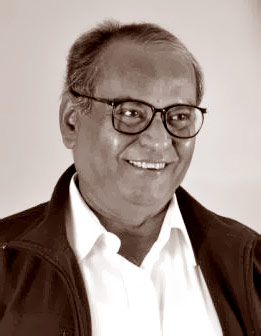
    By Aroon Tikekar

    It is distressing to see the Indian media print as well as electronic- going berserk at the slightest provocation. Has the constant fear for survival affected the healthy vision of the Indian media? Why have the tried and trusted tenets of the profession been disregarded, intentionally or otherwise? These are some of the questions that demand a discussion.

    First and foremost, do the new brand of journalists sincerely believe that a demonstrative approach to solving social problems can and does help? Coming out on the streets shouting slogans can highlight political issues. Pressure put on the powers that be may help hasten a political process. But mere highlighting of social issues does not ensure their solution, as essentially it requires a change in social mind. Obviously journalists are not so nave as to believe that the Anna Team is not going to wipe out corruption from the Indian scene at one go. Then why did they not educate their readers or viewers to doubt the efficacy of any such attempt? Without a pinch of salt called cynicism, media ceases to be the Fourth Estate in a democracy.

    Indian media should raise awkward questions on the right occasions. Joining the bandwagon would have been considered in the past as bad journalism and an affront to the calling. The editors do have a right which is ex-officio to criticize the high and the successful. Reporting on the news and analyzing it for the benefit of readers or viewers as the case may be, is one thing and creating news by emphasizing unimportant aspect and commenting on it is another.

    Today’s Indian media, while fighting a battle of survival, is creating news unworthy of reporting and repeating it ad nauseum, much to the chagrin of readers or viewers. Supererogation of emotion has become willingly or unwillingly the hallmark of our electronic channels, but why should the print media too compete with the electronic media in sensationalizing or pandering to emotions? Whenever we, the people become victims of emotionalism in any large democracy, it becomes the prime duty of the media to educate them. The gullible masses are prone to seek and expect miracles to happen and can easily be tricked into accepting an apparent solution. The media has to come out to warn that miracles are not possible by emphasizing need to be cautious, even cynical of quick successes.

    Secondly, it may sound strange but the media, by definition, is supposed to be critical and is duty bound to take a negative stand by pinpointing weaknesses and lacunae in any proposal or happening which the gullible and innocent person may accept without complain or questioning. Social responsibility is nothing to be ashamed of. In fact it is expected that a newspaper editor or channel editor be so detached from the theatre of activity that he should be able to swim with ease against even torrential current of people’s emotions. The editors should not ride waves of emotionalism. Such objectivity is a pre-requisite in journalism.

    Thirdly, why do the media fail to grapple the historical fact that a political revolution is possible almost overnight but there cannot be a social revolution? Social change can take place only on evolutionary lines. History has shown us time and again that change for the better by slow absorption, not by convulsion, but by assimilation this is the only formula for social change. There are no short cuts to social change, no miracles, and no magical remedies.

    The same newly cropped up weaknesses were displayed by our journalists when the Anna phenomenon was taking shape in Delhi. Society should have been warned that wiping out corruption is not an easy task. Team Anna has only made a beginning. The entire country is aroused and is up in arms against corruption. All these are good signs, but nothing much per se is going to be achieved by the mere introduction of Anna’s Jan Lokpal Bill in Parliament. The roots of corruption have reached deep within our system. Again, on the issue whether the electorate is sovereign or the Parliament, the media should have brought out that our Constitution-framers have taken care to see that no section enjoys absolute sovereignty.

    Even while appreciating the novel idea of distributing caps with I am Anna written on them, the media should have warned the agitators about the limited use of such symbolism. It was on the contrary seen going overboard and was quick to call Anna Hazare as the Second Gandhi.

    The catapulting of Anna Hazare into a national figure is largely the media creation. Media is responsible for creating his larger than life image. One is not even sure whether he has the qualities of a national leader. But media called him as the second Gandhi. Let’s face it. To compare Anna with the Father of the Nation is a cheap gimmick. Comparison of the two is odious. Anna lacks vision. He also lacks wisdom, one doesn’t even know how much the Gandhi literature he has read. The original Gandhi did not even approve of the ways of revolutionaries as he believed that to assassinate is the highest kind of censorship, but Anna does.

    Aroon Tikekar is former editor of Loksatta

  • So near, but yet so far

    In one of those delightful ironies which make life interesting, Karan Thapar’s The Last Word on CNNIBN featured three newspaper editors to discuss the question of whether the media did enough to get details about Congress president Sonia Gandhi’s illness.

    Here you had four journalists discussing “the media” as if it was some animal in a zoo, with whom they had only spectator contact. N Ram of the Hindu, Kumar Ketkar of Divya Marathi and Chandan Mitra of The Pioneer could not explain to us what their own newspapers had done to inform their readers about Gandhi’s mysterious illness. What is this “the media” they are talking about? The media is them.

    Instead they discussed a colonial hangover, the love or Jawaharlal Nehru, respecting laws of privacy, fear of Sonia Gandhi and a host of reasons for the media’s failure. This would have been okay if the panel was not made up of three working editors of three newspapers.


    **

    The television media’s insistence that J&K chief minister Omar Abdullah answer questions about the custodial death of a National Conference worker lead to a almost-funny situation where anchor extraordinaire, Arnab Goswami of Times Now, was rendered silent by Abdullah’s belligerence. As Goswami demanded answers (for the sake of India), Abdullah asked some pertinent questions about the way investigations are conducted in India, which left Goswami lost for words, looking down and away from the camera.

    Team Anna representative Kiran Bedi was in a similar situation on Times Now later when she could not answer a simple question from Kumar Ketkar: if Team Anna claimed that the whole country was with them why were they so frightened of getting a two-thirds majority vote in Parliament? Bedi had no answers for Ketkar or indeed for Goswami or the analysis put forward by Crest’s political editor Arati Jerath.


    **

    The lack of depth of TV is exposed again and again whenever there are no dramatic events to follow. Print journalists have to come to the rescue every time – whether on TV or in print – to provide perspective and analysis.

    This constant desire for drama and old-fashioned Indian style “jatra” at prime time sadly shows up TV on the slow days.


    **

    Newspapers are luckier of course because the front page presents whatever the editorial team considers to be the bog news of the day. It is a boon to decide what to choose when you don’t have to look for the loudest guests and try and save the nation at every given moment.

    The big problem for newspapers – especially in English – is the same one which irks Infosys mentor Narayana Murthy about the standard of students at IIT: bad English and bad grammar. Chetan Bhagat can perhaps get away with it, but newspapers should not.

    Examples of boo-boos big and small are welcome.

  • Time to take the government head on

    Ranjona Banerji

    Much as it was interesting to watch members of Team Anna squirming and dissembling to explain their foray into electoral politics on an anti-Congress campaign or hearing the speculation about whether LK Advani’s yatra is about him trying to become PM again, more attention needs to be paid to the government’s attempts to control the electronic media.
    Much as TV news channels can be annoying, irresponsible, depth-less and sometimes sense-less, they are an integral and important part of the media and have to be protected against government interference. The government would not dare to cancel newspaper registrations for five transgressions of some standards law; there is no reason why TV should be subjected to such harsh and illogical treatment.
    Both the print and broadcast media need to take the government head on. Since so much media dirty linen, soul-searching and hand-wringing is now done in public there is no reason why the public should be left out of this discussion. Do we need the government to control the media and decide on transgressions? Do we need better or more stringent internal control? How far does freedom of expression go (as far, it must be said, as various Indian laws allow)? Why aren’t FM radio channels allowed to carry news broadcasts? Do we want to go back to the days of an exclusive government-controlled broadcast media?  The media may be a pillar of democracy but it is not an organ of the government. It has to be independent and critical.
    It is imperative that these issues be discussed. The Times of India carries an edit on the subject but that is insufficient. There needs to be a larger debate.

    **

    The death of ghazal maestro Jagjit Singh – who had been in a critical state for two weeks – was covered comprehensively by both TV and print. Attempts were made to make the obits objective rather than merely hagiographic, which is amazing when you consider the completely adulatory writings which followed the death of Apple’s Steve Jobs, a man, it appears, who could do no wrong or at least be held accountable.

    **
    The Champions League came and went and almost passed under the radar. This is a new for cricket in India and it is probably down to fan fatigue, overkill and India’s miserable performance in the UK tour. At any rate, it proves that hype can only take you so far and sometimes, somewhere, reality sinks in. And apparently, no one cares.

  • Shock & Amusement

    Ranjona Banerji

    It was a very amusing day yesterday in TV land. First, LK Advani’s luxury bus got stuck under a bridge. By the way it takes a great stretch of imagination to call a luxury bus a “rath”; if they want to evoke Mahabharat-type chariots of fire images they should at least have some accompanying horses (not horsepower) and some of those metallic swan wings you see in Indian small towns on carts that are all-in-one marriage bands.

    But the drama of the day was provided by poor Prashant Bhushan, Supreme Court lawyer, core group member of Team Anna and all-purpose activist. As he was about to give an interview to Times Now, a group of men walked into his chambers at the Supreme Court and proceeded to beat him up, with the cameras rolling.

    The images are shocking and whoever saw it was very distressed. Times Now shared its footage with everyone else so there was universal shock and horror at this sort of uncivilised hooliganism. There was some confusion over who these goons actually were – Bhushan said that one told him he was from the Sri Ram Sena, and then the Bhagat Singh Kranti Sena took “credit” for beating him up. Bhushan’s “crime” was to suggest that the army should leave Jammu & Kashmir, the Armed Forces Special Protection Act should be scrapped and if no other solution can be found to the Kashmir question, a plebiscite should be held. These views, according to all these Senas, are distinctly anti-national, thus justifying the attack.

    Different TV channels took different approaches. NDTV decided not to speak to the perpetrators so as not to encourage them, CNNIBN took a similar stand, Headlines Today and NewsX immediately went out and found them and Times Now at first did not make it clear that all these Senas were connected to the Sangh Parivar but pussyfooted around. Then as the night progressed and Arnab Goswami got more into it, he revealed that some of the attackers were former members of the BJP youth wing.

    The subject dominated TV debates and the BJP and RSS spokespersons sputtered their way through the debates. The most amusing of all was Bhim Singh of the Panthers, who had a peculiar faux Brit-solid Punjabi accent who talked to himself through the programme. The upshot was that Bhushan’s views on Kashmir were anathema to them but they were forced – on account of the public outrage – to condemn the violence. It’s a fine line and they were called out on it several times.

    This largely meant that Advani and his bus were given cursory attention.

    The other issue was the very clear links between the RSS and Anna Hazare’s movement with an intriguing debate on why both the RSS and Team Anna were on the defensive about it.


    **


    By comparison, it must be admitted, the morning newspapers were decidedly dull. In Mumbai, a huge thunderstorm took the front page. One main accused being acquitted by the Delhi high court in the murder of journalist Shivani Bhatnagar added another twist to a very strange case.

    Even the Bhushan story got short shrift (perhaps there was nothing left to say after TV had milked it). Of course, newspapers did carry editorials bemoaning our uncivilised response to unpleasant opinions. Well, what else can they say?


    **

    Vijay Mallya’s sale of a chunk of his Force 1 shares to Subroto Roy and Sahara was the other big story everywhere. After the smiling pictures of all have run their course, perhaps we need to see some stories on why Mallya is selling so much?


    **

    Shah Rukh Khan dominated most TV channels after 10 pm – publicity for something or the other – including a long interview with Barkha Dutt. Goswami continued with saving the nation and did not get down to such frippery stuff – doubt if he ever does. He did however end his prime time show with a demand that Anna Hazare come clean on his links if any with the RSS. Interesting.

  • The Empire seems to be wobbling other stuff standard

    By Ranjona Banerji


    This is a mini review, as I look forward to the weekend and all the creativity which newshounds are forced to display. Cooking shows and endless movie stuff is the usual fare on TV, long features and short forays into the unusual are on the menu for newspapers.

    Meanwhile, the Times of India and Economic Times appear to have great glee in the Guardian expose on the Wall Street Journal’s dodgy circulation game – buying back unsold copies in some transatlantic transactions.  You have to feel sorry for Rupert Murdoch; the Empire seems to be wobbling. Perhaps India’s biggest newspaper group is sending a warning to NewsCorp with regards to its India intentions?

    The fact that Blackberry has started working again may end our global hysteria with different telephones and their features and failures. CNN however did put a hilarious clip about one of its staffers having a bit of a hissy fit on the stories they were missing because of the BB collapse at a news meeting.

    **


    The fact that members of the Sri Ram Sene or Sena and Bhagat Singh Kranti whatever beat up Anna Hazare supporters in Delhi seems to be a clear indication that they are looking for cheap publicity. But what a way to become famous!


    **


    The fact the Information and Broadcasting ministry has had to issue a clarification about its licence-cancelling law is only a minor victory. The battle to stop government control of the media has to continue.


    **

    There is a cricket match on today. Will the media turn all its attention there or will corruption, law and order, terrorist attacks continue to dominate? Hmmmm…