Category: MEDIAAH!

Season 3 of Pradyuman Maheshwari’s no-holds-barred commentary on the media

  • 5 things we’ll want to forget about Goafest

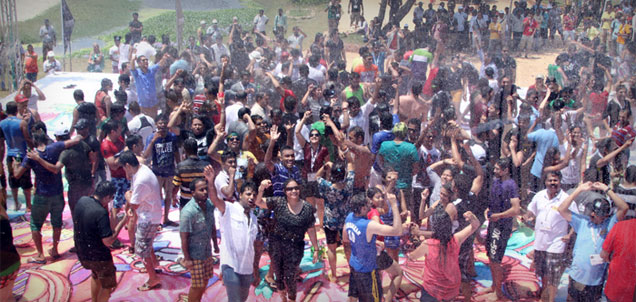
    The controversies didn't seem to dampen spirits at the raindance at Goafest 2013. Photograph by Shailesh Mule/Fotocorp


    By Pradyuman Maheshwari


    Every Goafest has its share of controversies, and this year’s was no better. Or worser, pardon the use of the word. Now that the event has concluded, here’s a list of the five controversies about the Creative Abby that we’ll want to forget soonest. However, it may make sense for the Awards Governing Council to take measures to avoid an encore.


    #1 Big O Missing

    At first it was Ogilvy not participating. The folks have been maxing all these years, and have been producing outstanding work. A Creative Abby without Ogilvy is, as Anil Thakraney writes in Hard Knocks, like the World Cup Cricket without Australia and England.


    Well, we didn’t see Ogilvy get back and all the pleading from the Goafest folks couldn’t get them to reverse their decision.


    The result: a Creative Abby minus Ogilvy. That didn’t see Lowe get back as it stuck to its stand of boycotting the adfest.


    Leo Burnett has been winning a fair bit over the years, and it wasn’t much of a surprise that it won the maximum metals, even though none of them were a Grand Prix.


    #2 Scams – JWT withdraws Ford Figo

    Ford’s controversial, gender-inappropriate advertising cost CCO and Managing Partner Bobby Pawar his job a few weeks back. At first it appeared that the ad was just uploaded on ad showcase site adsoftheworld.com.


    But, as it emerged, that the creatives were also entered at Goafest and as is the requirement of the Abby, the ads should have been carried in media and must be entered with the clearance of the client. The Ford Motor Company took this very seriously and an as-yet-unnamed marketing department employee who cleared the ad lost his/her job.


    #3 Inner Circle member quits

    Much celebrated independent ad agency honcho Sajan Raj Kurup publicy quit the Goafest Awards Governing Council (AGC) and had CreativeLand Asia opt out of the awards. His rationale: “Personally, to me it just doesn’t feel right deep inside my heart to be associated with awards in any way in our country.” His letter to the AGC is reported to have said: “I have decided, with the support of my organisation, not to return to awards in this country till we take up the issues on scams seriously and take stringent steps against these.”


    Ahem. Kurup’s resignation was accepted, but his agency’s pullout wasn’t. CreativeLand Asia had 3 silvers and 4 bronzes to its credit.


    #4 Radio ga-ga

    Should similar entries of a campaign in a certain category be clubbed together for a metal or should these be put in separately. At the Creative Abby, many juries decide to club them together – esp if there are different renderings of a certain creative idea or theme. But in the collective wisdom of the radio jury, the various entries were retained as separate ones… ensuring the numbers of entries received by certain agencies leapfrogged. Not everyone was amused by this on awards night, but we’ve been told that we shouldn’t read too much into it.


    #5 When the client said it didn’t pay for the award

    Although the Creative Abby is a celebration of creativity, the awards are meant only for ads that have been published/aired/put up somewhere. After the shortlists are done, the auditor contacts each and every client to ascertain whether the ad shortlisted was indeed entered by it. Pretty sound procedure this.


    Now in the process this year, a certain company from one of the most trusted business conglomerates in the country told the auditor that it hadn’t paid for the entries and the agency did it for the sake of awards. This was enough reason for the authorities to say ta ta to the entries, but soon enough a communication was received from the client saying that it had indeed released the award.


    Evidently someone from amongst the ‘authorities’ went to the client asking him/her to send in the clarification. Since we don’t have anyone on record, we wouldn’t name names, but suffice to say that there was some sound-and-fury and lobbying over these developments.


    The episode doubtless left some aftertaste, making a wag remark: Namak mein kuch kaala hai! Or should it be dal mein…


  • Mediaah!: 6 answers the industry wants to get


    By Pradyuman Maheshwari


    (as you read this, imagine it’s Arnab Goswami addressing us on Newshour… the same tone, the same aggression and the same energy!)


    Ladies and Gentlemen, we are facing with a situation which almost sullied the image of the grand and trusted empire that Ratan Tata and his ancestors have built. You’ve read elsewhere on MxMIndia on what really happened, here then are some questions that I would like to ask this second Tuesday of April. It’s important the questions are asked because the advertising and marketing fraternity wants the answers. Not just in India, the world over. From New York to Shanghai to Australia!


    My questions. Just 6. Simple questions, need simple answers.

    1. The Goafest Awards Governing Council (AGC) agreed to give away the award on Friday only – and I repeat only – after receiving a written letter from Tata Chemicals saying the ad was indeed commercially released by the company. Who wrote it? And why did he or she write after initially clearly stating in the letter to the organizers that the radio spots weren’t paid for? What really happened that fateful Friday?

    2. How did it occur to Tata Chemicals to send the (revised) letter? Did someone from the 10-odd-member AGC call them? Specifically, did someone from Leo Burnett (LB) speak to anyone at Tata Chemicals? This is no police case or CBI enquiry, but in the spirit of fairness and to allow for investigation and transparency, can we check the cellphone call records of some of the key LB officials present?

    3. That the Tata Salt Lite radio spots were scam ads has been exposed. And the spots withdrawn. Do we now have a declaration from Leo Burnett that all the other 67 metals it has won are for ads that are legitimate and paid for by clients and are not scam ads?

    4. Leo Burnett is an internationally reputed advertising network. Its Worldwide CEO Tom Bernardin is in fact in the country and was part of Goafest. While sacking people is not the answer, is there some kind of a disciplinary action happening so that other clients of the mighty ad network get the comfort that their brands are in safe hands?

    5. Will Bombay House now issue clear and explicit instructions to all its marketing and brand managers as well as its advertising agencies that they must not indulge in scam ads?

    6. Should Goafest authorities write to all advertisers and agencies winning metals that in case their awardwinning metals are indeed scam ads, they should return these honourably or stand the chance of getting exposed?


    Ladies and Gentlemen. MxMIndia hereby says that it will NOT name agencies and clients who take advantage of such an amnesty. However, those who don’t and have indeed ‘scammed’ and are not giving up their award stand the chance of getting exposed. Because your site will not just report the news, but will also interpret it for you. And your site does not shy away from asking the tough questions.

    Mr Sharma has referred to MxMIndia in his mail to the AGC chairman Shashi Sinha saying “a website alluded to this debate with unnecessary insinuations”. He was obviously referring to the Big Story on MxMIndia yesterday. Ladies and Gentlemen, we did not name anyone because we did not have any one on record. But now we do. And now, we are going to ask the questions.

    Ladies and Gentlemen, you deserve the answers. And we’ll come back with more questions, if they are unanswered.

    Until then, goodbye… ta ta!


    (Did we stretch our arguments a bit much? Put yourself in the shoes of Arnab Goswami on Newshour, and we are sure you’ll do the same 🙂 )


  • Mediaah! Are disclaimers enough to pass off paid content?

    By Pradyuman Maheshwari


    Last week, as part of The Times of India’s announcement of its 175 years, there was a full-page edit by editor Jaideep Bose. There’s an interesting bit from this note that I would like to highlight:


    “Truth is, we have no masters and no hidden agendas. Our dharma is to serve our readers. Which is why we take constructive criticism seriously and listen when you speak. Political parties go to the people once every five years; we seek your mandate every day of the year. The relationship between The Times of India and its readers is a nuanced one. There exists an invisible line of tension between what the editor thinks the reader should be interested in, and what the reader thinks the editor should offer him or her. It is the editor’s job to strike that delicate balance. What appears in the paper is often the product of hours of intense debate and introspection over content and tone.”


    There is no denying that the TOI has improved hugely in the last eight years. In fact even before – from the time of the Gujarat riots to this day, the paper has taken up issues and campaigns that have one would expect a newspaper to do.


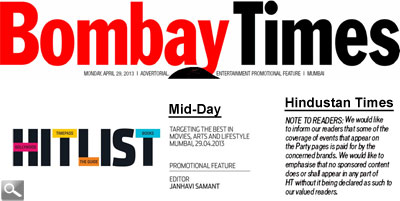
    However, along with all this, its paid content practice called ‘Medianet’ has flourished too. The city-specific supplements may carry the disclaimer ‘Advertorial Editorial Promotional Feature’ under their mastheads, but the fact that the owners persisted with what’s clearly a regressive practice has got a lot of people questioning whether other parts of the paper are also similarly compromised.


    When Bose, who I have much regard for, writes that what “appears in the paper is often the product of hours of intense debate and introspection over content and tone”, he obviously doesn’t mean that the city supplements are part of the main paper, or it’s possibly that paid content has been so internalized that he doesn’t really think there’s anything wrong with the practice.


    A few years back, at the Pitch CMO Summit, Suparna Mitra, the then Titan Industries global marketing head (now business head – south) spoke about the various ways in which Titan had marketed its watches so successfully. And one of these, she said in her presentation, was Medianet in The Times of India’s city supplements.


    What surprised me was that Mitra represented the Tatas, a business group known to not compromise on values. I was quite shocked to learn that a Tata group company bought editorial space to further its ends.


    When I met her a few months later on the sidelines of the Indian Magazine Congress in Delhi, I told her I was surprised that Titan was paying for content. She wondered why I was saying that and then a leading publisher in the room came to her rescue insisting that there’s nothing wrong with it since it was aboveboard.


    Calling it a legit activity is like saying there’s nothing wrong if you adulterate milk with water. When The Times of India started Medianet, the editors of many publications cried hoarse about the practice. Prominent among these were Vir Sanghvi in Hindustan Times, N Ram in Hindu and Aakar Patel in Mid-Day. While the Hindu hasn’t given in to the pressures of revenues, both Mid-Day and Hindustan Times have buckled under. Mid-Day has been in it for a few years now, albeit on the entertainment pages. The sections carrying these are tagged ‘Promotional Feature’.


    When Hindustan Times got into the act recently, it knew the practice was incorrect. Page 3 in ‘HT Café’ is tagged ‘Entertainment and Promotional Features’ and there is a disclaimer on the front page of the supplement which states: “We would like to inform our readers that some of the coverage of events that appear on the Party pages is paid for by the concerned brands. We would like to emphasise that no sponsored content does or shall appear in any part of HT without it being declared as such to our valued readers.”


    I think it’s great that HT says it in so many words that some of the content is paid for. However, the features inside aren’t tagged as such. Also, the disclaimers are in fine print and unless it was pointed out to them, the readers would miss them. I asked five regular and two first-time readers of the paper, and only one of them noticed it, when being told what to look for.


    If HT is serious about its intentions it must do what the group’s business daily Mint does: put a disclaimer on the front page of the main paper. In addition, it must tag each and every article that’s paid for. Ditto with The Times of India, Mid-day and all other publications charging for content.


    **


    Should a newspaper be published only for social good? If it’s got to make monies, why shouldn’t it be doing so from every conceivable way, one may ask. I agree and see no harm with profit being the primary motive of any business. I don’t think it’s right to expect a newspaper to be only reporting on political, civic and developmental issues. People are interested in a reading a lot more… including news on health, sports and entertainment.


    However, one would expect the content in the newspaper to be published based on the decision of the editor, and not an advertiser paying for it.


    Newspaper owners ask the powers that be for several favours – DAVP ads, land allotment at discounted rates, access to various official functions and the government grants them these because newspapers are supposed to be serving a larger social good.


    By passing off content for which it has charged and is published not on the discretion of the editor, the newspaper is cheating readers. Thankfully for the owners – and possibly because many of them are very powerful – the law-influencers (including the Press Council of India) havent’ really damned paid entertainment/glamour content. Various favours continue to be granted to newspaper owners despite them charging for editorial content.


    In private many editors and publishers have told me that they are against the cash-for-content policies of their publications. However, it’s only in the film and party pages that are edited by an entertainment editor, they add, trying to wash their hands off the regressive practice. So on one hand, editors carry campaigns against the various wrongs of society and even write editorials on these, on the other they allow part of their paper to be used to publish paid-for content.


    I asked a dozen readers from across four metros and the seven others I had spoken with earlier to comment on the issue. Here are the Top 3 observations:

    1. They don’t differentiate between the entertainment supplements and the main paper, even though Bombay/Delhi Times, HT City/HT Café and Hitlist are popular titles.
    2. As high as 60 percent of the respondents don’t trust the movie and restaurant reviews, even if they carry a disclaimer that the reviewers pay for their food bills
    3. They don’t really care that the content is paid for or not.


    The views of 19 people can of course not be extrapolated to the entire readership of these papers, but the last of these views left me wondering whether I was being a prude.


    Perhaps, but happily so.


    Pradyuman Maheshwari is editor-in-chief, MxMIndia. The views expressed here are his own.


  • Mediaah! Now, BCCL’s Times Publishing House takes on law student-blogger

    By Pradyuman Maheshwari


    I have been receiving various smses and calls since yesterday about the legal notice that Bennett Coleman’s Times Publishing House is said to have sent a student blogger on Spicy IP, a site that deals with intellectual property issues. It was a flashback to some of the stuff that I was subjected to many years back.


    But eight years since that happened, I am wiser, understand the law and what can be construed as defamation.


    My view on the episode:

    I have read the offending article, the TPH lawyer’s notice that the website has put up, the website’s reply to TPH and its coverage of the entire issue. (here, here, here and here).


    The student Aparajita Lath’s article discusses the two decades-old battle that Financial Times of London has had with BCCL’s company Times Publishing House (TPH) over the use of the Financial Times title which TPH has been using for a special edition published from a few centres.


    I don’t think it’s correct to use the words fair or unfair in business, but it would be perhaps be right to say that it was a smart business strategy which obviously BCCL has protected over the years.


    Over the last few years, Financial Times (of London) has been flexing its muscles with an eye on launching in India. Mint, the Hindustan Times group’s business daily, has covered the issue extensively. Mint, has been covering media extensively since launch, so it’s not an issue of a rival media group embarrassing BCCL with these reports. That it happens (the embarrassment) is I guess a welcome byproduct.


    Is Aparajita’s article defamatory? No, it isn’t, though it’s laced with some opinion. She bases her article on four Mint reports and a few posts from Spicy IP.


    Is it embarrassing for BCCL? Not at all, because Spicy IP isn’t read by the masses. It’s a site for a special interest group, and even if it’s popular amongst a small section of legal practitioners and the judges, it would hardly make any impact on the case.


    Yes, the reply from Spicy IP is strong, and I am not sure if all that the editor/publisher has written is warranted, but Aparajita’s post is hardly of the nature that TPH should’ve employed a lawyer to send a legal notice. There’s a technical error, admits Spicy IP, which it would’ve corrected.


    What is upsetting is why The Times of India group did not engage the student and the site either informally with a call or a face-to-face meeting or via a letter or simply a post on the site. By doing what it has done, it’s not only going to earn the wrath of the large and aggressive online fraternity but also have people digging for more negatives of the group. All very avoidable at a time when flagship daily The Times of India celebrates 175 years of existence. After all, doesn’t the group believe in Aman Ki Asha to foster peace with Pakistan and promote various improve-the-country-and-the-world movements like Lead India, Teach India and now I Lead India?


    Pradyuman Maheshwari is Editor-in-Chief and CEO, MxMIndia, but the views expressed here are his own and aren’t necessarily the stated position of MxMIndia. Reach him at Twitter at @pmahesh or BBM at 29fea79c.


  • Mediaah! Report Card on Uday Kumar Varma’s tenure as I&B Secretary: 7/10


    By Pradyuman Maheshwari


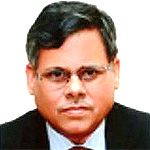
    Uday Kumar Varma

    In October 2011, when Uday Kumar Varma had just been appointed Secretary in the Information and Broadcasting ministry there was much hope from the ace bureaucrat. He didn’t just have sound experience in the administration, but he also had spent a good time in the MIB.


    So he would be plug-and-play given the little time he would need to learn the nuances of the ministry.


    However, it’s one thing to be Special Secretary and another to be ‘the’ Secretary, especially when you know your stint is going to last two-odd years and you will be retiring after the tenure.


    MxMIndia had carried an article as a part of the Anchor with the headline: 5 Things the New I&B Secretary Uday Kumar Varma must do (see link: http://www.mxmindia.com/2011/10/the-anchor-5-things-new-ib-secretary-uday-kumar-varma-must-do/).


    There was a five-point tasklist. Here are the headlines:

    #1 Ensure new digitization announcement is implemented on time.

    #2 Must let self-regulators rule.

    #3 Should ensure paid contentwallahs are punished.

    #4 Push for news on FM Radio.

    #5 Empower government media – Doordarshan and All India Radio.


    I am not going to factor in #2, 3 and 5 here, because in a two-year stint there’s not much that you can expect any Secretary to achieve.


    Phase 3 of the FM radio regime has still not taken off and one can’t see independent news happening in a hurry on FM radio. It requires someone who believes in the medim to push these through with missionary zeal in what’s clearly a non-priority sector.


    Varmaji made the regular noise on self-regulation, measurement and paid content, the kind one expects from a Secretary.


    But it’s with digitization that the former Secretary has received the maximum bouquets and brickbats. At the outset, he deserves all the credit for digitization finally seeing the light of day. When the minister changed less than a week before first phase was scheduled to happen,  it was Shri Varma and his team’s conviction that ensured it takes place.


    But what happened before Phase 1 of digitization was effected was deplorable. The readiness numbers that the ministry declared were in sharp variance with the ground reality.


    It was Varma & Co’s resolve and understanding that the hiccups are inevitable is what led to the digitization been effected. Phase 2 was also pushed through, with its own share of problems, but by then the Secretary knew that it’s not switch-off-switch-on game. Every phase will have its own sub-phases.


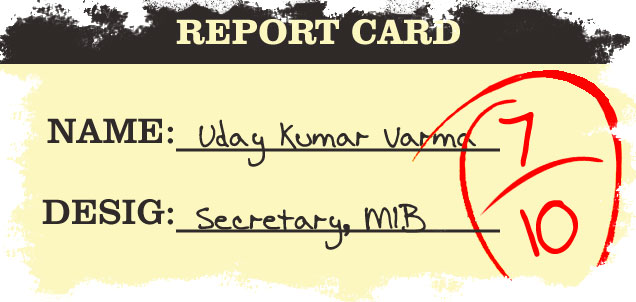
    Had it been just the effecting of digitization, Varma would’ve got an 11 on 10, but the fact that the initial process had its share of big problems and that one had huge expectations from him given his knowledge of the functioning of the ministry, we give him a score of 7/10.


  • Mediaah! Remembering Charu & PR disaster for Tatas

    By Pradyuman Maheshwari


    I always had admiration for Charu (as Charudatta Deshpande was known to friends). This was because he had made the perfect switch from a being a senior journalist (and who wasn’t really floundering as one) to corporate communications.


    Having failed at doing so twice over, I asked him how he managed the transition, and how it was dealing with journalists who one wouldn’t care much about had he been on this side of the fence. Or dealing with corporate bosses who don’t care much about the news media and think everyone’s ‘buyable’.


    Save a few occasions, our paths didn’t cross professionally over the last decade or so, but our relations were always cordial. Since he possibly had another view from being part of the corporate sector, I would ask him for his perspective on Maharashtra politics and the state government. At heart he was a journalist, and one with a very sharp mind.


    Even though the Tatas instituted an enquiry committee with top speed, I am not sure if it will yield any result. If the allegations made against Tata Steel are true, then surely there’s someone right at the top who is behind all that happened. If the PR agency went about on a disinformation drive, then one can be certain it was asked to do so by a top functionary with their client (Tata Steel).


    While the group’s Chief Ethics Officer Mukund Rajan is reportedly no-nonsense and one can expect fairplay from Ishaat Hussain, will they publicly indict a Tata Steel biggie if the need arises?


    **


    For the Tatas, it’s a huge PR disaster, and if I were with the PR agency handling the group and the Tata Steel business, I would be worried about being delivered the sack.


    The Tatas have carefully built an image which could see no wrong in employee care and welfare. This has taken a huge beating.


    **


    A severe cold held me back from being at the Press Club Mumbai condolence meet for Charu on Wednesday. You don’t find too many senior journalists and corporate execs writing letters to big business captains. And even if they do, these don’t find their way to the media. While the Tatas may not be in the same bracket, corporates are not known to take very kindly to their reputation being questioned in public. It’s also nice to see an ICICI executive director and an L&T corp comm manager sticking their neck out for Charu, albeit in their personal capacities. My salute to all of them.


    Pradyuman Maheshwari is Editor-in-Chief, MxMIndia. The views expressed here are his own


  • Mediaah!: How underdog Colors won the great GEC battle

    By Pradyuman Maheshwari


    Having tracked the journey of both Television 18 and Viacom from their early days (in India in the case of Viacom), there was much desire to see both groups succeed.


    But I thought they were being too ambitious to launch a Hindi GEC in 2008. The market was already very crowded and with the whizkids of broadcasting Peter Mukerjea and Sameer Nair also in the fray, the sentiment then was that it was going to be well-nigh impossible for any new channel to be a success.


    I was sure the Network 18 team wouldn’t get it right. They had had success with CNN-IBN but entertainment wasn’t like news. Good content doesn’t necessarily maketh a GEC.


    The idea of getting Ashvini Yardi (who had earned her stars as programming head at Zee) was a great one. But could CEO Rajesh Kamat and she be able to match the maharathis and former Star India CEOs Peter and Sameer?


    I think what changed my outlook to the channel’s launch was the news that Akshay Kumar was signed to do a Fear Factor. The folks meant business and Akshay was then the reigning king of Bollywood. Plus the team was young, friendlier (than the others) and indulged us in the media.


    A week before the launch, most of us had wanted Colors to succeed. Even advertisers and media agencies longed for a worthy alternative to the existing slew of channels. And after the ratings for the first two weeks came in, we were sure the channel was a winner.


    Even then there were naysayers telling us that the magic would fade away. Regrettably for them, it didn’t. Soon Colors dethroned Star Plus as the numero uno Hindi GEC.


    I remember writing then that it was complacency that had seen Star Plus go down, a comment that didn’t work very well with some people internally and of course the biggies in the business. But a year-odd later, when I spoke to Star India CEO Uday Shankar, he admitted that the channel getting complacent. I asked him just to let people know that my earlier statement was based on some digging in, and not speculation.


    **


    My first major interaction with Rajesh Kamat happened only when I had this interview on the first anniversary of the channel in Impact magazine. It was an extra-long 6000-word interview. Rajesh had then told me how it helped being an underdog. “It made us focus on our own efforts. Also what happens is when you’ re an underdog, you push yourself to give 200%.” He mentioned how he learnt several tricks of the trade from Sameer Nair, and knowing that the former Star India CEO would’ve tracked the rise and rise of the channels, we invited him to do an appraisal for this fifth anniv package.  The Impact interview isn’t on the Net, but I found a Word version on my Gmail archives. Inbox me if you want a copy.


    ***


    In many ways, the launch of Colors also marks a little over five years I have spent in the M&E media. I can’t claim the same kind of success that the channel has achieved, but, yes, the ability and desire to try and do stuff that has not been done before is there.


    Here’s to many, many more colourful years for Raj Nayak and Team Colors (and the folks at Network/TV 18, Viacom and Viacom 18)!


  • Mediaah! by Pradyuman Maheshwari: The Rise and Rise of Anurag Batra

    By Pradyuman Maheshwari


    If Anurag Batra had his way, he would possibly want the day to have a few hundred hours. Reason? He could then network several times over. Widely regarded as kingmaker in the media, Mr Batra loves his food and meeting people. He is known to have multiple breakfast meetings, followed by a couple of lunches and then a dinner or two. And not to forget the early evening snack or juice and post-dinner coffee.


    He is passionate about helping people across all levels and strata and then at times seeks help for his businesses and his friends. So depending on who you are and what kind of stuff you like, he’ll gift you a book with a personalized note. And if you are the type who wears printed socks, he’ll even bring you those from one of his various international travels.


    I have had the fortune of knowing him well for over a decade – first as a friend and then employed with the exchange4media group that he co-owns. After I quit e4m over an ethical issue in 2011, he was a friend too. He gave me a fond farewell and insist I keep an iPad he had gifted me the previous year. He unfriended me on Facebook a year after I set up MxMIndia.


    Anurag (or Annurag, as his publications spell his name) was invited by his friend and co-partner Amit Agnihotri to join the group in the late 1990s. A textile engineer and MBA by education (TIT Bhiwani and MDI Gurgaon), he started working in the real estate sector and then with ad agency JWT (then HTA). While Amit is designated Editorial Director, he now spends most of his time running MBAUniverse, an MBA-preparatory service provider. The third partner is Nawal Ahuja who moved to Mumbai in the company’s early days to kickstart operations. He now runs exchange4media.com and Impact editorially as well as heads the business end in Mumbai. There were two sets of partners – adman and BJP loyalist Sushil Pandit and the husband-wife duo of Nitin and Mona Jain. A few years back, Pandit was fighting the Anurag, Amit and Nawaltrio in the Courts. Pandit couldn’t be reached at the time of writing while Nitin Jain said he had virtually written off his investment.


    The litigation may have taken its toll on the group’s expansion plans, but that hasn’t stopped Anurag from forging ahead. He set up fashion site Stylekandy and the now-defunct media school FMCC. There were a few other media operations that he has rumoured to have funded, but these are unconfirmed. Earlier this year, he is said to have bought a digital marketing site in Singapore.


    The Businessworld acquisition clearly propels Anurag to a different league of media-owners. From being a Chairman and Editor-in-Chief of a B2B media group he is now the man spearheading one of India’s best known and respected media brands.


    Will Anurag be able to turn around Businessworld? As a genre, all news magazines and business mags in particular are under tremendous pressure. But the loads of enthusiasm and energy that he comes with, networking with people who matter, and the desire to achieve the impossible could get him there with organising events and look at innovative ways to earn revenues. Businessworld already has a top-grade editorial team and a few tweaks in content and packaging could help it shore up the offering. Friends and those who’ve been tracking his career believe he can turn the fortnightly magazine company profitable if the investors he represents are not impatient and continue to invest. There are some though who believe he is playing with fire and a failure could cost him much as it has with big media aspirants in the past.


    Clearly Businessworld needs to reinvent, and Anurag/Annurag Batra can bring in the energy to the enterprise. Good luck to him.


  • Mediaah! Bizarre! NDTV ombudsman Soli Sorabjee’s response to mail on Barkha Dutt-Niira Radia episode

    By Pradyuman Maheshwari

    I was delighted with the news that Soli Sorabjee was to be the Ombudsman of NDTV, the news-to-cookery information network. Sorabjee is one of India’s best legal eagles, is a former Solicitor and Attorney General and is known to be a wise man. He’s frequently on television, his views are much sought after by people who matter. He’s not a Ram Jethmalani.


    NDTV is one of India’s best known news vehicles, although just 25 years in the business. And it’s well-respected too.


    However, the last five years has seen question marks being raised about the network. And this goes beyond its performance in the stockmarket, its decision to get into entertainment television and then exit it, staff cuts and more recently the trimming of operations of business channel NDTV Profit.


    What has caused considerable loss of face for the channel’s reputation goes beyond its business decisions. After the Mumbai terror siege, there was an uproar against the coverage of some news channels and consequently there was a vicious online attack on Barkha Dutt. Yes, it was vicious, but as I look back, Barkha and NDTV should’ve just let it be. Instead they took legal action against techie Chaitanya Kunte. They may have won the battle and silenced Kunte, but there was much anger building against them.


    And then there was the Niira Radia controversy. While journalists do often indulge their sources and help them with info (and even fix stuff), what happened in the Barkha Dutt episode was unfortunate. Especially the way she and NDTV handled the issue. She should’ve apologized on camera rather than defend herself on the show where questions were posed to her by a few top editors. NDTV, a channel until then known to have a squeaky clean reputation, too ought to have handled the crisis better and should’ve instituted an internal enquiry (headed by an outsider and asked Barkha to go off the newsroom or at least off air in that period). It didn’t, and went down several notches in the eyes of its core viewer – the Indian intelligentsia.


    However, that’s not the reason for writing this. When I heard about Soli Sorabjee being appointed Ombudsman, I wondered how he would’ve handled the Barkha Dutt-Niira Radia issue. That was reflected in the report we carried on his announced (see link: http://www.mxmindia.com/2013/09/ndtv-appoints-soli-sorabjee-as-ombudsman-now-will-he-clear-air-on-barkha-dutt-episode/ ).


    I wrote two letters to the Ombudsman. The first was on my name getting exposed to NDTV, to which Sorabjee responded writing: “I do not appreciate the need for anonymity.”


    I found this a little weird. If a corporate’s name gets exposed to a journalist who he/she is complaining about, there’s bound to be a backlash.


    But it’s the second exchange that has had me shocked and surprised.


    Here goes the mail I received from Sorabjee’s Ombudsman id (See letter image).

    QUERY

    Hello, Mr Sorabjee. Thank you for accepting NDTV’s invitation to be the media group’s Ombudsman.

    I would like to bring to your notice the controversy around Barkha Dutt and her telephone conversation with lobbyist Niira Radia. While Ms Dutt’s defence was subjected to a cross-exmination on television by eminent journalists, there is a view that her act brought disrepute to the profession and the NDTV group. There is also a view that Ms Dutt’s services or appearance on television should’ve been suspended pending investigation. It would be good to have an eminent jurist like you to comment and give your ‘verdict’ on the issue/episode. Your views may well clear Ms Dutt’s name once and for all. Or we may have you aver that Ms Dutt was incorrect by doing what she did and she deserves a stiff reprimand. In both cases, it will be a great service to Indian journalism. Sir, since this episode happened, many have questioned the ethical standards that prevail in the Indian news media and have even gone on to say that our news entities do not have the moral authority to question others on inefficiencies/corruption etc since their own houses may not be in order.

    Your comment on the matter will help clear the air on this.

    Thanks, Pradyuman Maheshwari


    RESPONSE

    The role of the Ombudsman is not judgmental but to ensure that dissemination of news is fair, accurate and balanced. However, Ms. Barkha Dutt should not participate in any programme concerning her and the Radia Tapes. I have advised NDTV to inform Ms. Barkha Dutt accordingly.

    Soli Sorabjee,

    Ombudsman, NDTV


    Is Soli Sorabjee refusing to take a stand on an issue that has a strong linkage with the “role of the Ombudsman to ensure that dissemination of news is fair, accurate and balanced”. And what’s this bit about “However, Ms Barkha Dutt should not participate in any programme concerning her and the Radia Tapes. I have advised NDTV to inform Ms Barkha Dutt accordingly.”???


    Mr Sorabjee is a wise man, but why is he sitting on the fence on the issue? Has NDTV asked him to not comment on the controversy? We don’t have the answers, but at the time of writing on October 9, 2013, when we tried visiting the Ombudsman’s page/corner/whatever on the NDTV.com site, we couldn’t find any label/tag on the homepage. Perhaps, viewers are expected to remember the ndtv.com/soli url. Or perhaps the network doesn’t want us to go complaining to Soli Sorabjee.


    The views expressed by Pradyuman Maheshwari, Editor-in-Chief and CEO, MxMIndia in Mediaah! are his own and not necessarily those of MxMIndia Private Limited. Email him at pradyumanm (at) mxmindia.com


  • 10 evils media can do without


    By Pradyuman Maheshwari


    Vijayadashmi or Dassera is said to mark the celebration of good over evil. While many celebrated Dassera yesterday, for Bengalis in particular it’s ‘Shubho Bijoya’ today.


    I had written a similar feature two years back on MxMIndia and as I compared the list that I made for 2013 vis-à-vis the one in 2011, I was saddened to note that most of the evils are the same. In fact things have only gotten worse. Except one, which was on the issue of ratings where measures are being taken to cleanse the systems as per the expectations of the stakeholders. While work on the all-new IRS for print readership is still on and BARC has not yet finalized the vendor for television measurement, the fact is that all stakeholders are united in their efforts now to produce a robust system (as they ought to have been earlier), hence one has done away with the problems of ratings as a malaise.


    So which are the Top 10 evils that deserve to be banished from Indian medialand? Read on…


    01.  Corruption

    It’s public knowledge. There’s more corruption in private enterprises than there is in government and public sector undertakings.


    Bribes and various other commercial considerations are commonplace in television channels, advertising agencies, newspapers and magazines. And then there are awards and placement of reports. Not all of it is in lieu of monies though. Some could even be for just ol’ times sake.


    02.  Paid Content

    There are three types of paid content which rule Indian news media. The first is the one where political parties and politicians pay publications and channels for favourable content on them or negative content on their rivals or both. The second is for business and lifestyle content where you pay for content that appears. And the third is when publications only carrying reports on those who advertise and not on the basis of merit.


    The incidence of each of them has grown, and since the last time I wrote this, more publications are now publishing lifestyle content in lieu of dosh.


    03.  Government interference

    A senior Doordarshan functionary this correspondent spoke to said he/she was disgusted with the I&B ministry for its interference in the Doordarshan’s affairs. Especially in the case of news. If the government wants DD to improve and prosper it mustn’t get into the day-to-day functioning of the channels.


    Also, there’s no reason why the government should get involved with the functioning of various stakeholders. With regulators in place and players adopting self-regulation


    04.  Ass-ociations

    Save a few, some of the key industry associations have failed the industry. There is groupism in many of them, and they don’t seem to working enough for the common good of the fraternity and the business. While there is a Goafest and a few other association-led and individual compay-owned events, the two biggest events of the trade – Frames and Big Picture – are organized by FICCI and CII respectively. Meanwhile, some of the associations could do with better equipped secretariats.


    05.  Shabby Abby

    Abby 2013 were indeed Shabby, and although attempts were made to clean up the system, it’s going to require quite an effort from recently appointed president, Pratap Bose, to ensure there is enough participation from all agencies and the rules are watertight on fake/proactive work and plagiarism. The Abby Awards needed to be reinvented, else they will lose relevance.


    06.  Abuse of intellectual property

    Many of us in the Indian media are responsible for picking up material (ideas, text, pictures, audio, video, graphics) without permission and attribution. There is no respect for intellectual property in India and it’s a matter of time when the laws and penalties on intellectual property theft get stiffer.


    07.  Talent

    Talent continues to be a big problem in the media. As organizations go on to value-add their offerings and attract a premium for their services, they must remember they cannot achieve it without quality manpower. And this talent doesn’t come cheap which will mean an impact on the bottomline.


    08.  Job security

    The current slowdown has had a huge impact on some organizations with retrenchment in many sectors. In some organizations, even if there was no direct sacking, there were no replacements found for those who left. Media organizations must remember that they shouldn’t lose the human touch while effecting these. And also the next time when the going is good, perhaps they should not hire indiscriminately.


    09.  FDI Blues

    The government continues with its bizarre rules on FDI, and it’s possibly being egged on by organizations whose interests could be harmed if foreign powers come in. While the government is indeed mulling an increase of foreign direct investment in news media and FM radio to 49 percent, one wonders why not make it 100% when such restrictions aren’t imposed on equally critical sectors like telecom.


    10.  No ethics!

    This is a huge peeve. Yes, that there are still various ways to fool a system, but the only way in which way there can be some order in media organizations is when there is no tolerance rule on ethics. Get everyone – employees and promoters – to agree to adhere to them. And expose those who break the rules.


    The views expressed by Pradyuman Maheshwari, Editor-in-Chief and CEO, MxMIndia in Mediaah! are his own and not necessarily those of MxMIndia Private Limited. Email him at pradyumanm (at) mxmindia.com


  • Mediaah! ‘Paid News’ needs detailing in PRB Act amendments

    By Pradyuman Maheshwari


    The I&B ministry has invited suggestions to the amendments it has proposed to the Press and  Registration of Books Act (PRB Act), 1867. While many of these are welcome, among the changes that the MIB has made, there are two significant ones that still need some detailing.  Here are the changes I think should be added and I have taken the liberty of adding one more element that will cleanse the system:


    1. The definition of a newspaper: While it’s good that the online editions of newspapers are now under the purview of the PRB Act, what about standalone online news entities? What about online entities that curate news from various online sources including newspapers? The PRB Act must also clearly include non-news entities like magazines and their websites. These magazines could be of the non-political variety (say: realty or business or films or even media)


    2. Paid news:  The government is concerned about paid political news, but it should actually be having all forms of it under its scanner. Brands, parties, marriages, community/club news… whatever. Any news (text, pictures, video) that is published for reasons beyond an editorial discretion and because it’s paid for. Fine print placed next to the masthead of a supplement or tucked into the corner of a supplement’s front-page are not enough to label a part of the newspaper as a legitimate paid news offering. Since the paid news component is a part of the main paper and the average reader believes that content in the paid news section is selected in the same way as it gets done for the main paper, the undertaking/declaration must be prominently displayed on the Front Page of the main paper in a point size larger than what is used for the rest of the body matter on the page, in bold and boxed. All articles/reports/photographs/graphics must individually be clearly tagged ‘This report/pic/graphic/whatever is paid for by the advertiser’


    3. Group news: One of the big problems that many media firms face is when their news gets blanked out by the big papers because their group has a similar entity. For instance, Newspaper X and Y don’t carry the news of Radio Station Z because X and Y also own radio stations. And ditto with events etc.  Will Times of India carry news of the Star Screen or IIFA awards when it has its own Filmfare and TOIFA? It was heartening to see TOI, HT and DNA carry the news of the India Today group conclave on Sachin and mention the India Today name in it, but these instances are few and far between. Failure to give fair coverage to news  just because it belongs to competition should be referred to whosoever is policing complaints on fall-out of cross-ownership.


    There are some more changes in the PRB Act that the ministry is mulling – like a declaration on advertisements received as well as on the registration of an entity’s title. The last of these has relevance given the dispute between The Times of India and Financial Times over the Financial Times title.


    The revised bill has been uploaded in the website of Ministry of Information & Broadcasting (home page – What’s new) on November 8, 2013. Suggestions have been invited by the ministry which may be sent to the Under Secretary (MUC), Room No.749, Ministry of Information and Broadcasting, ‘A’ Wing, Shastri Bhavan, New Delhi 110 001, Fax No 011-2338 7240, Email : mediaunitcell@yahoo.in  by November 19. In case no suggestions are received within the stipulated time, it will be presumed that the stakeholders are in agreement with the amendments of the bill.


    Mediaah!’s view is that the government should not get into the business and conduct of news entities. However, in the absence of a self-regulator and given that the Press Council of India is toothless and often regressive, the government needs to step in to cleanse some of the ills in the system. The government can of course police the media since it grants various favours like cheaper land, DAVP ads and a variety of other concessions.


  • Sachin’s second innings starts in style


    By Pradyuman Maheshwari


    It was early 2000. It was a Saturday, I had to drop by at my Chartered Accountant’s office on Bhawani Shankar Road in Central Mumbai. I took the 201 bus which wormed its way through this road on to Shivaji Park where my car was parked. As the bus started, the conductor shouted out a stop or two later: Shardashram School Sachin Tendulkar.


    I was familiar with the area, a batchmate lived in the building across the school as did former Finance Minister Madhu Dandavate. The bus stop was named after ‘Shardashram School’. A few of us peered out of the bus window, to check if the wonderboys Sachin and (then?) buddy Vinod Kambli were around. The newspapers then were full of their exploits.


    Sachin Tendulkar was always destined for bigger things, and the media adulation for the boy has been unparalleled. In 2005, I remember wanting a story done on whether he should retire given his lean patch. None of the journalists in my team or the few accomplished writers I spoke to agreed to write. They refused, citing other commitments. In fact until the social media arrived, one could hardly read any criticism of the man.


    Others could get out to a rash shot, but for Sachin it would be being bowled on a brilliant delivery. It’s not that journalists were not being true to their jobs, but it’s possibly because we believed that #10 could do no wrong. It was perhaps his commitment to the game. Even on the Ferrari episode, while there are many who still haven’t forgotten how he sought a duty waiver which he could’ve easily paid, Tendulkar came out with just a few bruises.


    So what does the master blaster do post-retirement? Having been hot on the endorsement circuit for over two decades, surely the taps wouldn’t turn dry overnight.  But his various interviews over the last year and his farewell speech on Saturday have me convinced that there will be more than one opportunities coming his way. Television, for one. Given the way sports broadcast is growing, channels will surely be eager to cash in on the Sachin wave. Motivational speaker, is the second. I am sure large corporations would like to have him speak to employees, premium clients etc.


    While the Bharat Ratna award is welcome, it could make things difficult on the business front. Bharat Ratna awardees come #7 in the Order of Precedence in the Government of India’s protocol list, way ahead of the three chiefs of the armed forces. He will need to get that wee bit more discerning and careful with his endorsements and commercial ventures.


    The Member of Parliament tag is also going to raise some expectations from Tendulkar as he will now not have excuses of being busy with the game. There will be pressure on him to cleanse the administration of sports bodies he has no connection with, make BCCI more accountable, ensure India wins more at the Olympics, take cricket to the Olympics and ensure there are more facilities for sports across the country.


    Sachin’s source of monies – from the contract he has with the Board of Control of Cricket – ended with the second Test against the West Indies. This meter officially stops ticking after today, the scheduled last day of the match. But, of course, the older endorsement deals will continue for a while. I am sure his manager -Vinod Naidu and his firm WSG – will ensure that the Bharat Ratna continues to rake in the moolah just as Kapil Dev is even 20 years after he bowed out (1994).


    > Visit www.starsports.com or the numerous Youtube pages for his speech and his press conference address.


    > Full text of Sachin Tendulkar’s ‘Thank you’ speech at the Wankhede Stadium:

    http://www.dnaindia.com/sport/report-full-text-of-sachin-tendulkar-s-farewell-speech-at-wankhede-stadium-1920240moolah just as Kapil Dev does even after two decades post retirement (1994).


    Photograph: Fotocorp.com