Category: Events

  • No gyaan, only learning


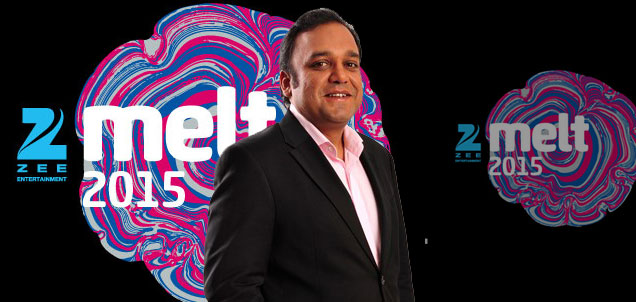
    This interview was conducted around Melt 2015 was announced in April this year, but the views Punit Goenka, MD and CEO, Zee Entertainment Enterprises Limited are still valid and relevant given Melt (or Zee Melt 2015, to be precise) starts today (May 21) and Zee Mindspace, the conference for CMOs, happens tomorrow. We asked Mr Goenka on why he associated himself with Kyoorius, will it impact his linkages with Goafest, on how speakers have been chosen for the event and finally with Rajesh Kejriwal, founder and CEO of Kyoorius.


    This is fourth edition of Zee Mindspace. What have been the learnings so far and what made you switch to a much larger scale?

    In this fast changing world, our own teams feel that the learning for the changing world is not happening at the pace that it needs to happen. We have got that feedback from our Mindspace series that we’ve been running so far. And when Rajesh [Kejriwal] approached me for Melt, I was of the opinion that we need to scale up Mindspace to a bigger level and why not put it as part of the industry initiative, which means it will be created for the industry by the industry. Normally, we do a half- day session, but this time we are extending it to the full day. Instead of just two speakers, we’re targeting many more to come in and speak up on different aspects of marketing and challenges and their learnings from other markets and bring it on the platform for the CMO world at large.


    There are quite a few events such as these which keep happening and apart from the likes of

    Goafest you have CII which does a marketing summit and there is AIMA etc. So how is it different from the others that you’re looking at?

    So, first and foremost the clear differentiation that attracted me to this was that I’m not just a sponsor here, I’m actually curating the content along with the Kyoorius team with learnings from my own professional space and what industry professionals are facing whether it be in the media or advertising or content world. So when people leave the venue, they should leave with the feeling that they have learnt something new which will help them in their day-to-day running of their professional life. And it should be clearly beneficial for to them, rather than it being a marketing conference where I talk about how great Zee is and what great thing Zee has done in the past. I want to actually make it a learning experience not just for my own team but for the industry at large.


    What made you choose on Kyoorius?

    I’m very happy to be partnered with Kyoorius because I have seen their benchmark in events that they have created and I don’t want to partner anything less than that. I want only improvement in that if at all, and I said yes to the partnership because I know Rajesh will deliver great standard of quality and best practices. And of course, why would I not want to associate my brand with something at that pinnacle of creation and implementation?


    You aren’t associated with the Awards though

    No, the Awards are not part of Melt. That’s an independent activity. It’s the culmination of Melt. So, by that definition we are not associated with the Awards as a partner or anything. But of course, I would love to be there and see who wins this year.


    With Goafest being an industry event and all creative and media agencies backing it, are you worried of a negative impact your association with Kyoorius can have on business?

    I’m not comparing Goafest with Melt. I know what Melt is all about and I know what it’s going to deliver for the industry, and that’s why I have chosen to partner here. I’ve been associated with Goafest in the past and will continue my association with them. Frankly the difference is that in the case of Melt, I’m working on creating the content for this festival. Whereas in Goafest, I’m not involved at. So I would not want to consider what’s good in Goafest and what’s not good in Goafest? Would those agencies look at Zee in a negative manner because I’ve associated with Melt, well, that’s their business, I can’t tell them what they should do and they should not do. We do so many events and that does not mean we make enemies with competing events.


    (Rajesh Kejriwal who was alo present while the interview was on steps in: Just to clarify this case, Melt has no sponsors. Melt has only partners. So, Zee is a principal partner, GroupM is a strategic partner, D&AD is a strategic partner, then there are other partners who are bringing in content in some way or the other. Everybody is a partner at Melt… there are no sponsors.)


    You’ve been associated with Kyoorius Designyatra for a while and I find it interesting that that you are actually not part of the event at all in the form of making a speech, presenting awards etc. We’ve also heard stories that Rajesh Kejriwal has told a sponsor that a certain logo doesn’t look very good in the creative, etc etc. Would you say he’s a tough guy to be associated with as an event curator?


    Yeah, he can be a pain, but nothing that can’t be fixed over a drink (laughs). There is no problem that you can’t fix over a drink, so let me just keep it at that.


    Zee has been associated with several industry events over the years. Is working with him different various others with whom you have dealt with in the past?


    As I said, normally people just put an event together and ask you for money and for a sponsorship logo on top of it. Beyond that, there is no value addition that one gets. Here, I’m being part of the team working on what should the event be all about. Rajesh came with certain ideas, my team then looked at the kind of speakers they should invite. What they should talk about. And we are actually considering all that before we take a speaker onboard, because I don’t want people to come and give us gyaan as to how good they are and how they have done great stuff, and what their great companies do. At the end, it has to be learning for the people who attend it, that here is the problem, and here are potential solutions, now debate.


  • Day 1: Melting pot of creativity


    By Dyanne Coelho


    It was meant to be a melting pot of talent, which indeed it was. The first edition of Zee Melt 2015 saw some 1338 registered delegates in attendance on Day One with speakers hailing from diverse backgrounds and continents.


    The two-day festival of creativity in advertising and marketing organised by not-for-profit firm Kyoorius in partnership with Zee Entertainment, GroupM and D&AD, opened in Mumbai with a mix of events.


    HT Osmosis, the anchor event for the day – hosted by Campaign India Managing Editor Gokul Krishnamoorthy, and Suresh Venkat – saw speakers from creative agencies across the globe shedding light on innovation, creativity, uncluttering advertising and zooming out from the billboard trend. It began with a presentation by Chris Sanderson, co-founder of The Future Laboratory, followed by Daniele Fiandaca of Creative Social talking about the several advantages of breaking out of the clutter and innovating. Christian Behrendt of Razorfish followed with atake on why we should shift from ‘award-winning’ to ‘world-changing’ creativity. Bo Hellberg of Brave and HeyHumanspoke about the possibility that human creativity will soon be replaced by artificial intellect aka machines that dish out creative ideas and storylines. The sessions continued with talks by Jason Harrison of Gain Theory, Huib van Bockel of The Social Brand, Dylan Berg of 72andSunny, Daniel Hirschmann of Hirsch & Mann, Hugh MacLeod of Gapingvoid and Takahiro Hosoda and  Kazuaki Hashida  of Hakuhodo.


    Concurrently, a seminar entitled Kinetic Future Citizens was focusedon understanding the consumers of the future; their interests, needs, wants and behaviour. Speakers including Lightbox’s Sid Talwar, YouTube India’s Satya Raghavan, Digital data strategist Subhendu Mukherjee, Facebook’s Fergus O’Hare and Happy Finish’s Simon Gosling talked about how brands can connect and entertain their audiences.


    A series of workshops were conducted through the day. These hands-on sessions with experts include interactivity with AR/VR, photography, branding and technology.


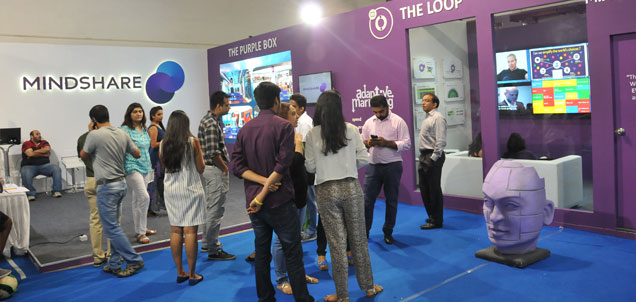
    GroupM’s showcase space was a crowded spot at Melt.  Participants were given guided tours of Mindshare’s The Loop Room and The Purple Box, Moribus; the Behavioral Economics Lab by Maxus, global work by Mediacom and MECFresh by MEC Global.Happy Finish’s showcase displayed the latest in augmented and virtual reality. A particular favorite among visitors was the Smash it! Cricket VR experience.


    The recurring themes and topics that emerged from the talks and workshops through the day was innovation and breaking the rules in advertising and the concept of smart data to understand your end consumer and attend to their specific needs. Some speakers also talked about the importance of engaging directly with the consumer through on-field advertising and marketing campaigns rather than mere print or television advertisements. “You have to make sure you’re touching people and you have a relationship with them. Print won’t go away, but it is no longer the primary medium,” said Daniele Fiandaca of Creative Social.


    Another recurring theme was the need for agencies and brands to explore ways in which advertising and technology can help improve the lives of those with fewer resources. Sessions such as the 90% talks with Anu Sridharan of NextDrop, Upasana Makati of White Print and Angad Daryani showed how social entrepreneurs can make a difference to the lives of ‘the other 90 percent’. Unny Radhakrishnan and Alex Jaspers of Maxus delved deep into the topic of creativity plus technology to solve problems. Both have to go hand in hand they emphasized. “Sometimes the solution may not be mere advertising, but to combine advertising with electronics, architecture, engineering and biotechnology as well,” said Jaspers.


    One of the most untapped areas in advertising is mobile, and delegates were able to find some answers about how to unlock the potential of mobile marketing and experiences with Tomi Ahonen, Fergus O’Hare from Facebook, and others.


    Talking about the common fight between digital versus other forms of media, Prasanth Kumar, CEO, Mindshare South Asia said: “The approach shouldn’t be between digital and/or television or print, rather in advertising and marketing the content is important. The key is to pass on the message effectively and engage with the audience irrespective of the medium. The idea is to get all media together.”


    Day One concluded with a debated organised by the India chapter of the International Advertising Association IAA Debates battling out on the issue of whether the mobile is likely to become the primary screen for news and entertainment in the next three to four years. Vikram Sakhuja and Raghav Bahl spoke for the motion and Arnab Goswami and Rajiv Lochan were against the motion. While the team for the motion argued that an increasing number of people are using mobile phones each day, the team against retorted saying that three to four years is too short for this to be a reality as mobile internet especially 3G networks is still a luxury enjoyed by a few and buffering videos are a downer. The team against the motion were declared winners of the debate.


    Said Rajesh Kejriwal, Founder CEO of Kyoorius, said, “We were delighted and encouraged to see delegates participate so actively in sessions at MELT. Day One went off brilliant. What was particularly heartening to note was when people told me that they profited from attending the proceedings.”


    Day Two of the event will see a continuation of the conference and culminate with the Kyoorius Awards with over 1500 members of the fraternity in attendance.


  • Getting set for the mobile as the first screen

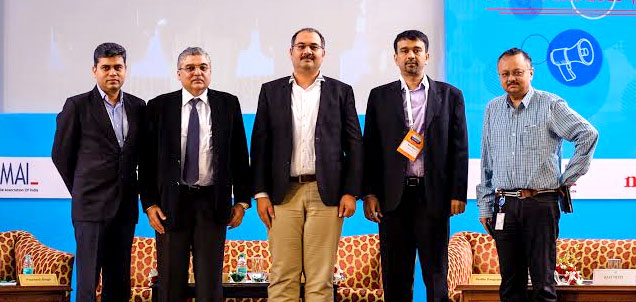
    L to R: ​​Prashant Singh, MD, Nielsen, Ashish Bhasin, Chairman and CEO, Dentsu Aegis Network ( South Asia), Tushar Vyas, Chief Strategy Officer – South Asia, GroupM, Ravi Dixit, Head – Market Insights, Google and Partho Dasgupta, CEO, BARC India.​


    By Dyanne Coelho


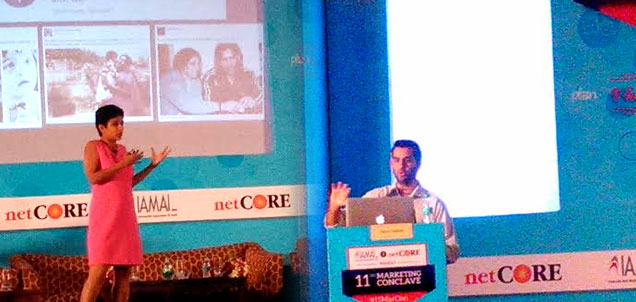
    The eleventh edition of the Marketing Conclave organised by the Internet and Mobile Association of India (IAMAI) saw industry stalwarts from across platforms highlight key trends in the marketing world from the digital evolution, the changing role of the CMO, cross-platform marketing and the dawn of the mobile as the ‘first’ screen.


    Day One kickstarted with a keynote address by Tushar Vyas, Chief Strategy Officer, South Asia, GroupM. “Today’s consumer doesn’t believe in the values of yesterday,” he began talking about how the mobile has taken over the internet and created a complexity in advertising.Rajesh Jain, Founder and Managing Director, netCORE Solutions emphasised that the trend of tracking consumer behaviour has grown mainly in the digital era. There is little or no data tracked in an offline world, like what a consumer goes and picks up in a grocery store, he said. “We ought to start thinking customer journeys,” Jain added. CVL Srinivas, CEO, GroupM South Asia delved into the challenges of marketing in the digital age.“There’s so much talk about digital, we forget that at the end of the day we’re in an ideas business,” he said, talking about how at times we get so overwhelmed with data that we lose focus of our core competency. “We ought to be able to change mindsets, not just technologies,” Srinivas added.


    A panel discussion on the expanding roles of the CMO highlighted a study which said that by 2020, the CMO will be spending more on IT than the CIO. The speed at which the CMO needs to react is increasing, the panelists discussed.The argument of whether digital is being effectively integrated with other marketing media, or is just an extension, was the next hot topic of discussion. The panelists concluded that though the digital medium has taken the marketing world by storm, at the end of the day, it all boils down to how well you know and recognise your consumer and give them what they want, when they want it. The final session for Day One discussed whether we are ready for the transition from ‘mobile first’ to a ‘mobile only’ era. High value products like airplane tickets and high value electronic devices are likely to be purchased on the desktop rather than the mobile phone, the panelists discussed. Anurag Singh, Co-founder and ED – India (Ads Platform), Affle concluded by saying that there is no wrong and right, you have to decide what’s best for your consumer depending on what your product and service is.


    Day Two saw industry captains like Kirthiga Reddy, MD Facebook, Satyan Gajwani, CEO Times Internet, Ashish Sahni, Head Digital Marketing Tata Motors, Ashish Bhasin, Chairman and CEO, Dentsu Aegis Network, Partho Dasgupta, CEO, BARC, among others. The bias of the internet towards the English language was discussed in depth, with panelists arguing that an increasing number of regional languages, especially Hindi are picking up and the internet needs to adapt, lest consumers feel choked by the pressure of being force fed English language content online. With availability of cheaper smartphones and accessibility to internet, vernacular content is going to drive growth in digital marketing. Gyan Gupta, COO, DB Digital said, “Hindi as a language is witnessing 40 percent penetration in the online space. With non-metros witnessing steady growth in internet penetration, the vernacular language is certainly the flavor of the day.”


    Ways and means of tracking consumer behaviour without being ‘creepy’ was the key point of discussion in the session entitled ‘Digital Footprints’ Data and Automation in Marketing: The modern marketers’ success mantra.’ How much is too much, was much talked about in the context of following consumer footprints in the digital space.


    “The first thing advertisers ought to do if they want to undertake programmatic marketing is allocate 25 percent of the total marketing budget to it,” Reem Saied, Business Head, Cadreon India said while discussing ways and means of optimizing marketing efforts for an enhanced performance. The quality of talent that marketers need to hire have changed, Apurva Chamaria, AVP and Head of Global Brand and Digital Marketing, HCL Technologies said. “We now hire statisticians, technology experts and bring them into the marketing team. The pool we hire from has changed,” he explained.


    “This is the age of technology where you can get hold of a specialised doctor on an app,” Rathin Lahiri, CMO, Meru Cabs said speaking at the session titled ‘Simplifying the Mobile Marketing Ecosystem’. The panelists discussed the advent of the digital evolution especially in the mobile space. Madan Mohapatra, Head Customer Strategy, Future Group, said, “If we are to look at the global advertising market, the industry around US $600 billion, with mobile advertising pegged at around US $100 billion. In India, mobile advertising is a fraction of global spends. The time has is ripe to increase mobile ad spend as growing captive consumers are found mobile.”The mobile screen has forced the marketing ecosystem to evolve. “Digital is not something you can ignore. If you don’t speak for yourself, your consumers will take you down,” Akshay Sharma, Head – Marketing, Eros Digital exclaimed.


    Kirthiga Reddy, Managing Director, Facebook India, highlighted how Facebook is attempting to innovate. “We are constantly and consistently integrating virtual reality. Innovations on the creative side of the real estate industry has provided enormous boost to virtual reality concept.” Talking about Digital Marketing, Satyan Gajwani, Chief Executive Officer, Times Internet, said, “Technology allows the platform of digital advertising to enhance and create advertisements targeted at certain consumers. Hence we are seeing the growth of native advertisement, which tears through the clutter.


    Having an absolute, standard method for measurement of the attributes of all digital platforms is the need of the hour the panelists discussed at the session entitled ‘Establishing a common digital standard’. “Cross media measurement has been talked about for a while. We keep measuring the media, we forget to measure the consumer,” Ashish Bhasin, Chairman and CEO, Dentsu Aegis Network (South Asia) stressed. India is still far behind in trying to understand the consumers’ buying behavior, Prashant Singh, Managing Director; Nielsen said adding that the next step is for BARC to look at digital. BARC CEO Partho Dasgupta said it may not be correct keep citing examples of progress of digital in the US and the UK because “they may not be the best one can have”. “95 per cent of videos are still consumed on television sets in the UK,” he added.


    Thoughts, ideas, statistics and case studies made the two-day conclave an insightful and informative event. The programme brought together some of the brightest minds in the marketing fraternity together on one platform and thus enabled an educative exchange of thoughts and ideas to light the path forward for marketing in India.


  • Fear of Being Offline & other digi-facts


    By Dyanne Coelho


    The first Indian Facebook employee, Kirthiga Reddy, now Managing Director, Facebook India left quite an impression on the audience with her talk entitled ‘Winning in a mobile first world’ at the 11th Marketing Conclave organised by the Internet and Mobile Association of India (IAMAI). FOBO or the Fear of Being Offline is a new term that is picking up in this day and age, she said. On Mother’s Day, India had the second highest ranking in terms of interactions with 1.8 billion interactions on the network. The older generation did exactly the same things we do, she explained, the only difference is that they did it in a different way.


    63 percent of young people would prefer to give up TV rather than their phone, she said of a study. 62 percent of young people feel lost if they are not connected to social media. An IAMAI-BCG report estimates that by 2020, a whopping 500 million people will be connected to the internet. Back in the day, your kirana shop owner knew exactly what you needed when you walked into his store. That personalisation is missing today with the advent of the mass media, Reddy explained.


    Satyan Gajwani, Chief Executive Officer, Times Internet, backed her up saying, “Technology allows the platform of digital advertising to enhance and create advertisements targeted at certain consumers. Hence we are seeing the growth of native advertisement, which breaks clutter and stops disruptive ads.”


    “Facebook is constantly and consistently integrating virtual reality. Innovations on the creative side of the real estate industry has provided enormous boost to virtual reality concept. Brands are focusing on reaching out to consumers in a personalised and creative manner. And the digital platform provides the best solution,” Reddy said. Out of 1.44 billion people who are on Facebook, 1.2 billion connect to it on a mobile device; she informed highlighting the genesis of a mobile-first world. There is also a growing trend of visual communication, Reddy added. First it started with text, then photos and now the world of video is expanding. Reddy cited the example of Facebook’s feature that allows a user to watch videos without sound on the mobile phone. The feature that is one of the latest, plays a video without sound as the user scrolls through his newsfeed. This will allow users to watch videos on their phones even during a seminar or meeting at work, she joked. Marketers ought to strive to drive awareness and retarget their audience, she said. The ‘cookie’ the dominant web metric used to track customer behaviour online will soon be ditched as it doesn’t correctly evaluate business results, she explained. This is the mobile first world and if we don’t adapt, we will be left far behind, she said.


    There are 150 million smartphones users today, and that number is expected to go up to 500 million by 2018. Digital is the new advertising paradigm, Gajwani explained. The internet is driven by smartphones and the amount of digital content being created is skyrocketing. “The 300×250 size banner doesn’t have the same impact today, spots don’t have the same impact either,” Gajwani said. Smart and targeted advertising and marketing with precise solutions is what will drive the numbers, he added. We ought to be enablers and educators of what’s working and what is not. “The opportunity to get creative is here and is bigger than ever before,” he concluded.


  • iProspect Communicate wins 4 Metals at IDMA 2015

    By A Correspondent


    iProspect Communicate 2 from the Dentsu Aegis Network has won four awards across three categories at the India Digital Media Awards 2015. These awards recognize outstanding work, in advertising and marketing communications in the digital space.


    The honours included two metals in the ‘Best PPC’ category, with the agency picking up Gold and Silver for their Kotak Mahindra Bank and HDFC Life campaigns respectively. They also won a Bronze for the ‘Most Effective Use of Digital Analytics’ in Social Media for the Big Bazaar campaign. As well as a Bronze for ‘Best Use of Technology’ for Koovs.


    The objective of the Indian Digital Media Awards 2015 is to recognize, celebrate and encourage the work being done in the ever-growing advertising and marketing communications activity in the digital media space specifically, internet, mobile, gaming, social media and the blogosphere.


    Vivek Bhargava

    Vivek Bhargava CEO of iProspect Communicate 2 commented, “It is a privilege to have our work in the digital space recognised by IDMA. As a team of extremely dedicated professionals who work endlessly, to offer our clients the best online solutions, it is wonderful to have our hard work recognised and I would like to thank IDMA for these honours.”


  • Discussion on emergence of Twitter in storytelling

    By Dyanne Coelho


    Popular microblogging platform Twitter hosted an interactive and informative conference entitled #RiseWithTwitter highlighting the future of mobile storytelling in India and the emerging uses of the platform. Held in Mumbai on Tuesday (June 30), the event saw a cross-section of mediapersons and well-known personalities talking on the rise of the platform.


    For instance, Meghna Pant, Indian literary fiction writer and financial journalist shared an inspiring tale of how she tweeted the Mahabharata in just 100 tweets.


    Times Now Editor-in-Chief, Arnab Goswami  joined Rishi Jaitley, Market Director, India and South East Asia in an engaging session to discuss the applications of Twitter in the world of journalism. The Lalitgate hashtag (#Lalitgate) coined by Times Now after the recent expose, has earned 43.2 million tweets in a six-day period, Twitter revealed. “Television gets me an audience five times bigger than digital,” Goswami said but added that both mediums are now working in a complementary fashion. “We’re six years away from a digital explosion,” he said of research and he advised that if you are working in the field of digital, hang in there, things are going to explode with change.


    Balu Nair, the creator of the Twitter handle @BloodDonorsIn explained how Twitter as a medium is being used for a cause. If any patient is in dire need of a blood transfusion, the family or friends can tweet at the handle with the requirement. Nair explained that kind souls have even travelled cross city to donate blood to those in need thanks to the handle.


    MN Reddi, Commissioner of Police, Bengaluru in the session ‘The Mobile Microphone’ moderated by Mid-Day Editor Sachin Kalbag pointed out the advantages of Twitter for himself as a person of authority and responsibility. People feel safer because they feel connected to the Commissioner and they get immediate responses to their queries and/or complaints, however rumours are still a huge issue in the world of social media, he said. Henry Jenkins, American media scholar and professor of communication and journalism at USC, brought to note that many scandals would not have hit as hard as they did if it depended only on the media. It is the people who have created the buzz on social media and brought issues to light he said. He cited the example of the hashtag #CNNFail a few years back that trended on Twitter, and which was created by the public to express their disappointment of CNN’s coverage of the aftermath of the Iranian election coverage. Sunil Chhetri of the Bengaluru FC football team highlighted the negativity a platform like Twitter brings to him as a player and to sportspersons in general. “When we lose a match, I dread looking at my phone, because the fans tweets are further depressing. So I check them only a day after once I have calmed down,” he explained.


    While people like sportspersons or celebrities can afford to wait a day to respond to tweets, brands don’t have that luxury, Deepali Naair, CMO, Mahindra Holidays said. For brands what is important to engage in conversations that matter to people, she said.Abu Mathen George of the Ministry of External Affairs discussed how his team handles multiple Twitter handles to cater to various needs of Indian citizens. Twitter was used extensively to carry out the evacuations of Indians from Yemen, he explained. People could tweet at the handle about their whereabouts and the Ministry would respond with nearest ports or planes for them to get to. A similar strategy was used during the Nepal earthquake. The importance of engaging the audience on a mobile global platform is key, the panelists Manan Mehta, VP, Yash Raj Films, Abu Mathen George of the Ministry of External Affairs and business journalist Shaili Chopra discussed in a session moderated by Anant Goenka, Director of the Indian Express group.


    Nitish Tipnis, Director Sales and Marketing, Hover Automotive India, Deepali Naair, and Shivnath Thukral, Group president, Corporate Branding and Strategic Initiatives at Essar engaged in audience  in an interesting discussion on humanising brands on social media. Whether you are a relatively formal brand like Essar, or a fun brand like Mahindra Holidays, it’s all about keeping the conversation casual on a social media platform, yet getting your word across to the right target audience.


    “India is one of the leading markets in terms of user base,” Taranjeet Singh, Country Business Head, Twitter India, said. “Growth in India has been phenomenal. We work with over 600 brands and we have recently launched TV targeting as well because we realised that many people tweet about the content they are watching. Twitter India is way ahead of the business plan in terms of revenue,” Singh revealed.


  • ‘Is Anyone Listening?’ @ Media Review 2015


    By A Correspondent


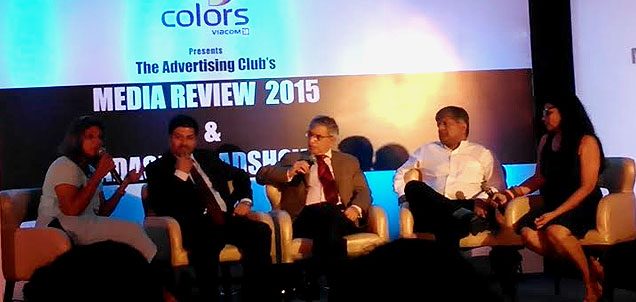
    On a day that threatened to be washed out thanks to a heavy downpour, the Advertising Club hosted its annual event, Media Review 2015, on Tuesday in Mumbai. The speakers included Shashi Sinha, Chief Executive Officer, IPG Mediabrands India, Meenakshi Menon, Founder and Chairperson, Spatial Access; Pradeep Dwivedi, Chief Corporate Sales & Marketing Officer, Dainik Bhaskar Group, and Punitha Arumugam, Head of Agency Business (India & SEA) at Google.


    Each speaker spoke on the topic ‘Is Anyone Listening? How Did Ad and Media Industry Combat The Challenge Of Continuous Partial Attention of Audiences.’


    “The ad model cannot continue to behave like an ostrich,” Meenakshi Menon said stressing that clients want to see the model changed. Most agencies today have launched a digital unit, but have no idea what to do with it, she added. “Companies live quarter to quarter, clients are restless and CMOs want to change the set up,” Menon said.


    Pradeep Dwivedi painted a colourful portrait of the print medium in India. The challenge is of how to get your attention back, he said talking about how we ought to rediscover print. It is not true that print isn’t emotional he said, print can be just as emotional as TV he pointed out highlighting a few print ad campaigns that were much talked about. “Print continues to evolve, and it takes up social issues as well more than any other medium,” Dwivedi said. Marketers need to get out of this metrocentricity, step out of the metros and figure out what people want, he said.


    Shashi Sinha, dwelled on the topic of managing media in a continuous partial attention world. He quoted Lord Kelvin, ‘If you cannot measure it, you cannot control it’, he said stressing on the importance of having a reliable measurement system in place. The core reason for the well-being of the industry is measurement, he pointed out. “Programmatic is the buzzword these days and we ought to link digital, TV and print measurement,” he said.


    “Big egos have little ears,” Punitha Arumugam said talking about the importance of paying attention to the consumers. “We have to listen to the consumer in this moment, now, not tomorrow,” she said. Arumugam cited examples of advertisements that have paid attention to the needs of the consumer no just on a product level but beyond. She spoke about Dabur’s ‘Brave and Beautiful’ ad campaign as well as Dove’s ‘Be Beautiful’ campaign. She also discussed the thought behind the Horlicks’ ad that set out to prove that Horlicks mixes in milk before you can skip the ad.


    Sam Balsara, Founder and Chairman, Madison World led the panel discussion with the four speakers next. The panellists discussed the changes taking place with the dawn of the new media and whether this changes the traditional values in this space. “The pivot is no longer the medium, but the consumer. The industry this needs to change pivot,” Menon emphasised.


    Very soon, agencies are going to be independent data providers, Arumugam said. “Tomorrow there’ll be data available in plenty; it’s about how you use the data.”


    The evening also witnessed a presentation on AdAsia 2015, Taipei to be held from November 22 to 25, 2015.


  • 2015 ARRIS Consumer Entertainment Index throws up interesting trends

    By A Correspondent


    The 2015 ARRIS Consumer Entertainment Index (CEI), launched recently reveals that consumers demand Wi-Fi without limits, and highlights a growing disparity between expectation and reality when it comes to Wi-Fi at home. The findings also point to a connection to the expanding ecosystem of devices and growing popularity of streaming services.


    Worldwide, the average home now has six media devices connected to its Wi-Fi network, and the average household spends almost 6.5 hours each week streaming a subscription service. Moreover, four out of five (81 percent) of those who stream now do so at least weekly, up from 72 percent just last year. There is a clear connection between Wi-Fi and mobile TV too, with nearly three-quarters (73 percent) of people who watch mobile TV at least once a week, using Wi-Fi to do so.


    These trends are a likely culprit of the Internet issues that nearly two-thirds (63 percent) of global consumers experience, as well as their renewed interest in high-speed Internet in every room of the house – a service that 72 percent indicated was either very important or vitally important.


    The research underscores new qualifications for the rise of both mobile TV and binge-viewing. While the popularity of mobile TV continues to increase—more than half (59 percent) of consumers are now watching TV on-the-go—the potential for growth is greatest in older demographics, where barriers of inconvenience and cost continue to challenge broader market adoption. Meanwhile, binge-viewing has evolved into a very personal and solitary activity for 60 percent of binge-viewing consumers.


    The good news for service providers is that these trends represent a number of opportunities to make it easier for consumers of all ages to download or stream content, to customize content and services to the individual consumer experience, and to solve connectivity issues by giving consumers a high-speed wireless connection where it is needed—all over the home—through better Wi-Fi equipment and training.


    Key findings from the 2015 ARRIS (NASDAQ: ARRS) Consumer Entertainment Index include:

    1. Good quality Wi-Fi has become a necessity in homes: 72 percent of consumers consider a high-speed Internet connection in every room of their house either vitally important or very important. And, more than half (54 percent) state that it is vitally important to have high-speed Wi-Fi that works outside of its current range. Service providers have a tremendous opportunity to solve connectivity issues for consumers by providing reliable, high-speed connections throughout the home.

    2. Popularity of mobile TV is maturing among younger demographics, but future growth will rely on older generations: More than half (59 percent) of all people now watch mobile TV, rising to 72 percent of 16-24 year-olds. However, while young people watch the most mobile TV, there has been no increase in the number of viewers. For 65+ year-old consumers, the number of mobile TV viewers has increased by a remarkable 11 percent, up from 19 percent last year. This demographic presents an excellent growth opportunity for operators if they can help consumers overcome barriers of inconvenience and cost, and make it easier to download or stream content.

    3. Consumers prefer to download vs. stream mobile content: Nearly three-quarters (72 percent) of downloading consumers say it is important to be able to download content to a device so they can watch it on-the-go without an Internet connection, rather than having to rely on cellular connections to stream. Also, 73 percent of the respondents who watch mobile TV use Wi-Fi to do so. This presents an opportunity for service providers to facilitate content downloads to mobile devices.

    4. Binge-viewing has gone solo in 2015: 60 percent of binge-viewers do so alone, and the average binge-viewing consumer now watches for three hours in each sitting. Thus, service providers have an opportunity to personalize content and services for the individual and deliver a more tailored customer experience.

    5. Slow Growth in OTT Fails to Draw Broadcast TV Users: The past year has seen a nominal increase in OTT users (from 93 percent to 94 percent) and a similarly nominal decrease in broadcast TV users (from 97 percent to 96 percent). This highlights a disparity between industry expectation of these services and their actual rate of acceleration and suggests that Broadcast TV remains king for now.


    Sandy Howe, Senior Vice President, Global Marketing, ARRIS, commented: “The ARRIS CEI research offers our customers invaluable insight into the evolving consumer interaction with entertainment technology and content. It underscores four major trends: 1.) consumer dependence on Wi-Fi and consequent frustration with its quality, 2.) the concurrent growth and hindrance of mobile TV adoption, 3.) the growing preference for downloading vs. streaming mobile content, and 4.) the increasingly personal nature of binge-viewing.


    “All of these trends point to a tremendous opportunity for service providers and programmers to customize their offerings to these new consumer trends and to ensure the quality of the home’s Wi-Fi network, which increasingly is bearing the weight of this evolution in services.”


    Reliable Wi-Fi evolves from a convenience to a necessity in every room

    Reliable Wi-Fi has become a necessity in homes as the average global household now has an average of six media devices connected to its Wi-Fi network. However, two-thirds (63 percent) of consumers have experienced significant issues around slow Internet speeds that affect streaming and downloading of large files and video. Service providers have an opportunity to solve connectivity issues by giving consumers a high-speed wireless connection where it is needed – all over the home.


    • 72 percent of consumers say having a high-speed Internet connection available to use in every room of their house is either vitally important or very important.
    • On average, 54 percent of respondents say it is vital to have high-speed Wi-Fi that works beyond its current range, it is even higher in some countries, most notably in Asia-Pacific:
      • South Korea (68 percent)
      • China (67 percent)
      • India (61 percent)
      • Issues with streaming and downloading content varies by country:
        • Four out of five (80 percent) of Chinese Internet users experience issues – the highest reported
        • A third (38 percent ) of Japanese Internet users experience issues – the lowest reported
      • Respondents are disappointed with Wi-Fi quality in multiple rooms in the house:
        • Living room: 13 percent
        • Master bedroom: 13 percent
        • Kitchen: 10 percent
        • Toilet and bathroom: 10 percent
      • While on average, 29 percent of global respondents use a Wi-Fi range extender, it is even higher in some countries:
        • More than half of people in India (52 percent) use a Wi-Fi range extender
        • 47 percent in Brazil
        • 42 percent in Russia
      • And while on average 19 percent of global respondents are considering getting a Wi-Fi range extender, again, this trend is even higher in some countries:
        • 32 percent in Mexico
        • 29 percent in Turkey
      • The bedroom has become even more popular as a place to stream TV and movies:
        • 35 percent of those who stream a subscription service do so in the bedroom (up from 22 percent in 2014)
      • Of course, not everyone even has or uses Wi-Fi at home:
      • 9 percent of global respondents do not have or use Wi-Fi at home
      • 17 percent in Russia do not have or use Wi-Fi at home
      • 28 percent in Japan do not have or use Wi-Fi at home


    Popularity of mobile TV is maturing among younger demographics, but future growth will rely on older generations

    The popularity of mobile TV is maturing among younger demographics, 59 percent now watch TV on the go. However, future growth will rely on older generations. The industry must help consumers overcome barriers of inconvenience and cost, and make it easier for consumers to download or stream content.


    • This year, consumers are 7 percent more likely to watch mobile TV away from home, and 6 percent more people watch TV in that manner every day
      • Most surprisingly, in 2015 mobile TV grew the most among 65 year olds and over (11 percent increase)
      • However, the younger people are, the more they watch mobile TV:
      • 72 percent of 16-24 year-olds watch mobile TV
      • 53 percent of 45-54 year-olds watch mobile TV
      • 42 percent of 55-64 year-olds watch mobile TV
        • Mobile TV consumption varies by age group, for 25-34 year-olds, specifically:
        • One in five (21 percent) watch mobile TV daily
        • More than half (57 percent) watch mobile TV at least once a week (up from 53 percent in 2014)
        • Although, 27 percent never watch mobile TV (down from 29 percent in 2014)
      • Not everyone wants their TV to be mobile:
        • 41 percent of global respondents never or rarely use a laptop, smartphone or tablet to watch TV outside the house
        • This rises to three-quarters (75 percent) of respondents in Japan, followed by 62 percent in Australia, and 60 percent in Canada
      • High costs are holding back younger people from watching mobile TV. For older people, the screen is the main reason
      • The majority of mobile TV consumers use Wi-Fi:
        • 73 percent use free Wi-Fi
        • 50 percent use 3G/4G/5G


    Consumers prefer to download rather than stream mobile content because of patchy coverage while on-the-go

    The majority of respondents prefer to download vs. stream content for mobile viewing. 72 percent of downloading consumers say it is important to be able to download content to a device so they can watch it on-the-go without an Internet connection, rather than having to rely on cellular connections to stream.

    • Consumers mostly prefer to watch mobile TV while travelling:
    • 44 percent watch on public transport (highest in South Korea at 68 percent and Singapore at 67 percent)
    • 41 percent while waiting to meet someone (highest in Brazil at 54 percent)
    • 31 percent watch in the car (highest in India at 52 percent and in the US at 44 percent)
    • 31 percent while waiting to receive a service such as at the doctor’s or a repair shop (highest in Brazil at 46 percent)
    • 30 percent at restaurants, cafes, bars or pubs
    • 27 percent while out walking
    • 24 percent at a hotel
    • 14 percent while shopping
      • 68 percent of respondents said they are interested in a service that allows them to watch any TV program at any location
      • Rising to 75 percent for 16-24 year-olds


    Binge-viewing is a solo activity

    Expanding on binge-viewing trends uncovered last year, binge-viewing has gone solo in 2015 – service providers have an opportunity to personalize content and services to the individual for more tailored customer experiences 

    • 60 percent of binge-viewers in 2015 said they do so alone
    • Solo-binging is most popular in the Asia-Pacific region:
    • Four out of five (80 percent) of binge-viewers solo-binge in Japan
    • 77 percent in China
    • 72 percent in South Korea
      • And is lowest in Latin America:
      • Mexico solo-binges the least with only 40 percent of binge-viewers doing so
        • More young people binge-view, and they do it for longer:
        • 89 percent of 16-24 year-olds binge-watch globally
        • On average, they watch for 4 hours each time
        • 70 percent of 16-24 year olds binge-view at least once a month (the same as last year)
          • People prefer to binge-watch on a TV, but mobile-binging is also rising:
        • 69 percent binge-viewers use a TV (up from 61 percent in 2014)
        • 21 percent use a mobile device (up from 16 percent in 2014)
          • Binge-watching is a monthly occurrence for most people:
        • 33 percent of all respondents binge-view at least once a week
        • 56 percent binge-view at least once a month
        • 54 percent of people in Brazil binge-watch weekly though (up from 39 percent last year)


    Slow Growth in OTT Fails to Draw Broadcast TV Users

    Results reveal disparity between industry expectation of OTT/catch-up TV services and its actual rate of growth and suggests that Broadcast TV remains king for now. 

    • 1 percent growth in OTT users since last year (from 93 percent to 94 percent)
      • Rising to 12 percent in the 65+ year-old age group (from 70 percent to 82 percent)
    • 1 percent drop in broadcast TV users who have access to OTT (from 97 percent to 96 percent)
    • The average consumer spends 11.8 hours per week watching free broadcast TV
      • Compared to:
        • Subscription paid TV: 10 hours/week
        • Internet stream via on-demand TV service or catch-up TV service: 6.4 hours/week
        • Internet TV with / without attached box: 6.3 hours/week
        • Internet stream via paid subscription TV service: 7.6 hours/week


  • Consumers in a Connected World


    By Dyanne Coelho


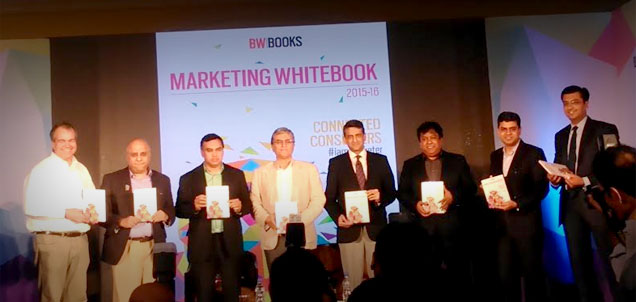
    Businessworld in association with Nielsen launched the 11th edition of the Businessworld Marketing Whitebook 2015-2016 with much ado including an impressive lineup of speakers. Key trends in the marketing space were touched upon through the sessions.


    John Burbank, President Strategic Initiatives, Nielsen set the tone for the release of the Marketing Whitebook with his insightful discussion on ‘Gearing up for a Consumer-First World.’ “I think the world is data-rich and analytics poor,” he said. The basic questions are the ones marketers need to be asking, he said. These include ‘How many are actually seeing my advertisement?’ and ‘How effective is my advertisement in delivering ROI?’ among others. Do not let the complexity of the amount of big data change these fundamental questions, he advised.


    ‘A Year of Cautious Optimism: What Lies Ahead for Business Leaders’ was the first topic of discussion. The panel included Devendra Chawla, Group President, Foods, Future Group, Rakshit Hargave, Managing Director, Nivea India and it was moderated by Gurbir Singh, Executive Editor, Businessworld. “A category comprising skincare and personal care is growing in single digits, the consumers are not opening their pockets,” Hargave pointed out, while Chawla said that food and FMCG products are not hit as badly as sectors like real estate and automobiles. High value purchases have been hit harder, he said.“Inflation, especially food inflation has eaten into the money supply of the family. The consumer is holding back,” Hargave mentioned. Chawla however highlighted that the beauty industry is actually growing 70-80 percent. To this Hargave, added that the pattern is no different for him. Beauty products in the men’s category are growing faster than those in the women’s category, he said.“Marketers ought to work on deriving more basic information, get more innovative, study different needs and tastes of consumers, etc in order to keep up with changing times,” Hargave said.


    Salil Kapoor, COO, Dish TV moderated the next session which dwelled on the topic of the ‘Emergence of New Media for an Impactful Connect with Consumer’. “By 2020, 50 billion devices around you are going to get connected, you have to be smart about who to reach out to,” Avinash Jhangiani, Managing Director, Digital and Mobility, Omnicom Media Group said. Shripad Kulkarni, CEO, Vizeum India opined that this newness is here to stay. “We see a very bright trend emerging of experimentation which leads to all kinds of advertising. It is moving towards a new metric of performance. This is a good thing,” he said. The topic of big data was discussed in the regard. Tarun Jha, Head of Marketing, Skoda India spoke that the automobile industry is highly dependent on big data. “We run lean ships, spend money wisely, have a very focused objective for every campaign and ensure that every penny is accounted for,” he said.


    Social listening has become a serious business, the panelists discussed in the session titled, ‘#iammarketer: The Realities of a Changing Consumer World’. “Socialisation allows us to build communities of like-minded people, build engagement, etc. This is where one gets insights from across categories and consumer behaviour,” Veetika Deoras, Head of Brand Marketing, Digital and Corporate Communications, Tata Capital said. While many marketers have evolved into digital, some are still experimenting, Ashutosh Gupta, Director Marketing Solutions, LinkedIn India said. “It’s not about social or digital, it’s more about the consumer journey,” he said. Sudeep Ghosh, VP Marketing at VIP Industries is of the belief that one should not follow the template. “Do digital if it works for you,” he said. Digital works differently for different brands and hence each needs to adapt depending on its needs, he added.


    Prashant Singh, MD, Nielsen India lead the discussion entitled, ‘The Rise of the Connected Consumer’. The panelists included Kamal Basu, Marketing and PR Head, Volkswagen India, Prashant Peres, Director Marketing – Chocolate, Mondelez India, Sameer Satpathy, CMO, Marico Ltd and Tarun Arora, COO and Director, Zydus Wellness Limited. The session revolved around how the need of the hour is not about focusing on advertising or broadcasting, but on using an integrated approach to have a full conversation and up brand value for consumers. “Legacy marketers are often apprehensive about the impact they can make through new media, there is a fear,” Peres said. Arora on the other hand argued that the line between online and offline is blurring as both need to use each other to build the brand. “Multi-channel purchase is going to happen and FMCG cannot sit back,” he said. From an automobile industry perspective, digital is the lifeline, Basu pointed out as most buyers do primary research online before they walk into a store. Satpathy however believes that it all depends on the task for the brand.


    CVL Srinivas, CEO, GroupM South Asia played moderator to an interesting discussion on ‘Decoding Diversity in India’ followed with presentations by Sachin Jain, President, Forevermark India and Samir Jain, MD, Bunge Ltd wherein each pointed out the growth of their brands and how they adapted their marketing strategy to different segments of India in order to target different sets of consumers.


    Earlier, Annurag Batra, Chairman and Editor in Chief, BW Businessworld (also Chairman and Editor-in-Chief of the Exchange4media group) delivered the opening address, gearing up the delegates for the rest of the event.


  • Now, a summit and awards for sales folk at CSO Summit

    By A Correspondent


    If you’ve seen the Mint newspaper of the day, you couldn’t have missed the bright full-pager of the CLO Summit. And part of that same ad is the CSO Summit.


    Conceived and crafted by Kumaar Bagrodia, an entrepreneur, investor and the man who has been running the Chief Learning Officers Summit for the last seven years and the Non-Fiction Festival among various others for in Mumbai, Delhi and elsewhere. Bagrodia believes there are several websites dealing with advertising and marketing. Like MxM. But none for sales. And given that sales straddles all domains and is by far the most popular and populated professions in the world, it’s unfortunate that it doesn’t get due respect from the business.


    From the salesperson on the street and the traffic lights to the Eureka Forbes sales exec to the white-collared corporate business development professional, sales is by far the most important fields of activity, believes Bagrodia as he rues the absence of sales as a specialisation from most B-school programmes.


    So the CSO Chief Sales Officers & Directors Summit will happen on September 9 at the Four Seasons Hotel in Mumbai. Celebrated guru in sales leadership, performance management and the like Dan Seidman is flying down from the US to conduct a special session.


    This will be followed by two high-end panel discussions and an awards ceremony, the jury for which will comprise global and Indian biggies.


    Details and registration info are at csosummit.asia.


  • Emvies receives record entries for 2015

    By A Correspondent


    EMVIES, the premier media awards instituted by The Advertising Club Bombay in 2001 is completing fifteen years. This year, the festival has received the highest number of entries ever. Last year, Ad Club received 650 entries and this year the figure is 835 thereby surpassing last year’s figure by a whopping margin of 185 entries.


    The EMVIES have gone from strength to strength with very active and enthusiastic support of the entire media fraternity. Not only have these Awards become a matter of honour for media planning and buying houses, but are receiving tremendous support from media marketers and clients as well. Since last year the Ad Club presents two trophies for every winning campaign one to the agency and one to the client.


    Since the last three years the Ad Club has started conducting the judging of some of its categories of its two premier awards EFFIEs and EMVIEs at Delhi. This has helped the Ad Club to engage the large marketing fraternity from Delhi into its scheme of things.


    Some highlights include:

    – EMVIES 2015 entries were submitted online by the media agencies

    – In 2014, clients participated in the form of a joint EMVIES trophy. In 2015, EMVIES has announced Best Media Partner in Television, Print, Cinema, Radio, Out of Home/Ambient Media and Digital.

    -  Multiple platform (a combination of a minimum of two) has been added as additional sub categories under Best Media Innovation – Digital.


    As many as 27 agencies have participated in the competition and their work will be judged by 150 media professionals in Round I spread over for three days in Mumbai and Delhi. The Round II judging will happen for three to four days in the popular format of Case Study Presentation at Welingkar Institute. Only those who will be present on or before 10 am will get the ballot paper to exercise their vote.


    The Grand Gala Ceremony is scheduled on Friday, 11th September, 2015 at the Ball Room, Hotel Palladium, Lower Parel, Mumbai at 6.30 pm


  • Mumbai to host first edition of EEMAX Global Awards 2015

    By A Correspondent


    Event and Entertainment Management Association (EEMA), announced the EEMAX Global Awards to identify, celebrate and honour the best events and experiential marketing projects from India and around the world.


    Entries for the EEMAX Global Awards are expected from agencies in India, Asia, Middle East, Africa, Europe, Australia, New Zealand and USA. The three level selection process, involves taking the award entries through a screening jury, a global jury and peer voting by members of EEMA to choose the winners in 29 categories that span entertainment events, social events, sporting events, weddings, exhibitions, digital events, government events, education programs and CSR.


    Sabbas Joseph, President- EEMA, shared, “The EEMAX GLOBAL Awards are a clear sign of India¹s event industry going global. Indian event companies are being retained by international clients and brands for development of activation programs as well as corporate events, mega public events and also sporting galas. EEMAX Global will signify a welcome to global agencies to showcase their work in India which is the fast-developing turf for global event programs.”


    The presentation ceremony will be held in Mumbai, India in September 2015.


    The event industry in India has grown exponentially over the last two decades with several 1000 entities operating in this space, in various segments and levels across 100+ cities in India. EEMA is the first and only body of its kind, which seeks to bring together the country’ leading event management companies, entertainment professionals, artist management companies and international counterparts on the same platform.


    The premier convention of the live events and experiential marketing industry, EEMAGINE SUMMIT 2015, brought together global professionals like David Zolkwer, Matteo Carvino and Sarah Gardiner; Indian leaders and achievers like Poonam Mahajan, Venky Mysore, Dr. A Didar Singh, Vikas Agnihotri, Rishi Jaitly, Yannick Colaco, Ravi Krishnan and Nitin Kukreja and several other imagineers from the events, entertainment, sports, cinema, advertising and marketing industry under one roof to discuss trends and map the future of the industry in a path-breaking convention.