Category: TV

  • NDTV 24×7 now available in UK on Virgin

    By Akash Raha


    NDTV Group’s premier English news channel NDTV 24×7 is now also available on Virgin Media in the UK. With this, NDTV 24×7 becomes Asia’s first and only news channel to be a part of Virgin’s base pack along with other leading international news channels. NDTV 24×7 will now be reaching out to an additional 3 million plus households.


    Speaking on the occasion, NDTV’s Head – Network Distribution and Affiliate Sales, Rahul Sood, said, “With this launch on Virgin, NDTV 24×7 is now available across a large majority of TV viewing homes across the UK. It helps us further penetrate the UK market and reach out to all those viewers who have a deeper commercial and cultural interest in the news and stories from the sub-continent.”


    NDTV 24×7 is available on channel # 621 on Virgin Media’s base. It is also available on Sky and is the only news channel fromIndia which is now being beamed into 75 countries across the world.


    Cindy Rose, Executive Director, Digital Entertainment, Virgin Media, said, “We have been working extremely hard this year to deliver a sterling line-up of channels, and adding NDTV 24×7 is one of those initiatives. We are very pleased to have them on board and 2012 promises to be an even more exciting year as we will be launching revolutionary new products and services, reinforcing Virgin Media as the most innovative and pioneering digital home entertainment provider in the market.”


    What they think


    Reacting to the development, Surbhi C Murthy, Associate Vice President, Allied Media, said, “I am sure this move is likely to get NDTV more viewership and also more Indian and international advertisers who want to be seen in UK market.UK has a lot of Indian population and reaching out to them certainly makes sense, both for Indian and international advertisers.”


    There is also the question whether the content will be specifically be curated for the UK market or will the same content being shown inIndia, be telecast in UK. And if it is, will the UK audience of Indian origin be interested?


    Dinesh Vyas, Business Head, MEC, said advertising would not be significantly bolstered with the move. “Certainly they will like to have viewers across the world. The US and UK has a substantial populations of NRI and immigrants. But as far as media planners and buyers are concerned, I don’t think this will make much difference. They will not be necessarily excited about this expansion. If they want reach in the UK market, I am sure they will look across the length and breadth of all the media vehicles that are available. That said, expansion in all forms is good and it’s going to pay off for the NDTV group in the long run.”


  • Anil Thakraney: Treating the fan like shit

    By Anil Thakraney


    Everyone’s talking about Rahul Dravid’s speech at the Bradman Oration. It is sharp and insightful. And it proves that the man is not just a great batsman, he’s got a thinking brain when it comes to the sport. Jammy makes many pertinent points about the dangers to cricket, but one that caught my attention was on disrespecting the fan. Quite coincidentally, I had alluded to this in an earlier post.


    Dravid warns that not thinking about the fan is one of the reasons for the fast-diminishing crowds at Indian stadia. And how this portends very badly for the future of the game. He is right, of course, and I believe it’s TV that is busy slaying the goose that lays the golden eggs. Because the BCCI earns almost all its revenues from television rights, they have paid scant attention to the stadia. The last time I made the mistake of going for a one-day match, it turned out to be such an awful experience, I swore never go back, even if someone paid me a whole lot of money to do so. Stinking, dirty toilets. Crowd mismanagement. Shortage of drinking water. Very uncomfortable seats. It was like the organizers were saying to me: “Who asked you to come here, you idiot? Go home and watch.”


    Dravid categorically states that it is no fun for the players either. That it is depressing playing in front of empty stadia. Really hope the BCCI is listening to him and takes urgent measures to sort this out. If they won’t take the rest of us seriously, surely they must pay close attention to what the experienced cricketer has to say. He can’t be wrong.


    [youtube width=”400″ height=”200″]http://www.youtube.com/watch?v=qr4bK63WxXY[/youtube]Here’s the link to Dravid’s speech if you haven’t watched it yet. In addition to his views, the suits must pay attention to his style. Dravid makes very serious points, but he doesn’t bore the audience. Something to learn from here for those who speak at seminars. Boring speakers who never fail to put us to sleep. (One of the main reasons I politely decline invitations to seminars.)


    ***


    PS: Completely wacko ad from BurgerKing,Russia. It’s over-the-top and bizarre, perhaps an indication of the desperation caused by their declining market share. But you have to say one thing: At least they’ve made the burger the hero!


  • Mukesh Ambani in talks to buy Network 18: WSJ

    Mukesh Ambani, the chairman of Reliance Industries, India’s biggest conglomerate, is in talks to buy Network 18, the television and internet company, the Wall Street Journal said quoting people familiar with the situation.


    Ambani, the paper said, has been in talks with Network 18 founder and controlling shareholder Raghav Bahl on the issue.


    “The talks may yet lead to nothing. It also isn’t clear what the value of Ambani’s investment would be and whether he is operating on behalf of Reliance Industries or whether he would put his own cash into a deal. Network18 Media and Investments, the holding company for the conglomerate, has annual revenue of about $300 million but isn’t profitable,” said the paper.


    A spokesperson for Reliance Industries told ET that the report is not true. Speculation has been growing in recent weeks about possible takeovers and consolidation in the Indian television and media space as ad industry revenue shrinks due to the slowdown and costs remain stubbornly high.


    Mukesh Ambani and Reliance Industries have been linked to several transactions not just in media and entertainment but also in other industries after RIL surprised everybody by buying a small stake in EIH, the hotel company that runs the Oberoi group of hotels last year.


    RIL has more than Rs 60,000 crore in cash and cash equivalents on its balance sheet and it is widely expected to buy some assets in its core businesses and outside.


    Source:The Economic Times

    Copyright © 2011, Bennett, Coleman & Co. Ltd. All Rights Reserved

  • Star’s Vijay TV hopes to win big with Tamil KBC, nets superstar Suriya as host


    By Tuhina Anand


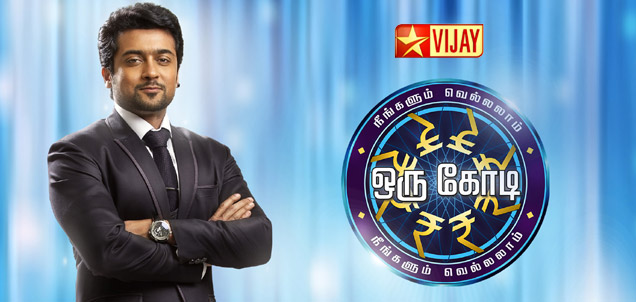
    Star India’s Vijay TV is looking at its next leap with its biggest property Neengalum Vellalam Oru Kodi or Kaun Banega Crorepati in Tamil, to be hosted by superstar Suriya. In fact, this is touted as the biggest property ever not just for Vijay TV but for the Tamil television industry too. The channel is pinning its hope on the show to weave its magic and catapult Vijay TV to garner good numbers. If one looks at the channel share, the scenario among Tamil entertainment channel is that Sun TV leads and relies mainly on its fiction whereas KTV, the movie channel from the Sun TV network is clearly at number two though at times on really rare occasion may be toppled by Vijay TV. Then there is Sun Music and Kalaignar TV which again was positioned as rival to Sun TV placed somewhere in between. However, in this entire number game one thing to keep in mind is that the gap between the leader and the second channel is huge and not easy to bridge.


    For Vijay TV to come up with KBC which is a popular game show and has been played across 116 countries in 83 languages in the past 13 years is definitely a big move. Six years ago, Sun TV had introduced a show with a format similar to KBC, with Sarath Kumar, which had not fared well and could not go beyond its first season. However, much has changed in the Tamil GEC since then and Vijay TV has been the one that has experimented with talent-based reality shows earlier and given audience a taste of non-fiction shows. Now this time with Suriya who makes his television debut and is much revered by the Tamil audience, they definitely have an ace. Also the show is being produced by Big Synergy, the producers of KBC in Hindi, thus ensuring the same high quality in production, sound and sets.


    Bridging the gap

    K Sriram, General Manager, Vijay TV said, “This by far is the biggest investment by any South Indian channel as we have bought the rights from the original to bring out KBC in Tamil. We are looking at bridging the gap with the leader with this property. The treatment of the show is fantastic and it’s a superior product offering to the Tamil audience. We have also tied up with ITC’s Sunfeast as the presenting sponsor.” This year KBC 5 saw all the big brands riding on it and Sriram says that even though the format has its limitations when it comes to getting brands on board, but they along with Synergy are working out ways to provide greater value to brands on the show.”


    The show will be launched in February 2012 and Vijay TV is leaving no stone unturned to capture the minds of its audience. It is breaking a high-decibel campaign starting today (December 21) inviting people to participate in the show which will then be followed by a highly visible 360-degree campaign that will continue till the show debuts on TV. The show will air Monday to Thursday from 8-9.30 pm. The tone of the show will be similar to what Sony has done this year to give voice to unsung heroes and bring out stories from people who have financial constraints but emerge winners on the show, thus the prize money of Rs 1 crore gives wings to their dreams. Sairam however adds that the participants will be a careful mix, thus providing equal opportunity to all.


    The launch of KBC will also see simultaneous launch of the two biggest fiction shows on Vijay TV to ensure audience stickiness post-KBC.


    Vijay TV’s tryst with reality

    Narendra Alambara, Vice President, Starcom Chennai is of the opinion that KBC being a knowledge based show will pull in Tamil audience initially but the real task for Vijay TV will be to sustain viewers once the novelty value of popular host, new show and winners fades. Giving his take on why Vijay TV is probably the best channel to showcase KBC, he said, “The channel has had winners in the past in its talent based reality shows so in that sense it’s in the DNA of Vijay TV as Sun is seen more tuned to fiction.” He added, “Within trade circles KBC has been received well. I think interest will pick up among viewers once the promotion starts. Vijay TV has invested in producing superior quality shows and the quality of KBC will determine the channel’s position as an option for quality programming.”


    John Britto, Business Manager, Mindshare, explained, “The buzz on KBC is positive and this should have a positive impact on Vijay TV. As it is the biggest property and will be marketed well, the brands will be keen to get on it.”


    Giving an insight on why KBC should work this time even though in its earlier avatar it didn’t in TN, he said, “The awareness level this time is much more and the anchor Suriya has a great following. Even earlier, Vijay TV has adapted Koffee with Karan, Laughter Challenge and Talent competition with success.”


    KBC in other regional languages

    It’s not just Vijay TV which is gearing up for KBC in Tamil but there is also Suvarna which is readying for launch of KBC in Kannada with superstar Puneet Rajkumar. KBC had made its debut in Bhojpuri on Mahuaa TV as Ke Bani Crorepati with Shatrughan Sinha as its host and in Bengali as Ke Hobey Banglar Kotipoti hosted by Sourav Ganguly on Mahuaa Bangla. While the Bangla KBC averaged TVR of 2.29 (period June 6 to August 12, 2011), the Bhojpuri version saw an average TVR of just 0.45 (period June 6 to August 12, 2011). (Data source TAM).

    With Suriya as host and Big Synergy ensuring that production and programming standards are standards, Sriram is hopeful of the Tamil KBC delivering rich dividends: not just for the programme, but for the channel too.

  • Naming No Names: We don’t need no ad breaks

    By Gouri Dange


    Is there a name for some of us viewers-listeners-readers who simply cannot be bludgeoned into buying products by the advertising industry? While we do go out and buy stuff, and in that sense are consumers, we have grown an internal lock-out mechanism which makes us utterly impervious to advertising of any sort- inyourface repetitive ads, subliminal ones, funny-clever ones, oh-so-Indian mange more kind of stuff, manipulative tear-jerking advertising… none of it seems to stick to us. It’s as if we are Teflon-coated, and all attempts to grab our eyeballs and sing into our ears and play our hearts and seduce our souls simply slide away unregistered in our psyches.


    It’s probably genetic, and then again it is probably a defence mechanism that we developed in response to the relentless persuasion that we have been subjected to over the last some years. Ads in newspapers and magazines that come to us with the cover page in the form of some fussy pull-out, fold-in, pop-up flappy strips and straps? They don’t stand a chance. We simply tear off that part, so that we can read without the hindrance of this piece of persuasion.


    As for ads on TV, some of us have channel-switching or snack-fixing or loo-going or quick phone-calling down to a fine art. This way, we don’t have to watch the ad world pretending to be oh-so-concerned for our skins, our hearts, our safety, our kids’ education, our old age security and yadayadayada while reaching out to pick our pockets.


    Of course, the crafty fellows now have synchronized ad breaks, so if you switch channels, you can avoid being told what oil to buy, but you will have to watch happy families choosing wall paints. And on a bad day, the same ad will be playing simultaneously on three channels, so the message is ominously clear – you can run, but you can’t hide. Well then we always have the option to sprint into the kitchen, fix ourselves a drinky, make bhurji (no, not 1.59 minute noodles) and be back in our seats just as the movie or programme is back on air. I love it.


    My least favourite ads are the ones in which children are recruited to sell stuff; for some of us, this borders on child-labour/porn in frilly clothing. And when those come on, I mute the TV and exit the room for that loo break and can abandon a programme or a movie if it all gets too much.


    Making ourselves ad-proof has become such a way of life, that sometimes I can be sitting right there, right through a serious attack of advertisements on my TV, and will not be able to recall what product an ad was for, 10 seconds later. Absolutely not a clue, if we’re asked. Zilch, nada, negative, illay, nahi. And if we’re asked what brand of soap-oil-rice-sauce-atta-insurance we use, a researcher would again draw a blank. Nothing. Yes we do eat that stuff, but we simply buy stuff in rotation, and are more likely to buy things that don’t shout ‘pick me, take me, buy me, use me’ or make seductive sounds from the store shelves. So giving us the come-hither doesn’t work too well for a product.


    And if we’re sold something that we liked for the first time, but was less than good the second time, we’ll dump it without a second thought or a backward glance. We don’t know the concept of fidelity, faith and loyalty when it comes to stuff that has to be bought and used. We buy what works for us, and will stop buying it when it doesn’t.


    Nostalgia doesn’t work on us either when it comes to advertising, so anything that tries to evoke some decade we’re supposed to be all gooey-eyed about, we will simply yawn and go to the loo.


    How do we make consumer choices when it comes to buying larger things like cars and computers and such-like? I call my friend Bonnie (everyone should have a Bonnie). Because he knows about these things. And he knows what works for me; he puts himself in my shoes, and gives me advice. He is himself ad-proof! He too only ever buys things that have shown that they work, rather than things that strut on television and preen in print. He ruthlessly throws out goods and services that don’t deliver on promises and rarely gives them a second chance.


    And no, this is not an advertisement for Bonnie. Go find your own Bonnie.


    Naming no Names is the mid-week column where novelist, columnist and counsellor Gouri Dange presents her tongue-in-cheek view of our world.

  • ATN launches Aapka Colors in Canada

    By A Correspondent


    Viacom 18 Media Pvt. Ltd, an equal joint venture between Viacom Inc (NASDAQ: VIA, VIAB) and Network18, one of India’s leading entertainment conglomerates, on Wednesday announced the launch of its flagship channel, Aapka Colors in Canada.


    The channel will be distributed through Asian Television Network International Limited (ATN) (TSX-SAT), Canada’s largest South Asian Broadcaster on Rogers Cable in Ontario and on recently launched Bell Fibe TV in Toronto & Montreal.


    Starting immediately, ATN subscribers can tune in to Aapka Colors (Channel 690 on Rogers and Channel 790 on Bell Vibe TV), which is among the top two Hindi general entertainment channels in India. Viewers can look forward to captivating drama series, blockbuster Bollywood films, star-studded variety programs and nail-biting reality shows on one of the most-watched channels from India.


    Moreover, subscribers will now be able to enjoy popular shows such as Balika Vadhu, Sasural

    Simar Ka, Phulwa, Uttaran and Fear Factor – Khatron Ke Khiladi at the same time as the viewers in India.


    Dr Shan Chandrasekar, president and CEO, ATN said: “We are delighted to have Viacom18 Media Pvt. Ltd as a programming partner and to share AAPKA COLORS, with its compelling content, across

    Canada.”


    Gaurav Gandhi, Head-Distribution & International Business-Viacom18 & COO Sun18, said: “We are delighted with the launch of Aapka Colors in Canada on the 2 leading platforms – Rogers and Bell Fibe, and fulfilling the demands of the South Asian diaspora with our very distinct and popular content offering.”


    With this launch in Canada, Colors is now available in close to 50 countries globally.


  • iBall comes up with its new TVC

    By A Correspondent


    Tablet PCs provide platter of possibilities to do different things related with work, play, information and entertainment. The iBall Slide TVC highlights the same wherein, Hrithik Roshan, the brand ambassador, talks about things he can do on iBall Slide and the performance of the product.


    The ad is already seen across all leading television channels. In the time to come one can witness an array of initiatives which will span television, radio, outdoor, below the line and digital media.


    Commenting on his association with iball slide, Mr Roshan said: “I was very impressed to know the growth of iBall in a span of less than 10 years and passion of its team which has brought it to this level. It feels nice to be associated with iBall Slide. This is an exciting product category and hopes to see India Go Slide on iBall Slide.”


    Launched in 2001 with a single product category, iBall today has a gigantic range of over 300 products in its 24 product categories. It has also launched over 35 products with new technologies for the first time in India. iBall’s last major category launch was iBall Mobile Phones.  iBall has already sold over 21 million products. The company has a strong pan-India presence with 24 branch offices across the country, with its products available in over 400 cities and towns.


    iBall products are serviced at its over 125 service centres across India. iBall is a well-accepted brand in the corporate world and is fast becoming a household name throughout the country.

  • UTV Action gets set for growth


    By Rishi Vora


    This January will see UTV group’s Hindi movie action channel UTV Action’s second anniversary. The channel was launched in January 2010 with an aggressive marketing and distribution push. The TG was predominantly male in the age group of 15 years and above.


    The channel’s plan was to cash in on the increasing popularity of action films, primarily Hollywood films for an audience that preferred Hindi viewing as against English. The company had conducted a preliminary research prior to the launch of the channel which stated that out of 10 movies watched, seven to eight are action films.


    So UTV Action offered English films dubbed in Hindi. As a result, the trend picked up and many other players, including other entertainment channels, started doing the same.


    Sameer Ganapathy

    The channel has grown in the last two years and is currently clocking between 40-50 GRPs in the male set. This viewership, as claimed by Business Head Mr Sameer Ganapathy, is scattered across markets in India. “In the initial phases, we expected more viewership from a select few markets. But, quite surprising we noticed that the viewership was coming from all the Hindi speaking markets in India. The channel surpassed our expectation as far as ratings were concerned. Apart from the metros, we saw a lot of traction from markets like Gujarat, UP, MP etc. And that’s how we started to build our viewership,” he said.


    On their major rivals in the TV space, he said, “We mostly look at the Hindi movie belt as competition. But if you take the male audience, there are multiple genres that come to mind. If you look at the market, and it is fairly large, we’re bigger than the infotainment set, we’re bigger than any Hindi news channel.”


    For the past one year, the channel has tied up with international studios; the biggest of the lot is the tie up with Warner Brothers. These international tie-ups helped the channel to significantly reduce the window gap between the telecast of a movie on an English movie channel and its dubbed version on UTV Action.


    Manasi Sapre

    Programming head Manasi Sapre explained the viewership pattern: “Though we see a fair degree of viewership on the weekends, if you look at the overall numbers, they’re quite evenly spread.”


    Recently, the channel underwent a revamp, with a new tagline: “Home of the Warriors”. Ms Sapre believes the new look is on the lines of the titles acquired by the channel: “It is a more modern, high-tech and a sci-fi kind of a look which goes well with our TG.”


    It may be recalled that a Telugu version of the channel was launched in July this year. This is a clear indication that regional is the way to go in the future. UGBL CEO MK Anand has been quoted stating that the channel will look to expand its offering in Malayalam and Bengali.


    However, Mr Ganapathy said, “Our immediate task at hand is to build our viewership. We have seen the channel make good progress, and now is the time to further expand our base in the existing markets before launching or expanding our offering to other languages.”


    The channel, in the next three quarters, will look to increase its market share by 25 per cent. If that does happen, UTV Action will leap forward into the 60 GRPs bracket (CS 15 + Hindi Speaking Markets). The strategy, as Mr Ganapathy explained, is to justify investments made on content acquisition and marketing activities in the next three quarters. “In the next three quarters, our aim is to consolidate and build our position.” He added, “UTV Action will become the single largest non-sport male viewership destination in the country.”


    After two years in the business, new look, more titles, the plan to expand to regional markets (the channel’s conscious call to start with the southern belt with Telugu), what’s in store next year? It’s a wait and watch affair.


  • The Anchor: 4 striking trends among Hindi music channels

    By Amar Tidke


    Year 2011 can be called the year of growth for the music television industry, and that has benefited not only the entire genre but also music lovers who now have varied choices for music consumption on TV.  As we all know, music knows no boundaries, it’s free from the boundaries of languages or countries and communities.


    Year 2011 saw music that cuts across all these boundaries and become the most popular hits. Four major trends that the industry witnessed are: Rise of many players in the music television space, the Digital interface, Regionalisation of media and the Innovation of content.


    #1 New channel launches

    Year 2011 saw the advent of many new channels in the music television space. We started the year with about 10 odd music channels and today we have 14 channels.  The launch of new channels has not only been a boost for the industry but also provided brands and viewers with varied choices to choose from.


    #2 Experimentation on content 

    Due to so many new entrants in the music television space, channels tried experimenting on their offerings and the audience was given assorted choices to select from. The audience demanded pure music content which was the focus of 2011. The year 2011 also proved that the audience is the final decision-maker, and channels were made to rethink their positioning to appeal to the viewers.


    #3 Regionalisation of media and innovation of content

    Another trend that was prominently seen in 2011 was concentration on regional audiences. 9X Media Group launched 9X Tashan, a Punjabi Music channel and Marathi Music channel 9X Jhakaas in the year 2011.


    #4 The digital interface

    Lastly, but very important, a trend that was seen in 2011 was the major use of Digital and Social media platforms. One of the major examples of this was the ‘Kolaveri Di’ song that was first seen on YouTube and then made its way to all popular music channels. That is the power of the digital wave and, given the interactive ability of this platform, many channels and youth brands were seen creating content for their target audiences on these platforms. We will see this platform only grow in 2012.


    Amar Tidke is Head of Programming and Senior VP, 9X Media Group.

  • Life OK’s gr8 start with 87 GRPs (report + analysis by Stratagem)

    By Rishi Vora


    While it may be still early days to declare Star India’s new channel Life OK as a success story in the Hindi GEC market, there is no doubt that it has delivered on the network’s goal No 1, which was to make an impact on the industry.


    The primary objective, as cited by a few industry observers, is to compete with the Sony and SAB TV combo, so that Star as a network could have a commanding position in a market which is now seen as hyper-competitive.


    So Life OK has clocked 87 GRPs in its first week, surpassing Colors’ 81 GRP launch back in July 2008. It may be recalled that Colors had left no stone unturned for the launch. The strategy was to start with the big-ticket show Khatron Ke Khiladi (with film star Akshay Kumar in a way giving a solid push to the channel), aggressive marketing, fiction shows, mythology, so on and so forth.


    One may argue that Colors was launched as the flagship channel of a joint venture company of two broadcast majors – Viacom and Network 18. Life OK in that sense is Star India’s second offering in the Hindi GEC sector. But, that has very little to do with what the channel has achieved in the first week as Star officials say that the idea is to compete with every channel in the market, it doesn’t matter if it means competing with elder sibling and No 1 channel Star Plus.


    An interesting observation: Imagine and 9x were launched in the same year (2008) and registered 55 and 21 GRPs respectively. Both the channels gradually grew in GRP terms, but as the market became competitive, the going for both channels became tough. While Imagine is still around (currently placed at No 7 with 67 GRPs), 9x may be on air, but even though it has been acquired by Zee, it has failed to create an impact . Of course there are several reasons attached to why the channel tasted early success and witnessed one of the most dramatic and talked-about downfalls.


    As for Life OK, its success at this stage can be attributed to the following: A sensible approach to launch the channel with a unique philosophy, marketing blitzkrieg (it is reported that Star India made an investment upwards of Rs 700 crore to launch the channel. The campaign, which is in full swing now, saw a three-day roadblock across Star India’s network, an outdoor plan reaching 100 towns, a week-long digital engagement programme which included an eight-hour-long concert, and of course getting Madhuri Dixit as the Sutradhar (storyteller). Plus, the fact that the channel did not bank on one particular show to deliver, and rather offered viewers a package of differentiated programming, the strategy to cut down on advertising inventory – all these factors put together have produced rich dividends.


    Official comments from the senior members of Star India and Life OK could not be obtained at the time of this report. However, industry observers believe that Life OK has what it takes to be a serious contender in the Hindi GEC market.


    Ashish Bhasin, Chairman India and CEO South East Asia, Aegis Media, observed, “Life OK as a channel has great potential.  However, the true test of a channel is after it has settled down for a few months. It is sometimes easy to get content for a short period but sustaining it on an on-going basis becomes a challenge. Ultimately, in my view, content drives the fate of any channel. If Life OK is able to sustain good quality content on an on-going basis for two or three years, it can definitely become a serious player. On the other hand, if the quality of the content starts to drop after the initial launch, then it’ll have a struggle ahead for itself.”


    Havas Media CEO – India and South Asia Anita Nayyar said, “With the kind of marketing backup and hype, the opening seems good and certainly a hike from the Star One deliveries. However, two-three weeks of sampling will continue and the actual stability will start setting in after a few weeks. Coming from the Star Network, the programming quality is very good.”


    On whether it will pose a challenge to the top players – Star Plus, Sony, Colors and Zee, she said, “It will be a strong competition in the GEC category for the No 3, 4 and 5 slots. Not sure about whether it will be another success story as big as Colors, as it had the advantage of differentiated content on the social platform when it launched. The content is interesting and should help stabilise around 60-70 GRPs from here.”


    In an earlier interview to MxM India, Star India COO Sanjay Gupta had mentioned that the No 4 position in the GEC line-up (currently held by Zee) would be a first good milestone to look at. In week 52, Zee is at 208 GRPs. Though he did not put a timeframe, going by what experts have to say, the channel will need to pick up on its early momentum and get there by bringing differentiated content – something Colors did very successfully.


    While Imagine has slipped to No 7 position and SAB is at No 5 with 122 GRPs, it looks like a serious battle from here on.


    An analysis by Stratagem Media Pvt Ltd on the launch of Life OK.Background 

    It is a jungle out there in the media business. If you win the battle, you still have to worry about losing the war. Recently the Star Network launched another GEC called Life OK. Probably in the wake of competition from the Sony and SAB TV combo.The table 1, below depicts that the Sony and SAB combo was just about edging out Star Plus from the top GEC position, especially if it came at a more attractive rate (CPRP), as estimated in the table below.So, the not-so-hidden agenda of the Star network for Life OK would be to combine it with Star Plus and thereby fend against the Sony + SAB offensive, but without devaluing their trump card (i.e. Star Plus itself). Therefore, how would the new channel Life OK have to price itself, to overcome the Sony + SAB threat?


    Stratagem Media has undertaken a simple exercise to answer this question, for different levels of performance of Life OK.
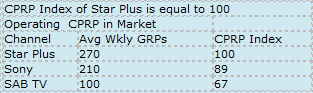


    Objective of the exercise: To derive the CPRP Index of Life Ok @ different level of GRPs, if the CPRP of Star Plus is 100?


    Methodology: If the CPRP of Star Plus is 100, then what should the CPRP of Life OK be, if they have to match the CPRP of the Sony + SAB combo at different GRP ratios between the 2 channels.


    In the exercise below, the ratio of GRPs purchased between Life OK and Star Plus is assumed to improve in favour of Life OK, as its performance improves.


    *At these CPRPs, the Star Plus and Life OK combo will be as cost-effective as SET and SAB combo.


  • The Year in the News Media


    By Ranjona Banerji


    This year started with a hangover – like all New Years should. But unlike the pleasant pain that goes with the knowledge of a party that may have meant over-indulgence but was fun just the same, the media started 2011 with one of those truly mammoth unpleasant hangovers.


    The outcome of the Radia tapes was, at best, a loss of reputation for a few well-known journalists but at worst, a loss of faith in the media as an institution. Public knowledge about the somewhat questionable dealings between journalists and publicist Niira Radia meant that the media could no longer hide in those famous ivory towers. Even more unfortunate was that the finger of suspicion was pointed at all journalists because of the transgressions of a few. It did not help matters that although Vir Sanghvi lost or surrendered his influential column Counterpoint in the Hindustan Times, Barkha Dutt did not just continue with NDTV, but went from strength to strength.


    So it was a somewhat cautious Indian media which initially tackled the phone-hacking scandal in the UK and the closure of the Rupert Murdoch-owned News of the World. Here was journalistic excess in order to get a story taken to a whole other degree – criminality. The tabloid press and the British public and celebrities have historically had an interesting and confrontational relationship. But the desire to delve into every aspect of the lives of the rich and famous – without the reverence shown in our part of the world – made for big sales and bigger profits. The readers loved the sleaze and watching the powerful cringe.


    But this scandal was something else. It was newspapers hiring investigators to pry into the private lives of ordinary citizens and using dubious methods like hacking into voicemail messages to gain information. One reporter lost his job for spying on British royals; but what was the punishment for breaking into the cell phone of a murdered teenager, deleting her messages and not only giving hope to her family that she was still alive but also materially distorting a police investigation into her disappearance?


    As it turned out, the reprisal was fierce and final: a newspaper which was over 150 years old was shut down and the British parliament had a public questioning of the owners and editor of News of the World – Rupert Murdoch and his son James and Rebekkah Brooks.


    The world’s media watched shocked as skeleton after skeleton popped out of the News of the World and NewsCorp cupboards. But surely there was no room for complacency here in India. After all, the problem was not just the Radia tapes; it was also the elephant in the room – paid news. Media houses – without or without the collusion of journalists – had been selling editorial space to political parties. The reader or viewer, of course, was left in the dark and assumed s/he was reading or watching real news stories.


    In the midst of all these depressing signs that some media introspection was required, we had all the uncomfortable revelations by Wikileaks, which turned international diplomacy on its head and exposed lies about the US role in the Iraq war and the black money held by European banks. The subsequent arrest of Wikileaks editor Julian Assange in the UK, on an old sexual assault charges filed in Sweden added to the drama. Was Assange really guilty as charged or was this an international conspiracy to get him extradited to Sweden and from there to the US to punish him for publishing secret cables and other information on the internet? The jury’s still out on that one.


    Wikileaks, though, emphasised once more how the internet was changing journalism and anyone who ignored it, did it at their own peril. Social media is playing the role of a catalyst in creating public opinion outside of the traditional media. The traditional media may not be destroyed but it will be damaged if it does not pay attention.


    Back in India, though, we still had a couple of dramas to play out. The new chairman of the Press Council of India, retired judge Markandey Katju, decided that he didn’t want to be head of a toothless body that was limited to the print media. He proceeded to write a series of articles attacking journalists, calling them frivolous, badly educated and shallow. He listed the sort of news that should be carried and slammed the choices made. He also said that the Press Council’s ambit had to be increased to include television.


    Katju may have been wrong and he may have been right in his opinions, but unfortunately for him, the Press Council remains toothless. And besides, instructing newspapers and TV channels on what aspects of news should and should not be carried impinges directly on the freedom of the press. No one spared Katju and so he quickly backtracked a little.


    Then, perhaps just to prove Katju right, media coverage of the Anna Hazare-led anti-corruption agitation proceeded on just those shallow, one-sided and breathless lines that the former judge had bemoaned. This protest was covered as if it was the only one the country had ever seen. Numbers were inflated or exaggerated. Those who questioned aspects of the Jan Lokpal Bill were shouted down as enemies of the people. As is inevitable, the print media could not sustain its adoration of this movement and started asking uncomfortable questions. TV however continued with its happy path of supporting this “national movement” at all costs until, slowly, a bit of reason leaked into the emotion.


    The doubts had crept into TV studios after the standing committee submitted its version of the bill but the Anna Hazare movement remained adamant on its own stand. But it was really the indifference shown to the movement by the people of Mumbai which ended that love affair. Rather than focus their cameras on 4,000 people pretending they were 40,000, TV cameras panned empty grounds showing us how low the turnout was.


    In journalism, as in life, there are no absolute truths. But there are facts. In 2011, the facts have shown that the people are watching the media. And there’s hardly any place to run or hide. Like we’re forcing politicians and government servants to come clean on their dealings, a little bit of spring cleaning by the media would not be amiss in 2012.


  • Zee zeal comes to the fore


    By Rishi Vora


    The year 2012 promises to be a memorable one for Zee TV, with a celebration to mark the channel’s completing 20 years of being in the broadcast business.


    Besides completing 20 years of being in the broadcast business, the channel is expecting to climb the GRP ladder and look to attain leadership position. The road has been patchy at times, competition has stifled its growth and the channel has not quite delivered as per expectations. But, in all certainty, one can say that Zee is one channel which has stuck with the idea of being a family entertainment channel, one that does not believe in spending millions on celebrities, and one that is known to be profitable in the business.


    The company is planning to celebrate its 20 years with a campaign that’ll communicate the brand’s philosophy. Though finer details of the campaign are not known, it is learnt that the channel is looking to work more towards the channel brand Zee besides regular marketing campaigns to promote fiction and non-fiction shows.


    Akash Chawla

    Marketing Head of the group’s national channels, Akash Chawla admits that Zee has in the past few months taken a beating as far as ratings are concerned. But, at the same time he is of the opinion that 2012 is the year where they will look to change their ranking, where the idea is to be the No 1 player in the next 12 months.


    “We will go step-by-step in achieving that goal,” he said. He also mentioned that the first goal will be to reach the No 2 position in the next four months.


    Content will play a major role and as a part of the strategy, Zee will look to bring international formats, something which they haven’t tried their hands at in the past. While that is true, the channel will continue to launch home-grown formats too. Recently, the channel launched a couple of fiction shows and is looking to promote them on the back of reality show – Dance India Dance 3 (DID 3), a reality dance format show which Zee is betting big on.


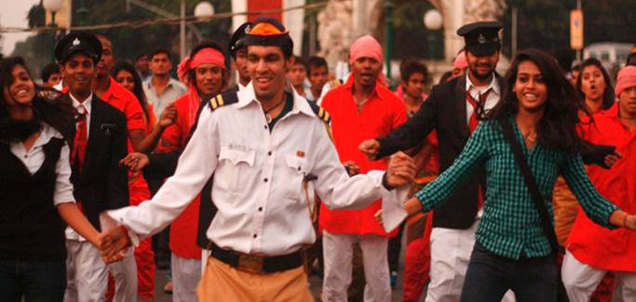
    A lot of work has gone in the new media initiatives, promoting DID 3. The channel recently organised a flash mob with the idea to promote the concept of ‘dance’ among viewers (see photograph). Besides that, contests on Facebook, hoarding, press, TV spots supporting the mega campaign. “The idea is to have a dialogue with the viewers. Even in the case of our press ads, we have tried to make a dialogue with our viewers, explained Chawla. “He further added, “We also did a flash mob because we thought it was a great idea. We were launching the show at a peak of a season where people tend to move out a lot. Also we did this when it was a holiday season, so footfalls in public places are likely to be more. If at the end of the day, I can make people dance along with Dance India Dance, the message is there, the engagement is there. The recall value increases.”


    Zee Cine Awards will happen in Macau on January 21 and be aired on the network on February 5. The show is promoted across all countries where Zee operates; however, marketing activities are being carried out country wise, where there will be different ideas, contests and marketing plans for different countries. Ditto with sponsorships, where each country will have a different presenting sponsor. For India, the channel has got on board Pan Bahar as the presenting sponsor.


    The campaign will cut across outdoor, print, radio, on-air promotions and interactive contests. It will also widely explore the digital space including social media, mobile-based apps and forge strategic tie-ups in every region to ensure a 360* connect with Indian as well as international audiences. This coming together of Zee’s global marketing teams will see more than 30,000 promos running across its global network in 168 countries.


    The story doesn’t end here for both Chawla and Zee Group for that matter. From a network point of view, there is a renewed thrust on Zee Classic. One of the three channels that were launched to be on the digital platforms initially. Zee Premier and Zee Action being the remaining two. Having defined a niche for Zee Classic and the fact that the channel has already about 500-odd movies to engage the audience with, the task at hand for Chawla and team is to market the channel more aggressively to that specific niche. The channel launched a new show called Classic Legends, presented by Javed Akhtar.


    Digitisation will help boost channel’s profits. It also opens up a whole new channel for marketing. Dish TV being a sister company, and reported to be the largest among DTH players, Chawla says it makes more sense to leverage that platform and generate as much traction from there in promoting the channels shows, particularly reality shows – DID 3 in this case.


    So a lot happening. DID 3, Zee Cine Awards, the new media thrust, the plan to be No 2 in four months and No 1 in a year’s time. The task is mammoth as Sony and Colors too are eyeing the No 1 spot. So these are testing times for Zee. Will the pressure of expectations defeat the channel’s ambitious moves? Or will it come out victorious?