Category: TV

  • For reality TV specialist Niret Alva, Survivor India is huuuge

    By Johnson Napier


    Utter the word ‘reality’ in a crowded space or even within the confines of an office and a flurry of mixed reactions are likely to fly thick and fast. From bad to artificial to monotonous, one could expect such and other ghastly descriptors from opinion-makers, however irrelevant their views. But then there are production houses which are assessing the changing market scenario and viewing tastes of the masses and are working their way in providing content of differentiated nature. One such firm is Miditech India, in the news more recently for its reality show, Survivor India. Miditech is of course known as a reality TV specialist.


    The show, which has been running across multiple countries and in different languages, makes its formal debut in India. While different countries have different formats to accommodate the show, in India the show will be spread across 45 days and will include 22 contestants. In all, 22 episodes are to be aired in India. While it would too premature to rate the opening performance of the show on the numbers front, what is commendable is the scale and the effort that has gone in putting the show together.


    For Niret Alva, Co-Founder of Miditech and also Executive Producer of Survivor India, the best thing is that it could easily be billed the biggest reality show that has ever been launched in India. Affirms Alva, “The show is one of the biggest that India has ever seen. In terms of geographic scale, sheer number of people involved, international crew coming together…it is hundred percent huge. The whole breadth of the action is spread across 30-40 sq kms. It is not in one set like other shows. Every day the set gets dismantled and has to be set up anew for another challenge every day. So in that sense, it could easily be the biggest from a production standpoint in India.”


    In fact so huge has been the effort around putting the show together that it has taken Miditech more than 18 months to get it launched in India. Asserts Mr Alva, “The actual process has been in the works for one-and-a-half years. From sourcing the license to developing the show to doing the recce for the location to putting the team together – it is one of the biggest teams on a show with about 400 people from around the world being involved – so the scale at which we have gone about is big.”


    According to Mr Alva, Miditech had wanted to bring Survivor to India for a long time, but for one reason or the other aspirations did not align. “But for the current round, we licensed the show from Survivor and then brought it to the Indian market, and were immediately able to strike a chord with Star India as they were able to understand it and understand that it needed to be done in a particular way.”


    Given the gargantuan effort and the originality in concept, Mr Alva is hopeful that the show will find resonance with the viewers. “The expectation is a hope that the Indian viewing public, which pretty much sees reality as some sort of manipulated, artificial, fictionalised space has its faith restored in the genre. The fact that it is all unscripted, except for the anchor lines, will help in restoring the faith of the people in the authenticity of the characters and the show on a whole.” According to Mr Alva, “People will get to see contestants losing weight, you will see them falling sick, you will see them getting tanned, you will see them in a shabby state, etc all of which cannot be seen on other reality shows.”


    When quizzed on the choice of cast for the show, Mr Alva countered it, saying, “We were very clear that we wanted to do auditions around the country. Star was also excited about that. We were clear that we needed people whom one can recognise on the popularity front – thus celebrities – and then there were the everyday people, who needed to have a degree of excellence or something that made them unique in terms of character. What we were clear about is that we would not compromise on the format for anything. So that’s how we went through hundreds of people literally before we shortlisted the final few.”


    In fact, according to Mr Alva, most of the contestants left the show midway after realising they couldn’t cope with even the basics of what the show demanded. “But we were glad to have received response from certain contestants as those who came to the table had researched the show and they were exceptionally motivated; they had a point to prove to themselves and to the world at large. We then conducted physical tests for swimming, running, cycling and even psychiatric evaluation before we could shortlist the candidates.”


    Brushing aside questions on ROI and response from advertisers, Mr Alva would only state, “The cost of production would be 15-20 per cent more than a big scale reality show. It is definitely huge.”


    So while Survivor India is keeping the viewers busy in India, Miditech has its hands full with other projects, some of which include Achiever’s Club on Star World, Panasonic House of Beauty on MTV, a health-based show for Colors that will go on air in February and also the Guinness World Records that is in the pipeline. “We are also in the language space – Tamil, Bengali and are looking at Kannada as an option. We also did a one-hour special inside Tihar Jail for National Geographic, which is really edge-of-the-seat,” shared Mr Alva.


    Despite being in the business for 18 years, the challenge for the company is to face other format holders who have set up their own production houses and who insist on producing their own shows. “Going forward, it’s not going to be only about good ideas but about good ideas at competitive cost. Also, the TAM meters have to go berserk. It’s really a tall order,” avers Mr Alva.

     

  • Anil Thakraney: Star India’s massive gamble

    By Anil Thakraney


    Actor Anil Kapoor, who played a smallish role (after hectic lobbying) in the cult American TV serial 24, now wants to re-make it in India. Have we totally run out of desi programming ideas? Well, that’s a topic for another day. What interests me urgently are media reports which suggest that Star Plus has bought the rights to the Indian version for a mind-numbing sum of Rs 85 crore. No TV show in the history of Indian television has commanded that sort of a price tag.


    One sincerely hopes Star is rejoicing over this sensational investment. Because quite honestly, I have serious doubts if the Indian cast and crew can pull this one off. I watched two seasons of 24, and I can tell you the show is simply unstoppable. I had to postpone work assignments and a lot of sleep in order to finish all the episodes, it was that riveting. Now, here are the reasons why I believe 24 rockedAmerica: the pace is extremely brisk, the script is powerful with many sudden twists and turns, the acting is superlative and the special effects, fantastic. However, what shines the most are the kickass dialogues, they keep you hooked.


    I am not sure if we can deliver all of that in India. And my scepticism is rooted in three huge areas of concern. One, Indian showbiz just does not have writers who can pen such superlative scripts and dialogues. The very average quality of writing in our movies and soaps is a clear indication of that. Two, our directors seldom deliver on both, form and content together. On 99 per cent of those projects, when it comes to producing with style and chutzpah, the content gets compromised. If a talented Farhan Akhtar can commit that folly (Don 2), you can easily imagine what a risk this is with others in the frat. And three, 24 is a gritty show that pulls no punches when it comes to featuring political debates and communal tensions. That’s one of the reasons the American audiences connected with it. In a hyper-sensitive and a vote bank politics-led India, where people are ready to protest at the drop of a hat; that will be a tough act to follow. And too much caution will kill this particular show.


    Well, all I can say is that Anil Kapoor and many others are about to hit the jackpot. Good for them. And I hope the Star network isn’t the only one left short-changed. Good luck to the channel!


    ***


    PS: BBC’s Top Gear presenter, Jeremy Clarkson, has pissed India off. The mischief-monger made fun of our ‘lack of hygiene’ in his India series. Now, instead of ignoring the man’s rubbish, even laughing it off, the Indian High Commission inLondonhas formally complained about the programme. And they have demanded an apology. Come on guys, the man is a comedian. Surely a billion plus Indians can’t be so under-confident as to take a joker seriously. When will this nation learn to be cool?


  • Speaking in tongues, good for TV channels


    By Rishi Vora


    TV channels are gung-ho about the digital revolution India is witnessing. New launches and the ones in the pipeline – all are preparing to be on DTH or Digital Cable. Well, what this brings to viewers and for the industry is a  novel trend: the rise of language feeds. For the consumer, it is now a chance to view a particular channel in his mother tongue. For channels, it is about expanding viewership base and accumulating additional revenues via local advertisers.


    The trend is visibly on the rising side. Big CBS launched Spark Punjabi. Sonic has extended its offering to Marathi and Bengali. History, the factual entertainment channel from the A+E Networks recently launched the Gujarati feed, making it the only channel to be available in seven languages (Gujarati, Bengali, Tamil, Telugu, Marathi, Hindi and English). Discovery serves in English, Telugu, Bengali, Hindi, while National Geographic is present in five feeds: English, Hindi, Bengali, Telugu and Tamil. The trend, quite noticeably is seen in the kids and the factual entertainment genre.


    For these international channels, the opportunity is way too big to be missed. The cost of launching a new feed vis-a-vis the return it brings to the table in terms of reach, viewership and revenue, is negligible. All it accounts for is an additional cost on dubbing, which on most occasions, for all channels would be an incremental cost since English and Hindi languages are by most channels, already operational. Sangeetha Aiyer, General Manager – Marketing A+E Networks and TV 18 JV informs that the cost of dubbing varies between 7 to 15 per cent of a programming budget.


    “The trend has been around for a while,” says Nina Elavia Jaipuria, Executive VP and General Manager, Sonic and Nick India. She further adds, “For us, since we cater to the kids and the young adults of India, it is important that the characters kids have an affinity towards speak to them in their mother tongue – the language they speak at home. That is the best way you can engage and entertain them.” Aiyer agrees that it brings in more revenue and viewership for the channel, but also calls for a lot of co-ordination with studios which at times can be painstaking. Ensuring quality control, scripts, technicians etc is one part of the challenge, while lack of experts in languages like Marathi or Bengali is another challenge.


    Most channels outsource the dubbing work to studios, except UTV Action which contracts its sister company UTV Software on the same. UTV Action, as is known was one of the early movers in the movies segment to offer Hollywood films dubbed in Hindi. The channel later launched its Telugu feed. Manasi Sapre, Programming Head, UTV Action says that Telugu feed opens up a big market for the channel. “We’re seeing a lot of traction from the Telugu market, where the appetite for Hollywood movie watching is constantly increasing. Telugu market is one market where you can be rest assured of a good response, given the fact that the southern belt likes to view content in their own language rather than English or Hindi.”


    A separate P&L company within the UTV group – UTV Software, has been in the business of dubbing for more than 15 years now. The company is seen as a pioneer, currently handling projects like Walt Disney, Hungama, Fox Traveller, National Geeographic Wild, NDTV Good Times and UTV Action. The company dubs 40-50 hours of content every month, so considering that content is offered in a minimum of  four languages, it means 200 hours of content being dubbed every month.


    According to Rahul Bhatia, Senior VP – Dubbing, UTV Software, the dubbing industry has grown leaps and bounds in the past five to seven years in terms of the number of players. The market still remains majorly unorganised with UTV as a major player as against many small studios that do one-off projects. “Price-points for dubbing have gone down drastically. From what it used to be Rs 1 lakh for an hour 10 years back, it is now come down to Rs 25,000. But, on the brighter side, volumes have increased. Three years back it was only Hindi, Tamil and Telugu, but now if you see, the market is growing to other languages like Gujarati, Marathi, Bengali and Punjabi.”


    Quite interestingly, for many channels that bring in international content from countries like Japan, Korea or even China, content is translated to English and then dubbed to various other languages, which is a lot of effort on the part of the studios. Part of the reason for this tedious procedure is the fact that channels are extra careful to ensure that  international standards are maintained.


    Given the kind of growth dubbing has seen and that many channels have launched multiple feeds, there are chances that a few broadcast majors would want to set up their own studios. Maybe it is too early to say, or the existing outsourcing practice could well be effective enough as one may not want to get into the business, which could well mean diverting the attention from three major functions: Content, Distribution, Sales. Even for now, Dubbing seems to come later in the priority list of the channels.


  • Get set for the funny stuff with ‘Comedy Central’


    By A Correspondent


    Viacom18 has announced the launch of its sixth channel, ‘Comedy Central’, a 24×7 channel dedicated to English language comedy content, which will go on air from January 23. The channel is said to have a mix of all genres within comedy ranging from sitcoms to sketch comedy, British comedy, Stand-Up and Gags, among others.


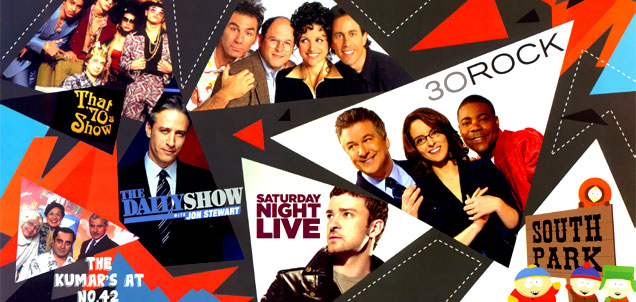
    Comedy Central will air mainly international content with English sub-titles. Some of the popular shows to be aired on the channel are Saturday Night Live, The Office, Seinfeld, The Wonder Years, That 70s Show, The Daily Show with Jon Stewart and SouthPark, to name a few.


    According to Mr Ferzad Palia, Sr. Vice President and General Manager, English Entertainment, Viacom18 Media Pvt. Ltd, although there could be fragmentation in English language channels, the viewership has gone up, so has the time spent viewing English language channels and the reach. He also said that English channels are one of the most under-served genres however there is still a huge scope. “There has been growth in English literacy and in the next four or five years, English language literacy is expected to grow manifold. We also observed that Indians are increasingly able to laugh at themselves, at least a little more than what we used to. There are a number of factors to launch ‘Comedy Central, this are just one of them, thus we feel this is the right time for the launch.”


    He further said: “The format of the channel is the best of comedy. We are picking up the best content from across the world. We have different programmes for different audience in different time-bands. It is a combination of content for the mature audience and for the youth. We have significant and equal doses for both. In addition to these we are premiering about 7 or 8 shows on weekends.”


    ‘Comedy Central’ aims to reach atleast 20 million households across the country at its launch and will be available across analog, digital cable and DTH. While the channel will initially start off with Airtel DTH and Dish TV, it aims to be available across all DTH platforms within the next 60 days. The channel has hired BBH as its Creative Agency while Vizeum is the Media Agency.


    Since 80 per cent of English viewers are said to be from the metros, the content will be largely metro-centric. Even on the distribution front, the channel will be targeting the key metros, namely Hyderabad, Pune, Ahmedabad, Mumbai,Delhi, Bengaluru and Kolkata.


    The business model that ‘Comedy Central’ aims to follow is primarily advertising-led followed by subscription, but besides this, the channel also plans to reach out to the audience through web, mobile and merchandising, among others. The channel plans to create special packages and interaction mechanisms, relevant not just to a particular brand but even the show, for advertisers.


    In a prepared statement, Bob Bakish, President and CEO – Viacom International Media Networks said: “Comedy Central is one of Viacom’s most distinct and successful franchises globally. We feel that the time is now right for Viacom18 to introduce Comedy Central in India, given the growth curve of the Indian television entertainment market.”


    Mr Haresh Chawla, Group CEO-Viacom18 said: “With the launch of Comedy Central, Viacom18 now marks its presence in another under-served genre – English comedy. We are confident of Comedy Central establishing itself as one of the dominant players in the English entertainment space in Indian television.”


    The marketing campaign will be unveiled only after ‘Comedy Central’ has been officially launched. But the channel plans innovations across television, print, outdoor, radio, below-the-line and digital. The marketing plan is also said to involve strategic partnerships with lifestyle touch points like coffee chains, theatres, clubs, gyms, salons, shopping destinations and other hangouts.


    The tagline of ‘Comedy Central’ will be ‘Laugh it Off’. It will target audiences in the age bracket of 15 years and above. Since late 2006, ‘Comedy Central’ has expanded globally with localized channels in Poland, Germany, Netherlands, Italy, Hungary, Sweden, Ireland, United Kingdom, New Zealand, Israel and Spain.


  • NDTV Good Times’ tie-up with Geo TV for Foodistan

    By Akash Raha


    NDTV Good Times, which is all set to host the mega food reality show Foodistan, has tied up with Geo TV to telecast the show in Pakistan. Atul Seth, Vice President - Development, NDTV Lifestyle Limited disclosed this news to MxM India.


    When asked why NDTV Good Times chose to partner with Geo, Mr Seth said: “It is the largest network in Pakistan and the most respected. It has been a beautiful relationship with them so far and we have been in constant touch with the group, and the response from their end has been very good. We would ideally like to do a simul-cast in both the countries, but the timings are not certain as they might clash with some religious ceremony.”


    The show will be launched in Pakistan soon. According to Mr Seth, Geo TV is keen to broadcast and partner with NDTV Group, not just one season, but for seasons that will follow.


    When asked for further details on the deal, Mr Seth clarified: “Right now it’s only about them showcasing our content, but eventually we probably will look at a situation where both partners will co-produce the show. It is still too early to announce as the talk are in nascent stages, but perhaps that is the way forward.”


    The reality show will premiere in India on January 23 on NDTV Good Times. The show will feature 16 chefs from India and Pakistan in a battle of culinary supremacy. At the end of it all, the reality show will have one winner.


    The 26 part series would be judged by eminent food critic, avid traveler and gourmand at heart Vir Sanghvi along with Bollywood actress Sonya Jehan and Merrilees Parker (popular British Chef and presenter). The tri-weekly show will be hosted by Aly Khan and Ira Dubey.


    Announcing the new series, Smeeta Chakrabarti, CEO, NDTV Lifestyle said: “We are absolutely thrilled to announce Foodistan, the biggest food show on the Indian television. Food, as a genre, is in the DNA of NDTV Good Times and we are committed to taking that to the next level with Foodistan. India and Pakistan are two nations who share a common passion for good food. And this love for food is something that binds the two nations, in spite of the numerous differences, which is why Foodistan will appeal to our viewers. We are positive that our viewers will not only enjoy the show but will also connect to it.”


  • Newswatch: Sanjay Kapoor on Team Anna & the fast co

    By Sanjay Kapoor


    In January 2011, Anna Hazare was virtually unknown to Delhi’s self obsessed middle class. A year later, after he had unleashed a tumult against the government by sitting on a fast till the central government appointed an all powerful Jan Lokpal or ombudsman against corruption, and controlled all the headlines of the national media, Hazare is slowly slipping away from prime time news. What he and his verbose bunch of supporters have to figure out in the coming days is: what do you do when the gaze of the TV cameras shifts? How do you get them to look at you again?


    These questions must be surely gnawing at an ailing Anna Hazare as he strenuously pedals on his stationary exercise bike to regain his health and also find a way out from this dead end. He must be wondering what really went wrong at his “fast fest” at MMRDA grounds of Mumbai, where he did not get the kind of fawning and gushy support of the people as he got in Delhi. Not only were the crowds thin, even the TV news channels, unlike in the past, refused to bloat their numbers. Delhi, surely, seemed a distant memory. What really went wrong for the anti-corruption movement that seemed to threaten the stability of UPA government?


    Operating under the rubric of “India against Corruption’, Anna Hazare’s movement was crafted like the Arab Spring. The main pillars of his campaign were the media and the urban middle class. Interestingly, Team Anna seemed to follow the template put together by Belgrade-based Centre for Applied Non-violent Action and Strategies (www.canvasopedia.org), which seeks to provide consultancy to protests around the world. CANVAS takes the credit for training and supporting civil society activists in countries like Egypt, Tunisia, Myanmar, amongst many other countries, for organising protests. CANVAS recommends non-violent interventions like fasts and suggests the use of media to disseminate a message that the “people see that there is something is wrong, and they are willing to do something about it”. Funded by US-based entities, much of the advice listed on its website finds an echo in what has been witnessed in the country in the last few months.


    CANVAS suggestions are usually meant for authoritarian regimes where press is under state control and the only way to reach out to the masses is through social media like Facebook and Twitter; there is no such problem in India. In a noisy and chaotic democracy like ours with hundreds of privately owned news channels following each other’s “breaking news”, this was much easier. Team Anna and its patrons had to get one big media organisation on their side and rest was easy. Call them partners in a conspiracy hatched by patrons of Anna Hazare or a simple display of good reflexes in spotting a big story, the Bennett Coleman group showed great enthusiasm in building the narrative of how “a Gandhian left his village to save the republic from the corrupt”. In the cacophony and melee of TV news reporting there is no clarity of who ” broke the Anna Story” when he descended on Delhi to fast at Jantar Mantar last April, but it was a matter of time when all news channels went overboard in their coverage of his event. Clever camera angles plus filling up the TV screens of small snapshots of people assembling at different places helped in creating crowds when few existed. Truth was manipulated to build a feverish demand for the appointment of an unelected Lokpal to save the country from rampaging pindaris. It is quite unclear how media organisations may have benefited from wall-to-wall coverage of Anna Hazare’s fast at Jantar Mantar and later at the capital’s Ramlila Maidan, but news channel did not seem shy in expending their resources on it. Statistics show that there were 5592 pro-Anna and only 62 anti-Anna segments in the Jantar Mantar coverage. During the Ramlila ground fast it perhaps got worse. TV channels were unhesitatingly and unashamedly uncritical of the movement.


    Television coverage is an extremely expensive business and most of the news channels would not have gone overboard in hysterically reporting on Anna’s campaign if there was no promise of gains – present or in the future. Who put up the money for the coverage of the campaign? There were rumours that a colossal corpus was created in Bangalore to fund the anti-corruption campaign. Hence Team Anna showed great reluctance to campaign against the disgraced former BJP chief minister BS Yeddyurappa of Karnataka. Rumours also abound that due to the high financial stakes the Anna story was pushed more by managers and editors than by reporters. Some of the reporters covering the fast were even heard complaining that they were under pressure to make the “Gandhian’s” agitation look pretty.


    Pains were taken to make the movement look non-political, but it became clear at Ramlila Maidan and later that the spine to the movement was provided by the front organisations of the Rashtriya Swayamsevak Sangh (RSS). Crowds and news coverage is seldom spontaneous. It takes a lot of effort to get people out for protests. Contractors are used to ferry crowds for the rallies and PR companies are deployed to organise press coverage. On both counts RSS front organisations display great competence. They have enormous capacity to bring in their supporters and also organise favourable media support. Earlier anti-corruption agitations, like the one led by Jayaprakash Narayan in the ’70s and later by VP Singh in the ’80s succeeded due to the support extended by the RSS.


    At the Ramlila ground there was plenty of evidence of the presence of RSS front organisations, but most of the media outlets were reluctant to talk about it. The camera and the focus remained on a fasting Anna Hazare and his lieutenants like Arvind Kejriwal and Kiran Bedi, rather than those who were baying for Prime Minister Manmohan Singh or Sonia Gandhi’s heads. The ground was full of posters and hoardings to show how corrupt and anti-national the Congress party was. Team Anna and its supporters used the democratic space to demand an entity that was not only against the Constitution but also fascist in character. Quite evidently, such a demand met the approval of those who hate politics and want India to become a hard state.


    Anna Hazare became the darling for many of those around the country that saw politics and Parliament as a waste of time. And the way the visual media backed him and his call, it seemed only a question of time before the country got their version of Jan Lokpal, which would have been accountable to none.


    Lack of firmness and conviction displayed by Prime Minister Manmohan Singh and his ministers in handling the agitation contributed in reinforcing this impression. Besides the TV channels, newspapers too gave the impression that the Ramlila ground was India’s Tahrir moment and the government would have to give way on the Jan Lokpal bill. Times of India carried a banner headline suggesting it to be another “August Kranti”. Hindi newspapers also went hysterical. Their reporting was little different from the kind on display when the Babri Masjid was brought down by hysterical mobs in Ayodhya many years ago. There were only very few publications that did not go overboard and were critical of the undemocratic noises and demands that were being made from Ramlila ground.


    Parliament acquitted itself through reasoned debate and conveying the sense of the house on the Lokpal issue allowing Anna Hazare to end his fast.


    Subsequent media scrutiny, both by foreign and national media, showed Anna Hazare and his team members in their true colours. Hazare was really a village tyrant who believed in tying the drunk to trees if they consumed alcohol. He also believed in giving capital punishment to those who were found guilty of corruption.


    Kiran Bedi was discovered to be fudging travel bills on many of her visits. There were also allegations that were brought out by the media about short-changing the Delhi Police on the issue of providing computer education to the children of constables. Arvind Kejriwal, the brain behind the movement, too, was found to have messed up in a showdown with his previous employer, the income tax department.


    As the true picture of these crusaders came out in the open, the government, it seems got into the act and began to reach out to some media houses. It is not clear what quid pro quos were worked out, but when Hazare sat in Mumbai, there was a sea-change in the gaze of the cameras and the way his fast was reported. For a movement that drew strength from crowds and media coverage feeding on each other, Mumbai was a big dampener. Worse, Anna, who looked a champion in Delhi, fasting for almost a fortnight, could not last more than a day. All the rumours about how electrolytes sustained him in Delhi returned when his fast collapsed.


    Team Anna claims to be at the crossroad of their movement. Their cluelessness and confusion would deepen if the Congress party does well in the assembly elections. And if it does not, then they will be back on the streets claiming victory in their defeat. This time, though, there would be no ambivalence about whom Anna is hunting with.


    Sanjay Kapoor is the Editor of Delhi based Hardnews Magazine.


  • Colors launches sports reality show Ring Ka King

    By A Correspondent


    After having entertainedIndiawith their impressive bouquet of fiction shows, format shows and a number of successful reality shows, Colors, is all set to introduce a fresh format to its audiences.


    For the first time ever, the channel is launching the biggest sports entertainment reality show called ‘Ring Ka King’, which will feature 30 top Indian and international wrestling superstars including Jeff Jarrett, Matt Morgan, Scott Steiner and Monster Abyss; Indian wrestlers who have received international-level training like Jwala, Mahabali Veera, Romeo Rapta, Zoravar and Deadly Danda will also be among the participants. Indian cricket superstar Harbhajan Singh has been roped as the goodwill ambassador.


    The show will bring a mix of drama and reality by adding some Indian tadka to the good old wrestling matches that we have grown up watching. The show will go on air from January 28 at 8pm with subsequent episodes airing on Saturdays and Sundays.


    Colors CEO, Raj Nayak said: “We have always vowed audiences with some of the biggest reality shows like Bigg Boss, Khatron Ke Khiladi,India’s Got Talent and now we are proud to present yet another explosive first of its kind sports reality show – Tata Prima Trucks Ring Ka King. Coming down to participate in the show are international wrestling sensations.India, for the first time will witness the excitement of a sport and the intensity of a drama, both rolled into one.”


    He added: “We truly believe that the show will appeal to our viewers and advertisers who are constantly looking for new and innovative platforms to reach out to their audiences. We are glad to be working with Tata Prima trucks and hope that our relationship only grows hereon.”


    In what could be called a modern day clash of the Titans, some of the world’s most renowned wrestling superstars will be seen battling Indian pehelwans to capture the title of ‘Ring ka King’.


    In the first four weeks of the show, audiences will see matches that will crown a ‘Heavy Weight Champion’ and a ‘Tag Team Champion’. During the subsequent weeks, the champions will have to save their honour and title and fight against the other contenders who will challenge them to claim the belt.


    Through the show, audiences will get an insight about the intricacies of wrestling and what goes into making a show as enjoyable as this.


    Explaining the concept of the show Deepak Dhar, MD, EndemolIndiasaid: ”It’s an exciting format for us to work with. For the first time ever, we are combining sports and entertainment to create something very different and exciting. While the focus, of course, will be on the wrestling matches, it is the entertainment and the drama aspect of the show that will make the matches a lot more interesting. Endemol has entered into a partnership with TNA Entertainment, LLC to popularize professional wrestling. Endemol fulfils its commitment toIndiaby constantly bringing best-in-class entertainment toIndia. ”


    Jeff Jarret from TNA, who represents the international wrestlers participating in the show said: ”Tata Prima Trucks Ring ka King is a very exciting project for us at TNA. We know TNA has a lot of fans inIndia, especially young fans, so the enthusiasm levels are higher than ever. At the same time, the format of the show is very interesting which will allow our fans to see their favourite wrestling stars as not just wrestlers, but real people. Of course, we are looking forward to put on an adrenaline filled show that will get all our fans super excited.”


    On being title sponsors, Mr. Vinod Sahay, Head- Sales & Marketing, Medium & Heavy Commercial Vehicles, Tata Prima Trucks said: “We believe integrating our majestic Tata Prima heavy weight trucks with Ring ka King. It represents a natural fit for both our brand and the show. The Prima range of trucks, tractor trailers and tippers bring to India international standards of power, performance and endurance, which ties in very well with the Ring ka King format which aims to bring international standards of wrestling to our country incorporating the same attributes of power, performance and endurance.”


  • Pankaj Pachauri is Communications Advisor in PMO

    By A Correspondent


    Senior television journalist Pankaj Pachauri has been appointed communications advisor to the Prime Minister’s Office.


    Mr Pachauri, 48, was managing editor of NDTV India. A statement from the government said, “The Prime Minister is pleased to announce the appointment with immediate effect of Shri Pankaj Pachauri as Communications Advisor in the Prime Minister’s Office. Shri Pachauri, who will report to the Principal Secretary to the Prime Minister, will advise on communicating the Government’s programmes, policies and achievements to the media and the public at large, particularly using the electronic, print and new and social media.”


  • Walt Disney India MD Mahesh Samat resigns

    By Nandini Raghavendra


    Mahesh Samat, managing director of Walt Disney India, has put in his papers in the middle of the US entertainment company buying out its Indian partner, UTV, and a possible delisting from the stock exchanges.


    Both Disney and Mr Samat did not reply to emails inquiring about Mr Samat’s decision, but more than one person in the company, who did not want to be named, confirmed the development.


    Last July, Walt Disney made a $454-million offered to buy the Indian promoters, including UTV promoter Mr Ronnie Screwvala from UTV Software Communications. At that time, the company had said that Mr Screwvala would head Disney’s operations in India while Mr Samat would report to Mr Screwvala in the role of chief executive officer.


    Disney had originally invested $44.5 million in UTV more than five years ago for a 15% stake and subsequently increased its holdings to 50.4%.


    Mr Samat had joined Disney India in 2007 and rose from being a senior vice president to managing director in three years. An alumni of IIM-Calcutta, he came with over 20 years of experience across India, Asia-Pacific and Europe. He has had worked with Johnson & Johnson as managing director for southern Europe, based out of London.


    Prior to that, he worked with Kellogg’s in India, Warner Lambert/Parke-Davis and Boots India. At Disney, he reported to Mr Andy Bird, Disney’s president, and managed all divisions of Disney India except ESPN-Star.


    In the period, Mr Samat has been with Disney, the company made a foray into Hindi cinema with a first co-produced animation film with Yashraj called Roadside Romeo.


    Source: The Economic Times

    Copyright © 2012, Bennett, Coleman & Co. Ltd. All Rights Reserved


  • Vivek Malhotra joins TV Today as VP – Marketing

    By A Correspondent


    TV Today Network Limited (TVTN) has appointed Vivek Malhotra as VP, Marketing. As part of his new role, Malhotra will be responsible for developing the brand and communication strategy for leading media brands under TVTN, and will additionally be taking charge of the research and the special projects division.


    Mr Malhotra will be reporting to Joy Chakraborty, CEO, TVTN and is expected to play an important role in future plans envisaged by the new leadership.


    Joy Chakraborty said in a prepared statement: “As the pioneers of news broadcast inIndia, TVTN products have consistently been breaking new ground across verticals. With Vivek’s understanding of the news category, we look forward to communicating this even better and achieving a serious resonance for each of our media brands. His complementary understanding of research and communication should help us create a superlative viewer and advertiser experience”


    Before joining TVTN, Mr Malhotra has a brief stint with BigFM as the head of marketing. Prior to that he served as the Senior Vice-president – Marketing, PR & Research at Bloomberg UTV where he set up the marketing division and held the portfolio since the channel was launched. He also oversaw the distribution and co-ordination at the business news channel.


    Mr Malhotra’s earlier stint was with Star News Network, where he headed the trade engagement and the research unit. He also acquired experience around regional products like Star Majha. He was also instrumental in evolving within TV18, an independent resource centre of creative solutions and media research which he later led as a national intelligence unit called ‘The Edge’.


  • What the government can’t, Goswami can!

    By Ranjona Banerji


    Last night on Times Now, Arnab Goswami took on the case of an Indian couple in Norway whose children have been taken away from them by the Norwegian authorities. What the government of India could not do, perhaps Goswami will. Child welfare is a concept that Indians know little about (any journalist who has visited orphanages in India or tried to meet any official in the concerned government departments will know what I mean). Therefore, the outrage is all to do with Indians being made to suffer rather than the legality of the case. Indians, as we know, cannot be criticised, attacked, ridiculed, or made fun of. We absolutely will not tolerate it. Look at the anger over a reference to Amritsar’s Golden Temple on American comedian and TV host Jay Leno’s Tonight Show if you want further proof.


    Meanwhile, it is amusing to watch Goswami use the BJP’s Mahesh Jethmalani for target practice. If I was Jethmalani, I would ignore calls from Times Now for a bit. It’s not easy to defend the BJP and its Sangh Parivar friends when the debate is about freedom of expression.


    TV anchor Barkha Dutt’s American-type accent as she interviewed US talk show empress Oprah Winfrey was also amusing. Where did that come from? Can Winfrey not understand if there’s not a couple of rolled rrrs in every sentence?


    **


    The Mumbai Anti-Terrorism Squad has made two arrests in the July 13, 2011 bomb blasts in Mumbai. However, given the police track record in such cases, TV and newspapers both displayed a little scepticism here. The two arrested are already in custody for some other cases and the masterminds are still elusive. Everyone has pointed that out. In which case we must ask ourselves if we really want to see giant photographs (Hindustan Times) of police officials with photos of the accused in their hands? Needless glorification of public servants who are just doing their jobs? Return of favours by grateful reporters?


    **


    It is a measure of how much Anna Hazare and his friends have faded from the public eye that their letters to political parties did not get the full treatment from the media. They asked many questions to which no party has bothered to provide any answers.


    **


    The Salman Rushdie controversy continues to intrigue and annoy. It seems to have taken precedence over whether the army chief was born in 1950 or 1951.


  • Given cricket fatigue (and India’s poor showing), Bollywood lines up releases during IPL

    By Ameya Chumbhale & Meenakshi Verma Ambwani


    This season, Bollywood’s ready to take on Team India, and is not even scared of the IPL googly. After the drubbing in England, followed by the humiliation Down Under, the cricket-crazy nation seems to have developed some kind of a cricket fatigue, and Bollywood, seizing its opportunity, has lined up a string of releases during the busy cricket season.


    Unlike the previous four seasons of the IPL, when Bollywood deferred new movie launches during the well-televised IPL season in April-May, this year at least half-a-dozen big films, with close to Rs 200 crore riding on them, have planned their releases bang in the middle of the event. These include Ajay Devgan, Akshay Kumar-starrers as well as a Raju Hirani scripted film.


    “IPL has lost its charm,” says Mr Utpal Acharya, head of distribution and acquisition at Reliance Entertainment, which has co-produced the Karishma Kapoor-starrer Dangerous Ishq. “We are confident that audiences will visit cinema halls irrespective of IPL this year.” Almost all the others who are releasing their films in April-May endorse Mr Acharya’s views.


    From Sajid Nadiadwala , who is releasing a sequel to the successful comedy flick, Housefull, which has been acquired by Eros, to Vidhu Vinod Chopra, who is releasing the Raju Hirani-written Ferrari Ki Sawari , to the Priyadarshan-directed Ajay Devgan-starrer Tezz, and the Mukesh Bhatt-Emraan Hashmi Jannat sequel –they all think that films will do well this summer.


    “People are not only going to watch IPL all of April and May. So, we are releasing Ferrari Ki Sawari during the school vacations, which we think is the ideal time for family audiences,” says Mr Samir Rao, chief executive officer at Vinod Chopra Productions. With cricket touching a low after the euphoric World Cup victory last year, Bollywood’s taking everything on the front foot.


    Says Mr Deepak Marda, joint managing director Cinepolis India, “I believe the lacklustre performance of the Indian team and the lack of buzz around the IPL has given confidence to film producers to schedule their movie releases during the fifth IPL season.” The dip in cricket’s popularity is evident from the fact that average ratings of the fourth IPL were the lowest among all the seasons.


    TRPs of the matches averaged about 3.91 across six metros compared to 5.51 in IPL-3 . In the past four seasons, Bollywood, realising that it couldn’t match up to the fire power of IPL, decided to join the cricketing tamasha, with some stars being owners of some teams, while many others endorsing the game’s biggest brand by revenues during the games, and at the aftermatch parties.


    IPL’s impact was so huge that cinema halls wore a deserted look — some even start showing IPL matches live — and film producers didn’t dare to launch new movies. Before IPL was launched in 2008, the April-June period was considered the best for new movies since it coincided with the vacation for students. Things changed a bit in the past two years, when Mukesh Bhatt’s Jannat (in 2009) and the romantic comedy Tanu Weds Manu (2010) bucked the trend and made some money in the middle of IPL season.


    “The growing number of movies released every year have led film producers to plan their releases in a manner that they do not clash with each other. This too has led film producers to choose April-May to release their movies ,” says Mr Ashish Saksena, chief operating officer of Big Cinemas.


    Top executives in the movie hall business, like Mr Sunil Punjabi, chief executive officer at Cinemax agree with Saksena and expect the first quarter of the 2012-13 to be better in terms of revenues than the previous year due to a stronger line-up of movies. Hollywood too has slotted a few releases like Men in Black-3 and The Avengers as well as James Cameron’s Titanic which is being re-released in 3D, all which should add to the kitty during the same period.


    Source:The Economic Times

    Copyright © 2012, Bennett, Coleman & Co. Ltd. All Rights Reserved