Category: TV

  • Sports sponsorship grows 12.3%


    Sports sponsorship grew by 12.3% in 2015 to Rs 51,854 million in India. This number is 10.4% of the total Indian AdEx in 2015 as reported by GroupM’s ‘This Year, Next Year’ report.  This was revealed in a report sponsorship in the country presented by ESP Properties, the Entertainment and Sports arm of GroupM and leading sports news portal Sportz Power.


    Into its third edition now, the report on the Indian sports sponsorship market discusses the success of non-cricket leagues, fan engagement and how brands can maximise value from association from sports.


    Emphasising how sports can be harnessed as a successful communication medium by brands, Vinit Karnik- Business Head, ESP Properties said: “There is definitely a cultivated sense of understanding between corporate sponsors, sports teams and federations. A symbiotic marketing relationship has emerged within the sporting ecosystem in India. 2015 saw Sports accounting for 10.4% of the total media spend, which is a 12.3% increase from the previous calendar year. 2016 will be fantastic for not only players and federations, but also for brands and spectators, with a deeper engagement with sporting properties.”


    “Sports other than cricket have successfully established themselves in terms of revenue and fandom within the Indian sporting firmament,” added Thomas Abraham, Co-Founder, SportzPower. He added, “Sports like Kabaddi and Football have massively increased sponsorship revenues in 2015 and we saw return editions of sports like Tennis and Hockey as well. The successful launch of the Pro Wrestling League bodes well for 2016, which will see the advent of more franchise based leagues. We expect 2016 to be a good year for Cricket as well as Other Sports, generating ad spends and clocking in corporate investments at an exponential pace.”


    2016 is a big year for the sporting community, including emerging talent, federations, broadcasters and fans, adds the report. As the Indian market opens up to new sporting leagues and new forms of exhibition, there is great interest in sports such as Football, Tennis, and Running, to name a few. Brands that have made investments in sporting events early on are seeing greater returns on their investment over the last two years. With the advent of non-cricketing sports taking a share of the sponsorship pie, emerging talent is exposed to international players, better coaching techniques and greater interesting in their chosen game. With this kind of exposure, the next three to five years will also see heightened attention from broadcasters, as they look at newer platforms to increase advertising engagement, the report adds.


    Executive Summary of ESP Properties-SportzPower Report 2016

    Key Observations

    > Sports Sponsorship in India increased by 12.3% in 2015, compared to the previous year. This accounted for 10.4% of the total Indian AdEx


    > While cricket took a majority share of the sponsorship pie, non-cricketing sports were the growth driver in 2015


    > Pro Kabaddi League’s resounding success paved the way for it being slotted as a biannual event from 2016 onwards


    > Change in the landscape of Indian sports with the successful launch of the Pro Wrestling League. Pro Kabaddi League and the Indian Soccer League have successfully deepened their respective engagements with fans


    > The build-up to the FIFA Under-17 World Cup in India will provide encouragement to emerging talent and investment in the sport locally, with world class infrastructure and facilities being provided in six cities


    > International Premier Tennis League and The Champions Tennis League delivered second editions


    > Hockey India League announced three new franchises to kick-start its third edition of which Ranchi Rays and Dabangg Mumbai continue to be a part of the six team league in 2016


    On Ground

    > On ground sponsorship for cricket in a year when IPL was the only big bang cricketing event grew a path-breaking 30% from Rs. 7,948 Mn. to Rs. 10,305 Mn.


    > Despite the bad publicity and the shadow of the Supreme Court looming over the BCCI, IPL viewership and engagement was unaffected. The property grew by a solid 13.9% in 2015, to Rs. 5295 Mn


    > Key brands that drove the cricketing upswing were Paytm, CEAT Tyres and MRF Tyres with a combined inflow of around Rs. 1,078 Mn. per year, increases the cricket spends by 14%


    > Football clocked in a whopping 91.6% growth in ground sponsorships from Rs. 595 Mn. in 2014 to Rs. 1140 Mn. in 2015


    > Hero Moto Corp for ISL at Rs. 180 Mn. as the title sponsor is the behemoth among the 17 (up from 10 in 2014) sponsors who collectively contributed Rs. 1000 Mn. + as sponsorship amounts


    > A 32% rise in sponsorships at Rs. 470 Mn. was seen by Tennis in 2015. While Champions Tennis League added brands like Kotak Mahindra Bank, Gatorade and Grey Goose, title sponsor for IPTL – Coca Cola – renewed its sponsorship while also becoming a 10% stakeholder


    > A massive 300% rise YOY, PKL revenue soared to Rs. 480 Mn. in 2015, that too without a title sponsor


    > With Distance Running at 53.5% YOY revenue increase, PWL and HIL also drove On Ground Sponsorship from Other Sports to close at a healthy Rs. 2230 Mn. for 2015


    Team Sponsorship & Franchise Fees

    > Cricket Team Sponsorship saw a marginal 1.9% drop from Rs. 3,478 Mn. in 2014 to Rs. 3,412 Mn. in 2015. Drop has come on the back of less number of matches Indian team played


    > 2015 also saw an increase of 48.8% in Non Cricket Sports, driving the market (despite the drop in Cricket) up by 13% to Rs. 2,170 Mn


    > Football by itself registered a 67% increase YOY, to close at Rs. 603 mn


    > PKL was the principal driver of increased Team Sponsorships in Other Sports, which saw an overall 38% upside from Rs. 855 Mn. In 2014 to Rs. 1,180 Mn. In 2015


    > Closing at Rs. 240 Mn, PWL made up for its chaotic, unorganised debut by claiming hearts and fans


    Endorsements

    > The biggest endorsement deal of 2015 was delivered by Tata Motors, which signed its first brand ambassador in global football superstar Lionel Messi onto a two-year deal at Rs. 600 Mn per year


    > If the triumvirate of M S Dhoni, Sachin Tendulkar and Virat Kohli remain perched atop the Indian endorsement pyramid, among female sporting stars, Saina Nehwal, Sania Mirza and MC Mary Kom continue to be the Big Three in 2015 as well


    > Virat Kohli stepped into the elite Rs. 1,000 Mn. endorsement club that Tendulkar and Dhoni already belong to.


    > Endorsements from other sports rose a spectacular 90% from Rs. 221 Mn to Rs. 420 Mn in 2015, with Saina Nehwal, Sania Mirza and Mary Kom accounting for 40% of the endorsements pulled in by Non Cricket Sports


    On Air

    > Despite the challenges of time zone differences, the ICC World Cup managed to garner Rs. 5000 Mn in ad revenues in 2015.


    > On Air Sponsorship increased by 6.8% YOY from Rs. 25,180 Mn. in 2014 to Rs. 26,900 Mn.


    > Longer live content duration with league sports. Wider reach, consistent performance metrics of non-cricket sports help in garnering future spends


    Mobile & Social Media

    > 70% fans bring their mobile devices to share in stadia experiences


    > 46% mobile internet users search for sporting events and news


    > In IPL, CSK could not generate much online conversation despite a strong fan base, while in social media top three drivers are KKR, RCB and MI.


    > With six digit Facebook bases, ISL teams are more talked about than the league itself, thus highlighting a clear divergence between team buzz v/s league buzz


    > Likewise, PKL teams also cumulatively generate 500 times more buzz than the parent league


    > IPTL, HIL and PWL need to focus on building more traction on their social media assets to be able to up their social and search numbers


    > Sachin Ramesh Tendulkar still rules the social media with fans on Twitter and Facebook surpassing any other sports player numbers


    Year 2016


    > Sports teams and federations have developed a better understanding of marketing themselves and are in an evolving state of sync with corporate sponsors to ensure a symbiotic commercial relationship


    > Sports needs a mobile amplification – the ways and means to harness mobile as a direct communication medium with the sports fan demographic are limitless, progressive and extremely penetrative


    > IPL templated leagues for sports such as Table Tennis, Cue Sports and Volleyball are readying for their respective coming out parades
     

  • Viewers, viewership & then monetisation: Sudhanshu Vats


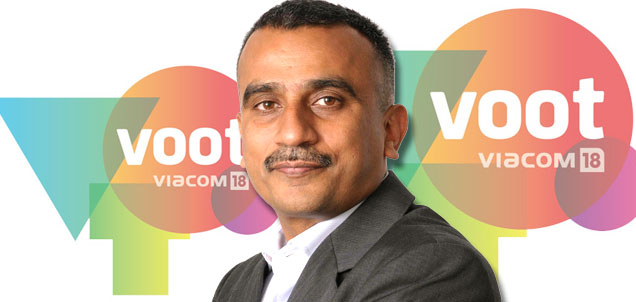
    Last week, Viacom18 launched its OTT platform Voot with much fanfare. MxMIndia caught up with Group CEO Sudhanshu Vats on the launch of the platform, the content strategy and whether the group intends getting into sports. Excerpts from the interview…


    So Voot took a long time coming?

    I have been answering this for everyone. There are two ways of looking at it. One, you could argue that we’ve taken little longer, but I think in digital, it’s important to get it right. The digital ecosystem is evolving rapidly. The number of new consumers on mobile, digital, video eco-system this year will double compared to last year. So I think we are fresh for them. Two, it’s about getting a product and content right. For digital, you have to keep refreshing technology every year. Tech upgrades which are needed for digital products are almost at a frequency of a year so it’s like a new product for everyone.


    So would you say that there’s a first-mover disadvantage for those who came in early?

    No, I would say that I think the point is if you’ve got your product and content differentiated, you are as good as first-mover here.


    There’s a lot of talk about OTT, including the FICCI-KPMG report. On how it’s going to boom in a big way. For Viacom18, this kind-of completes the picture, right?

    Yes, yes. I think it’s good that we have got a product now which sort of stitches all our content for the viewer in a very digital experience. Another differentiation is we haven’t gone TV to digital. Yes, we’ve got a lot of original hours of content of television which will be on this product but we’ve done a digital product and I think that’s a fundamental difference from bringing your TV starting with a brand name, starting with the discoverability. I don’t know whether you notice small small things. Each of our programmes have a 40-60-word description, each of the episode within that tells you what is happening, that’s a very digital product… that’s the way the digital piece goes.


    A lot of work has gone into the existing piece also. But tell me, what’s going to happen is from now onwards the existing websites of the various channesl that you have, whether it’s the Colors or MTV websites, some of which are exceedingly popular will now obviously merge into Voot, right?

    No, I think what will happen is our product websites, for all our channel websites and brand websites will remain because they’re very important marketing tools, they will remain but videos, the moment you want to watch and you will also have an option to start playing the video from there. But, supposing you go onto Colors and you want to watch Naagin, what it will do is it will bring you to Voot and will play Naagin for you… But our websites and our social interaction tools, our Facebook pages, all that will remain.


    You mentioned about all the programming across channels that you have will be on Voot. Does this mean that some of your older shows which aren’t on air right now will also be there?

    Yes. So we do about 10,000 hours of programming every year from Viacom 18. To answer your question, most of our stuff will be there but we’ve picked and chosen things. We’ve not put everything which was there in the past. For instance, if someone wants to see Balika Vadhu from the beginning will that option be there? The answer is yes.


    Specifically, will Comedy night with Kapil be there?

    Obviously it will be there.


    He has left and joined another channel…

    But it is our content so it will definitely be there and it will find a pride of place under comedy.  We are proud of that work, and it is on Voot.


    Coming back to Viacom 18, what else now…? You don’t have sports as part of your bouquet, you’ve just about got back the movie channel which had been exited some years back. What about sports and any other white spaces that you would like to fill up?

    There are white spaces for us to plug and I think movies was one of them which we recently done. Theoretically, there are English movies as well as some regional genres which are white spaces for us. Our focus on youths and kids is a little higher compared to anyone else in the business. In the brands, you’ve got dedicated brands. We’ve got enough white places to plug before we start thinking of sports.


    Is it because the kind of money you need to invest over there is…?

    No, it’s a combination of everything. There are 3 things with this: it’s very high investments, longer gestations and a business model which is not fully proven in the Indian context because subscription is not there so that is perhaps resisting us. The second piece which I was saying however which is that we’ve also got so many new other things to do which are clearer and which have got much better, and which have got better returns are attractive propositions which we would drive.


    One of your joint venture partners is Network 18 and it is going to come up with a huge telecom offering… do we synergies of Voot with that?

    There will be lot of synergy. We are continuously working with Jio and there are synergies at all levels.


    Will there be some exclusive content availed only to Jio subscribers?

    We are looking at all options. With the amount of content we have, there are things which we will be able to do, which are in this area. To give you an example, and this is my favourite example which I keep giving. So, if you look at Big Boss, a Big Brother, we’ve got 70 cameras in the Big Boss house. These 70 cameras are actually shooting for 24 hours. Let’s assume for the moment that for 12 hours people are sleeping and there is hardly any recording. Even if you look at 12 hours, that means 12 hours x 70 cameras which is 840 hours and what you show on the TV is sanitised 40 minutes of that. Therefore, our ability to do content around content and exclusive in this is pretty high. So whether we do it as Voot exclusives or for our partner exclusives, I think those things we will continue to explore and we will drive those synergies as we go forward.


    In the last two years, from the time you took charge, there has been much activity. You’ve had the regional and the English channels, the movie channel, now Voot. What’s coming next?

    We are actively looking at a lot of spaces and we will continue to grow. We will continue to grow our broadcast TV channel space, we will hopefully grow our digital space which we have just done. We will be growing our ancillary space both on consumer products and this.


    One last question… From what we have seen over here, obviously investments have been huge on Voot. Would it be right to say that it’s possibly your biggest investment after Colors?

    It is a substantial investment in terms of our greenfield investments If you look at Viacom 18, there have been three significant investments. There was an investment when Viacom 18 was formed and the investment in Colors was big.Then there has been an investment basically through acquisition of the ETV piece which was also substantial And the third… basically this is also going to be a slightly longer term high investment. I think we need to stay invested here because digital as I keep saying, digital models, across every industry are going to be different models and they are not conventional revenue models of business we grew up with or we were taught. The focus has to first be on viewership, users, usage and monetisation so in our case it will be viewers, viewership and then monetisation and there it will take some time.


  • ZMCL announces new leadership team

    By A Correspondent


    Zee Media Corporation Limited (ZMCL) announced that Rohit Gandhi who is heading ZMCL’s English News Channel – WION as Editor-in-chief, will additionally take over the role of Editor-in-Chief of DNA, its English mainline daily. Additionally, Shreyasi Goenka, who has been mentoring the content at DNA for a while, will now take the responsibility of Content Advisor and will guide all functions of DNA. Uday Nirgudkar who has been heading DNA along with Zee 24 Taas, will now continue to lead Zee 24 Taas as its Business Head.


    Commenting on the new leadership, Dr. Subhash Chandra, Chairman, Essel Group & Zee Media Corporation Limited (ZMCL) said, “One of our Vision 2020 goals is to become a leading global media conglomerate which is hugely dependent on our ability to create an organization that has the capacity to achieve its desired aspirations. We believe that the convergence of our media businesses i.e. television news and print platforms is an opportunity that will help us to achieve this organizational aspiration. With Zee Media’s ambition to get into English News broadcasting, both the brands put together give the organization an opportunity to serve our audiences better.”


    Shreyasi Goenka, Content Advisor, DNA said: “Since its launch in 2005, DNA has become the preferred choice for India’s young and dynamic readers. We have been continuously innovating with offerings like ‘I Am IN – dna of India’, a technology enabled initiative, that promises to enlighten, engage and empower citizens of India in getting involved in the cause for better governance. We are confident that this new seamless organizational structure will bring in fresh insights and views, thus helping us to leverage resources more effectively and in maximizing our market potential.”


    Speaking on his new appointment, Rohit Gandhi, Editor-in-Chief, DNA and WION said, “We are moving to expand our coverage and the editions of DNA. It is a great opportunity for us to bring more textured content from all parts of India to give our readers a far deeper understanding of India and the world. I look forward to working with Shreyasi in building an insightful newspaper.”


    The new appointments will come into effect from April 7, 2016. All editorial functions will henceforth report into Rohit Gandhi.


  • Pittie Group launches new socio-spiritual channel – ShubhTV

    By A Correspondent


    The Pittie Group has introduced a spiritual platform and satellite channel called ShubhTV that delivers live streaming of religious content, on-demand bhajans, kirtans and more. The channel was launched on 8th April, 2016 by the Group’s Chairman, Krishna Kumar Pittie. ShubhTV will offer programs that vividly depict India’s heritage. The programs will be both informative and entertaining.


    ShubhTV will be available only on DTH platforms like Dish TV and DD free dish, but will soon expand its distribution. “We are starting with Dish TV and DD free dish but in the next six months we plan to launch on all DTH platforms. We are pleased to announce our new venture in spiritual channels Shubh TV,” said Krishan Kumar Pittie.


    The channel will showcase discourses by spiritual speakers across the length and breadth of the country and will also be featuring programs such as Shubh Panchang, Shubh Darshan, Shubh Yatra and many others. Its key focus in the beginning will be to feature exclusive content on the much talked about ‘Kumbh Mela’ in Ujjain which will attract pilgrims from all over India.


    Apart from the satellite channel, ShubhTV’s unique content will be available on their OTT platforms (shubhtv.com) and also in Android and iOS versions. The channel’s revolutionary technology ensures quality viewing of content on all platforms including tablets and mobiles, making it a noteworthy audio-visual experience. ShubhTV also aspires to attract more advertising with its exclusive content and create a robust business model for this genre.


    The Group also plans to launch Shubh Cinema in the near future which will air spiritual and patriotic movies.


  • Shining Star


    By Suman Layak


    It was Holi in Uttar Pradesh in 1991. Sanjay Gupta, at the time a young management trainee at Hindustan Lever (now Hindustan Unilever), had organised a short film show in Etah, a town in Aligarh. Gupta’s plan turned into a nightmare when revelry among the audience deteriorated into a drunken brawl. In desperation, Gupta went back to his room to get his katta (countrymade revolver). His host in Etah had asked him to keep it under his pillow when he slept, just for safety.


    Gupta fired the katta in the air (for the first and only time) and managed to break the fight. While that day, in end February of 1991, is etched in his memory for the wrong reasons, Gupta swears by his learnings in Etah. It made him live the life of his consumers and soak it in. Today, Gupta, who has just been elevated as managing director of media giant Star India, makes sure that his team members spend a lot of time in the homes of their audience. A Star India team is scheduled to fan out across Uttar Pradesh next month. Gupta recalls how, after joining Star in 2009, he did his own bit of such touring.


    In Surat, he met one Mrs Shah who helped her husband in his diamond business. She was well known in her locality. But he realised that she wanted to be more than Mrs Shah; she wanted to be known as Minal Shah, a jewellery designer. Gupta explains how aspirations for such transformations are part of his target audience’s lives, and have inspired Star to build their soaps around women who come from humble beginnings and want to make it big time. A transformation along similar lines was celebrated in the recently concluded Star soap Diya Aur Baati Hum , about a girl, married young, who becomes an IPS officer. Transformation is also the reigning buzzword in Star India.


    Chairman on His Feet

    It starts in the corner office. On the 37th floor of Urmi Estate in Mumbai’s Lower Parel commercial district, Gupta’s boss and Star India chief Uday Shankar works standing at his workstation, which is a raised table without a chair around. The room, with glass walls on two sides, looking over central Mumbai’s concrete jungle, has three separate seating areas and a large television screen. Shankar, who has just been elevated as chairman and CEO of the company, has his own storyline for transformation. He says: “The company was started and designed as a small operation. It was not created to handle the growth we are seeing now.” He started off last week by carving up the company into five business verticals and elevating the business heads as CEOs of those businesses.


    There is a lot to keep Shankar on his feet — mainly the financial goals set by his boss James Murdoch, CEO of Star India’s parent 21st century Fox. Shankar has to take the company from a negative operating profit position in 2014-15 to deliver half a billion dollars of profit by 2018 and then double it by 2020. Shankar has to make good on a Rs 20,000 crore bet that sports will be profitable, and make money out of a digital platform, Hotstar, that Star India has pioneered.


    The Good News

    Growth is a great place to begin with. In the last two years, Star India has doubled its turnover. From Rs 5,204 crore in 2013-14, it went up to Rs 7,164 crore in 2014-15 and now is at Rs 10,800 crore for 2015-16 (around 65% of Star’s revenues come from advertising). Star India has been valued at $14.3 billion (a little over Rs 91,000 crore) by Edelweiss in January 2016, putting it way ahead of its rival Zee Entertainment.


    With 51 channels in eight languages, Star’s overall network share among Indian broadcasters is 22-23%, making it the king of the hill. Star has a deep presence in general entertainment channels (GECs) and is among the top three in Hindi, Bengali, Malayalam, Tamil, Telugu, Kannada and Marathi. It leads in sports, with Star Sports owning the rights to BCCI and ICC events up to 2018 and 2023, respectively. It has the rights to Wimbledon and two European football leagues and also coowns Indian leagues in kabaddi, hockey and football.


    The Bad News

    While that is the good news, here is the bad. Year 2014-15 produced Star India’s biggest ever net loss — Rs 1,273.88 crore as a standalone entity and Rs 1,467.35 crore when consolidated with its subsidiaries. The sports model still revolves around cricket, which may be high on visibility but not on profits, not yet. Last August, Star India paid $420 million to get out of a contract with the BCCI to broadcast the Champions League T20. This will hurt the profit and loss account for 201516. In other words, the company will again be in the red. Hotstar, the digital platform, is still hungry for investments. Star is facing a tough challenge in Hindi GEC space, with Colors from Viacom’s stable often outdoing it in weekly ratings from BARC. In late 2015, its major gambit, Amitabh Bachchan-hosted Aaj Ki Raat Hai Zindagi gathered low ratings and was later taken off air.


    The Gameplan

    Shankar points out that Star India is in a unique position as it is unlisted and has a parent that is ready to pump in cash whenever needed — as it did for Star India’s acquisition of Telugu broadcaster Maa TV in February 2015. Also, the company barely has any loans. The acquisitions of Vijay Television and Asianet provided Star with a strong footing in southern India, and Fox was happy to invest through separate subsidiaries, keeping it out of Star India’s balance sheet. CFO Sanjay Jain points out that the two companies, Vijay Television and Asianet, are profitable (a combined net profit of around Rs 450 crore) but are not consolidated with Star India. For any plan to succeed, Star’s sports business must turn around by 2018. Shankar admits that the sports broadcasting model in India is broke and that broadcasting top cricket events is not profitable. He sees a turnaround of the sports business by pushing sports programming into regional channels and markets. To realise this vision, Star India has invested in a sports studio in Mumbai in the same building that houses its headquarters.


    The recent World T20 had multiple commentary teams in different languages, creating regional language feeds. In search of profitability, Star also wants a flotilla around cricket and to look beyond urban audiences. That explains investments in different sports leagues like football, hockey and kabaddi. To garner a larger viewership, kabaddi was also put on Star Gold. Star India has eight sports channels, with a clear focus on separating the audience that wants English content from the one that Shankar is seeking out. “The focus is to make sports available to a larger number of people, in local languages, Hindi as well as others,” says Shankar.


    Is Star India’s bid to create new sports media properties sustainable? There are a few sceptics. Ronnie Screwvala, owner of U Mumba kabaddi team, lauds Star for promoting kabaddi, but adds: “I have a mixed view, as media companies cannot use media expertise to build a sport, because then the DNA and the thinking will always be from the ratings, viewership /audience and advertising points of view. While there may be nothing wrong with any of that, just those can’t be the objectives because then we will not build a longterm sport but a long-term media property.”


    Take football. Star India created the Indian Super League (ISL) in a joint venture with Mukesh Ambani’s Reliance. The assessment within Star itself is that running two national football leagues, the ISL and the I-League, is not viable in the long run.


    The Digital Design

    Star also has to turn around Hotstar, its digital platform that has seen 58 million app downloads in 14 months — a record of sorts. Hotstar can be accessed through an app or directly on the web through mobile web and website. Star expects 100 million unique views for the 2016 IPL season, for which it has the digital rights. Ad revenues on digital for this IPL are expected to touch 12-14% (3% in 2014). Also, more people today watch the English Premier League on Hotstar in India than they do on television. Star India is planning a paid version of Hotstar.


    Streaming video is not cheap, and Star’s MD Gupta figures that anyone who is able to watch videos can also afford to pay more for premium content — for shows like Game of Thrones or even the English Premier League. Gupta says: “We expect an overall explosion of television-watching time in India and we want to grab the new advertising and subscription opportunities.” The search for audiences has taken wings, with the Star soap Iss Pyaar ko Kya Naam Doon? becoming a rage in Turkey.


    The digital platform allows Star India to seek subscribers outside India, wherever the diaspora is spread out. As a relief to the company, the film business has seen two successes in 2016, with both Neerja and Kapoor & Sons promising good returns. Shankar says Star India is changing gears in films. The profit and loss statement of Star India for 2014-15 shows that the company has upped its spending on programming and programme rights by more than Rs 2,500 crore to Rs 5,597 crore. So profitability will only come via greater revenues. Edelweiss analysts Abneesh Roy and Rajiv Berlia wrote in their report in January: “Star is best placed to charge premium ad rates due to a higher demand for prime-time slots. Zee TV’s ad rates are 0.75 x Star Plus rates, which shows the premium commanded by Star.”


    Closer to the Audience

    Shankar, doubtless, sees an opportunity for closing the gap between expenses and revenues. The regional thrust is a push for profitability as these channels often enjoy a 30-40% margin. The South is clearly a focus area. In the shakeup last week, managing director of Asianet, K Madhavan, has been elevated as managing director (South) for Star India. Madhavan says, “The South is a very profitable unit. About 30% of the television population resides in the four southern states and most of these markets are priority for advertisers.” Shankar wants to ride on the top line growth to a healthy bottom line and has decided to pump prime the content pipeline and create content ahead of its time. “I want our teams to work on at least 100 projects in Hindi and another 100 in other languages simultaneously,” he says. One of the initiatives he has taken has been to diversify recruitment.


    “We hire from the top management and engineering colleges but now we have started going to universities in places like Allahabad and Benaras,” he says, stressing on the need to avoid sameness in hiring and the key role that diversity plays in keeping alive a content-generating company like Star India. So to find Bengali writers, a Star team went to Santiniketan. To help bring in more creative people on board, Star has introduced flexible contracts that do not tie professionals to the company in the manner of a job. To retain women employees, the company introduced flexible maternity leave—six months of paid leave and then another six months of leave at half the pay, or full pay for half the working hours. In various ways, through programming and hiring and the changes initiated last week that drive the decision-making powers down the line, Star is trying to get closer to its audience, deep inside India, in tier-2 and tier-3 towns and villages. These are places like Etah where Gupta started his career. Television today ensures that in these towns, no one needs to wait for a film screening on special days like Holi. For Star, this audience can be key.


    Source:The Economic Times

    Copyright © 2016, Bennett, Coleman & Co. Ltd. All Rights Reserved

    Licensed to republish


  • CNN-IBN refreshes. To be called CNN-News18 from today


    Network18 has announced the re-branding of CNN-IBN to CNN-News18.  The channel will unveiling a new name and logo, its revamped studio and a new look-and-feel to the news screen at 8pm tonight (April 18). Meanwhile, IBNLive.com, the digital destination of the channel, will also change to to News18.com.


    Speaking on the occasion, Adil Zainulbhai, Chairman, Network18 said, “A decade back, CNN-IBN re-invented news by getting to its viewers the benefits of a reputed international news partner CNN, and eventually emerging as the most awarded English general news channel.  We are now at a time when breaking news role is taken by social media and there is an oversupply of news sources because of which just breaking news isn’t enough. In this problem of plenty, quality suffers and consumers don’t know what to believe or trust in. Also the insights into an issue keep getting compromised for lack of time and resources. Realizsng this gap, we have decided to take the onus of breaking this clutter by focusing on quality of reporting, in-depth analysis and an all-round view of key issues. We are optimistic about bringing this change wherein we will keep the journalist and the consumer at the centre of our programming, which is the critical need of the hour.”


    Speaking about the re-branding and revamped content, Avinash Kaul, CEO – IBN News Network said, “The refreshed identity of CNN-News18 aims to bring the value of immersive journalism to its viewers. Inspired by our new tagline – ‘On Your Side’, CNN-News18 will strive to make news more objective keeping the viewers at the centre of its content strategy. We will significantly ramp-up our digital presence to ensure that viewers are seamlessly able to interact and engage with our content.”


    Leading commentators including Vir Sanghvi, Swapan Dasgupta, Ayaz Memon and Ajoy Bose will join the channel’s primetime coverage from 8 to 11pm.


  • Nickelodeon does its bit for a cleaner India

    By A Correspondent


    Nickelodeon has announced Together For Good – an initiative  that endeavors to make the kids of India take small steps towards a better tomorrow.  Kick-starting on 18th April 2016, the 1st edition of the campaign will make the process of cleaning more fun and entertaining for children. Together for Good is Nickelodeon’s worldwide initiative that believes anyone, anywhere, any time can help make the world a better place. In India too, the movement has been launched with a vision to empower kids to be the change agents in society.


    Given the fact that cleanliness is one of India’s primary concerns, this edition of Together For Good  sets out to address the concern by inspiring children to take small but actionable steps towards creating  a cleaner future. Nickelodeon believes that kids are very creative and hence goes beyond just simple ‘Dos’ and ‘Don’ts’ to contribute towards society in their unique way. Hence, this year the campaign will be actioned through the unique idea of ‘Collect -> Clean -> Create’. This will not only help them to be aware but go a step further to unleash their creativity and build simple usable items out of waste, scrap and junk.


    In keeping with the core of Collect, Clean and Create, Nickelodeon will begin by seeding messages of cleanliness on-air and online with the help of the kids favourite Nicktoons with whom they share immense equity. Children across the country will be encouraged to take up the issue at an individual level, or even join clubs and groups to help out.


    The movement will be brought to life on digital on nickindia.com/TFG. The page will help kids with simple and actionable steps with a starter kit with info-graphics, articles on the importance of cleanliness and various methods and tools that we can use for personal as well as environmental cleanliness. The page will also list all the other activities that are currently active in the country and open to participation.


    Nina Elavia Jaipuria

    Commenting on this initiative, Nina Jaipuria, EVP and Business Head, Kids Cluster at Viacom18 said. “At Nickelodeon, we believe that children are change agents of tomorrow. Through “Together For Good” we want to start imbibing in children the eternal virtues of cleanliness, while also empowering them to make small but impactful changes in society. Together for good is a movement that will inspire the ever creative and curious kids to bring about a positive change in the world.”


  • CNN-News18: Will the change be gamechanging?

    By Anuka Roy


    What’s in a name? This famous quote by Shakespeare may or may not hold true for media organisations. On April 19, the Network 18 group rechristened its English news channel CNN-IBN to CNN-News 18. The new name and logo was revealed from 8 pm onwards.


    A new tagline- On Your Side- along with a revamped studio was also revealed as part of the re-branding exercise. IBNLive.com will now be called News18.com. Prime Time 2.0, a new show, will be telecast between 8 and 11 pm; comprising of on-ground reporting, opinions, debates and humour-laden content. In the press release, they said that, the focus will be on “making news more relevant to its viewers by bringing immersive journalism to the fore.


    Said Adil Zainulbhai, Chairman, Network18: “A decade back, CNN-IBN re-invented news by getting to its viewers the benefits of a reputed international news partner CNN, and eventually emerging as the most awarded English general news channel. We are optimistic about bringing this change wherein we will keep the journalist and the consumer at the centre of our programming, which is the critical need of the hour,”


    So, will this re-branding excercise work? What do people have to say about it? MxMInida asked a cross-section of experts about the same and here is what they had to say,


    > Old wine in new bottle? Do you think the change is cosmetic? Because the people are the same, and it’s just a slicker, newer version?

    Avik Chattopadhyay, a senior marketing and brand consultant (AC): I actually watched the channel for an hour. There seems to be some new programming, like “Big 5 @ 10”. The colour palette seems new. But it is early to conclude whether it is purely cosmetic or is the channel making the most of the change in name to have a substantial change. to set it aside from others and truly distinct.


    Vikas Mehta, formerly CEO, Lowe Lintas, Dubai, currently blogger and consultant (VM): My take is simple. The media brand is CNN, which has a bigger brand equity. To me it doesn’t make much of a difference.


    Sushobhan Patankar, professor at Symbiosis Institute of Media and Communication and former employee of Network 18 (SP): As far as I’m concerned, it’s kind of sad for me. I’ve been associated with CNN-IBN since its launch in 2005. The brand had slipped since Rajdeep Sardesai’s exit. It is difficult to predict.


    > CNN-IBN has been a household name for around a decade. Do you think the rebranding will mean that it will take the channel some time to become a household name? Headlines Today did change to India Today, but India Today was a known media brand….

    AC: Guess the change in name is not that significant to create a total disconnect from its previous avatar. It is an evolutionary rebranding… not a revolutionary one. As long as the “CNN” name remains, the viewer will be able to connect. If it were called “Newswork 18” or something as drastic, it would have been another matter.


    VM: I don’t have research to back up ,when I’m watching CNN-IBN, I would say I’m watching a CNN channel. But for the consumer to realise it would take sometime… but it doesn’t matter much


    SP: When ABP acquired Star News, the channel was known for its faces. I feel faces are bigger than brands. Brand change doesn’t matter. Brands are not important but faces are.


    > CNN-IBN is today far from being the leader on the ratings roster. Do you think the new look and thrust will help build it?

    AC: It is all about content, content and content. They have some big names like Swapan Dasgupta, Vir Sanghvi and Bhupendra Chaubey. Now they need to create the right relevance with the target viewer they want to reach out to. It cannot be the same as one who watches Times Now or India Today or…


    VM: That’s true. I don’t.know the actual reason why they have done the rebranding . May be they are trying to refurbish the brand. It’s handled right in terms of raising interest that something new is happening in the channel. When Star News changed to ABP news, they handled it quite well. The viewership didn’t suffer because they kept the curiosity factor high. It’s kind of a lot has changed but nothing has changed at all. It means it has to better than what it was and needs to be better perceived than what it was. If the change is cosmetic, it won’t make a difference but if the content has changed dramatically in terms of stories, anchors, then definitely it would make a difference.


    SP: I don’t know what their editorial plan is. If they create new content and follow a new model, it might work but if they stick to the old model it may not.


    > Your view on whether the masses are indeed interested in news without an agenda… or do they like the noise at primetime?


    AC: Not everyone wants to ‘view’ noise. There is definitely a substantial segment that looks for quality and credible content. And there can be no news without an agenda…even if it is “100% unbiased truth”…this is also a credible agenda, possibly the most difficult to achieve and deliver over time. There are news platforms that have painstakingly built their reputation on agendas that people actually appreciate and value. CNN News 18 needs to define and deliver the same for itself. Give it time…


    VM: I don’t know what you mean by masses. This is a niche channel. It is aimed at higher SECs. This is my personal view, I don’t have a research to back it, a lot of consumers want to see the reality. But a lot of channels are giving a twist of their own. For me, the masses are looking for channels without a biased point of view. They want to judge for themselves.


    SP: There should be an element of spectacle. There needs to be drama to engage the audience. The audience wants something chatpata. So yes, people are more interested in primetime drama.


  • Dia Mirza gets on telly with Living Foodz

    By A Correspondent


    ‘When in doubt, travel’. Probably getting inspired by this quote, Living Foodz, the food and entertainment channel, launched its new travel show ‘Ganga- The Soul of India’. The target audience of the show is the urban youth, among whom solo trips are a huge hit. The show which is scheduled to star on May 1 will mark Dia Mirza’s debut on television.


    Speaking at the launch of the show, Amit Nair, Business Head, Living Foodz said this herald’s the channel’s “foray into factual entertainment”. “Our ambitions are bigger and showcase breakthrough concepts and ideas, keeping food as a strong component of our content. With this show we push ourselves further, we deliver a mesmerizing journey that will entertain, inform and inspire,” he added.


    Ganga will document  the journey of Dia Mirza through the many towns along the Ganges, starting from Gomukh in Himalayas to the Gangasagar delta where it meets the Bay of Bengal. It will give viewers a peek into the fascinating legacy that is shaped by the country’s longest river.


    A short promo at a press conference on Tuesday gave a quick preview of the host’s discovery of  all that the river has to offer, including the people, history, mythology, anthropology, adventure, music and of course the food.


    Said Piyush Sharma, CEO (APAC and India), Living Group, Zee Entertainment: “This show is the most ambitious and passionate project of the team till date. It takes us into a totally different domain.  You would need to watch the show to appreciate it. It raises the bar in terms of output, nothing like India has seen before”, when asked about how different is the show from other travel shows. A coffee table book has also been launched, having the same name as the show, featuring the details of the journey.


  • &tv revs up weekend with dance show

    By A Correspondent


    General entertainment channel &tv launched its new dance reality show ‘So You Think You Can Dance, Ab India ki Baari’ with much fanfare at a presser on Tuesday, with the three jury members – Madhuri Dixit, Bosco Martis and Terence Lewis, and the channel bosses in attendance.


    The show is the Indian version of the Emmy-winning dance reality show ‘So You Think You Can Dance’. The show, produced by Endemol Shine India, will witness the battle between Street and Stage style of dance.


    Said Rajesh Iyer, Business Head, &tv, “We are thrilled to present yet another adaptation following the success of The Voice India. This time it’s of ‘So You Think You Can Dance’, the biggest dance show in the world. We believe that the show will give a new momentum to the weekend television viewing experience.”


    The show will be aired every on Saturdays and Sundays starting April 24 at 8.30 pm and will be hosted by television stars Mouni Roy and Rithvik Dhanjani.


  • DishTV & Shemaroo jointly unveil Miniplex

    By A Correspondent


    In yet another move to expand their gradient of value-added services, dish TV has tied up with Shemaroo Entertainment, one of India’s leading entertainment content houses to launch a new premium service called Miniplex.


    This premium movie service will premiere latest blockbuster movies every Friday. Additionally, it’s is an ad free subscription based service which will also showcase other recent movies.


    With Miniplex, customers can avail premium movie content for a subscription fee of Rs 60 per month. This premium movie service will be available on channel number 212 on DishTV & Zing. Customers can easily activate this service by giving a missed call on 18002741100 or through SMS


    Speaking to the tie-up, Arun Kumar Kapoor, Chief Executive Officer, DishTV said: “Being a pioneer and market leader DishTV has always stood up to its promise of providing maximum Width and depth of content. We have always taken the lead in enhancing the value proposition and believes in providing the maximum and the best in entertainment to its subscribers. We are glad to announce our partnership with Shemaroo to launch Miniplex on our platform. The experience of watching latest movies at a click of a button has redefined the way consumers watch movies today. With this latest addition to our value added service we take the entertainment quotient a notch higher and allow movie buffs to watch latest blockbusters in the comfort of their home at relatively much reasonable cost.”


    Hiren Gada – Director, Shemaroo Entertainment Limited, shared his thoughts on the occasion: “We are glad to now launch Miniplex on DishTV. This tie up will enhance our reach across the country. A number of movies get released in theatres but go missing on TV. Miniplex intends to bridge this gap through premium ad free viewing experience. The service is already doing well on other platforms and we are happy to offer it to DishTV audience now.”


    Miniplex is a cross platform subscription-based movie premiere service that provides the audiences a unique opportunity to view Premiere and also Premium movie content for a nominal monthly subscription fee. The service offers an un-paralleled experience to the movie viewers with ease of consumption as movies are scheduled at fixed timings throughout the day.


  • DishTV expands channel offerings in India

    By A Correspondent


    Keeping up the promise of providing maximum and quality entertainment to its subscribers; DishTV has added eight new channels to its platform during this month, taking its total count to more than 525 channels and services.


    The new channel additions will enhance the already impressive catalogue of DishTV and will be a blend of regional, devotional and movie channels such as ETV Cinema, ETV Plus, Rishtey Cineplex, Cineplex, Devi, Shubh TV, Paras TV and Public.


    Keeping in mind the regional preferences, the company has added channels like ETV Cinema and ETV Plus that will cater to the Telugu speaking audience and Public channel for the Kannada speaking audience. The company has also added 2 new movie channels Rishtey Cineplex and Cineplex that will cater to the needs of Hindi movie viewers. Additionally, spiritual channels like Devi, Shubh TV and Paras TV has been added to expand choices for the devout set of consumers.


    Announcing this new development Arun Kumar Kapoor, Chief Executive Officer, DishTV India said, “Our endeavor has always been to provide quality entertainment with the widest choices available for entertainment.  DishTV, with over 525 channels and services has redefined the entertainment quotient with unparalleled TV viewing experience.  With these channel additions we intend to fulfill aspirations of our subscribers with max content and look forward to catering to their ever growing demands.”