Category: MEDIA

  • Bindass to host ‘Generation Einstein’ tonight

    By A Correspondent [updated]


    All roads lead to the Mahalaxmi racecourse today (Monday, May 14) as Bindass will launch the Indian edition of the very successful book ‘Generation Einstein’.  Co-authored by UTV Bindass along with the well-known international author and speaker Jeroen Boschma, the book is being launched in India keeping in mind the specifics of the Indian market and traces the emergence of a global generation in India, their likes, dislikes, lifestyle and what sets them apart from the others.

    The Indian edition of Generation Einstein – authored by Samyak Chakraborty and Arjun Vednayagam – also goes on to explain the communication strategies that marketers could adopt in reaching out to the youth with the help of India-specific case-studies like Tata Docomo, Bindass, Virgin Mobile and many more.

    The book describes a new generation, ‘Generation Einstein’ that was born during the last decade of the previous century. It also stresses upon the significance of the youth as an important part of the market and how fast the new generation understands the world better than anyone else. The book attempts to decode this generation and help marketers reach out to them.


    Commenting on the association of Bindass on the launch of book, Kunal Mukherjee, Director-Marketing, UTV & Bindass Networks, said: “Bindass being a 360-degree youth brand continuously looks out for avenues to work with people who engage or reach out to the youth in various ways. Generation Einstein 3.0 provides an insightful look into the working of the youth’s minds, how they make choices, evaluate mediums and more importantly how to establish a connect with them as equals. One of the hardest things to do for any brand today is to get their communication across to the youth and Generation Einstein helps each of us do just that as we decode the youth step by step.”

    The book will also throw light on the new age communication strategies like “Increation’ which is a more effective method of communicating with a youth segment. The new methodology of research – Increation involves putting many ideas to test, then trying to use the reactions to narrow down the ideas. The researcher will look for overlaps on what connects to solutions…leading to that one big insight that results into that one big idea.

    Young people are ultimately suited to working with increation projects. They are extremely creative because of the world in which they live and their present stage of life.

    Entry to the event, which is being organised in association with MxMIndia, is by invitation only. It will be followed by cocktails and dinner.


  • 1000 episodes, and counting!


    By Meghna Sharma


    Avika Gaur

    In 2008, when general entertainment channel Colors, was launched by Viacom18 – a joint venture between Viacom Inc and the Network18 Group, there was much promise of  a new spectrum of emotions and entertainment. While there were high profile reality shows on offer, the one serial that caught everyone’s attention was Balika Vadhu, a story of Anandi, married off in a rich family as a child. The show will complete 1,000 episodes today (May 14), a feat not many shows have accomplished in the Indian television industry.


    Ashwini Yardi

    Balika Vadhu show caught everyone’s attention because of its simple story and real emotions. Anandi captured the hearts of millions, making it the No 1 show at that time slot. Talking about Balika Vadhu, former programming head of the channel, Ashwini Yardi recollects: “It is the only show I said yes to in 30 seconds. Balika Vadhu is a cult show that portrays the journey of a child bride into womanhood. Even when the channel was launched, the show wasn’t promoted or marketed as much as the other shows. So, it has achieved everything on its own.”


    Child marriage isn’t something new, many young girls and boys are forced into it even today and the government and activists have tried to curb this social evil. Through the show, the writer and the channel wanted to convey the side-effects a child marriage can have on one’s life.


    Purnendu Shekhar

    “The realism in the characters and storyline is what made the show connect with its audience. We have never compromised of the plot and concept of the story to gain TRPs. Balika Vadhu is the first show which raised a social issue as its main plot on a primetime. And we wanted to educate people as well as entertain them,” says Purnendu Shekhar, the writer of the show.


    Agreeing with Mr Shekhar, Prashant Bhatt, fiction head, Colors says: “The story is the hero. The concept of the show decides how the look and treatment of the show will progress. So much so that the cast, the sites, the look, the makeup, even the language is completely tied to the concept. Balika Vadhu brought about authenticity, consistency and meaningfulness and that has worked. Today, Anandi, Sumitra, Dadisa, Bhairon and many others are household names solely because of the way the characters have been portrayed; the actors literally live their roles. The dialogues and its delivery has raised the bar completely. In totality, the show is an honest effort from our end to highlight issues to a mass audience and its acceptance is a great high for us.”


    Monaz K Todywalla

    Of the 197 weeks of being on-air, it’s been the No 1 show in the slot for 172 weeks. According to Monaz K Todywalla, general manager, Madison Media, the reason why the show has worked well for so long is: “The simple storyline of Balika Vadhu, in its early days was a refreshing change from the high drama soaps that existed. The show started off a new trend of addressing social problems that exist within the fabric of the country; people empathize with the story of a young girl who was married at a young age – the twists in her life deal with problems that women in India face. More importantly, because Anandi doesn’t play a victim, but fights odds to emerge a winner.”


    Deepak Netram, vice president, Lodestar UM, reasons why Balika Vadhu has been able to cut across masses. “The show was a milestone in the GEC space. It redefined a lot of trends and was a winner for the channel for a long time in many aspects. The show targeted a certain TG and that’s the audience many advertisers want too,” he said.


    OTHERS IN THE 1000+ EPISODES CLUB

    Kyunki Saas Bhi Kabhi Bahu Thi – April 2005
    Kahaani  Ghar Ghar Ki – Aug 2005
    Kasauti Zindagi Ki – May 2006
    Kumkum – April 2007
    Woh Rehne Wali Mehlon Ki – June 2009

    At 1,000 not out, Mr Shekhar shared that it wasn’t easy to keep freshness alive in a daily soap: “When I had written the show for Doordarshan in 1992, the show was supposed to have only 25 episodes. I feel till the time the viewers continue watching and enjoying the show, we’ll continue to write.” For the DD version, the young couple were supposed to grow-up in the fourth episode itself, whereas on Colors the show took a time-leap in the 517th episode.


    Jaahnavi P Paal

    But not everyone believes that the show must be allowed to continue till the ratings become negligible. TV analyst and columnist, Jaahnavi P Paal rues that Indian soap operas tend to lose the plot and drag. I guess the same has happened with Balika Vadhu too. Today, many avid viewers of the show have lost interest in it. Maybe that’s why it has lost its  number 1 spot. I’m a firm believer that a show must end at a proper time instead of being dragged.


    However, there’s no denying the fact that as a serial Balika Vadhu changed the trend with its interesting and unusual concept. Social awareness through primetime benefitted the show as well as the channel.


  • Sera Bangali honours 13 progressive Bengalis who said no to negativity


    By A Correspondent


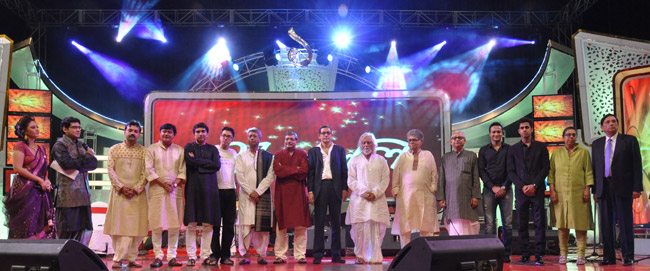
    West Bengal has been a playing field for visionaries who emerged as thought leaders and have shown the way to rest of the countrymen, by just saying no to the negativity. STAR Ananda, Bengal’s leading news channel is celebrating this excellence through Sera Bangali.


    Sera Bangali is a pioneering effort by STAR Ananda since 2006 for Bengal is and people from West Bengal who have made their state proud through their achievement. This biggest, and most credible, award function felicitates eminent personalities who have not only achieved excellence in their respective fields but have also helped to bring Bengal in the national as well as international limelight.


    The awards are presented in a plethora of categories like art, film, music, education, business, science, sports and lifetime achievement. After runaway success of past 6 years, Bengal has now welcomed 2012 Sera Bangalis. The celebration was held on May 11 at Kolkata. It was a star studded event which started with a grand felicitation ceremony followed by a scintillating entertainment show.


    The winners of Sera Bangali 2012 in various categories:


    Category Awardee
    Film (Actor) Saswata Chatterjee
    Film (Direction) Srijit Mukherji
    Music Anupam Roy
    Sports Manoj Tiwari
    Sports Shakib Al Hasan
    Public Life Ruchira Gupta
    Education Sushanta Dattagupta
    Science Sumantra Chatterji
    Business Vinayak Chatterjee
    Art Lalu Prosad Shaw
    Sera Abishkar Aneek Dutta
    Lifetime Achievement Sunil Gangopadhyay
    Serar Sera Abhijit Vinayak Banerjee


    The nominees were selected following an in-depth research made by the MCCS Editorial team.


    Past Sera Bangal is have included luminaries like Pranab Mukherjee- Minister of Finance, Dr Muhammad Yunus- Economist and winner of Nobel Peace Prize, Sourav Ganguly, Mithun Chakraborty, Rahul Bose and Anurag Basu.


    Speaking on the occasion, Ashok Venkatramani, CEO, MCCS said: “We have dedicated ourselves to the recognition and felicitation of those personalities who have made Bengal proud and continue to do so. Sera Bangali is the truest effort in this direction to recognize those successful Bengal is, who not only have excelled in their respective fields, but have also helped in putting Bengal is in the global arena.”


    The entertainment that follows the award function saw performances by distinguished artists like Kunal Ganjawala and Debojyoti Mishra.


    STAR Ananda plays the role of the true leader by connecting these luminaries with the people. This is in accordance with the channel’s aim of reflecting and catalyzing the growth and resurgence of Bengal and also celebrating excellence.


  • Tata Nano partners with MTV India for India’s first Social Road Trip

    By A Correspondent


    To celebrate its over 1 million fan base on Facebook, Tata Nano announced the launch ofIndia’s first Social Road Trip called, Nano Drivewith MTV, where the digital world will meet the real world. Tata Nano has partnered with MTV India to create a unique driving experience and will leverage the online medium to treat travel enthusiasts to a 20-day, over 2000 km drive.


    Commenting on this unique property, Delna Avari, Head – Nano Product Group, Tata Motors said: “Tata Nano is a personal mobility option for everyone. We are increasingly becoming the popular choice of mobility amongst youth – about 42 per cent of Nano owners are in the 18 to 34 age group. TheNano Drivewith MTV will enable our customers to further understand and experience the brand.”


    Tata Motors, MTV and Nano fans will select 4 teams for this drive. Each team will comprise 4 members and these teams will be allocated 4 different routes to be covered in 20 days. The teams will need to overcome obstacles, tasks and move up the ladder. Social media will play a vital role in this unique road trip as viewers will get a chance to vote for their favourite teams online. While the winning team will be awarded with 4 Tata Nanos, the most ardent fan also gets a chance to win a Tata Nano.


    In November 2011, Tata Motors introduced the Nano 2012, with a bouquet of features, further improving on its record asIndia’s most fuel efficient petrol car.


    With the launch of this drive, over 1 million Facebook Nano fans can look forward to a thrilling social road trip.


  • Reviewing the Reviews: RA.One

    RA.One

    Key Cast: Shahrukh Khan, Kareena Kapoor, Arjun Rampal

    Written and Directed By: Anubhav Sinha

    Produced By: Gauri Khan, Shahrukh Khan


    Of course, with a hefty budget and relentless marketing, RA.One was expected to be something of a breakthrough movie. That it turned out to be akin to an idol with feet of clay, caused disappointment across serious reviewing platforms — not the box-office counting ones, who are still arguing about just how much money the film made on opening day.

    Interestingly the film, which was released with thousands of prints worldwide and god knows how many red carpet premieres, was reviewed by several foreign critics—most of them ignorant of, or insufficiently exposed to, Bollywood cinema. So the tone was either cruel or condescending.

    Simon Abrams of Slant Magazine was brutal. “The film champions an incoherently hackneyed kind of morality where filial piety matters more than treating your fellow man well. Virtually every character in the film, save for Shekhar and his character’s nuclear family, are made fun of, and even they aren’t safe from ludicrously loaded assumptions of how both children and adults should behave. RA.One is consequently a flashy, gratingly broad action-comedy hybrid whose family values are meaningless.”

    In contrast James Luxford of The National fawned, “Khan demonstrates what a versatile actor he is, with his performances as both Shekhar and G. One feeling like completely different people. Elsewhere, the critically acclaimed actress Kareena Kapoor provides excellent support and has great chemistry with Khan, while the model-turned-actor Rampal oozes menace as the titular villain, in a role akin to the Terminator movies.” That he is a bit clueless is revealed in his line, “Not the best work of the director nor the star, but certainly their most spectacular.” Err, what was he counting as Anubhav Sinha’s best work?

    Kirk Honeycutt of The Hollwood Reporter seemed mildly amused by the hoopla. “The film, directed by Anubhav Sinha, is gloriously silly, with stunts, CG animation and music numbers bursting out all over yet its beating heart lies in a commonplace story of a family and most especially a father and son who don’t understand one another. Oscar Hammerstein II once said something to the effect that you have to believe in whiskers on kittens and warm woollen mittens to get away with writing about such corny banalities in a lyric and so Shah — SRK as he is known to billions of fans — really does believe in family values and the power of cinema.” Indeed.

    The rival trade magazine Variety, has John Anderson write, “Featuring superstar Shah Rukh Khan and festooned with enough CGI ornamentation to qualify as a subcontinental Christmas tree, RA.One is a frenetic, tuneful, full-throttle action-comedy that has reportedly crushed Indian presales records. Still, this videogame-themed outing seems unlikely to become a crossover hit: While South Asian auds will likely flock to a film that does what Bollywood does with a major techno bump, the aesthetics of overkill will make the result inaccessible to Westernized Americans, the campiness, as usual, muddying the translation.”

    Tamara Baluja of The Globe and Mail gives it one star and rants, “The film is as cheesy as it sounds. It falls into the very traps that Khan himself complained about: weak plotline, random song-and-dance routines and a plethora of tacky crotch-related jokes, which left me grimacing. And for audiences who don’t understand Hindi, the subtitles were frustratingly lagging – on occasion, almost a whole dialogue behind. RA.One is Khan’s baby and boy, are you not allowed to forget that. The actor almost never leaves the screen. It’s a pity, because he’s not really the one who shines in the film…”

    Rachel Saltz of The New York Times tries to be balanced. “You can see the money on screen, if not in the screenwriting. The exposition is longwinded and confusing, as are the rules of the game, in the virtual and the real worlds. The bumbling Shekhar is too clownish; RA.One is a dud demon (Raavan is invoked to little effect) who disappears for chunks of time; and you probably won’t hold your breath as good fights evil. But if the storytelling disappoints (shocking!), the film mostly doesn’t. It relies on action and effects and Bollywood’s trump card, star power, to carry the day. This is Mr Khan’s movie, and once he sheds Shekhar’s droopy locks, he shines as the deadpan, action-hero robot with digital snot and smooth moves on the dance floor.”

    Andrew O’Hehir of Salon.com nails it with, “I make no claims for RA. One as great cinema, and director Anubhav Sinha displays no particular vision, beyond that of a general who’s kept his enormous army moving in roughly the right direction. (Sinha and five co-writers, Shahrukh Khan among them, get credit for the story and screenplay.) What makes this movie worth seeing is its blend of aesthetic and technical approaches — some of the crew and special-effects team was Western — its immense scale and abundant confidence, and its utter shamelessness in trying to entertain nearly all imaginable viewers, from Abu Dhabi to New Jersey to Zanzibar. If you’re bored by the action scenes or the love story or the dopey domestic comedy, just wait three minutes for something else to come along — and whoever you are, you won’t be bored by the musical numbers!”

    Back home, most critics are underwhelmed. Mayank Shekhar in the Hindustan Times writes, “For most parts, this doesn’t seem a super-hero movie at all. It’s more of a weirdly boiled, Bollywood please-all: vaguely soppy romance, Salman-type sasta comedy, narcissistic SRK set piece. Die-hard fans of all three genres are likely to be disappointed,”

    Aniruddha Guha, writing in Daily News & Analysis: “But blame it on Anubhav Sinha, the director with slick-but-hollow films Dus and Cash on his CV (one worked at the box office, the other bombed). RaOne is no different; it is beautiful in appearance, but empty within. Which is a pity. Anubhav could have really made a mark with this one.”

    Going Going G.One is the title of Shubhra Gupta’s review in the Indian Express. “It’s not just Shekhar-the-appa, who is lame. The whole film seems to be dipped in the stop-start-go stutter of an overlong video game. As the bumbling Tamilian techie, Shekhar is single-tone; G.One seems to be a confused creature, ‘made-of-metal but-with-emotions’. And curiosity. He demonstrates this by asking Kapoor: what is Karvachauth? Got it, this is a Bollywood robot. The sfx is wonderful in parts but mostly derivative, with Shah Rukh mouthing such iconic lines like ‘I will be back’ (oh Arnie, my Arnie), and clutching a pole on top of a high building, like..? Spidey. That’s right. Go to the top of the class.”

    Sanjukta Sharma of Livemint writes, “Why ape Hollywood’s extravagance and technical virtuosity with limited resources? Despite the largely thrilling ride, Khan’s ambition for RA.One is misplaced. It is without real commitment to the art of storytelling or genre. The producer-actor is its only relentless, narcissistic showpiece. Anubhav Sinha’s RA.One is a spectacular disappointment.”

    Kunal Guha’s review in Yahoo Movies was one of the first to slam the film. “Shahrukh’s robotic expressions will remind you of his ‘My Name is Khan’ role, as he confuses machines with differently-abled humans. Kareena’s character covers the entire gamut of expressions but isn’t memorable or mentionable enough to be regarded. Arjun Rampal has bagged his dream role: an android with mechanical expressions who allows his body to do the talking. Good job, Arjun Rampal’s body!”

  • Reviewing the Reviews: Mod

    Mod

    Key Cast: Ayesha Takia Azmi, Rannvijay Singh Singha, Raghubir Yadav, Tanve Azmi, Ananth Mahadevan

    Written and Directed By: Nagesh Kukunoor

    Produced By: Sujit Kumar Singh, Elahe Hiptoola


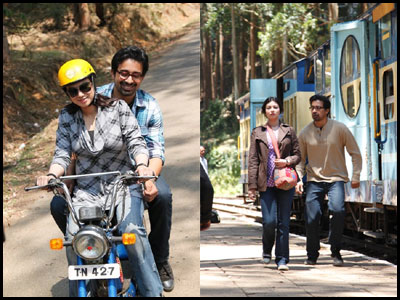
    In the glut of releases this week, Mod is the pick, simply because Nagesh Kukunoor is the director, and even though his last few films have been heart-breakingly bad, there are still hopes from the man who made Hyderabed Blues and Dor.

    The title is confusing, most read it as the abbreviation of modern, when it is intended to mean turn. Most critics, perhaps relieved that it wasn’t as awful as Kukunoor’s Bombay to Bangkok, found good things to say about it. Readers would be confused, however, when ratings range from one to three and a half. What is slightly off-putting that Kukunoor has given up on originality. This one too, is taken from Korean film, Keeping Time.

    Mayank Shekhar of the Hindustan Times gives it one and a half stars, but perhaps nails it when he writes, “Most still recall Kukunoor for Hyderabad Blues (1998), a game-changer in low-budget Indian films, which could instruct and delight at the same time. He has since become a pure genre filmmaker. Which is truly what separates the so-called “indie” from the supposed hard-core mainstream. Traditional Bollywood directors pack in every genre into one movie, alternating action with romance, comedy, drama etc. “Cutting edge”, “independent”, “Hindie”, potentially global “crossovers” would be too flatulent an epithet for those who don’t do that. But they don’t produce anything extraordinarily personal, astonishingly moving or real, either.”

    Trade journalist Komal Nahata on koimoi.com gives it one star and writes, “On the whole, Mod may win critical acclaim but it will remain a dull fare at the box-office, its poor initial and the dull pre-Diwali days only adding to its problems.”

    Another trade man, Taran Adarsh, writing in bollywoodhungama.com gives it two stars and states, “Mod is an emotional love story of two completely mismatched people – a genre Kukunoor has never tackled earlier. In fact, in his earlier movies, love was a part of the main plot, but it’s the central theme this time. Mod boasts of an interesting idea and even Kukunoor’s mature handling of the material needs to be lauded, but the film suffers for two reasons – it unfolds at a sluggish/lethargic pace and is prolonged.”

    Rajeev Masand on IBNLive goes with two stars but is brutal. “Mod is a test of your patience because the screenplay is a complete drag. The film unfolds lazily well after the twist has been revealed; and the central conceit isn’t even true to its own logic. There are plot holes the size of craters here. Ayesha Takia has a calming presence, but Ranvijay Singha, despite his earnest efforts, simply doesn’t have the chops to carry off such a complex part… Let down by sloppy writing, this is one hard slog.”

    Aakanksha Naval-Shetye and Soumyadipta Banerjee of DNA, however, give it three stars and say, “The film feels straight out of a book of short stories and has a certain old-world charm. The downside is that everything is too picture perfect here, and things just fall into place rather conveniently towards the end. The music doesn’t help much. The slow pace especially in the first half drags on forever, even though thankfully Ayesha’s cutesy act won’t let you complain too much.”

    Surprisingly, Nikhat Kazmi of the Times Of India gives it a low (by her standard) two and a half stars. “It’s a sweet, small and simple film spilling over with charming locales and charming people too. It’s the pace of the film that takes its toll on you. Understandably, life follows a languid rhythm on the hills and cannot move at lightning speed. But hey, a film’s got to have sufficient movement and pace to keep the drama flowing. Here, the events unfold with extenuating lethargy and test your patience time and again.”

    Ganesh Nadar writing in rediff.com gives it two stars. “Out of 12 reels, 10 are focused on Ayesha (Takia). The rest of the cast have to make do with the remaining two. All one can say of the hero is that many a time one is left wondering why he does what he does, and many a time he looks like he doesn’t know why he does what he does. It’s a lovely story with great actors, and great scenery. What screws it up is the slow movement. You really have to have patience to watch the movie or be happy just to watch Ayesha. Wish director Nagesh Kukunoor had someone to tell him that slow and steady doesn’t win races any more. You have to be fast and racy. A must-see for Ayesha fans; the rest can give it a miss.”

    The level-headed Shubhra Gupta of The Indian Express says, “It’s so obvious that Andy is not who he says he is that you wonder why Kukunoor takes so long to get to the point. But then, he needs to pause to show off all the nice waterfalls and the rocks and the winding roads. The scenery is fine only for a bit, but then gets overtaken by situations which you can see a mile off. You know that that Andy is disturbed much before the doctor (Mahadevan) pronounces his diagnosis. The reason for his being the way he is unspools with no surprises. Takia is her familiar wholesome-girl-next-door but has to shoulder too much of the film, and Rannvijay is one-tone.”

    The unsigned NDTV.com review goes off on a tangent: “Mod is like a gentle sonnet played on a cosy winter morning. It is the tenderest love story in ages with a central performance by Ayesha Takia that strikes a chord deep in your heart. It’s a film you want to adopt, embrace and hold close to your heart.”

    No wonder audiences go by friends’ tweets or word of mouth to decide on which movie to watch!

  • Reviewing the Reviews: Rascals

    Rascals

    Key cast: Sanjay Dutt, Ajay Devgan, Kangana Ranaut, Lisa Haydon

    Written by: Yunus Sajawal

    Directed by: David Dhawan

    Produced by: Sanjay Dutt, Sanjay Ahluwalia, Vinay Choksey


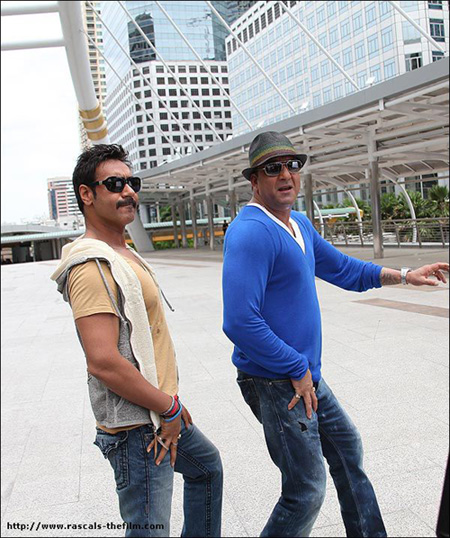
    Nobody expects masterpieces of comedy from David Dhawan, but now, more often than not his films are what would be called in Mumbai slang thakela (tired). The idea of Rascals is overused and in the hands of the two lead actors who have done better comedy before—Sanjay Dutt in the Munnabhai films, Ajay Devgan in the Golmaal series, it is quite disconcerting– more so when a large part of their comic antics involve pawing the much younger and very under-dressed leading ladies Kangana Ranaut and Lisa Haydon.

    Most critics panned the film with one or one and a half stars. Only Taran Adarsh of bollywoodhungama.com found it worthy of three and a half. He writes, “Be forewarned. Rascals is strictly for the hoi polloi, those who relish masala entertainers with glee, those with an appetite for movies that transport them to a different world in those hours spent in the dark auditorium, those who swear by movies that defy logic, motive and intellect. Do you think you fit into this description of a moviegoer? If you do, Rascals is just for you.” A backhanded rave, sounds like.

    Sukanya Verma of rediff.com finds it “lame” but still gives it a generous two and a half. “Recycling paper is nice. Recycling movies? Now that’s plain lame. But director David Dhawan has never been the discerning sort. He painstakingly built his brand around cheesy, slapstick wit, resolutely steering clear of logic, relying on spontaneity and a cast skilled in comedy to accomplish the shtick to which his coterie of writers like Rumi Jaffrey, Anees Bazmee, Sanjay Chhel, Kader Khan and Yunus Sajawal have contributed immensely.…Rascals, with no structure or motive, cannot (rather does not even try to) conceal its desperation to make itself funny. And this insecurity shows in each and every gag.” Then why the higher rating?

    Anyway, Mayank Shekhar of the Hindustan Times goes with one star and cribs, “No one minds mindless movies. They come with known caveats: leave your brains behind, as they say. It may be hard to tell what your brains would do, alone at home. Replacing the hollow space between your ears with some hilarious stuff may not be a bad idea still. The unconnected, unfunny skits here offer you none of that relief. You just feel brain-dead instead.”

    Rajeev Masand of IBNlive is understandably caustic. “David Dhawan, who’s no purveyor of good taste, plumbs new depths of crassness with this expectedly insensitive film that’s so short on real jokes that it makes light of everything from starving orphans in Somalia to the physically handicapped….The laughter, if it was ever intended in the film, is strictly incidental. The gags in the movie are so stale and tasteless and the situational comedy so devoid of any kind of originality or freshness, you wonder if David Dhawan just made this unfunny comedy to please his friends who play the major roles in the film.”

    Manisha Lakhe, writing in DNA sounds anguished, “Surely smashing your toes by a hammer would be more entertaining. Invest in that hammer instead of buying a movie ticket. And please sign an online petition that will prevent David Dhawan from remaking Chupke Chupke.”

    Gaurav Malani of TOI online writes, “Rascals is what one can call a ‘vacation’ filmmaking stint where everyone works on the film as if they were on a ‘holiday’ and the audience is expected to ‘leave’ their senses behind. The actors make least efforts to add conviction to their performances and the patchy writing just allows them to play as they please. Invariably the director tries to camouflage the shallowness in the story by adding depth only in the decibel levels of the dialogue delivery.”

    In Outlook, Namrata Joshi commenting on the actors, writes, “Kangna makes a grand entry in a white bikini, goes on to wear assorted minis, shrieks, displays her shapely legs and cleavage and shows off her inability to pronounce difficult words like ‘congratulations’. Ajay goes loud, Sanjay sports multi-coloured shirts and Arjun looks perpetually flustered. The climax whimpers, is utterly clumsy and needlessly protracted, as though Dhawan forgot he needed to wrap up what he’d wrought. Let alone laugh, I could barely manage a smile through ‘Trashcals’ (oops!)”

    There’s more of the same across publications. Clearly David Dhawan needs a sabbatical.

  • Reviewing the Reviews: Vanity Unfair

    Jaana Pehchana

    Key Cast: Sachin, Ranjeeta, Birbal, Vikram Sahu, Mehmood Junior

    Written and Directed By: Sachin

    Produced by: Ajit Kumar Barjatya, Kamal Kumar Barjatya


    One of the essentials of a movie sequel is that the original should have been a great hit, or at least a film that audiences remember with affection. And there really is no point for a sequel coming out 33 years later—by which time the original is not even a distant memory. So Jaana Pehchana, the very belated sequel to Hiren Nag’s Ankhiyon Ke Jharokon Se (1978), is just a vanity exercise for director Sachin Pilgaonkar, who was the toothy, curly-mopped, cutesy protagonist of the original, opposite Ranjeeta (who retired years ago after a fairly successful but also unremarkable career).

    The Rajshris, producers of AKJS and several small-budget, non-star-cast films in that period, have refused to change with the times. Their last monster hit was Hum Aapke Hain Koun in 1994, and for Jaana Pehchana, they have used the same strategy of releasing it in one moviehall – the delightfully retro Liberty. HAHK had picked up, thanks to its stars (Salman Khan-Madhuri Dixit) and popular music.  Jaana Pehchana mostly retreads the old movie in the form of lengthy flashbacks and reuses Ravindra Jain’s score that now sounds too high-pitched and annoying.

    Very few bothered to review Jaana Pehchana, and obviously it comes out rather poorly in comparison with the old film, which was hardly a classic to begin with—plucked as it was from 1970 Hollywood weepie Love Story. It’s not very likely that many of the current crop of reviewers would have seen the original—though they will get more than a glimpse in Jaana Pehchana.  And seeing Mehmood Junior, Birbal and the once ubiquitous Rama Kaka provides unintentional giggles.

    Our take: The stars have arrived in 2011 in decent shape, but did anyone miss Sachin and Ranjeeta so much as to want to see them romance again? The Rajshri style of filmmaking looks almost primitive by  today’s sophisticated standards, but it is also equally true that filmmakers of that period knew how to tell a story without relying on styling and digital tools.

    A generous two stars by DNA’s Akanksha Naval Shetye and Soumyadipta Banerjee (two to write on this film?) and a title that states: Jaana Pehchana is the cake rather than the icing.  “While many in their upper 40s will find it entertaining and won’t mind a nostalgic trip down memory lane, the younger cine-goers may find it hard to bear. Sachin clad in white shorts running around with Ranjeeta in pretty frocks on Juhu beach; Birbal and Jr Mehmood providing comic relief, in a way that – like the bell bottoms – only suited that decade, might evoke laughter, instead of get them to relate to the romance.”

    Mayank Shekhar gives the film one star and refers to the 50ish protagonists as “geriatric”—which is terribly ageist. Odd that only he remembers the Mallika Sherawat vehicle Khwahish.  He writes, “Calming allure of the earlier film comes through. The last time Bollywood remade Love Story, they’d turned the Ali MacGraw classic into a slut-fest on the rocks called Khwahish (2003), heavy publicised for its 17 kisses that the makers had kept count of. Sachin asks his girl out instead in more charming ways, “How about a date? Din mein dono saath saath rahenge, ghoomenge (We’ll spend a day together, travel around?) Any objections?” Not at all. Heroine’s floored. Hero drives her around in a two-seater convertible. This is ultimate comfort cinema in deliciously crummy Eastmancolor for those of a certain vintage that grew up appreciating film for its appealing simplicities.”

    Gaurav Malani writing in the online version of the Times of India notes, “So it doesn’t matter whether you have watched the original film since you get to see most of it in the sequel. But that’s precisely why the sequel doesn’t work for you either, because with the repeat telecast of the original, it sets a direct contrast and thereby highlights the mediocrity of the sequel.”

    Preeti Arora of rediff.com gives it two stars, but her headline says it all, ‘Jaana Pehchana is outdated.’  Not one to mince her words, she writes, “The characters live in a perfect world, a second opportunity for love is being handed to them but romance is something which happens once in a lifetime. Reaching out for it a second time around isn’t something selfless people indulge in. But in today’s times these perfect worlds do not exist. People do not give up on romance or life merely because one relationship ends abruptly.  It is these good-as-gold characters with outdated values in their simplistic uncomplicated world which make the film unbelievable.”

    Trade journalist Komal Nahata, whose reviews appear on koimoi.com, gives the film one star but is also rather kind, praising the script and the performances. But adds, “Today’s audience may not be enthusiastic to watch yesteryear actors Sachin and Ranjeeta play the central roles in what basically remains a love story albeit with a difference. Moreover, there is an entire generation of under-30s, which may never have seen Ankhiyon Ke Jharokon Se. Of course, the film can be fully understood even if one hasn’t seen the first part (AKJS) but again, the question arises: without having seen and loved AKJS, how many among the youth (which comprises a sizeable chunk of our audience today) would be keen to watch Jaana Pehchana?”


    Deepa Gahlot is a National Award-winning film reviewer and a veteran writer and commentator on the arts. She currently heads programming for Theatre and Film at the National Centre for the Performing Arts, Mumbai

  • It’s not about co-creation, but increation: Boschma

    The “youth” of today have been touted as being the marketer’s favourite TG for some time now but it’s not just about catering to their apparent behavioural habits. The effort by marketers has to be able to reach out to the subliminal preferences of the youth that are redefining the way they communicate with a brand. Having studied their behavioural patterns and preferences from early 2000, the one person who has seen this group evolve over the years rapidly is well-known international author and speaker, Jeroen Boschma.
     

    In India to launch his book ‘Generation Einstein’, that has been co-authored by UTV Bindass, MxM India got Boschma to delve on the emergence of the youth of today, why brands and marketers should be wary of this TG, and what are the learnings that could be picked up from this book by those interested in catering to the highly volatile TG. Excerpts:


    After having vowed the world, your book Generation Einstein finally makes its debut in India. What are your first thoughts on the book seeing the light of the day in India?

    The book is about the first global generation from around the world – even the Indian youth is not Indian but is really a part of the global youth. The book delves into the behavioural aspects of the youth, their habits, preferences, and so on. Of course, the behavioural background of Indians is different from those of the generational background of youth fromHolland, where the book was first launched. It also provides an insight and a view to everybody that wants to communicate to youngsters – not only marketers and brand managers but I think even school teachers, professors and others. Basically, it is aimed at those seeking to make an impact on the youth of today.


    Could you delve on the thought process behind narrowcasting the next generation youngsters as your core TG towards writing the book?

    It took me five years to write the first version of the book. The way I approached it is I made notes of my learnings, which at the end totalled in excess of 400 pages. There was also a heavy amount of research that was done and then all the elements were brought together to be edited and written in a proper way. I am grateful to the help from my Indian colleagues who helped me in putting together this book so as to reflect the findings and tastes of the Indian youth of today.


    How different are the three versions of the book from each other?

    The first edition was published when Facebook didn’t even exist. So the other two editions had to be rewritten to accommodate learnings and findings from the social media space as well.


    What are some of the trends you came across while you got down to analyse the youth of today?

    The fact is that the youth of today do care of the world and they want to associate brands with respect to nature and for the sake of humanity. Another big trend is that the youth of today are very entrepreneurial and start their start-ups at a very young age. I have seen so many new ventures set up by young people inIndiaand they have been performing phenomenally well. I would say that is one of the big trends transpiring around the world today.


    You have pioneered the term Increation. Could you throw more light on the significance of the term?

    Increation is the process of coming up with marketing campaigns that work. We have been working on it for five years and now we have a firm grip on the way it needs to function. It provides a learning experience to ad agencies and brands to source their creation. It’s different from co-creation which doesn’t work; Increation works.


    How would you rate your experiences of co-authoring this book to suit the tastes of the youth of India?

    It’s been a long process putting this book together for the Indian audiences. It’s not easy as constructing a house; it’s about putting together thoughts together and creating an environment that the youth of today are familiar with.


    What is the lesson that Generation Einstein throws up for marketers and brands of today?

    What I have observed with Generation Einstein inIndiais that it is getting more extreme; we really do not have a choice – we have to change. We all are trying to keep the old world alive but the old world doesn’t exist anymore. It’s about the new generation and their understanding of the trends of today. The marketers and brands of today have to unlearn everything they know about the old world and channelize their focus on the youth of today.


    What are your plans for the future?

    The plan next is to organise a full-day Generation Einstein conference to get into the depth and help marketers come up with solutions to cater to the youth of today. I am also in the process of writing another book which I plan to launch internationally very soon. It still is in the early stages and the full context will only be known later.


  • Sharon Aneja & Gautham Pingali join SMG Digi

    By A Correspondent


    In two major appointments, SMG Digital – Starcom MediaVest Group’s digital arm – appointed Sharon Aneja as Director, Earned Innovation & Business Head West and Gautham Pingali as Director, Digital Improvisation. While Sharon Aneja will be based out of Mumbai, Gautham Pingali will be working from the Bangalore office. Both will be reporting to Arnab Mitra, National Director, SMG Digital.


    Confirming the appointments, Arnab Mitra, National Director, SMG Digital said: “We are thrilled to have Sharon and Gautham on board. While Sharon has huge global exposure and a very solid creative experience in her kitty, Gautham has a sharp inclination towards business development and strategy. I am sure both will immensely contribute to the success of SMG Digital.”


    SMG Digital is the digital offering of the Starcom MediaVest Group. It was formed in recognition of how Search, Social, Mobile and Display play a role in the rapidly changing landscape of Marketing, Communications & Media.


    With the social media reach scaling up and earned media gaining a strong ground with big advertisers, Sharon Aneja’s appointment is in sync with SMG Digital’s focus in investing on people, processes and technology to boost client visibility and engaging consumers on an interactive platform.


    Sharon Aneja recently shifted to India after working in London for the last 12 years. Prior to joining SMG Digital she was working with UKTV (the commercial arm of the BBC) as the Head of Digital Entertainment, where she was primarily responsible for developing a creative and commercially focused multiplatform vision for the company’s core entertainment brands. She has a longstanding experience advising the business on key online and social media trends.


    She began her career in 1991 with Conde Nast and has since then held important positions with organizations like Virgin Media, National Geographic, and Sky. She completed her education from the Queen Mary University of London.


    Commenting on her move, Sharon Aneja said, “While moving to India I was keen on moving to an organisation that had Digital as one of its core functions and was future focused. I am thrilled to be a part of SMG Digital as it is an extremely future focused and strategic pillar of SMG.”


    SMG also continued to strengthen its South operations where it has a substantial client base. With the appointment of Gautham Ram Pingali, SMG added to its talent pool in the South after several recent appointments. This move denotes the high interest levels in Digital in the southern markets as well.


    Gautham Ram Pingali has over 6 years of experience in multiple verticals across industries. He joins SMG Digital after a 3 year stint with Havas Media. He initially started off with the group’s centre of excellence to drive operational efficiency and organizational growth and quickly moved into managing projects for global and regional clients. He was last working as Associate Director Strategy & Business Development with Havas Digital India where he also managed the businesses in North. Gautham started his career in 2004 with AIESEC Hyderabad and has since then led teams at Myrmidon Consulting and ABN AMRO Central Enterprise Services. He is a B Tech graduate from the Jawaharlal Nehru Technology University in Hyderabad.


    Gautham Pingali, confirming his move, said, “I am thoroughly excited to work with SMG Digital as they have some unique methods a great team and a very strong vision, with this ability  they are in the forefront of creating a new dimension to the marketing & communication space by leveraging the Digital platform.”


    Starcom MediaVest Group is one of the youngest, largest and most diversified media networks in the country. It has over 250 human experience strategists and activators across its four full service offices. It prides itself on its ‘people first’ approach at workplace and is known in the industry and in campuses as one of the best places to work in. In addition to communication strategy development through its two networks Starcom Worldwide and MediaVest Worldwide, the group offers solutions in the area of ‘any screen content’ LiquidThread.


  • Address consumer complaints within 8 hrs: TRAI

    By A Correspondent


    The Telecom Regulatory Authority of India (TRAI) issued the Regulations on the Quality of Service and Consumer Complaint Redressal Mechanism for the Digital Addressable Cable TV Systems (DAS) on May 14.


    Under the new order, every multi-system operator (MSO) or his linked local cable operator (LCO) will have to establish a complaint centre in his service area, for redressal of complaints and for addressing service requests of his consumers before providing the digital addressable cable TV services.


    Every complaint centre will be accessible to the consumers from 8am in the morning to midnight on all days of the week. The complaint centre will have facilities for the local language of the area in addition to Hindi and English. Every MSO or his linked LCO will deploy sufficient number of employees at his complaint centre to meet the Quality of Service (QoS) parameters, as may be specified by the Authority from time to time.


    The MSO or linked LCO will have to ensure that the complaints centre is accessible and has a toll-free number which will be widely publicized. In the new regulations, TRAI has also issued details of how an Interactive Voice Response System (IVRS) should function, and how consumers should be made aware of the existence of the centre.


    Every MSO or linked LCO will have to establish a web-based complaint monitoring system to enable the consumers to monitor the status of their complaints. Every MSO or his linked LCO will also have to designate a one or more nodal officers in every state in which it is providing its services. In case the consumer is not satisfied with the redressal of his complaints through Complaints Centre, he can approach the nodal officer of the operator.


    MSOs or their linked LCOs have to publish a consumer’s charter for DAS providing all necessary details with respect to the services being provided by them.


    Under the Quality of Service (QoS) Regulations, a standard application form will be devised giving all details to be used for providing services such as connection, disconnection, shifting and return of set top box (STB).


    The consumer will have to be given a prior notice of a minimum of 15 days for disconnection of services. Similarly, the consumer will have to give a prior notice of minimum 15 days for making a request for disconnection.


    No charges other than rentals for STB will be charged in case the connection is suspended on the request of the consumer for a period of minimum one month to maximum three months.


    Operators will publish a manual of practice and provide it to the consumer at the time of enrolment. The manual of practice, apart from Hindi and English, should be in the language of the state where the cable services are provided.


    Every MSO will offer cable TV services on both pre-paid and post-paid payment options to the subscriber and will be responsible for generation of bills for the subscribers. It will be open to the subscriber to choose either the pre-paid or post-paid option.


    Operators will have to offer three schemes for STBs to the consumers, and these are outright purchase, hire purchase and rental. Operators will have to provide a minimum warranty of one year for STBs acquired by the consumer under outright purchase scheme.


    The security deposit of the STBs has to be refunded within seven days of surrender of the STB by the consumer.


    All MSOs and cable TV operators will conduct public awareness campaign about the salient provisions of these regulations.


    Meanwhile, TRAI has issued amendments to the Interconnection Regulations issued on April 30 under which the MSOs have been barred from charging any placement fee from broadcasters.


    Giving in to a collective demand of broadcasters, the Telecom Regulatory Authority of India (TRAI) has barred Multi System Operators from charging a placement fee from channels in lieu of placing them in select slots.


    TRAI has issued amendments to the Interconnection Regulations which were earlier issued on April 30. The interconnection regulations are applicable to all digital addressable cable TV systems (DAS).


    As per the amendments, TRAI states, “Multi System Operators are not to demand any placement fee from broadcaster.” In a move to make the system more transparent, TRAI has specified, “Tthe Reference Interconnect Offer of a multi-system operator submitted to the Authority to contain the basis on which the carriage fee payable by the broadcaster has been determined.”


    TRAI also mandates every MSO to display in his Electronic Programme Guide, all the channels offered by him, in the same genre in which a particular channel has been indicated by the broadcaster and one channel shall appear in only one genre.


    Under the new regulations, broadcasters will also have to declare the genre of their channels which may be either News and Current Affairs or Infotainment or Sports or Kids or Music or Lifestyle or Movies or religious/Devotional pr General Entertainment (Hindi) or General Entertainment (English) or General Entertainment (regional language).


  • Understanding young minds with ‘Generation Einstein’

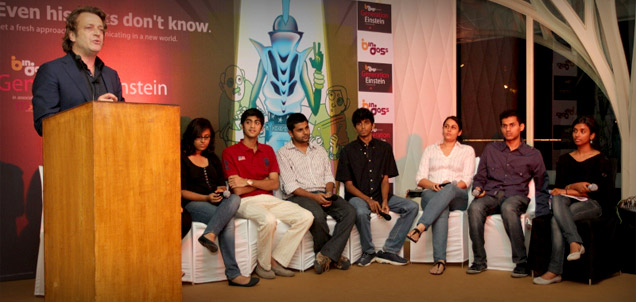
    Jeroen Boschma with young minds on the panel ahead of the release of ‘Generation Einstein’


    By A Correspondent


    It was youth power in all earnest as Bindass launched the India edition of ‘Generation Einstein’ on Monday evening at Mumbai’s tony Tote on the Turf. The book is co-authored by Bindass along with well-known international author and speaker Jeroen Boschma.


    The book describes the new generation, ‘Generation Einstein’ that was born during the last decade of the previous century. It also stresses upon the significance of the youth as an important part of the market and how fast the new generation understands the world better than anyone else. The book attempts to decode this generation and help marketers reach out to them.


    At the event, Mr Boschma spoke about how today’s generation is completely different from the previous generations. He was of the view that unlike the youth of previous generations which lived in a world of their own, the youth of this generation are very much in this world as they understand brands and marketers better: “Strong brands worldwide are brands that believe in what they do and youngsters who connect with these brands are madly in love with them.” (see interview: It’s not about co-creation, but increation: Boschma)


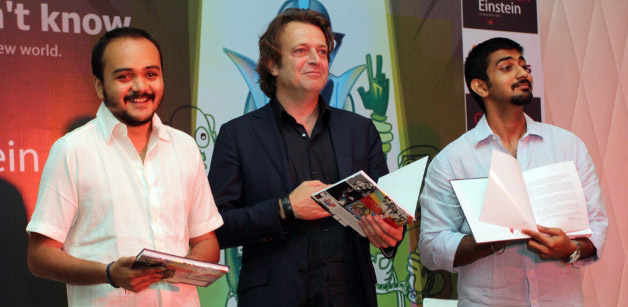
    Jeroen Boschma (centre) with Samyak Chakrabarty (to his right) and Arjun Paul Vednayagam


    The Indian edition of Generation Einstein is authored by Samyak Chakrabarty and Arjun Paul Vednayagam. “The aim of the book is to open the mind of brand managers, and to stop defining the youth, as it is not possible to define them. It is all about making interesting campaigns and allowing the youth to decide the fate of the brand,” said Mr Chakrabarty.


    The objective of the study conducted for the book is said to be about understanding the thought process of a young consumer, the factors that influence the youth to build their brand preferences, how they come to their final choice, and then using this knowledge to effectively engage the youth.


    “Every brand today has fanatic fans. Marketing is nothing like what it was before. If you want to communicate with this generation, forget what you have learnt. This generation understands that advertising is about lying. Generation Einstein says that the future of marketing is to find the purpose of their life and we need to find out how to be part of their life,” Mr Boschma added.


    In a panel discussion, moderated by Mr Boschma, the panellists, including college going teens, spoke about their favourite brands and the factors that influenced their buying decisions.


    Mudit Ganguli, a student from JaiHind College, Mumbai said that his favourite brand is Blackberry because it is cheap and convenient to use, it has versatile features, helps him get regular updates and allows him to communicate easily. Another reason why he preferred a Blackberry is because of good advertisement.


    Mohini Mukherjee, also a Jai Hind student said her favourite brand is ‘Bingo Chips’, primarily because of good advertisements, but also due to no celebrity involvement, funny advertisements, and good quantity of chips.


    Another student said that Twitter was her favourite brand because it helps her express her feelings, provides instant updates, and allows her to follow her favourite celebrities.


    One of the students talked about the reasons he trusted ‘Nike’ as a brand – good advertisements, the quality the brand offers, and the ‘Just do it attitude’ that it displays. He also spoke about how the brand is empowering the youth. He said that brands need to go back to delivering quality products and not try to create a product for everyone and eventually reaching no one.


    In conversation with MxMIndia, Samyak Chakrabarty spoke about his marketing plans for the India Edition of ‘Generation Einstein and his learnings from the study: “We would like to put this into the curriculum of mass media courses where the next generation marketers can learn about how to engage the youth. We plan to take Jeroen Boschma to colleges and deliver lectures and, of course, the book is available online for Rs200. The biggest learning we have had is that in order to understand and engage the youth, one has to keep his mind open and the fact that brands cannot define or assume or presume about the youth today.”


    The event was organized in association with MxMIndia.


    Photograph: Fotocorp