Category: MEDIA

  • Digital attracts ‘desirable’ status on Day 1


    By Team MxMIndia


    The West swears by it, developed countries from Asia Pacific have already made a generational leap in terms of technological innovations while globally, the medium has shown why it is the most sought-after given the dynamic growth numbers it throws up in the shortest possible timeframe. Well, it could be said here with certainty that digital has bought about a significant change in the way the world goes about running its business in the last decade compared to what other mediums have been trying to do for decades together. Little wonder that when the organisers of FICCI Frames were faced with the choice of shortlisting a theme that could alter the media and entertainment industry in India, they didn’t have to think twice before narrowcasting on the medium of preference – digital.


    In keeping with the theme, ‘Embracing the Digital World’, FICCI Frames 2012 got off to a wishful start at Hotel Renaissance, Mumbai on March 14. In keeping with its tradition, the morning session kicked off with a welcome address by the Co-Chair of FICCI Entertainment Committee, Karan Johar. After Mr Johar’s welcome address, Uday Shankar, CEO, Star India & Chairman, FICCI Broadcast Forum, took the stage to address the audience. Making a dash for the core topic of digital, Mr Shankar began by stating, “Digitization is a big reality which will revolutionise the way content (creation and distribution) is offered”. Even though he said that digitisation will create a level playing field for the broadcasters and the cable operators, he had a word of caution to add when he said that his biggest concern was “the chaos which will be caused by the broadcast industry’s inaction.”


    Though Mr Shankar admitted that there is a need for legislative enablers to remove the bottlenecks surrounding digital, he also said that the broadcast industry is still not ready to move to the digital format. To drive home his point he used the example of the film The Artist, where the star of the film loses out when he refuses to move with the times. Next it was the turn of Prithviraj Chavan, Chief Minister of Maharashtra who took the stage to talk about the “exciting times that all are living in”. He said that the challenge is to adopt the regulatory framework to the new technology and ensure that over regulation doesn’t kill a good thing. He also said that the move towards digitization will create a huge employment opportunity but there is a need to explore how technology can empower the field of education. The Chief Minister also touched upon the need for regulation and suggested that instead of the state regulating the media, the medium should look at regulating itself.


    Following his speech, the event witnessed the release of the FICCI-KPMG Indian Media and Entertainment Industry Report 2012; FICCI-Amarchand Lawbook and ‘Positivity: The impact of television on India’ by The Indian Broadcasting Foundation. Jehil Thakkar, Head, Media & Entertainment Practises, KPMG made a brief presentation about the key highlights of the FICCI-KPMG Indian Media and Entertainment Industry Report 2012.


    Uday K Varma, Secretary, Ministry of I&B, opened his address by stating that the concerns that the industry had over digitization and the Phase 3 of FM radio have been addressed by the move to allow 839 new FM stations and 500 community radio stations. He stressed that the government is committed to ensure time bound digitization and said that come July 1, the four metros will switch over to the digital format and the plan is to ensure that the move to digitization is completed by December 31, 2014. He agreed that the challenge was mammoth- to convert 80 million analog connections to digital format but added that it will ensure faster and deeper penetration. “This will address a plethora of issues facing the television industry, such as addressability, carriage fees, audience measurement and consumer preferences,” he said. Mr Varma added that in order to combat piracy, the government intended to carry out an all-encompassing multi-media campaign involving all stakeholders from the film and music industries, shortly.


    Punit Goenka, CEO & MD, ZEEL too spoke about the pros and cons of digitization, how the ratings are inadequate and how self regulation was the need of the hour for the broadcast industry. Carolyn Everson, VP, Global Marketing Solutions, Facebook elaborated on how Facebook can benefit the media and entertainment industry and cited examples from music, gaming and films to drive home her point.


    ————————————-


    BARC takes wings; Discovery Kids to flag off operations in April

    In between the many promises and hopes that were being doled out at the inaugural session came the news of the Indian Broadcasting Foundation (IBF), the Indian Society of Advertisers (ISA) and Advertising Agencies Association of India (AAAI) announcing the official formation of a nationwide audience research joint body — Broadcast Audience Research Council (BARC).


    The announcement was made at the inaugural day of FICCI Frames 2012 in Mumbai in presence of I&B Secretary Uday K Varma, TRAI Chairman Dr JS Sarma, Managing Director & CEO of ZEE Punit Goenka, Star India COO Sanjay Gupta, Times Television Network MD & CEO Sunil Lulla, Star CJ CEO Paritosh Joshi, Madison Group Chairman Sam Balsara and Landmarc Leisure Corporation MD Paulomi Dhawan.


    While IBF will have 60 per cent stake in BARC, ISA and AAAI will each hold 20 per cent stake. The Board of the council will have 10 members, six members from the IBF and two members each from the ISA and AAAI.


    Another important announcement was made by President & CEO of Discovery Networks International, Mark Hollinger who announced the launch of its new network for children in India, ‘Discovery Kids’. Mr Hollinger said, “Launching in April, the network will initially be available in three languages – Hindi, English and Tamil. The channel will offer children a fun and entertaining way to satisfy their natural curiosity with stimulating and imaginative programming,” he said. The company plans to roll out the channel in Philippines and Indonesia later this year.


    ——————————————–


    Post the promises and pleasantries doled out by committee members and authorities, it was time for some serious discussion which began with a panel discussion on ‘Addressable Digitization – The way forward’. Sanjay Gupta, COO – Star India, Sunil Lulla, CEO and MD Times Global Broadcasting, Sameer Manchanda, Founder – DEN Networks and Punit Goenka, MD And CEO, ZEEL comprised the panellists. The panellists agreed that digitization is the way forward and will soon be a reality. Uday K Varma, Secretary – I&B, put the ball in the industry’s court as he said that there were no political opposition to digitization and the parliament too passed the law in December 2011, therefore it is now incumbent upon the industry to make digitization a reality. Sunil Lulla pointed out that the there is greater good in digitization however, the industry has to do a lot of work over the next few years. Sameer Manchanda was of the view that digitization was a reality and that it will bring more number of channels. While Uday Varma said the government is determined and committed to ensure digitization happens the broadcasters on the other hand also displayed confidence that they are ready for the June 30, 2012 deadline i.e. when metros will switch from analog TV to digital. The session also discussed opportunities and challenges that digitization has to offer and how the industry was gearing for digitization – whether they are ready or not?


    A session on ‘Maximising the power of digital distribution’ saw industry leaders speak about the challenges that come along as the country is experiencing the much talked about shift – from analog to digital cable – the investments that goes into and many such challenges. Industry honchos such as K Jayraman – MD and CEO, Hathway Cable and Datacom Ltd; SN Sharma, CEO, DEN; Anshuman Misra – SVP and MD, Networks and Content Distribution, Turner, Asia Pacific; Vikram Chandra, Group CEO, NDTV; Jagi Mangat Panda, Co-Founder and Director, Ortel; Prof Jonathan Askin, Professor of Law, Brooklyn School of Law and Anita Wallgren, Government Attorney, US Department of Commerce, Former Program Director, US Government’s TV Converter Box Coupon Program. Vivek Couto, Executive Director, Media Partners Asia moderated the session.


    While digitization comes in as a relief for broadcasters who will be benefitted from additional subscription revenue the relaxation on paying heavy carriage fees, and of course providing viewers with a superior content experience – MSOs and cable operators have to quickly respond to the digitization mandate by investing in set-top boxes – the cost that is only possible to recover after four years. Jagi Mangat Panda pointed out that digitization will result in some sort of consolidation in the distribution space where bigger players will look to expand their presence in the Indian market.


    Vikram Chandra talked about the difference digitization makes to the news industry. “Digitisation is important for news players. It is leading players in the news industry into areas they don’t want to be in. In the race of chasing TRPs, people are forgetting that digital has a great potential that has to be tapped, a business model which needs to be looked at.” Chandra also mentioned the role of tablets and high-end devices as new distribution platforms.


    Anita Wallgren and Prof Jonathan Askin spoke about how the United States saw the transition of analog TV to digital – the learnings and challenges.


    It could be said that the media and entertainment industry of India has scripted a glorious growth story in the past ten years or so. And now, when the future looks more promising with digitisation and the advent of technology across media verticals such as broadcast, print and also films – one area which that has not seen enough progress is the lack of private equities and VC funds showing adequate interest. In a session titled “Financing the Media and Entertainment Business” eminent personalities such as Prashant Jain, Executive Director, HDFC Mutual Fund; Mathew Cyriac, Sr Managing Director, Private Equity, Blackstone; Soumo Ganguly, Managing Director, Moxie Entertainment Pvt Ltd; and Daniel Dubiecki, Founder and Partner, The Allegiance Theatre, Hollywood shared their views on the subject. Ashok Wadhwa, Group CEO, Ambit moderated the session.


    Mathew Cyriac started off the session by pointing out that majority of the investments within the media and entertainment industry were made in television and print as they represent a fairly large share  in terms of sheer numbers as against Internet and Radio. The Hindi GECs in TV is typically where a lot of money goes to followed by regional GECs and sports channel. For print media, it was the regional publications that command a lot of attention as regional advertising is very robust – one which extracts a lot of profit.


    Prashant Jain pointed out that a lot of companies in India have managed to get good funding and that it is not reflective of a very, very sorry picture as is being talked about. “It’s not that all of India in the media entertainment space are not attracting funds. Companies like UTV and a few others have attracted investors.”


    Ashok Wadhwa remarked that the film industry in India is not institutionalised enough to attract private equity. Daniel Dubiecki spoke about the need to be more global in concept, widen the scope of market and thereby making it more viable to attract investments in the films business.


    In the session on ‘Protecting Copyrights, Infringements & New Trends i.e. Remake’, the panellists chose to rummage over the impediments surrounding copyright issues in the film and music industry in India. The panellists included Sai Krishna from Sai Krishna Associates; Deborah Benattar, Head, TV & Cinema, French Embassy; Jagdish Rajpurohit, Head, RCL Motion Pictures & Producer; Bertrand Mouiller, former DG IFFPA and Amar Butala, creative director, UTV Motion Pictures. The session was moderated by Dina Dattani, Consultant & Lawyer. Sai Krishna provided a hopeful insight as he said, “The industry should take heart in knowing that the Copyright Amendment Bill is currently being debated in the parliament and is expected to be passed after the current Budget Session. There are provisions that can alter the way the entertainment industry functions in India.” But he cautioned by saying that the Bill has its setbacks too as there are no clear guidelines when it comes to copyright issues between the writer, music composer and the producer of a film. Mr Butala added here saying, “We have made huge leaps in terms of the legal paperwork with actors and performers where copyright issues are concerned. But it is just the start and the challenge would be to sort out legal issues and take the offenders to Court with the hope of finding a favourable outcome from the judiciary.” The panel proceeded to discuss the trend of moviemakers bagging rights for remaking movies and that there was a need for a law that would streamline procedures for the industry at large.

     Photograph: Fotocorp
  • @FF12: Opening session weighs pros & cons of digitization


    By A Correspondent


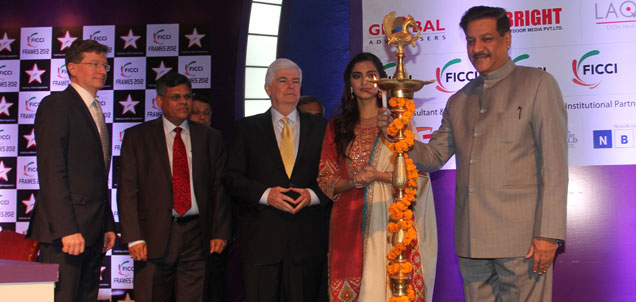
    FICCI Frames 2012, now in its 13th year, kicked off on March 14, Wednesday at Hotel Renaissance, Mumbai. The morning session started with a welcome address from Karan Johar, Co-chair, FICCI Entertainment Committee. After Mr Johar’s welcome address, Uday Shankar, CEO, Star India & Chairman, FICCI Broadcast Forum, took the stage to address the audience.


    In keeping with the theme, ‘Embracing the Digital World’, Mr Shankar said “digitisation is a big reality which will revolutionise the way content (creation and distribution) is offered”. Even though he said that digitisation will create a level playing field for the broadcasters and the cable operators, he had a word of caution to ad when he said that his biggest concern was “the chaos which will be caused by the broadcast industry’s inaction”.


    Mr Shankar was of the opinion that instead of lamenting the loss of carriage fees, the MSOs should appreciate the opportunity of “customisation and localisation of content” being presented by digitisation.


    Though Mr Shankar admitted that there is a need for legislative enablers to remove the bottlenecks, he also said that the broadcast industry is still not ready to move to the digital format. To drive home his point he used the example of the film The Artist, where the star of the silent era films loses out when he refuses to move with times. With this word of caution, Mr Shankar ended his keynote address.


    Prithviraj Chavan, Chief Minister,Maharashtra, next took the stage to talk about the “exciting times that we are living in”. He said that the challenge is to adopt the regulatory framework to the new technology and ensure that over regulation doesn’t kill a good thing. He also said that the move towards digitisation will create a huge employment opportunity. He stressed on the need to balance technology with creativity, adding that “growth should not be lopsided but all inclusive”.


    Shri Chavan also stated that the government is taking all possible steps to ensure that content piracy is curbed but accepted that the state has not delivered on its promises to curb piracy till now.


    He also touched upon the need for regulation and said that regulation is a major challenge. Shri Chavan suggested that instead of the state regulating the media; it should look at self regulation.


    Moving on, Shri Chavan welcomed the foreign delegates and announced that his government was creating new centres for film shooting in the state. He stated that the first such centre will come up atKolhapur, where entrepreneurs would be provided with lots of financial incentives. He said that the government will “protect any creative attempt within the framework and not allow any fascists elements to disrupt it”. He also assured the film industry that its concerns over policing on film locations would be looked into.


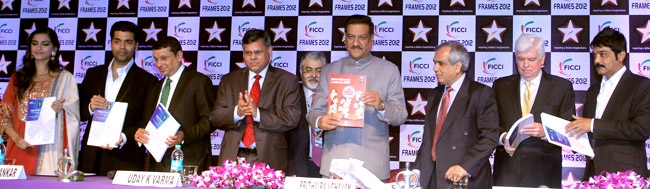
    The Chief Minister also released the FICCI-KPMG Indian Media and Entertainment Industry Report 2012; FICCI-Amarchand Lawbook and ‘Positivity: The impact of television on India’ by The Indian Broadcasting Foundation.


    Mr Jehil Thakkar, Head, Media & Entertainment Practises, KPMG made a brief presentation about the highlights of the FICCI-KPMG Indian Media and Entertainment Industry Report 2012.


    Senator Chris Dodd, Chairman, Motion Pictures Association of America, who took the stage next, underlined the need to look into stringent regulations against content theft.  “When content is stolen, 95 per cent of the people who contribute to the vitality and success of a film are adversely affected”, he said. Quoting an Ernst & Young report, he said, movie theft contributes to a loss of US$ 1 billion annually and threatens the jobs of half a million people. He stated thatIndiais among the top 10 nations as far as online copyright infringement is concerned. He said that technology (digitisation) and content need each other and one can’t be without the other.


    Mr Uday K Varma, Secretary, Ministry of I&B, opened his address by stating that the concerns that the industry had over digitisation and the Phase 3 of FM radio have been addressed by the move to allow 839 new FM stations and 500 community radio stations.


    He stressed that the government is committed to ensure time bound digitisation and said that come July 1, the four metros will switch over to the digital format and the plan is to ensure that the move to digitalisation is completed by December 31, 2014. He agreed that the challenge was mammoth- to convert 80 million analog connections to digital format but added that the move will ensure faster and deeper penetration. “This will address a plethora of issues facing the television industry, such as addressability, carriage fees, audience measurement and consumer choice,” he said.


    Mr Varma added that in order to combat piracy, they intend to carry out an all-encompassing multi-media campaign during the 12th five year plan period involving all stakeholders from the film and music industries.


    He also outlined the ministry’s plan to celebrate 100 years of cinema inIndia. Mr Varma said that the Government of India, in cooperation with the film industry, has a line of activities between May 3, 2012 and May 3, 2013. It also proposes to present a tableaux of ‘100 years of Indian Cinema’ at the Republic Day parade next year where the plan is that the stalwarts of the industry also take part.


    Mr Varma also announced that the government is setting up a National Film Heritage Mission to safeguard India’s celluloid history by undertaking picture and sound restoration of more than 2,500 films. In Addition, theMission, with a budget of over Rs500 crore, would also look at constructing preservation vaults for archiving restored material, and for conducting workshops and training.


    The session closed after a vote of thanks given by Dr. Rajiv Kumar, Secretary General, FICCI.


  • Digital, growth mantras to drive agenda


    By A Correspondent


    Asia’s largest convention in the business of entertainment, FICCI Frames 2012, will be held at The Renaissance, Powai in Mumbai from March 14 to 16. In its 13th year, Frames is a three-day global convention covering the entire gamut of media and entertainment ranging from films to broadcast, which includes television and radio, to digital entertainment, animation, gaming and visual effects.


    The Summitwill be inaugurated by Government of India’s Information & Broadcasting Secretary, Mr Uday Kumar Varma. Senator Chris Dodd, Chairman, Motion Picture Association of America will deliver the keynote address at the inaugural session. Japanis the partner country at FICCI Frames 2012 and will be present with a high-powered delegation comprising key stakeholders from the Japanese media and entertainment industry.


    Frames 2012 will present opportunities for business networking, lobbying, and creative and financial collaboration and partnerships. There will also be a series of workshops and master-classes that will be conducted by venerated global gurus who will be busy highlighting the way forward to the assembled delegates. Nearly 2,000 Indian and 800 foreign delegates are expected to attend the event.


    The Who’s Who of the Indian media and entertainment industry will join hands with the global industry leaders and experts to discuss and debate and to announce new initiatives at FICCI Frames 2012. Mark Hollinger, CEO, Discovery, Carolyn Everson, VP-Global Marketing Solutions, Facebook, Cameron Bailey, Co-Director Toronto International Film Festival, Bruce Beresford, Director of Oscar-winning movie Driving Miss Daisy, Silas Hickey, Regional Creative Director for Animation at Cartoon Network, Max Howard, Global Animation Consultant and Lecturer on Producing Independent Animated Feature Films for the International Markets, Oscar-winner Harvey Lowry, Hollywood’s Special Effects Guru, and John Bashford, Vice Principal, LAMDA (The London Academy of Music & Dramatic Arts) are some of the globally well-known names who will be delivering keynote addresses, conducting workshops and master classes, and joining the panel discussions in various sessions at Frames.


    Other eminent speakers from the world of television, radio and print that would be present include television czarina Ekta Kapoor, Barkha Dutt and Vikram Chandra of NDTV, Sunil Lulla of Times TV, and Puneet Goenka of ZEEL. Print will be represented by Shekhar Gupta, Editor-in-Chief of the Indian Express Group and T.N. Ninan, Editor of Business Standard.


    Bollywood too would be adequately represented through eminent faces such as Yash Chopra, Karan Johar, Vidya Balan, Kamal Haasan, Imtiaz Ali, Anurag Kashyap, Farah Khan and Zoya Akhtar.


    The theme of this year’s event is ‘Embracing the Digital World’. Dr J S Sarma, Chairman, Telecom Regulatory Authority of India (TRAI) and Mr Uday K Varma, Secretary, Ministry of Information & Broadcasting, will identify and address immediate areas for successful implementation of the digital switchover and also on what’s next in the regulatory and market framework to enable and sustain the transition.


    The move to embrace digitization in Cable and Satellite TV services has become imperative as such services have grown exponentially inIndiain the last 17 years. A separate session at FICCI Frames 2012 will deliberate on ways to maximize the power of digital distribution. Industry leaders will share their experiences with Frames delegates, their perspectives on how funding challenges have been overcome in other jurisdictions and the takeaways forIndia. The panelists include Vivek Couto, Founder, Media Partners Asia; Anshuman Mishra, MD, Turner International India; Vikram Chandra, CEO, NDTV; Jagi Mangat Panda, CEO, Ortel; Prof Jonathan Askin, Professor of Law, Brooklyn School of Law, Former Senior Legal Advisor, FCC; Anita Wallgren, US Department of Commerce.


    The FICCI-KPMG study on Indian Media & Entertainment for 2012 will also be released on the occasion. Strong growth in tier 2 cities, the continued march of regional media and the rapidly expanding new media business helped the media and entertainment industry log a 12 per cent increase in revenues to Rs729 billion in a troublesome 2011, according to the report. Overall, the industry is expected to grow at a compounded annual growth rate (CAGR) of 15 per cent to Rs.1,457 billion by 2015.


    Further details on the event will be available at: http://ficci-frames.com/


  • @Ficci Frames 2012: KPMG study says M&E sector is set for good times ahead

    By A Correspondent


    HILE the effects of the economic downturn were felt across sectors and industries last year, it was a steady year for the Indian Media & Entertainment (M&E) industry that registered a growth of 12 percent over 2010, to reach INR 728 billon. According to the FICCI-KPMG report, the growth trajectory was backed by strong consumption in tier 2 and 3 cities, continued growth of regional media, and fast increasing new media business. Overall, the study predicts the industry to register a CAGR of 15 percent to touch INR 1,457 billion by 2016.


    But despite the positive numbers recorded, the report agrees that 2011 has indeed been a challenging year not just for the Indian M&E industry, or even the Indian economy, but for the larger world economy. While India is still expected to grow at a healthy pace, growth is projected to be lower than expectations.


    The report notes that television continues to be the dominant medium while sectors such as animation & VFX, digital advertising, and gaming are fast increasing their share in the overall pie. Radio is expected to display a healthy growth rate after the advent of Phase 3. Print, while witnessing a decline in growth rate, will continue to be the second largest medium in the Indian M&E industry. Also, the film industry had reason to cheer, with multiple movies crossing the INR 100 crore mark in domestic theatrical collections, and INR 30 crore mark in C&S rights.


    Advertising spends across all media accounted for INR 300 billion in 2011, contributing to 41 percent of the overall M&E industry’s revenues. Advertising revenues witnessed a growth of 13 percent in 2011, as against 17 per cent observed in 2010. In terms of performance, 2011 proved to be a year with mixed results in terms of growth across different sub sectors. The traditional media businesses experienced a slowdown compared to last year, especially in the second half of the year. However, the new media segments like Animation and VFX, Online and Gaming businesses witnessed phenomenal growth rates.


    Highlighting some visible trends spotted in the report, Dr. Rajiv Kumar, Secretary General, FICCI said, “The key highlights are rise in digital content consumption, launch of diverse content delivery platforms, strong consumption in tier 2 and 3 cities, rising footprint of the players in the regional media, rapidly increasing new media business and regulatory shifts.”


    Putting forth a more pragmatic outlook, Jehil Thakkar, Head of Media and Entertainment, KPMG said, “The Media & Entertainment industry landscape is undergoing a significant shift. Cable digitization, the promise of wireless broadband, increasing DTH penetration, digitization of film distribution, growing internet use are all prompting strategic shifts in the way companies work. Traditional business models are evolving for the better as a host of new opportunities emerge.”


    Key trends and industry drivers:

    – Growth in digital content consumption across media


    Key Highlights –

    Print: The print industry grew by 8.3 percent from INR 193 billion in 2010 to INR 209 billion in 2011. The growth was slightly lower than our expectation of 9.5 percent last year due to the challenging macroeconomic environment and reduced advertising spends.


    Television: The over-all television industry is estimated to be INR 329 billion in 2011, and is expected to grow at a CAGR of 17 percent over 2011-16, to reach INR 735 billion in 2016. The share of subscription to the total industry revenue is expected to increase from 65 percent in 2011 to 69 percent in 2016. The TV industry continues to have headroom for further growth as television penetration in India is still at approximately 60 percent of total households.


    Films: With several high budget Hindi releases lined up across the year, 2012 is expected to sustain the growth momentum witnessed in 2011. The Indian film industry is projected to grow at a CAGR of 10.1 percent to touch INR 150 billion in 2016. The industry is estimated to be INR 93 billion in 2011 indicating a growth of 11.5 percent vis-à vis 2010.


    Music: While 2010 was the year of structural shift from physical formats to digital ones, 2011 provided users viable options of music consumption through different digital platforms. The Indian music industry achieved revenues of INR 9 billion in 2011, registering a growth of 5 percent over 2010.
    Radio: Overall, the industry grew 15 per cent in CY 2011 to reach INR 11.5 billion, compared to INR 10 billion in CY 2010. Volume increases in certain markets and rate increases for the leaders in metros drove growth.


    New Media: Digital advertising is expected to grow at a CAGR of 30 per cent from 2011-16; digital adspend reached approximately 5 per cent of total M&E industry advertising revenue in 2011. Growth is largely driven by increase in internet penetration and proliferation of new devices.


    Animation & VFX: Animation, VFX and Post Production industry achieved estimated revenues of INR 31 billion in 2011, a robust growth of 31 percent over 2010. Growth was achieved on the back of increased contract work, higher VFX content in movies, 2D/3D conversion projects.


    Out of Home: The OOH sector was hit relatively harder by the global economic slowdown than other sectors of the Advertising industry. The sector registered a Y-o-Y growth of 7.6 percent.


    Digital technology continues to revolutionize media distribution – be it the rapid growth of DTH and the promise of digital cable, or increased digitization of film exhibition – and has enabled wider and cost-effective reach across diverse and regional markets, and the development of targeted media content.


    There has been increased proliferation and consumption of digital media content – be it newspapers and magazines, digital film prints, and online video and music or entirely new categories such as social media. Accordingly, online advertising spends have seen a spurt in growth vis-a-vis spends on traditional media.


    – Rise of new age user devices

    Smart phones, tablets, PCs, gaming devices, etc. all form the foundation of a new wave in media usage. This is gradually impacting the way content is being created and distributed as well. Multiple media including TV, films, news, radio, music etc are being impacted with this change.


    – New age consumers adapting themselves to the newer technologies

    As Indian consumers evolve, there is a heightened need to engage them across platforms and experiences. There is a greater need for integration and innovation across traditional and new media, with changing media consumption habits and preferences for niche content. Media companies today have no choice but to provide more touch points to engage with audiences.


    – Regionalisation

    Regional television and print continued its strong growth trajectory owing to growth in incomes and consumption in the regional markets. National advertisers are looking at these markets as the next consumption hubs and the local advertisers are learning the benefits of marketing their products aggressively.


    – An advertising revenue dependant industry

    The ARPU (Average Revenue Per User) for television, average newspaper cost for print and average ticket price for films continue to be low on account of hyper competition in these industries. Segments like Radio and a significant portion of online content are available free of cost to consumers. Owing to this, the Indian consumer is still not used to paying for content and hence the industry players are sensitive to the impact of the slowdown which affects the budgets of advertisers.


    – Awaited regulatory shifts

    Lastly, apart from the shifts in consumer preferences, company strategies and business models, one big change awaited for the next growth wave is the implementation of recently enacted and regulations on digitisation for cable, implementation of Phase 3 and copyright for Radio and the roll out of 4G. These shifts are expected to be game changers in terms of how business is being done currently and what could be the path going forward.


  • Reliance Broadcast launches ‘Choose Your Set-Top-Box Wisely’ campaign

    By A Correspondent


    Digitization is all set to revolutionize the television viewing experience. While operators are undertaking activities to build their brand equity and ensure that they gain from the eminent shake-out, the consumers now understand that the power to enhance their television viewing experience lies with themselves.


    Reliance Broadcast Network, which in a little over a year successfully created a bouquet of channels through a well-crafted strategy, has conceptualized a campaign that complements its television broadcast business. Aptly titled ‘Choose Your Set-Top-Box Wisely’, the campaign is tailored to increase awareness and empower consumers with adequate information to make the right choice while choosing their set top boxes, while also enabling operators to build their brand equity.


    Come digitization, the discerning consumer would look for quality, variety and a strong value proposition and operators who have the potential to offer these will stand to gain significantly. Backed by the belief that ‘content is the cornerstone for success’ and a deep understanding of the discerning consumers’ demand for quality and variety entertainment, the Company has positioned its 7-channel strong bouquet to cater to a wide viewer palette:


    1.     BIG CBS Prime, a male skewed premium entertainment Channel (male 15+, SEC A, 7 metros)

    2.     BIG CBS Love, the first ever international women’s entertainment channel (female 15+, SEC A, 5 metros)

    3.     BIG CBS Spark, the first ever International youth Channel (4-24, SEC A, 7 metros)

    4.     BIG MAGIC, a variety entertainment Channel for the Hindi heartland (CS 4+ MP, UP,Bihar)

    5.     Spark Punjabi, the country’s first international Punjabi Channel (CS 4+,Punjab, 1mn+)

    6.     BIG RTL Channel in the action space

    7.     BloombergUTV,India’s premier Business news channel (male 25+, SEC A, 7 metros)


    With the latest content fromAmericathrough BIG CBS Networks, Indian homes can continue to enjoy an unparalleled viewing experience of their favorite international shows. Similarly, the first international Punjabi channel – Spark Punjabi ensures the PHCHP region also enjoys the best international content, dubbed in their local language. BIG MAGIC is the Hindi heartland’s only variety entertainment channel offering the best home grown content, which meets local sensibilities and is already a favourite amongst consumers. BIG RTL will bring with it some of the best reality and action programming from the world renowned RTL Group, which also houses Fremantle. And finally, BloombergUTV, powered by Bloomberg, the final word in business news globally, offers Indian viewers a differentiated business news viewing experience amongst the monochromatic competitive offering. The channels come together to offer both consumers and operators an excellent offering.


    The multi-media campaign will spread across television, radio, out of home and the digital platforms and will be one of the largest initiatives in this space by any broadcaster. The campaign will be further sustained over the next 26 weeks across all Reliance Group platforms, including BIG FM’s 45 station radio network, it’s out of home arm – BIG Street, its 7-channel television network and its digital platforms.


    Speaking about the campaign, Mr. Vishal Rally, Business Head, BIG CBS Networks said: “Digitization will usher a new era of television broadcasting and the Choose Your Set-Top-Box Wisely campaign has been conceptualised and designed to benefit multiple stake-holders across consumers, operators and the channels. We are excited to present the most distinctive and eclectic content mix to the Indian viewers through our bouquet of channels, and encourage them to make a wise decision so they can continue to enjoy experience.”


    Reliance Broadcast Network Limited is a multi-media entertainment conglomerate with play across radio, television, intellectual properties and out of home. It is part of the Reliance Group and specializes in creating and executing integrated media solutions for brands.


  • The sunset gets closer…


    By A Correspondent


    The Lok Sabha has passed the much-awaited Bill for digitization of Cable TV in India with the assurance that cable operators will not be harmed from the proposed move. The digitization sunset date for the four metros is June 2012. For complete digitization of cable sector in cities with population of more than one million, the date is March 30, 2013, all urban areas by September 30, 2014, and the entire country by December 31 2014.
     

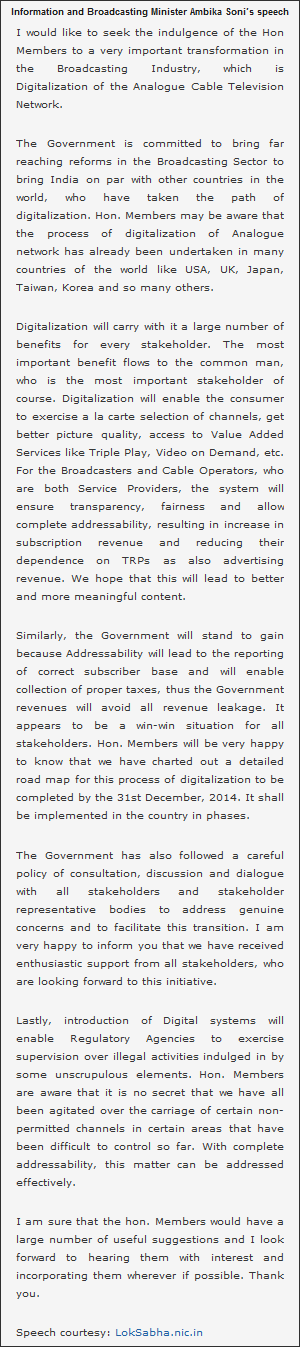
    Information and Broadcasting Minister Ambika Soni said that the move to convert Analog TV into Digital will bring India on par with other countries like US, Britain, Korea and Taiwan.


    As a matter of fact, digitization of TV will bring subscription revenues for broadcasters and of course the elimination of carriage fees from the broadcast ecosystem – something which, as experts believe, would eventually happen as complete digitization would set in. As for now, carriage fees is one big challenge all broadcasters are facing. Industry estimates suggest that roughly 20 per cent of a channel’s cost account for carriage fees. As per the new regime, all satellite channels will be beamed to houses through set-top-boxes.


    While most members supported the Bill, a few raised their voices against content being broadcast on some channels and the unjustifiable hike in the cable rates. Soni assured Cable operators that the move will not render them jobless, and that the government’s major concern was the viewers’ interest. She said that an enabling provision had put in place to the effect that only Rs 200,000 to Rs 300,000 would be needed by cable operators to move to digitisation.


    On the prices of set-top-boxes, she said, “The prices of set-top-boxes will fall. These will be available on installments and rent. Also, viewers don’t have to take a whole bouquet of channels. TRAI will impose a tariff capping for subscribing to channels.” She also said that digitization would provide consumers a la carte selection of channels and video-on-demand among other things.


    She added that the Headend-in-the-sky (HITS), which had so far failed, would take off with greater investments


    The ordinance was passed earlier this year to meet the deadline set for full digitization by December 31, 2014. The government will complete the process in four phases starting with metros.


    The Bill will now go to the Rajya Sabha for passing and then go to the President for her assent after which it becomes law. Mr Dinyar Contractor, Editor-in-chief, SCATMAG, is of the opinion that it is only a matter of time before Rajya Sabha will pass the bill.


    According to Mr Devendra Parulekar, Partner & Segment Champion – TV Distribution Ernst & Young, the development is a positive one as this will lead to transparency in the entire system while creating a win-win situation for every stakeholder. “Digitisation will provide customers with wider choices, better signal quality, HD content and niche content tailored to suit niche audiences.”


    Whether there will be an effect on pricing, he said, “With hyper-competition, I don’t think price points will rise significantly; they will more so be determined by the market forces. ”


    On what it means to MSOs, Mr Parulekar said that MSOs focus will shift from B2B to B2C. However, due to the short implementation time-frame, he said that MSOs are likely to lose round one of the battle to DTH players, who have already invested in mature back-end systems. She also said that there were punitive clauses against cable operators, MSOs or DTH operators who failed to show the must-carry channels, including the Lok Sabha and Rajya Sabha TV channels.


    “The jury is still out on how the sector would fare in the medium to long term, as digital cable+broadband has some inherent technological advantages over DTH, as well as the advantage of personalised service that cable offers to end-subscibers. These service enhancements will need infusion of large funds and hence the sector may see some transactions (M&A activity). With increased transparency in collection of subscription fees as well as tax collection, broadcasters can de-risk their revenue streams versus advertising revenue that they are presently overly dependent upon,” he added.


    Big story image: Fotocorp

  • TRAI issues consultation paper on digital cable

    By A Correspondent


    The Telecom Regulatory Authority of India (TRAI) on Thursday released a consultation paper on “Issues related to Implementation of Digital Addressable Cable TV Systems”.


    The analog cable TV service, which caters to around 94 million households, has been a roadblock in exploiting the full potential of the sector. Keeping this in mind and in consultation with all the stakeholders, the Telecom Regulatory Authority of India had recommended to the government complete digitization with addressability of the Cable TV services, in a phased manner in August, 2010.


    After the Parliament passed the Bill to amend the Cable TV Act paving the way for the digitization programme, in order facilitate transformation to digital cable system, TRAI identified certain key issues that need to be determined. These issues pertain to:

    • Composition and Tariff of Basic Service Tier (BST)
    • Retail Tariff
    • Prepaid billing
    • Interconnection issues
    • Revenue share between MSOs and LCOs
    • Quality of Service Standards
    • Redressal of Consumer Complaints


    Some of the key issues raised by TRAI in the consultation paper concern:

    • The minimum number of free-to-air (FTA) channels that a cable operator should offer in the basic-service-tier (BST). TRAI has also demanded for the genre-wise (entertainment, information, education etc) mix of channels in a BST?
    • If the retail tariff is to be determined by TRAI or left to the market forces? If it is to be determined by TRAI, how should it be determined?
    • The subscription revenue share between the MSO and LCO and if it is to be prescribed by TRAI what should be the revenue share.
    • Whether an ad-free channel is viable in the context of Indian television market?
    • The responsibility for ensuring the standards of quality of service provided to the consumers with respect to connection, disconnection, transfer, shifting, handling of complaints relating to no signal, set top box, billing etc. and redressal of consumer grievances.
    • The impact on the wholesale channel rates after the sunset date i.e 31st Dec 2014, when the non-addressable systems would cease to exist.


    The full text of the Consultation Paper is available on TRAI’s website (www.trai.gov.in). TRAI has invited written comments on the issues raised in this consultation paper from the stakeholders by 16th January, 2012, and counter-comments on the comments by 23rd January, 2012.


    The comments and counter-comments may be sent to Mr Wasi Ahmad, Advisor (B&CS) at: advbcs@trai.gov.in or traicable@yahoo.co.in.

  • Set-top shortage could dampen digitization drive

    By Nandini Raghavendra & Meenakshi Verma


    Five months before time runs out for homes across India’s top four metros to switch to digital transmission to continue watching cable television, operators are battling short supply of set-top boxes as well as ignorance among consumers.


    More than 60,000 set-top boxes need to be installed every day to enable an estimated 10 million homes across Delhi, Mumbai, Chennai and Kolkata to meet the deadline mandated by the government.


    But with India going digital at the same time as Brazil, Russia, China and South Korea, among other countries, set-top box makers are finding it difficult to meet delivery deadlines. This is the case even as most leading manufacturers, based in China, have ramped up production manifold.


    “Most consumers don’t even know that they won’t be able to watch TV with the same cable after the June 30 deadline and that a digital set-top box is a must,” says Mr Anthony Brian D’Souza, a Mumbai-based cable operator.


    Direct-to-home or DTH operators, who use satellite and dish antennae, are therefore well placed to grab the business from cable operators. Nearly 80% of the 70,000 odd cable operators are believed to be independent players, who are also finding it difficult to absorb the rise in the cost of imported set-top boxes due to rupee depreciation.


    “This is a great opportunity and we are well poised to make the most of cable digitalisation,” says Dish TV’s managing director Mr Jawahar Goel, “The DTH industry will be able to grab 30%-70% of the analog cable homes across various phases depending on the locations.”


    Tata Sky has also geared up to cash in on the opportunity. “Our billing and CRM systems handle millions of customers. These have been further scaled up to ensure error free service to many more millions of new subscribers who will join us in next few months,” says chief executive officer and managing director Mr Harit Nagpal. The company can install fresh connections within a day of receiving the order, he says.


    Big multi-system operators like Den Networks and Hathaway Cable & Datacom, which have too much on their plate upgrading their subscribers, might find it difficult to add too many new subscribers.


    Den Networks has hired Ernst & Young to conduct seminars and train its partners and affiliate local cable operators. “Local cable operators will help us upgrade our existing consumer base on the ground and will play an important part in the process,” says Mr Sameer Manchanda, CMD of Den Networks. He says the company will focus on upgrading its current subscribers in the four metros.


    While the industry expects a majority of independent operators to align with the bigger players, many of them may find the switch hard to survive. “The large investments expected from cable operators for setting up the infrastructure in such a short span of time and competition from DTH players could create unemployment among smaller cable operators,” says Ms Roop Sharma, president Cable Operators Federation of India, the largest association of independent cable operators in the country.


    Sharma, however, says even the bigger players might find it hard to prove equal to the challenge. “Digitalisation is a mammoth task and there are concerns whether the deadline for the four metros will be achieved,” she says.


    An independent cable operator says many affiliate partners of the bigger players are showing a huge resistance to digitisation at the moment. “If someone in the cable fraternity keeps holding out till the last moment in the hope that digitalisation will not happen, he will only be making it easier for DTH players to garner incremental market share at the cost of the cable industry,” says Mr K Jayaraman, chief executive officer of Hathway Cable & Datacom.


    Source:The Economic Times

    Copyright © 2012, Bennett, Coleman & Co. Ltd. All Rights Reserved


  • Digitization’s sunset date may be delayed

    By Akash Raha


    The process of digitization is unlikely to be over by December 31, 2011, according to key stakeholders among broadcasters and cable organizations. The sunset date for digitization is therefore expected to be extended further, as it seems to be going nowhere at the current pace. The stakeholders say this is because of lack of clarity on the part of the Government, which needs to enable the industry to change over smoothly from analog to digital.


    The issue of digitization was discussed at length at Focus 2011, a seminar organised by The Associated Chambers of Commerce and Industry of India (ASSOCHAM). The theme of the event, From Analog to Digitization, was held on September 9, 2011 at New Delhi.


    Earlier in the day, Mr Choudhury Mohan Jatua, Honourable Minister of State, Ministry of Information and Broadcasting said that he was hopeful that the process of digitisation will happen in the stipulated time. He said that his government was doing everything to make it possible, but that to make it possible, the industry itself needs a lot of self-discipline. He said that the changeover from analog to digital is desirable and also compulsory.


    The romance with digital is on and the era of digital is here, said Mr A Mohan, VP, Zee Networks, kicking off a discussion session moderated by Gunjan Gupta of Deloitte. However, he said, there are several problems on the route to digitisation. The three-fold challenges that he pointed out were investment issues, finding a viable economic model in the digital era, and inter-connection issues. Subject as it is to a variety of taxes such as entertainment tax, service tax, VAT, entry tax and so on, he said, it is very difficult to make any profit. He appealed to the government to rationalize the taxes on the industry. Talking about investment, he said that the Government of India must change its FDI policies, which would help with more funding for digitisation.


    Ms Roop Sharma, President, Cable Operators Federation of India (COFI), said, Digitization cannot happen by the sunset date unless the government faces its problems and challenges. Moreover, the government has to come up with a phase-wise plan for digitization, as we cannot expect it to happen overnight. Awareness has to be spread, and consumers need subsidies to accept digitization. Ms Sharma, a member of the task force for digitization, and she rues that even after several meetings there is no clarity as to how the government plans to go about digitisation.


    Mr Sugato Banerji, CMO  DTH, Bharti Airtel, cited several advantages of digitization, beginning from safeguarding national security to more subscription-based revenue for broadcasters. He went on to say that the age of digital will benefit the whole ecosystem  consumer, broadcasters, government and cable operators. Mr Pulak Bagchi, Vice President, Star India too spoke about the advantages of digitization and said, If we intend to digitize in right earnest, the government has a huge role to play.The industry is set to provide 4 percent of the country’s GDP (excluding agriculture). Yet, the investment required for digitization of the whole country is set to be 15 billion USD. He also said that digitization would eliminate cable wars and prevent tax leakages for the government.


    With 35 million digital households, India is going to be the largest digital market said Mr Siddharth Jain, General Manager, Network and Content Distribution, South Asia, Turner International India. He went on to say that the success of any venture depends most on the consumer experience, which the industry has to keep in mind. Content is king, and yet content has a cost.


    Mr Raman Kalra, Director and Partner, IBM said that while in future content is going to be the key and content is poke about the future of the medium and said that eventually, content is going to be the key and that is exactly what the customer wants. At the same time, you can’t just thrust technology on him; the convenience of consuming content is also very important.


    Mr Rohit Bansal, CEO and Co-Founder, Hammurabi & Solomon Consulting, voiced his concern over government’s method of setting deadlines, and he fears that such deadlines won’t get translated.


    He said, Digitisation has its own advantages, and even though some incumbents are trying to resist it, everyone has to come together and volley for it. The I&B ministry, TRAI and all other stakeholders have to rise to the occasion and do their bit.


    The recently accepted TRAI recommendations for the implementation of digitisation of broadcast systems in India is expected to open up new opportunities for a broader ecosystem (content providers, broadcasters, equipment providers etc). Yet, there are several challenges en route to migration from analog to digital. The revenue opportunities are substantial, and all that is needed, it seems, is synergy between the government and the stakeholders to make the sunset date possible and viable.

  • Digitisation ups mood at trade show

    By Insiyah Rangwala

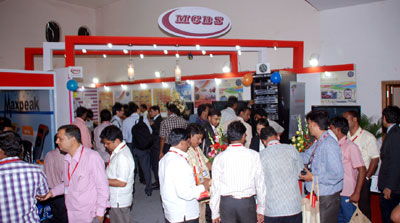
    The announcement of the new regulation enabling the rollout of digital addressable systems in the country, upped the mood at the Satellite and Cable TV Trade Show last week. Organised by the Satellite & Cable TV magazine, the show, now in its 20th year, SCaT saw the attendance of over 15,000 people from the industry and networks.


    Mr Dinyar Contractor, Editor and Executive Publisher of Satellite & Cable TV, said the response to SCaT has been overwhelming. With hardware prices having fallen from three years ago at 100 channels being Rs 1 crore to last year’s Rs 60 lakh and this year’s 200 channels at Rs 27 lakh, this has positively affected the mid size networks, as digital is now no longer inaccessible to them. The critical new element at SCaT has been the discussions of pricing and buying.


    The technologies showcased at SCaT this year were the digital set-top box, MPEG2 and MPEG4 along with emergence HD channels. Mr Dharmesh Gandhi, Product Marketing Manager at NDS, said their key aspect was content protection and providing the middle ware for pay TV. They were showcasing new features such as the search option and targeted advertising. It helps a user with browsing and discovering more related content.


    Mr Vikram Nagda, Marketing and Operations Head, Channel Masters, stated that they feel very positively about the digitization of cable TV in India as it has enabled the internet to become an even larger commodity. Mr Saravanan Narayanasamy, Chief Technical Engineer, Indian CAT from Pace, said that with or without the government digital is picking up as it can be seen at SCaT with the tremendous turnout from newcomers.


    Mr Manoj Thakur Deputy General Manager, Catvision, said that even though currently digital in India is big only in the metros it is increasingly broadening its reach.


    According to Mr Contractor, the mood in the trade is so buoyant that most operators have reconfirmed their presence in a bigger way for next year with stalls being pre-sold.


  • Digitization will boost TV industry: MPA report

    By Rishi Vora


    The government mandate to digitise cable networks across India will bring a significant transformation to the US $7 billion television industry with a positive impact on the nascent broadband market, says a report published by Media Partners Asia (MPA).


    Executive Director of Media Partners Asia, Mr Vivek Couto said, “India’s broadcasting and pay TV market is on the cusp of a high growth value phase, similar to North America between 1998 and 2003, Korea during 2003-2007, and Taiwan during 2005-2010. Valuations of the domestic companies in these markets during the high-growth value stage typically skyrocketed, as networks were upgraded and services to consumers expanded. In India, domestic players and foreign investors will both do well, to the benefit of consumers, when the government’s policies take shape.”


    The report, entitled ‘Investing in Digital India: The Dynamics of Mandatory Addressable Digitization’, underlines benefits across the value chain.


    A boost for the government and the economy
    If the current analog cable distribution model remains in place and digital penetration is limited, the cumulative value of the tax receipts lost by the government would reach US $11 billion over the next decade or more than US $1 billion per year. The government therefore has sufficient incentives to push digitisation and can also accelerate the process by offering tax incentives to a potential multi-billion-dollar industry. Digitisation will also help the government pursue India’s broadband goals and thereby help to boost economic growth. Potentially, a 10 percent increase in broadband penetration would increase India’s GDP by 1.5 percent. As of September 2011, broadband per capita penetration in India was only 1 percent. In its National Broadband Plan, the Telecom Regulatory Authority of India sees a pivotal role for cable operators with digital network upgrades paving the way for broadband growth.


    Consumer will have the choice
    Digital cable television will improve the consumer experience and resolve legacy issues from analog cable services. Consumers will gain access to more channels; attractive tiering options with differentiated content across local, regional and niche genres. It will provide a better viewing experience; and improved quality of service. Digital cable television will also be affordable for the consumer. As per international benchmarks, spending on pay TV typically accounts for 5 percent of GDP per capita. In this context, digital cable television in India will be affordable given heavy subsidies on STBs (currently subsidised at 60-70 percent by MSOs), which will ensure that consumer spends fall within the 5 percent benchmark. Consumers will also benefit from new competition as digitisation in metros ensures that seven DTH satellite platforms (including free service DD Direct) compete for customers with digital cable operators.


    Cable transformation almost certain
    MPA expects a six-fold increase in subscriber revenues for cable MSOs, though not without at least a 20 percent churn in the cable subscriber base to DTH. Subscriber declaration levels will increase from 15 percent currently to 100 percent, while the retained ARPU will increase by six times after assuming a 30 percent base case revenue share with the local cable operator (LCO) will reduce the payback period on digitisation. Under a bundled model, the payback period could be reduced by a year to 24 months, as opposed to 36 months under a standalone digital proposition.


    The main challenges, apart from managing subscriber churn to DTH are one, the drop in carriage fees by about 20-50 percent; and second – incentivising revenue-sharing agreements that need to be struck with local cable operators to drive digital into homes.


    Opportunity for DTH players
    Phase I digitisation in the four key metros offers a good opportunity for DTH operators to grab high-ARPU customers and increase the platform’s reach in larger TAM markets. MSOs envisage about 15-20 percent churn in cable subs to DTH, though some suspect this could grow to 30 percent in the early stages of Phase I deployment. Subsidised HD offerings will also act as a key differentiator for DTH players as few cable operators have rolled out HD services.


    Benefit to broadcasters
    Digitisation will help boost subscription revenues and reduce dependence on advertising. Improved economics will also help broadcasters launch niche channels with a premium focus while carriage and placement fees will fall in certain markets and moderate in others. At the same time, consumer adoption of certain programming tiers and specific channels (over others) will ensure healthy competition while broadcasters will also be under pressure to produce content with differentiation, premium quality (potentially advertising-free) and with local relevance.


    Benefit to investors
    Upon successful implementation of the digital mandate, gradual consolidation of LCOs will become inevitable. This will shift industry profits and value to centralised distribution platforms and broadcasters. Valuations for cable/ pay TV operators in the USA, Korea and Taiwan during their high-growth value stage typically averaged 12-16x one year forward EBITDA, versus the current trading average of 9-10x for India’s listed cable/pay TV entities. MPA assumes similar or higher valuations for companies in India subject to successful execution. Most investors, especially strategic companies, will adopt a wait-and-watch approach, potentially making their bets after Phase I is completed.

  • Our core belief is innovation: Shyatto Raha, NDTV Worldwide

    By Akash Raha


    Shyatto Raha, CEO, NDTV Worldwide and NDTV Emerging Markets, has been with NDTV for over 13 years and is an integral part of NDTV’s strategic team which has helped develop new growth areas.


    He spearheaded the successful launches of NDTV Arabia in the Middle East and Astro Awani channels in Indonesia and Malaysia.


    In his role as CEO of NDTV Worldwide and Emerging Markets, group subsidiaries, Mr Raha heads its business and operations and is responsible for the setting up of local news, current affairs and business channels targeting the local population, in emerging markets across the world.


    In a chat with MxMIndia, Mr Raha speaks about NDTV Worldwide, its focus and growth.


    Q: NDTV Worldwide has created a footprint in the media consultancy business and spread the banner of the NDTV group to newer areas. What are the other key focuses?

    Over the years NDTV has become one of the most trusted brands in the broadcast industry. Also, we have been a very successful brand. As far a media consultancy is concerned we have only shared the knowledge from the talent that is their within NDTV. Many of us have been at NDTV for over 15 years and it’s all about taking that knowledge base and creating media consultancy and media services which is due to bring about a change in the industry. It is definitely a change for the better. Here, we are making sure that the people who are coming into the market, the new entrants, are at least buying into technology, buying into programming ideas, buying into a way of working which will help them sustain and survive in the environment. Otherwise, what happens is that we find that a lot of broadcasters who enter the industry and then after a about a year or two they wither away because they were never set up properly. So considering that this (broadcast business) has been better and better and we have run it for over 23 years now, it gives us a very good foothold to advise broadcasters who are new to the market as to how to set up channels, on best practices, and tried and tested workflow. We don’t impart bookish knowledge but rather a very practical approach to things. We have been very small to start off with and we have been a very small consultancy in the market compared to many others in the market. But we like to take baby steps because we believe in getting it right. The aim is not just to take on 78 clients and get it all wrong. The aim is to take baby steps, manage fewer clients, get it right and then expand.


    Q: What are some of the major developments that you have seen in NDTV Worldwide since its inception?

    Over the years, the kind of services that we are offering in the market has expanded. Earlier we used to do only channel set ups. But today we do channel set ups, broadcast consultancy, training, channel management services… We have also added digital consultancy, where we have set up web mobile and apps platforms based on the success of NDTV convergence. So it’s a wide array of services that we have added since we started. In terms of client base, our prime focus in the first two years was on international clients and in the last two years it has been the Indian market. And I think we have done fairly well in the Indian markets with the clients that we have and we have got it right. I think they have all seen the result and the benefit that has come out of it


    Q: What are some of the new clients you have bagged?

    We can’t talk about recent signings due to confidentiality. Last year, the big launch was the Beximco Group, which is one of the biggest television channels in Bangladesh. That was a feather in our cap because, of all the TV stations launched in that market, I think independent television has set a new benchmark in the industry.

    And that’s the NDTV value that we bring to the table. Our core belief is innovation and it has been Prannoy-Radhika’s belief since the day I worked with NDTV. It’s been innovation at every level. When we set up NDTV – the news business – we innovated, not just in terms of technology platforms that we brought into the country but also innovation in terms of content. The kind of shows, the programming, the business practices, the kind of work flow and management style were all innovative. We don’t like following people. It’s not arrogant; it’s just trying to set a new standard and do something different.


    Q: NDTV group started off with a news channel. How did the idea of this subsidiary business emerge?

    It all started with one project, where we launched Astro Awani in Malaysia. We completely revamped it and created a differentiated channel for the audiences. This was NDTV’s first launch outside India and a very successful one too. We saw a business model in this that could be worked and built upon. We thought that NDTV had a lot to offer in terms of knowledge and ideas to new entrants in the market, and we could successfully leverage upon it.


    Q: What has the growth of NDTV Worldwide been like?

    Over the last year we grew by 70 percent. Our target for the current year is 100 percent and we are well on course to achieve it. In terms of expansion, our pre-eminent focus in the past few years has been India and the international market in South East Asia. However, in the upcoming years you can definitely see us entering newer countries and perhaps continent.