Category: MEDIA

  • Times Network appoints Ashit Kukian as President – Revenue

    By A Correspondent


    Ashit Kukian

    Strengthening its senior management leadership, Times Network announced the appointment of Ashit Kukian as President – Revenue. This is his second stint with the network after a hiatus of 10 years. In his new role, he will interact closely with the Content, Distribution, Marketing and other enabling functions to ensure that business objectives are met. The Ad Sales and Branded Content teams of the Times Network will directly report to him and he will report to MK Anand, MD & CEO, Times Network.


    M K Anand

    MK Anand, MD & CEO, Times Network said, “It gives me great pleasure to welcome Ashit back into the Times Network fold as President – Revenue. His guidance, industry insights and operational expertise will help us achieve our aggressive growth targets and meet the business objectives through traditional and non – traditional revenue streams as we move into the future. I am sure his extensive background in media management and experience over two decades in the print, television & radio industry will add great value to the growth of Times Network.”


    Commenting on his new role at Times Network, Ashit said, “I am extremely excited to take on the new role with Times Network. As an individual helming the revenue vertical of a network that is growing by leaps and bounds, I will try my level best in giving my inputs, industry insights and operational expertise in the best possible manner. Using my experience garnered across print, television and radio I am sure I can lead the team in adding value to the growth of the network channels and businesses.”


    Ashit has had a 13 year stint with BCCL in the past where he managed several important roles. He was a key figure of the team that launched zoom Television in 2004. He went on to serve Radio City 91.1 FM as President & Chief Operating Officer for 10 years. Ashit has done his Bachelor of Science from Mumbai University and is passionate about reading and travelling.


  • CVL Srinivas appointed Chairman of RSCI

    By A Correspondent


    CVL Srinivas

    Readership Studies Council of India (RSCI) announced that CVL Srinivas, CEO, GroupM South Asia has been nominated as Chairman for a period of two years with immediate effect. Srini takes over from Hormusji Cama who was Chairman of RSCI for the past two years.


    RSCI was set up when the Audit Bureau of Circulations (ABC) and the Media Research Users Council (MRUC) agreed to undertake joint readership studies as equal partners. The RSCI is governed by a 20 member Managing Committee consisting of Publishers representing the print media, Advertising Agencies’ representatives and Advertisers. The managing committee of RSCI sets up the Technical Committee to work on the IRS. In a recent development N.P. Satyamurthy was made the head of the Technical Committee to work on the new IRS.


    Shashi Sinha

    Shashi Sinha Chairman of ABC said “From an ABC standpoint we are delighted that Srini has taken over as Chairman RSCI, as there can’t be better person with this stature to guide RSCI especially as we kickoff IRS 2016.”


    Commenting on this development, I. Venkat Chairman MRUC said, “Srini brings over two decades of rich and varied experience in media planning and buying having worked in some of the best known agencies. I am confident that Srini, ably assisted by N.P. Satyamurthy who has recently taken charge of the Technical Committee will help us bring out an improved IRS 2016 with a 3,30,000 sample the largest such study anywhere in the world.”


    Srini was till recently the Chairman MRUC, stepping in to complete the term of his colleague Ravi Rao who moved to Dubai in May 2015.


  • Basabdatta Chowdhury to be Starcom Mediavest Group COO, exits Platinum

    By Pritha Mitra Dasgupta


    Platinum Media CEO Basabdatta Chowdhury is set to join Starcom Mediavest Group as Chief Operating Officer early next year.


    The move comes 15 years after Chowdhury joined Madison World, the parent organisation of Platinum Media. Starcom Mediavest Group (SMG) is part of Paris-based Publicis Groupe.


    Chowdhury will report to SMG India’s chairman Hanley King and CEO Mallikarjun Das. “We are absolutely delighted to have someone as highly capable, respected and hungry as Basab joining the senior management team,” said Das. “She will have dual responsibilities of running the SMG business of North India and at a national level grow and acquire new businesses.”


    Source:The Economic Times

    Copyright © 2015, Bennett, Coleman & Co. Ltd. All Rights Reserved

    Licensed to republish


  • India Shining in in mobile ad $$s & traffic


    By A Correspondent


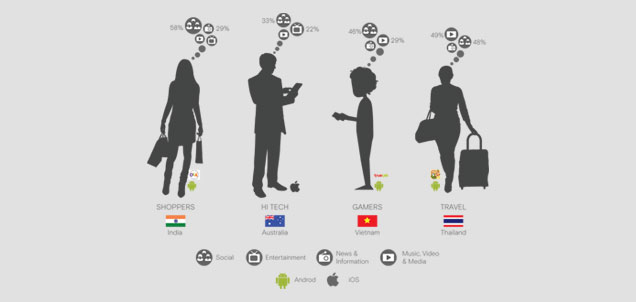
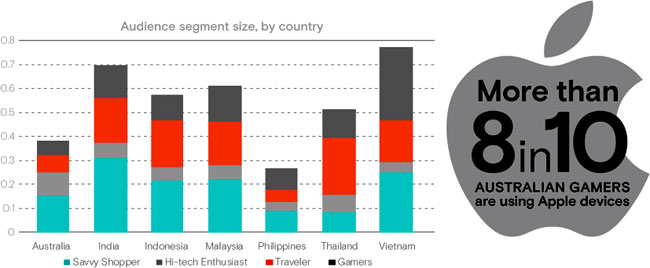
    Asia Pacific (APAC) and Oceania are showing a clear and rapid transition to smartphones, according to a Q3 State of Mobile Advertising study from Opera Mediaworks and the Mobile Marketing Association (MMA), released recently. In India, 75 per cent mobile users have smartphones. Even in markets where the transition from feature phones to smartphones has been slower (Vietnam, Indonesia and the Philippines), about half of the mobile user base has moved to smartphones.


    A study of mobile users on Opera’s global mobile-ad platform in six select APAC countries found that Android is the leading OS for smartphones, with 67.1 75 per cent of impressions being served to those mobile devices. India is the only country where platforms outside of Android and iOS support a relatively strong monetization model, with platforms other than Android and iOS having a share of revenue that is nearly twice their share of impressions.


    “The ability to serve high-impact – and therefore high-value – rich-media and video ads on smartphones is what is truly powering the monetization potential of the region,” observes Vikas Gulati, Managing Director for Asia, Opera Mediaworks. “These ad types are effective at attracting, engaging and ultimately converting mobile consumers. India leads in over all traffic and the top three categories for ad impressions are Mobile stores and career portals, social networking sites and apps, and sports.”


    Below are the key findings from the study of the APAC “P6” – India, Indonesia, Malaysia, the Philippines, Thailand and Vietnam – plus Australia.


    Key highlights from the APAC SMA Q3 report:


    Mobile-device market share and ad types:

    >> While Android market share in the P6 is similar to the global average (65.4 75 per cent), its share of revenue is higher – 54.9 75 per cent vs. 44.4 75 per cent globally. This is likely the result of Android being the go-to OS for smartphones and thus the chosen platform for high-value brand campaigns.

    >> India leads the region in overall revenue and traffic, accounting for more than half (53 75 per cent) of impressions. It falls lower, however, in terms of monetization potential, due to the relatively high (25 75 per cent) share of feature phones. Still, compared to other feature-phone-dominated markets, its share of revenue is equitable to that of impressions, indicating a relatively strong monetization model on “other” platforms.

    >> Mobile video ad formats command higher eCPMs than rich-media display and even native ads in nearly all of the countries in the study.


    Top publisher and mobile-app categories:

    Mapping content trends by country, Opera Mediaworks and the MMA found that while each country demonstrates a unique profile in terms of audience interests, there were some patterns:


    >> Mobile stores and carrier portals are the most popular category in most of the countries, the result of feature-phone owners needing to access content and apps through these channels. In fact, 88.5 75 per cent of unique users to mobile stores and carrier portals are visiting from feature phones.

    >> Social Networking is the most or second-most popular category for five of the seven countries. It is noticeably missing from the top three in Australia, which is instead dominated by Entertainment, Sports and News & Information.

    >> In three countries (India, the Philippines and Vietnam), nearly 8 in 10 impressions are served to the top three categories, indicating highly condensed interest areas. Malaysia and Thailand, on the other hand, show traffic going to a wider set of categories.


    “Asia Pacific is a truly diverse region, and the growth and maturity of mobile marketing has seen the region’s power markets grow from four to six,” says Rohit Dadwal, Managing Director, Mobile Marketing Association APAC. “Collaborating with Opera Mediaworks on this report allows us to make all this data available for marketers, advertisers and publishers and ensure that the industry can adapt and evolve to ensure the region continues to create industry-winning mobile campaigns.”


  • Vinod Moorthy appointed Director of Rediffusion/Edelman

    By A Correspondent


    Vinod Moorthy

    Edelman India announced the appointment of Vinod Moorthy as Director of Rediffusion/Edelman, effective immediately. Moorthy takes over from Jimmy Mogal who moves into a senior advisory role at Edelman India. Based in Mumbai, Moorthy will take charge of the Tata business reporting to Rakesh Thukral, managing director of Edelman India.


    “With Vinod’s appointment, we are further strengthening our leadership team at Rediffusion/Edelman,” said Thukral. “Vinod brings years of knowledge and experience in driving corporate reputation campaigns for major companies which will further elevate our offerings. Jimmy has played a key role over the last year in spearheading the team and will continue to play a strategic role at Edelman India.”


    Diwan Arun Nanda, CMD of Rediffusion Y&R, said, “We welcome Vinod’s addition to the team handling our Tata mandate. I am confident that with his multifaceted experience he will add substantial value to our offering to the client.”


    Moorthy joins Rediffusion/Edelman from H+K Strategies where he was the North India SVP and APAC Corporate practice lead. Prior to this, he served at Ketchum Sampark, Good Relations India Limited (GRI) and a stint heading GCI, the PR Division of Grey Worldwide as its general manager.


    With over 20 years of communications experience, Moorthy has counseled clients across a broad spectrum of industries including financial services, aviation, telecom and technology, biotechnology and manufacturing. Some of his former clients include Tata SIA Airlines, Goldman Sachs, HSBC, The Blackstone Group, Citibank, Vodafone, Hindustan Unilever, Sony Entertainment Television, Hyundai, LG and Hyatt.


  • SRK launches Assocham Knowledge Report on Digitisation and Mobility of M&E sector

    By A Correspondent


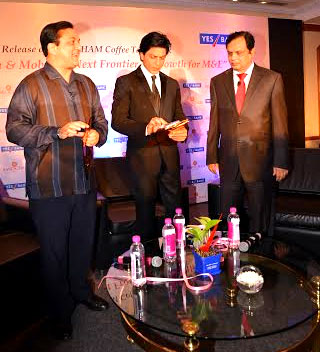
    Superstar Shah Rukh Khan along with Rana Kapoor, President, ASSOCHAM and MD & CEO, YES BANK and Venugopal Dhoot, Past President, ASSOCHAM and Chairman & MD, Videocon Industries, unveiled the ASSOCHAM Knowledge Report on ‘Digitization & Mobility: Next frontier of growth for M&E’ at an event held at Taj Land’s End, Mumbai recently.

     

    The Report provides key insights on evolving trends, challenges and future opportunities across Broadcasting Digitization, the Film Industry and Mobile Entertainment segment. Organizations in the Indian Media and Entertainment industry are poised for substantial growth in the coming years. The growing demand for content consumption from Tier II and Tier III cities will enable the entire Media & Entertainment value chain to connect with, engage and monetize India’s strongest asset – our youthful demographic.


    Speaking at the launch, Rana Kapoor said, “The Indian Media & Entertainment industry has undergone a positive transformation with better content generation, mobility & digitization and growth in new media, resulting in an exemplary shift in consumer behavior and media consumption patterns. Recent regulatory interventions such as, the increased FDI limit in the broadcast distribution platforms like cable TV networks, DTH, head end-in-the-sky (HITS), mobile TV and radio, will continue to be key enablers for growth of this industry.”


    With the rise of internet users in to 200 million currently, the impact of digital technology on media consumption has already demonstrated the power of the Internet to disrupt linear traditional media.


  • Week 46 sees Aaj Tak as clear #1 in Hindi News, but India Today is #4 in English

    By A Correspondent


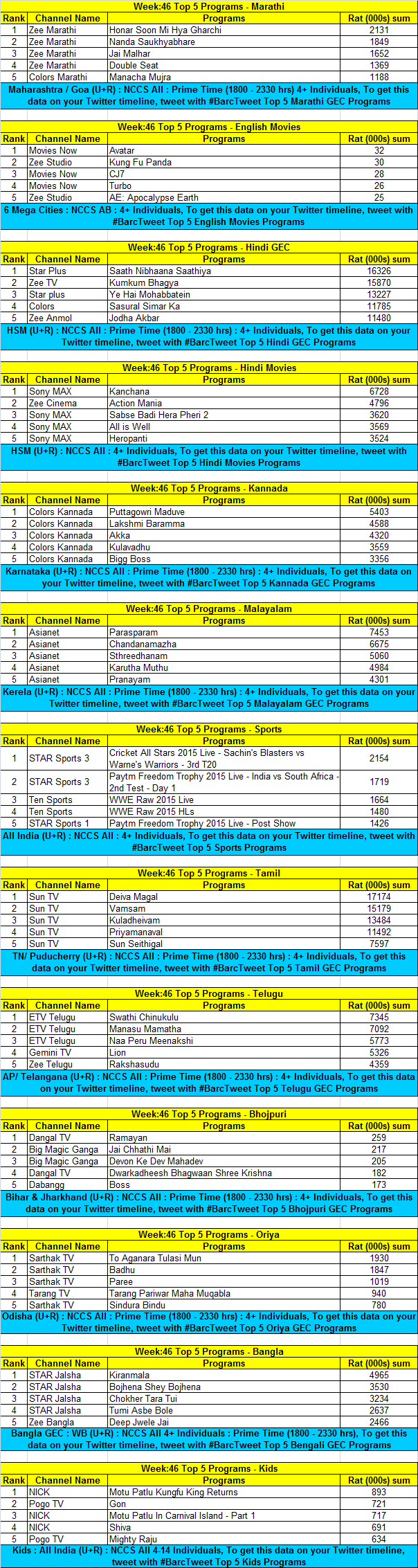
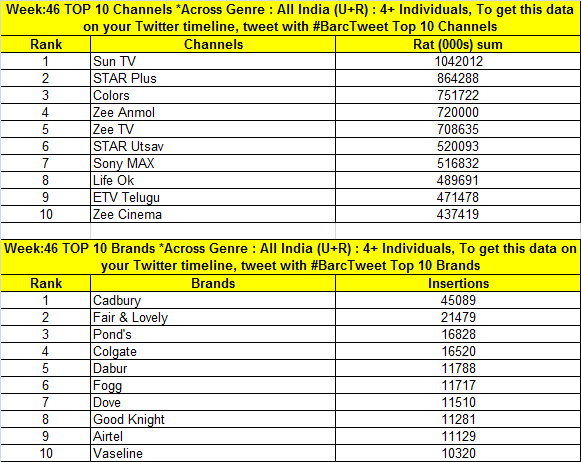
    The Week 46 ratings from BARC (for Nov 14-20, 2015) sees some stability post the Diwali holidays. Colors is back at a clear #3 after Zee Anmol, and Doordarshan is not in the Top 10 of HIndi GECs. Aaj Tak is the clear #1 in Hindi News, but India Today is #4 in English


    Note these numbers are combined for urban and rural audiences, and subscribers to the data will know how the rankings are dramatically different for urban audiences.​ And ditto for rural or free-to-air audiences.


    Enjoy!


  • Ranjona Banerji: More from the Knee-jerk School of Journalism on display all over media this week

    By Ranjona Banerji


    The extreme head in the sand stupidity of the media, especially the TV variety, was on full display over actor Aamir Khan’s remarks about his wife’s fears about intolerance in India. Immediately, it was as if nothing else that happened either in India or the world was of any consequence or importance. All the usual suspects were out in full force on TV, getting their five minutes of fame or notoriety out of Khan.


    Khan’s statements became more important than a Russian fighter jet shot down by Turkey, even though both Russia and Turkey are supposed to be fighting the deadly global threat of ISIS. Khan’s remarks were more important than the persistent, incessant rainfall and damage and death in Tamil Nadu. Khan’s comments were more important than the latest in the Sheena Bora murder case, which was our other obsession. In fact, Khan beat prime minister Narendra Modi in Singapore as well – this is terribly surprising because so far all Modi’s foreign sojourns have got wall-to-wall blanket coverage.


    People discuss, and rightly, the viciousness of trolls on social media. But when you watch party representatives on news television, they are often no better. A gentleman from the BJP (an afternoon spokesperson, not as high up the ladder as a prime time spokesperson) ripped into a Congress spokeswoman over Aamir Khan’s remarks and made several needless personal remarks. If that is how someone speaks on TV, then how is it surprising that anonymous trolls get courage from them. The anchor was unable to control him and so his rants ran on. And every time she asked him a direct question, he claimed the mike wasn’t working.


    There is an irony here which obviously escapes all pro-BJP journalists in high places in television: by attacking Aamir Khan (as some like Gaurav Sawant of India Today TV did in his tweets) and then having “debates” on his remarks, you actually only prove Khan’s point about intolerance.


    **


    I don’t know if this was part of the new knee-jerk school of journalism or a genuine error, but there was a fair bit of confusion over Congress vice-president Rahul Gandhi’s interaction with students of Mount Carmel College, Bangalore. The Times of India reported that Gandhi was “stumped” by students who were all in favour of the prime minister’s schemes. The BJP bristled with pride and mocked Gandhi. Then the Bangalore Mirror website carried a piece by a student present at the meeting who contradicted the TOI report. She said that the media was not part of the event and that Gandhi in fact charmed the students. There was in fact a mixed reaction to the success of schemes like Swacch Bharat and Make in India.


    All this makes me wonder if editors have forgotten what their job is, in the race to be there, somewhere, anywhere, regardless of the facts.


    **


    Twitter was all a-flutter over a picture of Prime Minister Narendra Modi sleeping in the Lok Sabha or so it appeared. The TV screenshot went viral as did the “hashtags” #ModiSleeps and #PMJetlag.


    BJP spokespersons and supporters scrambled to correct everyone – even worse, this was during the Union Home Minister Rajnath Singh’s speech – but only demonstrated how very cruel social media can be…


  • Koovs.com urges users to explore its unique offerings

    By A Correspondent


    Online fashion store koovs.com has launched a multi- media brand campaign – ‘step into koovs.com’ for the Indian market. Conceptualised by Grey London, the campaign is aimed at engaging with the young fashion enthusiasts and inspiring them to innovate with fashion. The new campaign will comprise of TV commercial, cinema, billboards, print and digital.


    Styled as a music video, the commercial features up-and-coming British rapper Lady Leshurr performing her explosive track, Hours and 17 year-old International dance sensation Dytto, who recently performed on The Ellen DeGeneres Show. The commercial with these two young and talented international artists represents the global fashion appeal that the brand stands for. The video includes a combination of dance, music and fashion, which appeal to youth across the globe. The television commercial showcases the main leads as they experience a fashion journey across the globe. From a Mumbai street to an East London food market, from an underground party in a Parisian ballroom to the beauty of a Manhattan rooftop, the concept was designed to showcase how fashion is empowering them to achieve their aspirations.


    Directed by Stink’s Martin Krejci, it took three weeks to shoot and presents an extreme technical challenge. Working with highly acclaimed technology specialist Tom Sparks, the VFX were done in camera using wires and completed in Flame. For each transition, multiple camera passes were utilised to capture multiple layers of action – actor, stunt double, clothing before and after and beauty passes. Each layer was then painstakingly composited to create a scene and seamless transition from one incredible scene to the next.


    Speaking on the brand campaign, Mary Turner, CEO, Koovs Group said, “We have successfully established a loyal fan base using digital media and now want to reach out to a wider audience through our multi media campaign ‘Step into koovs.com’. The aim is to establish Koovs as an undisputed authority on affordable western fashion. The idea is to inspire young people to explore, to be creative and enjoy fashion every day.”


    The television commercial has been designed to appeal to the emerging young population who are keen to explore the global culture and want to embrace a new energy.


  • Shailesh Kapoor: Want A Controversy? Dial A Celebrity

    By Shailesh Kapoor


    Till fairly recently, entertainment content was the domain of non-news channels and magazines. News media would rely on political, global, social, crime and sports to fill their airtime or pages. Celebrity news was limited to a weekend entertainment show, or to channels and print supplements delivering entertainment gossip.


    In what can only be described as a further dumbing down of the news media, celebrity news is now taking primetime headlines. This has been achieved using the rather interesting route of combining celebrity news with the relevant socio-political themes running in the news at any point of time. So you juxtapose a Shah Rukh Khan or an Aamir Khan with intolerance, and you have content that has the ability to spark off a million Whatsapp jokes. Which probably means it’s newsworthy enough!


    Anyone who has seen the full videos of what the two Khans said, and in what context, should be wondering what the fuss is all about. Celebrities have been accused for years for not taking stands on relevant social themes, and of being dumb and unaware of their country (something Alia Bhatt smartly made a virtue of). So when a celebrity indeed takes a view, one should see it as a welcome change from how celebrities behave in general. Whether you agree with the view itself is irrelevant in this context.


    Yet, what happened in the Aamir Khan case, in particular, underlines the problem at hand. Almost everyone got the news as “Aamir Khan said he wants to leave India because of intolerance”. Some got it as “Aamir Khan’s wife suggested that they should leave India because of intolerance.” These headlines ran on primetime news for almost a day, with a short byte. Some channels showed a slightly longer version of the byte. But the context was set: “Aamir wants to leave India. Is he justified? Discuss.”


    So anyone who got the news (Whatsapp and Facebook are key sources in urban India today), got it with an inbuilt conclusion about the man’s patriotism. If you agreed with his view, you may as well be called unpatriotic yourself. Not too many would actually see the full video, but even if they did, they would see it with a conclusion already in their head.


    Calling celebrities to events like literature festivals, leadership summits and business summits is itself a questionable idea. Seasoned event curators know that a celebrity face drives media attention and sponsorships. It’s a glamorous shortcut to making an event more saleable. Most such events have heavyweights (political or media) backing them, and getting a big star or two can be just a phone call away.


    Earlier, you would get them to speak about their life, or inspire the audience with their success story. Over time, such content has been served in plenty and lost its relevance. The political questions make for better copy. Articulate stars will be articulate enough to give good copy anyway.


    The reactions to the Aamir Khan byte, fuelled by limited information and a herd mentality, have been dangerous and silly at the same time. Snapdeal has been caught in the crossfire. The suggestion that he said this on purpose to promote Dangal shows limited understanding of the media business in general and Aamir Khan in particular.


    At this rate, the distinction between the Bollywood news channels (where I recently saw a full account of why Ranbir Kapoor’s driver quit his job) and mainstream news channels can blur very soon.


    Or has it already?


  • Indrani Sen: Radio Rumblings & Selling without Currency

    By Indrani Sen


    Currently radio is the fastest growing traditional medium in India. Why the Radio Industry is not feeling the need for a valid media currency after investing a whopping Rs 3,000 crore (including the migration fees) in the Phase III of FM Radio expansion? Why is RAM, our only syndicated radio listenership study, limited to only four cities since 2007 when six years back in 2009 (after the Phase II auction), 91 cities formed our Private FM Radio Network? How can the Radio channels be so indifferent to RAM that some of them have stopped subscribing to it? As per the FICCI KPMG 2015 report, radio revenue will increase from Rs 1,960 crore in 2015 to Rs 3,950 crore in 2019. Are the advertisers buying radio time blindfold or is there a hidden card which is helping radio stations to sell effectively without the help of a regular currency?


    What is ailing our Radio Audience Measurement studies?  We had a good start in radio research in late 1990s. The advertising industry felt the need of radio listenership measurement even before the advent of private FM channels and the pressure which mounted on AIR resulted in Audience Research Unit starting its Radio Programme Listenership (RPL) ratings in 1998. In early 2000, MRUC started Indian Listenership Track (ILT) in partnership with AC Nielsen ORG- MARG based on yesterday’s listenership (YDL) which is also referred as Day After Recall (DAR).  MRUC commissioned a research to evaluate which of the two radio research methodologies (between DAR and Diary) was the most robust in Indian context and the Diary Method scored above DAR.  ILT was discontinued after 2006 as TAM announced the launch of RAM from 2007.


    A joint service between IMRB International and Nielsen Media Research, RAM is an independent division of TAM Media Research and provides listenership data based on the Diary Method on a weekly basis. RAM started with a lot of promise in Mumbai, Delhi and Bengaluru in 2007. Kolkata was soon added as the fourth city. The panel size of 600-plus individuals each in Bengaluru, Delhi, Mumbai and Kolkata has been static over the years though new listening devices have been included in the diaries.


    RAM was criticised soon after the first ratings were released for using the 2005 NRS universe estimate without proper corrective measures. The universe estimate was finally corrected in 2011 (two years after Phase II auction) showing huge growth in population in all the four cities. Certain demographic distributions based on the new universe estimates and other findings were also challenged by radio industry experts. Large FM radio organisations found that they had to invest in independent research to understand the behaviour of the listeners in the markets beyond the four RAM cities. They chose to rely on their own research across all markets and began unsubscribing to RAM. The limitations of RAM drove some of the advertisers to conduct their own research to understand the efficacy of radio as a medium for their target audience and they stopped using RAM.  It became a Catch-22 situation.


    The exodus of FM Channels from RAM resulted in lack of financial support to the syndicated research. Apathy of the radio industry is the reason for RAM getting stuck to only four cities over eight years though they announced periodically their intention to add on more cities. It is probably too late now to revive and revamp the syndicated radio listenership research in its present format.  A new audience metrics needs to be set up in India based on a proper sampling structure for covering the entire FM Radio network (AIR and Private) and providing useful information to the radio and advertising industry.


    The Association of Radio Operators in India (AROI) should collaborate with BARC for setting up the structure of the radio audience research. BARC has been set up with the intention of providing measurement of “Broadcast Audience” including both TV and Radio. After setting up the TV audience measurement system successfully, BARC needs to focus on radio audience measurement system.  AROI would have to ensure complete support by the radio industry to the new avatar of the syndicated listenership study.


    The question which needs to be addressed is can the radio industry afford a large scale sophisticated radio listenership study based on audio meters? As per the FICCI-KPMG 2015 report, against industry size of 543.2 INR billion for TV and 284.5 INR billion for Print, the size of the radio industry is miniscule at only 19.6 INR billion. It is obvious that unless advertisers and media agencies actively support the syndicated research on radio listenership study, it would not be financially feasible.


    A number of media planners are now using IRS data for preliminary analysis of penetration of FM Radio in their target audience and selection of radio channels. However, the analysis often cannot be conducted due to inadequate sample size in the selected target audience. While MRUC is planning the new IRS, can they examine the scope of providing additional information on penetration of FM radio as a medium?


    Meantime, regardless of the coverage provided by RAM, the FM radio industry continues to thrive and grow at a compound annual growth rate of 18% (FICCI-KPMG Report, 2015). What is the secret of the success of this medium? Radio operators in India are today selling radio time based on a 360 degree approach which is helping in the growth of radio advertising.  No deal happens without ground activation and digital support through mobile texts and social media interactions. Often TV or Print or OOH support from the same media house is also solicited through FM Channels.


    The advertisers are satisfied as they have an indirect measure of the radio listenership through social media sites and the success of activation programmes are reflected in the sales graph. Recently, in a media seminar conducted by Calcutta Media Institute in Kolkata on October 9 and 10, 2015, Jimmy Tangree of 91.9 Friends FM said “We also do radio” while moderating a panel discussion.  He explained that no radio show happens today without the digital/ social connection. This is the hidden card behind the success of the medium and explains how the radio industry is successfully marketing radio time without the support of a regular media currency.


  • Indrani Sen: Destroy the Demon

    By Indrani Sen


    Advertising Standards Council of India (ASCI) greeted the Indian Advertising Industry this year with ‪@#‎HappyDussehra  Destroy the demon of misleading ads! Dassera, the time when the entire country celebrates the triumph of good over evil, is probably the right time to introspect how we have fared in the area of self-regulations over the last 30 years.


    Founded in 1985 with support of three main constituents of our advertising industry, viz. advertisers, advertising agencies and media owners along with other professional /ancillary services connected with advertising practice, ASCI has come a long way in three decades. The Cable Television Network Rules 1994 included ASCI’s Code for Self-Regulation in Advertising in the Advertising Code under Cable TV Act’s Rules. The 2007 amendment of Cable and TV Network Rules reconfirmed it. For some time, ASCI have been taking part in all committees working on advertising content in every Ministry of the Government of India. Many misleading ads are short lived, thanks to ASCI’s rulings.


    Yet, we find that at times rulings by ASCI are not followed by the parties concerned. Last year, an advisory issued to all TV channels by the Ministry of Information & Broadcasting on August 21, 2014 spoke about violation of ASCI’s rulings by some TV channels and advised not to carry ads found ‘violative’ by ASCI. In 2014-15, 80% of the advertisers agreed to accept ASCI’s rulings and agreed to withdraw the misleading ads while 20% did not.  It is more common to find that advertisers, agencies drag their feet before they finally withdraw the offending ad from the market. The media houses very rarely take the onus on themselves and do not refuse any ad even when there is a clear ruling given by ASCI against it. So, the demon of misleading ads continues to haunt our advertising industry with many organisations turning a blind eye.


    Can we collectively take some steps to strengthen ASCI’s hands for destroying this demon? Can the various industry bodies like ISA, AAAI, IBF, INS etc. take some positive steps to ensure that all their members abide by ASCI’s rulings? Can our law-makers help ASCI by introducing specific penalty for violation of ASCI’s rulings? I would humbly like to propose a few suggestions to all concerned.


    Extend Membership of ASCI

    Currently, the membership of ASCI is voluntary and therefore optional. While ASCI cannot enforce the advertisers, agencies and media houses to become their members, the various industry associations can consider making it compulsory for all their members to become a member of ASCI. This would help to spread the awareness about ASCI which currently in many non-member organizations rest on the back burner.


    Support Funding of ASCI

    As an independent NGO funded by its members, ASCI is not very cash-rich. An extended membership pool will help to increase its resources. In this context, our industry and our law-makers may like to review the system of funding Advertising Standards Authority (ASA) in UK which is funded mostly by the advertisers through a remote control mechanism. There is a 0.1% levy on the cost of buying advertising space/time and the 0.2% levy on direct mail which are collected by the Advertising Standards Board of Finance (Asbof) and the Broadcast Advertising Standards Board of Finance (Basbof) for funding the ASA. Advertisers in UK can choose to pay the levy, but they cannot choose to comply with the Advertising Codes or the ASA’s rulings.


    Introduce Penalty for Disobeying ASCI’s Rulings

    The Advertising Standard Authority (ASA) in UK , which is a part of the European Advertising Standards Alliance (EASA), ensures primarily obedience by broadcasters to their rulings – “Broadcasters are obliged by a condition of their broadcast licences to enforce ASA rulings.  If they persistently run ads that breach the Codes broadcasters risk being referred by the ASA to Ofcom, which can impose fines and even withdraw their licence to broadcast.” (https://www.asa.org.uk/Industry-advertisers/Sanctions/Broadcast.aspx) ASCI have an associate membership of the European Advertising Standard Alliance, but the obligation to comply with ASCI’s rulings rest primarily with the advertisers and agencies in India. Would it be possible for our law-makers to impose fines and withdrawal of licences on Broadcasters/ Newspapers for disobeying the rulings of ASCI? Can IBF and INS who are very strict with advertisers and agencies when it comes to credit control, introduce some such disciplinary measures for their members for disobeying rulings of ASCI?


    Introduce Pre-clearance of Ads

    Currently, there is no system to ensure that no ad is misleading before it is released. “Some countries’ eg France have pre clearance of ad by self regulatory body requirement, UK TV channels also pre clear advertisements just like DD does it in India”(http://ascionline.org/index.php/faqs.html).The broadcasters in the UK have established and funded two pre-clearance centres: (i) Clearcast for television commercials and (ii) Radiocentre for radio ads. Considering that most of the ads that the consumers complain against in 2014-15 were from TV media, would it be possible for IBF to introduce a similar system of pre-clearance of all TV commercials in India?


    Make ASCI Certifications compulsory in Agencies

    ASCI’s new websites has introduced an E- Learning Portal offering 14 modules of self learning courses with certifications at a nominal cost. Agencies should make it compulsory for their creative people to take these courses. I am sure that ASCI would be willing to consider discounts against bulk enrolment, particularly from their member agencies.


    Promote ASCI through Corporate Social Responsibility Projects

    The aim of ASCI is to maintain and enhance the public’s confidence in advertising. Their mandate is that all advertising material must be truthful, legal and honest, decent and not objectify women, safe for consumers, especially children and last but not the least, fair to their competitors. In 2010, ASCI launched a national campaign against dishonest, misleading ads. Advertisers, who have to spend on Corporate Social Responsibility, may like to consider promoting the aims of ASCI through similar campaigns to public at large and through specific activities to various industry constituents.


    Let good sense prevail on each one of us in the industry! Let all of us join hands to support ASCI in destroying this demon of misleading ads!!