Category: MEDIA

  • Siddhartha Mukherjee: Avoid divorcing your PR Agency!

    By  Siddhartha Mukherjee


    The entire dynamics of hiring and firing of one’s PR Agency remains to be a mystery for me.


    In today’s day, when Brand Storytelling requires domain and client knowledge along with customised skillsets which evolve over a period of time, I wonder if there is really a genuine need for corporates/clients to change their PR agency so frequently.


    There was a time when the average numbers of years, a client-agency relationship would stay for, would be five years or more. Today, not only are the separation rates high, but, I am quite sure, that this industry average is nowhere above three years. Personally, I feel it is not a good sign at all. In fact, it smacks of contradiction.


    Some random questions pop up in my mind:

    a) Why do we hire/marry a PR agency? How do we position the PR agency within our organisation’s internal ecosystem?: The mix of reasons why a Client hires a PR agency ranges anywhere from weird to those that can be justified:

    :: Competition has one, so we must too!

    :: We need people for “Media Relations”! Postman job being one of them!

    :: We need someone who can avoid/ manage negative media coverage crisis!

    :: We need an event management and postman service!

    :: We need a Brand Building Partner!

    :: Inhouse team doesn’t have the bandwidth. Client’s in-house team will plan, PR agency  will execute


    As for how we position the incumbent agency within our client organisation, well, the more meaningful the answer to the above question is, the more the CXOs and organization’s internal ecosystem will believe in corporate communications and its PR agency.


    b) How do we hire?: An entrance exam sets the tone of the organization or a corporate you are planning to be a part of. What kind of filtration process a corporate/brand deploys to hire a PR agency speaks volumes about what its intentions are. The people involved, the type of quantitative and qualitative processes involved, the evaluation parameters etc. can go a long way in deciding how soon or late you may have to ask it to go.


    c) Is our PR Agency a life partner or mere vendor:  How we treat and position our PR agency internally is very critical – especially, when it comes to our procurement department. They have a task of treating every service provider one as a “Vendor”! Their job is to look at the most sasta, not tikau (cheapest, not durable) available vendor option… does not matter what type of constructive role the service provider plays for our organisation. It is a rarity where procurement teams demonstrate immense domain knowledge and weigh the service providers not just in terms of pricing but more importantly in terms of merit and what they can deliver for the organisation. Given the role that PR plays for CEOs, CMOs and other CXOs, I hope that soon, there will be a day when the procurement teams will have clear internal mandate of differentiating  their procurement processes between likes of raw material/stationery/furniture vendors and those who are knowledge partners and build brands.


    d) What are the possible reasons why we think of changing our PR agency?: Well, it is not that only PR agencies that let things slip away. Yes, instances of what they promise versus what gets delivered still has huge gap across industry corridors. While there are many quantitative and qualitative parameters to show to evaluate them, to our surprise, however, there have been cases where PR agencies have actually done a great job in some specific quantitative and qualitative parameters.


    Clients too, have to reciprocate, supplement and compliment the relationship. They need to very clearly state:

    :: Client’s objectives and expectations from the PR agency. Both monthly and annual.

    o Objectives which can be very scientifically quantified and qualified

    :: Both its business as well as the communication plans. Very rarely are these shared.

    :: The information sets that will and will not be shared with the PR agency

    :: Who are the spokespersons that the PR agency will be given access to:

    o Regularly and in special cases

    o Also, the guarantee that they will ensure spokespersons availability when needed

    :: Historic as well as futuristic details of all critical/sensitive details that the company has encountered or may experience in the future

    :: Lastly, and very importantly:

    o Who will evaluate the PR agency’s performance? Will it only be corporate communication’s sole decision or a mix from CEO, CMO and other CXOs.

    o How frequently will the evaluations be done?

    o What are the clear quantity and quality parameters that will be used to appraise the agency?


    It can well be that the PR agency is not clear in one or more of these above areas.


    e) How do we strengthen our relationship with the PR agency?:

    :: Mindset: This is first and foremost. There has to be a complete clarity amongst corporate communications staff and all CXOs on why a PR agency needs to be hired. Is it tactical? For media relations and postman’s job or are they going to be our life partners for brand building? Looking at long-term associations will ensure savings of costs that goes towards hiring a fresh agency, its orientation, et al.


    :: Make your hiring process robust: Make the PR agency hiring process a comprehensive and exhaustive exercise that involves the CXOs and all the relevant departmental corridors of your organisation. Please remember, starting with this, you are telling others whether the PR agency is a vendor or a partner.


    :: Enable the usage of quick and intelligent data: Between the client’s corporate communications desk and its PR agency, there should be regular and intelligent use of data – both for Research and Measurability/ Accountability purposes.  Giving your PR agency access to research data, competition moves, benchmarking techniques, planning techniques, audit methodologies etc. will go a long way towards fortifying the client-agency marriage. On-going/regular discussions between client and agency will be based on a common language, scientific expectations, measurable deliveries and mutually respecting parameters. Encourage your PR agency to place their argument with numbers.


    On the whole, I see some great advantages if we sustain our marriage with our PR agencies:

    a. Clients will need to give serious thoughts on creating a scientific, exhaustive and inclusive process of hiring a PR agency

    b. This will force clients to think whether they want a vendor a partner

    c. This will ensure that clients and PR agencies are mutually accountable to each other. Accountability with the spirit of partnership

    d. This will further ensure that PR agencies deliver, the best stay and the weak or the incompetent ones ship out

    e. This will result is more transparent, closer, regular and scientific dialogue between PR agency and clients

    f. With industry consolidation, the ARPU per PR Agency will only rise.


    Don’t let them go! Cherish and groom your relationship with your PR agency!

     

  • Is IPL the right choice for Pepsi?


    By Ratna Bhushan


    PepsiCo may not rebid for title sponsorship of the Indian Premier League after its five-year contract ends in 2017, three industry insiders said, a day after a Supreme Court panel called for the suspension of two IPL teams for two years.


    “There has been too much controversy in the IPL and the internal thought process is that the company doesn’t want to re-bid for the title sponsorship,” said an executive with knowledge of internal discussions at Pepsi.


    “Title sponsorship is a direct association with the brand image, which directly risks getting impacted by controversy,” the executive said.


    PepsiCo won the right to attach its name to the tournament with a .’396 crore bid for a five-year period that started 2013, the very year in which the spot fixing scandal broke with the arrest of three cricketers. Pepsi’s bid was almost twice what the previous sponsor, real estate firm DLF, had paid the Board of Control for Cricket in India (BCCI) for the 2008-12 term.


    The company declined to comment on the matter.


    “We do not comment on speculation,” said Vipul Prakash, vice president, beverages, PepsiCo. “We have not seen the copy of the complete order and hence will not be able to comment any further at this stage. We remain committed to ethical conduct in sport and expect that issues surrounding IPL are adequately and swiftly addressed. The faith of cricket fans is important and needs to be restored in the interest of the game.” The Supreme Court-appointed RM Lodha committee on Tuesday suspended the Chennai Super Kings (CSK) and Rajasthan Royals (RR) franchises for two years, besides banning Gurunath Meiyappan of the first team and Raj Kundra of the second for life. The move could force the IPL to go into the next season with just six teams, although the CSK owner plans to appeal the decision. The other team is also expected to appeal.


    TIES TO CONTINUE

    The beverage company won’t be snapping its ties completely with the tournament after 2017, said the persons cited above.


    “PepsiCo, however, will continue to be associated with the IPL through other platforms, such as on-air broadcast sponsorship, pouring rights etc. That’s because IPL, which is held in April-May, is peak season for soft drink firms and PepsiCo spends heavily on marketing,” said one of the executives. Since becoming the IPL title sponsor, PepsiCo has pegged its summer strategy to the tournament. This year, it ran the “Crash the IPL” campaign, which asked viewers to create their own Pepsi ads. The previous year, it had run the “Oh yes, Abhi” campaign. Summer accounts for 40 per cent of overall soft drinks sales, and the April-June quarter generally sets the pace for the rest of the year.


    PepsiCo chairperson and chief executive Indra Nooyi had alluded to some discomfort over the IPL spot-fixing scandal in an interview in 2013. “We would like to see no controversy of the sport… We hope they fix it,” she had told ET. “We are a highly ethical and principled organisation. So we want to associate with organisations that are principled and ethical. We hope the current problems of IPL are short term and they are addressed. But if they are not, we will have to go back and rethink.”


    Brand consultant Harish Bijoor drew comparisons with the Maggi noodles episode. After the product was banned in June for excessive lead content, brand endorsers such as actresses Madhuri Dixit and Preity Zinta also got sucked into the row.


    “This (latest development) has stirred a hornest’s nest and all lead sponsors would question their association with the team. In the consumer’s mind, lead sponsors could be also painted with a negative brush, which is what the brands have to be careful about,” Bijoor said.


    An executive involved with PepsiCo’s advertising campaign said the company may have to rework its marketing strategy because CSK team captain MS Dhoni has been one of the most visible brand ambassadors of Pepsi Cola and Lay’s chips.


    “As a brand, anyone wants to be associated with something positive,” said Varun Gupta, managing director at global consultancy American Appraisal. “There will be some negative connotations with the tournament at least in the short term. But this also gives the IPL an opportunity to clean up and move forward competitively.”


    To be sure, IPL has been an attractive property for advertisers despite the various controversies attached to it. This year, tournament broadcast rights holder Multi Screen Media (MSM) generated about Rs 1,000 crore from sponsors and the sale of advertising time. Besides PepsiCo, key IPL sponsors included Vodafone, Hero MotoCorp, Amazon, Paytm and Magicbricks.


    Source:The Economic Times

    Copyright © 2015, Bennett, Coleman & Co. Ltd. All Rights Reserved

    Licensed to republish


  • Rediffusion Sunshine unveiled; to focus on social sector communication

    By A Correspondent


    Rediffusion Y & R has tied up with Asset CSR team (ACT), a specialized CSR company that helps companies plan and implement effective CSR programmes.


    Founded by Sanjay M Lal, ex Co founder and CEO of Percept D’Mark, in partnership with advertising Industry veteran, Pankaj Arora, ACT is India’s first & exclusive CSR Marketing Communications Agency – a thought to reporting enterprise in the corporate social responsibility domain.


    Dhunji S. Wadia

    Commenting on the development, group President, Rediffusion Y&R, Dhunji Wadia, said, “I am really looking forward to this purposeful venture. There are very few communications companies in India that have specialized team to help companies plan and implement effective CSR programmes. More and more companies are looking for partners to achieve impactful and sustainable results.  We feel there is a big opportunity. I am very happy to associate with ACT to develop meaningful communication for social issues.”


    Sanjay M Lal

    Commenting on the development Sanjay M Lal, Founder & Director of ACT says, “We initiated this journey with a vision to bring about a paradigm shift in creating impactful & measurable social change in our country. This change cannot be brought alone and we are extremely glad Rediffusion Y&R welcomed our association with open arms to support our social mission.”


    Pankaj Arora

    Pankaj Arora, Co-Founder & Director, ACT says “Our strength lies in deep diving & understanding the Issues & accordingly amplifying the Cause. Our strategic focus will always remain on “doing good” for the Underprivileged. We have worked closely with Rediffusion Y &R. They have a fine, young team & some very talented people.”


  • MEC India unite Kolte-Patil & Puneri Paltan for Star Pro Kabaddi League

    By A Correspondent


    MEC India has been instrumental in the partnership between Kolte-Patil Developers Limited and the Puneri Paltan. Kolte Patil is the principle partner for Puneri Paltan, one of the eight teams in the Star Pro Kabaddi League. Puneri Paltan is one of the dynamic teams in the league and is led by Wazir Singh.


    This association will be leveraged on various channels, including the digital platform, via engaging content.


    Sujay Kalele, Group CEO, Kolte-Patil said, “We are thrilled to be a part of the Pro-Kabaddi League. As Pune’s largest developer, it gives us immense delight to be associated with Pune’s very own team – Puneri Paltan. Kabaddi is one of the oldest sports being played in India. Hence, it deserves all the support we can shower on it. I am sure Puneri Paltan would do wonders in this Pro Kabaddi League 2015. We wish them all the luck for the upcoming matches”


    Sidhraj Shah, Head, Brand Activation, MEC India added, “Other than cricket, no sport has ever created such a buzz across the country. A year ago, on its very first day the Pro Kabaddi League had astonishing numbers of viewers and tweets supporting the league with Bollywood personalities joining in the frenzy along the way. This partnership between our client, Kolte Patil, and the Puneri Paltan is a testament of their love and support for their city and this true-blue Indian sport.”


  • India.com forms multi-year partnership with Outbrain

    By A Correspondent


    India.com, India’s third largest online publisher and Outbrain, the world’s largest content discovery platform, announced the details of a multi-year strategic partnership. The deal will empower the media company and its properties – including Zeenews.com, dnaindia.com, Bollywoodlife.com, Cricketcountry.com, OnCars.in, Prepsure.com, BGR.in, Careerfundas.com, TheHealthSite.com, Travel.india.com and Video.india.com – to fully leverage the Outbrain guided personalisation platform.


    The platform will empower India.com to manage their own content recommendations maximizing the monetisation of their audience to other content publishers, driving increased audience engagement, and providing key insights and analytics about their core digital users.


    Sandeep Amar, Chief Operating Officer at India.com said: “We are really happy to partner with Outbrain, and use their technology and products to makes sure our users and advertisers get benefits from it. We are confident they will deliver the highest quality recommendations and best monetisation options for India.com. We look forward to bringing the Outbrain solutions to our advertising partners in India.”


    Gulshan Verma, General Manager SEA & India at Outbrain, commented on the announcement: “Over the last few months, we’ve increasingly observed publishers integrating their services into their sales platforms, allowing for more native placements. Previously, most of the Outbrain content was contained in a widget at the bottom of the page but, by working with the publisher’s direct sales teams, we have now started serving content in premium locations like the right rails, homepages, mobile pages, thus providing better customer experience for the reader and monetisation opportunities for publishers in India.”


  • Amagi and Zee expand partnership to drive choice and value for advertisers

    By A Correspondent


    Amagi Media Labs and Zee Entertainment Enterprise have furthered their partnership, adding Zee Cinema to their list of channels that serve geo-targeted TV ads. A significant development, Zee Cinema will now give advertisers targeted access to over 158,600,000 viewers and coverage across 16 markets where Amagi has the capability to deliver geo-targeted content. These 16 markets are: Delhi-NCR, UP, Punjab, Rajasthan, Gujarat, Bihar, Jharkhand, West Bengal, North-east, J&K, Mumbai, Rest of Maharashtra, MPCG, Bangalore, Hyderabad, and All India- DTH.


    Zee Cinema gets added to the list of high-viewership channels which are already on amagi platform that includes: Zee News, Zee TV, Zee Marathi, Zee Kannada and Zee Bangla (for Bangladesh)


    In a diverse market such as India, Amagi’s platform offers advertisers the benefits of targeted reach and increased relevance in key markets. Advertisers can use Amagi’s platform to market region-specific products, communicate regional offers and promotions and to increase share of voice in target markets. As one of the country’s leading media houses, Zee is well placed to amplify the effectiveness of this offering and the partnership with Amagi is reflective of the company’s commitment to driving incremental value for advertisers.


    Ashish Sehgal, Chief Sales Officer, Zee Entertainment Enterprise Ltd. said, “We are confident of the value that Amagi’s platform offers our advertisers.  Geo-targeted TV ads will add greater direction and specificity to media planning, especially in the Indian market. Our partnership with Amagi will significantly boost our efforts to offer greater ROI to advertisers.”


    Amagi co-founder, KA Srinivasan said, “We are extremely pleased to announce the launch of geo-targeted TV ads for Zee Cinema. We feel there is tremendous scope for the growth of geo-targeted TV ads in a country as varied as India. It is our endeavour to be India’s central advertising platform that offers advertisers a reliable and cost-effective solution to TV advertising. The addition of Zee Cinema to our bouquet of channels is a step forward in this direction.”


  • ShopClues launches new TVC to announce its ‘Ghar Wapsi’ sale

    By A Correspondent


    ShopClues has launched a new TV campaign to announce its ‘Ghar Wapsi’ sale. The TVC, designed by Enormous Brands and created by the production house, Thread Films, highlights the exclusive app sale targetted at those who like to shop on their mobile phones during their commute post work. Christening this trend as ‘Commute Commerce’, ShopClues is a pioneer in tapping its huge potential with the unique ‘Ghar Wapsi’ sale. It has been designed especially for the evening rush hour between 6 PM and 9 PM with surprise deals on the app across categories such as electronics, fashion and home items.


    Speaking on the campaign, Radhika Aggarwal, Co-founder and Chief Business Officer, ShopClues.com said, “Shopping on mobile while travelling back from work or ‘commute commerce’ as we like to call it, is an untouched market in the e-commerce industry. ShopClues has launched the new TVC to promote our special ‘Ghar Wapsi’ sale which taps this highly popular purchase behaviour. The sale has been named ‘Ghar Wapsi’ as this is a phrase that is colloquial as well as self-explanatory. With this sale and the TVC we aim to own the 6-9 PM slot and the concept of ‘commute commerce’ by offering our customers category-specific surprise offers that change every single day. We’re sure to get users hooked to the ShopClues ‘Ghar Wapsi’ sale on their way back home!”


    Ashish Khazanchi, Managing Partner at Enormous Brands, the creative agency behind the TV ad film said, “ShopClues is a brand for the masses. Every TVC that we have worked on for them has revolved around creating an instant connect with viewers across the country. This endeavour was replicated with considerable ease this time as browsing through one’s phone during the post-work commute has become a kind of natural tendency in India. Our objective was to creatively convey to consumers that the ShopClues app is the only destination they should be checking out for incredible deals during their journey back home.”


    The new ShopClues TVC ably illustrates the excitement that ‘commute commerce’ can infuse in the mundane daily travel. It shows how eager office-goers are to rush out from work at 6pm and make their journey back home. They are shown hustling to their transport of choice, be it a bus or a train and logging on to their phones immediately. The core proposition of the sale is encapsulated in the final message: ‘Har roz hamare app pe, surprising evening deals.’


  • Shailesh Kapoor: Online Fiction Content: The Promise, The Challenges

    By Shailesh Kapoor


    There’s been incessant talk over the last few years about non-linear and on-demand television replacing linear television viewing. By now, there’s enough evidence from across the world to suggest that linear television is not going to become irrelevant anytime soon, at least note for the next decade, even two. It still accounts for more than 85 percent of television content viewing in the developed markets. In India, it’s the only way to watch television for more than 99 percent viewers.


    However, percentages may not always tell their story. In 2013, Netflix premiered House Of Cards as its first original series. The conventional, linear television broadcast industry had to sit up and take notice. The Netflix Originals model is scaleable, and has since proven to find its diehard fans.


    In India, we got the first real taste of an equivalent, at a much smaller scale though, when The Viral Fever (TVF) launched their fiction series Permanent Roommates late 2014. The five episodes, available on YouTube and TVF’s own platform, clocked more than a million views each. Of course, that the content is free fuelled this reach. But the numbers are remarkable nonetheless.


    Encouraged by the success of Permanent Roommates, TVF launched Pitchers earlier this season, a quirky take on the corporate world and start-ups. Both the shows offer content that’s conspicuously absent on mainstream, linear television, which caters to the lowest common denominator of audiences. The characters you see in these two shows demand your attention. It’s not content for everyone’s palate, but it doesn’t aspire to be that either, which is why it can work in a world of its own. We are a big country and niches are available, contrary to what our mass television may sometimes make us believe.


    But it’s not been a smooth ride for TVF Originals either. The third episode of Pitchers has been delayed “due to production hassles out of our hands.” I’m not too sure what to make of the “out of our hands” part in this update on the TVF website. The moment you play the game of providing original content, you need to live upto a schedule. One episode a fortnight is not a good idea as it is, but one episode a month is a mini-disaster.


    The TVF Originals journey should help other aspirants of original online content learn a thing or two. On the positive side, you can make engaging and finite fiction series in reasonable budgets and not look tacky.


    But on the side of caution, you need to be consumer-oriented, like any other good offline business. There’s no harm in aspiring to break the rules of mainstream television production in India – endless episodes being shot the evening before telecast, and at times being uplinked almost in real time for broadcast. Those are problems of linear television. You have an FPC and you have to deliver to it all the time. But the absence of one in non-linear television does not absolve you of your commitment to viewers and their viewing habits.


    We want to see more content from TVF. We also want to see other content providers like TVF entering this space. Stand-up comedy, sketch comedy and spoofs are hugely popular, but real growth in any medium comes from fiction content, where storytelling is the hero.


    The online medium in India needs more stories of it own. But before that happens, there’s the small issue of the missing Pitchers Episode 3 to be taken care of.

  • Ranjona Banerji: Are edit pages in newspapers an exercise in futility?

    By Ranjona Banerji


    Senior journalist and columnist with the Business Standard, TCA Srinivasa Raghavan has written a controversial and intriguing opinion piece for the media watchdog website, thehoot.org.


    He argues that edit pages have outlived their usefulness and are rather like male nipples, “decorative but useless”.


    This saucy analogy aside, sadly, none of the arguments he makes are new nor are they any that we have not heard before. To wit: young people do not read them, only old people read them, they take up space, the money spent on the salaries of edit writers could be put to better use and so forth. He also takes up the example of senior journalist R Jagannathan, who removed the edit page when he was editor of the Financial Express. What Mr Raghavan does not mention is that Jaggi did not get rid of the edit page when he was editor of DNA. In fact, he took a close interest in it. I know because I was there. Mr Jagannathan is now the editor and foremost opinion writer at firstpost.com. In fact it was the DNA editor after Jaggi, Aditya Sinha who did away with the edit page but not with edits themselves which were sprinkled all over the newspaper. The editor who came after Aditya restored the edit page. Yeah, in its 10 years, DNA has had a lot of editors.


    But I gather from Mr Raghavan’s argument that he is not opposed to opinion-writing per se. He just feels that newspapers don’t need edit pages. The Times of India tried this once in its Calcutta edition. It also sprinkled edits and columns all over the paper, trying to match the opinions to news stories. The experiment was not a success. In such cases, the argument becomes cosmetic. It is not opinion that you are against but that all opinions in one place. However, this collection of edits and columns on one page is just convenience, for the reader as much as anyone else. It is not some earth-shattering idea that needs to be shattered. You might as well argue that people get bored of turning to the last pages to read sports stories so sports stories should be chucked around here and there so the sports enthusiast gets his or her kick on every page.


    The money question is even less logical. Part of the anti-edit page argument is that it costs too much money and you don’t make anything from advertising because of a no-advertisement convention. But take a look around you. Websites – firstpost.com is at the top of this list – are based on opinions. Blogs started this when they first ruled the internet. People are interested in opinions whether from a known person or an unknown person. If indeed edit pages are such a drain (by the way, should newspapers also do away with columnists on business pages, entertainment pages, sports pages, city pages, nation pages and the rest?), maybe it is possible to introduce some sort of discreet advertising..? However, the fact that the Times of India has not done that yet – and it is a pioneer when it comes to breaking old fuddy-duddy rules – perhaps points us to some reasons why.


    It is not just about gravitas and old people. Sometimes, newspapers like to take a stand. The edit page gives them that chance. There are good edit pages and bad edit pages like there are good and bad newspapers. This is not germane to the argument. Edit pages give the reader a direction. I don’t hold with the reasoning that young people are too stupid to understand edit pages. This is a form of patronising that I find abhorrent. I am also slightly offended that anyone above the age of 50 is seen as redundant! Okay, that was a joke. On which note, please do read the piece and see what you think:

    http://www.thehoot.org/web/The-edit-page—A-relic-of-a-bygone-era-/8439-1-1-10-true.html


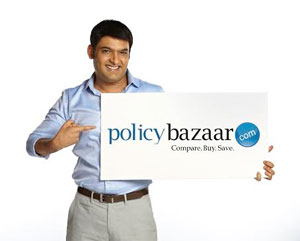
  • Policybazaar ropes in Kapil Sharma to promote brand message

    By A Correspondent


    PolicyBazaar.com has roped in actor comedian Kapil Sharma to launch its biggest brand campaign. The new campaign would see mass icon, Kapil Sharma urging consumers to compare before buying insurance, so that they don’t become an “Ullu”(a fool) and in turn get “Babaji ka Thullu” (a raw deal).



     

    The new campaign backs PolicyBazaar’s aggressive plans to spend nearly Rs.80-100 crore on its marketing initiatives this year across offline and digital mediums, highlighting the core offering that makes PolicyBazaar special, “Compare. Buy. Save”


    The campaign, conceptualized by the creative team of Lowe Lintas, takes the “ullu” idea forward from the brand’s previous advertising and marries it with India’s favorite actor comedian, Kapil Sharma and his all famous colloquial term “Babaji ka Thullu.”


    The campaign will kick off with teasers on TV followed by the release of 35-second TVC. The adverts would feature Kapil Sharma in different avatars, placing emphasis on “Ab India Nahi Banega Ullu”. The company will be launching three TVCs focusing on motor insurance, term insurance and PaisaBazaar.


    The PolicyBazaar launch campaign would be followed by PaisaBazaar.com, the non-insurance online platform of PolicyBazaar, unveiling its own brand initiative with Kapil Sharma as the lead later this month.


    Naveen Kukreja

    Speaking on the new campaign, Naveen Kukreja, Group CMO, PolicyBazaar & MD, PaisaBazaar.com, said, “Our key objective this year has been to increase ‘reach’ while keeping our core communication same – instilling the habit of comparing insurance before buying in the mind of consumer. When Lowe Lintas came with this idea of marrying ‘ullu’ and ‘thullu’, the only name we could think of was of Kapil Sharma. Being a mass icon, he has a deep emotional connect with the consumer which we wanted to make best use of through a witty yet thought provoking advert.”


    Shriram Iyer, Executive Director of Lowe Lintas said, “Policy bazaar had already created a fair bit of conversation with their advertising idea ‘Ullu mat bano’. With the introduction of Kapil Sharma in the ‎communication, we were looking to take ‘Ullu mat bano’ forward in a manner that would allow us to seamlessly integrate Kapil’s brand of humour.”


  • Jaideep Mahajan returns to Rediff as NCD

    By A Correspondent


    Jaideep Mahajan

    Jaideep Mahajan aka JD is back to Rediffusion Y&R as National Creative Head. He will work closely with CCO Rahul Jauhari and will be based out of the agency’s Delhi office. As a group resource, JD will also oversee the creative product of Everest Delhi.


    With over 17 years of industry experience, JD comes with a 100-plus International and national Awards and big brand work to his credit. He has worked with agencies such as JWT,Contract,Linen Lintas, McCann Erickson, Kuala Lumpur, Leo Burnett/Arc Worldwide, Kuala Lumpur and Rediffusion Y&R.


    His recently launched DaburVatika Shampoo ‘Brave & Beautiful’ campaign was one of the more talked about and discussed campaigns of 2014-15. He launched Airtel in Sri Lanka which generated excellent results.


    Dhunji S. Wadia

    Some of the major clients Mahajan has worked on in the course of his career include PepsiCo (Pepsi, Tropicana, Aquafina & Slice), LG, Airtel, Amway, Sony (Vaio, Cybershot, Bravia, 
Walkman & Handycam), monster.com, Tupperware, Panasonic, Four Square Cigarettes (GPI), yebhi.com, cardekho.com,Dabur, Oppo Mobile, Volvo Cars, Timex, Pizza Hut, Hero (Cycles & Splendor), MTS, Amway, ITC (Tea),Tata Water Plus & Tata Gluco Plus, NIIT, Grasim Industries, Seagram’s ,HCL, Microsoft, Bacardi, Coca-Cola, Motorola, GM, Nestle, Reckitt & Colman and Air Canada.


    Speaking about the appointment, Dhunji S.Wadia, President, Rediffusion Y&R says, ” In a way, I started the return to the group movement when I rejoined in 2010.Rahul Jauhari followed next.  And now it is ‘many happy returns’ forJD. “


    Rahul Jauhari

    Speaking on the appointment, Rahul Jauhari, Chief Creative Officer, Rediffusion Y & R says, “ JD’s return is a strong signal of the caliber and intent of creative work one can expect from Rediffusion Y&R. His immediate focus will be to rebuild our Delhi office into a creative powerhouse. He will also work with me on raising the craft bar within the agency across our offices.”


    And said Mahajan: “ Given the change that is underway in the group, this seemed like a perfect time to return home. Rediffusion has been special to me. I have known Rahul for a long time. Our thoughts on creative work, creative culture and business focus matched perfectly.”


  • Salt Brand Solutions wins mandate of Lechal

    By A Correspondent


    Salt Brand Solutions has won the brand mandate for Lechal, the world’s first haptic footwear.


    “The entire team fell in love with the shoes. In fact, every member of the pitch team placed their pre-orders as soon as they got the brief.” said Siddhartha Singh, CEO, Salt Brand Solutions.


    Krispian Lawrence, Co-founder and CEO of Ducere Technologies, which manufactures Lechal, said, “While we make smart footwear that knows its way around, we look forward to Salt’s expertise in telling us where to take the brand.”


    Siddhartha Singh pointed out that, “Lechal would be the first global Indian brand. We are aligning our strategies to match the brand’s ambitions.”


    The smart footwear has already got tech lovers and travellers around the world eagerly awaiting the delivery of the shoes.