By Dyanne Coelho
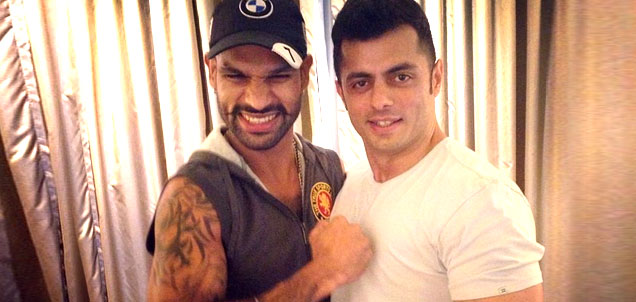
The state of the sports industry in India is changing, and at a fast pace, says Bunty Sajdeh, the man who manages cricketers Virat Kohli, Rohit Sharma and Shikhar Dhawan. “I’ve been working since 1998. In a span of 10 years, I saw sports grow from nothing. While sports is still no competition to entertainment, it’s definitely growing,†says Sajdeh.
The Indian Premier League is a format that has definitely helped cricket, Sajdeh feels, but even apart from this, there is a lot of growth on the way that is slow and steady, but is happening. Today that growth is visible with the pro kabaddi league, the hockey league and the badminton league. “The US has nine hugely-successful sports leagues, and sport is a much bigger market than entertainment in the US – or anywhere else in the world actually. I think India is the only place where it is the other way around,†Sajdeh added. When he started his own company, Cornerstone Sport and Entertainment, he began by managing both celebrities in Bollywood as well as sportspersons. Gradually, the company made the shift to only sportspersons. “I think there is a lot more scope working with athletes from my experience,†says Sajdeh. “When you represent athletes, there is a certain aspirational aspect to it. That’s there in Bollywood as well, but here there is more of an emotional and patriotic factor.â€
Sajdeh feels in the next three to five years, sport will be at par with entertainment, if not supersede it. Brands are investing, leagues are coming up and the sports industry looks promising, says the man who put his faith in Virat Kohli even before he played for India. “We signed Virat before he played for India. We travelled, we evaluated, we went to domestic games, so we could get people like Virat, Rohit, Raina, and Shikhar early on in their careers.â€
The sports world and the world of business are also beginning to come together in a whole new way. Sportspersons are looking to invest outside of the field and are planning ahead for retirement as well. “Virat Kohli owns more than 10 percent of FC Goa. He has also invested money in the team, and he is very bullish about it,†says Sajdeh. “He is already looking at simultaneous opportunities off the field that will last beyond his playing career.â€
Kohli is now bigger than a cricketer, he has become a brand in himself, says Sajdeh. Following the Maggi controversy, Twitter was abuzz with talk about whether celebrities endorsing products should be responsible for the products’ quality. At Cornerstone, the team works closely with brands as well. According to Sajdeh, the controversy is unfairly skewed towards celebrities that endorse the product. “Our endorsement contracts with brands are very stringent. We have a very clear clause which indemnifies our celebrities and our athletes a 100 per cent from exactly such instances,†he says. “As a matter of fact after this whole controversy, we went back to our legal team and revisited our contracts to make sure that we were protected from all sides and we didn’t have to change a thing. So our athletes are very well-protected,†he said.
Sajdeh has signed a couple of young cricketers and is constantly on the hunt for new talent across all sports. “We are looking at a portfolio of another eight to 10 athletes who will be the next Virats and the next Rohits and the next Sanias of the world,†he adds. “And it’s for us to then replicate what we’ve done with the existing lot and learn from our mistakes, and do a better job with the next generation of athletes that give us the honour of working with them.†As for Cornerstone, Sajdeh says the company will certainly go on even after his top sportspersons retire.
In our fast-paced lives, even sport has moved to a fast-paced format. In cricket, the 50 overs game has gotten compressed to the 20 overs format, and has been readily accepted and followed with immense passion. Internationally as well, a majority of leagues which are multi-billion dollar properties, like the National Football League, ice-hockey, basketball, baseball,  are all multi-billion dollar events, but the duration of the games are all one-and-a-half to two hour, at best. That’s all the time people have to dedicate to a sport they love. Sajdeh believes that sport has to keep up with changing times as well, “I think the move from 50 overs to a 20:20 game is easily understandable in our fast-paced lives,†he says. “Today if you ask any cricketer in the Indian team what they would rather play, forget the money and the fame, they would look at Test cricket. But watching a Test match means eight hours a day for five days. And when you have a series of three Test matches, nobody can devote that kind of time.”
Following the huge success of IPL, other leagues like the ISL and the PKL have emerged as well. While many argue that these have sort of stolen the thunder of the IPL, Sajdeh is all praise for them. “I think this is a very good thing. I’m sure all of these will coexist and will move ahead and be profitable in their respective spaces,†he says. “In the next three to five years, I see sport coming up and matching our entertainment industry in terms of market share.â€
This story first appeared in dna of brands dated June 15




 Shop CJ Network Private Limited (“Shop CJâ€) has appointed Dhruva Chandrie as its Chief Sales Officer. This appointment is key to further enhance company’s procurement and operations. Dhruva, previously held the position of Chief Operating Officer (COO) for HomeShop18, is likely to take charge within a week. He brings more than 22 years’ of experience to the role. He will be based in the Mumbai office.
 United Mediaworks has roped in Satish Mundhe as their VP – Media Sales. Satish who has more than 15 years of experience in the marketing and sales field has worked with a wide range of brands like Sony TV, Axis Bank, BOI, SBI, SAB TV, etc.

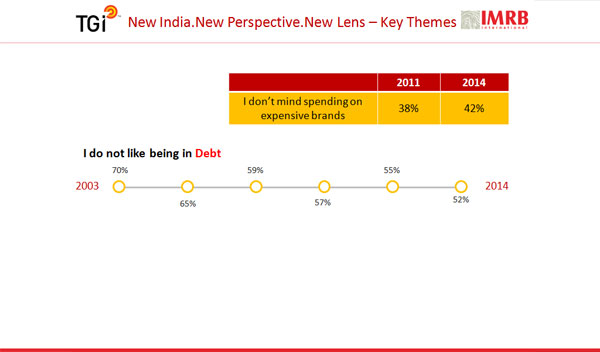
 It took us time to establish Target Group Index. Fifteen years back, people were not ready for the product, and there were very few agencies and clients who were buying. Today, it has become an integral part of the marketing decision-making process. When we started, we used to do a study once every two years and today, we do a study twice a year. We started out by only measuring the key markets, which is one-lakh-plus towns. Today, we go all urban, so that shows that there is a need which the industry clearly has for the product, the fact that we’ve got clients who are using it and looking at updates twice a year, just speaks for itself. It’s come a long way, the country has changed and we have changed, but we try to keep pace with the expectations of clients, giving them more frequent information and larger-scope coverage. Today we cover about 42,000 consumers every year. Also, so far we had not been covering the North East, but now entering Assam. Not just Guwahati, but even the rest of the state.
 A lot depends depends on how companies organise themselves. And it’s really a question of how dynamic and big the businesses are in the local markets. In many cases, you’d say that international businesses have a certain amount of sizing the local markets; that’s how they became international. But generally speaking, with the exception of a small number of cases, international companies do tend to devote their decisions about research buying to local operations. The sheer speed with which things are changing [is remarkable]. If you can look at the GDP growth over the last 15 years and that plays through in TGI, for just about any product category, you see a higher percentage of growth, a more rapid growth in India than pretty much anywhere else. China is obviously a place that’s been growing fast as well.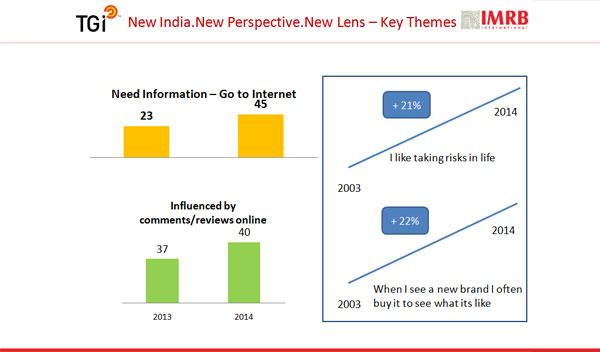
 By Ranjona Banerji
 Senior journalist Kalpana Sharma worked with Himmat magazine when the Emergency was declared. She took charge as Editor in the year 1976 until 1981 when the magazine ceased operations. Since then she has worked with The Indian Express, The Times of India and The Hindu and is currently Consulting Editor with Economic and Political Weekly. In an emailed interview with Dyanne Coelho, Sharma recalls the Dark Days and how when freedom of the press is denied, it is the poor who suffer the mostÂ