With increasing role of mobile phones in the job search domain, Shine.com is targeting to become a ‘mobile-first’ company where the entire registration and job search process for a jobseeker can happen on a mobile phone. Apart from simplifying user flows on mobile, Shine.com has also added an exclusive feature on its mobile app that lets jobseekers discover their personal networks to find people in companies where they want a job.
Commenting on this unique feature, Zairus Master, Business Head – Shine.com, said, “For us to give value to jobseekers and recruiters, we make innovative uses of technology that would take the industry ahead. Our research pointed us to a seminal study that says that your next career move is likely to come from people who are not our closest friends but are likely to connect you to professional circles that you don’t have access to. Building on this insight, we have added a new feature to our mobile app which let candidate discover their network to improve their job chances.â€
While talking about the idea behind the new campaign for this product, Rajan Bhalla, Group CMO, HT Media Limited, said, “With our focus on the mobile first approach, the key benefit which we wanted to highlight was that now jobs are available at your fingertips “Anytime & Anywhereâ€. This demanded the brief to be sharp enough to articulate benefit in the most clutter breaking and creative way. We have created a series of films where we have shown an innocent character, enacted by Javed Jaffrey, who always gets into funny and awkward situations which threatens to undo everything good that he has done in his job. In other words, ‘Uski Vaat Lag Jati Hai’ and at this opportune moment, Mr. M, the brand mascot, comes to his rescue to find his next job using the new Shine.com mobile app right then and there. We are launching this campaign across media – TV, online, print, radio, social media and outdoor – and looking forward to connect with large numbers of people among jobseekers and recruiters.â€
L to R: ​​Prashant Singh, MD, Nielsen, Ashish Bhasin, Chairman and CEO, Dentsu Aegis Network ( South Asia), Tushar Vyas, Chief Strategy Officer – South Asia, GroupM, Ravi Dixit, Head – Market Insights, Google and Partho Dasgupta, CEO, BARC India.​
By Dyanne Coelho
The eleventh edition of the Marketing Conclave organised by the Internet and Mobile Association of India (IAMAI) saw industry stalwarts from across platforms highlight key trends in the marketing world from the digital evolution, the changing role of the CMO, cross-platform marketing and the dawn of the mobile as the ‘first’ screen.
Day One kickstarted with a keynote address by Tushar Vyas, Chief Strategy Officer, South Asia, GroupM. “Today’s consumer doesn’t believe in the values of yesterday,†he began talking about how the mobile has taken over the internet and created a complexity in advertising.Rajesh Jain, Founder and Managing Director, netCORE Solutions emphasised that the trend of tracking consumer behaviour has grown mainly in the digital era. There is little or no data tracked in an offline world, like what a consumer goes and picks up in a grocery store, he said. “We ought to start thinking customer journeys,†Jain added. CVL Srinivas, CEO, GroupM South Asia delved into the challenges of marketing in the digital age.“There’s so much talk about digital, we forget that at the end of the day we’re in an ideas business,†he said, talking about how at times we get so overwhelmed with data that we lose focus of our core competency. “We ought to be able to change mindsets, not just technologies,†Srinivas added.
A panel discussion on the expanding roles of the CMO highlighted a study which said that by 2020, the CMO will be spending more on IT than the CIO. The speed at which the CMO needs to react is increasing, the panelists discussed.The argument of whether digital is being effectively integrated with other marketing media, or is just an extension, was the next hot topic of discussion. The panelists concluded that though the digital medium has taken the marketing world by storm, at the end of the day, it all boils down to how well you know and recognise your consumer and give them what they want, when they want it. The final session for Day One discussed whether we are ready for the transition from ‘mobile first’ to a ‘mobile only’ era. High value products like airplane tickets and high value electronic devices are likely to be purchased on the desktop rather than the mobile phone, the panelists discussed. Anurag Singh, Co-founder and ED – India (Ads Platform), Affle concluded by saying that there is no wrong and right, you have to decide what’s best for your consumer depending on what your product and service is.
Day Two saw industry captains like Kirthiga Reddy, MD Facebook, Satyan Gajwani, CEO Times Internet, Ashish Sahni, Head Digital Marketing Tata Motors, Ashish Bhasin, Chairman and CEO, Dentsu Aegis Network, Partho Dasgupta, CEO, BARC, among others. The bias of the internet towards the English language was discussed in depth, with panelists arguing that an increasing number of regional languages, especially Hindi are picking up and the internet needs to adapt, lest consumers feel choked by the pressure of being force fed English language content online. With availability of cheaper smartphones and accessibility to internet, vernacular content is going to drive growth in digital marketing. Gyan Gupta, COO, DB Digital said, “Hindi as a language is witnessing 40 percent penetration in the online space. With non-metros witnessing steady growth in internet penetration, the vernacular language is certainly the flavor of the day.â€
Ways and means of tracking consumer behaviour without being ‘creepy’ was the key point of discussion in the session entitled ‘Digital Footprints’ Data and Automation in Marketing: The modern marketers’ success mantra.’ How much is too much, was much talked about in the context of following consumer footprints in the digital space.
“The first thing advertisers ought to do if they want to undertake programmatic marketing is allocate 25 percent of the total marketing budget to it,†Reem Saied, Business Head, Cadreon India said while discussing ways and means of optimizing marketing efforts for an enhanced performance. The quality of talent that marketers need to hire have changed, Apurva Chamaria, AVP and Head of Global Brand and Digital Marketing, HCL Technologies said. “We now hire statisticians, technology experts and bring them into the marketing team. The pool we hire from has changed,†he explained.
“This is the age of technology where you can get hold of a specialised doctor on an app,†Rathin Lahiri, CMO, Meru Cabs said speaking at the session titled ‘Simplifying the Mobile Marketing Ecosystem’. The panelists discussed the advent of the digital evolution especially in the mobile space. Madan Mohapatra, Head Customer Strategy, Future Group, said, “If we are to look at the global advertising market, the industry around US $600 billion, with mobile advertising pegged at around US $100 billion. In India, mobile advertising is a fraction of global spends. The time has is ripe to increase mobile ad spend as growing captive consumers are found mobile.â€The mobile screen has forced the marketing ecosystem to evolve. “Digital is not something you can ignore. If you don’t speak for yourself, your consumers will take you down,†Akshay Sharma, Head – Marketing, Eros Digital exclaimed.
Kirthiga Reddy, Managing Director, Facebook India, highlighted how Facebook is attempting to innovate. “We are constantly and consistently integrating virtual reality. Innovations on the creative side of the real estate industry has provided enormous boost to virtual reality concept.†Talking about Digital Marketing, Satyan Gajwani, Chief Executive Officer, Times Internet, said, “Technology allows the platform of digital advertising to enhance and create advertisements targeted at certain consumers. Hence we are seeing the growth of native advertisement, which tears through the clutter.
Having an absolute, standard method for measurement of the attributes of all digital platforms is the need of the hour the panelists discussed at the session entitled ‘Establishing a common digital standard’. “Cross media measurement has been talked about for a while. We keep measuring the media, we forget to measure the consumer,†Ashish Bhasin, Chairman and CEO, Dentsu Aegis Network (South Asia) stressed. India is still far behind in trying to understand the consumers’ buying behavior, Prashant Singh, Managing Director; Nielsen said adding that the next step is for BARC to look at digital. BARC CEO Partho Dasgupta said it may not be correct keep citing examples of progress of digital in the US and the UK because “they may not be the best one can haveâ€. “95 per cent of videos are still consumed on television sets in the UK,†he added.
Thoughts, ideas, statistics and case studies made the two-day conclave an insightful and informative event. The programme brought together some of the brightest minds in the marketing fraternity together on one platform and thus enabled an educative exchange of thoughts and ideas to light the path forward for marketing in India.
The new (BARC) ratings are settling in and individual-level data is now available as well. As the market adapts to a new measurement system, there is a hint of confusion in the air. And there’s one dominant reason for it – the constant comparison between the old (TAM) and the new measurement systems.
No two designs of a large sample study give similar results, especially when there are several conceptual changes in their design, like that of the NCCS being adopted instead of the SEC system. At best, one can compare ranks. For example, it is reasonable to expect that the No 1 channel in a category would not be different in the two systems, especially if there was a wide gap between the Top 2 in the old system.
BARC has been built on the premise that it is more robust, secure and future-ready compared to the old system. It was created because there were widespread concerns about the old system. A comparison exercise, then, becomes a contradiction in itself. Hopefully, the dust will settle soon, and the focus will shift on the new data than its comparisons with the old. And there will be enough and more to unravel.
The Hindi GEC programme ratings of the latest week (as well as recent weeks) tell their own story. The Top 5 programmes last week were Saathiya, Ashoka, Sasural Simar Ka, Balika Vadhu and Yeh Rishta Kya Kehlata Hai. Except Ashoka, which launched earlier this year, the other four are old horses, with an average lifespan of five-and-a-half years!
There’s a clear consumer statement in this rather simple, back-of-the-envelope data point. More than 150 new fiction shows have launched over the last five years. Yet, the audiences have stayed with their staple primetime diet over half a decade! That’s less a comment on the high quality of the staple and more a comment on how the new attempts have not managed to take the offering to the proverbial next level.
Even Diya Aur Baati Hum, which would have made it to the list in another week, is a 2011 show. What exactly happened to Hindi GEC fiction content in 2012-14? Equally importantly, because large proportion of viewership of the top shows isdriven by habit and nostalgia, wouldn’t there be viewership attrition (if and) when these shows are off-air? We would need many more Ashokas to keep the fiction flag flying high.
Meanwhile, even as new fiction struggles, non-fiction continues to make some impact. It may not feature in the Top 5 this week, but the latest season of India’s Got Talent is by far its best. There’s little to fault in this reality show that combines outstanding talent with great production, and a jury that should get full marks for their chemistry alone.
I was also impressed by the first two episodes of The Voice India. The format is strikingly different from other singing shows, and the casting of the four coaches makes it a near-coup. I’m curious to see how the show shapes up, especially once the team selection process, the current differentiator, is over.
Yes, there’s enough to talk about on the content front, once we shift focus from TAM vs. BARC.
Mogae Media has announced that Leena Sharma would lead Mobocracy as its Chief Operating Officer.
Mobocracy is India’s first full-service mobile advertising agency that helps clients with mobile strategy, mobile-solutions, enriched targeting and programmatic advertising. The agency also helps clients with research-on-mobile, quality-checks via mobile and consumer groups based on targeted profiles.
“Being pioneers and fore-runners in mobile advertising in India since 2011, and because of our keen understanding of mobile apertures and applications, we felt more and more clients need help with managing mobile communications. We launched Mobocracy at full throttle in March this year,†says Tanya Goyal, Executive Director, Mogae. “And Leena Sharma was the natural choice to lead this new agency, Mobocracy, as she has shaped and delivered over 200 campaigns for the best of brands over the last two years at Mogae. She understands advertising, and understands the mobile medium.â€
An MBA with nearly 25 years in the business, Leena started her advertising career at Ulka in the early 90s. She has worked at Parle, American Express and Mastercard over the years. Leena joined Mogae Media two years ago.
40 new recruits from IIT Kharagpur, IIT Kanpur, IIT Roorkee, BITS Pilani, Delhi School of Economics, IIM Shillong, IIM Kozhikode, IIM Indore, IIM Rohtak, XLRI and other leading B-schools joined Mogae earlier this month, and will be based at its Delhi, Mumbai and Bangalore offices. Many of them have been assigned to Mobocracy.
The first Indian Facebook employee, Kirthiga Reddy, now Managing Director, Facebook India left quite an impression on the audience with her talk entitled ‘Winning in a mobile first world’ at the 11th Marketing Conclave organised by the Internet and Mobile Association of India (IAMAI). FOBO or the Fear of Being Offline is a new term that is picking up in this day and age, she said. On Mother’s Day, India had the second highest ranking in terms of interactions with 1.8 billion interactions on the network. The older generation did exactly the same things we do, she explained, the only difference is that they did it in a different way.
63 percent of young people would prefer to give up TV rather than their phone, she said of a study. 62 percent of young people feel lost if they are not connected to social media. An IAMAI-BCG report estimates that by 2020, a whopping 500 million people will be connected to the internet. Back in the day, your kirana shop owner knew exactly what you needed when you walked into his store. That personalisation is missing today with the advent of the mass media, Reddy explained.
Satyan Gajwani, Chief Executive Officer, Times Internet, backed her up saying, “Technology allows the platform of digital advertising to enhance and create advertisements targeted at certain consumers. Hence we are seeing the growth of native advertisement, which breaks clutter and stops disruptive ads.â€
“Facebook is constantly and consistently integrating virtual reality. Innovations on the creative side of the real estate industry has provided enormous boost to virtual reality concept. Brands are focusing on reaching out to consumers in a personalised and creative manner. And the digital platform provides the best solution,†Reddy said. Out of 1.44 billion people who are on Facebook, 1.2 billion connect to it on a mobile device; she informed highlighting the genesis of a mobile-first world. There is also a growing trend of visual communication, Reddy added. First it started with text, then photos and now the world of video is expanding. Reddy cited the example of Facebook’s feature that allows a user to watch videos without sound on the mobile phone. The feature that is one of the latest, plays a video without sound as the user scrolls through his newsfeed. This will allow users to watch videos on their phones even during a seminar or meeting at work, she joked. Marketers ought to strive to drive awareness and retarget their audience, she said. The ‘cookie’ the dominant web metric used to track customer behaviour online will soon be ditched as it doesn’t correctly evaluate business results, she explained. This is the mobile first world and if we don’t adapt, we will be left far behind, she said.
There are 150 million smartphones users today, and that number is expected to go up to 500 million by 2018. Digital is the new advertising paradigm, Gajwani explained. The internet is driven by smartphones and the amount of digital content being created is skyrocketing. “The 300×250 size banner doesn’t have the same impact today, spots don’t have the same impact either,†Gajwani said. Smart and targeted advertising and marketing with precise solutions is what will drive the numbers, he added. We ought to be enablers and educators of what’s working and what is not. “The opportunity to get creative is here and is bigger than ever before,†he concluded.
Although TAM is not being officially followed by most top broadcasters and media agencies, the fact is that many still look at it with reasonable intent.
And until there’s some historic data available with BARC, comparisons with programming of yore is impossible. Given this, it makes sense to compare IPL 8 viewership data with that of the previous edition.
What the TAM Sports PowerPoint Screenshare here offers is:
Comparison of IPL 8 and IPL 7 viewership:
Top 10 matches of IPL 8
Match wise rating of IPL matches
Audience Profile of IPL 8
Top 3 metros and Top 5 states contributing to IPL 8 viewership
A look at Advertising:Â
Count of brands in IPL 8 and IPL 7
Top 10 brands in Commercial, On-screen and Instadia Advertising
Rank shift of top 10 categories in commercial advertising (IPL 8 vs. IPL 7)
Celebrity endorsement during IPL 8 commercial breaks
HT Media Ltd. has elevated Harshad Jain to CEO of Fever. Prior to this promotion he was Business Head, Radio and Entertainment, HT Media Ltd. He has been working with HT Media for the last four years and will lead the business which now moves into an expansion stage with M&A and Phase 3 licensing round the corner and will involve building partnerships and expanding Fever brand into new geographies and beyond FM into entertainment and digital space.
Talking about his new role, Harshad Jain, CEO – Fever, said “I’m humbled by this new role. Fever is a vibrant and dynamic organization, which has witnessed tremendous growth over the past few years. My focus will be to lead fever to the next level of growth and innovation and tap newer opportunities in the digital and entertainment space and phase 3 of FM radio.â€
Harshad brings with him over 20 years of cross-sectorial experience in the FMCG and media and entertainment spaces. On completion of his business studies in Sales and Marketing he joined PepsiCo and was with them for 14 years in roles across sales, marketing and business at regional and corporate level.
It may be laughed at as a ‘chance pe dance’, or smart thinking to claim an upper hand. Times Now is now quoting TAM figures to claim supremacy over India Today Television.
On Thursday, June 11, as per the BARC data for Week 22, India Today had stolen a march over Times Now with a wide margin.
This happened on a day, when it was announced that Times Now star anchor and editor-in-chief Arnab Goswami will now be President – News and Editor-in-Chief, Times Now and ET Now. Other than Goswami,  CFO Jagdish Mulchandani was also elevated to President – Finance and Distribution
However, as per data that was released by TAM, Times Now continues to be the leader and India Today doesn’t even figure in the Top 3. Times Now does not currently advertise on MxMIndia, but our attention was drawn to a mailer doing the rounds that carries TAM data. Times Now, we learn, continues to be a subscriber of TAM data although many networks have opted out.
A media analyst we spoke to said this is bound to happen and one can expect to see more of it in the coming months. Channel managers must realise that buyers of advertising do not get swayed by claims made in advertising, said the analyst who spoke anonymously.
As reported by MxMIndia earlier, other than a very aggressive promotional blitz, the India Today reach has also leapfrogged thanks to usage of dual frequency. But, of course, India Today was not the only channel indulging in what is referred to an unfair trade practice. Accrording to a report in Business Standard, while India Today has used dual frequency in 70 cable networks, Times Now has done that in close to half that at 29 networks.
Time for IBF and the NBA to act on the matter. Anyone listening?
The news channels keep debating about how women get a raw deal in our country. How India is a male-dominated society. Anchors and activists get your blood to a boil, an Arnab Goswami makes kheema out of anyone even talking about women in the negative.
But these very broadcasters and their advertisers and media agencies who buy advertising on these channels keep pushing a regressive perception that only men watch English news channels and that advertisers buy spots on English channels because men watch them.
This belief also suggests that women are typically not viewers of English news channels, that they don’t consume serious content and current affairs etc. Even if it’s not intended, the same progressive English news channel companies and those who run it are stereotyping women into what they quite definitely are not.
A quick look at the English news channel viewership data from BARCÂ for Week 22 and Week 21 clearly indicates that women can’t be dismissed in terms of viewership numbers of English news channels (See Table Below). In fact, Times Now has an equal number of female and male viewers. India Today Television has women scoring a little less than men and even in the other channels it’s not that women form a miniscule viewership.
Time that English news television ecosystem takes our women viewers seriously!
iProspect Communicate 2 from the Dentsu Aegis Network has won four awards across three categories at the India Digital Media Awards 2015. These awards recognize outstanding work, in advertising and marketing communications in the digital space.
The honours included two metals in the ‘Best PPC’ category, with the agency picking up Gold and Silver for their Kotak Mahindra Bank and HDFC Life campaigns respectively. They also won a Bronze for the ‘Most Effective Use of Digital Analytics’ in Social Media for the Big Bazaar campaign. As well as a Bronze for ‘Best Use of Technology’ for Koovs.
The objective of the Indian Digital Media Awards 2015 is to recognize, celebrate and encourage the work being done in the ever-growing advertising and marketing communications activity in the digital media space specifically, internet, mobile, gaming, social media and the blogosphere.
Vivek Bhargava
Vivek Bhargava CEO of iProspect Communicate 2 commented, “It is a privilege to have our work in the digital space recognised by IDMA. As a team of extremely dedicated professionals who work endlessly, to offer our clients the best online solutions, it is wonderful to have our hard work recognised and I would like to thank IDMA for these honours.â€
BBC World News announced the findings of a new global survey* into changing attitudes towards international affairs. The study showed that in India, 84 per cent of people are more concerned about world events now than they have ever been before. The figure was the highest of all countries surveyed and well above the global average of 69 per cent.
On average, in the countries polled, the main areas of concern were news stories about terrorism (70 per cent), war/conflict (59 per cent), health (55 per cent) and the environment (52 per cent). Terrorism was the main concern in five of the eight countries, including India, where 71 per cent of people surveyed saying it is something they are concerned about. People from India were more likely than any of the other nations polled to be concerned about the environment (62 per cent). Health (63 per cent), corruption (60 per cent) and human rights (52 per cent) also scored strongly in the country. Only 1 per cent of respondents in India said they were not concerned about any global news stories.
Globally, the study suggests that global news plays an important role in making people feel informed about what’s going on in the world (68 per cent) and understanding it (62 per cent). It shows that Indians feel particularly strongly about the importance of global news, with figures considerably higher than the global average – 73 and 70 per cent respectively.
Globalisation is driving interest and behavioural change, with more than half of those surveyed globally saying that they pay more attention to global news (55 per cent) and that they discuss international news with friends and family as a result of seeing global news stories (58 per cent). Again, India polled higher with 69 per cent saying they had spoken to friends and family about a global news story, considerably higher than the all market average.
Across all markets, around a third of people (36 per cent) use global news coverage to make decisions about how to protect their family but, in India, this rose to more than half (58 per cent), which was more than any other country surveyed. Globally, around a quarter (28 per cent) find it useful for making financial choices but almost half (46 per cent) of Indians use it for this purpose.
Jim Egan, CEO of BBC Global News Ltd, which owns BBC World News and BBC.com/news, said, “These results show the increasing impact and relevance of news events to people across the world. At a time when many news providers are cutting their international coverage and opinion and propaganda are being touted as fact, audiences want to cut through the noise in search of information they can use to inform their understanding and decisions. As the world becomes increasingly interconnected, access to accurate, impartial news, whether on TV, radio, online or social media, is more important than ever.â€
Recent figures** show that figures for the BBC’s international news services have grown across all three of its platforms – TV, radio and online have grown over the past year. BBC Global News Ltd’s audience has grown to 105 million with BBC World News TV’s up by 12 per cent, and bbc.com/news growing by 16 per cent. For the first time, television (148m) overtook radio (133m) as the most popular platform for BBC international news. The BBC World Service’s audience has increased by 10 per cent and now stands at 210m, with the biggest boost coming from new World Service TV news bulletins in languages other than English.
(*Source: All figures, unless otherwise stated, are from YouGov Plc.
Study conducted by YouGov on behalf of BBC World News between 13th and 25th March 2015. Respondents were nationally representative, online or urban samples from USA, Germany, Japan, South Africa, Australia, Hong Kong, Singapore and India. Total sample size was 7,691 adults.
Total sample size in India was 1005 adults. The survey was carried out online. The figures have been weighted and are representative of the urban population of adults in India (aged 18+).
It all started with a tweet by Vala Afshar, CMO, Extreme Networks (@ValaAfshar) which was retweeted by former Star India CEO and Group CEO, Balaji Telefilms Sameer Nair with a remark:  “I’d love to see an Indian rendition. Should be surprisingâ€.
From then on there were several participants on the Indian twitterverse with Jiggy C, Srinivasan K Swamy, Raj Nayak, Pradeep Dwivedi, Pawan Jaikhani, Jayaraman, Utsav Chaudhuri, Gitikka Ganju Dhar and Paritosh Joshi contributing ideas. The suggestion made by Mr Jiggy and Mr Dwivedi went a step forward in asking some of the Dainik Bhaskar group’s CEO to suggest brandnames.
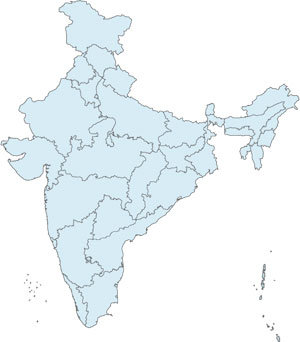
“Indian, large, close to iconic, current brand,†was a suggestion made by Mr Swamy on what kind of brands should be tagged on the India map and from then on started a steady flow of suggestions.
Here’s how you can contribute to the list.
Visit: http://goo.gl/forms/mqFjLIg6dP and send in your brand names. We’ll be back with an India Brand Map soon.
If you’d like some inspiration, here are some useful links:
 With increasing role of mobile phones in the job search domain, Shine.com is targeting to become a ‘mobile-first’ company where the entire registration and job search process for a jobseeker can happen on a mobile phone. Apart from simplifying user flows on mobile, Shine.com has also added an exclusive feature on its mobile app that lets jobseekers discover their personal networks to find people in companies where they want a job.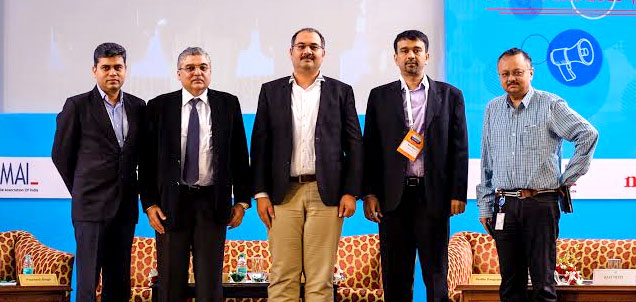
 By Shailesh Kapoor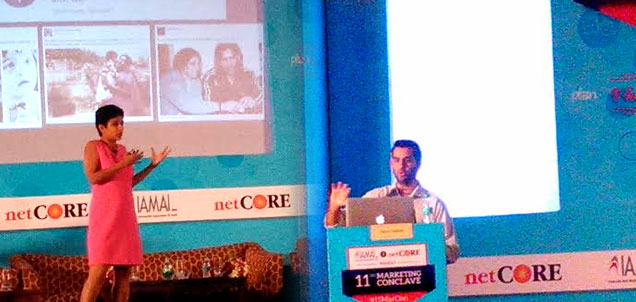


 By Pradyuman Maheshwari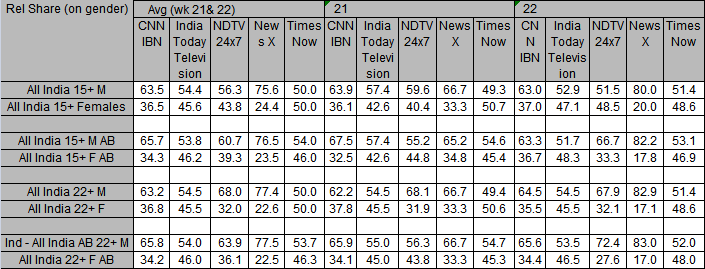

 It all started with a tweet by Vala Afshar, CMO, Extreme Networks (@ValaAfshar) which was retweeted by former Star India CEO and Group CEO, Balaji Telefilms Sameer Nair with a remark:  “I’d love to see an Indian rendition. Should be surprisingâ€.