Category: MEDIA

  • Twitter co-founder Biz Stone invests in Lookup

    By A Correspondent


    Lookup, a free and secure messaging app that connects shoppers with local businesses has raised Series A funding from Twitter co-founder Biz Stone. Biz has joined the team as an investor and advisor. Lookup will be employing the funds towards investment in expanding its merchant base in order to enhance convenience for its users and to branch out in newer geographies.


    Lookup raised a total of $382,000 in its seed round, from multiple investors including Infosys’ Kris Gopalakrishnan, Teru Sato, DeNA and MKS Group (Switzerland). It was started by Innoz’s Deepak Ravindran and within about 5 months of launch, Lookup has already registered over 2, 00,000 downloads and has answered over 3 million queries.


    Speaking on his investment, Biz Stone said, “I’m honored to be a part of Deepak’s next big project and I am truly impressed by what he has already accomplished in his life. I’m very excited about working with such an inspiring entrepreneur, whom I share common ideologies with.”


    Deepak Ravindran, Founder and CEO of Lookup said, “I am extremely thrilled that Biz Stone is personally investing in our Series A round. It is almost surreal. His beliefs and ideals are very fascinating and I am glad that someone so altruistic and with such a genuine moral compass is a mentor and advisor to me and my company.”


    On his future plans, he added, “Receiving this funding is like getting another opportunity to blazon the world with innovation; to fill more e-pages in the world of businesses and startups. We plan to integrate all the offline businesses into the online world and connect them to their customers. The final goal is to make Lookup a global phenomenon and hope to ease the busy lives of the people.”


    Besides co-founding Twitter, Biz Stone also helped create and launch Xanga, Odeo, The Obvious Corporation and Medium. In 2012, Stone co-founded a start-up called Jelly Industries where he serves as CEO. The release of the Jelly app, a Q&A platform that relies on images, was officially announced in January 2014.


  • Turner India names Rohit Khetarpal as Director, Network and Content Distribution

    By A Correspondent


    Turner International India has announced the appointment of Rohit Khetarpal as Director of Network and Content Distribution for South Asia.


    Khetarpal is responsible for content syndication, and driving mobile and interactive platforms including mobile, broadband, DTH, IPTV, gaming services for Turner’s portfolio of industry-leading news and kids entertainment brands including CNN International, Cartoon Network, and POGO. In addition, he leads CNN International’s hotel partnership program and broadcast partnerships in South Asia. He also manages the distribution of all Turner channels in South Asian markets outside of India.


    Siddharth Jain

    Based in Delhi, Khetarpal reports into Siddharth Jain, Turner’s Senior Vice President and Managing Director for South Asia. Commenting on the appointment Jain said, “With his proven track record in growing our linear distribution vertical in India, I am confident that Rohit will take this varied and business-critical portfolio to its next level of success in the South Asia region.”


    Khetarpal joined Turner’s Network and Content Distribution team in 2008 and has been managing the distribution of Turner’s portfolio of channels in India: Cartoon Network, POGO, Toonami, HBO and WB. He has over 15 years of experience in the television distribution business and has previously worked with Viacom 18, Zee Turner and ESPN Software in India.


  • Google unveils #TogetherOnline for first-time women users

    By A Correspondent


    Reports show that only 1/3rd of the total Internet population in India are women and this gap is expected to grow with growth in Internet users. In Nov 2013, Google India launched Helping Women Get Online with the objective of reducing the Internet population gender gap in India. Earlier this year, Google India launched the digital leg of the HWGO campaign to encourage Internet users to step up and help a women get on the Internet and understand how she can use the web to get ahead in life.


    The Internet has completely transformed the way we live our lives. Everyday people are discovering new opportunities and finding newer and better ways of doing things on the web to get ahead in life. #TogetherOnline is an effort to empower women in India with the knowledge of Internet and how they can use it do different things in their daily lives. To take this concept further, Google India along with Lowe Lintas Delhi conceptualized a film to inspire young, Internet-savvy people to help their mothers explore a whole new world – that of the Internet. The film highlights the innocent fear of the first day of stepping into a new world.


    Commenting on the new campaign, Sandeep Menon – Director, Marketing, Google India said, “While there is low awareness about the benefits of Internet amongst women in India, but there are many who want to get online to succeed in life. We’re working with various partners to help spread awareness about the benefits of being online amongst women. And today, we’ve launched a new film to inspire young digital natives to bring their mothers online. There are large number of educated women in India with internet access in their households, but they still do not use the internet. We are making an appeal to their children to hold their mom’s hand as she discovers a new world online.”


    The film is based on a relationship between a mother and a daughter and captures the moment of realization of how at times our parents really need our support to learn and discover new things. Busy youngsters don’t have the time or energy to teach or guide their mothers when it comes to something as alien as the digital world. The only way to connect to them was to tap into an idea that could move them. The task was to capture the correct emotion that would drive young people to give back whatever they could to their mothers. This insight was used as the key trigger. A kid’s first days at school has an emotional similarity with mother’s first days on the Internet – the nervousness, the hesitation, the alien environment, it’s the same. This realisation forms the basic premise of the script.


    Sharing his perspective on the thought process, Amer Jaleel, National Creative Director, Lowe Lintas + Partners said, “We wanted to encourage hand-holding. Our target is the internet-savvy young, who often get easily discouraged when they have to take someone through the basics of online. The barrier is this thought that runs through our heads – ‘Mom don’t worry, tumse nahi hoga, I’ll come and do it’. We wanted to present the reward of not giving up, going through with the teaching and converting them into independent onliners.”


    Commenting on the campaign, Naveen Gaur, President, Lowe Lintas said, “#TogetherOnline is the first campaign from our association with Google and soon you will see a lot more work in the coming months on various other projects. This campaign gave us a unique opportunity to present mother-daughter relationship in a really different way. It’s beautiful to see how roles are reversed as we grow up and as our parents grow old. They need as much support and patience from us as we demanded out of them when we were young. I hope that we manage to motivate the younger generation to spend some time with their mothers and help them break the barrier of initiation into this somewhat intimidating world of Internet.”


  • HT Media and North Base Media launch Mediahack.in

    By A Correspondent


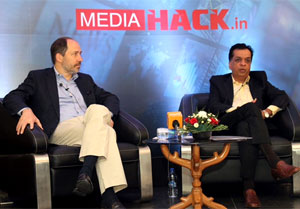
    HT Media Ltd. and North Base Media, an international investment firm, announced the creation of Mediahack.in, an innovative accelerator program aimed at fostering a new generation of digital media companies.

     

    Mediahack.in will identify and support entrepreneurs who want to build leading-edge, original content and advertising-related technology businesses in India. Both HT and NBM’s leaders have decades of global and Indian media experience that they will bring, along with extensive connections to pioneering technology and media companies around the world.


    Mediahack.in will invite entrepreneurs to apply to participate in the accelerator starting this summer. Successful applicants will spend several months on the program, interacting with each other and leading media and technology thinkers from around the world. They also will receive an initial investment of up to US$ 100,000 to convert their great ideas into fast growing and world changing businesses.


    Talking about the potential of the Indian media market, Marcus Brauchli, co-founder and managing partner North Base media and former editor of The Washington Post and The Wall Street Journal, said: “Mobile and social platforms are transforming the way billions of people consume news around the world. Nowhere is that more evident than in India, where more than 500 million people will have access to the Internet, many for the first time, in the next few years. We want to help the next generation of entrepreneurs create the platforms, products and technologies that will bring news and information to those new audiences. We are fortunate to have as a partner HT Media, with its deep commitment to news and innovation and its leadership’s strong interest in innovation. We hope to provide Media Entrepreneurs in India our expertise so that they can scale up to be global businesses.”


    Speaking about the launch of mediahack.in, Rajiv Verma, CEO, HT Media Ltd., said, “Media is one of the most exciting sectors in India today. I am therefore delighted that we at HT in partnership with NBM; are going to provide a platform which will encourage media entrepreneurship in India.  NBM with its global expertise will add immensely to this endeavor and provide great learning opportunities for upcoming media entrepreneurs.”


  • Mindshare on a roll, nets new biz of over Rs 700cr

    By A Correspondent


    You read about this in The Economic Times already, now read it here. Mindshare India has bagged accounts aggregating over Rs 700 crore in new business for the agency in the last four months. The new accounts include the digital mandate for Snapdeal, media mandate for PayU, Saavn, Practo, Housing.com, NewsHunt, Novi Digital Entertainment, TTK Skore to name a few.


    Speaking on the new account wins, Prasanth Kumar, CEO, Mindshare South Asia said in a statement, “We begin 2015 on a very promising note as Mindshare consolidates its leadership position in the market by adding several blue-chip clients especially in the ecommerce and digital industry. We are channelising our services and talent towards frameworks and tools that include adaptive and real- time marketing, giving our clients the edge in an ever evolving media market- The Loop at Mindshare is one such example. Mindshare also includes a full-service digital and social media agency to ensure seamless planning across all media for brand campaigns.” Mr Kumar took charge as CEO of Mindshare South Asia on March 1 from Ravi Rao who was designated Leader, South Asia.


  • Headlines Today is rechristened India Today Television

    By A Correspondent


    From the evening of Saturday, May 23, 2015, Headlines Today was renamed India Today.  Named after the flagship English and Hindi language magazines of the India Today group, Headlines Today adopted the new name with a pledge to serve news, and not views. Aaj Tak’s name stays unchanged even though the English and the Hindi editions of the newsmag carry the same title.


    So what’s the new channel going to be all about:

    “Well, here’s what the advertising of the new channel has to say:

    For over 40 years, India Today has set the gold standard of journalism.

    It now extends the same ethos to India Today Television, a channel that is set to bring you news just as it happens, unadulterated and unbiased.

    We are here to help you form opinions, not give them to you.

    We are here to report facts, not twist them

    We are here to keep you ahead, not to keep you titillated.

    Our revolutionary approach, experience anchors and all-day primetime reporting will transform your news viewing experience.

    No more swinging stands, circling issues and one-sided arguments.

    Circus is over. News is back.”

    Hmmm.


  • #ZeeMelt15: Multiple screens, many needs

    By Labonita Ghosh


    Digital is mainstream

    Adam Ostrow, Chief Strategy Officer, Mashable

    “In 2015, digital culture is the mainstream culture,” says Ostrow. Statistics show that the size of the online market has quadrupled in the last couple of years, he points out. Among other curious findings is the fact that about 38 per cent of two-year-olds now use mobile devices. However, while ad revenues for TV and broadcast are rapidly shrinking, as per research by Google, about 56 per cent of digital ads are never seen. Ostrow points out a few key trends in the media and advertising space. Social media has become primarily a mobile activity, he says. People are turning to social platforms for news and entertainment. “To succeed in 2015, you have to be relevant in your feed, you have to be able to draw attention in seconds,” he says. Nowadays, on a social media page, posts from advertisers and any corporate house are competing with posts from friends and family. You have to find a way to stand out of the crowd, he says emphatically, adding: “In a world where everyone is a content creator, data provides your competitive edge.”


    Content no longer king 

    Joshua Black, CEO, GroupM

    “If you believe that content is king, you’re probably still stuck in the 80s,” says Black. “Content is not king. The days of capturing a mass audience through television are over. If you’re not in the right place, distributing your content to audiences where they are, when they want it and how they want it, you’ve failed.” Today, the consumer is in control; people no longer have to sit before their TV waiting for their favourite show. “People are also always on the go,” says Black. “They don’t live in their houses any more. They live in offices, in coffee shops or even outdoors.” So content has to reach them wherever they are. Consumers want content in a specific way too. Studies in the US have shown that large numbers of people report binge-viewing their favourite TV shows, sometimes for six or eight hours straight. Clearly, consumers want control over this sort of consumption. “Producing great content is not a strategy,” says Black. “It’s only a part of the strategy.” The bigger, more critical part is delivering it, in a custom-made manner.


    Too many screens

    Tom Goodwin, SVP Strategy and Innovation, Havas Media

    There was a time when the TV was the most important screen in people’s lives. Then came the laptop. Now there are tablets, mobile phones and digital watches. A host of screens are competing for our attention. So what is a marketer to do? The answer, says Goodwin, is not to make ads smaller; but to “reimagine advertising for the future not by the size of the screen, but by the richness of data all around us.” Indeed, marketers will also have to keep some other things in mind. While the phone has become a gateway to everything, it will continue to become a thinner, more personal web experience. Moreover, the debate is no longer about digital versus traditional marketing; it’s just the modern world one has to cater to. Similarly, it’s no longer TV versus video; it’s just about video being viewed on multiple and different screens. “A whole generation of people will grow up with no concept of what it is to go offline,” says Goodwin.


    TV is a second screen

    Huib van Bockel, Marketing and (Social) Media Expert, The Social Brand

    Just as there is a whole generation that might never know what it’s like to be offline, there is likely to be a whole generation that will never know what a TV commercial is. Huib van Bockel has actually glimpsed such a future. On a recent vacation, van Bockel sat his kids in front of a TV to keep them occupied. After some time, his six-year-old daughter came rushing to him to say the ‘film’ they were watching was bad one because it had a man who was only talking about toothpaste. van Bockel explains that children today (his included) are so used to TiVo, provisions like TVadblocker or ad-less channels like Netflix that a whole generation might grow up never seeing a TV commercial. And that will pose a new challenge to traditional marketing. “Online has already or will soon pass TV,” says van Bockel. “Unlike an earlier time, the television is now your second screen. Your mobile phone is your first. There is no longer an ‘audience’ waiting for your message.” Consumers will decide, with just one swipe of their mobile screen, if they like or dislike a product. So brands have literally one second to grab their attention.


    It’s all about the moments

    Parminder Singh, Managing Director for SEA, India & MENA, Twitter

    Singh feels the important thing that marketers need to worry about today are the changing rules of customer engagement. After all, the mobile phone is less of a voice device today and more of both a content provider and a content creator (even when you take a selfie and upload it, it counts as content). According to Singh, in 2015, there are eight million connected devices. By 2020, this figure is estimated to grow to 50 billion. “We are in an age of digital Darwinism,” says Singh. “Only those who are adaptable to change, will survive.” Singh does provide solutions, too. He says there are at least two ways to improve engagement. First, to find the relevant moments, and then to create great content around those moments. “Brands don’t just have target markets any more, they have target moments,” he says. As a Twitter study shows, people tweet a lot during the Oscars or the World Cup, but they also tweet about special “moments” during their day, like the sunrise or a special meal.


    Mobile is the future

    Tomi Ahonen, Author and consultant

    The average smartphone owner looks at his or her phone at least 221 times a day, says Ahonen. He should know; among other things this long-time observer of the mobile industry has written 12 books on the subject exploring practically every aspect. “The mobile industry is worth 1.6 trillion dollars [as of 2014],” says Ahonen. “It is as big as the FM radio, internet, personal computers, and television and landline business combined. And its only 35 years’ old. While all of the other media continue growing, mobile is the future.” Indeed, there will be a ‘grand convergence’ of other industries with mobile, says Ahonen. “We all know that media is merging with the internet, which in turn is merging with advertising, which is then merging with mobile,” he says. “In all, some 17 industries will eventually land in the mobile space.” That is, they will find ways to do business on the mobile platform. “And the golden age of the mobile is only now starting,” says Ahonen. So what should marketers do? Jump on the mobile bandwagon, of course, with creativity and imagination. “But don’t spam and don’t spy,” says Ahonen. “Opt in to serve your customers better.”


    Navigate well through fragmentation

    Martin Sorrell, CEO, WPP Plc

    Sir Martin has no doubt that mobile phones and mobile content will become increasingly more important. At the same time, so will data (“Big Data is just a sexy term that trips lightly off the tongue”). So what can agencies do to keep pace? “We’re doing a lot to stimulate creativity and programming to various kinds, including lot of native advertising and sponsored content for mobile,” says Sorrell of WPP’s initiatives. But this will only get more challenging, he cautions. Digital today comprises about 10 per cent of the market. But as it grows, the market will get more fragmented. The role agencies will then have to play is to integrate the various kinds of media and lead their clients safely through the fragmentation jungle in a safe and coordinated way. Shouldn’t be too difficult for Indian agencies, however. Sir Martin believes India has the best talent in the world in the A&M sector, and that this will always be the case.


    Need ‘wide’ data, not Big

    Jason Harrison, Worldwide CEO, Gain Theory

    In this session about what keeps marketers up at night, Harrison said he found a few common ‘pain points’ in this group. They often find themselves swamped by data, which can be confounding; They work in a field which is replete with jargon and terminology, whereas it needs to be less so and more simplified; They often have to deal with inconsistent answers that they receive to questions and findings, and – the worst one – everything is about speed. That is, everyone feels the need to get faster and smarter insights. The last point, in particular, can be most challenging, says Harrison. “The reality of data is that it has created expectations among marketers that we should all be able to make decisions more quickly and effectively to grow our brand,” says Harrison. The fact, however, is that Big Data – that magical thing that everyone is talking about – is a misnomer, according to Harrison. “What we need to solve a problem is ‘wide’ data,” adds Harrison.


    Humanise the data

    Pele Cortizo-Burgess, Chief Media Strategist, MEC

    Cortizo-Burgess is a man with a mission. He wants to change what he believes is a globally-prevalent idea, that when it comes to various aspects of marketing, media people are always given the last 10 minutes of a meeting. In other words, the least important place in the discussion. “Media is treated as a backroom practice,” says Cortizo-Burgess. “[Brands feel] we need to create the idea first, and then we will invite the media people to come and take it forward.” Whereas the media function is extremely important because “the role of the media is to insert the brand and its products into the moments when people really need an ally,” says Cortizo-Burgess. But to be effective, the media team must be able to humanise data points; they must create insights that can ‘incite’ a change in thought or behaviour and keep connecting and reconnecting the dots till they have a better understanding of the market. “Don’t ask what’s the digital strategy,” says Cortizo-Burgess, in a refreshing change from the current preoccupation of marketers to create content for smaller and more multiple screens. “It’s all about storytelling.”


    (with inputs from Dyanne Coelho)


  • ‘Shop a new trend’ says Shop CJ in new campaign

    By A Correspondent


    When home-shopping and e-commerce players in the market are offering deals and discount to attract customers, Korea based home-shopping player Shop CJ has taken a different approach. The differentiating strategy is to offer products associated with trendy lifestyle, which aims to improve the lifestyle of people by helping them shop a new trend. As part of its rebranding initiative, the company created its first TV commercial, directed by the national award-winner Pradeep Sarkar. The film conveys company’s new philosophy and brand identity. It shows the name of Star CJ alive being changed to Shop CJ.


    Kenny Shin

    Kenny Shin, CEO, Shop CJ, says, “We are trying to change the overall perception of the home–shopping industry. Additionally, the TVC rebranding showcases our aim to bring ultra-trendy, durable, innovative, customer-friendly and cost-effective products to the customers.”


    Donald Kwag, head of marketing, says, “The television commercial is to convey company’s new philosophy and the name change. We are pushing it aggressively on social media as well.”


    The new brand tagline – ‘shop a new trend’, which is  unveiled in the TV advertisement, signifies company’s product offering that are in synch with customers lifestyle and latest trend. The TVC is featuring real life people sharing their story and proud moment with Shop CJ’s products.


    The film is conceptualized by the creative agency Percept H, which is a 50:50 joint venture between India’s Percept and Japan’s Hakuhodo Inc. The 30 and 60-second versions of the commercial will air on various channels of Star Network from May 2015.


  • Turtle Ltd. unveils unique #SAVELITTLESHELLY initiative

    By A Correspondent


    Turtle Limited launched #SAVELITTLESHELLY campaign to support its on-going efforts to conserve the endangered species of Turtles. This year, Turtle Limited has taken the campaign to a new height by not just celebrating the day, but the entire month announcing World Turtle Month Initiative and introducing little Shelly, the animated character through their newly launched #SAVELITTLESHELLY campaign.


    #SAVELITTLESHELLY is launched as a hashtag in social media as the story of Shelly, a baby turtle with a cute shell, making her journey from the nest to the sea, braving all dangers that come in the way. A unique animated social initiative, it is a 2 minute YouTube film broken down into four stages. At the end of each stage, viewers are asked to help Shelly complete the next leg of her journey by likes. Every new stage of the film was released only after a certain number of likes at the end of the previous stage. Curious viewers, eager to see Shelly’s journey, and gradually four stages of the film made it to the YouTube. Finally, on World Turtle Day, people were able to see the entire film and take pride in helping Shelly find her way and live on.


    Speaking on this campaign, Arjun Mukherjee, Creative Art Director, JWT, said “The entire idea was to raise awareness of the plight of the Turtles who are facing extinction in an interesting an engaging manner. So we wanted to give the people at large a hands on opportunity to save a turtle. The month long initiative saw the creation of a cute virtual turtle who can move a step forward towards survival only when one donates. While the actual donations went towards the conservation of Turtles and their environment, thousands of people logged in everyday to watch the journey of Shelly the Turtle and helped spread the word”.


    World Turtle Day, which was on 23rd of May is dedicated to the salvation of these marvellous creatures who have inhabited this planet for the last 200 million years. As they play a very crucial role in maintaining the ecological balance, we need to nurture them since the time the eggs are hatched till the turtles find their way to the sea.


    To build buzz around #SAVELITTLESHELLY campaign, the social media was flooded with interesting posts, ads and every Turtle shop in the country was speckled with posters that talked about the drive and the cause. Store merchandise were designed around Shelly and distributed to customers, who spread the word and drove the initiative both on social media platform and the personal front.


    Commenting on this initiative, Shitanshu Jhunjhunwala, Director, Turtle Limited said, “Turtles have been around for 200 million years, yet they are rapidly disappearing as a result of smuggling, the exotic food industry, habitat destruction, global warming and the cruel pet trade. Keeping in mind this sad state of turtle globally, we thought of launching a month long campaign instead of celebrating a single day to raise awareness to save turtles.”


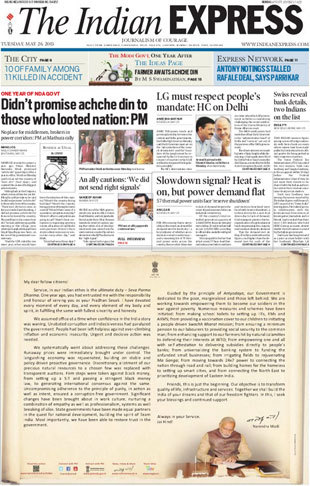
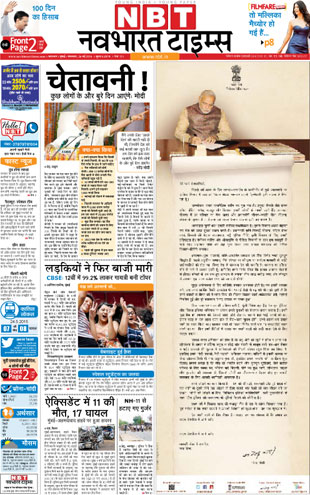
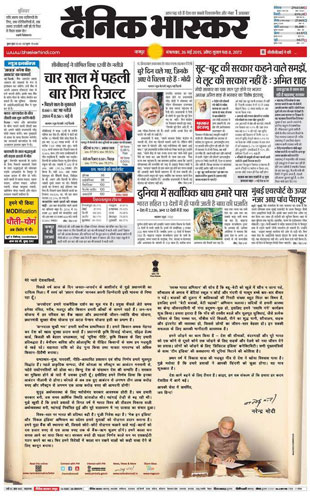
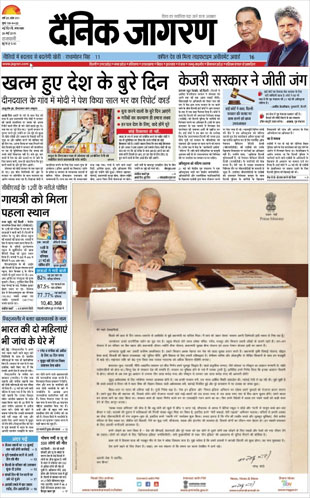
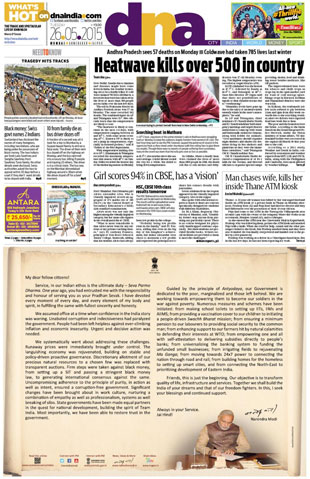
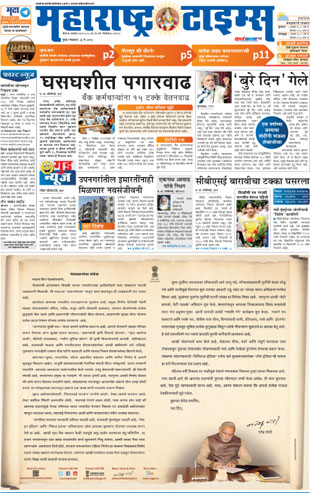
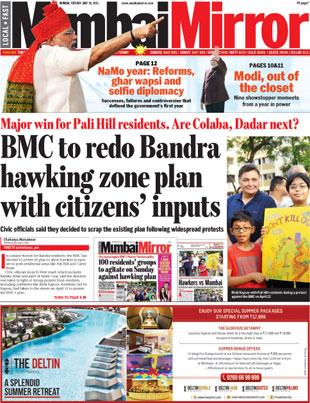
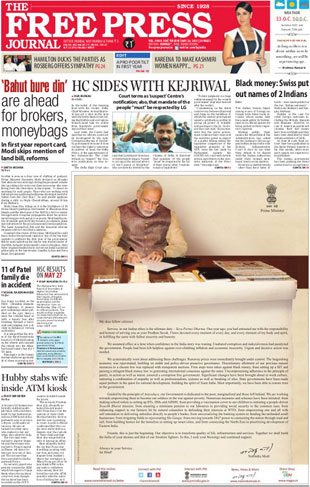
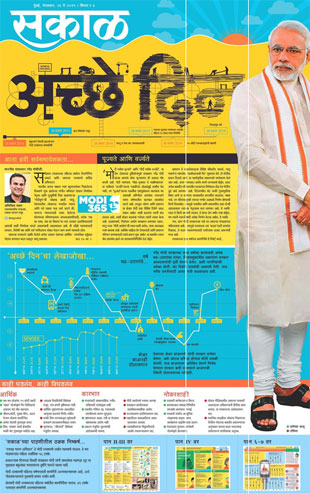
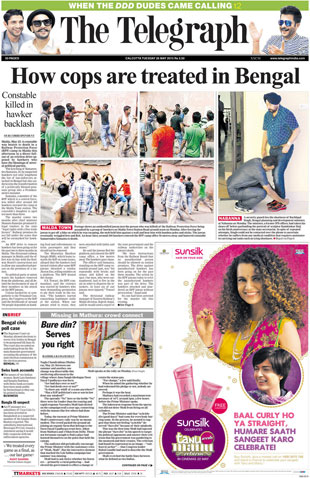
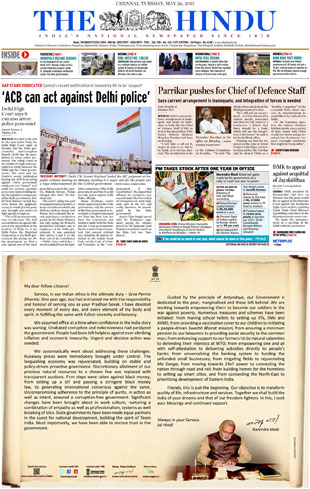
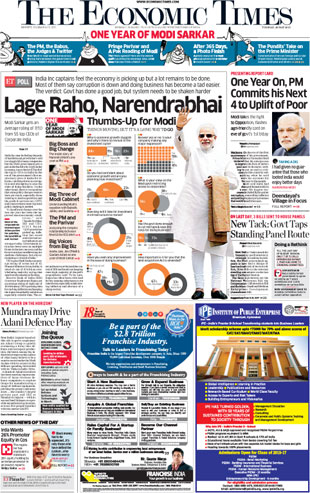
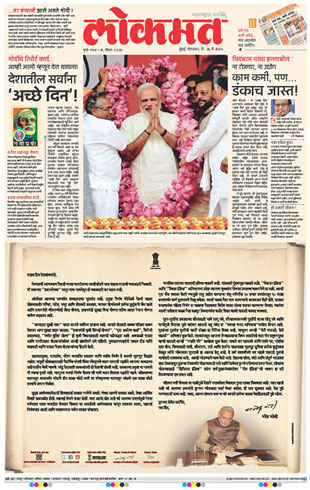
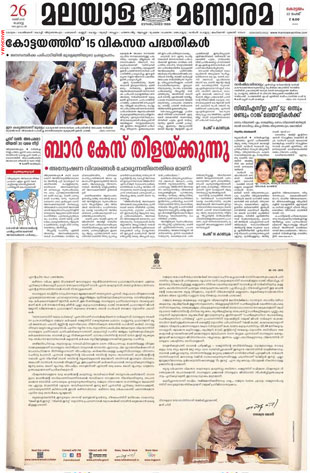
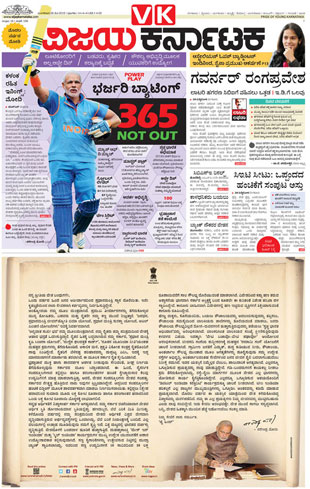
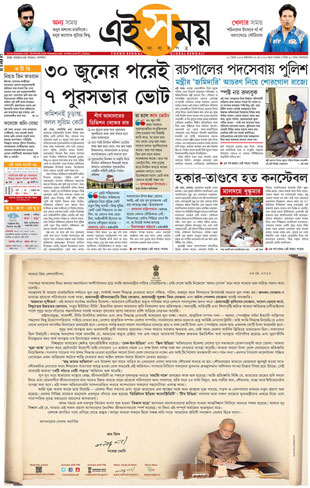
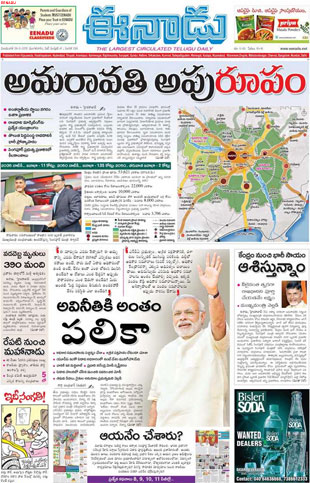
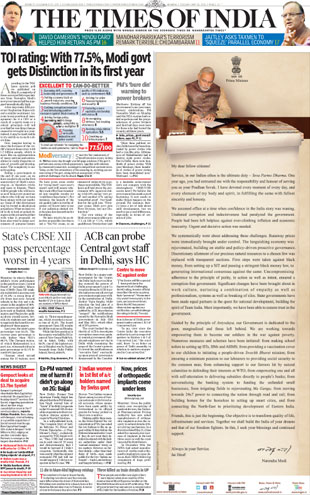
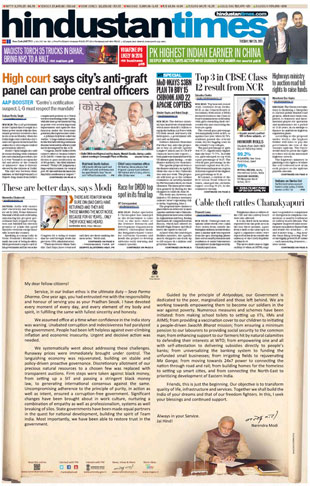
  • NewsStand: And this is how some Page1s looked this morning, displaying the news of the Narendra Modi govt’s year in office

    It’s one of MxMIndia’s most popular features… so we bring it again with the frontpages of some of the papers our team reads every morning


  • Madison Media snaps up Snapdeal wef July 1

    By A Correspondent [updated]


    Madison Media Plus, a part of Madison Media Group, has just announced the win of Snapdeal. The account – run by OMD – was won after a multi agency pitch. The account will be handled out of the agency’s Delhi office. Madison Media will now be the Media Agency of Snapdeal effective July 1, 2015 but work on the account will start almost immediately, informs a communiqué.


    Said Srinivas Murthy, Senior Vice President – Marketing, Snapdeal.com on selecting Madison Media, “We are very happy to have Madison partner with us on media going forward. They bring tremendous experience across categories, with learnings across multiple growth industries that can be leveraged for us. Madison is known for the high quality of media professionals and we look forward to them helping us drive our business to new heights.”


    Sam Balsara

    Added Sam Balsara, Chairman & Managing Director, Madison World, “I am delighted that Snapdeal after an exhaustive competitive review has found Madison Media to be worthy of handling this large and demanding account. Today Madison Media offers an unparalleled depth of leadership, with unmatched experience and expertise and this will be further strengthened with the joining of VikramSakhuja in a few months as Group CEO of Madison Media and OOH.”


    Madison Media Group has won a host of new businesses in 2015including Viber, Lenskart.com, Zivame.com, Metro Cash & Carry, Gaana.com, Cricbuzz.com, Amul Hosiery, DHFL, Bandhan Bank, amongst others. The gross billing of Madison Media Group is about Rs 3750 crore, adds the communiqué.

    As reported earlier, the digital mandate for Snapdeal has been bagged by GroupM arm Mindshare.


  • Den Snapdeal TV-Shop launches its first marketing campaign

    By A Correspondent


    DEN Snapdeal TV-Shop, a 50:50 joint venture between Snapdeal, one of India’s largest e-commerce portals and DEN, India’s leading cable television distribution network announced the launch of its first ever marketing campaign titled ‘Kal Ki Wish Aaj Pao – Phone Uthao Khushiya Mangao’. The 360 degree campaign is targeted at television consumers with limited access to internet and non-internet savvy audience. These consumers most often miss out on great deals that brands offer across e-commerce portals. The marketing campaign is created by Adept Media and will start airing across channels in Punjab from May 19th2015.


    The marketing campaign targets Punjab, Karnataka, Maharashtra, Delhi, West Bengal & Gujarat and pushes its message through TV, Print, Outdoor, Radio & Social Media.


    Maneesh Goel, CEO, DEN Snapdeal TV-Shop says, “We’re all bargain hunters who have been taught to start saving up from a very young age. As kids, we were given pennies to be put in a piggy-bank or a gullak to save for the rainy days. With this simple and relatable plank, the integrated marketing campaign hopes to connect with our target audience in an entertaining and quirky way.”


    As human beings, our inherent nature is to save. The future is so important that ‘today’ gets lost in the plans we make for tomorrow. Gullak is symbolic of ‘postponing happiness’. Through this TVC, we try and replace the Gullak and shop for present to fulfill your aspirations. We are telling people to not postpone their happiness, but instead shop on DEN Snapdeal TV-Shop & get the product you desire today.


    Vandan Chopra, CEO Adept Media says, “We wanted to ensure that the idea was geography agnostic and did this medium justice. The central theme of our campaign came from the simple insight that no matter how much we crave happiness, we usually end up postponing it with the hope to find a better deal in the future. ‘Don’t postpone your happiness, buy now’ addresses the main challenge of building the urgency of sales conversion which is the basic premise of the offering.”