Category: MEDIA

  • Shailesh Kapoor: World Cup Coverage: The Ticks & The Crosses

    By Shailesh Kapoor


    It’s the World Cup season and cricket is back into the forefront, leading conversations and consumption across media. The ratings of some of the key India games in this year’s World Cup have proven that the issue with declining ratings of ODI cricket in recent years is not about a loss of interest in the sport as such, but a rejection of meaningless cricket series that are played to generate revenue for the sport.


    A lot has changed on the broadcasting and technology front since the 2011 World Cup. The host broadcaster (Star Sports) has four sports channels, and for the first time, watching cricket online has been promoted as a genuine viewing option. Commentary feeds are available in multiple Indian languages, and more than 50 ex-Indian cricketers have been gainfully employed by Star Sports to cater to India’s linguistic diversity. All matches are available in High Definition, and we even have the 4K-technology option available.


    So, all’s well when it comes to live telecast of cricket. Despite match timings not being primetime-friendly in India, Star Sports has done a fair job of putting across a clinical performance on-air.


    But there’s a lot left to be desired outside the live hours. And here, I go beyond Star Sports. We have half a dozen sports channels besides Star Sports, and all of them have ignored the World Cup emphatically and whole-heartedly. In a healthy competitive environment, you would expect other sports channels to do strong guerilla programming around a big tournament such as the Cricket World Cup, to capture viewership in the non-playing hours.


    Star Sports attempted that in the 2003 World Cup. They had no access to match footage. But they created pre- and post-match shows for the purists, who would rather watch Ravi Shastri and Sunil Gavaskar discuss the game with Harsha Bhogle, than watch the Mandira Bedi show. The idea may not have a runaway success, but it was an excellent attempt at building equity around a big sports event within a reasonable cost.


    That we have no such ideas this year is the collateral damage of a monopolistic environment. Star Sports has gained every inch of the sporting turf over the last five years, acquiring all possible rights that have come their way. If they manage to bag the IPL rights when they come up renewal next in a couple of years, their dominance of sports broadcasting in India will be complete in every respect.


    Sports broadcasting has not been the most profitable business in India, and it is understandable that a giant like Star can pump in the investments which stand-alone brands like Ten or Neo struggled to.


    But the one area where Star Sports too may have missed the trick is the non-playing hours programming. All four channels play the same shows every night, which are essentially based on over-analysis of already over-analyzed games. The ancillary programming content in magazine formats is not more than 15-20 hours, I suspect. And a lot of this is content that’s not even fresh.


    Star Sports currently resembles a multiplex when a Salman Khan film releases. You may have six screens, but all you get is one film, one type of content. More channels don’t always mean more variety!


    News channels, meanwhile, have gainfully employed another 50-60 ex-India cricketers, including some very obscure ones, to run the same format which Star Sports runs on its channels – talking heads discussing today’s game and then tomorrow’s game.


    Come 2019 World Cup, that’s one change I’d hope to see, whereby the non-playing hours experience of a viewer is a more enriching one. And if some other channels don’t stand up to get their pound of flesh from the event, I hope there will be online options beyond ESPNcricinfo that would achieve the same.
     

  • SONY SIX to broadcast Yonex Sunrise Tournament in India

    By A Correspondent


    SONY SIX is set to broadcast the Yonex Sunrise India 2015 from March 24th to March 29th. The tournament will be held at the Siri Fort Indoor Sports Complex in New Delhi and will witness some of India’s finest players including Srikanth Kadambi – the reigning Swiss Open champion, the world number 2 Saina Nehwal, Padma Shri winner P V Sindhu and the Commonwealth Games Gold medallist, Parupalli Kashyap take part in the proceedings.


    Apart from the top crop of Indian talent, the tournament will also feature top international badminton talents including Jan O Jorgensen, Dan Lin and the All England Open Championships winner, Carolina Marin. The Open is set to see a series of nail-biting matches between players, who will battle it out to win the illustrious title and a total prize money of USD 275,000.


    Prasana Krishnan, Business Head, SONY SIX said, “The India Open is undoubtedly the biggest major played in India every year and we are thrilled to come on board as the broadcasting partner for this marque tournament which attracts the best of Indian and international talent year on year. The viewer base for badminton in India has got stronger with every tournament in which our players feature. We expect the viewership to only grow manifold for this tournament considering its iconic status and the conducive telecast hours.”


    The tournament currently boasts of the BWF Super Series status, which was given to it in 2011. Super Series is a series of 12 prestigious tournaments played around the world, which also includes the highly coveted All England Open


  • Introducing a new Friday series: Coffee & Conversations with Rahul Kishore: Ashok Venkatramani, CEO, MCCS

    We kick off the first season of a new series of easy weekend interviews conducted by Rahul Kishore, senior media professional, now turned entrepreneur. In Season #1, Rahul interviews a cross-section of media CEOs. But no shoptalk… nothing on business, plans, targets… Presenting Season #1, Episode #1
     

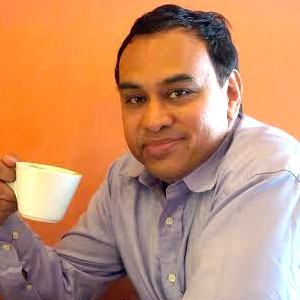
    Ashok Venkatramani, Chief Executive Officer of MCCS India, the people who bring us popular news channels like ABP News etc, may come across as a quiet, blasé, non- aggressive person if one took him at face value. But scratch the surface and you find a funny, soft-spoken yet forceful individual who speaks his mind freely. We meet over a coffee at a Barista outlet in Gurgaon


    So does he consider himself lucky?

    Yes I do, was his response. He’s been lucky in quite a few things. Hard work, he says, takes you up to a point, but then luck plays a part. He’s been lucky in the kind of people he’s worked with. The colleagues have been wonderful as have all his bosses who gave him a long rope and lots of space to express himself. He trusts people and has been rewarded with excellent relationships all around that have helped him immensely. Though essentially a private person, he seems to be quite a people’s man. Ashok himself will never prejudge you. He will allow you to grow and guide you along the way.


    The beliefs that keep him going?

    I am extremely punctual he says. He expects it from others too. Being a Bombay boy and commuting on local trains has taught him the value of time. I have observed this myself, being very punctual myself too. He maintains a strict work life balance. Never works on weekends, fixes no meetings after 5pm and does not socialise much with the fraternity. Money does not motivate him. If he does his job well, money will follow… “but it’s far more important to do my work well”. Empower people, is his credo. He is trustworthy by default. Yes, people have let him down sometimes, but he still goes with trusting them unless they prove otherwise.


    And how does he de-stress after a hard day at work?

    Ashok says that he has learnt classical music and can play the keyboards and piano upto a certain level. These days he sings old raga-based songs as he feels that is true music. A state level badminton player till three knee surgeries put paid to any hopes he may have had of playing at a higher level. So, he walks a lot these days. And holidays by the sea as a Piscean and water is what works for him.


    If there was a movie made about his life who would he like to play him and why?

    Ashok kept with his penchant to surprise me… normally a guy would opt for one of the Khans or a Ajay Devgn or even Amitabh. He said after a great deal of thought: Irfan Khan!


    Why Irfan? “It would need a very sensitive guy and a good actor to capture the finer nuances of my sensitivity on celluloid. It cannot be one of the with-it guys. Has to be someone who is a master of the actor’s craft.” Ashok says he is very poker-faced and nothing ruffles him, nothing at all. And Irfan would do justice to the role


    Dream job and why?

    CEO of Air India. He said it saddens him to see the plight of a genuine Navratana and how it’s been brought to its feet by terrible mismanagement. Ashok feels he has the ability to make a difference in this case. We are on the verge of losing a family jewel and we should do something about it, to restore it to its former glory.


    Three things most important to him?

    Values. NO compromise at all on these. Maintain a healthy work life balance. He doesn’t work on weekends ever, strange as it may sound. I know it’s easier to get a media CEO at 1 am than it is at 11am. Ashok is different. A good night’s sleep and keep things simple.


    Lastly, rate me as an interviewer

    7/10. No, make that eight!


    Rahul Kishore is Managing Director, Taurus Infomedia Pvt Ltd. A man of many interests, he has authored a book on his Facebook updates, does a fair bit of gardening, likes meeting people and says he’s the best badminton player never to have played for India.


  • Flipkart eyes more buys to boost mobile ad biz

    By Samidha Sharma


    India’s largest online commerce player Flipkart is looking to strengthen its mobile advertising platform, a vertical that may help it clock substantial revenues at better margins in a business which has only been guzzling cash till now.


    Sachin Bansal, co-founder & CEO of the Bengaluru-based Flipkart, said in an exclusive chat that the e-commerce company , which acquired AdIQuity Technologies recently , will build a 200-people strong team in a year for its ad business as mobile becomes its focus area for investments going forward.


    Accepting that desktops weren’t giving the same returns on investments anymore compared to a few years ago, Bansal said Flipkart will keep an eye out for more acquisitions in the mobile space and look to fill the gaps on tech and talent front.


    “I believe it (mobile advertising) can be a big business for us,“ said Bansal, who is spearheading the ad business for Flipkart post a reorganisation at the seven-year-old company which started off as an online bookstore.


    Search giant Google and social networking site Facebook dominate the online and mobile advertising space, globally and in India, but e-commerce majors who boast of large consumer traffic and data are now looking to target shoppers on their platforms, prompted by their growing seller base and high adoption of smartphones.


    The e-tailer, valued at over $11 billion, first started dabbling with advertising a year ago with a few banner ads but put its weight behind the vertical only in the last six months.


    “Sellers and brands really needed this platform as they wanted to have more control over their sales, we learnt this from our initial experiment. That’s when we thought we needed a company which had expertise in the mobile ad space,“ Bansal said.


    With its massive data insights on consumers, Flipkart is a great platform as marketing dollars move towards data-driven advertising, said Anurag Dod, founder of AdIQuity , who was Bansal’s senior at IIT Delhi. AdIQuity , which started off in 2006, exactly a year prior to Flipkart, as a search engine under the name Guruji, is likely to help Flipkart with mobile-specific ad technology .


    Bansal said with a push towards expanding its marketplace, where merchants directly sell to consumers, it was imperative to address the concern of sellers who wanted to push their brands and products on Flipkart.The company claims to have 30,000 sellers and directly competes with Amazon and Snapdeal. For now , the e-commerce biggie will open the mobile platform to its own sellers for advertising and then look at getting external brands on board.


    “It’s still unclear in the short term as to how many of the sellers on ecommerce platforms would convert into big advertisers other than the top 30 of the big merchants. Also, if you look at the China digital ad market, it’s 40-50 times larger than India. This is the main reason why Alibaba is able to monetize Taobao via advertising revenue,“ said Karan Mohla, VP at IDG Ventures India.


    Source:The Economic Times

    Copyright © 2015, Bennett, Coleman & Co. Ltd.

    All Rights Reserved, Licensed to republish


  • Building on Colors. Interview with Sudhanshu Vats


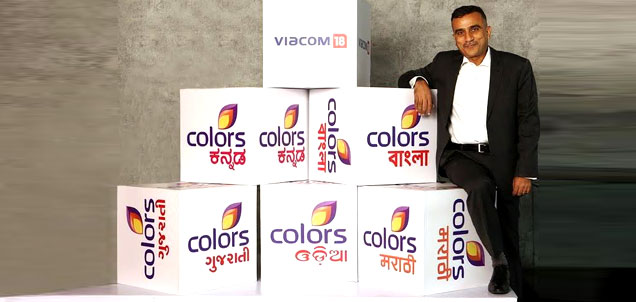
    It may have been more of a coincidence. A day before the first day of the festival of colours, Viacom18 announced its five regional entertainment channels would drop the ETV branding and adopt Colors. The ETV GECs, owned by Prism TV Private Limited and part of the Viacom18 networks, has operations in the Hindi entertainment, youth, children, English entertainment and regional clusters.


    Speaking to MxMIndia, hours after making the announcement, Viacom18 Group CEO Sudhanshu Vats said the exercise helps in building the Colors franchise. Colors, as a brand, has become the cultural touchstone for millions of Indians across the world, he said.


    Meanwhile, Colors Marathi will be relaunched on Sunday, March 22 starting 6:30 pm with MICTA awards (the Marathi film and theatre industry awards like the IIFA) and two new shows starting March 23 – Majhe Hoshil Ka and Sakhi. Colors Oriya will go live on April 1 while the Bangla channel will happen on April 12. Colors Kannada and Gujarati will go live on April 19.


    Excerpt from an interview.


    The rebranding of the entertainment bouquet with the Colors prefix may now appear to be a no-brainer. But for how long has this been in the works?

    Yes, Colors’ foray into other general entertainment spaces or language general entertainment is natural. From a strategic point of view, it expands the footprint of Colors as a brand. Particularly in general entertainment, we are a multi-brand media network. So, whether it is Nick in kids or MTV in youth and Colors in general entertainment, the natural extension of all our marquee brands into subsequent languages is a very natural strategic move. I think ETV as a brand enjoyed legacy, because it was the first regional brand, it had history and huge loyalty to some extent. But one of the things we noticed was that it had also aged a little and was not contemporary enough. If we juxtapose ETV with Colors, Colors, as a brand, stands out for its young, modern, urban, contemporary and innovative nature. Therefore, from a consumer angle as well as strategic point of view, it was almost natural that you move as we build it.


    So just as youth brands are under MTV and for kids, there’s Nick, couldn’t we have had separate brands for the regional and Hindi GECs?

    It all depends on how you look at it as a segment. If you look at the genre as general entertainment and within that regional and language segmentation, then may be one brand for general entertainment, which is indeed Colors, does make sense. And, therefore, it has the capacity to have that scale. While Hindi is of course predominant in India, without doubt, at this movement at least, in viewership too, regional is also catching up the fast. To be honest, the answer is yes one could have had a dedicated brand. At the same time, could you have extension of your GE brand into other GE spaces? The answer is yes again. To me from some scale and some brand halo and Synergy point of view, may be it makes more sense to sort of…


    The Colors as channel we know it is not going to be rechristened?Or suffixed Colors Hindi?

    No.


    Colors, the Hindi GEC brand, is bold, young, urban breaks barriers and, well, a lot of money is spent on its programming and marketing. The expectation will be the same from the language GECs? And if not fulfilled, it could have a slightly negative rub-off on the Hindi GEC?

    We will of course try and play out the same brand philosophy and brand mantra. That’s the thinking behind it.


    In terms of programming are you looking at a significant change from what’s there right now? Or will we see a significant leap in look, feel and content?

    I’ll answer this in two parts. TV18 expressed its interest to acquire ETV in 2011-2012. Basically, post-TV18’s acquisition of ETV, we’ve been associated with them from a synergy point of view. What we’ve done across these regional Prism channels is let the Prism team look at some of the things they can pick up. To give you some of the examples, we’ve already attempted Big Brother in Bangla and Kannada. In Kannada, the Prism team has looked at ‘Dancing with the stars’ which is ‘Jhalak Dikhla Jaa’. It is in its second season and has been very successful and is already the No 1 show this year. We’ve also looked at few shows that are about ideas from Viacom18. Let me give you an example of another show called ‘Indian’ we ran on ETV Kannada. It’s Roadies meets Bigg Boss! There are also programming shows like Balika Vadhu, which are remade, Madhubala, Uttaran, in regional forms. From a programming perspective, it’s a two-stage journey. Journey 1 is already on from synergies and it has helped uplift the viewership of these channels. And #2, as we launch with the rebranded Colors, you’ll see considerable change in programming.


    Will there be any change in the Hindi GEC?

    Colors continues its journey. We’re a strong No 2 as you know and we’ll continue to work on that. That’s a completely independent piece.


    The launch of &TV means some tough competition for Colors, right?

    Early days. We’ve It’s been positioned as an urban channel with some amount of social messaging, reasonably high decibel and expansive non-fiction. So, the zone you seem to see it is in Colors. The direct competition could be more with Colors. It makes a lot of sense if you step into Zee’s boots. Zee enjoys a huge legacy. They enjoy a tremendous first-mover advantage, clearly in distribution. I think they’ll be ahead of Star, in sheer distribution. Because of that, I can say that they are slightly less urban.


    Would you at any time look at a mid-market GEC?

    We keep evaluating from time to time. There are two ways of looking at it. One is that may be there is more room for more GECs in India and that could be a hypothesis. The second is that people have tried and not many have succeeded. You had others, headed by people who had reasonable experience. Off late also, Zee’s Zindagi made a very different attempt. Sony Pal, which is almost like a full-fledged GEC, wasn’t very successful. We’ll see what comes there. There is one school of thought that there are four or five GECs which have established themselves and may be as a GEC there is room for just about this much. The second school of thought is that there is more room. To answer your question, yes we are looking at it, evaluating. We don’t have anything firm at this moment.


    Surely, more is in the offing. We hear about an English GEC. Any indicators of the directions you are looking at?

    My answer on this one is also similar. I don’t want to say something we’re not yet firm at. Basically, you’ll be seeing more offerings. I can’t share them convincingly till I don’t know them well. But, yes, we’ll continue to deepen and strengthen our presence in the genres we’re playing in.


  • Graphic India gets extra funding from new players

    By A Correspondent


    Graphic India announced that it closed a new seed-financing round of $2.8 Million. The new financing round was led by existing investor, CA Media LP, the Asian investment arm of The Chernin Group, LLC (TCG), and NYC based, media investment group, Start Media, founded by Michael Maher. The new round also included prominent angel investors, such as Backflip Studios founders, Julian Farrior and Dale Thoms.

     

    Graphic India produces digital comics and animation to create new character franchises targeting the 550 million Indian youth under the age of 25 and the 850 million person mobile market as they leapfrog directly to smartphones & tablets. In the same way that America created superheroes and Japan created anime, Graphic India is tapping into the creativity of India to launch a new wave of enduring characters and mythic heroes for audiences in India and around the world.


    Sharad Devarajan, CEO & Co-Founder of Graphic India commented, “The next Steven Spielberg, JK Rowling, Stan Lee or Miyazaki exists somewhere in India, ready to change the world through their stories. At Graphic, we will find these breakthrough talents and give them the resources and the digital platform to share their creativity with the world. This new financing will expand our content offering and allow us to create India’s premiere mobile platform for comics and animation – engaging and building a passionate community of superhero, sci-fi and mythology fans through Graphic’s content and characters.”


    Over the next few months, Graphic India will unveil a number of digital products and apps in India to build direct engagement with the growing community of passionate comic book and animation fans in the Country. The new digital offering will release hundreds of free digital comics and digital videos in English, Hindi, Tamil and other local Indian languages.


    “We have always believed in the immense potential of Graphic India. An amalgamation of talent and creativity, the characters, heroes and stories from Graphic India, tap into the unique ingenuity and culture of India, but appeal to audiences worldwide. With smart phones increasingly becoming the preferred medium of entertainment for the youth and the ever increasing consumer reach of mobiles in India, the move towards expanding their offering and creating content for smart phones & tablets will give them with a significant boost and enthuse the next generation of comic buffs.” commented Rajesh Kamat, COO Chernin Asia Media Group.


    Michael Maher, Founder and CEO of Start Media added, “Graphic continues to execute its plan to create globally commercial intellectual property and to use it to overcome barriers to new markets both in India and elsewhere around the globe. We at Start Media are pleased to be a part of Graphic’s continued and rapid growth.”


    Since its launch, Graphic locked up licensing deals and content partnerships with Cartoon Network, Rovio, YouTube, Mandalay, Lionsgate and others to license its digital comics and characters into television and film.


  • Swati Mohan takes over as Business Head for Fox International Channels India

    By A Correspondent


    Swati Mohan

    Fox International Channels India announced the appointment of Swati Mohan as the Business Head of the company. Swati has been elevated to the new responsibility from her previous role of Vice President – Content and Programming at FOX International Channels, India. In her new role, she will take over the India operations from Keertan Adyanthaya with effect from 30th March, 2015. She will be reporting into the Hong Kong Office and shall be heading the network portfolio of all existing FOX International Channels in India including its strong existing iconic brands like National Geographic Channel and FOX Life as well as the other network channel properties like Baby TV, Nat Geo Wild, Nat Geo Adventure, Nat Geo Music and National Geographic Channel HD.


    Prior to this, since January 2012, Swati has been spearheading the programming and content portfolio for the bouquet of channels including National Geographic Channel and Fox Life. She has over 16 years of experience in the industry, with a wide spectrum of work across companies including Group M, O&M, FBC Media and Endemol previously.


    Commenting on the change, Keertan Adyanthaya, Managing Director, NGC Network India & Fox International Channels said, “Swati has been leading the content team at Fox for the past 3 years and has done a stellar job. When it was time to choose a new leader for our business, we didn’t have to look beyond Swati. She has a keen understanding of the content and having been a key part of the hard working & dedicated team here, she will lose no time in propelling our company to even greater heights.”


  • Colors Marathi takes off on a high

    By A Correspondent


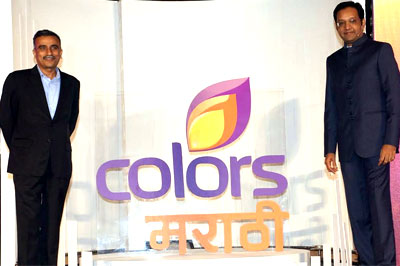
    Colors Marathi, the Marathi-language channel from the Viacom18 stable, began its new innings on the eve of the Maharastrian New Year. As reported earlier, this is a part of the recent announcement by Viacom18 on rebranding five ETV regional general entertainment channels.

    The change was brought in on Sunday, March 22 with the airing of the “Marathi International Film and Theatre Awards” (MICTA), an event that saw the best in Marathi Film and theatre celebrate the success of the industry in Dubai. The entertainment quotient is to be upped further with the launch of three  new shows: “Amchya Gharat Soon Bai Joraat” at 6.30pm, “Majha Hoshil Ka” on at 9.30pm and Sakhi on at 10.00pm… all premiering today (March 23).


    Said Anuj Poddar, Business Head Colors Marathi (pictured right above with Viacom18 Group CEO Sudhanshu Vats) : “We are truly excited about this new chapter and are looking forward to doing what we do best i.e. to bring great quality content and entertainment to millions of our Marathi viewers. We hope that the audiences will continue to enjoy our shows.  I am hopeful that this will be a key milestone in the continuing growth of the Marathi entertainment industry and take the entire Marathi TV entertainment industry to much greater heights.”

    Added Sanjay Upadhyay, Content Head the channel: “The new journey is a great milestone for us and we will continue to redefine the television viewing experience for your viewers. The three new shows that are set to launch are all unique and address the varying needs of our audiences. Hope that our viewers make these engaging and entertaining show a part of their daily lives”


  • Soon Consumers will be Regulators…


    By Labonita Ghosh


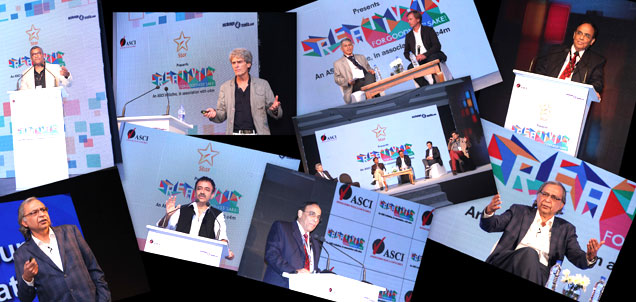
    A few years ago, global consumer goods giant Unilever found itself in a sticky situation. A new advertisement for its margarine Flora, had sparked a huge row. The ad showed a bullet going straight for a human heart made of china. The bullet, fashioned by the words “Uhh dad, I’m gay”, was followed by Flora’s tagline, “You need a strong heart today”. Amid largescale protests against the clearly homophobic nature of the ad, Unilever first distanced itself from the campaign, saying it had been produced by an agency in South Africa and had not been approved by the company. Then, as the protests refused to die down, the company pulled the campaign altogether. “The ad seemed to indicate that finding out your son was homosexual, was like taking a bullet to the heart. It was a very uncomfortable situation for us,” said Marc Mathieu, global SVP marketing for Unilever, who was in Mumbai last week, speaking at an event organised by the Advertising Standards Council of India (ASCI), on responsible advertising.


    ASCI has been pushing for self-regulation in the advertising world to ensure ethical and responsible handling of campaigns, and also for punitive measures against companies and agencies that put out misleading ads. Earlier in the week, the Department of Consumer Affairs announced it had set up a website called GAMA (Grievances Against Misleading Advertisements) and was partnering with ASCI to take action on the complaints filed online and penalise offenders. The prevalent idea, however, is that there may be no need for action if the industry decides for itself to toe the line.


    One oft-repeated grouse by the industry is that too many guidelines curb creativity. “The assumption often is that rules are a barrier to creativity,” said Shantanu Khosla. Managing director, P&G India at the event. “But we should not think of regulation as a constraint. It comes from the same source as my fundamental consumer insight, ie society. The people we serve, write the rules, and no one else.” Indeed, it is from these rules, added Khosla, that companies can also build leverage and trust for their brands with consumers.


    In fact, sometimes thinking out of the box can lead to some great advertising, felt John Hegarty, founder of BBH. He cited the example of how, since the socio-cultural conditions of various markets differ, there are some regulations that – literally — come with the territory. And trying to find (legitimate) ways around this, can often lead to innovative solutions. Like a hair care commercial that was prepared for the Malaysian market. “How do you advertise for women’s hair care product in a country where women wear headscarves and are not allowed to leave their head exposed?” Hegarty said. “The agency found a way around it.” The ad focuses on a comb instead, first with strands of hair on it, and later without, to show how the product could stop hair fall.


    Unilever’s Mathieu felt that understanding people is what unites the marketing and advertising agencies. “Insights into certain human truths are the most important thing,” he said. “So companies need to ask themselves what is the human truth that I can use for my campaign that will resonate with people?” Making campaigns more people-centric and creating more purposeful brands, will automatically yield ads that are less offensive and more acceptable to consumers.


    Experts, however, feel consumers themselves are the best regulators. “Self-regulation is our job, yours and mine, and not ASCI’s,” said Paritosh Joshi, head of media and communications consultancy unit Provocateur Advisory. “The more everyone believes they are a part of this, the more they will believe that enforcing truthfulness and honesty is a collective responsibility. Self-regulation is not about curtailing creativity, but about establishing a framework of rules that one might have for, say, golf or cricket or boxing. If you’re not allowed to punch below the belt, you’re not allowed to punch below the belt. There are good reasons for this, and we should all be aware of them.” When that awareness comes, there may not be a need for a watchdog at all.


    Sanjeeb Chaudhuri, CMO and global head of brand at Standard Chartered agreed. “Increasingly, the response of the consumer, will be driven by the consumer,” he says. “This consumer’s choice will, in turn, drive the choices that advertisers and agencies will have to make. They will find that they can’t go against the grain [of the consumer].”


    Santosh Desai, MD and CEO of Future Brands, saw things a tad differently. “I think the issue of self-regulation will only become more contentious till such time that business can see itself as an intrinsic part of society,” he said. “Considerations [about regulation] should not stem from things like the consumer becoming more empowered and taking to Twitter to complain. These will always be half-solutions. It will happen only when corporations begin to believe that they don’t have immunity from society.” Indeed, it should be impossible to separate the consumer from the business. “The business of business is people,” said Bobby Pawar, director and chief creative officer at Publicis Worldwide. “Just as products have consumer benefits, companies should too. They must also benefit society in some way. The thing to keep in mind is that if you are a person with a conscience, you should also try to develop one for your brand, and stay true to it at all times.” A tough ask, perhaps, but certainly doable.


  • Ranjona Banerji: When journos fried community believing cooked up claims

    By Ranjona Banerji


    When public prosecutor Ujjwal Nikam revealed at a conference recently that he had cooked up the story about Pakistani terrorist Ajmal Kasab demanding and being served biryani in a Mumbai jail, there was understandable shock and distaste.


    But let us set aside for now Nikam’s professional integrity or the smug satisfaction with which he revealed how he had in effect demonised a community in order to stop a sympathy wave for Kasab. Instead, let’s ask just why Nikam became such a media hero that no one thought to question his claim in the first place.


    Nikam first sprang into the limelight as the public prosecutor into the March, 1993 Mumbai bomb blasts case. The case took so long that by the time the sentence was pronounced most of India – and many of the young Mumbai reporters I worked with at DNA – thought that the bomb blasts preceded the post-Babri Masjid demolition riots of December 1992 and January 1993. Such is the curiosity of the “patriotic” journalist of today – and we can see the result on our TV channels. Indeed, it mattered to few that there had been no justice at all for those who suffered in the riots. Bollywood films like Black Friday, for all its good intentions, further cemented the myth that the bomb blasts caused the riots. I met reporters who used the script of the film as the basis for their reports.


    Nikam capitalised on this sentiment and thus sprang to prominence as the public prosecutor who fought for justice. It was a rare journalist who questioned him because in today’s India that can be akin to sedition.


    It was hardly surprising that Nikam was public prosecutor in the 2008 terror attacks case. However, when it came to Ajmal Kasab, there was no doubt about his involvement or his guilt. The world had seen him on television, there were many witnesses and policeman Tukaram Ombale made the ultimate sacrifice in making sure that Kasab was caught alive. By that one act, India had proof that Pakistan was involved in terror activities against India – whether by the state or by “non-state” actors. Whichever you prefer to believe.


    Nikam therefore had little to do. In fact, what his large group of admirers in the journalistic community prefer to forget is that the only two Indians who the investigation managed to charge were acquitted. Nikam and the police investigation therefore failed to convince the judge except when it came to the open and shut case of Kasab.


    So what were our reporters doing? If Nikam was lying about the biryani, then a simple questioning of the jail authorities should have been enough. In fact, we had a huge media uproar about how much Kasab cost the government and why was the government feeding a terrorist from across the border a choice dish like biryani and a clear belief that this was some sort of appeasement policy of Muslims by a Congress government.


    By these insidious means, Nikam managed to demonise a community – Muslims and their supposed undying attachment to biryani – by creating a “meme”. And parts of the media helped him. For those who claim to be too innocent to get it, the connection is clear: Kasab is a Muslims; Muslims like biryani. The lens therefore shifts to all Muslims, especially Indian ones. This connection was used by the BJP in their 2014 election campaign as well.


    In a superb piece for Mumbai Mirror, its editor Meenal Baghel reveals that Kasab’s last meal was a tomato: http://www.mumbaimirror.com/mumbai/others/Dum-lagaa-ke/articleshow/46648313.cms


    I reserve the right to chuck tomatoes at my fellow journalists who use jingoism as an excuse to ignore their primary responsibility to their profession.


  • Kasthuri TV unveils new logo as part of repositioning exercise

    By A Correspondent


    GEC channel Kasthuri TV from Karnataka has been undergoing an extensive revamp since the past three months and as part of the exercise has unveiled its new logo on the auspicious festival of Ugadi. The reason behind the logo change is to enhance the look and feel of the channel while keeping its TG in mind. The colourful new logo has been designed with the intent of captivating its audience especially women and the youth.


    P Kailasam

    WHN’s CEO, P Kailasam said, “We are giving the channel a new look and apart from the new programming line-up we are also working towards changing the look of the channel. To begin with, we just launched the new channel logo on the auspicious occasion of Ugadi.”


    “It is a pivotal time for Kasthuri TV. The new shows that were launched earlier this year increased the channel’s standing among clients and agencies alike. The channel’s aggressive revamp strategy is setting the business up for great long-term success in the Kannada GEC space,” added Alok Rakshit, Business Head – Regional Channels, Aidem Ventures Pvt. Limited.


    Alok Rakshit

    Apart from this, Kasthuri TV has lined up four new shows to be launched by mid-April this year. Of those, two will be in the fiction category and two in the non-fiction category. Of the two fiction shows, one is a Woman-centric daily which focuses on the relationship between a man and his daughter. The other, also being a daily soap, is a love story that goes through various tests and trials and still stands strong. On the other hand, out of the two non-fiction shows, one will solely focus on children’s entertainment and the other will be for adults. Kasthuri TV is also in the process of giving a completely new look to its cookery show “Kitchen Kamaal”, in order to make it appealing to its viewers, especially Women.


  • Zirca Digital offers advertising options on Skype in India

    By A Correspondent


    Zirca Digital Solutions announced that it would begin offering advertising inventory on Skype, helping brands take advantage of the growing popularity of Skype in India. Skype inventory will be sold exclusively by Zirca Digital Solutions in India.


     

    Skype is a communications platform that makes it simple and fun to share text, voice and video with friends, family and colleagues; wherever they are on whatever device they choose. Advertising on Skype allows brands to sponsor human emotions – the big and small moments that make life wonderful.


    Neena Dasgupta

    Skype has more than 330 million active monthly users in more than 70 markets around the world. In Asia, advertising on Skype is available across Southeast Asia, Hong Kong, Taiwan and Australia. From now on, Skype advertising also became available in India.


    “People love Skype, which makes it a great platform for any brand looking to reach a large and engaged audience,” said Neena Dasgupta, Director, Zirca Digital Solutions. “Skype is also part of Microsoft’s unique and connected ecosystem that enables brands to tailor advertising experiences across devices and services. Through Skype, advertisers in India will be able to reach audiences at the right time, with the right information, when they are making decisions with the people they trust the most.”


    Vikas Khanchandani

    “A Skype session lasts more than 30 minutes on an average. This means greater time spent for the associating brands. Moreover, adding Skype to our existing portfolio of Microsoft products will help us offer a holistic solution to advertisers who stand to make better ROI on their ad spends,” added Vikas Khanchandani, Director, Zirca Digital Solutions.


    Zirca Digital Solutions has begun offering premium branded experiences like Conversation Ads, the Connection Hub Ad and Conversation Corridors to give brands access to the Skype community present across PC & Mobile. Many of the new formats are standard and consistent with the creative formats used by advertisers on other platforms.