Category: MEDIA

  • IAA Debate in Mumbai to delve on Metro Markets

    By A Correspondent


    The first in a new season of IAA Debates, organised by the International Advertising Association (IAA) India Chapter and presented by the Dainik Bhaskar group, will be held on Friday, November 28, 2014 at Gallops, Mahalakshmi Race Course, Mumbai.


    Industry captains will speak for and against the motion on: Metro Markets are losing their sheen to Tier II & III Towns for Consumer Products/Services. The speakers are

    :: Sadashiv Nayak, CEO, Future Retail Ltd
    :: Ronita Mitra, Senior VP, Brand Communication & Insights, Vodafone India
    :: Amitabh Pande, Senior Director – Consumer Insights and Strategy, PepsiCo India Region
    :: Atul Phadnis, CEO, Whats-On and GM (APAC), Gracenote


    The debate will be moderated by Mini Menon, Executive Editor, Bloomberg TV India.


    Srinivasan K Swamy, President, IAA India Chapter & Vice President – Development, Asia Pacific, IAA and Chairman & Managing Director, R K SWAMY HANSA Group,  on the new season of IAA Debates said, “The IAA Debates has traditionally seen industry leaders deliberate on topics of vital importance to the stakeholders we serve. We have had debates on the relevance of print and TV in the digital age – whether social media is a good business, the role of creative becoming more critical with media fragmentation. I am happy that the new season of IAA Debates is kicking off with a topic of much relevance to the fraternity.”


    The IAA Debates hosted so far have been in Mumbai, Goa, Delhi, Bengaluru, Hyderabad and Chennai. The Debates have featured senior advertising, media and marketing professionals such as Prasoon Joshi, Vikram Sakhuja, Lloyd Mathias, Josy Paul, Pratap Bose, Deepika Warrier, Anupriya Acharya, Arun Anant, Arunabh Das Sharma, Partha Sinha, Monica Tata, Vikram Chandra, Punitha Arumugam, Mahesh Murthy, Virginia Sharma, Ashok Lalla and Zerin Rahman, speaking for and against the motion.


  • Discovery Turbo targets ‘Men’ as new TG

    By A Correspondent


    Discovery has transformed its existing channel Discovery Turbo into a Premium English Entertainment Channel for Men. The channel is expanding its content offering to reflect the new and emerging passions, desires and interests of the aspirational male audience.
     

    Turbo will fill the vacuum in the Indian television space by catering to the growing segment of men seeking to live life to the absolute fullest. The channel will give its male audience a life changing inspiration and its content will push the boundaries of endurance, imagination and excitement. The refreshed Turbo brand will present content ranging from adventure, combat, DIY, hobbies, lifestyle, reality, trends, challenges, and auto. A one-stop destination for everything cool, real and entertaining, the channel programmes will be presented by the world’s most ingenious, daring and eccentric personalities.


    The brand MAN-tra will be demonstrated through the channel’s new logo and new programming and bold personalities such as Mike Rowe, Joel Lambert, Les Stroud and Gary Humphrey and Bill Wu.


    Rahul Johri, EVP & GM – South Asia and Southeast Asia, Discovery Networks Asia-Pacific said, “The refreshed Turbo will match the dynamic expectations of the Indian male audience seeking maximum out of every experience. The only specialised content channel in the English genre, Turbo reflects the promised benefits of digitalization. The Indian television landscape is ever changing and we have stayed ahead of the curve by recognizing the evolving trends and addressing them by creating new television genres and distinct audience segments. With its widened content offering, Turbo will offer an increased value to the affiliates and advertisers.”


  • India TV to celebrate 21 years of ‘Aap Ki Adalat’

    By A Correspondent


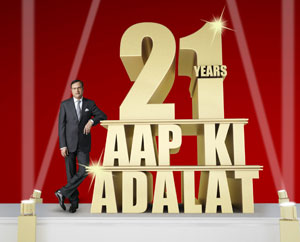
    India TV’s iconic show ‘Aap Ki Adalat’, hosted by Rajat Sharma, completes 21 years of airing in India. To commemorate the milestone, India TV is organizing an event on 2ndDecember 2014 that will be graced by the who’s who of India including the President, Prime Minister, Bollywood stars, sports icons, business leaders, etc.


    Ritu Dhawan, MD & CEO, India TV said, “Words would be redundant if we try to sum-up the glorious journey of Aap Ki Adalat, equally redundant would be an attempt to word the glory of the celebration plan. I am sure that every bit will be loved by both who will be present for the ceremony & those who will get to watch this on their TV sets.”


    Ritu Dhawan

    In the last two decades, this show has enviably featured almost all top names from India. During the celebration most of the personalities who featured in Aap Ki Adalat in its journey are expected to grace this mega event, making it the biggest such gathering in recent times.


    GEC channel Star Plus has also decided to be part of the celebrations and the event will be simulcast on both the channels – India TV and Star Plus on a 7th December at 10pm.


  • Gaana.com launches first musical brand campaign

    By A Correspondent


    Gaana.com has launched a unique musical campaign for its brand promotion. The brand has strategically chosen the content marketing route for this musical campaign.


    The recently released music video on YouTube has already fetched over a million views and in the coming few days, TVCs supported by a high decibel media plan will also being rolled out.


    Gaana.com has been serving out music across genres and preferences for the past two years. The recently launched Gaana 5.0, with a slick black theme and hourly playlist feature, has already led to a 20 per cent increase in average time spent by users.


    ‘Bas Bajna Chahiye’ campaign will further give a push to the app. It is a first-of-its-kind content marketing initiative that promotes the website as a brand. The song reflects the various moods and occasions where “Gaana” plays a role and even uses the word ‘Gaana’, as an integral part of the music video.


    Commenting on the occasion, Pratik Mazumder, Vice President & Head Marketing, Times Internet said, “Being the category leader in the music streaming space, we felt that the brand name itself provided the opportunity to define the category and therefore we took this route. In this musical campaign, we have emphasized on the fact that all moments & situations in life can be made awesome with music. ‘Jo bhi situation to make it awesome’ with gaana.com, Bas Bajna Chahiye Gaana”. We roped in some of India’s most talented musicians to create an amazing song for us which we shared with our users. The tremendous response has only encouraged us to take this forward and convert this in to a full-fledged campaign & launch it across different media vehicles.”


    The campaign has been created by M&C Saatchi and will be the very first multimedia campaign for Gaana.com that will run across TV, Print, Outdoor, Radio, Cinema and of course digital media. Over the next few months, more such videos, centered around the theme will be released.


  • Shailesh Kapoor: The Phil Hughes Tragedy: A Deathblow To Cricket

    By Shailesh Kapoor


    Twenty-five-year-old Aussie batsman Phil Hughes passed away last morning, after battling for life for two days, since being hit by a bouncer in a first class game at Sydney. There was high chance that Hughes, who would have celebrated his 26th birthday this Sunday, would play in the first Test against India next week. Now, the Test itself is under question, as players come to terms with the loss.


    Even as family, friends and the cricketing community grieves, fans have also been left shaken. I’ve invested more than 30 years in this sport, though the interest has admittedly reduced over the last few years. I have seen Mike Gatting being hit on the nose by a Malcolm Marshall snorter, Sanjay Manjrekar have a bloody debut, Sachin Tendulkar fighting it out at Sialkot after a nose blow, Kris Srikanth’s forehead blow against Wasim Akram, and many others.


    In recent times, ace South African wicketkeeper Mark Boucher had a nasty eye injury on the field, forcing him to retire from cricket, and start a recovery process that’s still on after more than two years.


    There are many other instances, including former Indian opener Raman Lamba losing his life after being hit by a shot fielding at forward short leg in a game at Dhaka. Lamba was not wearing a helmet. But with Hughes’ incident, even that little learning can’t be taken.


    There are two ways for a fan to handle such an incident. You can either pass it off as a one-in-a-billion case, convincing yourself that you are unlikely to see any other tragedy of this scale in your lifetime again. Or you can watch each delivery in each future game with a sense of trepidation, hoping all goes well. The reality, at least for me, will lie somewhere between these two ends.


    There’s so much media talk around cricket of late. Sachin Tendulkar released his wonderfully sterile autobiography recently, and the Supreme Court is going all guns blazing to clean up the IPL. But the Hughes incident dwarfs everything else, in terms of its potential long-term impact on the game. I shudder to think what could happen if this freak, one-in-a-billion incident repeated itself within the next few months with another International cricketer.


    The media coverage around the incident has been reasonably mature, though I haven’t seen much in the Indian media that’s insightful analysis with an eye on the future. On social media, some new agencies and publications were under attack for posting pictures of the on-field incident. The pictures are not “gory”, and one could question if there was indeed a need to exercise censorship here, or is it by now a stereotypical response to pan the media for being “insensitive”, when a tragic incident happens. But that’s another debate, for another day.


    Helmet-makers will find some answers. ICC will find a few other. But a promising International cricketer has died at the age of 25. For me, cricket may never be the same again.


  • Asian Paints launches ‘Varna Maalai’

    By A Correspondent


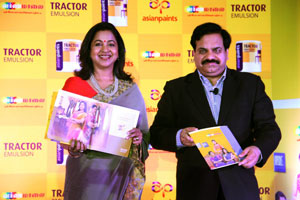
    Asian Paints joins Tamil Nadu in its preparation for Pongal this year with the launch of Tractor Emulsion ‘Varna Maalai’ – a special TV serial colour combination guide designed exclusively for the people of Tamil Nadu. This unique colour combination guide aims to help the people of Tamil Nadu in their decision making process when it comes to choosing colour combinations for their homes.
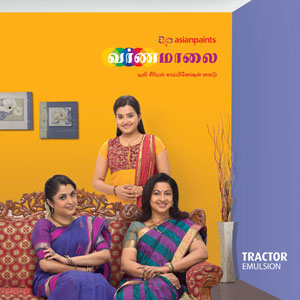
     

    Choosing the right colour combinations for our rooms is something everyone looks forward to when they paint their homes. This is an area where one is always looking for inspiration and guidance to make one’s home stand out. Keeping in mind the role TV plays in inspiring people, Asian Paints has innovatively associated with the three popular TV serials – Vaani Rani, Vamsam, Thendral and their three female leads – Radikaa Sarathkumar, Ramya Krishnan, Sruthi to showcase Tractor Emulsion’s wide range of bright, vibrant colours through a unique colour combination guide called “Varna Maalai”.


    Tractor Emulsion ‘Varna Maalai’ or ‘Garland of Colours’ contains different shades and colour combinations showcased in rooms from the TV serials including drawing room, dining room, bedroom, kitchen and puja room. The book has 60 different colour combination options to help people choose the right combination for their homes.


     

    Speaking on the launch, Amit Syngle, President-Sales, Marketing & Technology, Asian Paints Ltd said, “Painting is an integral part of beautifying one’s home during festive seasons and Tractor Emulsion ‘Varna Maalai’ is our endeavor to be part of Tamil Nadu’s preparation for this process before Pongal. The book is envisaged to help consumers in visualizing colour combinations for various rooms of their home and thus help them in their decision making.”


  • Vijay Sankaran appointed Director, Digital Strategy at Genesis Burson-Marsteller

    By A Correspondent


    Vijay Sankaran

    Genesis Burson-Marsteller has announced the appointment of Vijay Sankaran as Director, Digital Strategy, heading GBM Digital Studio, a Centre of Expertise that provides specialised services and counsel to meet the needs of its clients.


    “Vijay’s appointment reflects Burson-Marsteller’s commitment to strengthen focus on building digital strategies that meet the needs of our clients. Vijay is a key addition to our leadership team and he will provide critical support in articulating digital concepts and solutions in a clear and compelling way to our clients,” said Nikhil Dey, President, Genesis Burson-Marsteller, India & South Asia.


    Yu Yu Din, currently Head of Digital, is relocating to her home country, Myanmar. She will be moving on from the consultancy by the end of 2014. Vijay will spearhead GBM Digital Studio and drive the opportunity space for Genesis Burson-Marsteller and its clients’ digital presence; creating innovative ideas that bridge digital and public relations as well as digital and marketing, to provide solutions and services that are driven by consumer insights. GBM Digital Studio comprises of a strong team of digital strategists, creative specialists working on digital and social media mandates for clients across corporate and financial, brand and consumer, telecom and technology, and health and wellness practices.


    A seasoned communications professional, Vijay brings with him a wealth of experience spanning advertising, digital marketing, public relations and social media. Before joining Genesis Burson-Marsteller, Vijay worked with Social Wavelength, a social media agency as Director, Digital Strategy and Planning. He has also worked with Edelman PR as Head Digital and Nokia Siemens Network as Head Social Media, a global role.


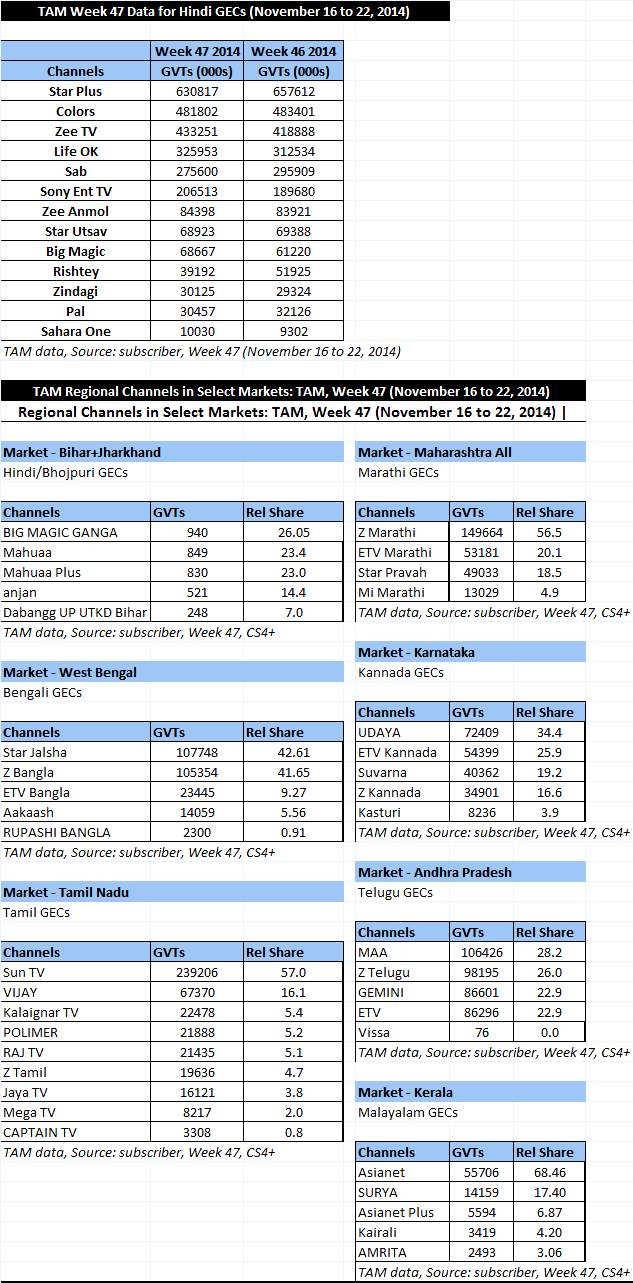
  • TAM numbers for Hindi & Regional Channels in Week 47

    ​Presenting TAM data for various Hindi and regional entertainment channels for Week 47. This ought to have appeared on MxM on Friday, November 28, but it just slipped our notice and didn’t get published. Sorry!


    Note this list is not exhaustive and does not include some key and growing regional markets. Also, as you possibly know, this data is not sourced from TAM. So we’ve sourced it from a friendly subscriber. While we are confident that the numbers are correct, we urge advertisers and our readers in general to verify the data below.


  • mid-day bids goodbye to Pune edition

    By Sandeep Puraname


    Mumbai daily mid-day has stopped publishing from Pune. Friday, November 28 was the last day when the Pune edition of the daily was printed. A front-page announcement signed by ‘Team mid-day’ reasoned: “It was clear that our earnings were not quite matching up to the investments we have made, and the costs we put in every day to bring you a top-quality product.”


    This isn’t the first time mid-day has tried an edition in the city that’s grown beyond being a pensioner’s paradise. In the 1990s too, mid-day (then written: Mid-Day) had commenced and suspended an edition in the two-wheeler town.


    The front-page announcement in Mid-Day Pune announcing the edition's closure


    The announcement added: “Today is the final issue of mid-day, and it is with a heavy heart that we bid farewell. We hope that Pune will continue to remain as vibrant as it is right now, and grow to be a city to reckon with internationally. Actually, we know it will.”


    The note ends with a “Until we meet again” leaving behind a glimmer of hope that the paper may return if the good times are back.


    mid-day’s exit happens a few months after dna also bid goodbye to the city. The Jagran Prakashan Limited-owned mid-day had shuttered its New Delhi and Bengaluru editions in December 2011.


    When asked why newspapers haven’t been successful in the city, a senior media planner requesting anonymity said: “It’s not that there’s no scope for a new English daily, but, yes, there is a huge entry barrier with The Times of India ruling in the city. Sakal of course dominates the market, but that’s in the Marathi space.”


    Meanwhile, it is rumoured that Lokmat may consider entering the city with its English daily Lokmat Times now that the market is less cluttered. For the growing number of media professionals in the city, and a large number passing out from the scores of media and business schools in and around the city, this could well be good news.


  • iTV network appoints MSL for its PR

    By A Correspondent


    News network iTV has appointed MSLGroup to handle the PR mandate for the entire network. iTV Network with its two national news channels News X and India News, four regional news channels India News (Haryana, MP & Chhattisgarh, UP & Uttarakhand and Rajasthan), two newspapers- Sunday Guardian and Aaj Samaj and various digital assets is going through an expansion phase and aims to emerge as the biggest independent news network in the country.


    The Network employs more than 2000 people across 25 bureaus and offices in India. With a reach of 91 million viewers & readers across the country the umbrella brand has.


    Savvy Dilip, Group CMO, iTV Network, said, “We were looking for an agency with expertise in the media segment and found MSLGroup to be the most effective and credible one. We are optimistic that this association will further boost the aggressive growth track we are set to follow.”


    Jaideep Shergill

    Added Jaideep Shergill, ‎MSLGroup India CEO: “The industry is evolving and clients are looking for strategic and integrated communications that will differentiate them in the marketplace. We are pleased to partner with iTV Network and look forward to take this association to a whole new level with our expertise and media knowledge.”


    Meanwhille, an MSL group executive clarified to MxMIndia, that it continues to take care of the PR mandate of the IBN Network (with its news channels like CNN-IBN, IBN7 etc). “But the teams are different,” we are told.


  • With 18k vacancies, DD officials blame gaffes on ‘adhocism’

    By Vasudha Venugopal


    With a video of a Doordarshan anchor making several gaffes at the Goa film festival going viral on social media, barely two months after another anchor used a roman numeral to address the Chinese President Xi Jinping, the public broadcaster seems to be making news for all the wrong reasons.


    But even as media watchers point out that DD anchors have made at least four major mistakes on air in the past five months, officials blame the lapses on the growing dependence on “casual reporters” for reading news and anchoring programmes since vacancies have not been filled in the organisation for the past two decades.


    The casual reporters hired on contract are often not trained for more than two hours on basic camera management skills before live coverage of an event. Besides, the channel no longer has a skill test mechanism to train and test anchors and journalists before they go on air, mainly because it is opposed by a section of people who feel it is discriminatory.


    Officials say the supervisory programme cadre that has trained professionals looking at last-minute mistakes made by anchors has become almost defunct because vacancies have not been filled.


    “With just 10 of the 191 required supervisors working, checking has become difficult. Also, people are watching DD more, so more mistakes are being reported,” said Prasar Bharti CEO Jawahar Sircar.


    At the Goa film festival, the anchor referred to state governor Mridula Sinha as the governor of India. The anchor was recalled from covering the closing ceremony because “she couldn’t identify important personalities attending the fest”, said officials.


    In September, an anchor pronounced Chinese President Xi Jinping’s name as “Eleven Jinping”. After that, a reporter used names commonly associated with secessionists like Islamabad for Anantnag and Suleiman Hill for Shankaracharya Hill while reporting on the J&K deluge. DD also used a picture of former PM Manmohan Singh instead of Narendra Modi, adding to its string of embarrassments.


    DD has over 18,000 vacancies, which has led to the disintegration of the programming section, said officials at Prasar Bharti, adding the channel survives on “adhocism” – by taking people on contractual or casual basis – a far cry from the government’s ambition of elevating DD to the level of the best public broadcasters in the world.


    Source:The Economic Times

    Copyright © 2014, Bennett, Coleman & Co. Ltd. All Rights Reserved

    Licensed to republish


  • Storytelling in the age of Digital


    This interview ought to have appeared a couple of months back. Gaston Legorburu, Executive Director and Worldwide Chief Creative Officer, Sapient Nitro was a star speaker at the Kyoorius Designyatra in September. We met him there. Since this interview was not a very newsy one, we held it back for a few weeks back. And then came rumours and finally the confirmation of the Publicis-Sapient Nitro deal. We also read Mr Legorburu’s quote in some of the stories. So we held it back a little more. Realising of course that we were doing grave injustice to him and to you, dear reader.


    So here’ s the interview from one of digital media’s most happening creative gurus. Read on…


    While digital media is progressing in India, the pace of growth is very slow. Is this how it happened in the Web or are we seeing a trend that’s special only to India?

    I think it’s happened in the West and a few other markets. There are some markets that behave slightly different in India. I’ll start with the similarities. I think that marketers have muscle memory. Any new and emerging medium has slow adoption and there’s always a period of time because the value is under estimated. I think there’s a lag in adoption of digital media that happened in the US, in Europe, not so much in Latin America. The challenge that’s unique to India has to do with large numbers. When marketers and brands, especially multinationals look, they say, it’s billions. They look at that and there’s a direct co-relation to mass media. If we sold all these people soap, how much can we…


    Hey, you are talking of multinationals who are possibly more discerning than the homegrown players, or so we think!

    Multinationals have blinders around understanding the Indian markets because the country is so diverse and because so large. But if you just dissect that, if you look at the total online population of North America and of India, it’s a little over 75 percent. So the size of the opportunity is just about what it is of all of the United States. If you’re a brand and you haven’t done business in the United States and you say that digital opportunity is just about identical, you’ll get much more excited than people have been about the Indian market. If you further deconstruct the idea and you say that the size of that population is almost as big as the United States, what does it look like? Well, it’s younger, growing more from an affluent standpoint, much more tech savvy and they actively participate. When you just look at that particular audience and then you have to think about certain products, services and brands that appeal today and will appeal to that audience, you have to get crazily excited! The opportunity is eclipsed by the billion people opportunity.


    Could it also be because our creative agencies are not doing enough work on the digital media? The big bucks are in TV Commercials and hence the monies are much more there?

    It’s a little bit of the chicken or the egg. At the end of the day, change lies with the clients. We give agencies too much credit. Agencies chase RFPs. I think we give too much credit there. It takes the CMO that is more digital native that sees the opportunities or it takes a few successes where somebody says, if I give you this much money, you give me these many clients and it’s more predictable. I’ll do a bit more of that. Personally from a career standpoint, I started really early in the digital space. I came from a traditional background. Being in the boardroom, fighting for the longest time, until it was just the tipping point.


    And then there’s search.

    Yeah, it’s like I buy this keyword and I get this much business. So it’s always the search guy or the email lady that were sitting on the second floor, not with the main marketing theme but they were kind-of doing something over there and they were just peeling away budget little by little and eventually somebody is like, wait a second, she’s got more money than I do.


    With search, you can hardly get creative.

    I see that as the challenge. The entry, where you start peeling away the dollars and the budgets, you start getting more and more shift of the overall market budget moving, tend to be more on a performance marketing stuff, first. In India too you see lots of little digital shops popping up, it’s not visible work. It’s not visible as a big re-branding or a TVC, but it starts doing the blocking and tackling of driving business. And then you end up hitting the wall.


    Do you think all the tech jargon is a challenge in the process of storytelling?

    I think you can’t build a brand on a spreadsheet. That is a silly idea and unfortunately, I was at a conference not too long ago and a CEO of a big company said that we don’t need more mad men, we need more ‘math’ men. I thought that’s the dumbest thing I ever heard. I think we need, both. There’s art and science. Going back to storytelling, I think it will and still remains the single, most powerful tool we have as marketers to connect brands to consumers. Everything is driven by emotion, all the other stuff rationalises what you want and feel.


    I’m a big believer in the art of storytelling and being able to make emotional connections. That said, I feel, the power story lies with you, not me. I could sit here and talk forever, you might forget most but if there’s something that connects with you, something you want to talk to with your friends, over dinner, then I’ve done my job. If I represent a brand, that should be my canvas, not a 30-second spot or a banner ad. It should be your story. And I think we quickly forget about that and focus so much on the creative product without recognising that the objective at the end of the day is to change perceptions or shift behaviours. It’s not just about telling a compelling story. It’s telling a compelling story that shifts perceptions or drives behaviors.


    That’s traditionally been the objective of storytelling, to change perceptions and/or to persuade people to buy or consume.

    We could step back to speak at that level since it makes a lot of sense. Think about stories and think about you and what stories have helped evolve who you are, versus stories that simply entertain or are pass time. When you look at all of the different story structures and everything we know about storytelling, there are some stories that are much more likely for you to see yourself in, for you to learn a lesson from, for you to take something away than others. If you think about Indian or American culture, what are stories passed from generation to generation? You look at Disney Films. What’s the structure most likely to get passed on in an oral society as opposed to a broadcast media world? This is a little bit of ‘Back to the Future’.


    What according to you has changed from traditional to digital advertising? Any one thing you’d like to highlight.

    There’s been something that’s been constant, but we have lost sight of it for a period of time because of broadcast media as it is. That’s storytelling. Stories are as old as time. It is the way we make sense of the world. Such a big part of just being human. Clearly, if you want to persuade or connect people, that’s the most powerful story. It was before television from the traditional storyteller’s time. It’s always been a big part of commerce, of persuasion. But what changed with broadcast media is that stories became less participatory. They became less about interpretation and passing on of the story. You now could sit back and just suck it up. You could sit down and watch a movie and it just entertains you. It doesn’t change your view of the world. In some cases it’s just profound stuff. This idea that if you can see yourself in the story, you’re much more likely to remember it and connect with.


    What we’ve seen here in India is that the emphasis on an emotional connect in digital advertising. Is that specific only to India?

    I think there are two things that are not specific to India. People are people. I said to you something funny or interesting and then you say it to a bunch of people. Think about what makes stories get passed on? If I look at your Facebook or Twitter, most of the stuff is either things about you or something you found interesting that you want to share with your friends, you want to be associated with. Funny, entertaining stuff. We always do that. A lot of it going through those social pipes is people wanting to share their story.


    It’s all about me, me, me, me, me. There are stories that people see themselves in. Those are stories better suited for advertising, marketing, for connecting people to brands. Forget about digital, just look at television. Just a 30-second piece of a film. When it really connects with you emotionally, there are two things. You think that’s hilarious, that’s based on an insight, I remember that ad, that ad was really great and then you forget what brand it was from. There are those and then there are those others where you are like, man! They value the same things I value, I should feel good about being associated with that brand. I just had this experience, I need to share this with somebody.