Category: MEDIA

  • Life after UTV for Ronnie Screwvala

    Life after UTV for Ronnie Screwvala


    By Malini Goyal


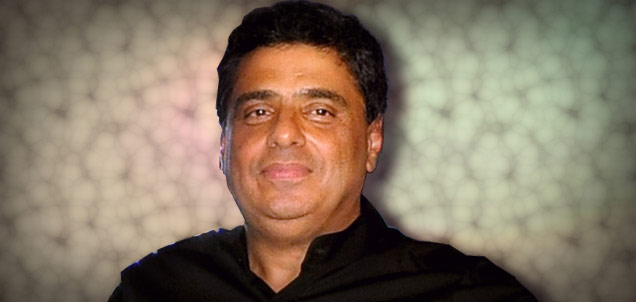
    What would you have done if you started off with a few thousands of rupees and turned them into a couple of thousand crore over roughly three decades? Ronnie Screwvala, 57, reckons it’s the time to do “something entirely new”. A smalltime cable operator in Mumbai in the early 1980s, Mr Screwvala went on to build a $1.4-billion media empire straddling movies, gaming and new media, TV content and broadcasting.


    After selling his entire stake of 70% in UTV Software to Disney by 2011 for a cool Rs 2,000 crore, last month Mr Screwvala exited the company he had founded – and in the process exited the media and entertainment (M&E) sector, too. “I came into this industry with Rs 37,500. Today, I have lots of money but that’s all notional. The struggle [going forward] for me will be of a different kind. I am at a crossroads, looking at incredible opportunities,” says Mr Screwvala.


    The opportunities involve parting with parts of the stash he’s sitting on in two ways – one, with a profit motive, by turning investor-mentor for start-ups; and the other with a philanthropic objective. And they promise to keep him busy – and away from the M&E world for some time to come.


    A non-compete clause signed with Disney bars Mr Screwvala from starting a conflicting business. But his new calling may ensure he never returns to the business he knows best. “If I know Ronnie well, he will never come back to the media industry. The sense that I get from him is that he has totally moved on,” says Star India CEO Uday Shankar. Globally, successful entrepreneurs like Marc Andreessen, founder of Netscape, have followed non-linear paths by exiting successful ventures to turn both investor and serial entrepreneurs. Back home, Ajay Piramal is one prominent investor who is looking for avenues to park the proceeds from the sale of a pharma venture.


    Elsewhere, Infosys’ NR Narayana Murthy and Wipro’s Azim Premji have set up funds to invest their personal wealth. But they both remain deeply entrenched in and committed to the businesses they co-founded or founded. Screwvala, for his part, belongs to a rarer breed that is starting all over again from scratch on a totally fresh canvas.


    Entrepreneurial Dream

    Sitting relaxed in his spacious fifth floor penthouse in the tony Breach Candy area of south Mumbai, Mr Screwvala is applying the finishing touches to the blueprint for his second innings. While his plans are still evolving, there are few ground rules he has set for himself. One of them: politics is a strict no-no as a career alternative. He also broadly wants to spend half his time in business and half pro bono. “I want to evangelize entrepreneurship,” declares Mr Screwvala. He wants to use 10% of his time figuring ways to build a platform to boost entrepreneurship.


    “I want to do this for myself. I have to do one or two very disruptive things so that people can look at entrepreneurship more positively in India.” He is vague, he admits. But his mind is running wild doing some blue-sky thinking. His options: either become a catalyst in building an ecosystem; or help figure out new ways to make crowdfunding possible in India; or even write a book. “That’s a massive passion for me. I want to build communication tools and platform to enable that ecosystem. This could be the touchpoint to my past.”


    Currently at the heart of his strategy for investing – both money and his leadership bandwidth – in start-ups is Unilazer Ventures. And here too he’s doing it his way: He won’t settle for less than 35% in a firm; unlike private equity investors, he will not have a time horizon; and he’s extremely selective about sectors, reluctant to look beyond e-commerce, health, education and agriculture.


    “This [Unilazer Ventures] is for profit. Agri is so unglamourized. Nobody is looking at it. But it offers great margins,” he says. While most of his investments will be in start-ups seeded by others, Mr Screwvala plans to build at least one or two businesses ground up.


    His optimism and passion notwithstanding, sections of the PE industry have their reservations about the start-up fervour in the country. “The track records of investments made by many entrepreneurs have been mixed so far,” warns Rahul Bhasin, managing partner at Baring Private Equity Partners India, adding that in India managing the external environment is a huge challenge for greenhorn entrepreneurs.


    Swades and Philanthropy

    By contrast, Screwvala’s other plan on the drawing board appears infinitely less risky although he will be as demanding in making every penny count. He’s set aside Rs 350 crore of his personal wealth and will raise a similar amount from others for Swades, the philanthropy arm. “India does not have a problem of resources. Government spends massive amounts of money but the impact is low. Execution is the key,” Mr Screwvala explains.


    Most corporate philanthropic outfits focus on a specific issue – Bharti and Premji foundations focus on education, for example. Swades, though, has a geographic approach – for starters it plans to look at all major issues faced by Maharashtra’s villages in a 360-degree manner. “I want to create a model that is scaleable, efficient and has measurable impact – like any company,” says Mr Screwvala.


    Swades is already working in 1,000 villages impacting a lakh villagers. Deval Sanghavi, cofounder, Dasra Foundation, a philanthropic organization, points out that Swades does not want to reinvent the wheel. It prefers to get the right expert partners in a range of areas like education, farming, water, health and sanitation, and turn into a catalyst.


    Take for example its work with the farmers. In villages you realize men between 20 and 45 have migrated to cities and are living in terrible conditions, Screwvala says. He wants to reverse the tide and figure ways to improve incomes and standards for farmers. Swades has collaborated with Jain Irrigation to introduce drip irrigation for small farmers. A year back it began working with agricultural bank Nabard. “The best thing about Swades is that they first do a pilot on their own to demonstrate the benefits and then seek government support for farmers,” says Nanda Survase, district development manager (Raigad), Nabard.


    One such villager to benefit is Jeeteshbhai, 22, who was in Mumbai since 2010 working at a retail shop on a monthly salary of Rs 5,000. Last year he returned to his village in the Raigad district. His farm is small – under three acres. But using drip irrigation, vermin compost and some smart management of crops like water melon and a few vegetables, he has earned Rs 25,000 in the past four months. He is looking at a net income of Rs 1 lakh a year – far more than what he was earning in the city.


    Praveen Jain, COO, Swades says there are a few things they keep in mind before starting work in a village. “We measure everything so that we know the progress. We only look at projects that are self-sustainable in 3-5 years. And our exit is built in.” Also to ensure villagers’ commitment, nothing is offered free. Villagers need to co-contribute, even if a small amount. Take for example, the water supply to each home. Villagers co-contributed 10-15% of the cost of the project. And they also put together a small committee and a mechanism to build a corpus for regular maintenance of the pipes. Today, six gram panchayats – 20 villages and 6,000 people – are getting drinking water right inside their homes.


    Understanding the Disney Exit

    It’s difficult for many – including his peers in the M&E sector – to figure why Mr Screwvala chose to quit the game he was so good at. “When I sold off, they [other entrepreneurs] were shocked. Most couldn’t believe it,” he admits. But he’s convinced it’s the right reason. For a couple of reasons.


    First, UTV may be well diversified within M&E, but lacks size and scale in most of them. In broadcast, for instance, the absence of a general entertainment channel (GEC) is stark. “Their presence was through niche channels where getting advertisements and franchises becomes difficult if you are not No. 1,” says Nikhil Vohra, an M&E analyst who recently founded Sixth Sense, a consumption-centric venture fund.


    The second reason for exiting is the challenging and uncertain nature of the content-driven business. One, while the industry is secular in consumer demand, its heavy dependence on advertising makes its financial performance asecular. Second, the entire industry is undergoing a massive churn as technology, ubiquitous smartphones and an anytime-anywhere audience are disrupting old business models. “Competition, choice and globalization of content mean that it’s game over for a lot of M&E companies. Many will disappear and there will be consolidation. Only those who have the resources to invest in high quality content and strong brands will survive,” says Mr Shankar.


    That Mr Screwvala is remarkably detached from the business he built with his blood, sweat and passion made the exit easier. “I don’t think you can expand and build scale if ownership and control is what you are obsessed with,” he says. Star India’s Mr Shankar explains that Mr Screwvala is “passionate but not emotional about his decisions”.


    Disney began its association with UTV first as a customer, then as an investor, partner and, eventually, owner. After picking up a minority 14.99% stake UTV in 2006, by 2010, both partners were asking the same question: “Now what?” “A buyout seemed the most logical step,” says the founder.


    The Disney Ride

    In 2012 after completing the buyout of UTV, Screwvala was appointed managing director with the mandate to steer the integration of the two companies. It wasn’t a smooth ride. “There were cultural differences although value systems were similar,” says Mr Screwvala.


    Like all integrations, this one too had its own share of issues. Some redundancies were inevitable. With the far bigger (in India) UTV dominating the merged entity and Mr Screwvala at the helm, it meant most key positions were helmed by UTV executives. Siddharth Roy Kapur, from the UTV stable, took over as managing director. Unsurprisingly, many Disney executives put in their papers.


    Disney’s MNC culture with a thrust on structures and processes is a polar opposite of Mr Screwvala’s entrepreneurial style of functioning. His informal style – epitomized by the round-neck T-shirts he often sported at meetings and important events – was in stark contrast to the formal suit-and-tie culture of Disney.


    By the fag end of his stint as Disney India MD, Mr Screwvala’s patience was running out. “He was completely stressed,” says an ex-Disney executive. For an entrepreneur who was used to taking quick decisions, working in an MNC where decisions were being taken far away in Burbank, California wasn’t proving easy. Take, for instance, a simple thing like finalizing office space – the process took an entire year. “I could see the frustration and suffocation building inside him,” adds the former Disney executive. Starting afresh is clearly proving to be liberating.


    Source:The Economic Times

    Copyright © 2014, Bennett, Coleman & Co. Ltd. All Rights Reserved

    Licensed to republish
     

  • My son does not watch news channels: Rajdeep Sardesai

    By A Correspondent


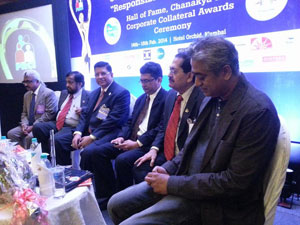
    It’s the favourite topic of discussion in media forums these days, and this is what they did while participating in deliberations in a two-day Global Communication Conclave in Mumbai. Media and communication professionals raised questions relating to journalistic ethics and corporate and PR professionals’ pressures to garner space.


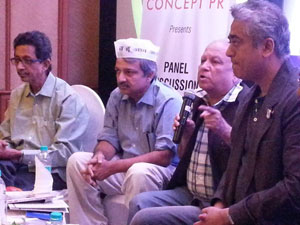
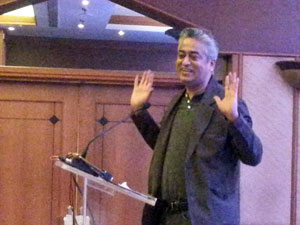
    Organised by Public Relations Council of India (PRCI) in association with the Press Club Mumbai, the conclave focused its discussion on the theme of Responsible Communication, dealing with aspects related to media, corporate, social media and GenX. Editor-in-chief of IBN 18 network Rajdeep Sardesai was candid when he said: “My son does not watch news channels. He gets his news from the Internet.” When a delegate to the conclave observed that some news coverage reminded him of jokes, the former Mumbai journalist said: “Watch news channels if you want to cartoons” as the gathering burst into laud laughter. “Breaking news is breaking down and in sensationalizing the news, we seem to be losing sense,” said Mr Sardesai.


    He admitted the intense competition among 483-odd news channels in the country, and over 150 channels waiting for clearance, keeps journalists on their toes which at times results in output editors flashing the news even without cross-checking just because a rival channel broke the story. He said he failed to understand the growing one-upmanship since viewers do not watch all the channels at any given time. “They may at most have two TV sets at their homes and cannot be expected to watch twenty news channels as we do in our studios,” he said.


    Senior journalist and Chairman of Press Club Prakash Akolkar expressed distress over some managements asking journalists to indulge in paid news and raise funds for their news channels. Another media veteran Kumar Ketkar pointed at the vanishing thin line between private and public lives and intrusion of TV cameras into almost every aspect of lives of people. Bengaluru-based TV personality Aparna Narayana Swamy said the race for ratings has unfortunately spread to regional media as well and some television shows cross boundaries of decency.


    Dealing with a question whether political parties are using media to suit their needs, Mayank Gandhi of Aam Admi Party said today’s politics is all about messaging their audiences and that there was nothing wrong in them using the news medium.


    Conclave chairman and media professional B N Kumar pointed out any one with a mobile camera and the internet connection is a potential broadcaster and, in this context, responsible communication assumes added significance.


    Senior journalist and President of Press Club Mumbai Gurbir Singh, who anchored a panel discussion, pointed out that increasing corporate pressure on media for coverage and some attempts to ‘kill’ the news that does not suit them are some of the challenges that media professionals face today. He said the emergence of the alternative media in terms of social media and blogs opened up new means of communication which corporate must take into account as the voice of dissent cannot be suppressed any more.


    Young participants in a discussion on the role of GenX felt that those posting on social media must also do so with a sense of responsibility. But most them did not like the idea of having their parents on the same page as it could leave to disastrous situations. “Our tastes, choices and style messaging differ a lot due to a huge generation gap,” said a girl participant.


    The PRCI also felicitated achievers in the fields of media and communication with its prestigious Chanakya Awards. Mr Sardesai was named the Mediaperson of the Year. We do not have the full list of awardees but we do know that senior PR and corporate communications professional and a former journalist Raju Kane was inducted into the PRCI’s Hall of Fame.


    Photographs: B N Kumar


  • FICCI Frames turns 15, 2014 edition to focus on how M&E influences social change

    By A Correspondent


    The Federation of Indian Chambers of Commerce and Industry (FICCI) has announced the 15th edition of its annual Frames convention for the media and entertainment industry.


    FICCI Frames 2014 will be held from March 12 to 14, 2014 in Powai, Mumbai. Nearly 2000 Indian and 600 foreign delegates are expected to attend. The theme of Frames 2014 is “Media and Entertainment: Transforming Lives” highlighting the role of media and entertainment as a vehicle for social change (*See Disclosure).


    The convention will discuss reforms and regulatory endeavours along with working on ideas on socially meaningful and quality content. The inaugural keynote will be by FCC Commissioner Ajit Pai who will touch upon content in the regulatory landscape in the US. Raghav Bahl, Controlling Shareholder and Managing Director of the TV 18 Group will make the theme keynote address on Media and Entertainment as  a Vehicle for Social and Economic Change.  Aroon Purie , Chairman India Today Group,  will deliver the keynote on Print Industry: Surviving All Odds in the Digital Era. Justin Osofsky, VP – Media Partnerships, Facebook will talk on ‘Establishing Social Networks as the Primary Online Forum for Public Conversations ‘.


    Apart from the core theme, Frames 2014 will focus on key avenues for monetising the sector such as Talking Numbers: Hard Facts about M &E’s Economic Contribution; TV 3.1: Content, Strategies and the Future of Broadcast; De-bottlenecking the Regulatory Hurdles, The Changing Dynamics of the Film Exhibition Landscape.


    Stakeholders and thought leaders such as Uday Shankar, CEO, Star India and Chairman FICCI Entertainment committee, Karan Johar, Chairman , Ficci Frames, Punit Goenka, MD & CEO , Zee Entertainment, Sudhanshu Vats, Group CEO Viacom 18, Mathieu Bejot, Executive Director, TV France International, Roger Fisk, Presidential PR Guru from President Obama’s electoral campaign; Jim Egan, CEO, BBC Global News, Andrew Lack, Chairman, the Bloomberg Group; Bill Livek , CEO, Rentrak,  Kim Dalton, Chairman, Asian Animation Summit; Hiromichi Masuda, Vice Chairman Business Committee, The Association of Japanese Animations,Todd Miller, the CEO of Celestial Tiger Entertainment, a Lionsgate joint venture and former head of Sony Pictures Television, are slated to speak at Frames 2014.


    Frames 2014 has been planned with some off-the-cuff sessions to broaden the conventional boundaries of the summit. Sessions such as “Internet & Democracy: Interloper or Catalyst?”, “The Film that Changed My Life” and “The Indian Electronic News Media: On Fine Balance?” will be held.


    A discussion specific to attracting the influx of private equity for the sector has been planned and film funding is a subject which will be deliberated upon. A Producers’ Masterclass wherein producers like Andy Paterson and Guneet Monga will discuss the overarching role of a producer in taking a film from start to finish. Masterclasses with acclaimed Hollywood VFX supervisors such as George Murphy , Oscar winner and Chief Creative Officer, Reliance Media works , Jon Cowley and Ben Murray  of Prime focus world are also in the offing. The cinema exhibition sector will be dealt with at the “Cinema Advertising & Alternative Models: The Changing Dynamics of the Film Exhibition Landscape” session. Creative sessions on “The Past Present and Future of Good Cinema: Film-making for a Cause” and “Cuts so Deep: Are we Sacrificing Creativity at the Altar of Morality” will focus on ‘meaningful cinematic content’.


    Australia is the partner country and Karnataka the “Partner State” at FICCI Frames 2014. Srivatsa Krishna , Secretary, Deptartment of IT , BT & S and T , Govt. Of Karnataka will touch upon how Karnataka has been doing much to promote growth and development of its M&E industry


    An innovative feature of this year’s edition of Frames will be the FICCI-Ink Salon, an exclusive by-invite only daily hour-long session with speakers from the Indian part of TED talks. The BAF award show and networking evenings will as usual be the hallmarks of the after-hours.


    *Disclosure: MxMIndia is a Media Partner of FICCI Frames 2014


  • Times Internet launches travel portal HappyTrips.com

    By A Correspondent


    Times Internet (TIL), the digital arm of The Times of India group, has launched a travel portal HappyTrips.com.

     

    HappyTrips attempts to be a platform helping users plan their next trip, discover amazing hotels and restaurants, things to do as well as providing them with fun facts all around the world.


    “We are excited to announce the beta launch of our latest venture HappyTrips.com. HappyTrips is special because it feels like a magazine, but is powered by a robust backend data platform, storing millions of related data points. Upfront, the user sees easy-to-navigate cards with curated guides, itineraries and lists to help them find the best of a city they’re exploring,” said Satyan Gajwani, CEO of Times Internet.


    HappyTrips intends to be the go-to destination in the travel category with curated travel advice and actionable-and up-to-date information to inspire readers. “Our featured lists and guides help filter through the noise and find the best places to stay, eat, party, or find something to do”, said Puneet Gupt, Business Head of HappyTrips.com


    The site covers close to 200 Indian destinations as of now and another 100 destinations around the world.


  • Green Hungama Contest back at IAA Olive Crown Awards

    By A Correspondent


    The Green Hungama Contest, set up by Hungama Digital with the International Association of Advertisers – India Chapter’s annual Olive Crown Awards will see winners being awarded on March 14.


    As per a communiqué: the Olive Crown Green Hungama Award 2013 will be given for eco-sensitive communication that creates awareness for planet Earth’s well-being & sustainability. The entry for ‘Green Hungama Contest’ must be an original piece of work. However, for the sake of budget and other constraints like time, the entry can be a ‘scratch’ film made with borrowed footage or material. What will be judged at this stage is the creative ‘big idea’ and not the execution brilliance.


    This contest is open to all. The participant has to be 30 years of age or less as on March 31, 2014. The winning entries are awarded the Olive Crown and cash prizes worth Rs 1 lakh, that will be split between two winners — the Gold will have a cash prize of Rs 60,000, while the Silver is worth Rs 40,000. They will also get to showcase their work at Olive Crown Awards 2013 which will be held in Mumbai on 14th March 2014.


    Neeraj Roy

    Said Neeraj Roy, Managing Director and CEO Hungama Digital Media: “This is the fourth year we are partnering the IAA in this unique contest. It not only stokes the creative fires of young people and makes them conscious of a good cause, it also resonates with our audience and what we at Hungama are all about.”


    For details of sending in entries, log on to http://www.olivecrowngreenhungama.com/terms.html.


  • Starcom MediaVest Group India is Hanley’s King-dom

    By A Correspondent


    Starcom MediaVest Group (SMG) has announced the appointment of Hanley King as Chairman, SMG India. Mr King will report to John Sheehy, President, Global Operations and will be based in SMG’s Mumbai office.  As Chairman, SMG India, he will be focused on key client relationships, new business and commercial operations for the agency. Malli CR, CEO SMG India and Vishal Sampat, CEO SMG Convonix will report to Mr King and will continue to lead daily operations for their respective organizations.


    “Hanley is a consummate professional with a proven track record of delivering results across our globally networked clients,” said Mr Sheehy. “Our recent acquisition of Convonix and our robust digital and analytics practice prove that our operations in India are among our most future-focused.  I look to Hanley to work hand in hand with Malli and Vishal to continue to build upon our momentum in India.”


    Mr King was most recently SMG Global Client Lead for APAC, based in Singapore. In this role he managed multifaceted SMG client teams for Samsung, Mars Wrigley, Kellogg’s, Novartis and Bank of America and others across the APAC region. Prior to joining SMG, Mr King was CEE President for Universal McCann, where he was responsible for 22 markets across the Central European region with 500 plus staff and billings of close to 1 billion USD. In his career Hanley has worked on many global accounts in either Asia, Europe or New Zealand spanning FMCG, Auto, Financial, Breweries and Telcos.


    “India is a fascinating, fast-paced and constantly evolving market,” King said. “And that’s why it’s such an honour to be joining SMG India and working with Malli and Vishal— a team that is so relentlessly focused on the future.” SMG India’s client list includes Dabur, Axis Bank, Aircel and Ranbaxy. In 2013, PublicisGroupe acquired Convonix, which aligned with SMG India. Founded in 2003, Convonix today employs more than 400 digital marketing specialists, making it the largest digital agency in India, serving such clients domestically as well as internationally as Tata Motors, Reliance Industries, Budweiser, Taj Hotels, DBS, Mahindra Holidays, Tata Global Beverages among others.


  • CNN appoints Ravi Agrawal as New Delhi Bureau Chief

    By A Correspondent


    CNN International announced the appointment of Ravi Agrawal as the New Delhi Bureau Chief. Agrawal effective April 1, 2014. Mr Agrawal will manage and oversee CNN’s multi-platform newsgathering operations from India.

     

    An award-winning CNN producer, Mr Agrawal has worked with the network across its London and US offices for eight years. He assumes this new role from being the senior producer of CNN’s flagship Sunday programme on world affairs ‘Fareed Zakaria GPS’.


    “India has the world’s interest and CNN has had a long standing presence and robust operations in the countryfor well over two decades now. Ravi’s appointment is very timely as we prepare to coverthe world’s largest democracy going to the polls in the coming months,” said Ellana Lee, Vice President and Managing Editor, CNN International Asia Pacific.


  • Now, a new Bangla music channel: Music F – Fatafati

    By A Correspondent


    Bengali music lovers have another 24-hour destination for their entertainment: Music F- Fatafati, an all-new Bangla music channel with 3D animations and cartoon shorts that will keep the viewers entertained in between shows.
     

    The channel has brought to life characters like Jagai, Madhai and Pappi Da whose hilarious antics and witty spoofs will have the audiences in splits, notes a communiqué.


    Talking about the launch of the channel, Siddharth Misra, Director, Royal Raj Media, said: “We are pleased to tie up with Launch Pad for the launch of Music F – Fatafati and offer the latest in Bangla music to our audiences. With a strategic tie-up with Eskay films we hope to deliver a fantastic product. Royal Raj Media is looking to invest further in broadcast media and planning a few more channels in the near future.”


    Speaking about the concept and creation of the channel, Vikas Varma, Director, Launch Pad, said “After the successful launch of various TV channels like 9XM, Music F – Fatafati has been very close to my heart. In the past 5-6 years, Bengali music and movies have achieved world class standards. I believe this channel will change the way viewers consume music.”


    Commenting on the operation of Music F – Fatafati, Probal Gaanguly, Director, Launch Pad said: “West Bengal is a growing market for advertisers, broadcasters and media planners. We are confident that with a rich Bengali music library and clutter-breaking content on the channel, we will be able engage viewers and also offer advertisers an effective platform to reach their TG.”


    Speaking about the tie up with Music F – Fatafati, Himanshu Dhanuka, Director, Eskay movies, said that he is excited to be a part of this association to promote the Bangla music culture and is looking forward to more such associations in the future.


    Royal Raj Media has tied up with Launch Pad for the conceptualization, creation and management of the channel for the next three years. Last year, Launch Pad had successfully launched Bhojpuri music channel Hummra M in a similar deal.


  • 94.3 My FM introduces ‘Jiyo Dil Se Heroes’

    By A Correspondent


    The Dainik Bhaskar group’s My FM radio station network has come up with a new initiative called “Jiyo Dil Se Heroes” in sync with its brand philosophy, Jiyo Dil Se.


    Celebrities from various walks of life will be profiled every month in a two-hour radio show across all 17 stations. The show kicked off on Tuesday, February 18 with author Chetan Bhagat talking about his various experiences of life and how he turned in to a full-time author.  Other names that feature in the future are Pandit Birju Maharaj and Geet Sethi.


    The show will be promoted extensively through 360-degree media campaign which will include promotions across platforms like cinema, print, digital and radio.


    Harrish M Bhatia

    Speaking on the initiative, Harrish M Bhatia, CEO of 94.3 My FM, said, “Jiyo Dil Se Heroes is an extension of the core values and beliefs at My FM.. We aim to communicate our brand philosophy and develop a stronger bond with our listeners through this innovative concept.”


    Added Viplove Gupte, National Programming Head of the network: “Every three weeks we will be featuring one hero and his story, his emotions, his journey. This is not a life-story show, this is the story of moments and emotions that make these people a hero, a hero who lives “Dil Se”.


  • Game4u evangelises gaming with parties

    By A Correspondent


    Game4u, the specialist retailer of videogame products and the retail arm of Milestone Interactive Group has launched its new property – ‘Game4u PlayPad’. The property will mean parties for gamers where enthusiasts come together to enjoy the latest games. The first PlayPad Night took place on February 15, 2014 in Mumbai, with a turnout of 45 casual gamers.


    Hosted by Game4u, the PlayPad gaming nights are designed with the objective of spreading the brand message of making gaming a primary medium of entertainment and recreation amongst the young adults. Game4u will host customized gaming parties, wherein a group of 20 gamers can come together at one place and play various single player or multiplayer games. The parties will be executed with specialized themes across different venues.


    For the PlayPad Nights, Game4u has got on board energy drink ‘Red Bull’ and ‘Debonairs Pizza’ as brand partners.


    Commenting on the launch of Game4u PlayPad, Jayont R Sharma, Chairman and CEO, Milestone Interactive Group said, “We are very excited to bring the Game4u PlayPad concept to our consumers. With this initiative we are looking to spread awareness about gaming and build an extensive gaming community across all age groups. We are hoping to interact with our consumers at a more personal level and are looking make gaming a cult phenomenon, like it is in some of the other countries.”


    He further added, “We are starting Game4u PlayPad with Mumbai and will soon take it to other cities in the coming months.”


  • InMobi report finds 15% increase in m-commerce

    By A Correspondent


    Independent mobile ads major InMobi announced the results of its 2014 Global Mobile Media Consumption Report, which provides insights into changing trends in mobile media consumption habits. The 2014 report findings reiterate that mobile devices have become integral to everyday life, but moreover, that trust and reliance on mobile devices has increased and are expected to have a significant impact on mobile commerce in 2014.


    Specifically, the report predicts a 15 percent increase in mobile commerce in 2014, with 83 percent of respondents planning to conduct mobile commerce in the next 12 months. Mobile has become a key factor affecting purchasing decisions, with 48 percent of respondents worldwide listing mobile as a key media which impacts purchasing decisions, and reliance on mobile is even higher in important consumer markets, like India, at 60 percent.


    “In last year’s report we found that mobile had touched most aspects of modern life. But this year, we find that mobile has really become an essential part of daily life, even a daily workhorse, that has replaced the desktop and TV for everything from gathering key information, media consumption and accomplishing daily tasks, like shopping and paying bills,” said Naveen Tewari, CEO, InMobi. “Furthermore, with mobile content gaining similar prominence as TV, mobile advertising is now impacting consumer behaviour across the entire purchasing lifecycle from small day-to-day purchases, to bigger purchases, like cars.”


    Key 2014 mobile media consumption statistics:

    • The average mobile web user consumes 6.0 hours of media per day.
    • 60% of the average global mobile web users now use mobile as either their primary or exclusive means of going online.
    • Multi-screen behaviour is common, 61% of mobile web users engage in mobile activities (e.g., social networking, text messaging) while watching TV.
    • Mobile is an important companion particularly for in-between times, 83% of respondents use mobile while waiting for something, and 81% while lying in bed.
    • 40% of Indonesians use mobile as their only means of web time, followed closely by 34% in India and South Africa.


    In response to mobile advertising:

    • 78% have downloaded an application;
    • 68% have visited the website of an advertiser;
    • 56% have visited a store for more information;
    • 52% have bought something via their mobile device;
    • 44% have located an advertiser on a map; and,
    • 43% have called an advertiser by clicking on the phone number in the ad.


    Mobile commerce insights include:

    • 68% of respondents have spent money on an activity via mobile, and commerce behavior is extending past digital goods, and now includes physical and financial goods.
    • 83% are expected to spend money on an activity via mobile in the next 12 months, a 15% increase from today.
    • Mobile ads in different formats appeal to different segments.


    The full report is available for download on the InMobi Insights website at www.inmobi.com/insights/on-demand.


  • Say Cheers! Madison predicts 16.8% adspend growth in 2014


    By Johnson Napier


    With so much being reported and analysed about how the oncoming Lok Sabha elections would benefit or harm the prospects of the economy, there is one section of the trade for whom the election year indeed holds good stead. Going by the growth projections that the election season are expected to bring in 2014, the media advertising business in India is in for a big surprise if numbers revealed in a recent report are anything to go by.


    According to growth projections released by the Pitch Madison Media Advertising Outlook 2014 report in Mumbai yesterday, the advertising revenues are expected to grow by a robust 16.8 per cent in 2014 at Rs 37,216 crores. This is a sharp rise from the healthy 11.1 per cent that was reported by the industry in 2013. In fact the growth in 2013 is much more then the benchmarked figure of 7.4 per cent that was initially predicted by the report.


    Presenting the numbers to the fraternity in Mumbai, Sam Balsara, Chairman and Managing Director, of leading media services conglomerate Madison World said that the time to be cautious – which was the state that the industry was in for much of 2013 – was almost over and that the year ahead would be even more fulfilling with growth projected in the range of 16.8 per cent.  The report was presented by Madison World in conjunction with the exchange4media group’s Pitch magazine.


    “It is great to be clocking a growth rate in double digits, which has come as a boon to the industry that was stuck in clouds of uncertainty given the economic downturn that was witnessed for much of last year,” affirmed Mr Balsara. “Compared to 2012 that registered revenues to the tune of Rs 28,694 crore, the year 2013 reported numbers equalling Rs 31,877 crore, growing by 11.1 per cent. In fact 2014 would outperform the previous year and would register an estimated growth of 16.8 per cent, with revenues totalling Rs 37,216 crore,” said Mr Balsara, beaming.


    According to Mr Balsara, the core factor that would bring in the growth for the industry would be the Lok Sabha and the state Assembly elections scheduled for 2014. This would also include spendings by individual political candidates that would be investing money in reaching out to the masses.


    Presenting a medium-wise break-up to the gathering, Mr Balsara said that like last year, this year too belonged to Print that emerged as the numero uno medium. Advertisers took a liking to the medium as it reported a growth of 10 per cent with revenues equalling Rs 13,167 crore. This was largely due to increased advertising by sectors such as FMCG that contributed by 12.3 per cent to the overall ad pie (replacing Auto from the top spot) and Auto that contributed around 11.7 per cent. Education though saw a decline to 9.71 per cent versus 10.6 per cent share registered last year.


    When asked by MxMIndia to share his observations on the projections for the medium of Print, Varghese Chandy, Chief General Manager, Marketing, Advertising Sales, Malayala Manorama said that the growth was indeed a bullish one for the sector. “I am excited by the numbers that we have managed to throw up as a medium. The fact that we have still got the advertisers attention by being the number one medium of choice is a big thing.” Sharing further on what will drive the sector in 2014, he said that the Lok Sabha elections and the assembly elections that will take place in 2014 will bring in the necessary revenue growth that the medium is known for. But he had a word of caution for the magazine sector as he said that it would still be a task for magazines to contribute as much growth as newspapers too. “While niche and regional magazines will continue to deliver good growth, overall the magazine industry will still be challenged on the growth front.”


    Following the medium print closely was Television that recorded a growth of 8.2 per cent with revenues totalling Rs 12,410 crores. This was in sharp contrast to 2012 where the medium registered a zero per cent growth. Where sectoral contribution was concerned, Media, Retail, Alcoholic Beverages and Corporates registered a negative growth with only FMCG registering a positive growth for the medium. The medium is further expected to grow by 15 per cent in 2014.


    The next medium to vow the advertisers was Digital that has now become the third-most preferred medium for advertisers on a consistent basis. With revenues totalling Rs 3,050 crore the medium grew by a good 32.4 per cent and is expected to grow by 29.5 per cent in 2014 as well. Of this, display advertising will continue to have an upper hand compared to search with revenue numbers totalling to Rs 2,150 crore.


    Siddhartha Mukherjee, Category Director, Chocolate and Media, Cadbury India, Mondelez International was optimistic of the returns that the medium would deliver in 2014. Affirming to this writer, he said, “Going by the projections that were presented today and by the points bought up by panellists, there is no doubt that digital will continue to remain a go-to medium for many advertisers. That is what would be of importance to us too.”


    The mediums of Radio, Outdoor and Cinema combined accounted for the remainder 12-13 per cent of the ad chart with Radio accounting for revenues totalling Rs 1,097 crore (18 per cent growth), Outdoor clocking a growth of 6.2 per cent at Rs 1,977 crore and Cinema registering a growth of 10.4 per cent at Rs 167 crore.


    The evening also witnessed keynote addresses being delivered by dignitaries including Adi Godrej, Chairman of the Godrej Group, Uday Shankar, CEO of Star India, and Girish Agarwal, Director, Dainik Bhaskar Group who presented a roadmap that the industry could adopt to change their business fortunes and also derive positive growth for the several mediums under Media.