Category: MEDIA

  • Romedy Now to launch on September 22

    By A Correspondent

    Times Television Network has announced that it will launch its English entertainment channel Romedy Now on Sunday, September 22 at 7 am.

    It is learnt that initially the channel is scheduled to only air back-to-back movies, but that will change with TV series and sitcoms in the near future.

  • Jaldi 5 with Toby Daniels, CEO, Crowdcentric: Mumbai felt like a natural fit for SMW13

    Toby Daniels, Founder & Executive Director, Social Media Week, and CEO, Crowdcentric is going to be among the speakers at the Social Media Week Mumbai (September 23-27), and is excited about the concept taking shape in India and Mumbai specifically. Fatema Rajkotwala engaged him in a quick Q&A on the eve of the event.


    01. How has the experience been so far in the process of organising the maiden Social Media Week in Mumbai?

    We are always excited to SMW expand. Given India’s presence in the mobile and tech space, Mumbai felt like a natural fit for SMW13. SMW is a distributed conference and we’re honoured to have RSquare Consulting taking the helms for SMW Mumbai. The team has been responsive and quick to help us understand the cultural aspects of hosting SMW in India. We can’t wait to see the week unfold.


    02. Tell us how India and Mumbai specifically are viewed globally in terms of digital footprint?

    India is emerging as a major digital force. The Facebook userbase here has amassed more than 60+ million. Yet, we know that it’s only beginning to grow. Social media is available for only 60% of the entire Indian audience, and we think Mumbai’s digital industries will be a leader in helping bridge this digital gap.


    03. What is Crowdcentric’s vision and philosophy for SMW now on?

    We are experiencing one of the biggest shifts in how we communicate in human history. Because of this, our aim is to provide the best information, ideas and inspiration to help people understand how to achieve more in a hyper-connected world.


    04. Social media is the flavour of the season now, but a decade hence?

    We are often asked about the direction we plan to take Social Media Week and what we’ll do when social media is no longer en-vogue.


    Whether social media as a term is popular in the future or not has no bearing on the mission we’re embarking on.  The world is changing is fundamental ways due to the speed at which technology has permeated our lives and created a connected society.  For example, in the past 10 years, 3 billion people have connected to each other through the Internet and mobile technology.  This has already created a seismic shift in how we connect and communicate, but it’s really just the tip of the iceberg.  In the next ten years, as technology continues to advance, as the global population continues to grow, especially in emerging markets such as China, India and in Latin America and Africa and as mobile technology becomes even more ubiquitous we are going to see an additional 3 billion people  join the grid and come online.


    05. And the impact of Social Media on society?

    We can’t tell what impact this will have and we’re not sure how societies, governments and economies around the world will change as a result, but with the support of some of the world’s brightest minds, our community, our Local City Organizers, we aim to be the biggest and most influential platform that connects people around the issues that matter and a be the most important platform that provides a way for us to explore how our lives, culture and human behavior will change in the future.


  • Guest Column: Manish Agarwal on Basic Principles of Gamification

    By Manish Agarwal


    Gamification, the new argot that has been making headlines lately, is not the same as game development; it’s not about making console or mobile games for mere entertainment. As the best in the business describe it, Gamification is the use of game mechanics and game design techniques in non-game contexts and is a powerful tool being used by brands globally to engage with their stakeholders.


    Gamification has helped marketers get their users engaged in desired behaviours by taking benefit of humans’ psychological tendency to connect with game techniques. Since the term is a recent buzzword in India, it remains largely unlearnt by the same marketers. Here are a few basic principles to Gamification that I think can go a long way in strategising for your next Gamification effort.


    Defined Objective: You got to determine the primary objective. What is the desired action out of the effort? If you think its entertainment, you are not a marketer but a gaming company. You will have to invest a few days and brainstorm on this; try and involve the team that will be eventually gamifying your service.


    Make It Measurable: You have a boss somewhere who trusts in you but is concerned about the RoI too. You will have to prove to him that the gamification effort has really helped; ensure you are able to measure and map the performance. A combination of techniques can help – include a call to action that can be measured, evaluate the KPIs before and after the implementation, have trials with focus groups and so on. We are a digitally connect world, exchange notes with marketers across the globe on relevant forums if you wish to.


    Repeated Feedback: Feedback is crucial. Repeated feedback is unavoidable. As Charles Coonradt explains, “Increasing the frequency of feedback improves the quality and quantity of performance. When feedback is illustrated on charts and graphs, the impact is greater.” Feedback will help you find answers to some of the questions that have been sitting in your head unattended.


    It’s Not About Rewards, It’s About a Sense of Achievement: The most powerful rewards are intrinsic not extrinsic. Personalise the reward mechanism. Incorporate a mechanism that allows the user to show his status (a personalised message on his social media page, a direct congratulatory message, a leaderboard etc.) It makes a difference on an individual level.


    Don’t Stop: Gamification effort is never a one-time assignment, it’s a process. It requires to be practised regularly, with an improved shot each time. Keep some budget aside for this every quarter.  What is more important is that you rethink about your objective (point #1) each time you want to gamify!


    Manish Agarwal is CEO, Reliance Entertainment Digital


  • MxM @ Social Media Week, discussions on how social media dictates journalism and how entertainment, television and cricket dominate social media

    By A Correspondent


    MxMIndia is hosting two discussions at the Social Media Week Mumbai. The first one – on Tuesday, Sept 24 – is one how social media dictates journalism and the second – on Wednesday, Sept 25 – is on how entertainment, television and cricket dominate social media.


    Both sessions will be held at the Barking Deer, Lower Parel, Mumbai from 12noon to 1pm.


    In the session on journalism (and journalists) getting influenced by social media, the panelists are: Sidharth Bhatia, senior journalist and author; CP Surendran, editor-in-chief, DNA and Sachin Kalbag, executive editor, MiD-Day.


    For the panel on how social media in India is dominated by entertainment and cricket, the panelists are: Raj Nayak, CEO, Colors, Hemant Kenkre, former cricketer and columnist, Deepa Gahlot, awardwinning critic and Head of Theatre and Films at NCPA and Omar Qureshi, editor-in-chief, Zoom.


    Registrations can be done at the Social Media Week website.


  • Havas lights up with Halonix win

    By A Correspondent


    Havas Media India has won the media mandate of one of leading lighting solutions provider – Halonix Technologies Limited. A hi-decibel multi-media campaign on the account is scheduled to be launched shortly.


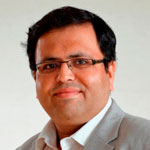
    Rakesh Zutshi

    Halonix has emerged as one of the largest manufacturer of Compact Fluorescent Lamps, LEDs and Halogen Lamps for commercial as well as residential establishments. Speaking on the appointment, Rakesh Zutshi, COO, Halonix Technologies Limited said, “Halonix has very ambitious growth plans and in Havas Media we found the agile, creative and entrepreneurial partner that we were looking for.”


    Amar Wadhwa

    Amar Wadhwa, Founder and Executive Director -CrystalEyes, which has been given the mandate to run marketing for Halonix Technologies added, “Having worked with Havas Media on other clients, I have seen them bring great value to the table both in the area of planning and buying. Moreover, the hunger and passion that they exhibited for the business won them the mandate.”


    Anita Nayyar

    Commenting on the win, Anita Nayyar, CEO, Havas Media Group, India and South Asia, said, “It has been a good year at Havas, we have acquired a portfolio of new and interesting businesses and plan to close the quarter on the good note we began. Halonix is a company clearly on the growth path and we are happy to take them on course.”


    Mohit Joshi

    “The Halonix product has tremendous scope and use, the team is dynamic and I believe we are the right people to forward their plans. We look forward to a rich relationship”, continued Mohit Joshi, Managing Director, Havas Media India.


  • NDTV appoints Soli Sorabjee as ombudsman. Now will he clear air on Barkha Dutt episode?

    By A Correspondent


    It’s a welcome move, but one wonders what would have been the impact had this appoinment been before the entire Niira Radia episode was raging where the channel’s star editor and anchor Barkha Dutt was embroiled in a controversy over unethical practices.


    Be that as it may, NDTV has now announced the appointment of former Attorney-General of India and eminent jurist Soli Sorabjee as its Ombudsman who will provide an independent perspective on our coverage and investigate any viewers’ complaints regarding NDTV.


    In his honorary position, Mr Sorabjee will be entirely independent from NDTV and will investigate any complaints viewers may have about NDTV’s coverage.


    Sonia Singh, NDTV’s Editorial Director and President of the Ethics Committee said, “Every day, we in the media face new editorial challenges regarding journalistic boundaries and we are delighted that Mr Sorabjee will, with his unchallenged integrity, be able to provide much needed insight and advice.”


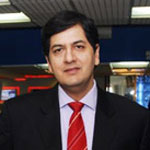
    Vikram Chandra

    Added Vikram Chandra, NDTV Group CEO and Executive Director: “NDTV has always been committed to the highest standards of integrity and balance in its news coverage and we have now decided to take that one step further by appointing an independent ombudsman who can adjudicate on any issues that may come up in the future.”


    KVL Narayan Rao

    Speaking on his appointment, KVL Narayan Rao, Vice Chairperson, NDTV Group said, “Mr Soli Sorabjee is an independent, highly respected, highly regarded legal luminary, with years of experience in handling issues relating to freedom of expression and freedom of the press and censorship. We are delighted he has agreed to be the ombudsman for NDTV.”


    Viewers can send in complaints and questions to http://www.ndtv.com/soli


    MxM View: We do not know whether Mr Sorabjee will examine the Barkha Dutt-Niira Radia episode, but since the ‘case’ hasn’t closed yet, it would be interesting to have his views on the issue. It may well clear Ms Dutt’s name once and for all or we could well have Mr Sorabjee aver that by doing what she did, Ms Dutt has brought disrepute to the profession and the NDTV group.


  • IAA webinar with Bookmyshow CEO Ashish Hemrajani on Sept 26

    By A Correspondent


    The International Advertising Association, India Chapter (IAA-IC) is hosting its fifth Mentorship Webinar with Ashish Hemrajani, Founder and CEO, BookmyShow.com on Thursday, September 26 at 3pm.*See Disclaimer


    The IAA-IC ‘World Goes Digital’ platform is for professionals to learn and equip themselves with what’s happening in the digital domain, notes a communique. Said Manish Advani, Co-Chair IAA-IC webinar series: “IAA is happy to host yet another good speaker whose journey of building the Bookmyshow brand will add great value to understanding the strategy behind a very successful portal.


    IAA-IC  has recently hosted speakers like Rajan Anandan, MD, Google India, Ajit Balakrishnan, Founder, Rediff.com, Nishant Rao, Country Head, Linkedin and Julie Roehm, Chief Story Teller, SAP.


    Questions for Mr Hemrajani can be sent via the IAA India Chapter Facebook page - www.facebook.com /IAA.IndiaChapter.


    The hangout will be broadcast live on the IAA YouTube channel - www.youtube.com/iaaindiachapter on September 26 at 3pm.


    *MxMIndia has partnered the IAA-IC webinar series


  • Aim High bags 20 awards at Big Bang Awards

    By A Correspondent


    Communications firm Aim High Consulting has won 20 awards including the ‘PR Agency of the Year’ at the Advertising Club Bangalore’s Big Bang Awards 2013 held in Bengaluru last Friday.


    Aim High’s winning campaigns span across segments such as Healthcare, Corporate Communications, Financial Communications and Internal Communications, notes a communique adding: “The awards recognised work done for a host of PR and Advertising clients – a mix of start-ups and mid size companies – including, Flipkart, 3M India, Manjushree Technopack, Nanjappa Life Care, Right Horizons, Helion Advisors, Ola Cabs, CommonFloor.com, EduSports and scripbox.”


    Speaking about the awards, N Ravi Shankar, CEO, Aim High Consulting, said, “Winning 20 awards at Big Bang 2013, spread across Public Relations and Internal Communications, is a great endorsement of the consulting approach we bring to these practices.”


    Note: the information here is unverified and is based on a press release sent by Aim High. The Advertising Club Bangalore has not invited MxMIndia for the event or disseminated its awardee list to us.


  • Zoom Review Show completes 200 episodes

    By A Correspondent


    His peers on other channels gave ‘Rowdy Rathore’ and ‘Bol Bachchan’ a thumbs-down, but he rated them ‘Very Good’. Omar Qureshi, editor-in-chief of Bollywood channel Zoom senses the pulse of the masses like few others. The two films grossed over Rs 100 crore and helped cement the statuses of its protagonists Akshay Kumar and Abhishek Bachchan in a big way.


    Omar’s ‘The zoom Review show’ celebrates 200 airings this week and, according to a communique, becomes the longest running movie review show on Indian television. Leading stars like Hrithik Roshan, Ajay Devgn and Sonakshi Sinha and Ileana D’Cruz have sent congratulatory messages to the show and its host.


    Omar is a senior film journalist, having edited Stardust for many years and later worked with Filmfare and the entertainment wing of Times Internet.


  • TRAI notifies amendments to DAS interconnection regulations

    By A Correspondent


    The Telecom Regulatory Authority of India (TRAI) has today notified amendments to the interconnection regulations applicable for digital addressable cable TV systems (DAS) and tariff order applicable for addressable systems.


    The amendments in the tariff order modify the ‘twin conditions’ that regulate the a la carte rate of channels vis-à-vis the bouquet rates at retail level, protecting the interests of the subscribers. It also clarifies the position that subscribers can either opt for channels on a-la-caret basis or bouquet or combination of both, as per their choice.


    Considering that adequate provisions/safeguards are already available in the Interconnection Regulations applicable for DAS, certain provisions have been omitted from these regulations. These pertain to prescription of a minimum channel carrying capacity of 500 channels for MSOs and prohibition regarding charging of placement fee by the MSOs. A proviso has been added to specifically bring in clarity that the MSOs cannot seek a channel from the broadcaster and seek carriage fee at the same time.


    The full text of the amendments is available on the TRAI website – www.trai.gov.in.


  • Mumbai goes Social – Day 1


    By Fatema Rajkotwala


    Does social media contribute to socio-economic growth of the economy? Of course, it does, or so it emerged from the audience’s response to a debate held on Day 1 of the inaugural Social Media Week currently on in Mumbai.


    The week-long Social Media Week took off in Lower Parel’s tony gigspot Blue Frog.  Brought to India by New York-based strategy firm, Crowdcentric, Social Media Week is organized by Bengaluru-based marketing services firm R Square Consulting. Co-founders Rohit Varma and Hemant Soreng kicked off proceedings with a keynote =that highlighted the day’s agenda, the process of putting together the event, the speakers and partnerships fostered and the key takeaways for the public.


    Ben Shiem, Director – Social Media Week, Crowdcentric spoke about the global theme of SMW 2013, Open and Connected and how India and specifically, Mumbai was chosen as the logical destination to host the event, he said. Crowdcentric believes that India, with its strength in terms of democracy, population and increasingly mobile market, is an exciting place to be for social media. Talking about the company’s approach to expanding SMW worldwide, “We allow the local organizers to collaborate, for people to connect and build community. Our goal is to find teams world over to bring SMW to different countries and markets.”


    Verdict: Social Media does help socio-economic growth
     

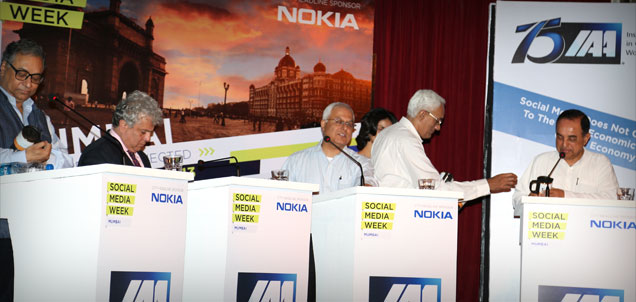
    In the debate organized by the India Chapter of the International Association of Advertisers hosted by Gul Panag, the panel comprised Jawhar Sircar, Chief Executive Officer, Prasar Bharti, Suhel Seth, Managing Partner, Counselage India, Dr. Subramanian Swamy, MP and senior BJP leader and Kiruba Shankar, digital entrepreneur and author. The topic was Social media does not contribute to the socio-economic growth of the economy’ and Messrs Sircar and Seth were for the motion and Dr Swamy and Mr Shankar against.


    Mr Sircar opened the argument with facts about India’s current economic change in terms of the fall in GDP rate and the devaluation of the rupee. He argued whether even though the number of broadband penetration and smartphone users has risen to about 50 million, in a population of 1,300 million people, is social media proving to be effective. “As a postal service of a very high order that helps connect us to our friends, social media helps as a medium. But to assume that social media has picked up from 2003-4, given the fraction of people availing it, where has this contributed to socio-economic growth? 22 per cent of our population in 1981 was below the poverty line. While China has changed the number for itself, at 2011 we are now at 33 per cent. There is no empirical proof that tweeting or posting on Facebook is going to change the world. It may connect businesses but the disparity of wealth continues. To the exception of certain bright examples of socio-economic change with a political flavor such as in Egypt or during the Delhi rape case, where is the change? ”


    On his part, Mr Shankar also quoted some hard facts and statistics with real examples such as Kalyan Varma (who spoke earlier in the day), NGOs and more stories of people that have reached out and received help and success via social media. As a teacher, he said, “If every student or entrepreneur can become a better learner and be more successful, it would lead to contributing to the economy as a whole.”


    Mr Seth took stage next and put forth an explosive argument on why social media, though beneficial in many ways does not contribute to the socio-economic growth of India today. Citing examples of citizens being arrested for posting a message on Facebook , he argued that this shows us out to be a more regressive race than we already are. “In today’s India, given the limited penetration, usage and familiarity with the tools of social media, social media is great for awareness, for reading about blogging expertise or professing one’s undying love to an actor – but it doesn’t allow people to make people accountable beyond that. We are in the throes of a social media evolution like many other economies. To say that we have arrived at a stage where Twitter or Facebook power the engines of growth, keeping in mind economic parameters of growth, is incorrect.” He went on say that as far as penetration of social media is concerned; we are talking of an India that does not have access of drinking water, leave alone mobile handsets. Apart from an erudite set of the population and the country’s journalist intelligentsia, the political bosses remain undisturbed despite of repeatedly bringing issues to the forefront. “Social media, in fact mocks the socio-economic growth of the country. It shows us that India runs by numbers; it does not necessarily run by intelligence. We don’t deny that the role of social media is important but by saying that today it has contributed to the socio-economic growth of today’s India, we are doing two things – minimizing the real impact, of real people of a real country and over emphasizing the limited impact that limited usage has on a country of our size and diversity.”


    In his closing argument, Dr Swamy argued that more than once has social media been instrumental in bringing about social and political change on many occasions. He pointed out that social media helps brings about awareness, helps educate, promote political thought, transparency and more and if there is no concrete evidence to substantiate that yet, the media should make it our business to find evidence to support these facts. “If we agree that theoretically social media does contribute to India’s growth, then it is all the more reason to encourage and develop it in our country.”


    With sharp rebuttals and counter arguments, the audience did shift its loyalties to small extent but the verdict fell in favour of a majority that believe that social media definitely does contribute to the growth of the economy.


    Sharing his views on social media today, Alex Oberberg, Global Head of Markets Engagement, Social Media and Digital, at Nokia said: “It is no longer the rebellious teenager and is not just restricted to the ‘cool kids’ or marketers anymore. At Nokia, we are a social business and social is a focal point of our business.” Deepak Taneja voiced Nokia India’s angle by elaborating on how brands are embracing the social medium now, “Over 60 per cent of most brand’s total traffic comes from India, not just for Nokia. That’s why social is the future.”


    To bring in an artist’s perspective on how social media helps build a personal as well as professional brand, successful wildlife photographer and filmmaker, Kalyan Varma shared his story and experience with social media. Varma left the corporate IT world at Yahoo! to pursue his passion. Through his personal experience, he urged the audience and Indian artists to be unafraid to share their work online and use it as a platform to brand and distribute their work.


    Next followed a panel discussion on “Social Media: Global platforms and local cultures? Perspectives from different regions” moderated by Madan Sanglikar, digital media specialist and founder, AD2C. Along with Ben Shiem and Alex Oberberg, the panel also saw Unni Radhakrishnan, Head of Digital, South Asia Maxus Global, and Max Hegerman – Managing Director, Edelman Digital India. The panel shared some interesting anecdotes on various countries connecting via different platforms, how marketers and sales people can look at social media from a new light, keep their target audience in mind while choosing a social media platform, concentrate on community building and social influencing and insights gathered. From an Indian standpoint, the panel agreed that the future of social media for India is mobile, which presents many challenges and opportunities for marketers and advertisers who can keep their eyes and ears open and create content in the cultural context.


    As a mobile data and services platform company, IMI Mobile’s Alex Campbell presented on the company’s product and offering, the DaVinci Platform, a multi-channel customer management platform. He took the audience through a power packed slideshow on “How the world’s most social event in 2012 became a little more social” where he highlighted “being inclusive, knowing your audience, staying relevant and planning” as some of the main takeaways for SMW.


    The highlight of Day 1 of the Social Media Week Mumbai was the debate conducted by the India Chapter of the International Association of Advertisers.  The topic was social media does not contribute to the socio-economic growth of the economy. Hosted by Gul Panag, the panel comprised Jawhar Sircar, Chief Executive Officer, Prasar Bharti and Suhel Seth, Managing Partner, Counselage India,  in favour of the motion and Dr. Subramanian Swamy, MP and senior BJP leader and Kiruba Shankar, digital entrepreneur and author arguing that social media, in fact, does help enhance socio-economic growth.  At the end of the discussion, on the basis of a show of hands in the audience, the team of Dr Swamy and Shankar won the debate.


    Examining social media from a purely woman-centric perspective, the next session broached the topic, “Women’s health and fitness: Is social media helping the cause?” Part of the discussion were Milind Soman, model, actor, film producer; Gul Panag, model, actress, fitness enthusiast; Devika Bhojwani, social activist and cancer survivor and Dr Sudeep Gupta, professor of Medical Oncology, Tata Memorial Hospital. Moderated by author and journalist Geetika Anand, the panel discussed how the Anna Hazare protests and the gangrape in Delhi are examples of how social media brought people together for a common cause and what are the challenges and possible solutions to addressing the issue of women’s health in India today.


    Soman spoke of why he decided to be a part of Pinkathon, which was started last year to involve women to take time for their health and fitness and to spread the message on breast cancer awareness. “The overwhelming response from Pinkathon has inspired me to be a part of Mega Pink, which is a social media experiment for me, to encourage runners across the country to come together, form their own groups and we can then, facilitate and support them,” he said.


    Gul Panag added by saying that there is an increased conversation on wellness today, and pointed out that there is a perceptible trend in social media of being topical but when it is the topic of health, all conversations contribute in spreading the word.


    Bhojwani spoke of her challenges and triumphs in putting together the ‘Women’s Cancer Initiative’, where a traditional outdoor campaign by creative agency Lowe Lintas, amplified in impact when it hit social media by causing a controversy. The panel discussed ideas and agreed that to amplify the effect of social media campaigns and sustain them, one has to add catalysts, add conversation starters, instead of bursts of activity, so that the message keeps getting underlined and repeated.


    The evening concluded with an interesting discussion on music and the social media as well as performances by Ayush Shrestha and the band Coshish.

     

  • Brands make a Shubh Aarambh with Twitter


    By Shephali Bhatt


    16,000 retweets, 18,000 Facebook likes and 5,000 Facebook shares were registered within the first hour of the Oreo tweet during the Super Bowl XLVII blackout. ‘You can still dunk in the dark’ said the Twitpic (a tool for people to post pictures on Twitter) and it was followed by analysts tracking Mondelez’s rising interest in digital, predicting a love-story brewing between the brand and the medium. The two announced their marriage plans less than two weeks ago. The salient facet of their pre-nuptial agreement being that Twitter will have dedicated teams working for Mondelez in India, Brazil, the UK and the US. As soon as the knot is tied, Mondelez will be able to leverage Twitter’s real-time analytics capabilities.


    Mondelez, in return, is bound to have made an ad spending commitment to Twitter which only aids the latter in building its share and profile in the market before it goes public and launches its IPO in early 2014.


    This pact that brings the bird closer to the delicious confectionary world has been facilitated by Mondelez’s global media buying agency Starcom MediaVest. According to eMarketer, Twitter is set to capture $580 million of ad spend this year which is double the amount they garnered last year. This move will only help Twitter surge upwards as far as that prediction is concerned. The partnership will also allow Mondelez to avail of a preferential media rate, an access to brand boot camps (training on brand building strategy), research and a first-look access to Twitter’s beta products.


    Mondelez is currently working with Twitter’s global team to chalk out the details of the resource embedding. Without disclosing any details on the magnitude of the deal, Bonin Bough, VP – global media and consumer engagement at Mondelez International, said that the development reflects a commitment to dedicate 10% of global marketing spend on mobile. Boosting impulse sales has been the snacking brand’s top priority starting 2013. In May, Mondelez signed a mobile-only deal with Google to develop m-commerce tools to give a fillip to in-store purchase of brands such as Cadbury and Oreo. This was followed by hiring AKQA, We Are Social, Vice and Proximity to expand the digital imprint of Trident and Belvita in international markets. Closer home, Mondelez India works with multiple digital partners like Madison Digital, Grey Digital, Pinstorm and Interface communications.


    While the zeitgeist terms this as “exciting news”, it’s critical to understand how these Twitter teams will add value to a brand that’s already being handled by a plethora of digital and social media agencies across countries and continents.


    To begin with, the deal should help Mondelez get earlier access to what’s likely to trend so that it is better equipped at reacting to news. It’s a step towards making timely tweets the norm and not the exception. The brand will then be in a position to convert trend based insights into brand relevant messages. Venkat Mallik, president at Tribal DDB and RAPP India, equates it with Amul’s outdoor strategy of creating topical ads. Only that Mondelez will be playing it on Twitter which will have a faster turnaround and a global impact.


    Moreover, these Twitter teams will definitely have a better understanding of their own tools versus any specialist. “Their offering will come with far more evolved features than we’d know of, simply because we are trying to understand the medium while they are its creators,” states Manan Mehta, Sr VP and head of business in India for Razorfish, a digital marketing agency from Publicis Groupe. Mehta also believes this move makes logical sense for the Indian market in particular. “We lost the desktop race, this is our chance to win the mobile race,” he points out.


    So, a meeting of minds, and a consolidation of specialists to bring in fine-tuned insights on how to make the existing tools work; but how does it change the lives of the existing digital agencies of Mondelez? Says Sindhuja Rai, AVP – media at Cadbury India, “The Twitter teams will work with us directly and collaborate with our digital agencies at the same time. Since we have multiple partners, it makes sense for us to drive this centrally from within Mondelez.” For all those wondering whether the existing digital partners might lose their clout in Twitter’s presence, there’s nothing much to worry about just yet. One, because Twitter is a medium and not an agency. Generating content is not its forte, putting the content in the right context is. So, agencies that generate great (and now Twitter-specific) content, will have an increasingly relevant role. Two, Twitter is just one of the many aspects that comprise the vastness of social and digital media. So, specialist agencies will continue to have a bigger role.


    This might just serve as a paradigm for the new collaborative model, a tripartite model involving the agency, the client and the platform. And if you ask Vivek Bhargava, CEO of iProspect Communicate2, this is just Twitter catching up to Google and Facebook. “Google has been doing this for 10 years now. I don’t think Amazon has its own agency, Google has dedicated teams that work for them,” he mentions. Bhargava feels that the current social media landscape is not built to meet the needs of large enterprises. Perhaps that explains why only a brand increasing their digital expenditure becomes news; because it’s still a rarity. A move like this translates into a big opportunity for Twitter to provide customised application and solution based offering to suit the needs of large enterprises.


    With all the buzz around real time engagement initiatives, Cadbury India has tasted a bit of success with hashtags like #ShubhAarambh during IPL and with #NotSoSweet for Bournville resulting in high engagement and buzz around the brands. “The idea is to build on this success further by leveraging Twitter’s scale and analytical capabilities,” avers Rai. The pundits are predicting this marriage would be a success. Are there more such on the cards? Well, Twitter’s CEO Dick Costolo is tightlipped for now. But we can always ask: how many of you brands are up for an inhouse Tweetdeck?


    Source:The Economic Times

    Copyright © 2013, Bennett, Coleman & Co. Ltd. All Rights Reserved

    Licensed to republish