
Category: MEDIA

  • Dial Havas for music for your brands

    By A Correspondent


    Havas Sports & Entertainment (HS&E) has announced a global strategic partnership with Music Dealers, an independent music licensing agency and digital platform that provides clients with emerging music. India is also a part of this partnership.


    Music Dealers crowd-source existing and original music from their database of over 20k emerging artsts across 80 countries. HS&E is part of Havas Media Group which is headed in India and South Asia by Anita Nayyar.


    As brands look for new ways to incorporate music into their campaigns to drive social conversation and engagement, Music Dealers’ knowledge of the global music industry and music strategy will partner with Havas to offer clients unique music expertise and strategy.


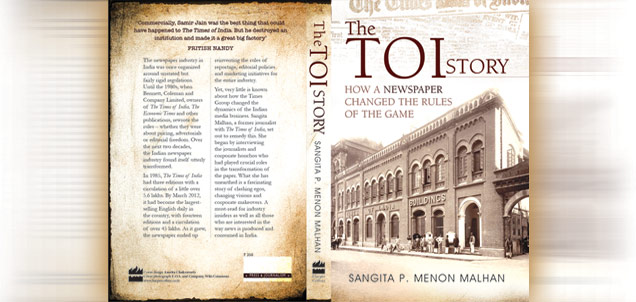
  • The TOI Story & inside the mind of Samir Jain


    By Sangita P Menon Malhan


    Some interesting insights into Samir Jain’s personality emerge from the days when he was taking on the venerable editors of The Times Group. In many ways, it was also a decisive phase in that it laid the ground for the changes that happened later.


    He may have developed some dislike for journalists and the predominant position they enjoyed. He was uncomfortable with the fact that while the newspaper’s proprietor kept a low profi le, it was the editor, his employee, who was in the limelight. Politicians and bureaucrats pandered to the journalist while the proprietor was a mere bystander.


    There are yet others who concede that there may be a ‘hidden agenda’ against journalists, besides the imperatives for change. An editor, who worked closely with Samir Jain after the reorganization, but did not want to be named, admitted that Samir Jain did hold journalists in ‘deep disdain’ at that time.


    He recalled that sometime in 1986, The Times Group hosted a party in honour of Krishna Kumar, then a Union minister in Rajiv Gandhi’s government. When it was time for dinner and the guests were being ushered in, Krishna Kumar pulled a chair for Girilal Jain to sit. ‘I was standing close to Samir Jain,’ narrates the journalist; ‘he (Jain) said, “This party is thrown by the company and me. Is it not strange that the minister should pull the chair for the editorand not the owner of the paper?”‘


    So determined was Samir Jain to prove that he was superior to the journalists and to keep them in their place that he issued a directive that everyone be addressed by their designations. So, senior editors, who until then had been calling him by his fi rst name, had to switch to calling him JMD (joint managing director) and later, VC for vice chairman.


    When the government had taken control of BCCL for seven years, Samir Jain, then in his early twenties, believed that certain journalists of the paper had started it all by first making allegations of irregularities against the company to the government. It had been a difficult phase, and Samir Jain blamed the paper’s own journalists for creating the mess.


    ‘Samir carried the memory of those years. He thought the editors had to be shown their place,’ recalled Baljit Kapoor. ‘He thought they considered themselves too important. “After all,” he said, “the editor is just one of the employees of the company. He is just a processor of news.”‘


    Samir Jain wanted more control over the newspaper. Editors were taking their autonomy too far. Jain found that he could not appoint people of his choice; that it was tough to get something of his liking included in the paper, among other such ‘restrictions’. These stumbling blocks bothered him. In his early days, one of the top editors tried to belittle Samir Jain by treating him like a probationer. ‘Ladka theek hai. Lekin usey abhi padnaa hai, seekhnaa hai. The boy is okay but let him educate himself fi rst,’ he said. Samir Jain hated that. As a counter, he began circulating articles from The New York Times and other newspapers. He wanted it to be known that he was already educated, and contrary to the editor’s comments, well read.


    He began taking the editors head-on. At one interaction, he is believed to have said: ‘Please, all you editors listen. If you have an appointment with the prime minister, and if I call you, you must cancel the appointment and come to me.’ That quote has stuck. Although editors now make reference to it in a light-hearted way, it is unlikely that anyone violates that diktat even today. When the sensei says something, it is followed.


    He had trouble over the fact that while the goodwill generated by a newspaper accrued to the editor, the negative fallouts went over to the owners. ‘He would often say, “The balance of inconvenience is always with me.” He wanted his team to be completely on his side and fully with him, no matter what he did. And, when that did not happen, there was friction between the sides. Such situations bothered him, and they did not end well,’ recalled Pradeep Guha.


    Independent observers outside the organization have also corroborated Jain’s dislike for journalists. In his acclaimed book, Paper Tigers, Nicholas Coleridge writes: ‘Samir Jain views his editors and journalists as elements whose power needs to be constantly diffused (“those blue-blooded Brahmins of the editorial floor”). He takes pleasure in giving the best offices to his managers instead.’


    A rebellious streak, a certain amount of irreverence for convention and tradition – that constant and regular inverting of the pyramid persist even today. Does he go about it in an authoritarian, my-word-no-matter-what manner?


    Here again, there is no single or simple view. There are those who believe that in his single-mindedness, he brooks no resistance though his manner and approach may be understated. One of the edit page editors at the Times House said, ‘Samir Jain has established his own regime. His staff has to understand and accept him. The VC will not interfere in the day-to-day functioning of the newspapers.


    He is more the Puppet Master. He will throw an idea at you and have you fi gure it out. But you are expected to figure it out. ‘He likes high-quality discussions. He will never call a reporter for a discussion. It will mostly be editors or people on the edit page. He will size you up and treat you accordingly. But he is soft-spoken and gentle and will never give you a direct command. It will all be hints and subtle suggestions, and you will have to pick up cues.


    That makes him both interesting and difficult, depending on how much you are willing to invest in him.’ I asked this editor whether Samir Jain is temperamental, as is often alleged. ‘I have never seen him lose his temper. The VC likes equals. One would often see Swami (Swaminathan Aiyar, former editor-in-chief of The Economic Times, who continues to write a column for the paper and is a consulting editor) and the VC standing in the corridor and talking like old friends. When in a good mood, the VC will start his conversations with his Bengali editors with “Kaemon aachho?” (how are you?). ‘The problem is that most journalists don’t like to be given sermons, and certainly not by their publishers. They will not listen. And that becomes a point of confl ict,’ he said.


    Shubhrangshu Roy, editor of the Financial Chronicle, who earlier served at the ET, drew up a sketch in a matter-of-fact way. ‘Samir Jain is not the despot he is sometimes made out to be. He is not an anarchist. In fact, he is down-to-earth. I have never seen him lose his temper with anyone. He is actually a compassionate man. People have this terrible habit of demonizing him. One either hero-worships him, or tries to make a monster of him. ‘Samir Jain is an editor-publisher; he isn’t anti-journalist. He is, in fact, a better editor than most editors I’ve known; he knows his journalism. Samir Jain is the Holy Ghost of The Times of India – intelligent, intellectual,’ Roy added. He believed that editors have had trouble with him because of their own vested interests somewhere down the line. ‘Every editor who has worked with him has done so with a huge self-interest and an even huger ego,’ he argued.


    ‘In the contest between the publisher and the editor, the publisher wants to be the editor of the newspaper as much as the editor wishes to step into the publisher’s role. There is the classic confrontation between the two. But he tried to delink or demystify this. He transcended it. As an observer of journalism, I truly believe that Samir Jain is indeed a quintessential editor,’ Roy said.


    It is quite clear from talking to his editors that Samir Jain takes a keen interest in what gets carried in the editorial columns of his newspapers, even to this day. The intervention could be subtle – a gentle cue or a hint, sometimes leaving the editor to struggle with deciphering the full import and intent behind it. Or, given his fascination with good language, Samir Jain could actually get down to performing the task of a sub-editor. T.K. Arun, who was the edit page editor at ET when I met him, told me: ‘The VC is an excellent sub (sub-editor). Occasionally, he reads through articles published in the paper and goes about marking out superfluous words and expressions. He is very particular about the correct use of the definite article. In the old days, one thought that the lalas did not know anything about journalism, leave alone language. But he is exceptionally well read’.


    Abheek Barman, consulting editor at ET, seconded his colleague’s comment. He said: ‘The VC is a great one for semantics. He particularly likes interesting words and is very fond of neologisms. Once I used the word “zeitgeist” (German for the spirit of the times) in his presence, and he remarked: “No one uses words like this any more.” On the one hand, he wants the language in his newspapers to be simple and easily understood. But at a personal level, he likes using words that would make a person think’.


    Bal Mukund Sinha of the Navbharat Times said: ‘He pushes your boundaries. He will drop a hint, a clue, and you are encouraged to interpret it. If you get it wrong, he will gently tell you what he had envisaged. He will also often pretend that he knows little about the subject being discussed, and as you wax eloquently, he will listen patiently. Then, he will spring a “guru mantra” at you which will sum up the entire matter. His mind is so powerful…also…because he is so spiritual.’


    In many cases, the intervention initially leaves his editors aghast, until they come round. Samir Jain once came up with the line that it is alright to use words from the English language in the group’s Hindi newspaper. He believed that newspapers are not meant to nurture language. ‘”That is why in our English newspapers, we do not carry Shakespeare; we carry (author) Shobhaa De’s line which says, ‘That neighbourhood boy is very namkeen.‘ People understand this language and speak like this. And we must be able to relate to them,” he would say,’ said the editor from NBT.


    On another occasion, Samir Jain suggested that his Hindi daily do a story that English should be pursued by NBT readers for better career prospects. He wanted the newspaper to conduct a survey, asking readers whether their children studied in English-medium schools, and if so, why? “Expose the puritans,” he would say. “Be real; be practical.”‘ His suggestion wasn’t taken very well but the survey was undertaken. ‘We found out that he was right. Most NBT readers, who were questioned, did aspire for their children to be fluent in English. This is how he intervenes,’ Sinha explained.


    A member of the editorial team at ET said: ‘The VC is civilized and evolved. He will share his views with you. If you understand what he is saying, all the better for you…for you will have all the freedom you need to write your edits. And if he likes what you’ve written, you might even get a small note, with just an ‘S’ for a signoff, and a couple of points written almost illegibly.’Autocratic he may not be. But Samir Jain can be overbearing, like handing out diaries to all the editors, asking them to bring those to their meetings with him, take notes, and refer to them at subsequent interactions, and, being a little uncomfortable when the process isn’t followed by the oddball. Notebooks are promptly arranged for those who come to meetings without them. One is also supposed to write in them as he talks and shares his perspective.


    Here again, some parts of his speech could seem nebulous. ‘Trying to make sense of what he says could sometimes be an uphill task. That is true,’ said an editor at the Times House, without wanting to be identifi ed, of course. ‘He often cites some Vedic philosophy or complex analogies. His gyan (knowledge) monologue sessions are called “chemotherapy sessions” because it becomes very difficult to put up with them.’


    ‘When he doles out some religious funda, and sees that our eyes are glazed over, he would say, “I know you are non-religious people, if not atheists. Even so, you must read the Ashtavakra Gita, which was written as an atheists’ manifesto.” He loves it and knows it by heart. That is clearly his favourite book. But he will never insiston any point. He will generally suggest something like “Perhaps you could take a look at it, and see if you can write something,”‘ the editor said.


    ‘But the sessions with him have to be endured. Those are unstructured monologues. They could start with just two or three people. But if the conversation got interesting, he would keep calling more and more people. He would mention some names and say, “Unko bhi bulaa lijiyey” (Call them as well).’


    ‘And no matter what you are doing or are about to do, you are expected to just go upstairs, to the fourth floor,* equally perplexed, scribble pad in hand, of course, and listen to him basically talk to himself. But the sensitive part of all this is that he will never call you late in the afternoon or evening because he knows that that time is crucial for the edition to leave.’ (* The Fourth Floor is the Mount Olympus at the Times House, Delhi – a hallowed precinct that houses the offi ces of Chairman Indu Jain, Vice Chairman Samir Jain, Managing Director Vineet Jain and the top management of The Times Group. Visits to this part of the building are,more often than not, eventful. Special guests are entertained in the lunch room here. Entry is ‘by invitation only’).


    The editor went on: ‘One way to escape the gyan overdose is to feign a cough or perhaps sneeze in his presence. If you do that, he will immediately tell you, “You are not well. Perhaps you should leave.” By the way, he fusses over his health a lot, sometimes bordering on the hypochondriac. He has a sensitive throat. He is acutely averse to pungent smells and scents – perfumes, pickles and scented hair oils.’


    I was also told that Samir Jain has a time fetish. He will not be late. He usually comes in to office around 10.30 in the morning when the News Management Committee (NMC) meeting is supposed to start, and, if by any chance, it isn’t on, he is disposed to being rattled. On occasion s, he will mutter that they are ‘slackers’. ‘He doesn’t take very well to this lack of order and discipline,’ said one of the members of the NMC at the Times House The other thing about his morning ritual is that he will walk into the editorial side of the offi ce, put his head into a cabin and talk a bit with one of his editors. Or he may choose to ‘prevail upon’ the NMC. ‘He will sit and watch each and every one. Even if he is not directly looking at you, you better be aware that his eyes are on your every move,’ chuckled the man.


    There is a lighter side to Samir Jain, as emerged during a conversation with Gautam Adhikari. I met him in New Delhi in February 2002, the fi rst of three meetings. ‘One thing that most people do not know about Samir Jain is that he has a funny bone in him; he has a huge sense of humour; he can be an absolute imp. Sometimes during meetings with the staff, depending on what struck him as funny, particularly all the nodding and yesmanship, he would wink at me, and later, we would talk about it, and he would burst out laughing,’ he remembered. ‘There is so much to the man. He used to enjoy the comic, Asterix. Inspector Clouseau from the Pink Panther series was a character he was fond of. He liked Agatha Christie’s books and stories with suspense and wit. He has read every book written by P.G. Wodehouse and is very fond of Wodehousian words and sentences. Being from the same school, we spoke a similar, stylized language sometimes. So, we understood each other very well. He had also read enough Shakespeare to quote him back at me. Our conversations would be explosive,’ Adhikari reminisced.


    ‘He loved the stage, drama and musical comedies just as much as he loved the serious stuff. He would ask me to explain the central theme, the essence of a play to Meera (his wife), and then come up with his own interpretation,’ he recalled. ‘But very few people get to see that side of him. They think that he is either a radical innovator or a media mogul who fl oats in a sort of religious ether. But Samir Jain is far more interesting, far more intriguing,’ Adhikari maintained.


    Jug Suraiya is a raconteur with a sense of self-deprecating humour, who in his writings will take potshots at all things ‘sacred’ including The Times Group itself, always going for the ‘jugular’. Senior editors talk about the equation between Samir Jain and Suraiya, who could be the best of friends one moment and arguing animatedly the next. That makes Jug Suraiya one of the chosen few who can provide an incisive look into Samir Jain. I met this aloof, pensive, almost reclusive writer at the Times House when he was in charge of the edit page. He vaguely recognized me from my days at the paper, heard me out and proceeded to answer my questions dispassionately.


    ‘Samir Jain is a visionary,’ Suraiya said.14 ‘He wanted to cater to an entirely new readership. He did not want to listen to precepts,’ he added. ‘When Gorbachov (former president of the Soviet Union) was going to visit America, I wrote a singeing editorial which was supposed to be the third edit (the slot meant for light, off-beat editorials). But Samir liked it so much that he made it the fi rst edit, and said this is how editorials need to be written,’ he recalled. ‘He is a maverick genius. He likes to take risks. Money means nothing to him. Like a samurai, this is, for him, a game. It may even be a spiritual exercise,’ Suraiya surmised. ‘Samir Jain belongs to no one particular school of thought; he comes from the world of imagination.’


    Another person with a long association with Samir Jain, this time from the marketing team, had this to say: ‘Samir Jain is the Howard Hughes of India; a mystery man with an incredible mind. He has no material or worldly ambitions and that seems strange considering his focus on the business. He has no passion for sport, art or money in the raw sense of the word. He is, therefore, highly focused only on his goal.’


    Samir Jain is also mentioned as being empathetic and compassionate. But here again, there are sharp paradoxes to the man. He could swing between supreme unconcern, and an empathy that is so extreme as to be almost unnerving. Guha still cannot get over Samir Jain’s ‘acts of empathy and kindness’. When he spoke to me in August 2011, Guha remembered two instances with emotion. The first was when Guha’s father passed away. Samir Jain landed up at his home in Mumbai with homecooked meals in boxes, saying, ‘None of you must have eaten. Please have this.’ Samir Jain and Guha may no longer be as close as they once were. But the latter insisted he can never forget that gesture.


    ‘And on another occasion,’ Guha recalled, ‘he came back from a trip. He had bought shoes for me, and proceeded to fit my feet into them. He had an idea of the size and of the fit. How did he even do that? It was very surprising. ‘As a person, if he likes you and knows that you are with him fully in everything he does and that your interests – the greater good of the company – are aligned with his interests, then his is an association to cherish,’ Guha maintained. ‘He will look after your needs, your comfort – almost dote over you. He will let you be and allow you to take risks. And he will go all the way to support ideas that are aligned with the overall goal,’ Guha added.


    Several editors I met spoke of how the VC would personally serve food on to their plates at parties, or call for tea and proceed to make it for them. There have also been instances of a gentle reprimand at work, being followed by an invitation to dine at his home.


    Published with the permission of the publisher and writer


    The TOI Story

    (How a newspaper changed the rules of the game

    By Sangita P Menon Malhan

    HarperCollins Publishers India

    Cover price: Rs 350*

    Paperback, 261 pages

    (check amazon.in, flipkart.com for a lower price)

     

  • Weekend Exxxtra: One in 3 parents in India don’t understand what their child does for a living: LinkedIn study

    By A Correspondent


    One in three parents in India admit they are unfamiliar with what their child does for a living and so may find it challenging to provide the right advice to support their child’s success. Interestingly, 90 per cent of the Indian parents surveyed agree that they could benefit their child if they had a better understanding of what he/she did at the job. These were findings of global survey by online professional networking platform LinkedIn which was also conducted in India.


    ‘LinkedIn Bring in Your Parents Day’ is a way to help bridge this gap by bringing parents and their children together at the workplace, so they can learn from each other.


    LinkedIn has announced ‘LinkedIn Bring In Your Parents Day’, on Thursday, November 7, 2013 to help bridge this gap by bringing parents and their children together at the workplace, so they can learn from each other. Professionals are encouraged to invite their parents into their workplace to provide them with a first-hand look and greater understanding of what they actually do every day.


    Nishant Rao

    “With a plethora of options available to professionals today it is plausible to say that most parents may not completely comprehend what their children really do at work each day”, said Nishant Rao, LinkedIn India’s Country Manager. “By introducing LinkedIn Bring in Your Parents Day we not only attempt to bridge the gap between parents and their children, but also let professionals in India provide their folks a glimpse into what they do at work, and in return, takeaway valuable lessons and even greater appreciation from their parents.”


    The survey further reveals that two third of parents surveyed want to learn more about what job their child does. In India 65 per cent of parents surveyed are familiar with the job/career that their children pursue. Globally, careers such as social media manager, investment banker and sociologist are among the top 10 professions that parents are least likely to comprehend. While in India, this list includes professions such as care nurse, sub editor and radio producer.


    37 per cent of Indian parents surveyed would like their children to pursue a career path similar to theirs; the highest globally. However, when it comes to working in a preferred industry, Indian parents have varied views. Contrary to popular belief, a mere 28 per cent of Indian parents, want their children to become doctors, while 40 per cent of them would like to see their children employed in a finance-related job, making it one of the most coveted jobs/ sectors. According to the survey, a large number of Indian professionals (36 per cent) also look forward to bagging a job in finance. It is interesting to note that only 1 per cent of the parents surveyed want their children to become politicians.


    The top 10 misunderstood jobs in India, with the percentage of parents who weren’t confident in their ability to describe the job are:

    1. Lumberjack (75 per cent)

    2. User Interface designer (64 per cent)

    3. Actuary (64 per cent)

    4. Radio producer (59 per cent)

    5. Care Nurse (55 per cent)

    6. Fire-fighter (55 per cent)

    7. Laboratory technician (53 per cent)

    8. Sub-editor (52 per cent)

    9. Veterinarian (52 per cent)

    10. Data Scientist (51 per cent)


    LinkedIn Bring In Your Parents Day will be held in 14 countries including the United Kingdom, United States, France, The Netherlands, Sweden, Germany, Italy, Spain, Brazil, Australia, India, Canada, Singapore and Hong Kong. Many companies have confirmed their participation.


    We enourage – parent, employees, and businesses in media, advertising and marketing to participate. Details at www.LinkedInBringInYourParents.com.


  • KBC takes Sony ahead of SAB in Week 36

    By A Correspondent


    With TVTs of 8950 and 8460 on the Saturday and Sunday of Week 36 of the TAM ratings, Sony Entertainment Television scored 346122 GVT versus that of SAB being 322392. Last week it was 291074 (Sony) and 319158 (SAB).


    Meanwhile, TAM has expaned its universe from 205396 to 205749.


    The rest of the GVT roster hasn’t changed very much for Week 36 of 2013. The figures in brackets indicate numbers for Week 35.


    Star Plus 494732 (495509)

    Colors 452851 (452921)

    Zee TV 410774 (395024)

    Sony   346122 (291074)

    SAB 322392(319158)

    Life OK 276290 (269927)

    Star Utsav 100093 (109333)

    Sahara One 28742(29645)


    We haven’t received the GVT score for Zee Anmol in this week.


    Important: It may be noted that TAM does not share GVT and TVT numbers with the media. What you see here is info shared by one of the subscribers. Though not authenticated by TAM, so we would urge our readers to base their decisions on authenticated data only.


  • Tracking the rise & rise of the Times: Q&A with author


    Delhi-based Sangita P Menon Malhan was trained to be a pilot, but started flying high once she turned a full-time journalist and later got into creative writing. She has worked with The Statesman, Delhi Mid-day and The Times of India and published a book for short stories for children – Rastapherian’s Tales and a collection of poems in Urdu – Nusrat-e-Gham. The TOI Story has been in the works for 13 years, in fact as she told us, she almost gave up writing the book and then picked up the threads yet again to finally see it happen.


    Before you read this interview of Ms Menon Malhan with Pradyuman Maheshwari of MxMIndia, we suggest you read the extract at http://www.mxmindia.com/2013/09/the-toi-story-inside-the-mind-of-samir-jain/


    Would you say the Pritish Nandy quote on the back cover – “Commercially, Samir Jain was the best thing that could have happened to The Times of India. But he destroyed an institution and made it a great big factory” – possibly sums up your book best?

    Absolutely, although the factory seems to be doing a great job as far as net net results are concerned. His was the most explosive of the hundred-odd interviews. He was candid and voluble, and said several things that have not made it to book. His views, in spite of this quote, were pragmatic and honest. He spoke about what worked at The Times, and what did not, which really forms the core of the Bennett, Coleman success story. Decisions are taken based on their projected returns; dispassionately, even ruthlessly; and anything or anyone that comes in the way, is ‘allowed to’ fade out.


    It’s good to see several leading lights going on record. Any one who refused to do so (other than Samir and Vineet Jain) or who spoke and then asked for anonymity?

    Well. If I reveal those names, won’t I have ‘revealed’ it all! J Yes. There are a few who requested/ suggested anonymity. They shall stay ‘Deep Throats’until someone digs up their identity.


    You’ve worked with The Times of India for some years. Do you find many other newspaper groups are now emulating the Times way of doing things? Or should one say the times are such?

    That is undeniably true. Rivals and competitors of the Times began emulating it way back as the early 1990s when they realized that these moves worked. The pricing game, the focus on the citizen rather than the State, the added elements – supplements, religious nooks and corners, the pizzaz and glamour, the focus on profitability… have all been almost directly taken down from The Times’ model for growth and expansion; and for domination. We do live in an age of economics, as we always have. Today, however, there is greater acceptability for the term wealth generation. It is a legitimate pursuit. Like a Salvador Dali painting….you may or may not like it but you will certainly not be able to ignore it. That said, there is yet scope for ethical business.


    Your book and many previous accounts of The Times of India are centered around Samir Jain. Interestingly, it was he who demolished the indispensability of any individual in the team. But his stature (and that of his brother) has indeed grown. So is Times in effect also what we disparagingly call (many Indian managements) a lala company? Or are business and editorial biggies suitably empowered?

    The interesting thing about success stories is that irrespective of how many people or ideas form a team, it is the vision that matters. And, Samir Jain did have a plan, a purpose. He ensured that he had some of the best minds in the country around him so that he could hear them, assimilate what they had to offer and prod on. But the targets were ‘his’. And that makes all the difference. The greatest of leaders have used their armies to get to their destinations. To that extent, they are not redundant. It is the input that is king.


    Samir Jain is a man of enormous contradictions. Despite the aura around him, I do believe it is his squad/ battalion that keeps churning up ideas. I don’t subscribe to the view that Bennett, Coleman is a lala outfit. ‘If you have an idea that will work to benefit the overall aims of the company, you will be empowered at The Times Group’ is what I heard during the research. But you do have to align yourself with the reigning philosophy of the organization. And, I was told that high quality debates and differences of opinion are welcomed.


    He was among the first media barons to hire professionals from FMCG majors to bring in a certain rigour?

    He did that with a vengeance. I remember Satish Mehta telling me how enthusiastic Samir Jain was about having people from the ‘dark side’ around him. These were men and women who brought in a perspective that may have been alien to the editorial cadre at the organization during those tumultuous years in the mid to late 1980s and during the early 1990s.


    Once you’ve decided who are going to be, the strategies do fall into place. Therefore, since you – the newspapers – are a product, how can the ‘old’ shoe… fit!


    The next generation of the family is steadily taking charge? Would you see The Times of India change 30-40 years from now, when the Jain brothers relinquish charge?

    Don’t we all want to know the answer to this question! I’m not too sure if the next generation is adequately excited about this business. I have no evidence to prove what I just said, either. These are things I’ve heard. One can be certain though that a lot of thought is currently being put in at the organization to take on the future. There is no other option.


    I believe change is upon The Times of India already. With the combined pressures and challenges of the medium, the threat from the digital tsunami, the fast-changing needs of the new generation, the power of technology and shrinking revenues from the current streams, the model will have to change. Everything is infotainment-led. Easy access matters. Newspapers may need to change their ‘delivery’ methods.


    Your book mostly interviews and speaks to a lot of people in Delhi and is based on the time when the brothers – Samir and Vineet – took charge. An equally interesting period of the group was before when the editors were gods and Mumbai was where the action was?

    Indeed that was a great period. One can only imagine how power and glory rested elsewhere during those years both in terms of location and with respect to the ‘gods’ who enjoyed them. As a person, I’m fascinated with stories of victory. And, the more troubled and tortured, the better. I was naturally attracted to this tale and kept my focus here. I had heard enough of the ‘golden’ age from my father, who was also a journalist. Besides, the challenge was to unravel this piece, more so because it was reportedly (pun intended) impossible.


    As someone who has studied the group and now chronicled it, what do you think is driving the success of the Times: the business or editorial department?

    Like in the Mahabharata/ the Bhagwad Gita, it is the clear combination of both. I fight to win. That is my value system. I shall stand by it. It is clichéd to accept that the reorientation of the business ‘approach’ worked for The Times. Yet, the focus on the ‘product’ was equally sharp. You can have a great product launch based on claims and hype but if you cannot sustain that… with a genuinely strong product, how far can you go! The editorial department may have had to ‘suffer’ the change more than its marketing/advertising counterpart. But it had to be ‘converted’.


    You took 13 years over the book. Do you find the group has changed in this period? If yes: Anything specific…

    I find that most people who matter in the organization have ‘come around’. I still get a lot of unprintable stories, off-the-record, but there is a general ‘acceptance’ of the norm. Even journalists speak the language of the organization now. They seem quite convinced. The fusion has taken place. The two sides are one, at least for the record. Sitting at a coffee shop, far away from the headquarters, however, some skeletons do tend to tumble out. But appearances are kept up. It is all very well.


    Any reactions from Times House to the book? Or from the Jains? Do you think you’ll still get invited to write for the Times?

    Nothing yet. I did send Mr Jain a copy of the book with a handwritten note. I remember writing to him toward the end of 2000, informing him that I was planning to work on such a book. ‘This is a leadership study. And, it must not be halted,’ I had mentioned. It is creditable that the study was never halted. I walked into Times House so very often and interviewed so many people there. The brand managers at Times House were extremely helpful and courteous with even the most disturbing questions. That, and much else, couldn’t have happened without an ‘all-clear’ from ‘above’. My target was to write the book. How The Times reacts to it is its outlook. It is sheer serendipity that this book has somehow decided to come alive in this the 175th year of the newspaper. It has been written for the consumer of news and information in this country. And, I hope it has a great journey.


    The TOI Story

    (How a newspaper changed the rules of the game)

    By Sangita P Menon Malhan

    HarperCollins Publishers India

    Cover price: Rs 350*

    Paperback, 261 pages

    (check amazon.in, flipkart.com for a lower price)
     

  • Social Media Week in Mumbai from Sept 23-27

    By A Correspondent


    There’s just a week to go for the maiden Social Media Week Mumbai and the event is getting a cross-section of people involved – government officials, celebs and journalists joining SMW Mumbai plus brands and organisations have joined in with their ideas and events (*See Disclaimer).


    The event is open to the general public, being an essential part of the social media. “Hosting SMW Mumbai is a true testimony of R Square’s Consulting’s unique integrated offering of events and activation and digital marketing and technology,” said HemantSoreng, Co-Founder & Managing Partner, R Square which is hosting the event.


    More than 100 events across six hubs, 200-plus speakers and 1000-plus attendees are set to witness talks and discussion, workshops, master classes, exhibitions and parties.


    Among the various partners of the Social Media Week (other than MxMIndia) are: BBC, SAP, IMIMobile, Germinait, MindShift Interactive, Unmetric, GroupM, chlorophyll, Genesis Burson-Marsteller, Crossworks, Avid Learning, Sportskeeda, Yellow Seed Content Solutions, Social Samosa, Page Traffic buzz, Social Times, Time Out magazine, Cartel Advertising, Miss Malini, authorSTREAM, and The Indian Networker.


    For details on the event and registration: click here


    *MxMIndia is media trade partner of Social Media Week Mumbai


  • Zee Entertainment appoints Romil Ramgarhia as Commercial Head

    By A Correspondent


    Romil Ramgarhia

    Zee Entertainment Enterprises Ltd (ZEEL) has announced the appointment of Romil Ramgarhia as Commercial Head. He will report to Punit Goenka, MD and CEO, ZEEL, and the entire commercial team at ZEEL will report to Mr Ramgarhia.


    Speaking on his appointment, Mr Goenka said: “I am glad to have Romil join the Zee family, and I am confident that his rich experience will bring in immense value to the organization”.


    Commenting on his new role, Mr Ramgarhia said: “It is always an honour to join a global brand like Zee. I have personally been an admirer of the pioneering steps taken by this organization in the last 20 years.”


    Mr Ramgarhia, who joined Zee on September 13, was until recently Commercial Head, Colors and other than Viacom 18, he has worked with Bharti Airtel, Asian Paints and ACC Ltd.


  • Mahabharat characters come alive thanks to DDB Mudramax OOH

    By A Correspondent


    Star Plus has partnered with DDB Mudramax OOH to create an awareness and buzz for the launch of its epic serial Mahabharat that starts today (Sep 16).

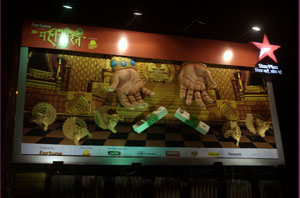
     

    A hi-decibel OOH campaign  has been executed across 100 plus towns in the country from metros to LC1 towns. The emphasis has been on innovation route to garner the desired eyeballs and buzz.


    Spencer Noronha

    Said Spencer Noronha, VP, DDB Mudramax OOH: “The brief was to create impact and buzz for Star Plus’ Mahabharat. We selected the most impactful media vehicles clubbed with three “first of its kind” innovations and ensured that the awareness and recall generated for the show launch is quick as well as lasting. The idea was to bring the billboards to life by recreating famous scenes from the epic on ground.


    The route we used was to put up large 3D sculptures on the billboards ranging from 17 to 22 ft in height emerging out of the billboards. The three innovations of Arjun, Shakuni and Draupadi look dominating and dwarf the conventional innovations done so far on the OOH platform.  These innovations have been entirely conceptualized and designed by our in-house OOH creative team.”





    Nikhil Madhok

    Nikhil Madhok, SVP Marketing added: “The work done for Mahabharat by DDBMudramax OOH has been outstanding. The innovations have been novel and the scale of execution has been a first of its kind in the country on the OOH platform. Star Plus always strives to disrupt and this execution is another example of our continued efforts in that direction.”


    Anirudha Pawar

    Anirudha Pawar, DGM, DDB Mudramax OOH explained: “We have installed large sculptures on strategically located high impact billboards in the city. We hired professional sculpture artists to ensure that the final output comes to life especially as it involved recreating human form. Getting all three sculptures ready and put up simultaneously at the start of the OOH campaign was a mammoth task and took detailed planning on our part.”


  • ASCI asks Bharti Softbank to axe Taproot’s digital ads for Hike Messenger

    By Pritha Mitra Dasgupta


    The Advertising Standards Council of India has for the first time taken action against a digital ad, asking Bharti SoftBank to withdraw an online commercial for its free messaging app Hike Messenger because it violated its codes.


    The self-regulatory advertising watchdog has sent out a suspension order on a commercial titled ‘Keep Close Friends Close’ to both Bharti SoftBank and creative agency Taproot, after finding it “extremely offensive”.


    Arvind Sharma

    “This is the first time we could take a strict stand against an ad that was launched in the digital space,” Arvind Sharma, the outgoing chairman of ASCI and chairman and CEO India Subcontinent at Leo Burnett, said. Umesh Srikhande, CEO at Taproot, declined to comment. A person familiar with the development said Bharti SoftBank has agreed to take the commercial off YouTube. The company had released a set of four ads for Hike Messenger targeting young audience on August 27. One of them is set in a library where three boys spot a friend in a nearby seat with a girl. The boy with the girl ignores their hushed calls. Suddenly, one of the three boys stands up and screams abuses in Hindi and threatens to call the girl’s real boyfriend. And the boy sitting with the girl sprints out of the library. Although light-hearted in its tone, the film is riddled with abusive and obscene language and breaches the ASCI code, the regulator said.


    ASCI roped in internet giant Google as a partner to send out the suspension order, Mr Sharma said on the sidelines of the recently concluded ASCI’s annual general meeting. “And this collaboration with Google will hopefully go a long way,” he said.


    “Tracking ads releasing on websites is a huge challenge for us and we are taking baby steps in this space. The legal position is not well defined and we do not know how to even begin to monitor this vast ocean of websites,” Mr Sharma said. The regulator is now trying to get Facebook, Twitter and Linkedin on board as members to help it form a specialised team that will monitor ads on the Internet.


    Mr Sharma said the action against Bharti SoftBank’s ad was initiated after Allen Colaco, secretary general at ASCI, received a number of phone calls. The regulator brought the ad under the suspension pending investigation (SPI) article, where the ASCI chairman and two members of its consumer complaint council (CCC) make a fast-track decision. The SPI deals with ads that are obscene, indecent, and vulgar and that are against public interest.


    For this ad, Mr Sharma and two members of the CCC – Bobby Sista, founder and executive trustee at Population First, and Sameer Sathpathy, EVP and business head at Marico India – looked into the matter. “And we found it extremely offensive,” Sharma said. Besides sending out suspension order to both the client and the agency, ASCI have also written to various media companies that may have planned to release this ad on various media platforms to consider this ad as a serious offender.


    Source:The Economic Times

    Copyright © 2013, Bennett, Coleman & Co. Ltd. All Rights Reserved

    Licensed to republish


    See also: Maadar… Taproot crafts bold digital campaign for Hike


  • Jaldi 5 with Rajesh iyer, Marketing Head, Colors: Bigg Boss has become a cult show on Indian television

    As a programming property, Bigg Boss has become huge for Hindi GEC Colors. Not just in terms of the efforts to put it together and bring in celeb guests, but the push on marketing and promotions. Season 7 of the show which is being aired for the sixth consecutive year on the channel took off on Sunday, September 15 with much fanfare. MxMIndia posed a few questions to Rajesh Iyer, Head of Marketing at the channel on the format of this year’s edition and Bigg Boss’s role as a buzz creator for his channel

     

    01: This year sees some interesting twists to the Bigg Boss format. In fact, the division of contestants makes it for ‘alag chhe’ as against ‘Saath 7’?

    Last year’s theme was ‘Alag Che’ because there were a lot of new elements introduced whether it was the talking parakeet or the Talking fish. This year’s theme is truly Saath 7. It acknowledges the co-existence of Good and Evil inside of each one of us  – that none of us are  entirely good or evil, but it is the circumstances that bring out the best or the worst in us.


    The division of the Bigg Boss House into 2 parts aims to drive this concept further by making it a part of the product


    1a: The 9PM slot would of course mean that the family values would be maintained in what we see on the tube?

    We brought Bigg Boss back to the 9PM slot last year to family audiences and were successful in making the show an integral part of dinner-table conversations. This season, even with the Heaven and Hell format, we are catering to family audiences – something that becomes evident with us including a husband-wife duo within the list of contestants who have entered the house.


    02. Do you see it generating a greater buzz and consequently ratings for you?

    Bigg Boss is a huge property for us when it comes to generating buzz. In fact, the launch episode which aired on Sunday, 15th September saw Bigg Boss trending on Twitter at the #1 spot. With regard to ratings, the show’s fan following has been growing by leaps and bounds season-upon-season. We are certain that the incredible mix of contestants that have been roped in for Bigg Boss Season Saath 7 will be received really well by audiences.


    2a: Any target for TVTs?

    A: Bigg Boss has become a cult show on Indian television. Ratings are just one by-product of the show. The buzz that the show generates amongst audiences is too huge to measure. Also let’s not forget the unending discussions on radio stations and news channels – regional and national – once the show gets into its element.


    2b: Any specific reasons why the Salman Khan episodes have been moved to Saturdays and Sundays instead of Fridays and Saturdays?

    A: With the success of Jhalak Dikhhla Jaa and Comedy Nights With Kapil, we have realized that there exists a huge audience group that tunes in to watch their favourite shows and artists on television on Saturdays and Sundays, owing to which we have introduced ‘Wow Weekends with Salman Khan’.


    03: The competition from rival channels in buzz-creating shows is a lot more this year. There’s Mahabharat on Star Plus, Sanjeev Kapoor on Sony… Too much to watch on the Hindi GECs?

    Yes. There are a lot of options for audiences and that is always a good thing. But Good content always prevails. The Bigg Boss franchise has done well for so many years now and we are confident that this year too it will triumph.


    3a: Jhalak Dikhhla Jaa has just completed, Bigg Boss has just started and 24 very soon… In fact we, in the media, have received an invite for the launch presser on Thursday (Sept 19). Plus some interesting movies. For COLORS, the season’s more than just busy. Any more action expected?

    The last quarter of the year is always a busy quarter for us with the launch of Bigg Boss. This year, we have the added bonus of 24 launching as well and India’s Got Talent will be launching later this year.


    Bigg Boss 7 has a fairly high voltage digital presence? Is that the way to go for big budget Hindi shows?

    The Bigg Boss content has always found favour with the digitally savvy audiences.. This is primarily because the show caters to a voyeuristic audience giving them something new to discuss every day for the period of 104 days thereby making it viral and keeping them engaged throughout the duration of the show.


    05. One is aware of Bigg Boss’s role as a buzz generator for Colors. So do you’ll internally see the spends on it as a marketing cost or a content/programming cost?

    This is one of those shows which delivers both on buzz and ratings.


  • FoxyMoron bags digital marketing duties of Celkon Mobiles

    By A Correspondent


    Mobile phone player Celkon has assigned its digital marketing duties to digital marketing firm FoxyMoron. This mandate will be handled by the recently opened Delhi NCR branch of FoxyMoron. This digital mandate includes the independent management of the mobile brand’s presence on social media platforms including Facebook and Twitter.


    In the recent past, Celkon Mobiles has concentrated its marketing efforts towards sponsoring cricket tournaments. With the shift on to the digital platform, FoxyMoron conceptualized and recently executed the ‘Campus-O-Logy’ campaign, aimed at encouraging young college going students to enjoy their time on campus with the newly launched Campus Series smartphones.


    On the decision of appointing FoxyMoron as its digital agency, Pradeep Yerraguntla, Head, Digital Management, Celkon said, “We are happy to associate ourselves with FoxyMoron to drive all our digital communications objectives. At the core of our marketing strategies is the need for a detailed strategic and creative alliance to take Celkon Mobiles, the brand forward to the highest level.”


    Said Akshay Gurnani, Business Head – North, FoxyMoron: “Our aim will be to leverage their innovative products to build conversations with young consumers as they enjoy experimenting with exciting innovative technology products.”


  • Vijay Mukhi: There are no fake accounts on Twitter and Facebook

    By Vijay Mukhi


    If you believe the title of this column, you will believe anything, including the medicinal properties of snake oil. Let’s take a hard look at a real Twitter user, vijaymukhi712 by typing in any browser http://twitter.com/vijaymukhi712. The reason why this user cannot be a fake under any circumstance is because he/she has tweeted over 150 times and also has an unrespectable 16 followers. He/she is also a confirmed romantic as most of the tweets sent talk about love. There is no way a person who tweets once a day for months can be a fake. However, if you look at the tweets for a certain day of the month, say, August 22, July 22 etc, they are all the same. One probable explanation could be that this user tweets the same tweet every day of the month, you can accuse him/her of running short of love tweets.


    The more probable explanation is that the author of this column is extremely lazy. All that he did was collect 30 love quotes from a site on the internet and placed it in a database. He then wrote a 5-line program that picks up the current day of the month, goes to the above database and picks up the corresponding love quote and tweets it. This explains why the quotes are being repeated every month. If I had the patience to collect 366 love quotes, then there would be no way you could figure that Twitter user vijaymukhi712 was not a human. I used to do the same for my Facebook account, but I stopped because too many people (friends) started liking and commenting on my quotes, hence I stooped embarrassing people. This program that tweets automatically is so simple to write that I doubt that I can get anyone to purchase the code from me, even though I am willing to accept payment in 10s of paisas.


    My basic tenet is that there is no way to distinguish whether a Twitter/Facebook/Social Media account is being operated by a human being or a machine. There is an arms race going on in the social media space where everyone wants to showcase the number of users they have, not at all talking about the quality of the users. Thus it’s in the best interests of the social web to go overboard in making it child’s play for you to create users real or fake. The social web believes that there is a direct correlation between the number of registered users it has and its stock price, the higher the number of users, the more money the social web makes through various means like selling advertisements.


    I have seen no attempt at all made by the social web to clamp down even slightly on fake users on its properties. I always thought that my name was unique, in the solar system, but on Twitter there is a vijaymukhi, vijaymukhia, vijaymuhiy, vijaymukhi712 and so on. Is there no way for Twitter and Facebook to crosscheck why are there so many Vijay Mukhis on Earth. All that I would do if I was the person in charge of the social web, I would insist  for a phone number while registration to which I would then send an sms to verify the user’s identity.


    I would make sure that you cannot use the same mobile phone number twice bearing in mind that every user may not afford a mobile phone. This is one sure and simple way to eliminate fake accounts, but is anyone out there listening?


    The social web has made sure that you can access it by using any device, be it a computer, phone, tablet and now a watch. The only way they can achieve this is by allowing you to use programs to handle the entire process. The social web was smart enough to realise that a CEO would be on the social web only if he/she could outsource their social media presence to an outside agency. After all, few CEOs would actually have the time to tweet or post. Thus the company entrusted to manage the CEO’s account would only make money if they could automate the entire process. This is what I did and I have a Twitter account that is now very active. Unless you automate a social media presence, you cannot scale and make money hand over fist.


    The second problem that the social web faced was that no CEO would like The Times of India to talk about how he/she has only say a mere 1000 followers, very bad for reputation. To resolve this issue I believe the social web made creating fake followers very easy. Today, it has become a lucrative  business for people to start companies that guarantee millions of followers and likes on Twitter and Facebook for sums of money. The bits of the social web is now replaced by $s. If our government was serious about reducing CAD, encouraging activities like this would go a long way in making the Rupee stronger.


    What I now spending sleepless nights thinking about is a simple fallout of fake followers. I now have around 10,000 sleeper Twitter accounts which can be activated by the simple act of running a program. I also have a database of over 50,000 negative and other generic statements like You do not know what you are talking about, You are an idiot, You have the brains of a donkey, I disagree with you Sir etc etc. Very easy for someone who understands some English and a one-time activity for creating a database of known English comments. I wait for Mr Modi to make an innocuous tweet. I then turn my social media cyber army on and within minutes I have 10,000s of tweets against Mr Modi’s tweet. Another cyber army of mine only specialises in retweeting these tweets. Within minutes, Mr Modi is now trending, in a very negative sense.


    The media picks it up as how 10,000s of people on Twitter/Facebook have risen against Mr Modi and eating him for lunch. Makes for Breaking News, Modi is losing the war in cyberspace, a cyber revolt against Modi, etc. This simply shows how unpopular Mr Modi is in cyberspace. Nobody realises that it’s not even a storm in a teacup as none of these tweets are by real people.


    Do this for a month and the press convinces the rest of us on how Mr Modi has lost his edge in cyberspace and therefore his chances of being anything. How much would the entire exercise cost, if you paid over Rs 10 lakh for this exercise, you would have overpaid. You can also substitute Mr Modi by Mr Tharoor and nothing would change.


    My worry is that because it is so cheap and there are no safeguards built into the social web, reputations could be damaged with seconds. I would like the Election Commission in India to make an Act like this into a serious electoral and criminal offence which can get a candidate/party debarred for life. The only hitch is that if I pay someone in Bangladesh a lakh of rupees in Indian currency in cash to increase Mr Tharoor’s followers by a large number. When this happens I complain to the EC that Mr Tharoor has indulged in an electoral malpractice. How would the EC prove it either way, only God knows. The only way out is that the EC in India codifies strong Do’s and Dont’s on what is fair and decent campaigning in cyberspace. We haven’t seen such a document yet.


    Finally, a word of advice to the print and TV news media. Can we please stop reporting social media numbers until the dust settles down? Comparing the number of Mr Modi’s followers with Mr Tharoor’s makes no sense as there is no way of ever figuring out whose followers are fake or not? We must stop believing in social media statistics until we have independent verification of the numbers we use. The social media ecosystem needs to make sure we have a credible way of looking at numbers, if they do not, they will go by the moniker, snake oil salesman. I am saying this with a lot of responsibility as that is what the social web ecosystem is known by today.


    Next time we will talk about actual numbers that people charge all over the world to make you more popular that Mr Bachchan or Mr Salman Khan on the social web. You do not have to sell your house to be more well known than Bollywood stars on Twitter and Facebook. See how much respect you get from everyone, you could be a social media icon!