Category: MEDIA

  • RK Swamy Media Group appoints Vinish Joshi as Vice President, North & East

    By A Correspondent


    Vinish Joshi

    Vinish Joshi joins RK Swamy Media Group as Vice President, North & East. He will be responsible for the integrated media offering of the company in these regions. He is based in New Delhi and will be part of the management team at RK Swamy Media Group.


    Confirming the appointment, Sandeep Sharma, President, R K Swamy Media Group said, “We look forward to Vinish strengthening our Delhi & Kolkata operations and growing the business. His marketing and media agency experience along with his understanding of digital media will help in enhancing our integrated media offering to clients.”


    Mr Joshi has over 19 years of experience having worked with Shaw Wallace, ABP and Spicejet on the client side and JWT, Lintas, Mediacom on the agency side. In his last assignment he was heading the Mediacom Delhi office for over six years.


    On his new assignment Mr Joshi said, “I am delighted to be given this opportunity and look forward to be part of an agency that has a clear vision of growth and a result-oriented culture.”


  • Intel, doing something wonderful


    By Ananya Saha


    Intel, which has been getting quite aggressive in the Indian terrain, has been developing many consumer products in computing device and mobile segment. To name a few, Xolo X900 smartphone in association with Lava and Fonebook in association with Asus. Apart from the consumer products, Intel has also initiated its National Digital Literacy Mission that entailed the ‘Go Do Something Wonderful’, ‘My Discoveries’, Digital Literacy Week’ and ‘Follow the Fiber’ campaigns in urban, semi-urban and rural areas.


    The ‘Go do something Wonderful’ campaign that has been playing up on the ATL level claims to have had more than 65 crore impressions online and is spanned across seven languages to drive technology adaptation in rural, semi-urban and urban areas.


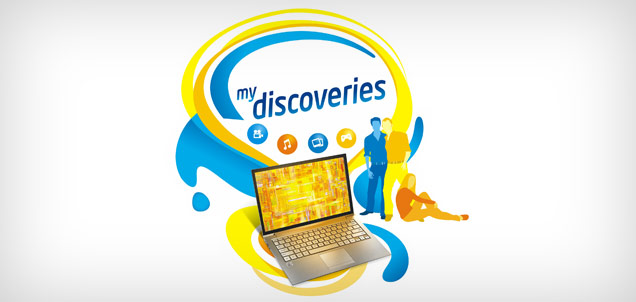
    On the BTL level, Intel launched ‘My Discoveries’ campaign targeting college youth, IT Hubs, Corporate parks to demonstrate the interaction between multiple technology experiences in a connected world. The My Discoveries campaign boasts of being ab experiential marketing at a BTL level, the touch and feel factor is showcased in a way where the students not only get the feel of the product and the technology but also enhance the skill-set using the product. More than 30 lakh youth have been engaged though this campaign


    While in conversation with MxMIndia, Sandeep Aurora, Director of Marketing and Market Development, Intel South Asia, prefers not to divulge financial details, but he does reveal the plans for Indian market.


    Sandeep Aurora

    How is the Indian market growing for Intel?

    InIndia, personal computing device penetration is a mere 10% which means there is huge growth potential that the country offers. Intel is committed to driving the growth forward by showcasing the magic of a personal computing device and driving greater relevance. In today’s multi-device connected world, Intel enables consumers to explore their creativity, enhance their productivity and indulge in a world of digitally powered entertainment. The aim is enhancing affinity and excitement for the personal computing device as an enabler of amazing possibilities in their everyday lives.


    Intel recently launched My Discoveries campaign. What was the thought behind it?

    Indiais a growing market; consumers are adapting to new products and fast moving towards brands which enable them to better their lifestyle, connectivity and productivity. It is important that our consumers experience the possibilities that the brand brings alive for them and how this impacts their future in a real time scenario focusing on making people realize what they are capable of doing.


    The My Discoveries program spanned across two quarters was hugely successful reaching over three million youth across India with the message of personal computing device relevancy and usage in a highly contextual, relevant, personal and engaging manner The approach of a personalized experience for the consumer has worked well, it’s amazing to be able to actually create an original sound track, a photo or video montage and carry it back with you.


    My Discoveries extended beyond BTL.

    On ground activations under the ‘Go do something wonderful’ campaign, which we call ‘My discoveries’, targets people in campuses, i-cafes, malls and other places. The campaign reached out to the audience at multiple touch points including campuses, corporates, BPO’s, Internet cafes, malls and retail with its unique experience. The engagement extended itself to digital and social enabling audiences to experience the My Discoveries on a virtual platform while sharing their wonderful experiences online. Pulp Strategy was the agency responsible for the execution of the campaign.


    Does the campaign mark Intel’s marketing shift?

    In the recent past, Intel made a critical & fundamental shift in communication. A leap from “what we make” to “what we make possible”. The objective of this campaign was to build a deeper, enduring emotional bond between Intel & the end-user while creating an increased preference for the Intel Powered PC in the minds of our target audiences. The premise of our campaign was that even though devices like cameras, smartphones, and MP3 players are handy and generate excitement, their potential is limited without a personal computing device. The personal computing device is the central hub to a connected device world.


    The campaign plays on the sentiment that “Tabs, phones, cameras are an expression of me, but my personal computing device is me and it’s where I do wonderful things”. Intel enables consumers to explore their creativity, enhance their productivity and indulge in a world of digitally powered entertainment. We wanted to showcase these possibilities by creating inspiring and compelling experiences which drew out the relevance of owning a PC in a connected world. The focus was also on offerings hands on experience of the power of a processor, while making the experience delightfully personal “what an Intel Powered PC can “do for me”.


    What was the brief that was given to Pulp Strategy for this campaign?

    We briefed several vendors during the RFP process about this concept but Pulp Strategy, the agency chosen for this campaign came back with the best response to our brief and through extensive mutual collaboration we fine-tuned the brief and the deliverables in a way that would deliver the best impact for consumers to explain the relevance of a personal computing device by offering a delightful, engaging and personal hands-on experience.


    Has Intel’s strategy in the Indian market changed over the years? Does this change reflect in your marketing and advertising in this market?

    In the process of brand evolution, marketing plays an important role. For a 40-year-old company, whose first marketing campaign was focused at projecting how things have changed and advanced; Intel has evolved in its marketing strategy with the various products that it has launched over time, learning at each step. We have moved on from what Intel is and what it can do to make people realize what they are capable of doing. Campaigns like My Discoveries, and Go Do something Wonderful is a step in the direction of making consumers realize the possibilities that owning and using a PC opens up for them.


    India remains a complex market. What will be your strategy for the Indian market, going forward?

    Our research has revealed that one of the main reasons for consumers to not buy a personal computing device immediately is the lack of relevance for it in their minds. But we believe that as the awareness about technology coupled with digital literacy increase in the country, more and more of the hitherto untapped individuals would realize the importance of owning a PC and the sales would pick up. Keeping this in mind, Intel will continue to focus on India’s personal computing device market which is growing at a rapid pace. Also growth of the personal computing market inIndiais inevitable given the low rate of domestic technology adoption in the country.


  • 1 Minute View: Time for all media to celebrate TOI’s 175 years

    Why devote so much editorial space for the Times of India 175 years’ celebrations when just a few days back we were so aggressive about Medianet? This is part of a mail we received yesterday after our Big Story based on an interview with BCCL Exec Prez Rahul Kansal.


    Yes, we  don’t like Medianet… in fact we don’t like all forms of cash-for-content. Times has elevated it as a brand, many others are doing it on the side.


    However, we must say that other than this practice, the Times of India has transformed itself much in the last 25 years… first as a business enterprise and in the last decade and in the last decade or so as a wholesome and robust editorial product.


    Hmmm, product. It may have sounded bizarre to call a newspaper that some 15 years back, but not so now. Initially, it appeared that the new dispensation at BCCL had utter disdain for journalists and wanted to rid it of all that one associated with the paper from the days of Sham Lal and Girilal Jain. Guess soon enough the brand managers realized that it was foolhardy to devalue the brand by compromising on editorial content.


    The completion of 175 years is a milestone that the entire industry must be proud of. Unfortunately, there is a fair deal of mistrust and rivalry between newspaper companies, so we may well not have all newspaper-owners celebrating the occasion.


    At MxMIndia, we think it’s a momentous occasion. And, while we reiterate that Medianet is a regressive practice, the completion of the 175 years must be celebrated and chronicled.


    Jai ho!


  • Skyfall, Hobbit on Pix post deal with MGM

    By A Correspondent


    English movie channel Sony Pix has partnered with Metro Goldwyn Mayer (MGM) Studios, one of the leading studios of Hollywood. Under this arrangement, Sony Pix will premiere the studio’s new titles on television which includes Skyfall, The Hobbit and in future the remake of Robocop. In addition, the channel will also be home to all the Bond titles and popular movies from their stable such as the Rocky series, Terminator, Species, The Pink Panther and Conan the Destroyer to name a few.


    NP Singh
    Saurabh Yagnik

    N. P. Singh, COO Multi Screen Media, said, “We are pleased to announce the deal with MGM and this is another step in providing world class entertainment to our viewers.” Saurabh Yagnik, Business Head, Sony PIX said, “Sony PIX is on a strong growth path and has been consistently operating in the No.1/2 slot in the category. It is aggressively strengthening its library through investment in content. This association with MGM will significantly help the channel to operate in the top 2 slots in the genre.”


    The association is strategic and gives the channel access to some of the biggest premieres this year like Skyfall and The Hobbit. Sony Pix will also be airing the entire Bond series exclusively on the channel.


  • Does editorial content need an eye in the sky?


    By Ananya Saha


    Recently, The New York Times set up a news analytics team with the aim of establishing a better understanding of how editorial content is consumed – to know if the content being created is actually working, and if they’re publishing the news the right way, and where and how can they fix the gaps.


    With more and more people consuming and sharing news in real time, do media houses in India too need analytics team to make data-driven decisions? Would it help the editorial decisions? Do Indian media houses need it yet? While Sriram Kilambi of Bloomberg preferred to not comment since Bloomberg is considering it, the industry thinks it is the right time to employ data analytics for editorial decisions.


    Mitrajit Bhattacharya, President-Publisher, Chitralekha Group

    Different media houses have their own methods of assessing the efficacy/ response to their content. We religiously go through the traditional letters and emails from our readers. The feedback is very sharp on new media like Facebook. Based on continuous feedback from our readers we decide to make changes in our edit mix. It’s a continuous process though. Use of analytics is always welcome. It just makes the feedback process bias-free and scientific.


    Niteen Bhagwat, Executive Director & CEO – Asterii Analytics

    The data analytics and its role in news and journalism was the tipping point in US market after the Obama election campaign. Nate Silver, an analyst had predicted that Obama would win even when expert commentators had predicted that Romney might win. However, Silver’s prediction was right since he based his theory on data available. He made an editorial comment based on marketplace. Now, that was the tipping point. There is a lot of data around that can be used. Even the US papers moved to data-based journalism from opinion-based journalism.


    There are three kinds of journalists in a news room: traditional, social media or digital-friendly journalists, and quant or quantitative-oriented journalists. Quant journalists are the ones who can make sense of huge amount of data. Now, whether it is journalism, corporate communication or PR, we will need people in all three buckets or people who have all three qualities.


    The second point is, NYT is one of the 100 publications that have a metered payment gateway. And it has registered more subscription revenue than advertising revenue. This makes the publications enjoy more freedom when it comes to content. With data analytics in place, one can understand the online reading habit – can know the demography, or which part of the publication is being consumed more, which will allow more tailor-made content.


    Shantanu Bhanja, VP (Marketing), HT Media Ltd

    Yes, for sure. While the editorial judgment is paramount, analytics are valued inputs to that judgment. Our analytics team helps us give the editors a pulse of the consumer, as well as feedback on our news offerings in real time as well as over periods of time. The final editorial decisions are taken solely by the editorial team. However, an analytics team provides the reader interface. We carry out various studies, both online and offline some continuous (with different periodicity) and some as and when the need arises.


    Projit Chakrabarti, Head – Marketing Services, NDTV Limited

    Well certainly for genres of news that fall into the category of ‘information’ or ‘news you can use’; with more and more 360-degree targeting to the consumer  becoming increasingly relevant, data and analytics will drive the dissemination of certain kinds of news and information. It will most certainly help from a contextual and utilitarian point of view but may be not so much from an editorial point of view. Indian media houses definitely need it.


    Ashish Pherwani, Partner, Advisory Services, Ernst & Young

    At the end of the day, a media house (whether TV, print, radio, website, whatever) provides audiences to advertisers.  With the growth of digital distribution channels and the proliferation of lower-cost hardware options, audiences are changing the manner in which they consume content.  Hence, media houses now not only need to provide their content to their audiences in the manner and format of their choice, but also keep using analytics to understand changing audience preferences, to better cater to them.


    Analytics will also enable better sales efficiency – enabling ad sales teams to sell in a more targeted manner. And of course, editorial teams, to understand what type of content do their audiences prefer, at what time and how it must be packaged. Hence, analytics leads to (1) better serving the audience and (2) better monetization of the audience.


  • Introducing: New Viewsletter Feature: Top 5 Links of the Day

    Introducing a new ‘Viewsletter’ Feature called ‘Links of the Day’. This will have links to various news and features from various publications which we think are good for you to connect to. The summary against each link may not necessarily be from the news report/article. This feature will soon be available only as part of our ‘viewsletter’.


    #1: Welcome decision, says Uday Varma. We had given proposals to DD for rural, but they didn’t want to fund it: LV Krishnan

    http://www.exchange4media.com/50819_now-cci-goes-after-tam-acts-on-dd-complaint.html

    Exchange4media.com/Abid Hussain

    Quotes from I&B secretary Uday Varma, Prasar Bharati CEO Jawahar Sircar and TAM CEO L V Krishnan


    #2: Competition Commission orders investigation on representation of Doordarshan in TAM

    http://www.indiantelevision.com/release/y2k13/may/mayrel5.php

    IndianTelevision.com

    Report on the Competition Commission of India verdict under “Section 26 (1) of the Competition Art 2002, against TAM Media Research Pvt. Ltd, sole and dominant television viewership measurement firm in India that it has abused its position of strength with respect to measurement of viewership in contravention of the provisions of section 4 of the Act”.


    #3: Infrastructure Developments Creating Huge Opportunities for the Indian Advertising Industry

    http://www.pr.com/press-release/489206

    PR.com

    Research firm IMARC’s new report titled, “Indian Advertising Market Report & Forecast (2012-2016),” provides an analytical and statistical insight into the Indian advertising industry along with its various segments and sub-segments.


    #4: China warns Indian media, says ‘will not ignore provocations’

    http://post.jagran.com/china-warns-indian-media-says-1367590987

    Jagran Post

    Arnab Goswami, please note. The Chinese don’t like the Indian media’s slamming of the recent ‘intrusion’. “Such nonsense will influence mainstream society,” the article in the government-controlled daily said.


    #5: It’s serious: space for cartooning shrinking

    http://www.thehindu.com/news/national/other-states/its-serious-space-for-cartooning-shrinking/article4686924.ece

    The Hindu

    The cartooning scenario has become grim – with many newspapers opting to not use them on top of the page or in the edit page… the message from  a session on the “Art of political cartooning” at the two-day Mario Miranda Cartoon Festival which ended in Panaji, Goa on Sunday.


  • 1 Minute View: Is it TAM’s fault that aMap shut shop?

    One was hopeful that its advisors would’ve made Doordarshan bosses see reason and not persist with the plea CCI to intervene in the TAM ratings scene.


    We aren’t trying to say that all’s well at TAM’s end. Perhaps there is indeed reason for worry given all that is being spoken against it by people from various quarters.


    However, to say that TAM is a monopoly and hence not doing its job well is incorrect. For one, there was another vendor in the form of aMap which was doing all that TAM was in TV measurement and it was sad to see it suddenly suspend operations, ostensibly because of poor patronage.


    Second, the Nielsen-Kantar jv was mandated jointly by the industry bodies to conduct the measurement exercise and provide data on the basis of that. If it had so desired, the industry bodies could’ve assigned the task to someone else – then and even later.


    Surely large advertisers and media agencies representing them who use TAM data for their decision-making would’ve junked the numbers had they found it amiss.


    Saying that TAM is a monopoly is hence not only wrong, but also unfair. It’s like in the case IRS and NRS. NRS had stopped releasing its annual report on its own, and therefore it wouldn’t be right to say that IRS was a monopoly (which it was in effect) for many years. And now, given that the two (NRS and IRS) have unified, we are sure there will be someone who may raise the monopoly issue about print measurement.


    Back to TAM and the CCI, it was interesting to read TAM CEO L V Krishnan speak out on the issue (see link: http://www.exchange4media.com/50819_now-cci-goes-after-tam-acts-on-dd-complaint.html). So is it true that Doordarshan bosses refused to pay up for rural numbers?


    The industry would know that the road to a new measurement mechanism is not an easy one. Look at the time and effort taken to form BARC and now in the process of finalizing the vendor(s).


    As for TAM, post the NDTV lawsuit, some measures were taken to cleanse the processes. Since then we have had partial digitization and introduction of data from smaller, LC1 markets. There have been many channels who have been impacted given the state of flux.


    Times surely are a-changin’.  In the meantime, it will be interesting to see how the CCI views the entire television measurement scenario.


  • Jaldi 5 with Anuj Poddar: KHMC will be a milestone for Marathi television

    By A Correspondent


    In the world of regional television in India, ETV Marathi had made a mark soon after its launch 13 years back. Now with new renewed vigour post business realignments, the channel announced the launch of Kon Hoeel Marathi Crorepati to be hosted by veteran actor Sachin Khedekar as host. The show which will premiere this evening (May 6) has seen a high visibility blitz across Maharashtra. MxMIndia asked Anuj Poddar- EVP Strategy & Business Head Regional Channels, Viacom18 (in partnership with ETV) to talk on various marketing activities planned for KHMC.


    01. It wouldn’t be incorrect to say that you’ve virtually taken over the state’s media with the KBC Marathi promotions… can you give us some specifics on the promotional activity…
    TV spots: More than 2000 GRPs covered: Over 150 GRPs
    Number of hoardings: Several hundred hoardings, bus shelters, bus panels and other outdoor media
    Radio spots: 650+


    What is the approximate adspend?

    We have achieved visibility and engagement equivalent to a Rs 5cr spend.


    02. The promotional spend is comparable to the big bang launches on the Hindi GECs. We have seen a mixed response to the KBCs in various Indian languages… are you confident of KBC Marathi delivering in ratings and revenues?

    Everything that we’re doing on KHMC is to give it the same scale and persona as a Hindi property, but of course for the Marathi audience. The Marathi audience will not feel that this is any lesser or there has been any compromise of any sort. The participation process, the scale of the set, the production values and, of course, the marketing are all designed to convey the stature of this unique and most successful show. We have also extensively studied the format across the Hindi and all regional avatars so far and absorbed all the learnings from those and are confident we have a great version ready for the Marathi audience. We are confident that this will be a milestone for the Marathi television genre – as well as for advertisers who are hungry for something of this scale and quality for their brands to engage with.


    03. The response that your announcement saw some phenomenal response on our site (MxMIndia.com) with over a 100 people writing in, wanting to be part of KBC. Could this see a turning point in the various regional language programming will be promoted in future? Do we see ETV Marathi looking at more content which will entail viewer participation?

    Yes, I was most glad to note the response and buzz created by the show when we called for entries. We also have a second round of call-for-entries lined up shortly and with the show now hitting air, I am confident the participation buzz will only grow further. To me, it reflects how all the positive values of this show – knowledge, aspiration and celebration of one’s culture & history – find direct resonance amongst the amazing Marathi population of this country. ETV Marathi will continue to look for ways to deeply engage with Marathi viewers in a meaningful and relevant way.


    04. ETV was the first Marathi GEC… interestingly launched less than a month before the first season of KBC took off . We are also seeing some action with the other Marathi GECs. Do you see the entire genre growing in the months to come?

    Any process of evolution and growth witnesses key phases and turning points. ETV’s regional foray over a decade ago is a testimony to its founder’s vision and he helped set the ball rolling. The step-up in competition in the Marathi genre over the last 4-5 years was the next turning point and has led to Phase 2 of this growth. Now, I see us entering the next phase of evolution of the Marathi genre and we will look back at 2013 as the turning point for the start of this phase. And I am glad and hopeful that ETV will have led this turning point.


    05. The first season of KBC in Hindi on Star Plus saw some smart strategy from the channel in the form of the saas-bahu serials propelling the channel to numero uno. Are you working on rejigging the rest of your content?

    ETV has already quietly but surely rejigged the content on the channel over the last four months. The channel has a full new content line-up on air with great fiction properties some of which have already become leading-TSV shows, demonstrating their strong content quality. Hence, KHMC was strategically planned to be brought in post the rejigging of other content. The packaging, et al has also been changed. The channel is looking fresher, nicer and is ready to rock…we’re looking forward to an entertaining ride along with our viewers! Ratings will naturally follow…God and TAM willing!


  • CNN celebrates 15 years as top news channel in Asia Pacific

    By A Correspondent


    CNN retains its position as the number one news and business brand on all platforms, according to new findings from the latest Pan-Asia Pacific Cross-Media survey (PAX). The research reinforces the network’s undisputed regional leadership in TV, mobile and online – making it 15 consecutive years in the top position.


    A release from CNN said the latest PAX results for the period Q1 to Q4 2012 show that CNN is the clear frontrunner among international news and business channels across all metrics. CNN also continues to deliver its brand of quality, engaging and trustworthy news content to an affluent and discerning demographic across Asia Pacific. Highlights of the research include:


    The CNN brand reaches 30 percent of PAX respondents across all platforms#, with an even stronger connection with hard-to-reach target groups, such as top management (43 percent monthly reach). The total brand reach is also 43 percent greater than the next largest international news brand (BBC), and 2.4 times more than the third placed news and business brand (CNBC).


    Each week, CNN reaches 55 percent more international travellers than the next placed news and business channel.


    Within the business community, far more corporate investors watch CNN than any other international news and business channel. CNN alone reaches 79 percent more of these investors each week than the combined audience of the international business/financial news channels.


    As a TV news brand, CNN has two-thirds (68 percent) more daily and 57 percent more weekly viewers than any other international news or business channel. Across a month, CNN’s leadership remains strong, with 46 percent more viewers than the next placed TV news brand (BBC World News), and more than twice as many viewers as CNBC.


    Duncan Morris, Vice President of Research at Turner International Asia Pacific, said, “What makes these results particularly striking is that CNN has the largest audience base in news, no matter how you look at the data – by platform, target group or reach metric. Since the first PAX results were announced in 1997, CNN has demonstrated that it is consistently successful in delivering quantity, as well as quality, in audience terms.”


    The Ipsos PAX survey measures media consumption among the top 22 percent of society in socio-economic terms across 11 Asia Pacific markets: Australia (Sydney, Melbourne), Bangkok, Hong Kong, India (Delhi, Mumbai, Bengaluru) Jakarta, Kuala Lumpur, Manila, Seoul, Singapore, Taipei and Tokyo.


  • New Viewsletter Feature: Links of the Day

    Presenting our new feature where we bring you stories from across media-land which we think you ought to read. Handpicked and ranked by our editors. Soon this will be available on our viewsletter only, and not on the website


    01. Parliamentary panel calls for media watchdog

    http://www.livemint.com/Politics/zcygRgFikOFQv89l8T5hOL/Parliamentary-panel-calls-for-media-watchdog.html

    Mint/Shuchi Bansal and Liz Mathew


    On Monday, A parliamentary committee made a case for controlling the media – both print and electronic -through a statutory regulator on the grounds that the media had been silent over the menace of paid news and the inability of the ministry of information and broadcasting (I&B) to contain the practice through a suitable mechanism.


    02. IPL advertisement rates surge for last four matches

    http://www.livemint.com/Consumer/tvpMAiEbS7vsypW2jZVWpO/IPL-advertisement-rates-surge-for-last-four-matches.html

    Mint/Aminah Sheikh


    Multi Screen Media is reported to have increased ad rates for the final four matches of the League, three times the amount of the preliminary matches.


    03. Marketing investment isn’t growing as much as tech adoption: Nick Seckold

    http://www.business-standard.com/article/companies/marketing-investment-isn-t-growing-as-much-as-tech-adoption-nick-seckold-113050700034_1.html


    Business Standard/Gaurav Laghate


    Nick Seckold, head of digital (Asia-Pacific) at Mindshare on the state of digital advertising in India. The challenges, adveriser perception…


    04. Times, Hindu plan Tamil dailies

    http://www.exchange4media.com/50839_tamil-print-war-heats-up-as-toi-the-hindu-gear-up-for-new-launches.html


    Exchange4media.com/Abid Hasan


    Both BCCL and Hindu are reported to be planning to launch Tamil dailies in a few months


    05. Making Headlines Today

    http://www.afaqs.com/news/story/37420_Making-Headlines-Today


    Afaqs.com/Raushni Bhagia


    Group CEO Ashish Bagga is bullish on Headlines Today as FMCG, retail, telecom and various high value brands are including Headlines Today as part of their business plans


    06. YouTube set to launch pay channels within weeks

    http://economictimes.indiatimes.com/tech/internet/youtube-set-to-launch-pay-channels-within-weeks/articleshow/19923239.cms


    Economictimes.com/AP


    The pay channels will be in addition to the free variety and as per a Financial Times report, viewers may be charged as little as $1.99 (approx Rs 100) per month for subscriptions.


    07. Looking for a comeback, Zynga embraces austerity and FarmVille

    http://www.business-standard.com/article/companies/looking-for-a-comeback-zynga-embraces-austerity-and-farmville-113050700035_1.html


    Business Standard/Reuters


    Zynga’s 47-year-old CEO Mark Pincus is hoping to restore revenues by focusing on ‘Farmville’ which propelled Zynga to much fame.


    08. Why CMO Tenure Has Doubled

    http://adage.com/article/cmo-interviews/keeping-time-cmo-tenure-doubled/241294/


    Adage.com/Natalie Zmuda & Rupal Parekh


    The complexity of the job given the recession and shaky economy may have made CMOs more fulfilled, challenged and respected.


  • Growing to No1, ethically: Maheshwer Peri


    By Ananya Saha


    After spending 18 years as the publisher of the Outlook group, Maheshwer Peri launched Pathfinder in 2009 with the aim of making it India’s largest and most credible career counsellor in five years’ time. While still a mentor with Outlook, he has been associated full-time with Pathfinder since April 2012. Mr Peri rewrote the plans for the magazine, closed a publication, injected positive energy and weaned out negative energy.


    With an aim to reach students on a platform-agonistic way, Pathfinder’s magazine Careers 360 offerings are available in print, web and mobile. And it is succeeding. The webpage of the magazine has recently overtaken the more established portals, becoming India’s largest education and career portal.


     In a freewheeling conversation with MxMIndia, Maheshwer Peri, Chairman and Founder, Pathfinder Publishing, talks about the publication and the high digital notes it has been striking. And whether his ethical standards have come in the way of advertising.


    How has the journey of Careers 360 shaped up?

    It has been fantastic for one simple reason: there was no one who was competition. There was no one who approached the genre at all in terms of journalism, content and student. Everything you had in the market till that point in time was marketing or advertorial features that were coming up because there was an advertiser waiting. There was no one who made a model which is to say that student will buy this product, which is suited for the student and not for the institute. From that perspective, it was a complete paradigm shift.

    Even today, the content that you see is created because there is an advertiser around. They are advertising and marketing features. This is a first product that has been created with student in our mind. That is why the journey has been good, since there was no one as competition.


    Does the magazine attract a different set of advertiser then?

    The advertiser had multiple options. In any business, or publishing business, you need to create something that attracts readers. Once the reader is there, the advertiser follows. In any niche, if you are to create content because of which a set of loyal readers follows you, the advertiser follows. They cannot avoid us – that is the stage at which we are.


    Has the print run of the magazine increased as well?

    The initial print run was very high earlier, of the English and Hindi magazines of Careers 360. It was about 1,80,000 but today we print about 1,30,000-1,40,000 copies. We sell about 1,20,000-1,25,000 copies of which 30,000-40,000 are school and college libraries.


    Have you broken even yet?

    No. It’s an investment phase. The reason why I think it is a case study… there has never been a case in India that a single stream of content has been monetised over multiple platforms. The articles that we do are backed by data. And that data has to be complete. So we decide how much of that should be put into the magazine, and the balance we put on the web. There are journalists who create content, which is suitable for the magazine, for our almanacs and guidebooks and for the website, and going from there to the physical career workshops that we do.

    The challenge is if I were to say if the magazine would break even, it would not. Because I am still going though the phase of seeing how many more platforms I can grow to and keep investing in those platforms also. It is definitely going as per my plans and projections.

    On the digital space, we are the No 1 website in the country. One or one-and-a-half-year ago, when I started this journey, I had 4,000 students on the site each day. Today we have guaranteed 100,000+ each single day.

    Now the challenge for me is; since I have become the largest website in the country, the largest website has 10 crore of ad revenues and sitting on 5 crore of data. And I do that, yes, I will make money. That is the next step for me. Now that I have got the audience, I will monetise that.


    What are the factors responsible for the growth of the web presence of the magazine?

    I realized that the content we are creating for the magazine is not being leveraged. It is just limited to the magazine, so for me the challenge is how I invest myself in a way that the content I create can reach out to plenty more audience.

    Today 2-2.5 million students come to my portal every month. That is 30 percent of the audience of that category. Today if 1.4 million students have opted for engineering, and one million students have come to my portal, it captures 70-80 percent of the students. For each of the verticals, I need to say that I reach out to more than 30-40 percent students. And that is with the guidebooks, almanacs, counselling workshops, magazine, and digital portal.

    If you look at the content creators in the country, we are the largest content creators. There is no one who comes close to even 10 percent of what we do in the marketplace. The reason why student come to us, they have more and enough value to add to their decision-making.


    Has the strategy for magazine changes over the year?

    Strategy has changed to the extent that the moment we talked about digital. The typical thing that journalist does is goes and collects information, edits it, and puts out a 1,000-word story. This is not exactly career-driven journalism thing here. It is actually lot of data also. We are not just advisors; we are counsellors to the students. And counselling means two-fold integrity for us: financial integrity where no one is able to influence the way I right. The other big part of integrity is that we have covered everything so that student makes an informed decision, which means I have not omitted anything because of lack of research. It is important that the student does not suffer because you did not inform him of a very good option, which he otherwise should have known.


    Are you considering any brand extensions in the near future?

    Online we have lots of products. There is student space. There is mock counselling on our Engineering page. Each student pays Rs1,499 to take our advice. It is based on the data and information that we have collected in the magazine for our website. If a student comes and asks, ‘I have got a JEE rank of 11,000, what should I do?’ I give him seven options because I have cut off of all colleges in the country, which no one has. All that information that we research, collate is sitting with us. In my opinion, we are the best position advice student what to do. if the student’s choice if for five, I will make it eight. We optimize students’ choices, include one or two that he doesn’t know or remove what I think are bad for him. It is for him to decide where he wants to join, because I am not an agent.


    And is the counselling handled in-house?

    We have counsellors. We appointed a BPO company in Bangalore, which created all data for us. So the data is for more than 6,000 colleges and it cost a lot of money to create the data. I cannot do the data myself. We have journalists, a set of digital content creators, and data people, which is a BPO, working from Bangalore. Increment in further content creation would take 1x cost to become 1.5-or-1.8x cost. But the 1y of revenue can become 3y. That is the whole objective here: how do you add 10-20 percent investment in cost to add another stream of revenue that gives you one more ‘x’.


    You also closed down Competition 360. Why?

    When I moved from Outlook, I actually had three publications: Careers 360 English and Hindi and Competition 360. Competition 360 was dealing with competitive exam in the market like Competition Success Review or Pratiyogita Darpan. What I realised was there were many who were doing far better job than me, whereas in career-side, there was no one who was doing it. It is important for me to focus on something that I see as my path. So today my path is that I want to be India’s largest career counsellor; I want to be hand-holder for this country’s biggest student community. The moment that is decided, I am not getting into the job space and competition space. I am not going there because there are people who are already doing wonderful job out there and they will continue to do that. It doesn’t need me.


    You’ve been asked this earlier, but in the light of the strides you’ve taken: Outlook was going great guns under your leadership so what prompted you to start Careers 360?

    At some level, there are many people who will do Outlook. Aspirationally, Outlook is there. In India, and it has nothing to do with me or Outlook, you will see a lot of people getting into mainstream media or celebrity media. You would not see anyone coming into a morbid area, which is education. It’s standardized and regulated. But if you look at the demographic dividend that India has, the biggest demographic dividend would be when you handhold the students to nurture them otherwise it will become a nightmare. Someone has to handhold them otherwise we are sitting on a time bomb.


    What exactly is your role at Outlook now, and has it changed in the past one year?

    I am still the Mentor and Publisher. In fact, in March it was to get over but it got extended I am continuing for one more year. Me and my promoters have a fantastic equation. I will not influence that they remove my name. As long as they want, I will be around. Whenever they call me, I will be there. Period.


    Who handles the sales and marketing for Careers 360, now? Is it being handled by Outlook still?

    There are 4-5 people in my team, two of them were in Outlook. One, I always had arrangement with Outlook that I will never poach a single person from there. And I have stuck to it, and will even going forward. But these were people who were handling Careers 360 in Outlook. And they have moved with me.


    What is your next target for Careers 360?

    Within the next two years, Careers 360 would be India’s largest career counsellor. I would want to say that about 20 percent of students in India take a decision because Careers 360 influenced them. The day I start influencing the decision, and already we are doing it and handhold the students and also tell the institutes what students think about it: I have done my job. In India, regulators want to control without giving freedom to the private guys and institutions do not want any control. The balance is between them: the regulators need to give bit of freedom while institutes need to understand that their freedom is going to be limited by what regulation would want.

    We are aiming to achieve this balance.

    In a larger sense, this country has to start invest in its youth. And I hope more mainstream publications understand. Health, religion and education and jobs are the biggest things for people in India. In every mainstream media, these are supplemented by marketing activities. People like us come in because mainstream media has somewhere ignored it.

    Apart from the great things that Careers 360 is doing, you are also becoming very ‘activistey’.

    As Outlook, whatever I say was Outlook. It was a news media. There is no identity as Maheshwar Peri; it was only an Outlook publication. My view need not be Outlook’s view. In certain positions, you don’t have your own voice. It is the position that carries the voice. And I did not want any confusion between Outlook’s voice and my voice, so I was never active then. I was very conscious of the fact that whatever I speak is going to be taken as voice of Outlook. And now that the burden of Outlook is not with me, I have my own voice, which is what is coming out.


    Given your ethical stands on many things, has your advertising suffered?

    Yes, but that is again a conscious call. Whenever you take a stand, there are bound to be a set of people who will not stand with you. The current market situation is: I will give you an ad what will you give me in return. Not that is much more prominent in education sector. All these institutions are colleges are looking for ratings and rankings and some kind of coverage. And there are people who do that in the market. But again I say that once you create the content, which makes the reader stick to you, the best of the advertisers cannot avoid you; and then the other follow because the best advertisers are with you. There is a change that you need to crack. It takes a lot of time, perseverance and stamina. That is something I always had. When I launched it, I said I will create a DNA where nobody can change the credibility of the magazine or question the credibility of the magazine.

    So initially, when people were saying “Why don’t we have those guys and these guys”, I said, “Let’s create a DNA first, come what may”. It means lot of cost, money, time. But all those things are fine. Once we create the DNA, even when we go out unless we go to a new advertiser, the old advertisers know that they cannot bend us.


    Very recently, I went to an advertiser in the northern part of India. He looked at the magazine, and said, “Obviously, we cannot buy you.” So I was very intrigued and asked him what made him say so. He said, “Typically when we give an ad, our ranks are very high. In your magazine, we have given our ads in your magazine, but our ranks are very low.” That is the image that has reached the advertiser, for each time and every time, and I think we have managed to do that.



  • 1 Minute View: Now DD quotes TAM data to claim supremacy

    Hehe haha hehe haha hehe haha hehe haha hehe haha hehe haha hehe haha hehe haha hehe haha hehe haha hehe haha hehe haha hehe haha hehe haha hehe haha hehe haha hehe haha hehe haha hehe haha hehe haha hehe haha hehe haha hehe haha hehe haha hehe haha hehe haha hehe haha hehe haha hehe haha hehe haha hehe haha hehe haha hehe haha hehe haha hehe haha hehe haha hehe haha hehe haha hehe haha hehe haha hehe haha hehe haha hehe haha hehe haha hehe haha hehe haha hehe haha hehe haha hehe haha hehe haha hehe haha hehe haha hehe haha hehe haha hehe haha hehe haha hehe haha hehe haha hehe haha hehe haha hehe haha hehe haha hehe haha hehe haha hehe haha hehe haha hehe haha hehe haha hehe haha hehe haha hehe haha hehe haha hehe haha hehe haha hehe haha hehe haha hehe haha hehe haha hehe haha hehe haha hehe hehe hehe.


    Sorry about this, but we went rolling and tumbling around with laughter on reading this report: http://www.hindustantimes.com/India-news/NewDelhi/DD-news-tops-viewership-ratings/Article1-1055943.aspx


    And don’t miss the person who is gloating about the numbers: mantriji himself. Yes, this is what I&B minister Manish Tewari told HT’s Zia Haq: “What these ratings indicate is the rapidly changing perception of viewers about the kind of television they like to watch and is perhaps an occasion to  introspect for those who have made sensationalism their staple.”


    The minister may have his reasons for damning TAM in the past, but the fact that he has used the same damned data to claim the supremacy of DD News indicates that he too believes in the fact that TAM ratings are the only recognized currency in the market and you can’t wish it away.


    However, having said that a lot needs to be done by TAM to make the ratings process more robust and repose the faith in broadcasters and advertisers that all’s well and above board.


    Meanwhile, you don’t need to pinch yourself. It’s true, the minister really used TAM data to back Doordarshan. Hehe.